








Latest Posts Page 264
Revit API Development: Extracting Text Data from CAD Files
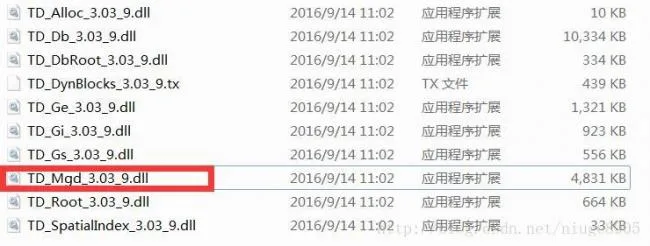
Revit requires Teigha’s open-source DLL to read text data from CAD files. To set this up, add a reference to the D...

Dynamo Programming in Revit Using Python
Using Dynamo’s modules directly to establish logical relationships can often be cumbersome, especially when dealin...
How to Import Road Alignment Spatial Curves from CAD into Revit
In CAD, road alignment spatial curves are commonly represented using polylines, especially for the transition curves wit...
Extracting and Converting Model Line Edges into Model Lines in Revit Secondary Development
Extracting the edges from model lines and converting them into model lines is primarily done to facilitate the construct...
Creating NURBSpline Curve-Shaped Steel Bars in Revit: A Guide to Secondary Development
In Revit’s API, a Nurbspline curve is represented as a series of straight line segments. Since Revit only supports...
Accessing Material Data through Revit Secondary Development
Using the lookup method to view materials can be quite misleading. It took considerable time to identify the cause. To f...
Revit Secondary Development: Creating Adaptive Component Families
The adaptive component family offers powerful features and is highly practical for bridge modeling. Key classes and meth...

Revit API: Implementing Local Coordinate Systems for Adaptive Points
The local coordinate system of an adaptive point can be accessed through a lookup. By modifying this local coordinate sy...
Mastering Revit Secondary Development: A Guide to Using Dynamo Classes
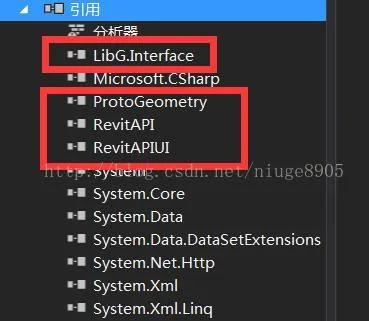
Dynamo is a powerful tool for Revit, offering functionality beyond what is available in Revit’s API. You might won...
Revit API: Accessing Component Material Appearance Information
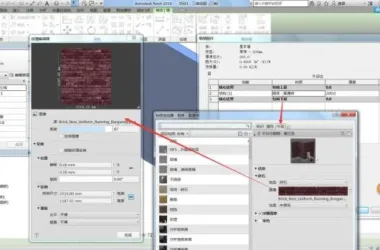
Revit does not directly support reading material appearance information through simple lookup, which makes the process s...
Revit Secondary Development: Constructing Continuous Rigid Frame Bridges - Method 1
Building a continuous rigid frame bridge is not particularly difficult; the process is primarily driven by code. Many ta...
Revit Custom Development: Designing a Continuous Rigid Frame Bridge with Horizontal and Vertical Curves
The previous method works well for straight, continuous rigid frame bridges. However, it falls short when applied to con...

Revit Plugin Development: How to Add Plugins to Ribbon Panels
Once the plugin is ready, the next step is to load it onto the panel. Revit provides a set of APIs specifically designed...
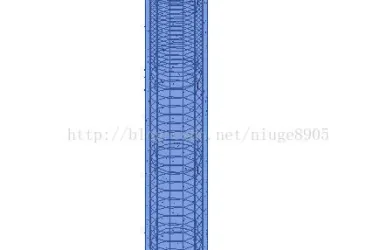
Revit Secondary Development: Automating Steel Bar Placement in Bridge Design
The steel reinforcement capabilities that come with Revit are quite limited. Even in building structures where Revit gen...
How to Incorporate Prestressed Steel Bars into Bridge Designs Using Revit
Building a bridge in Revit can be a challenging task, and incorporating prestressed steel bars makes it even more comple...
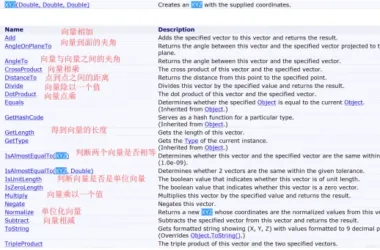
Vector Operations in Revit: A Guide to Secondary Development
From development to completion, working with mathematics is essential. Revit, a 3D modeling software, represents the spa...
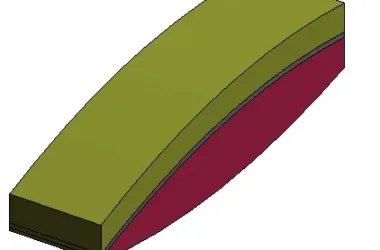
Understanding Volume Calculation in Revit Secondary Development Layouts
The layout function of Revit’s volume is one of the most versatile features. Interestingly, the official classic s...
Advanced Revit Techniques: Developing Site Topography
The terrain in Revit is essentially just a surface without any special features. To create this surface, you can use the...
Using Revit's Built-In Steel Bars for Advanced Custom Development
Using Revit's built-in rebar feature as an example (for non-Revit rebar features, please visit my Youku channel) Step-by...
Revit API: Creating Families Directly Within Project Environment
One common frustration in Revit is the need to create a family within the family editor and then import it into a projec...