
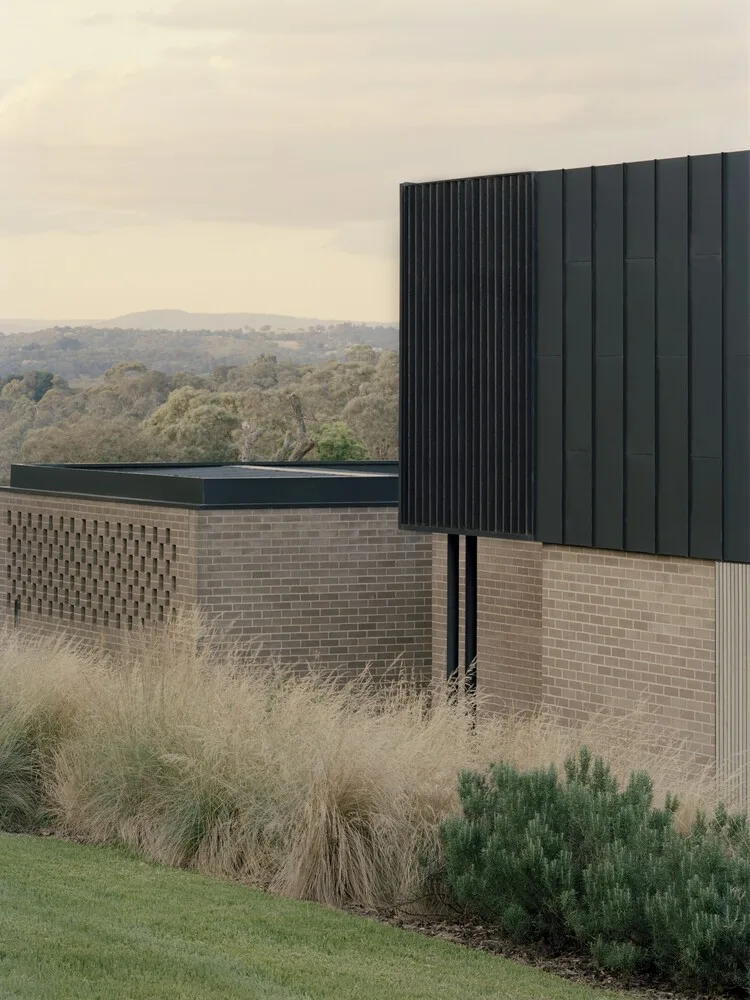
Warrandyte, located on traditional Wurundjeri land, is a semi-rural area situated 25 kilometers northeast of Melbourne, Australia. The landscape here features a unique blend of partially cultivated farmland, scattered eucalyptus forests, and rolling hills and valleys. This house is perched on a ridge line where the terrain drops sharply to the north and east. Through the eucalyptus trees, you can enjoy breathtaking views of the cliff below and the distant mountains beyond.
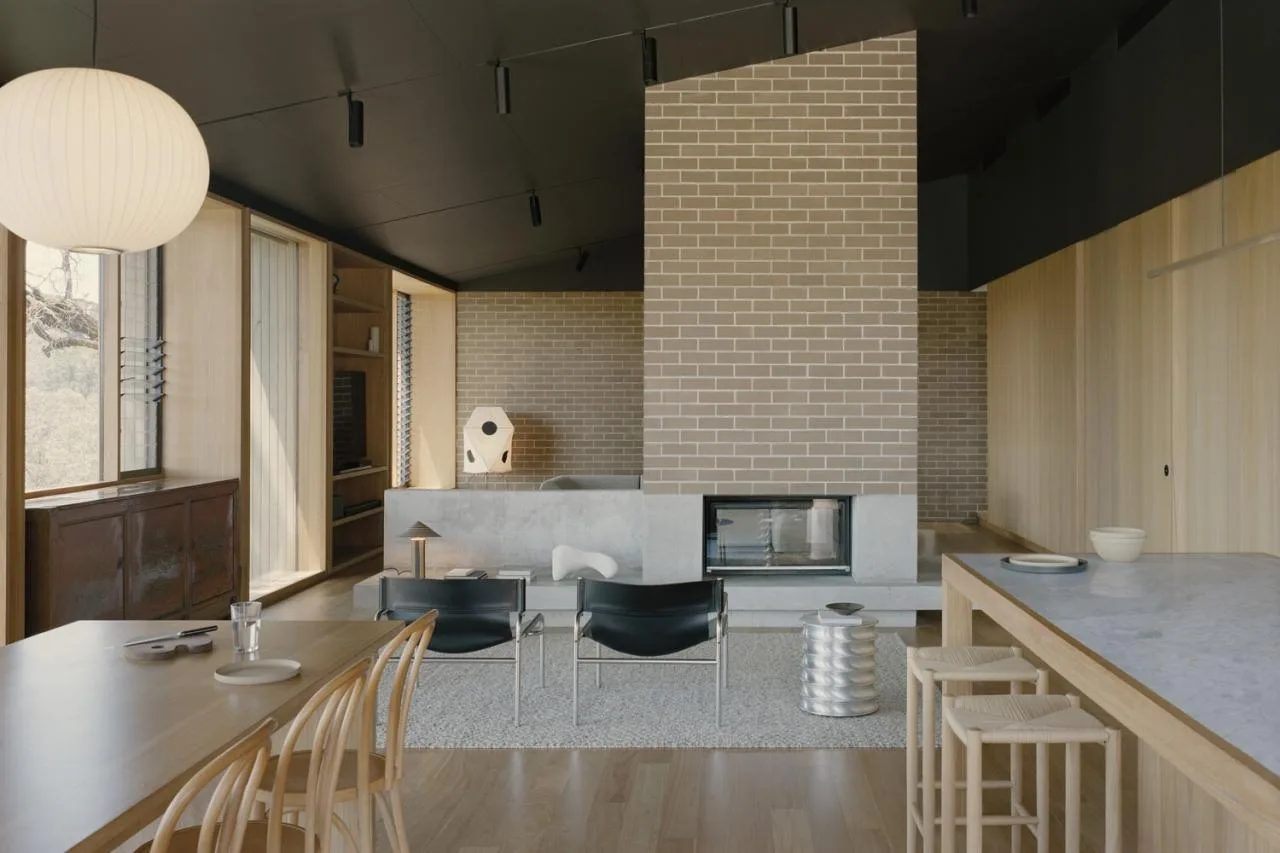
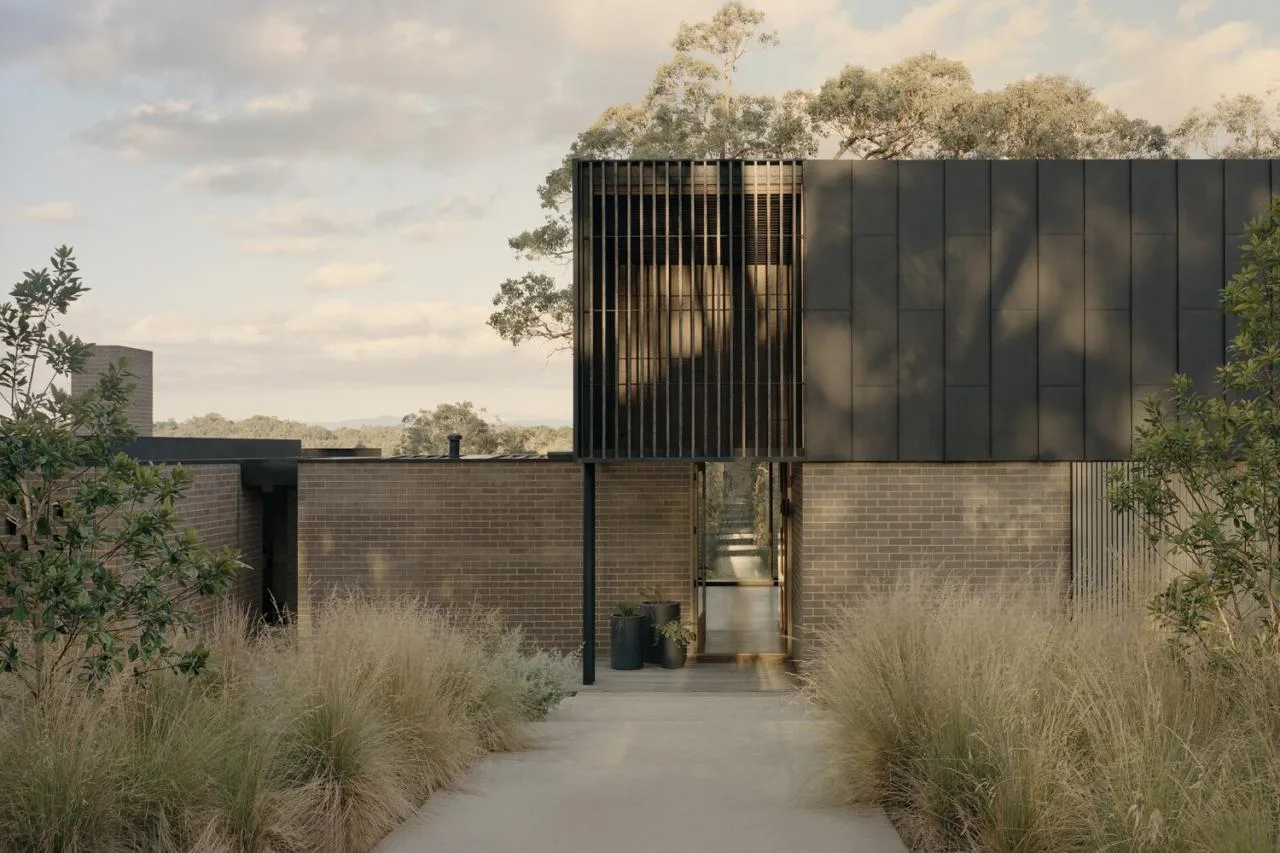
The house’s main form is a simple rectangular prism topped with a single sloping roof clad in charcoal gray metal. This design draws inspiration from the agricultural machinery sheds commonly found in the region. The structure is anchored into the ridge by a straightforward brick and stone base, establishing a solid lower reference plane. Two smaller brick pavilions on the north side serve as auxiliary spaces, complementing the main building.
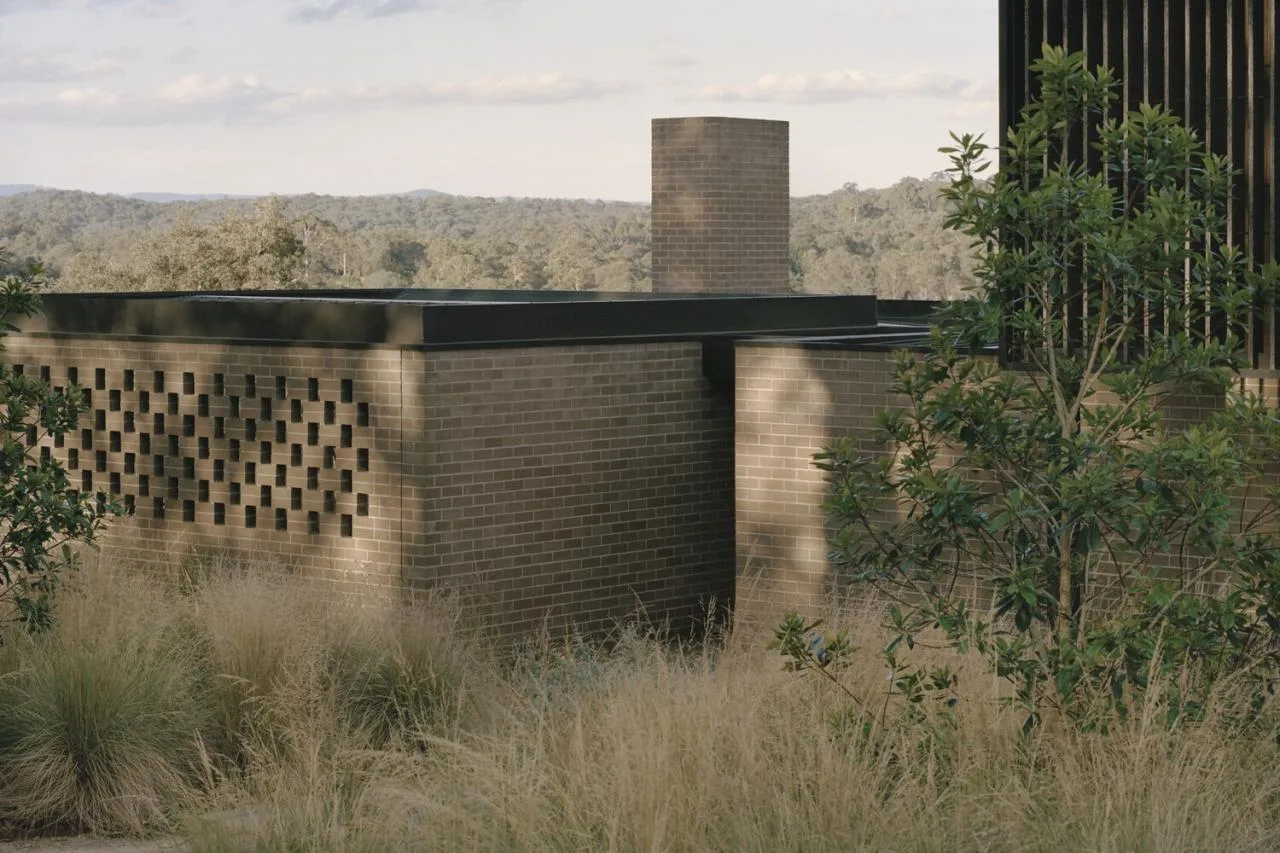
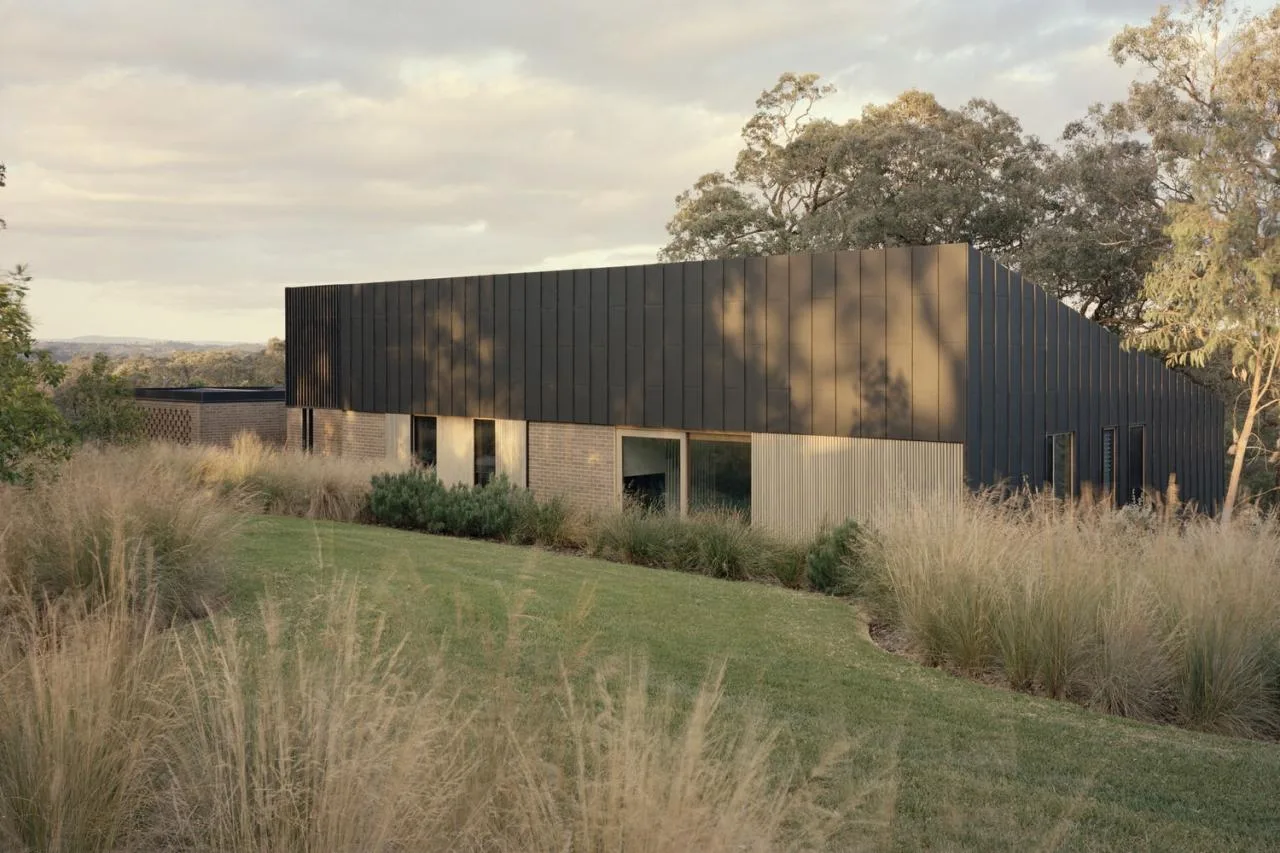
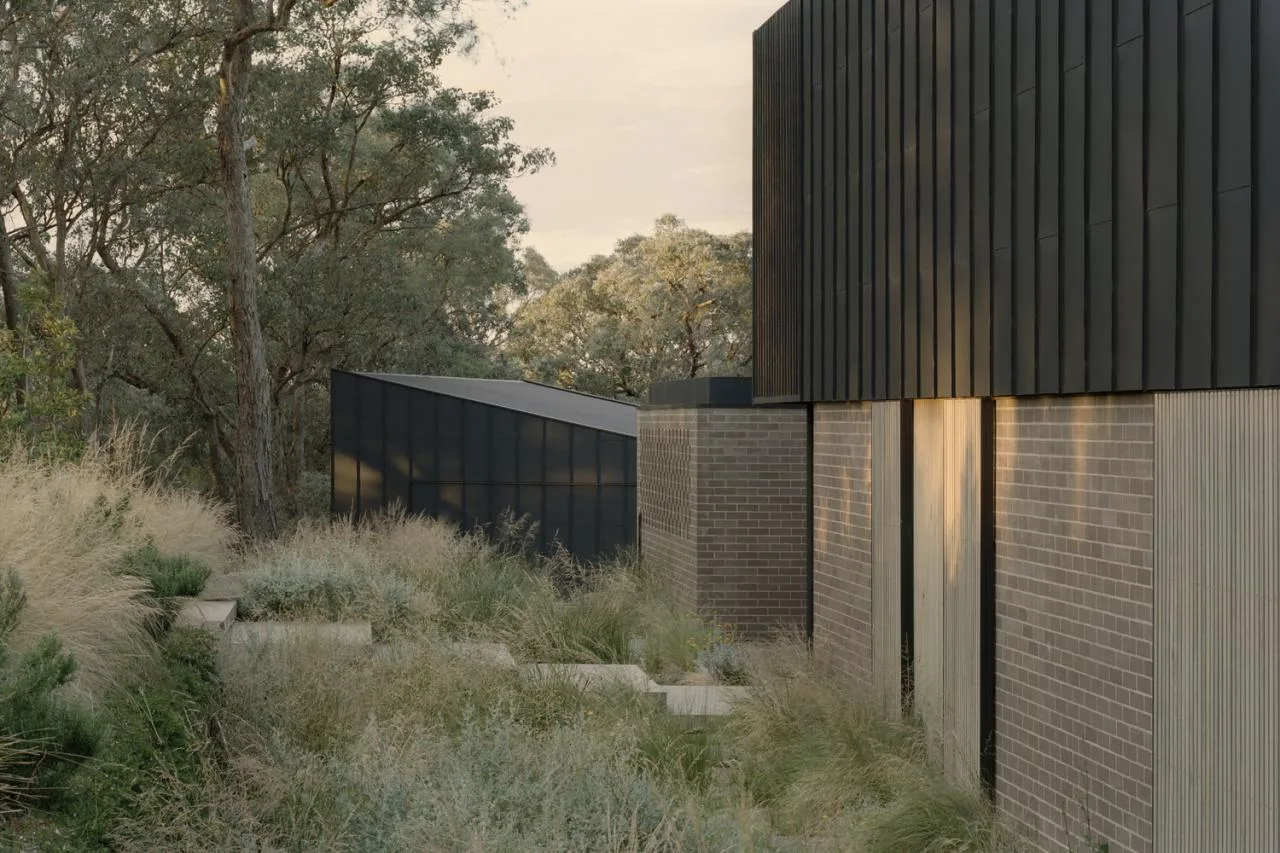
A two-story entrance space featuring wooden grilles stands out against the surrounding jungle, offering a distinctive arrival experience. These wooden grilles are also used as movable sunshades to block the harsh afternoon sunlight from hitting the west-facing windows during summer. The site has a 2-meter elevation difference from west to east, which is elegantly resolved through a gradual slope design. This slope begins at the cast-in-place concrete entrance bridge, continues through the interior spaces and exterior terrace, and extends down to the swimming pool and garden below.
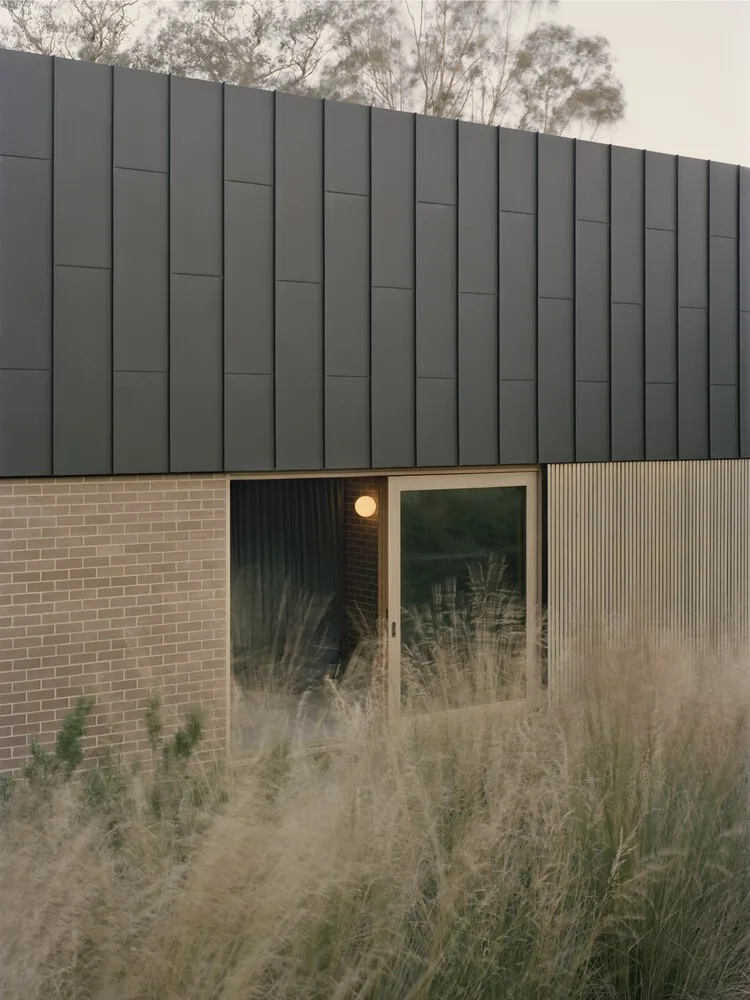
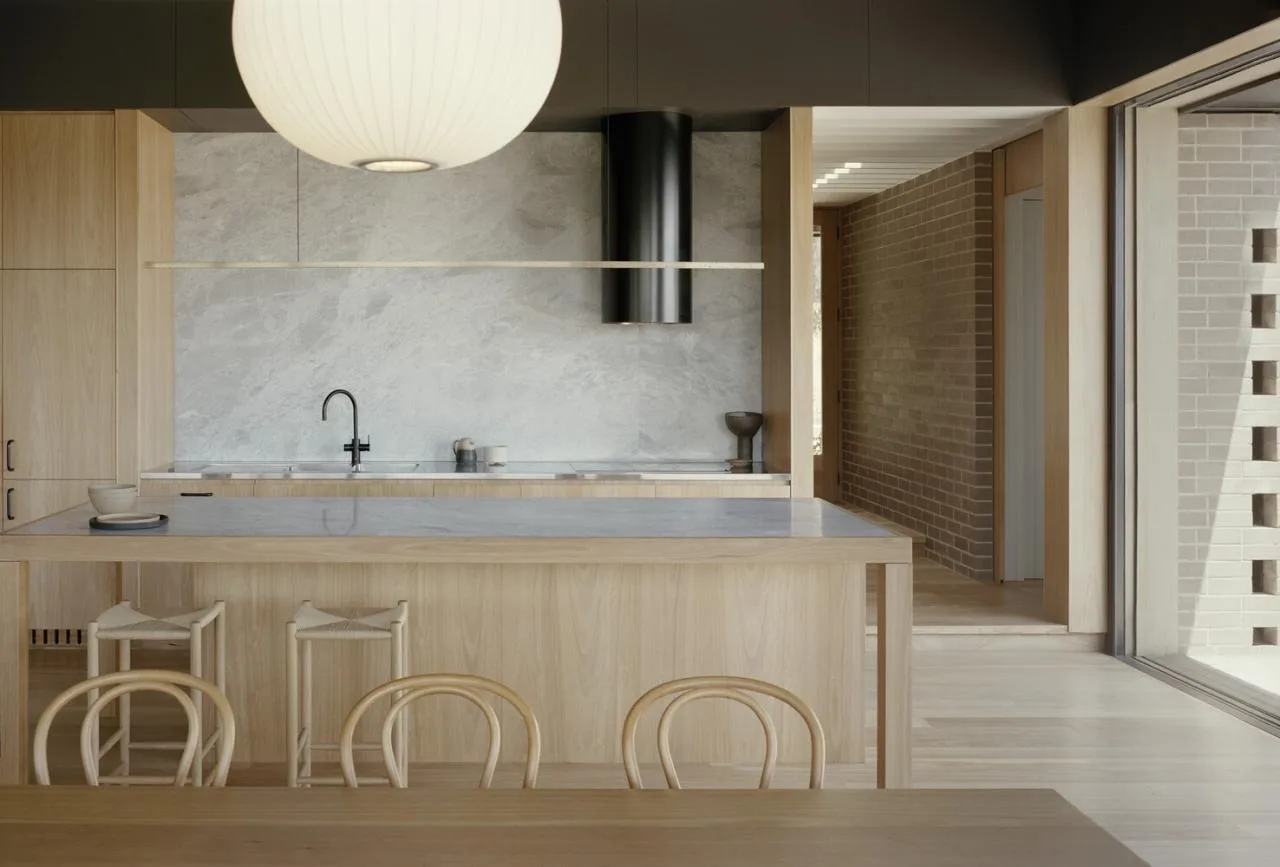
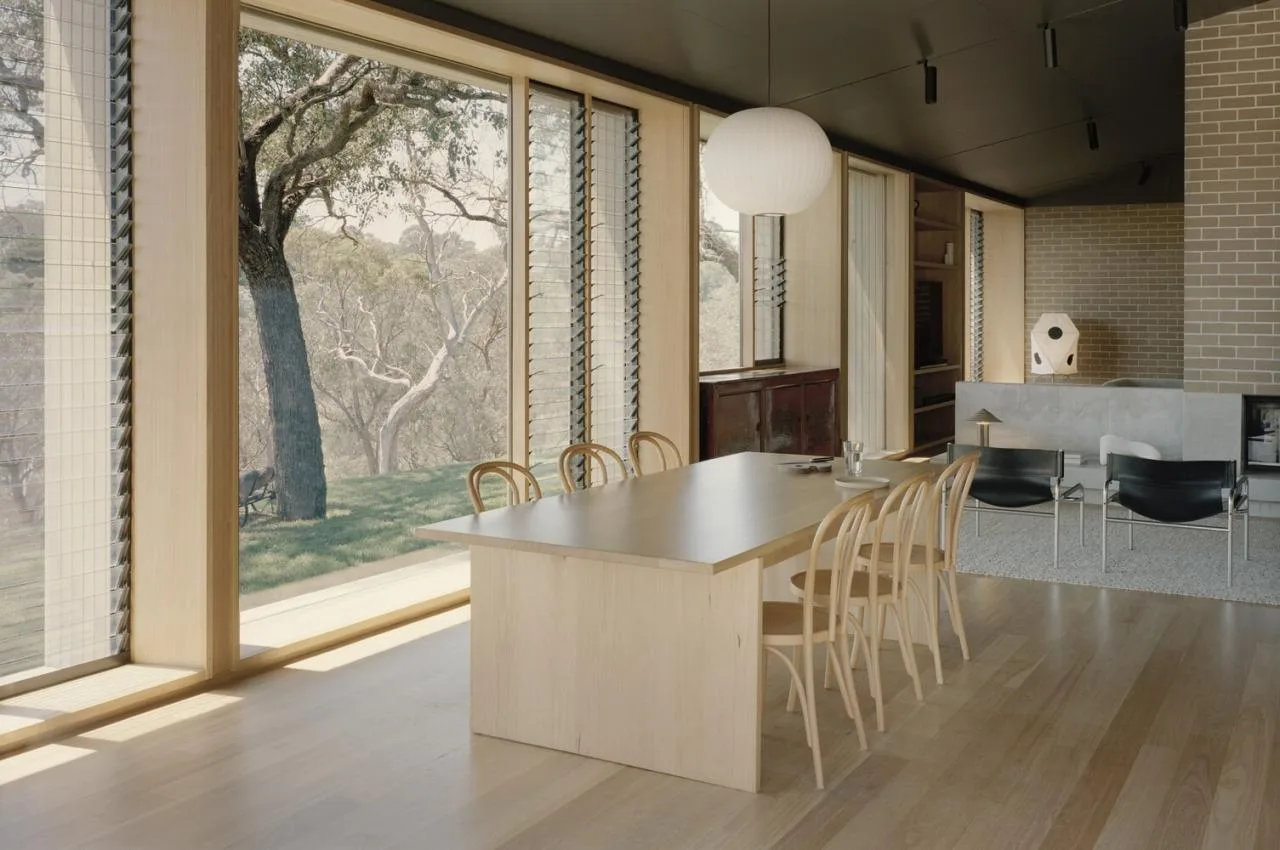
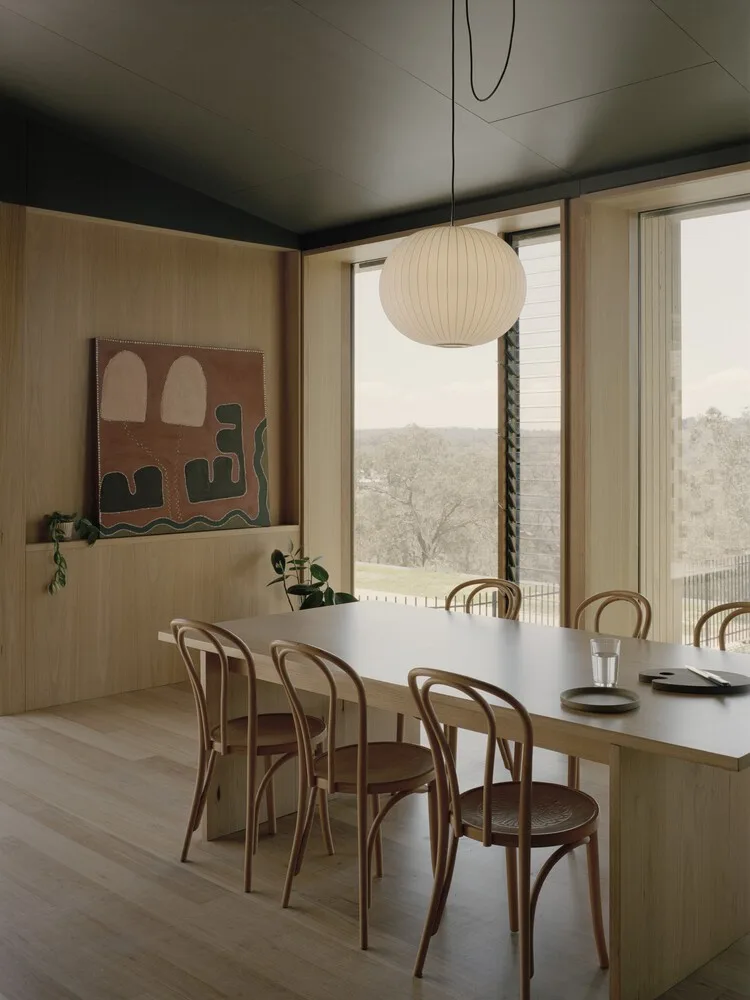
Inside, the gentle slope is expressed through three distinct levels: the sleeping area, the central service zone, and the lower living space. The single sloping roof creates a dynamic spatial experience with varying ceiling heights. The higher section accommodates a two-story children’s playroom, which includes a hidden entrance to an attic play space. The living area is distinguished by a dark cathedral ceiling above the dining and living rooms, enhancing the sense of spaciousness and inviting the outdoors in through deep French windows.
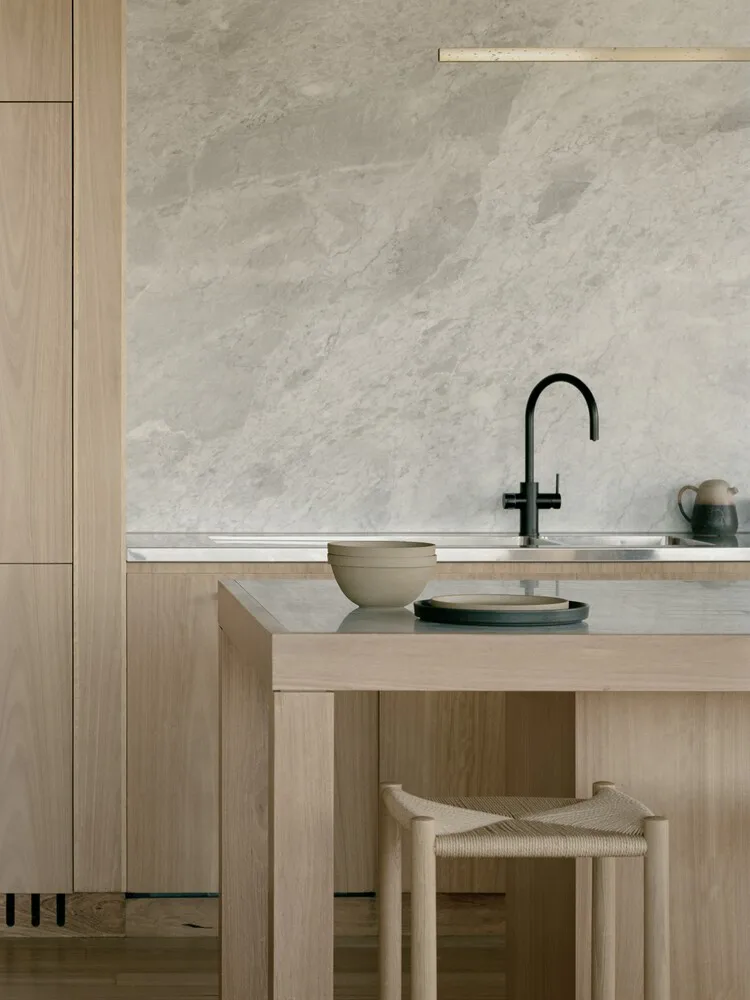
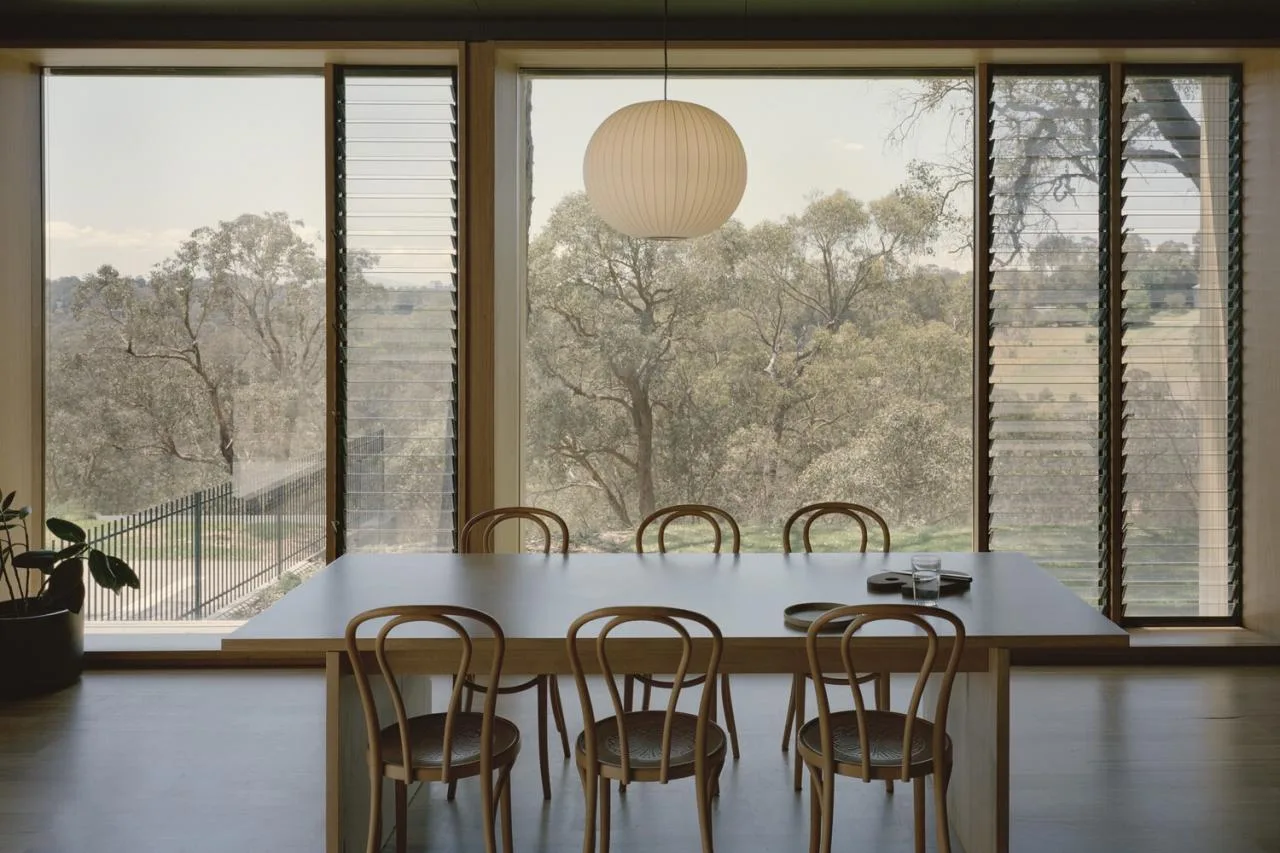
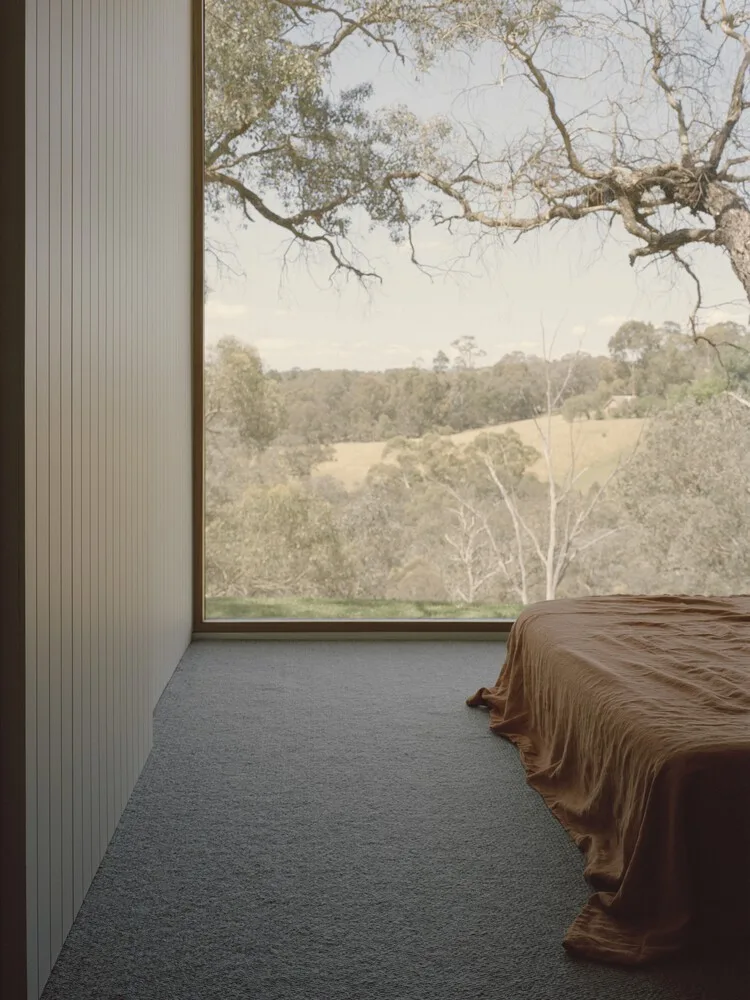
The public and private areas are clearly divided by a central service strip. This linear space accommodates the kitchen, pantry, study, bathroom, and storage, all thoughtfully arranged. Wooden decorative panels and integrated sliding doors cleverly conceal these functional areas. The northeast facade features deep wooden French windows, with sills of varying depths integrated with wooden shelves and benches. These elements add warmth and artistic charm while framing the spectacular views outside.
This home incorporates several sustainable design features, including solar panels, electric heating and air conditioning systems, double-glazed windows, high-efficiency insulation, passive solar orientation, and movable external sunshades to reduce summer heat gain.












Must log in before commenting!
Sign Up