
1. The current technological level of the industry is primarily reflected in the following areas:
(1) Design
In recent years, decorative design has gained increasing attention within the industry, demonstrated by several trends:
① More specialized design: Large-scale professional design firms have emerged and expanded rapidly. Major architectural decoration companies have established independent design institutes and studios, significantly increasing the number of professionals in the field.
② Advanced design tools and technologies: Computer-aided design (CAD), computer-aided engineering (CAE) software, and 3D virtual technology are now widely developed and applied.
③ Evolving design concepts: The focus has shifted from mere appearance and convenience to emphasizing personalized creativity, energy efficiency, environmental protection, and resource recycling.
However, compared to advanced international standards, domestic design still faces many challenges, such as a lack of innovation and insufficient integration between the design and construction phases.
(2) Construction Technology and Techniques
The level of industrialization in this sector continues to improve, especially with the ongoing advancement of mechanization. By leveraging various mechanical devices, computers, communications, safety, and transportation equipment, companies are able to execute complex construction processes with higher standards. This not only boosts safety and efficiency but also effectively reduces construction costs.
Technological progress is rapid, particularly in curtain wall construction, which after thirty years of development, now matches or even surpasses international standards in some aspects. For instance, domestic companies have mastered specialized techniques such as irregular block and non-smooth surface curtain walls, developed new materials like particle and reflective interlayer laminated glass and vacuum glass, and constructed innovative curtain wall structures such as cable-supported and double-ventilated curtain walls. Energy-saving technologies like photovoltaic curtain walls and roofs have also seen significant growth in China.
Nevertheless, there remains a gap with leading international standards in areas like mechanization, organizational efficiency, component standardization, new material R&D, and process innovation.
(3) Project Management
Driven by advancements in information technology and intense industry competition, project management has evolved dramatically. The industry has shifted from extensive, inefficient labor management to refined, efficient practices. Information products such as Enterprise Resource Planning (ERP) systems and Office Automation (OA) systems are now widely implemented, greatly enhancing project management efficiency.
2. Industry Development Trends
(1) Integration of Informatization and Industrialization
“Informatization” refers to leveraging computer hardware, software, and network technology to enhance the accuracy and real-time nature of information transmission, as well as the efficiency of resource management and allocation, through the establishment of information infrastructure and application systems. “Industrialization” is characterized by technological advancements in construction organization and operations, including increased mechanization, timely equipment upgrades, and continuous optimization of processes, all leading to improved labor productivity and product quality.
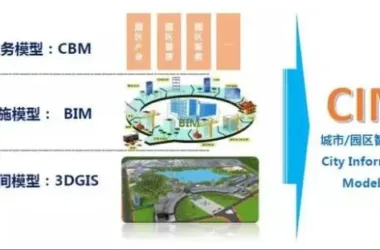
According to the “Several Opinions on Accelerating the Deep Integration of Informatization and Industrialization” jointly issued by the Ministry of Industry and Information Technology and other agencies, as well as the “2011-2015 Outline for the Development of Informationization in the Construction Industry” by the Ministry of Housing and Urban-Rural Development, the goal during the Twelfth Five-Year Plan period was to popularize information systems in construction enterprises and accelerate the adoption of Building Information Modeling (BIM) and network-based collaborative work. This would facilitate the development of IT standards, promote the industrialization of software with independent intellectual property rights, and foster a group of construction enterprises with world-class information technology capabilities. Supported by national policy, leading companies in the industry are gradually achieving deep integration of informatization and industrialization, fully applying information technology to design and construction, and further strengthening their competitive positions.
The informatization and industrialization of the architectural decoration industry are mainly reflected in the application of information infrastructure and management systems in enterprise and project management, increased mechanization of construction, and continuous process improvement. A widely promoted production method, characterized by both industrialization and informatization, is factory-based production of components. This approach shifts the production of decorative components from on-site processing to off-site, factory production, with on-site assembly. Benefits include improved construction efficiency, reduced material and energy use, and lower noise, dust, and waste emissions at construction sites.
According to the Twelfth Five-Year Plan for the Chinese architectural decoration industry, by 2015, the industry aimed for major breakthroughs in leading technologies and a significant increase in the proportion of standardized, industrialized components. The target finished product rate for new construction projects was set above 80%, and over 60% for renovation projects. Efforts were also to be made in assembly technologies, R&D, industrial production, and modular design. In the current competitive landscape, the factory production method for decorative components is widely recognized as a key strategy for industry advancement. Leading companies such as Jintanglang, Yasha Co., Ltd., Hongtao Co., Ltd., Guangtian Co., Ltd., Ruihe Co., Ltd., and our company, have already implemented or plan to actively promote industrialized component projects.
(2) Development and Integration of Energy Conservation, Environmental Protection, and Technological Innovation
Energy conservation and environmental protection focus on resource recycling and efficient use of resources and energy, minimizing the environmental impact of construction, and ultimately achieving harmony between humans, buildings, and the environment. Technological innovation involves the research and application of new materials, technologies, and processes to improve productivity, reduce pollution, and drive industry progress. Green and environmentally friendly goals guide technological innovation, and both are essential to the industry’s future.
China’s Twelfth Five-Year Plan emphasizes technological progress and innovation as key to transforming the development model and achieving sustainable growth. The plan for the architectural decoration industry sets out that over the next five years, the main goals should include environmental protection, energy conservation, emission reduction, and low-carbon development, while pursuing innovations that support a circular, low-carbon, and ecological economy. The technological development goals include intensifying research and application of new curtain wall technologies to shift the industry from a manufacturing powerhouse to a technological leader, securing independent intellectual property rights in energy-saving curtain wall technologies, and promoting the use of energy-, material-, and land-saving products and technologies. The plan aims to reduce waste generation from decoration and renovation projects by 40% per 10,000 yuan of output by 2015 compared to 2010, cut harmful emissions by 50%, and lower energy and water consumption by 30% for completed projects.
(3) Increasing Market Concentration
Low market concentration has long characterized China’s building decoration industry. However, since 2005, industry integration has accelerated. According to data from the China Construction Industry Association, the number of companies decreased from 190,000 in 2005 to 148,000 in 2010, while the number of certified engineering firms rose from 45,000 to 58,000. The average output value of the top 100 enterprises jumped from 358 million yuan to 1.02 billion yuan. In 2011, the industry counted about 145,000 enterprises, with an average output value increase of approximately 15%, and the leading companies growing at over 20%. By 2012, the number further dropped to 142,000, with continued optimization of the industry structure.
As the industry develops, integration will only intensify. This is necessary for companies to overcome development bottlenecks, integrate resources, and achieve global expansion, marking the industry’s transition from growth to maturity. With improved market-driven resource allocation and higher industry development, top-ranked companies with substantial assets and strong management can use capital markets to expand through restructuring, mergers and acquisitions, or strategic alliances, forming large groups specializing in design, production, and construction, and securing strong competitive positions. Inefficient small and medium-sized enterprises, on the other hand, will face elimination from the market.
The Twelfth Five-Year Plan for the architectural decoration industry calls for reducing the number of industry enterprises to around 120,000 by 2015—a decrease of 30,000 compared to 2010. The average output value of the top 100 public building decoration and renovation enterprises is targeted at 2.5 billion yuan, with the largest leading enterprise reaching 13 billion yuan in engineering output value. The plan also aims to have over 25 listed companies.












Must log in before commenting!
Sign Up