
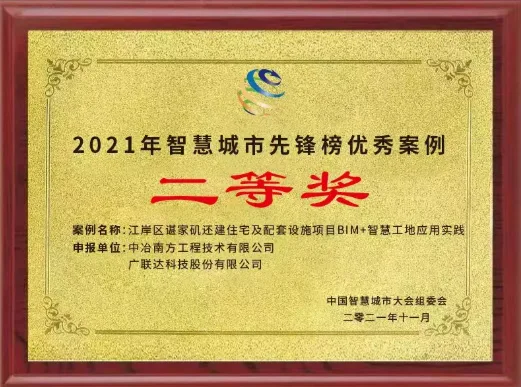
At the recent China Smart City Conference, the winners of the “2021 Smart City Pioneer List Excellent Application Cases” were announced. Among the honorees, the “BIM+Smart Construction Site Application Practice Case” for the Chenjiaji Residential and Supporting Facilities Project in Jiang’an District—jointly submitted by MCC Southern Engineering Technology Co., Ltd. and Guanglianda Technology Co., Ltd.—secured the second prize.
Below is a comprehensive overview of this award-winning project:
01 Project Background
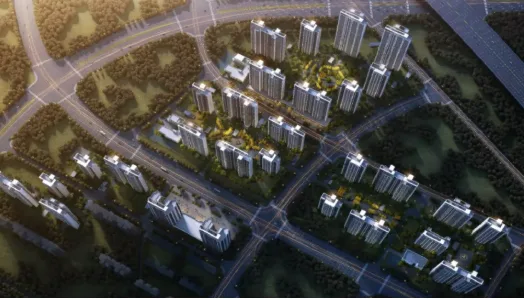
The Chenjiaji area, positioned as the starting point for the Yangtze River New City, has undergone significant planning and development adjustments. In line with the Changjiang New City requirements, its overall urban layout and function have been strategically realigned, establishing it as the core zone for Wuhan’s Changjiang New City construction.
The H1-H4 plots of the Chenjiaji Residential and Supporting Facilities Project, located in Jiang’an District, Wuhan, are developed by Wuhan Urban Industry Investment Group Co., Ltd. These plots are situated along both sides of Xingshen Avenue, north of Zhixing College and south of the Third Ring Road. Specifically, H1 is west of Xingshen Avenue and north of Spruce Street; H2 lies west of Xingshen Avenue, south of Spruce Street, and north of Harmony Avenue; H3 is west of Xingshen Avenue and south of Harmony Avenue; H4 is east of Xingshen Avenue, south of Spruce Street, and north of Harmony Avenue.
Covering a land area of 202,000 square meters, the project encompasses a total construction area of 874,700 square meters. Of this, 659,300 square meters are above ground—630,700 allocated for residential use and 28,600 for supporting facilities—while 215,400 square meters are underground. The plot ratio is 3.26, accommodating approximately 6,535 households, 6,559 motor vehicles, and 3,412 non-motor vehicles.
The project follows the EPC (Engineering, Procurement, and Construction) contracting model with MCC Southern Engineering Technology Co., Ltd. serving as the main EPC contractor. Preliminary planning incorporates a comprehensive information management system throughout the EPC process. By applying BIM technology across the project lifecycle, the initiative aims to enhance quality and efficiency in planning, design, construction, and operations. This approach fosters proactive design, refined management, minimizes rework, saves time and costs, and achieves high-standard, high-quality construction outcomes.
02 Application Content
1. Information Management Planning
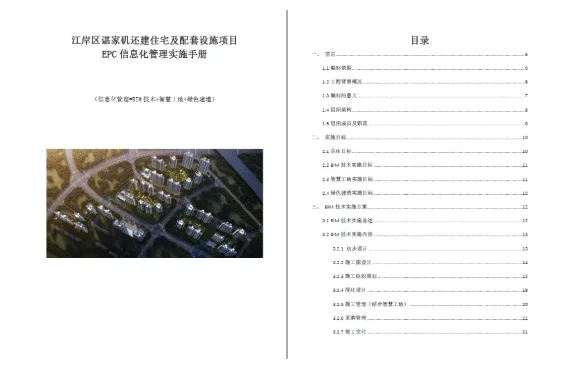
(1) Information Management Implementation Manual
The project employs advanced technologies including BIM, smart construction sites, and green building practices. These are integrated throughout design and construction phases to optimize control and enable informed decision-making regarding project progress, quality, safety, costs, resource conservation, and environmental protection.
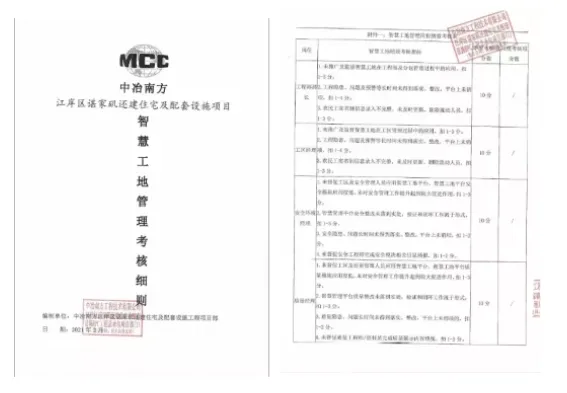
(2) Smart Company Management and Assessment Guidelines
Based on this project, MCC Southern developed a comprehensive set of standardized management and application procedures, including BIM implementation plans, green building protocols, and smart construction site strategies. The smart construction site solution encompasses production, quality inspection, safety checks, hazard management, and labor oversight. This marks MCC Southern’s inaugural BIM+smart construction site implementation plan, setting a precedent for future projects.
2. BIM Applications
(1) Proactive BIM-Driven Design
After finalizing the scheme design, the team employed BIM for preliminary design, focusing on collaborative coordination among building structure and MEP (mechanical, electrical, plumbing) disciplines. This enabled precise analysis of height and area indicators, controlled design parameters, and optimized plans. Construction drawings were further refined using collaborative BIM tools for clash detection, pipeline integration, and net height optimization. Green building software was integrated to conduct energy-saving calculations and performance analyses, fully leveraging BIM’s potential in proactive design.
(2) Detailed BIM-Enabled Design
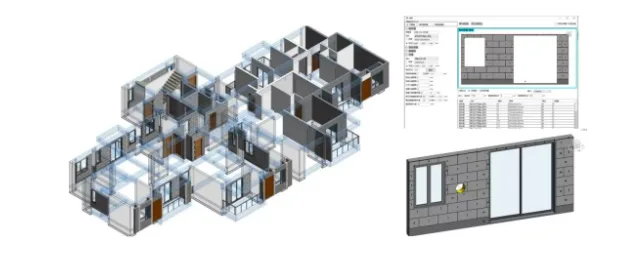
1) Structural Reservation and Embedding:
Before pipeline installation, all wall and beam penetrations are precisely located, and reservation drawings are prepared to guide construction, preventing secondary drilling during MEP installations.
2) Parametric Brick Layout Planning:
Leveraging BIM’s 3D parametric and visualization capabilities, brick layouts in critical areas are pre-planned, ensuring optimal masonry arrangements.
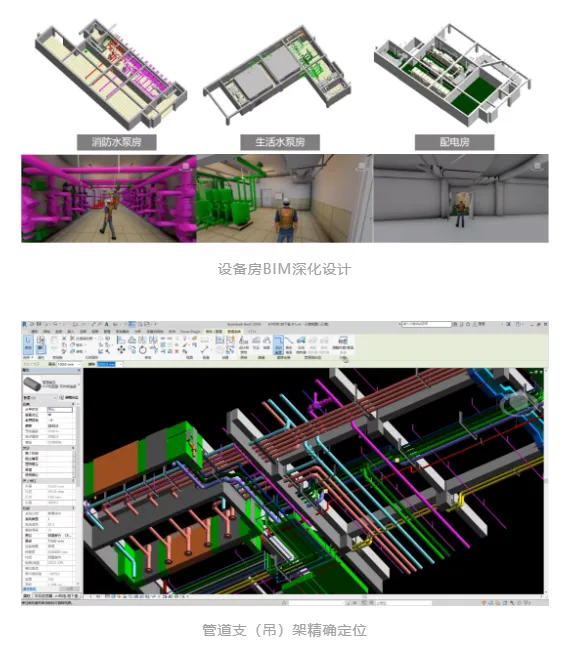
3) MEP Installation Detailing:
Using the BIM model, detailed 3D drawings were developed for complex nodes, pipeline supports, and component placements, facilitating efficient, high-quality construction execution.
(3) Construction Organization Planning
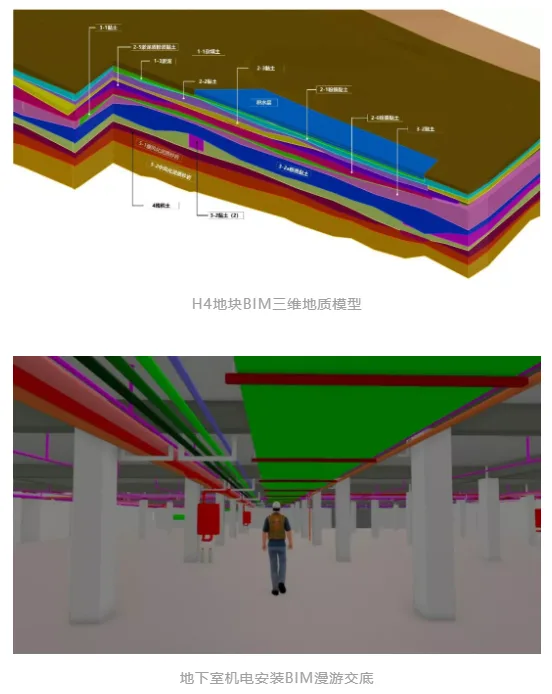
1) BIM-Based Construction Disclosure:
The design team used BIM visualization to thoroughly review and disclose construction drawings, improving coordination between design and construction. For complex geological conditions, a 3D geological model was created in Civil3D before excavation, enabling 3D visualization and simulation for site briefings.
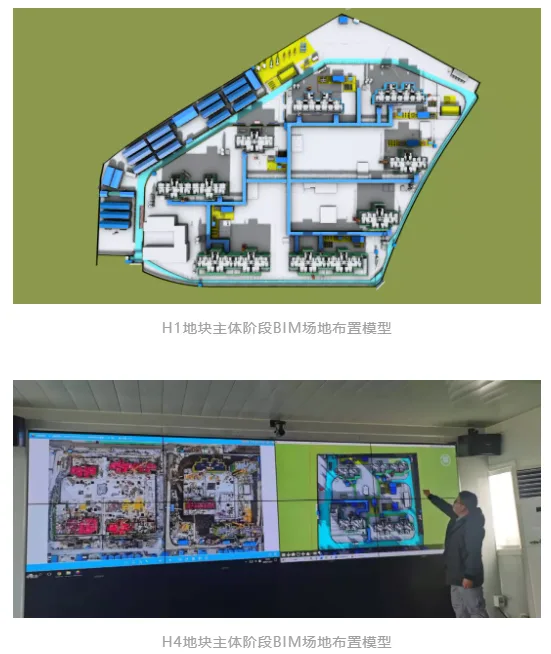
2) Construction Layout Simulation and Optimization:
BIM was applied to model temporary facilities based on the construction plan. Simulations optimized site layout to reduce material handling, ensure hygiene and safety, and efficiently place cranes, guardrails, and living areas. Immersive visualization and animation enabled real-time identification of design flaws, minimizing losses from inadequate planning.
3) Progress Simulation and Optimization:
Using Guanglianda Zebra Progress software, the team developed efficient schedules, calculated the shortest construction durations, and optimized plans. This proactive scheduling prevented conflicts, tracked changes in critical paths, and provided timely risk alerts.
4) Construction Scheme Simulation:
BIM 3D models simulated construction processes to identify weaknesses, enhance stakeholder communication, build consensus, and facilitate seamless handover.
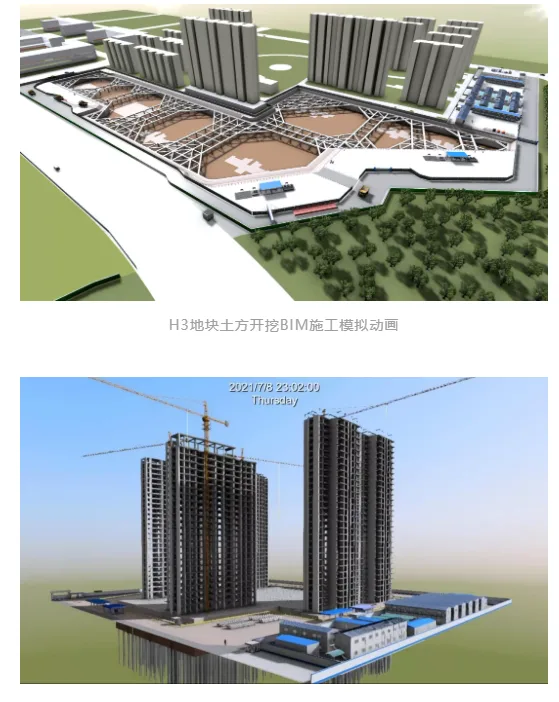
3. BIM+Smart Construction Site Platform
This project employs a BIM+smart construction site platform for comprehensive site management, covering production scheduling, safety, quality, personnel, and environmental protection.
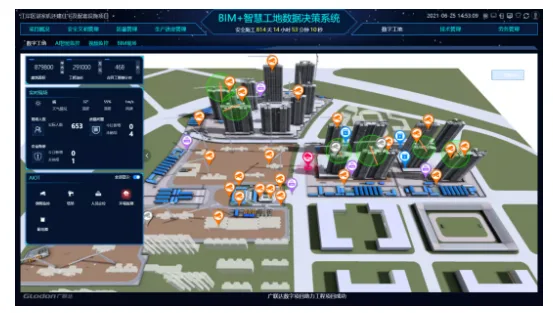
(1) Production Schedule Management
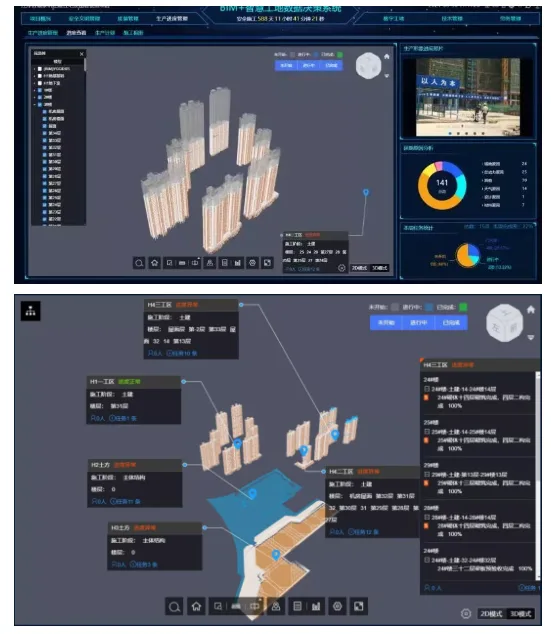
1) Progress Management:
On-site quality engineers receive clear work assignments and report task completion in real time via mobile devices. This process enables automatic tracking of production data, one-click report generation, and supports digital production meetings.
2) Construction Album Management:
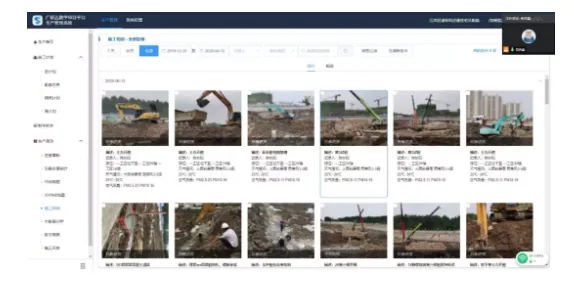
On-site photographs are captured via mobile devices and systematically organized into modules such as quality, safety, and progress. These provide valuable evidence for project acceptance and verification.
3) Equipment Usage Statistics:
Engineers record and analyze the usage and workload of on-site equipment like cranes and excavators to ensure accurate management.
4) Material Statistics Management:
Material managers track inbound and outbound materials via mobile devices. Real-time dashboards allow all departments to monitor material management effectively.
5) Drone Aerial Photography:
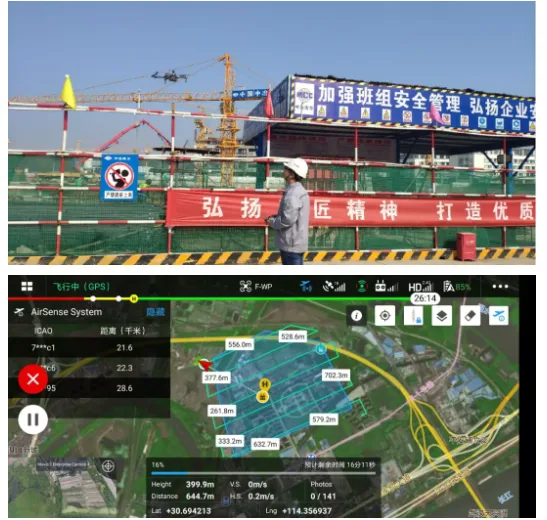
BIM engineers and managers regularly collect on-site imagery, including drone aerial surveys. These images support progress monitoring and quality inspections. 3D reconstruction services assist in progress analysis and earthwork volume calculations.
6) Remote Conference System:
The department’s remote conferencing system enables contactless online meetings across devices, supporting real-time chat, document sharing, meeting recording, and data archiving.
7) Conference Room Screen System:
The large screen in the conference room facilitates meetings, supervision, and training activities.
(2) Safety and Civilized Management
1) Safety Inspection:
The safety management system addresses hazard identification and mitigation, involving all management levels. Focused prevention and in-process controls effectively eliminate accidents.
2) Tower Crane Monitoring and Hook Visualization:
The system monitors real-time tower crane operations, issuing alarms and halting unsafe actions when necessary. Video displays assist operators in assessing hook status for safe, efficient operation.
3) Distribution Box Monitoring:
Intelligent monitoring of site electrical boxes ensures safe, efficient electricity usage through data-driven management.
4) VR Safety Education:
Integrating on-site BIM with virtual hazard scenarios, staff receive immersive VR safety training that enhances awareness, replacing traditional lecture-based methods.
5) Artificial Intelligence (AI):
The platform’s AI algorithms automatically detect unsafe behaviors (e.g., missing helmets or masks, smoking, unauthorized gatherings), issuing alerts and recording violations.
6) Video Surveillance:
24/7 video monitoring provides real-time site oversight and stores data for up to 45 days, covering site activities and critical zones.
7) Environmental Monitoring and Automatic Sprinkler System:
Sensors track wind, noise, PM2.5 levels, temperature, humidity, and weather. Data is displayed and analyzed on the platform, triggering automatic sprinklers when dust exceeds thresholds.
(3) Quality Management
During inspections, quality engineers document issues via mobile devices. The system automatically notifies responsible personnel for timely rectification. Intelligent workflows support inspection, correction, and re-inspection, building a quality management data warehouse for the enterprise.
(4) Personnel Management
1) Real-Name Labor System:
Labor specialists use a real-name registration system to create and manage personnel files, promoting healthy employment practices and facilitating wage payments and dispute prevention.
2) Epidemic Prevention and Temperature Monitoring:
Facial recognition and temperature screening modules monitor all site personnel’s health status in real time, ensuring effective epidemic control.
03 Project Impact
By integrating BIM and smart construction digital technologies, the project achieves comprehensive, real-time management of key factors—personnel, machinery, materials, methods, and environment. This fosters digital, systematic, and intelligent project management, driving transformation and upgrading of management processes. The platform supports multiple fields and application levels as required by the project.
1. Enhanced Design Quality: Collaborative BIM design provides an efficient platform that improves communication, enables early issue detection, reduces design changes, and raises drawing quality across disciplines.
2. Resource Integration: The management platform consolidates internal subsystems, offers reliable data services, encourages data sharing, and eliminates information silos, avoiding redundant investments and maximizing resource use.
3. Application Support: Establishing a data and service center, the platform supports applications in smart construction, resource management, collaboration, and emergency response.
4. Improved Management Services: The platform organizes and publishes information on safety, quality, materials, progress, attendance, environment, and surveillance, meeting site personnel needs with comprehensive query capabilities.
5. Leadership Decision Support: Utilizing integrated system data, the platform provides analytical reports and alerts to assist decision-makers.
04 Innovation Highlights
1. Integrated Design Cost Estimation: Using BIM forward design and quantity calculation software (Revit plugin), the project efficiently estimated costs for installation and reinforced concrete masonry work.
2. Dynamic Cost Management: Combining the digital project platform’s production module with BIM5D simulation, costs are calculated and summarized for each phase, maintaining control within reasonable limits.
3. IT-Driven Construction Management: The BIM+smart construction site platform supports tailored plans for production, safety, quality, personnel, and environmental protection, promoting green construction and advancing IT applications in construction management.
05 Social Benefits
The digital project approach, based on comprehensive information collection during construction, enables timely hazard identification, standardizes quality inspections and testing, ensures engineering quality, and supports quality traceability and real-name labor management.
Digital construction fosters reliable big data, assisting regulators in overseeing site quality, safety, personnel, and integrity. It creates a database for industry evaluation, laying the foundation for regulating employment and scaling the construction industry.
Ultimately, digital projects provide real-time, comprehensive, and intelligent monitoring of quality, safety, and workforce. This supports collaboration among workers, managers, and enterprise leaders, improving control over construction quality, safety, and progress while reducing waste.














Must log in before commenting!
Sign Up