
1. Core Components of Smart City Development
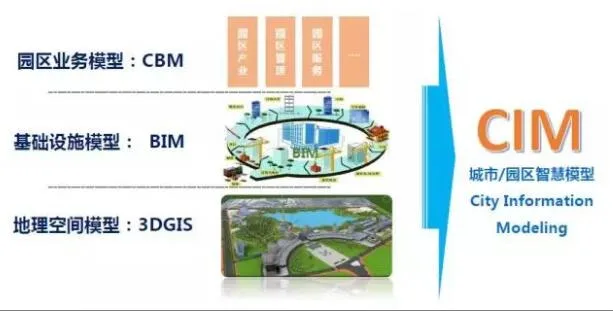
The foundation of smart city development is built on robust information technology infrastructure. Within this framework, advancing IT in the construction engineering sector is crucial. Building Information Modeling (BIM) technology integrates seamlessly throughout the entire construction lifecycle, supporting every stage and enabling a fully digitized, intelligent, and collaborative workflow.
2. The Intersection of BIM and Smart Cities
1. Holistic Perception
Smart city systems depend on a variety of sensing devices and intelligent tools to fully perceive environmental conditions, statuses, and locations in three dimensions. By dynamically capturing patterns of change and processing this sensory data alongside intelligent business processes, key urban systems can operate harmoniously and efficiently. Serving as an open, visual, and multidimensional database, BIM provides the ideal foundational data platform for digital city applications.
2. Intelligent Fusion
The core of smart city systems lies in the integration, analysis, and computation of vast amounts of urban data, with big data serving as the basis for informed decision-making. BIM, built on extensive data visualization, open sharing, and seamless cloud connectivity, ensures data is accessible for decision-making and applications anytime and anywhere.
3. Information Sharing and Interconnectivity
Network interconnectivity and integrated information sharing are essential for smart city development. The core objective is to enable comprehensive connectivity and interaction among people, objects, and systems. BIM’s open data structure, combined with IT technologies, offers a multidimensional data foundation to achieve this goal, supporting adaptive information acquisition, real-time feedback, and intelligent services at all times.
4. Sustainable Expansion
Smart city construction emphasizes people-centered, socially collaborative innovation spaces and public value. It requires continuous evolution aligned with economic, social, and environmental progress. BIM, as an expandable information carrier of multidimensional data, lays a strong foundation for system growth and helps prevent the need for system overhauls during future expansions.
3. BIM Applications in Smart City Contexts
1. BIM in Intelligent Buildings
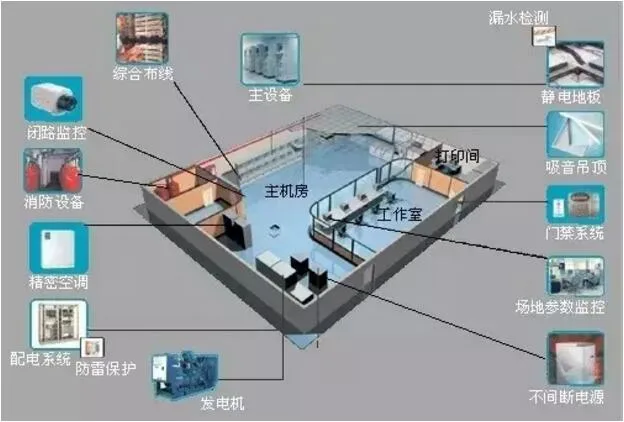
Building automation systems are organized into three layers: management, automation, and floor networks. Sensors monitoring temperature, pressure, and humidity connect to floor network controllers, while standard electricity meters link directly to the floor network and integrate with the automation layer. Automation layer controllers, equipped with powerful computing and storage capabilities, record data and issue precise control commands—such as adjusting valve openings or motor speeds. These controllers also send data to the management layer and servers, allowing operators to monitor and manage systems effectively. This data supports routine monitoring and AI/DI control points, facilitating AO/DO outputs. By leveraging this extensive data, BIM-based operation and maintenance greatly enhance building management, improving monitoring, increasing efficiency, and reducing reliance on manual control.
2. BIM in Underground Pipelines
Urban underground pipeline systems are complex, and hidden engineering problems can disrupt their operation. BIM technology addresses these challenges by creating a complete, transparent information database for underground pipelines. This database supports maintenance and renovation efforts effectively. BIM’s integration and processing of pipeline information facilitate more intuitive and convenient development of urban underground spaces. Additionally, highly integrated data analysis provides strong technical support for urban construction projects.

3. BIM in Planning and Management
BIM excels not only in optimizing above-ground structures and pipelines but also in linking underground pipelines with municipal services. By integrating three-dimensional models of above-ground buildings, a comprehensive city-wide information model that covers both above and below ground is created. This model offers a broad, detailed representation enriched with analyzable data, providing a new approach to urban planning and management. Powered by big data, this urban information model is applicable across various planning units—from individual buildings and residential areas to public buildings and commercial districts. Spanning from specific points to wide areas, big data brings significant convenience and efficiency to urban planning and management.















Must log in before commenting!
Sign Up