
Preface
Advantages of Aluminum Alloy Formwork:
1. Lightweight: weighs less than 19 kg per square meter.
2. High strength and precision with minimal surface joints.
3. Easy to assemble: can be manually put together or lifted as a whole by machinery.
4. Standardized construction with a long service life, typically up to 300 uses.
5. Versatile applications including wall formwork, floor slabs, columns, beams, climbing formwork, and more.
6. Produces smooth, flat concrete surfaces that may not require additional finishing.
7. Accelerates construction, achieving speeds 2-3 times faster than traditional formwork.
8. High load-bearing capacity: can support up to 30 kN per square meter.
9. High recycling value with significant cost-saving benefits.
Construction Preparation
Thorough preparation before construction is essential to ensure smooth operations and maintain quality standards.
1. Technical Preparation
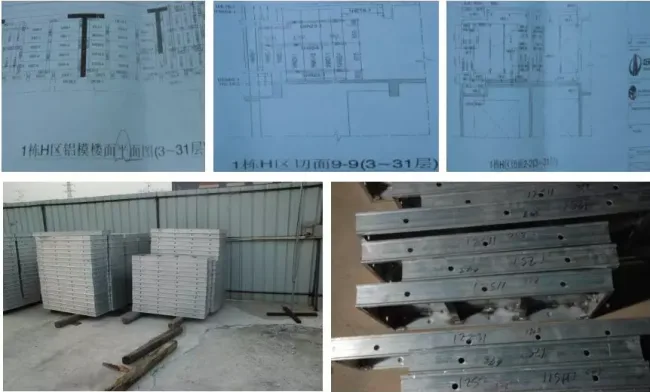
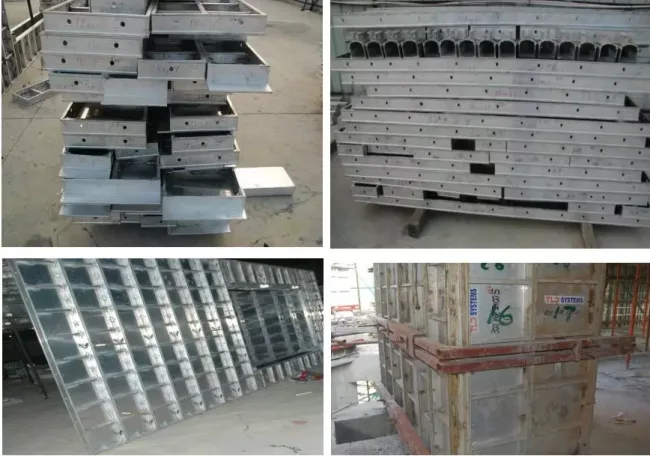
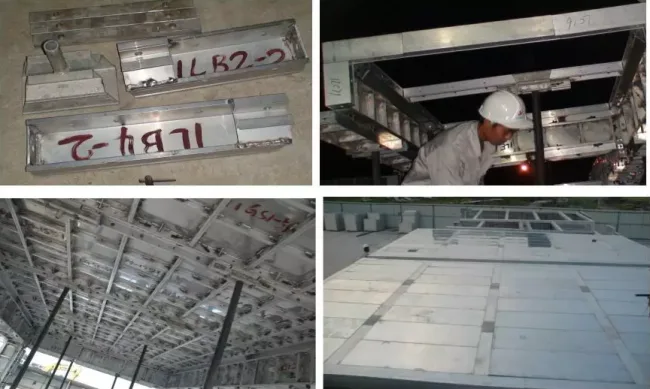
Standardized small panels are stacked with “B” indicating the floor slab.
Wall panels are marked with “W” on the border, while “E” denotes the beam bottom. The aluminum alloy panels typically range from 4 to 8mm thick, with a standardized size of 398mm by 1198mm as shown.
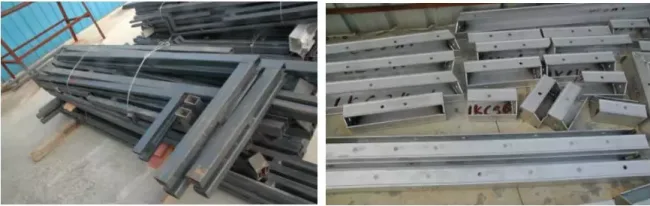
The letter ‘R’ stands for the commanding rod, primarily used for reinforcement—similar to steel pipes reinforcing wooden molds.
The “C” slot is designed for load-bearing and transmission, available in various forms for widespread use.
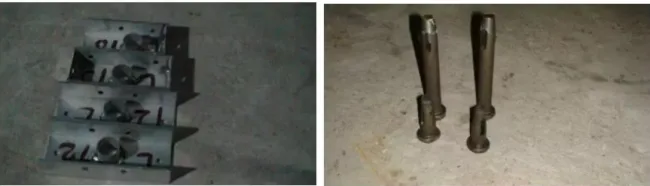
The load-bearing component, indicated by “T,” connects and transmits forces within the keel and is commonly attached to the beam bottom plate with pin iron sheets.
Pins act as fasteners, similar to nails, and are classified into short, medium, and long types, serving a wide range of applications.
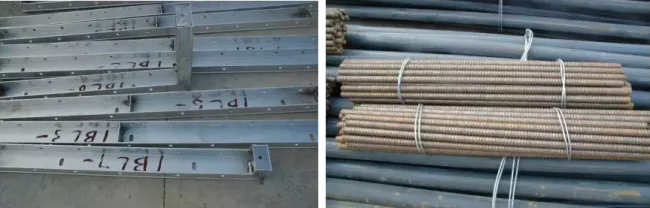
The “keel,” marked as “B,” connects small panel pieces and forms part of the panel structure itself.
Screws are used for securing walls and are often covered with PVC tubing for protection.
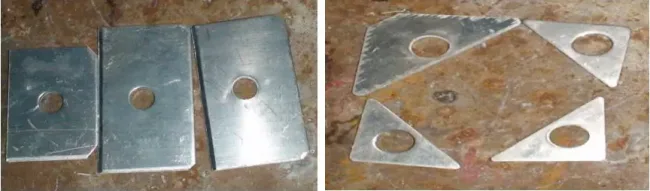
Gaskets are used to increase thickness when pins and iron plates do not fully lock components, helping to achieve a secure fit.
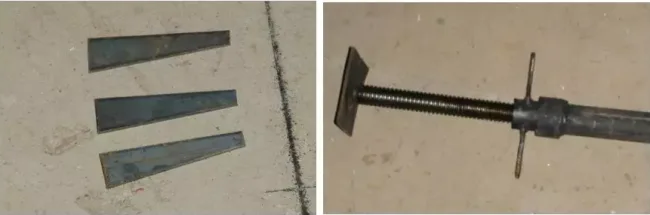
Iron plates serve to lock pins firmly in place.
Supports transfer vertical loads effectively.
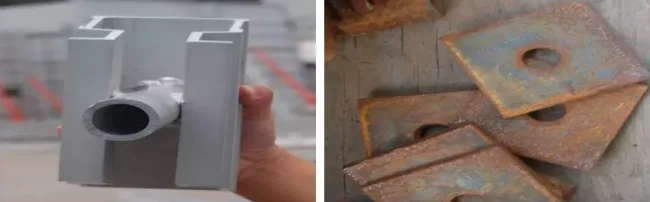
The “meteor hammer” connects primarily to the support poles and is often positioned beneath the keel.
Pulling wires function during reinforcement, working similarly to a “mountain buckle” to secure elements.
2. Labor Preparation
Aluminum formwork construction has been used in Hong Kong for over a decade. Operators require minimal woodworking skills and do not need extensive experience, enabling quick on-site training. After guidance, teams can typically assemble two to three floors efficiently. For example, the Guangzhou Wenchong Vanke project divides each floor into several units, each comprising about five workers.
3. Site Preparation
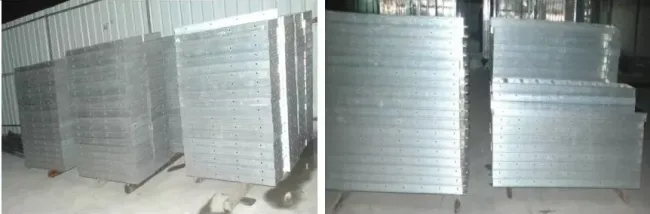
The construction site should be organized with wall panels and floor slabs stored separately to facilitate easy material transport.
4. Construction Equipment
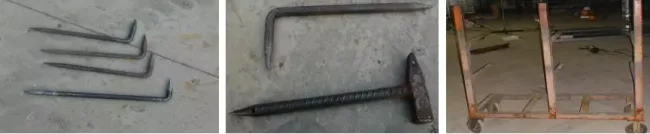
Hammers and hooks are the primary tools used for reinforcing dowels.
Transport vehicles assist in assembling and moving materials around the site.
Process Flow
Overall Construction Sequence:
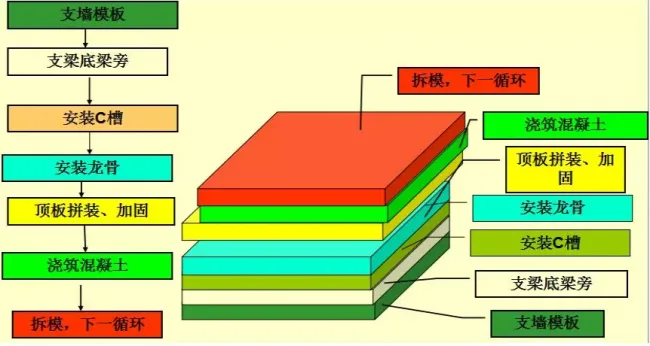
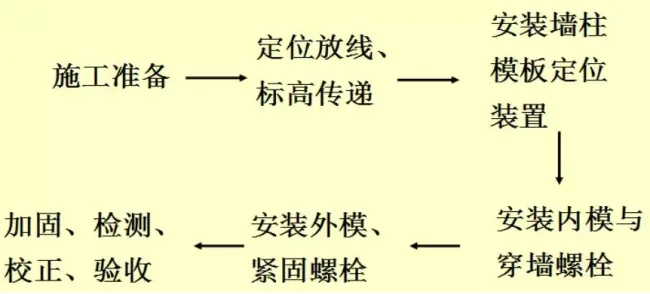
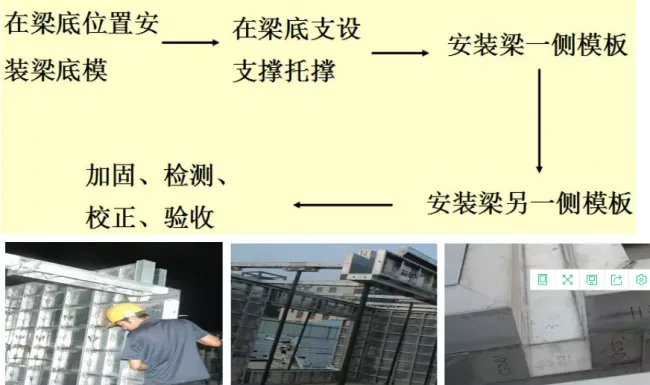
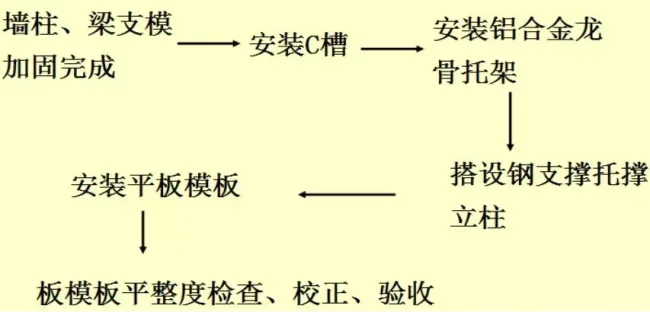
Support wall formwork → Support beam bottom → Install C-groove → Install keel → Assemble top plate → Reinforce → Pour concrete → Remove formwork → Repeat cycle
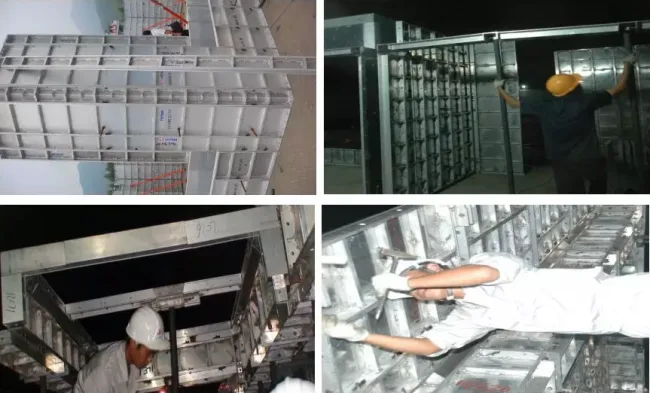
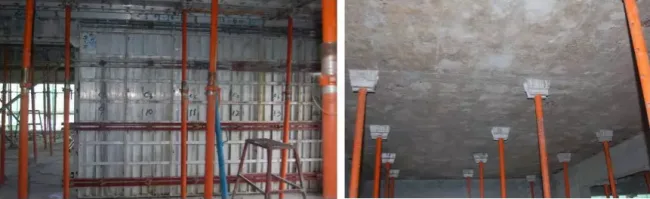
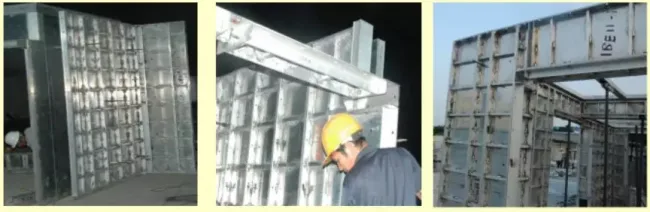
1. Wall and Column Formwork Construction
2. Structural Beam Formwork Construction
3. Structural Slab Formwork Construction
Quality Standards
1. Formwork and supports should be designed based on the structural form, load requirements, soil conditions, construction equipment, and material availability. They must provide sufficient strength, rigidity, and stability to reliably bear the weight, lateral pressure, and construction loads from concrete.
2. Formwork must be inspected and approved before concrete pouring.
3. The removal sequence and safety procedures for formwork and supports should follow the construction technical plan.
Note: The dismantling order for aluminum formwork differs from traditional wooden formwork. Components supported last should be removed first. Specifically, start by removing the panel molds beginning at the keel, then take out pins, remove the panel molds, followed by the C-grooves, and finally the column molds. Any supporting parts must remain until the concrete reaches sufficient strength. Typically, 4-6 layers of support poles, meteor hammers, and other structural elements are retained during dismantling.
4. Formwork joints must be sealed to prevent grout leakage. Before pouring concrete, prefabricated panels should be dampened but free of standing water.
5. The contact surface between the formwork and concrete should be clean and coated with a release agent that does not impair structural integrity or interfere with finishing works.
6. Remove all debris from inside the formwork before pouring concrete.
7. Testing Methods
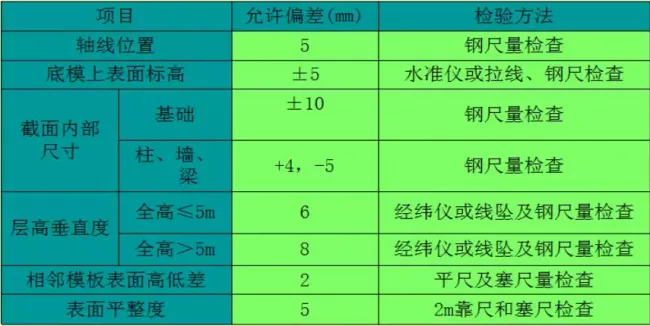
Permissible deviations and inspection methods for cast-in-place structural formwork installation:
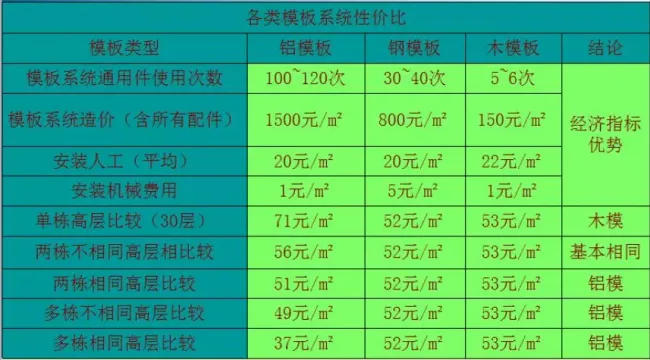
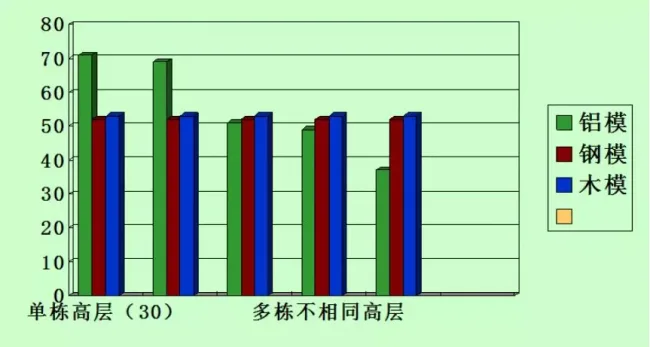
Formwork Scheme Comparison
Article source: Self-study platform for real estate developers














Must log in before commenting!
Sign Up