
1. Transportation
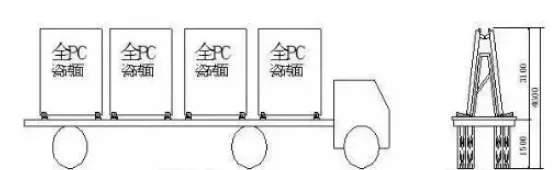
Due to the exposed reinforcing bars on the components, they cannot be stacked directly on top of each other. After maintenance, the prefabricated components are placed on transport racks, with two components per rack. To protect the exterior, the steel bars are inserted inward and positioned forward. The angle of placement should be no less than 30° to prevent tipping over. All components are transported using these racks. To avoid damage during transport, the racks should rest on sleepers, and the components must be securely fixed to both the rack and the transport vehicle.
Low flatbed trucks are recommended for transporting prefabricated components. These trucks should be equipped with dedicated racks and reliable stabilizing measures. Components should only be transported once their concrete has reached the design strength. Exterior wall panels are transported vertically using prefabricated assembly methods, while composite floor slabs, balcony panels, and stairs can be transported horizontally with correct support points selected.
2. On-Site Stacking
Upon arrival at the construction site, storage yards should be organized based on specifications, component types, parts, and lifting sequence. Components can be stacked together with their transport frames within the tower crane’s effective reach, leaving clear passageways between stacks. If stacked directly, sleepers must be placed underneath, and reliable anti-overturning measures must be implemented.
Composite floor slabs may be stacked up to six layers high. Each layer should be leveled and compacted, with support pads vertically aligned and properly positioned at the lowest layer.
Exterior wall panels can be arranged by inserting or leaning them against each other. The stacking racks must be rigid, supported, and stabilized. Connecting adjacent racks as a whole is recommended, with the outer surfaces of the panels facing outward. Vulnerable areas such as water stop strips, openings, and corners should be reinforced with standardized protective pads or specialized accessories.
3. Prefabricated Component Lifting
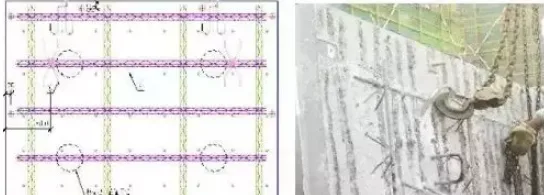
1. Positioning and Layout
2. Preparation Before Lifting
Before construction, all prefabricated components should be classified and inventoried, including rebuilt parts. Appropriate lifting equipment should be selected accordingly. The mechanical model and lifting devices are chosen based on the component’s weight, shape, installation height, and site conditions. The crane’s turning radius must cover the working area and facilitate installation and disassembly.
3. Confirm Vertical Reinforcement of Walls
Verify the position and verticality of base reinforcement by securing the steel formwork.
4. Elevation Adjustment of Embedded Bolts
Elevation adjustments of pre-embedded bolts should meet these points:
- During initial setting of solid wall panel bases, roughen surfaces with steel drills and clean away dust before lifting.
- Use level gauges to adjust embedded bolt elevations.
- Confirm the flatness of the foundation surface.
5. Preparation for Lifting
Before hoisting, mark control dimensions such as centerlines and elevations on both components and supporting structures according to design. Inspect and mark pre-embedded parts and connecting steel bars as required.
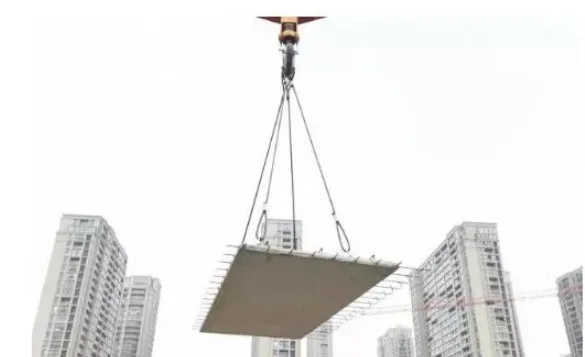
Lift prefabricated components following standard drawings or design specifications. During lifting, the angle between the lifting rope and the component’s horizontal plane should not be less than 45°. When using hangers, their suitability should be verified through empirical calculation.
Lifting points should be positioned to ensure components lift horizontally and avoid hitting edges or corners. Once lifted smoothly, move the crane arm steadily and manually guide the component into place as it nears the building.
6. Lifting
The lifting point should align with the component’s center of gravity. Adjustable horizontal lifting beams are recommended to ensure even lifting and positioning. Standard lifting devices may include embedded lifting rings or connected steel sleeves. Avoid striking component corners during lifting. Move the crane arm at a constant speed and manually align the component when approaching the building.
Additional considerations during lifting:
- If the component’s top surface is uneven when lifted off the ground, adjust it to horizontal before positioning to facilitate steel bar alignment and placement.
- For horizontal wall loading, install the lifting device on the wall first, lift the wall horizontally to the ground, then move the device to the top of the wall. Place tires or rubber pads under the wall and rotate it vertically to prevent corner damage.
7. Lifting and Transportation
After the component is lifted flat, release the pin and raise it. Stop approximately one meter above the ground to eliminate swinging. Ensure steel wire ropes on wall panels are taut before lifting. Sound warnings should be given to clear construction personnel from the area.
8. Positioning
Prefabricated components should be lifted and lowered smoothly along the designated lifting route. First, lift and move the component to the working surface, then pause about one meter above the floor. The operator guides the descent manually, using observation glasses placed on both sides of the wall. Mirrors help verify that connecting steel bars align properly with holes and are accurately inserted into the grouting sleeves. The allowable vertical deviation for prefabricated walls is ±5mm.
Lower the component slowly onto the gasket and stop. It is strictly forbidden to stand beneath the lifting line, and lifted components must not collide with installed parts. At two-thirds the height of the prefabricated wall panel, brace the components with diagonal supports anchored to the floor with anchor bolts. The angle between the supports and floor should be at least 60°.
If the horizontal positioning deviation exceeds allowable design tolerances during construction, the component must be lifted and repositioned. Center points can be marked on both components and cast-in-place structures. The crane should only be detached after horizontal and preliminary diagonal connections are secured.
During testing, precision instruments control verticality; however, during actual construction, visibility may be limited, so a level ruler is used instead. Horizontal lines can be marked on components beforehand for accurate leveling.
Due to the heavy weight of components, manual placement is challenging. Therefore, increasing the number of hoisting and positioning workers is necessary to ensure accurate positioning through combined tension and top forces, avoiding collisions with installed components.
4. Installation and Adjustment
Prefabricated components should be lifted slowly, placed quickly, then lowered slowly. Exterior wall panels are installed using a top-down insertion method to ensure smooth placement. The lifting and adjustment process follows the steps: lift, position, preliminary calibration, and fine adjustment.
Panels lifted earlier should be temporarily supported during installation and on the floor. Key points during installation include:
- After removing column formwork, immediately check and adjust steel bar positions to avoid conflicts with beam bars and ensure proper beam placement.
- Before lifting beams, install one column hoop reinforcement in the core area. Only then lift beams and walls. After beams are in place, install two column hoop reinforcements to ensure core quality.
- Count bottom elevations of all beams before lifting. Arrange lifting plans for intersecting beams from low to high.
- Tie beam reinforcement only after wall lifting to avoid obstructing wall anchoring steel bars from penetrating beams.
Article source: Prefabricated technology















Must log in before commenting!
Sign Up