
Visiting a 50-story prefabricated residential construction site built by Goyo Construction in Japan was a rare and insightful experience for me, filled with many impressions and reflections.
Upon arrival at the site conference room, I noticed the safety helmets provided by the owner for visitors. These helmets were brand new, each equipped with a disposable sanitary guard inside—demonstrating a high level of hygiene and care. This was a stark contrast to the typical black, sweaty, and dusty helmets commonly seen on construction sites back home. Additionally, the hosts thoughtfully provided gloves and disposable socks for visitors.
▲ Prefabricated components being transported to the construction site
In the factory, the upper-row steel bars of the beams are tied together with the prefabricated components. After the floor slab is installed onsite, an additional layer of floor steel bars will be anchored and embedded into the concrete slab through pouring.
The main staircase is constructed from prefabricated steel structures and is installed two floors ahead of the floor structure. This approach facilitates easier movement for construction personnel, reduces the need for temporary passageways, and enhances site safety.
Prefabricated columns are installed with pre-embedded parts that were prepared in the factory beforehand to support onsite assembly.
The exterior wall tiles are also completed in the factory along with the prefabricated components. Unlike the common practice in China, where exterior walls are insulated externally, these tiles are directly affixed to the prefabricated concrete panels.
Japan’s advanced seismic technology is evident in this project—a 50-story prefabricated super high-rise residential building equipped with seismic nodes in its columns. This is truly impressive.
▲ The nodes of prefabricated beam-column components are reinforced with cast-in-place concrete on site
Taking the construction elevator upstairs, I saw that prefabricated beams on the ground car had already been lifted into place. The efficiency on Japanese construction sites is remarkable!
A team of five skilled industrial construction workers coordinates to install these prefabricated beams.
During prefabrication in the factory, openings for mechanical and electrical wiring are reserved within the beams.
Even the pre-embedded parts connecting to the tower crane are embedded in the factory. Each embedded part features eight screw holes with uniform threading. I also noticed that each bolt and nut was marked with diagonal colored lines — a detail that likely aids in quality control or assembly verification.
Indoor insulation is applied using sprayed foam adhesive, which is much easier to install compared to the traditional method of attaching insulation boards to exterior walls, commonly used in northern China. This method prevents insulation from falling off and allows for easy renewal after decades of use.
▲ The corridor wall features a concrete counter slope, with installation holes and embedded connecting iron fittings pre-installed
Pre-embedded parts required for the wall below the beam were carefully installed in the factory, reflecting meticulous construction and detailed design.
▲ Transporting wall panels to the floor for installation
▲ Installed balcony wall panels
▲ Nodes of installed seismic columns
The hooks for hanging electrical conduits are directly attached to the prefabricated floor without the need for sleeves or cable trays. The use of colorful wires helps distinguish different functions.
The bathroom is another example of industrialized integration: interior walls, tiles, and bathroom fixtures were all completed in the factory.
Ground pipelines are secured using galvanized brackets, and transition pads are carefully placed where hoses meet return beams. This prevents deformation caused by gravity over time, ensuring smooth operation.
▲ Insulation cotton wrapped around the drainage riser
This floor slab construction sample demonstrates excellent sound insulation design, which I believe will deliver impressive acoustic performance.
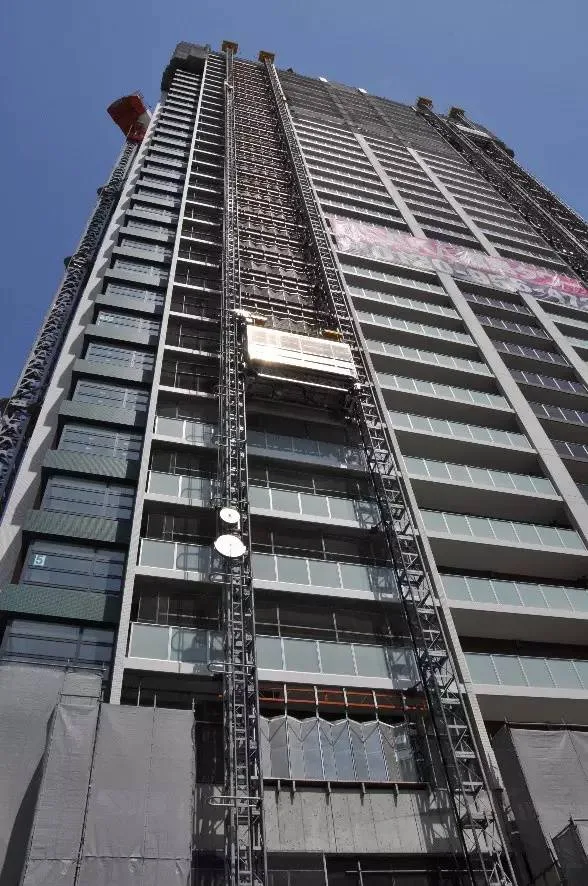
This 50-story prefabricated residential building had reached the 40th floor installation stage during my visit. The coordination between indoor wall installation, mechanical and electrical work, and decoration was seamless and well-organized. I am confident that the main structure will be completed soon after the roof is lifted and sealed.













Must log in before commenting!
Sign Up