
1. Introduction
The prefabricated prestressed double T-plate (hereafter referred to as the “double T-plate”) is a product of building industrialization, typically spanning 9 to 24 meters. It is extensively used in large-span building (roof) structural systems, such as public buildings and parking garages, across North America. This system offers numerous advantages including simplified construction (integrating roof slab and beam), large span capacity, lightweight design, cost efficiency, fire resistance, moisture protection, and accelerated construction progress. As a result, it has been highly praised and widely adopted by professionals in the industry.
China introduced this system in the 1960s and 1970s, implementing several projects. Recently, with the nationwide push for prefabricated buildings, double T-plate technology has gained renewed attention. It is now widely applied in numerous projects across various provinces in China, many of which have even established production systems dedicated to double T-plates.
Shanghai Pukai Prefabricated Building Technology Co., Ltd. has been responsible for detailed designs involving double T-plate technology in projects such as warehouses, factories, and garages. This article specifically focuses on the application of double T-plate technology in school construction projects.

Figure 1: Prefabricated Prestressed Double T-Plate (“Double T-Plate”)
2. Project Overview
This project is located in Yangpu District, Shanghai. It features a prefabricated concrete complex consisting of two teaching buildings, one administrative building, one cafeteria, and an activity center within a primary school. The total construction area covers 34,491.76 square meters, with 25,559.16 square meters above ground.
The structural system is an assembled integral concrete frame, classified as seismic grade two. The project employs six types of prefabricated components: truss prefabricated composite panels, prefabricated composite beams (including frame and secondary beams), prefabricated double T-plates, prefabricated stairs, prefabricated external infill walls, and prefabricated parapets.
According to the “Calculation Rules for Prefabrication Rate and Assembly Rate of HuJian Building Materials No. AI-BT-SC0-601,” this project uses Method 2 to calculate the prefabrication rate. This method calculates the floor slab contribution as the ratio of prefabricated formwork-free floor slab area to total floor slab area, and the beam contribution as the ratio of prefabricated beam length to total beam length. Since the double T-plate is a prefabricated reinforced concrete load-bearing component that integrates slab and beam, it contributes to both floor slab and beam prefabrication rates. Based on design documents, the prefabrication rate for each component is calculated at 40%.

Figure 2: Overall Aerial View of the Project
3. Double T-Plate Design
1. Introduction to Double T-Plate Technology
Double T-plates are primarily used in building and roof systems. As horizontal structural components, floor slabs connect vertical elements, forming a lateral force resistance system that transmits horizontal loads such as seismic and wind forces. Besides supporting vertical loads, floor systems also serve as transverse diaphragms, providing in-plane strength and stiffness necessary for horizontal load transmission.
Floor systems are categorized based on transverse diaphragm strength into “dry” (unpropped or pre-stressed diaphragms) and “wet” (topped diaphragms) systems. Dry systems consist solely of prefabricated floor panels that provide diaphragm function through panels and connectors. Wet systems involve placing steel mesh on prefabricated panels before pouring a concrete topping. In Western countries, dry floor systems are common in medium to low seismic zones, while wet systems are preferred in high seismic zones. Currently, China mostly adopts wet floor systems.
The mature technical solution for double T-plates in frame structures is a precast concrete frame combined with a double T-plate floor system:
- Floor slabs are constructed using industrialized double T-plates.
- Frame beams are either cast-in-place or prefabricated composite beams, with prestressed composite beams prefabricated via pre-tensioning if required.
- Frame columns may be cast-in-place or prefabricated concrete columns.
- New building wall panels serve as exterior walls.
The double T-plates are made from high-strength concrete and prestressed spiral ribbed steel bars or strands. Although the slab can span up to 30 meters, for transportation and lifting convenience, it is recommended to keep spans between 12 and 18 meters. This range balances ease of transport, construction efficiency, and cost-effectiveness. The weight of individual double T-plates varies as shown below:
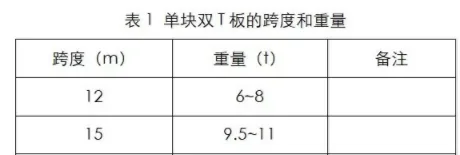
Unlike large-span projects such as factories and warehouses, this school project involves teaching buildings, administrative buildings, a cafeteria, and an activity center, with column spacing generally between 6 and 9 meters. The double T-plates used include sizes such as 6.450m, 7.850m, 7.950m, 8.360m, and 8.450m.
2. Double T-Plate Design Details
When designing the prefabricated concrete components, it is important to collaborate with the main design team, fully consider production and transportation requirements, and prioritize ease of on-site construction. In this project, the standard floors are prefabricated with double T-plates and stairs, while roof floors are divided into prefabricated beams, composite panels, and parapets.
The double T-plate is a prefabricated reinforced concrete load-bearing component integrating slab and beam elements. It features a wide panel and two narrow, tall ribs. Serving also as a formwork for construction, it supports large-scale production and is the preferred prefabricated component. In this project, double T-plates are installed on all floors below the roof level.
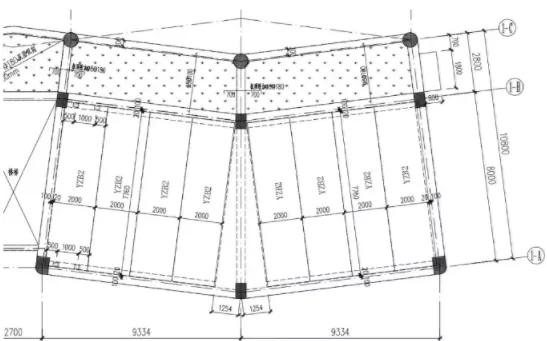
Figure 3: Partial Layout of Double T-Plate
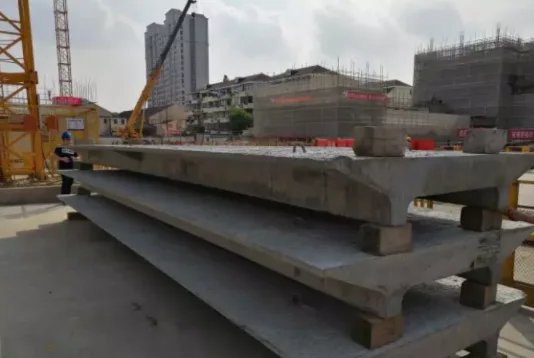
Figure 4: Physical Double T-Plate Component
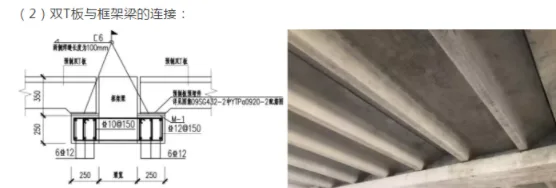
When the beam edge parallel to the double T-plate cannot accommodate its placement, cantilever slabs (cast-in-place) can be installed at the beam edge, as illustrated below:
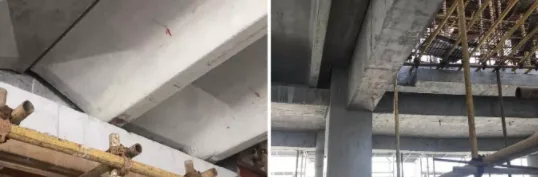
After installing the double T-plates, a cast-in-place concrete topping layer with a minimum thickness of 50mm and a strength of at least C30 is poured on site:

Figure 11: Design Details of the Post-Pour Layer on the Double T-Plate
When mechanical and electrical installations require openings in the double T-plate, appropriate design accommodations are made as follows:
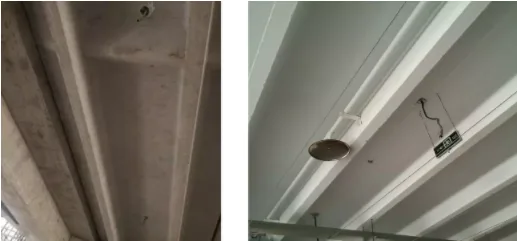
3. Other Prefabricated Components
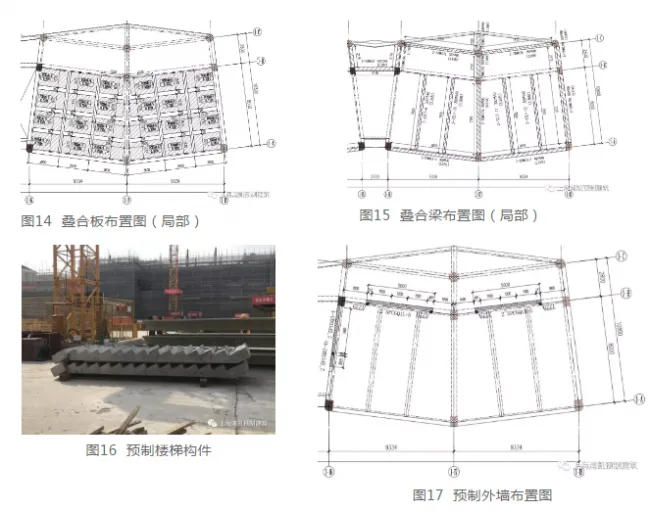
In this project, double T-plates are installed only below the roof level. Roof floors are composed of prefabricated composite beams and composite panels. Additionally, due to their ease of mass production and installation, prefabricated stairs, walls, and parapets are used to supplement the prefabrication rate when necessary.
4. Key Advantages of the Double T-Plate System
The double T-plate system offers a large span, strong load-bearing capacity, prefabricated construction, excellent overall integrity, and a smooth, aesthetically pleasing underside. Typically spanning 18m, 24m, or 30m, double T-plates provide spacious interiors ideal for factories, warehouses, garages, and cold storage facilities. These attributes meet the equipment and process demands of industrial buildings and are widely used for large-span roofs such as halls and pavilions.
Even for projects with smaller spans, such as schools and public buildings, the system demonstrates significant benefits:
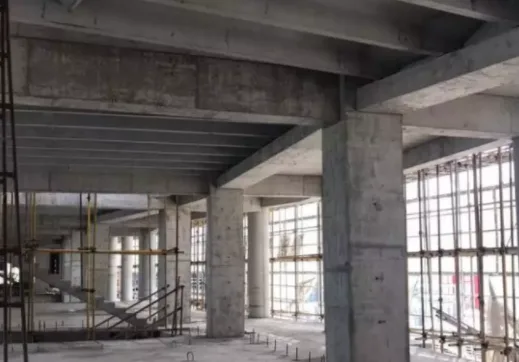
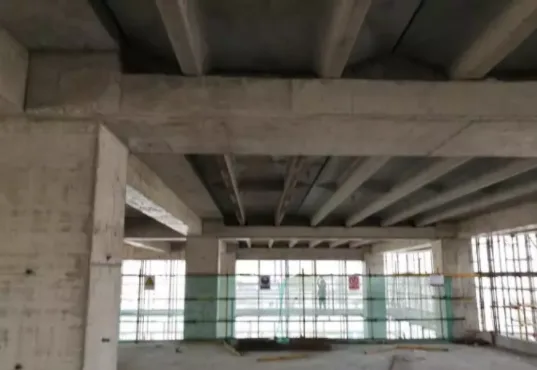
Figure 18: Panoramic View of the Double T-Plate Project Site
- Convenient Construction and Reduced Timeline: Using double T-plates for roofing reduces the number of beams and columns, simplifying the structural system. The components are easy to install, significantly reducing the need for formwork or even eliminating it altogether, as shown below. Production is standardized with steam curing, and components are transported to the site ready for immediate installation. Typically, production to installation takes less than seven days, greatly shortening the construction period and lowering project costs.
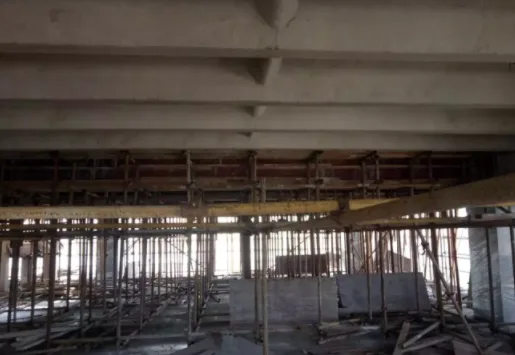
Figure 19: Comparison Between Double T-Plate and Cast-in-Place Floor Slabs
- Excellent Fire Resistance: Compared to steel structures for large-span roofs, double T-plates offer superior fire resistance, corrosion resistance, maintenance-free durability, and strong resistance to wind and snow loads. These characteristics make them particularly suitable for projects in humid environments.
- Cost Efficiency: Double T-plates enable larger spans and column grids in factories, optimizing technical and economic outcomes. Compared to steel structures, double T-plates significantly reduce costs.
- High Prefabrication Rate: As prefabricated reinforced concrete load-bearing components, double T-plates contribute to prefabrication statistics for both slabs and beams, effectively increasing overall prefabrication rates in building structures.
Author: Li Qian













Must log in before commenting!
Sign Up