
1. Product Development Background
1.1 Urban Comprehensive Pipe Gallery Industry Policies
An urban underground comprehensive pipe gallery is an intensive tunnel constructed beneath city roads that consolidates various municipal pipelines—such as electricity, communication, water supply and drainage, heating, and gas—under a unified plan, construction, and management system to promote efficient infrastructure development.
1.1.1 Guiding Policies
(1) Guiding Opinions on Promoting the Construction of Urban Underground Comprehensive Pipe Corridors (Guobanfa [2015] No. 61)
This policy mandates that in areas where comprehensive pipe corridors exist, all pipelines must be routed through these corridors. New pipelines constructed outside these corridors will not receive approval from planning, construction, or municipal authorities.
Governments at all levels are encouraged to increase investment in underground comprehensive pipe galleries, including offering loan interest subsidies where possible and prioritizing these projects in annual budgets.
Financial institutions are urged to provide medium- and long-term credit support for these projects. Underground comprehensive pipe galleries are included within the scope of special financial bonds for long-term investment, and qualified construction and operation enterprises are supported in issuing corporate bonds and project revenue notes.
Furthermore, these projects are incorporated into government performance evaluation systems, with regular supervision and inspections established.
(2) National New Urbanization Plan for 2014–2020
New urban main roads, new urban areas, and various parks are to implement comprehensive underground pipe network corridor models.
1.1.2 Fiscal Policy
(1) Opinions on Strengthening Urban Infrastructure Construction (Guofa [2013] No. 36)
Within approximately three years, pilot projects for underground comprehensive pipe galleries will be launched in 36 major cities nationwide.
(2) Notice on Carrying out Pilot Work of Central Financial Support for Underground Comprehensive Pipe Corridors (Caijian [2014] No. 839)
The central government allocates special funding subsidies to pilot cities based on city size: 500 million yuan annually for municipalities directly under central government, 400 million yuan for provincial capitals, and 300 million yuan for other cities. Cities using the PPP model and reaching a certain threshold receive an additional 10% reward based on the subsidy amount.
(3) Notice on Launching the Pilot Work of Central Financial Support for Underground Comprehensive Pipe Gallery in 2016
1.1.3 Industry Standards
- Technical Code for Urban Comprehensive Pipe Gallery Engineering GB50838-2015;
- Guidelines for Planning and Compilation of Urban Underground Comprehensive Pipe Gallery Engineering (Jiancheng__AI_S_SC_0_70);
- Trial Implementation of the Investment Estimation Index for Urban Comprehensive Pipe Gallery Engineering (ZYA1-12 (10)-2015).
1.2 Current Status of Urban Comprehensive Pipe Gallery Application
Currently, concrete-structure comprehensive pipe galleries primarily include cast-in-place pipe galleries, fully prefabricated pipe galleries, assembled integral pipe galleries, and prefabricated pipe galleries for large-scale equipment construction such as shield tunneling.
1.2.1 Cast-in-Place Concrete Pipe Gallery
Advantages:
- Fewer connection nodes along the longitudinal direction compared to prefabricated pipe galleries, reducing weak waterproof areas.
- Lower construction technology requirements.
- Longer standard pipe gallery lengths, suitable for sliding mode construction when continuous construction is possible.
Disadvantages:
- Numerous construction joints present.
- Long segmentation intervals complicate quality control and may result in issues such as sidewall cracking.
- Installation and removal of formwork demand substantial labor and complex support systems.
- Extended on-site construction periods with multiple processes, high labor intensity, and long concrete curing times.
- Significant wet work and waste onsite impact the environment; construction quality is weather-dependent and challenging to guarantee.
Figure 1: Cast-in-Place Concrete Pipe Gallery
1.2.2 Fully Prefabricated – Whole Section Prefabricated Concrete Pipe Gallery
Advantages:
- No internal joint treatment within single tube sections, ensuring excellent overall integrity and avoiding weak waterproof links.
- Quick installation with minimal onsite wet work and short curing time; fast turnover of slope protection materials.
Disadvantages:
- Short segment lengths result in numerous joints and require high prefabrication precision.
- Heavy structural components demand advanced lifting equipment.
- Large self-weight and transportation constraints limit long-distance transport capabilities.
- High demands on waterproof material performance and durability at horizontal joints.
- Unsuitable for multi-cabin variable cross-section or non-standard section pipe galleries, limiting application scope.
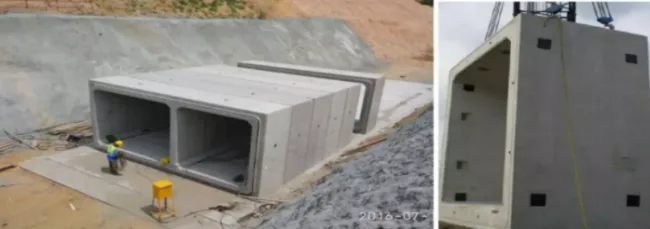
Figure 2: Full Prefabrication – Whole Section Prefabrication Process
1.2.3 Fully Prefabricated – Split Component Prefabricated Concrete Pipe Gallery
Advantages:
- Prefabricated components can be flexibly disassembled for easy assembly.
- Component-based quality control is facilitated.
- Lightweight components improve transport and assembly flexibility.
Disadvantages:
- Numerous node connections with high precision requirements.
- Presence of vertical and horizontal joints raises demands on waterproof material performance and durability.
- Not suitable for multi-compartment variable cross-section or non-standard pipe gallery structures, limiting application.
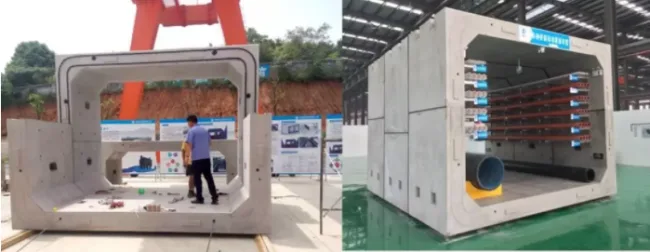
Figure 3: Prefabrication Process of Fully Prefabricated and Disassembled Components
1.2.4 Assembly of Integral Pipe Gallery
Ideal for large-volume comprehensive pipe galleries that cannot be transported fully and are constructed using open-cut methods.
Advantages:
- Combines benefits of cast-in-place and prefabricated methods; stress analysis is comparable to cast-in-place.
- Reduces formwork demand and simplifies support systems.
- Factory production ensures consistent quality.
Disadvantages:
- Increased reinforcement quantities.
- High standards required in production processes.
- Interfaces between cast-in-place and precast concrete need careful treatment.
- On-site steel rebar binding and concrete casting are labor-intensive, complex, and inefficient.
- Waterproofing is time-consuming and complicated, limiting construction efficiency.
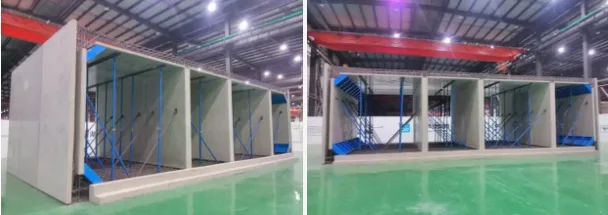
Figure 4: Mixed Prefabricated Composite Wall Panel (Double Skin Wall) Process
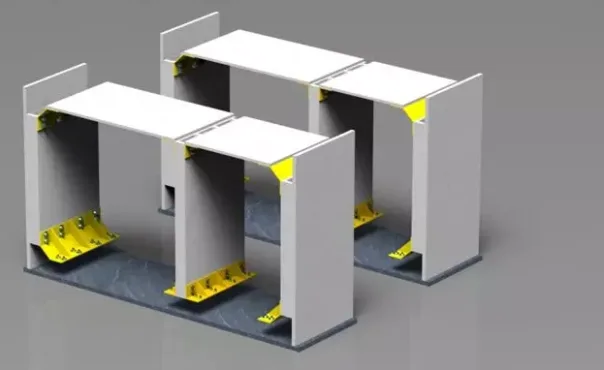
Figure 5: Mixed Prefabrication Hollow Wall Panel Process
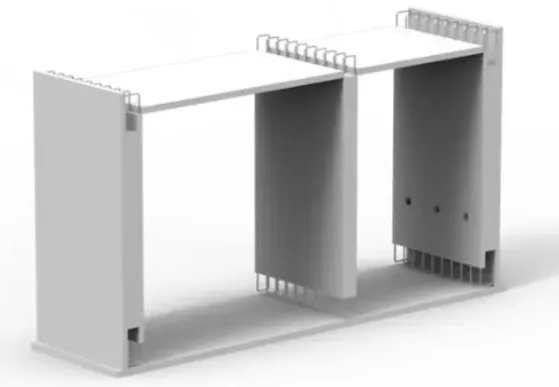
Figure 6: Mixed Prefabrication Solid Wall Panel Process
1.2.5 Shield Tunneling Construction Prefabricated Pipe Gallery
Advantages:
- Suitable for projects where open-cut construction is not feasible.
- High levels of mechanization and automation.
- No need for open excavation.
Disadvantages:
- High implementation costs due to BIM design requirements.
- Necessitates specialized shield tunneling machines and pipe production facilities.
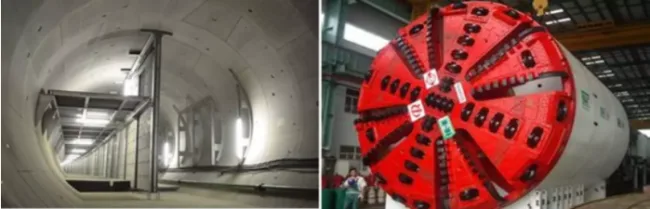
Figure 7: Prefabricated Pipe Gallery for Shield Tunneling Construction
1.2.6 Prefabricated Top Push Construction Prefabricated Pipe Gallery
Advantages:
- Applicable where open-cut methods cannot be employed.
- High mechanization and automation.
- No open excavation required.
Disadvantages:
- High implementation costs.
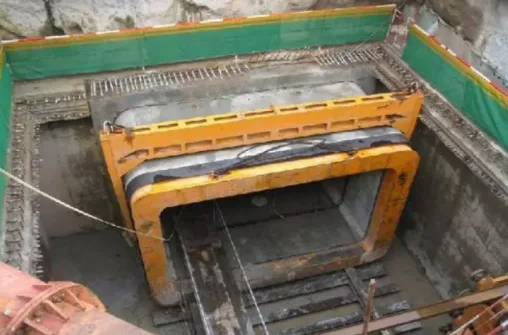
Figure 8: Prefabricated Top Push Construction Prefabricated Pipe Gallery
2. China Construction Technology’s Modular Prefabricated Assembly Integrated Pipe Gallery Products
2.1 Product R&D Philosophy of China Construction Technology
As China Construction’s prefabricated building technology and industrial platform, China Construction Technology follows the “three integrations” development approach—integrating architecture, structure, electromechanical, decoration, design, processing, and assembly; combining technology, management, and market aspects. This supports an integrated R&D model (“scientific research + design + manufacturing + procurement + construction”), known as REMPC five-in-one, ensuring comprehensive quality improvements in engineering construction.
2.2 Introduction to R&D Pipe Gallery Products
The “China Construction Technology Segmented Prefabricated Assembly Integrated Pipe Gallery” product was developed jointly by China Construction Technology Co., Ltd. and China Construction Prefabricated Building Design and Research Institute Co., Ltd.
This product consists of a standard section and a standard entrance longitudinally. In each standard section, exterior wall panels, top panels, and interior wall panels are factory-prefabricated, while foundation bottom panels are cast-in-place. Components are connected onsite using reliable methods such as cast-in-place concrete. The standard entrance is constructed with cast-in-place concrete.
Technical Advantages:
- Firm node connections provide excellent structural integrity, with stress analysis equivalent to cast-in-place structures.
- High standardization of prefabricated components ensures extensive mold reuse.
- Prefabricated components are relatively lightweight, eliminating the need for heavy equipment.
- Factory production is efficient and consistent in quality, yielding smooth product appearances.
- Simple onsite support system with reduced wet work and minimal formwork.
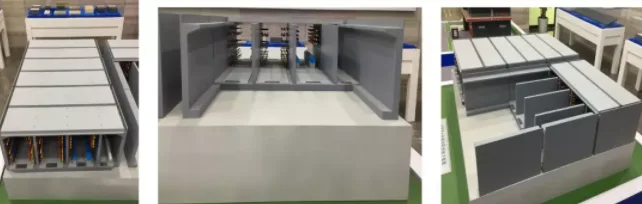
Figure 9: China Construction Technology Prefabricated Assembly Integrated Pipe Gallery
3. Product Standardization Design
3.1 Standardized Design of Pipe Gallery Sections
3.1.1 Integrated Pipe Gallery Compartments
Per planning requirements, pipelines suitable for entry into the corridor are included in the comprehensive pipe gallery; others, such as rainwater and some sewage pipelines, utilize conventional direct burial methods. For pipelines included in the gallery, compartment divisions follow national standards to prevent interference between compartments and ensure safe operation.
3.1.2 Types of Cabins
(1) Cabins are divided into 2–5 compartments, including high-voltage power, water and electricity integration, gas, and sewage compartments.
(2) The high-voltage power compartment features reserved cable trays for 110kV and 220kV power lines, with 1–2 compartments as needed.
(3) The water and electricity integrated cabin accommodates DN200 water supply pipes and DN300 medium water pipes, along with communication PVC110 and 10kV power lines on reserved bridges.
(4) The gas silo supports DN300 medium-pressure natural gas pipelines on reserved foundations.
(5) The sewage tank accommodates DN1000 sewage pipes, with select areas routed through the corridor.
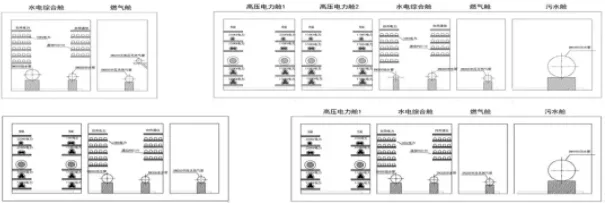
Figure 11: Schematic Diagram of Various Cabin Combinations
3.1.3 Standard Cross-Section of China Construction Technology’s Segmented Prefabricated Assembly Integrated Comprehensive Pipe Gallery Products
Table 1: Composition of Standard Cross Sections of Pipe Corridors
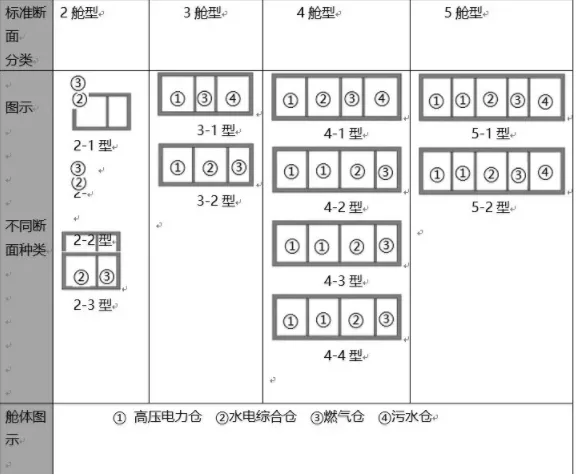
In total: 4 cabin types and 12 cabin cross-section variations.
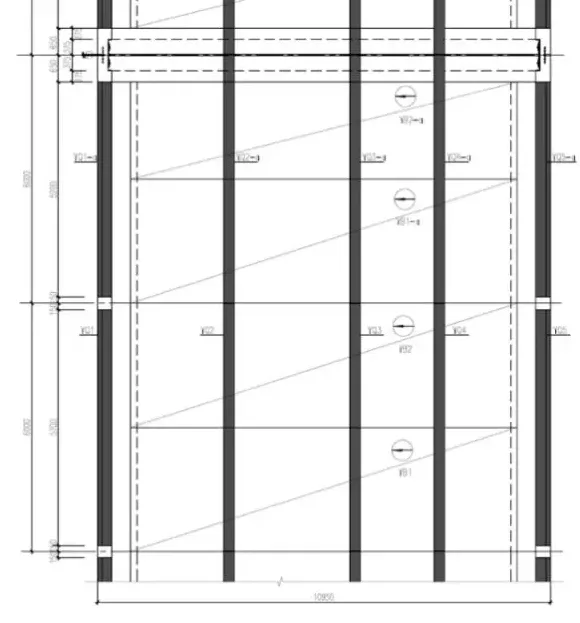
Figure 12: Design of Standard Section of Pipe Gallery
3.2 Modular Design
The project follows principles of standardization, serialization, and modularization, enabling “fewer specifications, more combinations” of prefabricated components. Modular coordination aligns with process requirements for component assembly.
(1) Pipe gallery standard unit length is based on 6m modules, combined into 30m standard sections. The standard height is uniformly set at 4m according to cabin requirements.
(2) The standard pipe gallery entrance uses a 6m module, with modular design coordinating connecting section sizes to form a 60m standard entrance section.
(3) Horizontal and vertical corners are addressed by connecting prefabricated pipe gallery sections with cast-in-place concrete segments.
3.3 Structural Design
3.3.1 Design Concept
Designed to perform equivalently to cast-in-place structures, focusing on strong nodes, adaptability, and robust waterproofing.
3.3.2 Structural Composition
(1) The pipe gallery’s standard section features an assembled integral structure with cast-in-place bottom plates, prefabricated wall panels, and top slabs. Components are prefabricated in factory sections and assembled onsite using ring reinforcement buckle connections, socket connections, and post-poured concrete joints. The entrance is cast-in-place concrete.
(2) Deformation joints are set at 30m intervals between standard sections using cast-in-place construction.
3.3.3 Node Design
- Prefabricated exterior wall and roof panels connect via reinforcing ring without bottom formwork.
- Exterior wall panels connect to cast-in-place floor panels with reinforced ring reinforcement.
- Prefabricated ceiling and interior wall panels use pin-type connections.
- Cast-in-place bottom plates connect to interior wall panels with slot and socket joints.
- Adjacent sections’ exterior walls and roof panels connect longitudinally by ring reinforcement interlocks.
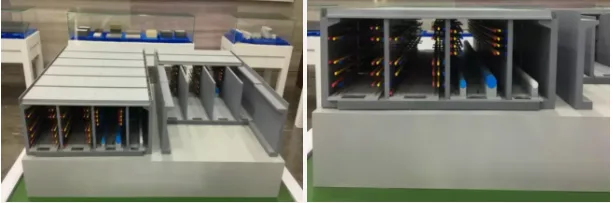
Figure 13: China Construction Technology Prefabricated Assembly Integrated Pipe Gallery Product
3.3.4 Main Design Parameters
- Structural design service life: 100 years. Structural importance coefficient: 1.1.
- Structural safety level: Level 1. Fire resistance of components: Level 2.
- Waterproof level: Level 2. Crack control level: Level 3.
- Foundation design grade: Class B. Seismic fortification: Key fortification category (Class B).
- Anti-floating design water level considers the highest flood level expected once every 100 years.
3.3.5 Structural Calculation
(1) Structural calculations include overall and reinforcement analysis, crack verification, shear calculations of cast-in-place nodes, seismic calculations, and anti-floating analysis.
(2) The computational mechanics model treats the pipe gallery as a closed frame:
- The cast-in-place bottom plate connects rigidly to prefabricated exterior walls with reinforced ring reinforcement.
- Prefabricated top plates connect rigidly to exterior and interior walls similarly.
- Cast-in-place bottom plates connect to interior wall components via articulated plug-in joints.
- Base reactions are simulated using spring elements.
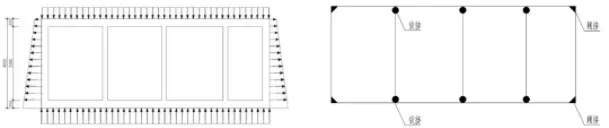
Figure 14: Overall Structural Calculation Model
3.3.6 Seismic Calculation
(1) The pipe gallery is designed with a seismic fortification category of Class B and seismic grade Level 2.
(2) Seismic fortification goals include:
- During frequent earthquakes below local seismic intensity, no structural damage occurs, ensuring uninterrupted municipal facility operation and minimal environmental impact.
- For earthquakes at local seismic intensity, minor or no damage occurs, requiring only minor repairs without affecting operations.
- Rare, higher-intensity earthquakes may cause repairable main structure damage without major casualties or serious environmental impact; municipal facilities remain operable after repair.
(3) Calculations use the response displacement method per the Seismic Code.
(4) Static calculations, crack width verification, and seismic response analyses show that reinforcement is governed by static load and crack requirements, sufficiently ensuring seismic bearing capacity.
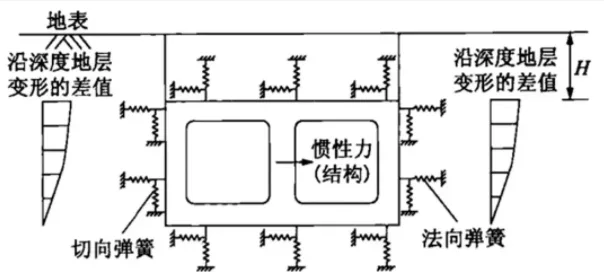
Figure 15: Seismic Calculation Model of Pipe Gallery Structure
3.3.7 Main Structural Analysis Results: Structural Displacement under Soil Pressure
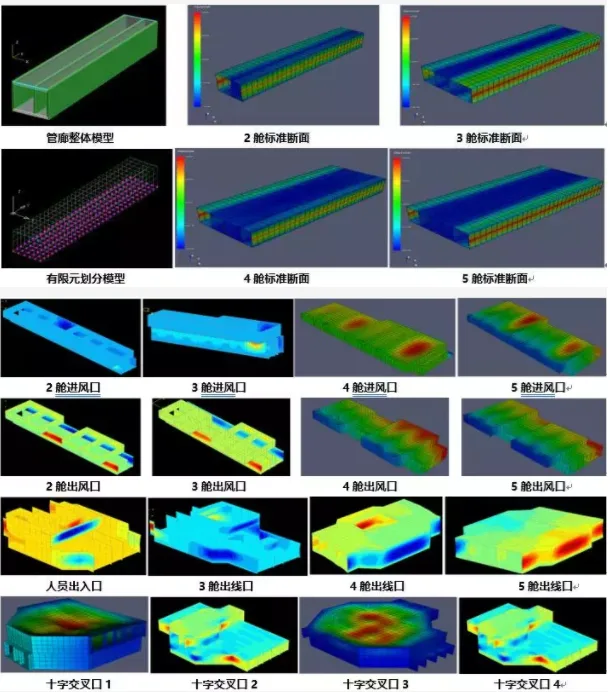
3.4 Component Disassembly Design
3.4.1 Principles for Standard Segment Splitting of Structural Components
(1) Considering structural stress, production, transportation, and installation, a reasonable disassembly method is chosen. Component sizes and weights are controlled to ensure reasonable stress, factory production feasibility, transportability, lifting convenience, and cost-effectiveness.
(2) Standard segments are 30m long, subdivided into 6m modules, with components split within each 6m module.
(3) Component disassembly is highly standardized, dividing components into two sizes: end and middle sections.
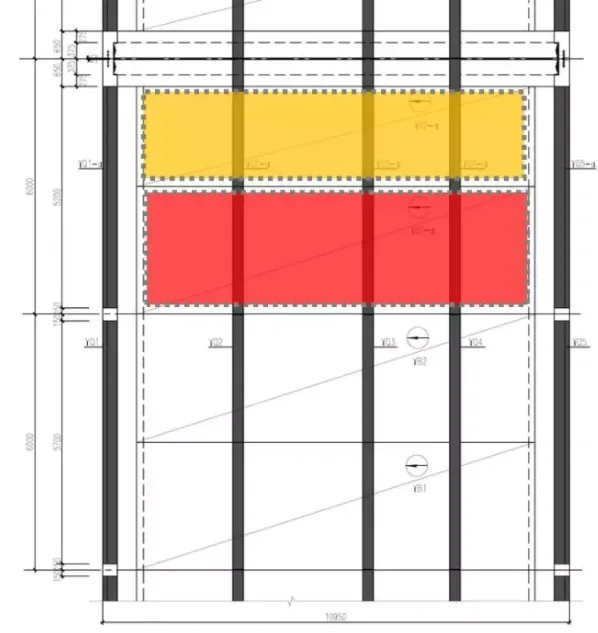
Figure 16: Two Size Types of Components
3.4.2 Component Disassembly and Statistics (Example: 6m Standard Module, 4-Chamber Type)
Table 2: Statistics of Prefabricated Components for 6m Standard Modules
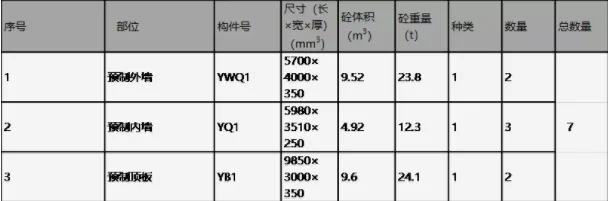
Note: Maximum cross-section controlled at 9.85m x 3.00m x 0.35m; maximum component weight ≤ 25 tons.
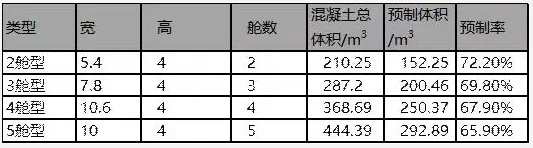
3.4.3 Prefabrication Rate Statistics
The prefabrication rate of each cabin type’s standard section exceeds 65%, reflecting a high degree of product prefabrication.
Table 3: Prefabrication Rates of 6m Standard Modules by Cabin Type
3.5 Waterproof Design
3.5.1 Waterproof Design Principles
- The waterproof system integrates prevention, drainage, and repair.
- Waterproofing methods are compatible with prefabricated pipe gallery construction and avoid damage to waterproof materials onsite.
- Designs aim to reduce costs and ensure construction quality.
- Waterproofing requirements are selected considering function, service life, hydrogeology, structural form, environmental conditions, construction methods, and material properties.
3.5.2 Waterproof Measures
- Combines structural self-waterproofing with external waterproofing measures.
- Main structure waterproofing uses waterproof concrete (P6).
- Construction and post-pouring joints employ micro-expansion waterproof concrete (P8), flexible waterproof membranes, and reinforcement layers.
- Deformation joints use waterproof concrete (P8), detachable and buried rubber waterstops, flexible waterproof membranes, and reinforcement layers. These joints are located in non-prefabricated sections due to structural complexity.
- Key waterproof locations include intersections of structural top and bottom plates with exterior walls, and deformation joint nodes.
3.5.3 Drainage Design
- The drainage system includes ditches, collection pits, pumps, sensors, and valves.
- Ditches are located inside exterior walls and on both sides of partition walls, sloped according to site terrain to channel water into collection pits before discharge.
- Sump pits are set at gallery entrances and along long sections as needed.
3.5.4 Leakage Treatment
- Leakage repair focuses on cracks in main structures, construction joints, and post-pouring joints.
- Repair steps include chiseling to structural base, marking leaks, high-pressure grouting at 45° to fill cracks, and applying cement-based permeable crystalline coatings followed by polymer-modified waterproof slurry.
 Chisel the surface layer down to the structural base layer;
Identify and mark leakage points;
Use high-pressure grouting at a 45° angle to penetrate and seal fine concrete cracks;
Apply a 1.0mm-thick cement-based permeable crystalline waterproof coating, followed by a 3mm-thick polymer-modified cement waterproof slurry.
4. Technological Innovations of China Construction Technology’s Segmented Prefabricated Assembly Integrated Pipe Gallery Product
- Reasonable subdivision and prefabrication of pipe gallery components address assembly challenges in multi-compartment section changes.
- Product design follows principles of standardization, serialization, and modularization, achieving fewer specifications and more component combinations.
- Reinforced circular interlocking nodes in the enclosed frame ensure rigid connections and excellent structural integrity, with waterproofing and stress performance equivalent to cast-in-place structures.
- Component sizes and weights align with factory production, transportation, and lifting capabilities. Components feature simple shapes, high standardization, high mold reuse, efficient factory production, and reliable quality.
- Simple connection structures between prefabricated and cast-in-place components reduce onsite wet work, enhancing assembly efficiency and quality.
- Top plates are designed without bottom molds, reducing onsite formwork and simplifying temporary support systems.
- Prefabrication rates exceed 65% in standard sections, supporting benefits such as reduced labor and materials, and promoting energy conservation and environmental protection.
- The waterproof system integrates prevention, drainage, and repair, combining structural self-waterproofing with external waterproofing, employing local joint area waterproofing for ease, material savings, and improved construction efficiency.
5. Product Engineering Cases
5.1 Project Overview
The PPP project for comprehensive pipe gallery and municipal road construction in Mianyang Science and Technology City’s core development zone covers a 33.65-kilometer pipe gallery with a total investment of 8.127 billion yuan (including 4.393 billion yuan for the pipe gallery). It is a landmark infrastructure project in the area, the largest PPP project in Sichuan Province to date, and the largest prefabricated comprehensive pipe gallery project in China so far.
A consortium of China Construction Technology, China Construction Second Engineering Bureau, China Construction Western Exploration Institute, and China Chengda won the bid. The project uses the “China Construction Technology Segmented Prefabricated Assembly Integrated Pipe Gallery” product, the country’s first of its kind.
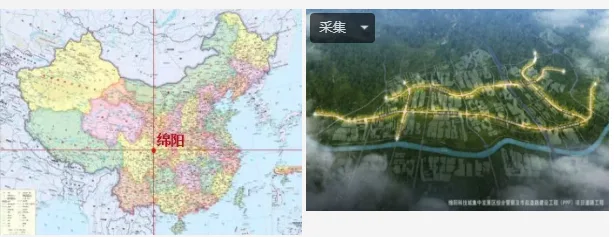
Figure 17: Mianyang Pipe Gallery Project
5.2 Pipe Gallery Sections
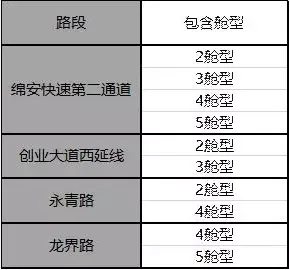
The project includes four main road comprehensive pipe galleries and one monitoring center: Entrepreneurship Avenue West Extension, Mian’an Second Expressway, Yongqing Road, and Longjie Road comprehensive pipe galleries.
According to special planning and design, standard sections and entrance/exit sections of two-, three-, four-, and five-compartment pipe galleries are prefabricated and assembled in sections.
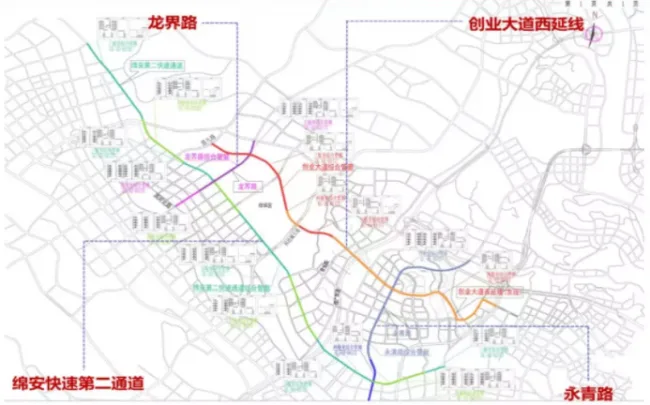
Figure 18: Schematic Diagram of Mianyang Pipe Gallery Section
Table 4: Statistics of Cabin Types in Standard Sections of Various Roads
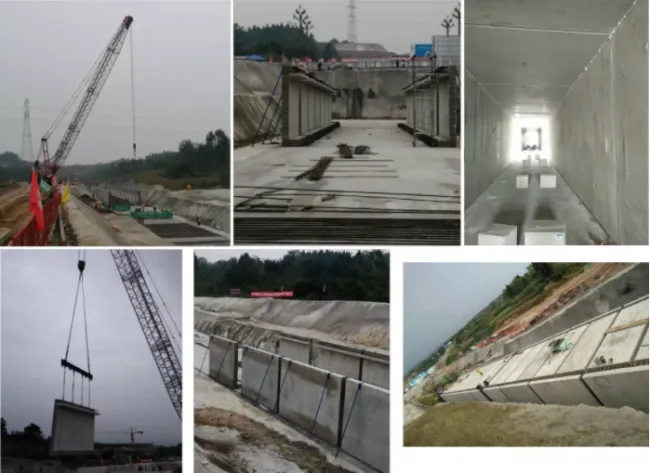
5.3 Project Construction
Authors: Li Wen, Li Zhiwu, Yan Tao, Fan Yi, Wang Wenjing, Zhao Aicheng
Source: China Construction Prefabricated Building Design and Research Institute Co., Ltd.













Must log in before commenting!
Sign Up