
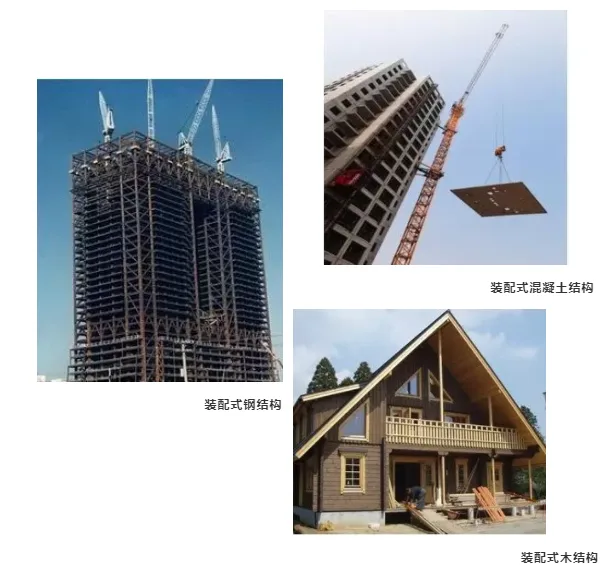
Prefabricated modular buildings refer to buildings assembled on site using prefabricated components. In terms of structural form, prefabricated modular concrete structures, steel structures, and wooden structures can all be called prefabricated modular buildings, which are important components of industrialized buildings. Prefabricated modular buildings are an important carrier for transforming urban construction models, reducing building energy consumption, and promoting building industrialization. The United Nations Economic Commission defines the industrialization of construction as:
(1) The continuity of the production process. The entire process of building construction is connected into a complete integrated industrial chain.
(2) Standardization of production products. Standardization of design, generalization and serialization of building components and BIM training accessories.
(3) Integration of the production process. It refers to the systematic integration of building technology, components, construction processes, and methods.
(4) The project is highly organized. Scientific management methods organize the entire construction process.
(5) Mechanization of production. It refers to reducing on-site manual operations, achieving factory production of components, and mechanization of construction and construction.
oneA new construction and production method for prefabricated and assembled concrete structures
The current prefabricated concrete technology system can be mainly divided into frame structure, shear wall structure, frame shear wall structure, etc., and the shear wall structure system is currently the most widely used. Prefabricated prefabricated concrete structures reflect the integration of production and construction in design, and embody standard modules and toolization in production. Through the overall prefabrication of component factories, prefabricated components are formed. Through toolized construction assembly and module assembly, the final construction product is formed.
(1)Prefabricated assembled shear wall structural system
According to the prefabrication and connection methods of the main load-bearing components, prefabricated shear wall structures in China can be divided into: prefabricated integral shear wall structures; Composite shear wall structure; Multi story shear wall structure. Prefabricated integral shear wall structures are widely used and suitable for high building heights; Composite panel shear walls are currently mainly used in buildings or high-rise buildings in low-intensity zones; Multi story shear wall structures are currently less commonly used, but due to their high efficiency and simplicity, they have broad prospects in the process of promoting new urbanization.
In addition, there is another widely used industrialized building form of shear wall structure, which uses cast-in-place shear wall structure for the main structure, and prefabricated components for exterior walls, stairs, floors, partitions, etc. This method is widely used in some provinces and cities in southern China, and the structural design method is basically the same as cast-in-place structures, with low assembly rate and industrialization level.
(2)Prefabricated modular frame shear wall structural system
Prefabricated frame shear wall structures can be divided into three forms based on the different locations of prefabricated components: prefabricated frame cast-in-place shear wall structures, prefabricated frame cast-in-place core tube structures, and prefabricated frame prefabricated shear wall structures. The advantages of this system are high usage height, good seismic performance, and a high degree of assembly of the frame part. The main disadvantage is that there are two types of operations on site: prefabrication and cast-in-place. The construction organization and management are complex, and the efficiency is not high.
The prefabricated frame cast-in-place core tube structure has excellent seismic performance. When the prefabricated frame and cast-in-place core tube are constructed synchronously, the two construction processes cause cross effects and are difficult to achieve; The construction sequence of starting with the cylinder structure and following up with the frame structure can greatly improve the construction speed. However, this construction sequence requires research on the connection technology between prefabricated frame components and concrete cylinder structures, as well as the support and maintenance of post poured connection sections, which increases the difficulty of construction and reduces efficiency. This structural system can focus on researching the technology of converting wet connections into dry connections to accelerate construction speed.
At present, the prefabricated frame prefabricated shear wall structure is still in the basic research stage, and the number of applications in China is relatively small.
(3)Stairs and floor slabs
Prefabricated prefabricated floor slabs are usually composed of prefabricated beams and slabs, similar to cast-in-place structures, and are usually divided into reinforced concrete floor slabs and prestressed floor slabs. In addition to bearing and transmitting vertical loads, the floor slabs connect various vertical structures to form an overall load-bearing structural system, jointly bearing horizontal loads. Therefore, the floor structure plays an important role in enhancing the overall integrity of the structure and transmitting horizontal forces.
From the perspective of industrialization of concrete construction, prefabricated frame structures are more suitable for the development of construction industrialization due to their high prefabrication rate, fewer on-site wet operations, and high production and construction efficiency. Especially in government led public buildings, a technology system mainly consisting of prefabricated frame structures and prefabricated frame shear wall (core tube) structures can be adopted.
At present, shear wall structure is one of the structural forms suitable for high-rise residential buildings in China, with the widest application and relatively mature technical system. In large-scale applications, mature and standardized technical systems should be the main focus.
In response to the demand for vigorously promoting urbanization in China, small cities and towns have a high demand for multi story buildings. Further research, improvement, and promotion of the industrial technology system for multi story buildings, including prefabricated shear wall structures, are needed. In the future, the development of prefabricated concrete structures still needs to be strengthened in the following aspects:
(1) It is to encourage enterprises to explore the research of prefabricated building technology system suitable for their own development, gradually form a universal technology system with a wider scope of application, promote large-scale application, reduce costs, and improve efficiency;
(2) It is to conduct in-depth research on key technologies such as structural node connection technology and external enclosure technology, form mature solutions, and promote their application;
(3) It is to explore process methods that are suitable for prefabricated buildings, elevate mature and applicable process methods to the level of standard specifications, and lay the foundation for large-scale promotion;
(4) Further research is needed on a series of innovative technological systems, including composite panel shear wall structures and fully assembled frame structures;
(5) It is to increase the promotion of mature and applicable structural systems and node connection technologies;
(6) It is necessary to accelerate the research and development demonstration of the currently immature structural system.
twoNew Production Method for Steel Structure Construction
The 1950s and 1960s were the initial stage of the development of steel structure buildings in China; The development of steel structure construction briefly stagnated from the late 1960s to the 1970s; Starting from the early 1980s, the national economy entered a fast lane of development, and the policy orientation shifted from “saving steel” to “rational steel use” and “promoting application”. Steel structure buildings entered a period of rapid development; Since the beginning of this century, policy documents such as the “15th Five Year Plan and 2015 Development Plan Outline for the National Construction Steel Structure Industry”, the “Opinions of the State Council on Resolving Excess Capacity in the Steel Industry and Achieving Development through Difficulties”, and the “Several Opinions of the Central Committee of the Communist Party of China and the State Council on Further Strengthening Urban Planning, Construction and Management Work” have been successively issued, transforming “promoting the application of steel structures” into “encouraging the use of steel”, and steel structure construction has entered a period of great development.
China’s prefabricated steel structure construction started relatively late, but under the strong promotion of national policies, steel structure enterprises and research institutes have invested a lot of energy in developing new prefabricated steel structure systems, and steel structure construction has rapidly moved from the 1.0 era to the 2.0 era. 1.0 Steel structure buildings only change their structural form from concrete structures to steel structures, and traditional methods are generally used for building layout and enclosure systems. 2.0 steel structure buildings have achieved the integration and unity of building layout, structural system, enclosure system, interior decoration, and mechanical and electrical equipment, developing from a single structural form to a specialized building system, presenting the characteristics of systematization and systematization. At present, the domestic steel structure building system is mainly divided into three categories.
(1)Based on traditional steel structure forms, develop new enclosure systems and improved building systems.
In the design phase, the erroneous concept of “heavy structure, light building, and no interior decoration” is abandoned, and collaborative design of the three major systems of structure, enclosure, and interior decoration is implemented. Taking the building function as the core, the main body is unfolded as a frame unit, and the column grid size is unified as much as possible. The layout design and functional layout of the unit are coordinated with the anti lateral force components; Based on structural layout, optimize steel structure layout while meeting building functions, meet the requirements of large space layout advocated by industrialized interior decoration, while strictly controlling costs and reducing construction difficulty; Supported by industrial enclosure and interior components, the beams, columns, and supports inside the room are concealed through interior design to ensure safety, durability, fire resistance, insulation, and sound insulation performance requirements, as shown in the figure.
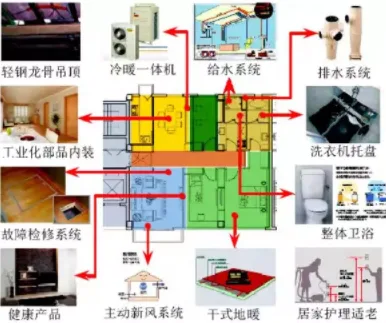
Industrial enclosure and interior components
(2)A new type of building system that is modular and factory oriented.
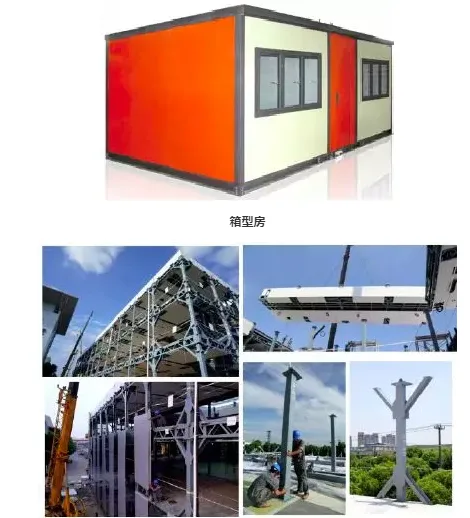
The modular building system can achieve on-site moisture free operations and full factory production. Representative systems include modular movable houses and modular box houses. Among them, the detachable activity room is constructed with a light steel structure as the skeleton, color steel sandwich panels as the enclosure material, and standard modules for spatial combination. The main components are connected by bolts, which can be easily and quickly assembled and disassembled; Box houses are based on the box body as the basic unit, with the main frame composed of steel or thin-walled steel. All enclosure materials are made of non combustible materials. The interior and exterior decoration of the box house are completed in the factory without the need for secondary decoration, as shown in the picture. The factory based steel structure building system has achieved a prefabrication rate of 90% from structure, exterior walls, doors and windows, to interior decoration, mechanical and electrical engineering, subverting the traditional building model. The factory steel structure adopts a manufacturing quality management system, and all component designs are finalized after factory testing and verification. The production of components undergoes quality control process inspection before leaving the factory, and the installation process undergoes quality control process inspection before entering the next process, ensuring zero defects in completion acceptance. Due to the adoption of factory technology, the labor efficiency of production, installation, and logistics has increased by 6 to 10 times, the material waste rate is close to zero, and the total cost is 20% to 40% lower than traditional buildings. The picture shows a factory based steel frame and wall panel assembly building system developed by a certain enterprise.
(3)Industrial residential building system.
Some domestic enterprises and research institutes have developed specialized steel structure building systems suitable for residential use, solving the problem of protruding beams and columns when traditional steel frame structure systems are applied in residential buildings. A typical steel structure residential system is the steel pipe bundle composite structure system developed by Hangxiao Steel Structure Co., Ltd., as shown in the figure. The system consists of standardized and modular steel pipe components connected side by side to form a steel pipe bundle, and the internal concrete is poured to form a steel pipe bundle composite structural component as the main load-bearing and lateral force resistant component; The steel beam adopts H-shaped steel; The floor slab adopts prefabricated steel bar truss floor support plate.
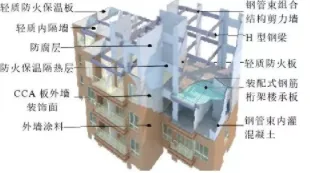
Steel pipe bundle composite structure system
Southeast Grid Co., Ltd. has proposed a box type steel plate shear wall structure system to address the problems of traditional steel structure systems being difficult to adapt to complex flat layouts, exposed beams and columns, and high costs, as shown in Figure G. The system replaces steel frames and supports with composite box type steel plate shear walls, making the layout convenient and meeting the needs of various complex floor plans and elevations; Box shaped steel plate shear walls have the same thickness as the walls, solving the problem of exposed beams and columns in steel structures; The box shaped steel plate and the concrete inside the cavity are jointly subjected to high bearing capacity, effectively reducing the amount of steel used.
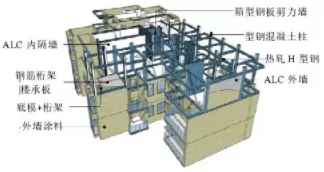
Box type steel plate shear wall structural system
From the perspective of material consumption, from 2012 to 2014, China’s construction steel structure production accounted for about 9-10% of the total construction steel consumption, and the construction steel structure production accounted for about 5% of the country’s total steel consumption. In developed countries, the proportion of these two types is 30% and 10% respectively.
From the perspective of application scope, building steel structures are mainly used in large-span, high-rise public buildings, single and multi story industrial buildings, as well as some residential and municipal infrastructure.
In terms of construction volume, the proportion of newly built steel structure buildings is about 5%. In 2014, the newly built steel structure residential area was about 4 million square meters, accounting for less than 1%; The proportion of steel structure system used in newly-built industrial plants is about 70%; The proportion of steel structures used in municipal and bridge infrastructure is about 2.5% (data provided by the Steel Structure Branch of the China Building Metal Structure Association).
From the perspective of structural system, multi story and high-rise steel structure building systems mainly include frame system, frame core tube system, frame shear wall system, steel pipe bundle shear wall system, etc. Low rise steel structure residential buildings mainly adopt light steel keel load-bearing wall system.
At present, the prefabricated assembly of steel structure engineering is also undergoing significant development. Steel structures are no longer single steel components, but standardized modular products are formed. Through mass prefabrication production in steel structure processing plants, tool based structural forms are formed and combined into integrated steel structure products.
Agglomeration development is an important foundation for the leapfrog development of steel structure buildings. In the United States, nearly half of the members of the Metal Building Manufacturers Association belong to the three major manufacturer groups; There are only 7-8 large-scale steel structure residential manufacturers in Japan. Drawing on the experience of developed countries, we should rely on the construction model of residential industrialization base enterprises, focus on cultivating leading enterprises with steel structure buildings as the main body of the base, promote agglomeration development, and enhance market supply capacity.
Policy tilt towards steel structure construction base enterprises, encouraging them to take the lead in introducing advanced technology and equipment, conducting research and development of new products and materials, improving the quality of steel structure construction components, perfecting construction processes, and enhancing the quality and performance of steel structure construction. Encourage base enterprises to industrialize existing steel structure building patent technologies, gradually incorporate them into relevant technical regulations or construction standards through engineering practice, and promote the upgrading of enterprise standards to industry standards and national standards.
Base enterprises should take improving design optimization capabilities as a starting point based on the characteristics of steel structure buildings, and form a group of steel structure engineering general contracting enterprises that integrate design, construction, and structural decoration. Base enterprises should focus on improving technological maturity, cultivating management and technical personnel, and training a group of specialized steel structure construction industry workers to form an effective market supply capacity.
Base enterprises should focus on market demand, strengthen active collaboration and linkage with upstream steel structure enterprises, “reverse force” the improvement of structural steel quality, and form a stable and reliable supply capacity for hot-rolled H-beams, high-strength building structural steel, high-strength cold-formed rectangular pipes and other structural steel with complete varieties and specifications. Promote the production of standardized steel structure components, provide customized and personalized steel structure products, and lead some steel structure material manufacturers to transform into service providers.
Actively guide the base enterprises to take the lead, take advantage of the “the Belt and Road” opportunity to actively “go out” to participate in the global division of labor, and participate in international competition in a wider range, more fields, and at a higher level. To study the steel structure building technology standards of developed countries such as Europe, the United States, and Japan, and break down technical barriers.
threeNew Construction Production Method
Wooden structure is one of the earliest architectural forms in the history of human civilization, which has been widely promoted and applied for its excellent performance and aesthetic value. The development of wooden structure buildings in China has gone through the following stages:
The history of wooden structures in China can be traced back to 3500 years ago, and their emergence, development, and changes run through the entire development process of ancient architecture. They are also the main representative of the achievements of ancient architecture in China. The earliest wooden frame structure system used mortise and tenon connections between beams and columns, which gradually matured during the Tang Dynasty and further developed into a unified standard during the Ming and Qing dynasties, such as the “Code of Engineering Practice of the Qing Ministry of Works”. The Yingxian Wooden Pagoda in Shanxi Province, which was first built in the Liao Dynasty, is the tallest and oldest surviving wooden tower building in China. The pagoda dates back nearly ten years and has survived multiple earthquakes without any damage; The main hall of the Forbidden City, the Hall of Supreme Harmony, is one of the largest existing wooden structures in China. It has a solemn and magnificent shape, representing the glorious achievements of China’s wooden architecture.
After the establishment of the People’s Republic of China in 1949, brick and wood structures accounted for a considerable proportion due to their outstanding advantages of using local materials and being easy to process. Especially during the Great Leap Forward period, the proportion of brick and wood structures in China reached 46%.
In the 1950s and 1960s, China implemented a planned economy and proposed policies to save wood. However, foreign economic blockades also prevented the import of wood, which greatly constrained the development of timber structures. In the 1970s, based on the needs of domestic production and construction, the government proposed the policy of “replacing wood with steel” and “replacing wood with plastic”, and wooden houses were excluded from mainstream construction.
Since the 1980s, in order to develop the economy, extensive logging of forests has led to a sharp decline in forest resources. By the end of the 1980s, China’s structural timber had been completely harvested, and the country did not have sufficient foreign exchange reserves to purchase timber from the international market. The Central Committee of the Communist Party of China and the State Council have made significant decisions to implement natural forest resource protection projects in response to the long-term excessive consumption of natural forest resources in China, which has led to ecological degradation. They have also issued a series of encouraging documents for wood conservation and substitution. In addition, the rapid industrialization in China has led to the significant development of industries such as steel and cement, which has promoted the promotion of steel-concrete structural buildings. This has led to the gradual disintegration of the traditional wooden structure system that China has developed for several years, and new brick masonry and brick concrete structures have gradually become the main structural forms of newly built rural residences. Colleges and universities have suspended courses on timber structures and stopped training graduate students. The teaching and technology personnel who were originally engaged in timber structures have had to change their course, and the discipline of timber structures has disappeared. The talent flow of timber structures is severe, and the research and application of timber structures in our district are in a stagnant state.
After China’s accession to the WTO, there has been a rapid increase in technical exchanges and business activities with foreign countries in the field of timber structure construction. In 1999, China established an expert group on timber structure standards and began a comprehensive revision of the “Code for Design of Timber Structures”. Since 2001, China has implemented a zero tariff policy for the import of timber structures. More and more foreign companies have entered the Chinese market and introduced modern timber structure construction technology to China, marking a new stage of development for timber structure construction.
In recent years, the development of China’s modern timber structure construction market has shown an upward trend, with a timber structure building inventory of about 12 million to 15 million square meters. As of the end of 2013, the number of timber processing enterprises above a certain scale in China reached 1416. In 2014, the total output value of China’s timber industry was 2.7 trillion yuan, with a total import and export volume of 138 billion US dollars and a workforce of 10 million people. Among the existing wooden structures in our country, lightweight wooden structures are the mainstream, accounting for nearly 70%, heavy-duty main structures account for about 16%, and other forms of wooden structures (including mixed heavy and light wood, well dry wooden structures, and wooden structures combined with other building structures) account for about 17%. Wooden villas account for 51% of existing wooden buildings and remain the main market for the application of wooden structures.
With the development of the times and technology, modern wooden structure buildings adopt new materials, new processes, and precise factory production. Compared with traditional wooden structure buildings, they have advantages such as green environmental protection, comfort and durability, thermal insulation and energy saving, and structural safety. They have excellent seismic and sound insulation properties, and are more superior than reinforced concrete structures and masonry structures.
Modern wooden structures integrate traditional building materials with modern processing and construction techniques. Modern wooden structure buildings are constructed using standardized design, factory production of components, information management, and on-site assembly methods. The construction period is short, the quality is controllable, and it is in line with the development direction of building industrialization. Taking timber structure buildings as an example, the entire process from raw material acquisition, component processing and production, to on-site assembly is fully mechanized. Produce and process prefabricated wooden components and parts in the factory, including interior and exterior wall panels, beams, columns, floor slabs, stairs, etc., and then transport them to the construction site for assembly.
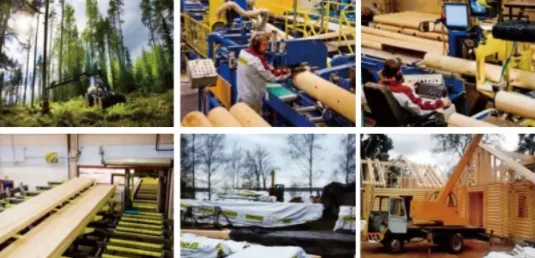
Production process flow
Modular configuration and integrated design of standard components, unified prefabrication and production, and easy and fast combination and integration of wooden component products through tool based construction.
The modern timber structure building structural system is divided into lightweight timber structure, glued laminated timber structure, and timber structure system, as well as the combination system of timber structure and other structures.
★light wood frame construction
Lightweight timber structure is a single or multi story building structure composed of timber frame walls, floor slabs, and roof systems made of standard timber, wood-based structural panels, or gypsum boards (see Figure 2). The spacing between wall columns, floor grilles, lightweight wooden trusses or rafters is generally 600mm. When the design specifically requires an increase in truss spacing, the maximum spacing shall not exceed 1200mm.
The inner side of the exterior wall’s stud columns is made of gypsum board, and the outer side is made of oriented strand board (OSB board), plywood, cladding or other decorative materials. Non combustible insulation materials are filled between the stud columns.
Components can be connected using nails, bolts, toothed plates, and general or specialized metal connections, with nail connections being the main method. Lightweight wooden structures can be used to construct residential, small-scale tourism, and commercial buildings.
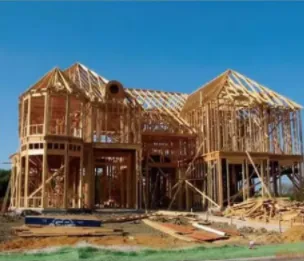
light wood frame construction
Glued laminated timber structural system
The laminated timber structure is a building structural system made of laminated timber components glued together using 20-45mm thick sawn timber.
The laminated wood structure refers to a single-layer or multi-layer building structure made of laminated wood for load-bearing components, also known as laminated wood structure. Wood is produced and processed through industrialization, using chemical bonding, high-pressure molding, and material modification to meet structural requirements.
The walls of laminated timber houses can adopt lightweight wood structures, glass curtain walls, masonry walls, and other structural forms. The components are mainly connected by bolts, dowels, nails, shear plates, and various metal connectors. The laminated wood structure is suitable for single story industrial buildings and large and medium-sized public buildings with multiple functional uses, such as large space and large-span sports venues.
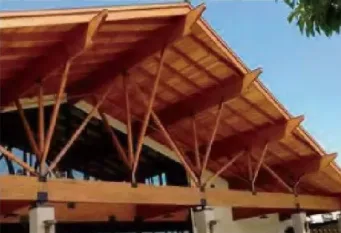
Glued laminated timber structural system
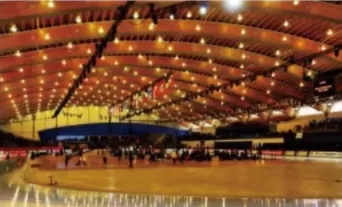
Richmond Oval Speed Skating Oval, Canada
Log frame house
The timber structure is made by stacking square, circular, or glued laminated timber components with uniform specifications and shapes. It is a timber structure system that integrates load-bearing system and enclosure structure.
The tongue on its shoulder is stacked up and down, and the slots at the ends are interlocked to form an inner and outer enclosure wall. Add burlap felt pads and special rubber strips between wooden components to enhance the waterproof, windproof, and thermal insulation of the external enclosure structure.
Wooden buildings have excellent insulation properties such as air tightness, water tightness, insulation, moisture retention, sound insulation, flame retardancy, etc. Wooden buildings themselves have breathability and can regulate indoor humidity.
The wooden structure is suitable for residential buildings, hospitals, nursing homes, nursing homes, daycare centers, kindergartens, sports buildings, etc.
Wooden structure residential building
Wooden structure combination system
Wooden structure composite building refers to a structural system composed of wooden structures or their components and other materials (such as non combustible structures such as steel, reinforced concrete or masonry) that jointly bear the force. The upper wooden structure is connected to the lower reinforced concrete structure through bolts and anti pull connectors embedded in the concrete, achieving the transmission of horizontal shear force in the wooden structure and pull-out force in the boundary components of the wooden shear wall.
Compared with the lower reinforced concrete structure, the upper wooden structure is lighter in weight and has lower lateral stiffness, exhibiting non-uniform structural characteristics of being heavier at the bottom and lighter at the top, and being rigid at the bottom and flexible at the top.
Wooden composite buildings can adopt the following two forms: ① The upper part is a wooden structure, and the lower part is a composite structure of other structures. If the lower part is a 4-storey reinforced concrete structure and the upper part is a wooden structure, it is referred to as the “4+3” composite structure; ② In concrete structures, masonry structures, or steel structures, lightweight wooden building covers or lightweight wooden house covers are used as a combination structure for horizontal floor or roof, such as lightweight wooden trusses used in flat roof to sloping roof projects.
Although the maximum allowable number of floors for wooden structures is 3, as a combination of wooden structures, it can be built up to 7 floors, with the upper wooden structure still having 3 floors and the lower non combustible structures such as reinforced concrete or masonry having 4 floors. This increases the application range of wooden structures and is a feasible form of composite structure.
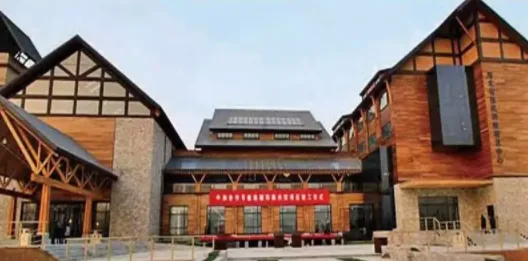
A combination of light wood and concrete upper and lower buildings
At present, a multi pronged approach is adopted to address the uneven economic development and varying foundations of the timber structure industry in different regions of China.
(1) We will focus on promoting low rise buildings such as characteristic areas, tourist resorts, and garden landscapes that meet the conditions, as well as adopting wooden (bamboo) structures according to local conditions for flat to sloping and shantytown renovation projects.Promote the construction of wooden farmhouses in self built rural houses and new rural residential areas in economically developed regions. Newly built low rise public buildings such as schools, daycare centers, nursing homes, and garden landscapes invested by the government adopt wooden structures.
(2) Actively research and develop wooden frame structure walls and wooden non load bearing walls, and promote their application in construction projects.Encourage all regions to include wooden frame structure walls in light wood structure buildings and wooden non load bearing walls in heavy wood structure buildings in the Catalogue of New Wall Materials. Encourage construction units to use new wooden walls in new construction, expansion, and renovation projects.
(3) Vigorously carry out research on key technologies of timber structure construction, explore and study modern timber structure technology systems and supporting component systems suitable for different regions.Encourage the research and development of key technologies for modern timber structure construction, and establish a technology system supported by local forestry industry that is in line with China’s national conditions. Intensify support for the development and research of modern timber structure construction technology, and quickly narrow the gap with international advanced levels. Incorporate research related to timber structure buildings into the framework of national major research projects, key science and technology projects, and science and technology support plans. Encourage industry backbone enterprises to establish technology research institutions and laboratories, and become national or local specialized technology research and development bases in a certain engineering field.
(4) Research on key areas and key technologies of the organization. Conduct systematic research on wood characteristics, structural safety, fire safety, thermal performance, durability, and other aspects.Research is conducted in multiple fields, including the application of fast-growing forest wood, processing and application of laminated wood, green building materials such as environmentally friendly wall materials, and multi-layer wood structure technology. Focus on strengthening research on key technologies such as energy conservation, environmental protection, earthquake resistance, fire prevention, safety monitoring, and renovation of existing buildings in modern wooden structures. Researching the technology system of large-span and multi story timber structures, especially gradually finalizing the wood steel and wood concrete composite structure systems and node technologies.
fourNew Construction and Production Method for Parts and Components
In order to promote the development of green buildings and residential industrialization, strengthen the promotion of new building component technology, and solve the problems of new building components in construction applications, component technology has become a new mainstream technology in the construction industry.
The current features of the parts are as follows:
One is standardization;
The second is industrial products processed from raw materials in factories;
The third is the integrated products formed by the processing of industrial products in factories;
Fourth, products that are widely used in residential projects and meet specific functional requirements of residential buildings;
The fifth is that the product range is very extensive, and the production factory has strong professional requirements for furniture, including scale, quality, market, after-sales, and some subtle development.
In traditional retail home decoration and construction, the production of door frames is done manually by workers on site. Taking the painting step alone as an example, each worker has different gestures, hanging styles, and surface effects. However, industrialized full decoration is a completely different picture, where a series of actions such as painting, drying, and production of component materials are all completed on the standard assembly line of the factory. The large-scale full decoration has opened up vast space for the standardization of component materials. The production of component materials is no longer a manual workshop style operation, but is gradually moving towards standardized and industrialized mass production. After modular design, all components and materials required for residential decoration are produced on the standard assembly line in the factory.
Standardization overcomes the uncertainty and arbitrariness of manual work, meaning no nail holes, no cracks, and higher productivity levels. The standardization and serialization of component material production have brought about new changes in production methods, laying a solid foundation for the modernization of the housing industry. The use of standardized and factory produced component materials reduces on-site and wet operations, greatly reducing the residual and volatile harmful substances in the room, ensuring the health and environmental protection of the indoor environment. Today, our country’s current stage mainly adopts traditional wet work as the main decoration method. Its decoration method is too extensive, with high material consumption, low labor efficiency, and poor decoration quality. The decoration method urgently needs to shift to dry construction. The connotation of “prefabricated decoration” is industrialized decoration. Article 1.1.5 of the “Guidelines for the Implementation of One Stop Decoration of Commercial Residential Buildings” points out that “we must adhere to the technological route of modernization of the residential industry, actively promote the industrial production of residential decoration, improve the degree of on-site assembly, reduce manual operations, develop and promote new technologies, and make them an important part of the industrialized residential building system”. It is explicitly advocated to promote the industrialization of decoration. The “Guidelines for the Implementation of One Stop Decoration of Commercial Residential Buildings” clarify the main characteristics of “prefabricated decoration”:
One is industrial production.Prefabricated decoration is based on the industrial production of parts and components, and often uses standardized parts and components. The accuracy and quality of decoration are much better than traditional decoration methods.
The second is assembly construction.With a large number of standardized parts and components produced through industrialization as support, it has become possible to achieve assembly on decoration construction sites. Unlike outdated manual construction techniques, prefabricated construction reduces a large amount of on-site manual work, and industrial workers install according to standardized processes, greatly improving the quality of decoration.
Thirdly, prefabricated decoration is an important component of industrialized building systems.Prefabricated decoration is not an isolated system, but a part of the industrialized building system. The implementation of prefabricated decoration is closely related to the structural system, component system, etc.
Prefabricated decoration has multiple advantages:
One is that the parts are manufactured in the factory and dry operation is adopted on site, which can comprehensively ensure product quality and performance;
The second is to improve labor productivity, shorten the construction period, save a lot of labor and management costs, reduce residential production costs, and achieve significant comprehensive benefits;
The third is to adopt integrated component assembly production, effectively solving the errors and module interface problems in construction production, which can promote the development of industrial technology and industrial production and management;
Fourthly, it is easy to maintain, reducing the difficulty of operation and maintenance in the later stage, and creating the possibility of updating the entire life cycle of components;
The fifth is energy conservation and environmental protection, which reduces the waste of raw materials and greatly reduces environmental pollution such as construction noise, dust, and construction waste.
Prefabricated decoration is very suitable for functional spaces with a certain amount of standardization, therefore, implementing prefabricated decoration in affordable housing with a large quantity and wide coverage is an ideal target market. According to data from the Ministry of Housing and Urban Rural Development, in 2015, 7.4 million new units of urban affordable housing projects were planned to be started nationwide, and 4.8 million units were basically completed. As of December 2015, 7.83 million units have been started and 7.72 million units have been basically completed, providing a huge market space for prefabricated decoration. Prefabricated decoration has summarized some successful experiences in practical engineering. In the Beijing Yashi Alloy Apartment project, Japanese technology and management were introduced, and a modular decoration construction method that separates structure and interior was adopted, basically achieving dry construction. Shanghai Greenland Nanxiang Weilian Apartment is a successful case of prefabricated decoration based on a century old residential building. In terms of affordable housing, the Beijing Guogongzhuang Phase I public rental housing, Tongzhou Majuqiao public rental housing, and coking plant public rental housing projects all adopt prefabricated decoration technology. Through a series of project practices, we have explored the integrated design and construction mode of prefabricated main structure and prefabricated decoration, and summarized valuable experience.
Authors: Mao Zhibing, Li Yungui, Guo Haishan, etc













Must log in before commenting!
Sign Up