
With the advancement of prefabricated construction, the use of small prefabricated components in engineering projects is becoming increasingly widespread. But how well do you understand the quality control of these small components? Let’s explore this topic together.
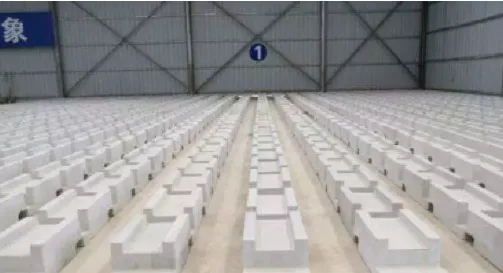
Formwork
Small prefabricated components are typically produced using steel or plastic molds. Steel formwork offers excellent resistance to deformation, easy demolding, and high production efficiency. However, it can sometimes result in a less-than-ideal concrete surface finish. To achieve a smooth, delicate, uniformly colored, and glossy concrete surface, non-recycled plastic molds with specially ribbed designs are preferred. These molds provide enhanced strength and durability.
Release Agent
Before pouring concrete, the formwork must be coated with a release agent to ensure easy demolding. Different types of release agents significantly affect the appearance of the finished components. Steel formworks require high-viscosity, light-colored release agents, as the steel surface can absorb some of the agent. Plastic formworks, on the other hand, can use release agents with lower viscosity. It is critical to apply the release agent evenly on all formwork surfaces in contact with concrete to prevent sticking, which can compromise the appearance. However, using too much release agent may trap air bubbles, causing pores that mar the surface.
Mixing
The concrete mixing process is crucial. From the moment all materials, including water, are loaded into the mixing drum, the minimum mixing time should be at least two minutes before discharge. After mixing, the concrete’s workability must be checked to ensure it is uniform in color, free from segregation or bleeding. The slump should be maintained between 30 and 70 mm. Slump tests should be conducted both at the mixing and pouring sites, with at least two tests per work shift or structural unit. If the time between mixing discharge and pouring is less than 15 minutes, testing at the mixing site alone is acceptable. During slump testing, special attention should be given to the concrete’s cohesiveness and water retention.
Molding
Concrete should be poured into molds promptly upon arrival at the site to avoid significant changes in workability and slump, which could affect quality. For steel formworks, such as U-shaped water-integrated decorative channel molds, it is essential to clean the formwork thoroughly, removing any concrete debris before pouring to ensure a smooth finish. Protective measures should be taken between the steel formwork and the floor to minimize grout leakage. Typically, a 1 cm layer of fine sand is spread evenly on the floor, followed by a plastic film on top before embedding the formwork into the sand. When pouring concrete, it is advisable to add it in layers, starting with about half the volume, then vibrating with a vibrator rod, and continuing to add concrete while vibrating. For plastic molds, vibration can occur simultaneously during the pouring process.
Vibration
Vibration duration should be carefully managed depending on the component type. For example, for U-shaped water channels, a vibration time of approximately 10 minutes is recommended. Insufficient vibration can leave rough surfaces and bubbles, while excessive vibration may cause grout leakage and uneven surfaces. Plastic molds typically use vibration tables instead of vibration rods, as the latter might deform the mold. Once the formwork is placed on the vibration table, vibration is turned on while concrete is added. Because plastic molds prevent grout leakage, the vibration time can be slightly longer, usually 4-5 minutes from the start of vibration until removal from the table.
To enhance concrete strength, a secondary vibration can be applied based on the slump and initial setting time. After filling the formwork, vibrate for 60-80 seconds to remove bubbles and evenly distribute aggregates. Then, after 60-90 seconds—depending on the concrete’s initial setting time—a final vibration of 30-40 seconds helps eliminate bubbles and gaps created by cement hydration, completing the compaction process.
Demolding
The formwork can be removed once the concrete reaches 50% of its design strength. Weather and temperature conditions must be considered; in colder climates, demolding should be delayed to prevent sticking and damage.
Curing
After pouring the precast concrete, it is essential to implement insulation and moisture-retention measures, such as covering and regular watering, as soon as the slurry has set. This step is critical for enhancing the concrete’s overall performance and reducing surface shrinkage cracks. The curing water should meet the same quality standards as the mixing water. Typically, curing lasts for seven days, with watering frequency adjusted to keep the surface consistently moist.













Must log in before commenting!
Sign Up