
1. Project Background
The Comprehensive Service Center of the Urban and Rural Management Center in Xiong’an New Area, Hebei Province, is a pioneering super low-energy prefabricated green demonstration project led by Beijing to support the development of Xiong’an New Area. It is also a key construction project aligned with the “Hebei Xiong’an New Area Planning Outline”. This facility serves multiple purposes, including government services, exhibitions, corporate offices, conferences, and training sessions.
Covering a total land area of 13,000 m² with a total construction area of 5,173 m², the building features three floors above ground and up to five floors in certain sections, reaching a height of 22.8 meters. Its structural system is a steel frame, designed to meet passive ultra-low energy consumption standards.
Developed by Beijing Housing and Urban Rural Development Group, the main structural work began in May 2018 and was completed by November the same year. The project integrates architectural design with ultra-low energy consumption and prefabricated steel structure technologies. It showcases a harmonious blend of facade aesthetics with shading devices, photovoltaic power generation, passive wooden lock doors and windows, aluminum curtain walls, and passive sunrooms on the roof.
2. Project Construction Objectives and Regulatory Requirements
2.1 Construction Objectives and Scope
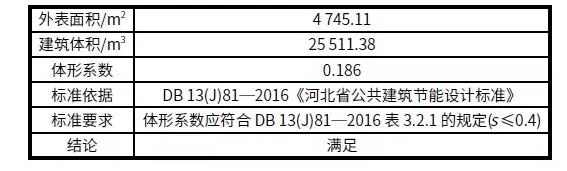
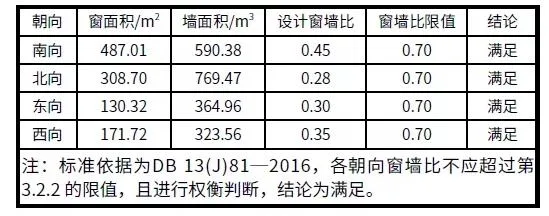
Located in a cold (B) climate zone, the building targets passive ultra-low energy green building standards, fulfilling performance requirements set by the Ministry of Housing and Urban-Rural Development for demonstration projects. The building is oriented north-south, with a form factor of 0.186. Window-to-wall ratios are 0.28 (north), 0.45 (south), 0.30 (east), and 0.35 (west), with a maximum single-orientation window-to-wall ratio of ≤ 0.70.
The project aims not only to meet passive ultra-low energy consumption standards but also to innovate in functional space design. It offers an immersive experience highlighting passive ultra-low energy building technologies and components, emphasizing comfort, sustainability, and state-of-the-art features. Key characteristics include experiential, green, and intelligent design elements, showcasing integration of steel structures with passive ultra-low energy systems, photovoltaic power generation, water purification, ground source heat pumps, eco-friendly materials, smart building controls, and intelligent security.
2.2 Demonstration Objectives and Requirements
(1) The Ministry of Housing and Urban-Rural Development mandates that public buildings reduce energy consumption for heating, air conditioning, and lighting by over 60% compared to GB50189-2015 “Design Standard for Energy Efficiency of Public Buildings”. The air tightness index must meet an air exchange rate of N50 ≤ 0.6 h⁻¹, and indoor environmental quality should satisfy Level I thermal comfort per GB50736-2012 “Design Code for Heating, Ventilation, and Air Conditioning of Civil Buildings”.
(2) The German Energy Agency (Beijing standard) requires an annual heating demand ≤ 15 kWh/(m²·a), annual cooling demand ≤ 18 kWh/(m²·a), annual primary energy consumption ≤ 120 kWh/(m²·a), and air tightness with N50 ≤ 0.6 h⁻¹.
3. Building Energy-Saving Technology Design
This project’s energy-saving technologies encompass planning and design for energy efficiency, building envelope innovations, natural ventilation and shading techniques, HVAC and heating/cooling systems, lighting, monitoring and control, and renewable energy integration.
3.1 Building Energy Efficiency Design
The project innovatively combines steel structure with prefabrication within a passive ultra-low energy framework. Steel structures offer advantages such as light weight, high strength, rapid construction, flexible pipeline layout, and reduced construction pollution. Prefabrication ensures component quality, shortens construction time, and reduces costs related to materials and labor turnover.
Key passive ultra-low energy technologies include efficient insulation systems, thermal bridge-free construction, high-performance insulated doors and windows, superior airtightness, and effective heat recovery systems. By integrating steel structure prefabrication with ultra-low energy consumption technology, the project advances both energy-saving and green building prefabrication methods.
3.2 Envelope Energy-Saving Technologies
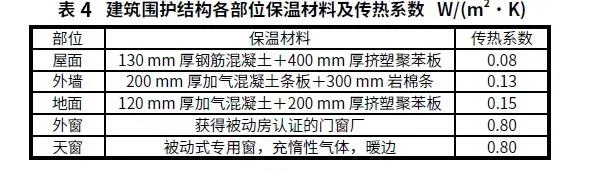
(1) Opaque envelope components: The exterior walls use 300 mm thick rock wool insulation strips with a heat transfer coefficient of K=0.130 W/(m²·K) and material thermal conductivity λ ≤ 0.048 W/(m·K). The roof is insulated with 400 mm thick extruded polystyrene boards (K=0.080 W/(m²·K), λ ≤ 0.032 W/(m·K)). The ground uses 200 mm thick extruded polystyrene (K=0.150 W/(m²·K), λ ≤ 0.032 W/(m·K)). Exterior underground walls and column foundations in contact with soil have 200 mm extruded polystyrene insulation applied externally.
(2) Windows and doors: External windows feature wooden cable structures with triple glazing and double Low-E glass filled with warm-edge argon gas, achieving a heat transfer coefficient K=0.8 W/(m²·K) and solar heat gain coefficient (SHGC) of 0.45. Aluminum-clad wooden windows share similar thermal performance. Wooden frames are environmentally friendly, renewable, offer natural aesthetics, and provide excellent insulation and soundproofing. Wood surfaces are finished with water-based, non-toxic paints free of formaldehyde and benzene.
The south first-floor entrance uses low-threshold aluminum-clad wood doors (K ≤ 1.0 W/(m²·K)), while east and west entrances use passive doors (K ≤ 1.2 W/(m²·K)). All external doors and windows meet or exceed GB/T7106-2008 performance levels: airtightness ≥ level 8, watertightness ≥ level 6, and wind load resistance ≥ level 9.
Shading devices include a south-facing wing sunshade with light-sensing tracking and automatic adjustment to block summer solar radiation, maintaining indoor comfort and reducing cooling loads. East and west windows have adjustable electric aluminum alloy louvers with a >100 mm gap from the window to prevent heat transfer. Roof skylights feature remote-controlled movable external shading systems.
Thermal bridge mitigation measures include: single-layer rock wool insulation bonded with anchor bolt fixing on external walls, thermal bridge treatments at roof lighting nodes, externally hung windows and doors fixed with steel elements minimizing thermal loss through reduced contact area, increased insulation, and non-metallic materials; insulated pipeline sleeves and gaps; and avoiding placing switches or sockets on external walls.
Roof insulation involves filling 300 mm thick rock wool between parapet wall BIM columns extending ≥ 500 mm into the roof for continuous insulation, installation of waterproof layers near the outdoor side of insulation extending over parapet wall caps, vapor barriers below insulation, and adherence to GB50345-2012 “Technical Code for Roof Engineering” to ensure insulation continuity.
(3) Airtightness: The steel structure’s internal plaster layer serves as the airtight barrier. Special sealing tapes are applied at joints, including window-wall interfaces and through-wall pipelines. Airtightness testing yielded an air exchange rate of 0.54 h⁻¹ (N50), surpassing the project requirement of ≤ 0.6 h⁻¹.
3.3 Natural Ventilation Energy-Saving Technology
The building includes a continuous 24-hour fresh air system. Its north-south orientation facilitates effective natural ventilation during transitional seasons.
3.4 High-Efficiency Heat Recovery Fresh Air System
The HVAC system consists of two vertical fresh air units and one combined air conditioning unit installed on the fifth floor. The modular air conditioning unit serves the large exhibition hall on the first floor. The two fresh air units serve other exhibition halls, office spaces, and gym areas across floors.
The heat recovery system features a total heat recovery device that preheats fresh air in winter and dehumidifies it in summer, achieving a sensible heat recovery efficiency of 75.76%.
Noise and comfort are addressed by using low-noise equipment with shock absorbers, locating fans in soundproofed rooms with noise and vibration reduction, flexible connections between units and ducts, soundproofing air shafts, elastic suspension for fans, and maintaining air velocity within ducts at ≤ 3 m/s and at outlets ≤ 1 m/s. The system diagram is shown below.
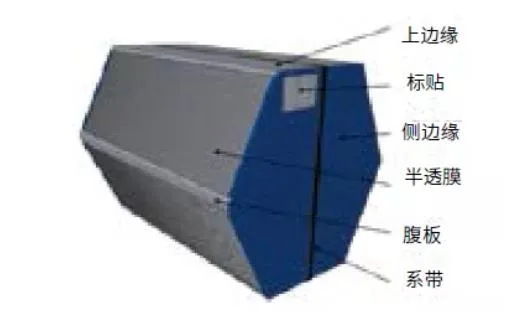
Figure 1: High-Efficiency Heat Recovery Fresh Air System Diagram
3.5 HVAC and Thermal Source System Technologies
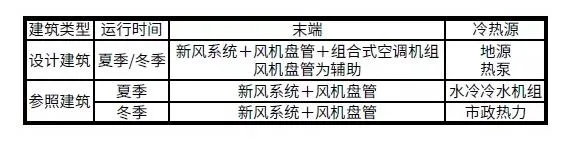
(1) Air Conditioning System: The project employs a centralized fresh air plus fan coil unit system. The fresh air system handles part of the indoor heating and cooling load, while fan coil units provide auxiliary conditioning during extreme weather.
The fresh air unit combines fresh air supply, purification, refrigeration, dehumidification, and heating. Outdoor fresh air passes through a valve, filter, total heat exchanger, and PM2.5 filter before positive pressurization and indoor supply. Indoor polluted air is filtered, passes through the heat exchanger, and is exhausted outdoors.
(2) Thermal Source Systems: Both fresh air and fan coil units are powered by a ground source heat pump located in the power center, optimized through BIM for energy savings. Chilled water supply/return temperatures are 7°C/12°C in summer; hot water supply/return for heating is 45°C/40°C in winter.
(3) Automatic Control System: A direct digital control system monitors and prints equipment operation status and parameters, enabling centralized remote and program control. Energy-efficient pumps and fans with frequency conversion control are used to maximize savings.
3.6 Lighting Energy-Saving Technologies
All lighting uses high-efficiency LED sources, saving over 50% energy compared to conventional lamps. Public areas like stairwells feature sound- and light-controlled lighting with forced activation during fires. Exhibition halls, elevator lobbies, and corridors also use LED lighting, with illuminance conforming to GB50034-2013 standards. Lighting system parameters are detailed below.
Table 1: Lighting System Parameter Settings
3.7 Monitoring and Control Technology
The monitoring platform employs building information modeling (BIM) to extend refined design and construction into precise operation and maintenance management. It tracks electricity and water consumption for HVAC, lighting, and electrical systems, along with indoor/outdoor comfort parameters such as temperature, humidity, CO₂, and PM2.5 levels. The platform analyzes energy consumption, diagnoses conditions, devises energy-saving strategies, and ensures the building meets passive ultra-low energy standards.
The system includes an energy consumption analysis module, comfort detection sensors, energy monitoring devices, and smart lighting controls, all interconnected via concentrators.
3.8 Renewable Energy Utilization
Given the significant reduction in cooling and heating energy demand, the project incorporates renewable energy systems to offset remaining energy use.
Photovoltaic System: The installation includes 300 photovoltaic panels (1680 mm × 992 mm each). Annual power generation averages 21.34 kWh/m², totaling approximately 110,376 kWh per year.
Ground Source Heat Pump: This system uses stable shallow geothermal resources for heating and cooling, offering about 40% higher efficiency than traditional air conditioning. Its stable temperature ensures reliable and economical operation.
Compared to air source heat pumps, ground source heat pumps reduce pollutant emissions by over 40%, and by more than 70% compared to electric heating. Both photovoltaic and ground source heat pump systems contribute to 54% of the building’s total energy consumption from clean energy sources.
4. Project Energy Consumption Indicator Calculations
The design follows technical requirements from the Ministry of Housing and Urban-Rural Development’s passive ultra-low energy green building demonstration standards and Germany’s passive house performance indicators. Energy consumption modeling used DeST software and the German PHPP tool.
4.1 Basic Building Information
Building form factor and window-to-wall ratios are summarized below.
Table 2: Building Shape Coefficient
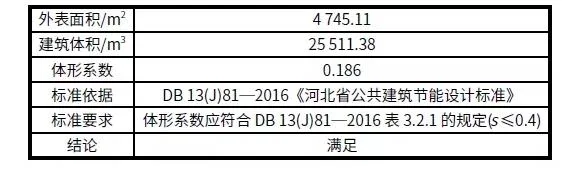
Table 3: Building Window-to-Wall Ratio
4.2 Building Model Establishment
Using DeST software, a comprehensive energy consumption model was built based on architectural and HVAC design drawings and other client-provided information. The simulation model is shown below.
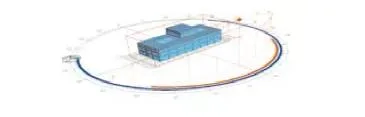
Figure 2: Simulation Modeling Diagram
(1) Meteorological Data: The Future City Life Experience Hall is located in Baoding City, Hebei Province, within the cold B climate zone. Meteorological data for Baoding was used in the simulation.
(2) Envelope Structure: Insulation materials and heat transfer coefficients for building envelope components are presented below.
Table 4: Insulation Materials and Heat Transfer Coefficients for Building Envelope
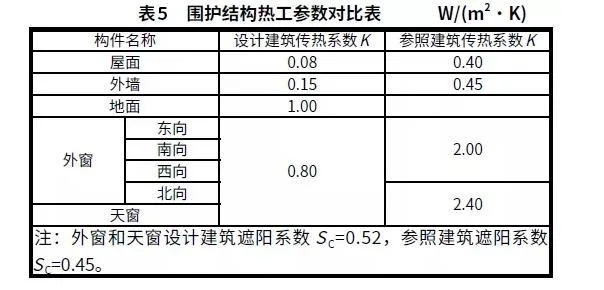
Thermal parameters (heat transfer coefficient K, shading coefficient SC) for both the design and reference buildings are summarized in the table below.
Table 5: Comparison of Thermal Parameters for Envelope Structures
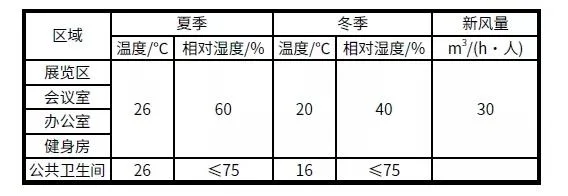
(3) Interior Design Parameters: Following GB50736-2012 standards, interior design parameters are detailed below.
Table 6: Interior Design Parameters
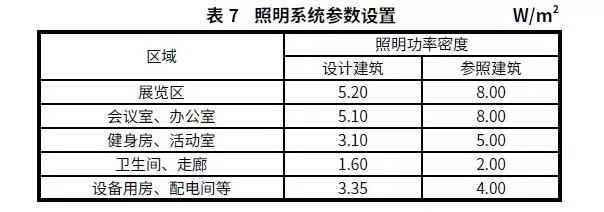
Lighting uses high-efficiency lamps for the design building and energy-saving fluorescent lamps for the reference building. Occupancy and equipment power settings are consistent between both.
Table 7: Lighting System Parameter Settings
(4) HVAC System Design: The building’s HVAC design compared to the reference building is shown below.
Table 8: Comparison of Heating and Air Conditioning System Types
(5) Sunshade Design: The south facade features a wing-shaped external shading system with adjustable electric aluminum alloy louvers on east, west, and outer windows. The reference building lacks sliding external shading.
4.3 Simulation Results
Load simulations for both the design and reference buildings were conducted using DeST software with typical meteorological data for Baoding City.
(1) Cooling and heating demands are normalized by building area. A comparison of load calculations is presented below.
Table 9: Load Calculation Comparison
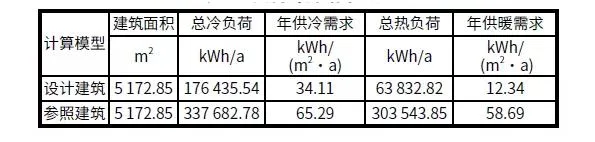
Annual energy consumption (cooling + heating + lighting) per building area is compared below.
Table 10: Annual Energy Consumption Comparison
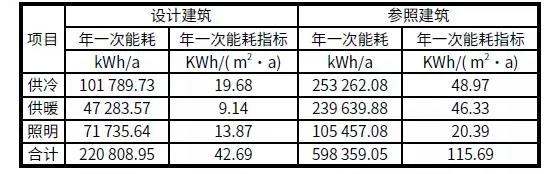
(2) Energy Savings: The design building’s annual energy consumption index is 42.69 kWh/(m²·a), compared to 115.69 kWh/(m²·a) for the reference. This equates to a 63.10% energy savings rate.
5. Project Technical Innovations
This demonstration project is the first in China to combine steel structure, prefabrication, and passive ultra-low energy consumption technologies. It lays a foundation for future projects integrating energy-saving systems with prefabricated green building technologies.
Key innovations include:
① Integration of passive ultra-low energy consumption with steel structure prefabrication, assembling steel frames independently and using cast-in-place concrete to unify profiled steel plates with the steel frame into prefabricated components. Structural strength is enhanced via anchor bolts, auxiliary welding, and professional sealants. This fusion promotes advancements in energy-saving and prefabricated green building technologies.
② Performance-driven design integrating insulation, thermal bridge control, high-efficiency doors and windows, shading, heat recovery fresh air systems, and airtightness technologies with building facades and spaces.
③ Use of passive wooden cable structure doors and windows on the south facade to increase natural lighting transparency. Precision external insulation and thermal bridge solutions ensure energy efficiency, safety, durability, and indoor comfort.
④ Special steel structure thermal bridge nodes connect curtain walls to the main structure, reducing heat loss while maintaining structural integrity.
6. Technical and Economic Analysis
6.1 Investment Analysis
The total project investment is 90 million yuan, self-funded by the company. Compared to China’s 65% energy-saving public building standards, the incremental cost for passive ultra-low energy design is 1,480.71 yuan/m², totaling an additional 7.6595 million yuan.
6.2 Benefits Analysis
(1) Energy Savings: The project significantly improves resource efficiency while reducing energy consumption, contributing to ecosystem protection, indoor air quality improvement, and climate change mitigation.
(2) Environmental Impact: By reducing building energy use and demand for heating and cooling, the project delivers a comfortable indoor environment with lower greenhouse gas emissions.
(3) Market Demand: As a multi-story building in a cold climate, it serves as a demonstration base for steel structure prefabricated passive ultra-low energy buildings, expanding energy conservation efforts and market opportunities.
(4) Promotion Prospects: Experience gained will support future projects combining steel structure prefabrication with passive ultra-low energy consumption.
6.3 Risk Analysis
(1) Technical Risks: Steel structure prefabricated ultra-low energy buildings are nascent in China, with limited cases and standards. Technical risks exist in setting design targets and integrating technologies. The project team collaborates with the Ministry of Housing and Urban-Rural Development’s expert group to address challenges.
(2) Economic Risks: Compared to current energy-saving standards, passive ultra-low energy buildings require enhanced enclosure performance, airtightness, efficient equipment, and intelligent systems, increasing costs and financial pressures. The construction unit prioritizes domestic high-performance materials and equipment to control costs and ensure smooth project delivery.
7. Conclusion
The project leverages the construction unit’s technological strengths to create four integrated advantages: combining prefabricated steel structures with ultra-low energy buildings; integrating interior industrialization with smart home technologies; linking intelligent BIM manufacturing with design-procurement-construction contracting; and harmonizing simulated and physical cities. It meets “three-star” green building standards, the Ministry of Housing and Urban-Rural Development’s ultra-low energy passive demonstration requirements, and the German Energy Agency’s passive house criteria—effectively aligning the “Xiong’an Standard” with international benchmarks. This project holds significant demonstration value.
Author’s Profile
Liu Yulin specializes in performance-based design and consulting for ultra-low energy buildings as well as green building design and consulting.
Article source: Green Building Magazine













Must log in before commenting!
Sign Up