
Source: Building Industrialization Innovation Alliance
Chapter 2: Transportation and Site Inspection of Prefabricated Concrete Components (Part 1)
Content Summary
Prefabricated concrete components vary widely in type depending on their application, size, shape, and weight. Consequently, transportation, inspection, and stacking requirements differ for each component type. This chapter covers the transportation characteristics, on-site inspection procedures and quality standards, stacking requirements, and important precautions related to prefabricated concrete components.
2.1 Transportation Characteristics of Prefabricated Concrete Components
Prefabricated concrete components are typically manufactured at factories located far from construction sites and then transported for installation. One of the most critical and technically challenging aspects is selecting appropriate transportation methods and equipment to ensure the components arrive safely and in good condition.
1. Selecting Transportation Routes
- The entry and exit paths for transport vehicles must be clearly designated.
- Vehicles must park only at assigned locations and follow prescribed routes.
- Transportation routes should be planned based on cargo specifics and approved by relevant authorities beforehand.
2. Compliance with Traffic Regulations
- Vehicles and their casings must be inspected before departure.
- Drivers must carry a valid license, delivery documents, and wear safety helmets.
- Strict adherence to designated routes and speed limits is required.
- Parking near construction sites must occur only at authorized spots.
- Engines must be turned off on-site, and safety helmets are mandatory.
- All factory traffic rules and regulations must be observed.
3. Transportation Requirements for Prefabricated Components
- Transport vehicles should be chosen based on component size and weight, ensuring proper balance during loading, unloading, and transit.
- Secure fastening is essential to prevent component movement or tipping.
- Vertical thin-walled components should be transported using specialized transport racks with flexible padding protecting corners and contact points.
- Prefabricated columns, beams, composite floor slabs, balcony slabs, stairs, and air conditioning panels are transported flat.
- Prefabricated wall panels are transported upright; those with exterior finishes should face outward and be secured with tightening ropes.
- On-site transportation roads must be level and capable of supporting the load.
4. Lifting Method Selection
Because component sizes vary widely, lifting methods must be adapted accordingly. Oversized, wide, or heavy components often require multi-point lifting. Horizontal lifting beams help distribute and balance crane loads between two points. The lifting device’s attachment point should coincide with the component’s center of gravity to ensure vertical load on the hook and component stability.
Lifting equipment must be selected based on calculated maximum component weight, considering worst-case load scenarios. Embedded lifting points come in various forms, including hooks, suspension rings, detachable embedded types, and steel sections, and should be chosen according to the component’s specifics.
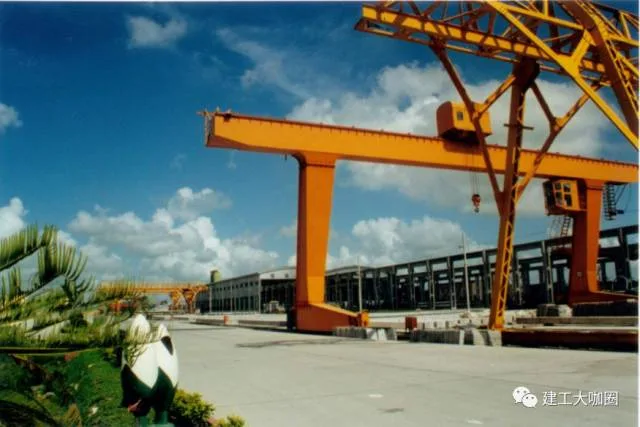
Figure 2-1: Component Loading and Unloading Equipment – Crane
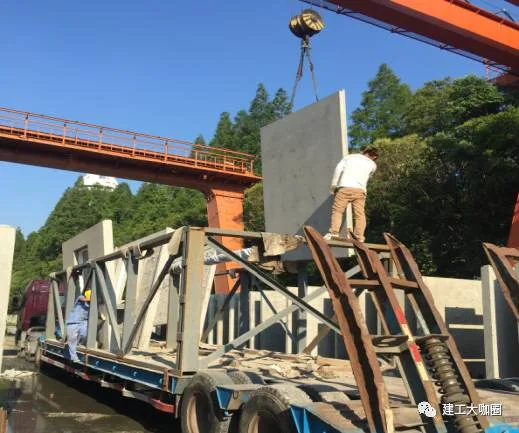
Figure 2-2: Loading of Components
5. Protection of Components During Transportation
Due to their large size, heavy weight, and susceptibility to damage, prefabricated components require careful protection during transport. The following measures are recommended:
1) Selection of Transportation Vehicles
To prevent cracking, damage, or deformation, choose suitable vehicles and platforms. Heavy and medium-duty trucks or semi-trailers should not exceed 4 meters in height from the ground, while container carriers must not exceed 4.2 meters. Low flatbed trucks are preferred for vertical component transport to keep overall height within limits.
2) Loading Methods
- Beams and columns are typically transported flat. Measures must be taken to prevent scattering, and platform timber placement should consider component reinforcement to avoid cracks during transit (see Figure 2-3).
- Wall panels should be transported vertically or sideways using dedicated transport frames, securely fixed. Two panels are arranged back-to-back on the same frame, connected at the top with flower basket bolts and stabilized on the sides with diagonal steel wire ropes (see Figure 2-4).
- Composite panels are transported flat, supported by four uniform wooden blocks. For panels longer than 4 meters, six blocks are recommended to prevent mid-span deflection. Stacking should remain horizontal, with no more than six panels per stack, secured by safety belts.
- Other components such as staircases, balconies, and semi-prefabricated parts require individualized loading strategies depending on shape and reinforcement. Safety considerations during transport and post-transport construction performance are paramount. Balcony slabs and stairs should be transported flat, supported by channel steel, fastened with safety belts, and never stacked.
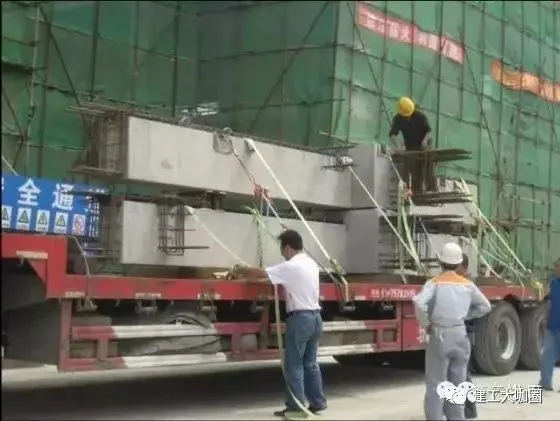
Figure 2-3: Horizontal Placement and Transportation of Components
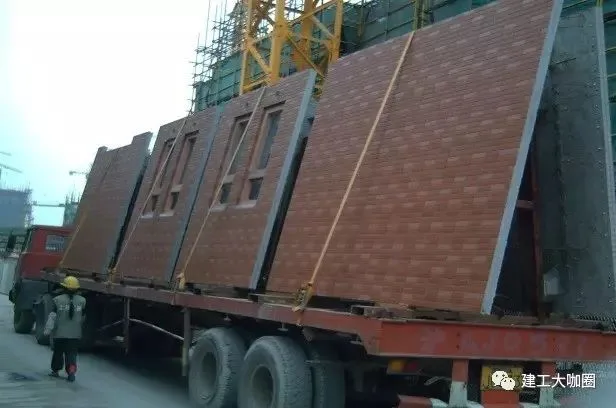
Figure 2-4: Side Standing Transportation of Components
3) Protective Measures During Transportation
Loading and unloading must be conducted carefully. Buffer materials should be placed between the transport platform and vehicle body to reduce impact. For long-distance or sea transport, components should be framed to protect corners from damage (see Figures 2-5 and 2-6 for integrated decoration examples).
Steel wires or fixtures should be used to firmly secure components and prevent movement or shaking during transit. Drivers must adhere to designated routes and drive cautiously, avoiding speeding or sudden braking.
Note: The copyright of the above materials belongs to Shanghai Jianfeng College and Shanghai Construction Second Construction Group.













Must log in before commenting!
Sign Up