
Source: Building Industrialization Innovation Alliance
Chapter One: Basic Knowledge of Prefabricated Concrete Structures
Content Summary
This chapter introduces the concept, characteristics, and classification of prefabricated concrete structures. It covers the classification, features, and challenges of prefabricated concrete structures and enclosure wall panels, supported by engineering examples. Typical structural connections for prefabricated components are discussed, including vertical connections, connections between prefabricated enclosure panels and main structures, and types and characteristics of connectors used in prefabricated sandwich wall panels. The chapter also outlines the development history of prefabricated concrete structures.
1.1 Concept of Prefabricated Concrete Structures
The construction industry is a cornerstone of the national economy, contributing over 20% to the GDP. However, buildings account for 32% of the country’s total energy consumption, making construction the largest single energy-consuming sector. To address the issues of high energy consumption, pollution, and low efficiency, the industry must embrace technological innovation and pursue industrialized construction methods. This shift is essential for sustainable growth amid rapid economic and social development.
In this context, construction production is increasingly moving into factories, and prefabricated concrete buildings have become a key trend. Compared to traditional construction, prefabricated buildings employ standardized design, industrialized manufacturing, mechanized construction and installation, and information management. They shift from wet to dry processes, ensuring higher quality, reducing labor intensity, lowering costs, minimizing environmental impact, and conserving natural resources.
Prefabricated concrete structures consist of concrete components manufactured off-site and assembled on-site using reliable connection methods. These include assembled integral concrete structures and fully assembled concrete structures. In construction engineering, they are commonly referred to as prefabricated buildings or prefabricated structures in structural engineering. Connections between components may involve concrete pouring at joints, bolted connections, or prefabricated stress connections. Steel reinforcement connections utilize methods such as grouted steel sleeves, rebar anchoring, welding, mechanical connections, or overlapping through reserved holes.
Common prefabricated concrete components include fully prefabricated columns and beams, composite beams, fully prefabricated shear walls, single- and double-layer composite shear walls, exterior wall panels, sandwich insulation exterior wall panels, composite insulation exterior wall panels, fully prefabricated floor slabs, composite floor slabs, balcony slabs, bay windows, air conditioning panels, parapets, decorative columns, and more.
It is important to distinguish between the prefabrication rate and assembly rate in prefabricated concrete buildings:
- Prefabrication rate: The ratio of the volume of prefabricated components’ material consumption in the main and enclosure structures above ground to the total material consumption of those components.
- Assembly rate: The ratio of the quantity or area of prefabricated components and building parts to the total quantity or area of similar components or parts.
1.2 Characteristics of Prefabricated Concrete Structures
Prefabricated concrete structures have several key characteristics:
- The main components are prefabricated either in factories or on-site and installed using mechanized lifting, allowing simultaneous progress with other trades. This enables faster construction, shorter schedules, and supports winter construction.
- Standardized flat templates replace the complex three-dimensional formwork of cast-in-place construction, resulting in higher production efficiency, superior product quality, enhanced safety, environmental protection, and cost savings.
- Special requirements—such as insulation, decorative finishes, door and window accessories, and concrete wall panels—can be fabricated in the factory using reverse molding or formwork techniques. This improves waterproofing and durability, especially around window frames, and addresses exterior wall decoration performance.
- Integration of multiple functions reduces material waste and streamlines construction processes.
- Because of the high technical demands, early-stage planning is critical. This includes detailed scheduling, deepening component standardization in design, and optimizing resource allocation to ensure smooth construction.
1.3 Types of Prefabricated Concrete Structures
Prefabricated concrete buildings represent an industrial advancement in construction technology. Unlike traditional classifications based on building function, these buildings are categorized according to their typical prefabrication techniques.
Based on the structural system, prefabricated concrete buildings are classified as:
- Assembled integral frame structures
- Assembled integral shear wall structures
- Assembled integral frame-shear wall structures
According to the types of prefabricated enclosure components, classifications include:
- Prefabricated external wall panels
- Single-layer composite shear walls (PCF)
- Double-layer composite shear walls
- Prefabricated insulation composite exterior wall panels (PCTF)
- Prefabricated sandwich insulation wall panels
- Prefabricated shear wall exterior wall panels
- Prefabricated enclosure wall panels
- Fully prefabricated women’s walls
Connections in prefabricated concrete structures are critical and can be categorized as:
- Connections between prefabricated components
- Connections between prefabricated enclosure components and main structures
- Connections between prefabricated sandwich insulation wall panels and inner and outer leaf walls
Vertical connections of prefabricated components typically use bolt connections, steel sleeve grouting, or steel slurry anchor overlap connections. Connectors between inner and outer leaf walls of sandwich panels often use FRP connectors, stainless steel connectors, or basalt fiber reinforcement.
1.3.1 Classification of Prefabricated Concrete Structures
1. Assembled Integral Frame Structure
These structures use prefabricated components for all or part of the frame beams and columns. Assembled integral frame structures are common in buildings with high spatial requirements, such as shops, schools, and hospitals. The load transfer follows this path: floor slab → secondary beam → main beam → column → foundation. This system offers reasonable load transmission and excellent seismic performance.
Main load-bearing components include fully prefabricated columns, beams, floors, and non-load-bearing elements such as walls and exterior finishes. Vertical connections of fully prefabricated columns typically use grouting sleeve connections.
Technical features: High standardization of components with limited types and uniform weight, optimized use of lifting equipment, and strong technical and economic benefits. Standardized building assembly nodes improve work efficiency. Steel bar connections adopt unified methods, enabling mechanized construction with reliable quality, structural safety, and on-site environmental protection. Challenges include high steel bar density at nodes requiring precise processing and complex operations.
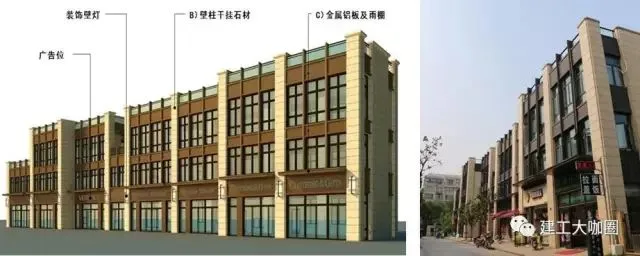
Example Project: Building 39, Plot 128-3, Pujiang Town
A three-story commercial building with a total area of 1,695 m².
Prefabrication rate: 75%, including prefabricated columns, composite beams, and composite floor slabs.

2. Assembled Integral Shear Wall Structure
This structural system is prevalent in residential buildings. The force transmission path is: floor slab → shear wall → foundation. Buildings with shear wall structures lack protruding beams and columns, resulting in orderly indoor spaces.
Main load-bearing components include prefabricated shear walls, floor slabs, and non-load-bearing elements like walls and exterior finishes. Prefabricated components may consist of fully prefabricated shear walls, single- and double-layer composite shear walls, sandwich insulation exterior wall panels, composite insulation exterior wall panels, enclosure wall panels, fully prefabricated beams, composite beams, balcony panels, sunshades, bay windows, air conditioning panels, stairs, parapets, and more.
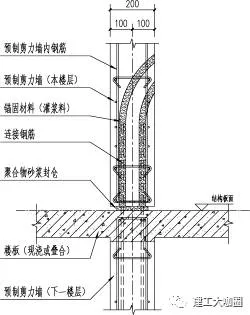
Vertical connections for prefabricated shear walls use bolt connections, steel sleeve grouting, or steel slurry anchor overlap methods. Prefabricated enclosure wall panels are commonly connected with threaded blind hole grouting.
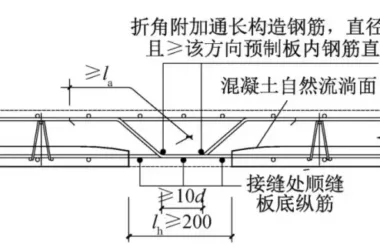
Technical features: High standardization of flat wall and floor components enables efficient production and transportation. Vertical connections employ methods such as bolting, grouting sleeves, and anchor overlap, with concrete poured after horizontal node connections. T-shaped and cross-shaped shear wall nodes have dense steel reinforcement, which increases construction difficulty.
Example Projects:
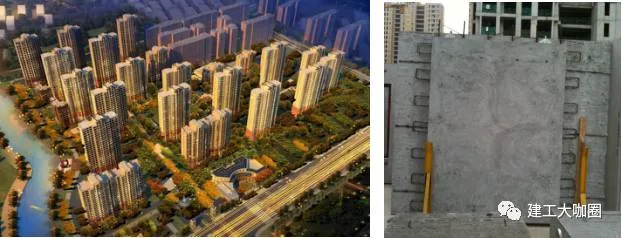
Vanke Dijie B (Legend of the Sea)
An 18-story residential building covering 36,200 m².
Prefabrication rate: 15%, including partial prefabricated shear walls, balconies, bay windows, and fully prefabricated stairs.
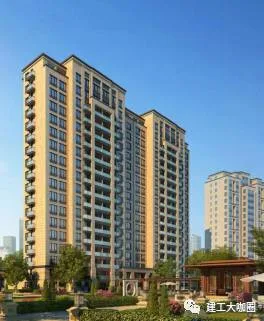
Taihe Hongqiao
An 18-story residential building with a total area of 42,000 m².
Prefabrication rate: 45%, including prefabricated shear walls, composite floor slabs, and stairs.
3. Assembled Integral Frame-Shear Wall Structure
This structural system is common in office and hotel buildings. Shear walls serve as the primary seismic defense, while prefabricated frames provide secondary seismic resistance.
Typical prefabricated components include external wall panels, fully prefabricated columns, composite beams, slabs, panels, and parapets. Vertical connections of prefabricated columns use steel sleeve grouting.
Technical characteristics: Shear walls are usually cast-in-place, while frames are prefabricated, leading to a relatively high standardization of components. Prefabricated columns, beams, and slabs are planar, which facilitates efficient production and transportation.
Note: The copyright of the above materials belongs to Shanghai Jianfeng College and Shanghai Construction Second Construction Group.














Must log in before commenting!
Sign Up