
For those experienced with Revit, walls are a fundamental component of architectural models. Today, we’ll focus primarily on understanding the positioning lines of walls. Like other basic building elements, walls are instances of predefined system family types. These types represent standard variations in wall function, composition, and thickness. The “Positioning Line” property defines which vertical plane of the wall aligns with the drawn path or specified reference line in the drawing area. This allows precise placement of connected composite walls based on critical material layers, such as concrete blocks. Regardless of the wall type, you can select any of the following positioning options either on the Options Bar (before placing the wall) or in the Properties palette (before or after placement):
Wall centerline (default)
Core layer centerline
Surface level: Exterior
Surface level: Interior
Core surface: Exterior
Core surface: Interior
Note: In Revit, the wall core refers to its primary structural layer. For simple brick walls, the “wall centerline” and “core layer centerline” planes coincide, but they differ in composite walls. By default, when drawing a wall from left to right, its exterior face (Surface level: Exterior) is positioned at the top.
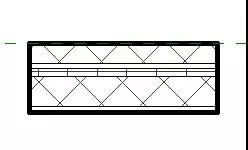
In the example below, the ‘Position Line’ is set to ‘Face Level: Exterior’. The cursor aligns with the dashed reference line, and the wall is drawn from left to right.
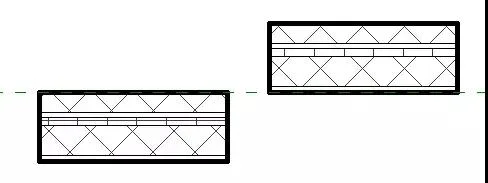
If you change the “Positioning Line” setting to “Face Level: Interior” and draw another segment in the same direction along the reference line, the new segment will be positioned above the reference line.
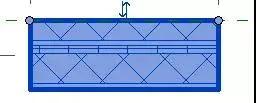
When selecting a single wall segment, the blue dot (Drag Wall Endpoint control) indicates the wall’s positioning line.
The positioning line of a wall remains fixed after placement, even if you modify its structural type or switch to another wall type. Changing the ‘Position Line’ property value on an existing wall will not reposition the wall itself. However, when using the spacebar or flip controls to reverse the wall’s internal/external orientation, the positioning line acts as the axis for flipping. Therefore, if you alter the “Positioning Line” value and then flip the wall’s direction, this may affect the wall’s position. Please note: After deselecting and reselecting the wall, the position of the blue dot (indicating the positioning line) may shift.













Must log in before commenting!
Sign Up