
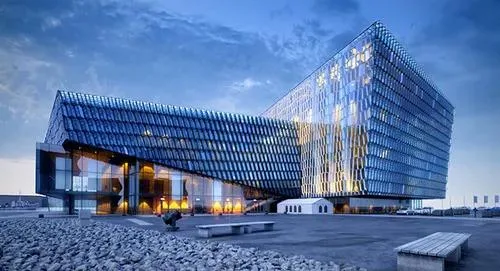
1. Overview of Curtain Walls
The development of building curtain walls in China has seen remarkable progress, with some systems achieving or even surpassing international standards. Numerous high-quality and technologically advanced projects have emerged. However, many projects have also encountered significant issues, including serious safety concerns.
Years of engineering tests, laboratory inspections, and technical discussions have revealed that many of these problems can be avoided through improved design methods. This summary outlines 100 common design pitfalls to help elevate the design standards of China’s curtain wall industry and support its healthy growth.
2. Glass Curtain Walls
Glass curtain walls are widely used as exterior wall systems and maintain a dominant position in building exteriors worldwide. Many successful projects have implemented these systems effectively.
2.1 Direct Bonding of Fluorocarbon Coating and Structural Adhesive
Some structural sealants and fluorocarbon coatings do not meet curtain wall requirements. To enhance adhesion between the secondary frame and glass in hidden frame curtain walls, as well as between fluorocarbon-coated panels, various sealing measures should be applied:
- (a) Applying primer before injecting structural adhesive. However, some experts consider this method unreliable, classifying it as a “two-layer skin” approach, and no conclusive evidence supports its effectiveness. Further research is needed.
- (b) Using composite profiles where the directly bonded adhesive area is separated and anodized.
- (c) Covering the bonding area during fluorocarbon spraying to preserve the anodized surface.
- (d) Applying remedial methods like sanding off the coating and relying on natural oxidation (~5 μm).
2.2 Self-Tapping Nail Connections
Self-tapping nails are generally suitable for positioning but offer poor reliability as structural connections.
2.3 Mixed Use of Steel and Aluminum Profiles (Aluminum-Clad Steel)
The inner surfaces of steel square pipes are difficult to treat with shot blasting, and hot-dip galvanizing often results in quality issues, reducing corrosion resistance. The gap between steel and aluminum must be tight to ensure common force transmission and prevent bimetallic electrochemical corrosion.
2.4 Short Pressing Cover
Transparent frame curtain walls typically use pressure sealing to create equal pressure chambers and secure the glass with buckle covers. Short or discontinuous pressing reduces costs but may cause uneven glass surfaces and prevent proper equal pressure chamber formation.
2.5 Two-Point Connection of Crossbeam and Column Components
“Drooping head” issues often appear in curtain wall crossbeams due to:
- (1) Insufficient bearing capacity of the crossbeam.
- (2) Weak connection between crossbeam and column, commonly because only two bolts connect them, leading to poor torsional resistance and crossbeam twisting.
2.6 Large Section Decorative Strips Without Drip Lines
Large decorative strips accumulate dust on their surfaces. Without drip lines, water and dust cause staining on the curtain wall. Installing drip lines at the front edge effectively prevents water and dust from running onto the surface.
2.7 Matching Decorative Covers and Removable Locks
Decorative covers should connect to the clamp of extruded profiles, which have fixed sizes and high precision for reliable connections. Screw-formed bayonets lack required accuracy and reliability.
2.8 Opening Chambers Without Heat-Sealing Lines
Heat-sealing lines are common in energy-efficient aluminum windows but rarely used in curtain wall opening chambers, reducing energy-saving performance at these points.
2.9 Non-Fixed Distance Pressure Plates in Hidden Frame Curtain Walls
Hidden and semi-hidden frame curtain walls usually use pressure plates spaced no more than 300mm apart to transmit forces. Fixed distance pressure plates maintain consistent clamping force and gap size, which helps absorb structural and thermal deformations, reduces friction noise, and prevents image distortion caused by uneven pressing.
2.10 False Frames and Hidden Frames Not Designed as Hidden Frame Curtain Walls
Decorative strips are sometimes added to hidden frame curtain walls to mimic visible frames. This requires the design approach of hidden frame curtain walls for insulated glass and structural adhesives. The secondary sealant should be silicone structural adhesive. Using polysulfide adhesive, despite its UV resistance, may still pose safety risks.
2.11 Hidden Frame Hollow Glass Without Bottom Support Plate
Structural adhesives in hollow glass panels bear shear forces over time, which can reduce their lifespan. The JGJ02 standard requires a support plate at the bottom of the glass. The support can connect directly to the crossbeam via clamps or bolts, but bolts connecting the secondary frame to glass components may hinder adhesive injection and cause quality issues, so caution is advised.
2.12 Insulation Strips Bearing Shear Forces
Insulation strips reduce heat transfer and transmit structural forces in curtain wall profiles. However, cold work hardening and micro-cracks can occur at joints between insulation strips and aluminum profiles. When crossbeams use heat-insulating profiles, structural measures should prevent insulation strips from bearing shear forces to avoid damage. Typically, pallets or stronger aluminum profiles bear the glass weight.
2.13 Defects in Anti-Detachment Design of Hook-Type Opening Fan Joints
Opening windows typically use upper suspension structures. However, many projects experience fan panels falling due to inadequate or poorly designed anti-detachment features, insufficient hook overlap depth, or thin profile walls at hanging joints.
2.14 Lack of Arc Crimping at Obtuse Angles
Traditional fixed distance pressure plates cannot effectively crimp obtuse angles, so angle-adjustable connection structures are recommended.
2.15 Irreversible Glass Slots
Profile designs should consider installation ease. Adjustable slots allow fine tuning and easier installation, so fixed glass slots should be avoided when possible.
2.16 Inadequate Horizontal Positioning of Small Unit Panels
Small unit panels are widely hung, requiring sufficient insertion depth. Accidents, such as panels falling, often occur due to lack of sealant positioning. Structural measures are necessary to ensure secure insertion between frame and fan.
2.17 Second Layer Sealant Not Using Structural Adhesive on Hollow Glass with Edge Leakage
Hollow glass requires a double sealant system. For hidden, semi-hidden, false exposed, and point-supported hollow glass panels, the second sealant must be silicone structural adhesive to ensure reliable force transmission and UV resistance. Polysulfide adhesive lacks UV resistance and should not be used as the second sealant. Its use has led to many outer glass sheets falling off, posing serious safety hazards.
2.18 Hollow Glass Size Sheets
Using large and small pieces in hollow glass has some advantages, like allowing more profile design space. However, drawbacks include:
- Mechanical injection molding is inconvenient.
- Unreasonable load transmission paths can cause glass displacement, air leakage, and insulation failure.
- Some projects omit structural adhesive in the interlayer.
Disputes also exist regarding load distribution calculations for large and small pieces, requiring careful attention during design.
2.19 “Big Cover” in Insulated Glass Fans
The “big cover” design, an extreme form of large and small piece insulated glass, causes small pieces to lose connection and fall if the large piece breaks.
2.20 Unreasonable Hollow Layer Thickness in Insulated Glass
Large-area hollow glass may experience suction effects with a 9mm hollow layer. The hollow layer thickness should be chosen based on structural and thermal requirements.
2.21 Frosted Treatment on Tempered Glass
Frosting tempered glass disrupts surface stress distribution, increasing the risk of spontaneous breakage. This risk is greater for point-supported glass. Narrow glass panels should not be supported on short edges.
2.22 Forced Installation of Glass
Glass bending strength decreases over time as microcracks propagate. Curtain wall glass should ideally be free from permanent loads such as forced installation, crimping, or sealing. A Beijing project using pressure sealing showed a high risk of glass breakage, serving as a cautionary example.
2.23 Unreasonable Design of Deformation Joints
Designing deformation joints is challenging because architects resist designs where components may be damaged after deformation. Joints must absorb deformation from structural shifts, loads, temperature changes, and seismic activity without compromising air tightness, water tightness, wind pressure resistance, or insulation.
2.24 Connection Design for Non-Wiping Window Cleaning Machines
Window cleaning machines are necessary for maintenance, but many do not function properly due to management issues or lack of secure connection design, especially in windy conditions. The Great Wall Hotel, China’s first curtain wall project, features a permanent dovetail groove for safe and convenient window cleaning machine attachment.
2.25 Floor-Standing Curtain Walls Without Laminated Glass Under 800mm
According to the “Code for Design of Civil Buildings” GB50352 and “Code for Design of Residential Buildings” GB50096, railings must be used on overhead windows. Curtain walls generally have a crossbeam at 800mm, with laminated glass between the beam and floor to comply with regulations.
2.26 Interlayer Fire Protection and Glass Direct Sealing
The “Code for Acceptance of Building Decoration and Renovation Engineering” GB50210 and JGJ/T139 “Standard for Inspection Methods of Glass Curtain Walls” specify fireproof sealing requirements. Designs where interlayer fireproof seals directly contact glass are prohibited and problematic, as glass may explode at around 250°C and flames can directly threaten the curtain wall. Proper sealing must prevent smoke leakage and avoid direct flame exposure.
2.27 Super High-Rise Curtain Walls Without Indoor Disassembly Design
Due to inevitable spontaneous breakage of tempered glass, replacing panels is common. For super high-rise or hard-to-access buildings, traditional replacement methods are difficult. Incorporating an indoor removable panel design significantly improves safety and ensures curtain wall quality during replacements.













Must log in before commenting!
Sign Up