
1. BIM technology should be utilized to simulate various construction processes, including earthwork engineering, installation of large equipment and components (such as lifting, sliding, hoisting), vertical transportation, scaffolding, and formwork engineering within building construction.
2. When applying BIM for construction process simulation, a detailed construction process model can be developed based on the construction organization model and drawings. This model can be integrated with construction process information to generate resource allocation plans, construction schedules, and guide tasks such as model creation, video production, and document preparation, as illustrated in the image below.
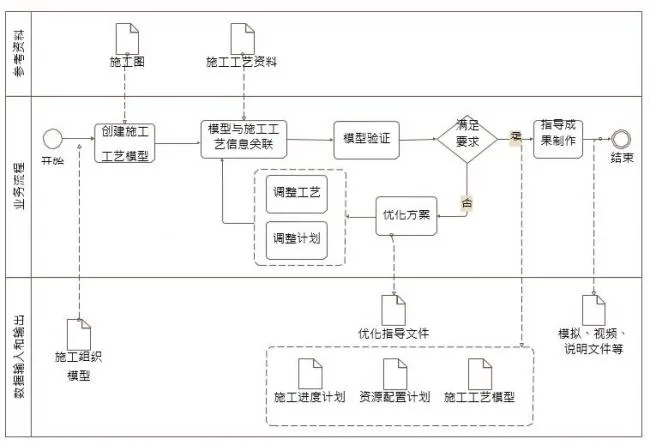
3. Prior to simulating the construction process, it is essential to prepare relevant construction plans and confirm the process workflow along with the associated technical requirements.
4. Simulating earthwork construction techniques allows for optimization by analyzing factors such as excavation volume and sequence, the number of excavation machines, transportation capacity of haul vehicles, foundation pit support types, and excavation requirements. This process can also be visualized or shared during construction.
5. The simulation of formwork engineering helps optimize the quantity and types of formwork, support processes, positioning, and the placement of embedded structural elements. These details can be visualized or disclosed throughout the construction phase.
6. Temporary support construction simulation enables optimization and determination of support location, quantity, type, size, and stress data. The simulation can be linked with the sequence of support installation, replacement, and removal, providing clear visualization during construction.
7. Simulating the installation process for large equipment and components involves a comprehensive analysis of obstacles such as walls, optimizing the timing, lifting methods, and transportation routes for arriving components. This information can be visualized or communicated effectively on-site.
8. Complex node construction simulation focuses on optimizing component dimensions, connection methods, spatial requirements between components, and the construction sequence of the node, all of which can be visualized or disclosed during the building process.
9. Vertical transportation construction simulation analyzes transportation demand and equipment capacity, enabling the development of optimized vertical transportation plans aligned with construction progress. These simulations can be visualized or shared during construction.
10. Scaffolding construction simulation comprehensively examines factors such as scaffolding assembly methods, erection sequences, safety net installation, wall connection poles, and site obstacles. This allows for the optimization of scaffolding plans and their visualization or disclosure on-site.
11. Simulation of pre-assembly construction technology covers prefabricated components including steel structures, electromechanical parts, curtain walls, and concrete elements. It thoroughly analyzes connection points, overlapping methods, workspace requirements, and assembly sequences, verifying the accuracy of prefabricated parts and providing visual displays or construction disclosures.
12. Throughout the simulation process, it is recommended to integrate organizational information such as timelines, work areas, labor force, construction machinery, and their specific site requirements into the model.
13. During construction simulation, any issues encountered—such as process handovers or positioning challenges—should be promptly documented to create optimization guidance materials, including detailed construction simulation analysis reports.
14. Finally, coordinate and optimize construction plans based on simulation results, and ensure that all relevant information is synchronized or linked back to the BIM model for ongoing reference.













Must log in before commenting!
Sign Up