
Known as the “arch of wooden architecture,” Dougong is a distinctive structural element found in ancient Chinese Han wooden frame buildings. It primarily consists of square dougong blocks, sheng, rectangular gongs placed horizontally, and ang blocks set obliquely.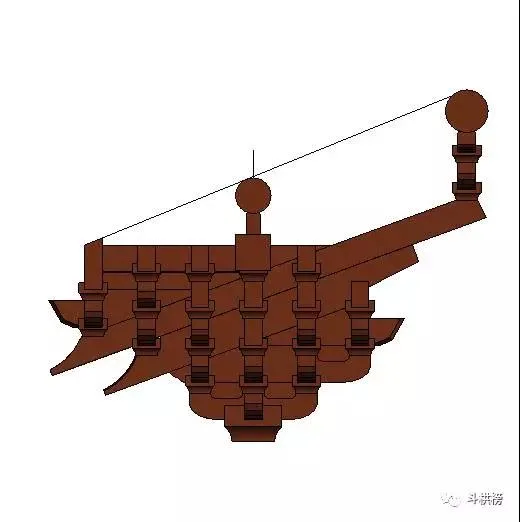
Dougong serves as a load-bearing structure, transferring the large roof loads to the columns through bucket blocks. Besides its structural role, it also functions decoratively, acting as a transition between the roof and the building’s facade. Additionally, Dougong was a symbol of the rigid hierarchical system in feudal society and an important standard for measuring architectural scale. During the Song Dynasty, it was referred to as “puzuo.” 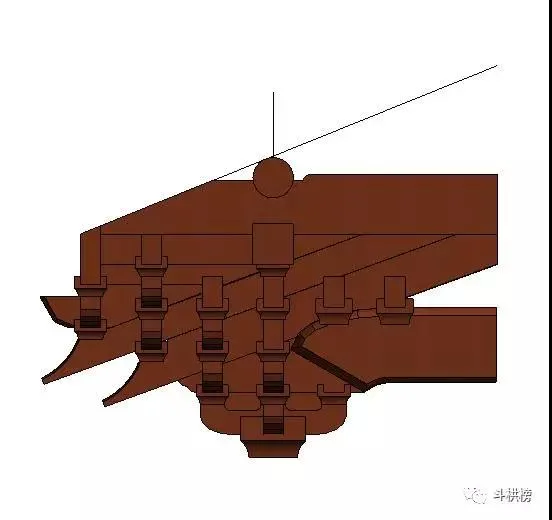
There are various types of Dougong, each with intricate shapes. Based on their placement, they are categorized as inner eave brackets, outer eave brackets, and flat seat brackets. The bracket located on the top of a column is known as the column head paving (called column head family during the Qing Dynasty), which primarily supports the eaves’ weight. Brackets positioned between two pillars on a lintel (or simply lintel in the Qing Dynasty) are called supplementary tiles (or flat body tiles in Qing terminology), providing auxiliary support. The bracket on corner columns is known as corner paving, crucial for supporting corner beams and roof edges, serving as a main structural component. Indoors, Dougong mainly supports ceiling weights or acts as a connector for beam nodes, with less structural significance compared to eave Dougong.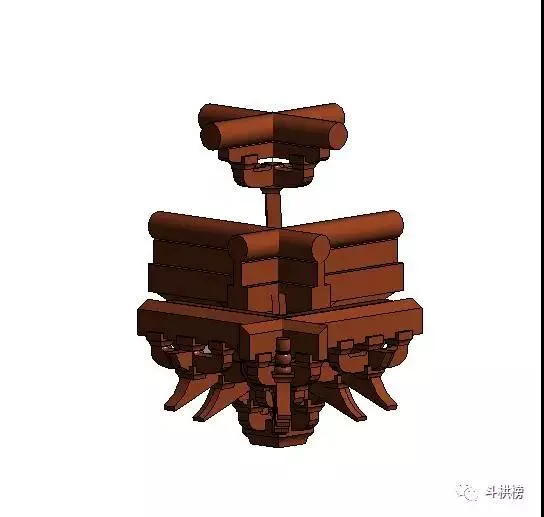
Dougong played a critical role in ancient Han architecture in China, especially in three main ways: First, located between columns and beams, it transmits roof and upper structural loads to the columns, which then transfer the weight to the foundation, effectively connecting the upper and lower parts. Second, Dougong extends outward, allowing the outer rafters to protrude further, creating deeper eaves and enhancing the building’s appearance with a more grand and elegant form. Third, its exquisite craftsmanship makes it an aesthetic highlight, often likened to bonsai or orchids, serving as a magnificent decorative element.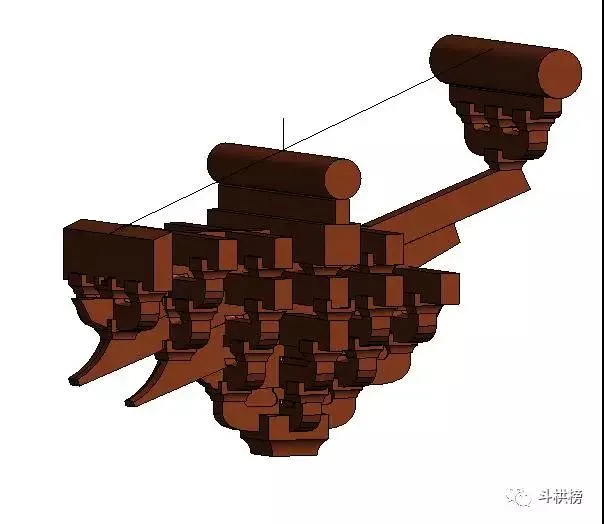
Song Style Form and Structure
Each set of Dougong in the Zaozhou style is called a “one.” The Dougong located on a column is known as the column head paving; on corner columns, it is called corner paving; and between two columns on the forehead is called patchwork paving. At the base of each set is a large bucket block, known as the Cotinus bucket, which supports the entire Dougong assembly. Goudou is generally placed above the centerline of a column. The front and rear arches and the left and right arches connect through a cross opening on the coggygria bucket. The arches extending front and rear (inside and outside) are called flower arms, while those on the left and right sides are known as mudway arches.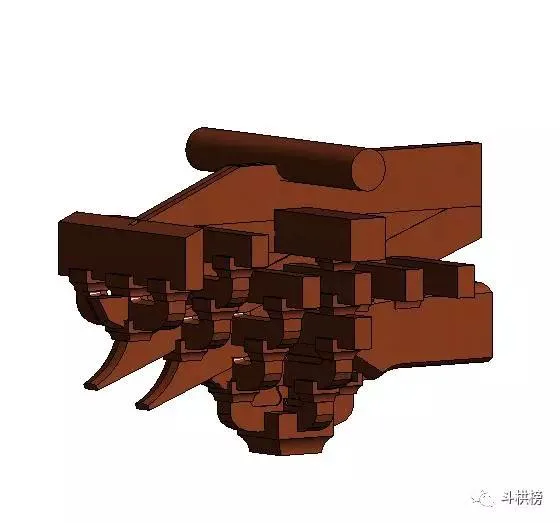
Flower arms may comprise one to five layers, each called a “jump.” Jumps extending outward are termed jumping outside, while those extending inward are called jumping inside. The arch perpendicular to the flower arm is known as the transverse arch. Beyond the mudway arch, the transverse arch atop the Huagong arch is called the Linggong arch, which supports the outer eaves’ arch (the Fang) and the inner eaves ceiling arch square.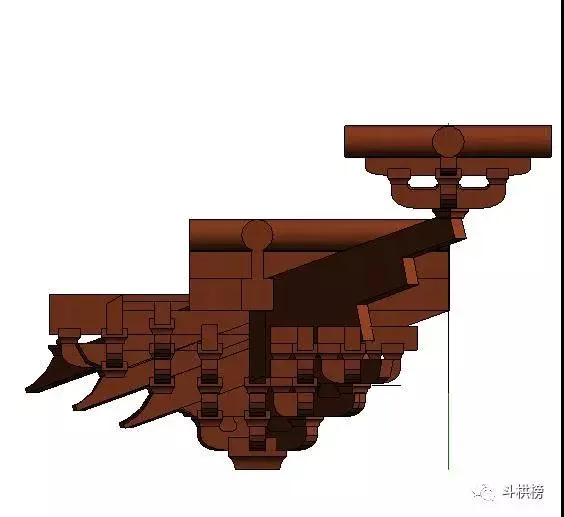
The transverse arch located at each jump head (i.e., flower arm head) between the column core mudway arch and the external jumping arch is called the melon seed arch. Square timbers can either rest directly on the melon seed arch and mudway arch or be supported by an additional horizontal arch called a slow arch. The square timbers resting on the melon seed and slow arches are referred to as arhat squares. Aside from flower arms, other components projecting outward in Song style Dougong include the inclined lower and upper arches.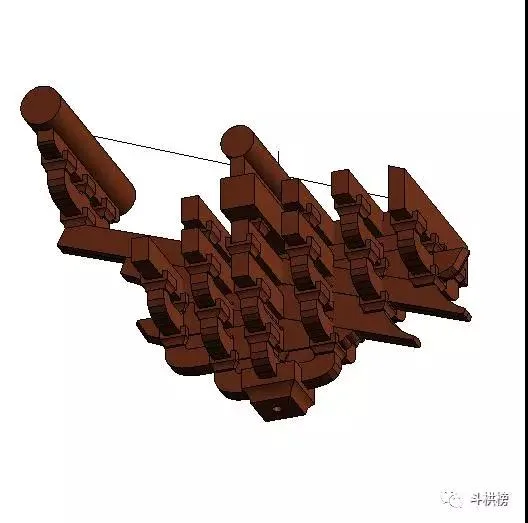
The lower inclined arch is generally parallel to the roof, with its tail tucked under the beam or rafter (also known as the purlin). The upper inclined arch slants outward from the center of the Dougong to support the arch structure. The lower arch serves to extend the overhang without increasing the Dougong’s height, whereas the upper arch increases the height while extending the overhang less. These two functions are complementary. Each level of arches is supported and fixed with bucket pads, which are positioned at the center, ends, or intersections of the arches.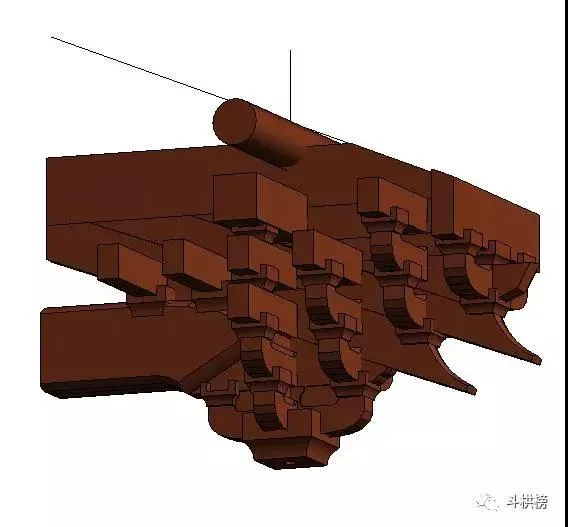
The bucket on the flower arm head is called the interactive bucket; the bucket at the center of the horizontal arch is the equal heart bucket; and the bucket at both ends is the scattered bucket. Dougong components are connected using tenon and mortise joints. The mortise for the springing arch is located in the lower compression area, while the transverse arch’s mortise is at the upper part. Buckets are attached to arches with wooden dowels, and inclined arches are secured by anchoring them into the lower arch using anchor bolts.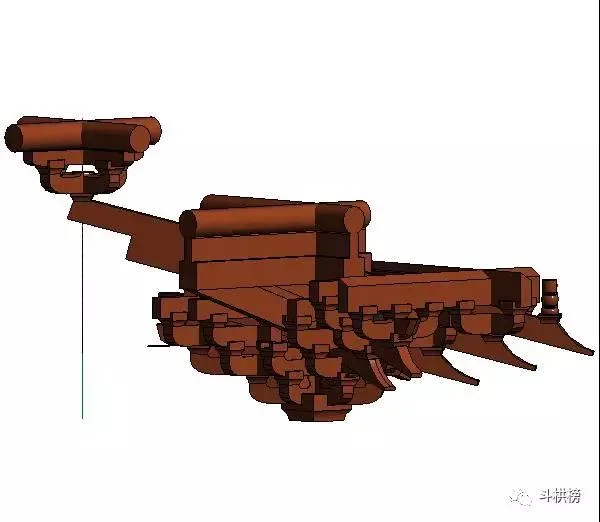
According to the Song Dynasty’s “Construction Method,” the scale and proportions of building construction are based on a fundamental module called “fen” (division). This module relates directly to Dougong. One “fen” represents one-fifteenth of the cross-sectional height of a Dougong piece of standard size. The dimensions and length ratios of each Dougong component are also measured in “fen.”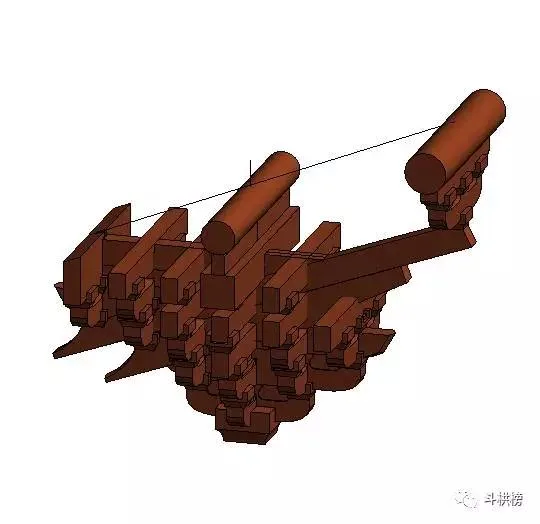
For example, a single arch section might be 15 “fen” tall and 10 “fen” wide; the foot arch might be 21 “fen” tall and still 10 “fen” wide. The extra 6 “fen” in the foot arch’s height corresponds exactly to the height of the gap between the upper and lower arches supported by the bucket cushion—one arch (6 “fen”). When a slow arch is present on the mud arch, the gap between the two arches is typically filled with wooden strips called hidden arches, which measure 6 “fen” high and 4 “fen” wide. Another example: the first jump of the flower arm is 60 “fen” long, which sets the longest jump of the flower arm at 30 “fen”; the mud arch and melon seed arch measure 62 “fen” long; the arch length is 72 “fen”; and the slow arch is 92 “fen” long. 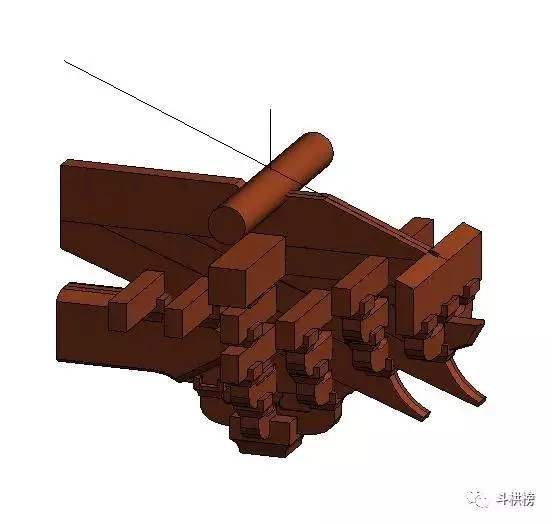
In Song style Dougong, each layer is called a jump, and each jump is a bed. The size of the Dougong is determined by the number of jumps and the number of pavilions. The Song Dynasty’s “Construction Method” specifies the “total paving order” as: one jump has four pavilions, two jumps have five pavilions, three jumps have six pavilions, four jumps have seven pavilions, and five jumps have eight pavilions. From this, the number of pavilions in each Dougong equals the number of jumps plus three, expressed as n (pavilions) = x (jumps) + 3 (constant). There are several explanations for this constant term of three.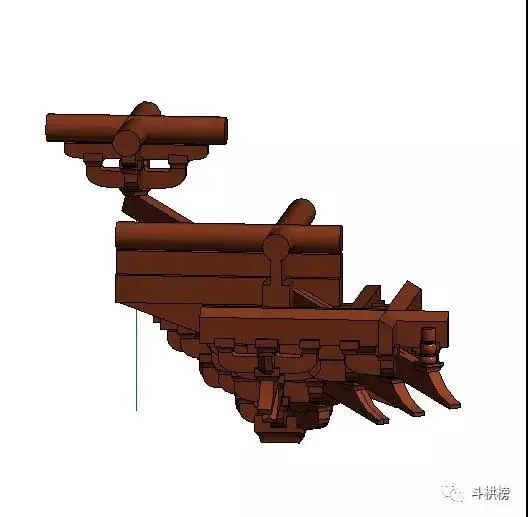
One explanation categorizes the three constant pavilions as: sparrows, head teasing, and lining square heads; another considers them as the Chinese parasol tree, with the upper arch on the top of the jumping head and the eaves at the top of the arch or the calculated arch; and a third groups them as the square timber on the column’s central line, the mudway arch (using cogwheel bucket when building a single arch), the slow arch (using ring arch when building a single arch), and the arhat square. The combination of weighing arch with slow arch and single arch without slow arch is also considered; a jump with a horizontal arch on the head is called a heartbeat.













Must log in before commenting!
Sign Up