
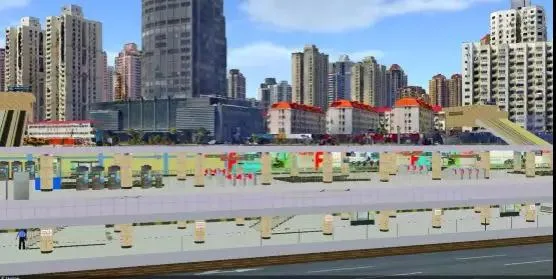
“RT FORUM Smart Rail Transit Column”, created by “RT Rail Transit”, annually shares 100 cutting-edge technologies and application cases in fields such as intelligence, information technology, cloud computing, big data, mobile Internet, and fully automated operation. This article examines the tremendous application value and potential of BIM technology in subway systems and suggests directions for its improvement, offering valuable references and guidance for future BIM research and development.
The use of BIM in the construction industry is expanding rapidly. Building models are created based on comprehensive project data, enabling construction companies to utilize consistent information throughout the entire lifecycle—from design to optimization. BIM also facilitates better communication through visual representations, helping all stakeholders understand costs, schedules, and environmental impacts. It empowers architects to accurately predict the final structure before construction begins, maintaining a competitive edge in today’s complex market.
BIM technology revolutionizes traditional modeling by evolving from 3D to multi-dimensional information modeling, enabling true collaborative design. Its promotion and adoption have made it an indispensable tool for owners during decision-making and a critical capability for design and construction teams managing large projects. Internationally, emphasis is placed on BIM’s interdisciplinary and cross-domain applications, achieving comprehensive management and seamless collaboration across construction stages, professions, and operations. Currently, BIM is primarily applied in the construction, design, and operation management of subways worldwide.
1. Collision Detection of BIM Technology in Subway Station Pipeline Coordination
In traditional subway construction, collision checks are performed only after consolidating design drawings from various disciplines—a process that is time-consuming, labor-intensive, and can delay project schedules. BIM technology enables collision detection of building pipelines early in the design phase, allowing optimization of clearance and pipeline layouts before construction begins. This approach eliminates hard clashes and minimizes soft conflicts, reducing errors and costly rework.
The design of comprehensive pipelines in subway stations often lags behind civil engineering and HVAC, water, and electrical systems. By leveraging BIM models of these systems, spatial data can be dynamically adjusted via collision detection to quickly optimize layouts. BIM automatically performs collision checks and generates real-time reports, avoiding the risks of manual oversight. Compared to traditional CAD methods, BIM offers higher efficiency and accuracy.
Main process steps:
- Establish civil engineering model
- Establish pipeline and equipment models
- Perform collision detection
- Resolve collisions
- Deliver final model
2. Construction Phase Benefits of BIM Technology
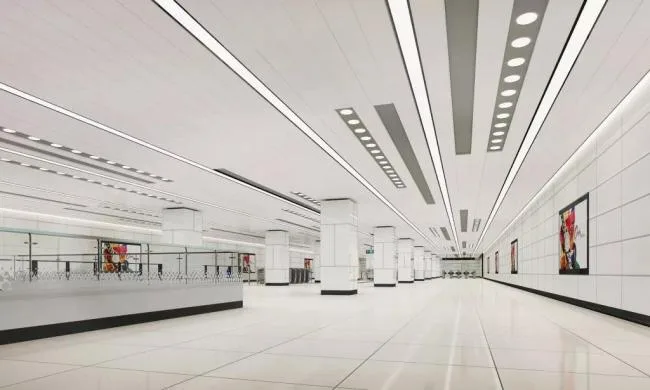
BIM’s visualization capabilities make it invaluable during bidding and tendering. Using BIM software, subway station models can be created with color renderings and animations to clearly demonstrate design intent to owners, addressing challenges in understanding complex designs.
BIM integrates the time dimension into 3D spatial models, enabling 4D construction simulations that help optimize scheduling. Virtual construction plans anticipate and manage potential issues before they arise, minimizing errors caused by information transfer and reducing rework during construction.
Additionally, BIM facilitates accurate quantity takeoffs, allowing construction teams to estimate material requirements early for cost analysis. Traditionally, construction managers must fully understand design intents and then relay them to workers, which can be challenging given the specialized terminology and complexity.
BIM also supports dynamic visualization of critical assemblies before installation, providing virtual reality environments for construction planning and technical discussions. Since subway construction can impact surrounding structures, BIM can simulate these effects and, combined with reinforcement methods, assess the reasonableness of component layouts, monitor construction progress, and conduct comprehensive quality inspections. This dynamic simulation enables proactive improvements.
3. Design Advantages of BIM Technology
Subway stations are the backbone of the transit network, responsible not only for passenger flow but also for operating multiple complex professional systems. Designing these stations involves coordination among various disciplines, including ISCS, BUS, FAS, PA, and PIS systems. Traditional design methods often struggle to unify input from these diverse specialties.
BIM provides a collaborative design platform that facilitates effective communication and resource integration across disciplines. This makes design coordination easier, streamlines adjustments, and ultimately optimizes the overall design quality.
4. BIM Technology in Operation and Maintenance
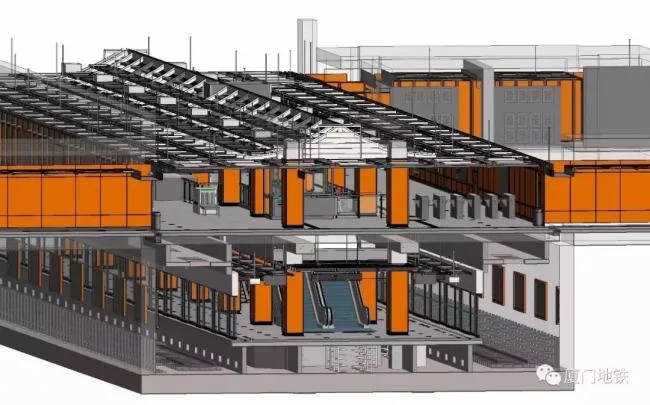
During the operation and maintenance phase, BIM enables virtual reality simulations, asset management, spatial organization, system analysis, and disaster emergency drills. BIM models improve operational efficiency, reduce costs, extend subway service life, and mitigate operational risks.
Managers can use BIM information models to query, update, and synchronize system data, facilitating better maintenance of equipment and infrastructure. Typical building systems such as monitoring, communication, ventilation, lighting, and elevators depend on proper functioning to avoid disruptions or safety hazards.
BIM helps identify and address hidden dangers promptly, minimizing losses and enabling rapid emergency responses. Real-time data access through the BIM database allows emergency teams to locate hazards accurately and receive detailed information before arriving on-site.
BIM is increasingly adopted in subway projects, proving effective in information-based construction management, process optimization, accelerating schedules, and reducing costs. Its demonstrated advantages continue to drive further development and integration of BIM-related technologies.














Must log in before commenting!
Sign Up