
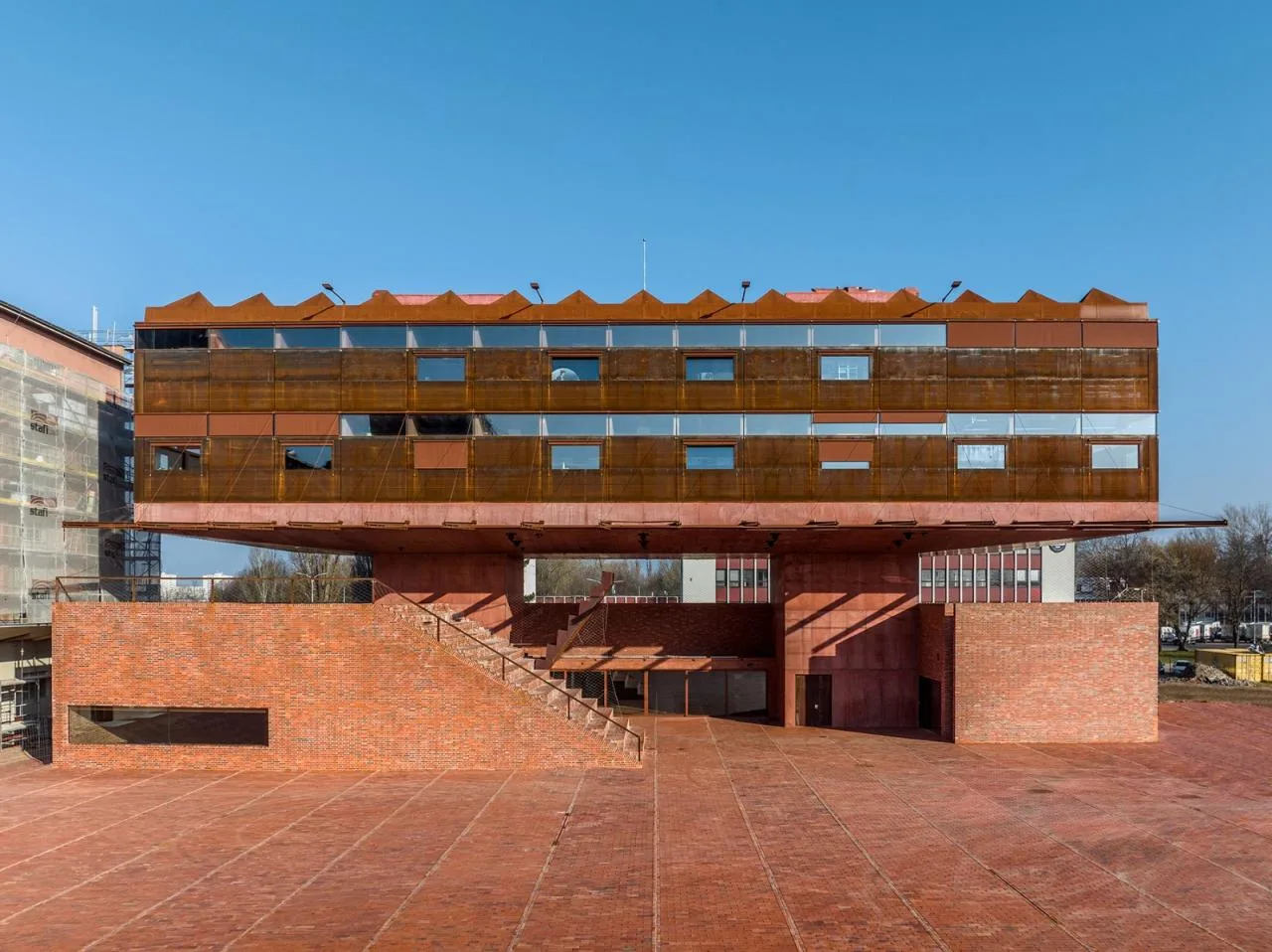
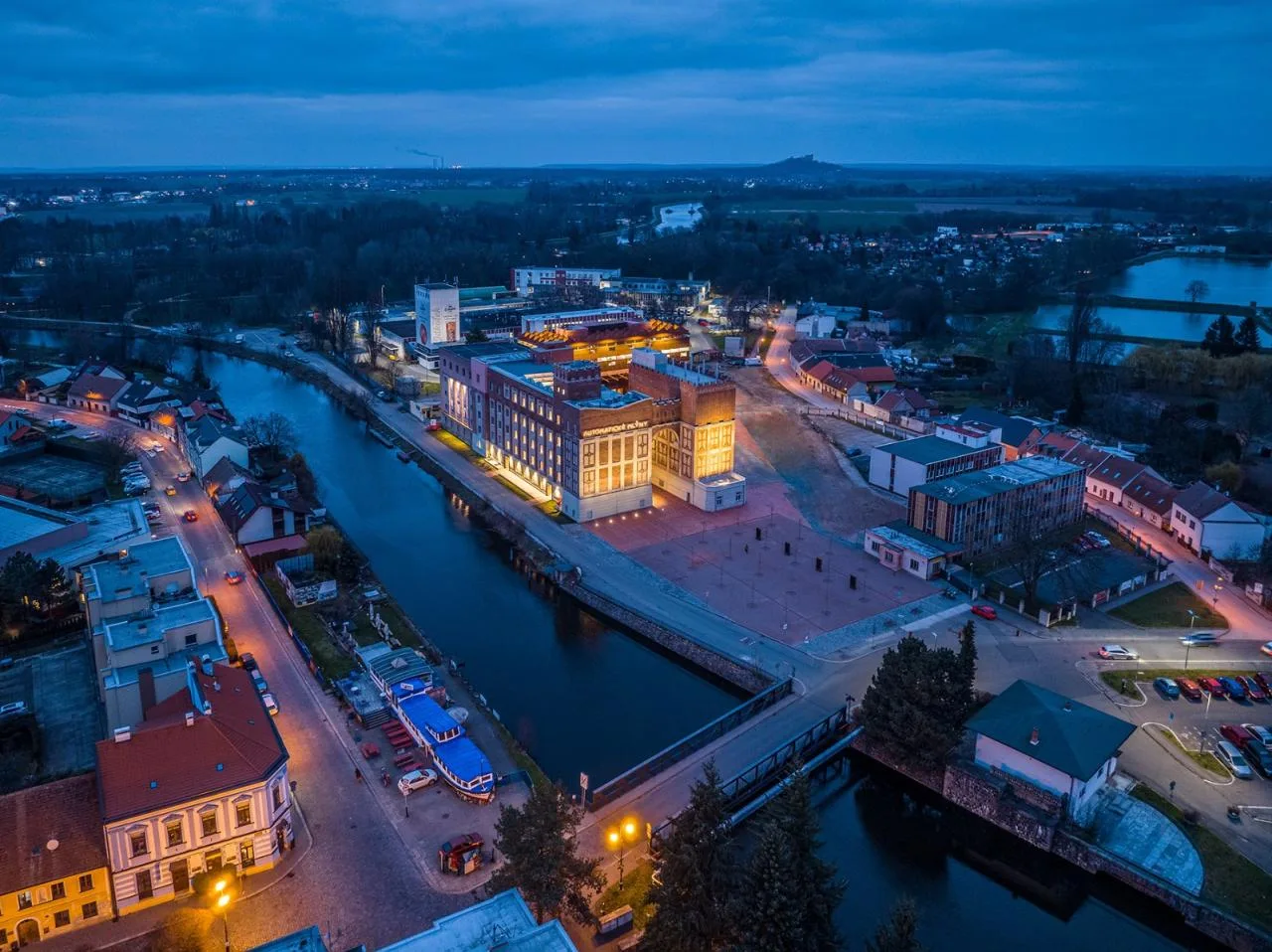
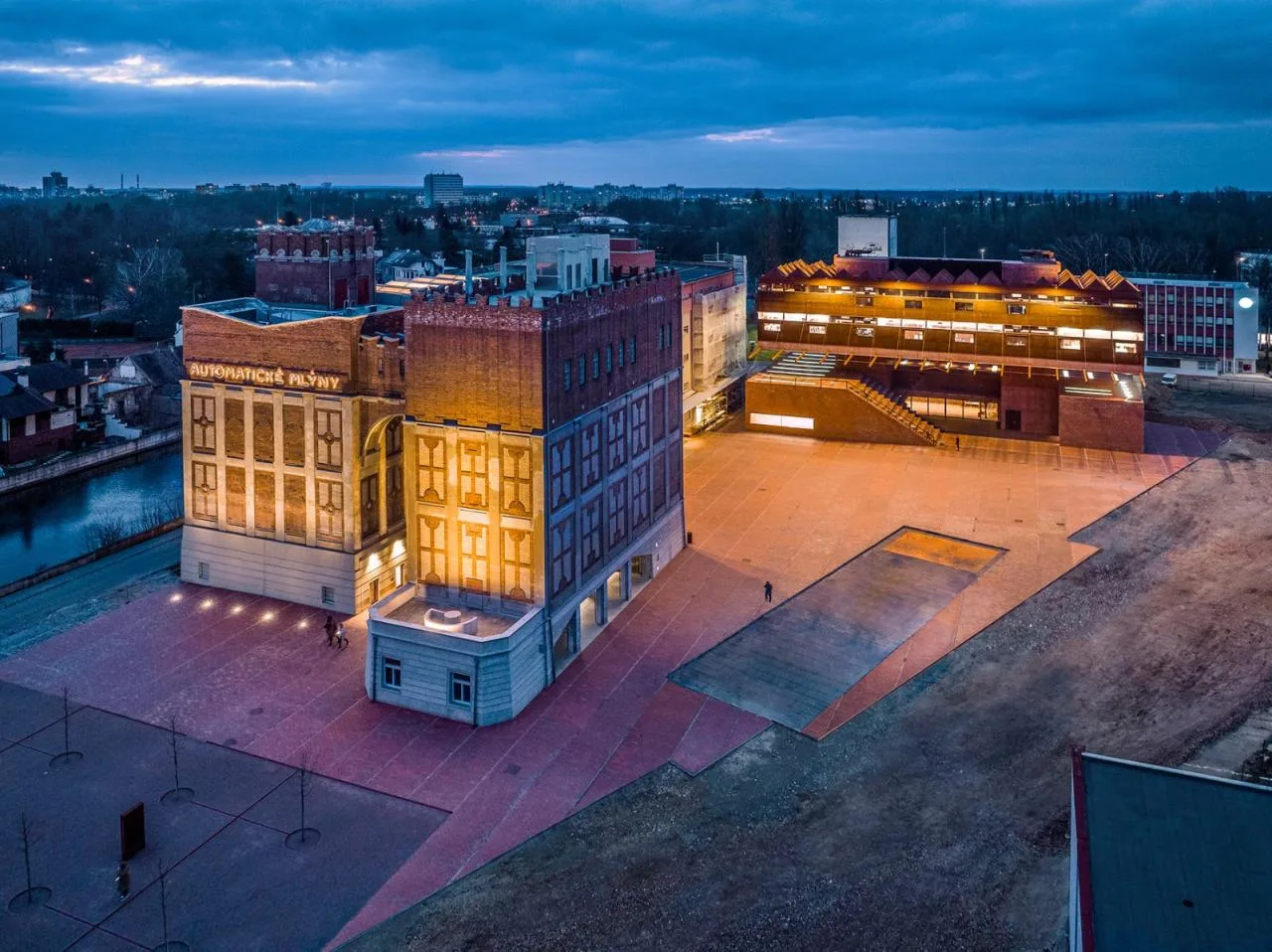
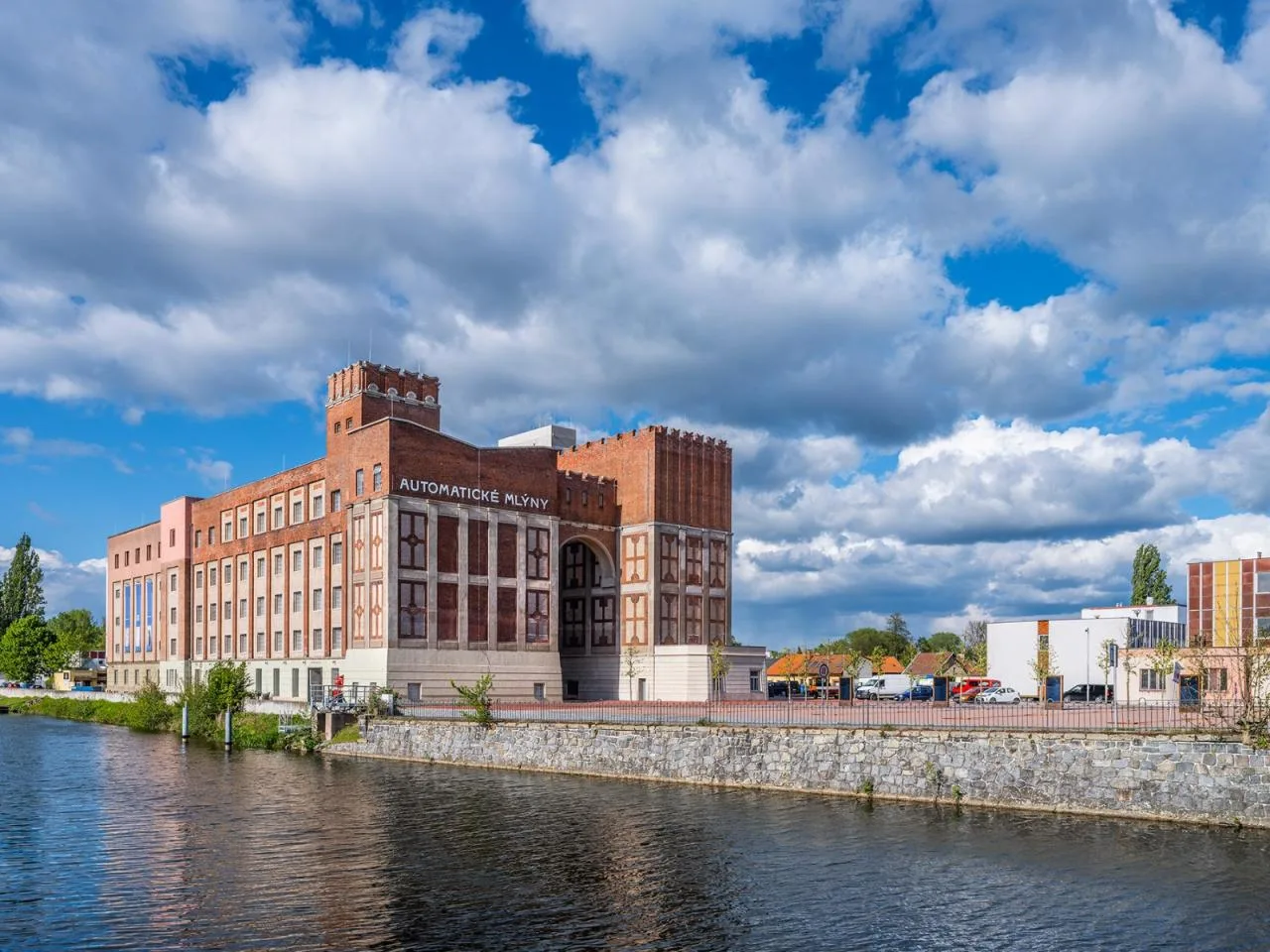
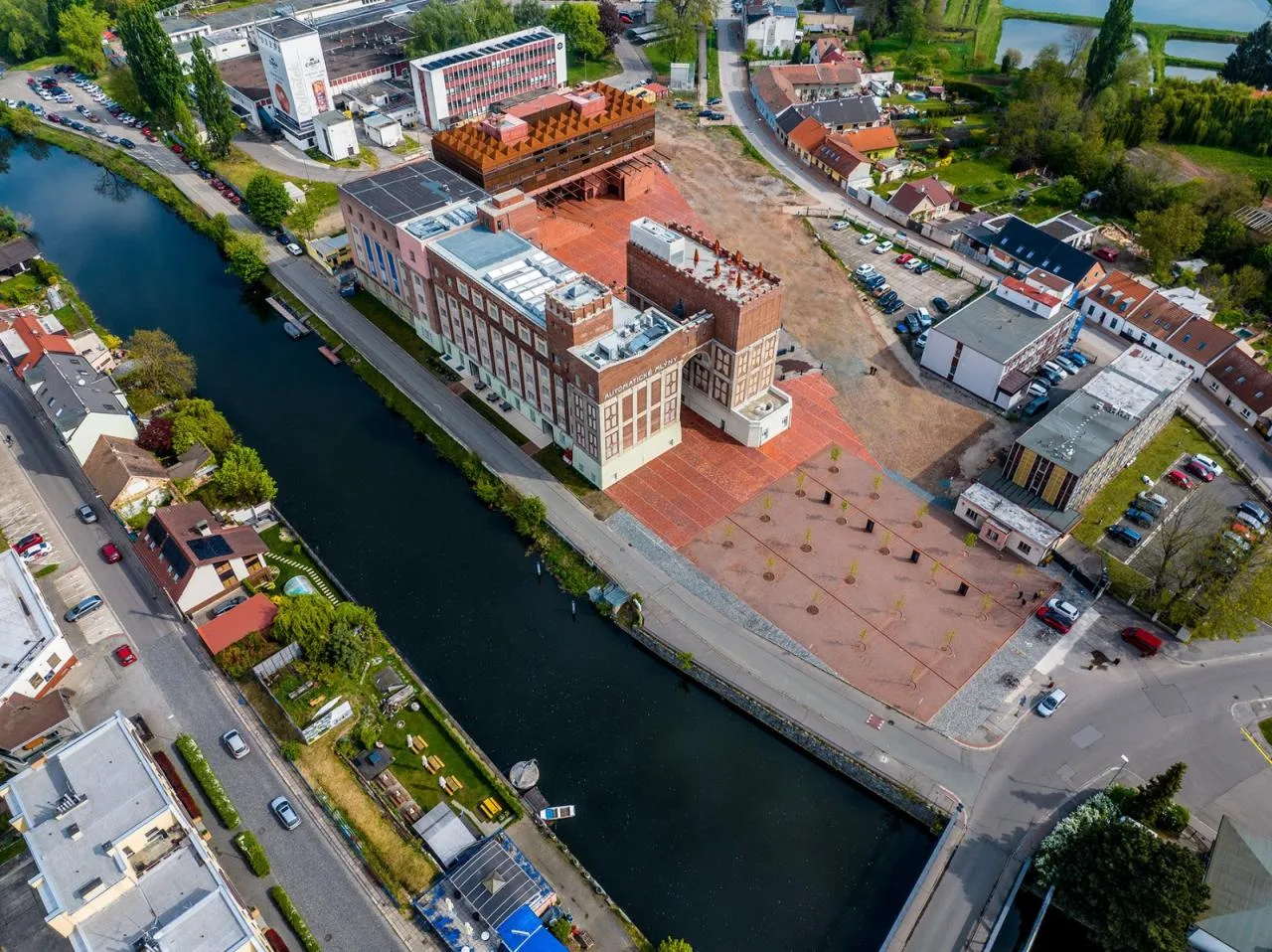
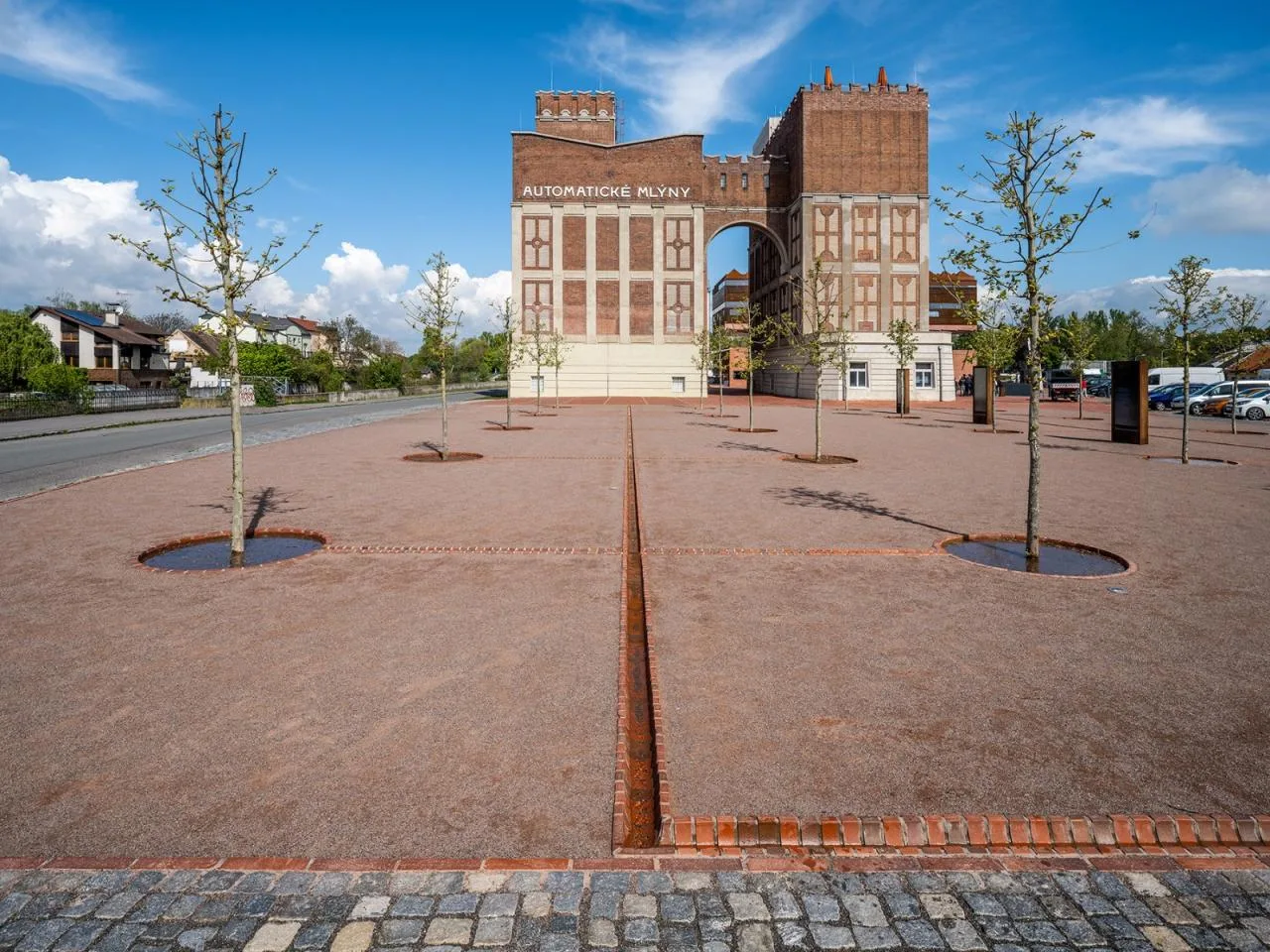
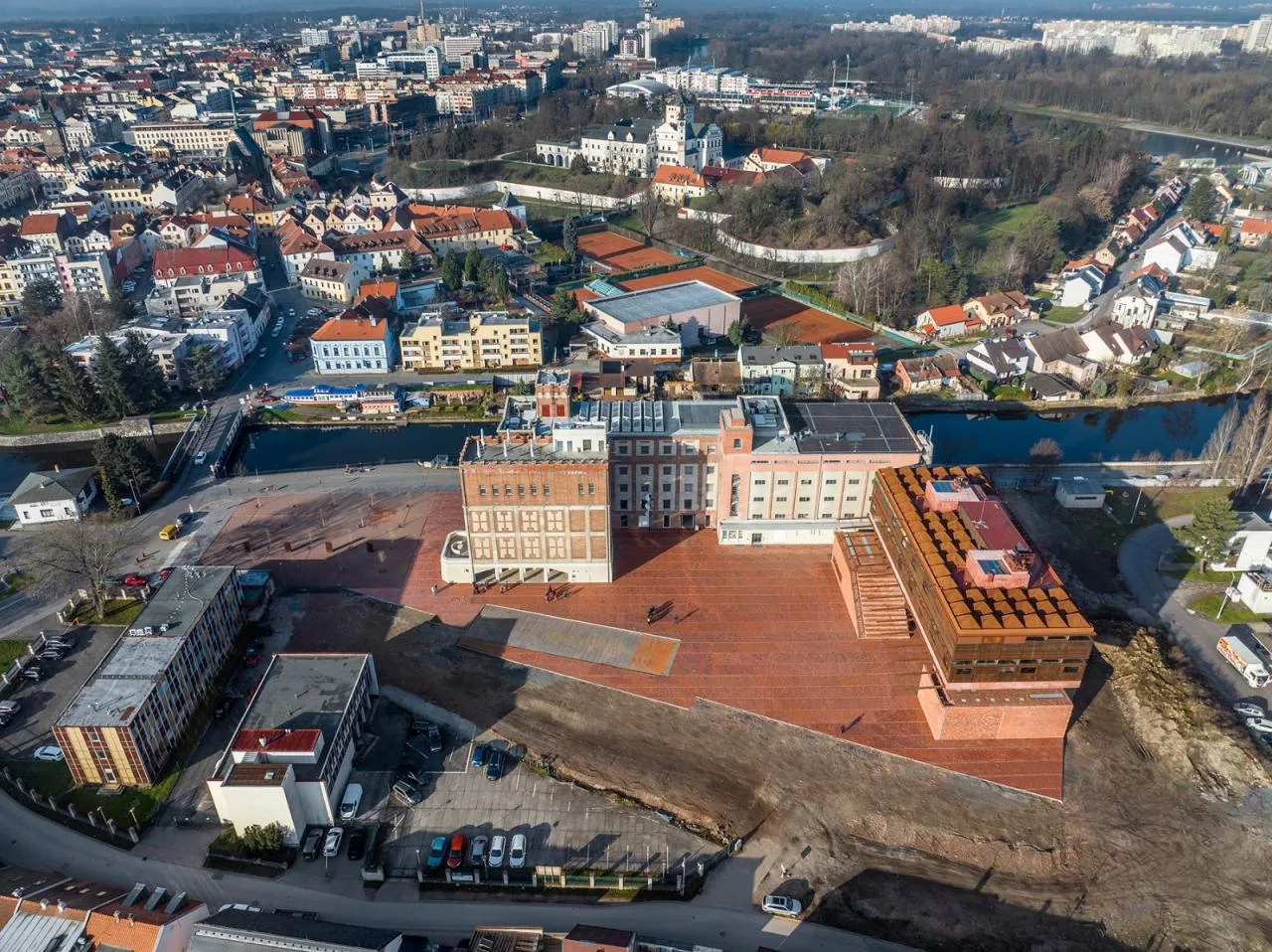
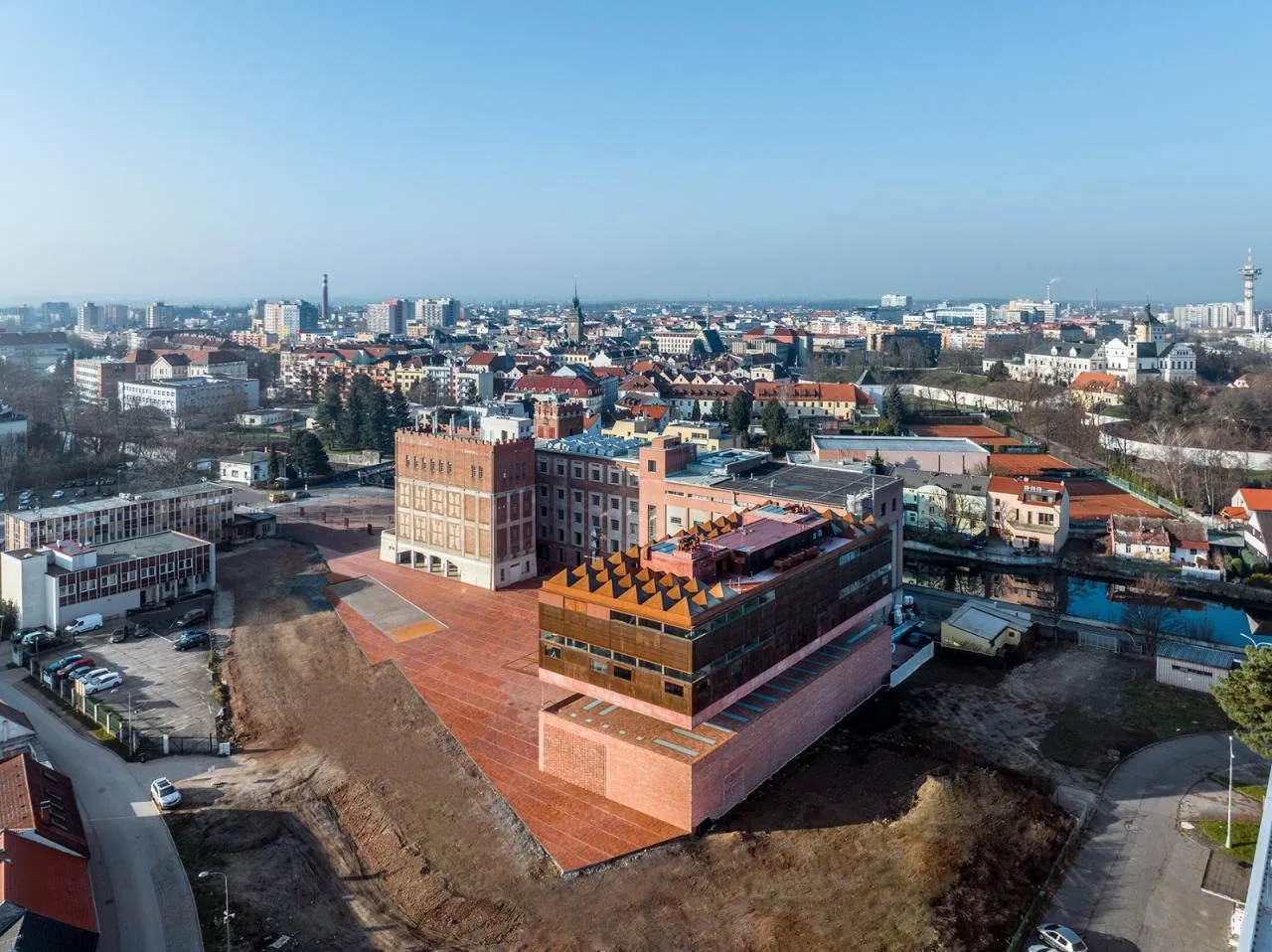
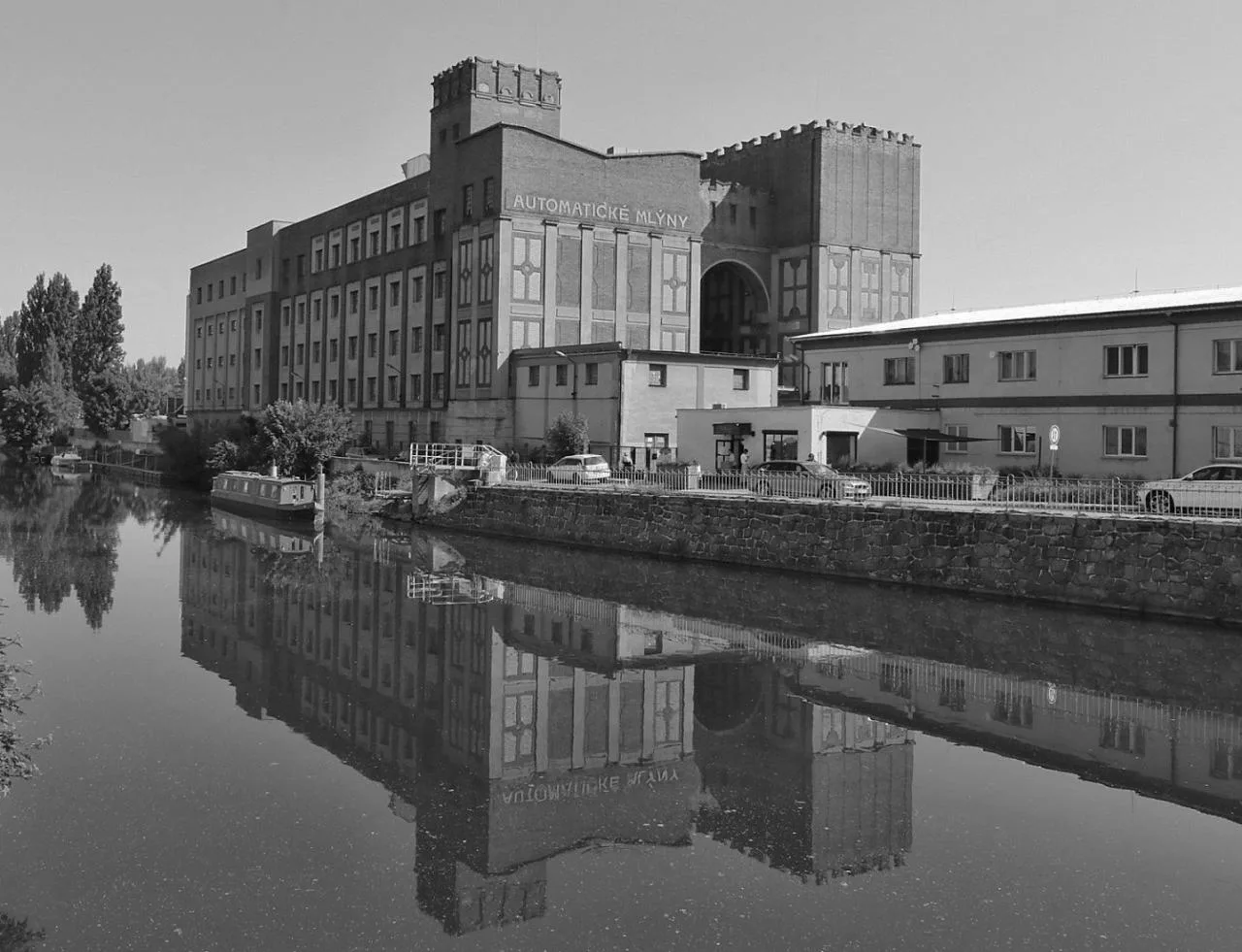
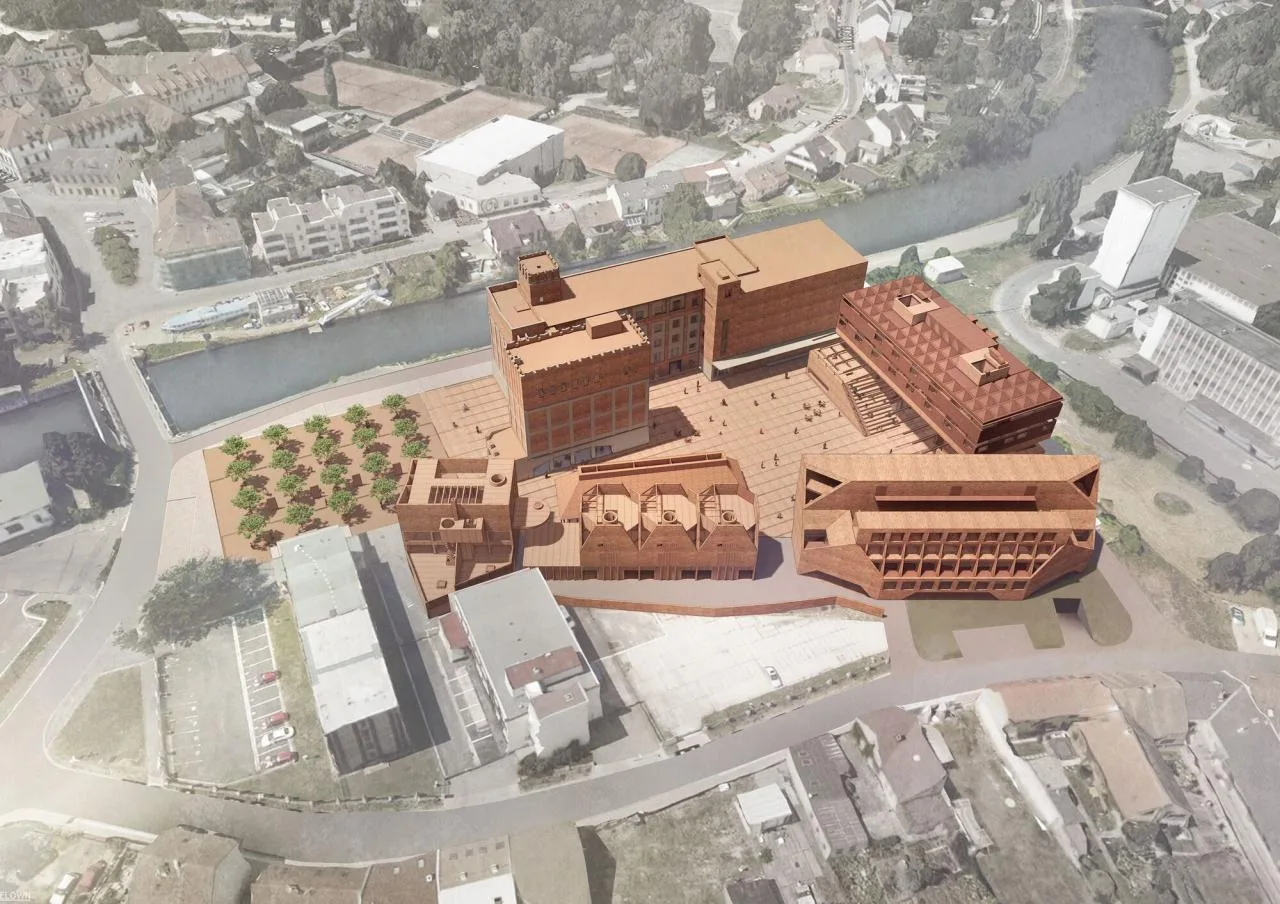
The Winternitz automated factory in Pardubice, one of architect Josef Gočár’s early representative works, remained unused until 2013 and was designated a national cultural heritage site the following year. Our design aims to integrate this historic building into a new complex by positioning it centrally within the site.
Funding for this project comes from a collaboration between the municipal government, regional authorities, and private investors. The goal is to create a multifunctional urban space that supports cultural, educational, and private activities.
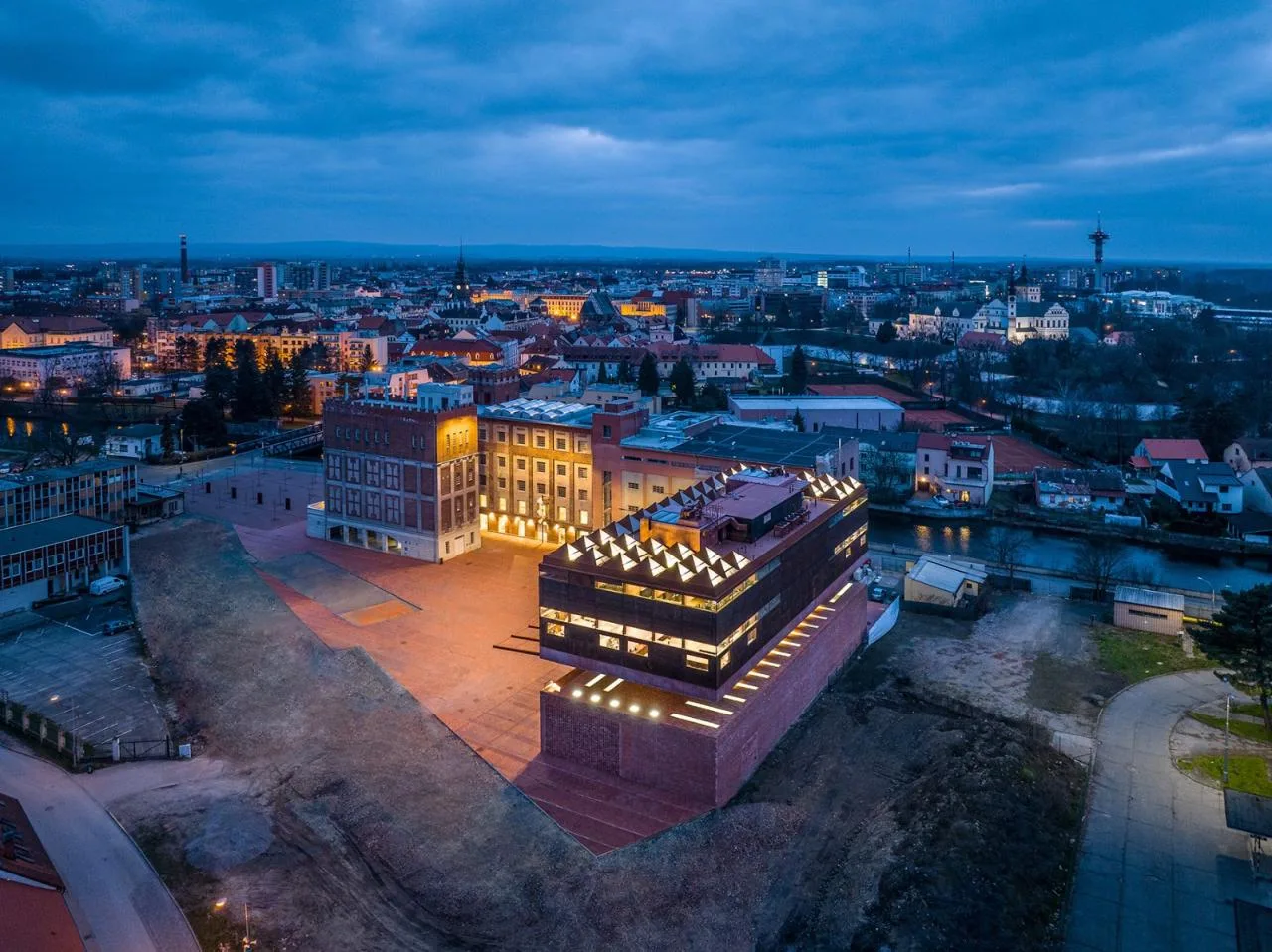
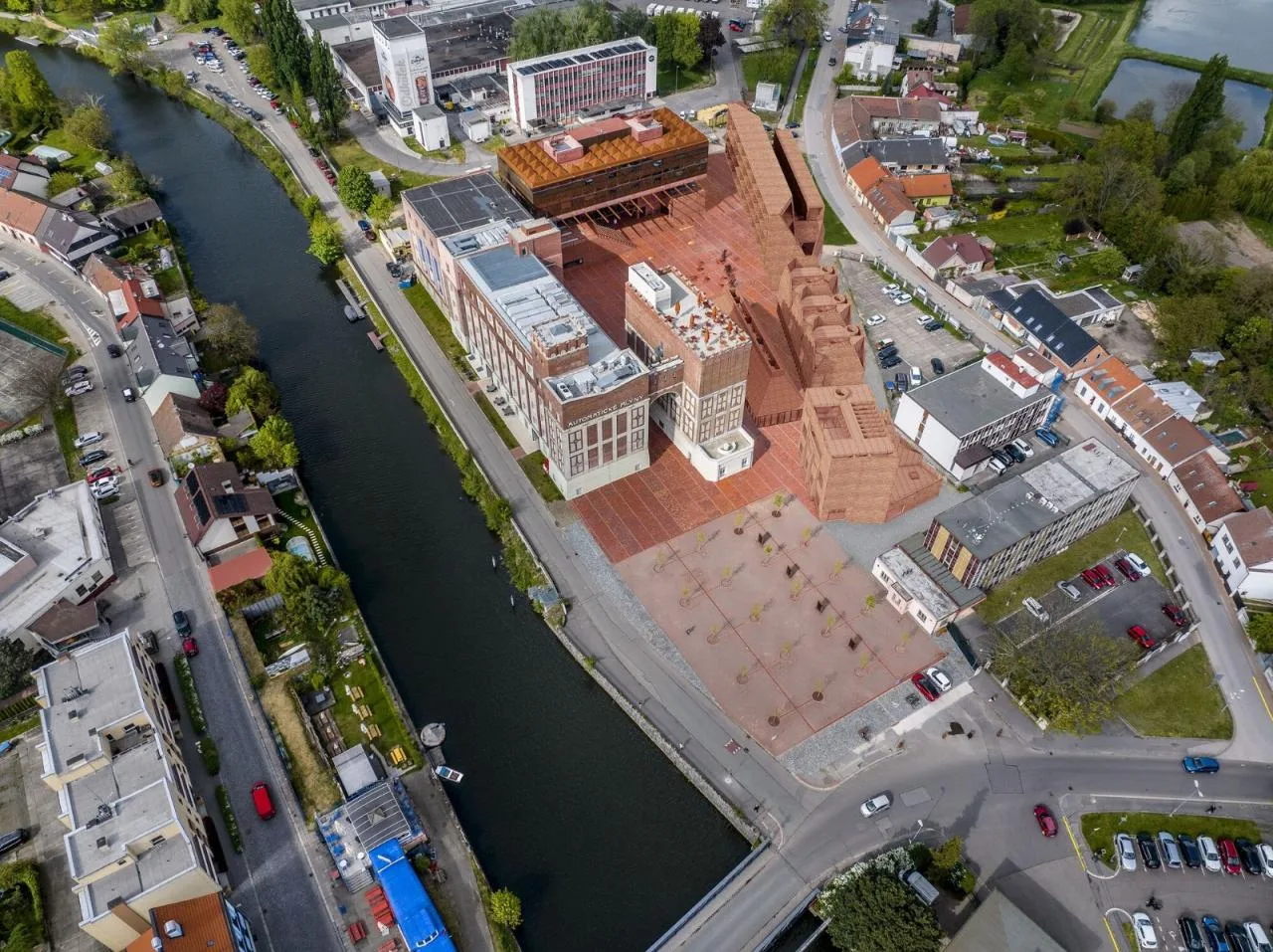
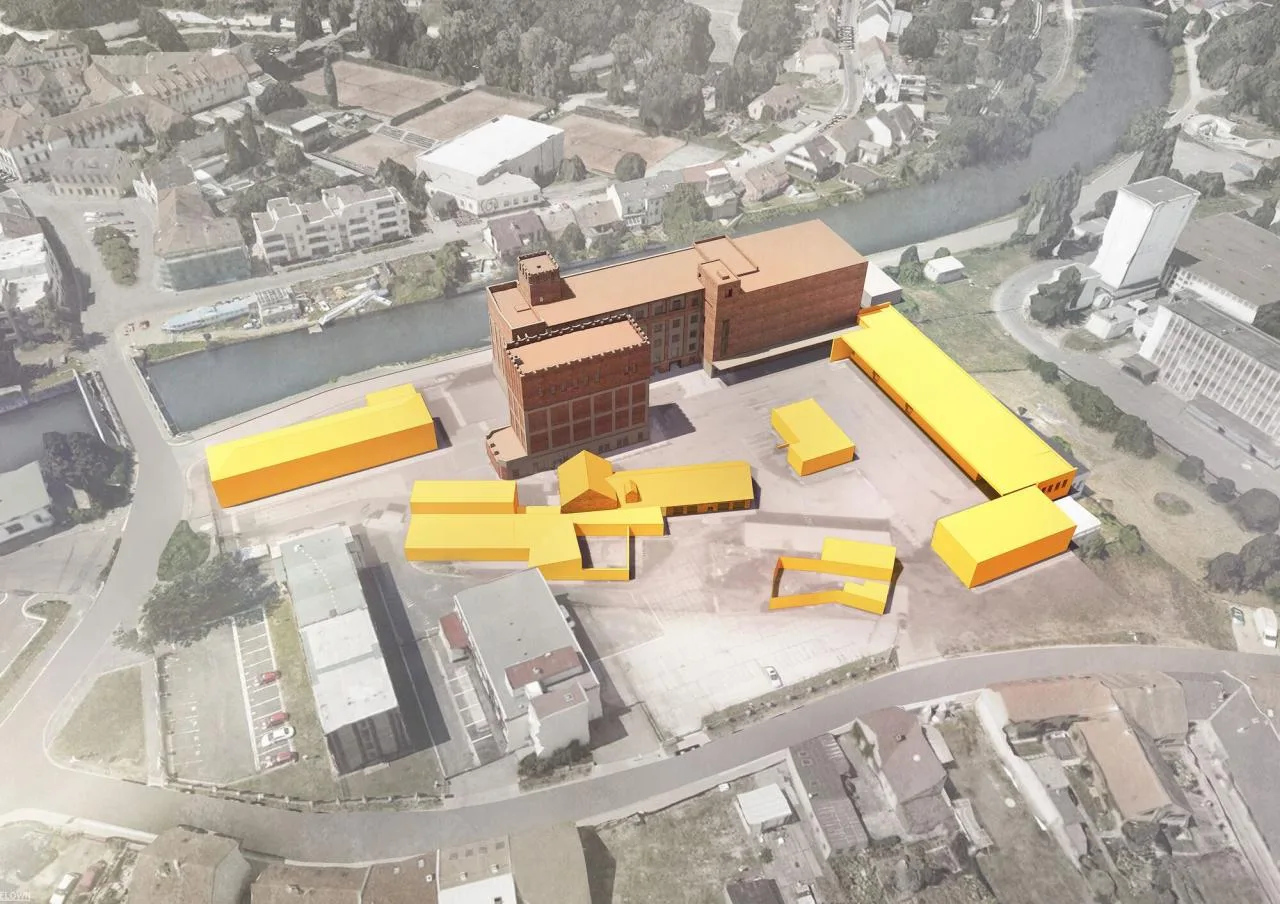
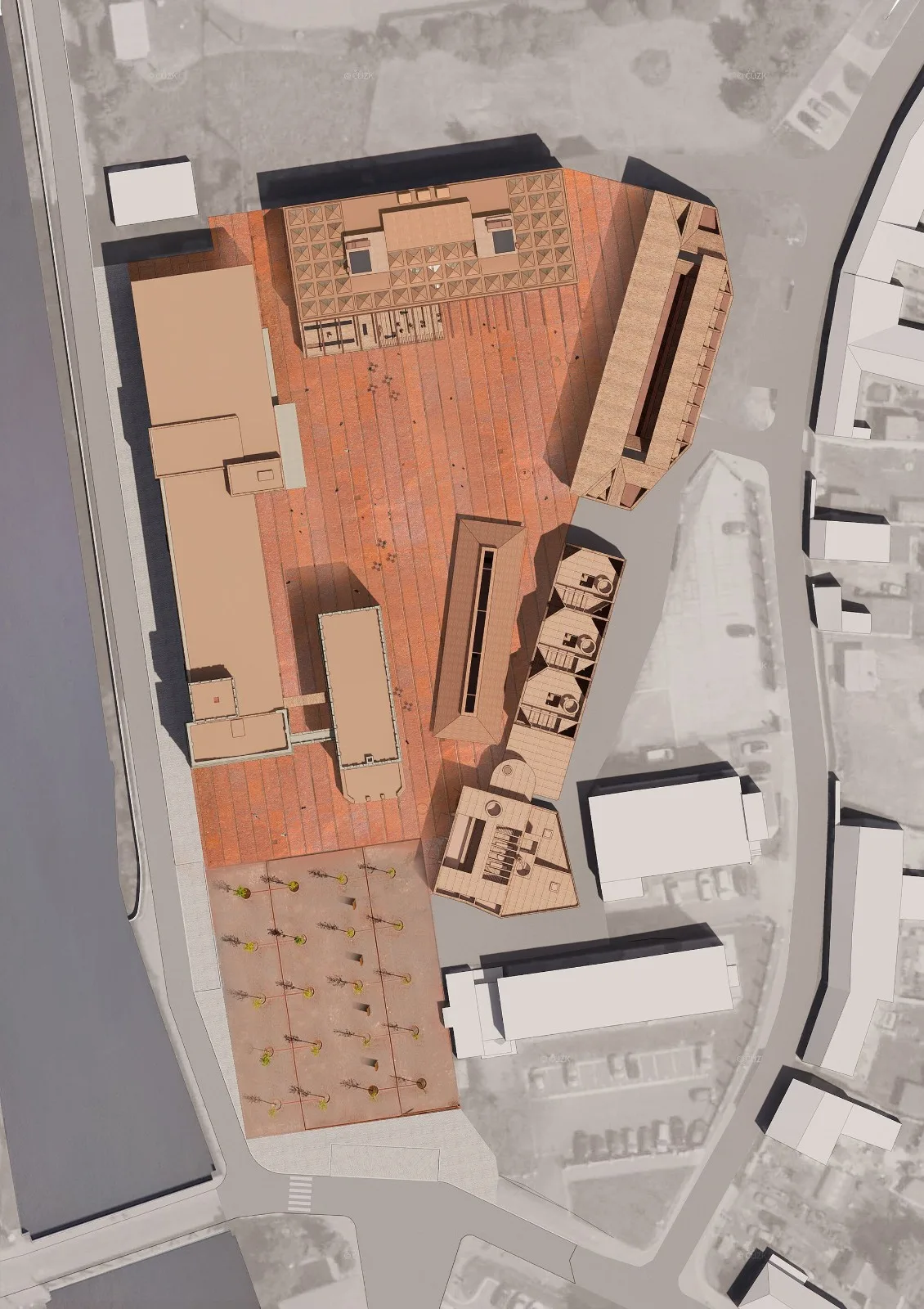
We established a triangular arrangement of key urban spaces and buildings, including a Renaissance-style castle, Perštýn Square, and the automated factory complex. By demolishing select existing structures, we enhanced the prominence of the main entrance portal and opened up views across the site from the historic city section.
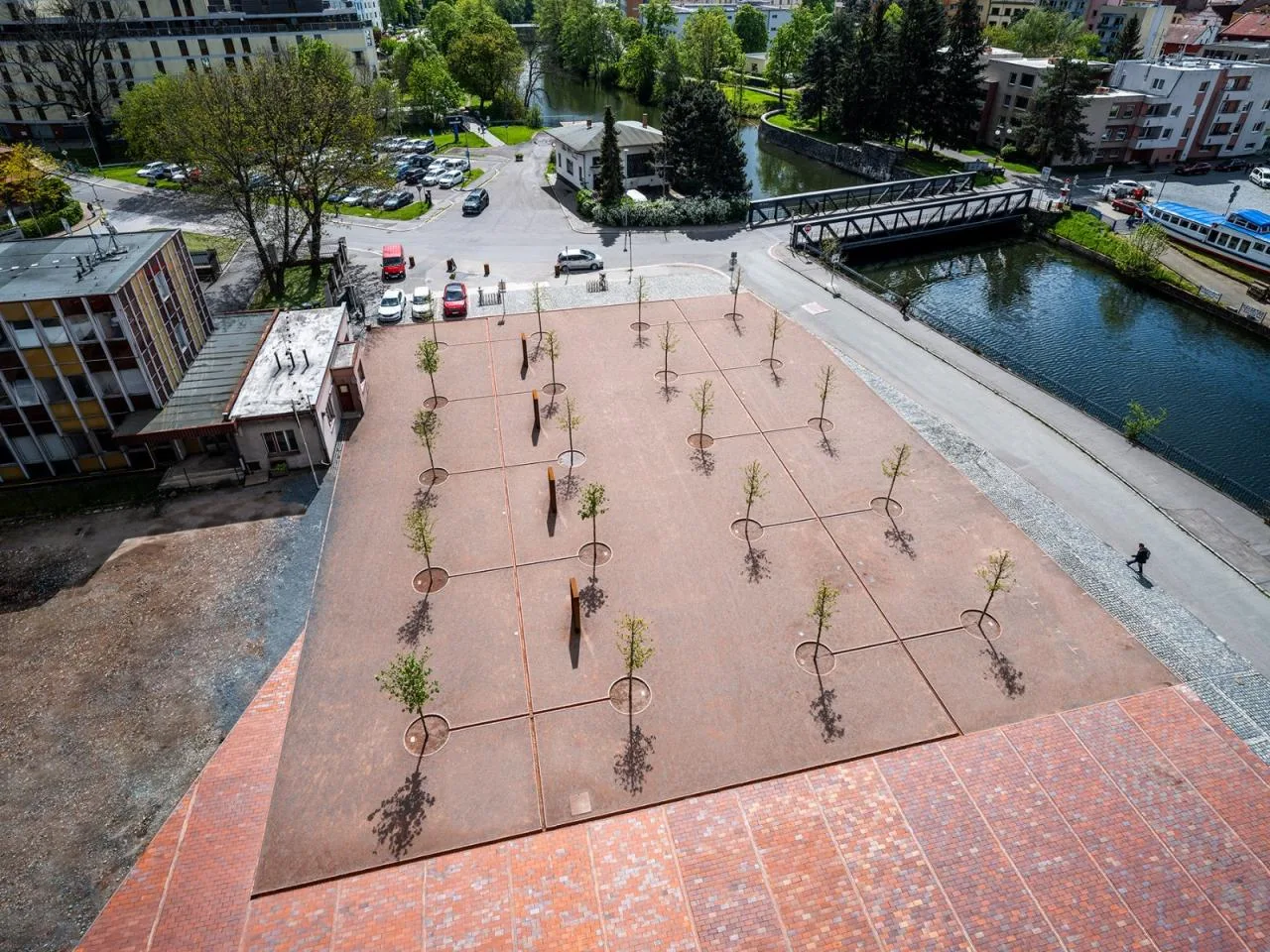
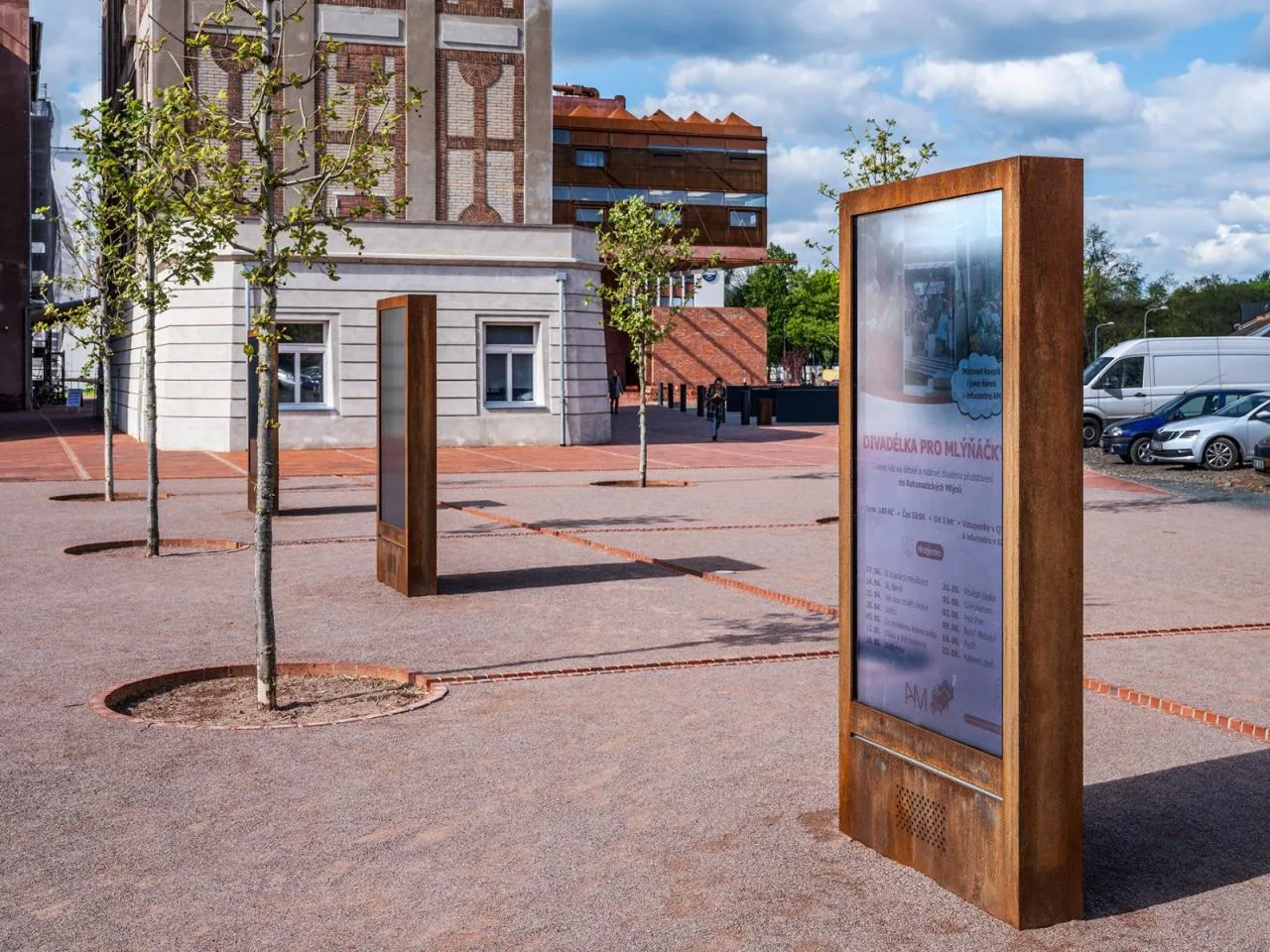
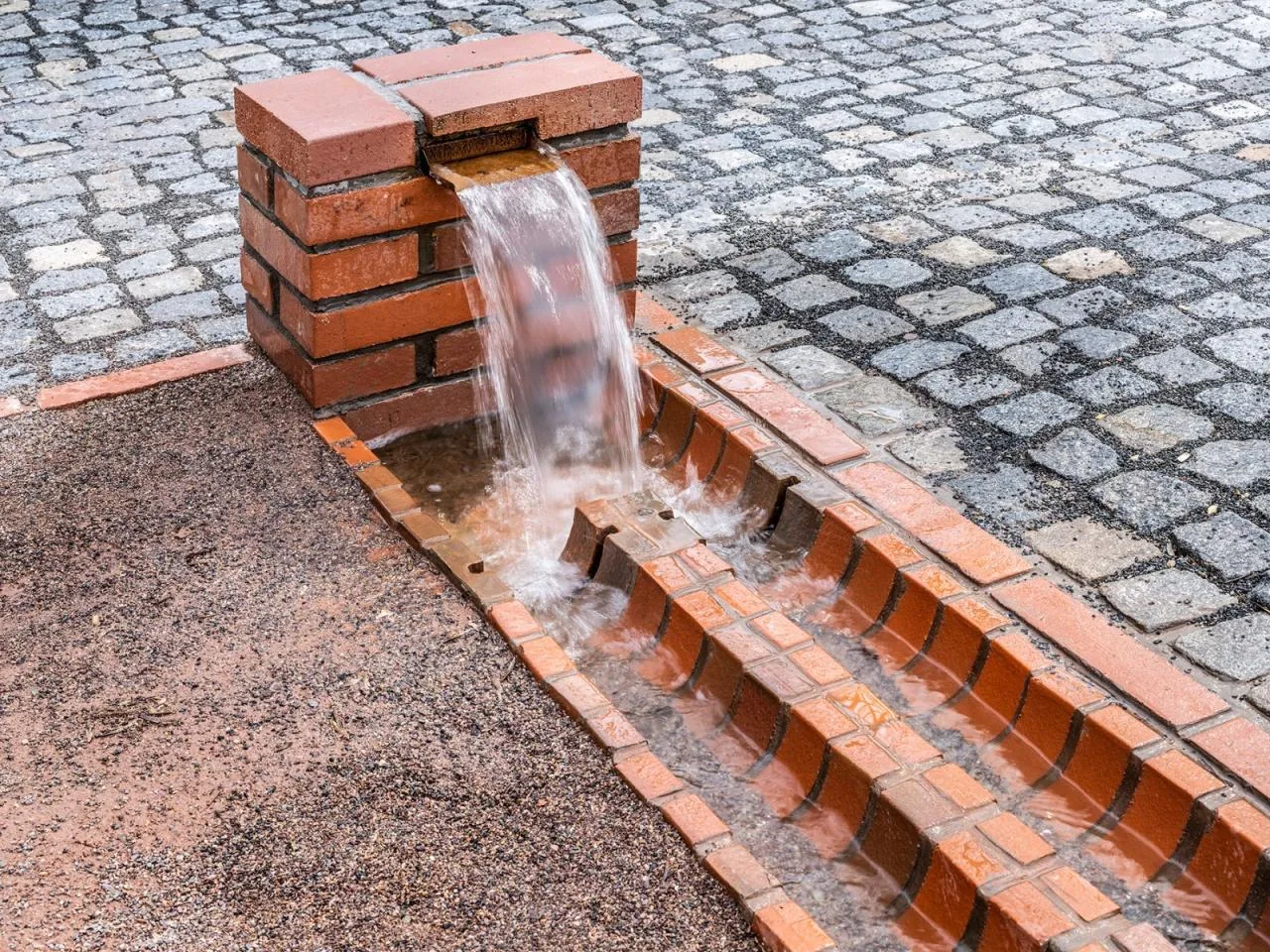
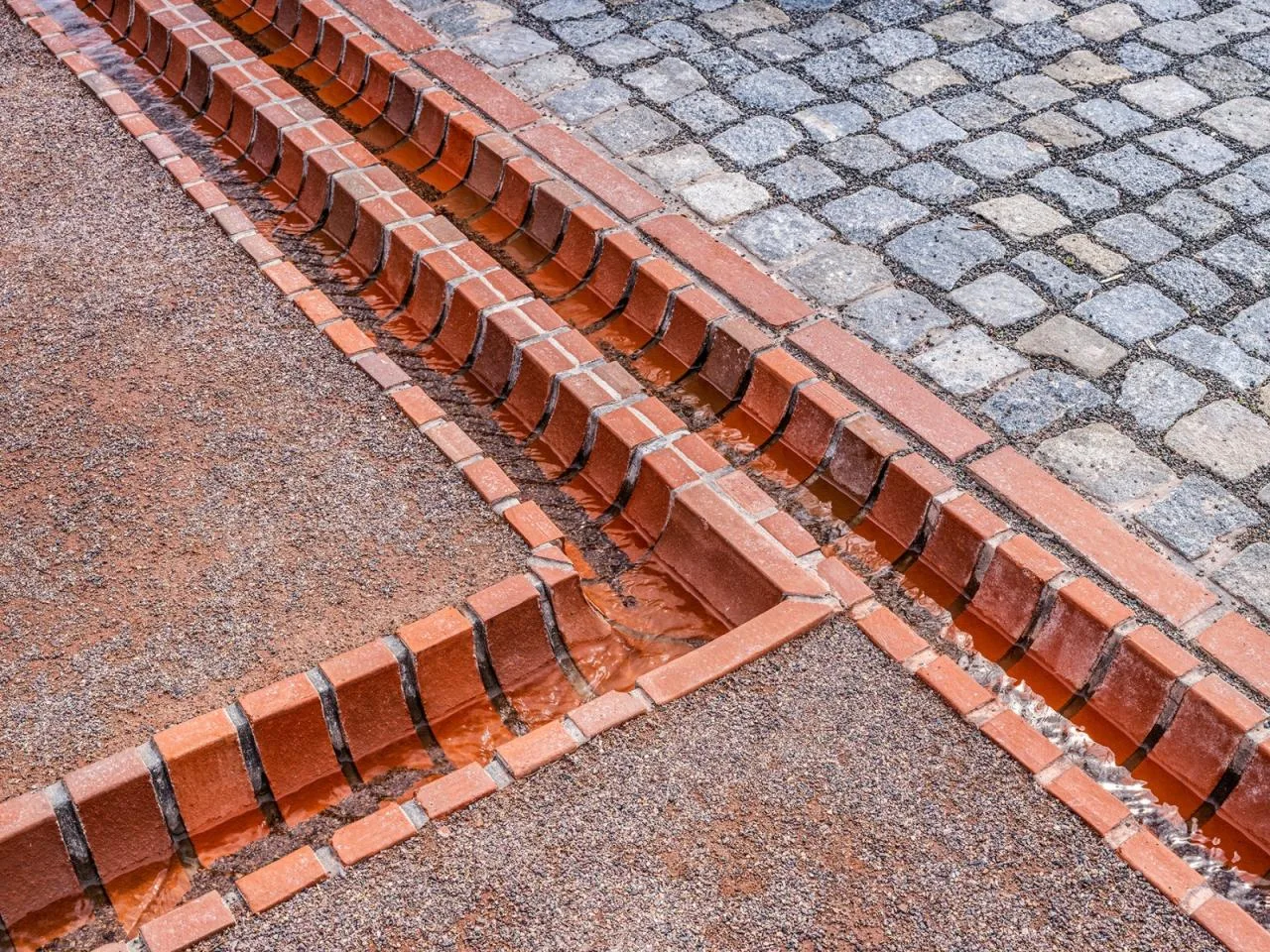
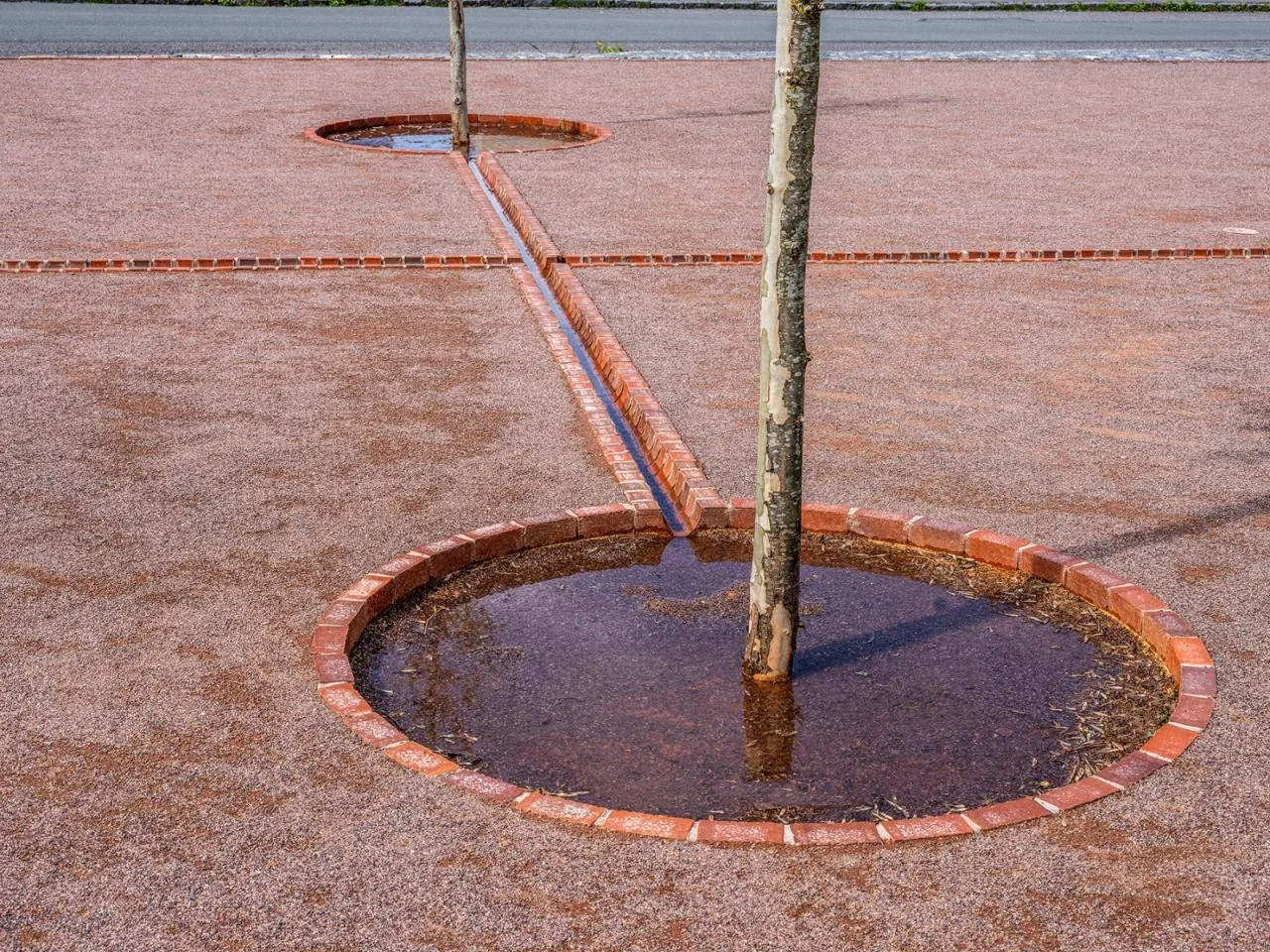
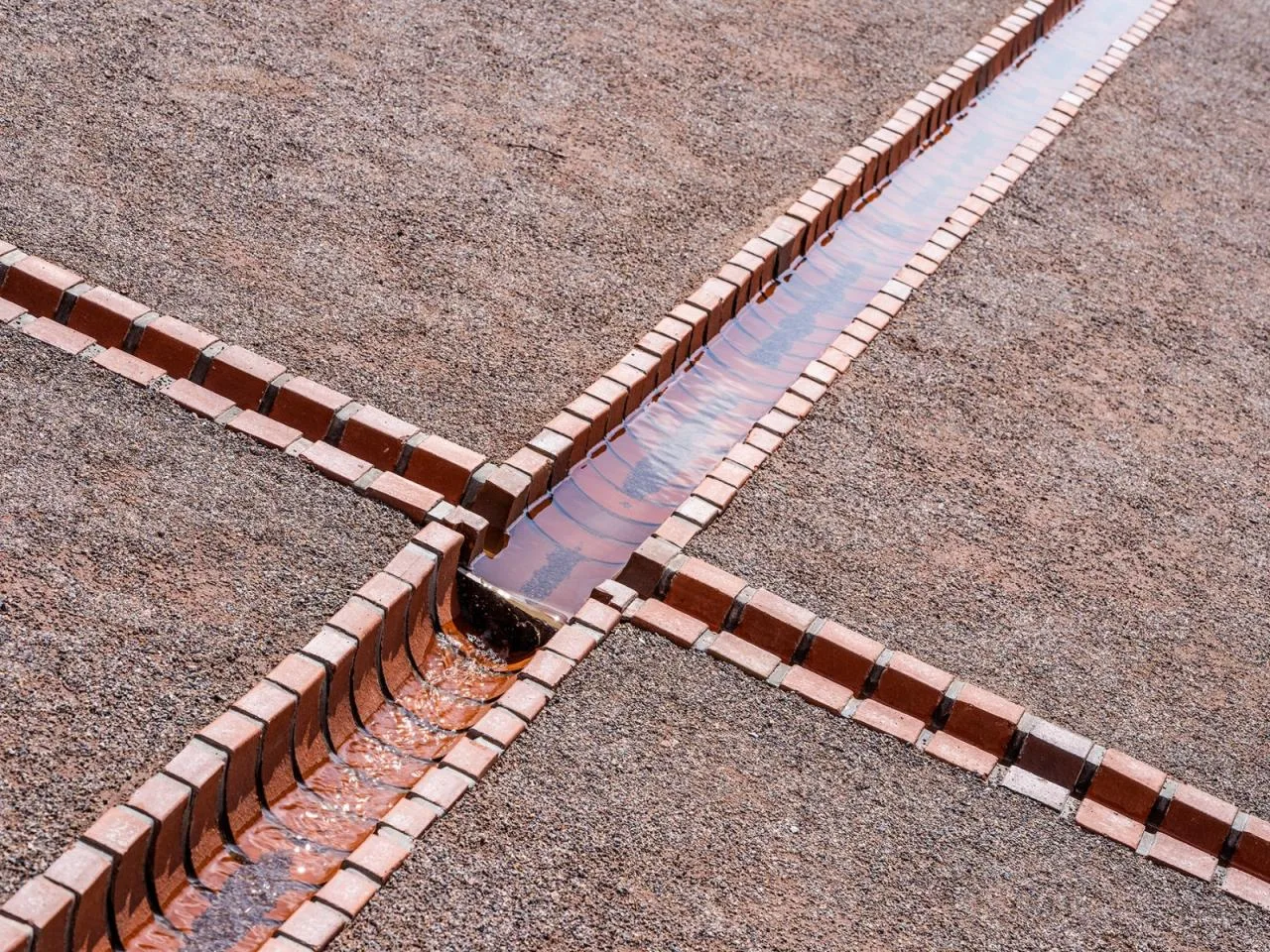
A central aspect of the revitalization is the creation of two distinct public spaces with different characteristics and functions. The main entrance is defined by a square featuring cantilevered Indian banyan trees, each accompanied by brick irrigation channels. This area serves as a quiet, representative entrance that can also host events like markets.
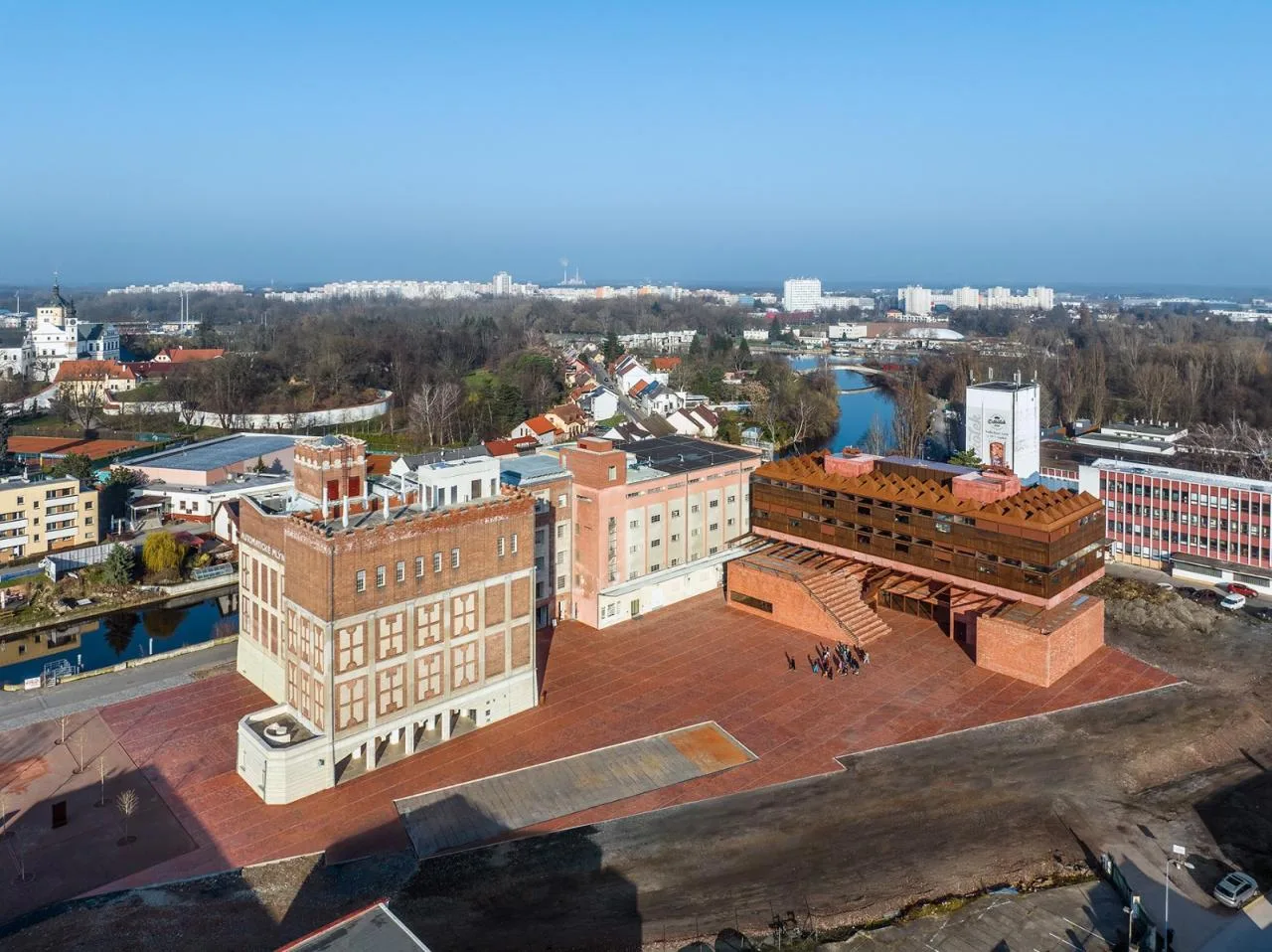
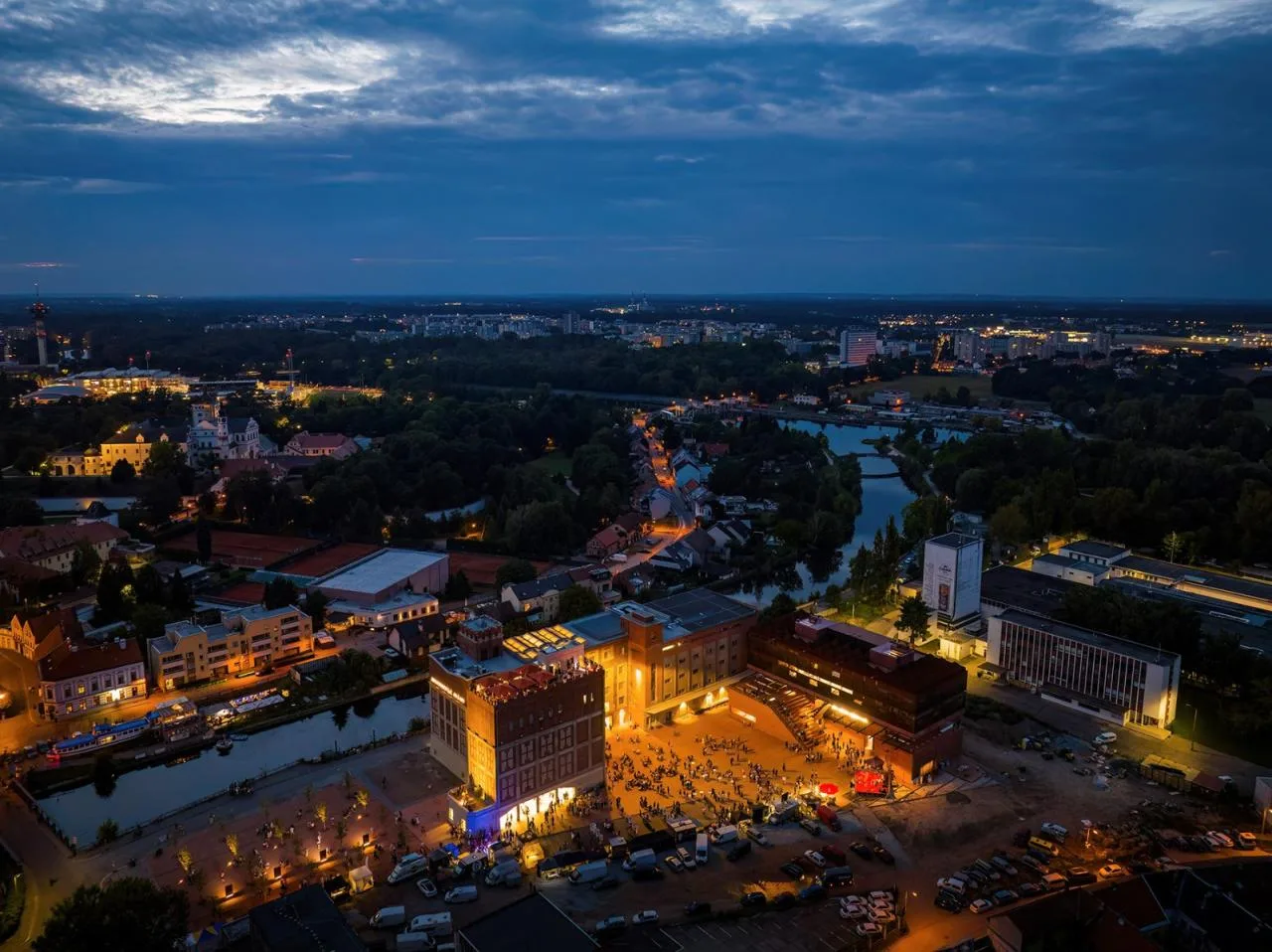
Within the new building complex, we designed the “factory courtyard”—an active space intended for exhibitions, concerts, and outdoor theatrical performances. All public spaces are pedestrian-focused to foster accessibility and community engagement.
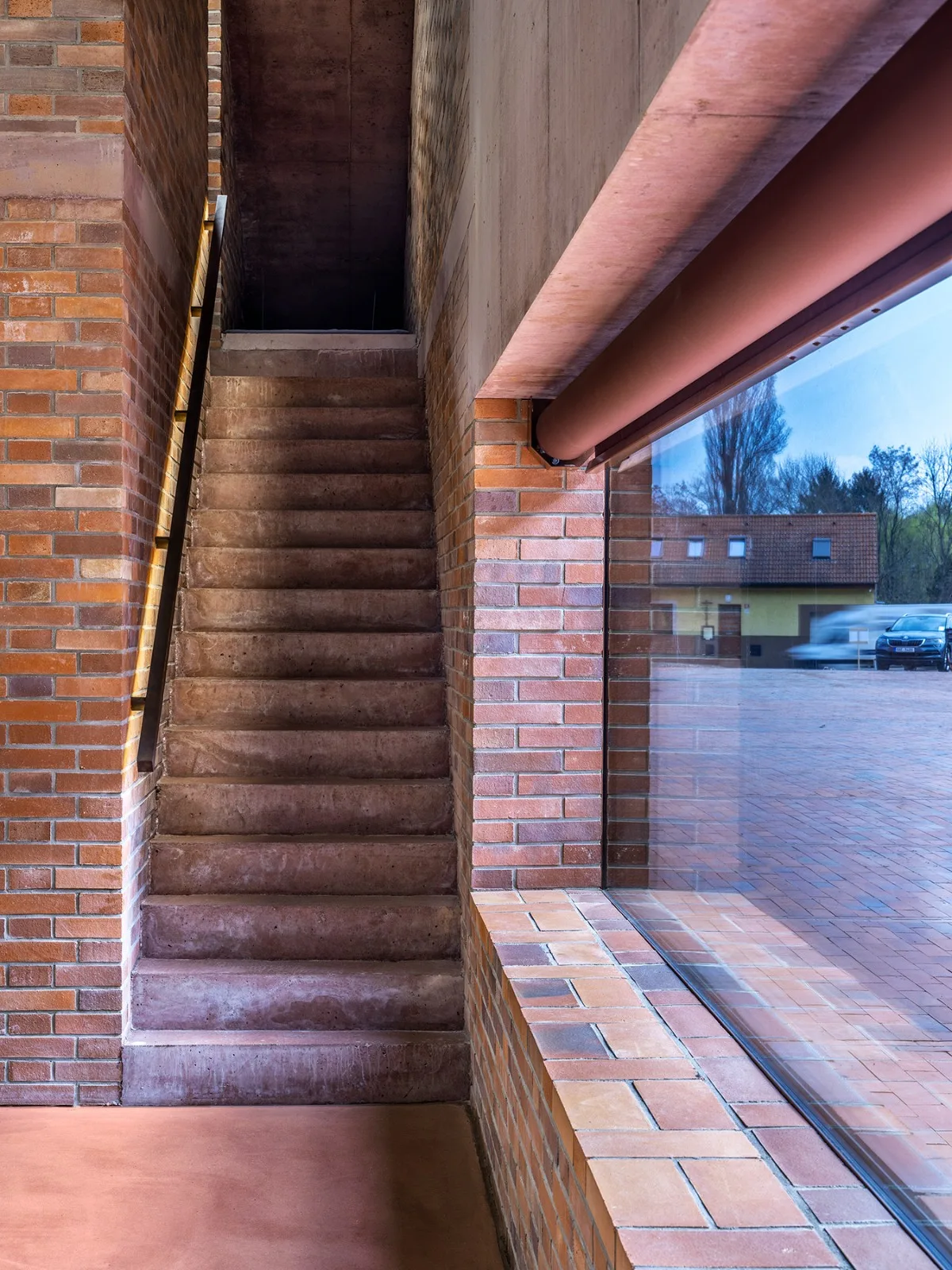
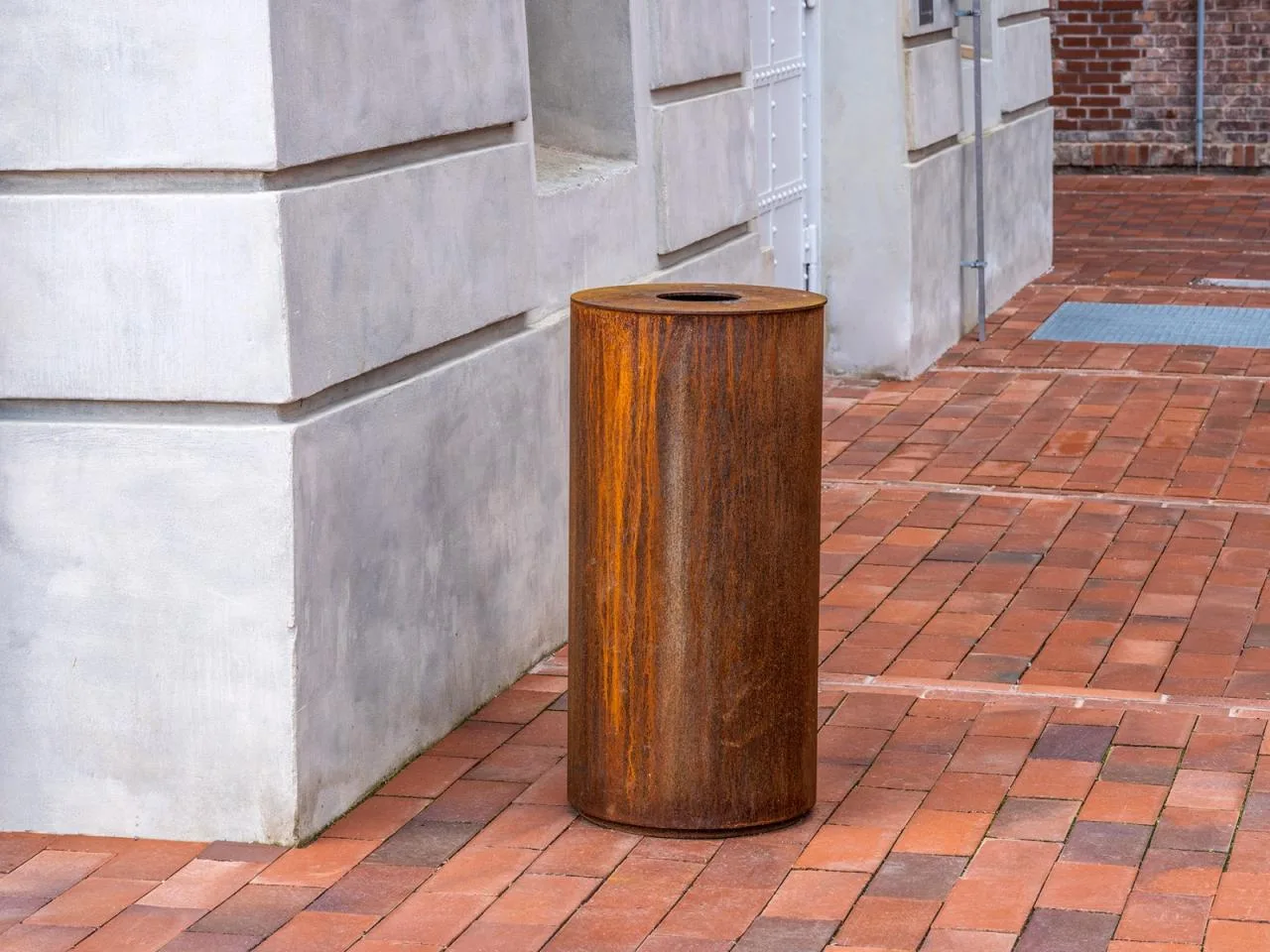
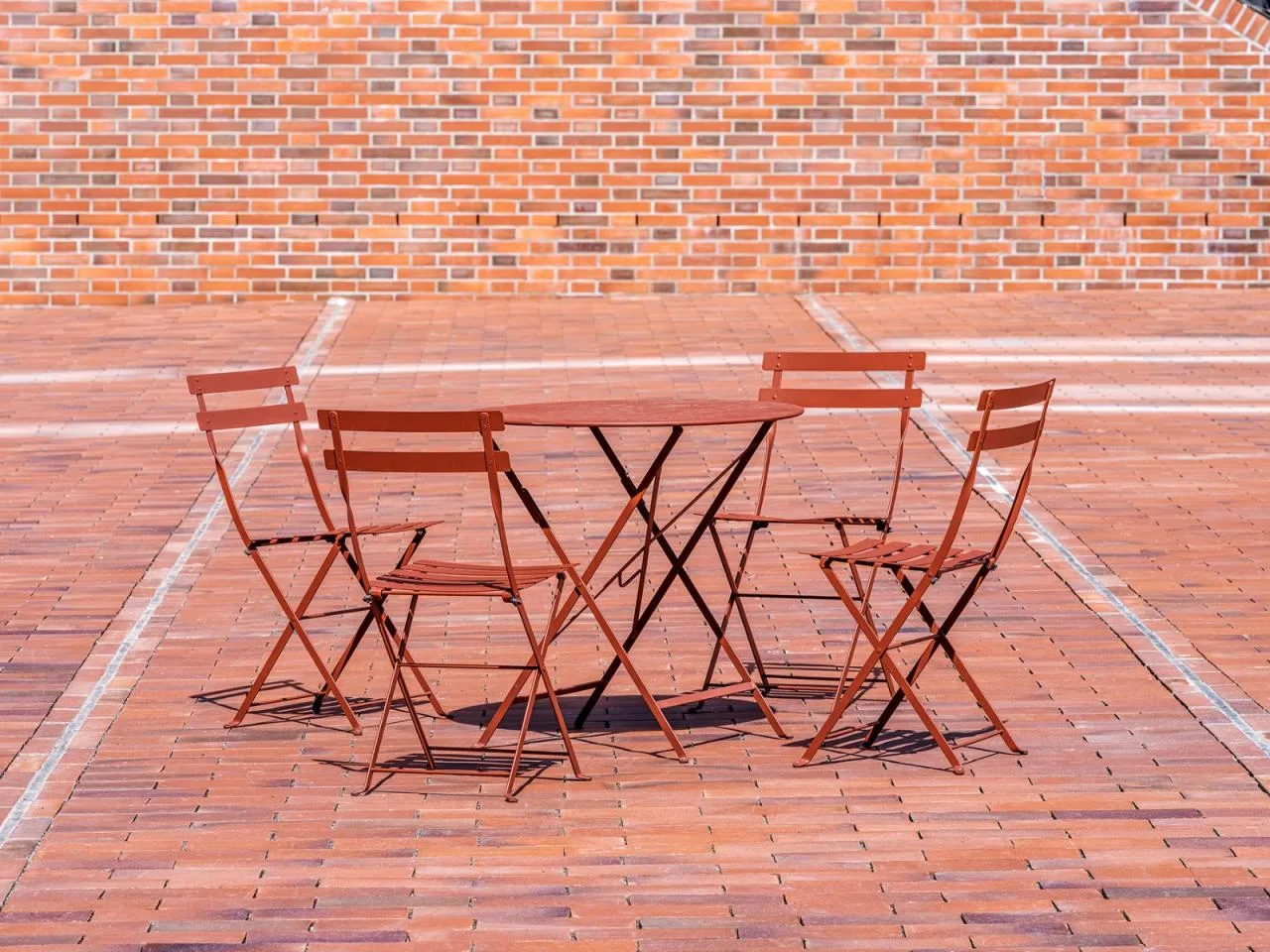
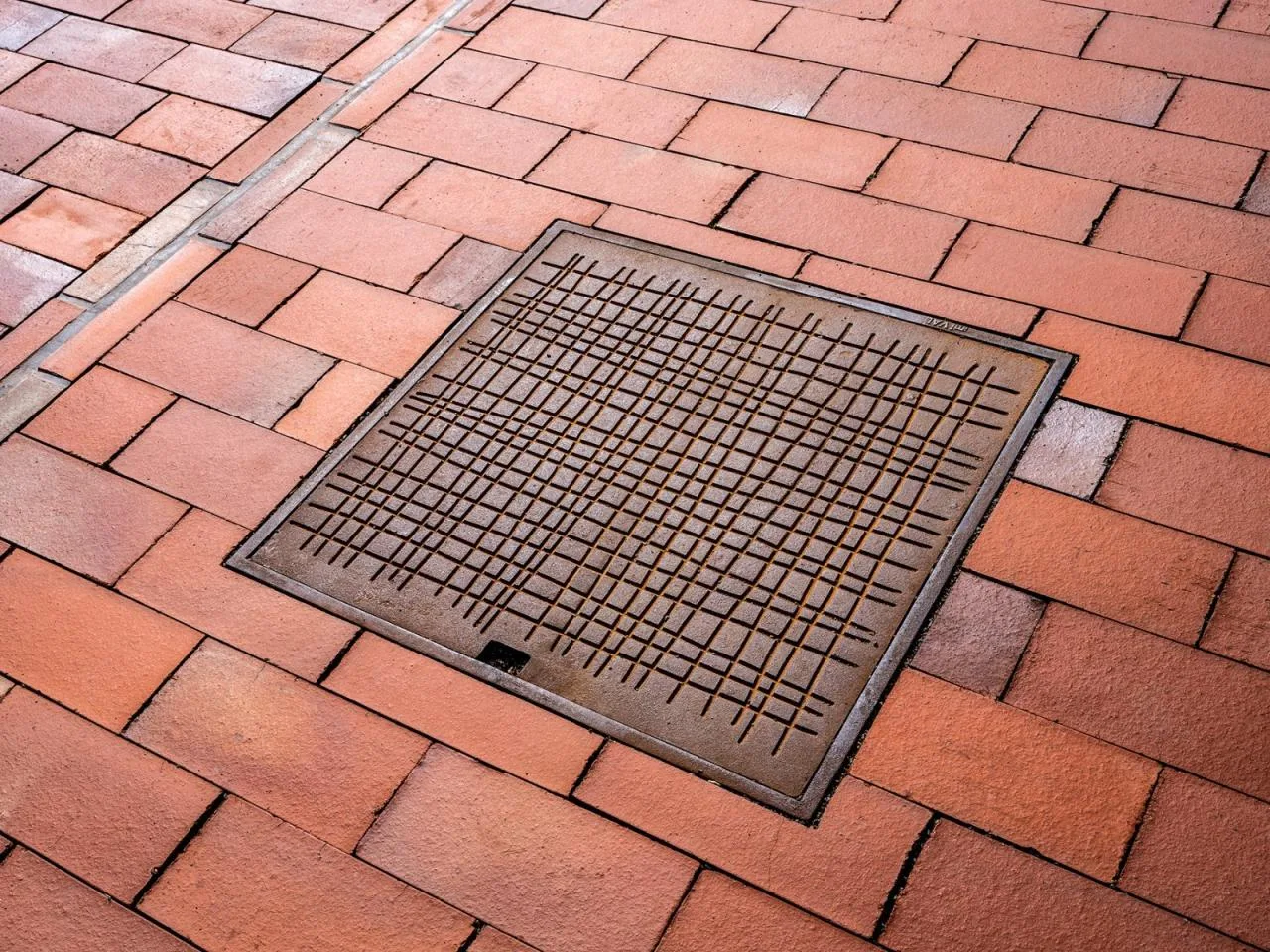
Color coordination plays a crucial role in unifying the complex, which consists of multiple buildings with various functions, designed collectively by four architectural firms. We adopted a consistent color scheme inspired by the existing brick walls of the automated factory, extending this palette to pedestrian areas paved with bricks and red mortar. This approach ensures a harmonious and cohesive visual experience despite the diverse building types and uses.
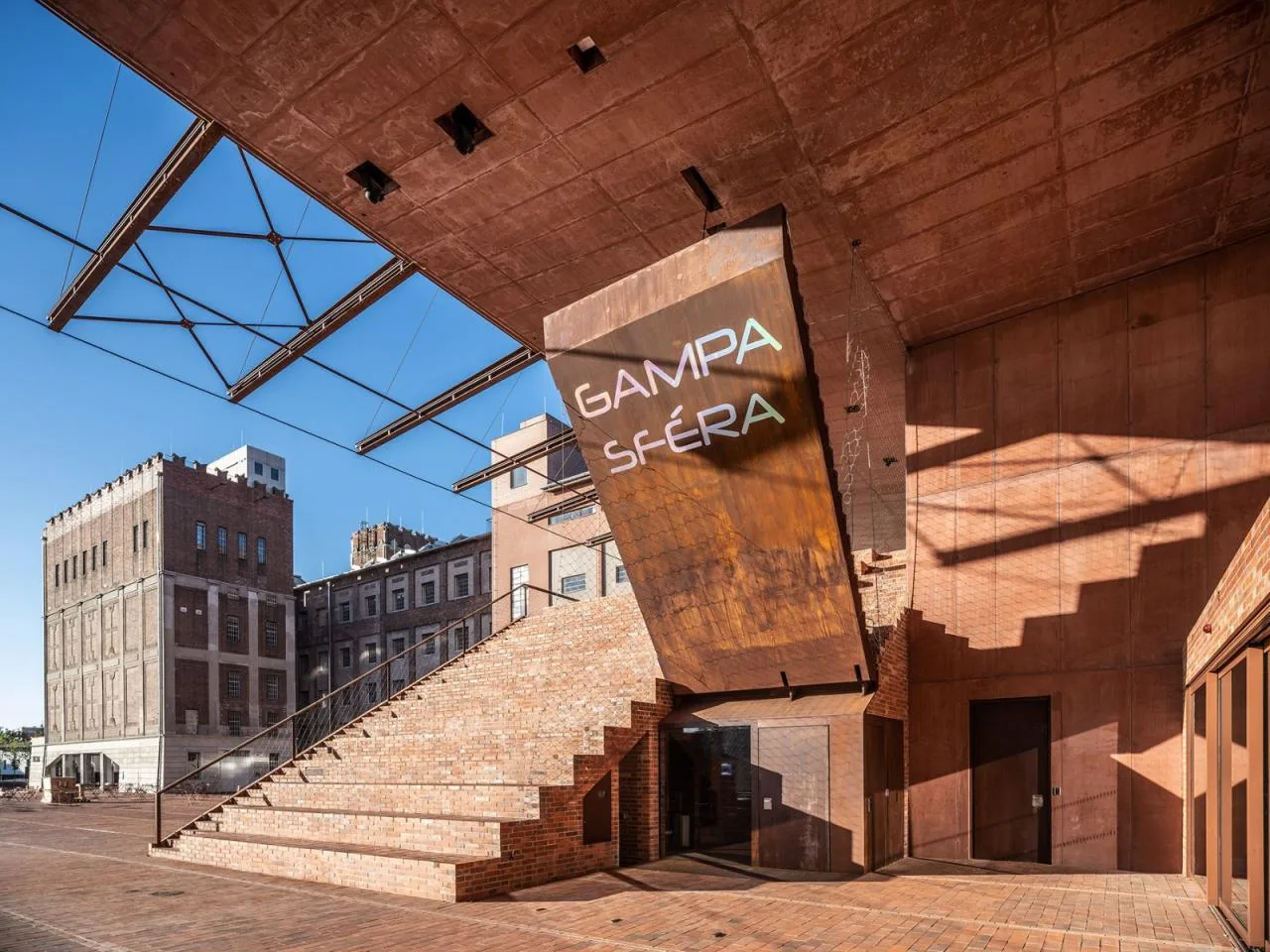
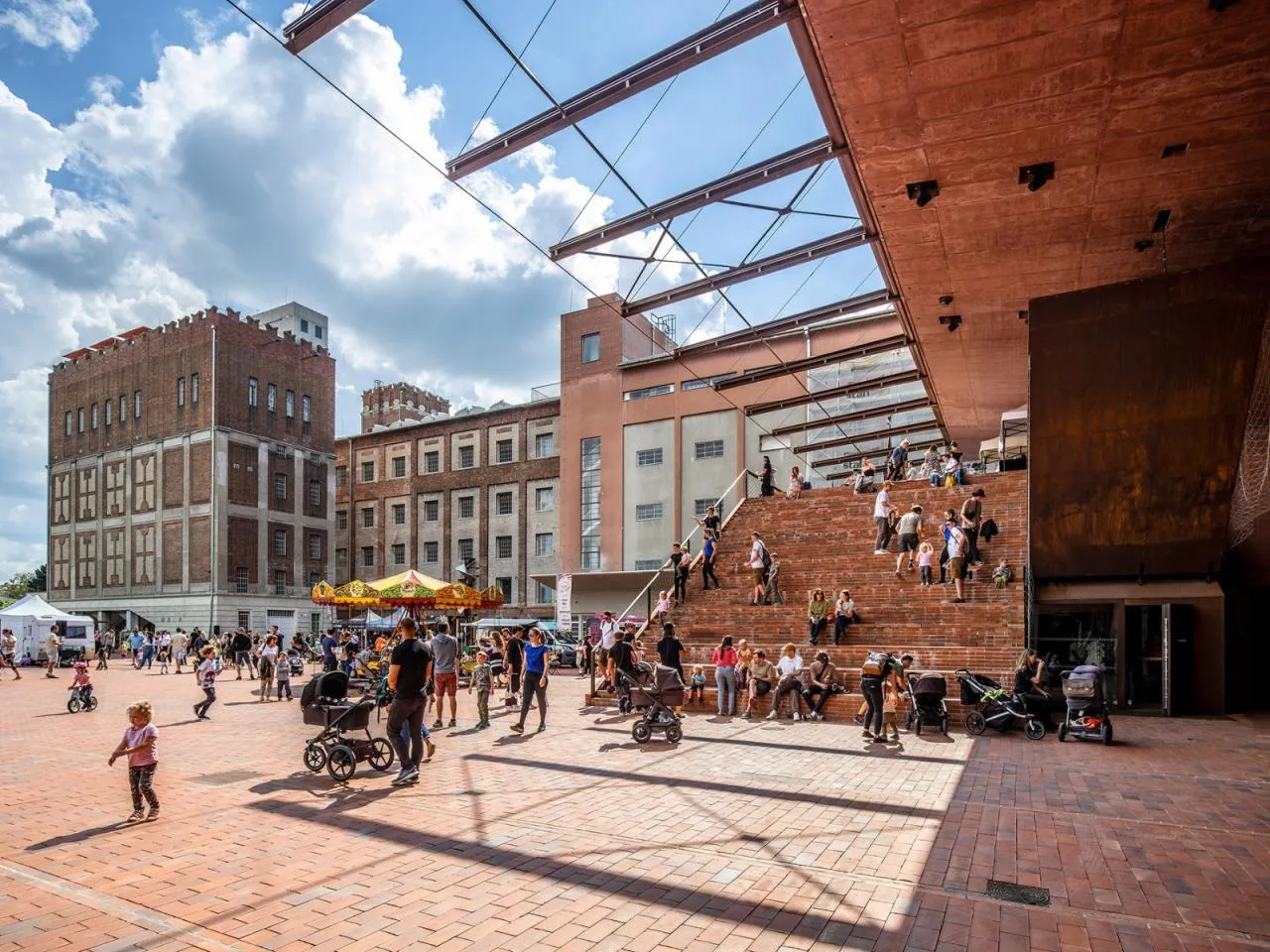
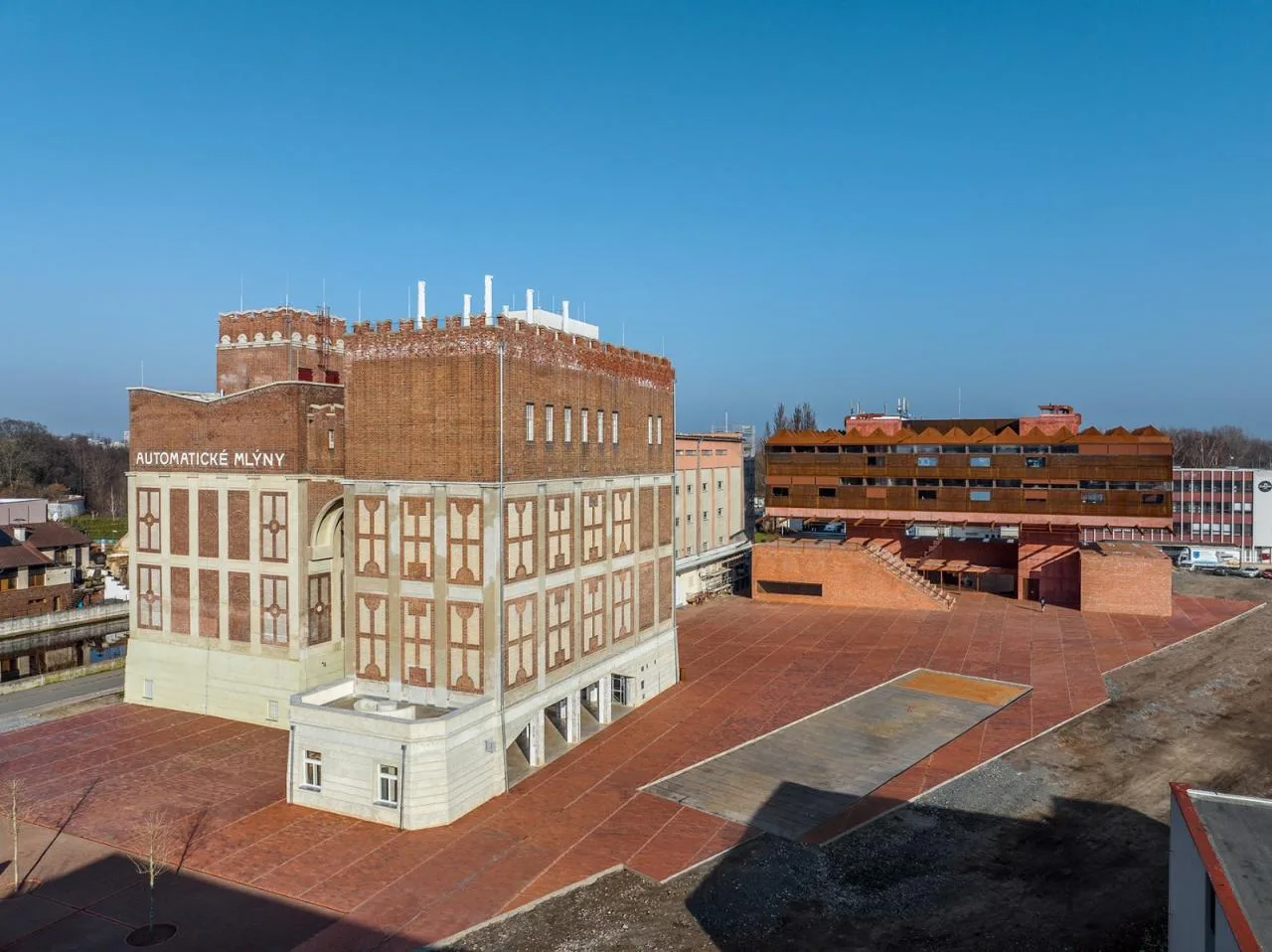
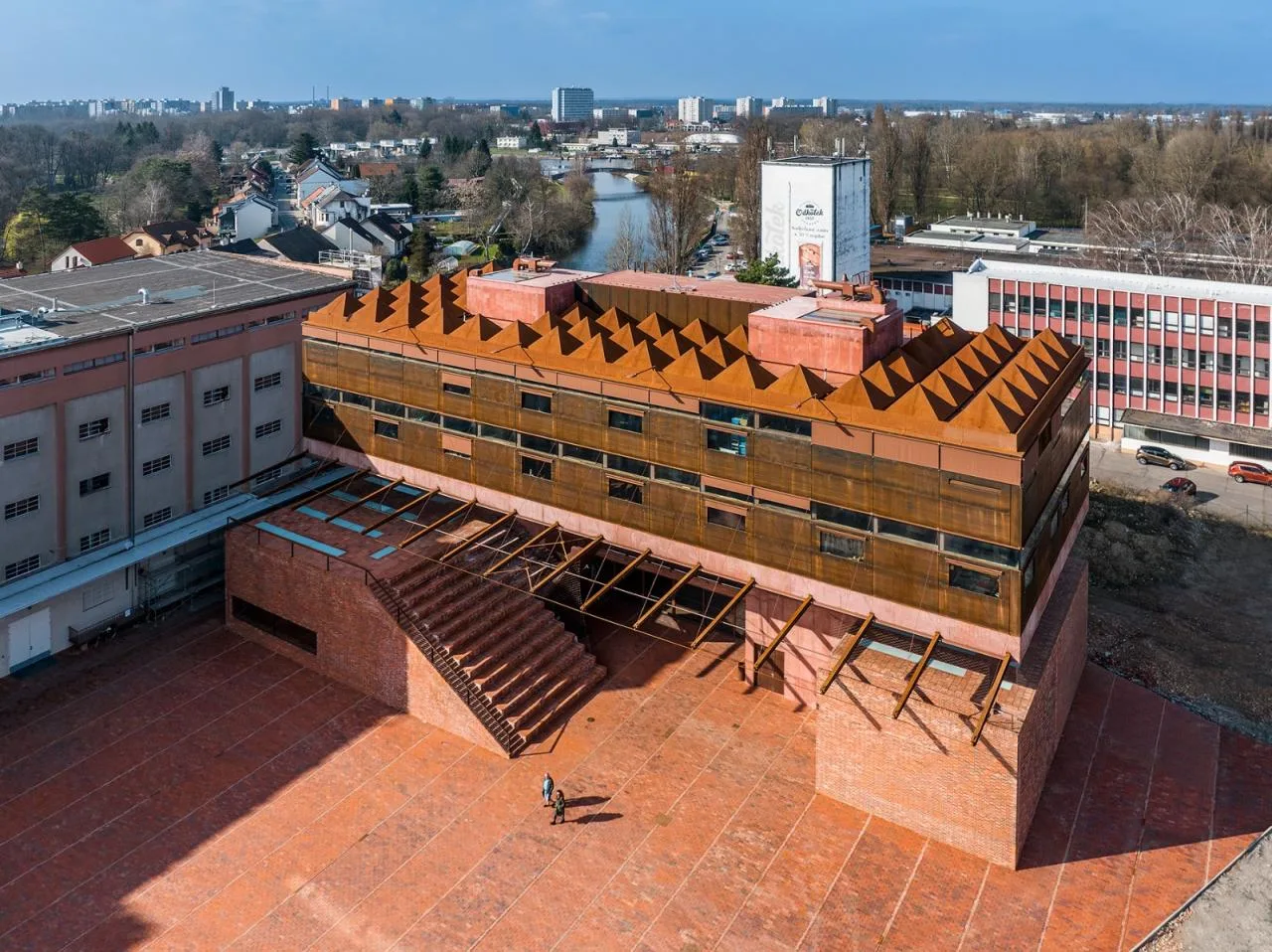
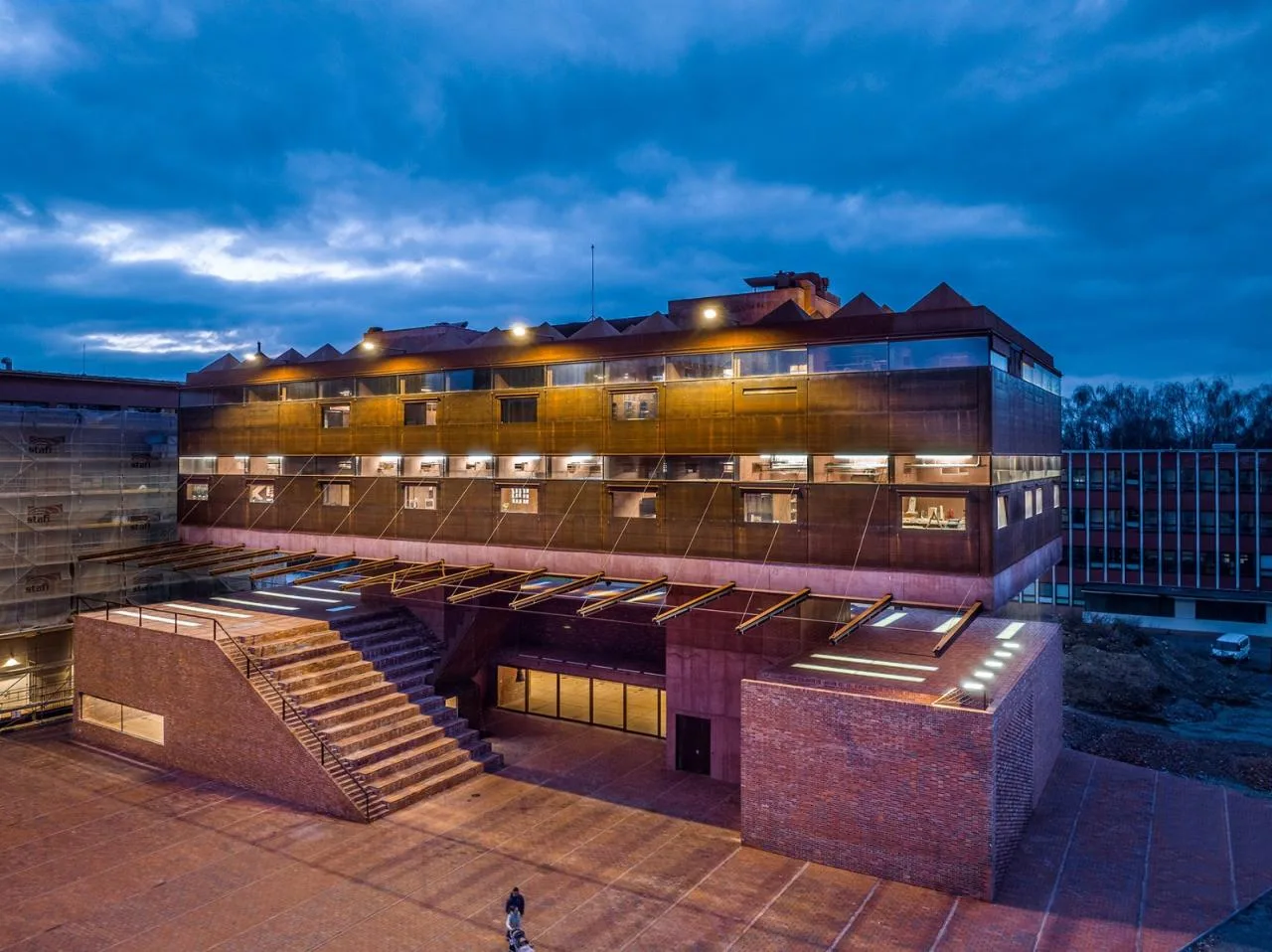
The new GAMPA (Pardubice Municipal Art Museum) and Sféra (Central Craft Workshop) complex is situated on the north side of the former Winternitz automated factory site. Funded by the municipal government, it comprises two buildings serving specialized functions.
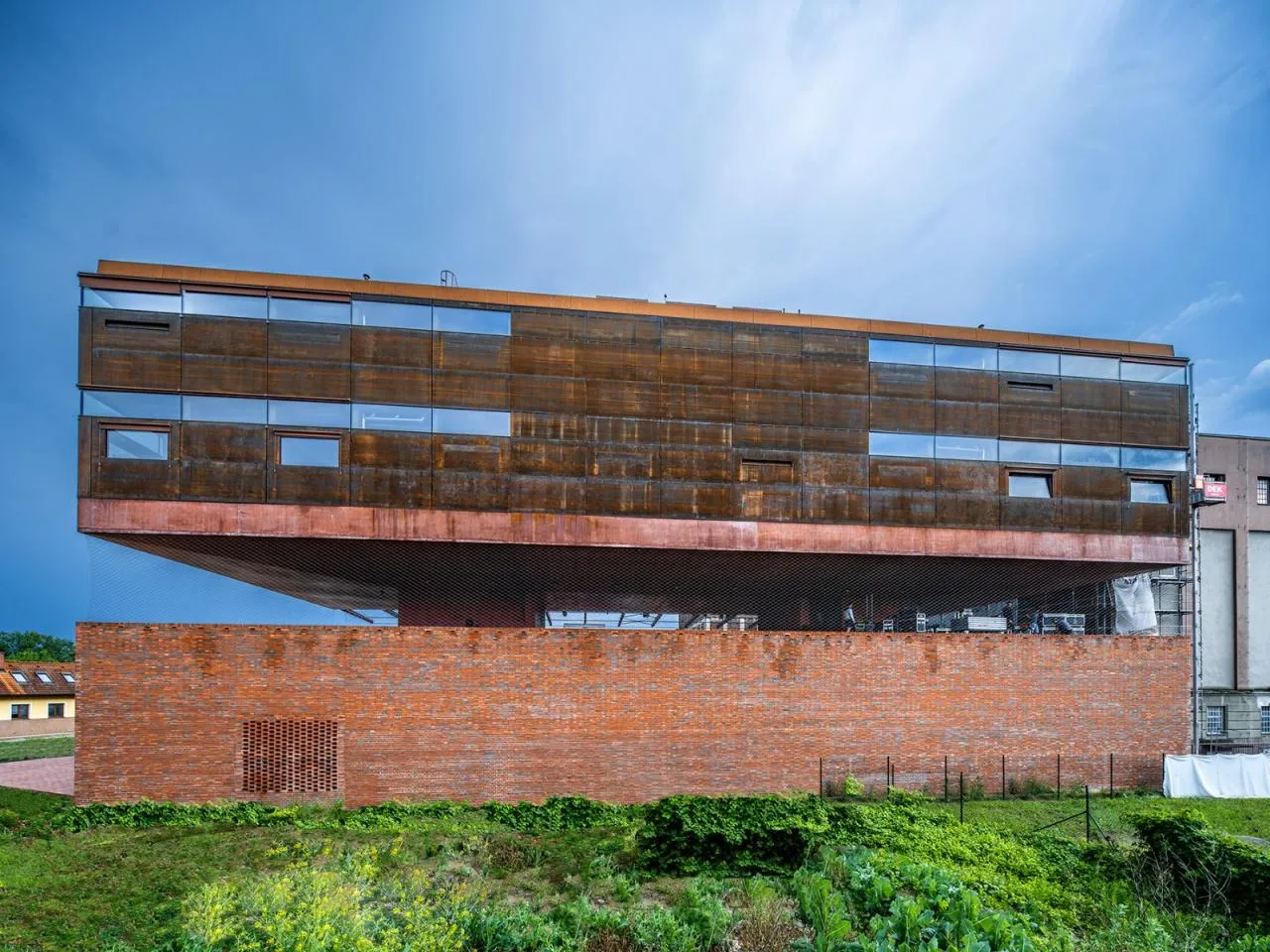
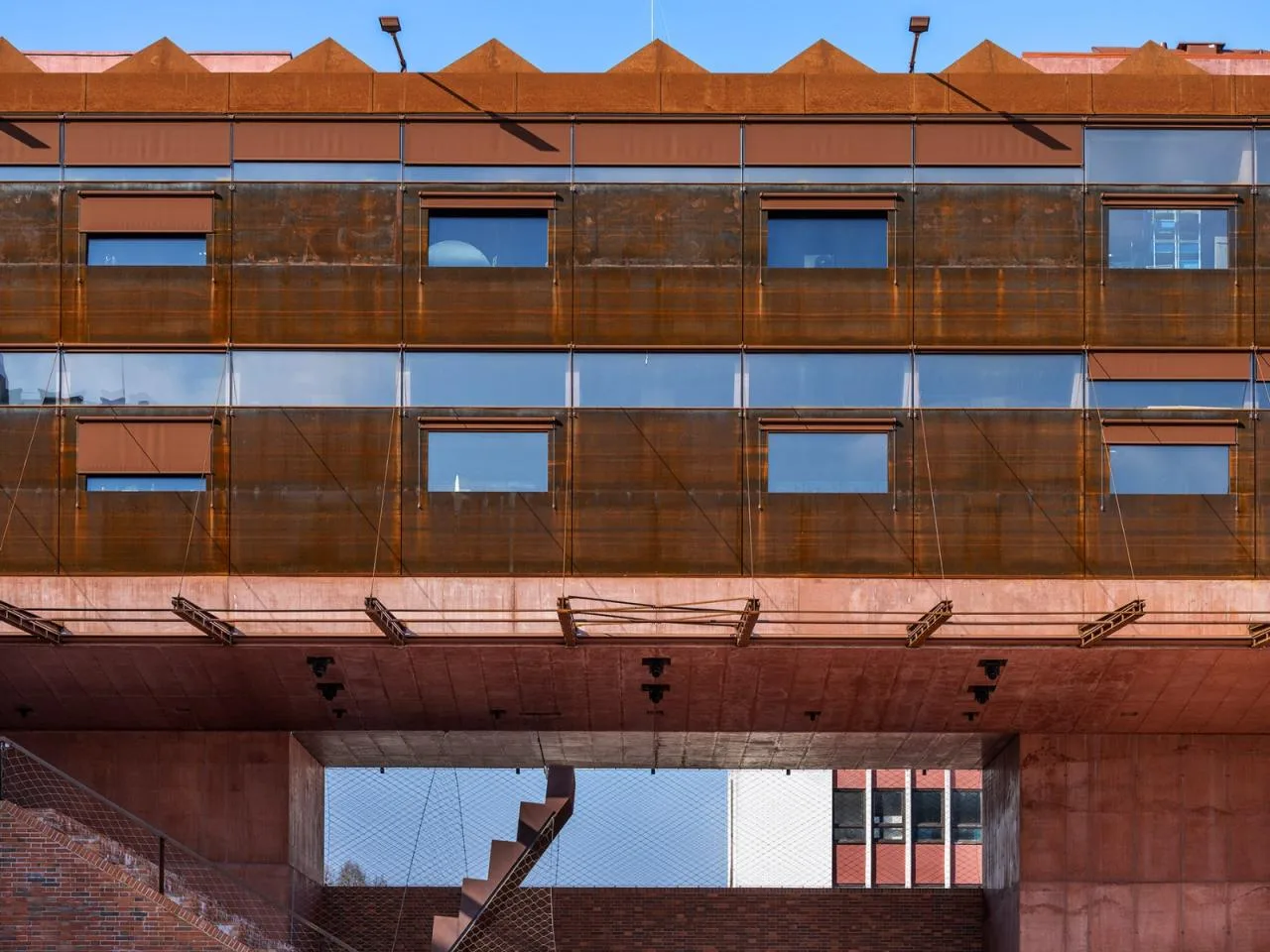
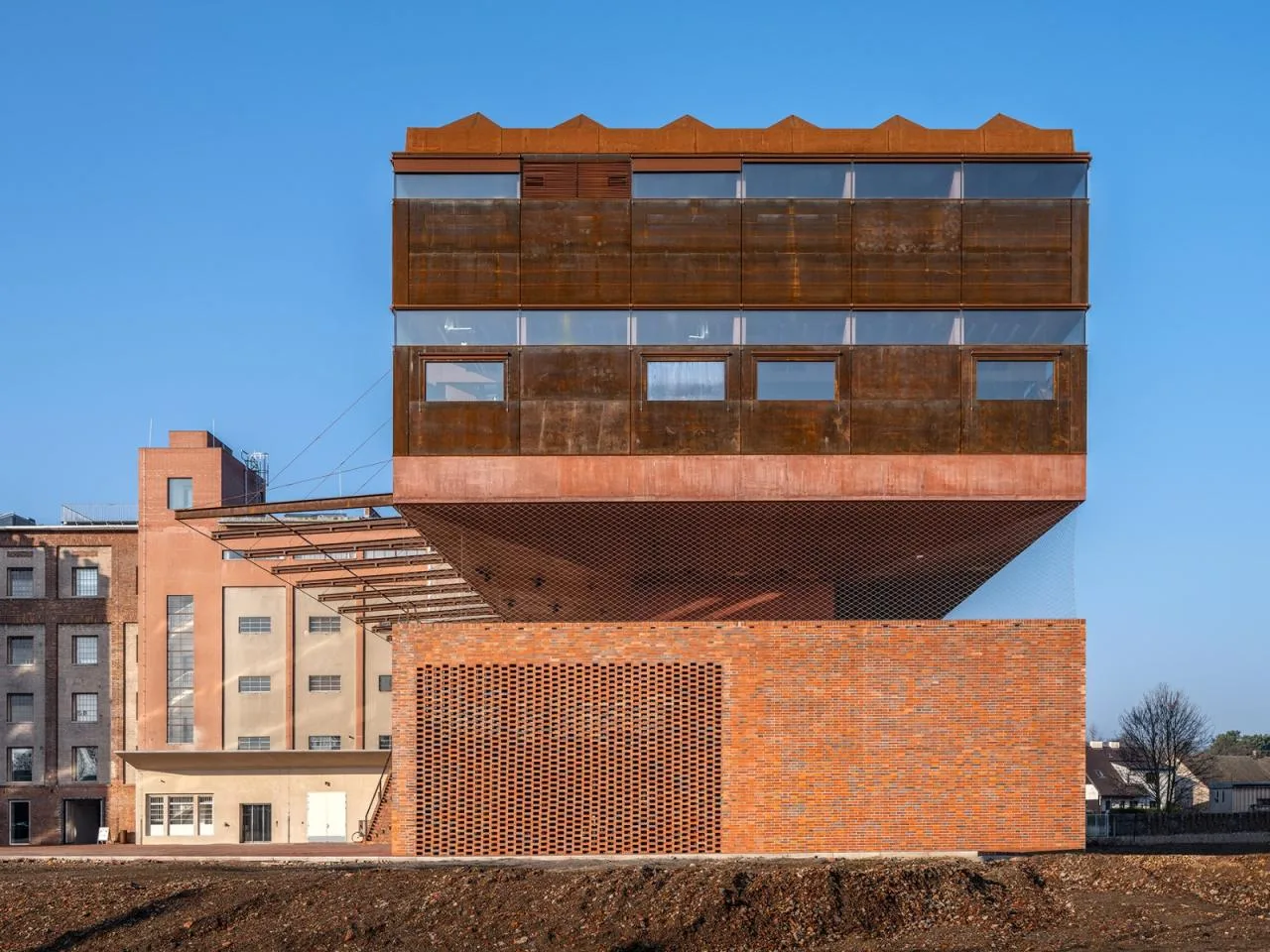
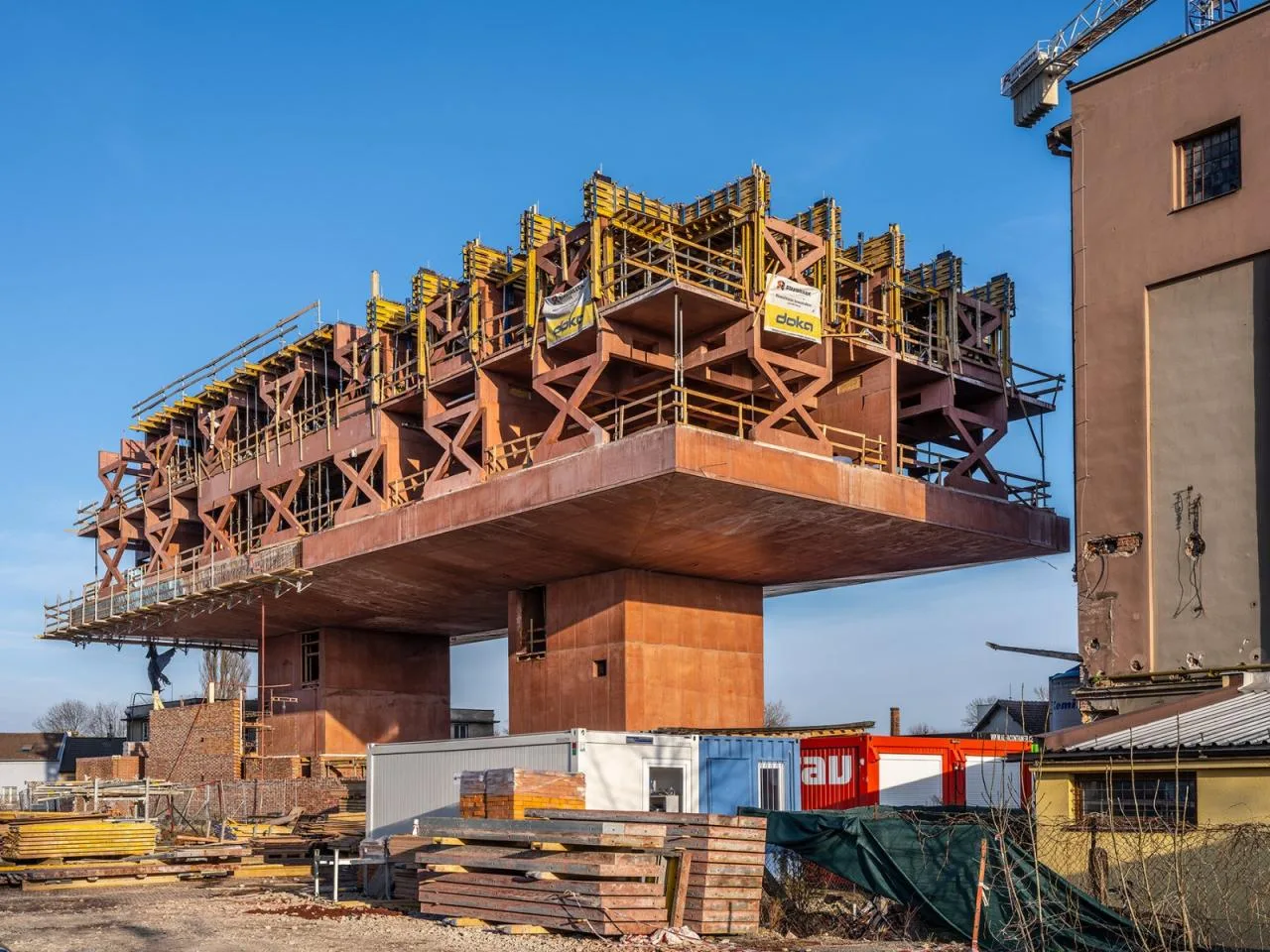
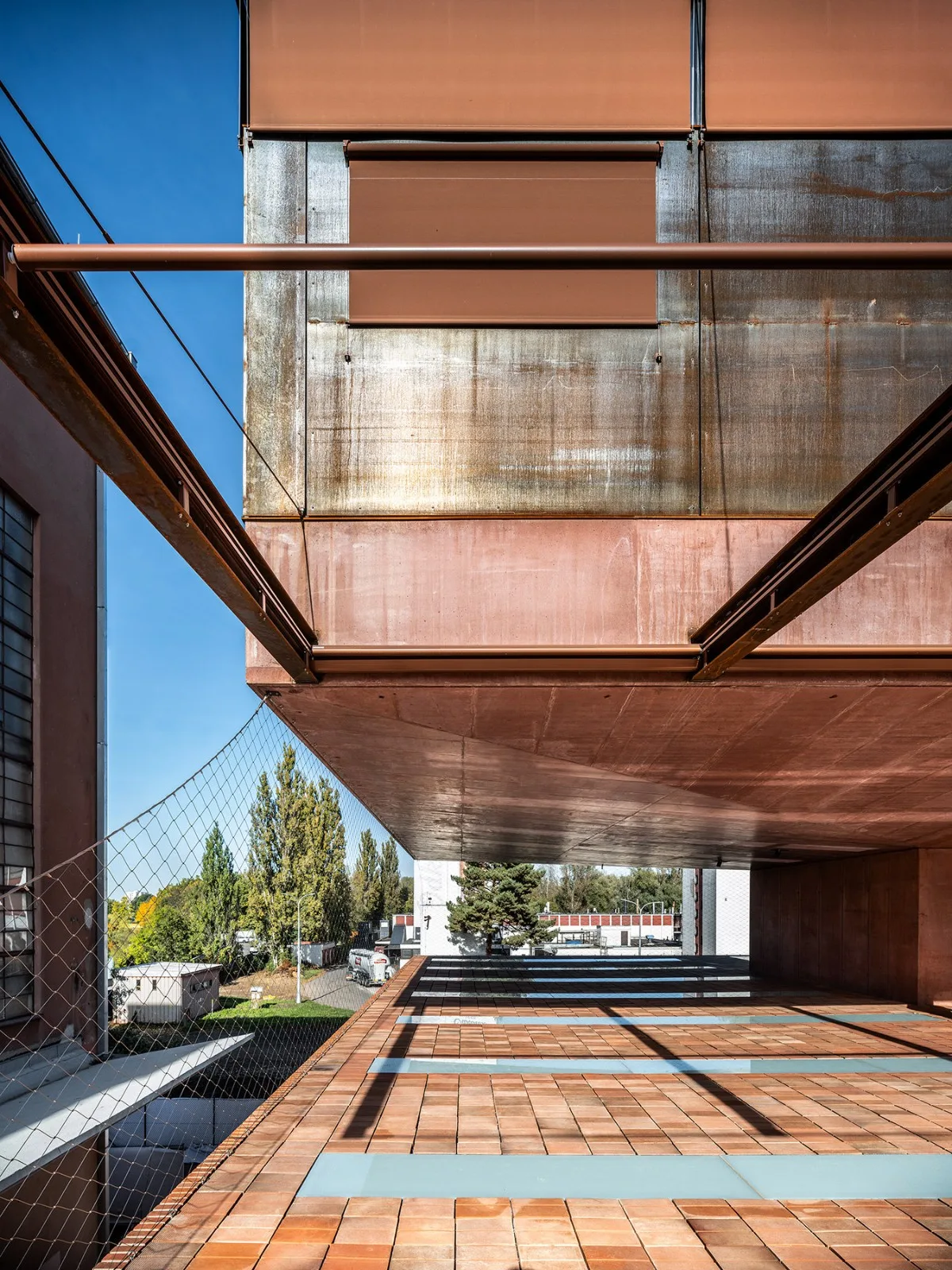
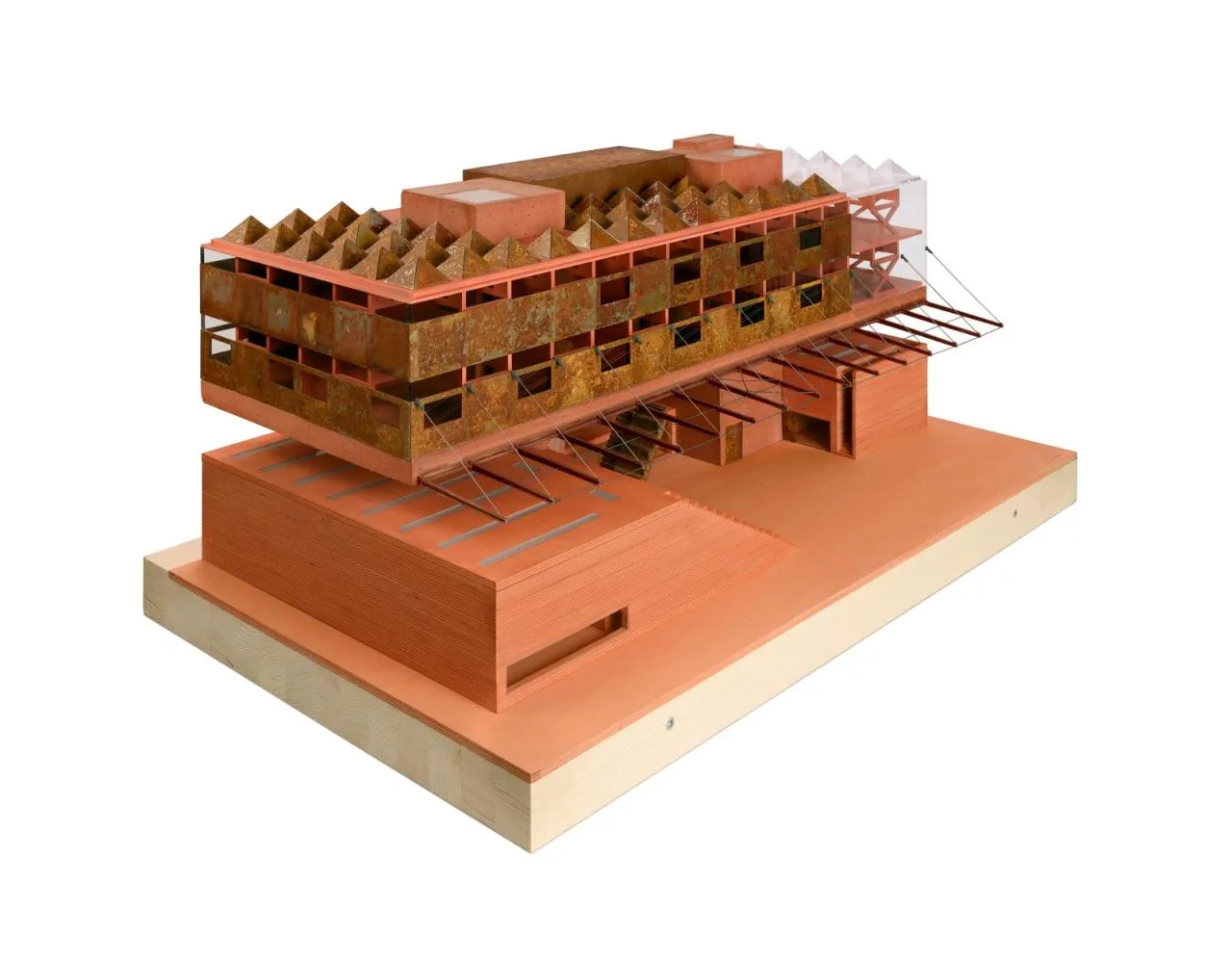
GAMPA occupies the ground floor, while Sféra is located above it, separated by a gap that allows views of the surrounding environment and prevents the new building’s mass from feeling oppressive. The elevated position of Sféra provides a quiet environment suitable for student work on the upper floors, whereas GAMPA maintains a closer connection to the public spaces below.
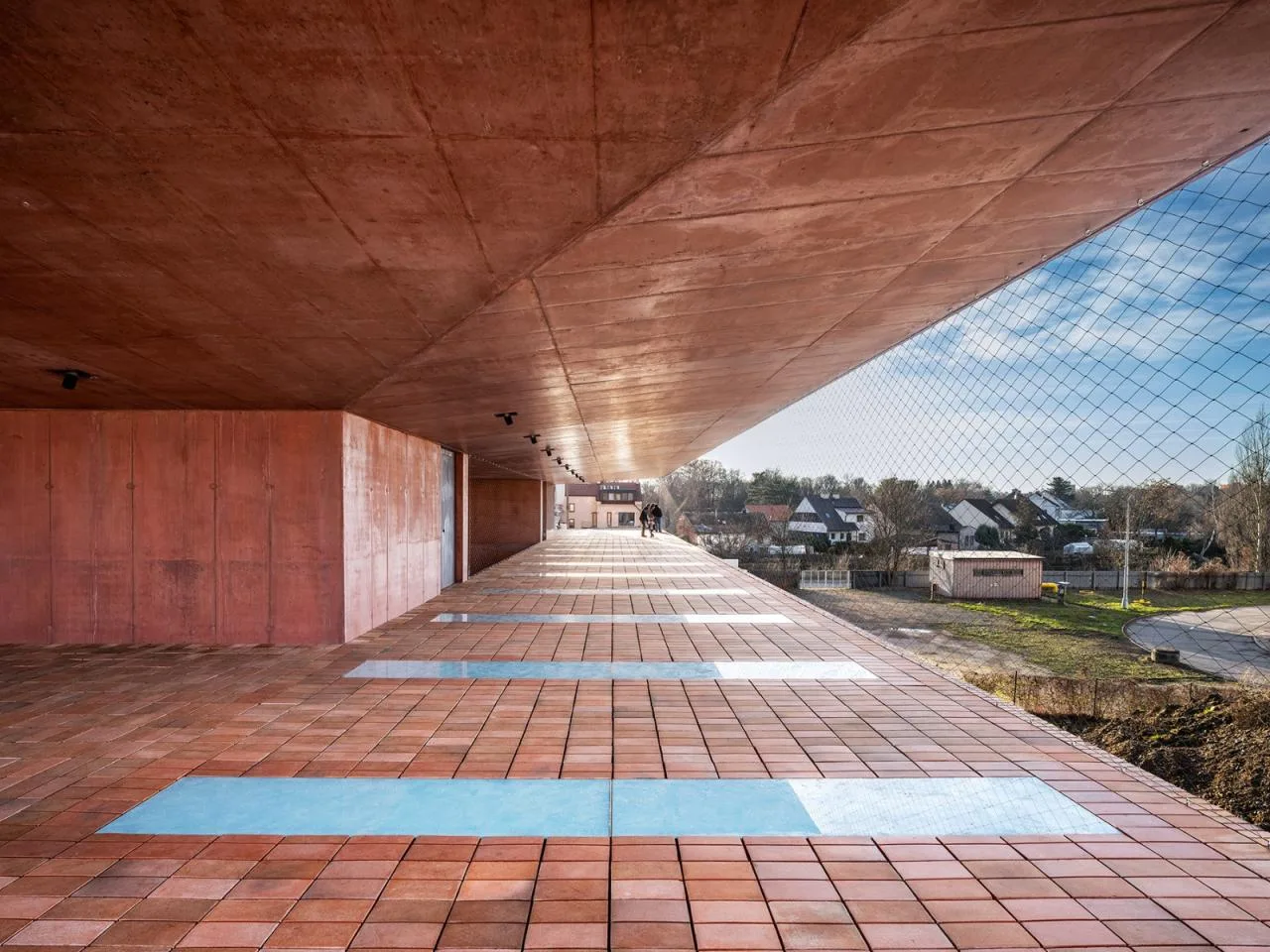
The art museum acts as a “pedestal” with a publicly accessible roof. The entire building employs brick masonry, linking it closely to the automated factory’s public space. This design adds dimensionality to the area, featuring an open-air theater with a capacity for 250 people to host summer events. The outdoor stage is sheltered by a cantilevered section of the workshop and can be fully covered with a retractable sunshade.
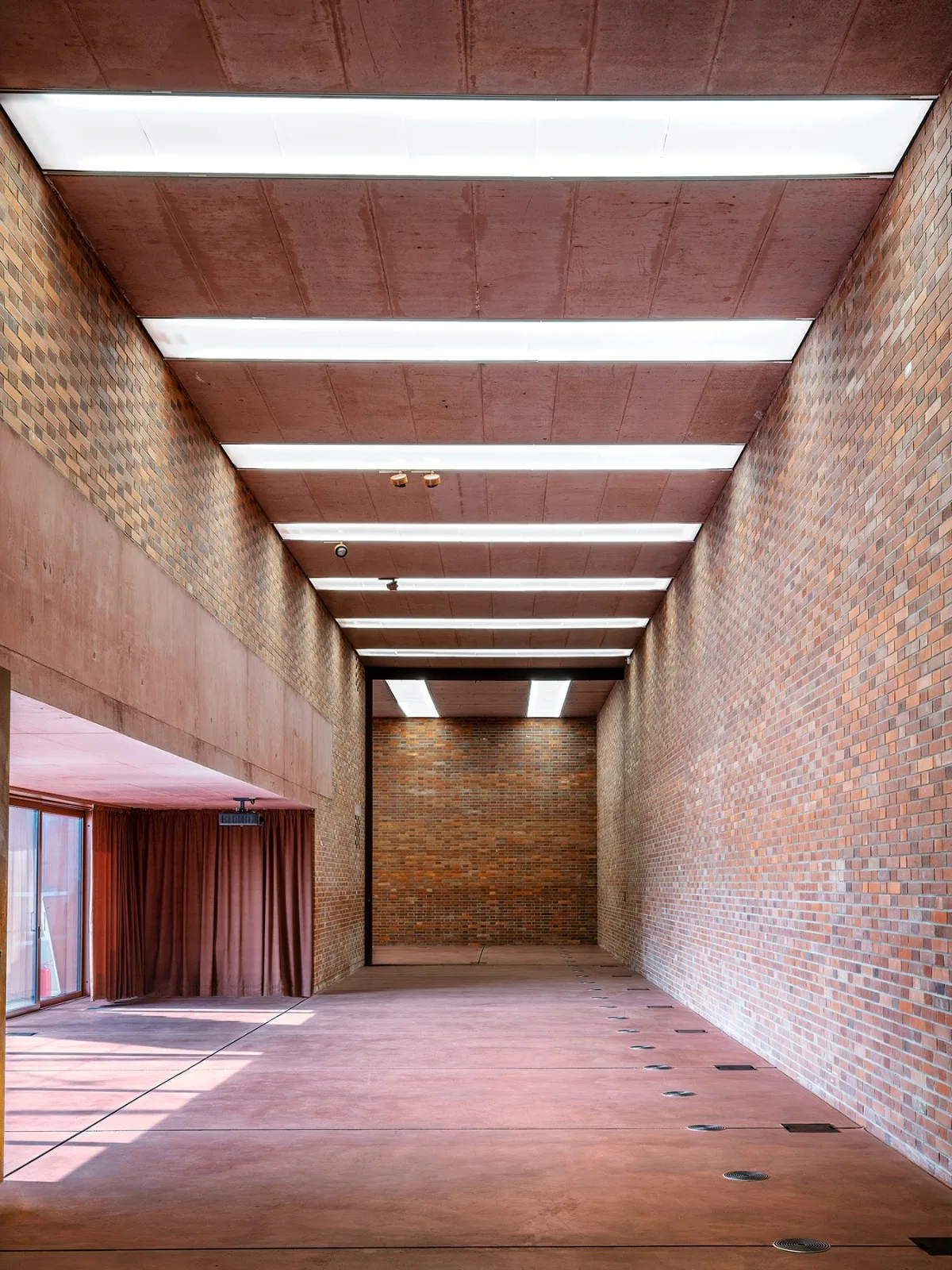
Visitors can access the hall directly from the public space; the hall includes a reception desk, changing rooms, and restrooms. The art museum’s exhibition space spans two levels, with top lighting illuminating the galleries. The main exhibition area offers a windowed view overlooking the factory complex’s main entrance.
The exhibition hall is divided into multiple flexible rooms separated by sliding and folding doors, allowing for both several small exhibitions or one large display. During summer, the ground floor can open fully to the courtyard, enhancing indoor-outdoor connectivity. The office is located on the second floor, accessible via a separate staircase, and a studio for artist residencies is planned on the opposite side of the design area.
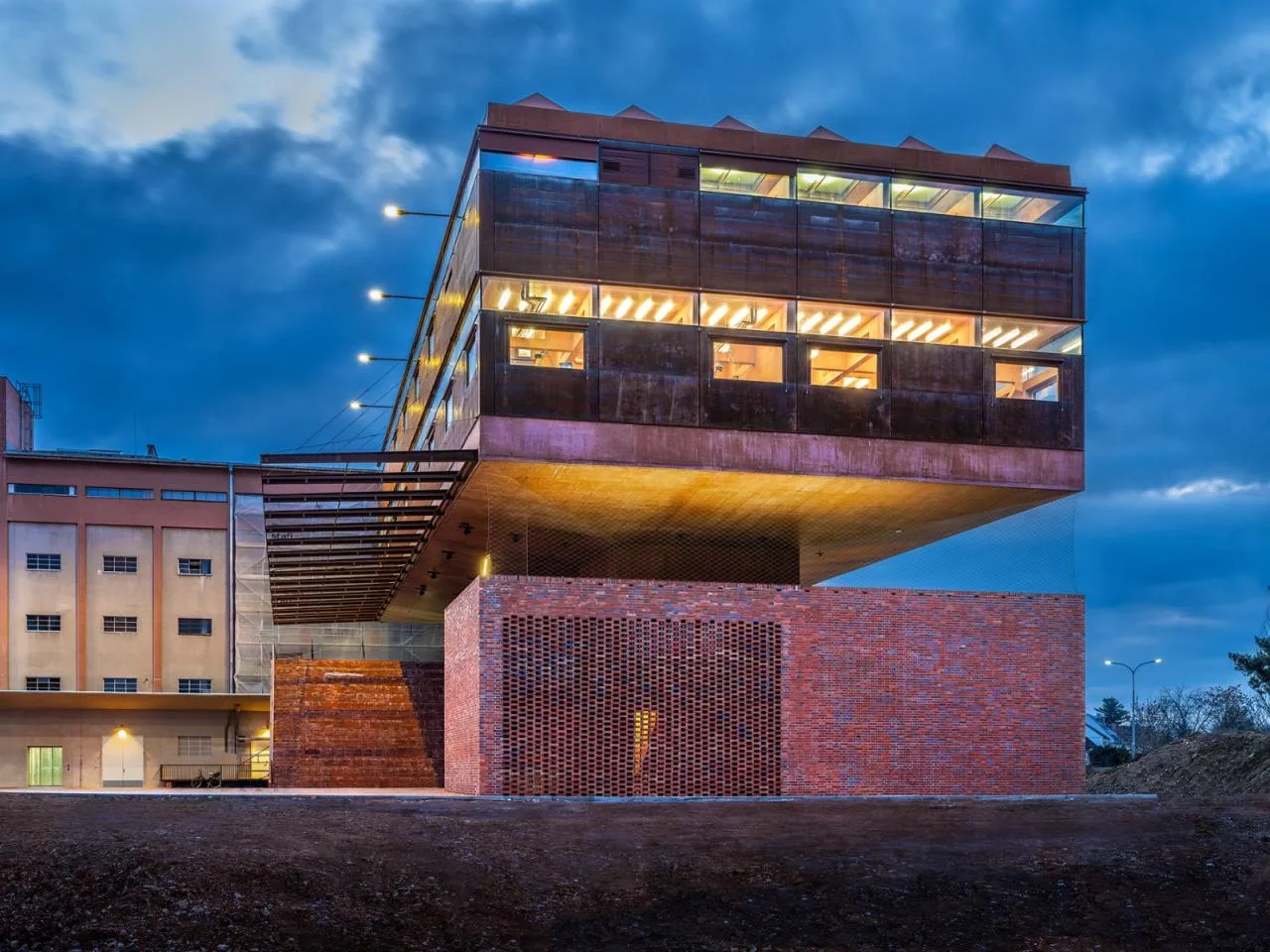
Sféra, positioned above GAMPA, connects via two staircases that also support the structure. It primarily offers educational spaces in technology and natural sciences for primary and secondary students, complete with classrooms and advanced laboratories.
The fourth-floor entrance hall features a reception and changing area accessible from the ground floor’s main entrance, which also serves the art museum. Vertical circulation is provided by two staircases and elevators, each with clearly defined entrances and emergency exits.
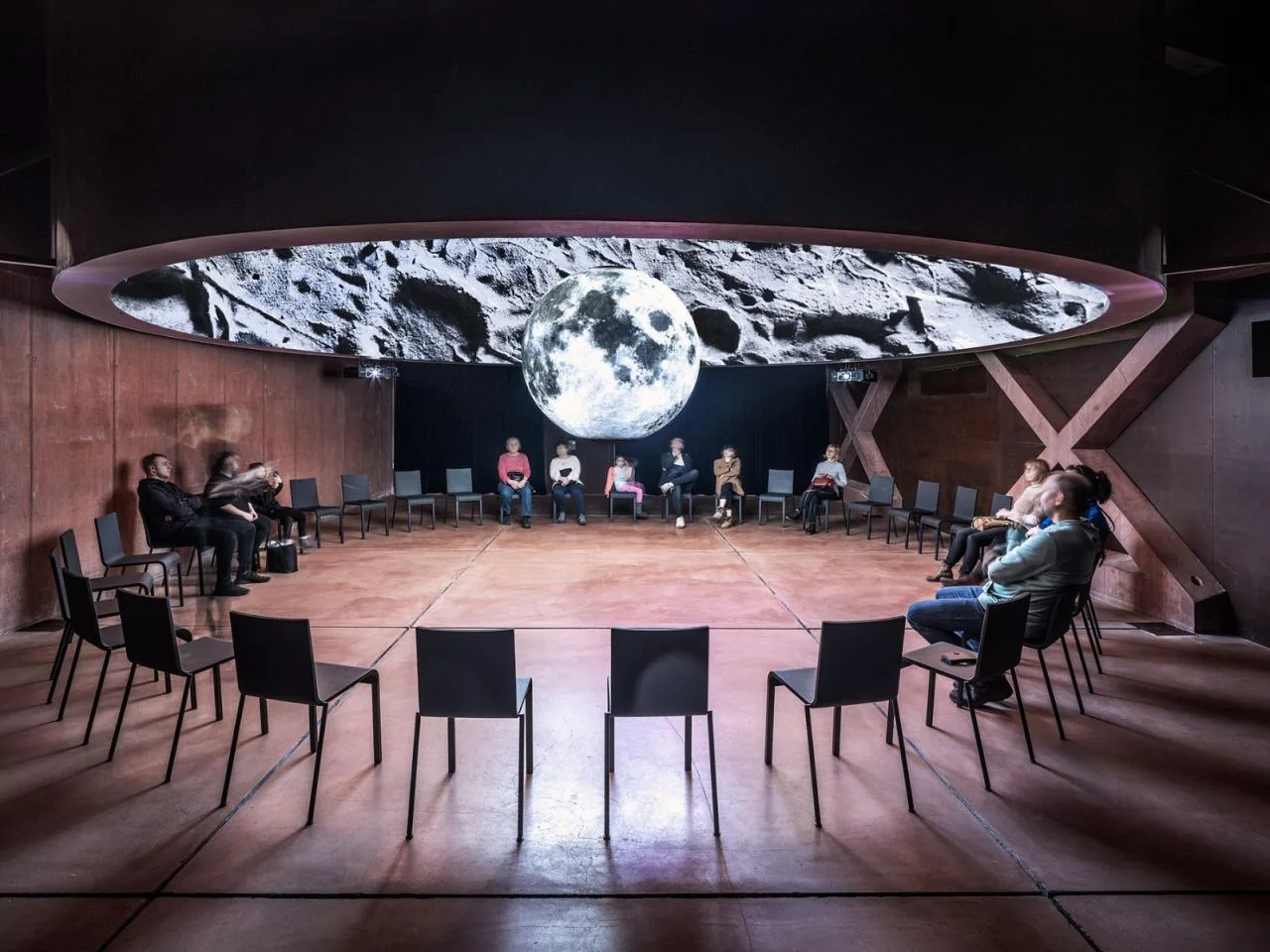
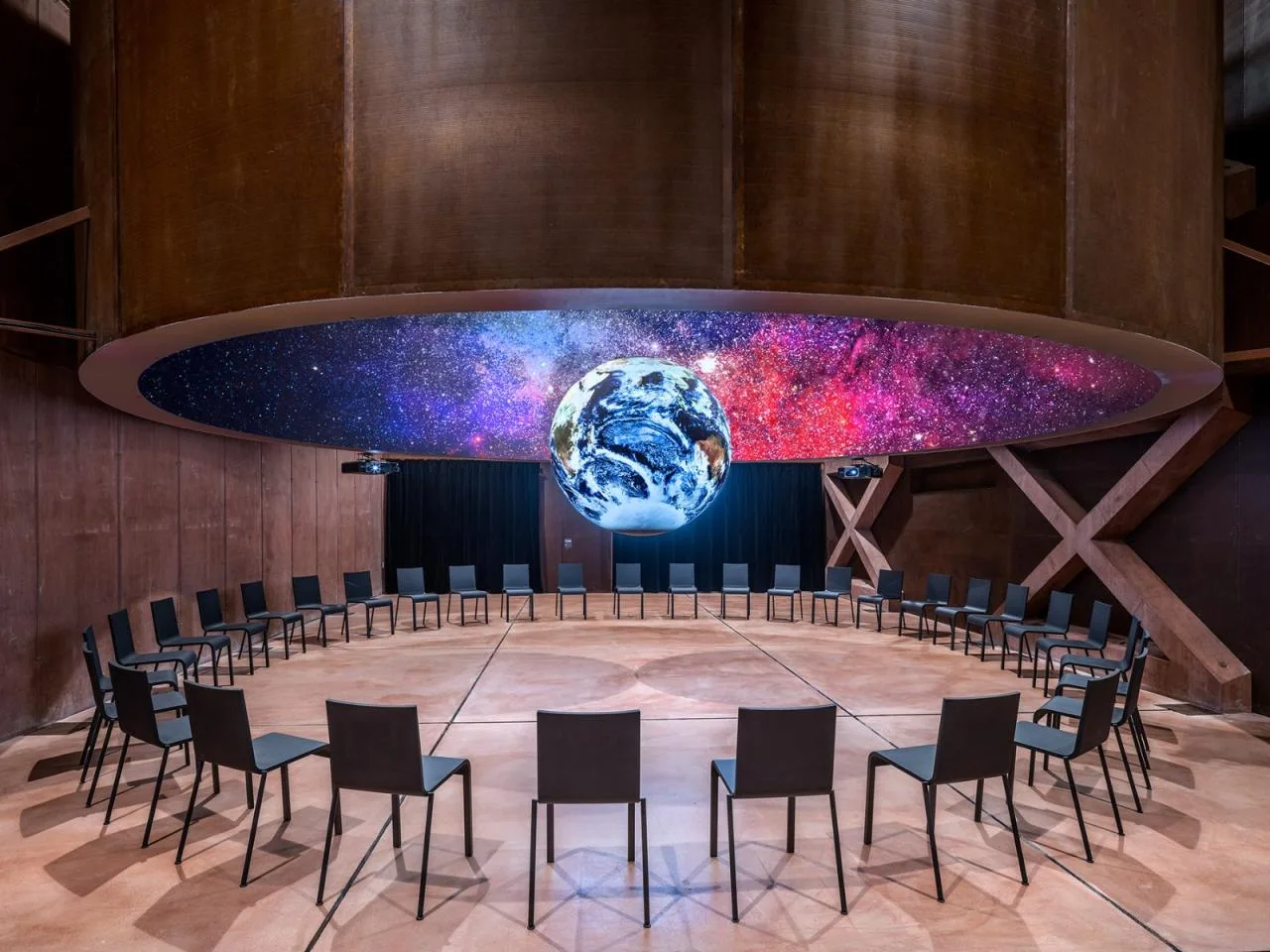
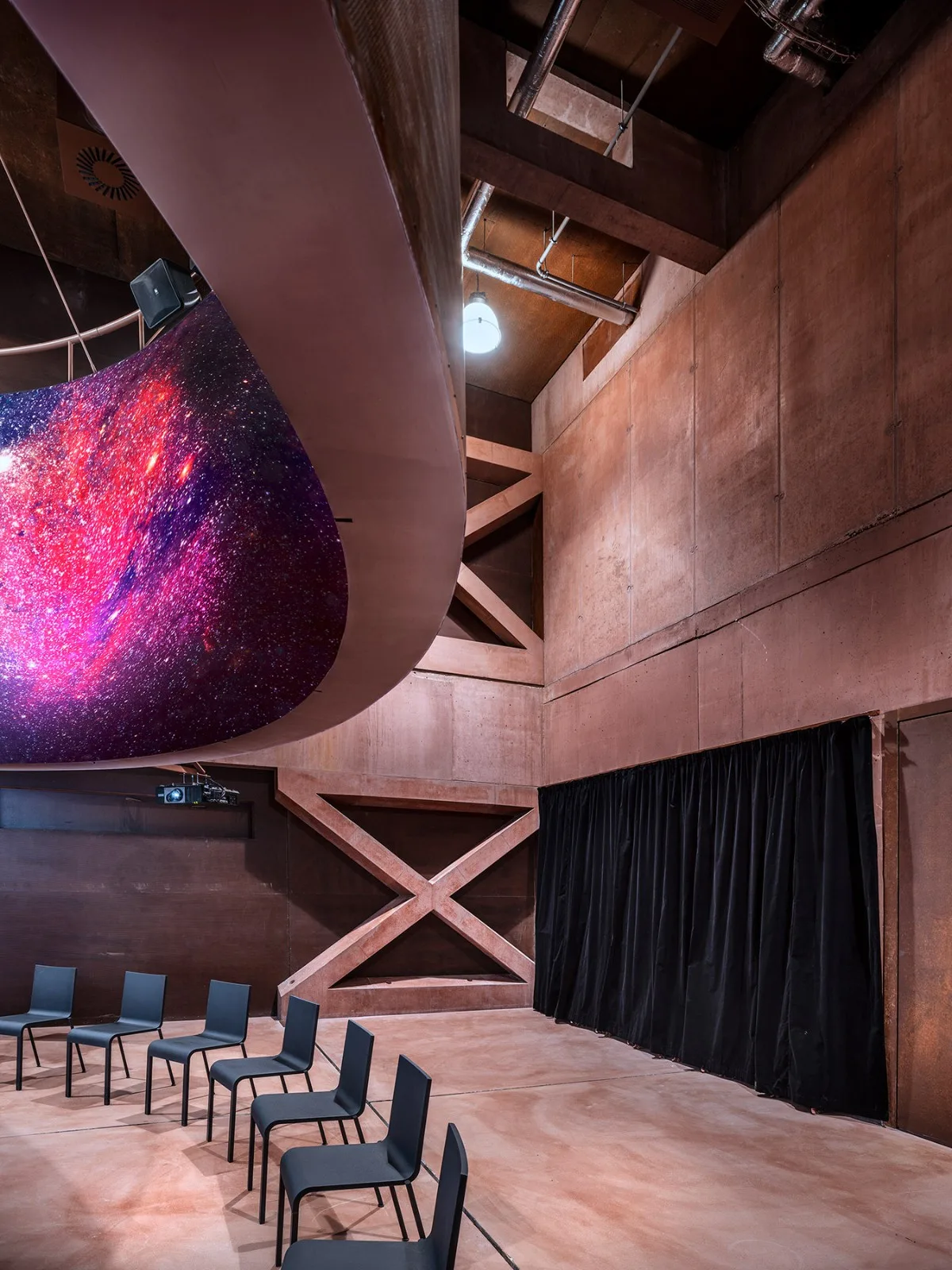
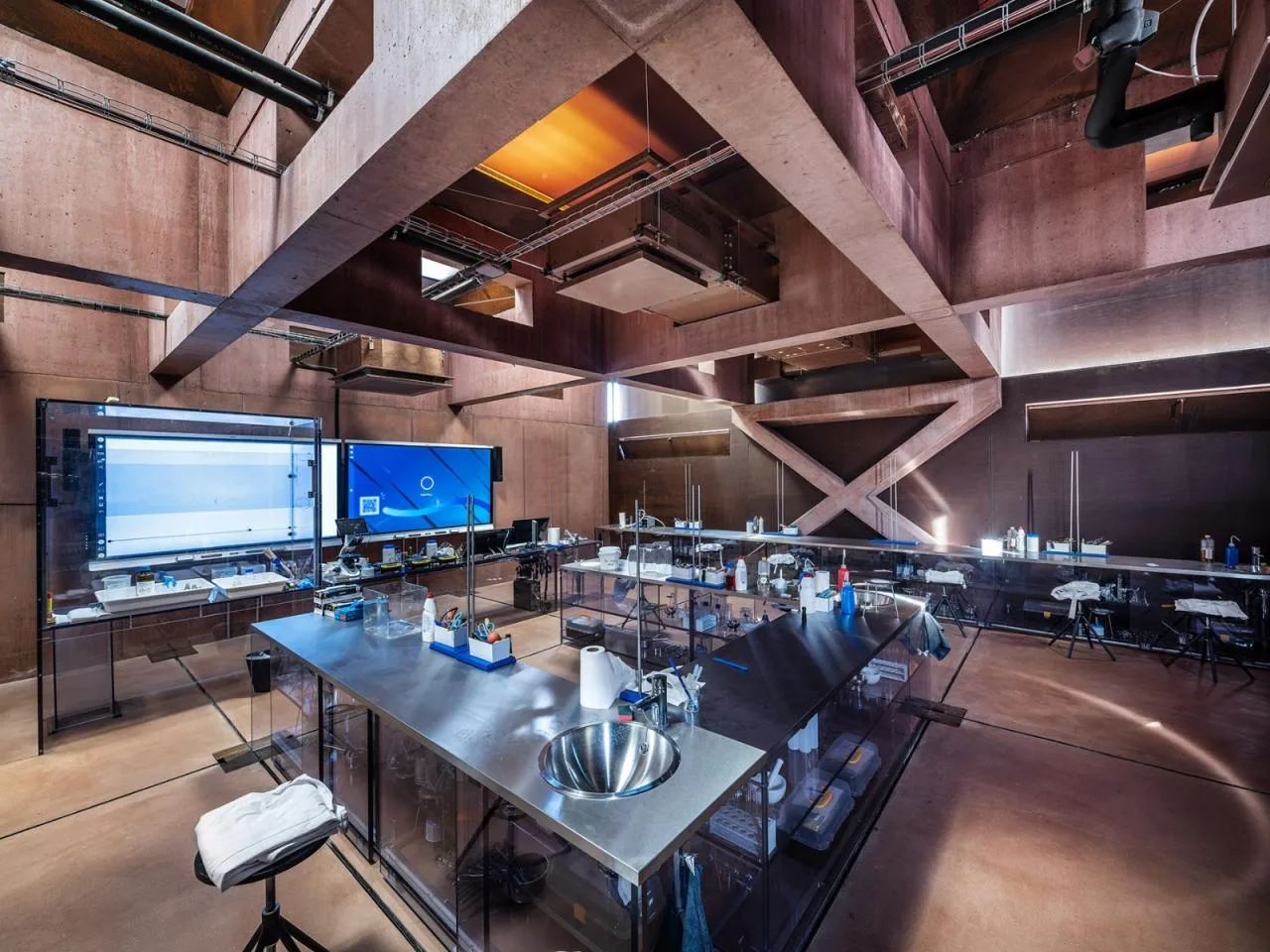
Each floor contains two classrooms—one designated for workshops or labs—and a staff room located near the entrance hall opposite the restrooms. A central double-layered projection area houses a spherical projector capable of displaying and simulating natural Earth phenomena.
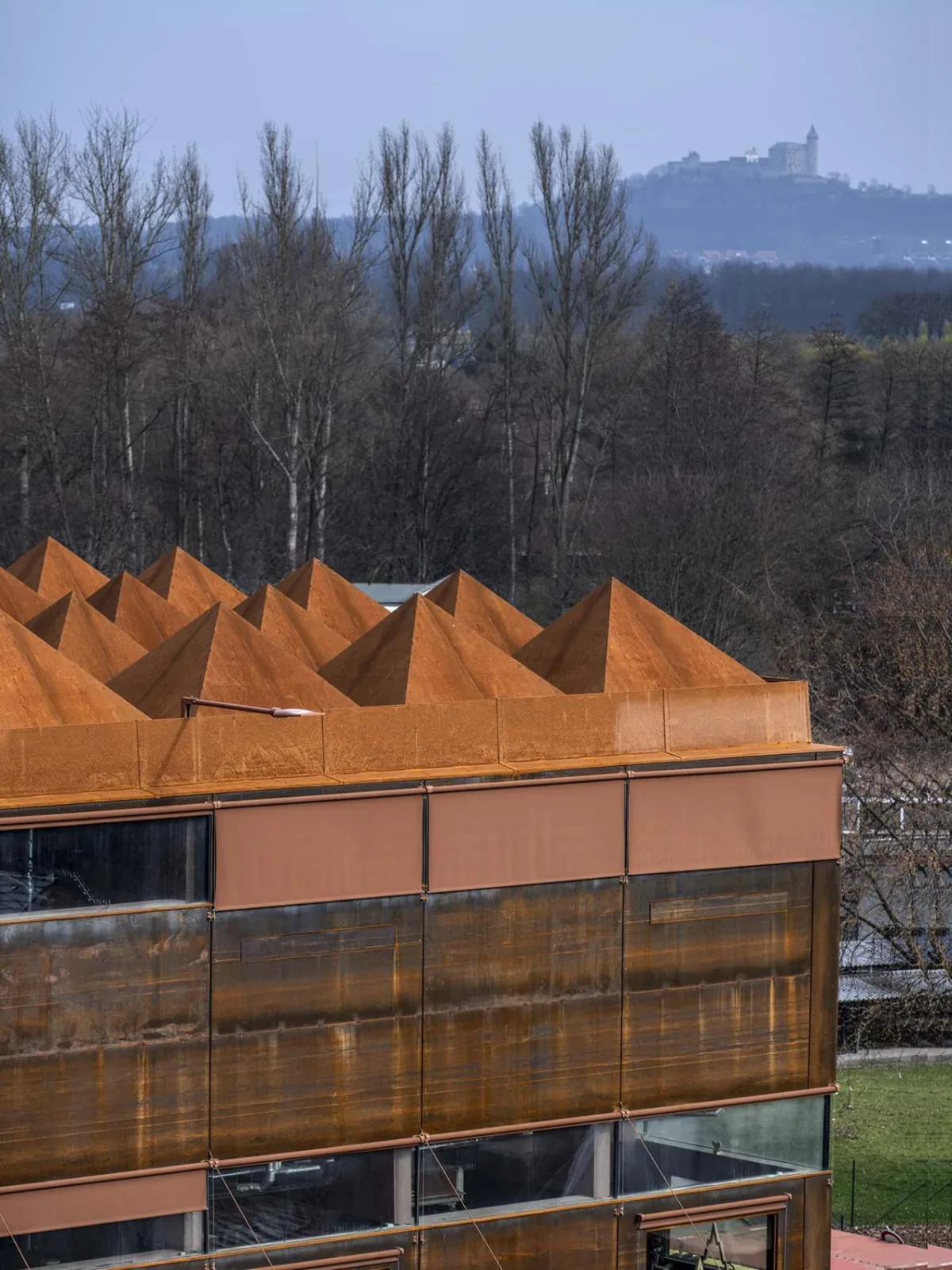
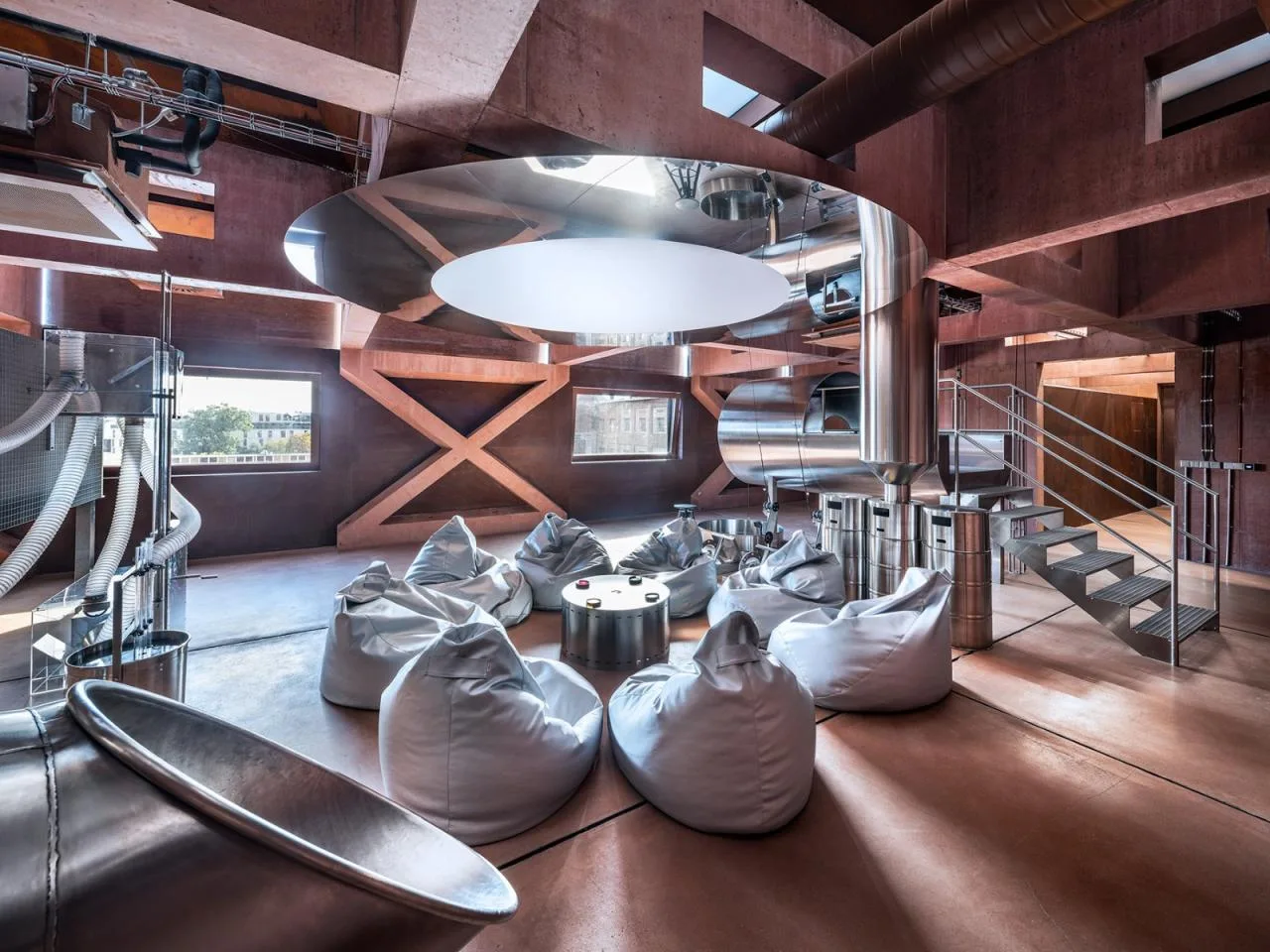
Ground-floor workshops for textiles, graphics, wood, and metal benefit from natural lighting, while top-level physics, chemistry, natural science, and robotics labs receive daylight through skylights featuring pyramid-shaped shading devices.
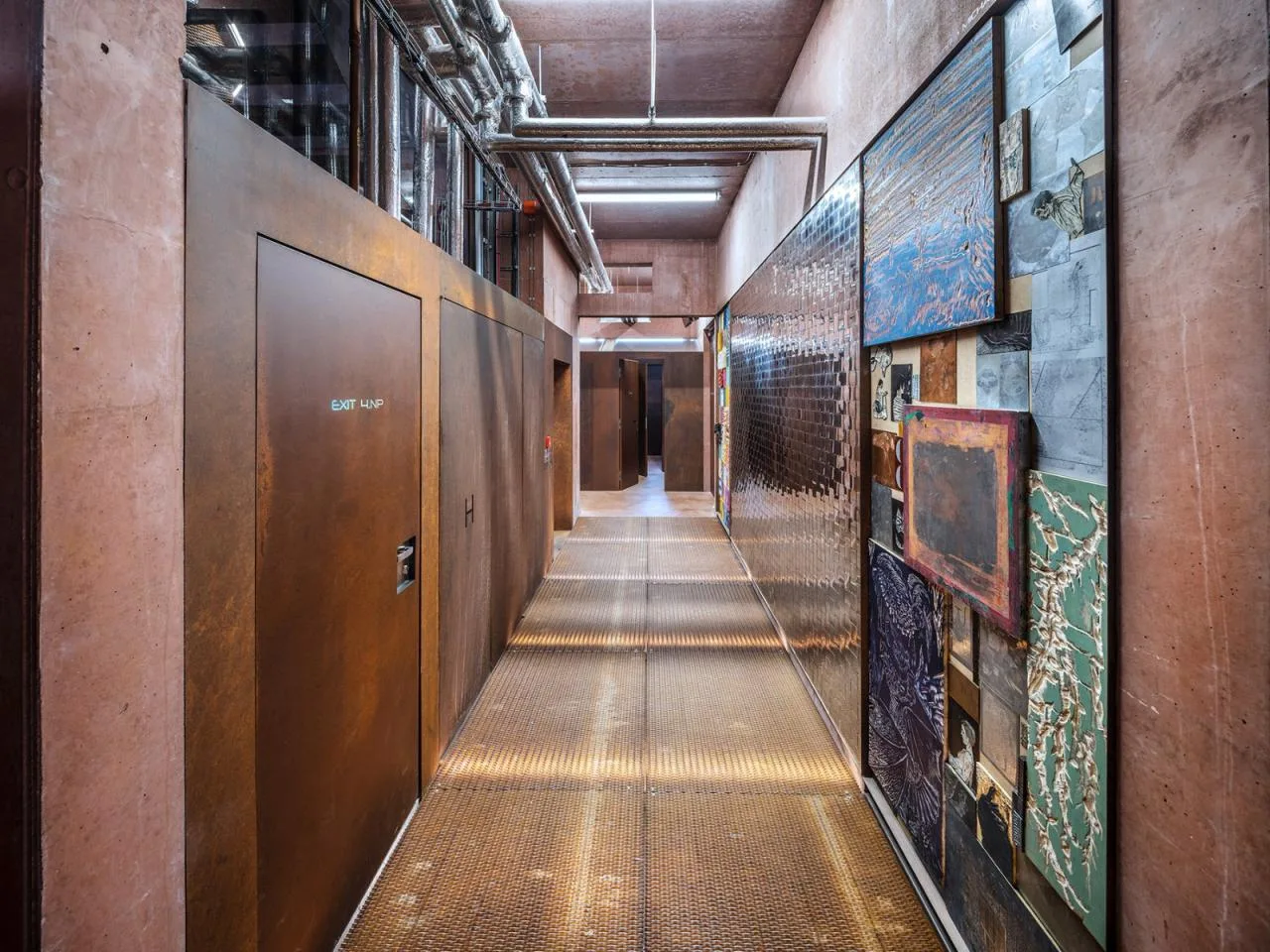
Near the top laboratory, a spherical playground allows preschool children to explore natural and physical phenomena through play. To enhance orientation, we collaborated with teachers and students from Prague’s Academy of Art and Design (UMPRUM) to create artistic niches tailored to the functional needs of each workshop. These niches incorporate collages of wood, textiles, metal, and graphics, enriching the space with a unique artistic atmosphere.
The roof houses boiler and machine rooms accessible via vertical staircases.
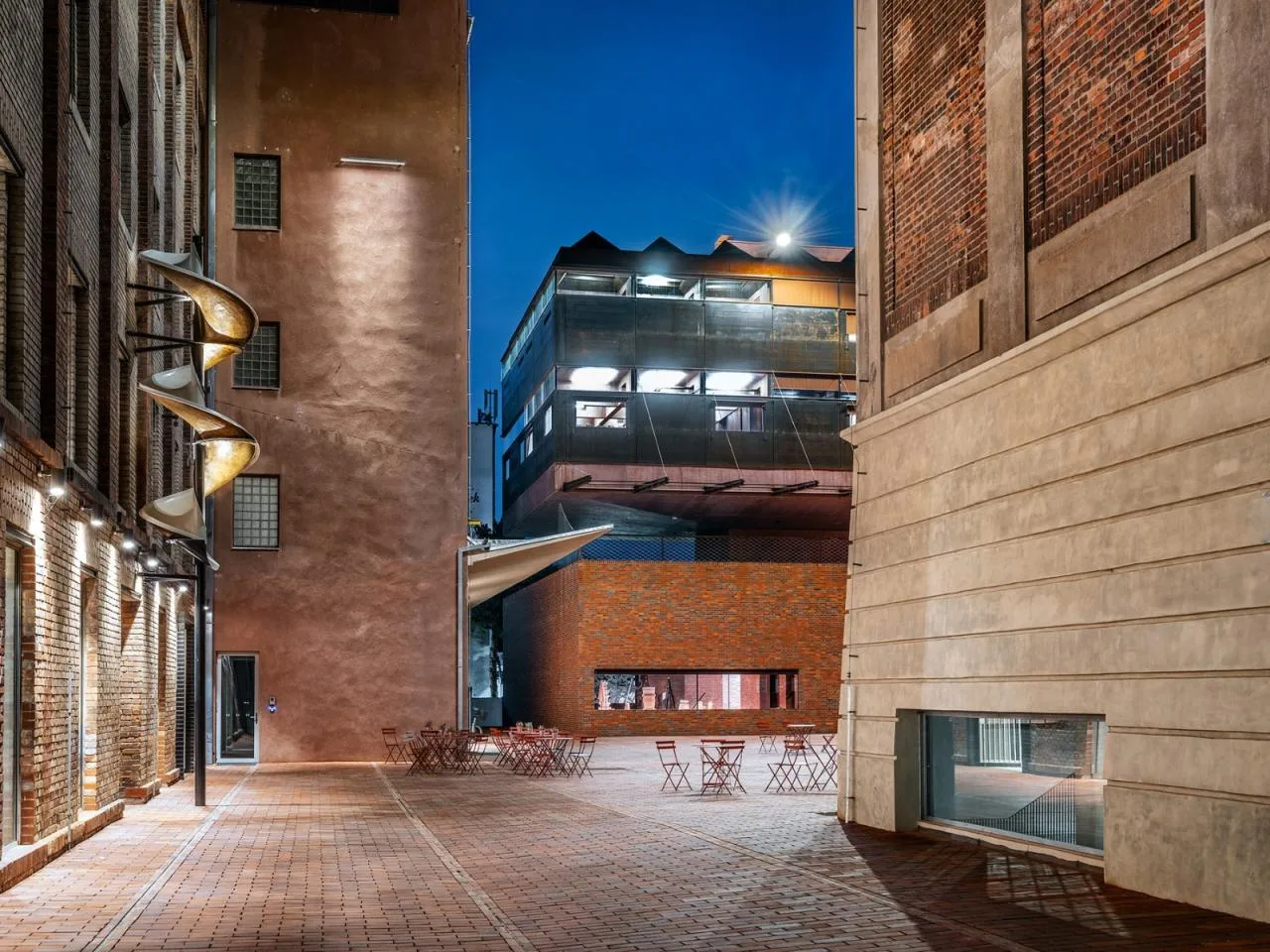
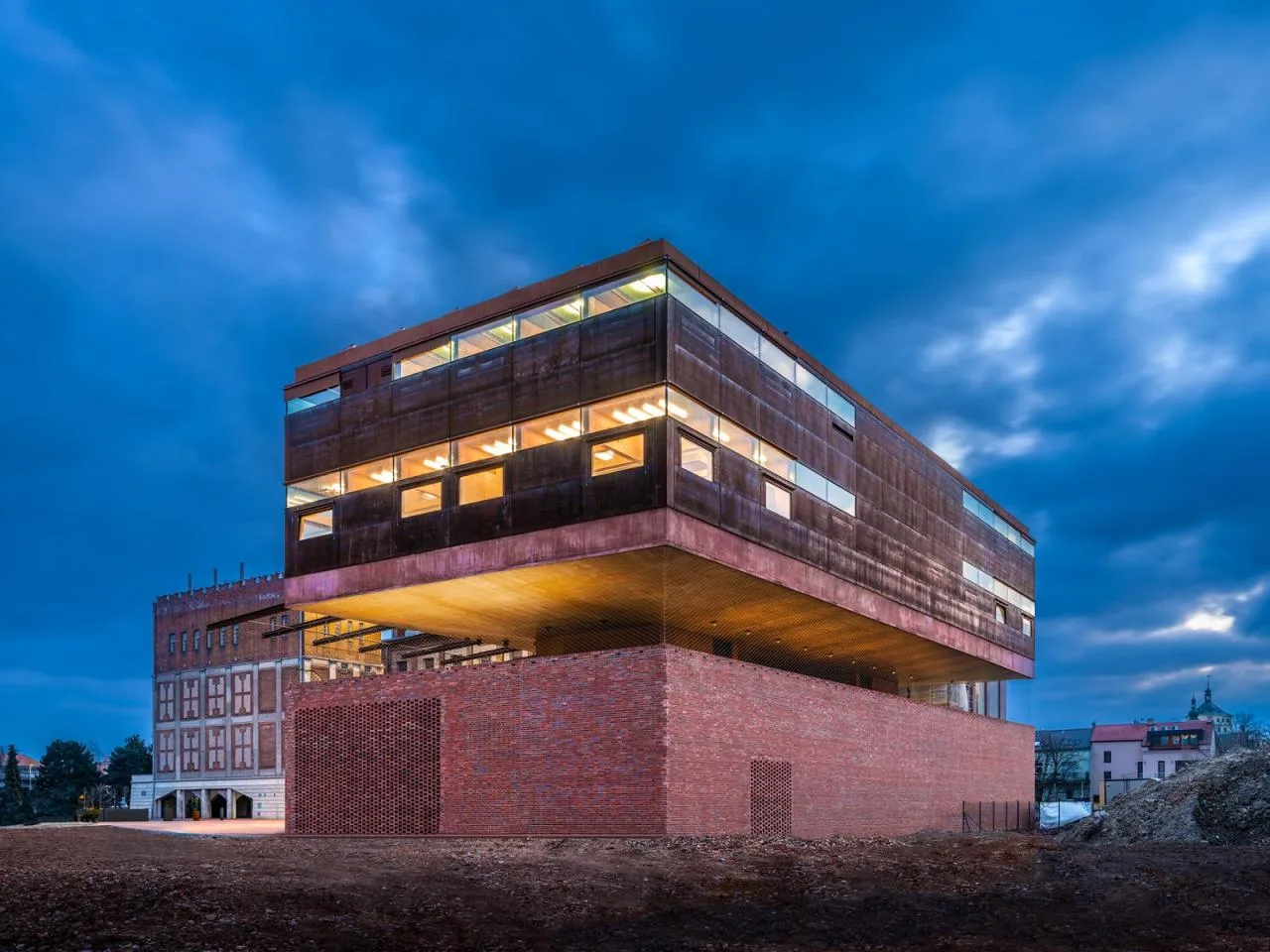
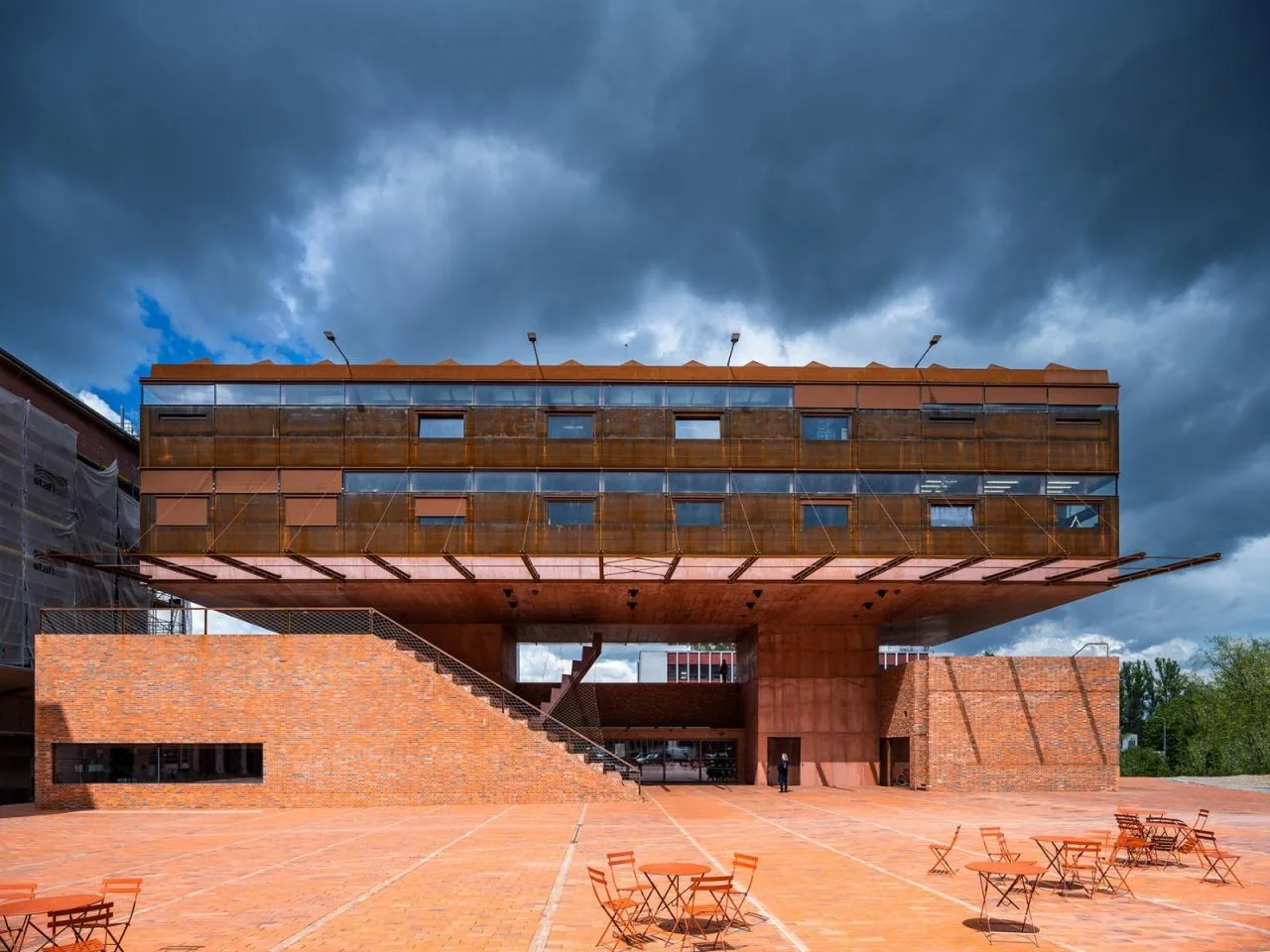
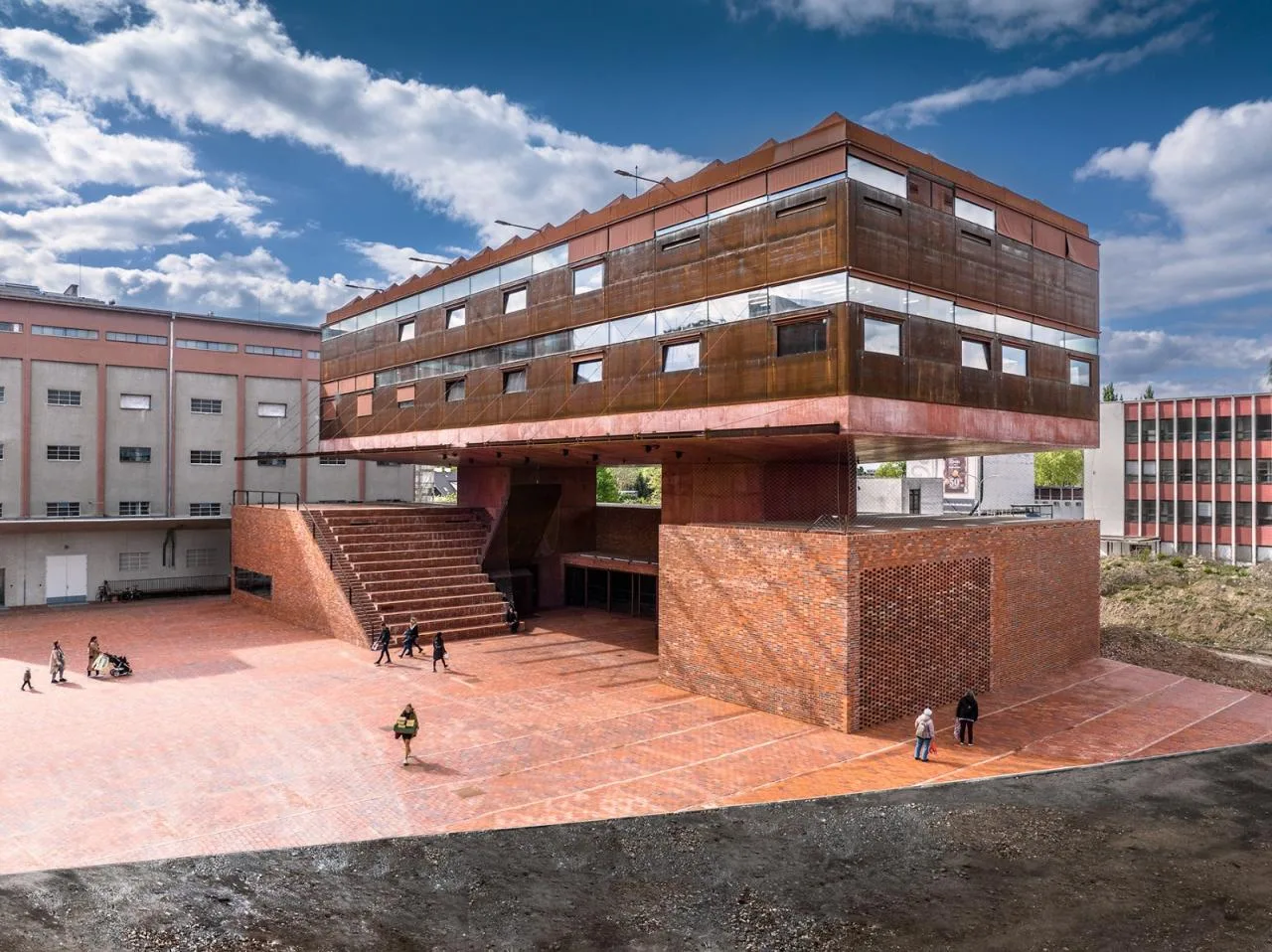
Our architectural design emphasizes authenticity in expression, reflected through clear structural and material choices.
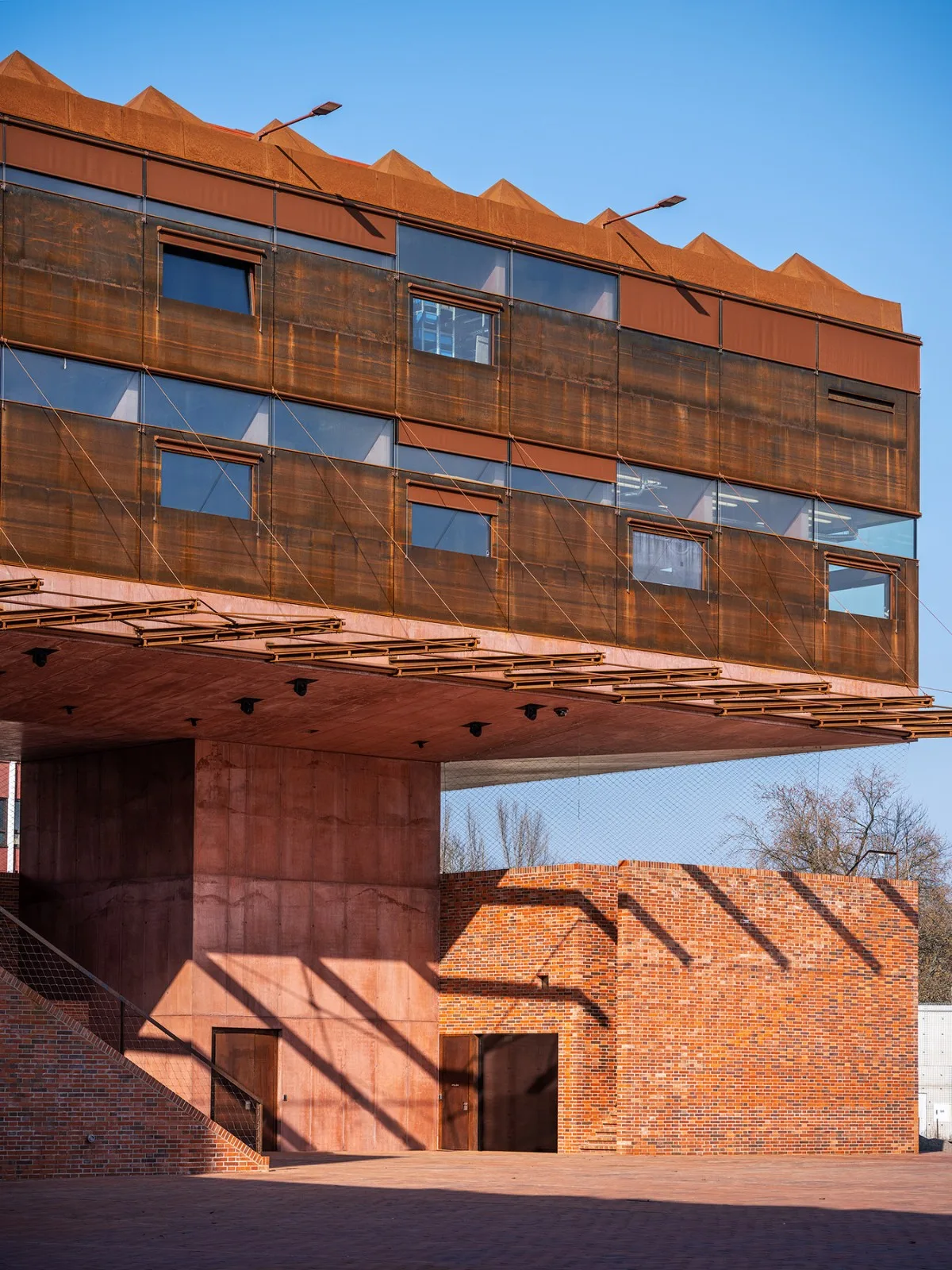
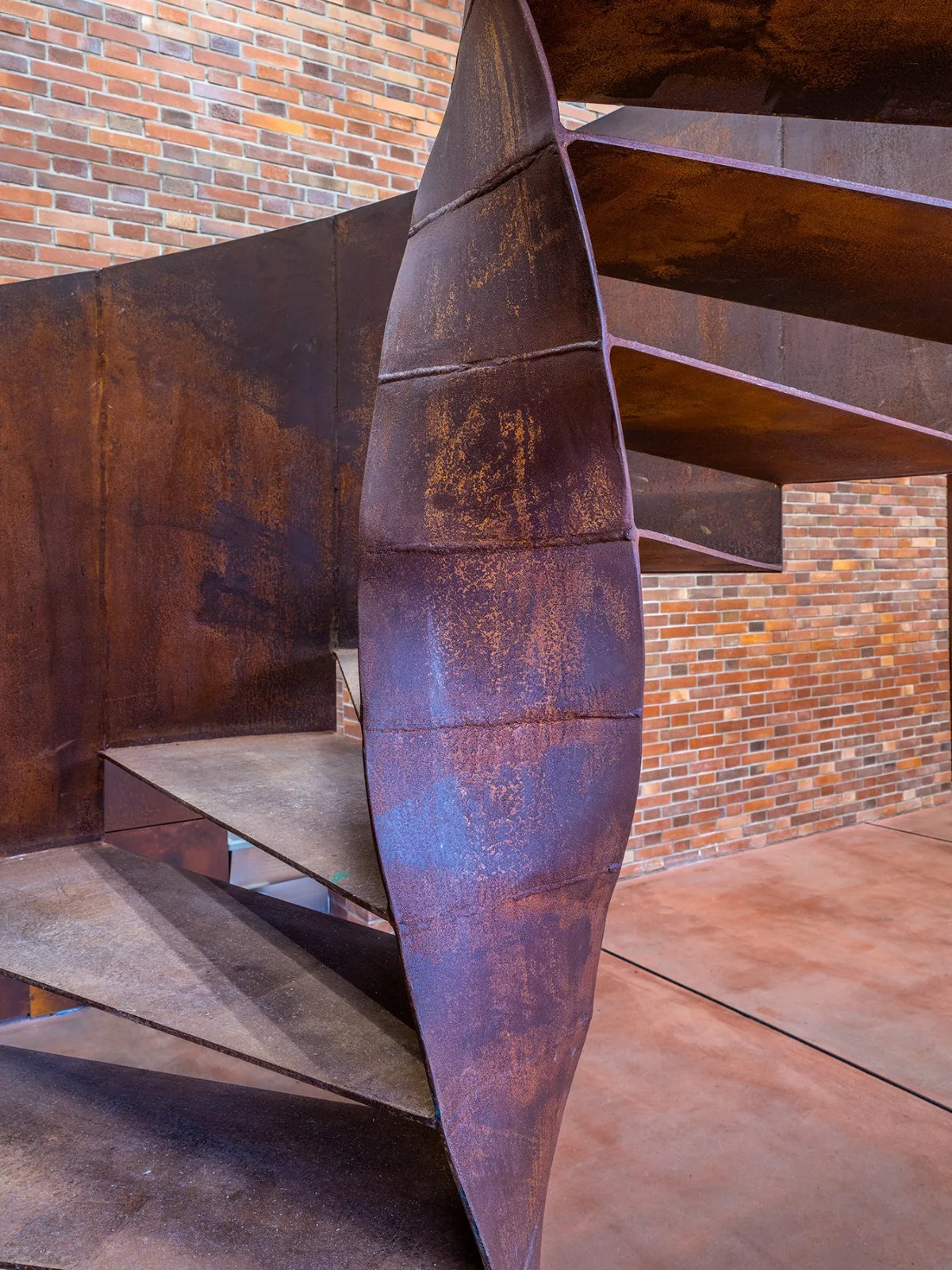
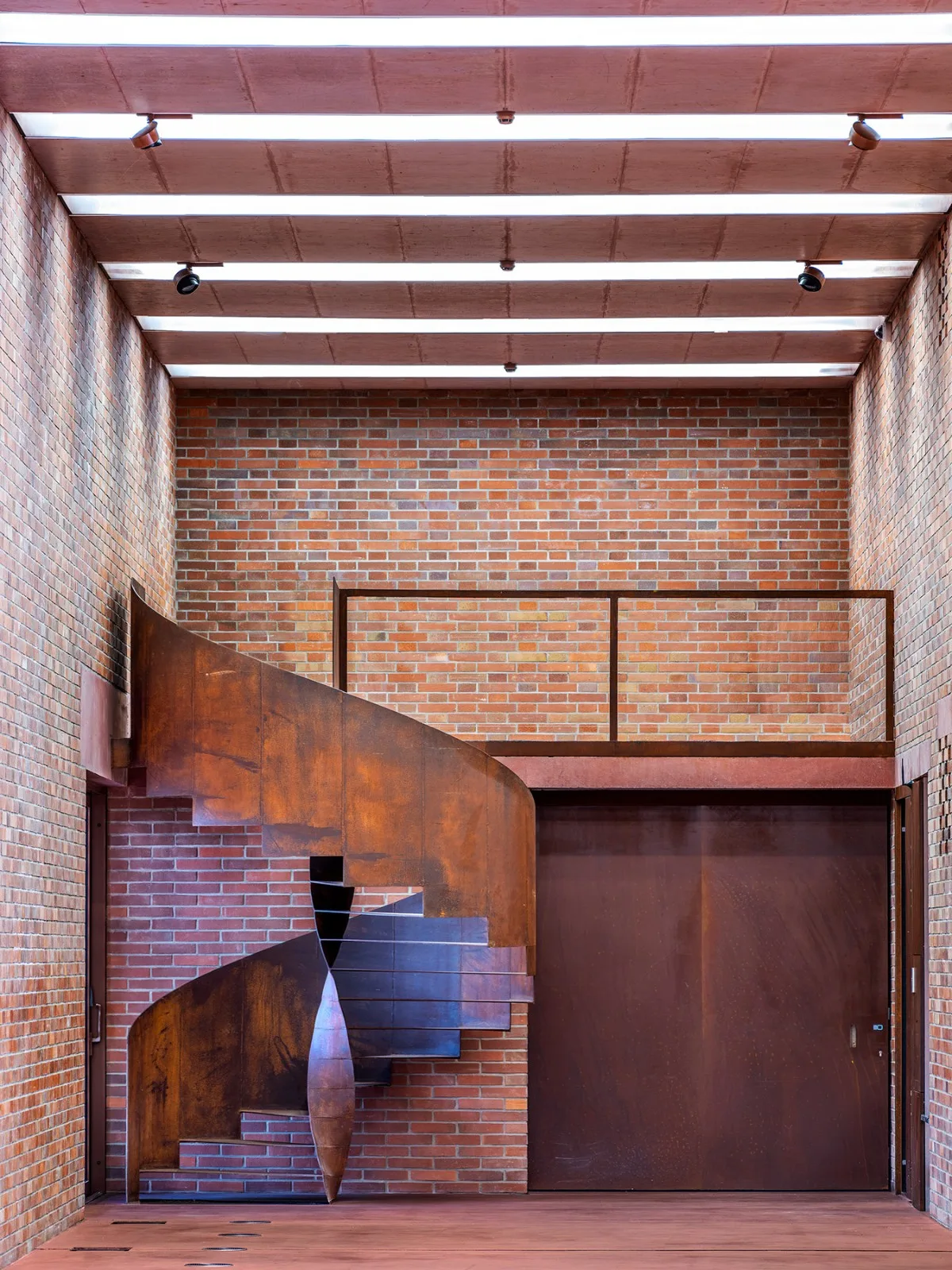
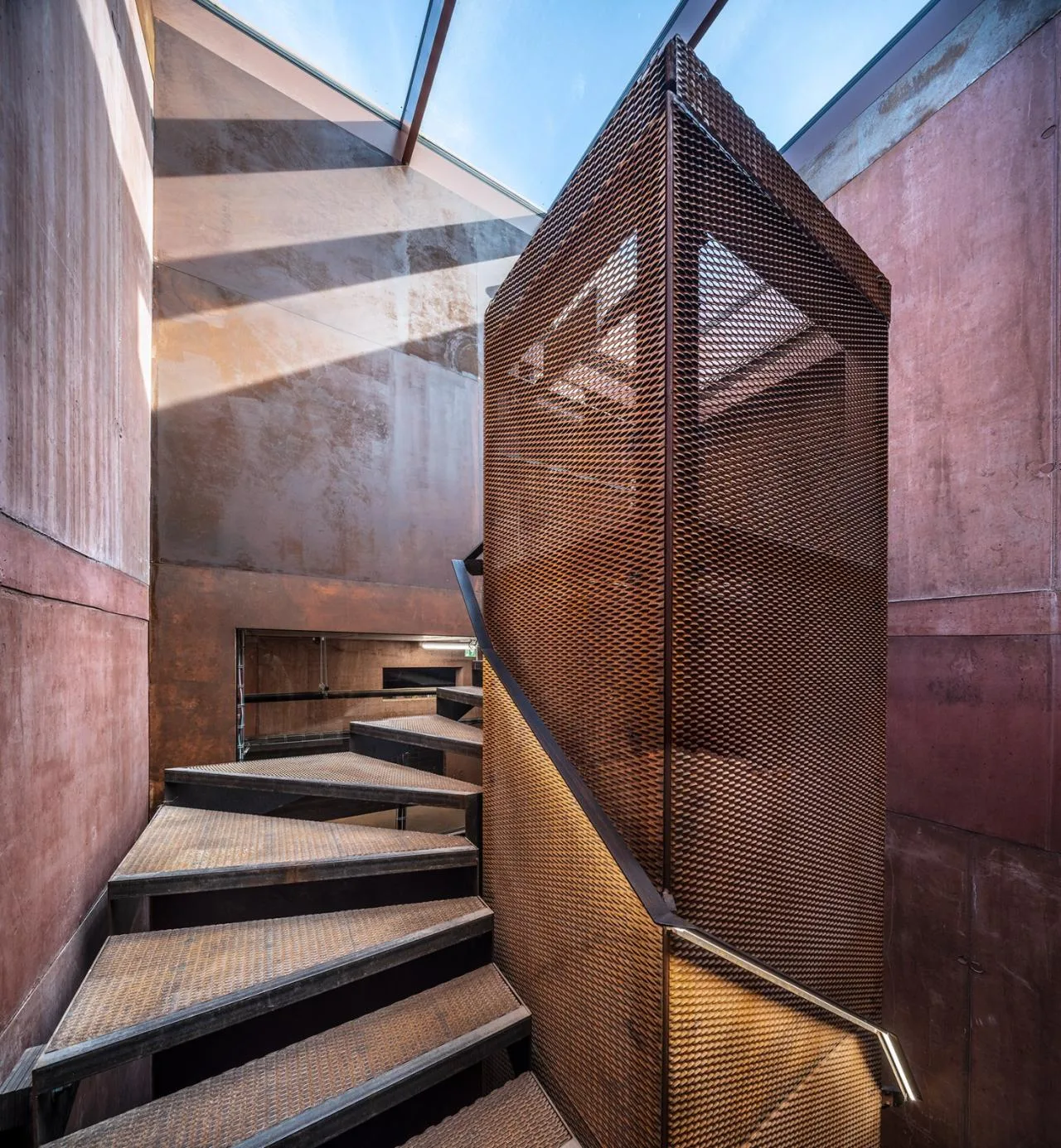
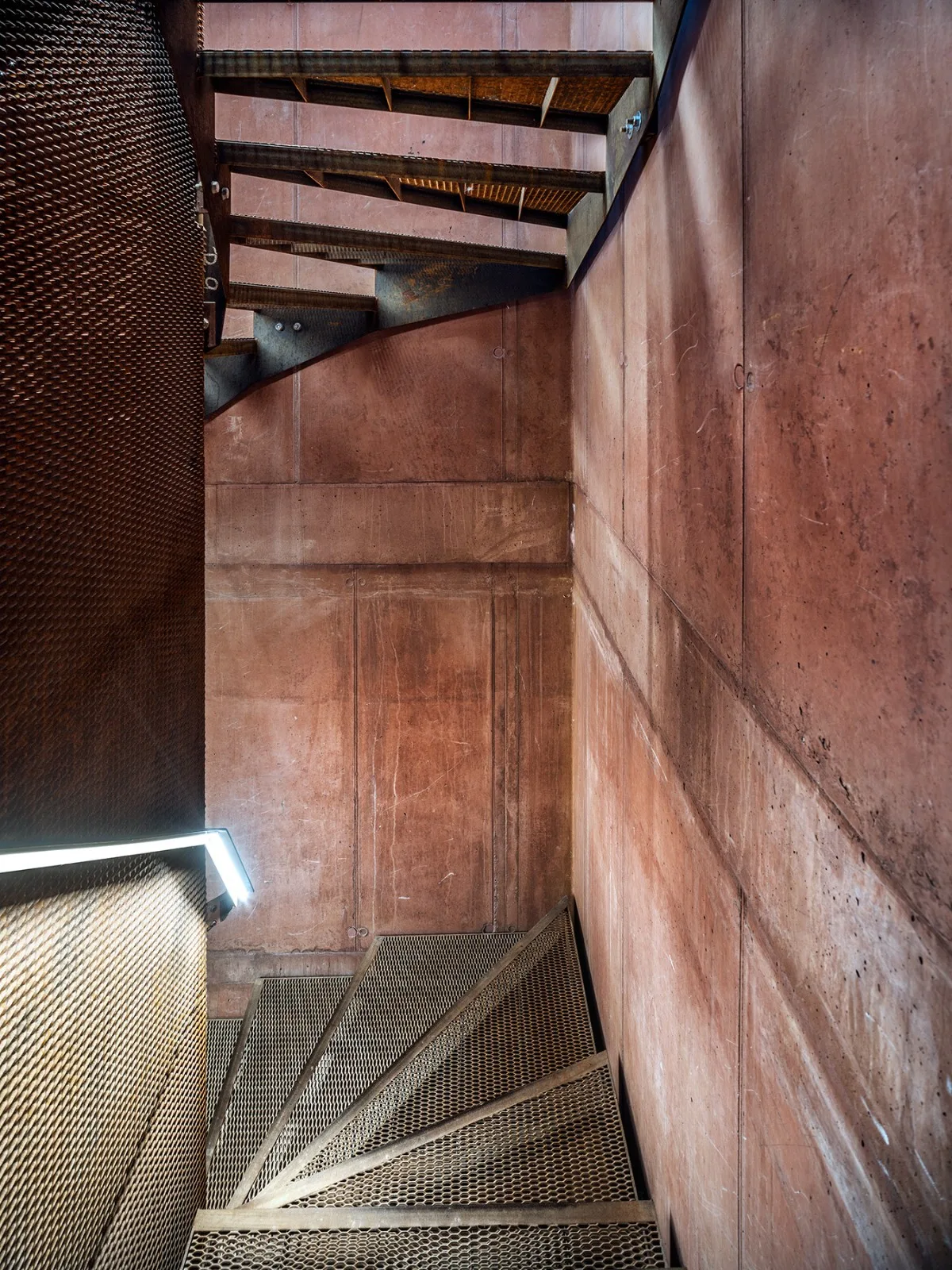
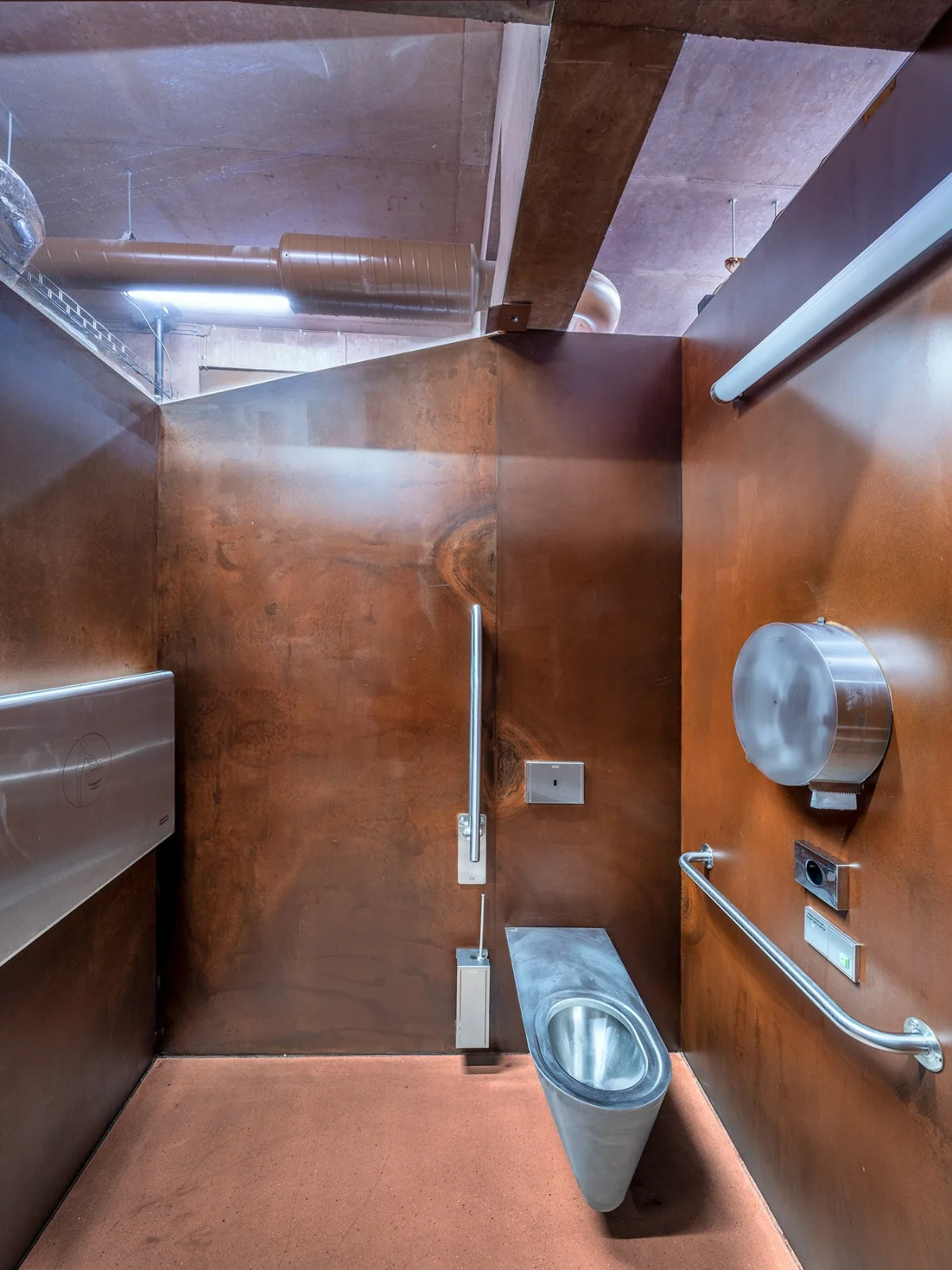
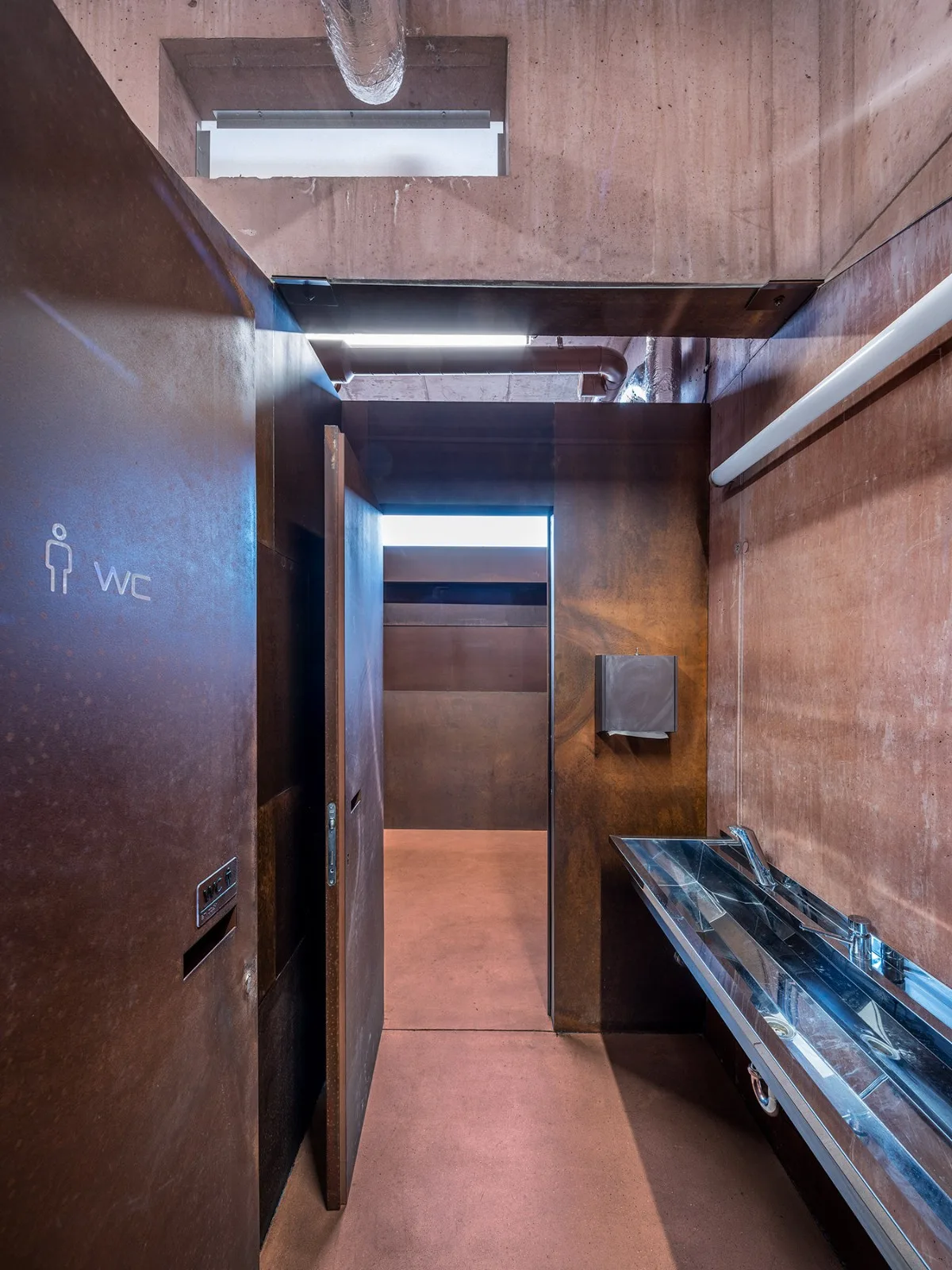
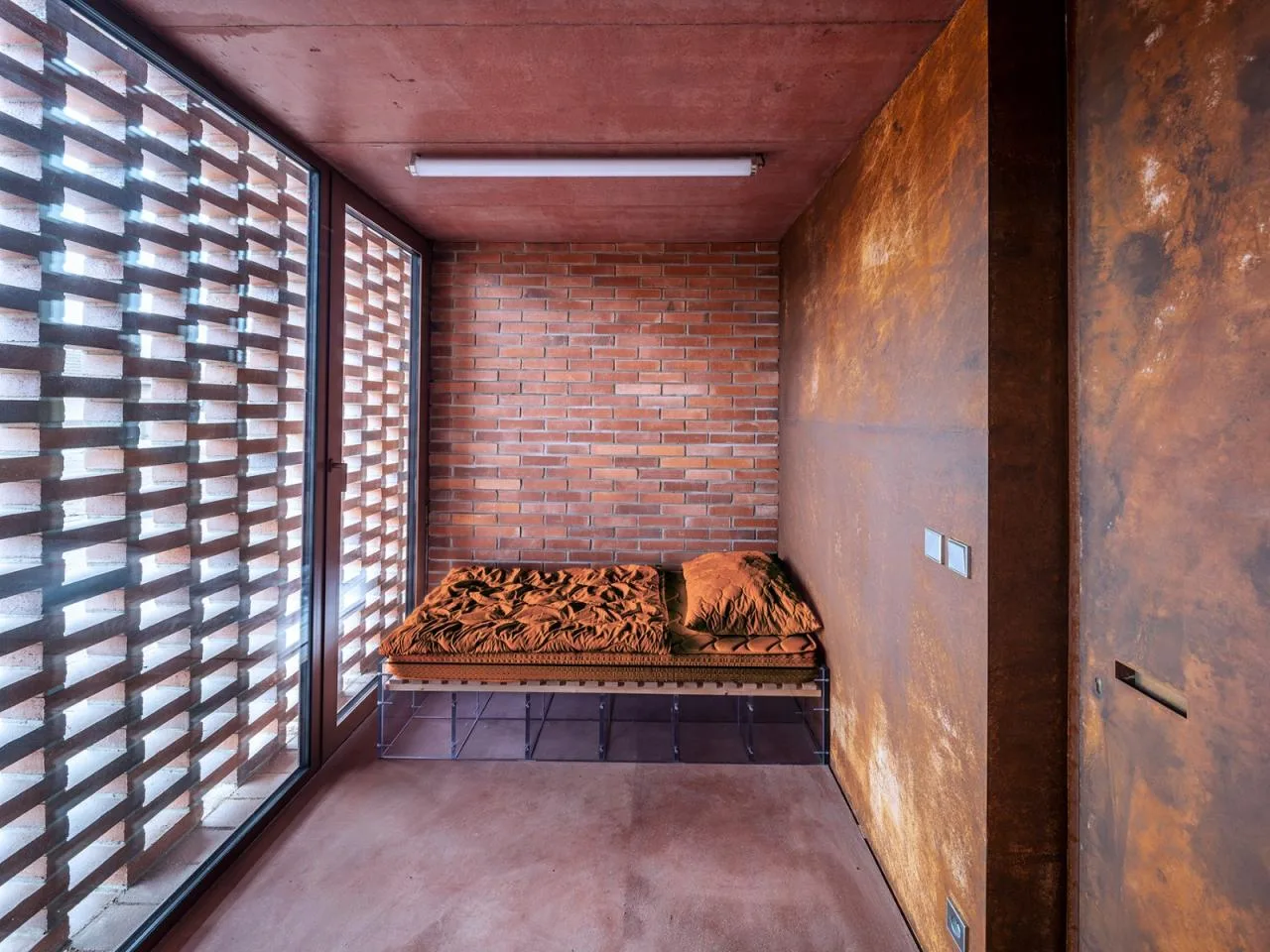
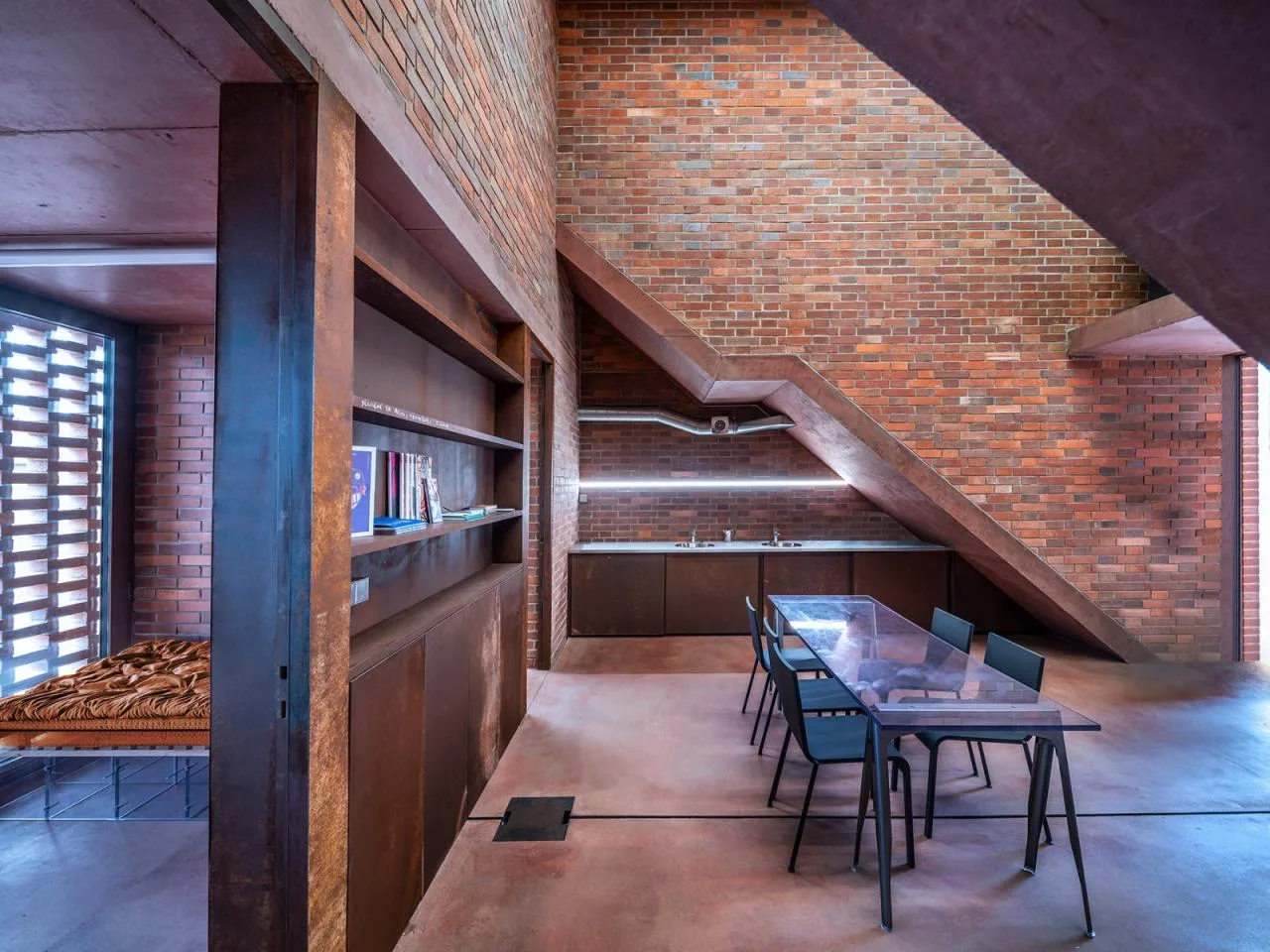
We use brick walls as load-bearing elements, exposed concrete for the structural frame, and weather-resistant steel plates for the non-load-bearing exterior facade. This material unity extends both inside and outside the building.
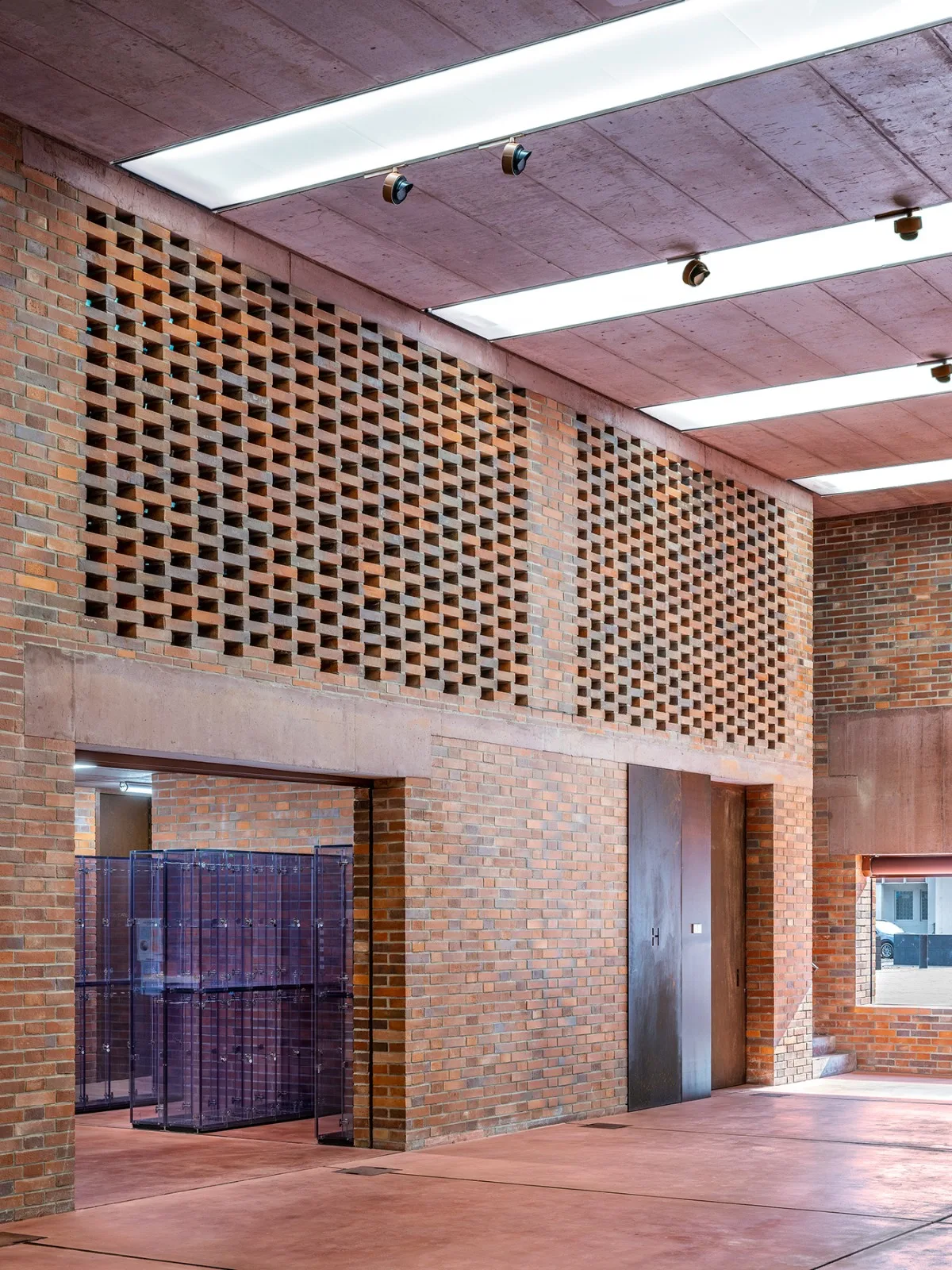
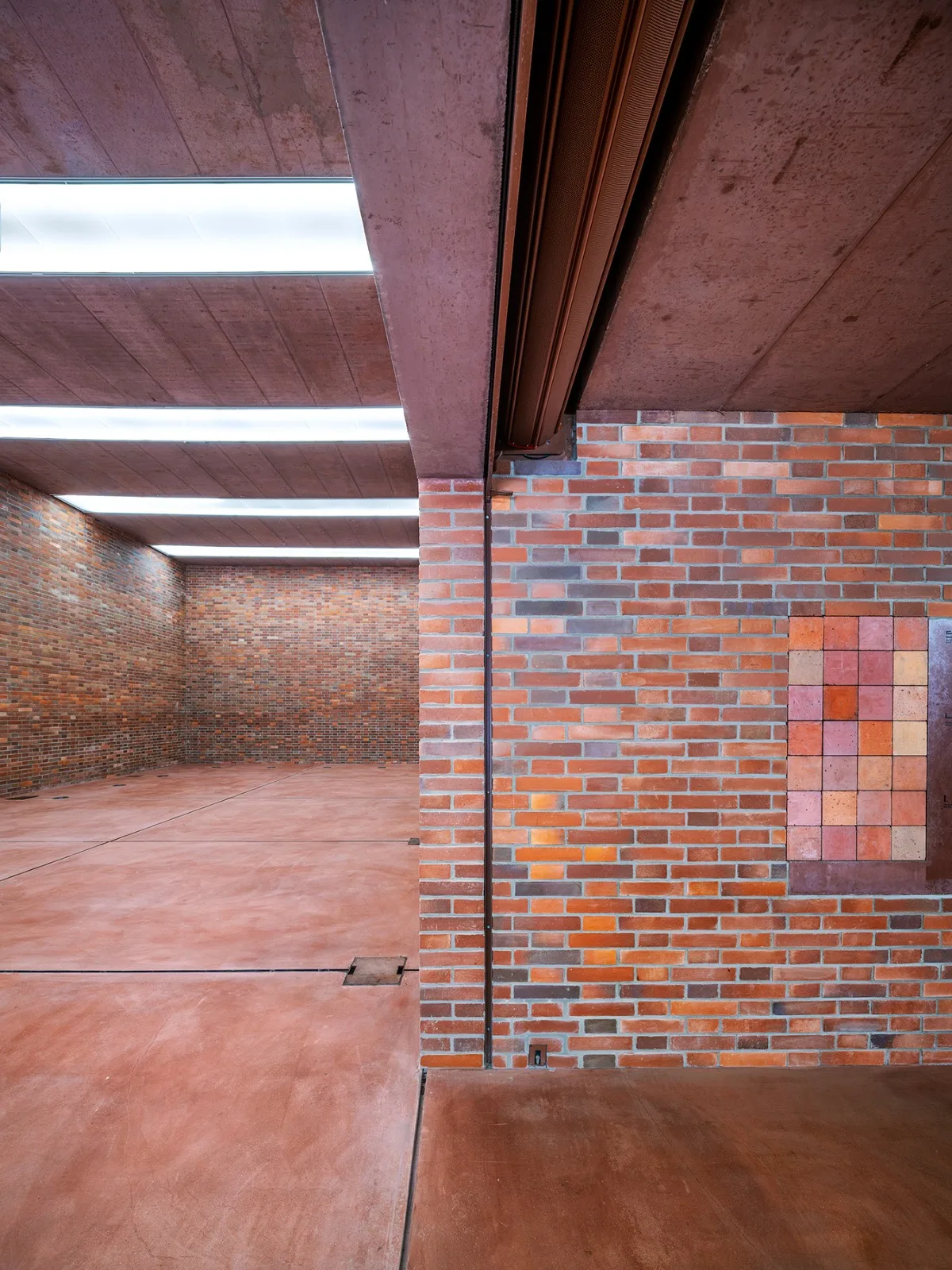
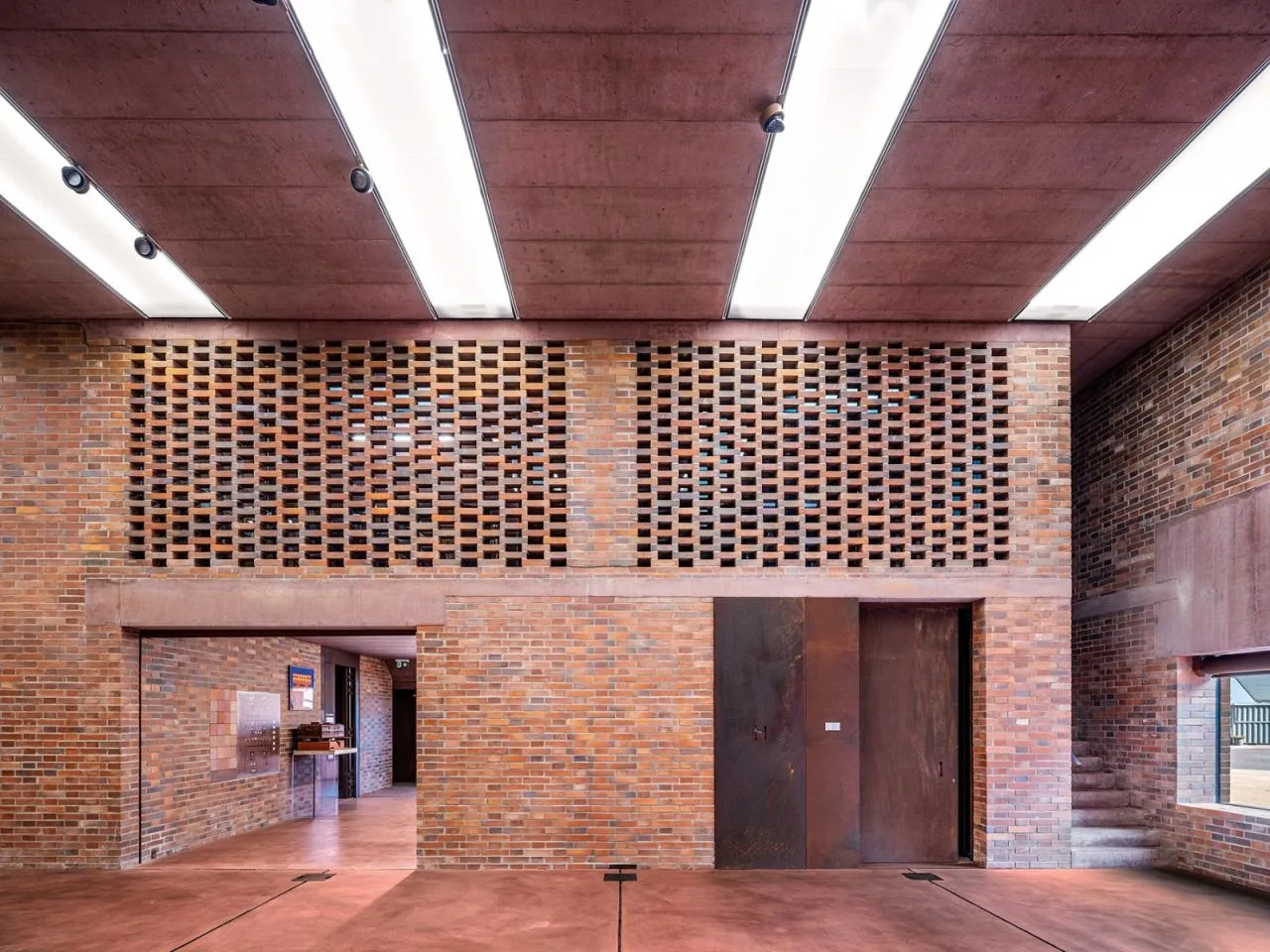
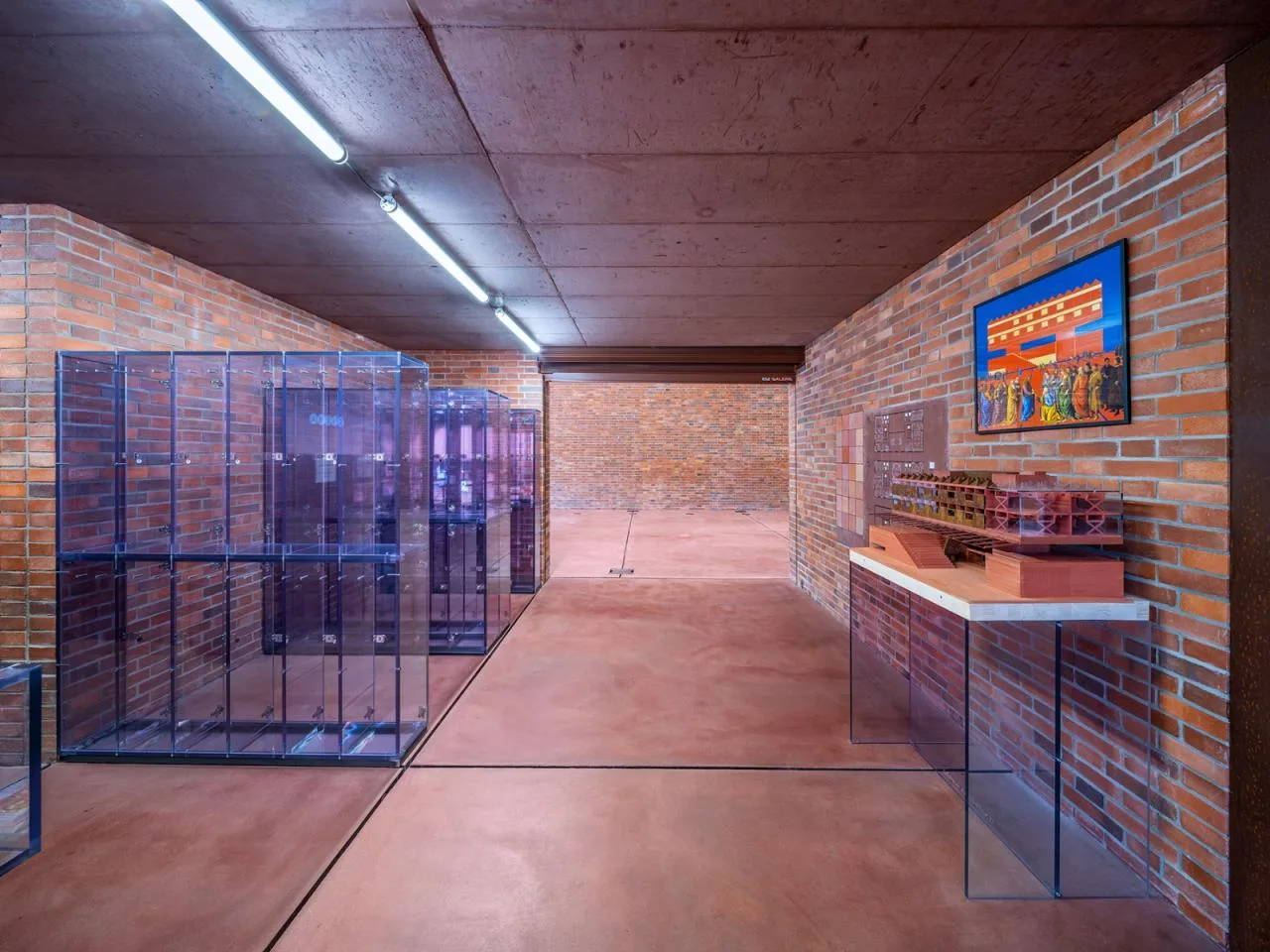
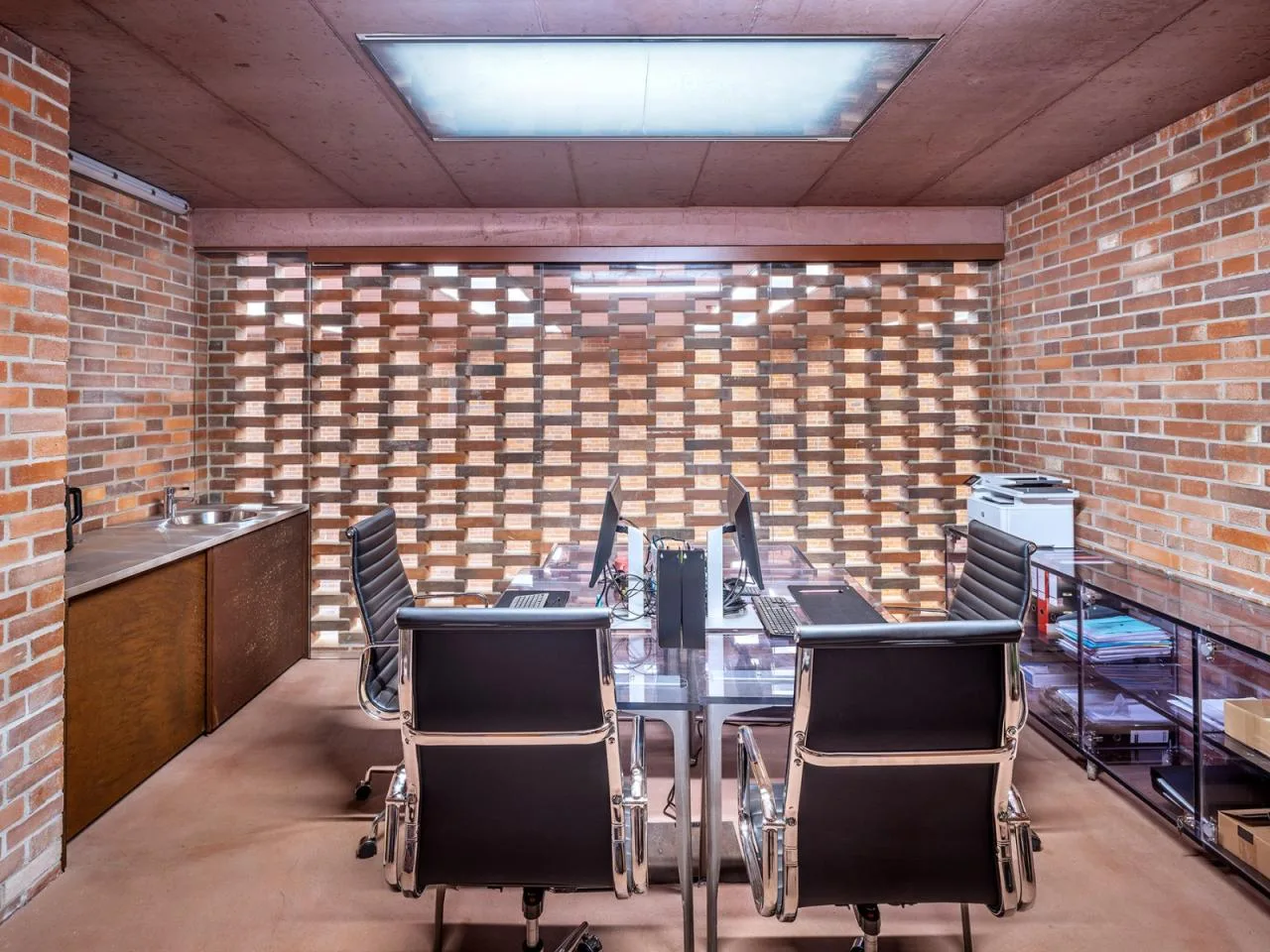
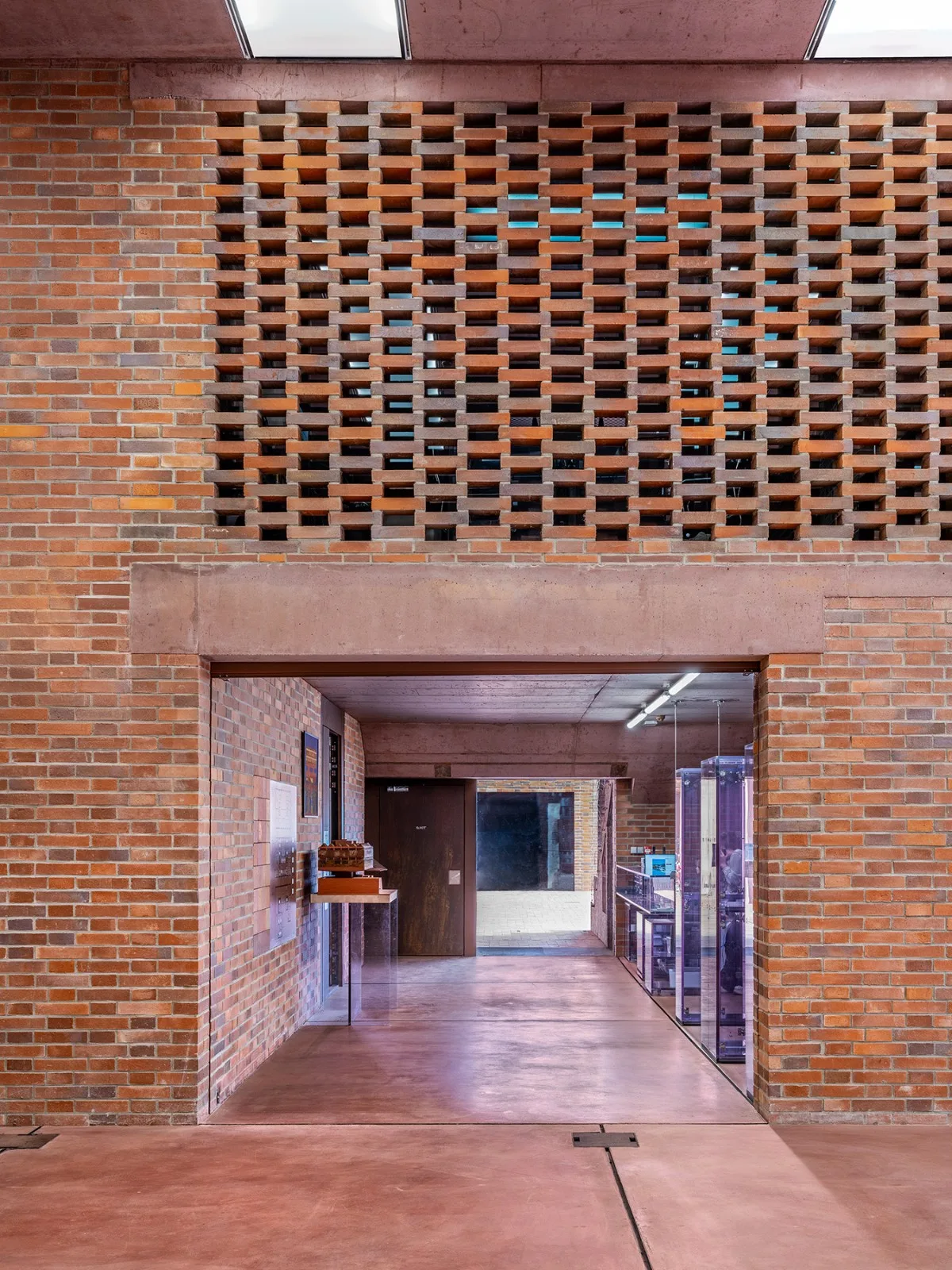
The art museum’s ground floor continues the industrial heritage with a brick structure. The exposed, unpainted brick walls resonate with the heritage building and highlight the natural texture of the materials, playing a central role in spatial definition. This “honest” wall treatment demands high craftsmanship and eliminates the need for additional decoration. Ceilings, walls, and floors follow this principle, revealing the building’s true construction.
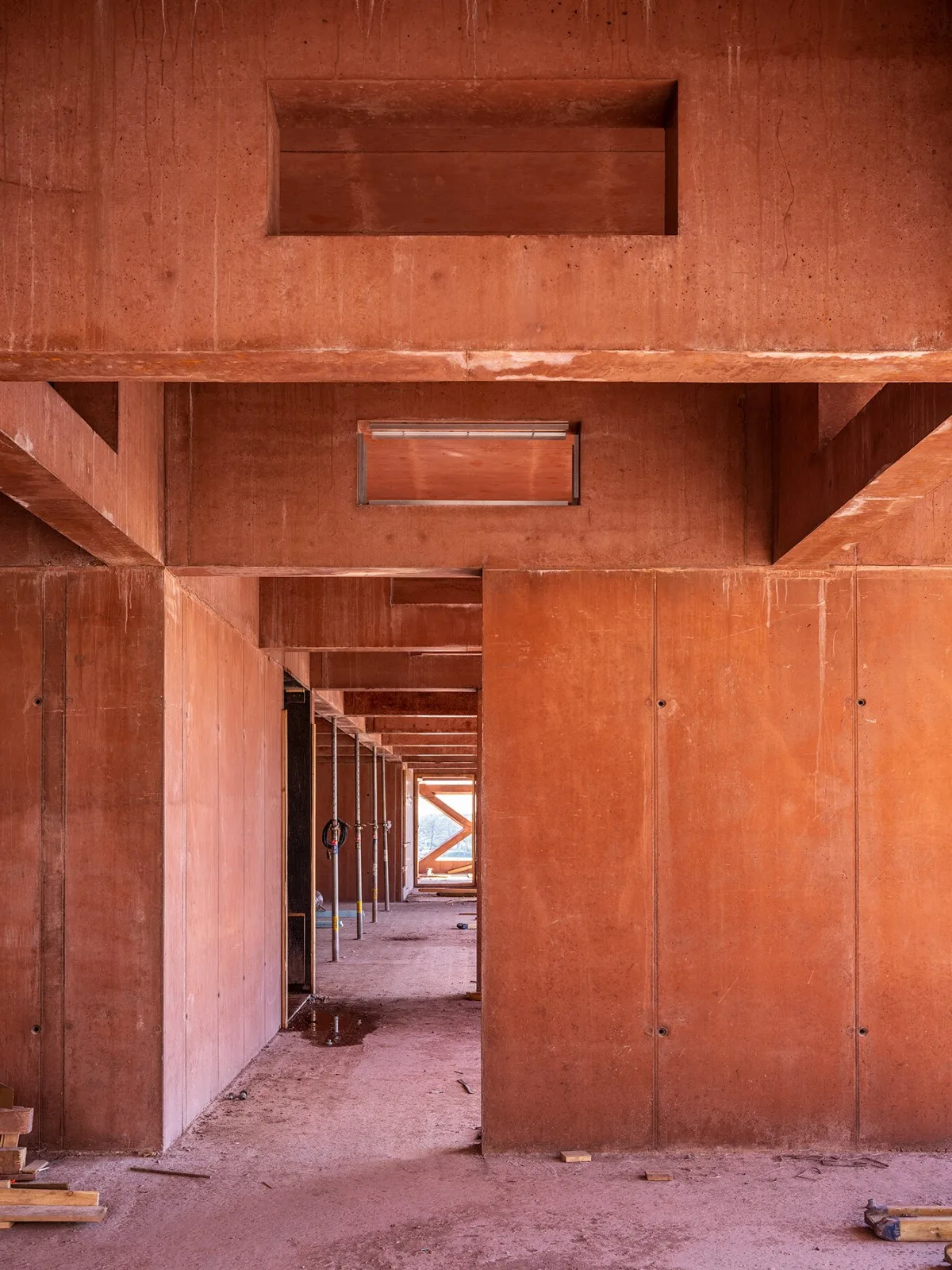
We carefully matched the color tones of all materials, especially concrete, testing nearly 30 samples before selecting the ideal hues. To commemorate this process, the chosen color palette samples are embedded into the brick walls of the entrance hall.
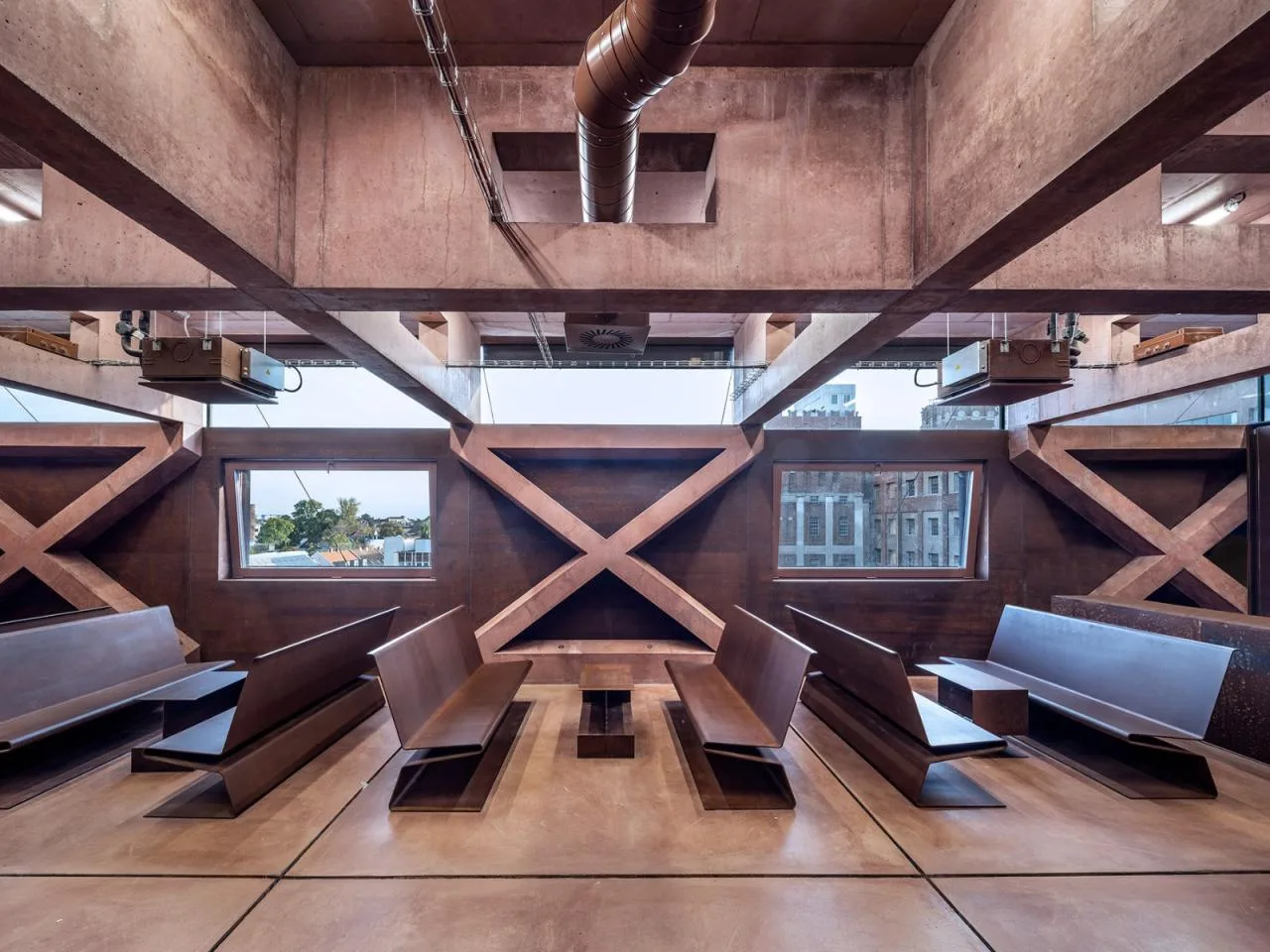
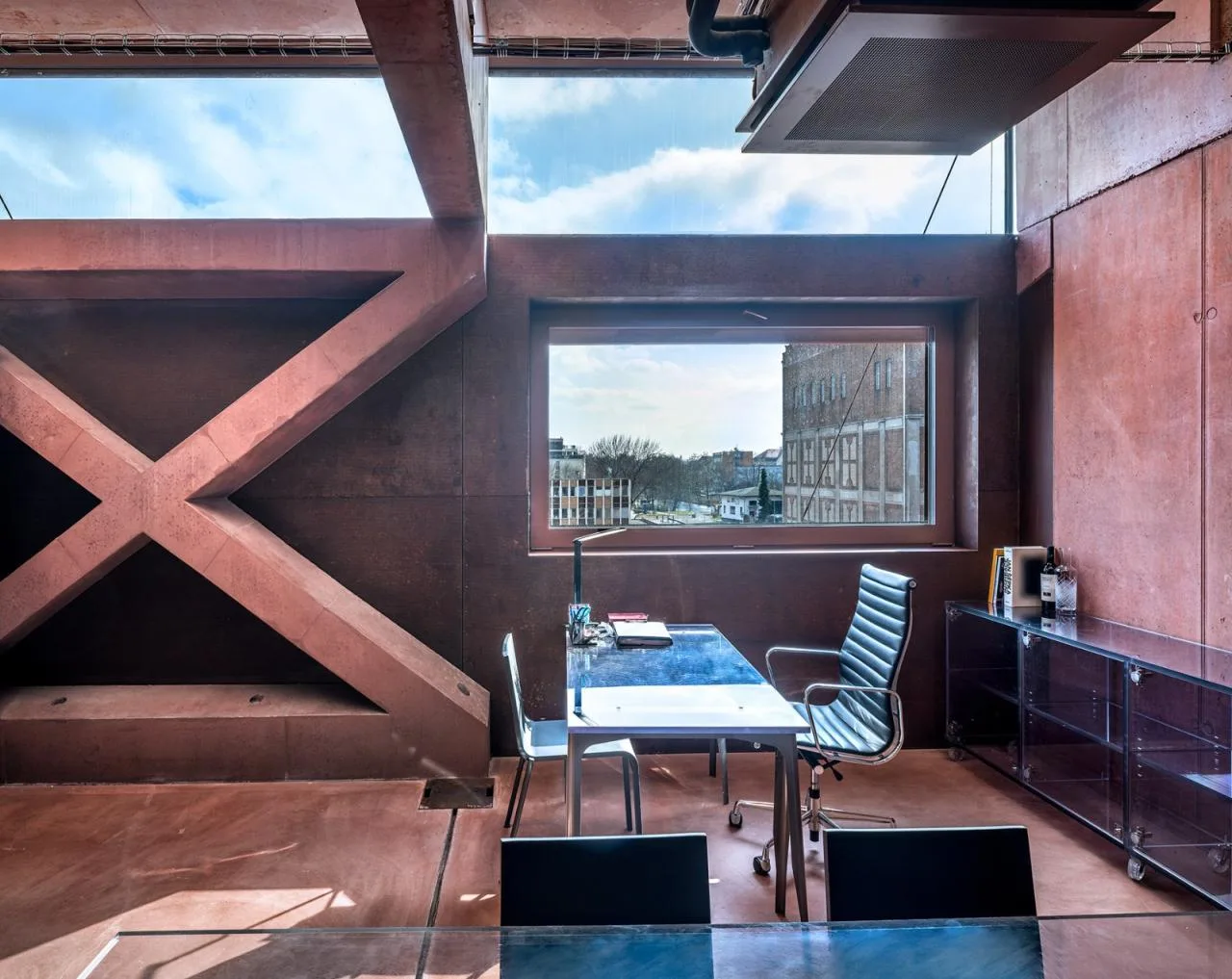
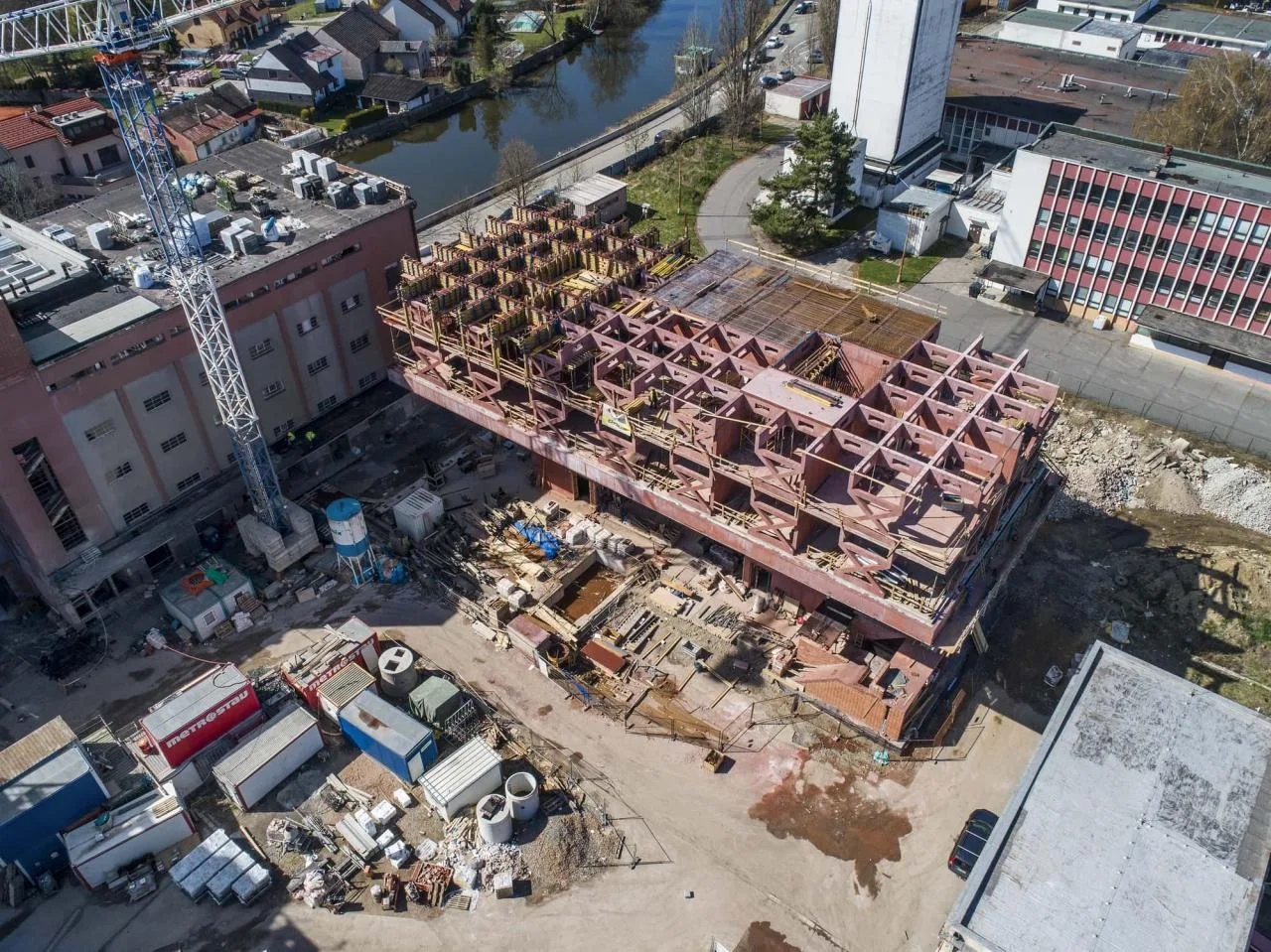
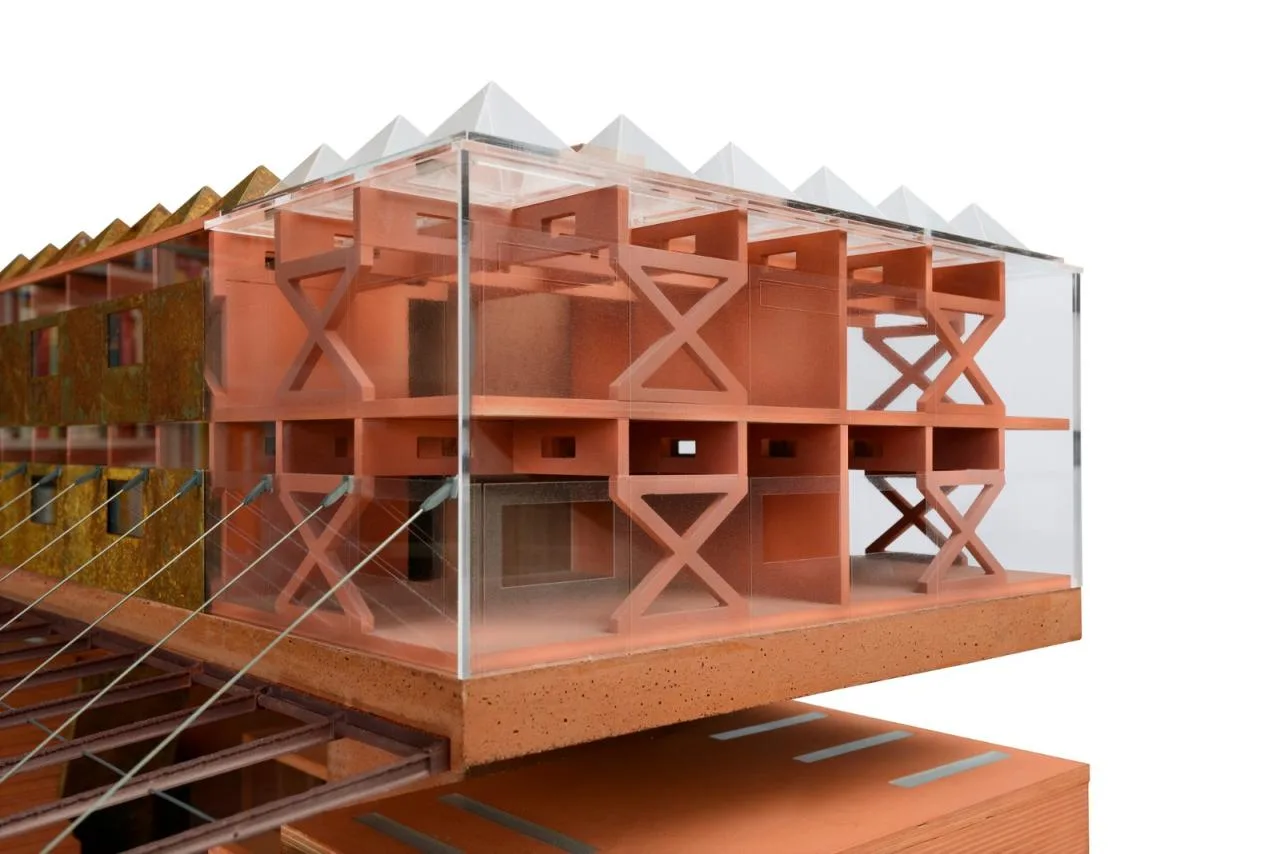
The workshop area features colored concrete for structure and flooring. Its framework consists of 3 × 3-meter load-bearing concrete rib beams supporting X-shaped beams along the facade edges. This design spans 9 meters without internal supports, allowing for necessary power distribution installations.
The X-beams serve as a hybrid perforated wall that facilitates ventilation for the entire building. The facade’s light panels are insulated and clad with weather-resistant steel plates.
Project drawings
△ Diagram
△ Diagram
△ Model diagram
△ Model diagram
△ General layout plan
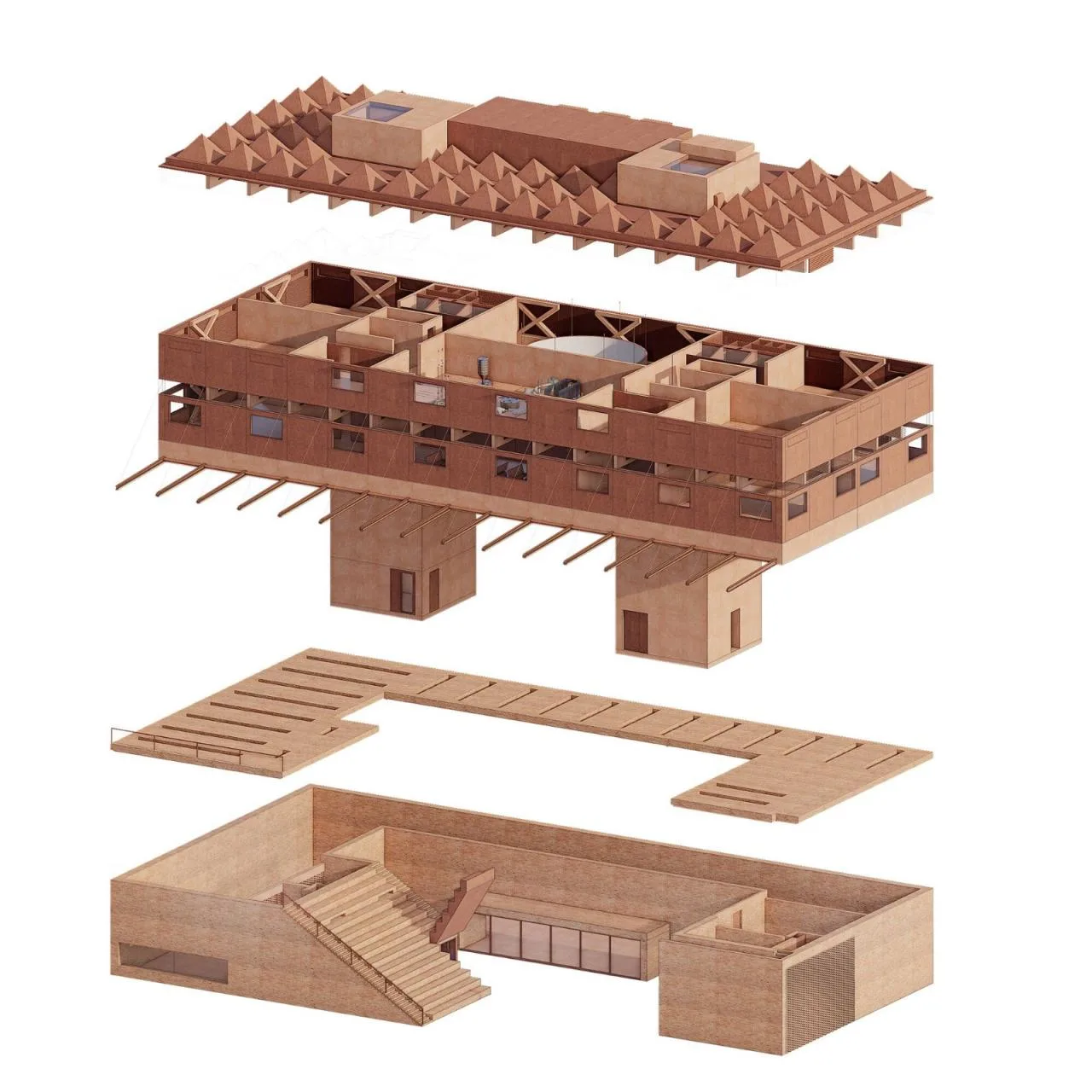
△ Explosion diagram
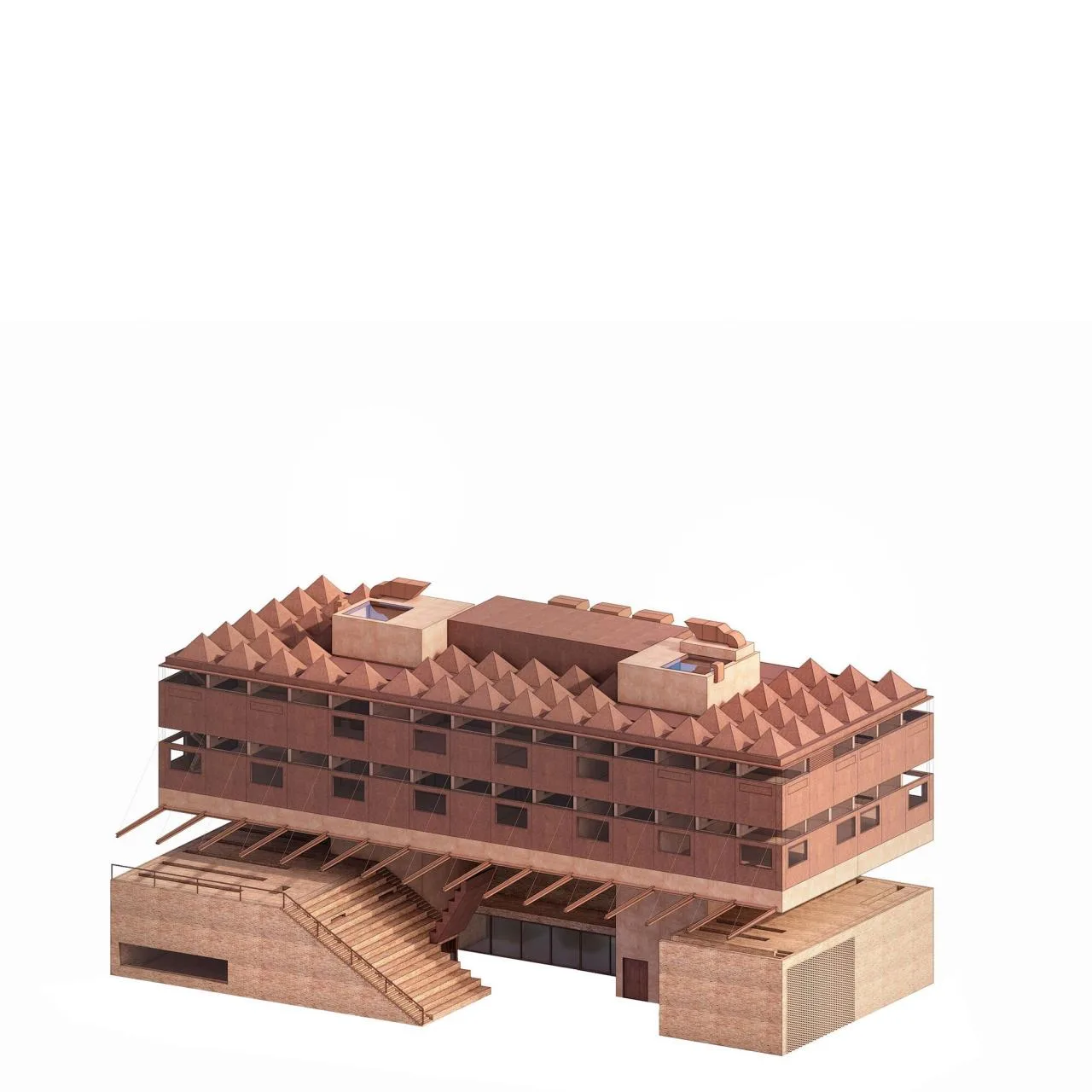
△ Axonometric diagram
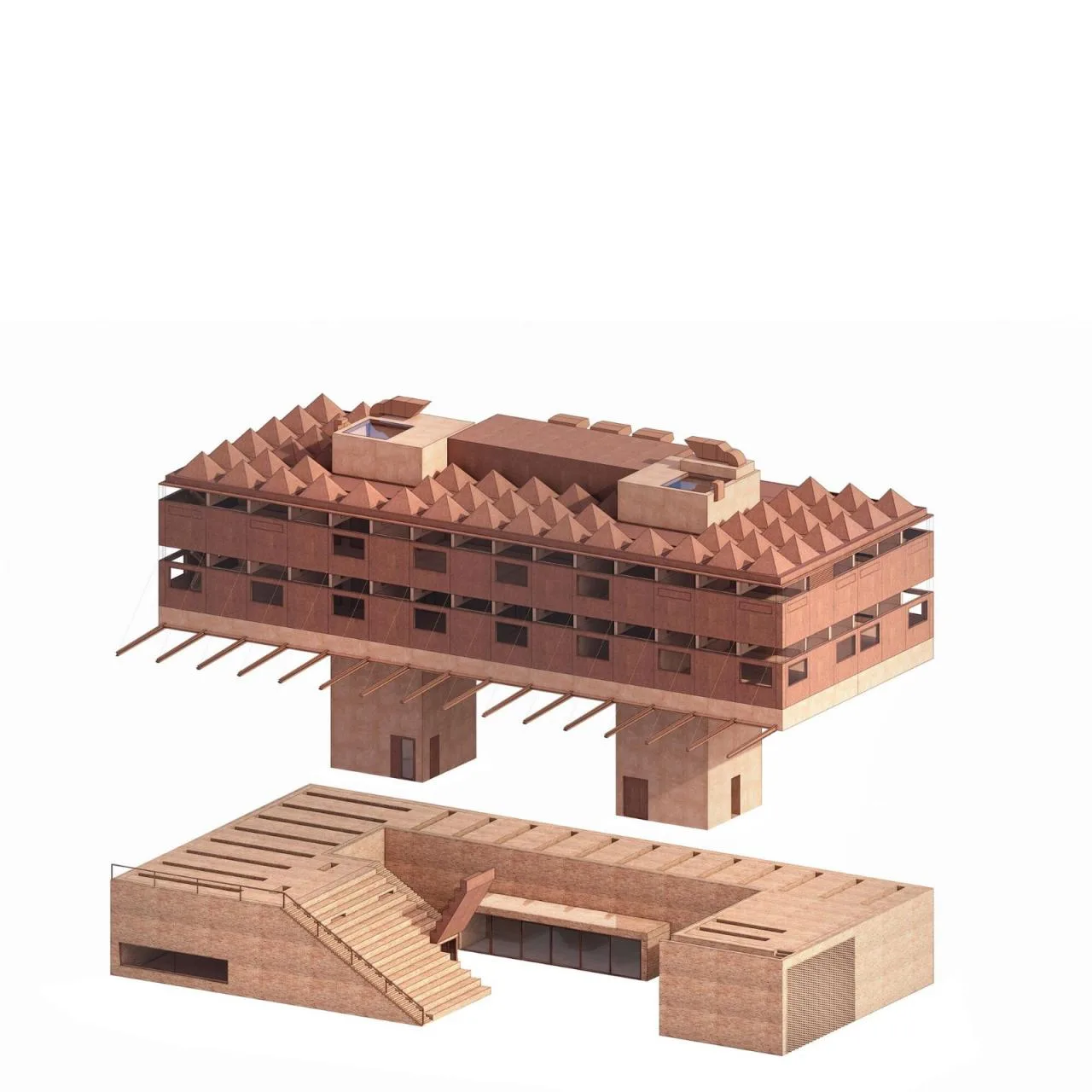
△ Axonometric diagram
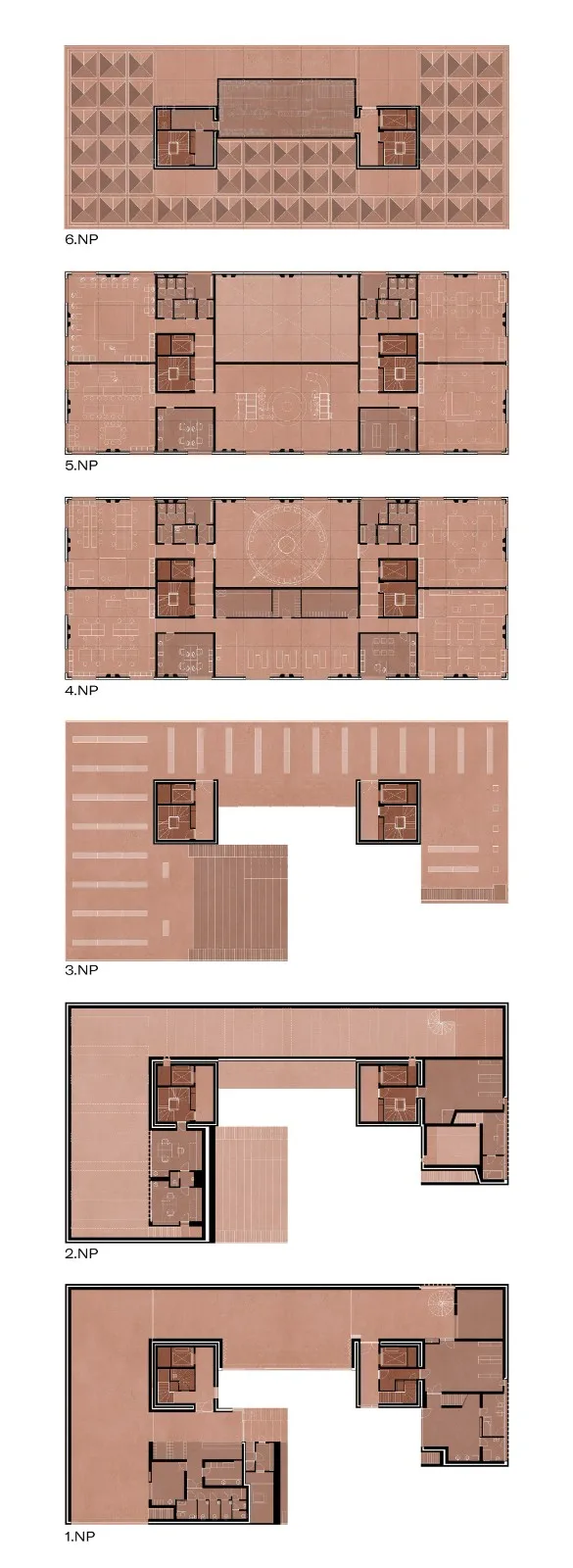
△ Plan view
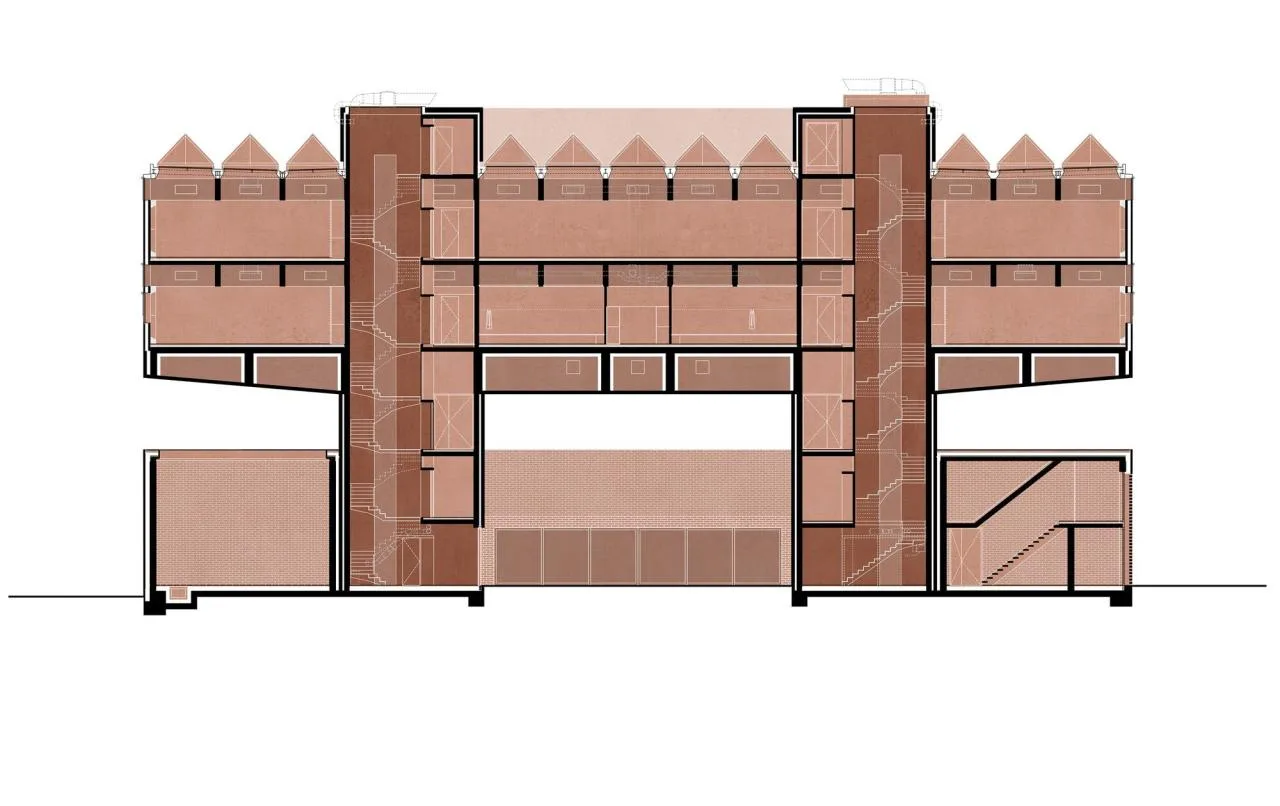
△ Section diagram
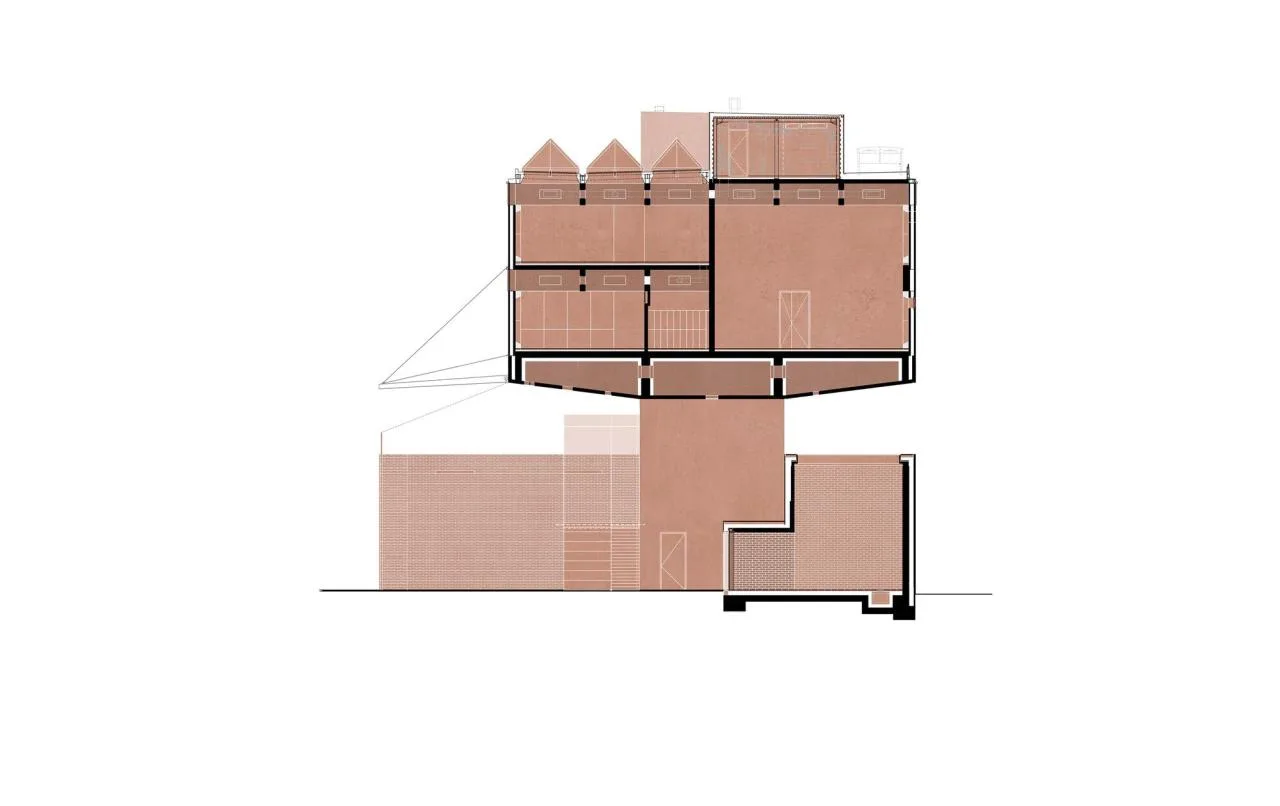
△ Section diagram
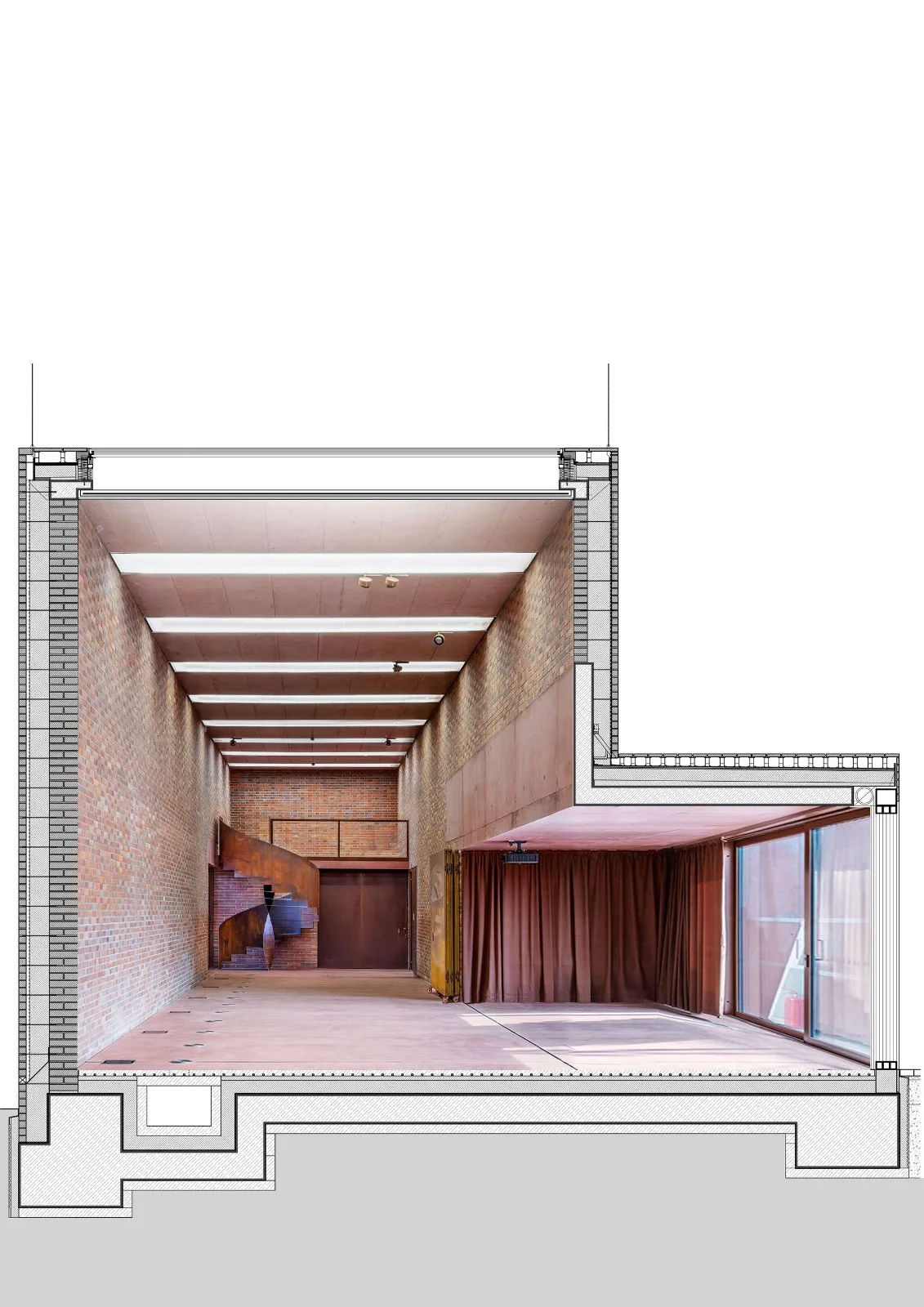
△ Sectional perspective
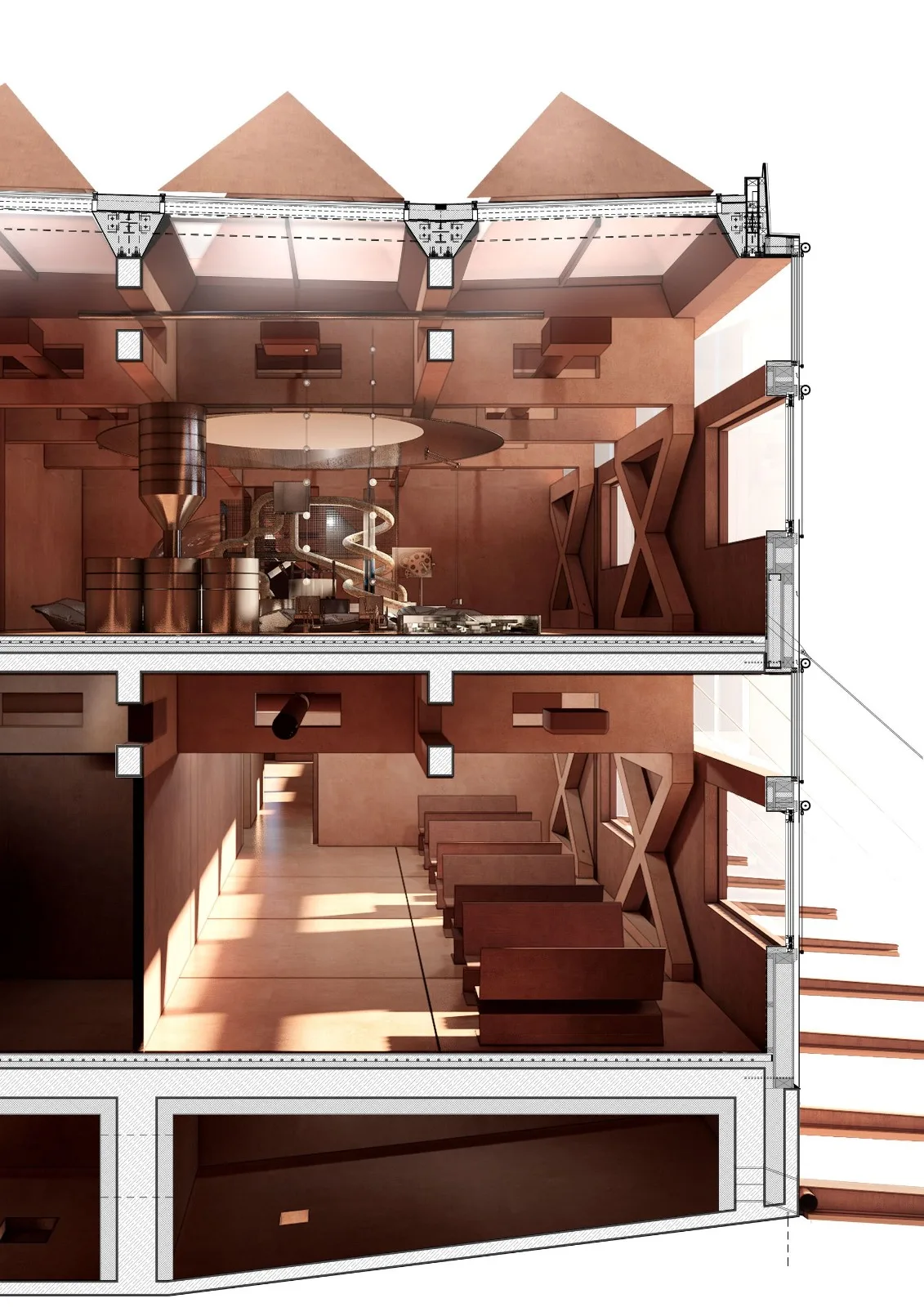
△ Sectional perspective
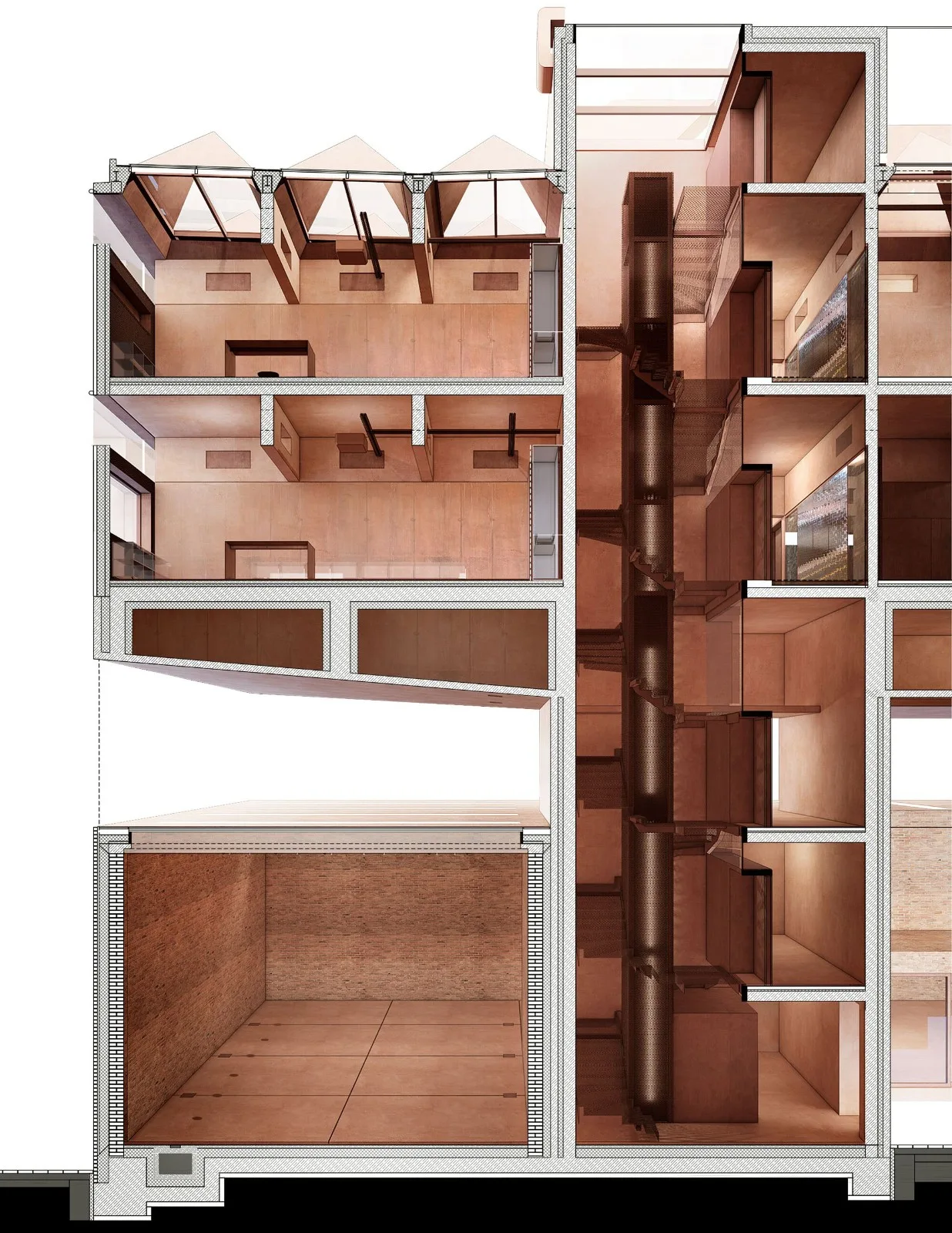
△ Sectional perspective
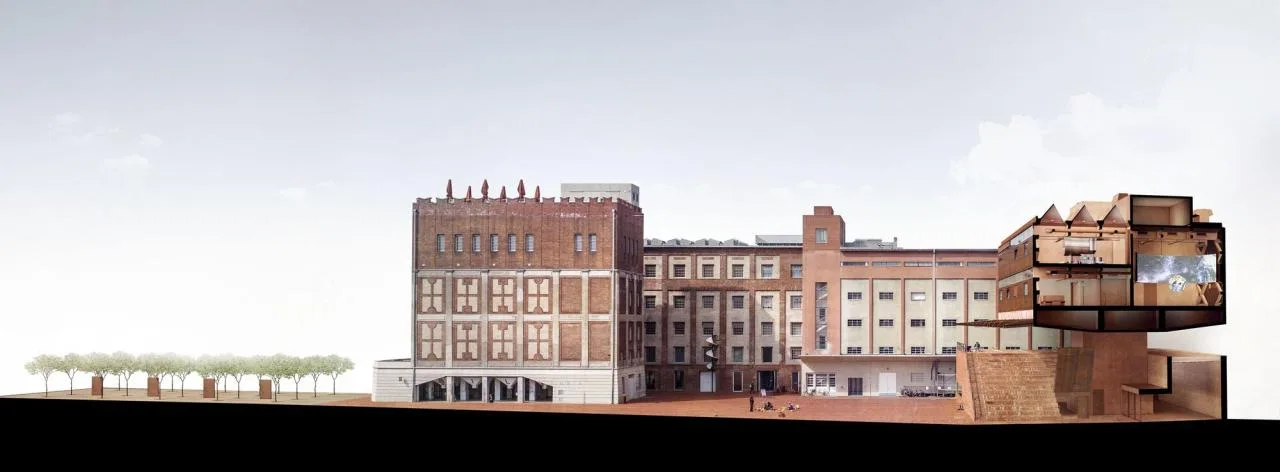
△ Sectional perspective
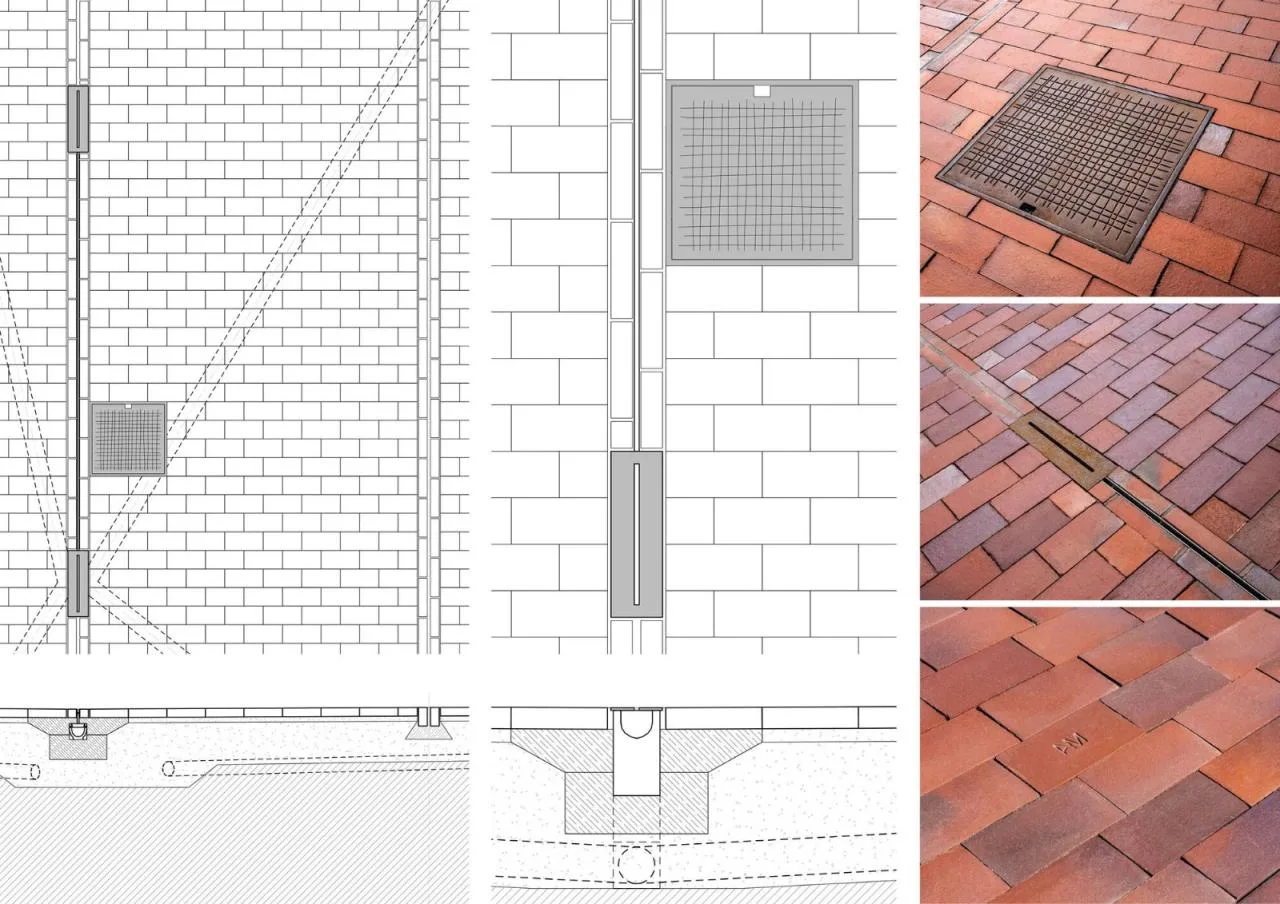
△ Detailed drawing
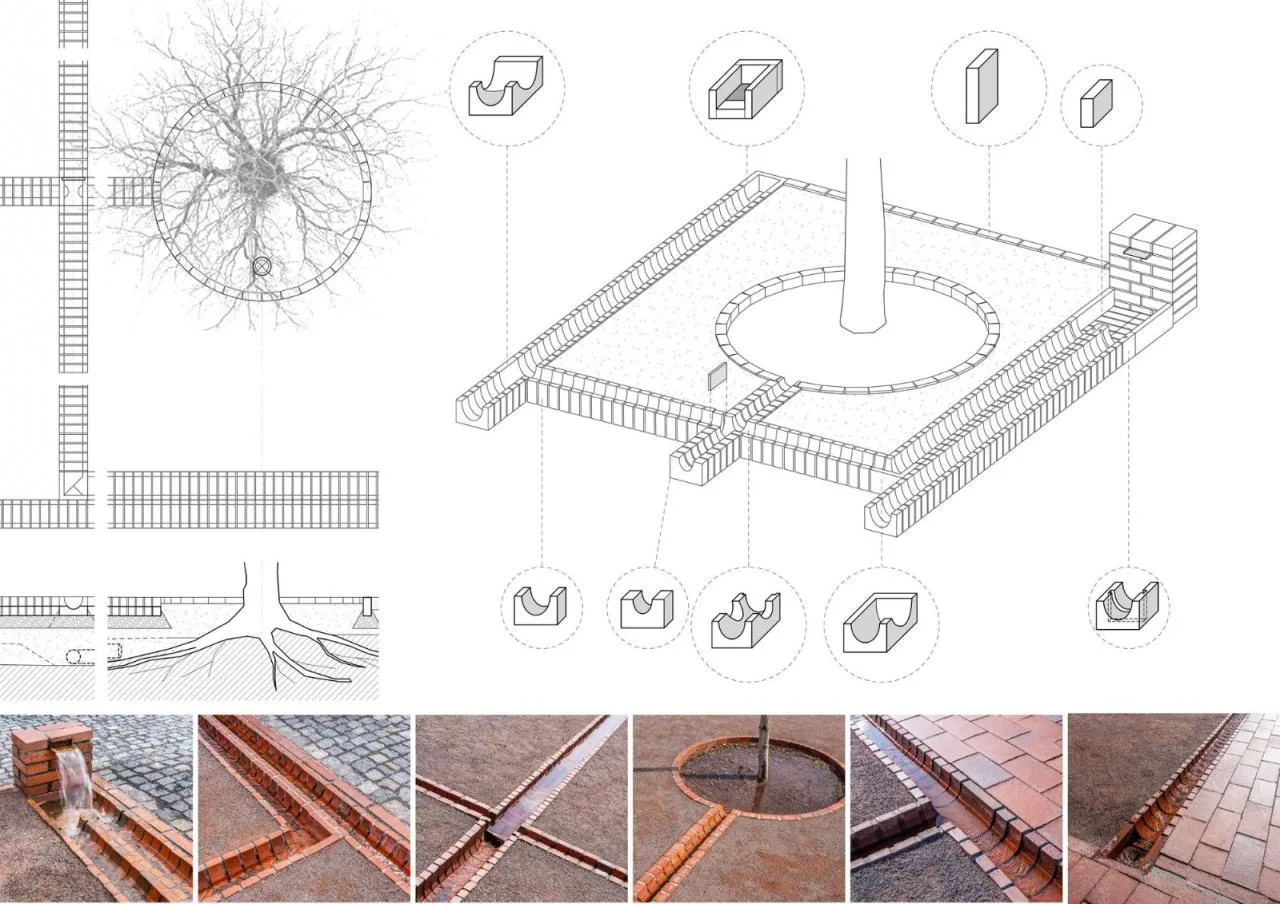
△ Detailed drawing
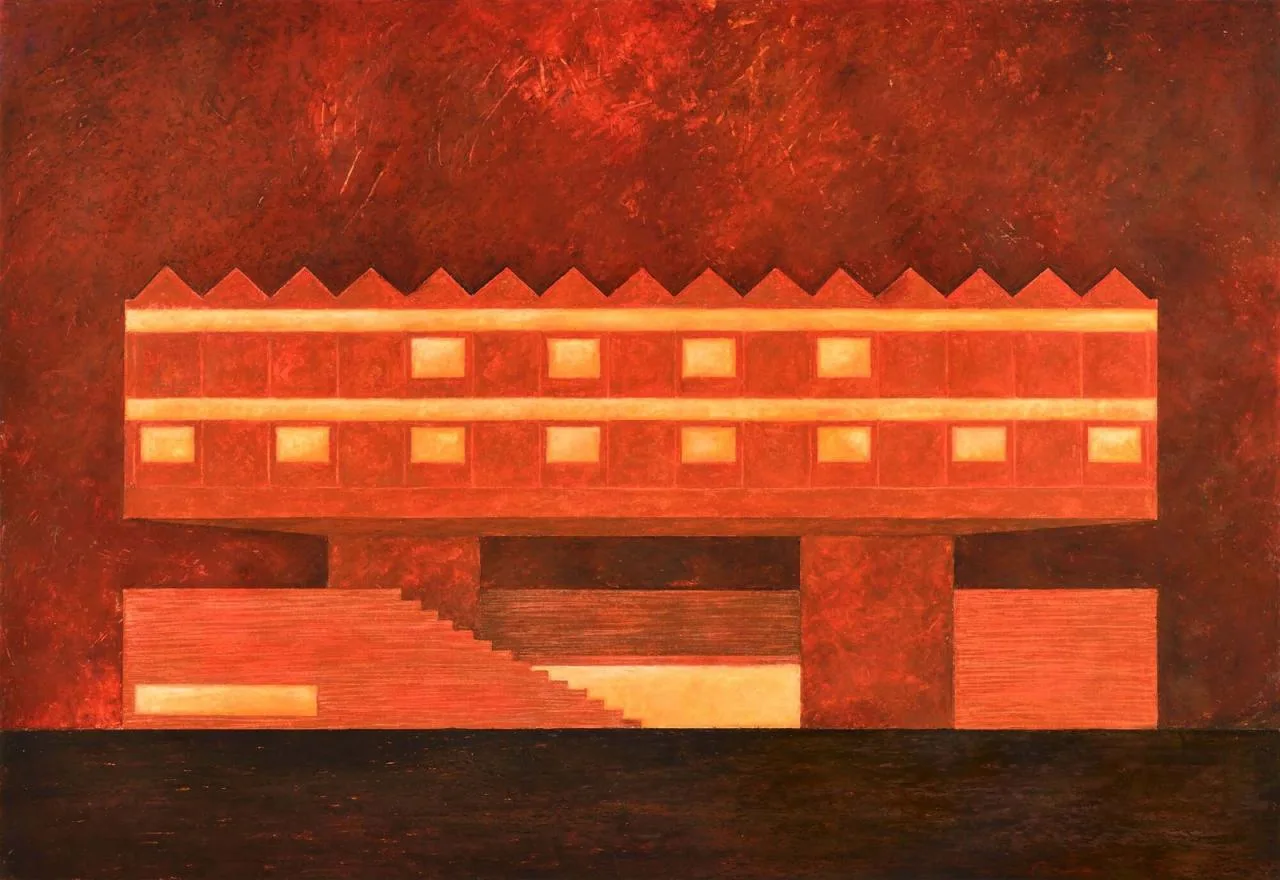
△ Hand-drawn drawing
Project details:
Architect: Šépka Architekti
Area: 2522 m²
Project Year: 2023
Photographer: Aleš Jungmann
Lead Architects: Jan Bárta, Marek Fischer, Jan Šépka
Investors: Stavirezek s.r.o., Brickwork s.r.o., Zbyněk Šustr s.r.o., Sollus Furniture s.r.o., Automatic Mill Foundation
Supplier: City of Pardubice
Location: Pardubice, Czech Republic












Must log in before commenting!
Sign Up