
Project Origin
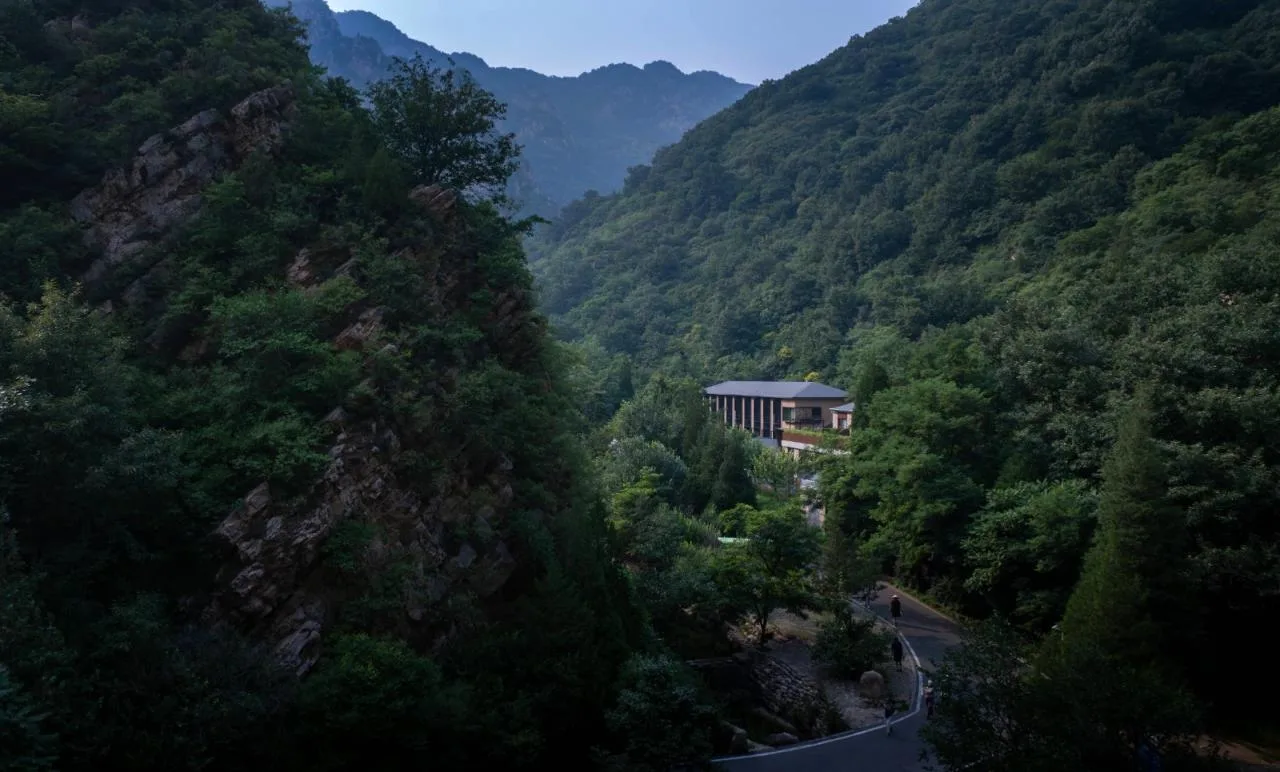
Located at the northernmost edge of Tianjin, Limutai Scenic Area is a national geological park, forest park, and a 4A-level tourist destination. The area is renowned for its lush peaks and valleys, dramatic canyons, serene forests and seas, and flowing streams. Often called the “Shennongjia of Tianjin,” the region boasts a forest coverage exceeding 90%, making it a natural oxygen reservoir and a popular spot for relaxation and hiking.
In the summer of 2021, the owner partnered with the scenic area to transform a leisure post station near the entrance into a multi-functional homestay complex. At the same time, the Xinye Yizhu team was invited to lead the design of this project.
Project Overview
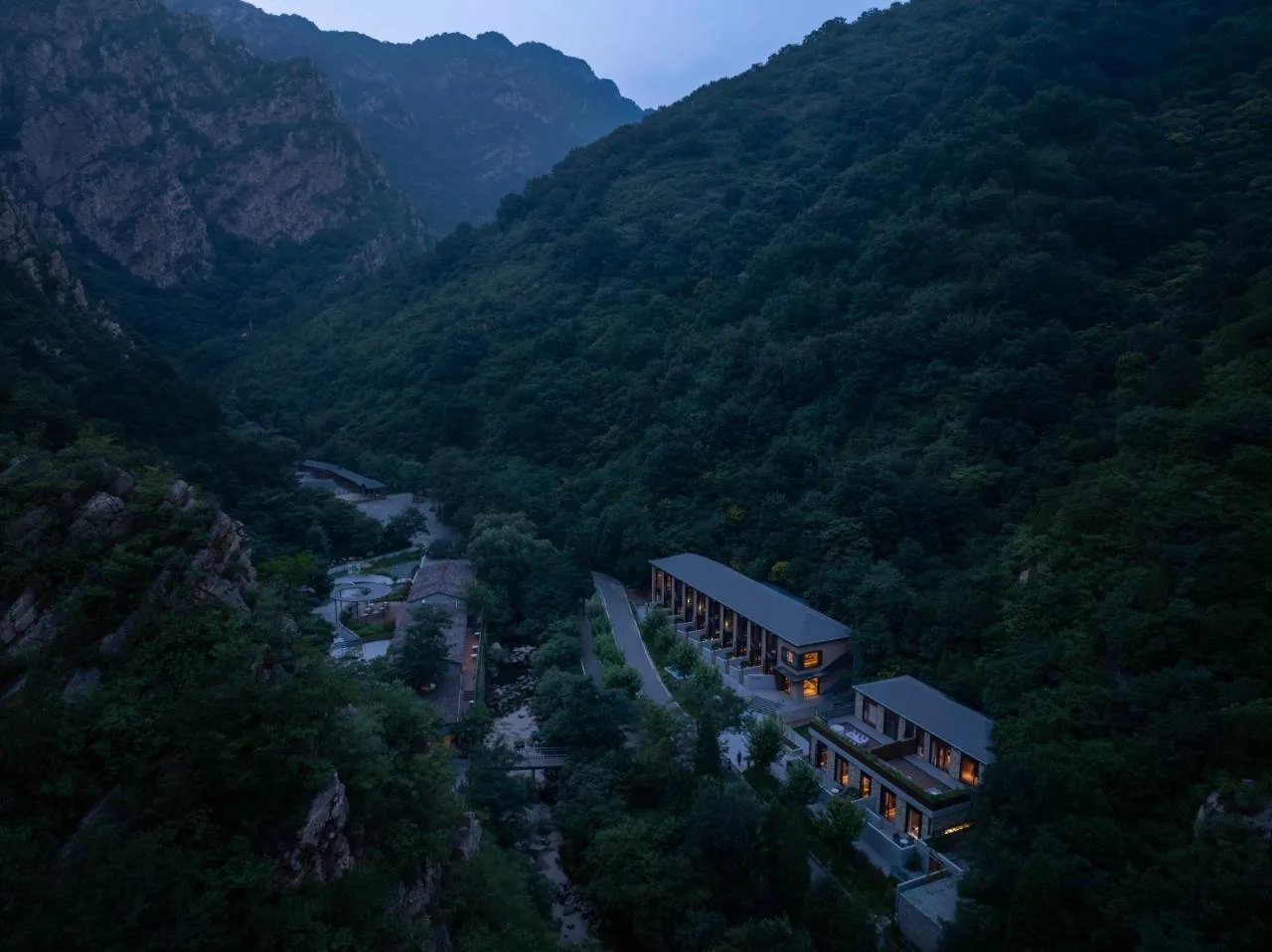
As the first homestay within the scenic area, the project benefits from its unique natural landscape. However, it faces the challenge of balancing the lively atmosphere generated by the large number of visitors with the homestay’s need for privacy and tranquility. Budget constraints add to the complexity of the design process.
The goal is to create a distinctive sense of place through innovative spatial and environmental planning, offering travelers an immersive, nature-close lodging experience. The homestay aims to be a sanctuary for body and mind, far from noise, full of wilderness, yet perfectly suited for modern living. True to its name, “Shuiyun Township” embodies the idea of resting on the mountain, leaning against the water, and cherishing such beautiful surroundings.
Project Overview
Venue Strategy
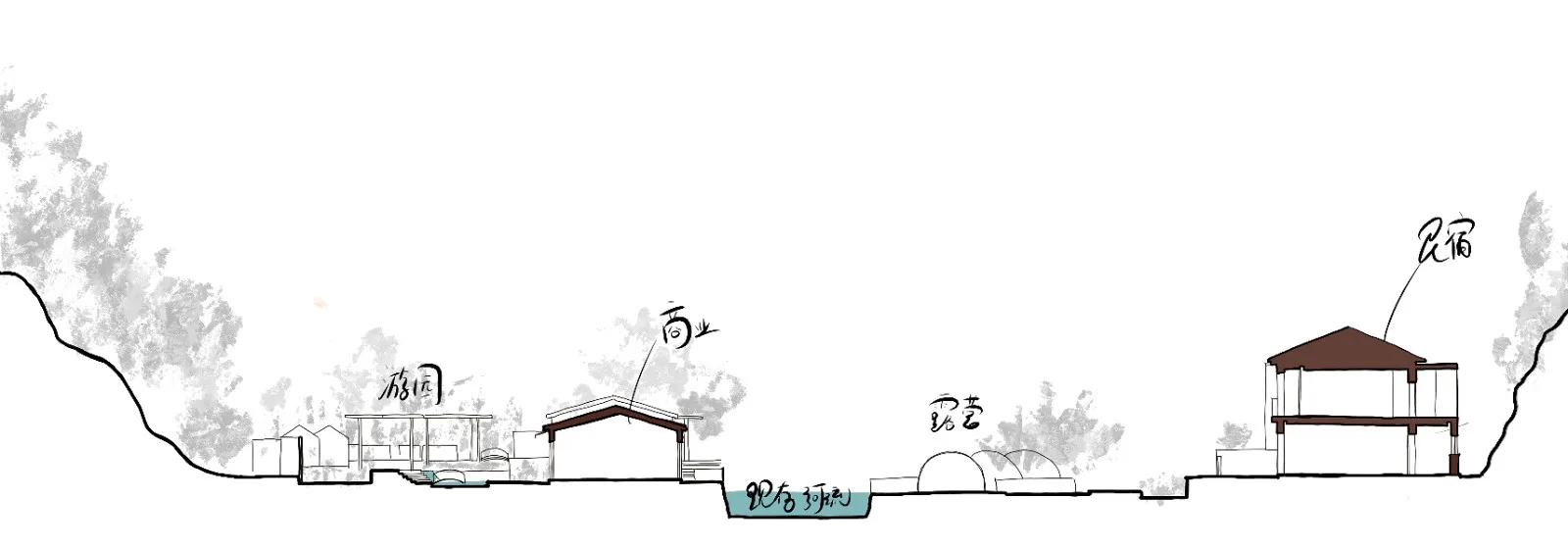
Three years ago, during the initial site survey, the memory remains vivid: a winding path from the mountain gate, accompanied by the sound of flowing water and lined by trees, suddenly opens up to a breathtaking view — reminiscent of Wu Liu’s Peach Blossom Spring. The project site follows the natural mountain terrain, sloping from west to east, bordered by two green peaks to the north and south. A stream runs through the center, naturally dividing the area into north and south sections. A wooden bridge spans the flowing water, evoking poetic charm.
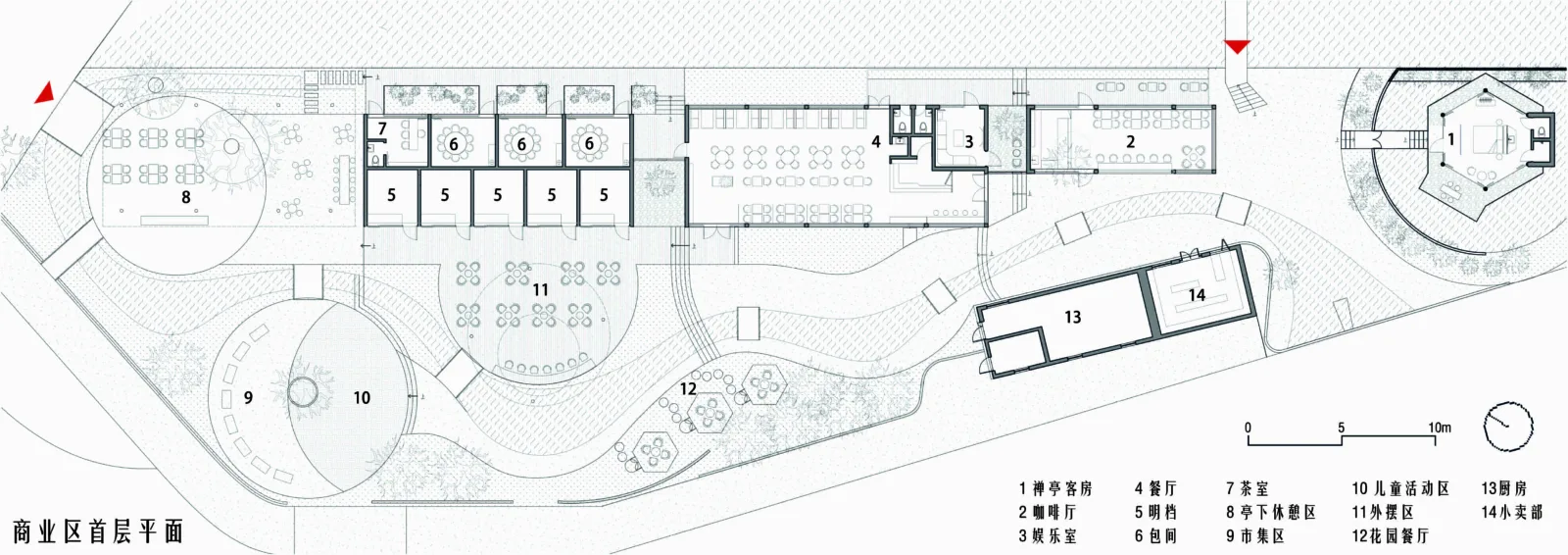
On the creek’s north bank lies a popular hiking route, passing two vacant two-story buildings—one large, one small. After thorough discussion with the owners, it was unanimously decided to renovate the existing buildings into guest rooms and develop commercial facilities on the open land across the creek. Leveraging the homestay’s prime location, the project aims to attract all visitors to the scenic area and become a key supply point along the hiking trail.
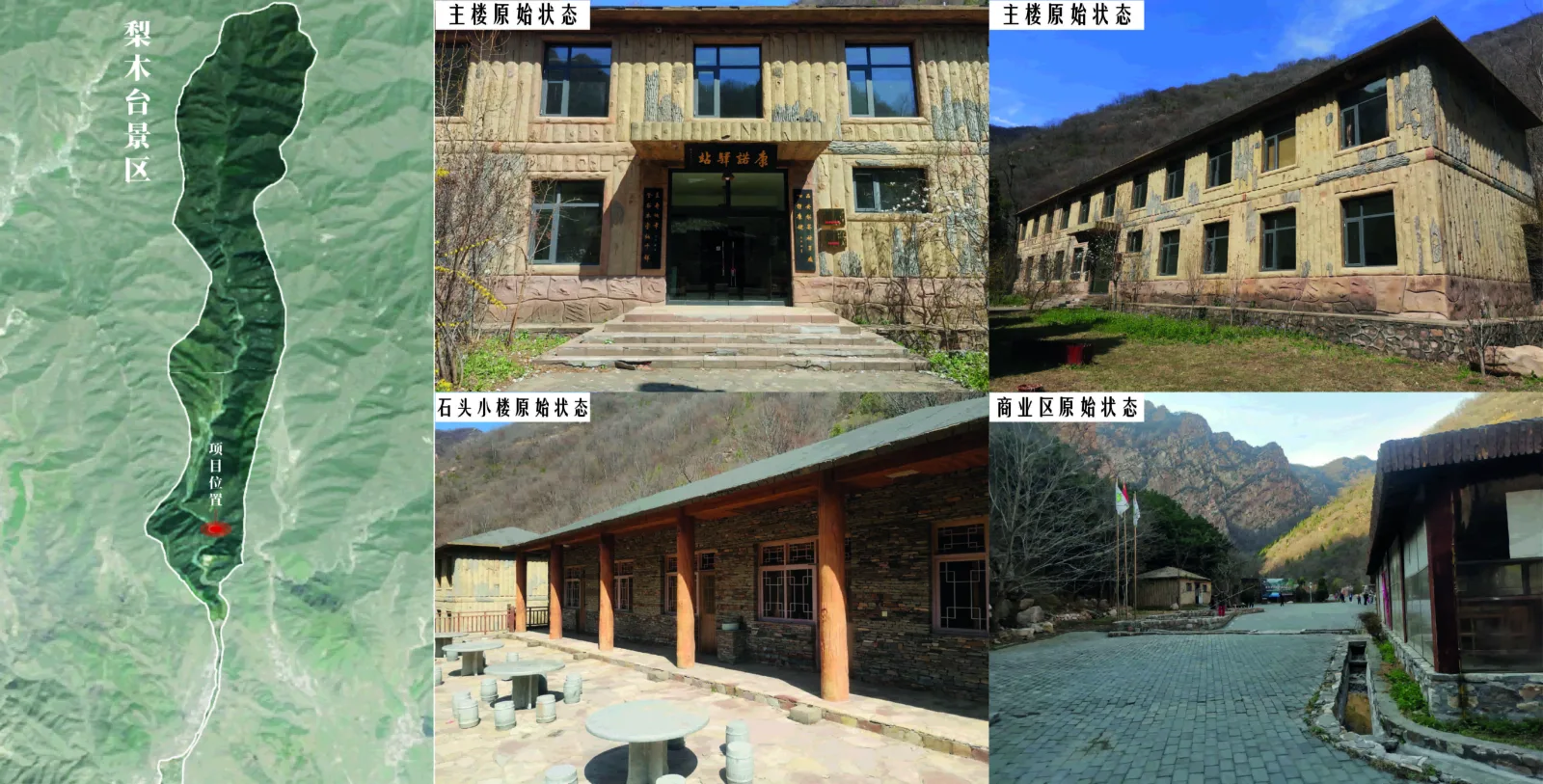
Location and Current Conditions
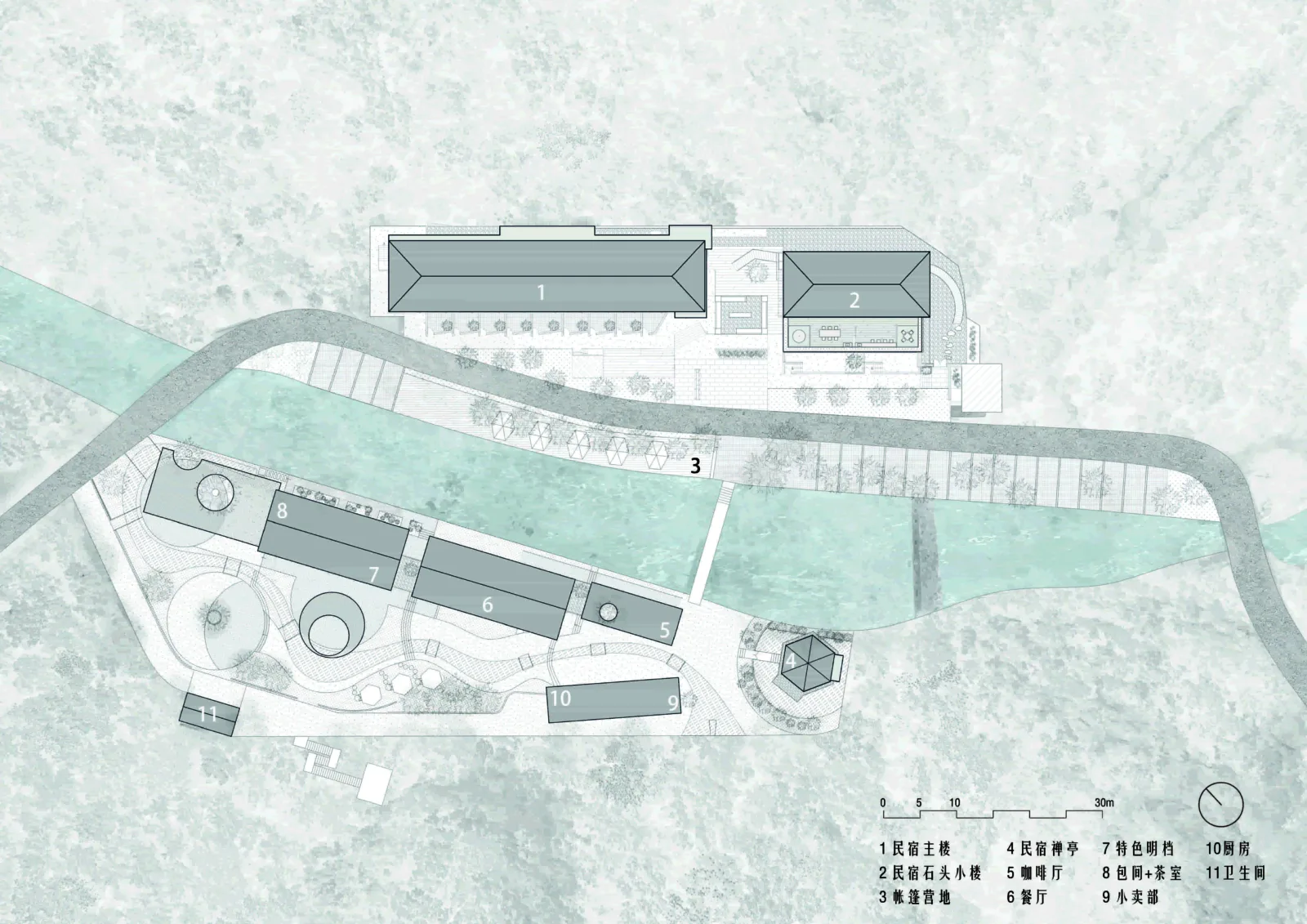
△ General Layout Plan
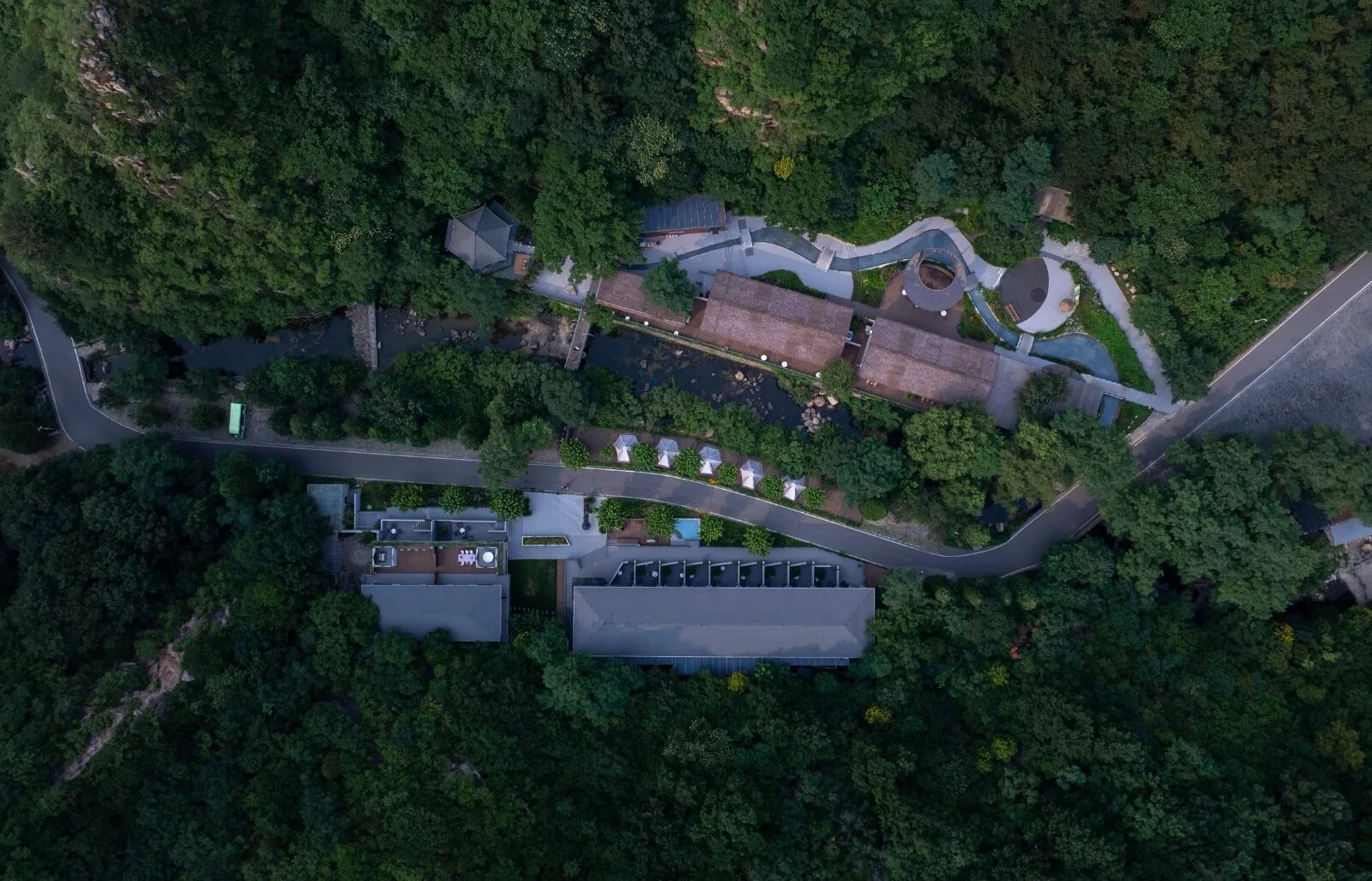
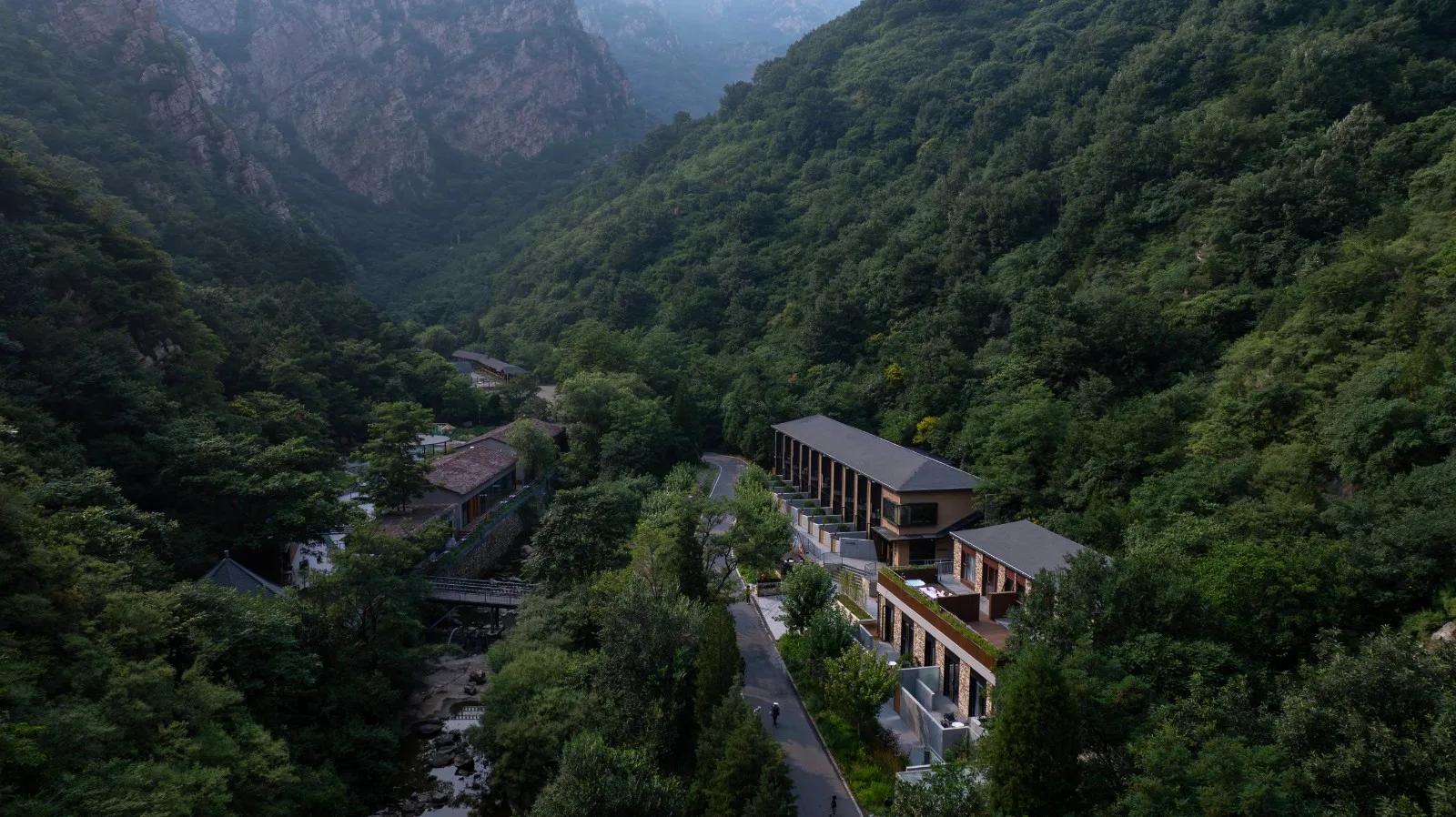
The Rebirth of an Old House
1. Current Conditions
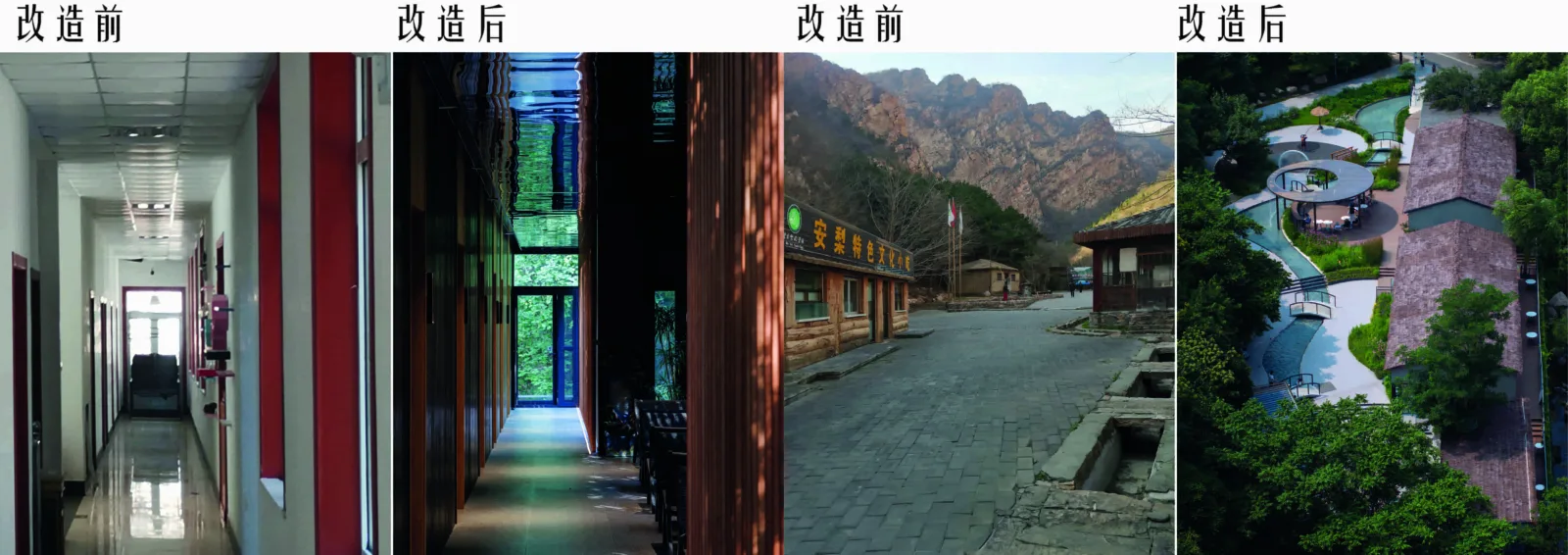
The main west building stretches about 40 meters with the entrance centrally located next to the stairwell. Rooms are arranged in parallel on both sides, each approximately 20 square meters, accessed via a north corridor. Although windows face scenic views, they are small and the load-bearing walls limit structural changes. The building’s base sits higher than the road, with a lawn in front.
East of the main building is a small stone structure, formerly a restaurant and logistics space, with a poorly arranged layout. Due to proximity to the mountain, it has suffered long-term water damage, resulting in a dark and damp interior. The once-beautiful stone facade is now deteriorated, making the current condition far from ideal for guest accommodations.
2. Architectural Strategy
The renovation focuses on functional reorganization. Part of the lawn between the two buildings was paved to serve as a drop-off area. The reception hall was located at the eastern end of the main building, with grand steps oriented towards arriving guests to enhance the check-in experience. The front space was elevated and landscaped to create an exclusive resting area, separated from tourist traffic by greenery and mountain trails.
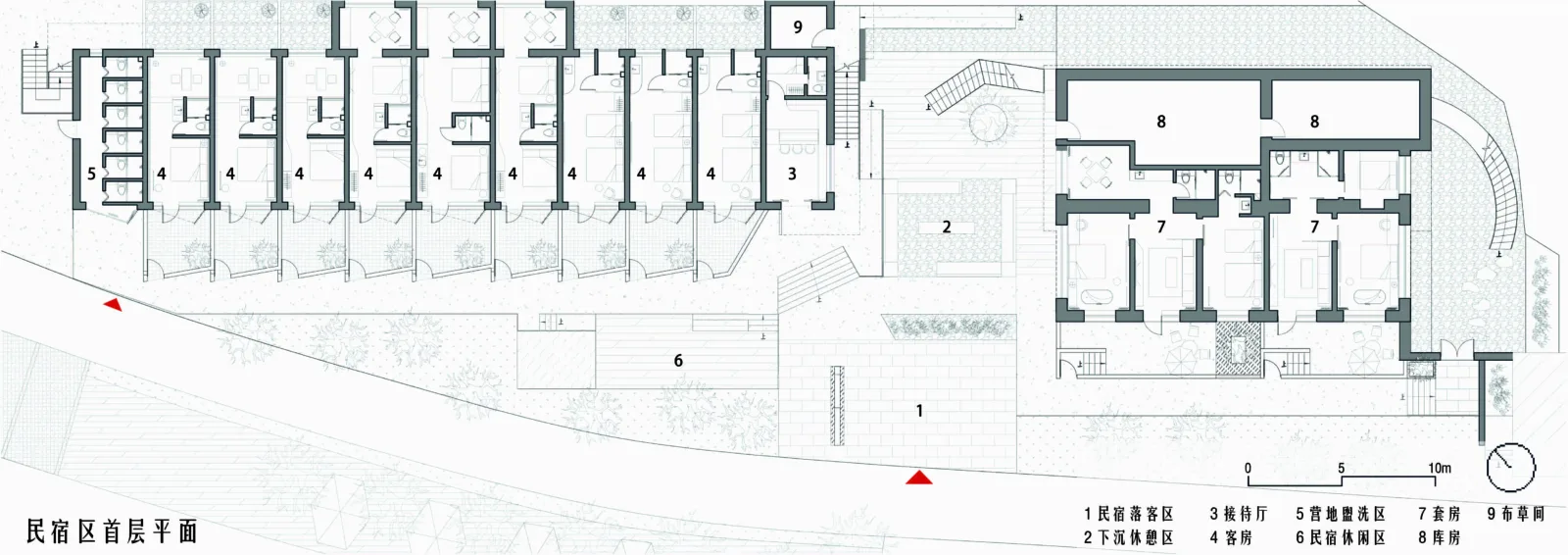
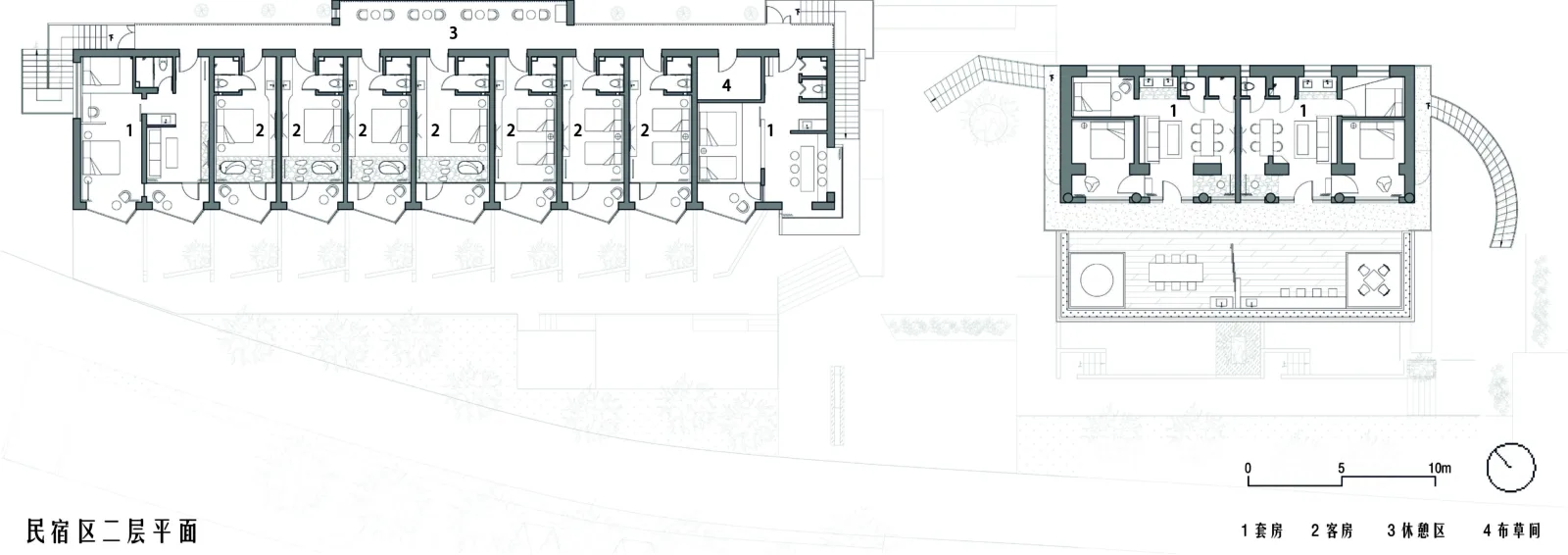
The internal staircase was removed and replaced with external staircases on both sides to free indoor space and create a circular flow connecting east and west. The original north corridor and rooms on both floors were connected and expanded, with family-friendly rooms on the first floor for easy access. South-facing window sills were removed to create new entrances with private courtyards enclosed by fences. The space between the building and the mountain was transformed into scenic courtyards for first-floor rooms. Second-floor rooms, offering privacy and views, were designated for couples and suites. An external corridor on the north side links the second-floor rooms to the entrance, while the south curtain wall was recessed to form open balconies, enhancing room quality.
The east building’s layout was reworked, raising the south open space on the first floor into a courtyard and incorporating a viewing terrace on the roof, resulting in four premium suites.
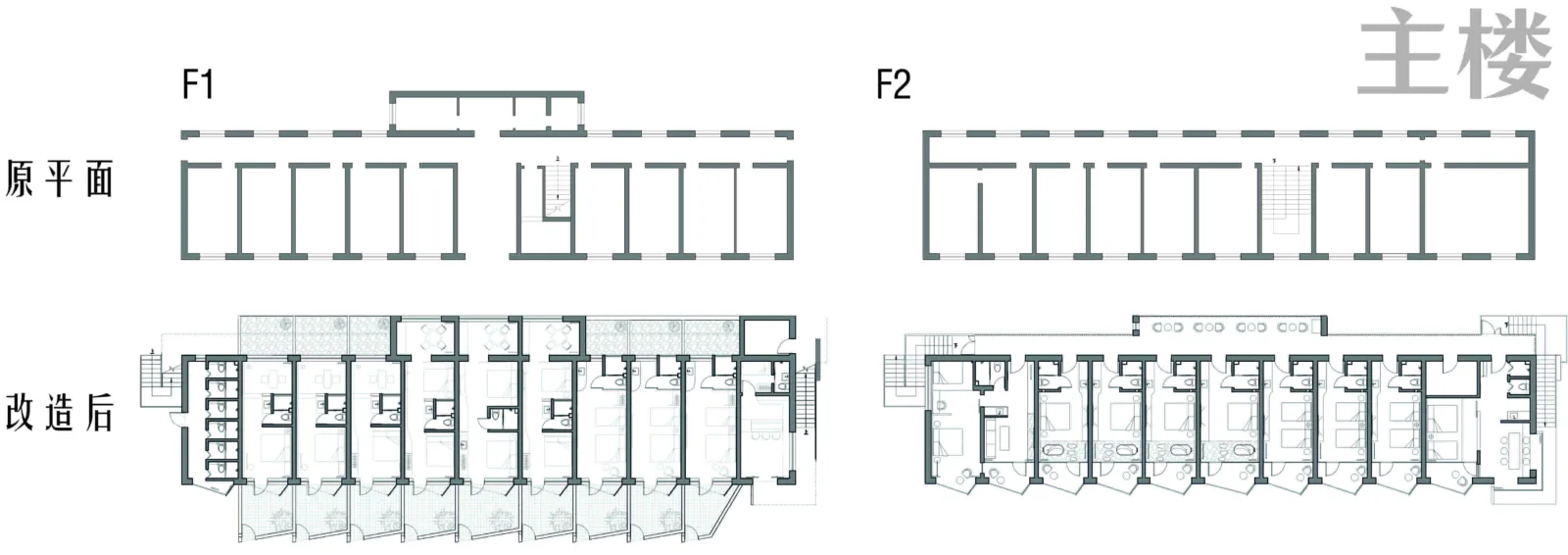
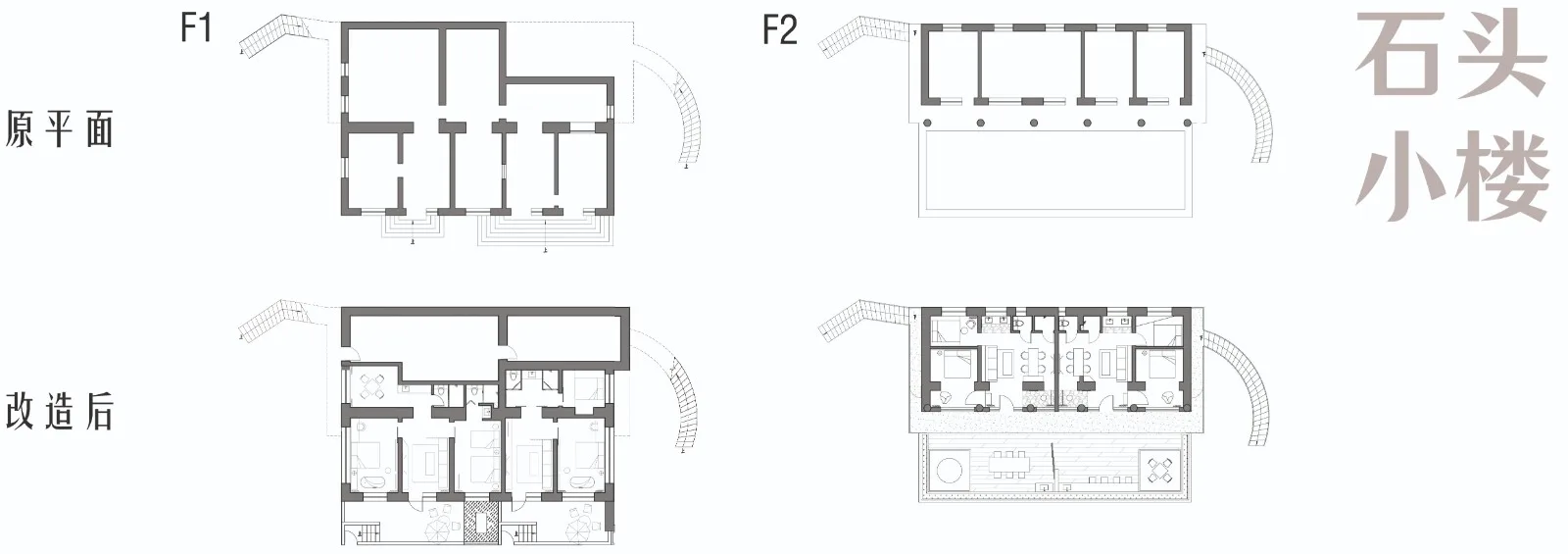
△ Original Plan vs Modified Plan
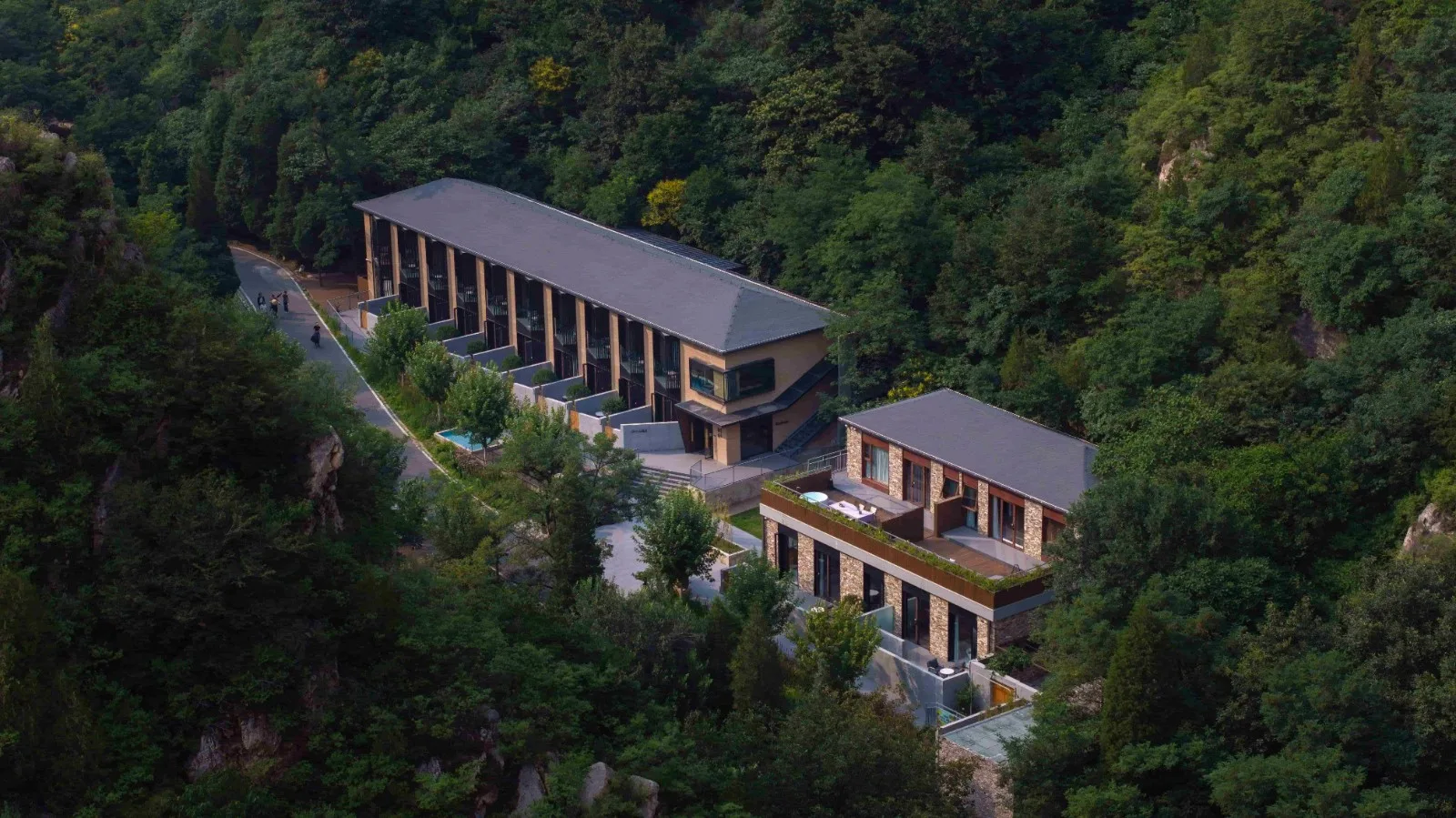
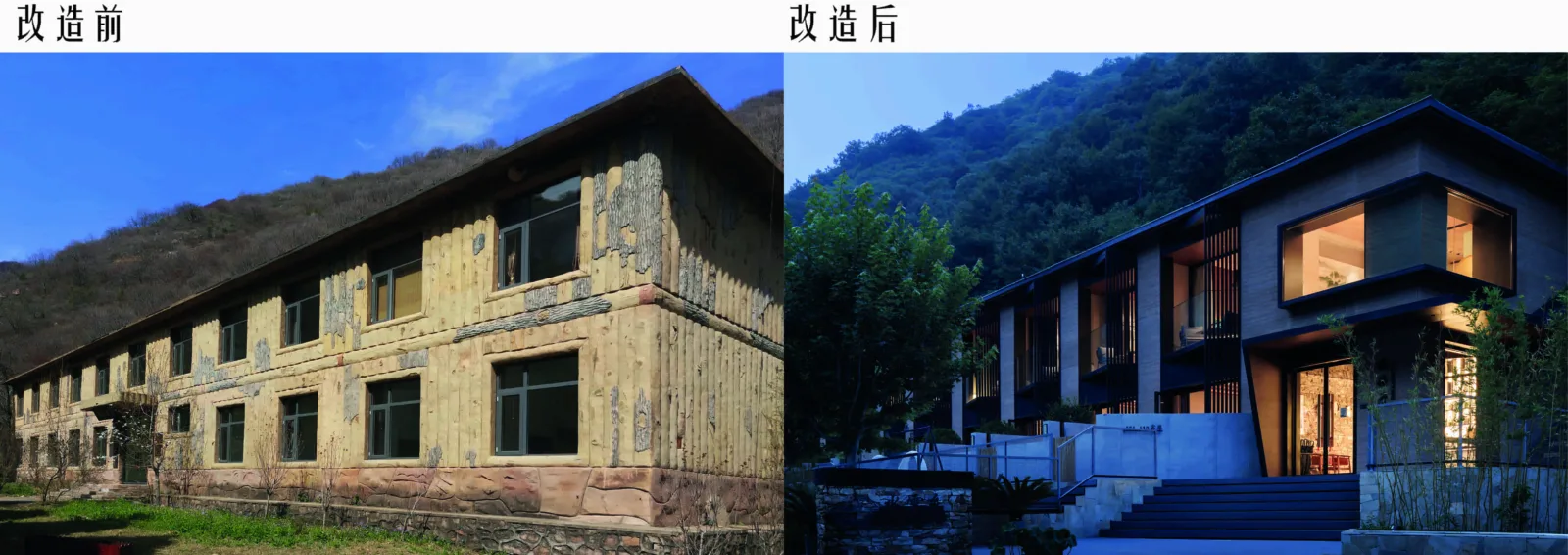
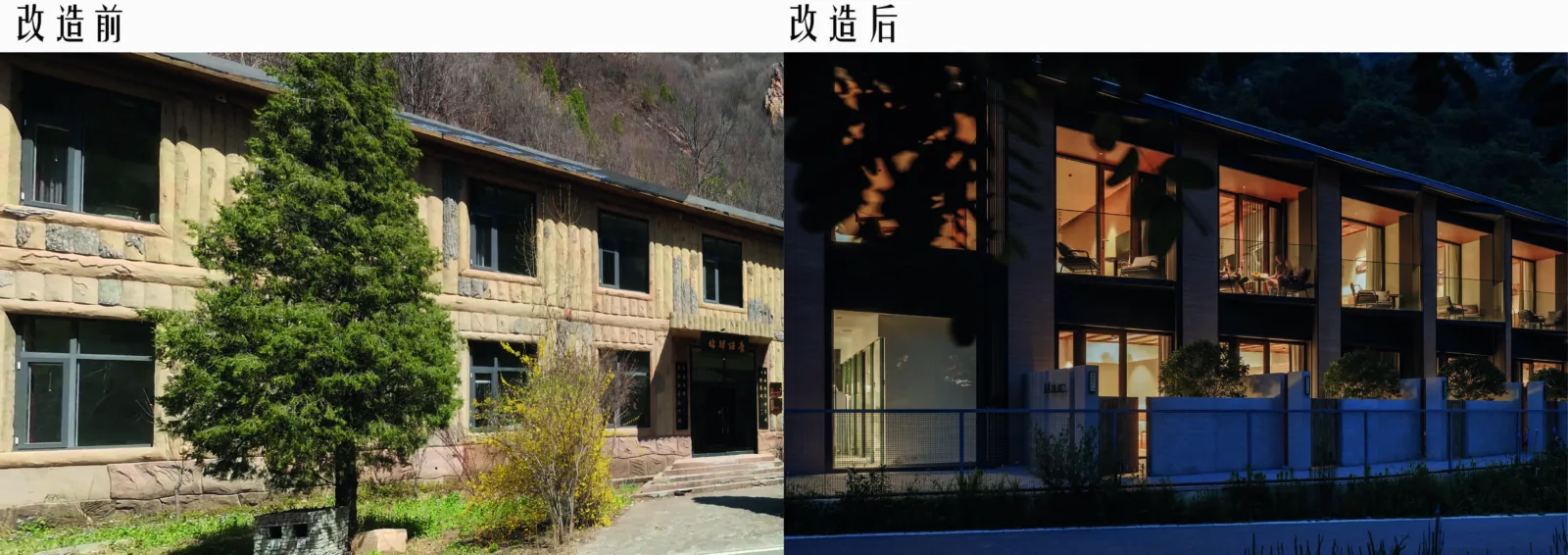
The renovated building has been revitalized and rejuvenated.
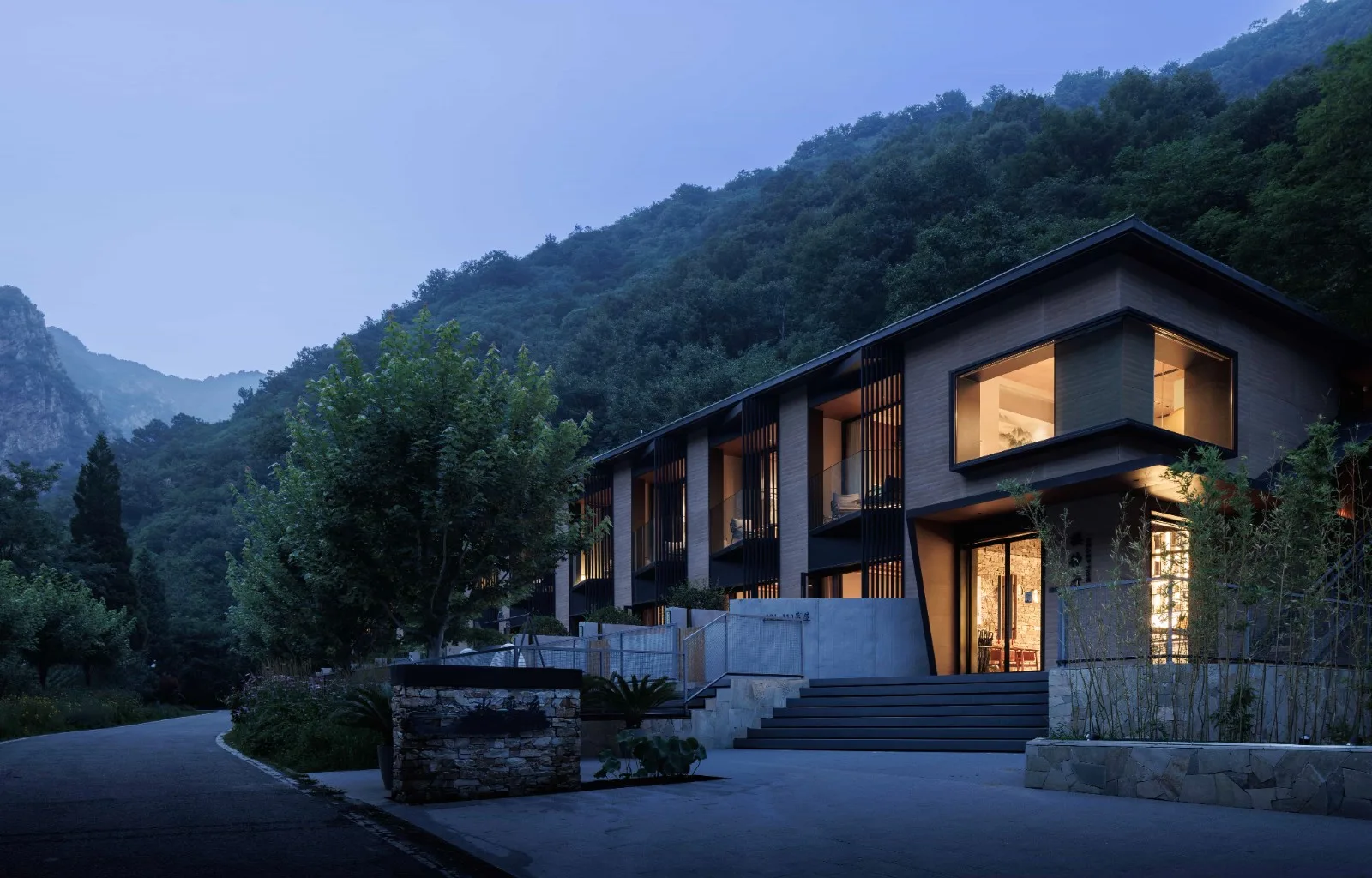
△ Sense of Arrival at Entrance
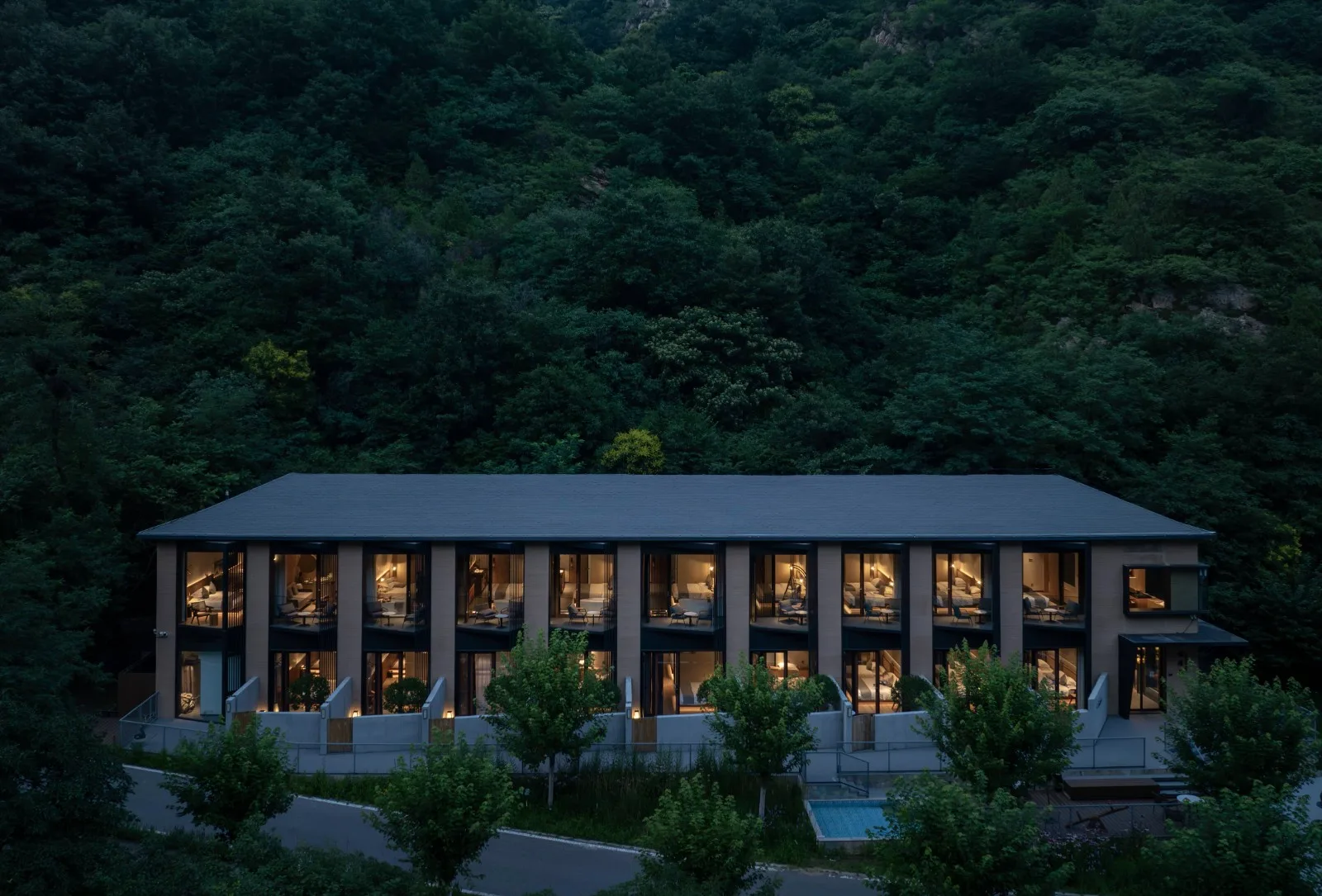
△ Main Building Facade
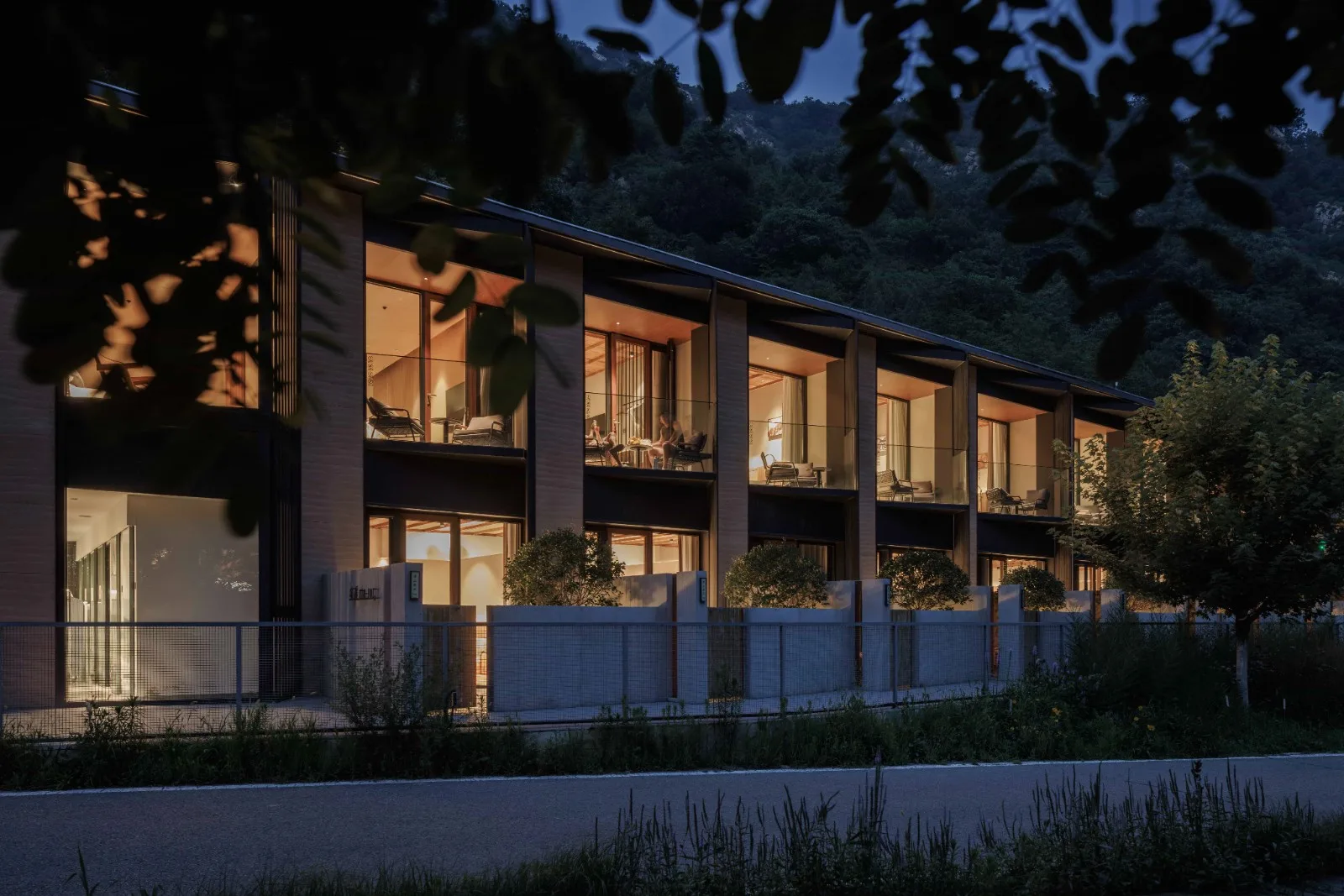
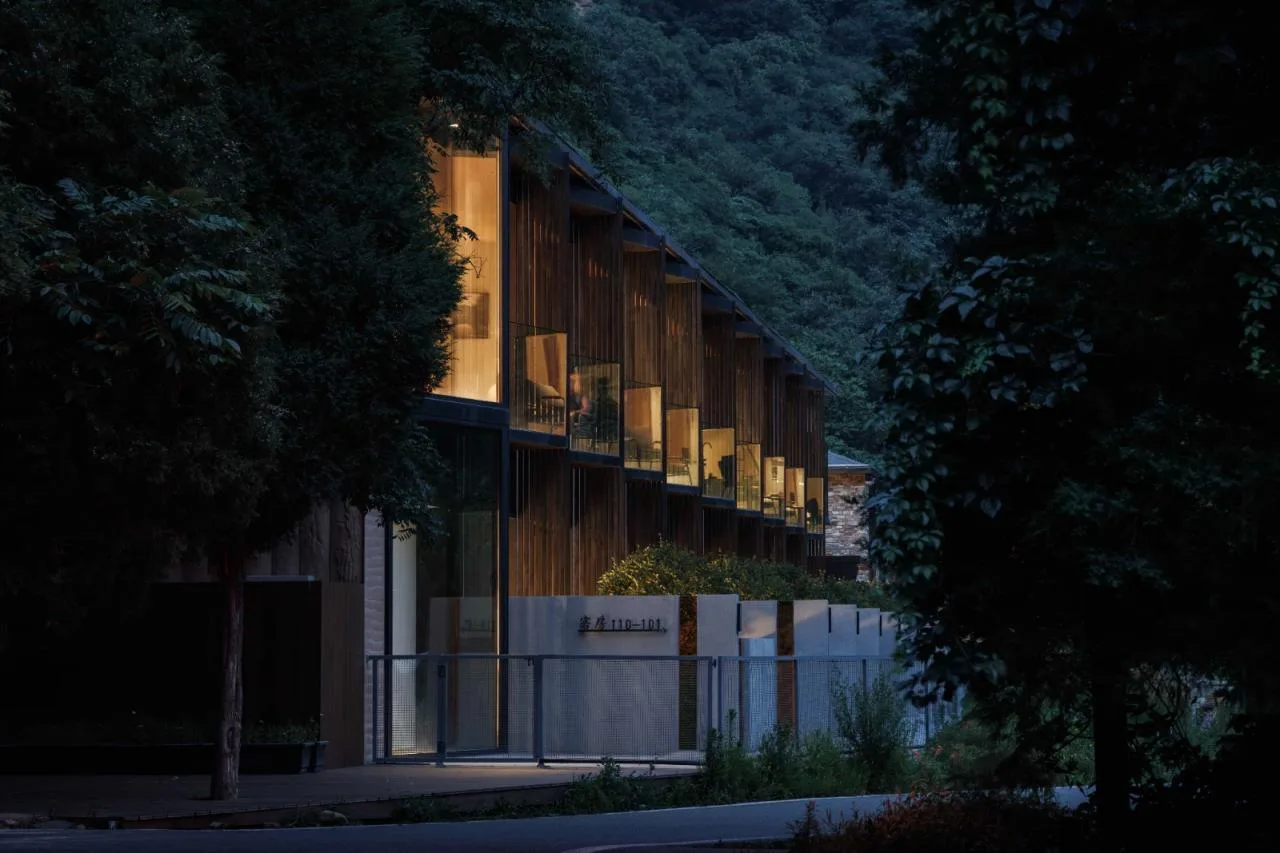
A Warm Atmosphere Under the Night Sky
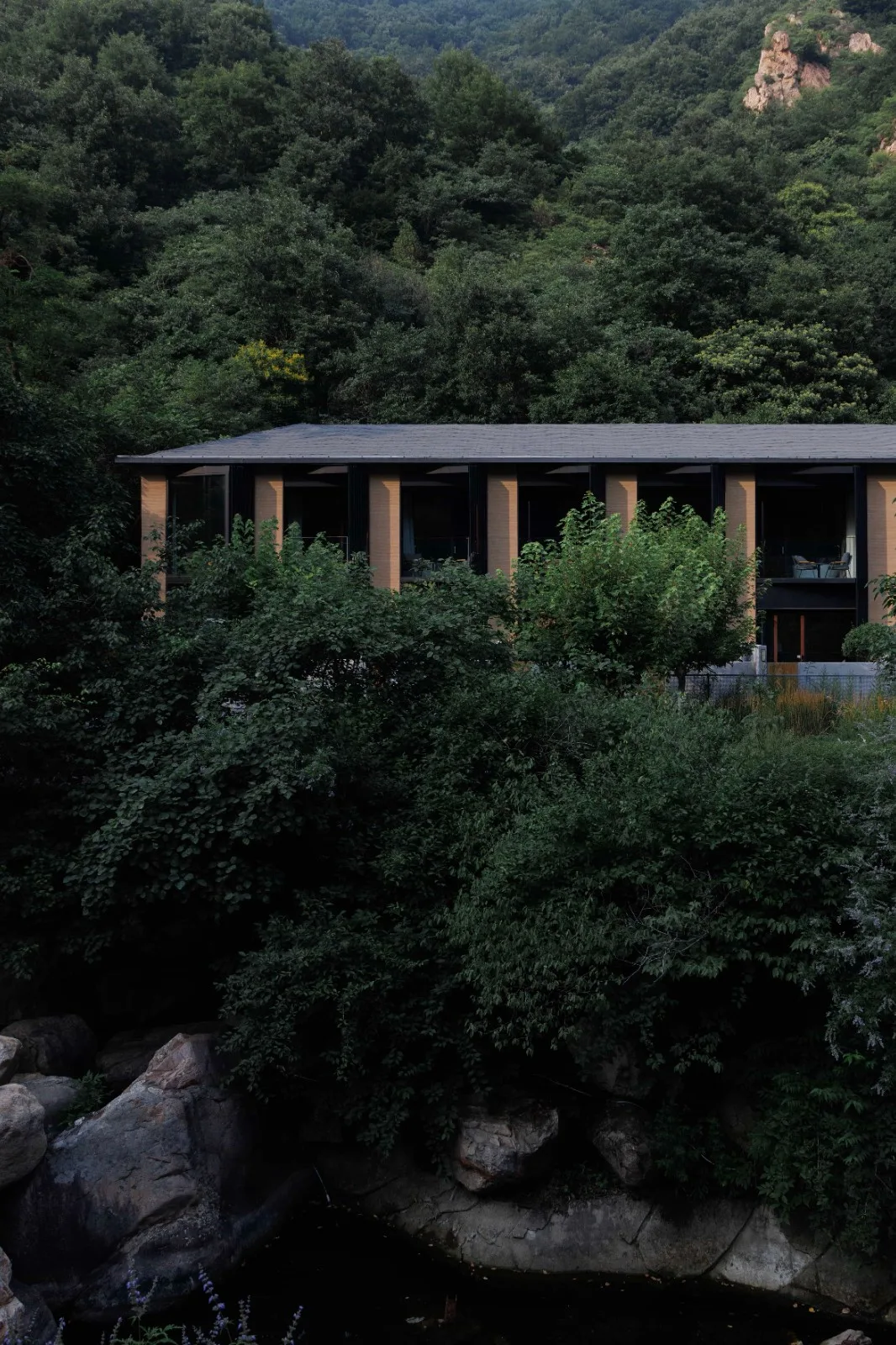
The surroundings are vibrant with greenery and nature. The architecture aims to blend humbly with the environment, using natural materials such as rubble, wood, rammed earth, straw, wooden formwork concrete, and bamboo mats. These textures harmonize with the mountain greenery, narrating a story of rustic charm and drawing attention to subtle details—rippling water, swaying shadows, and gentle murmurs.
Diagonal vertical grilles on the main building’s facade serve as rain eaves and provide privacy, echoing the rolling mountains and adding rhythm to the structure. The landscape bay window on the east side of the second floor acts as a beacon, guiding travelers home.
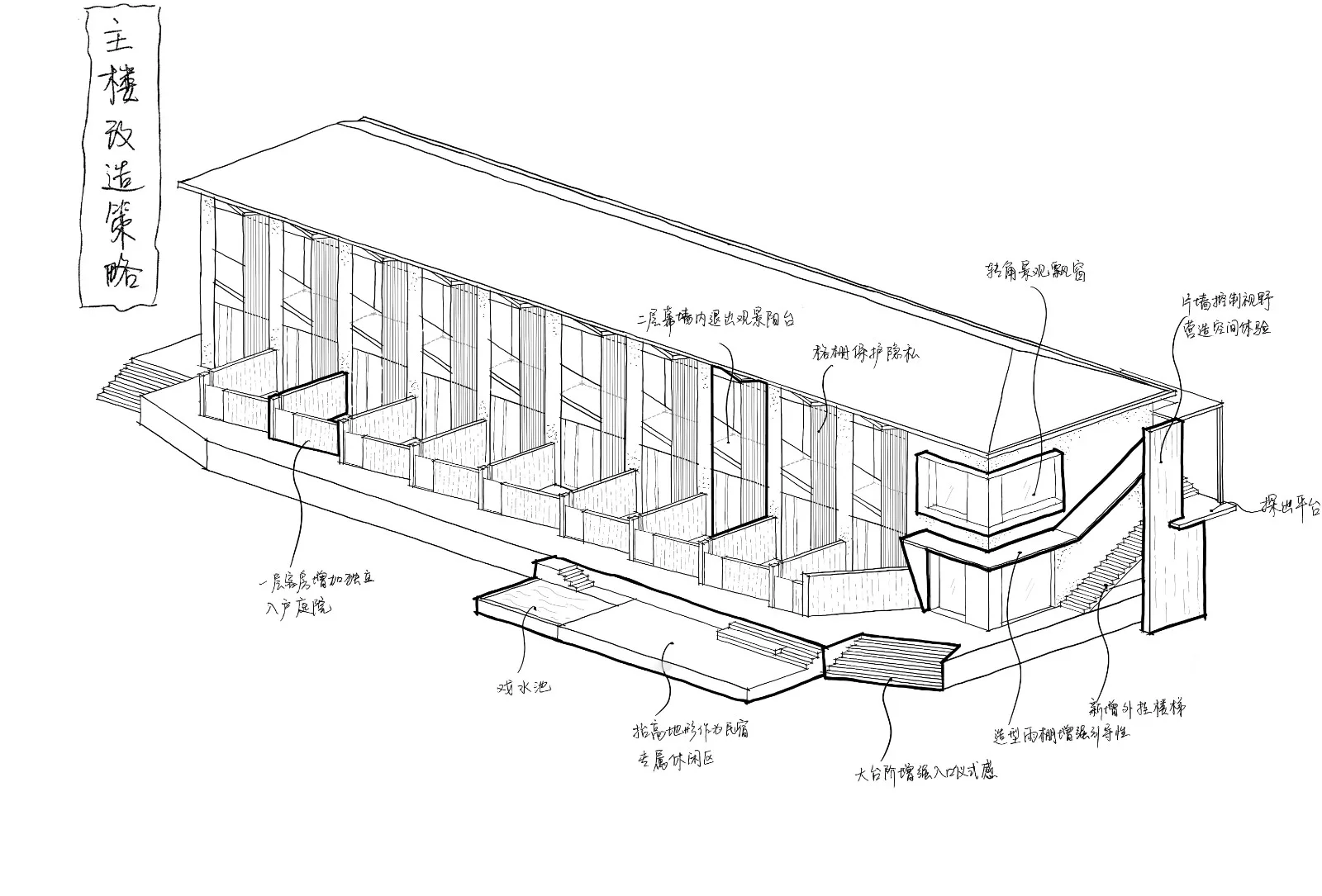
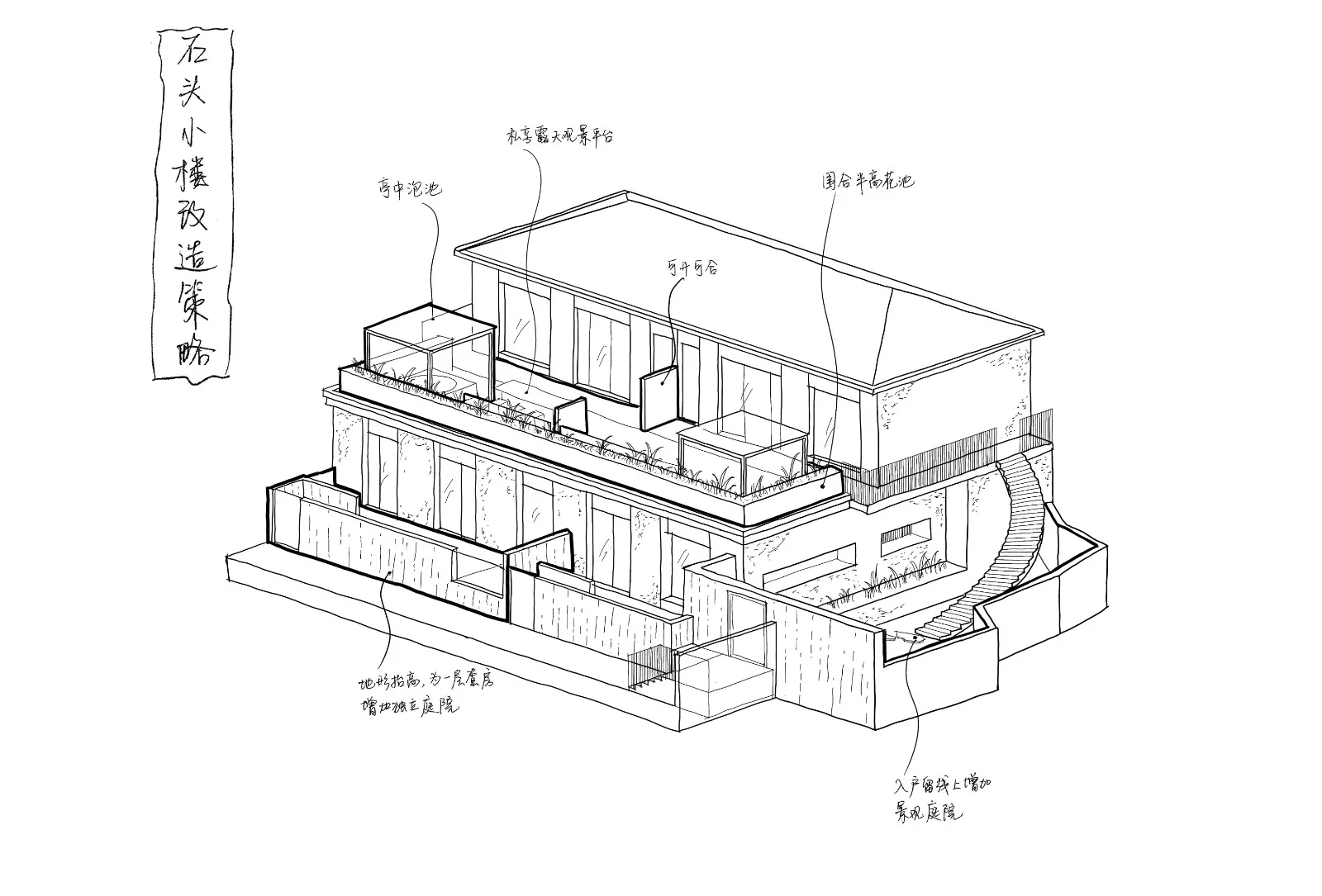
△ Transformation Strategy
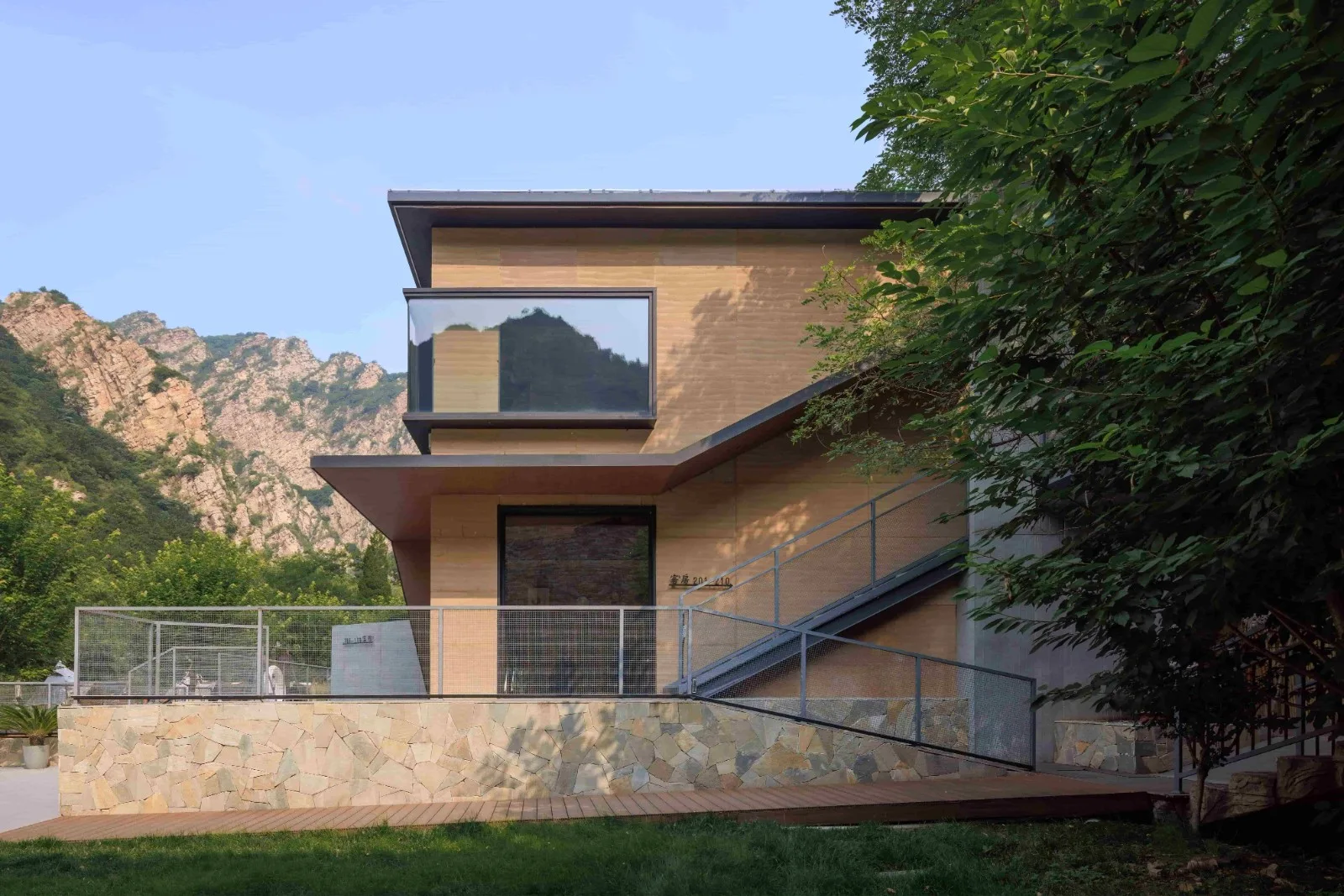
Natural and Rustic Materials
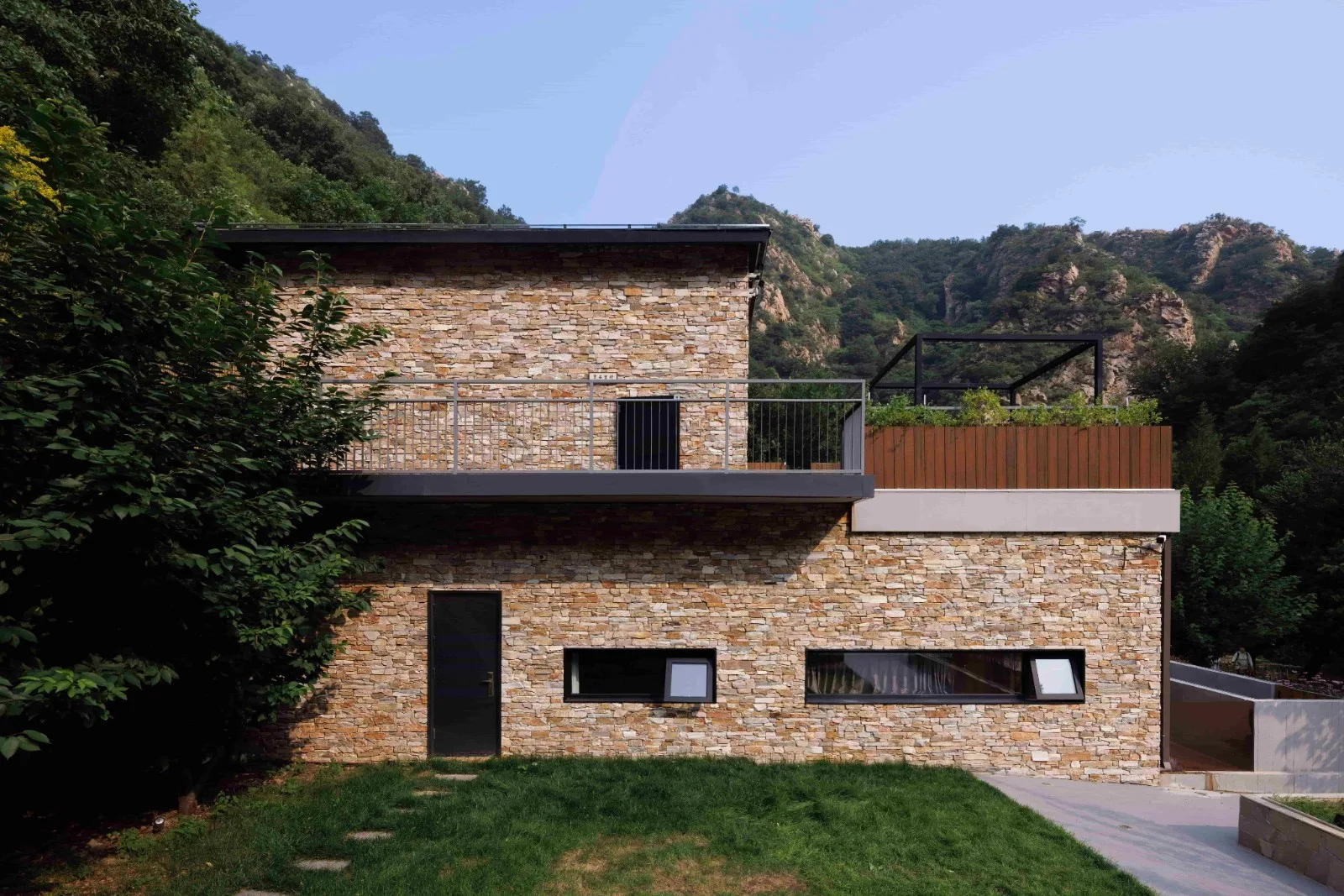
△ Stone Facade Preserves Site Memory
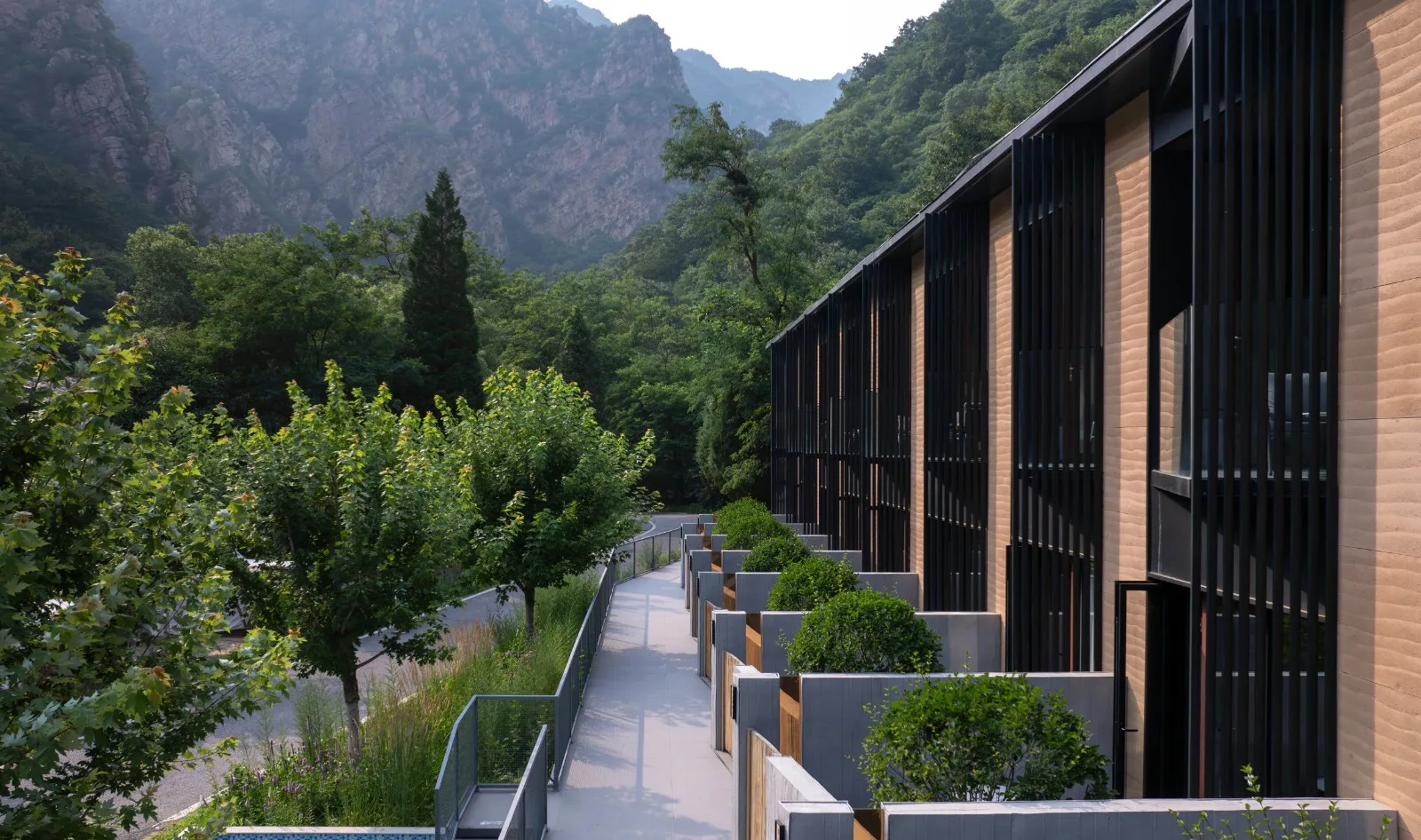
△ Walls and Barriers Provide Privacy for Guest Rooms
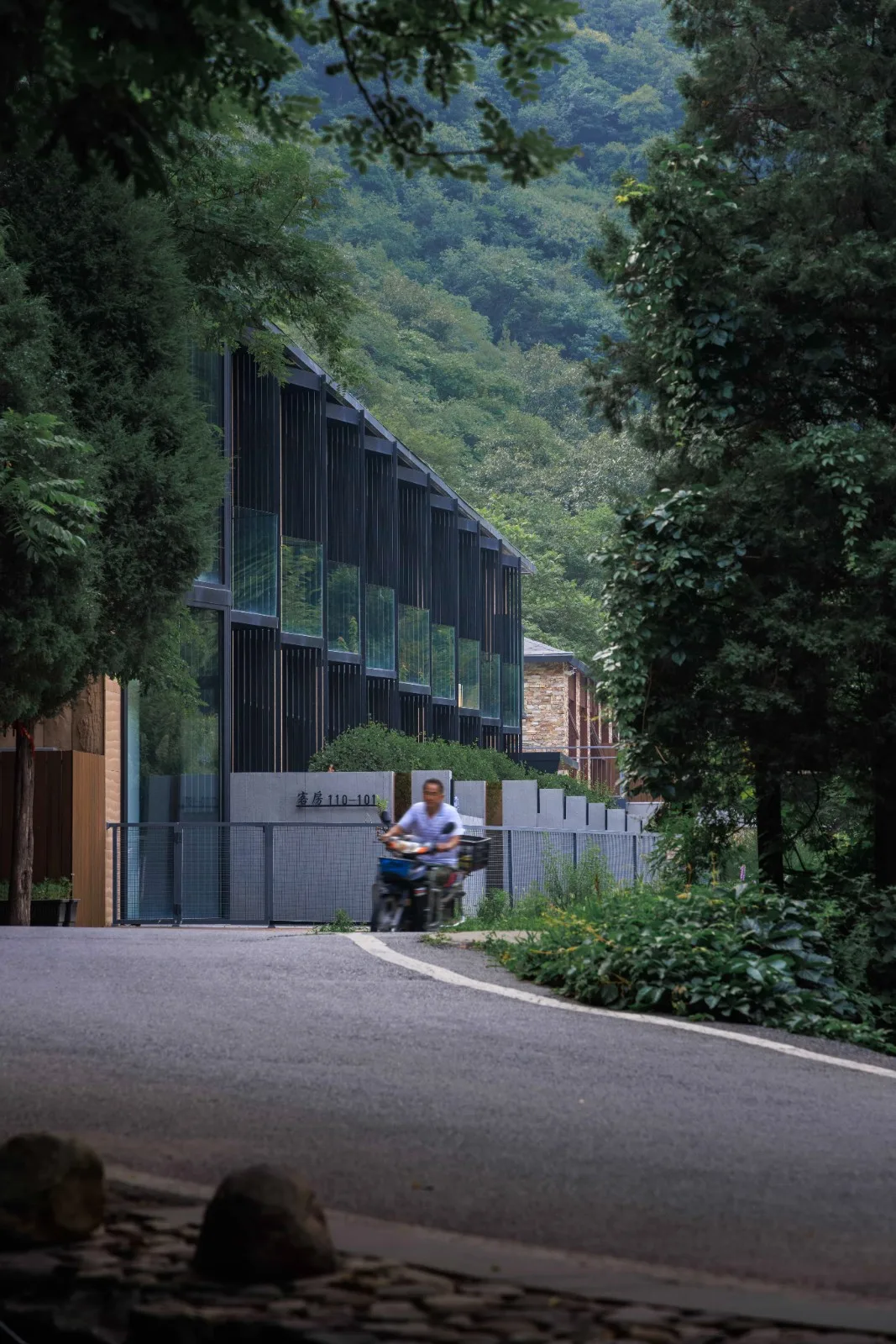
△ Rhythm and Flow
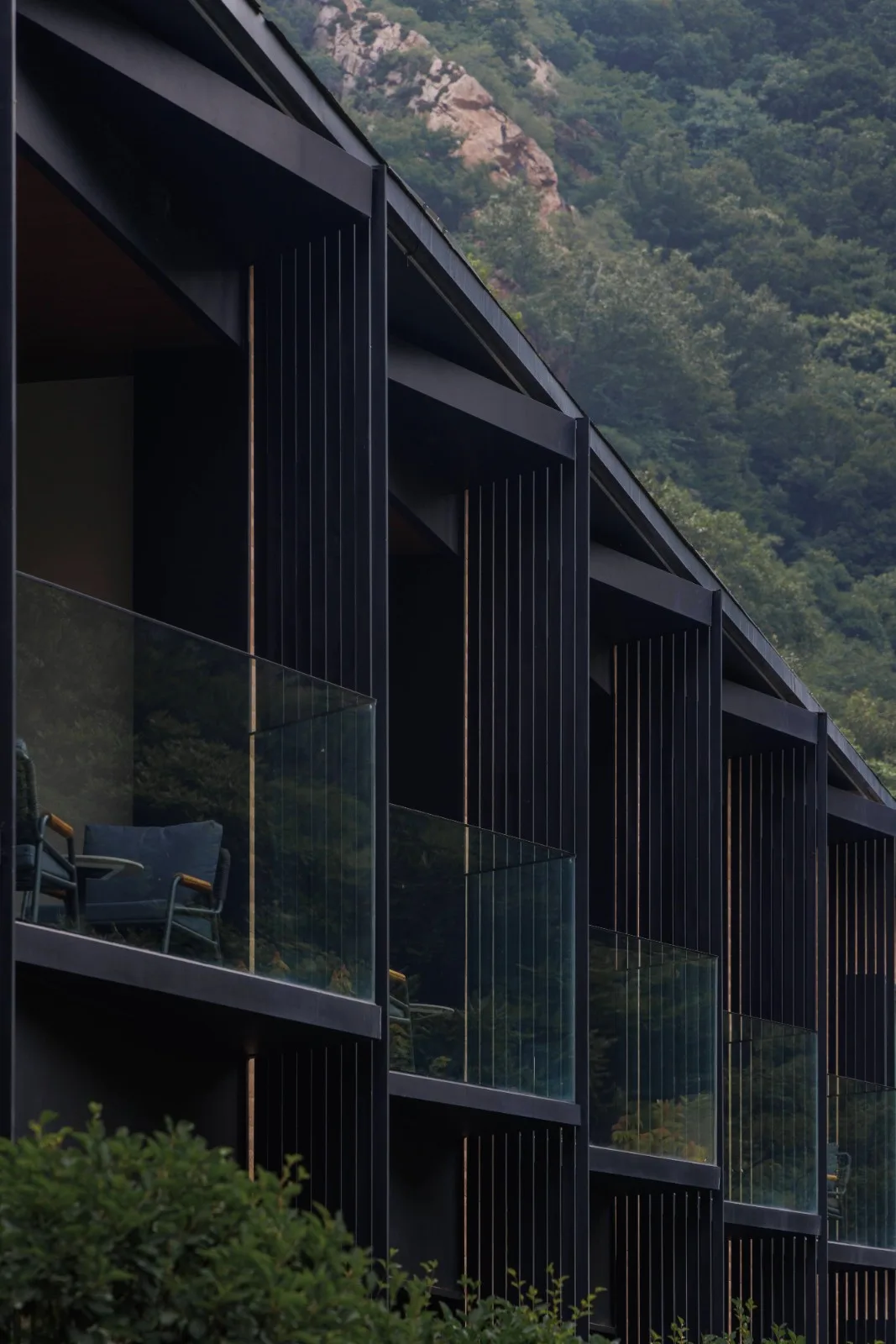
△ Fence Echoes the Continuous Mountain Range
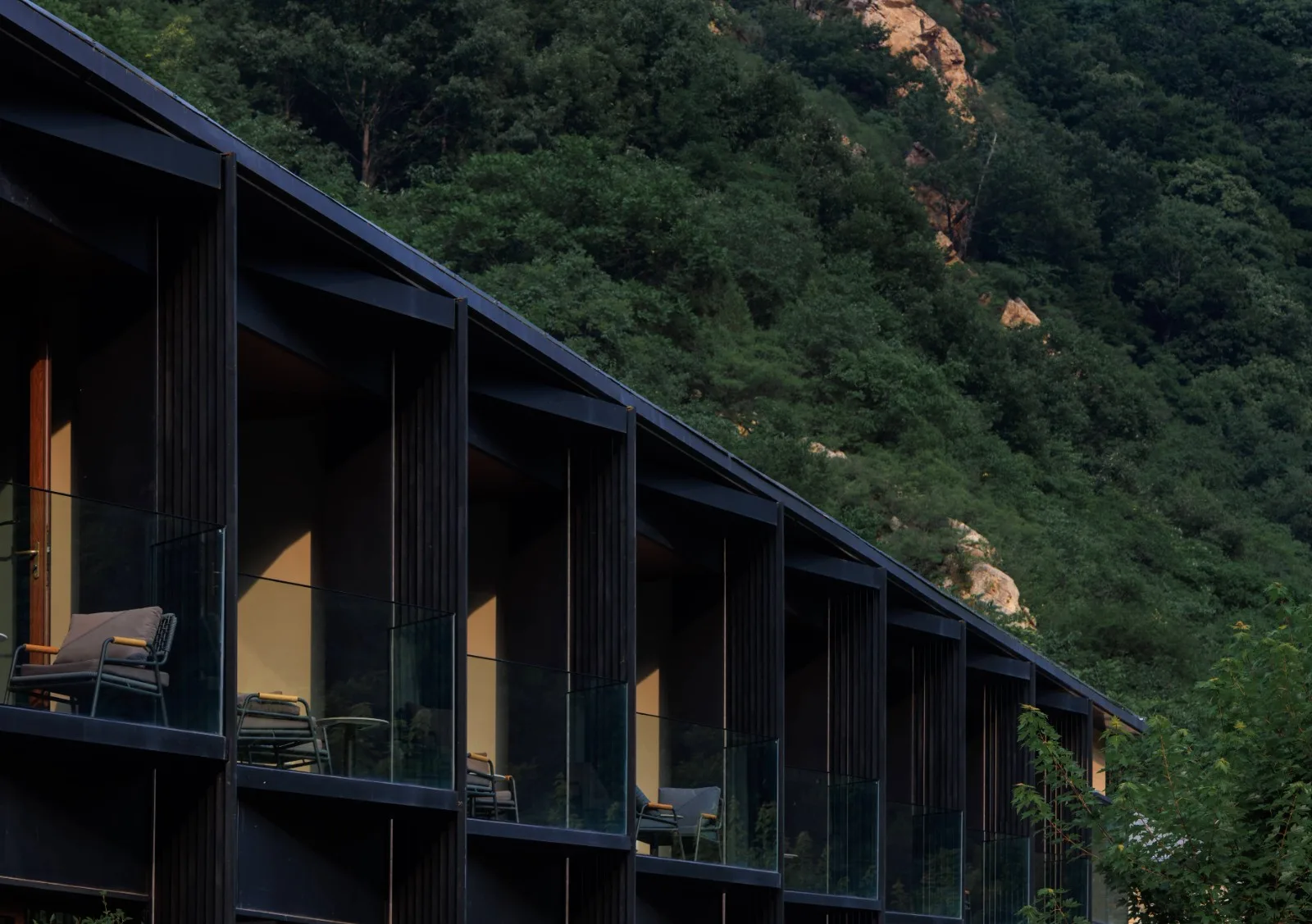
Nature, Sunlight, and Geometric Lines
3. Spatial Experience
Creating a sense of wandering is central to the design. Space carries emotions that influence every visitor. Moving through the architecture, the body transitions from vast wilderness to cozy rooms, while the mind finds calm. The path ascends with stairs, initially confined by a wall, then suddenly opening onto a platform that draws attention to dense tree branches and a faint stone staircase beyond.
Entering a dimly lit hallway, natural greenery is enhanced by warm wooden grilles that soften the cool tones, and reflective materials blur the line between reality and illusion. Tree shadows gently sway, spreading through the space. Opening the wooden door reveals framed views of the mountains and forests, changing with the seasons like vivid paintings.
The rooms offer warmth and comfort, allowing guests to unwind and rejuvenate. Sitting by the window, bathed in fleeting light, one feels merged with nature as everyday worries fade, and time seems to stand still.
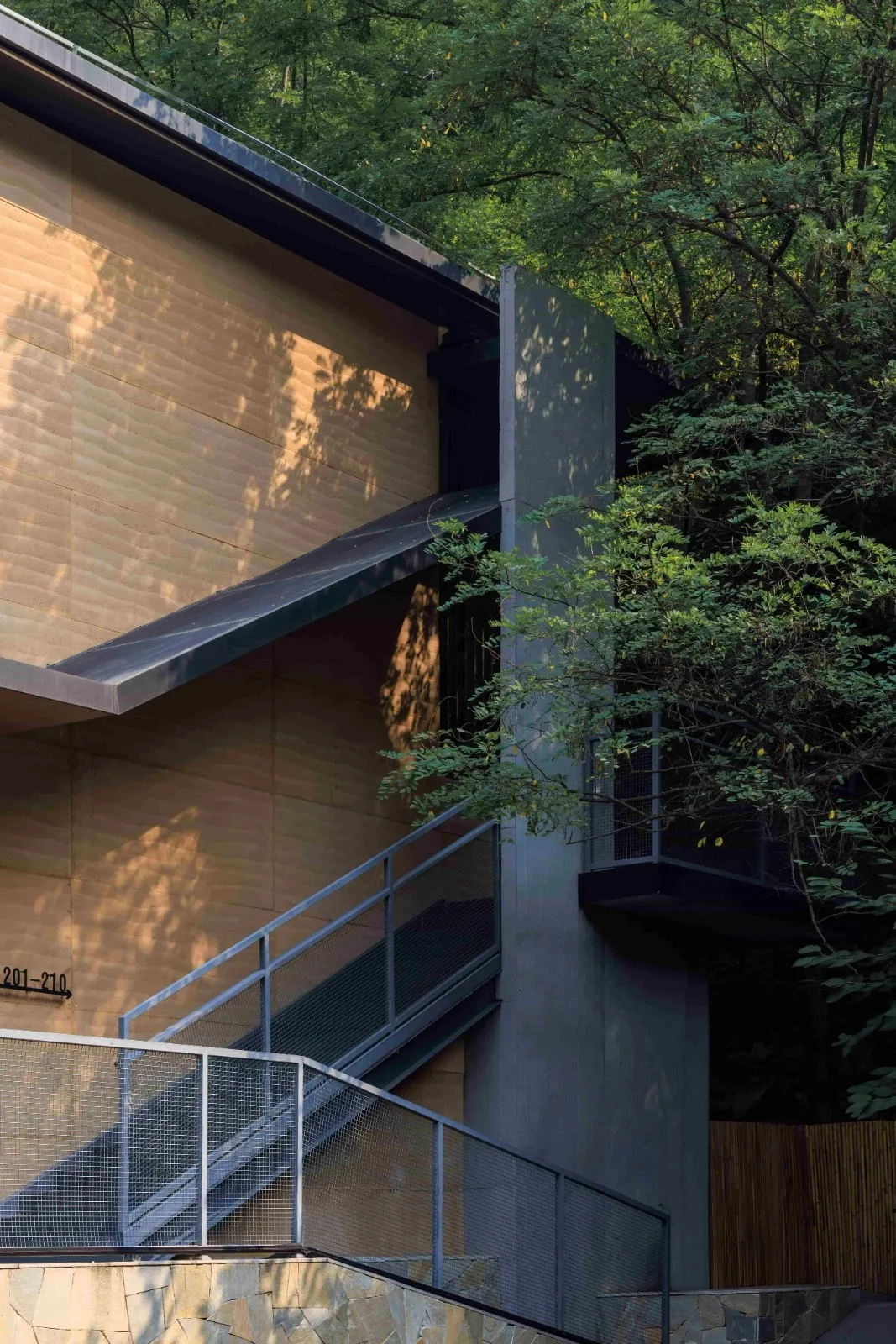
Stairs as Part of the Wandering Experience
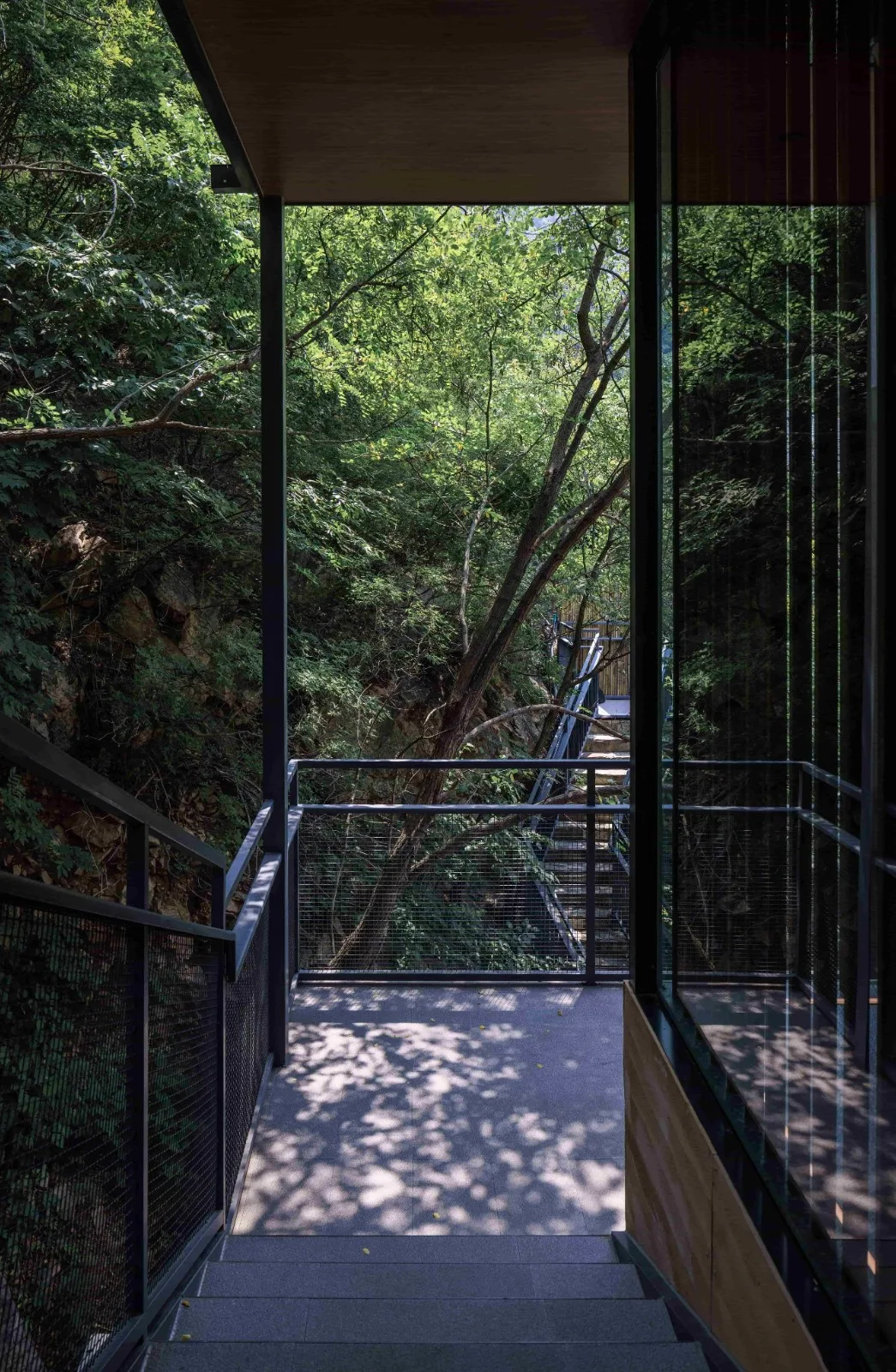
Looking Back at the Staircase
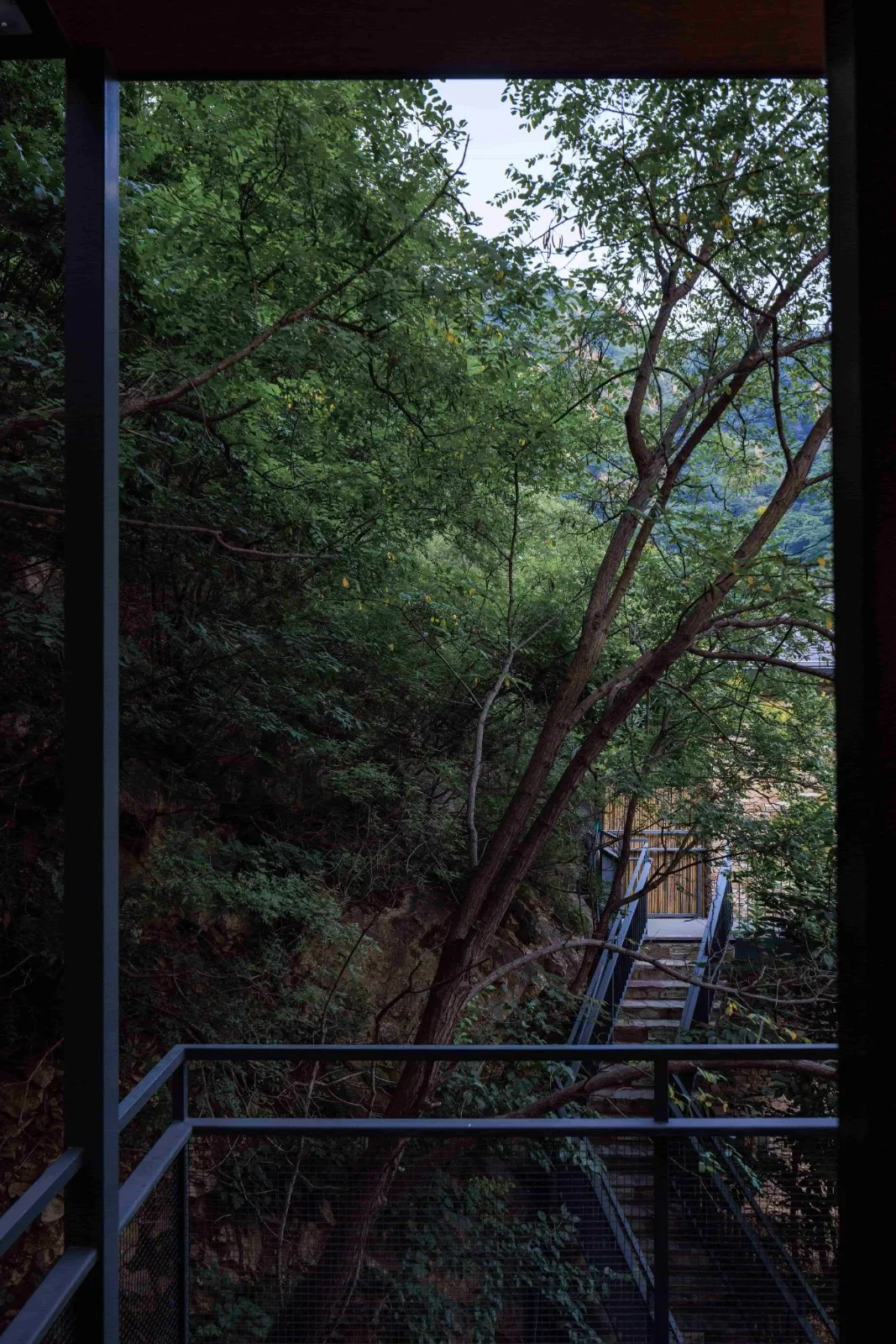
Thick Branches with a Stone Step Faintly Visible Within
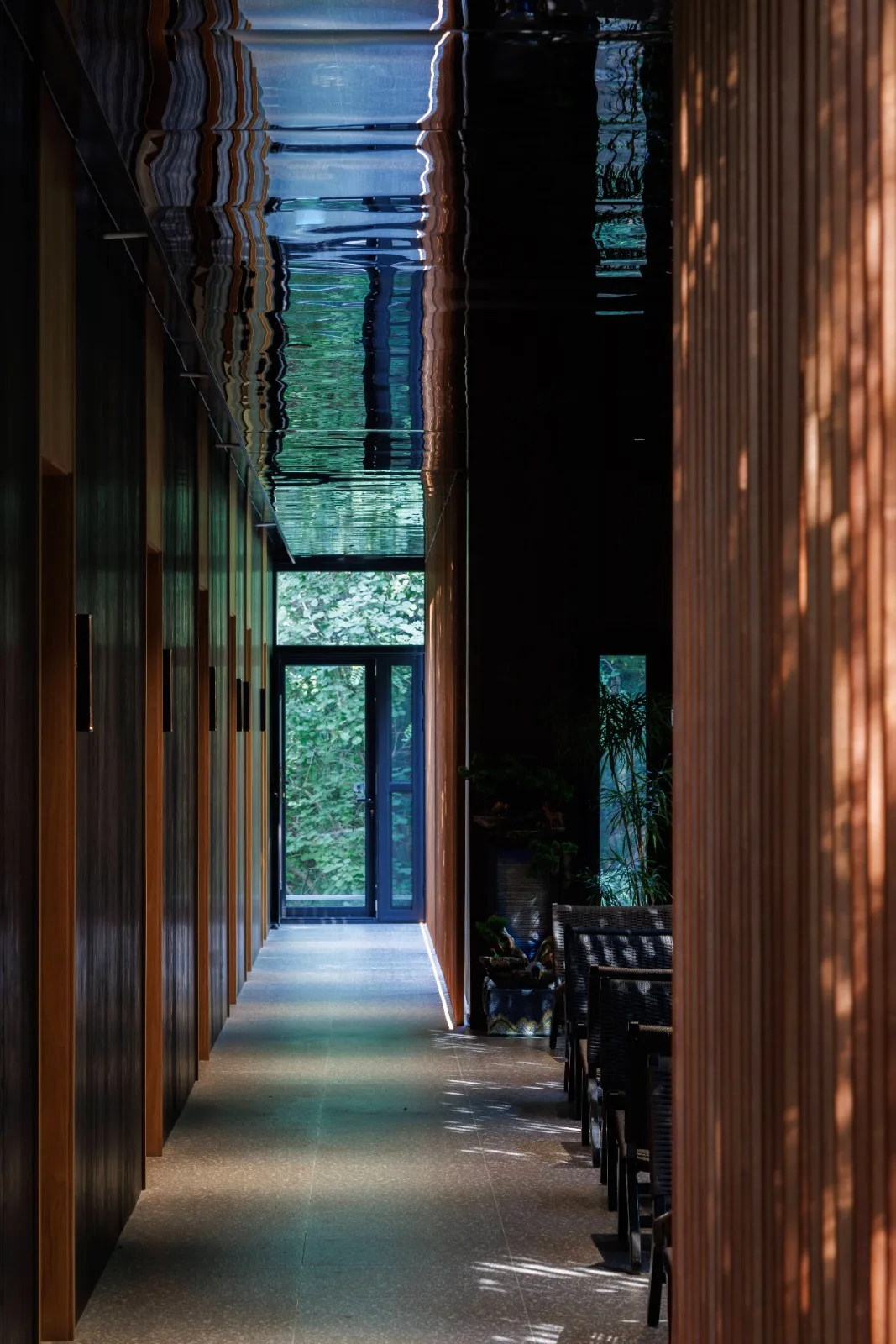
The Mirror Creates an Illusory Effect
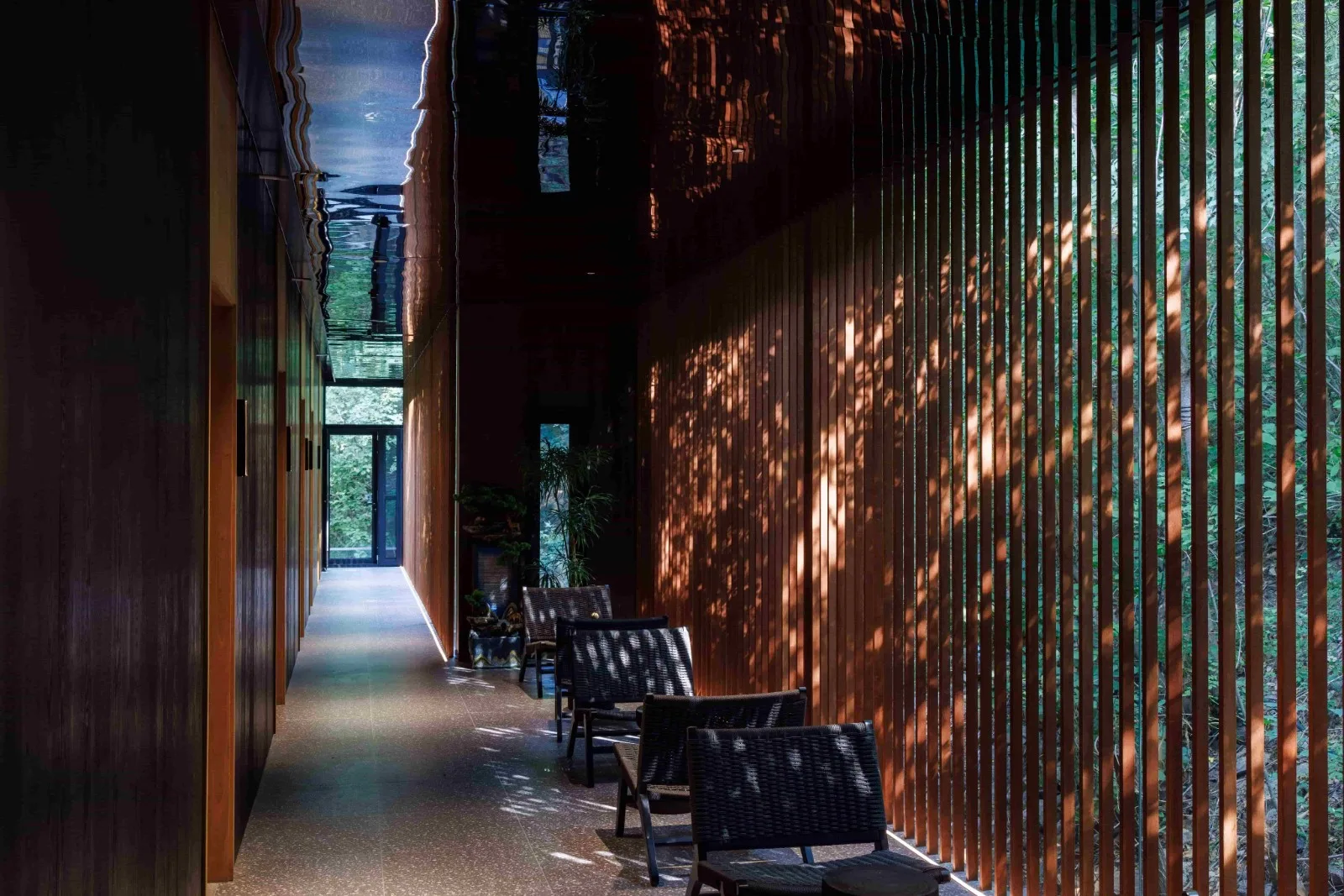
Tree Shadows Spread Throughout the Space
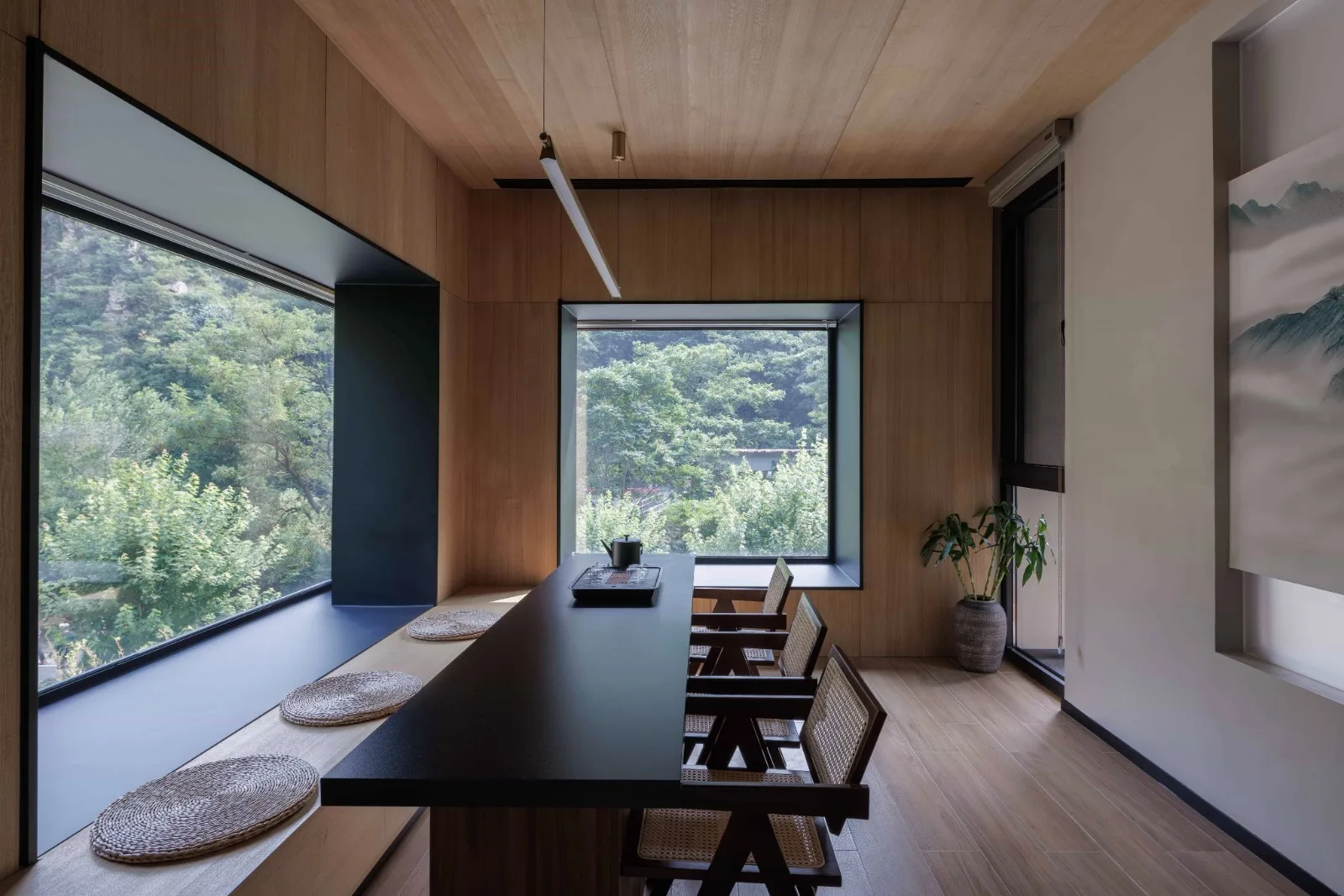
△ The scenic mountain and forest views are perfectly framed by large windows
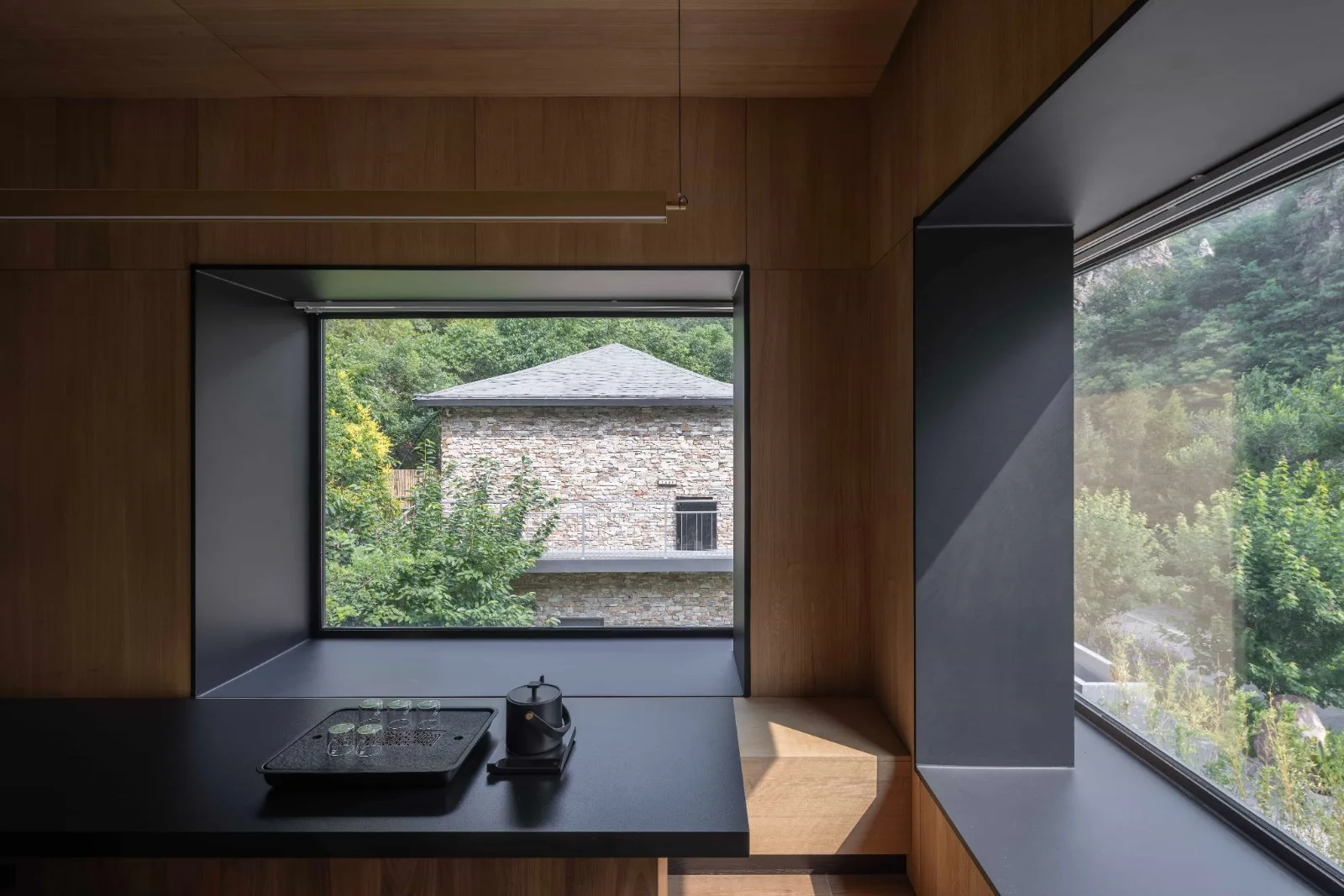
△ Landscape Bay Window Expands Interior Space
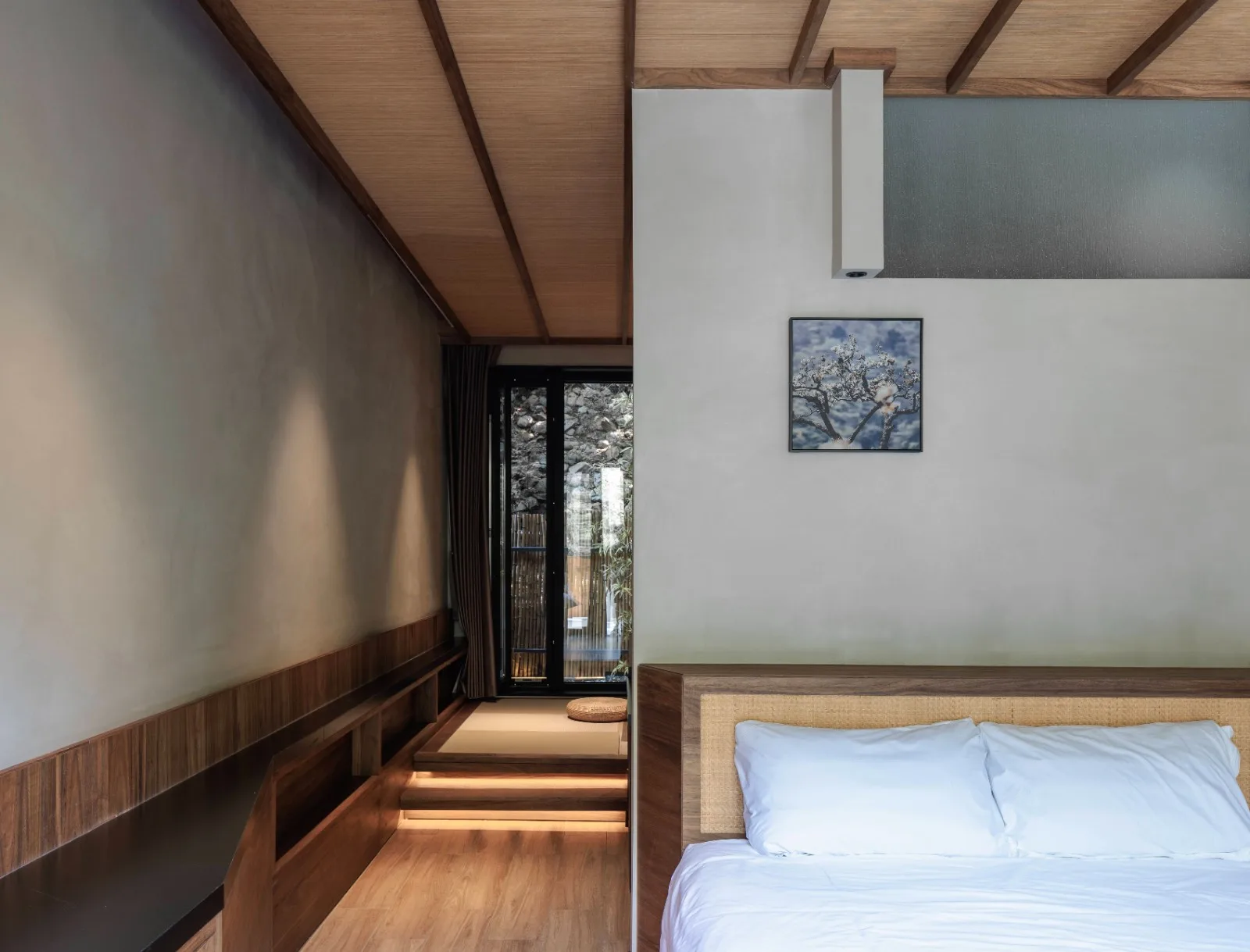
△ Negative Space Transformed into a Scenic Courtyard
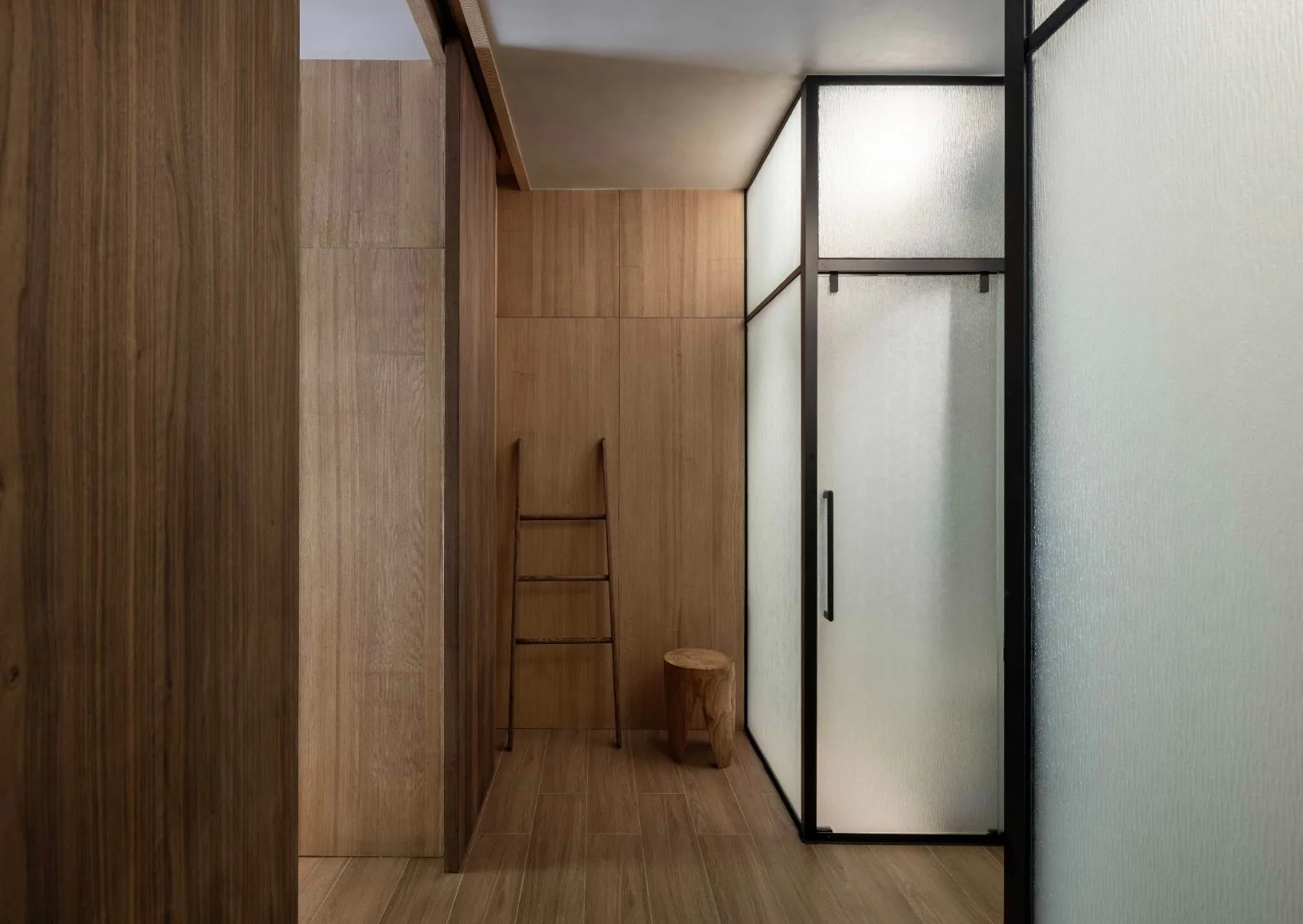
The Warmth of Wood
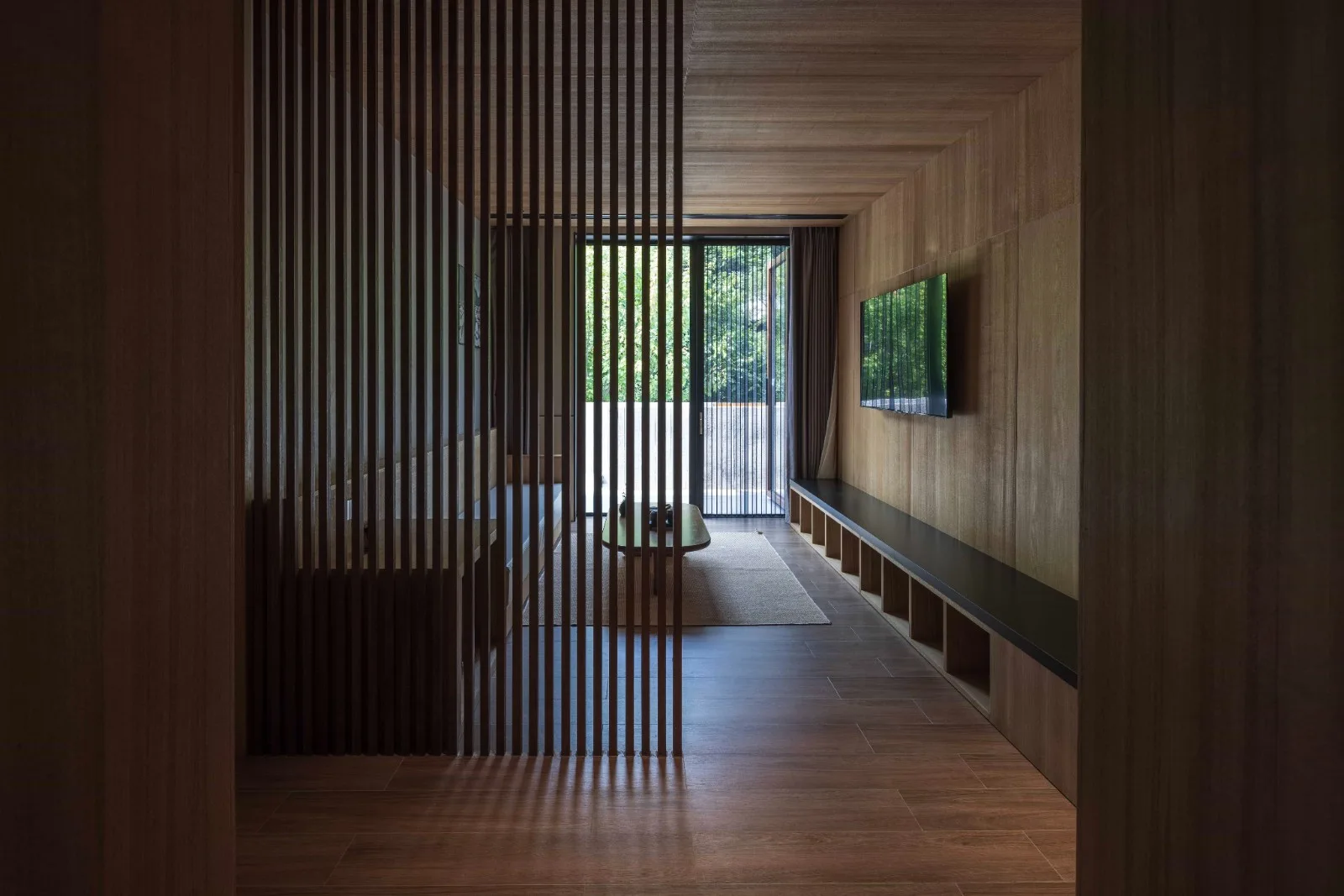
Warm Wood Complementing Cool Greenery
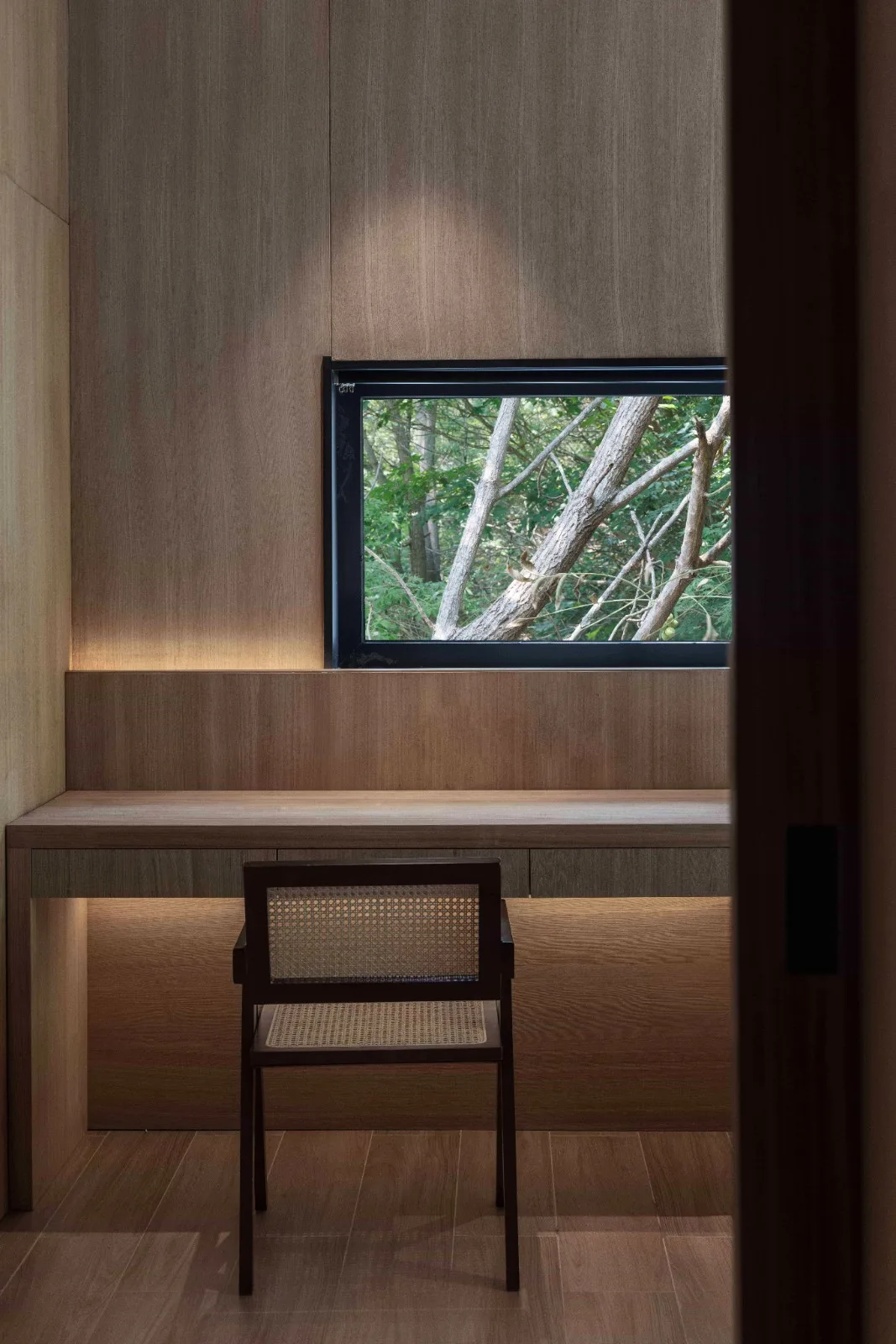
A Painting of an Old Tree
The mountains and rivers are ever-changing, and those who dwell here are masters of leisure. Our ideal homestay is not just a place to stay during travels but a retreat offering an experience far removed from urban life—a place for physical and spiritual healing. Accompanied by a gentle breeze and a pot of hot tea, awaiting the sound of mountain rain and immersing in the present moment, appreciating overlooked beauty—this, perhaps, is the essence of life.
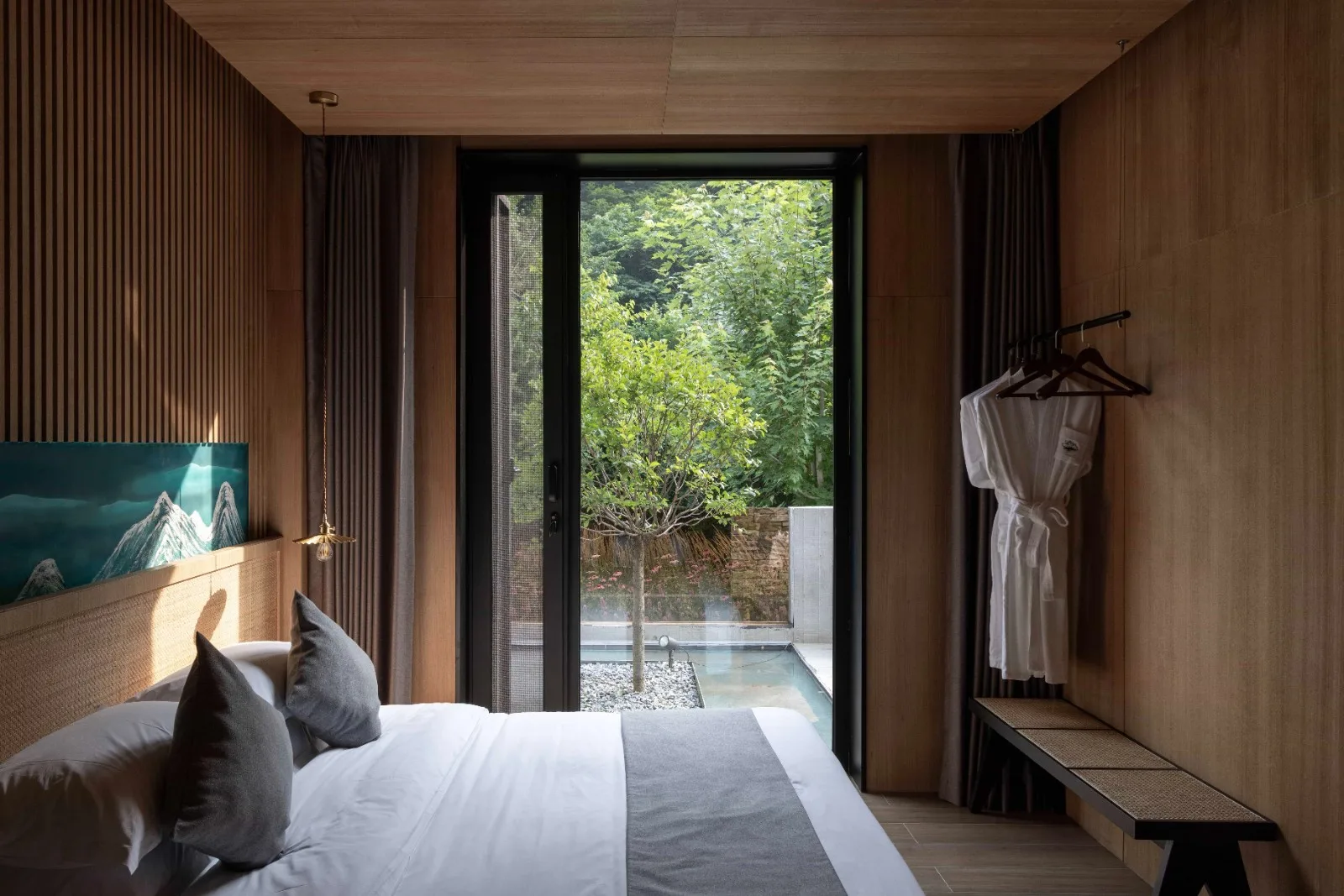
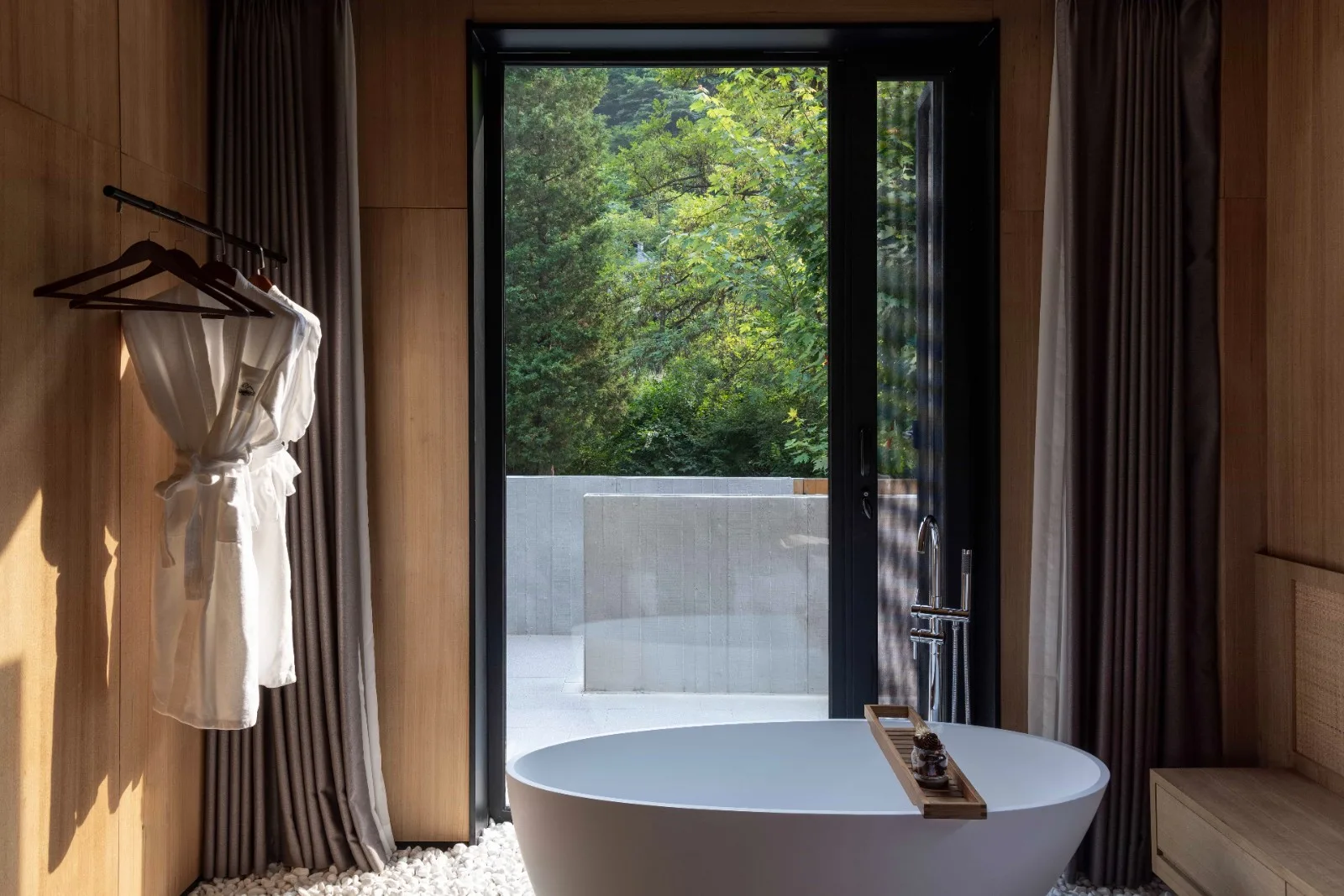
A Warm and Inviting Atmosphere in the Guest Rooms
The Image of Water
For the commercial area located on the creek’s south bank, the design intentionally moves away from the traditional “commercial street” concept. Instead, a gentle water channel connects various functions—coffee bars, restaurants, farmers’ markets, and tea houses—linked by arch bridges. The site’s elevation differences are utilized to create a dynamic mountain park that complements the homestay buildings across the creek.
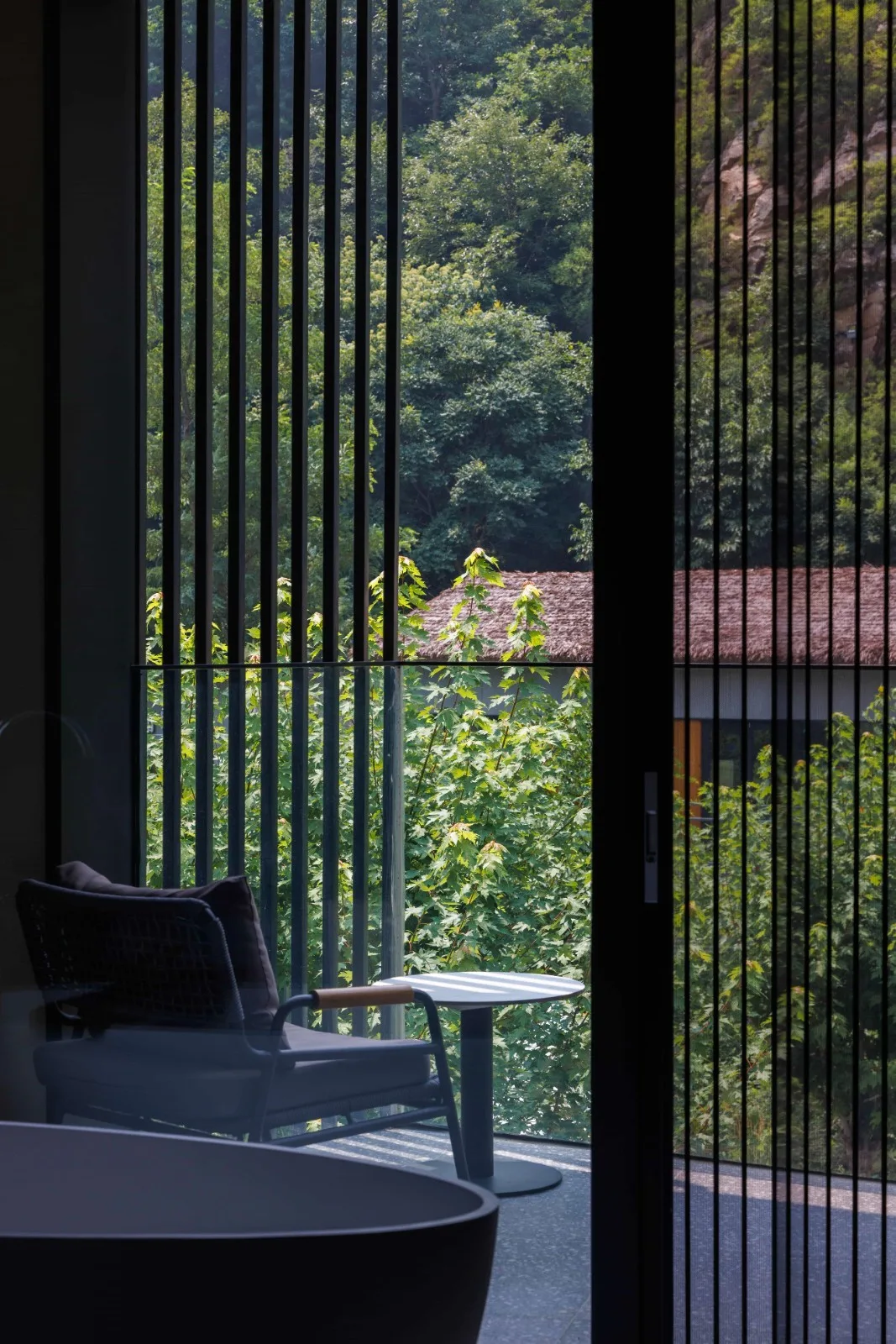
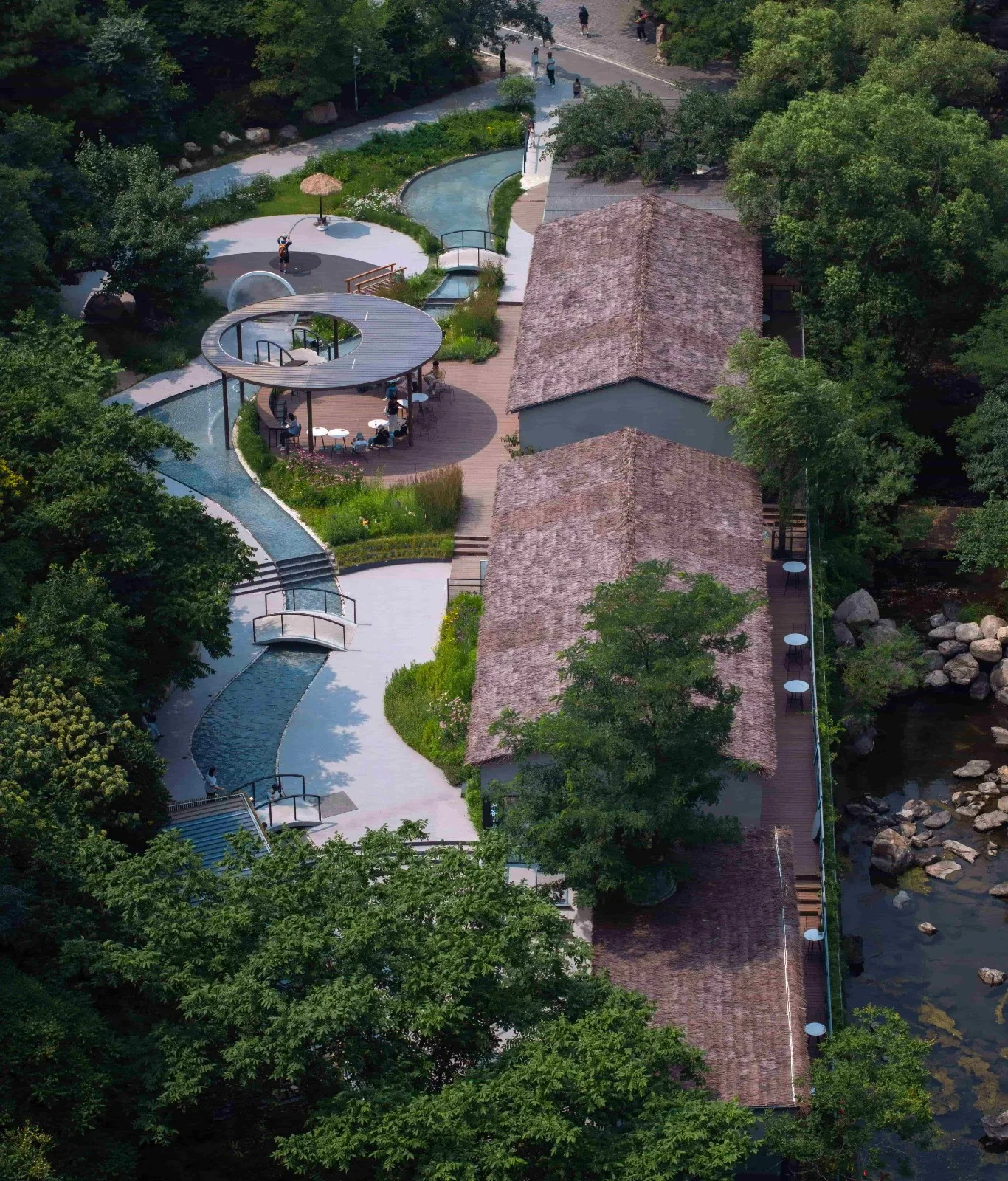
Water Serves as the Connecting Thread Among Functional Areas
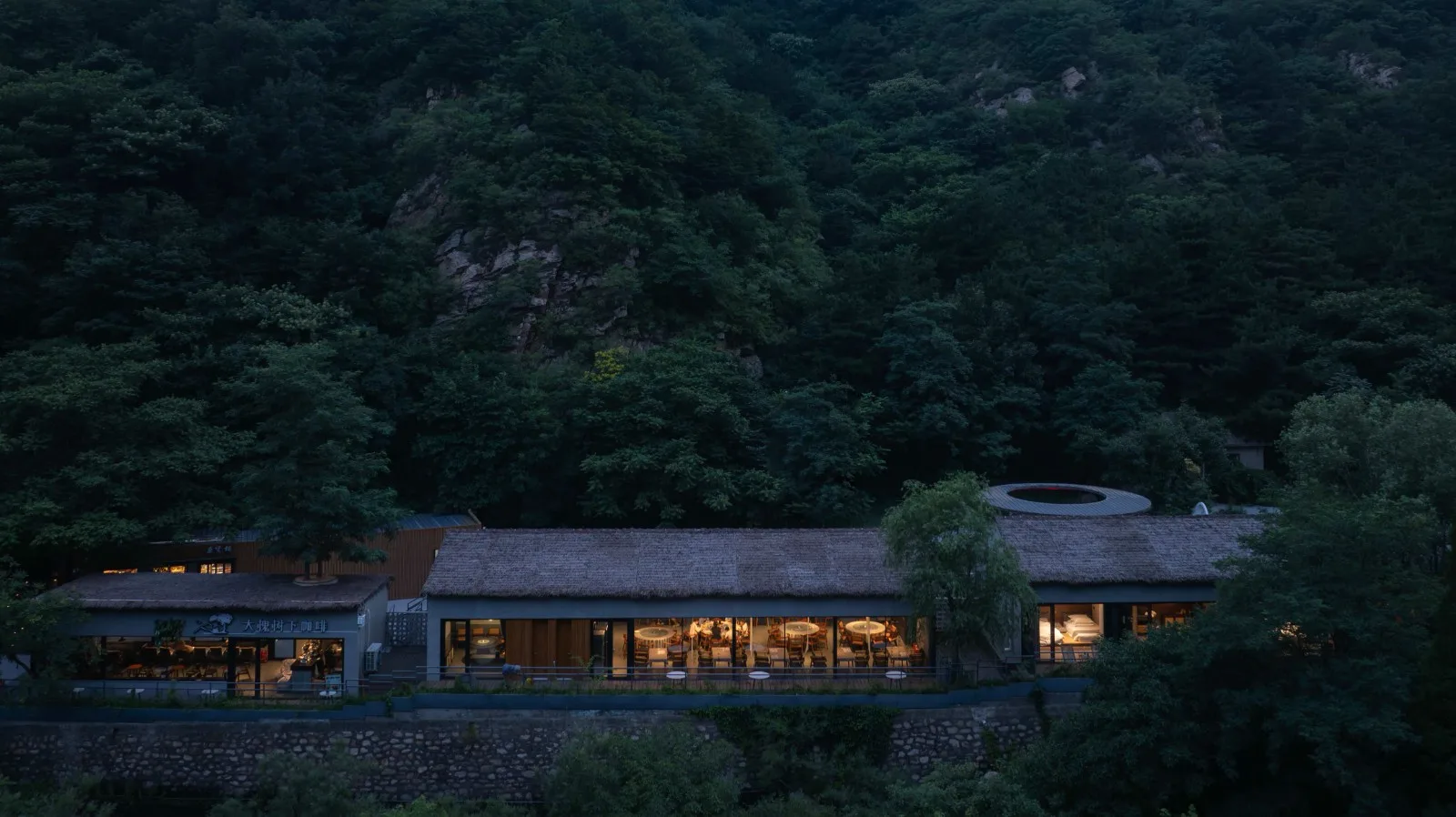
Commercial Area Illuminated at Night
Epilogue
Many have asked about the meaning behind the name “Xinye Yizhu.” In ancient Chinese literature, “Shenye” refers to a secluded retreat, often inhabited by a hermit, an anonymous figure. This reflects our design philosophy—intervening subtly in each project, avoiding overt self-expression, and striving to create spaces that deeply resonate with visitors.
The “Shuiyun Township” project embodies this approach and has been a valuable experience. From the initial survey to completion, over two years, we witnessed all four seasons of this land alongside the owner and construction team. The cherry trees planted early on now bear fruit, shared with visiting tourists.
Project Drawings
Project Information
Project Name: Shuiyun Township
Design Period: July 2021 – March 2022
Construction Period: September 2021 – June 2023
Land Area: 10 acres
Building Area: 1,750 square meters
Architectural Design: Xinye Yizhu Design Studio
Interior Design: Xinye Yizhu Design Studio
Landscape Design: Xinye Yizhu Design Studio
Contact: Zhou Baicen
Locations: Shanghai | Tianjin
Design Team: Wang Juncheng, Zhou Baicen, Yan Tao
Xiaohongshu Account: 8190654246
Project Address: Cangcangyu Village, Xiaying Town, Jizhou District, Tianjin, China
Owner (Company): Ji Yi Culture and Tourism Industry Development (Tianjin) Co., Ltd
Main Materials: Wooden veneer (Tawei), broken bridge aluminum doors and windows (Jinpeng), mirror stainless steel plates (Dianlian), slate, rammed earth panels, wooden formwork concrete panels, bamboo mats, artistic paint
Photography: Liu Guowei
Project Type: Architecture / Interior / Renovation















Must log in before commenting!
Sign Up