
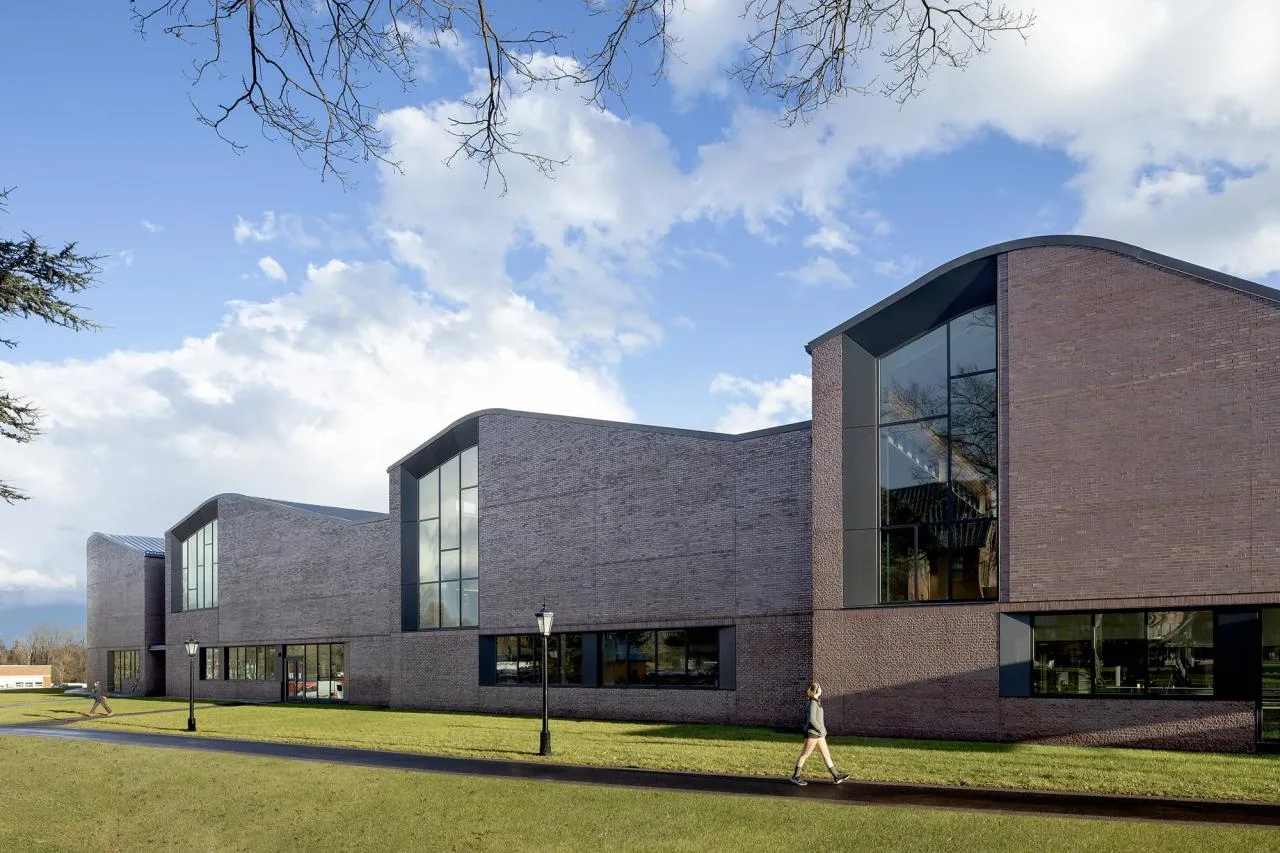
The Cai Chongxin Restaurant and Sports Activity Complex is the second phase in the master plan for Lawrenceville High School. This facility thoughtfully combines various campus resources, including entertainment, wellness, sports, and dining, reshaping student life on campus. Sasaki recently completed the first phase, which features a new restaurant, swimming pool, ice rink, fitness center, as well as supporting logistics and locker rooms. The second phase, scheduled for completion in 2024, will add a hall with a basketball court, two multifunctional halls, and renovations to existing venues.
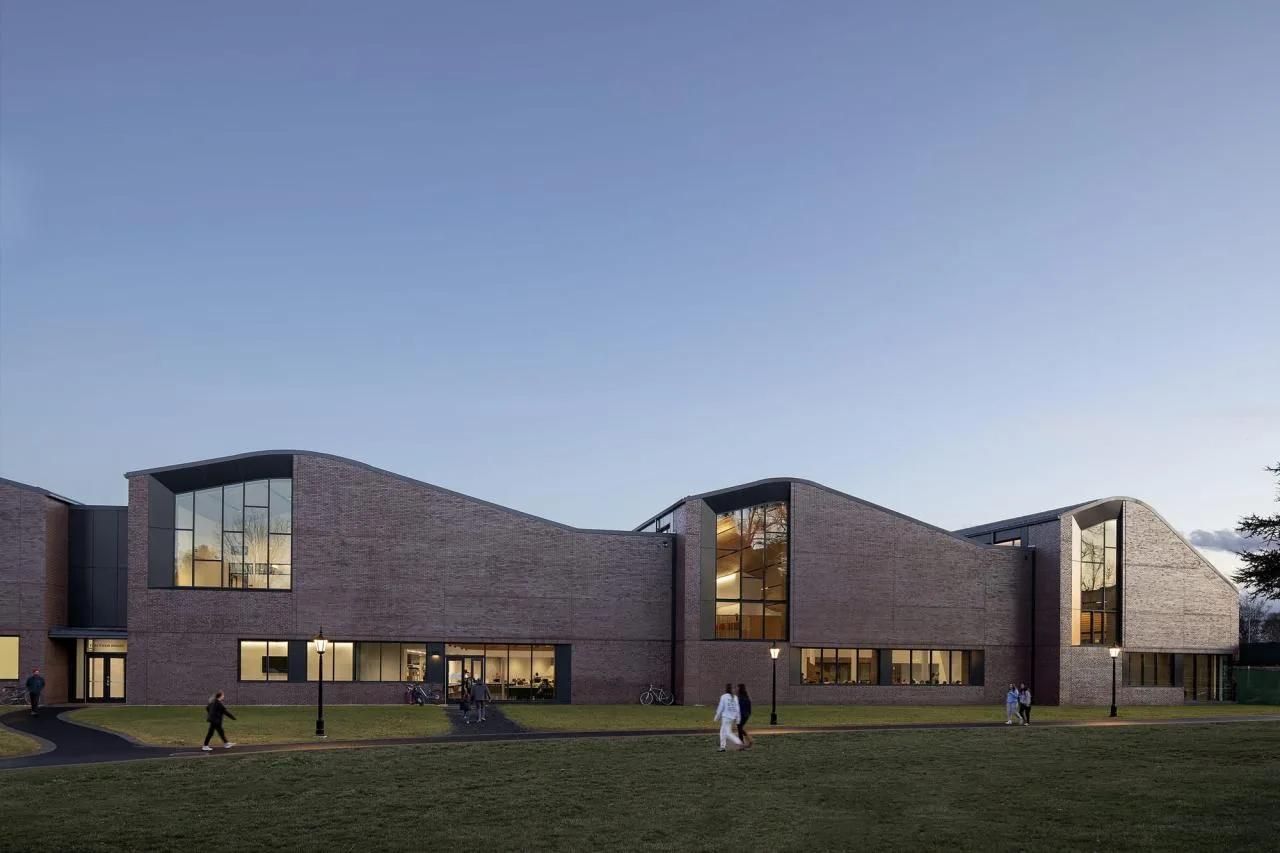
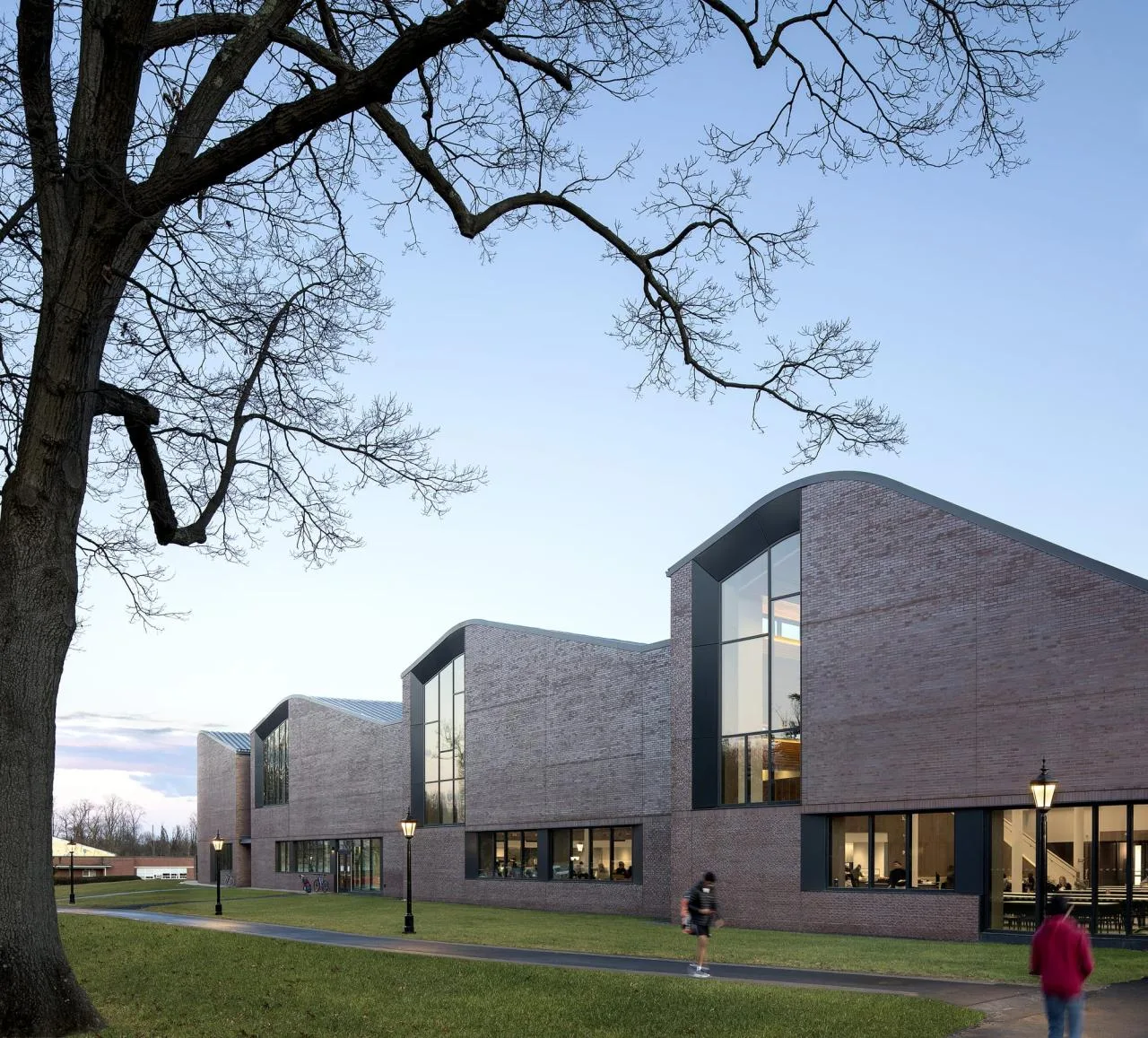
Design Approach: Scale and Roofscape. Sports facilities typically require large volumes, which can disrupt the visual harmony of campus buildings, especially at Lawrenceville High School, where most structures are low-rise. Therefore, controlling the height of the new sports complex, particularly given its proximity to student dormitories and the Kirby Science Building, was a critical design consideration.
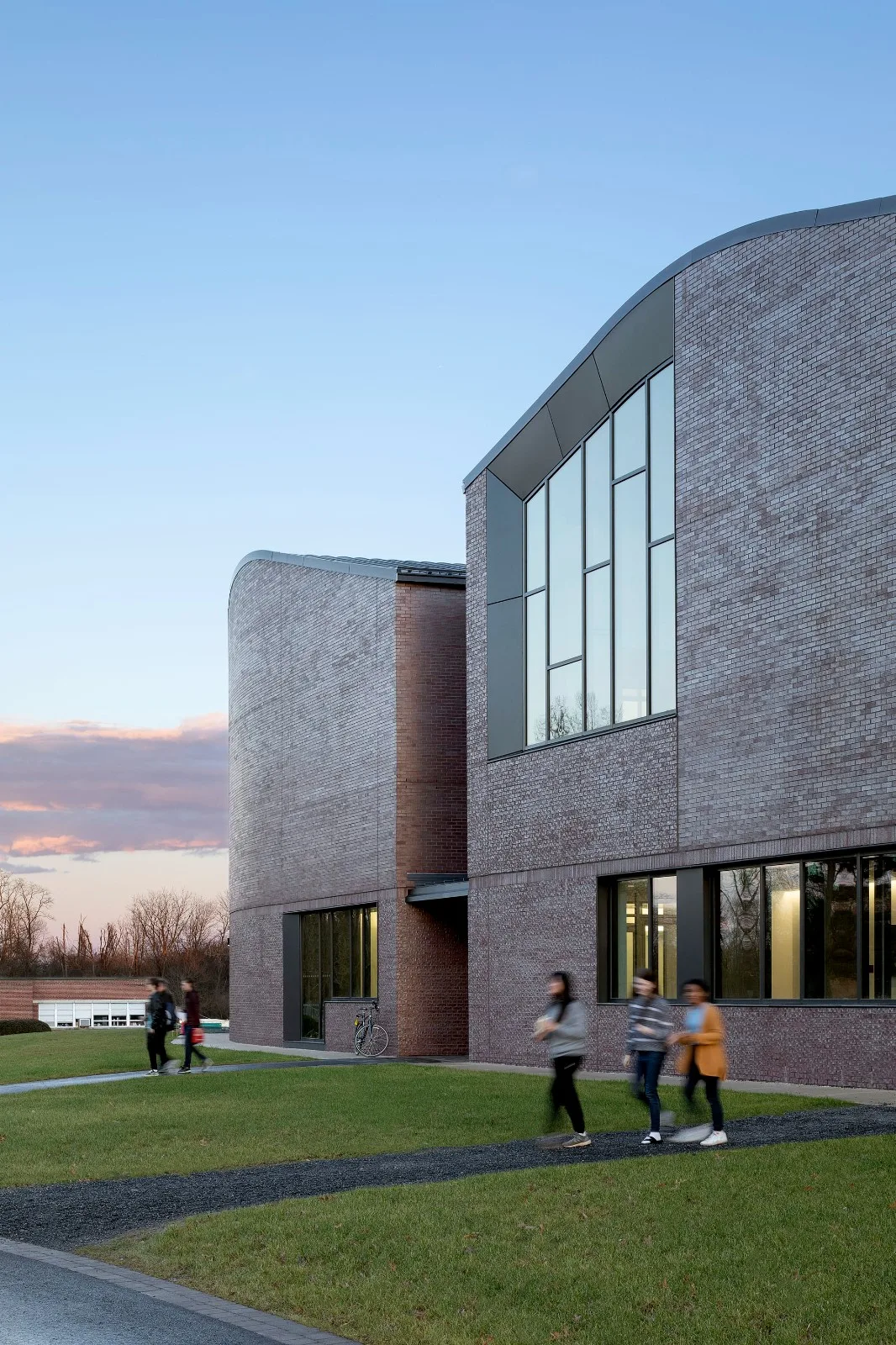
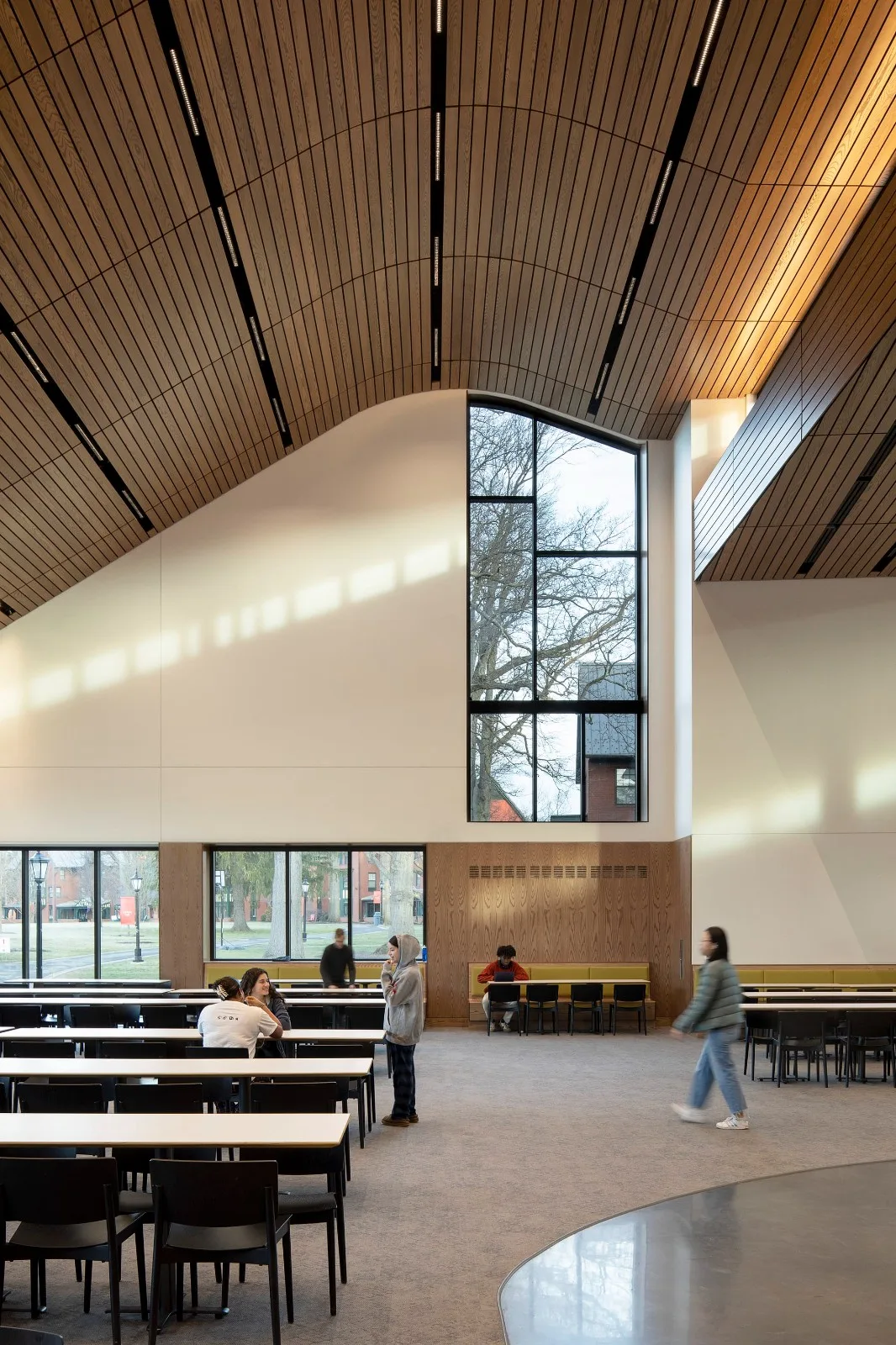
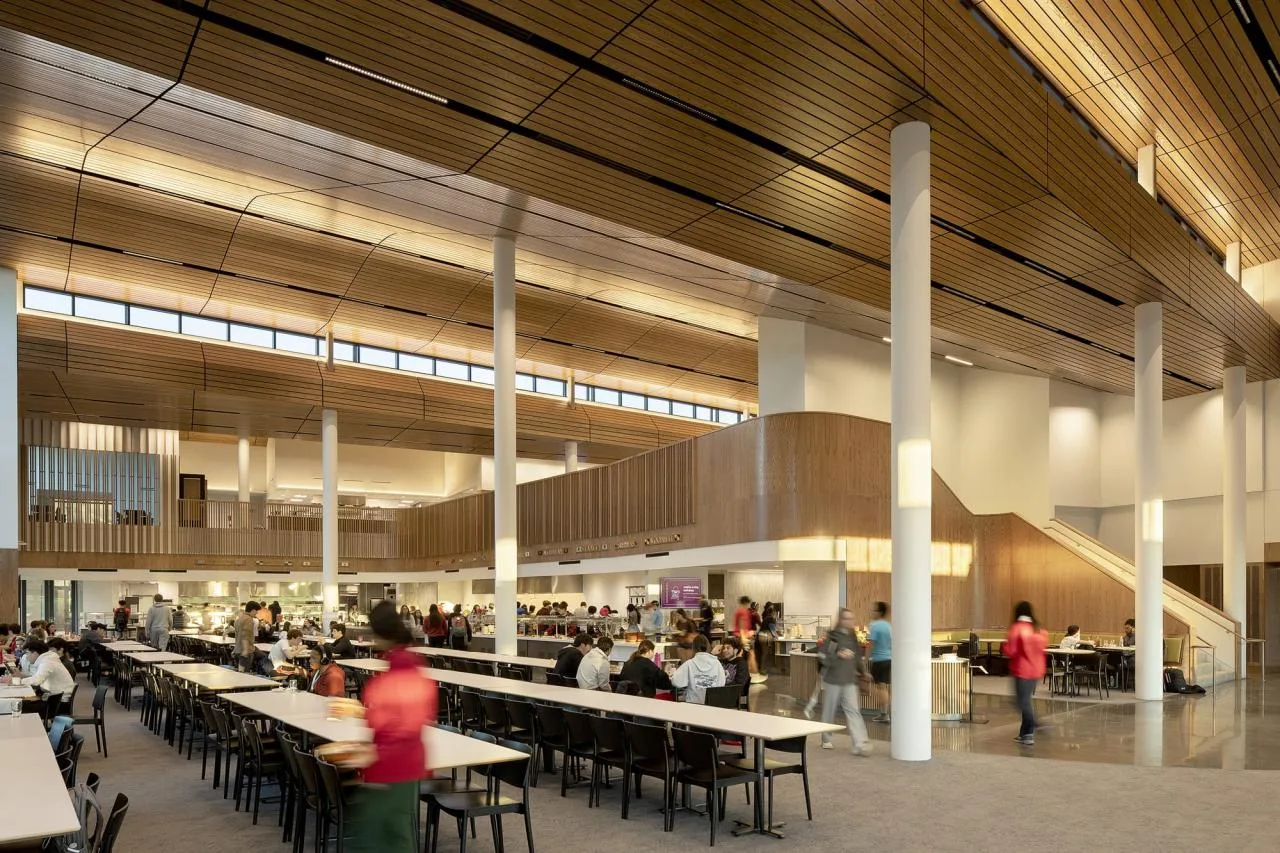
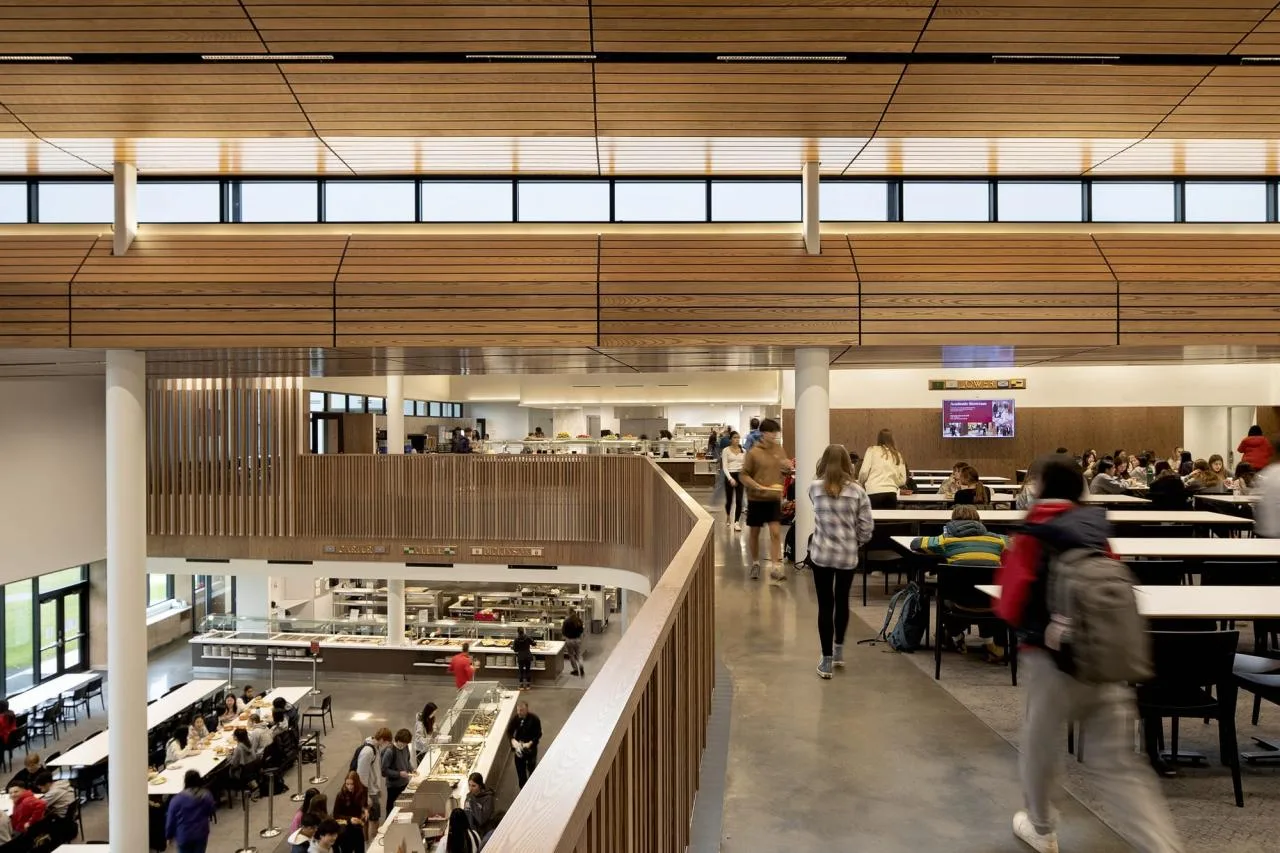
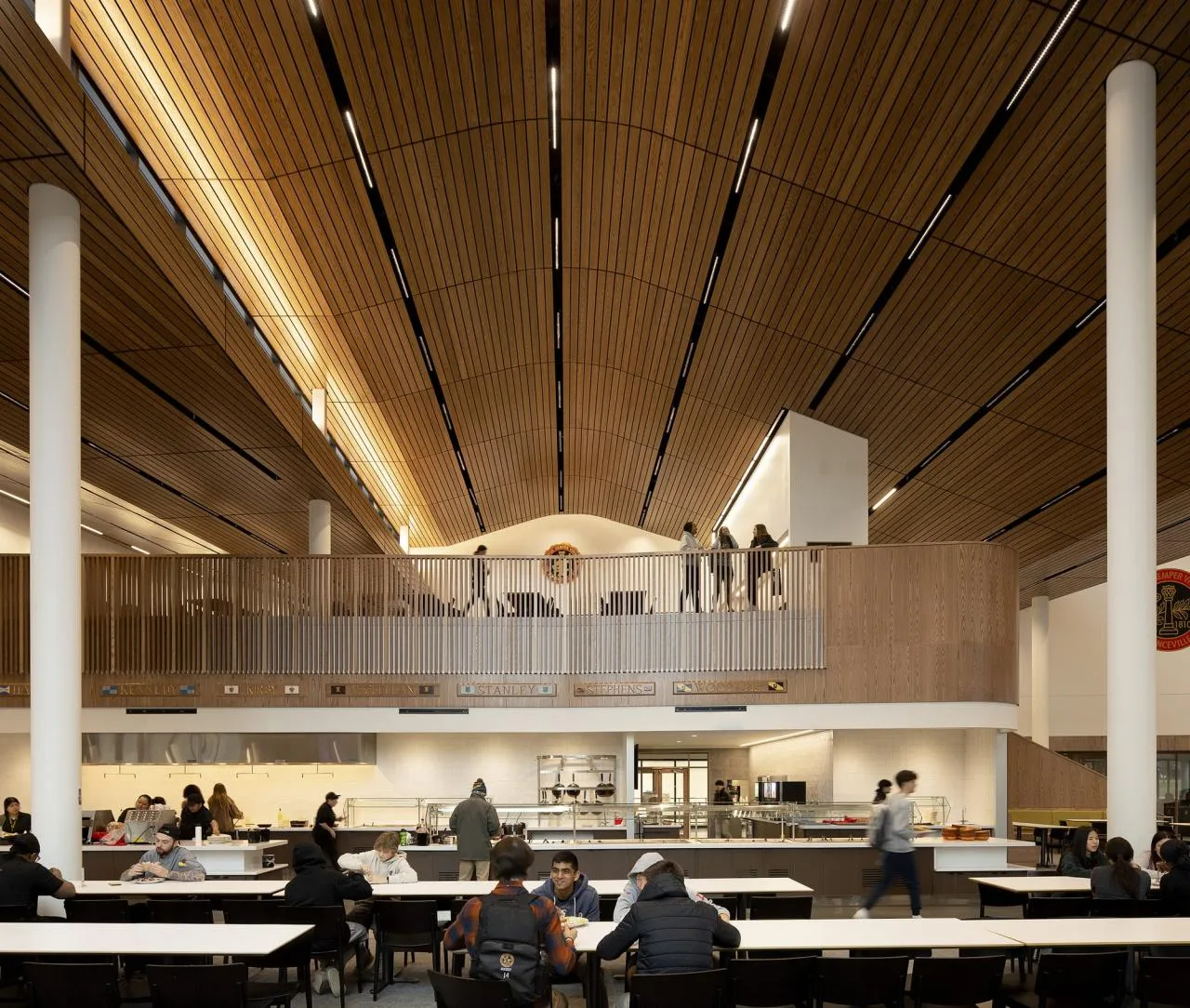
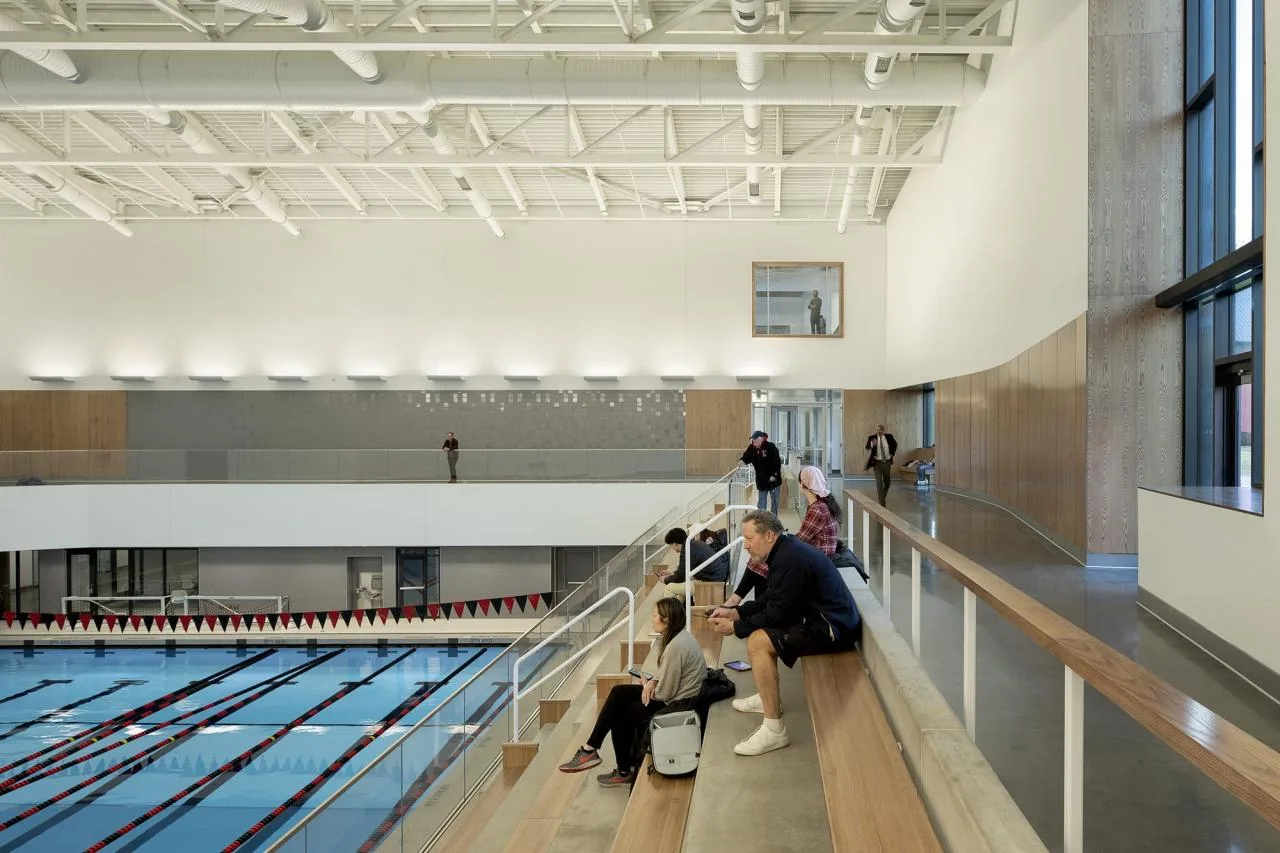
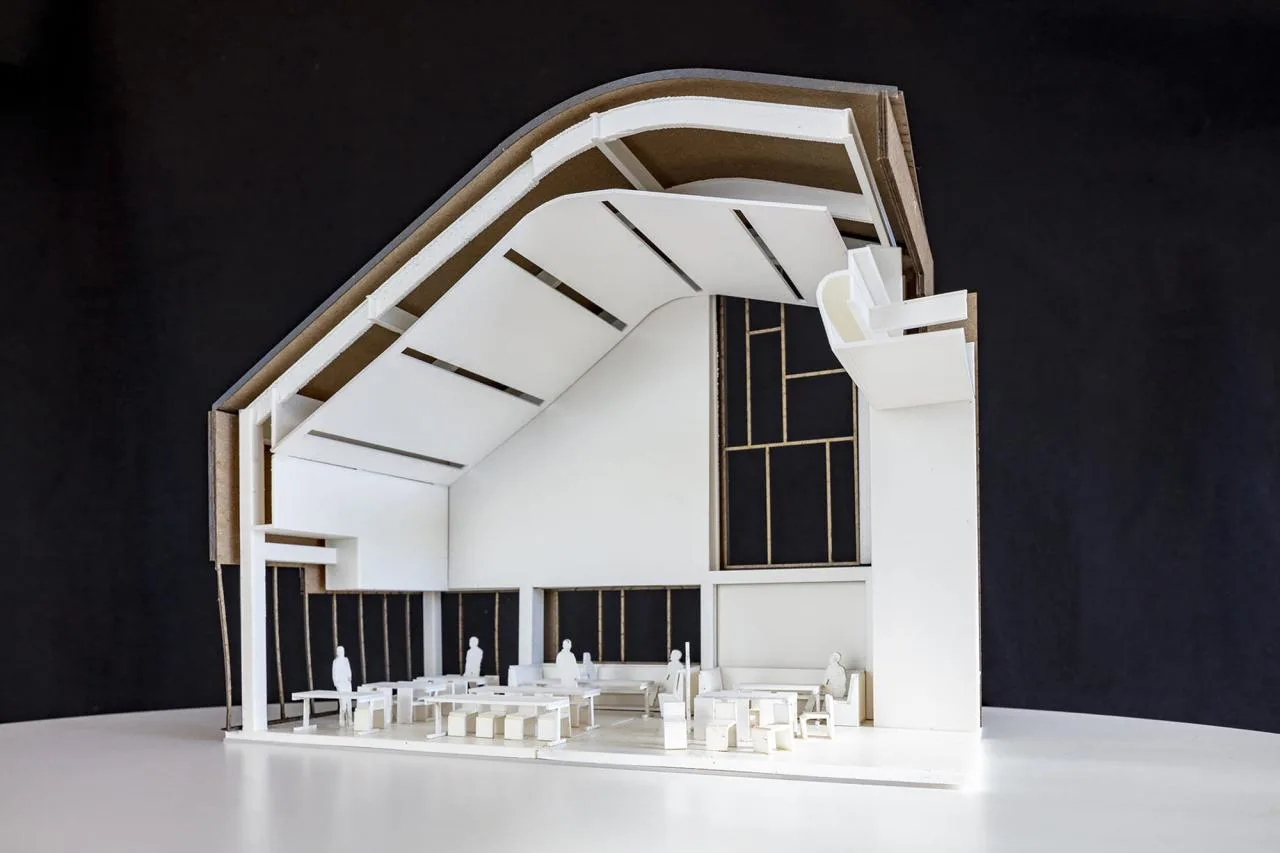
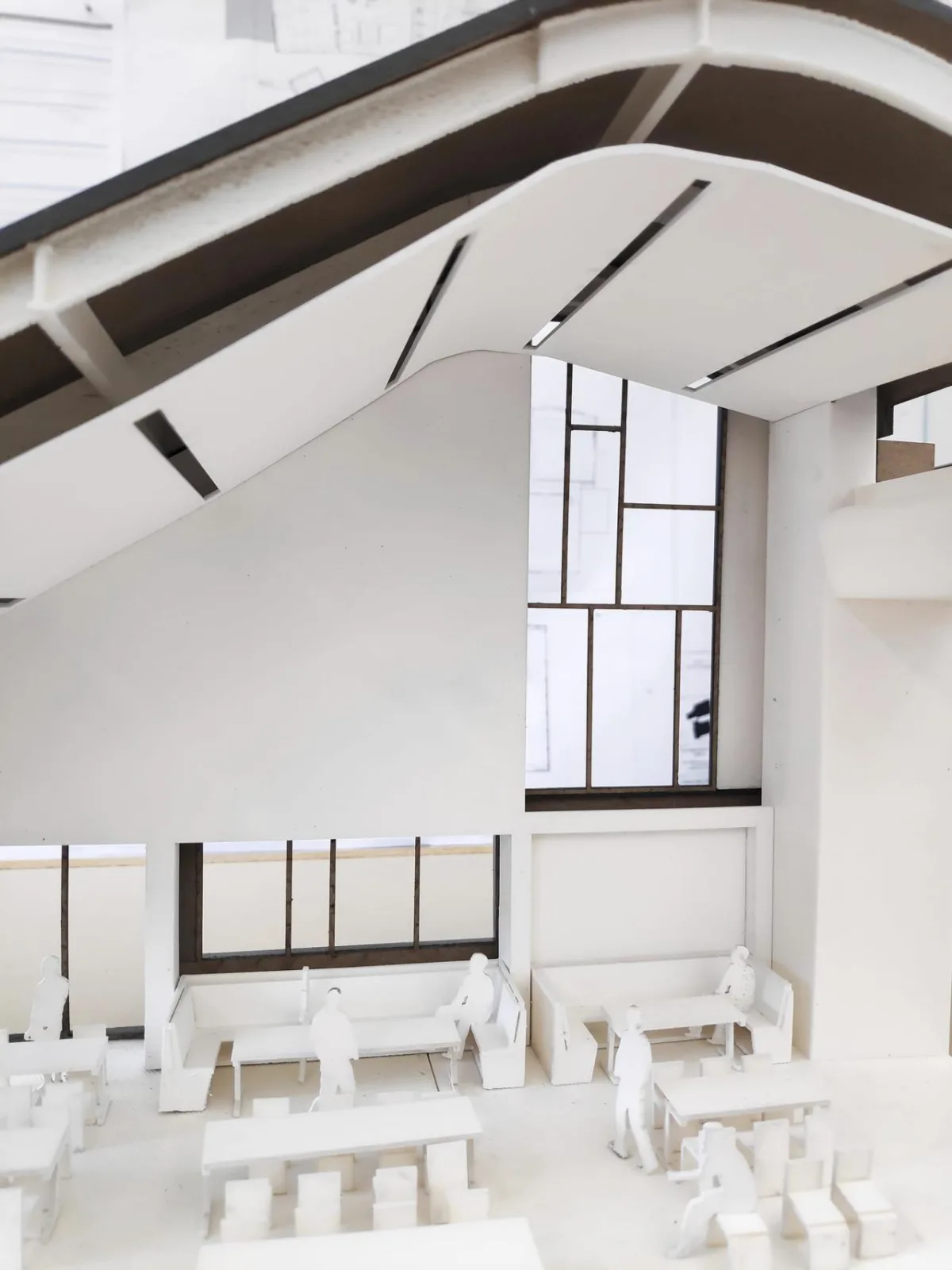
The large volumes required for swimming pools, ice rinks, and basketball courts are cleverly recessed into the lower floors. This design takes advantage of the site’s topography, allowing the upper level to serve as spectator seating with clear views of all venues. The curvilinear roof unifies the building’s visual identity while breaking down its mass. Echoing the graceful curves of the existing sports hall’s structural framework, the new building connects two straight sections with a curved peak, giving it a distinct character. The concave ceiling design allows natural horizontal light to filter through the restaurant eaves and a concealed mechanical room, creating open, airy spaces for the pool and rink while softening the scale of these large facilities.
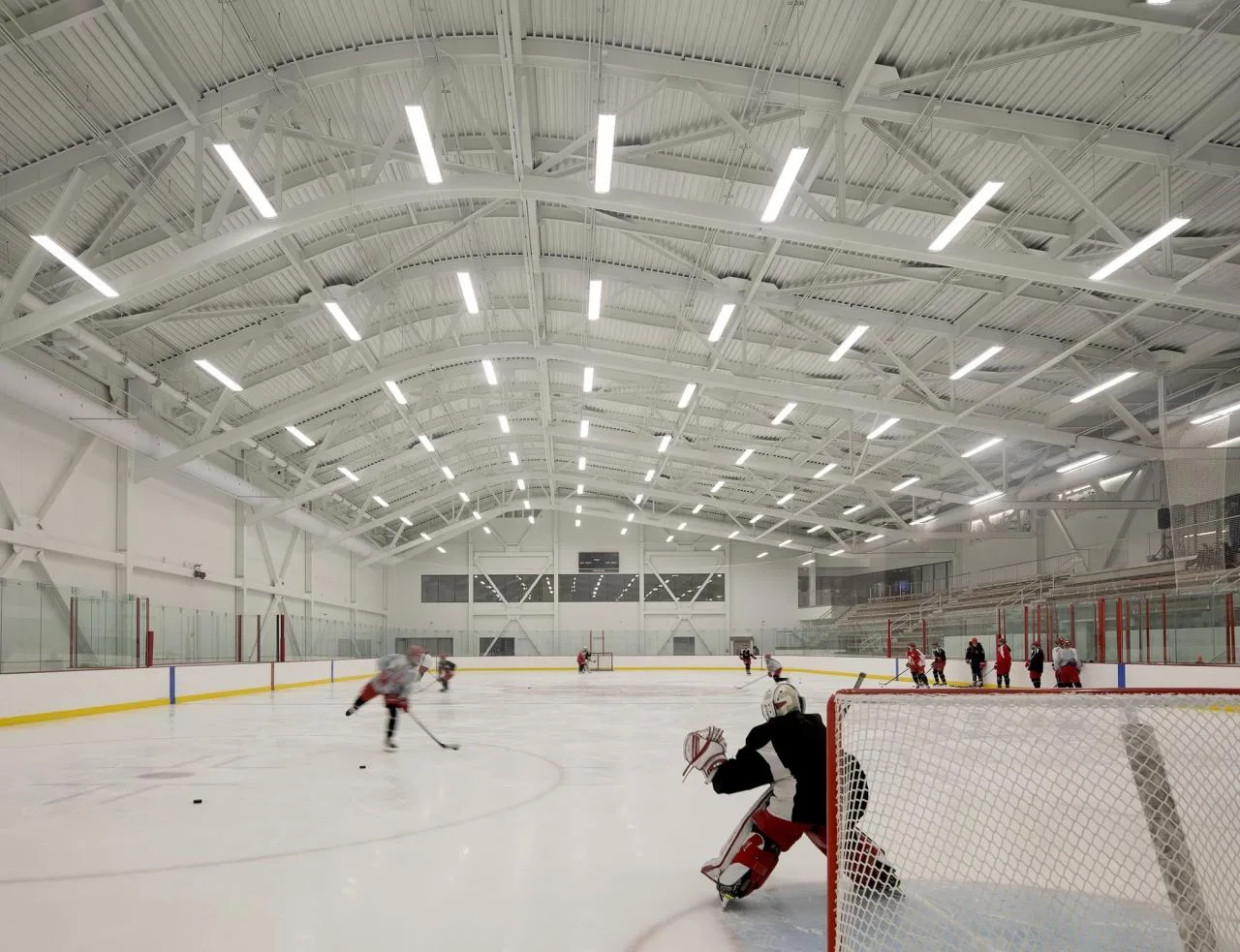
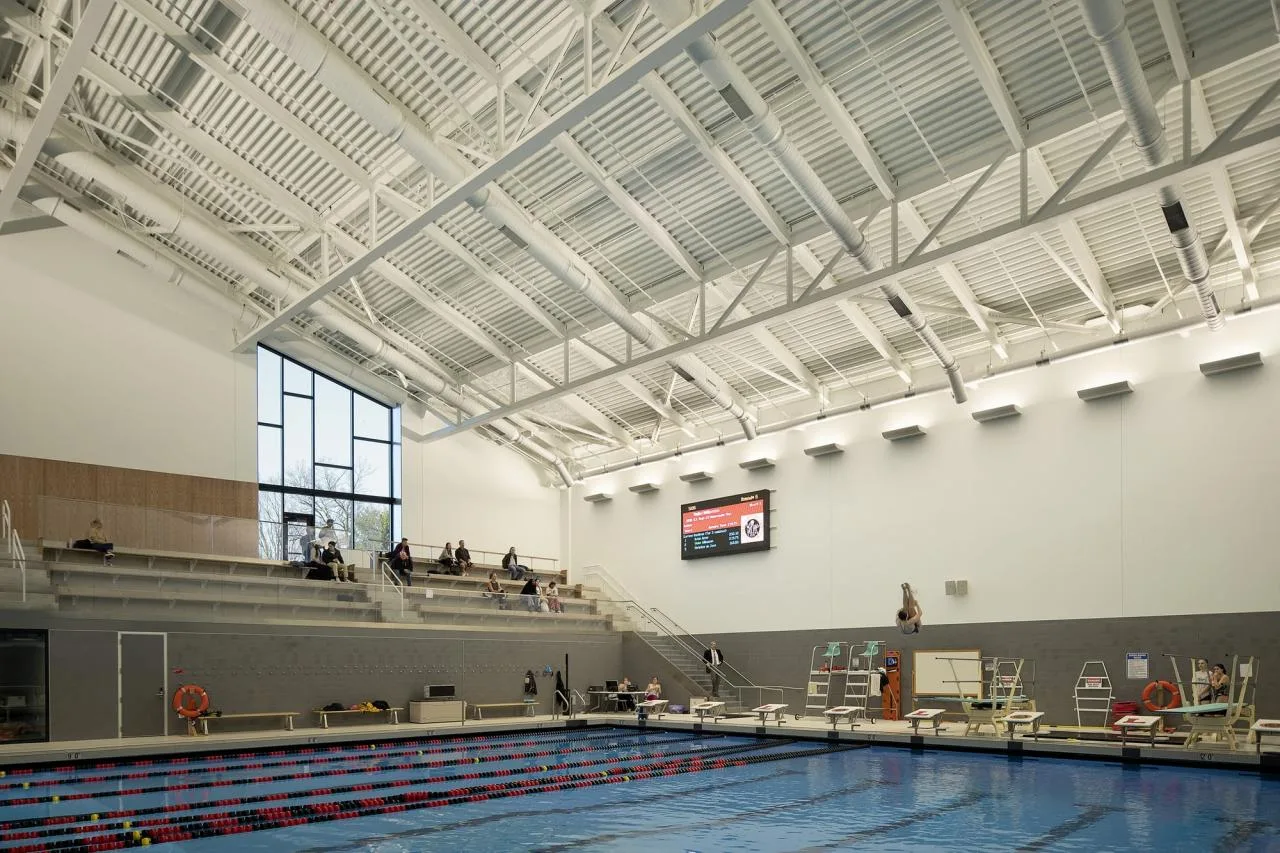
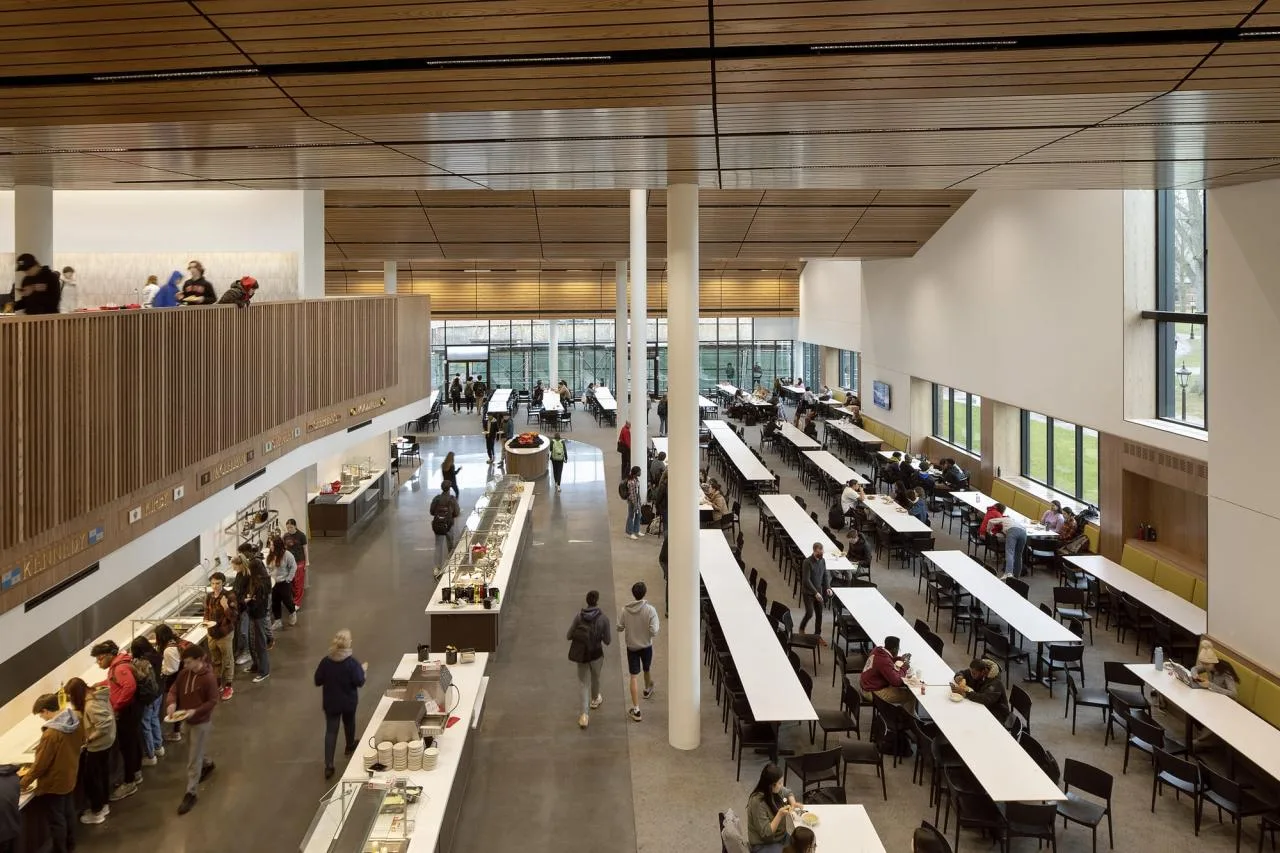
Circular Design Concept. This project integrates the dining area under one roof to foster interaction between general students and athletes. The school’s decision to make the building accessible to everyone has a significant impact on daily campus life. It transforms the complex into a hub where students participate in diverse activities throughout the day. The new restaurant accommodates over 500 students and faculty members daily, addressing the campus’s dining needs. Additionally, a mezzanine level is dedicated to first-year students to nurture a sense of belonging and community.
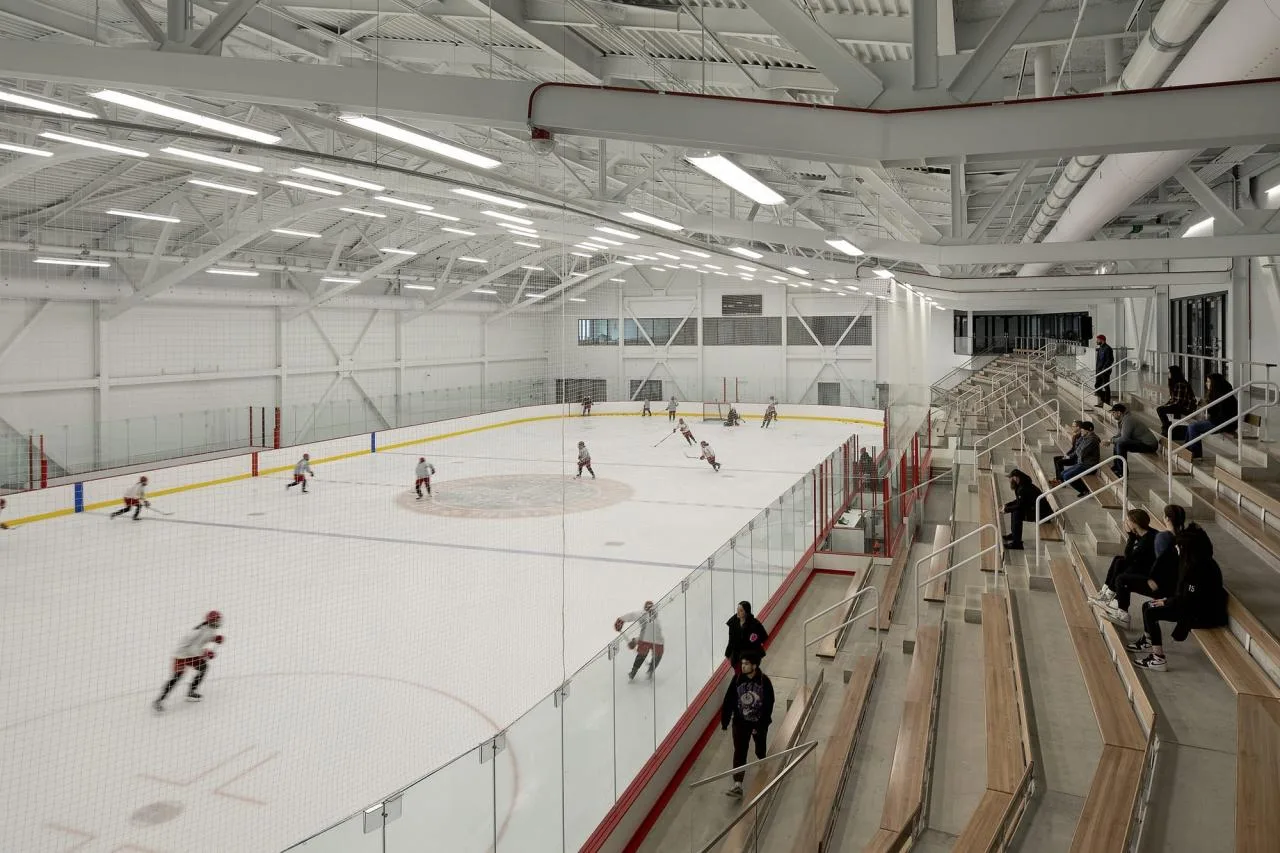
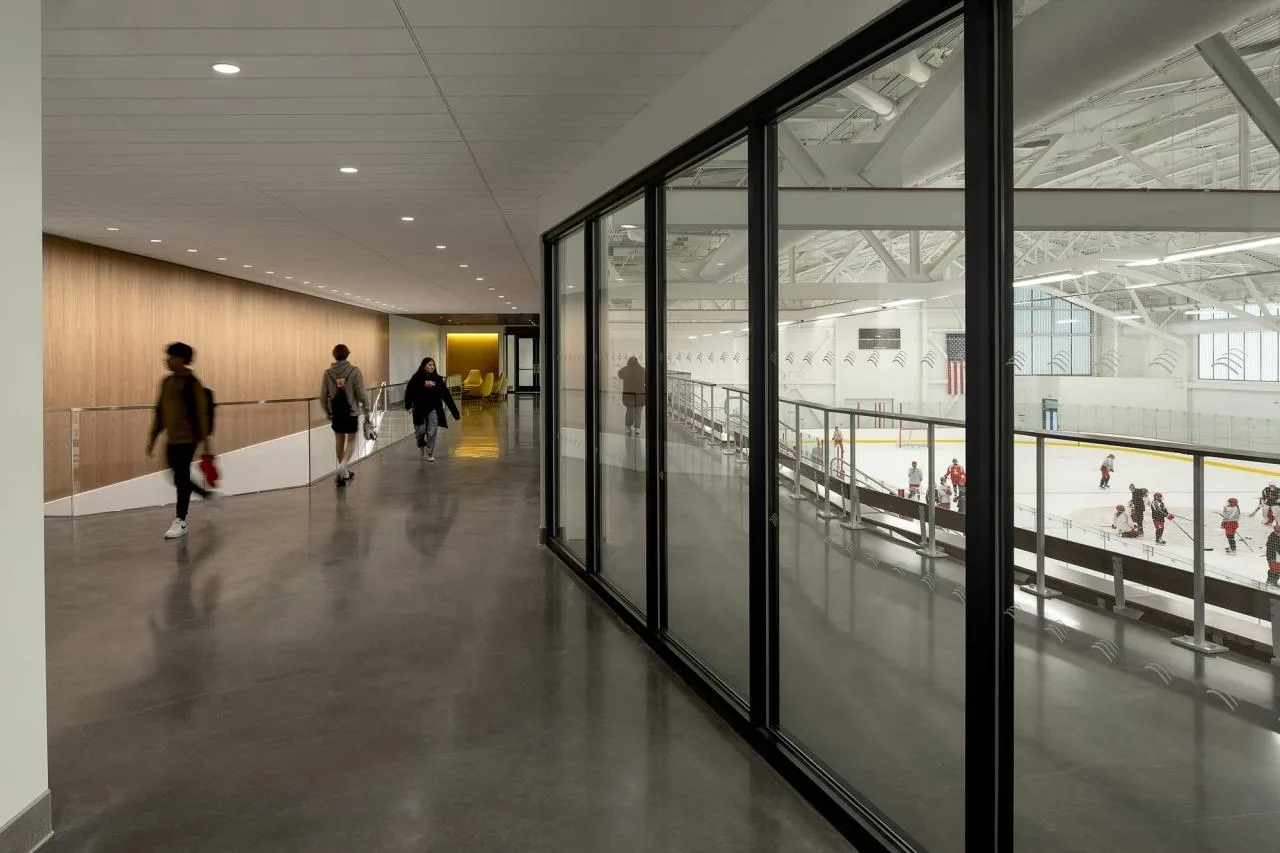
Streamlined Circulation. The building’s layout clearly separates user routes by assigning primary groups to different floors, simplifying navigation. The upper level functions as a hall that overlooks and connects all venues, featuring large communal spaces like the restaurant and gathering halls that serve as social anchors. The lower level is reserved for athletes, consolidating access from the sports field across the street, visiting competitors, and locker rooms. All main campus access points—from the north, the sports field across the creek, and South Ring Road—converge here, creating an efficient flow for all users.
Project Drawings
△ Model Diagram
△ Model Diagram
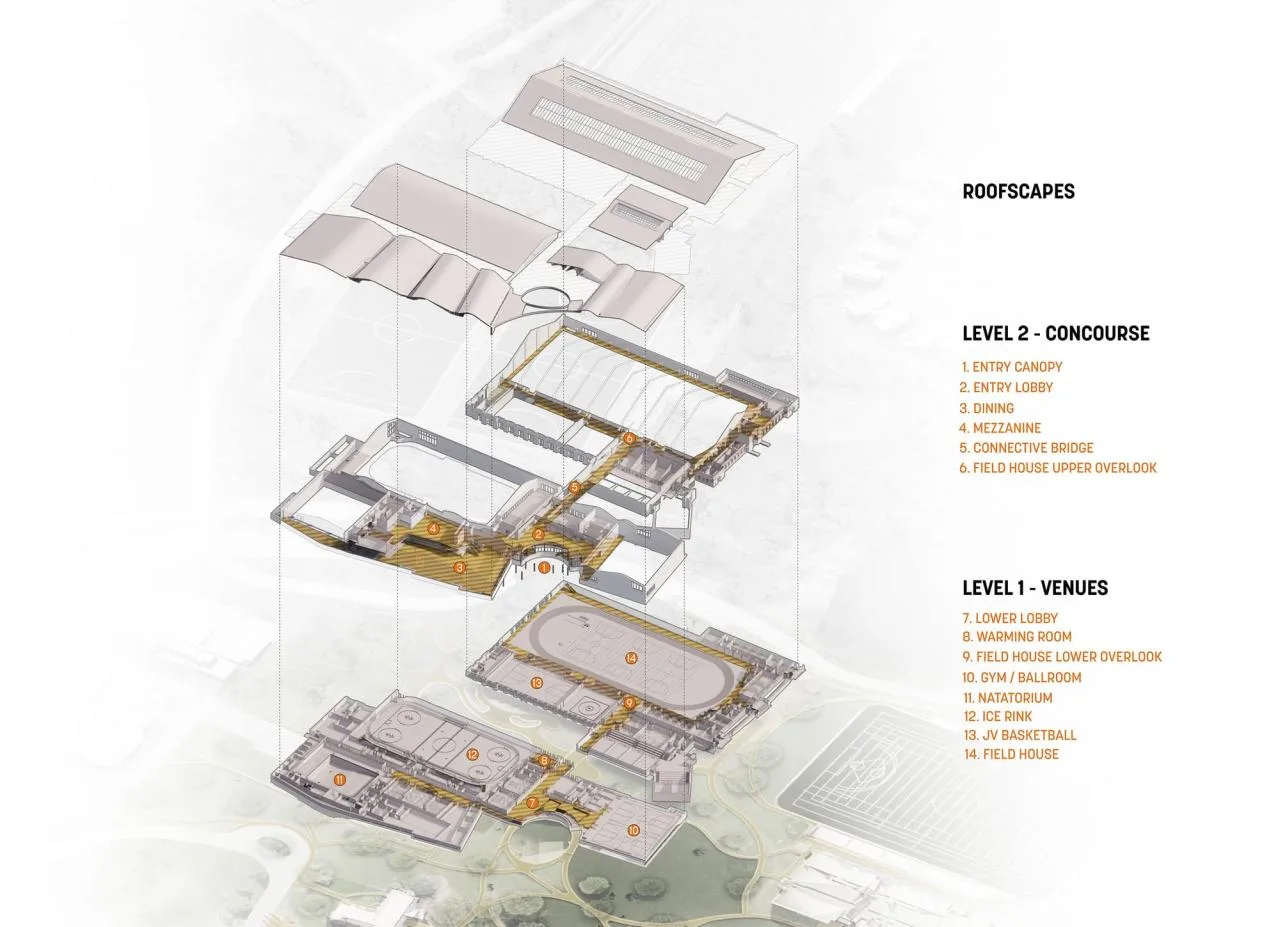
△ Exploded Diagram
Project Information
Architect: Sasaki
Area: 253,000 ft²
Project Year: 2022
Photographer: Jeremy Bittermann
Manufacturers: Alucobond, Armstrong, Assa Abloy, Endicott, Europly Plus, IMETCO, Kalwall®, Kawneer, Vitro®
General Manager: Vinicius Gorgati
Landscape Architects: Andrew Gutterman, Milee Pradham, Kelly Farrell
Team Leader: Marta Guerra Pastrian
Project Manager: Justin Finnicum
Project Architects: Robert H. Genova, Dan Dwyer, Daniel Pryor
Project Designers: Isaac Andrade, Marissa Lisec, Scott Bascom, John Joo
Civil Engineer: Trey Sasser
Sports Manager: Bill Massey
MEP/FP Consultant: van Zelm Engineers
Structural Engineer: LeMessurier Consultants
Civil Engineering: The Reynolds Group
Acoustics Consultant: Acentech
Engineering Consultant: Howe Engineers
Lighting Consultant: LAM PARTNERS
Pool Consultant: Aquatic Design Group Inc
Irrigation: RR Irrigation
Location: United States













Must log in before commenting!
Sign Up