
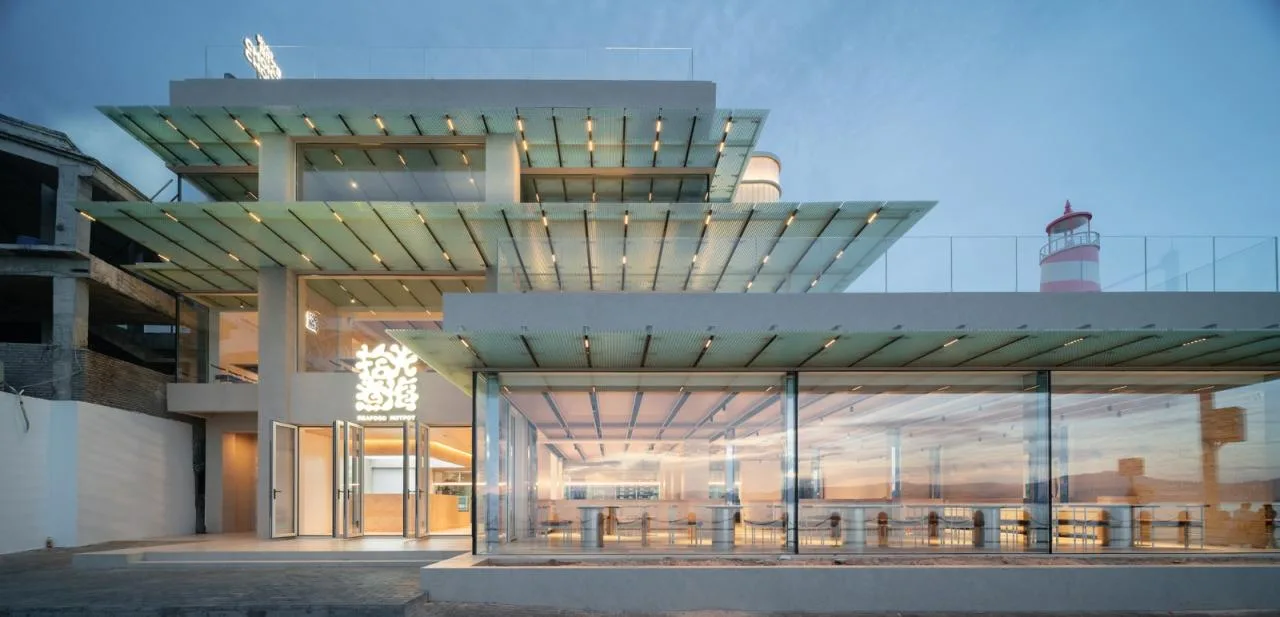
This project is situated on Xidao, a small island near Sanya. It involves the commercial renovation of a self-built house in a fishing village, boasting nearly perfect sea views just steps from the coastline. Unlike other coastal areas in Sanya, known for their strong commercial vibe, Xidao Island retains the simplicity of its original fishing village character. Here, the vastness of the sea brings a unique sense of tranquility and emptiness.
Our primary commercial goal was to fully utilize the sea views. However, simply doing so was not enough to fulfill our vision. We aimed to deepen the emotional connection with the sea and create interactions that enhance that experience.
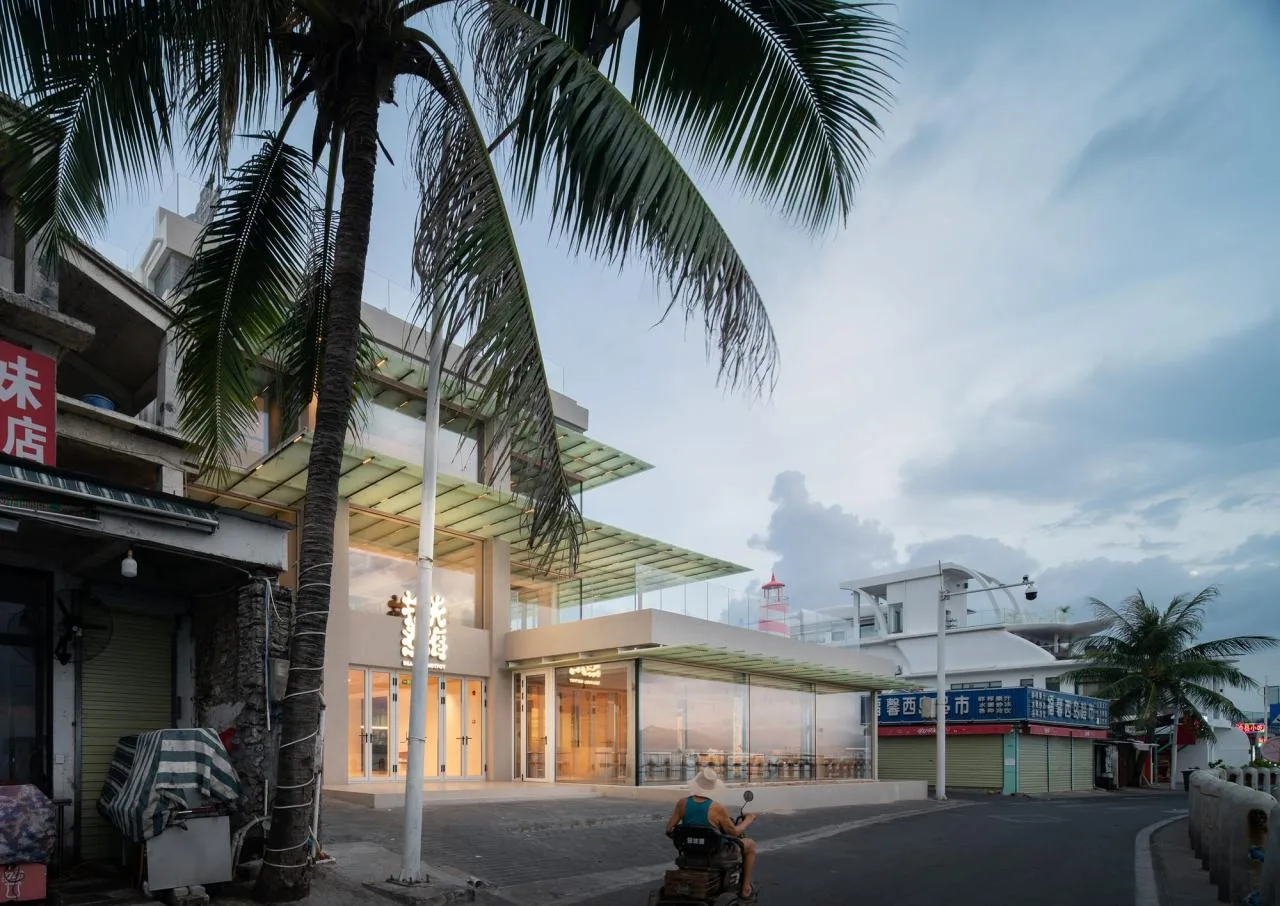
Since this project is a renovation of a traditional homestead within a natural fishing village, it is located extremely close to the sea—just separated by a narrow 4-meter one-way lane. This proximity is especially valuable considering the usual regulation in Sanya requires new buildings to be set back 300 meters from the shoreline. Being so near the sea, we explored ways to emotionally connect the house with the seascape.
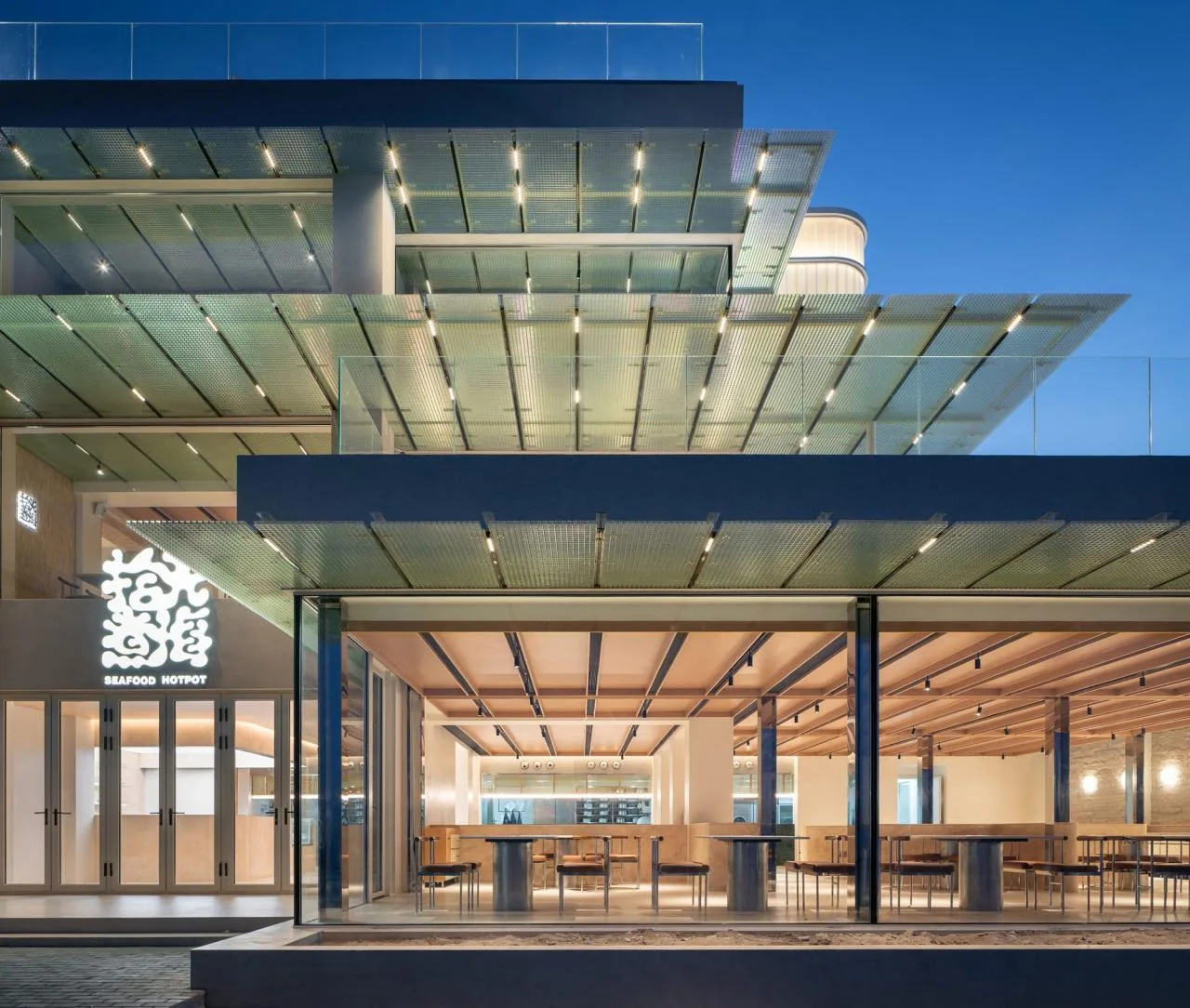
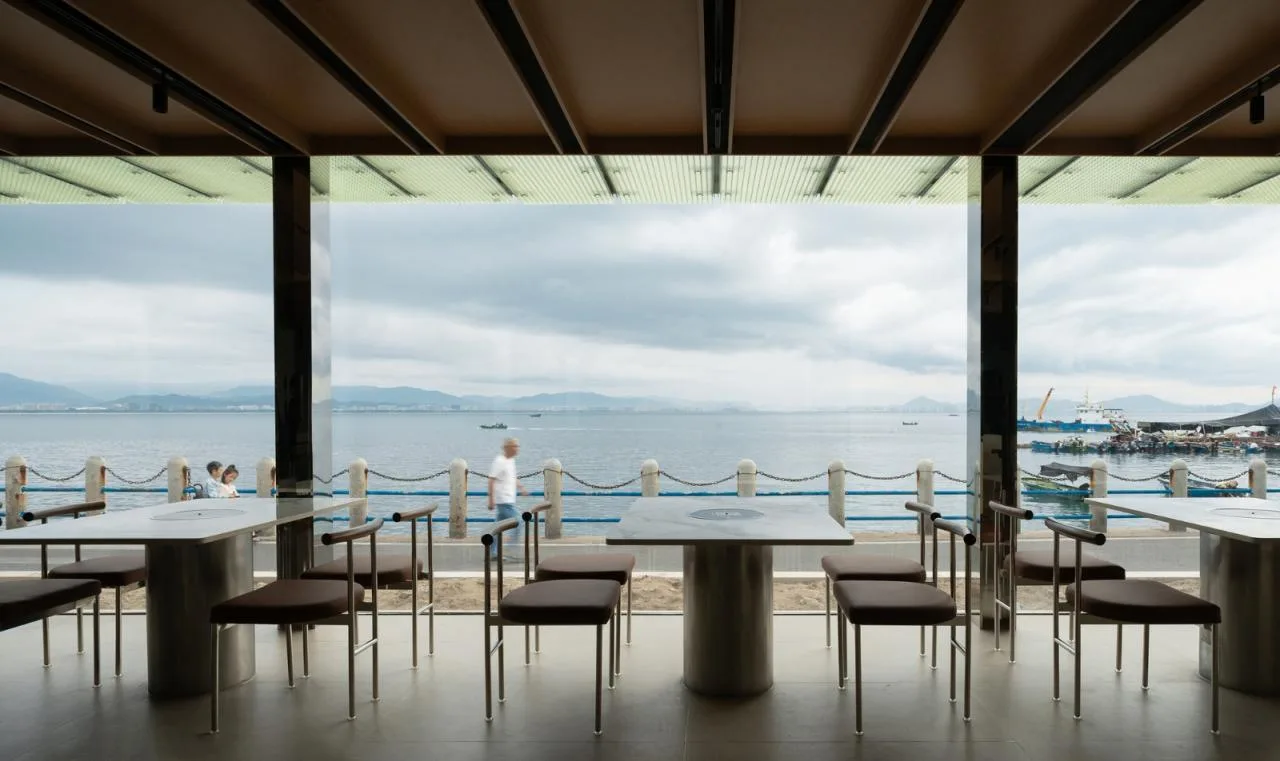
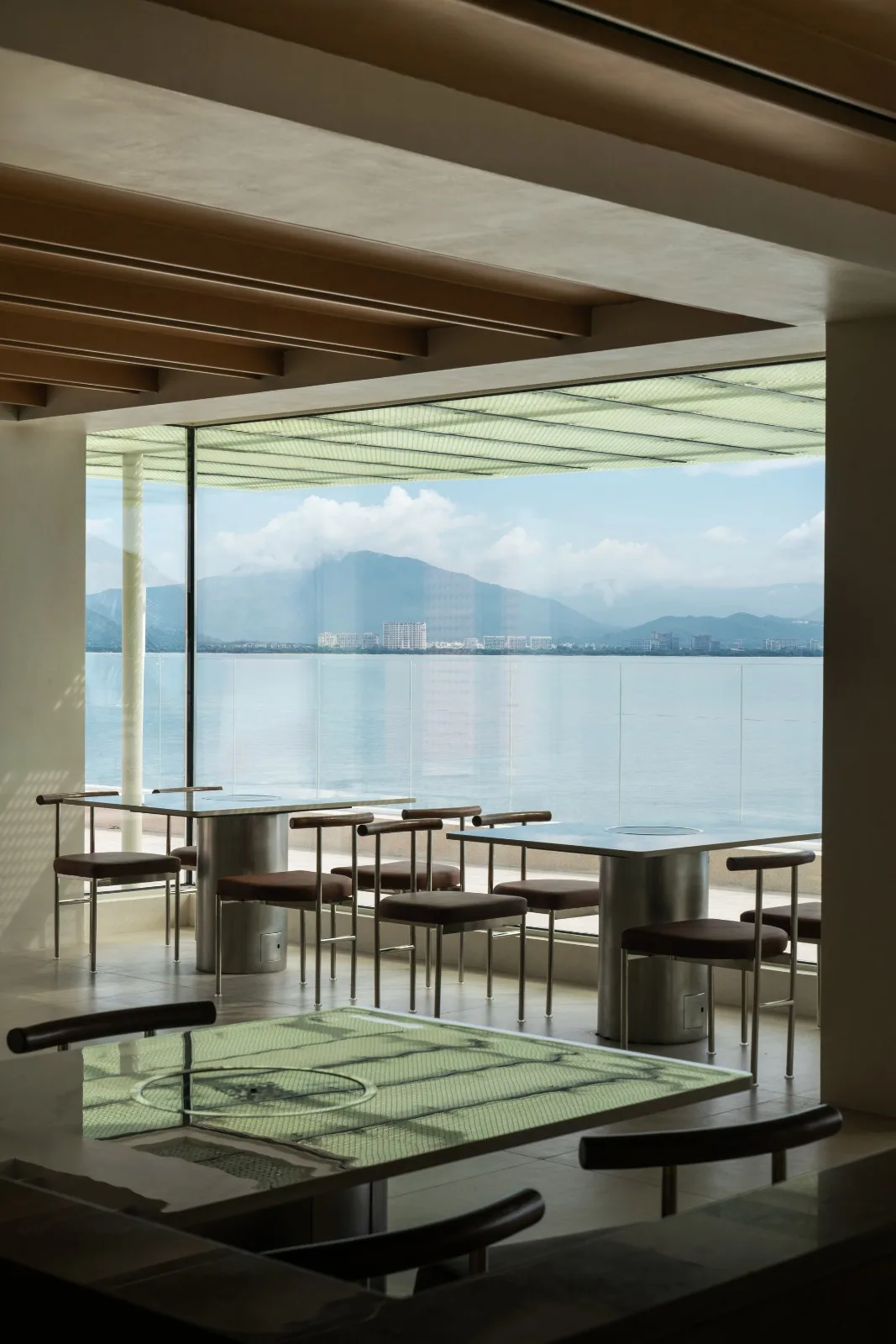
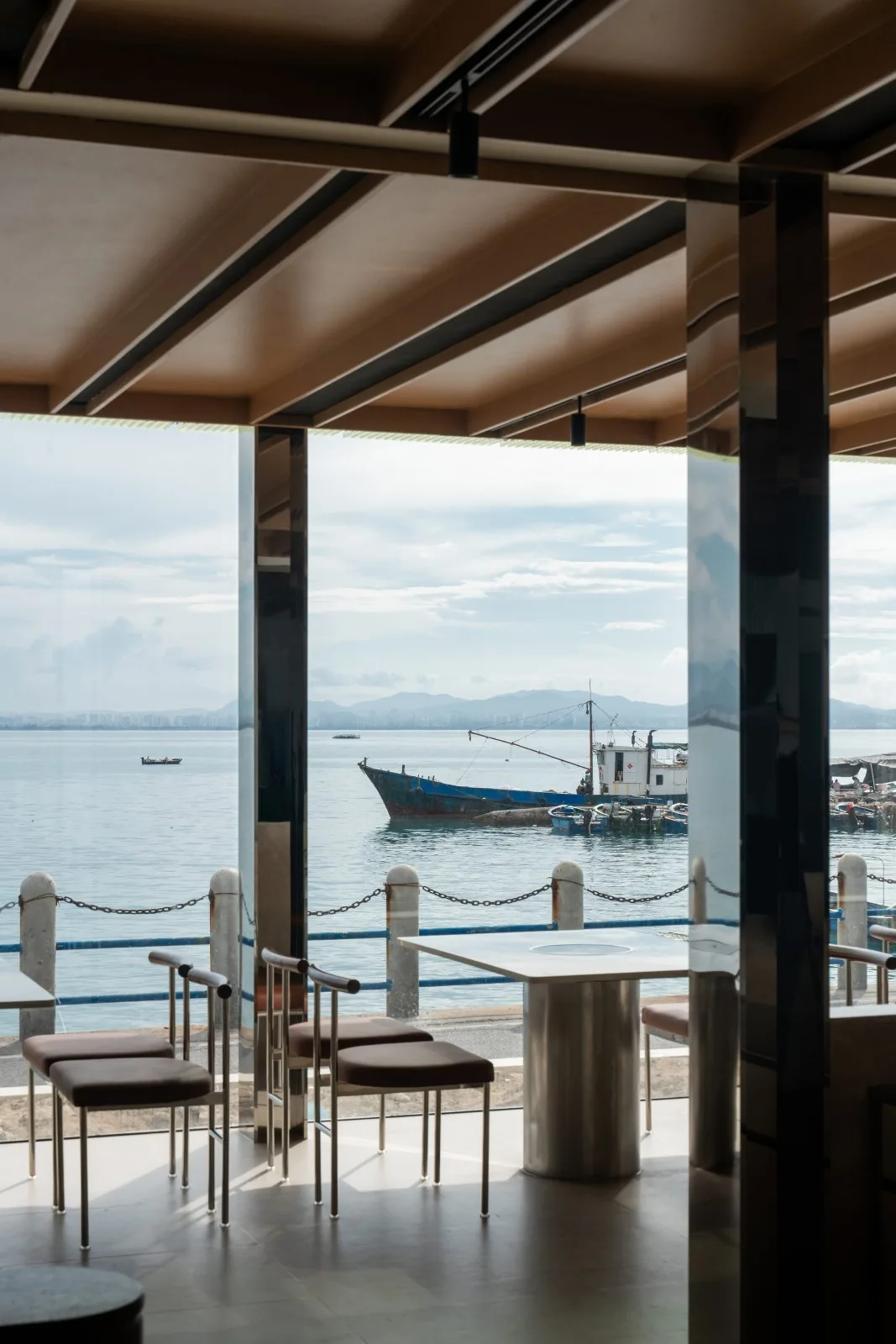
To maximize the sea view, we designed the facade facing the ocean to be entirely glass, eliminating any decorative elements that could obstruct the view. Inside, seating arrangements are aligned parallel to the sea, allowing guests to enjoy uninterrupted vistas. The ceiling design emphasizes vertical lines reminiscent of the sea’s horizon, which not only organizes ceiling pipelines neatly but also directs spatial focus toward the water.
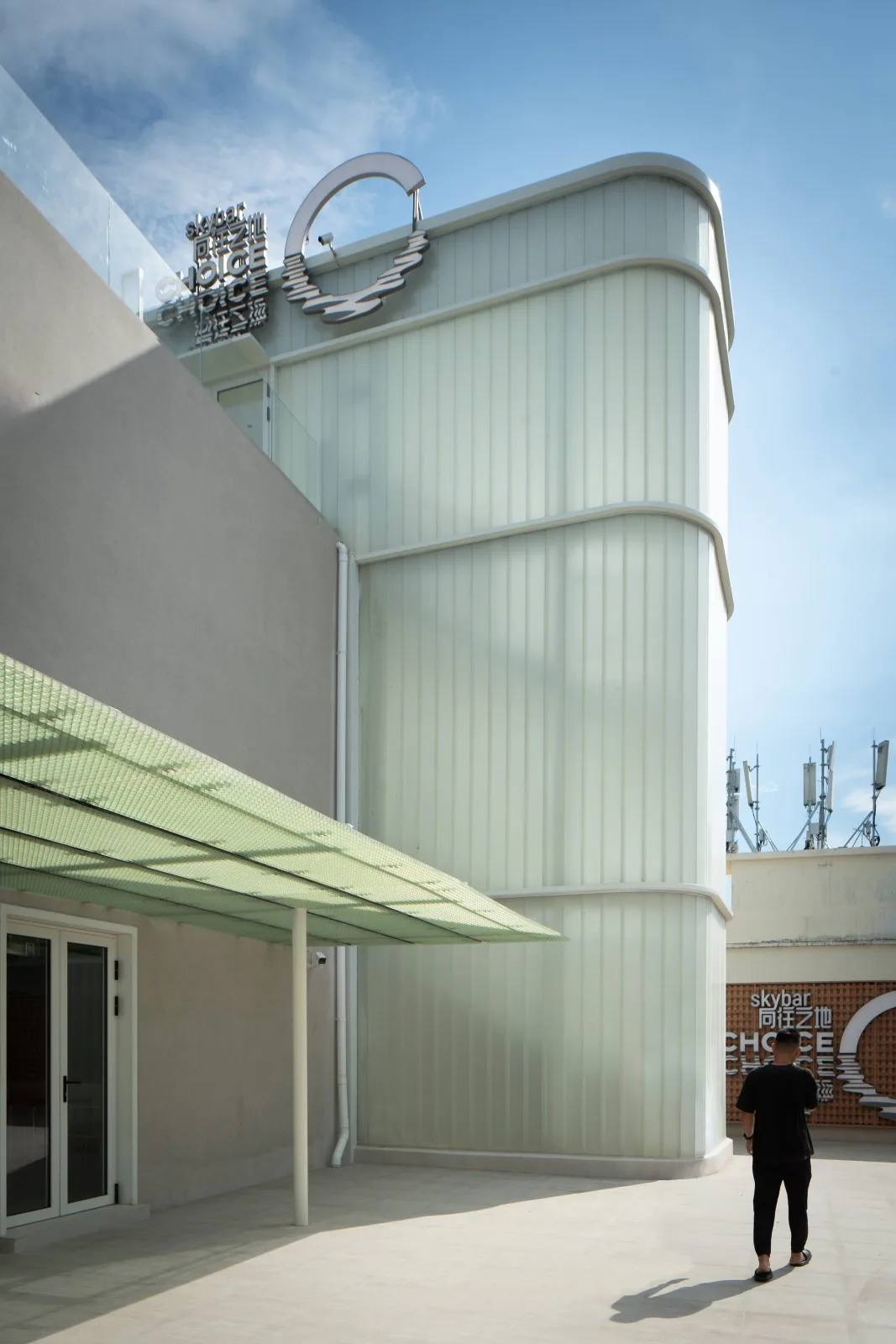
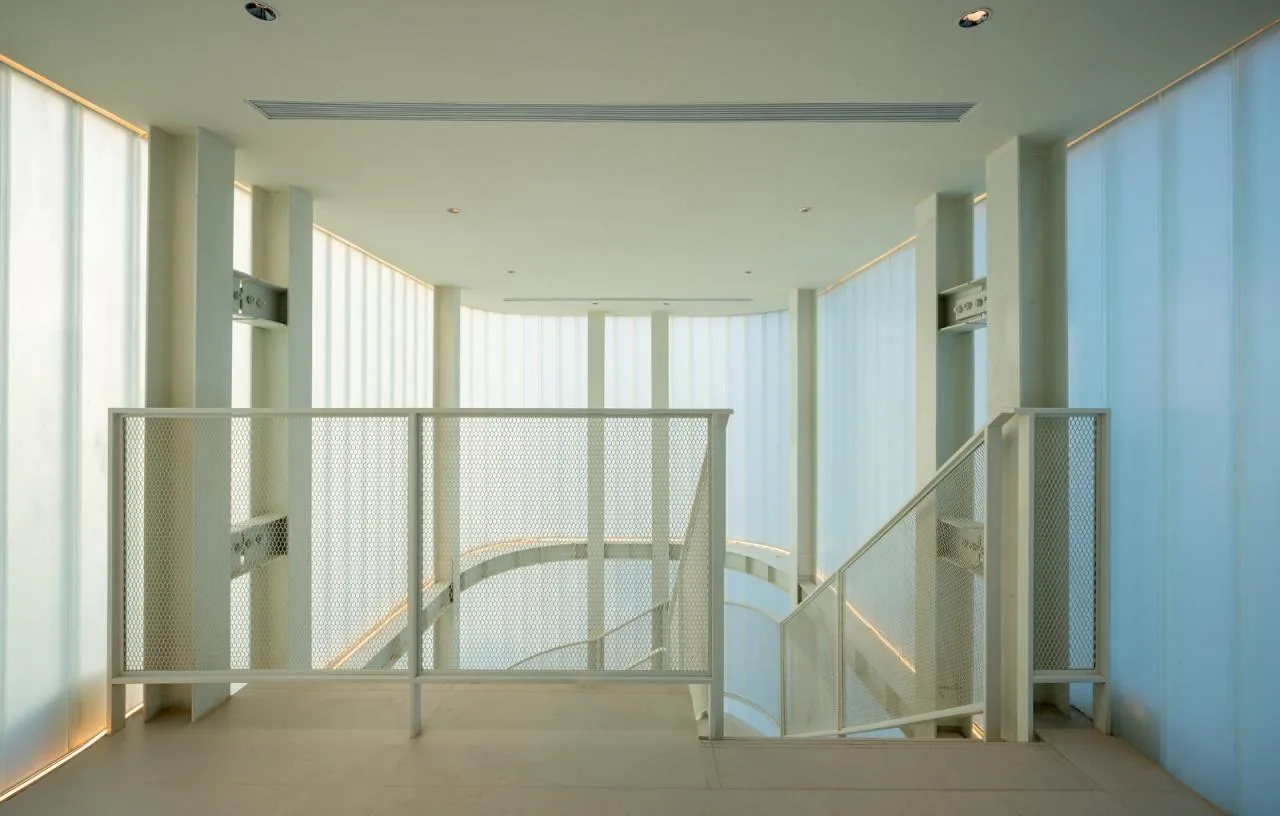
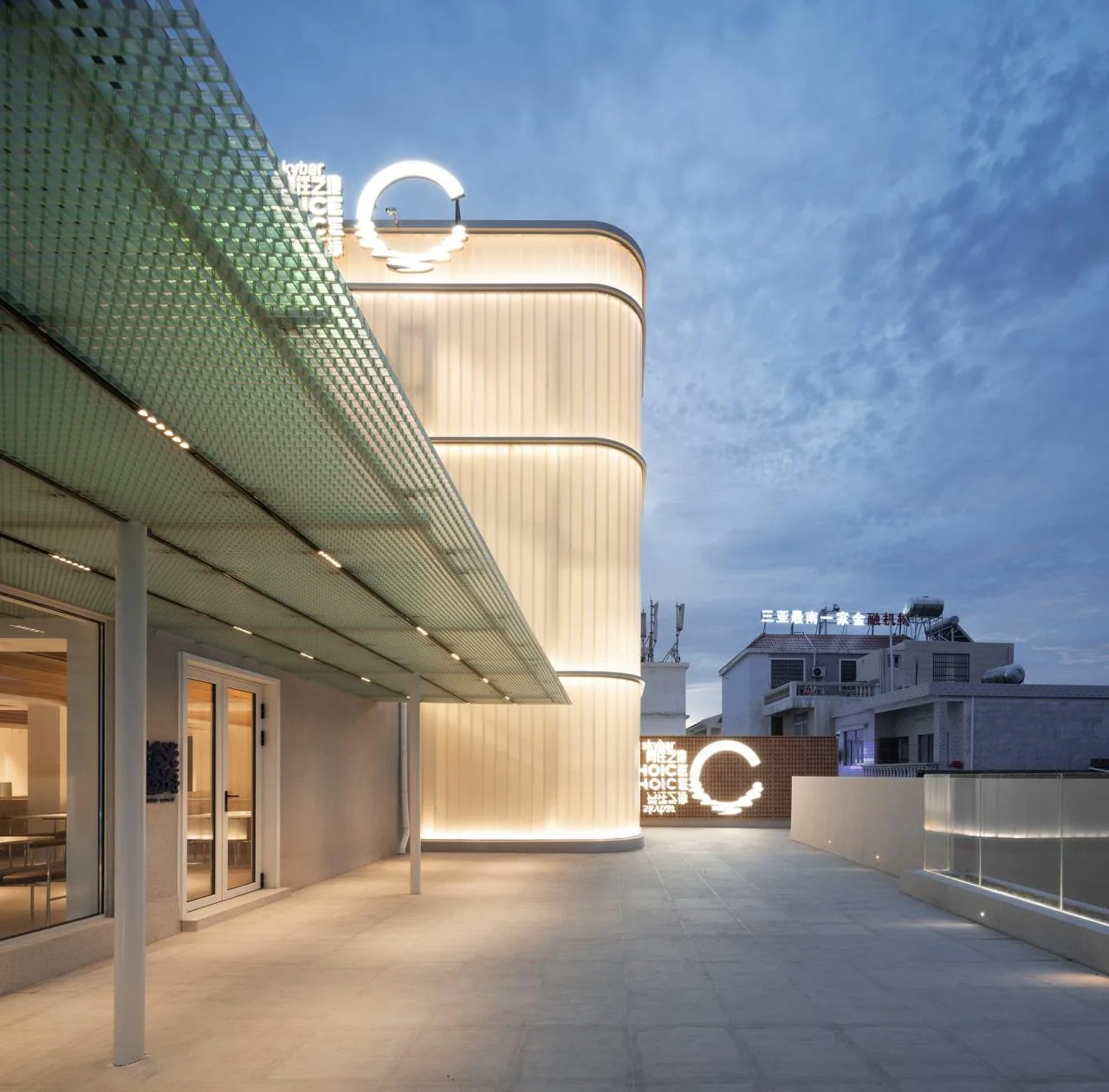
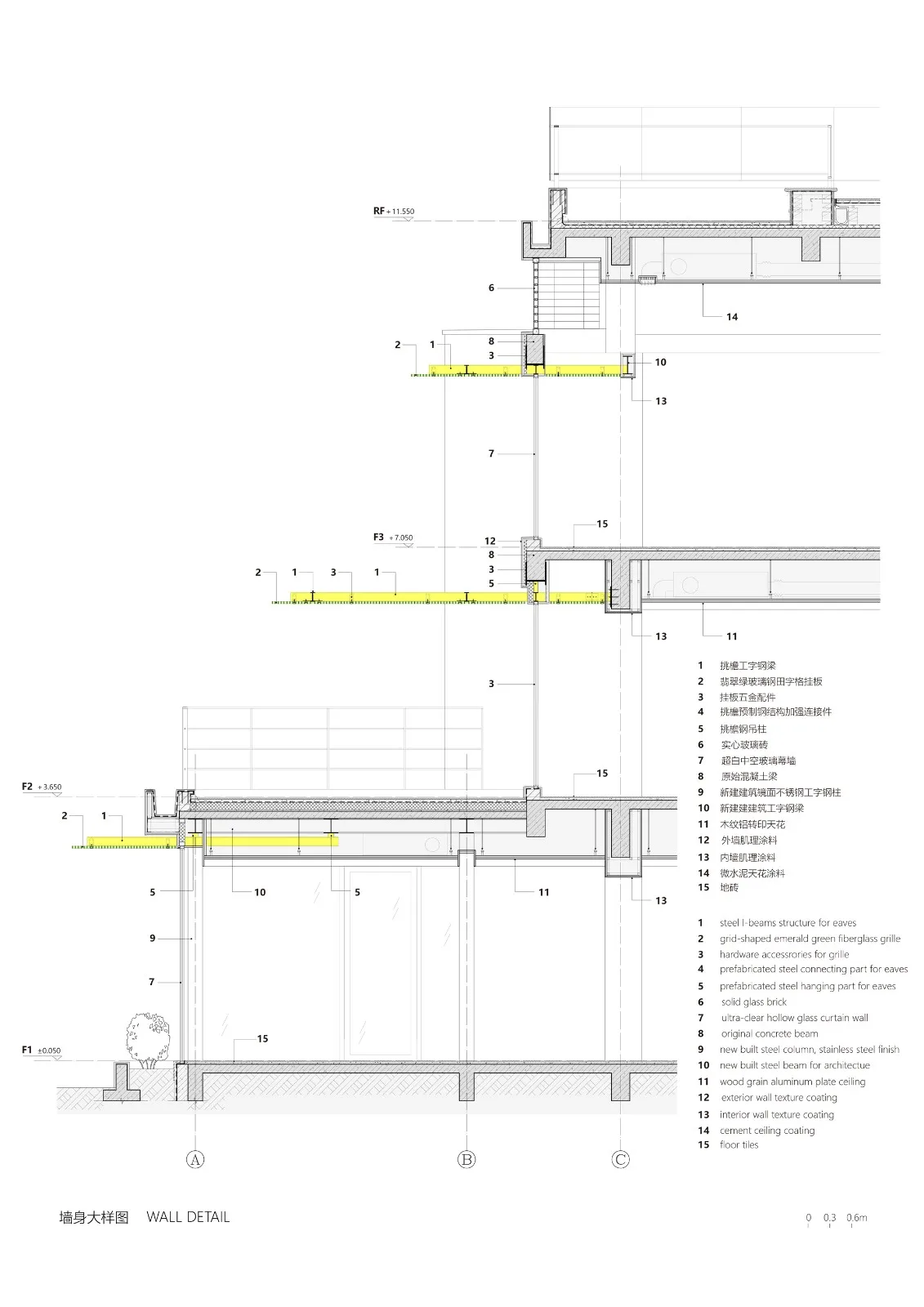
To further strengthen the connection with the sea, the indoor ceiling lines extend outward, transforming into a jade-green grille material that intersects with the exterior curtain wall and continues as part of the sunshade eaves. This design blurs the boundary between indoors and outdoors, allowing the eaves’ structure to penetrate deeply into the interior space. This reduces the facade’s diagonal elements, creating a purer and lighter appearance.
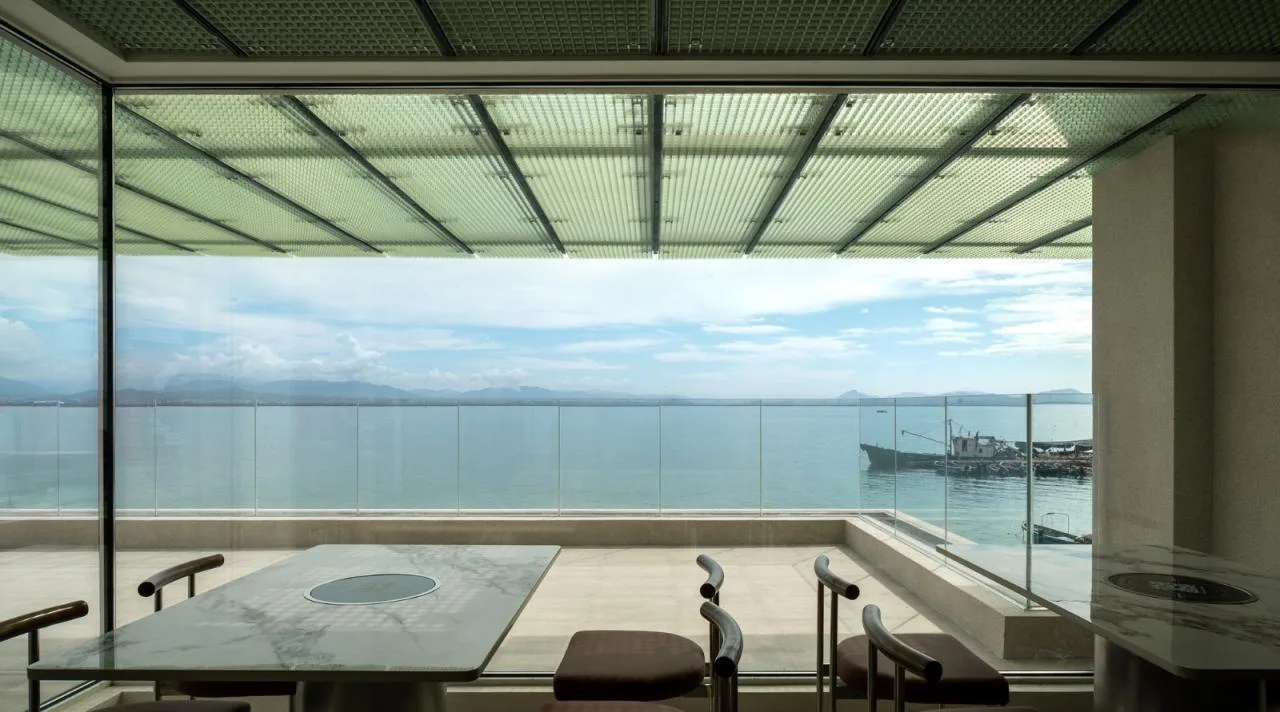
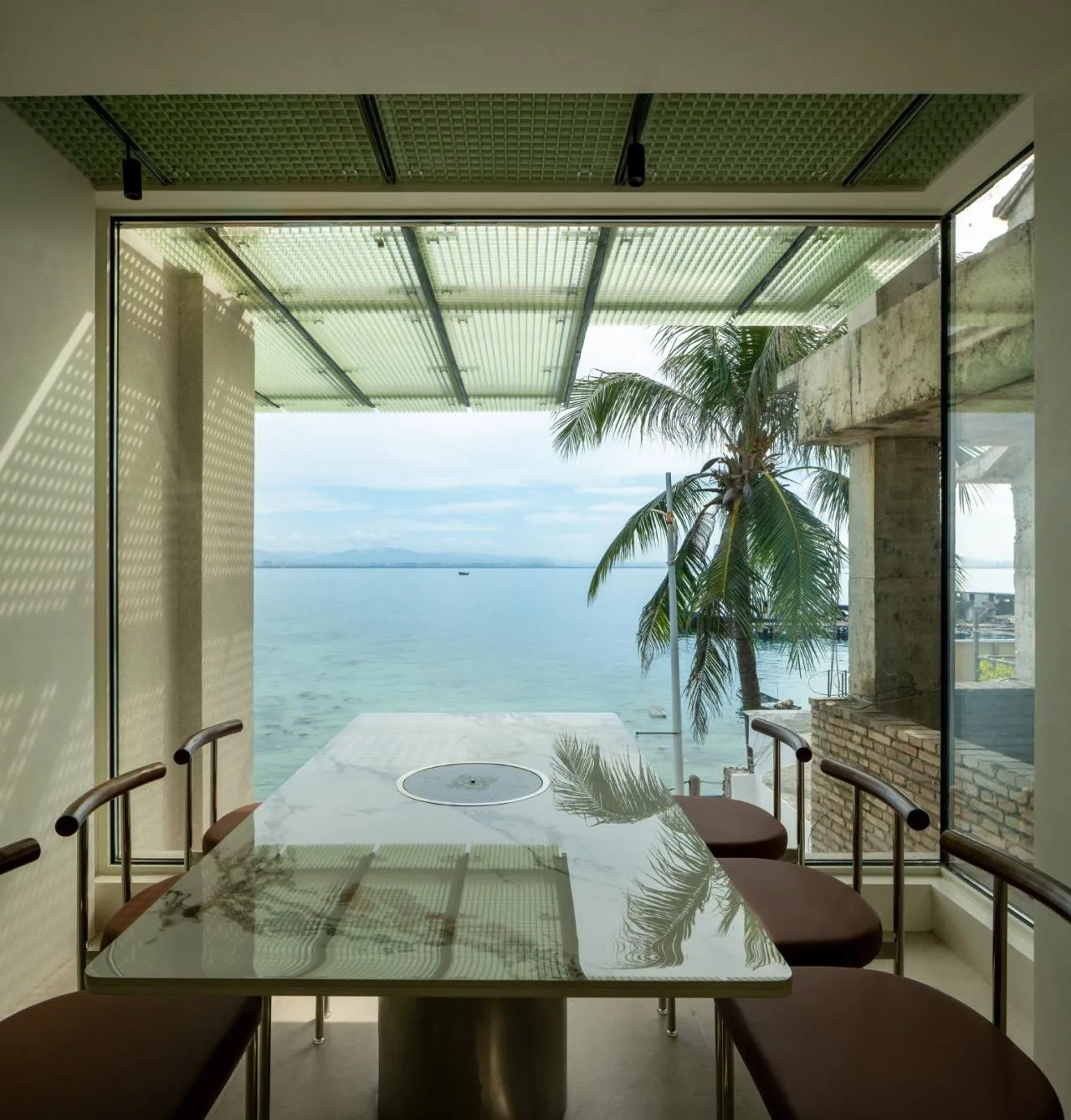
Initially, we discovered a jade-green fiberglass grille with deep eaves in our material library. At first, we weren’t sure how to incorporate it, but it felt inherently suited to the site. In hindsight, the material perfectly complements the unique environment of Sanya: the green coconut trees, the azure sky, and the transparent sea all resonate with the grille’s structure. Its rough texture and strong weather resistance allow it to blend seamlessly with the natural, mottled conditions of the island’s fishing village without feeling enclosed.
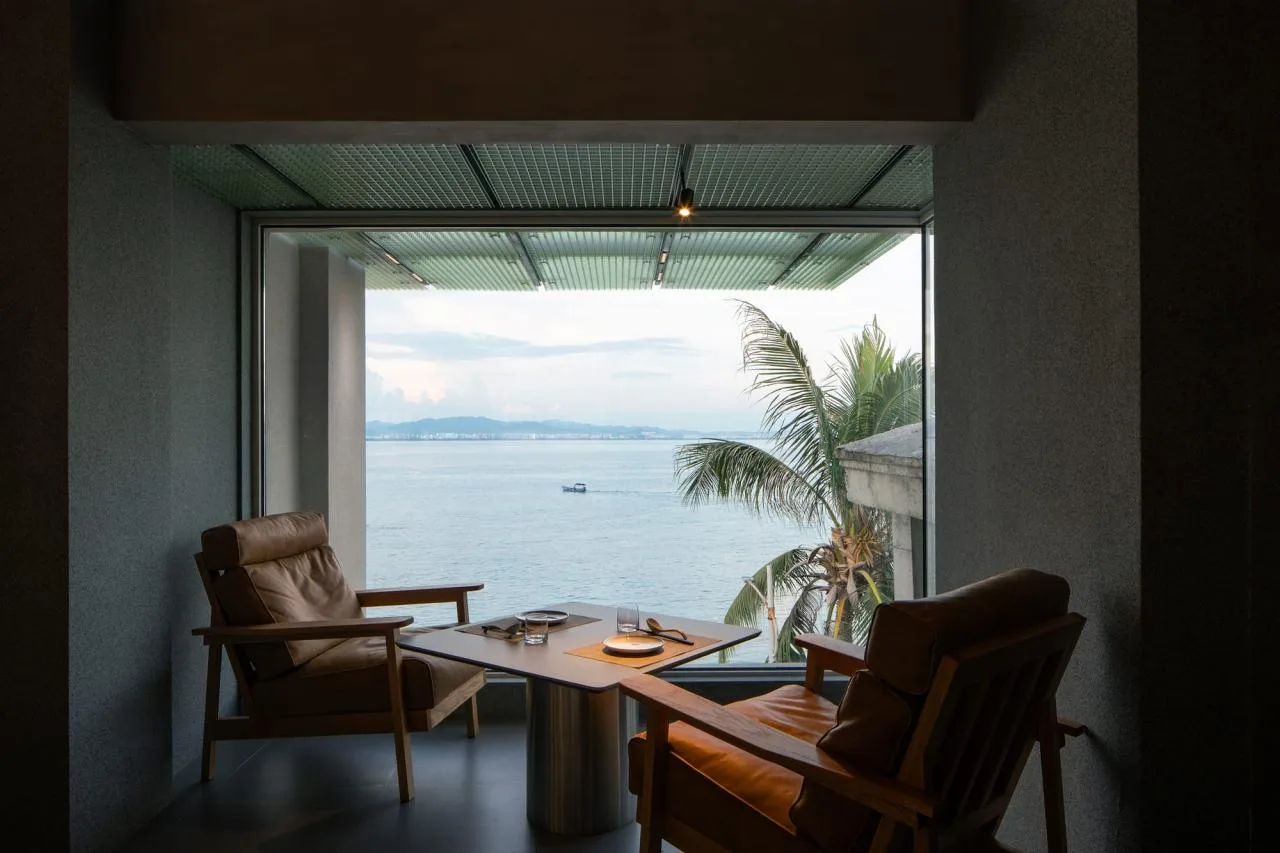
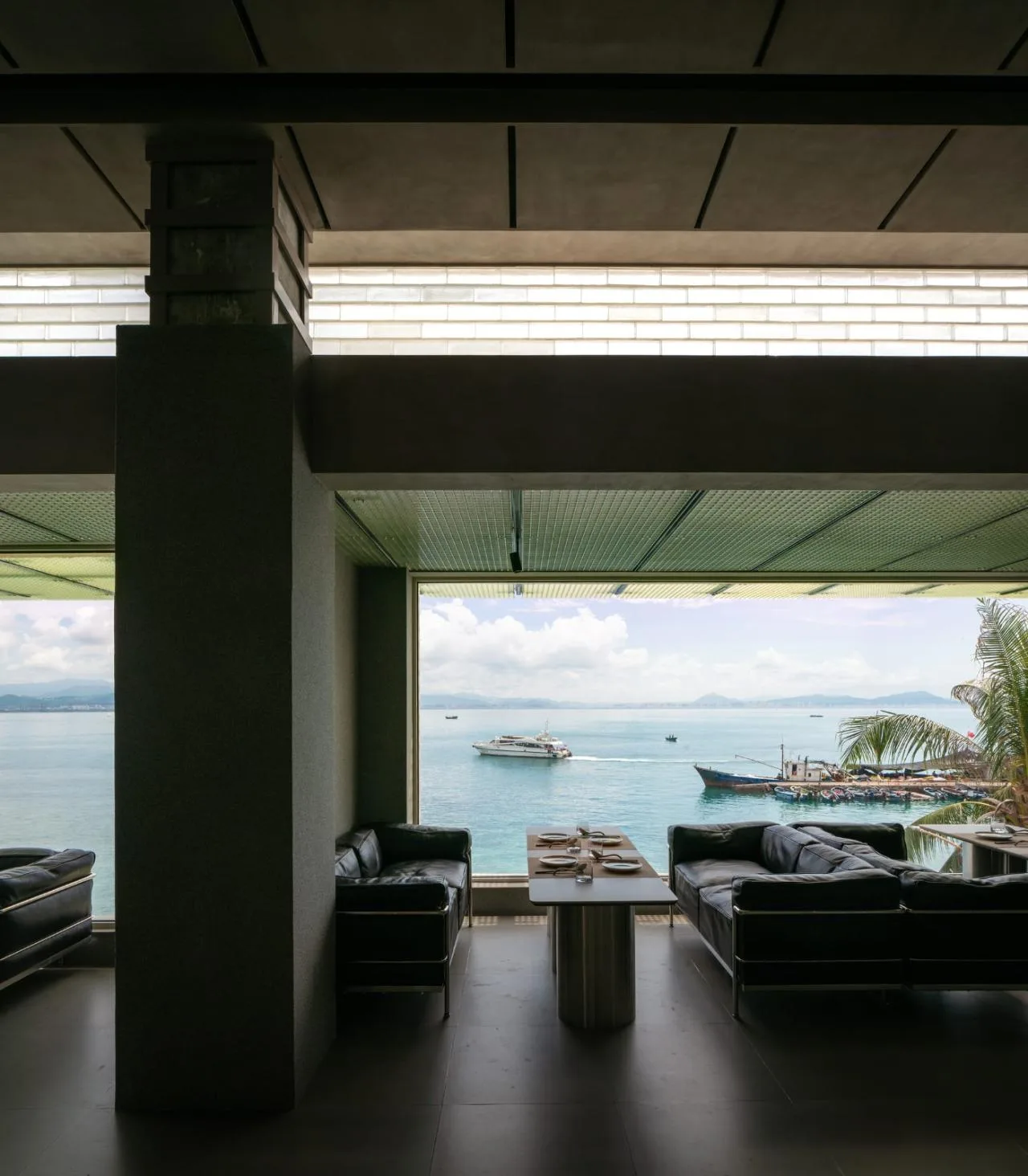
Given Sanya’s climate, ample shading is essential from every direction. Large glass surfaces can reduce thermal efficiency, so we incorporated ultra-deep eaves where glass areas are extensive—particularly on the sea-facing facade. These overhanging eaves extend from the interior through the glass exterior wall out toward the sea. This shading system optimizes thermal performance and enhances the building’s orientation toward the ocean.
We applied the jade-green grille material to the eaves. This reinforced fiberglass composite withstands sea wind erosion and reflects sunlight brilliantly under Sanya’s radiant sun. Weather variations reveal different atmospheres—from warm, humid cloudy days to dazzling sunny skies. Regardless of conditions, the emerald-green eaves blend harmoniously with Sanya’s sea, creating the impression that one can step into the ocean at any moment.
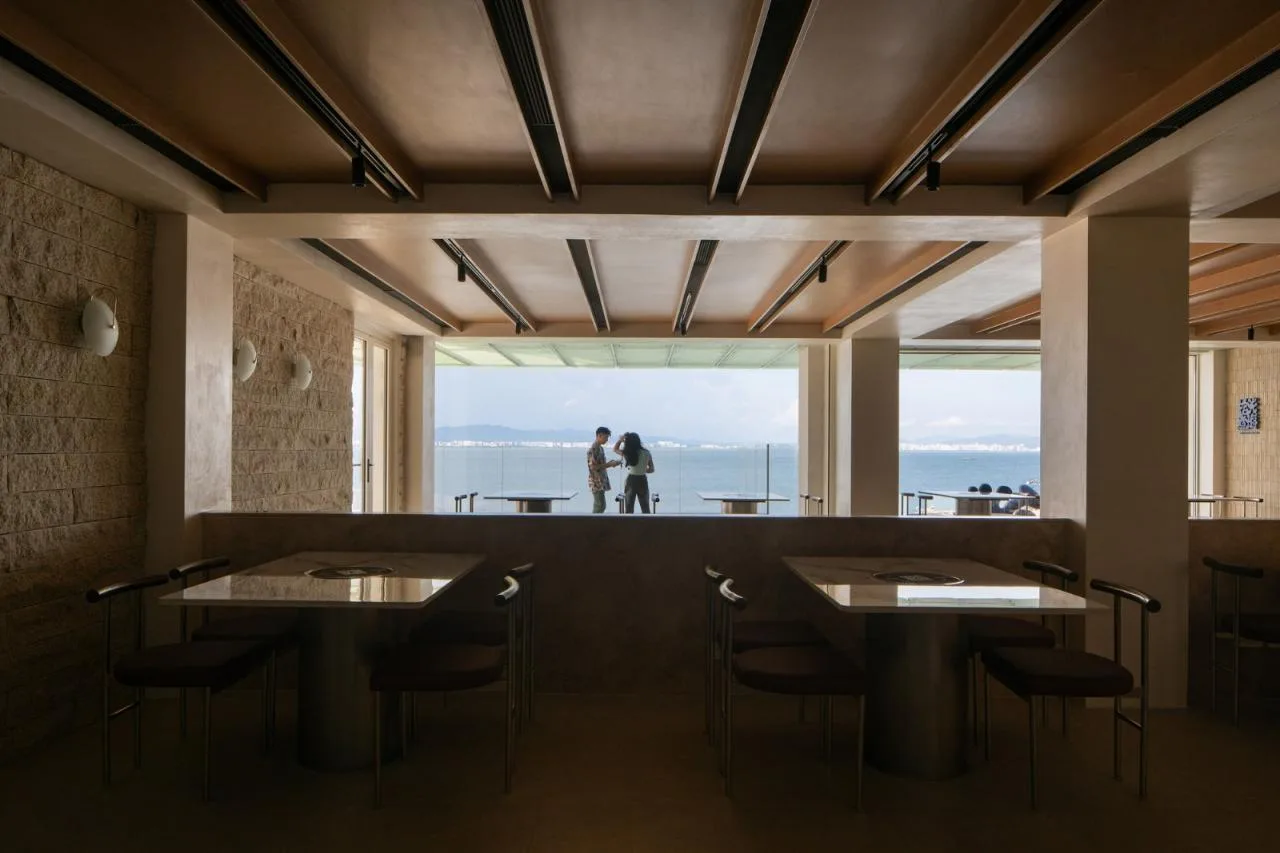
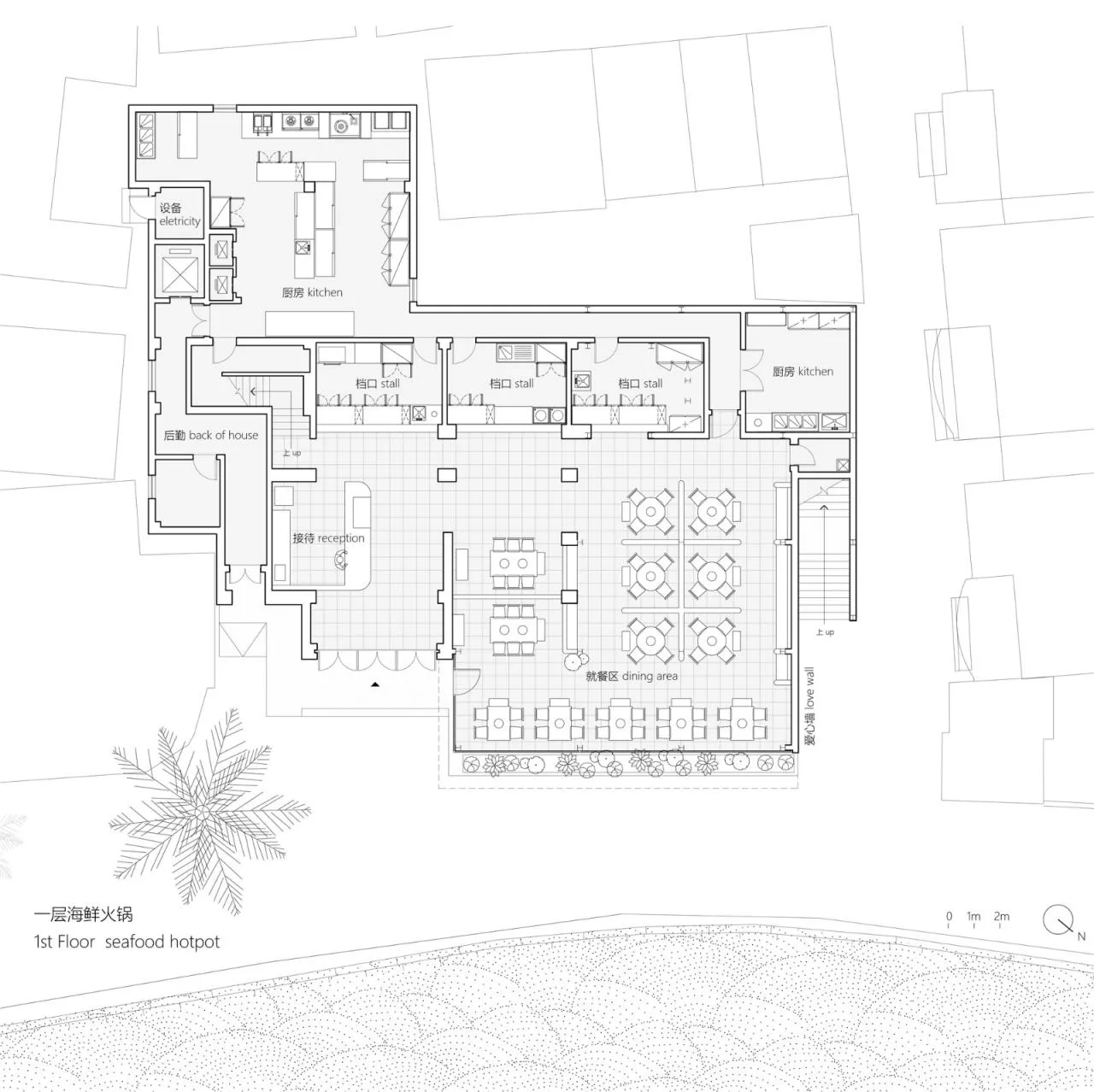
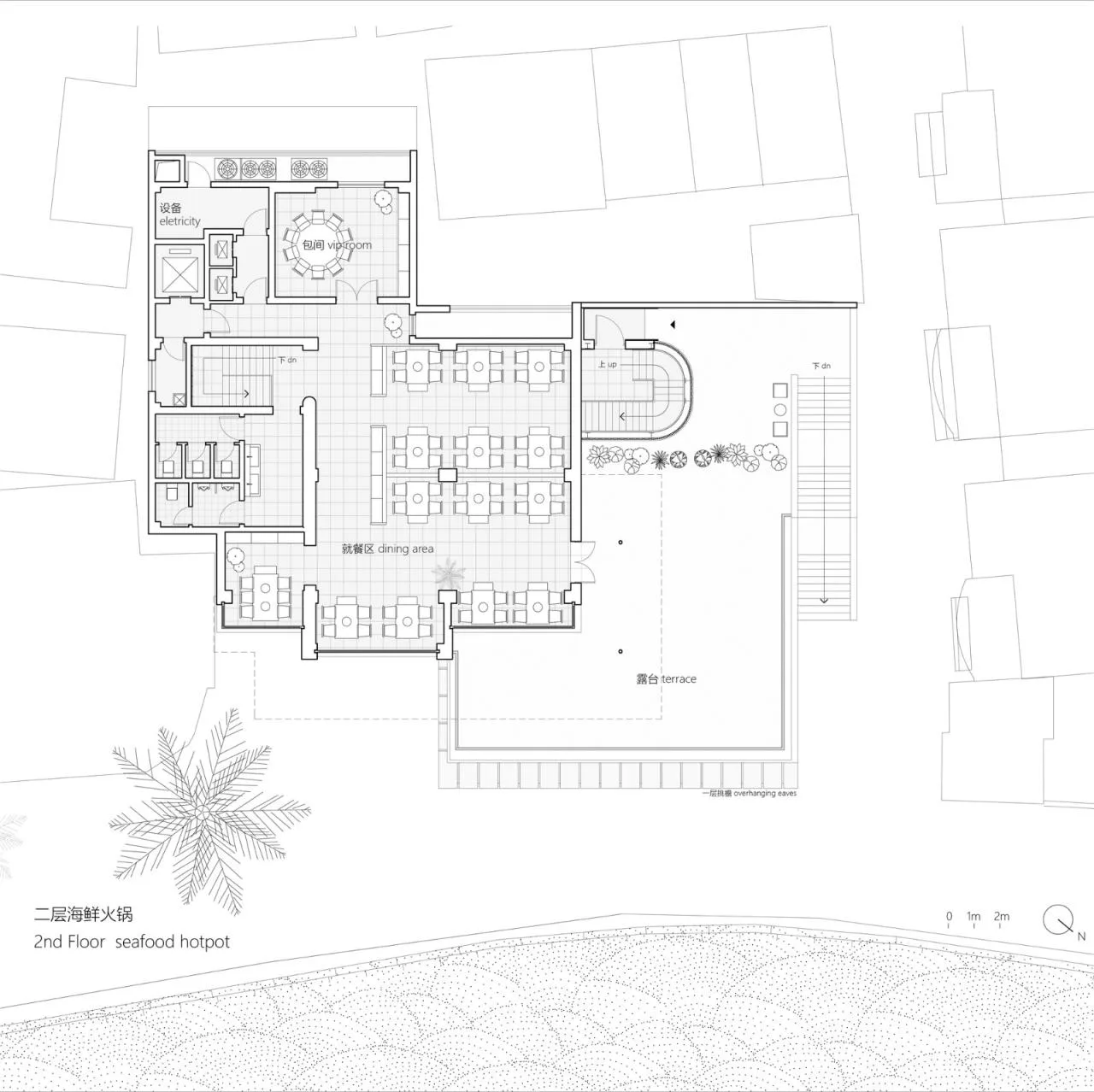
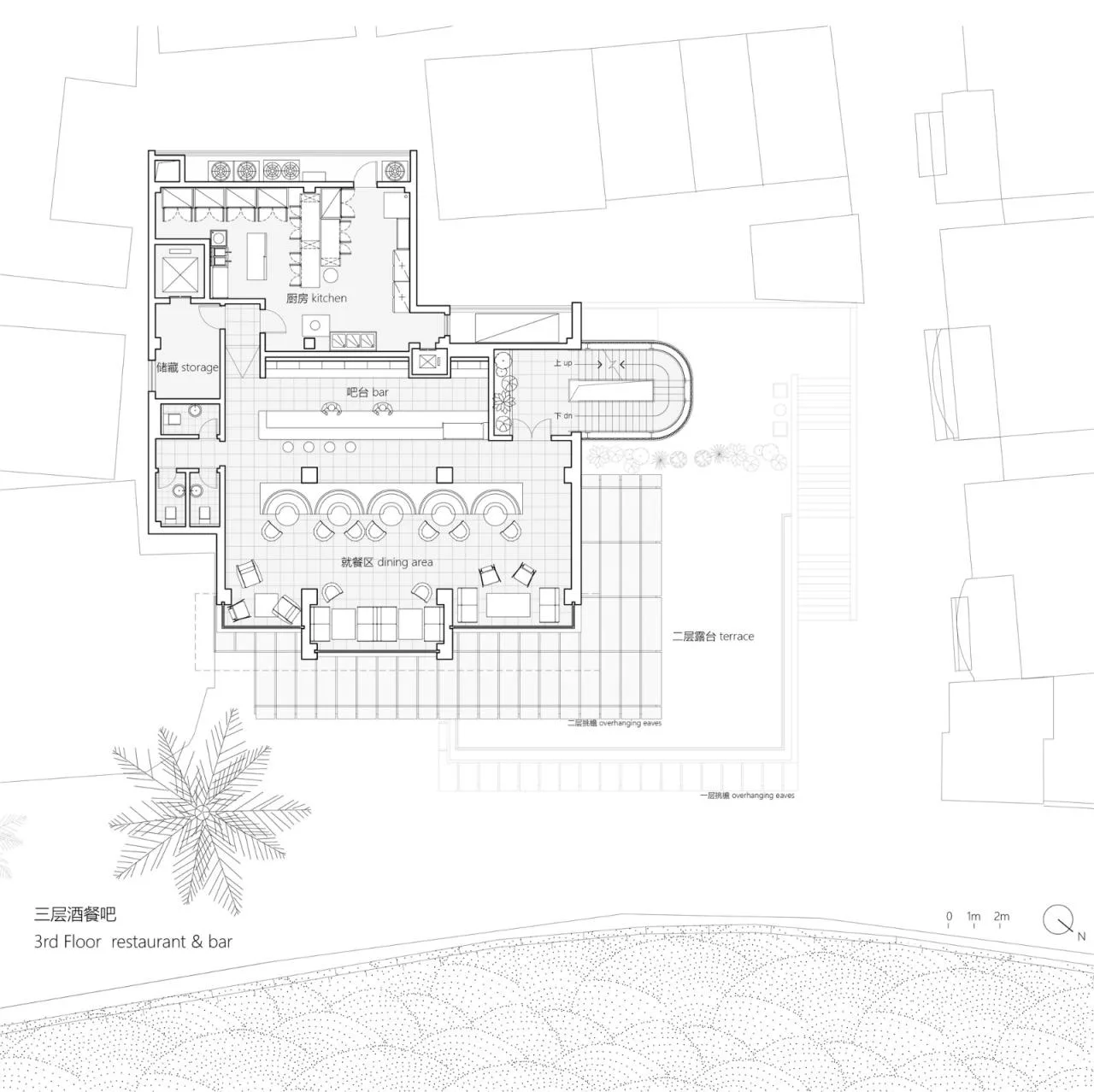
This project involved rebuilding a three-story structure to house two businesses: seafood hot-pot restaurants on the first and second floors, and a dining bar with a rooftop terrace on the third floor. Each business operates independently without interference.
The first challenge was to design separate and non-conflicting circulation paths. We introduced an additional vertical circulation route to bypass the first two floors and provide direct access to the third floor.
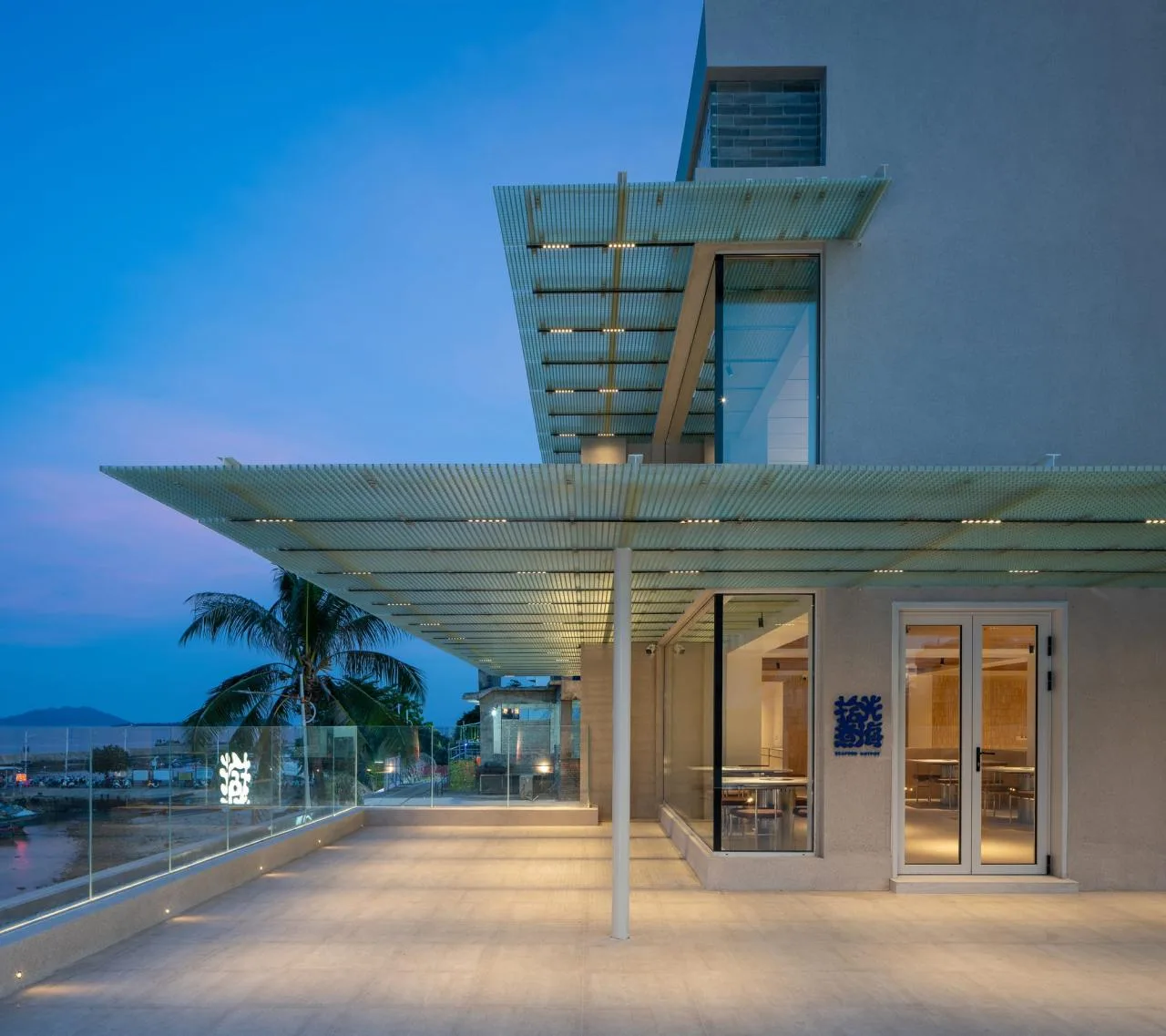
We believe that the dining areas should offer a calm and comfortable atmosphere where guests can relax and enjoy the sea. To enhance this, we replaced the original interior staircase with an exterior staircase on the building’s opposite side, connecting the second-floor terrace to the third-floor bar.
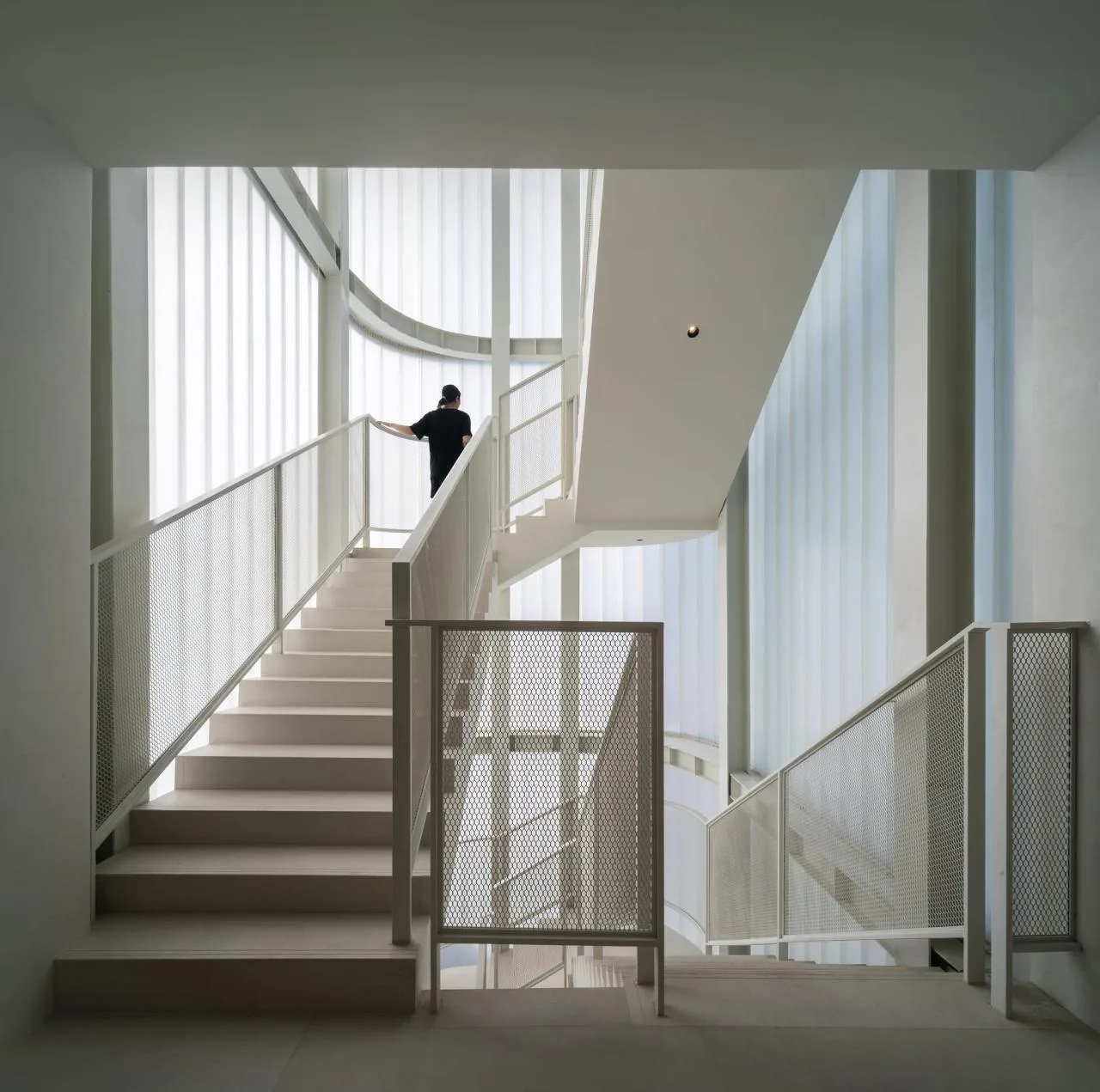
From the second-floor terrace, a straight staircase leads toward the sea and connects to the adjacent road. This creates two distinct vertical circulation routes: one perpendicular to the sea, serving as a main artery for the bar and a public three-dimensional check-in space with a 2-meter width and graffiti-covered walls; and another external steel-framed staircase wrapped in semi-transparent frosted U-shaped glass. This glass wrapping provides a subtle separation from the environment and prepares guests psychologically as they enter the bar.
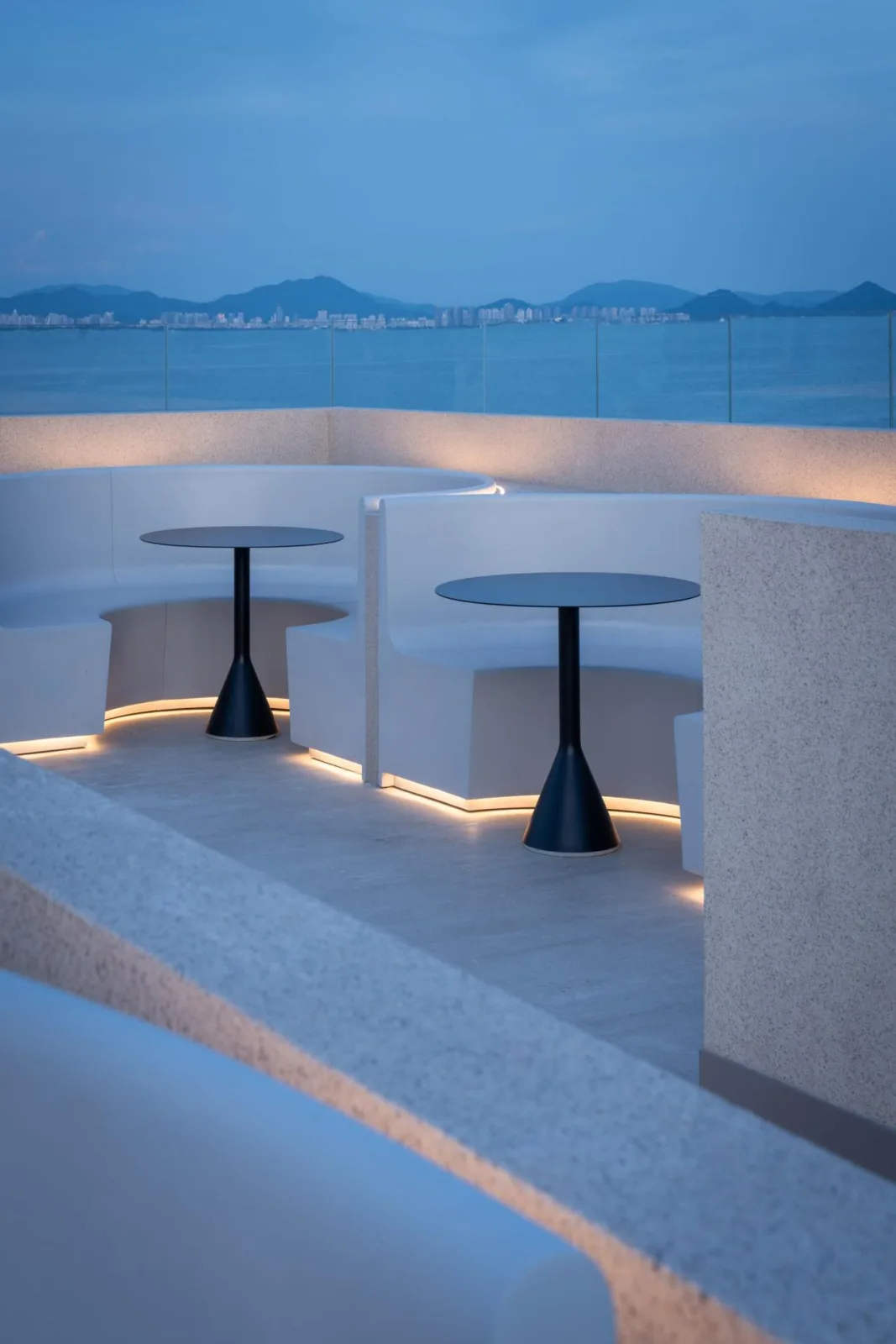
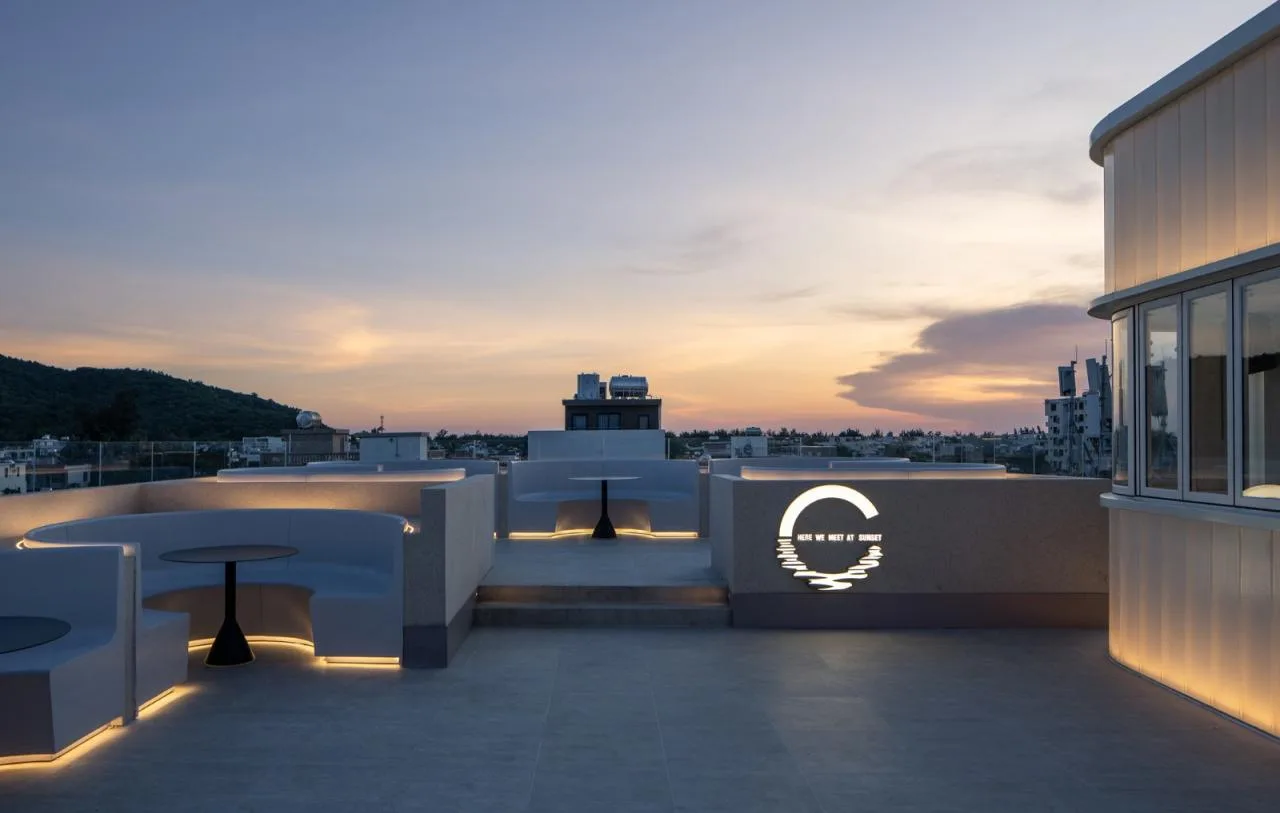
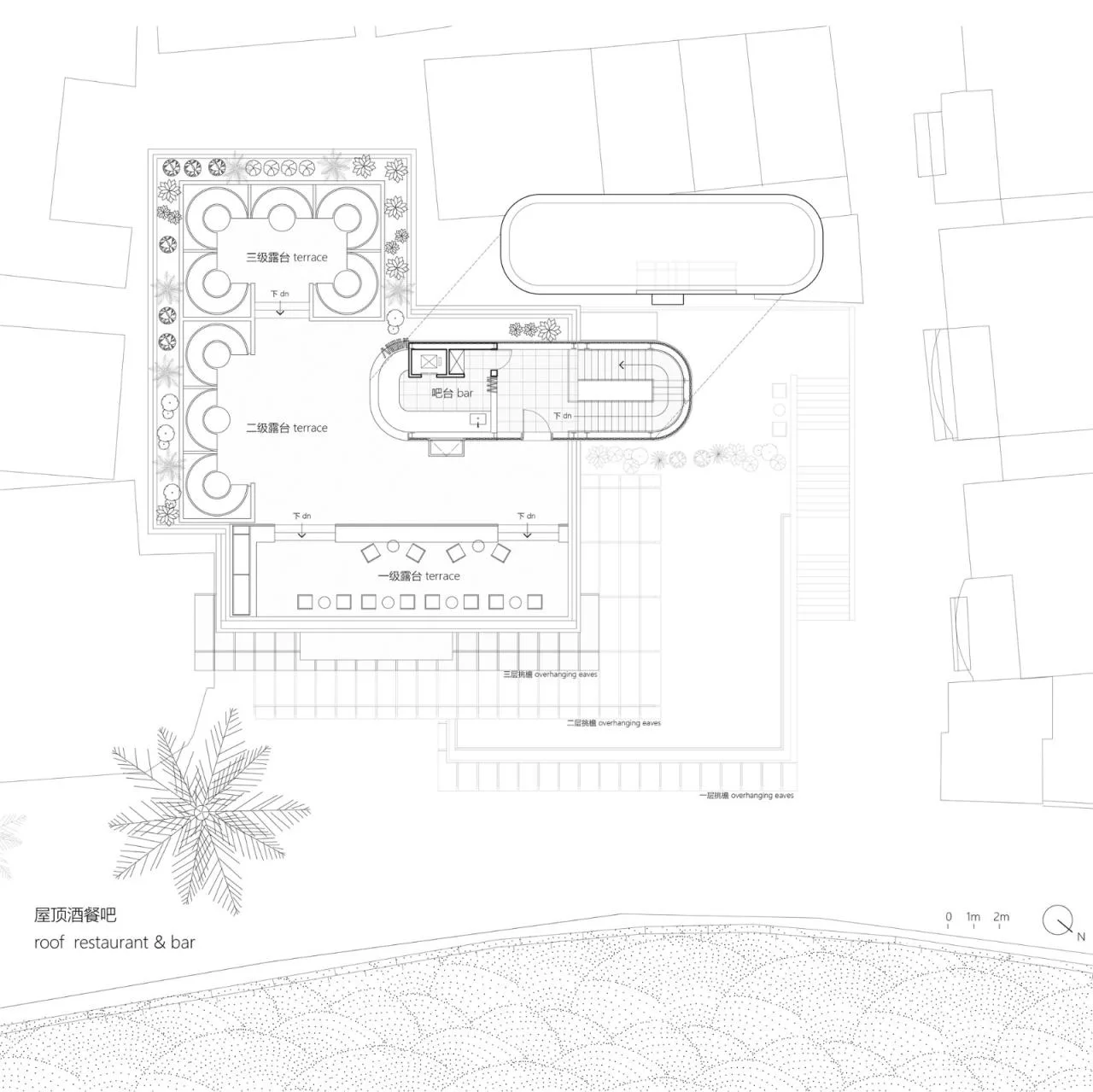
The rooftop bar received the most significant transformation. Due to the low ceiling height of the original three-story building, we removed the existing roof and raised it by one meter. To better utilize the sea views, we designed the rooftop terrace with three different levels, ensuring unobstructed views toward the ocean from the rear space.
The steel-framed staircase, wrapped in U-glass, provides direct access to the rooftop and integrates organically with the bar counter. In the evening, this semi-transparent glass structure captures the sunset’s glow, adding a romantic ambiance and a dynamic play of light and shadow for the bar that comes alive after dark.
The project reflects two key characteristics. Xidao Island is the largest indigenous tourist island in Hainan. Unlike other destinations, it is not only a high-quality tourist site with exceptional sea views but also a living fishing village preserving traditional lifestyles.
This unique blend of sophisticated tourism and the laid-back local fisherman lifestyle is the essence we sought to capture. We intentionally avoided a purely pristine design. Instead, we allowed the sea breeze to leave its marks, and incorporated elements like boat boards, graffiti, and lighthouses into the building facades, reflecting the authentic fishing village spirit.
Early in construction, as designers, we wanted the project to be flawlessly executed, catering to tourists from major cities. However, we quickly realized precise control was nearly impossible, despite continuous oversight from resident designers.
Since this was a rural renovation with local craftsmen, traditional city methods—such as laying out lines, making samples, and planning production—were met with resistance. Moreover, the coastal climate and island logistics required constant adjustment throughout construction.
At a low point, we realized that the project’s final, weathered state—its mottled, uneven surfaces shaped by sea, wind, rain, and time—actually harmonized beautifully with its surroundings. This outcome perfectly aligned with our original intent to embody the island’s relaxed lifestyle. Overly refined projects might feel out of place here; instead, this balance of detachment and acceptance by nature has shaped the project’s distinctive character.
Project Drawings
Project Information
Architect: Stacked Architecture
Area: 1200 m²
Project Year: 2024
Photographer: Lin Bian
Design Team: Liu Yongpeng, Gao Wenhaoyu, Zhang Yongnan, Zhang Endong
Structural Design: Hainan Hongjing Architectural Design Co., Ltd
Location: Sanya













Must log in before commenting!
Sign Up