
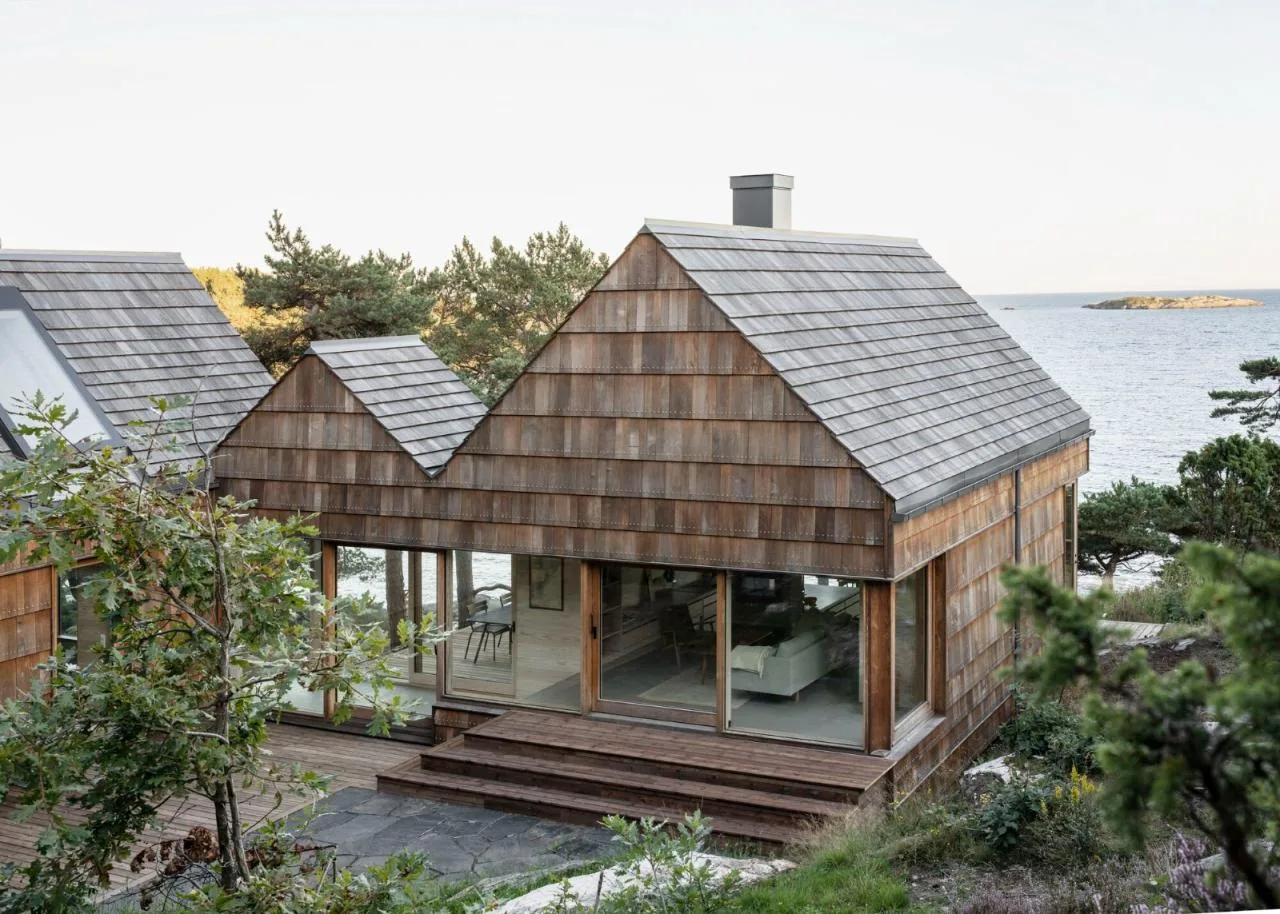
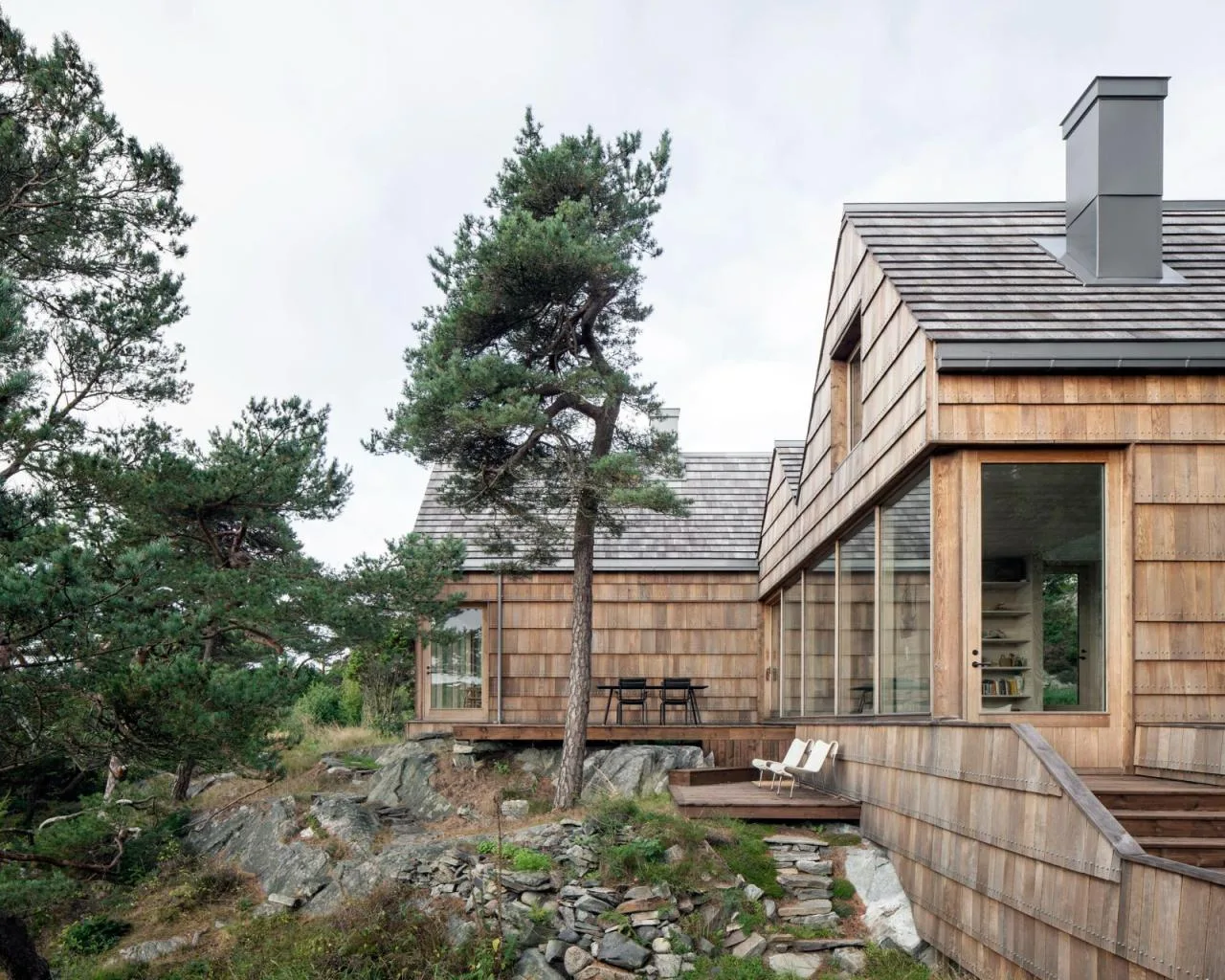
Saltviga Residence is a vacation home constructed from oak and Douglas fir wood, utilizing scraps from Dinesen flooring production. Nestled in the northern forests along Norway’s southeast coast, the design thoughtfully integrates with the local landscape. By combining reclaimed wood scraps with a fresh interpretation of traditional architectural language, Saltviga Residence embodies a renewed approach centered on efficient resource use.
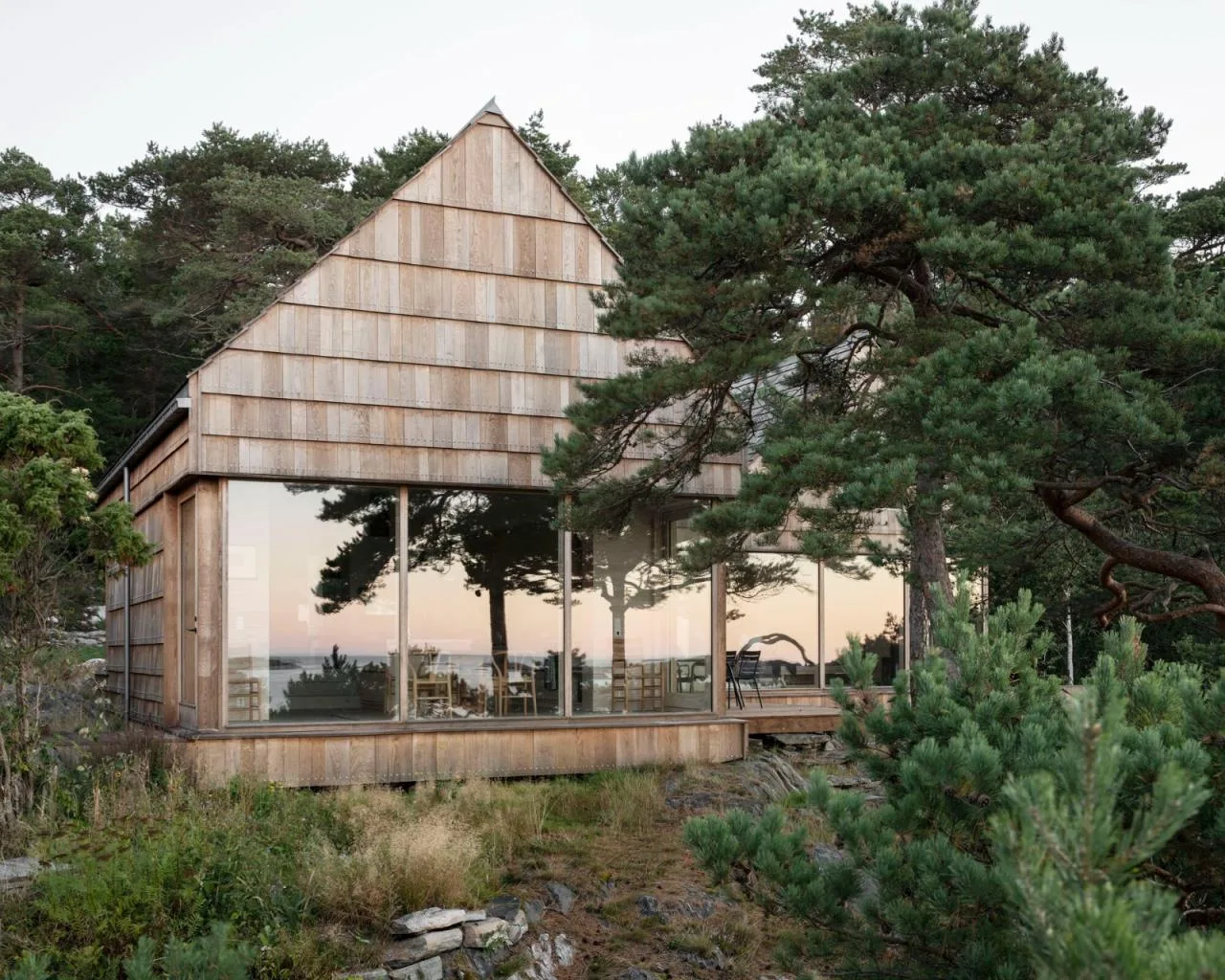
Through recent projects, teaching, and research, we discovered that Dinesen’s materials extend beyond traditional flooring applications. The leftover waste and scraps from customized flooring production hold untapped potential. Instead of simply burning these remnants, we propose giving them new life by using them as construction materials. These wood scraps not only offer aesthetic appeal but also feature low carbon emissions, making them a sustainable alternative to conventional materials with higher environmental impact. This approach highlights resource reuse and redefines material potential in architecture.
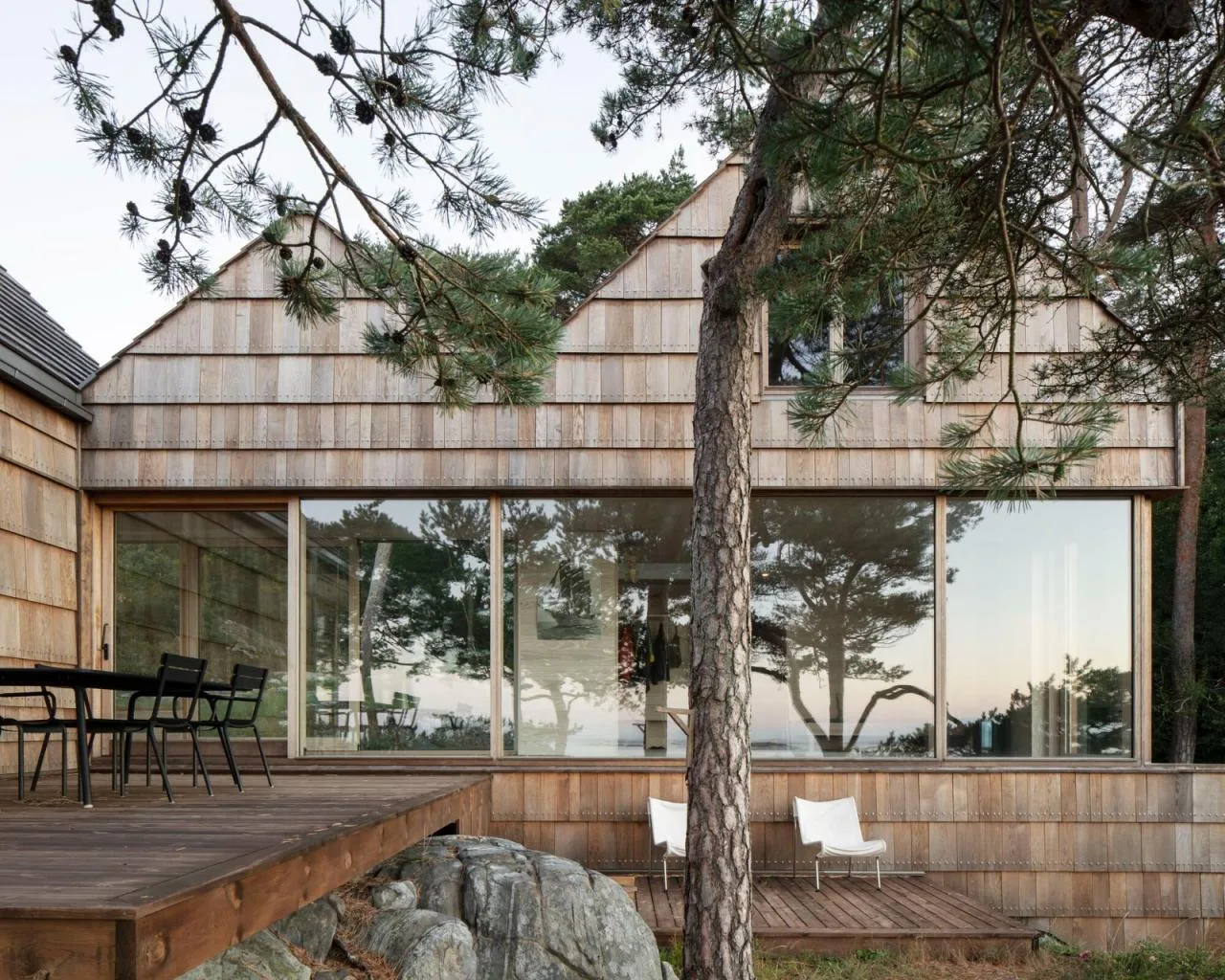
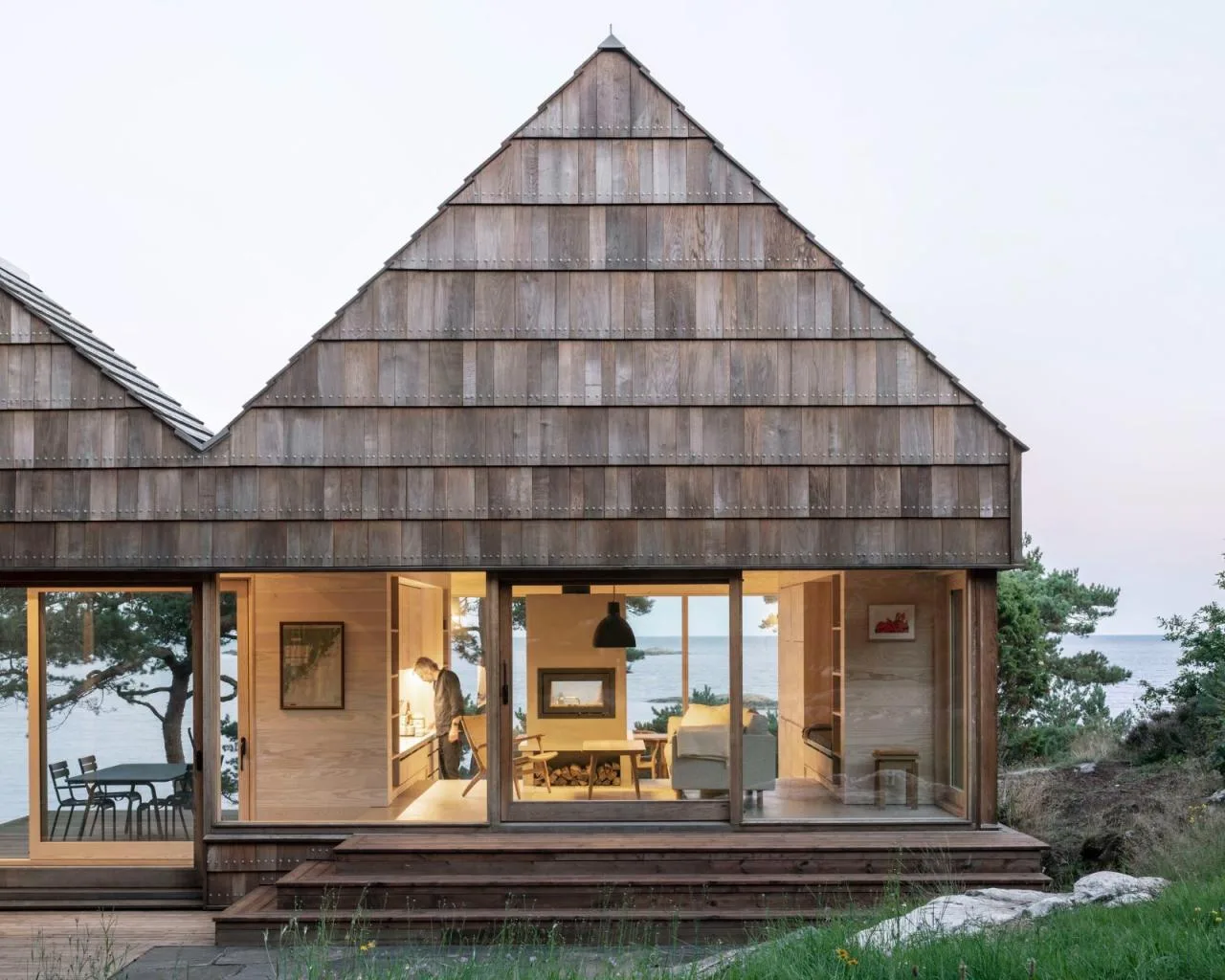
The idea of using scrap wood for residential construction arose from a comprehensive strategy: selecting representative wooden pallets from production, classifying them by size, quantity, and quality, and exploring stacking and layering techniques through multiple full-scale physical models. This included testing technical performance and user experience. Unlike the traditional Norwegian practice of using split wooden tiles, our research on sawn wooden boards led to a method that is both intuitive and complex. It requires deep material knowledge and significant process development to ensure economic and time efficiency.
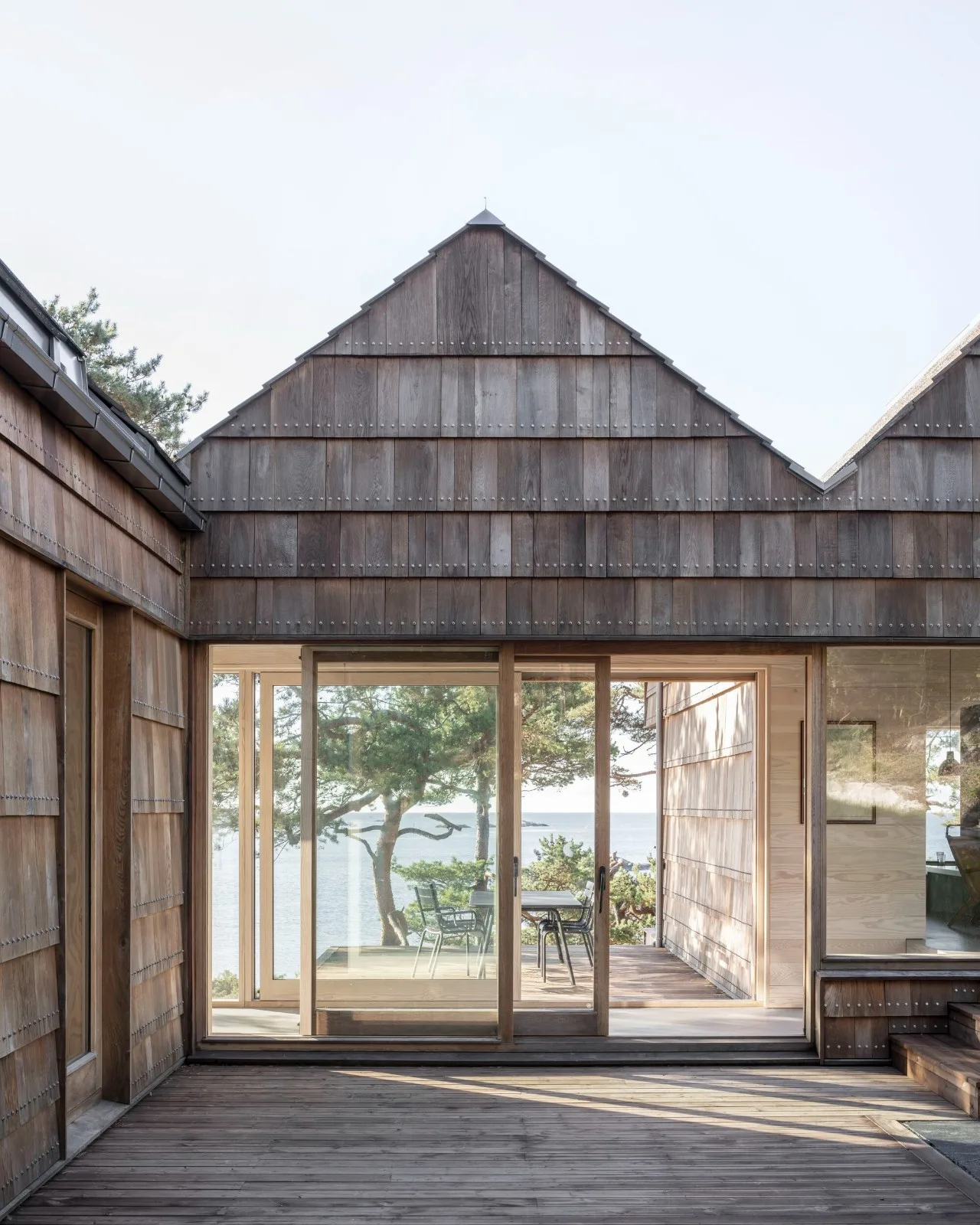
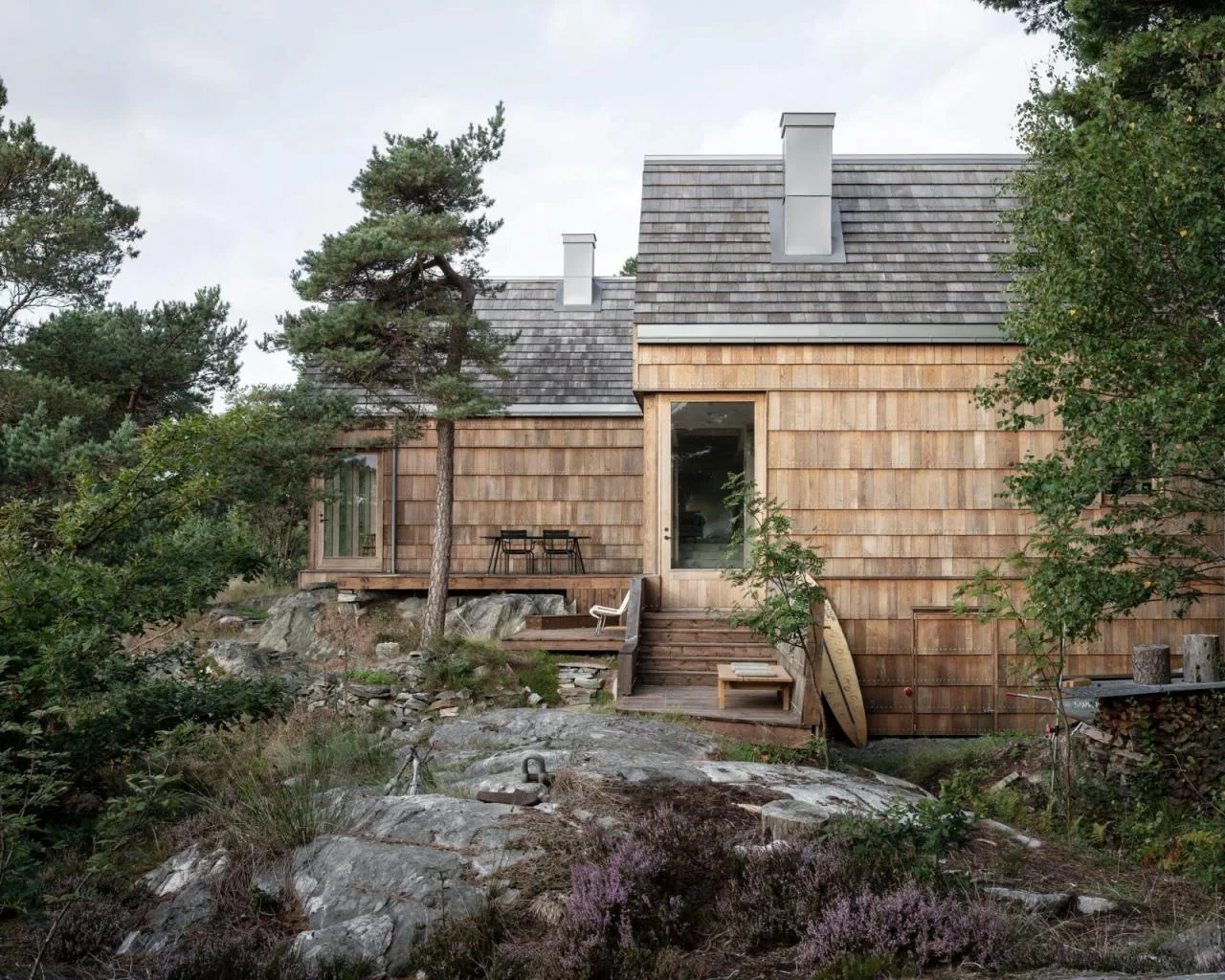
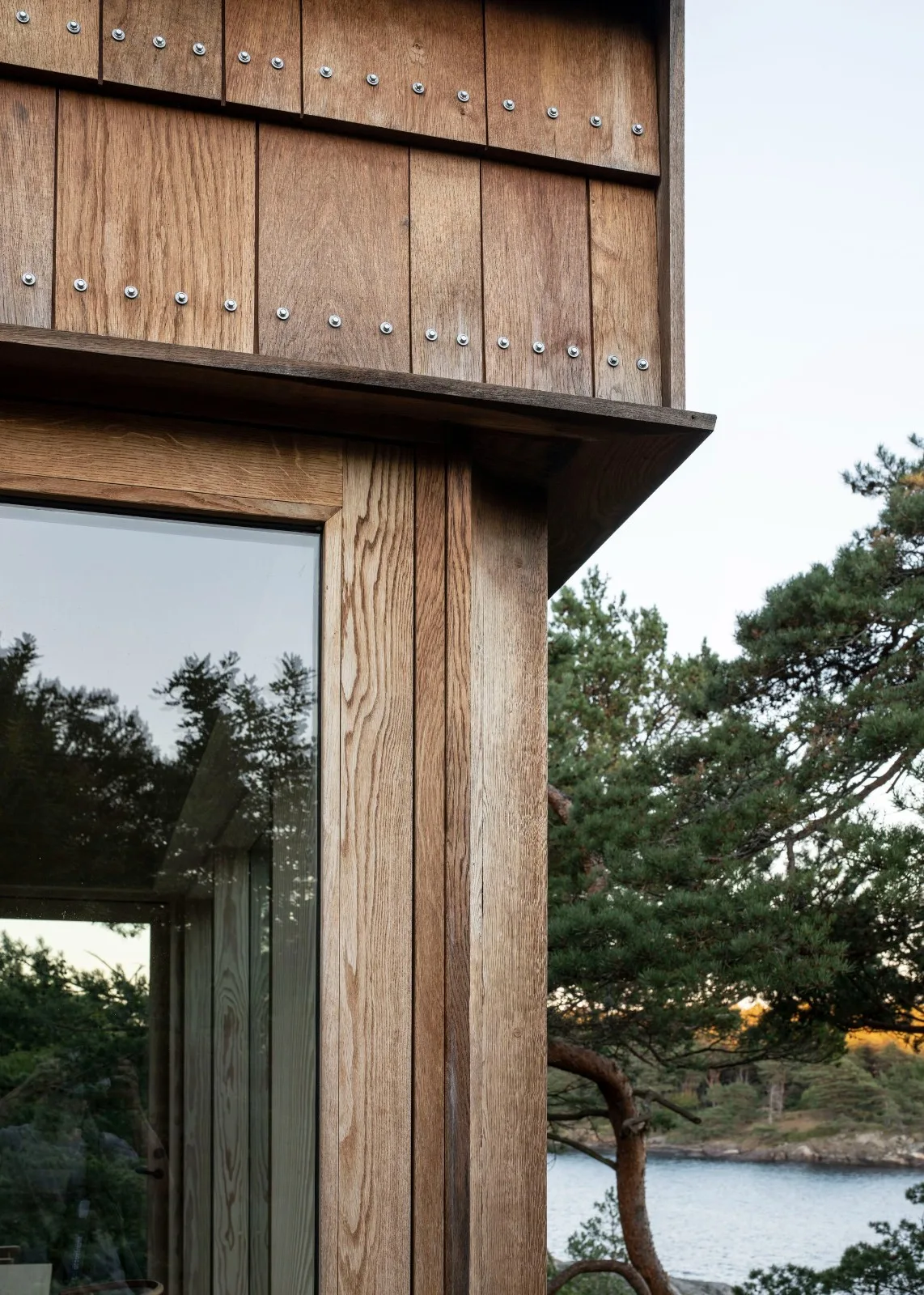
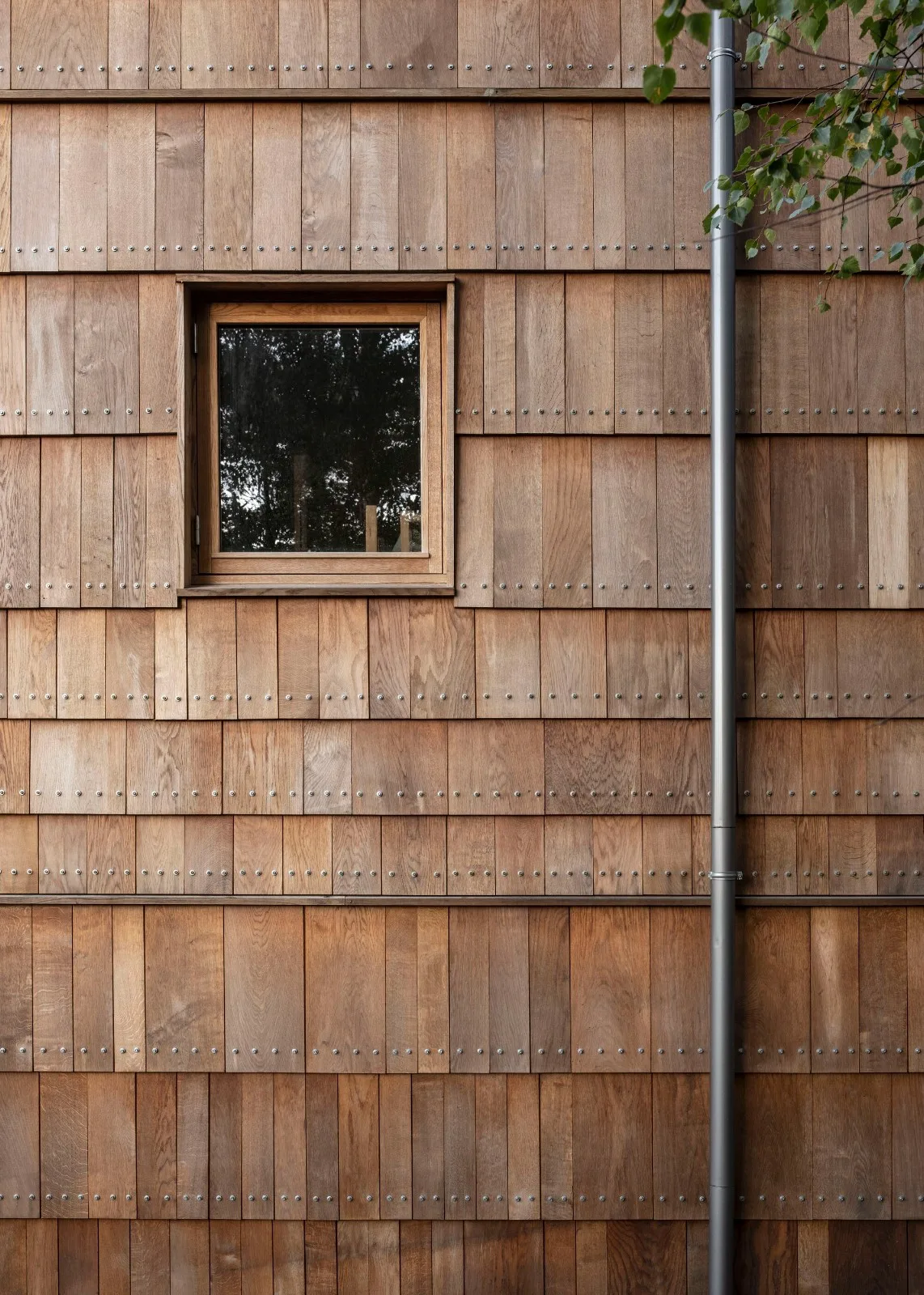
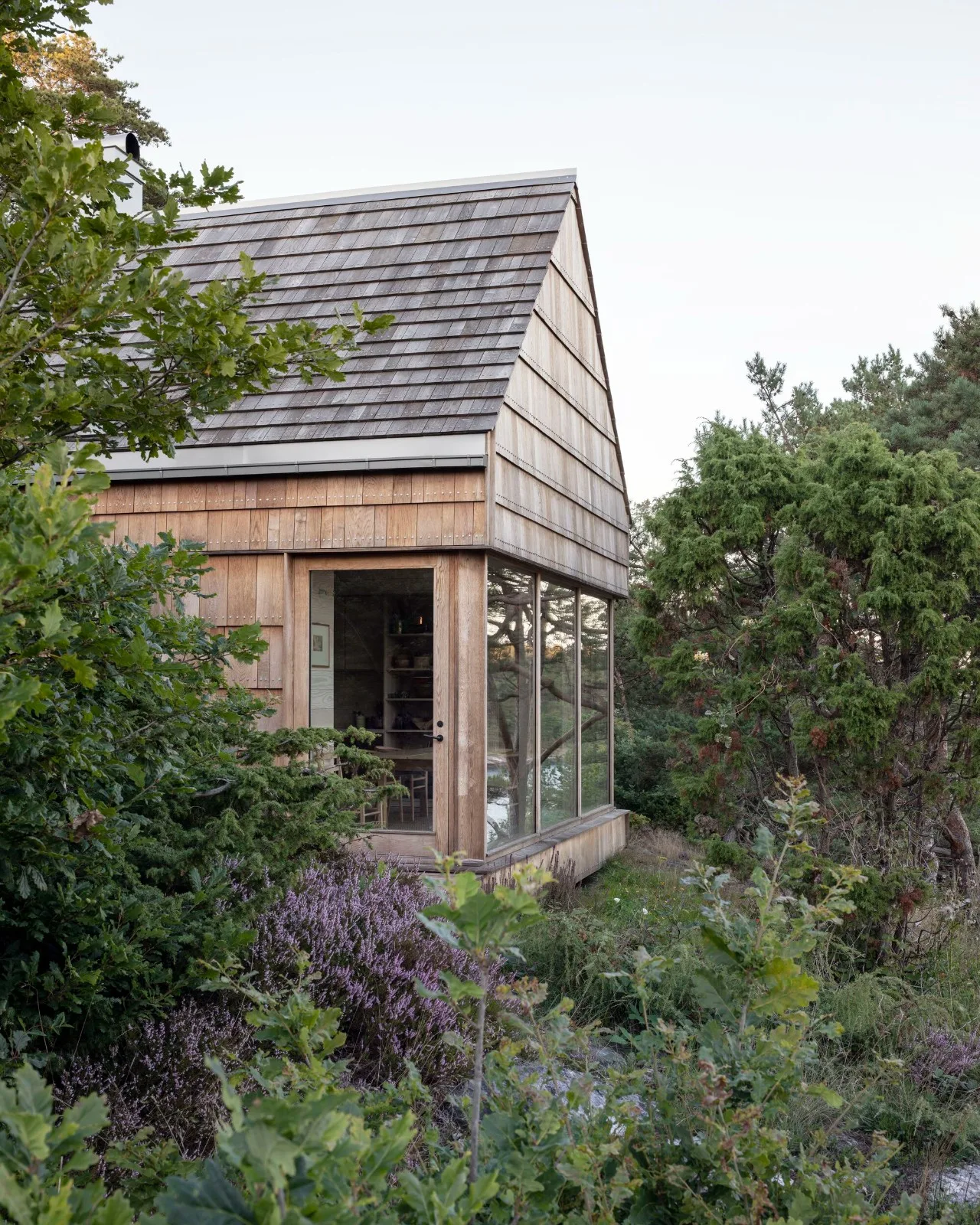
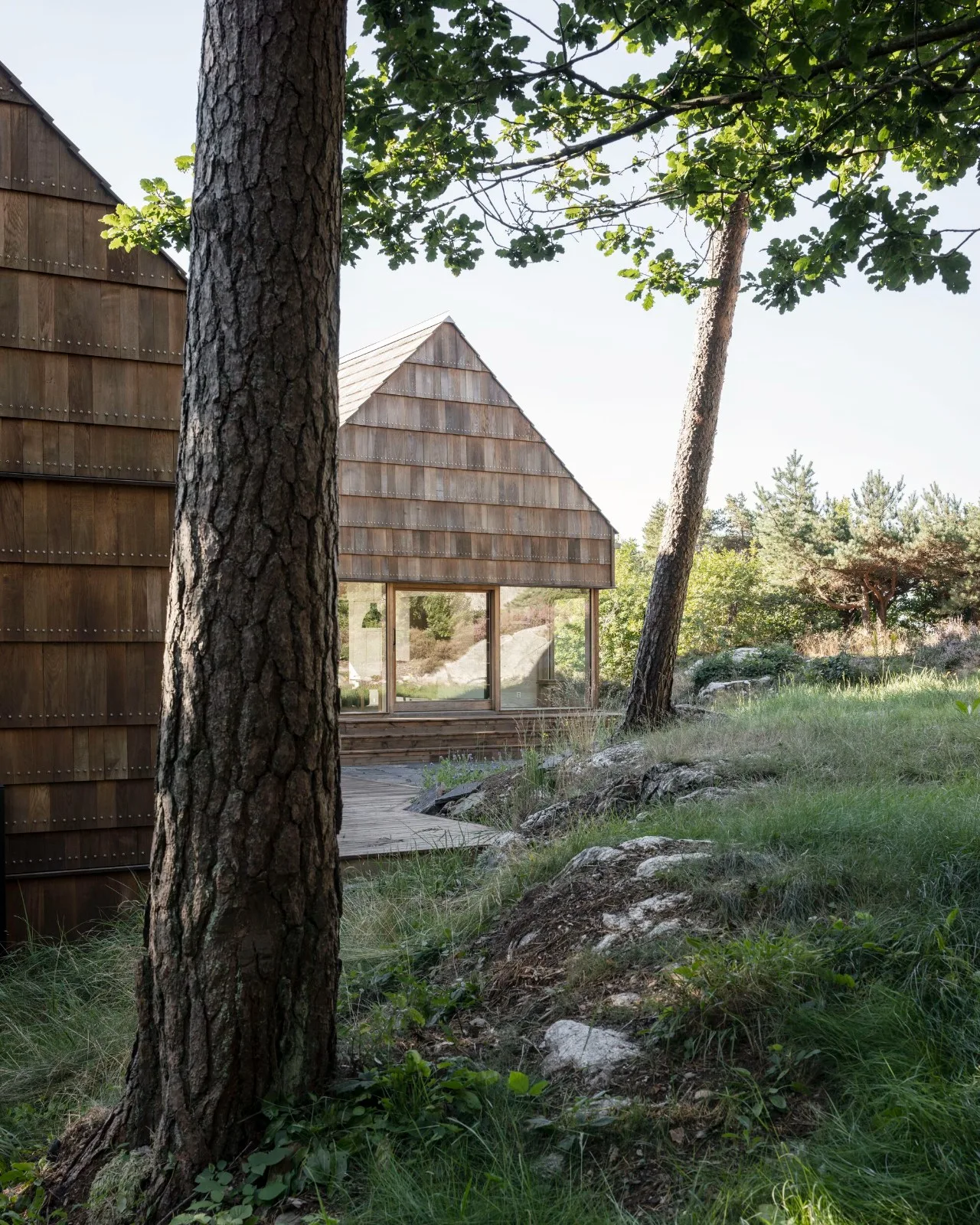
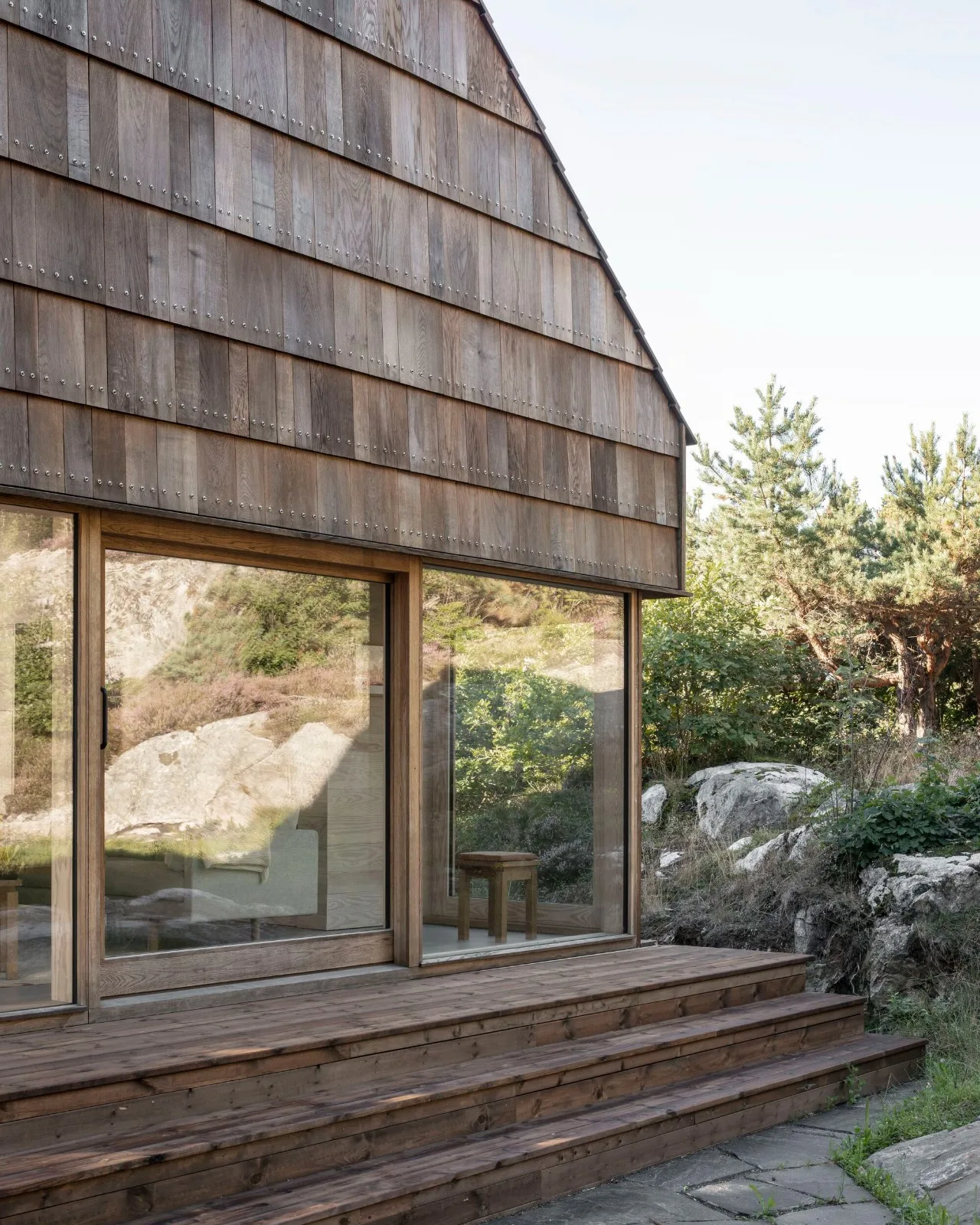
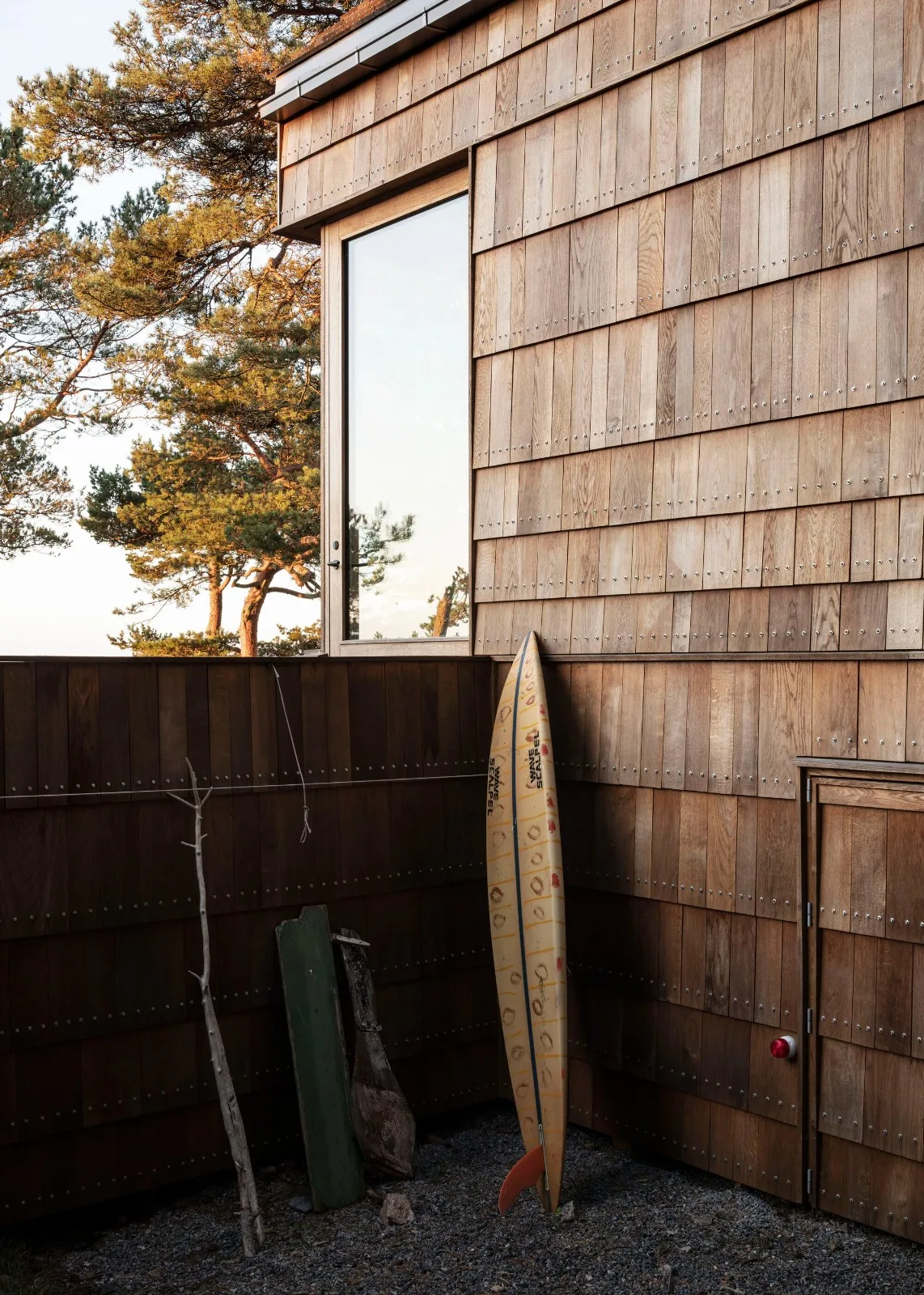
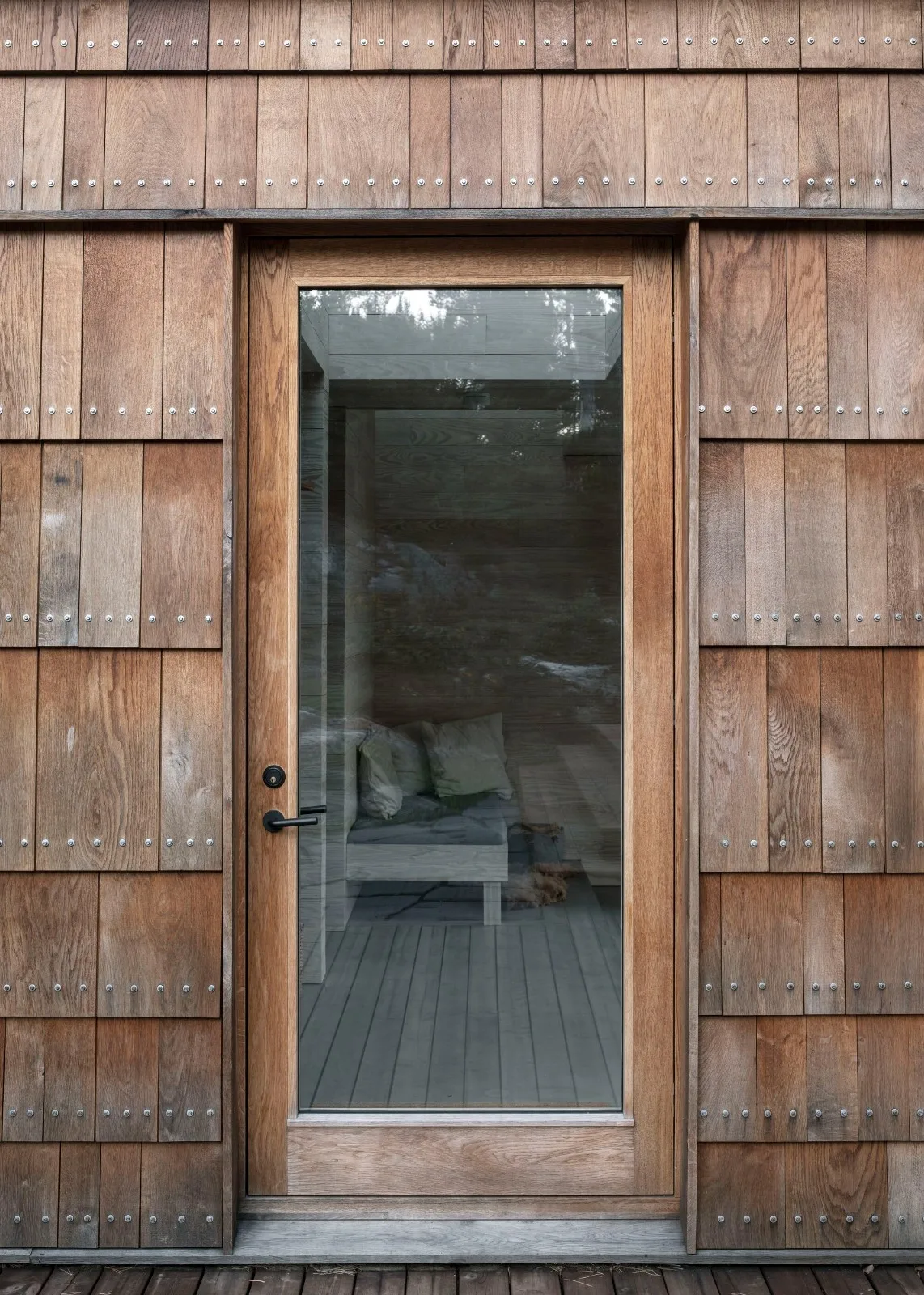
The production and assembly of the wooden components harness the collective expertise of carpenters and suppliers. Over 12,000 oak scrap pieces from Dinesen flooring production were precisely cut to size, minimizing waste. After pre-drilling and treating with tar at the woodworking factory, the components were transported to the site for facade assembly. Each piece is meticulously installed and secured with over 20,000 stainless steel screws, emphasizing the facade’s layered, sturdy, and handcrafted character. This craftsmanship imparts a unique texture and expression to the building.
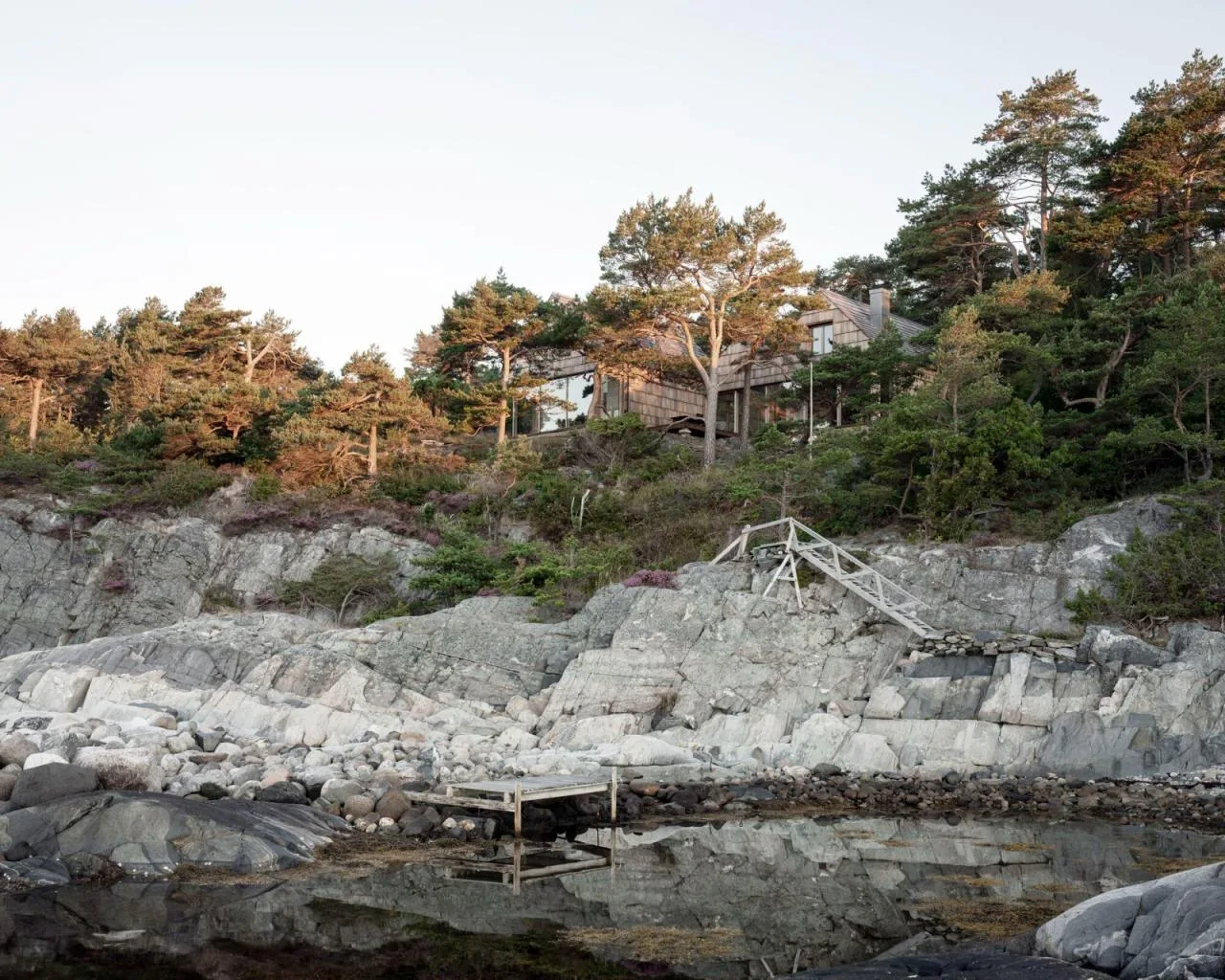
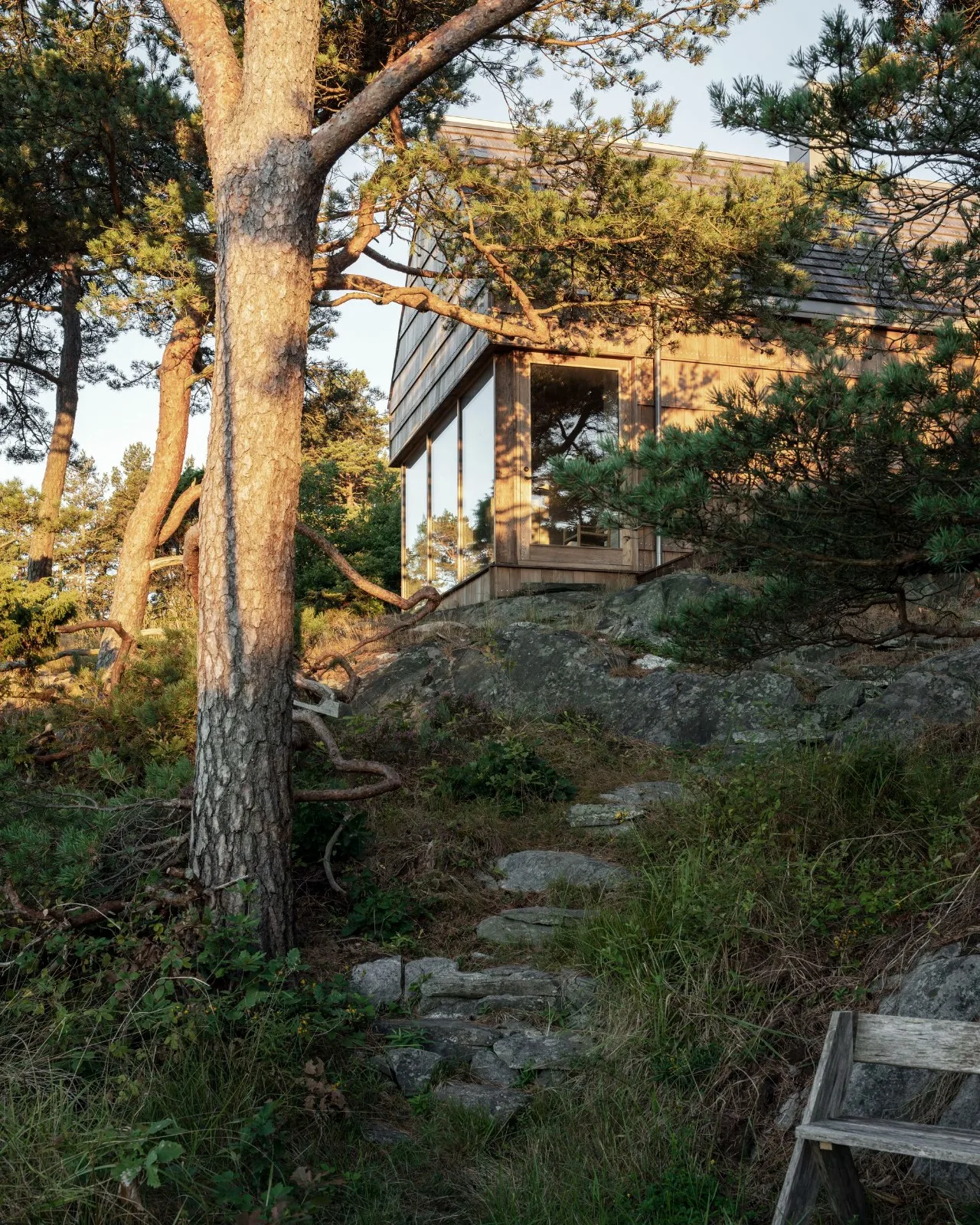
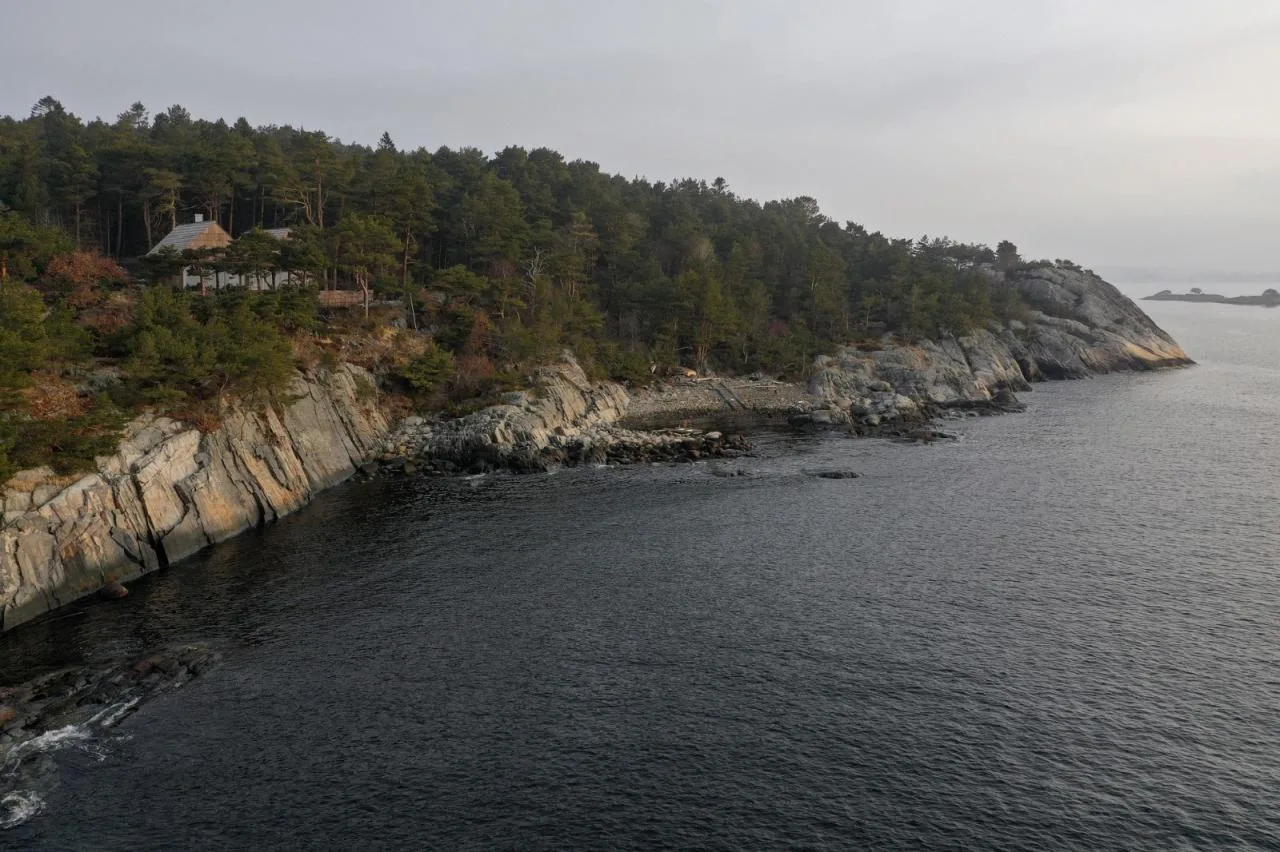
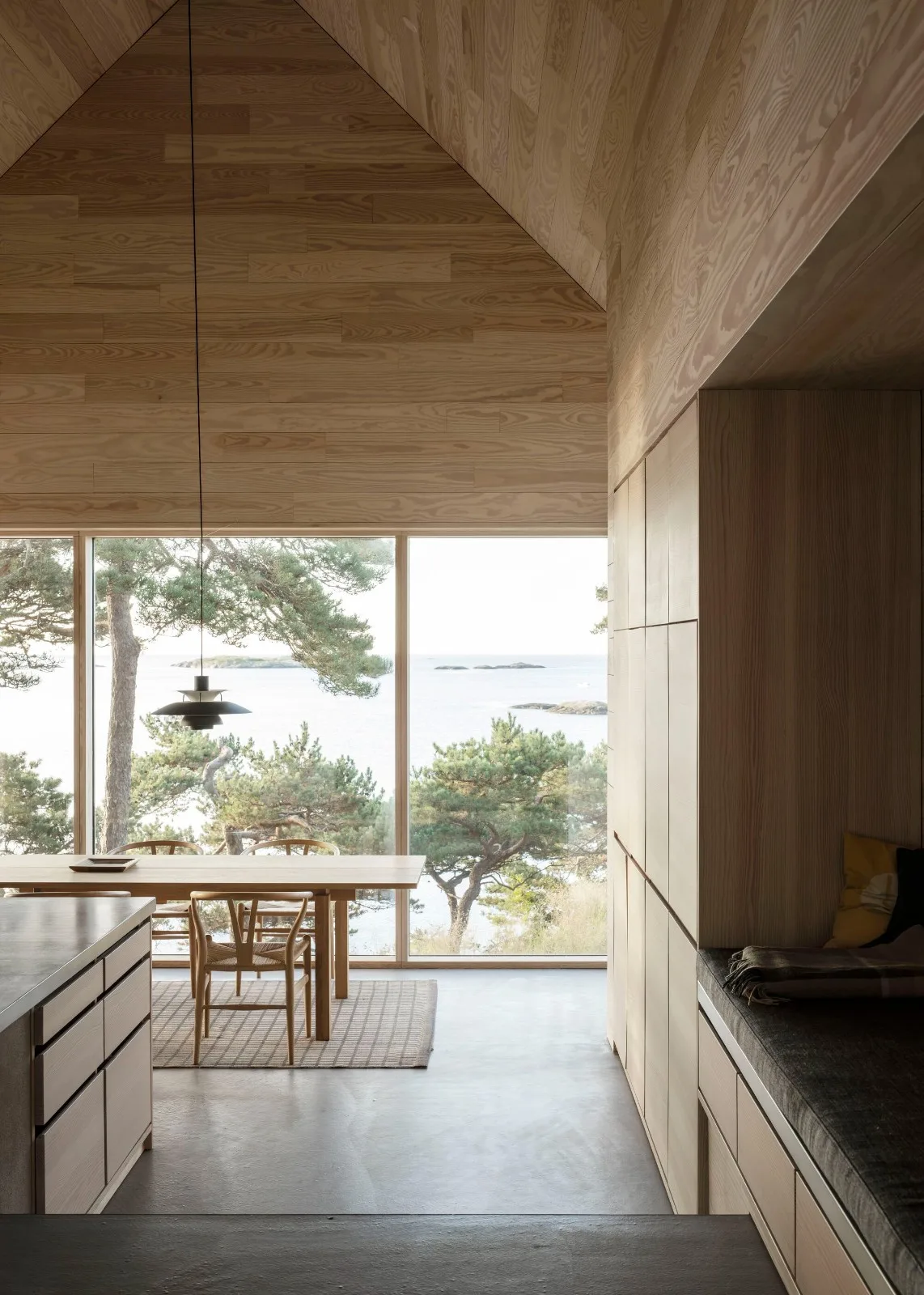
The residence is set on a natural cliffside overlooking the Skagerrak Sea, surrounded by rocks, lichens, ferns, conifers, and deciduous trees. To preserve the terrain, the building adapts precisely to the northeast slope, forming three volumes across five different elevations. These volumes create two distinct outdoor spaces separated by an operable windproof barrier: a courtyard sheltered from the wind facing the forest, and an open deck overlooking the sea. Through a carefully trimmed coniferous forest “window strip,” residents can enjoy unobstructed sea views. This site-specific design fosters harmony between the building and its natural surroundings.
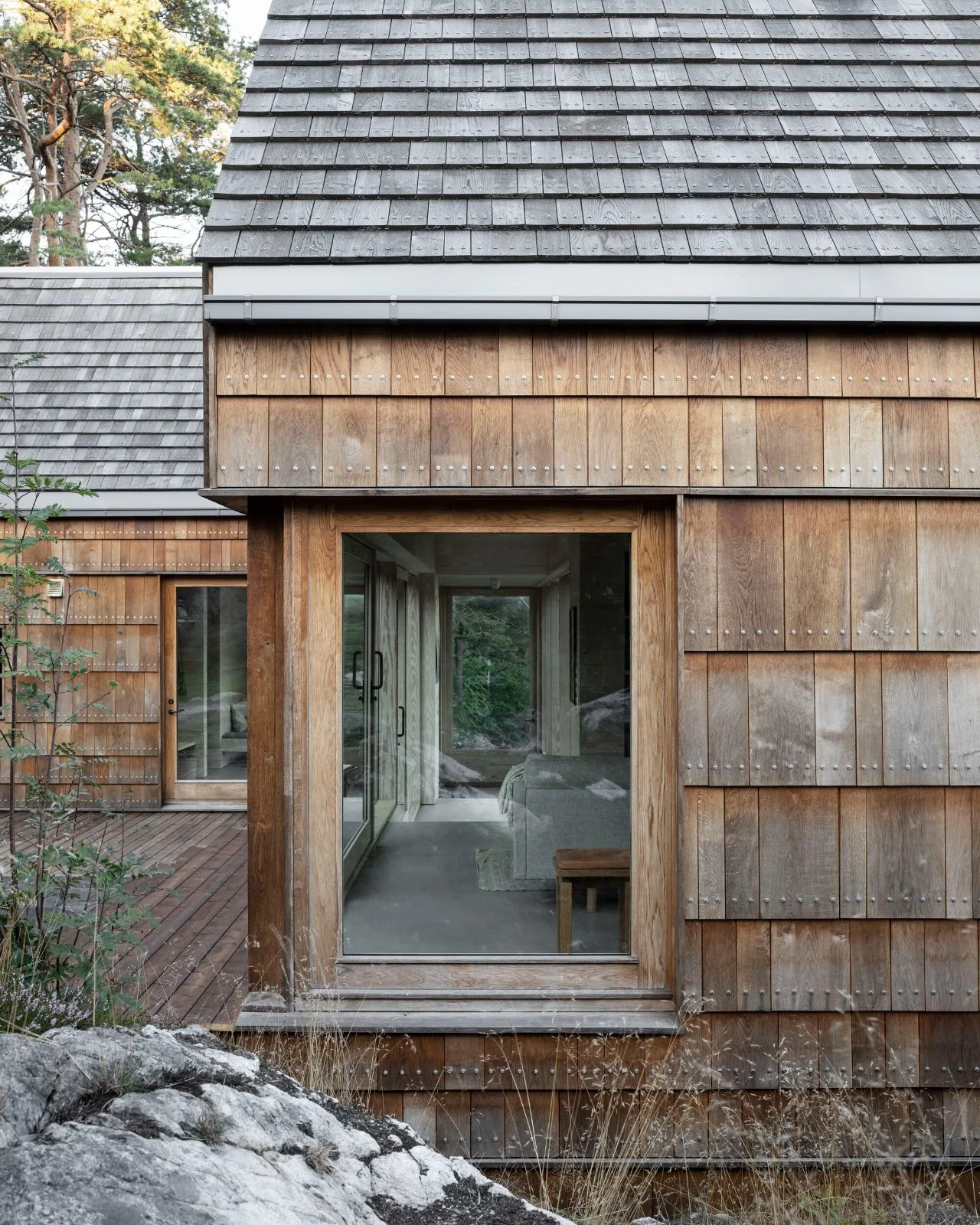
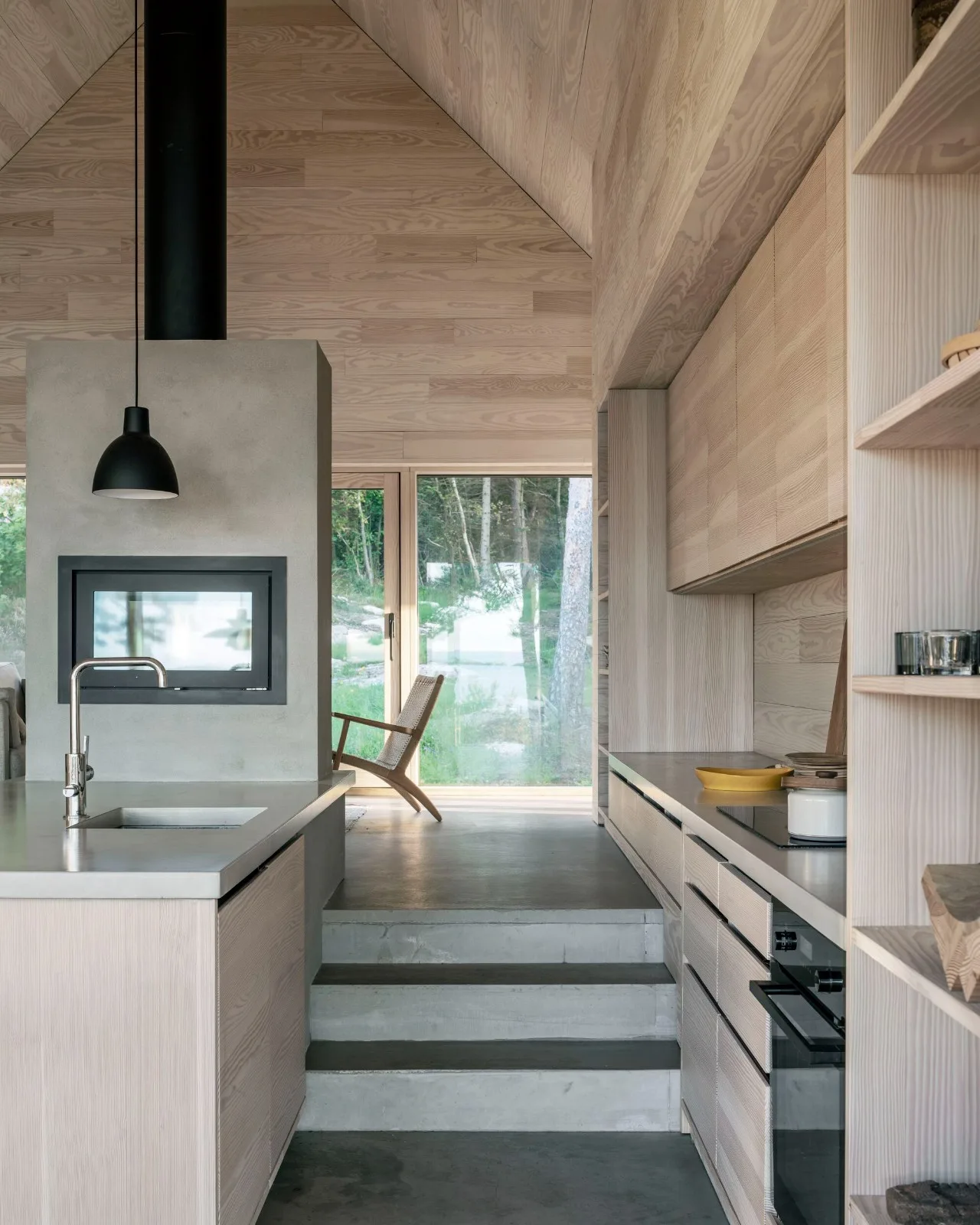
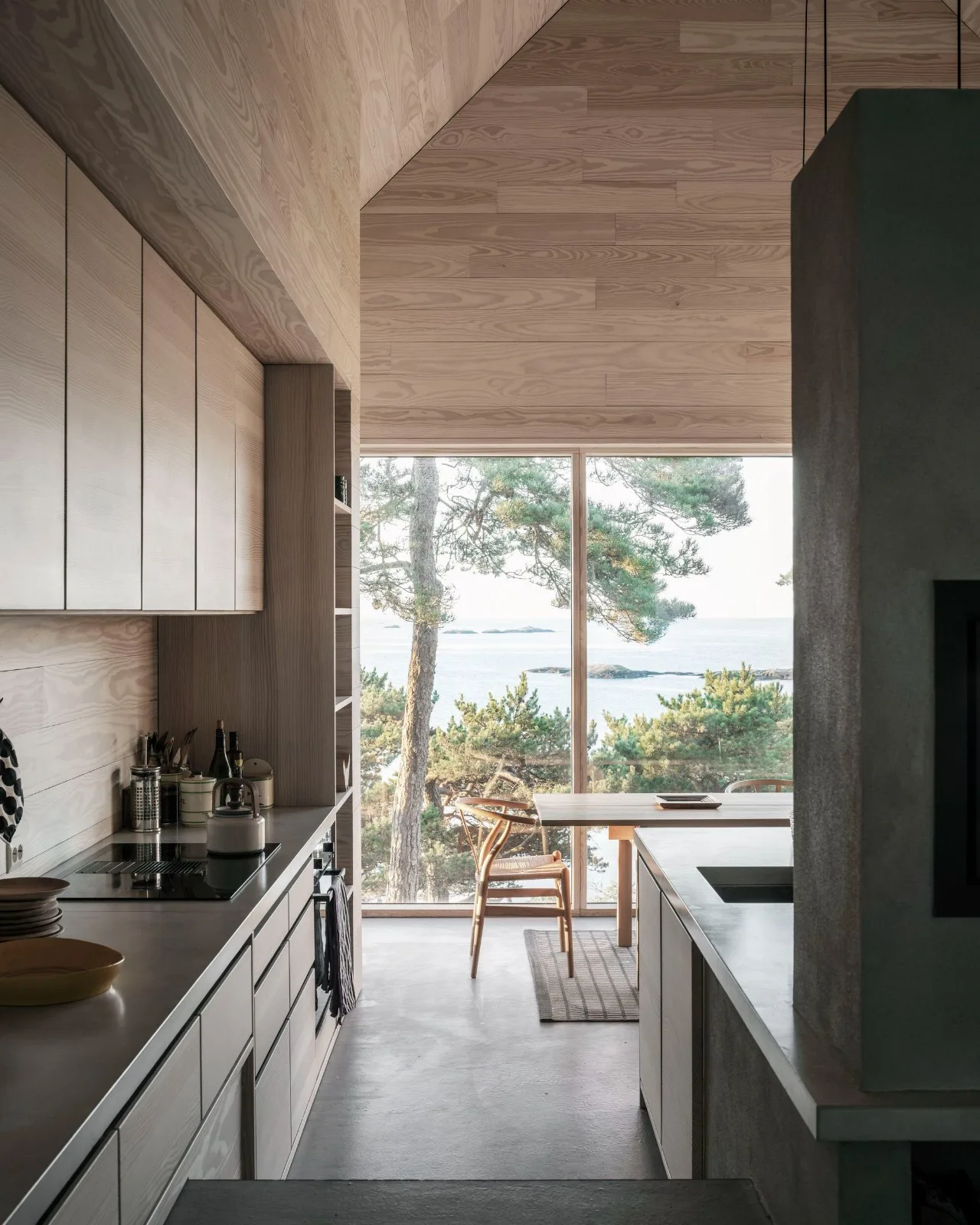
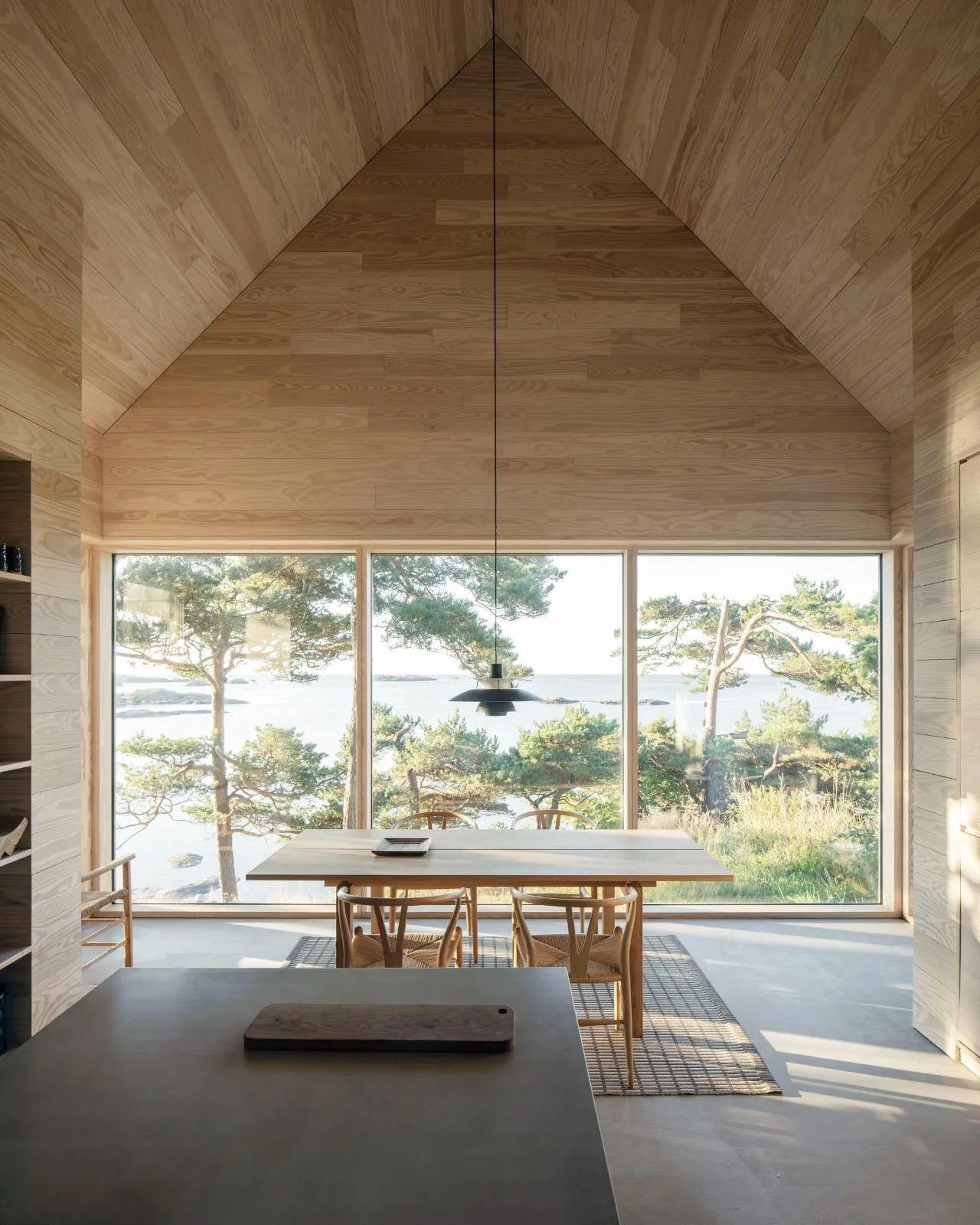
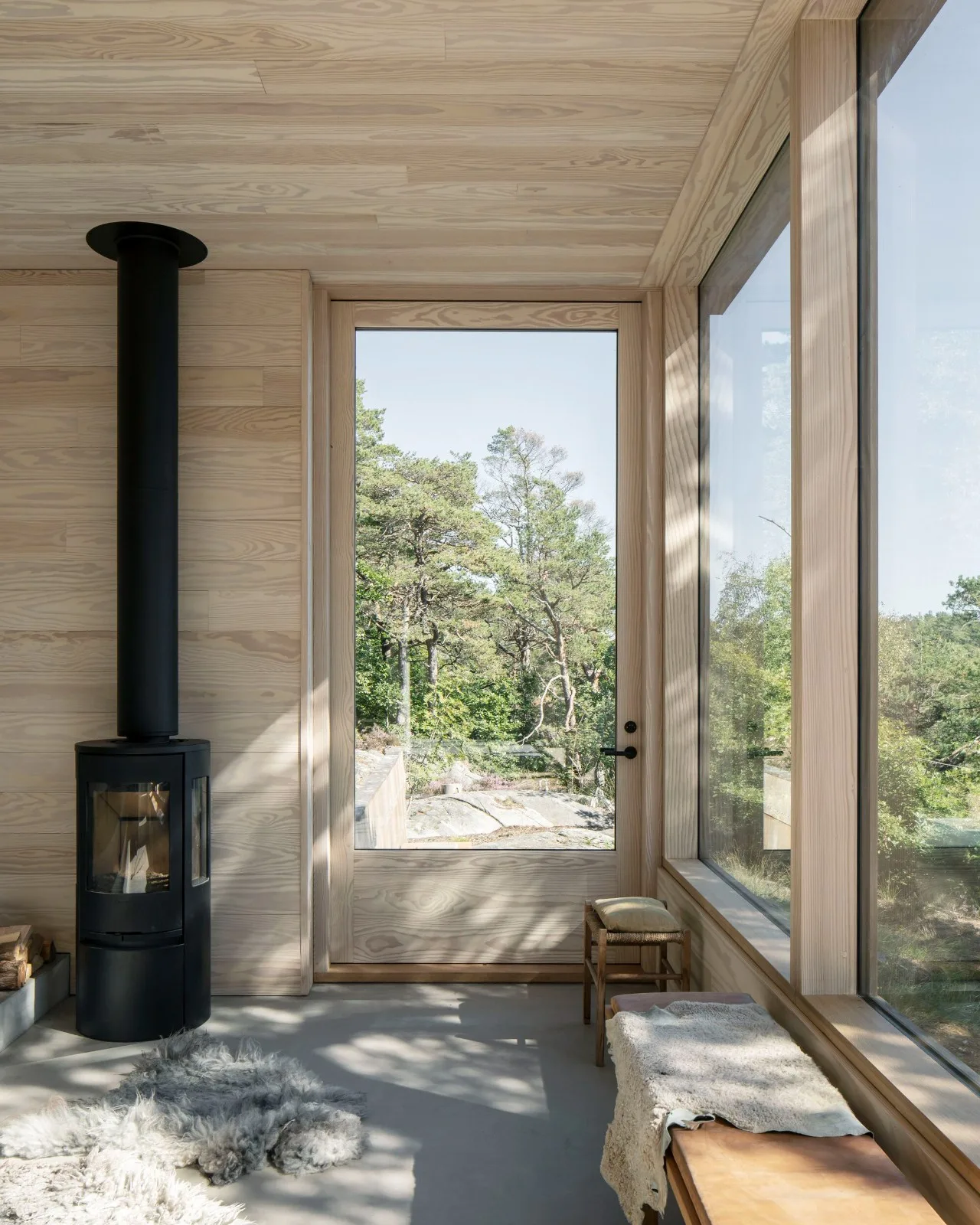
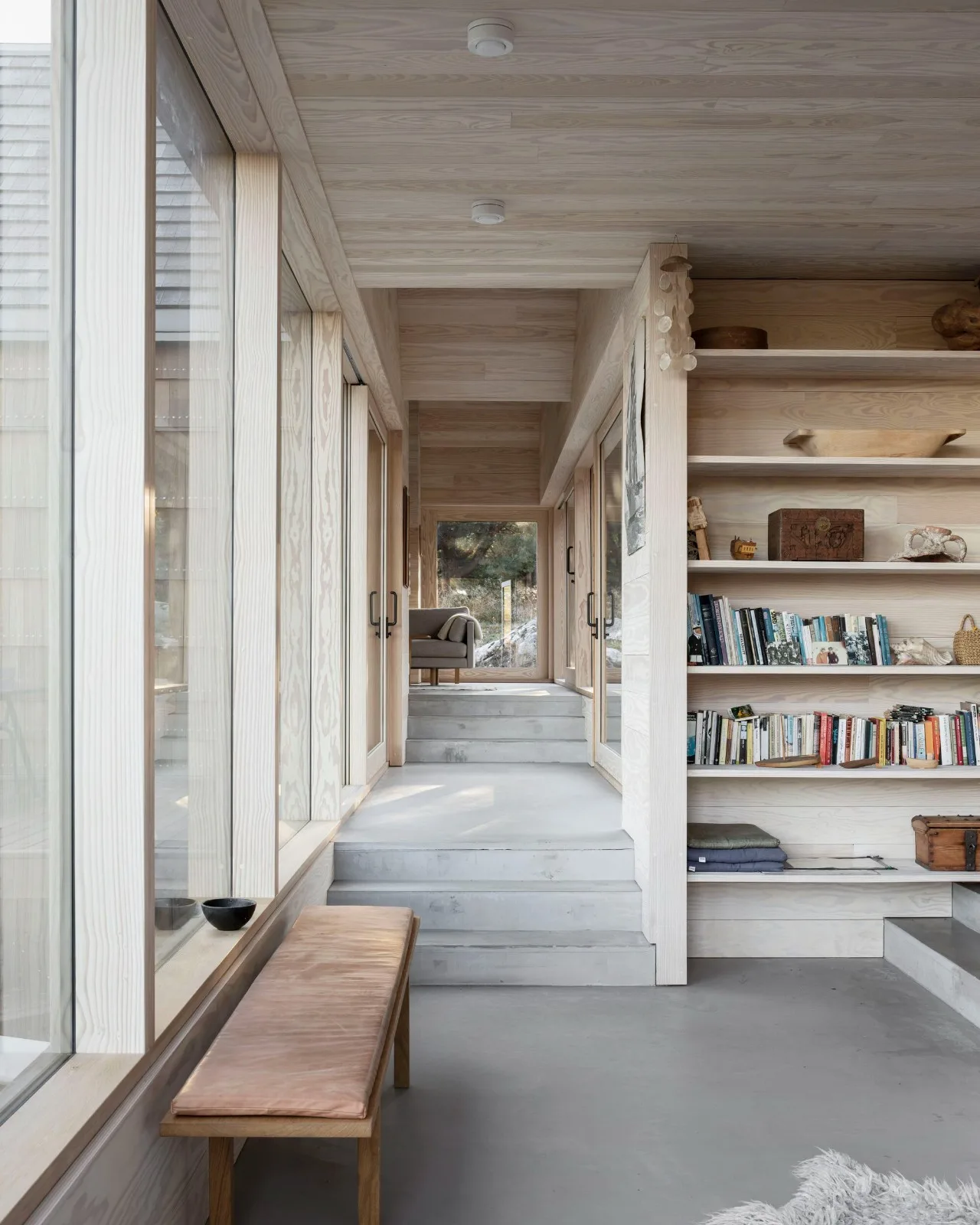
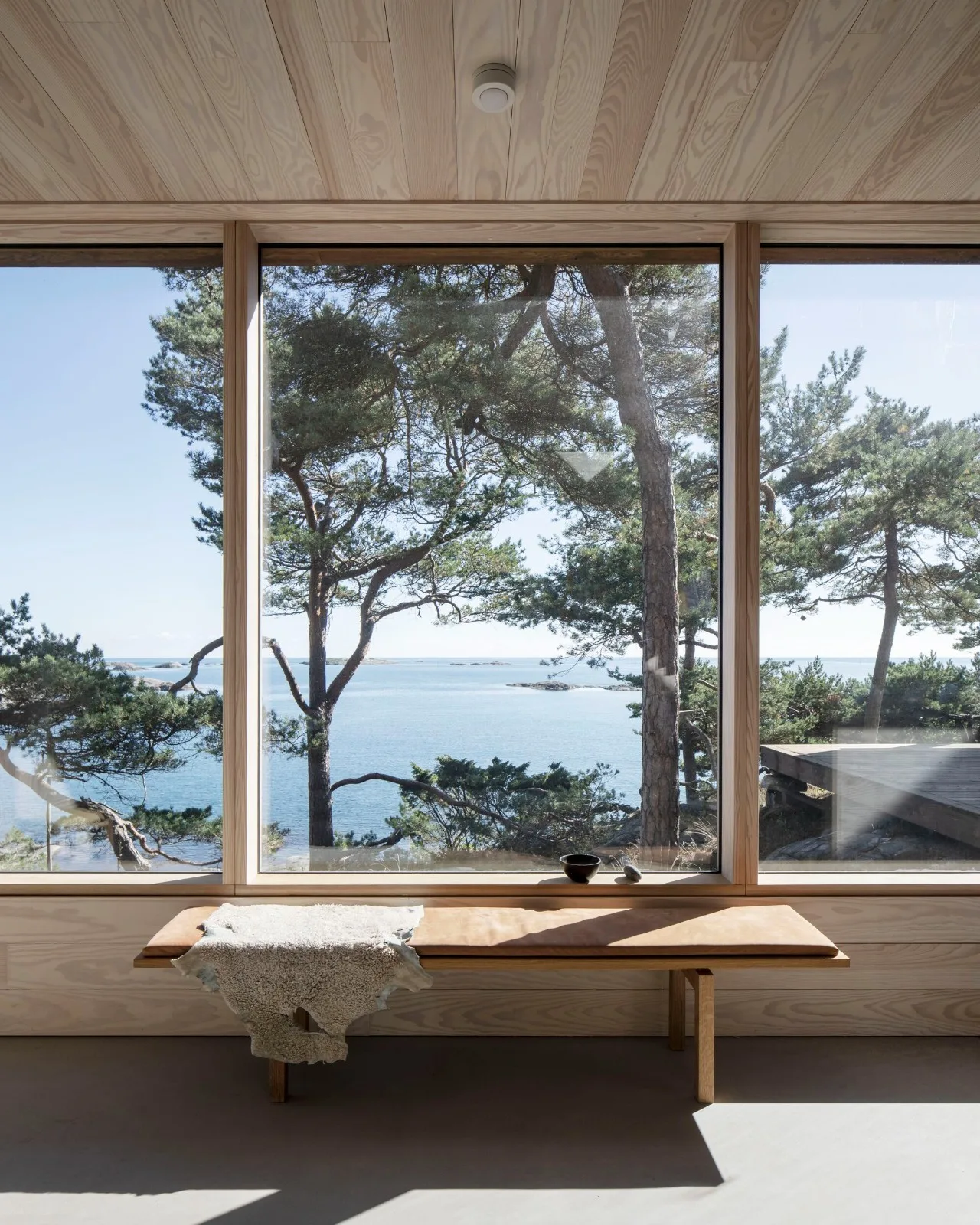
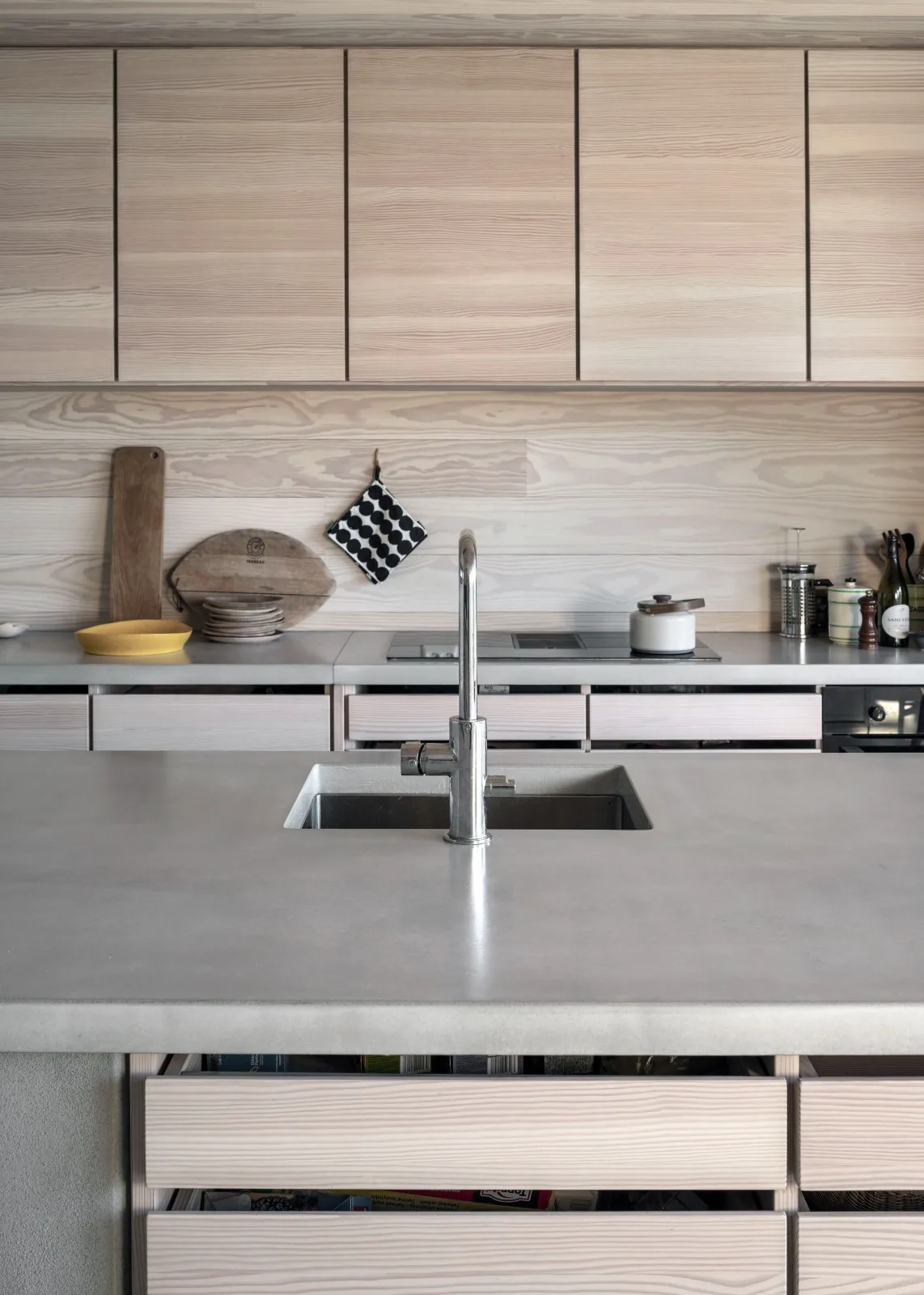
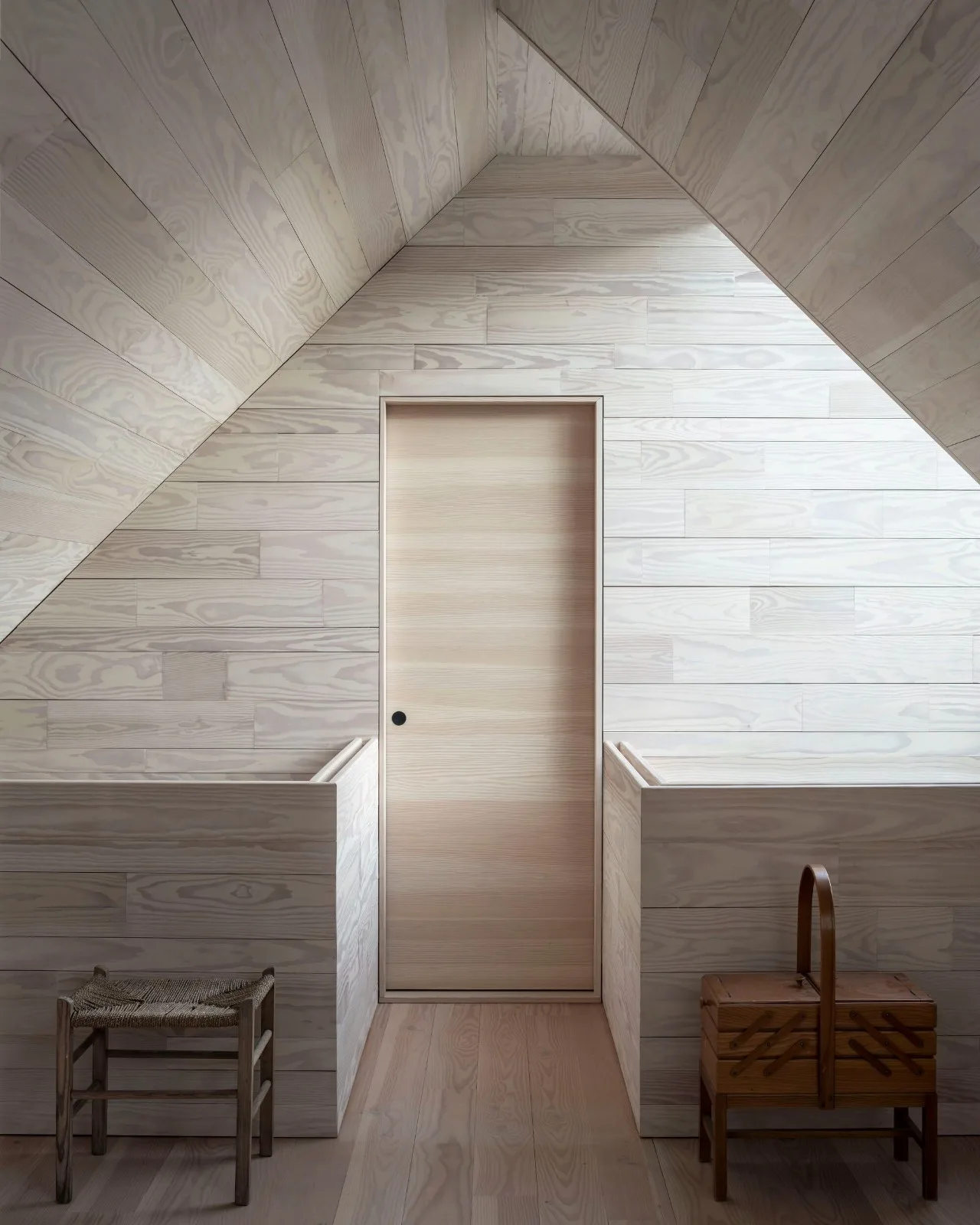
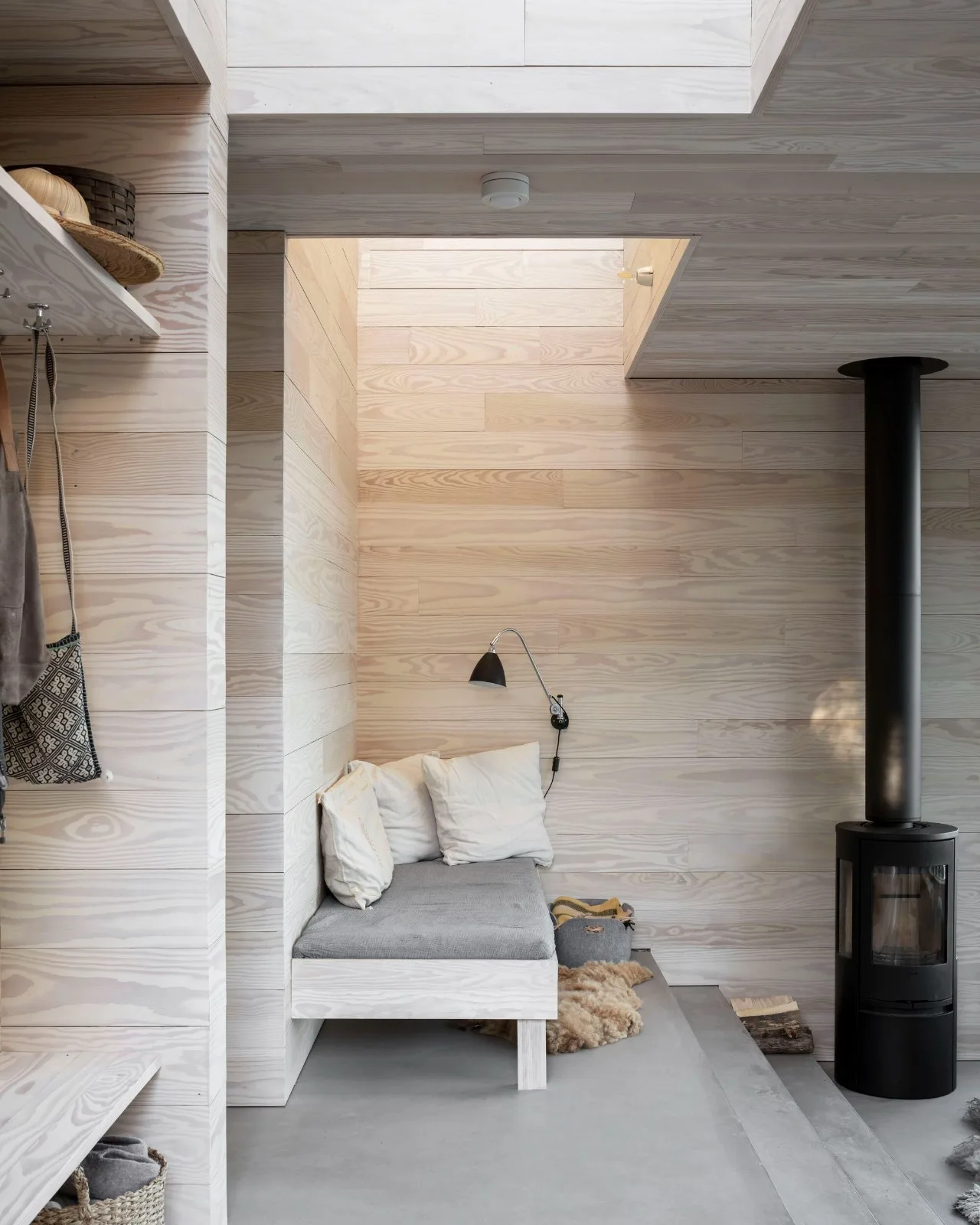
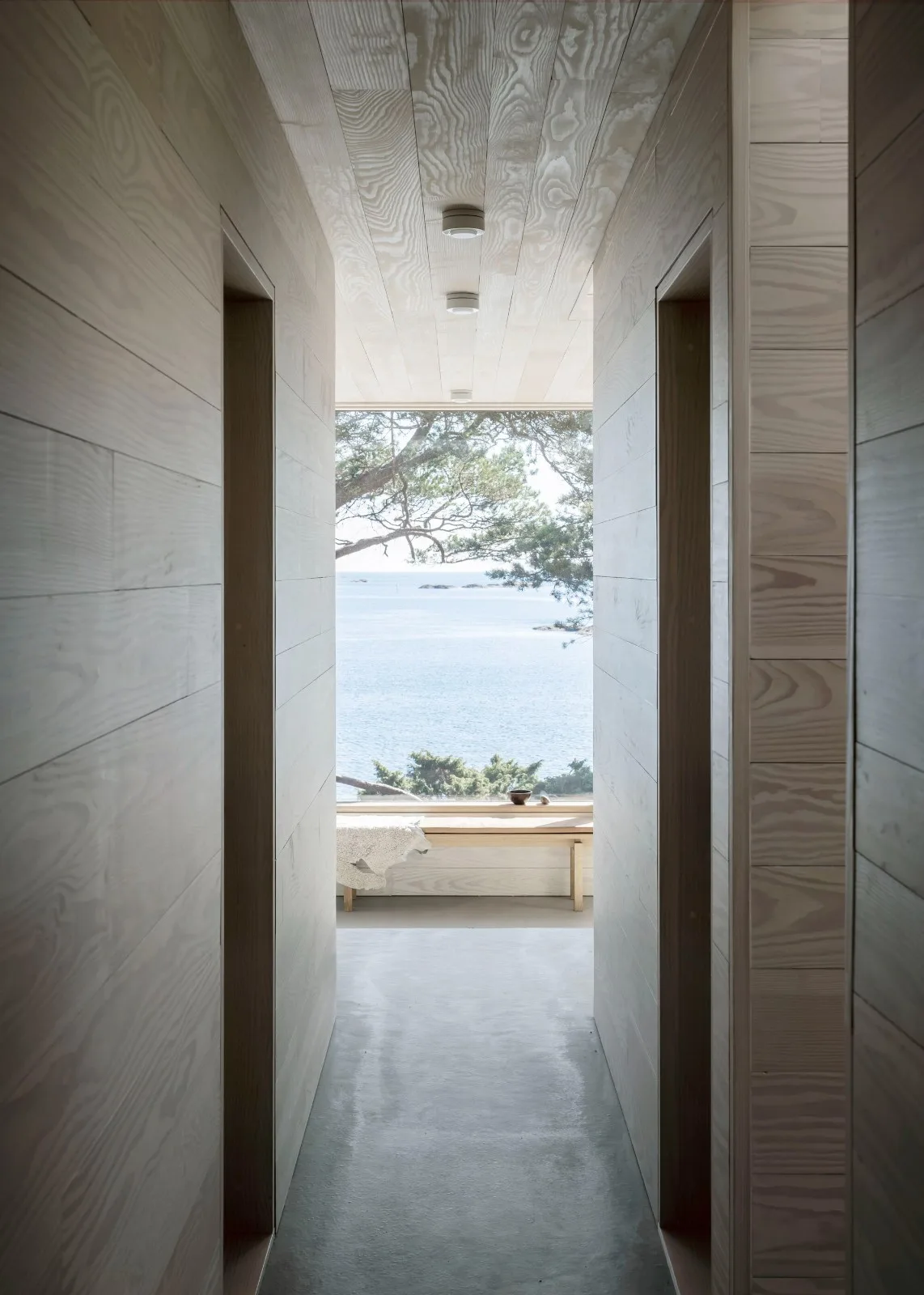
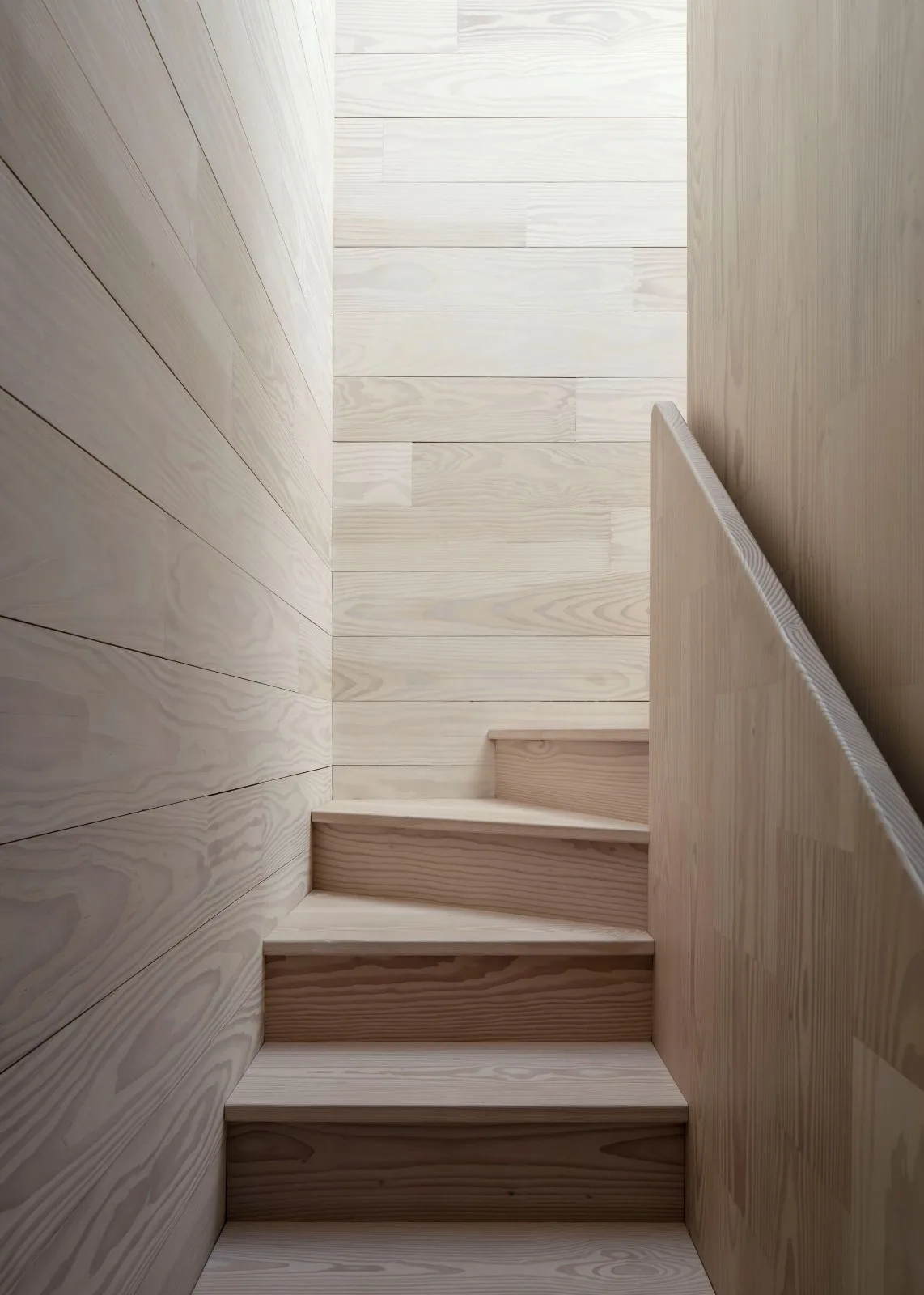
Inside, each room features unique volumes and ceiling heights, with the layout clearly visible through a central corridor. Floor-to-ceiling windows facing the sea create a sense of unity across multiple levels. The exterior oak cladding will naturally weather to a silver-gray, blending seamlessly with the surrounding slate and granite landscape. Inside, warm white Douglas fir veneer contrasts softly with neutral cement floors, creating a balanced, cozy atmosphere.
Project Drawings
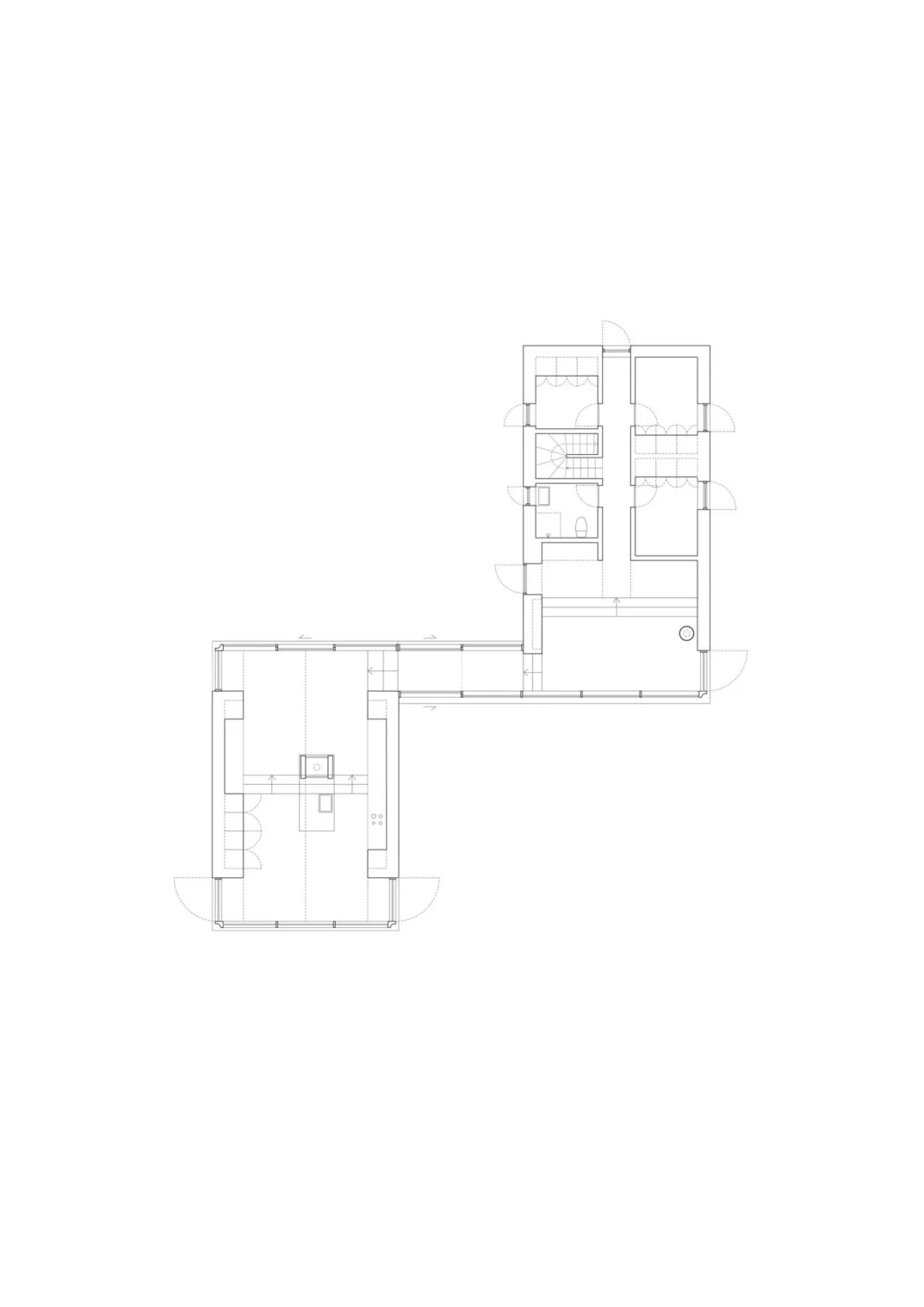
△ Plan View
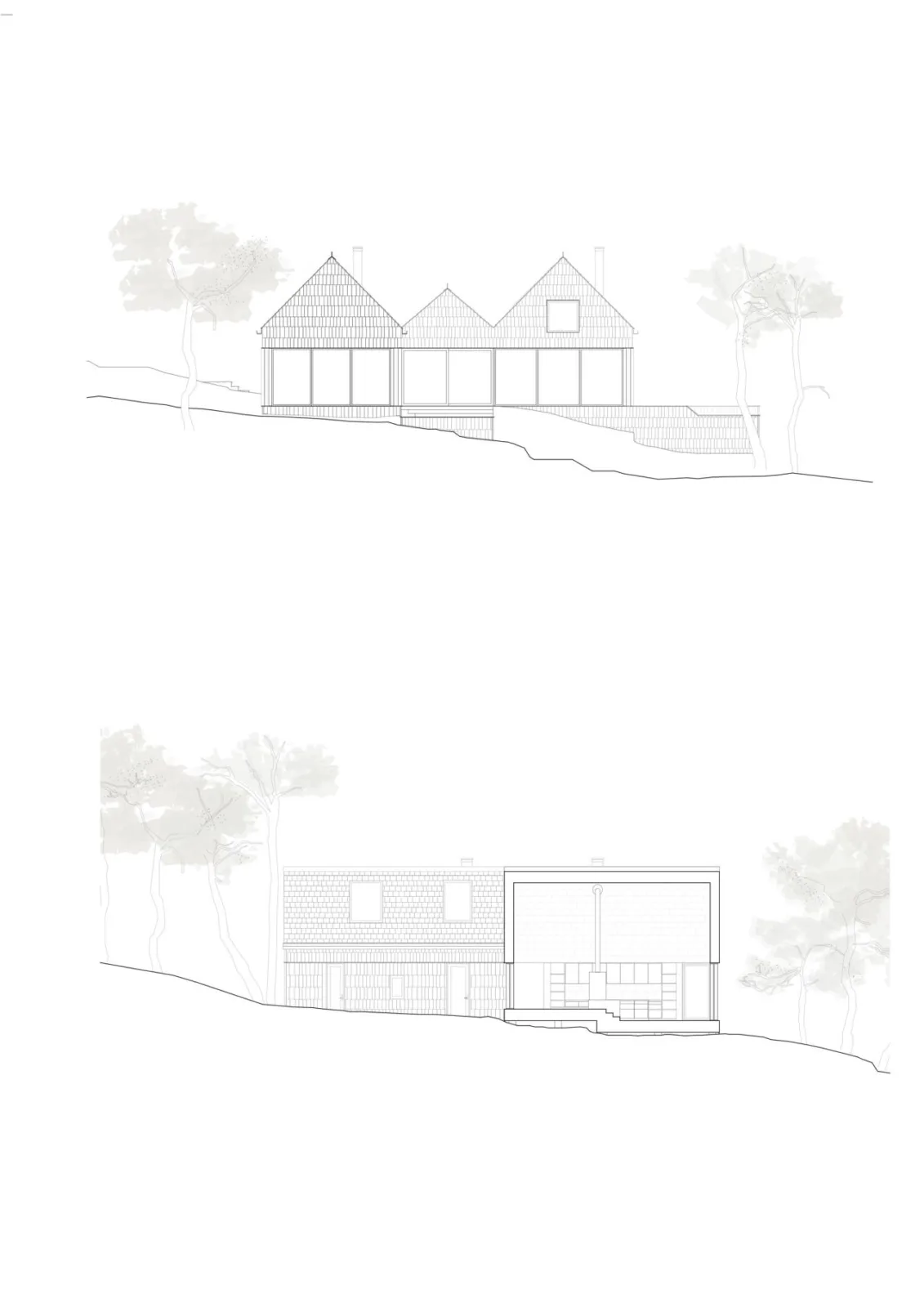
△ Elevation and Section Views
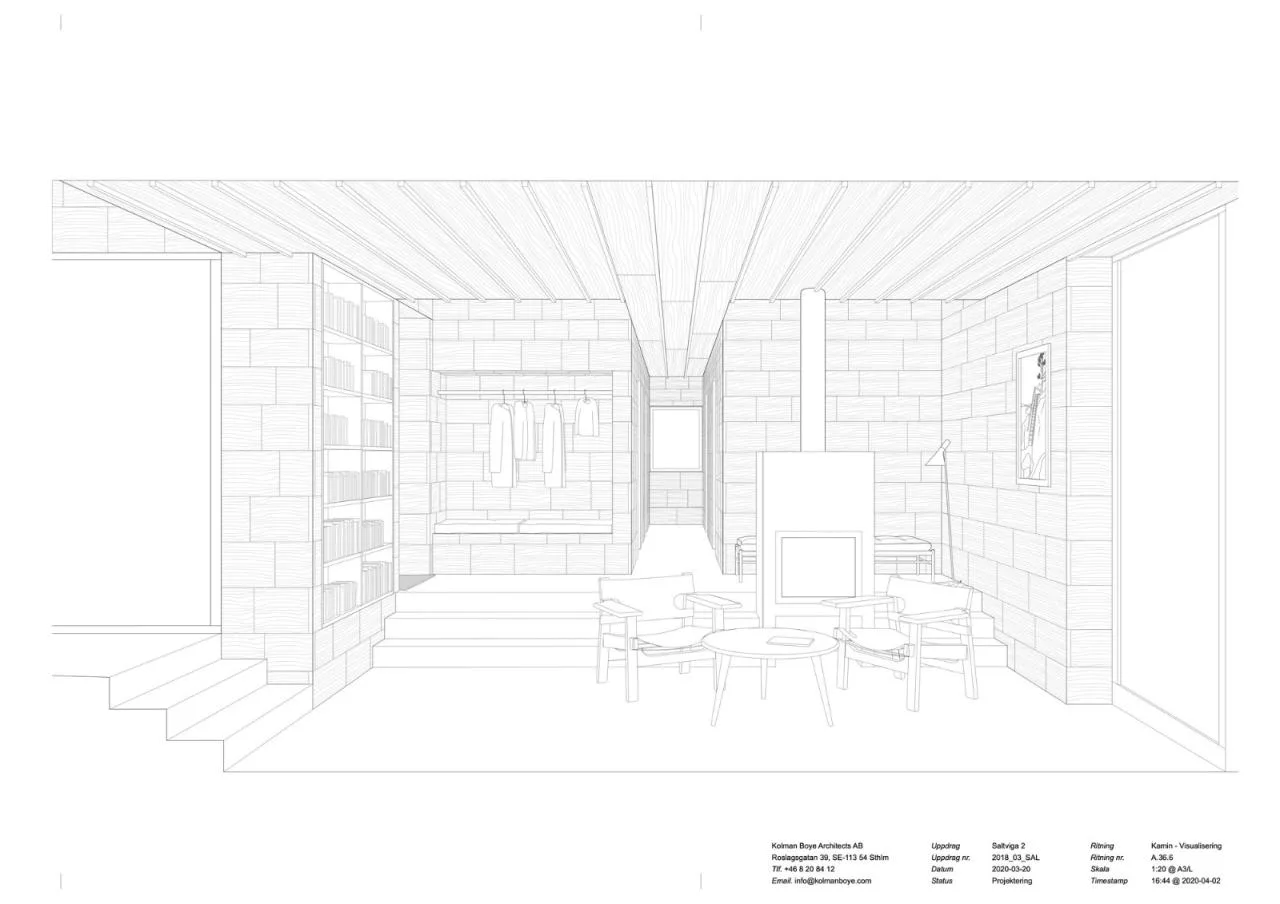
△ Perspective View
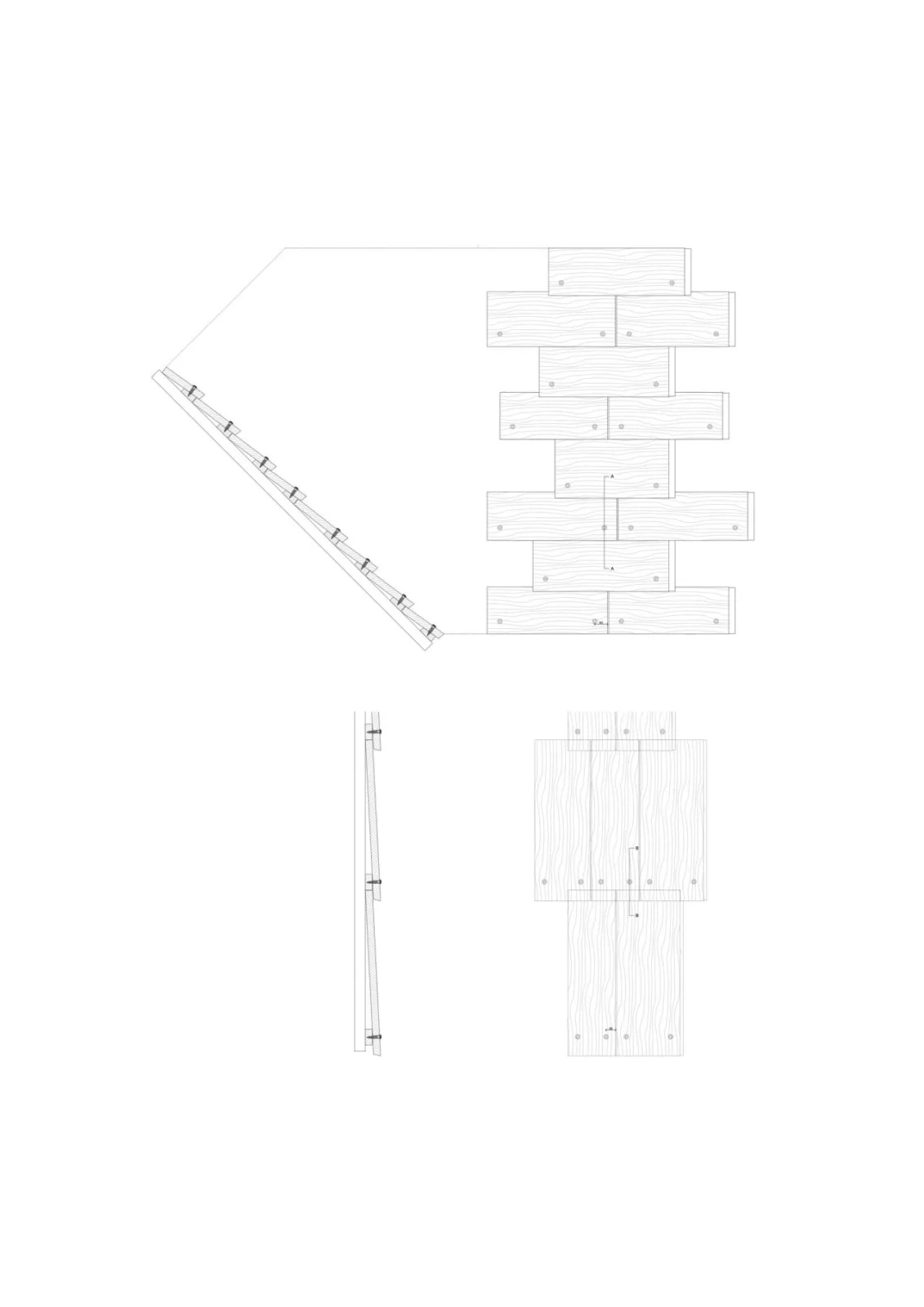
△ Detailed Structural Drawing
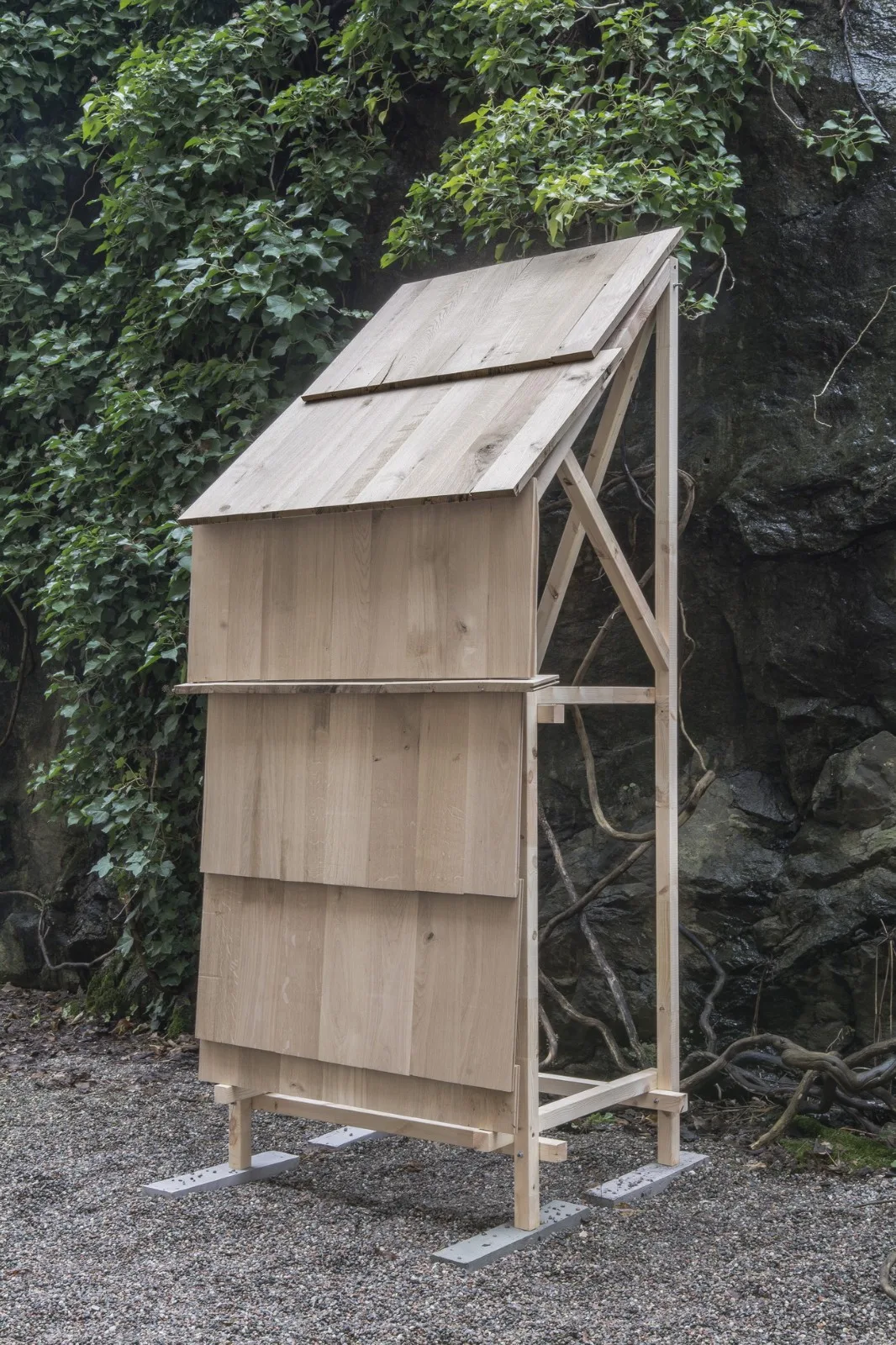
△ Partial Schematic Diagram
Project Information
Architect: Kolman Boye Architects
Area: 140 m²
Project Year: 2022
Photographer: Johan Dehlin
Manufacturers: Dinesen, Kitchen & Room Scandinavia, Louis Poulsen
Location: Grimstad, Norway












Must log in before commenting!
Sign Up