
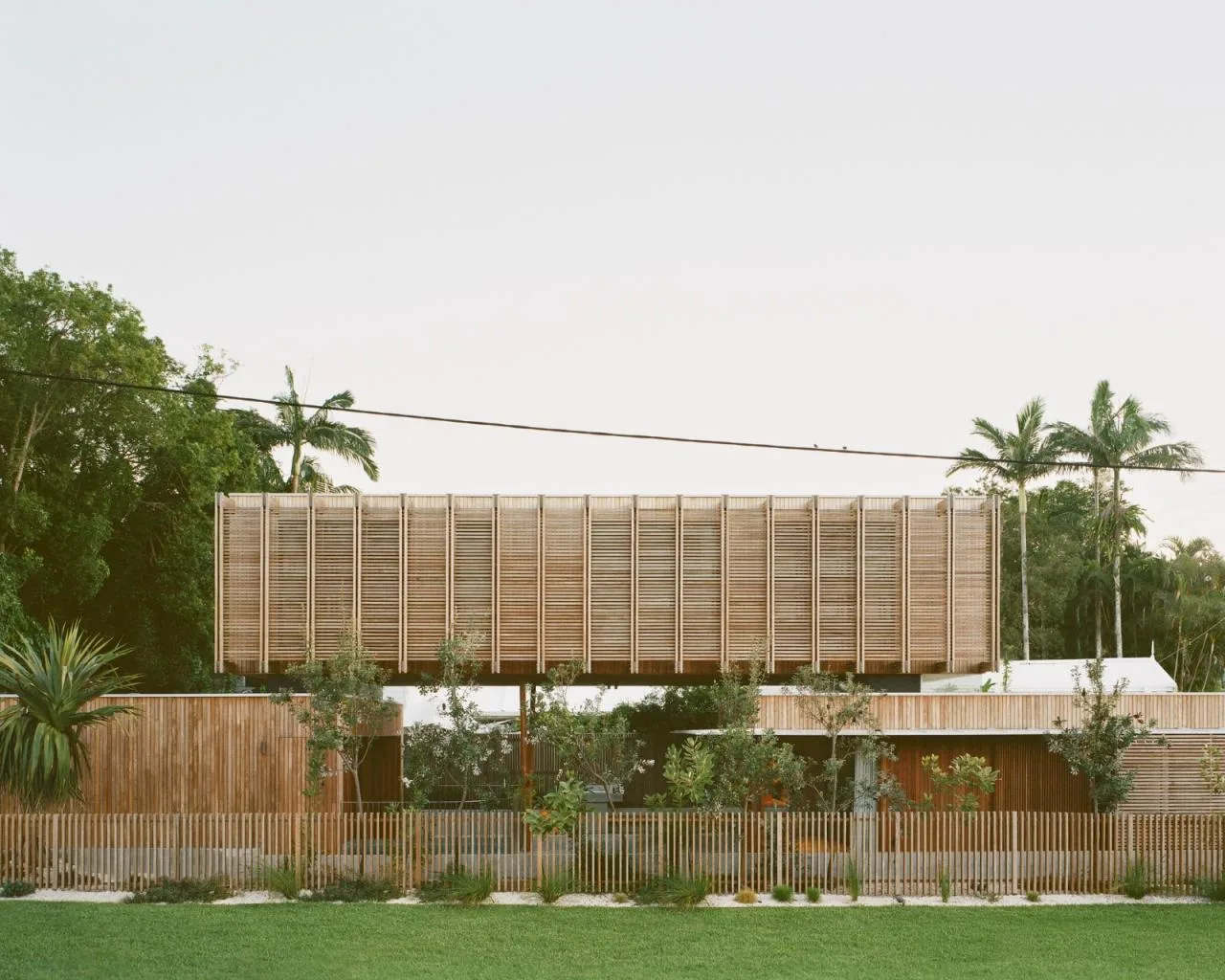
Situated on a narrow 360 square meter corner lot in Byron Bay, the Bengaluro Road residence skillfully overcomes site constraints to create an efficient home designed for a small family. With limited space available, the design employs a raised layout to fulfill the requirements of a three-bedroom house. The residence is composed of three distinct rectangular volumes, each serving a unique functional purpose.
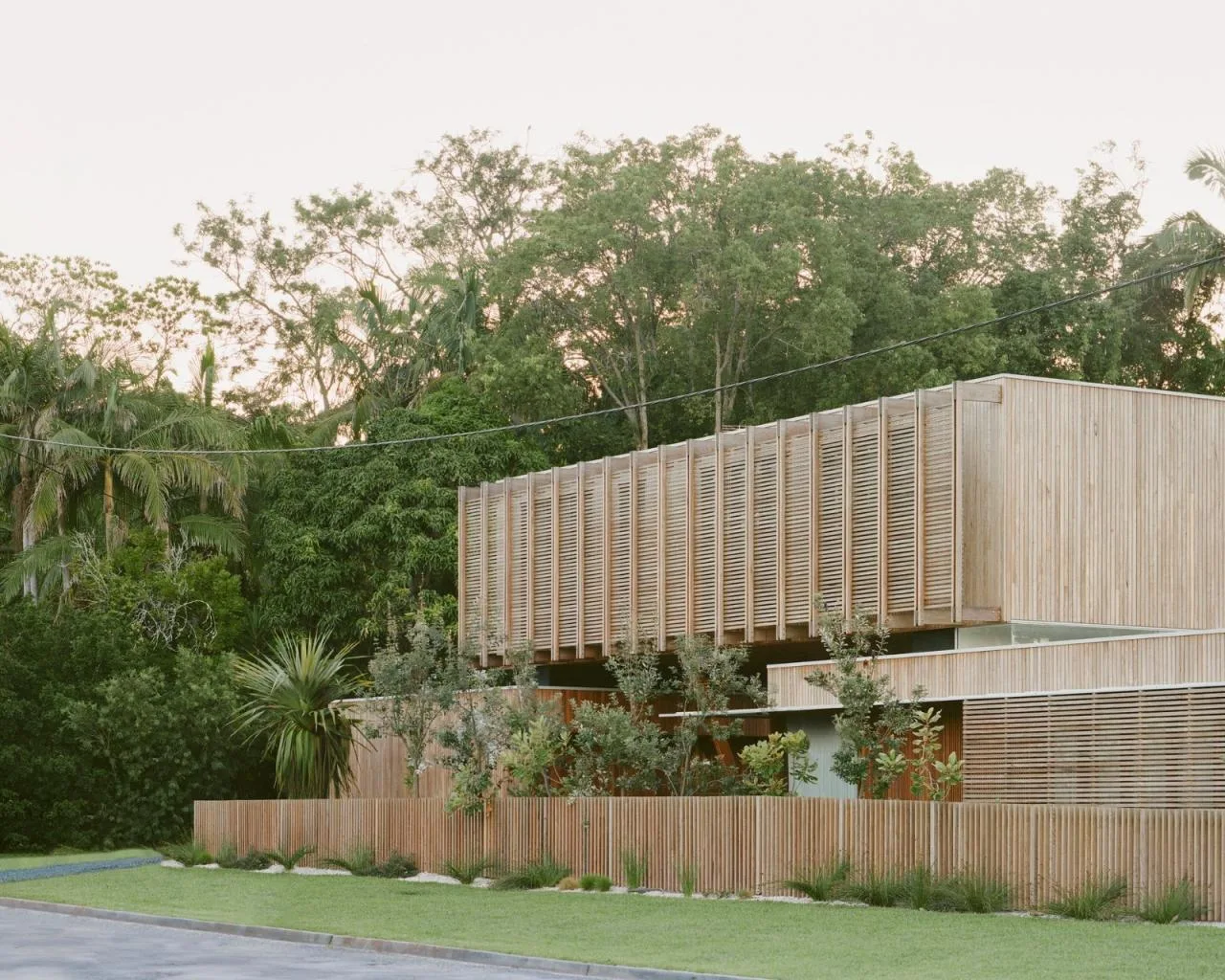
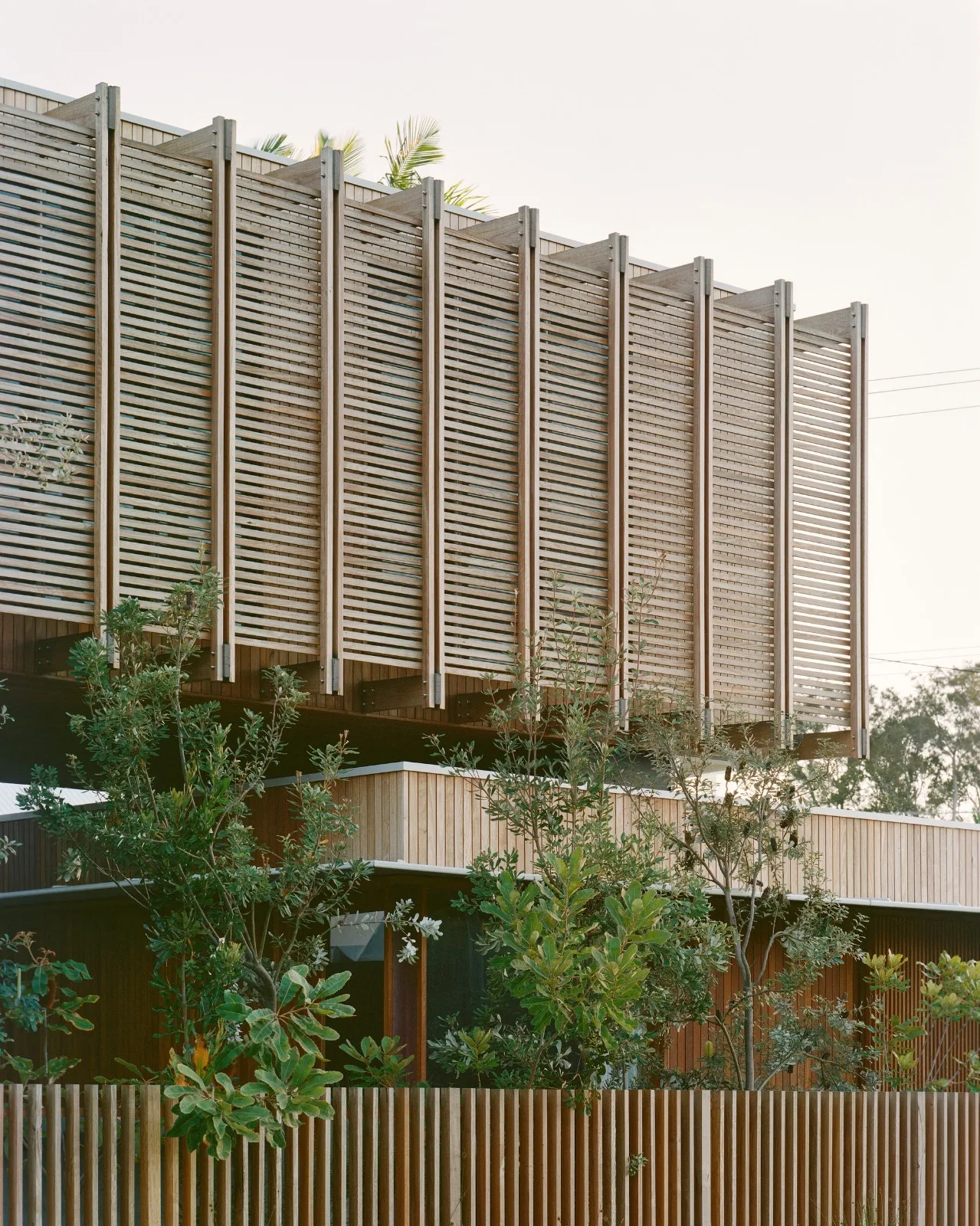
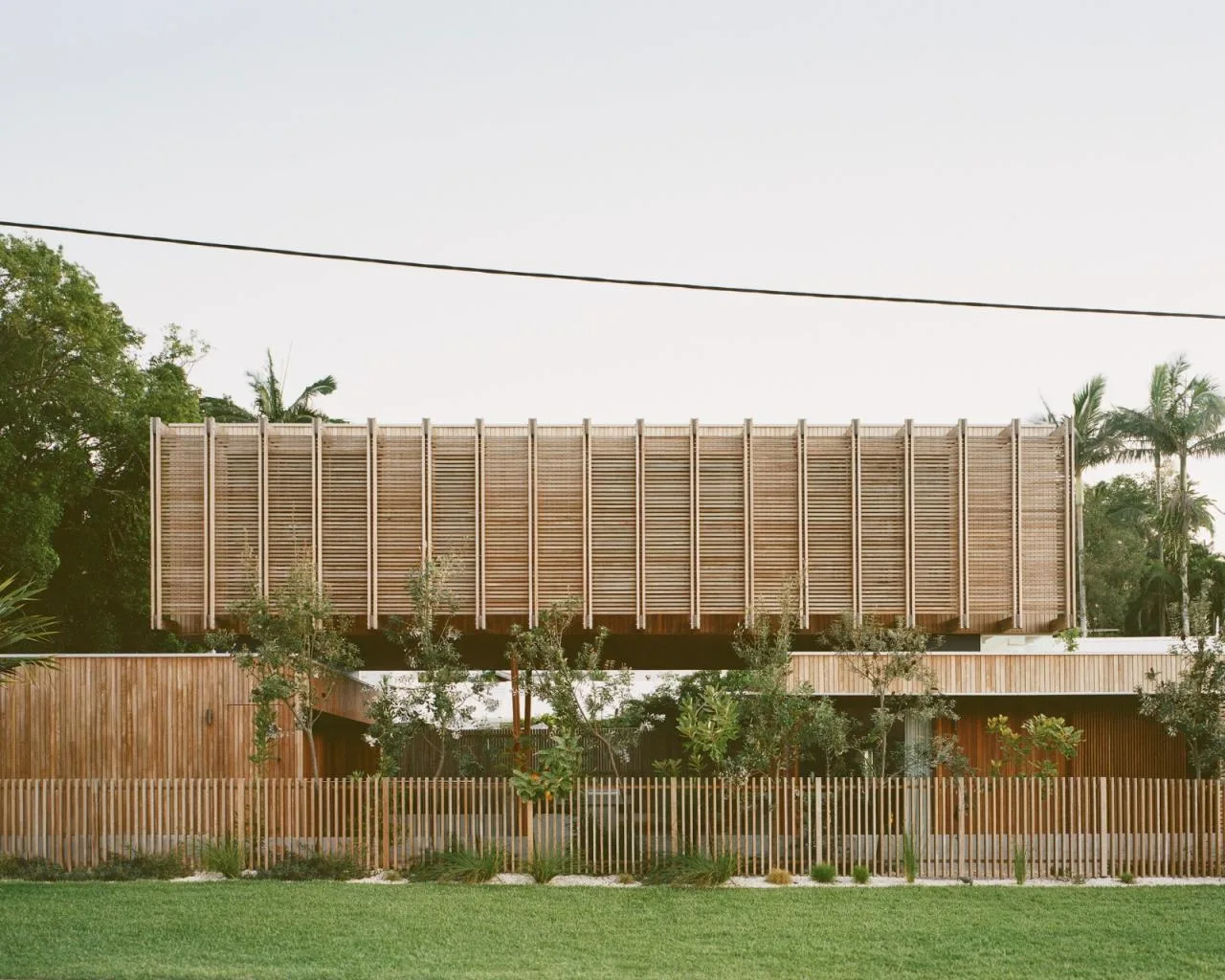
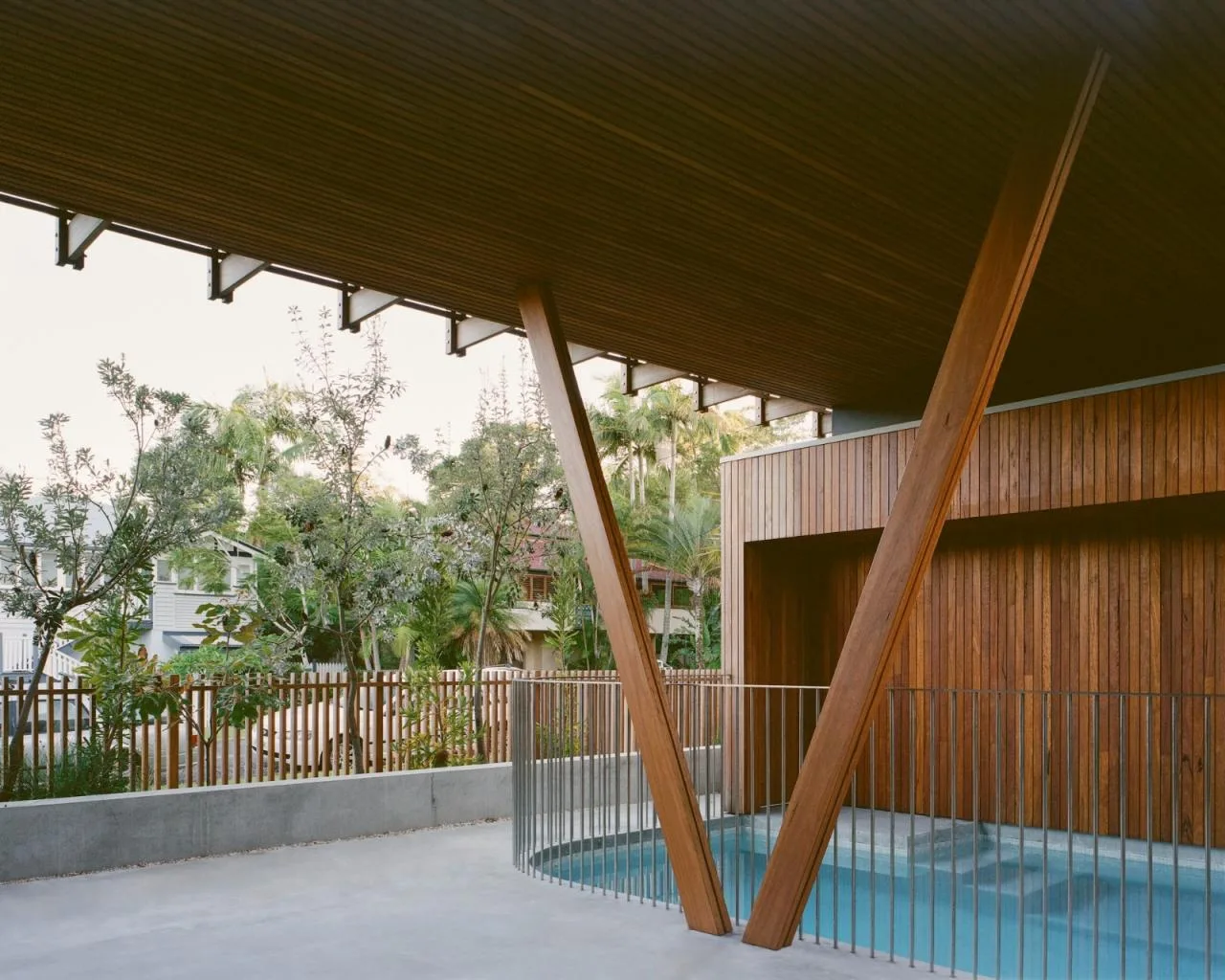
The upper volume houses the private areas, with all bedrooms located on this level. The lower volumes serve as a garage and living spaces respectively. Strict height and side boundary restrictions imposed by the compact site have been cleverly addressed through a two-story rectangular structure. However, the design departs from a conventional two-story form by visually separating each volume, making the upper volume appear to float above the volumes below on either side. This approach not only complies with the site’s limitations but also reduces the building’s perceived mass, enabling it to blend seamlessly into the surrounding environment and maintain a balanced, symmetrical presence.
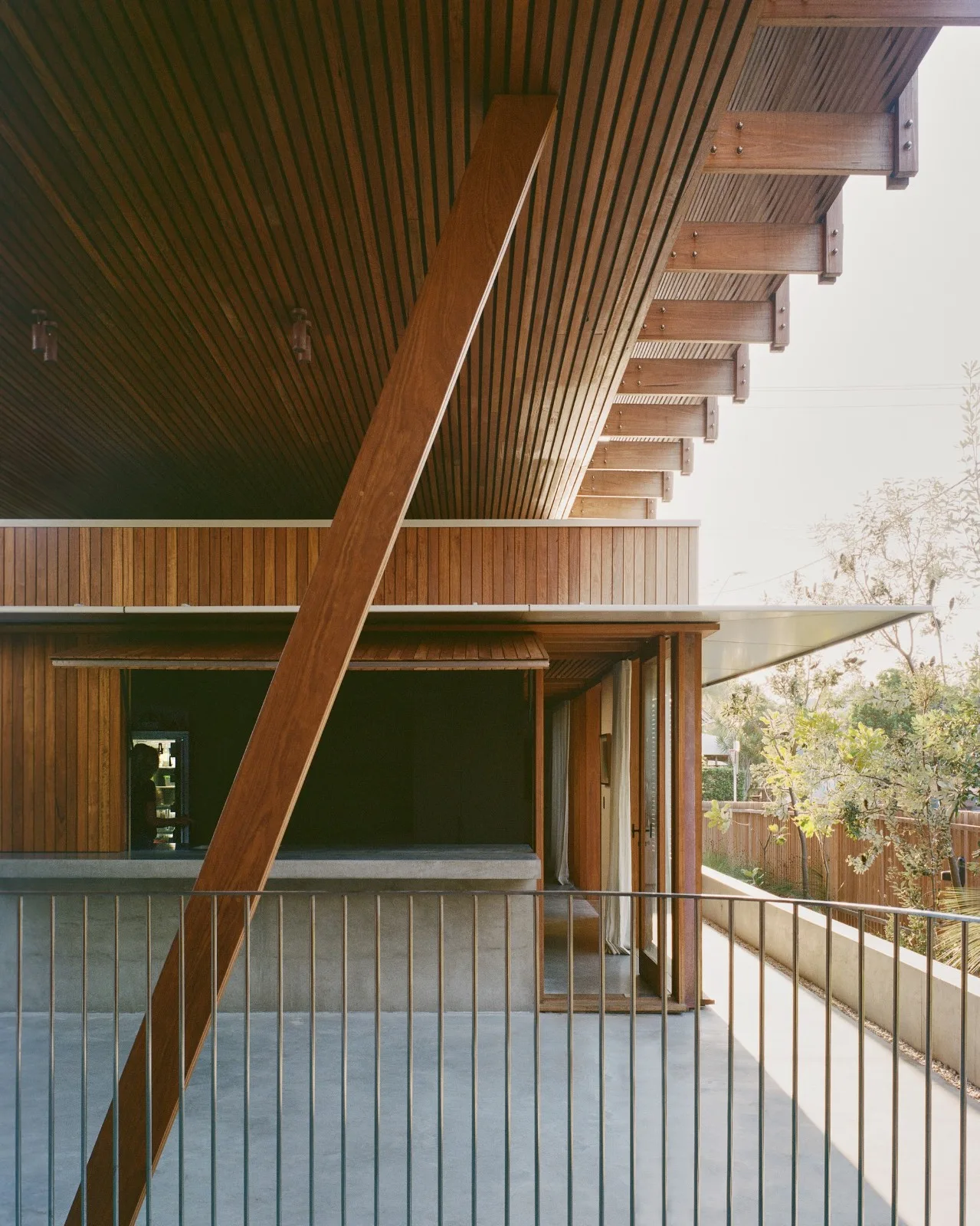
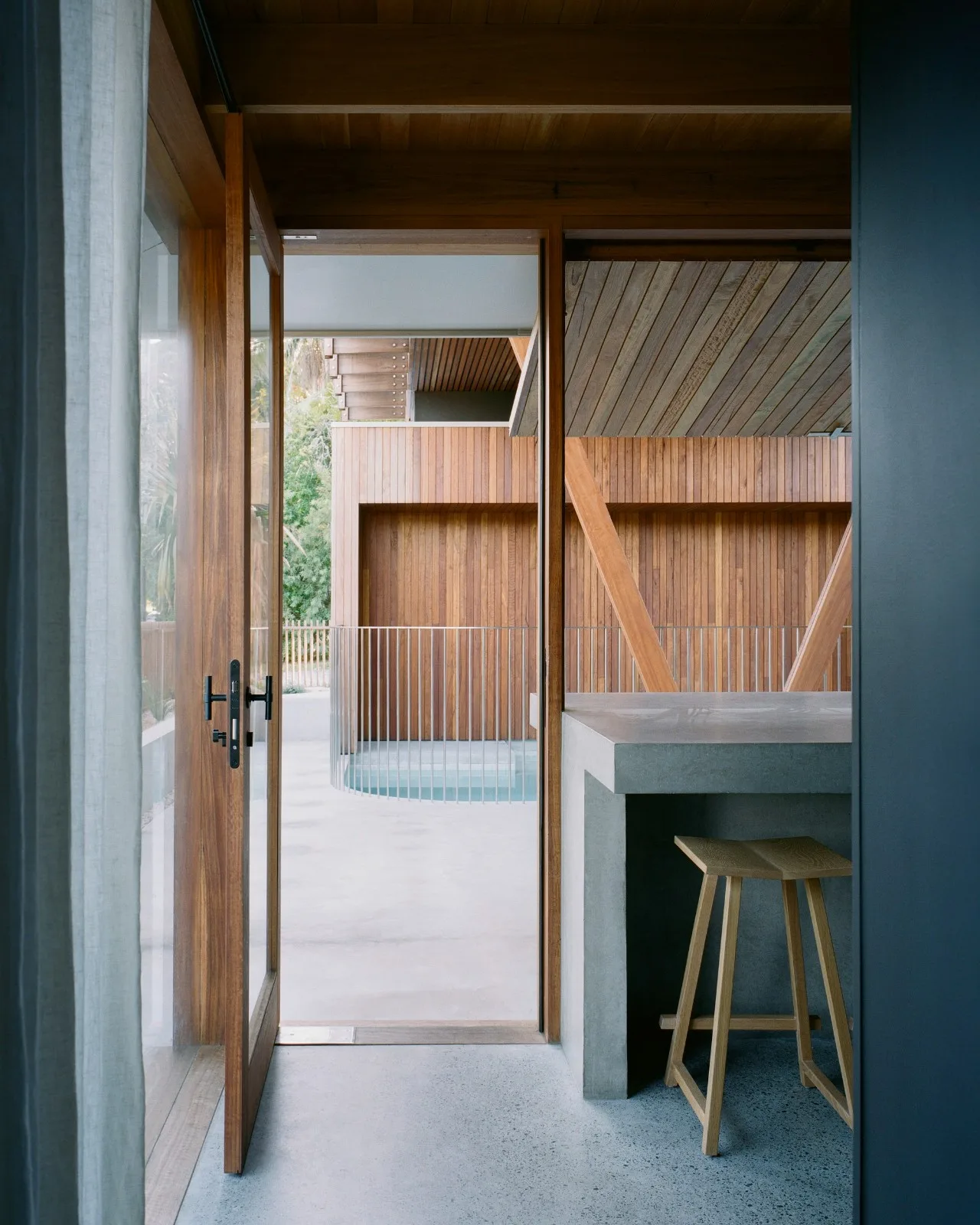
This geometric arrangement creates a central courtyard, enclosed and protected by the residence’s form. The courtyard plays a pivotal role in balancing openness and privacy within the home—an essential feature in a busy neighborhood. Connecting the residence to this courtyard fosters a social atmosphere and encourages interaction between indoor and outdoor spaces. When privacy is needed, the courtyard can be closed off to block views from the street, ensuring residents enjoy a peaceful retreat. The narrow corner lot necessitates an elongated building form closely adjacent to bustling streets.
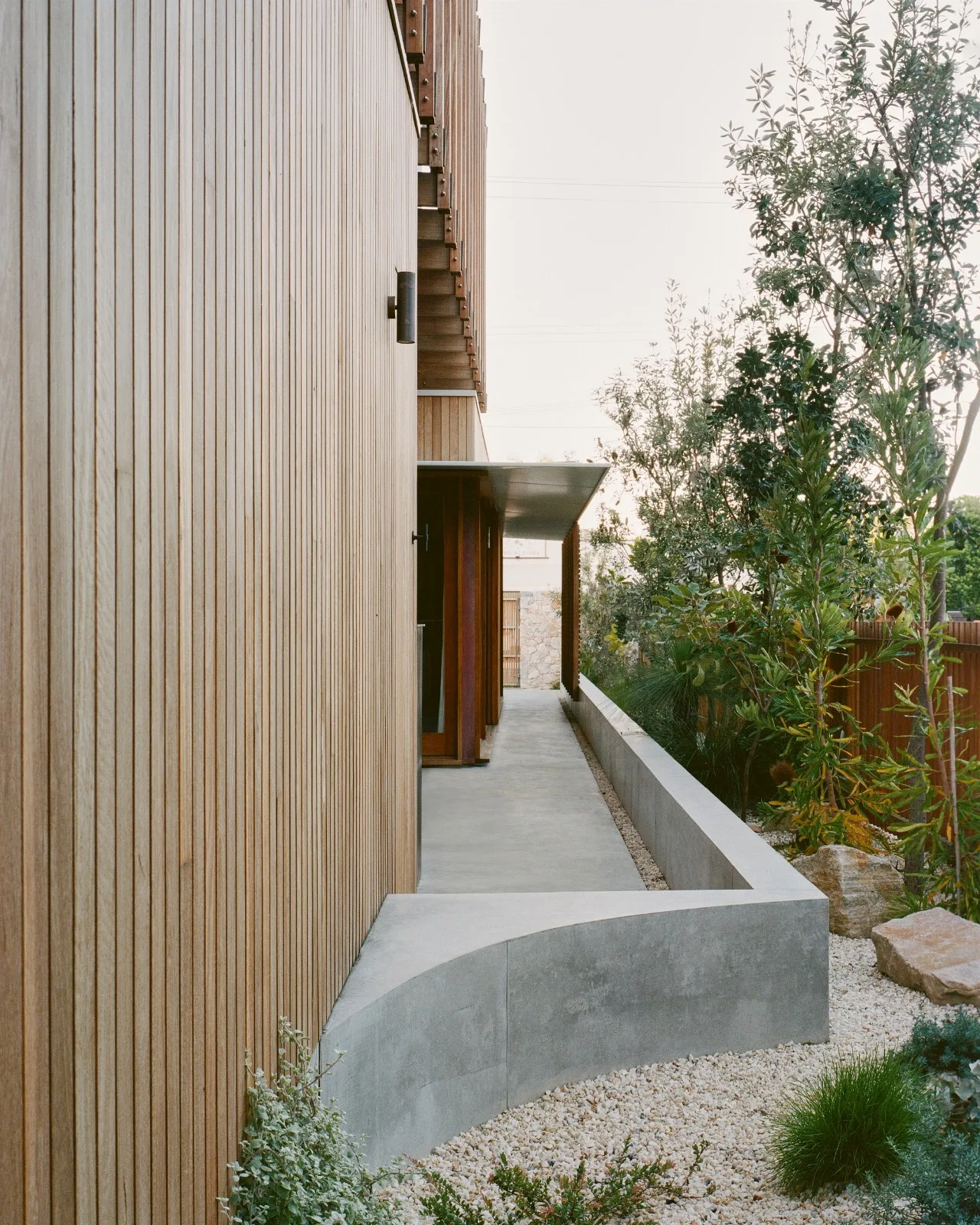
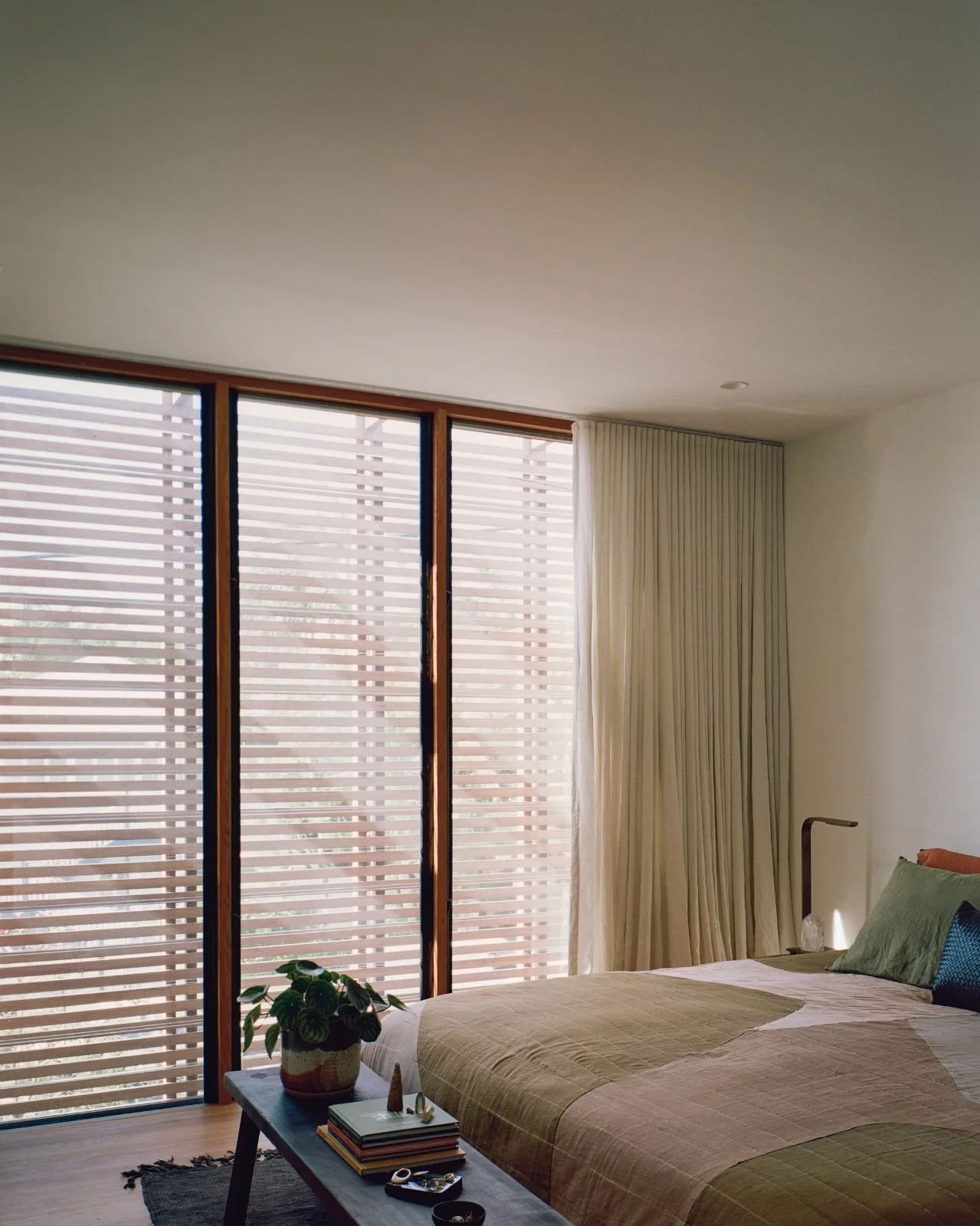
Through a strategic screening design, the residence achieves privacy on the street-facing side, effectively blocking external views while welcoming abundant natural light. Horizontal wooden slats on the upper level offer residents outward views while shielding the interior from street sightlines. This subtle balance between openness and privacy also reduces solar heat gain without relying on traditional eaves. The screen acts as an integrated outer skin, creating a veil-like effect with the interplay of light and shadow. On the lower level, additional screening layers form a transitional zone that maximizes the building’s elongated north-facing orientation and fosters an intimate indoor environment.
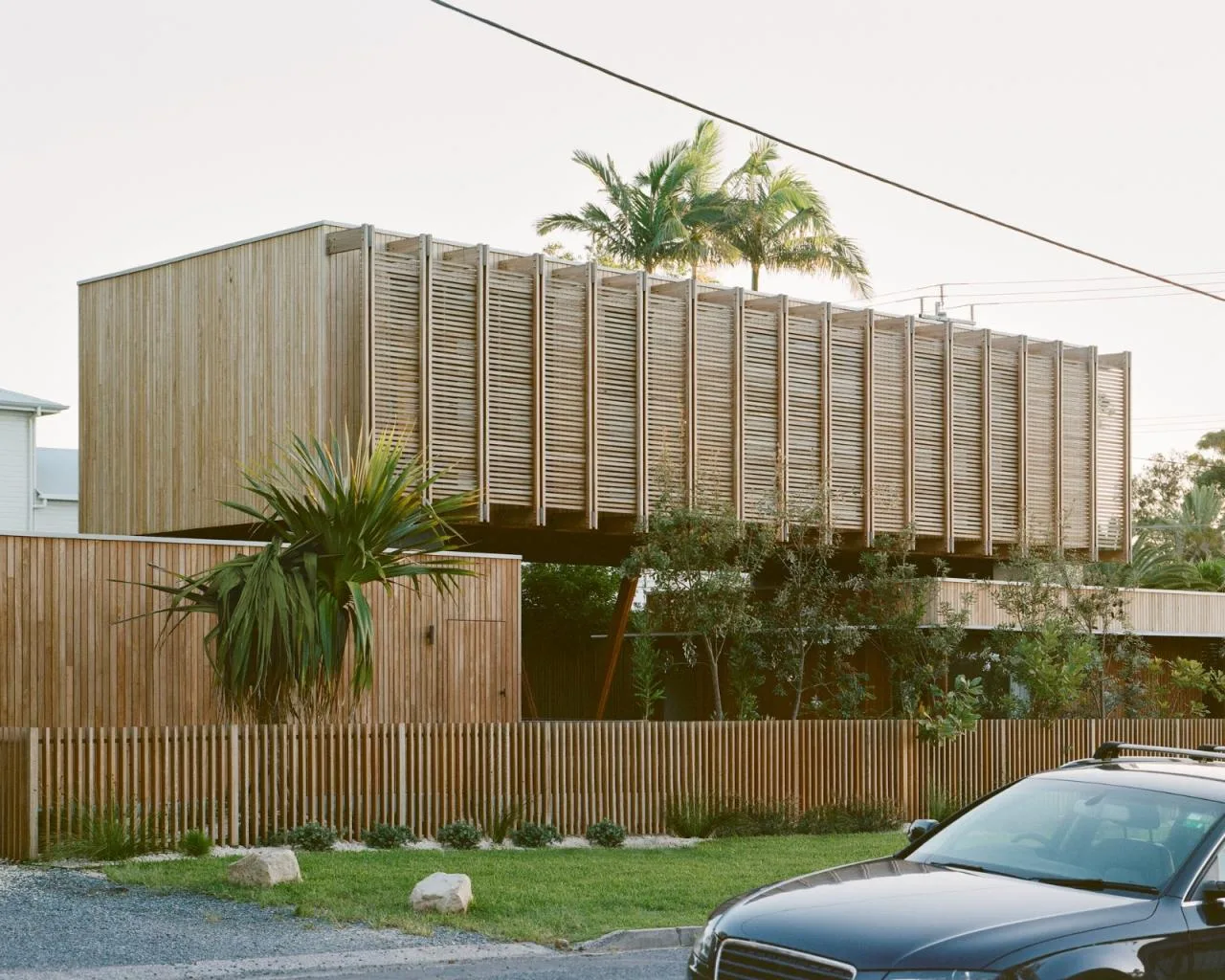
The multi-layered wooden screens not only provide privacy but also create a dynamic spatial experience, allowing dappled light and shadow to permeate the residence and mark the passage of time. Carefully crafted sightlines turn looking outward into a poetic experience, framing multiple views of the site, garden, and street from different vantage points. Each perspective offers a unique composition that stimulates curiosity and heightens residents’ connection to their surroundings.
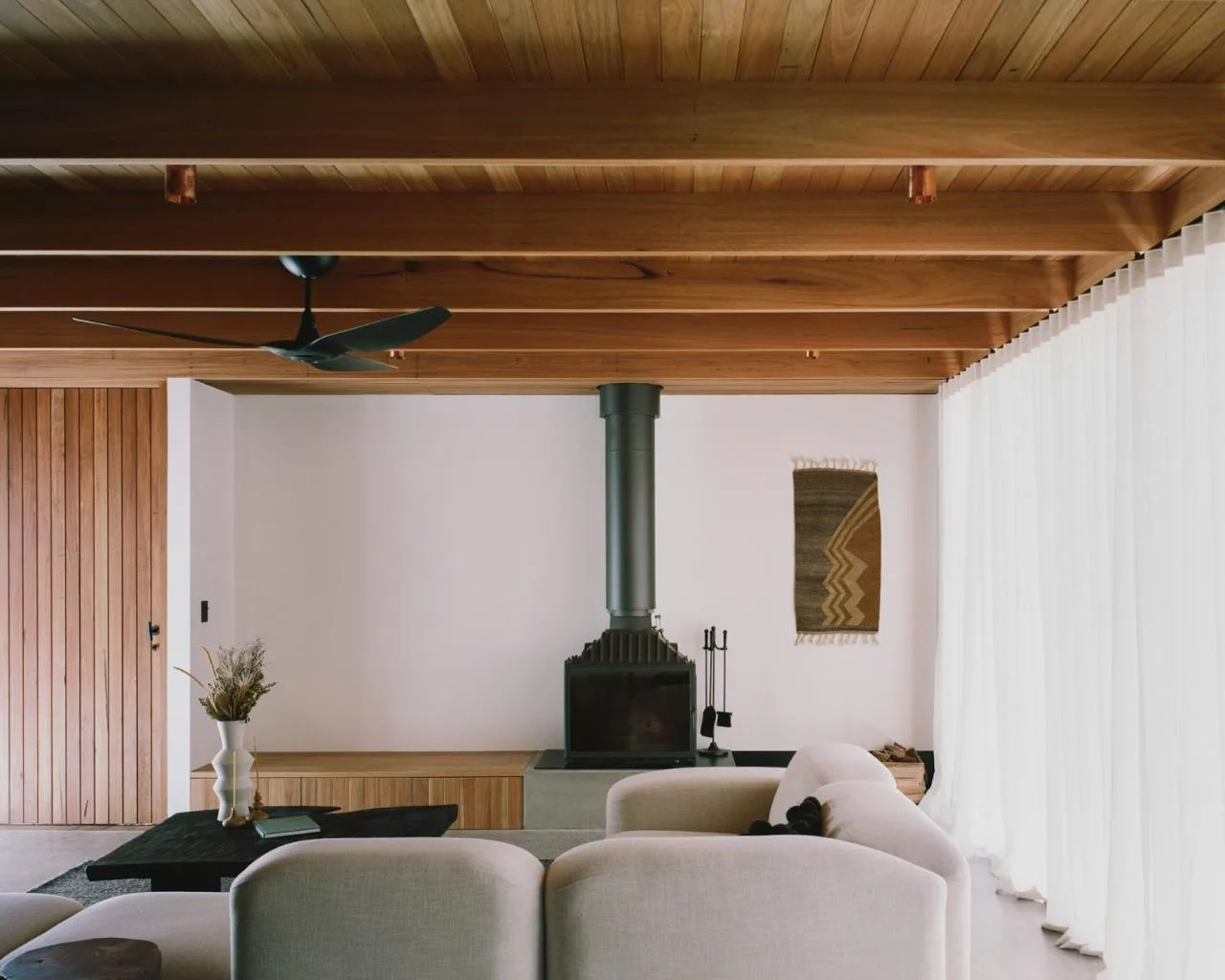
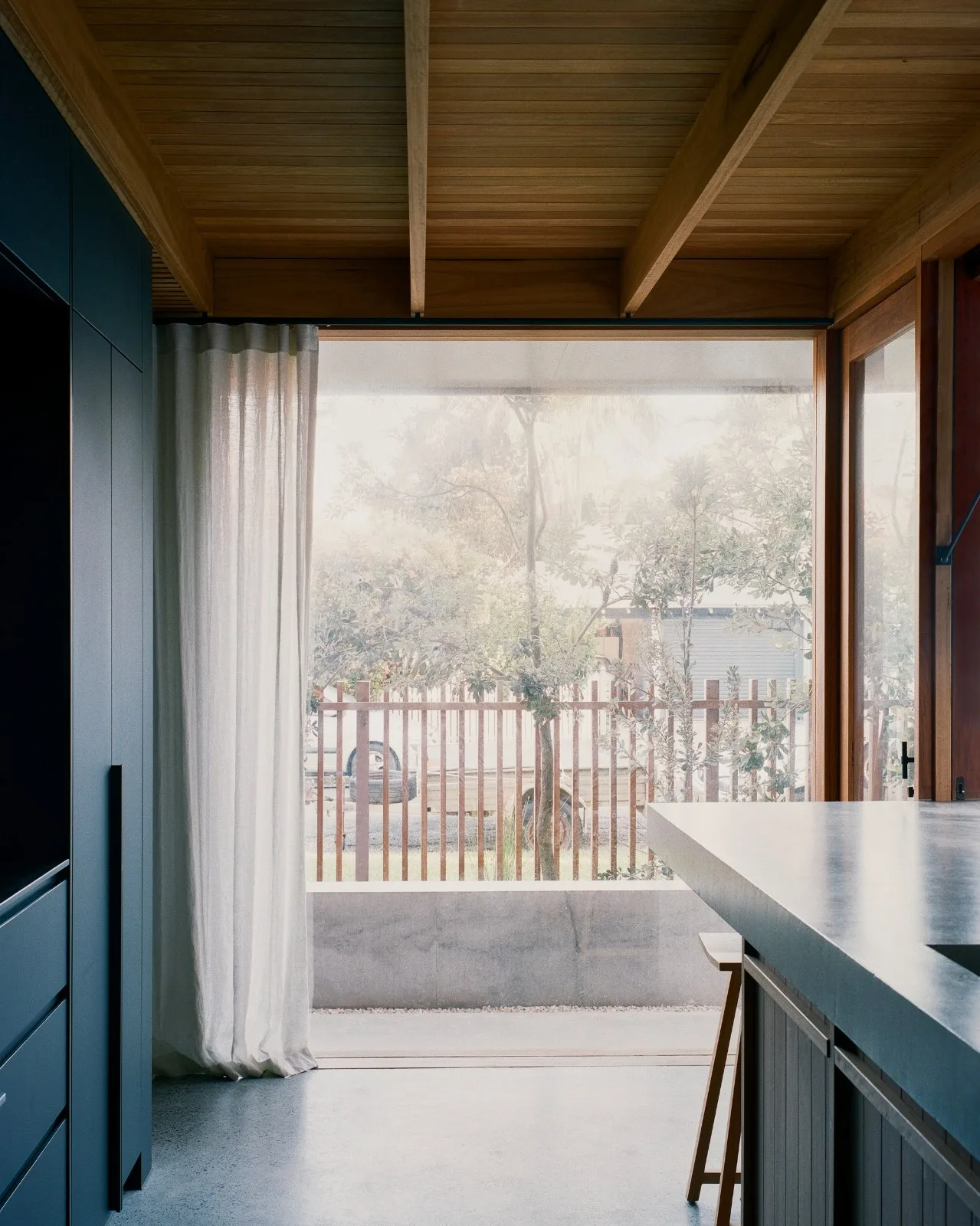
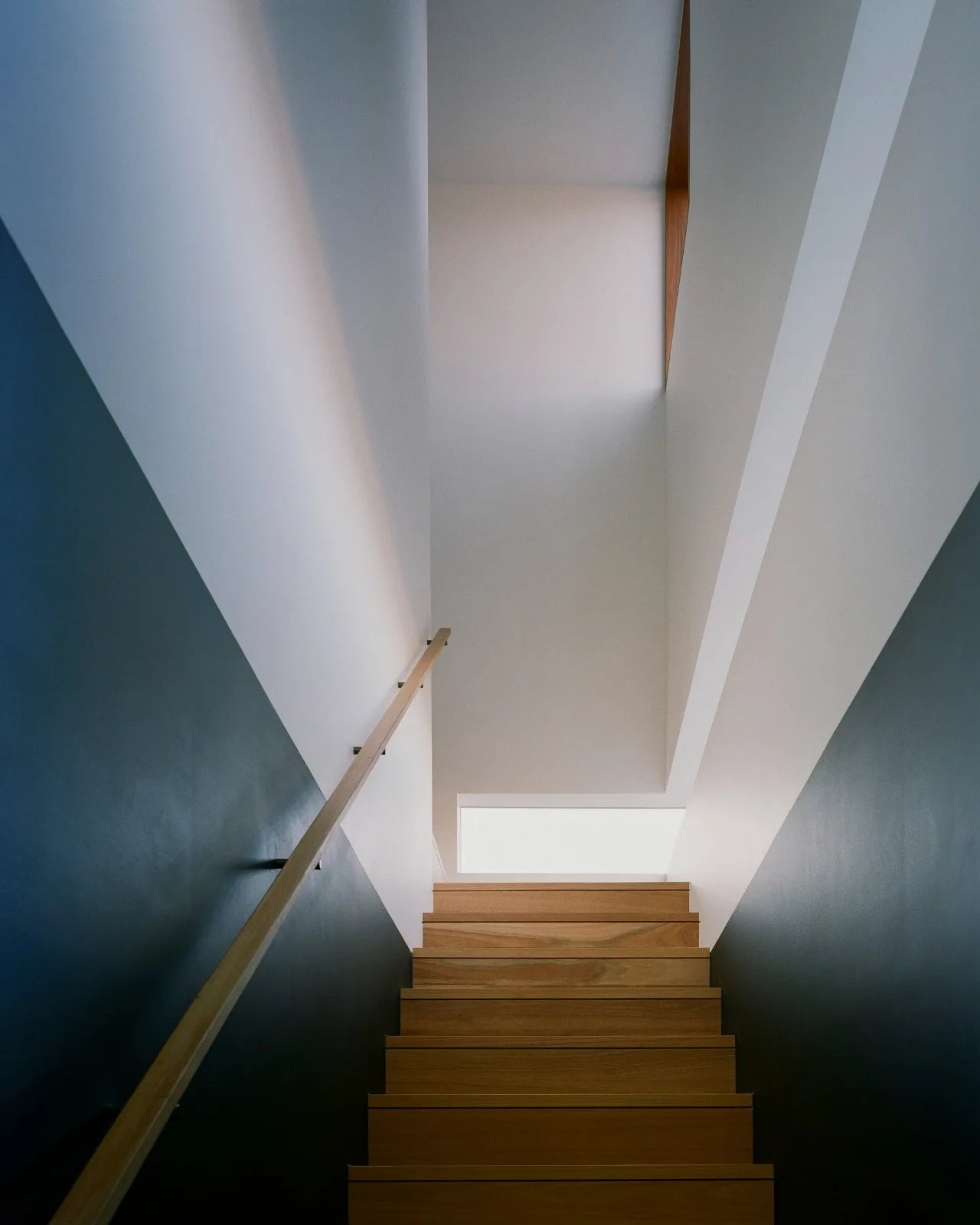
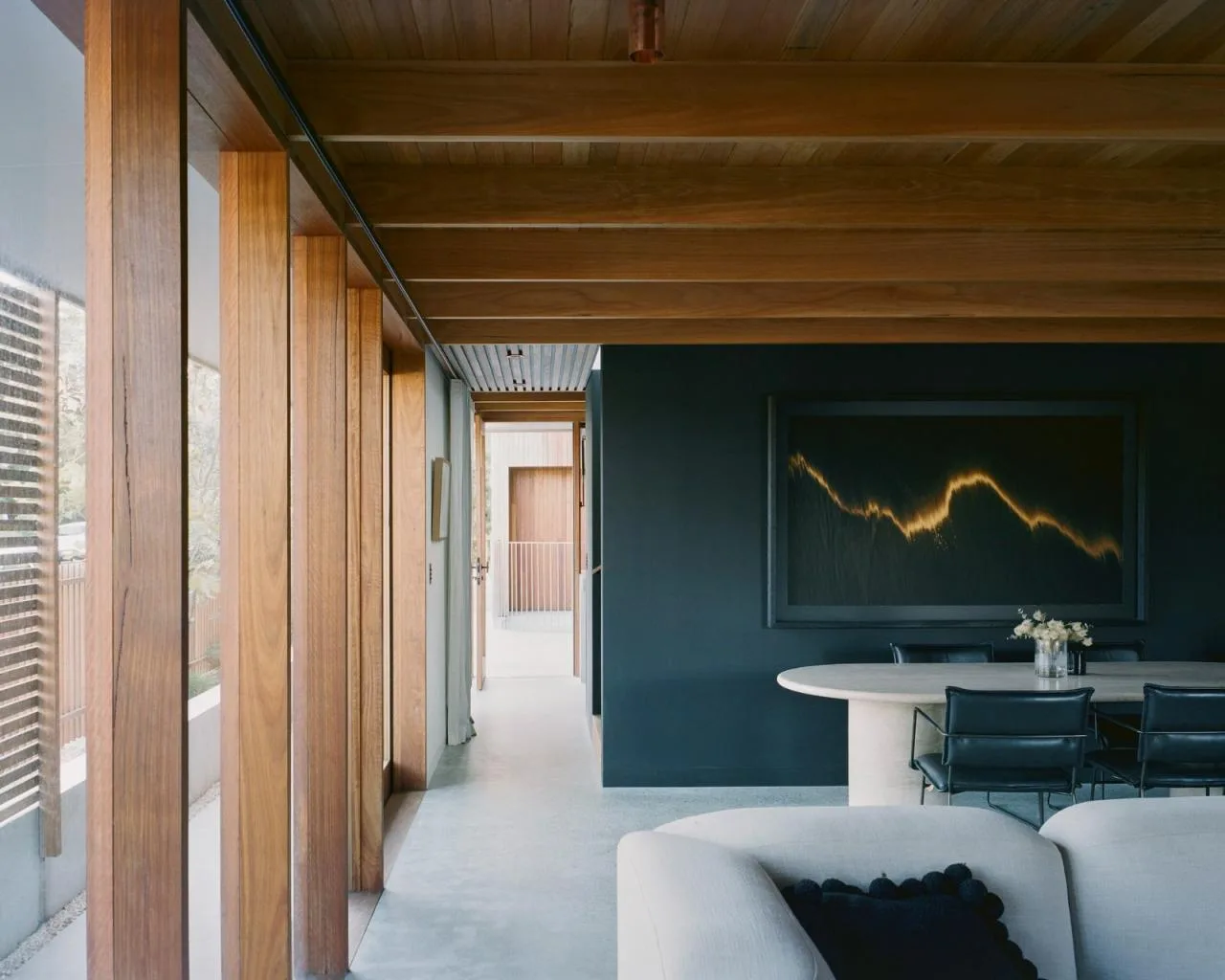
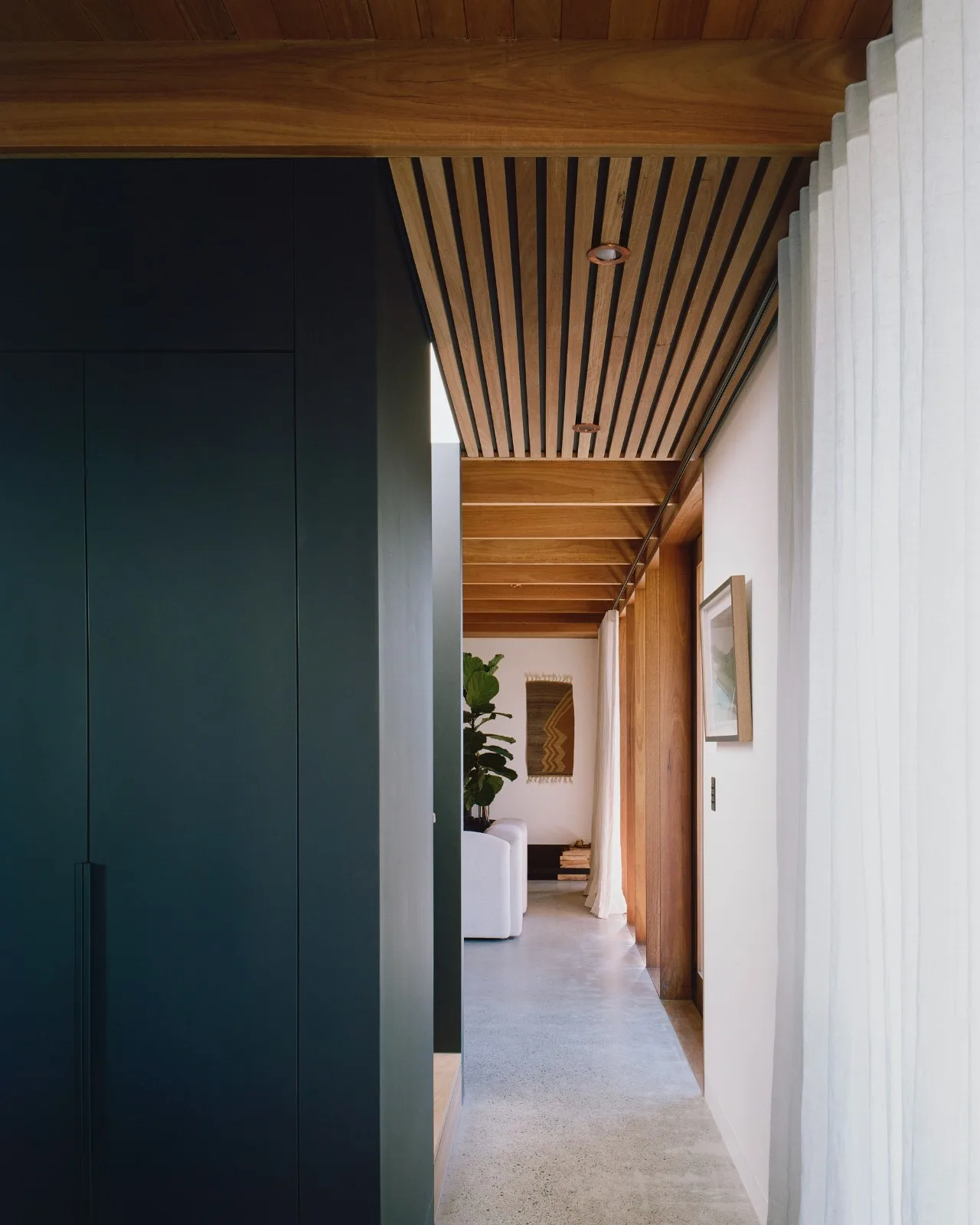
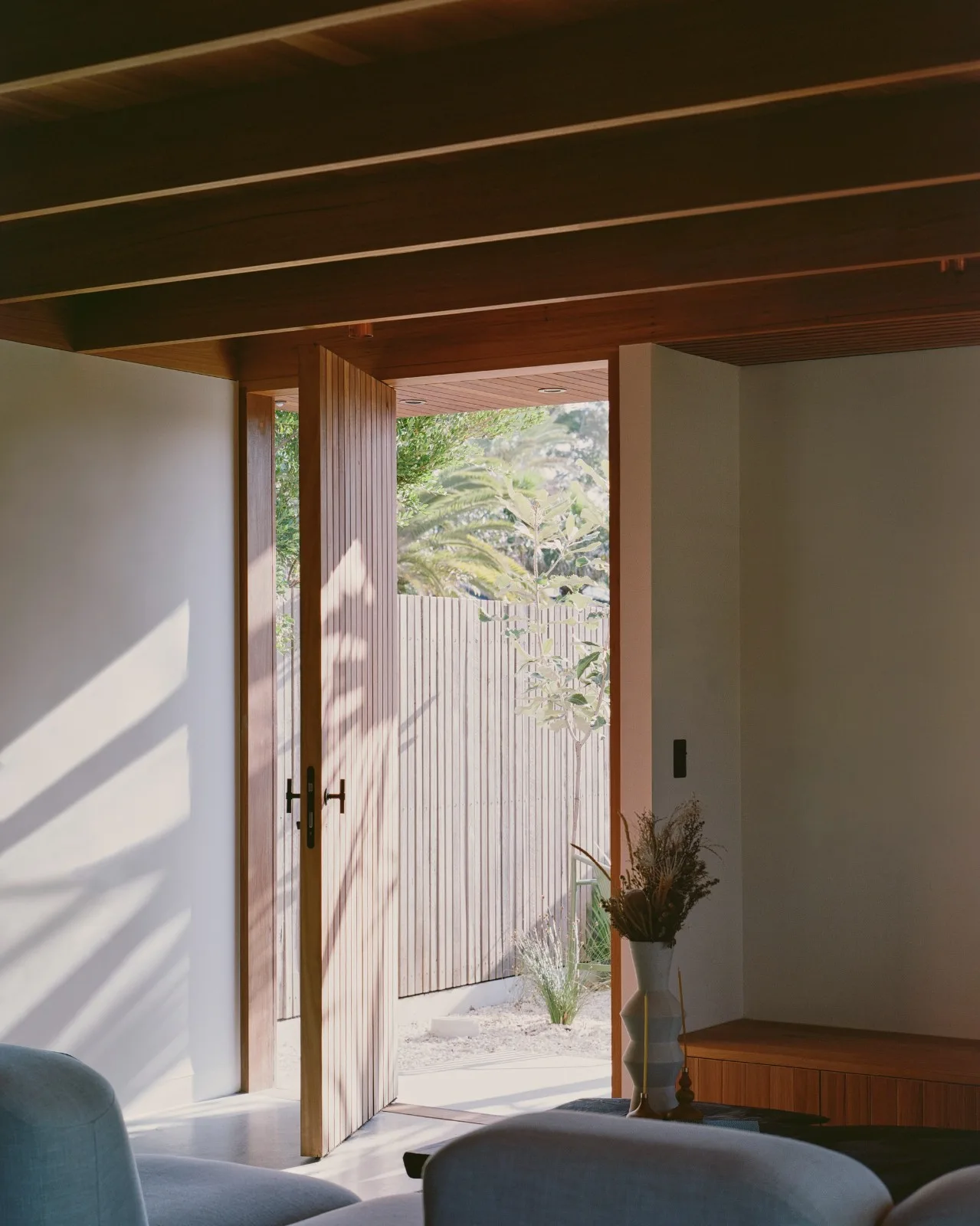
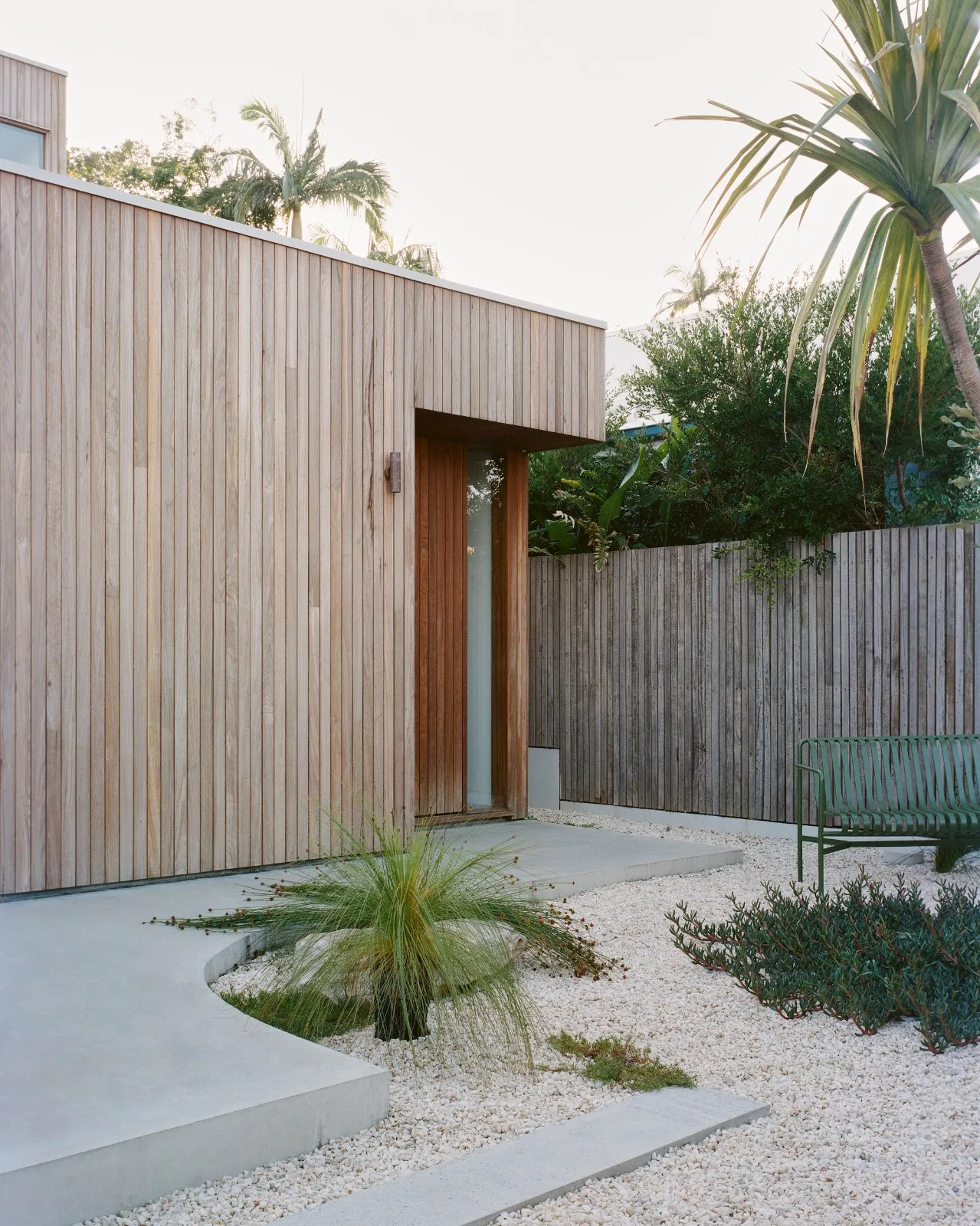
The choice of materials is simplified and primarily relies on locally sourced, sustainably harvested natural materials to minimize the carbon footprint while rooting the home in its environment. The exterior is clad in local natural hardwood that continues inside, creating continuity. Over time, the wood’s exterior naturally weathers to a distinctive silver-gray patina, while the interior retains its warm, natural wood tones. This seamless transition between indoor and outdoor spaces creates a dynamic sensory experience—a tactile ‘dance’ that engages the senses and weaves a visual narrative throughout the home.
The Bengaluro Road residence minimizes its environmental impact through thoughtful spatial efficiency. With just 140 square meters of interior space, this three-bedroom home comfortably serves a family’s needs. A smaller footprint means fewer trees are removed, less material is required, and transportation emissions are reduced. Additionally, the building’s energy demand for heating, cooling, and maintenance is lowered. The home is equipped with photovoltaic (PV) panels and a heat pump system primarily powered by solar energy. All appliances run on electricity, eliminating the need for natural gas. A rainwater collection and storage system further reduces environmental impact, enhances energy self-sufficiency, and encourages water conservation.
Project Drawings
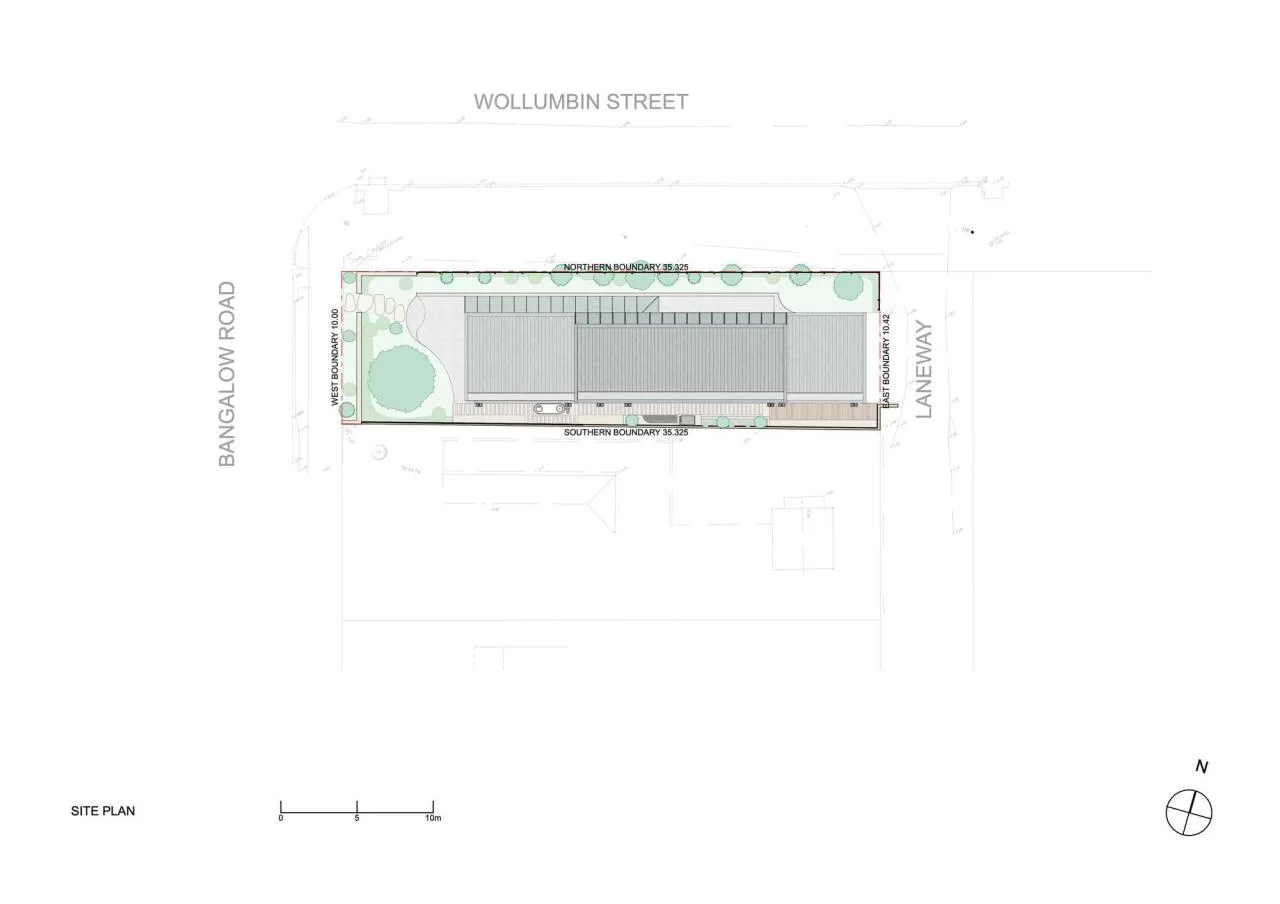
△ General Layout Plan
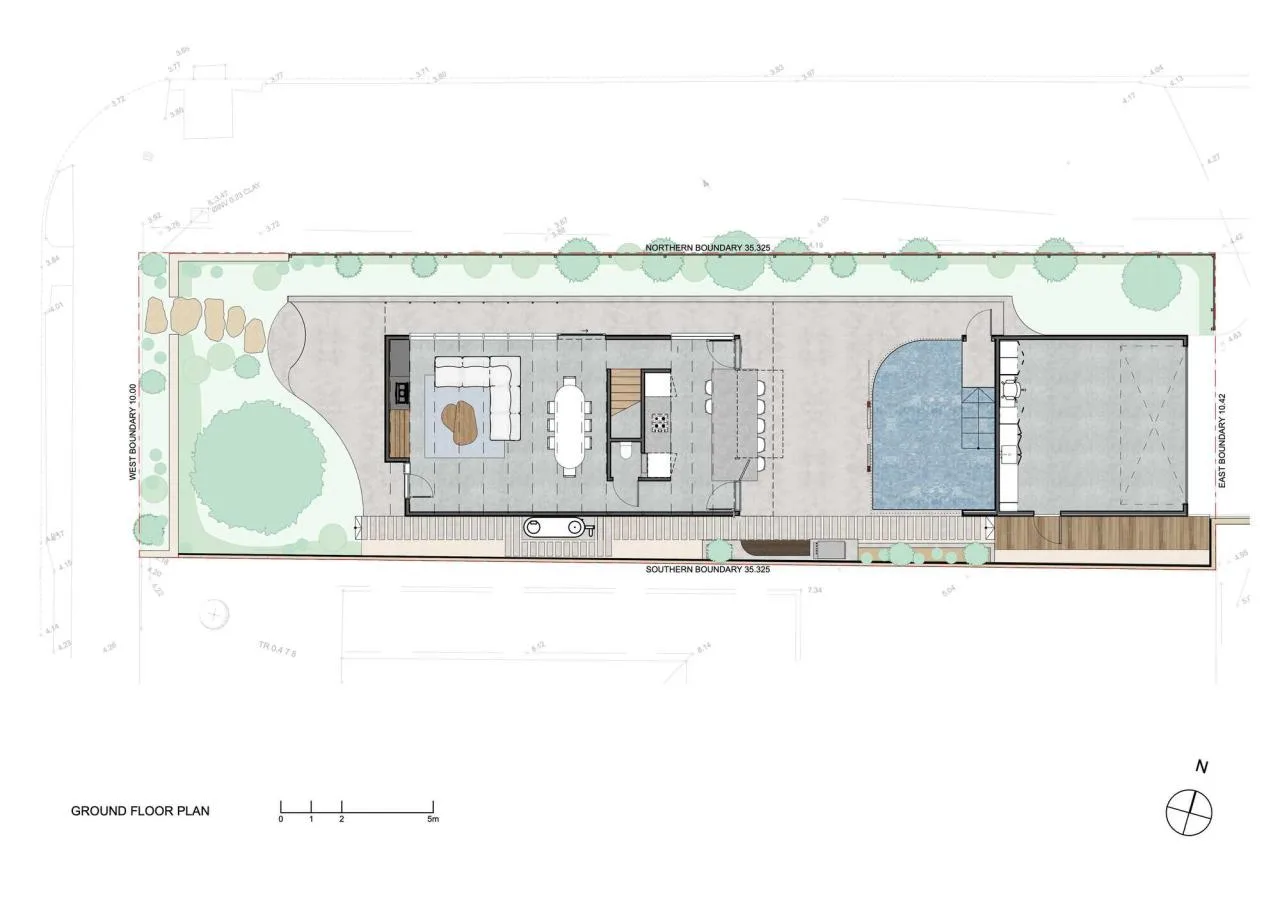
△ First Floor Plan
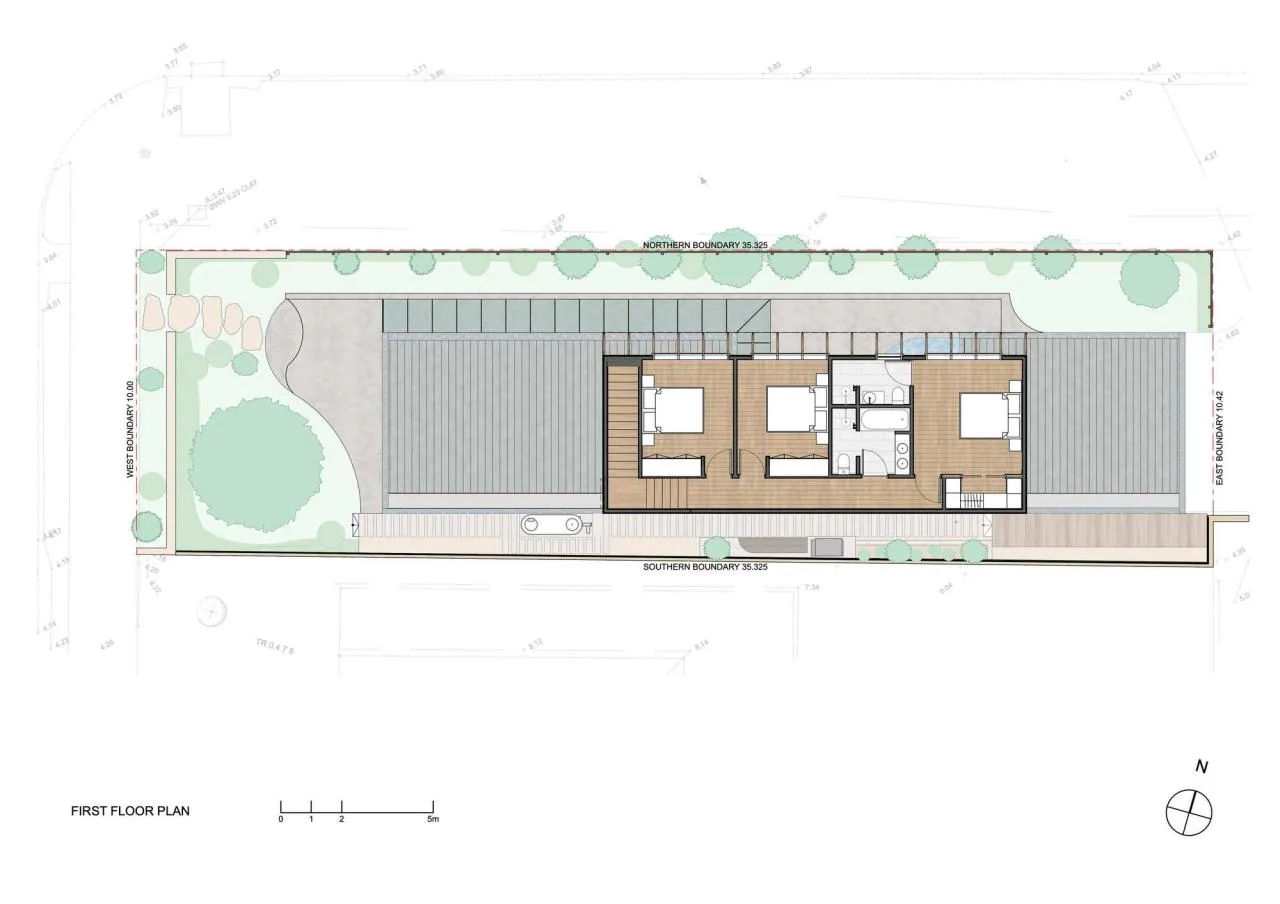
△ Second Floor Plan
Project Information
Architect: Son Studio
Area: 180 m²
Project Year: 2023
Photographer: Rory Gardiner
Manufacturers: Astra Walker, Fireplace, Formani, Tovo













Must log in before commenting!
Sign Up