
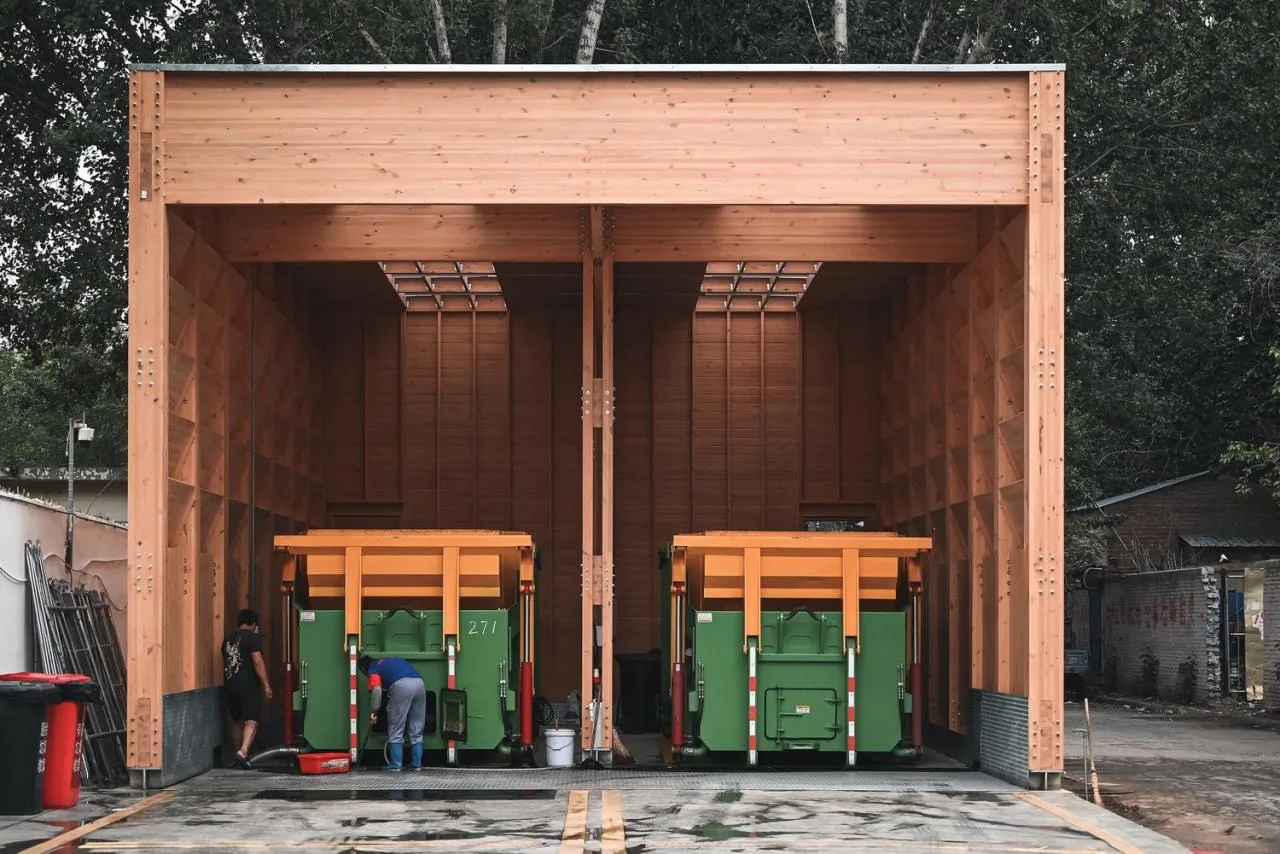
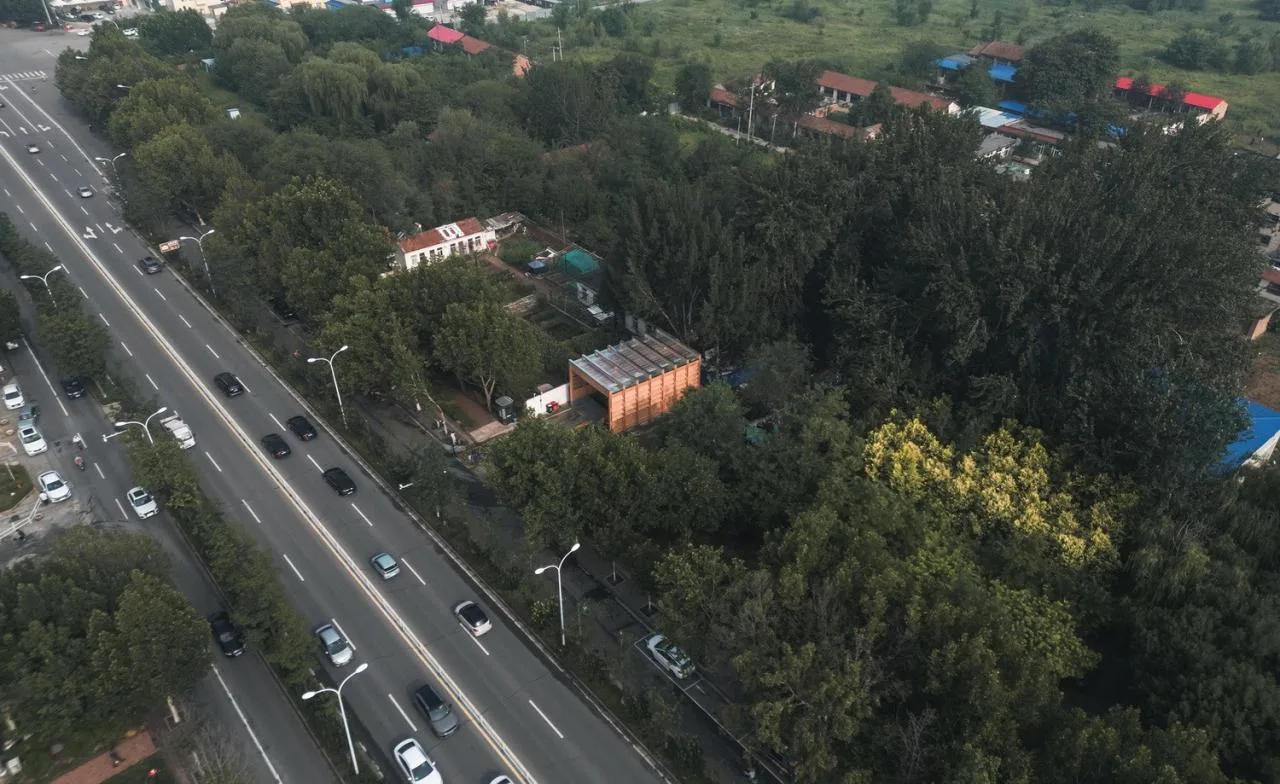
This project is situated on the urban edge of Langfang, Hebei Province. To the south, recent developments include high-rise commercial and residential buildings, while the north side remains an undeveloped area left vacant after village demolition. Considering the site’s context and functional requirements, we identified two key design goals:
- First, to restore the micro-scale order of this urban corner and reintegrate it into the daily life of the city;
- Second, to explore whether basic architectural methods could significantly enhance both the operational efficiency and exterior image of this urban micro-infrastructure within a limited budget.
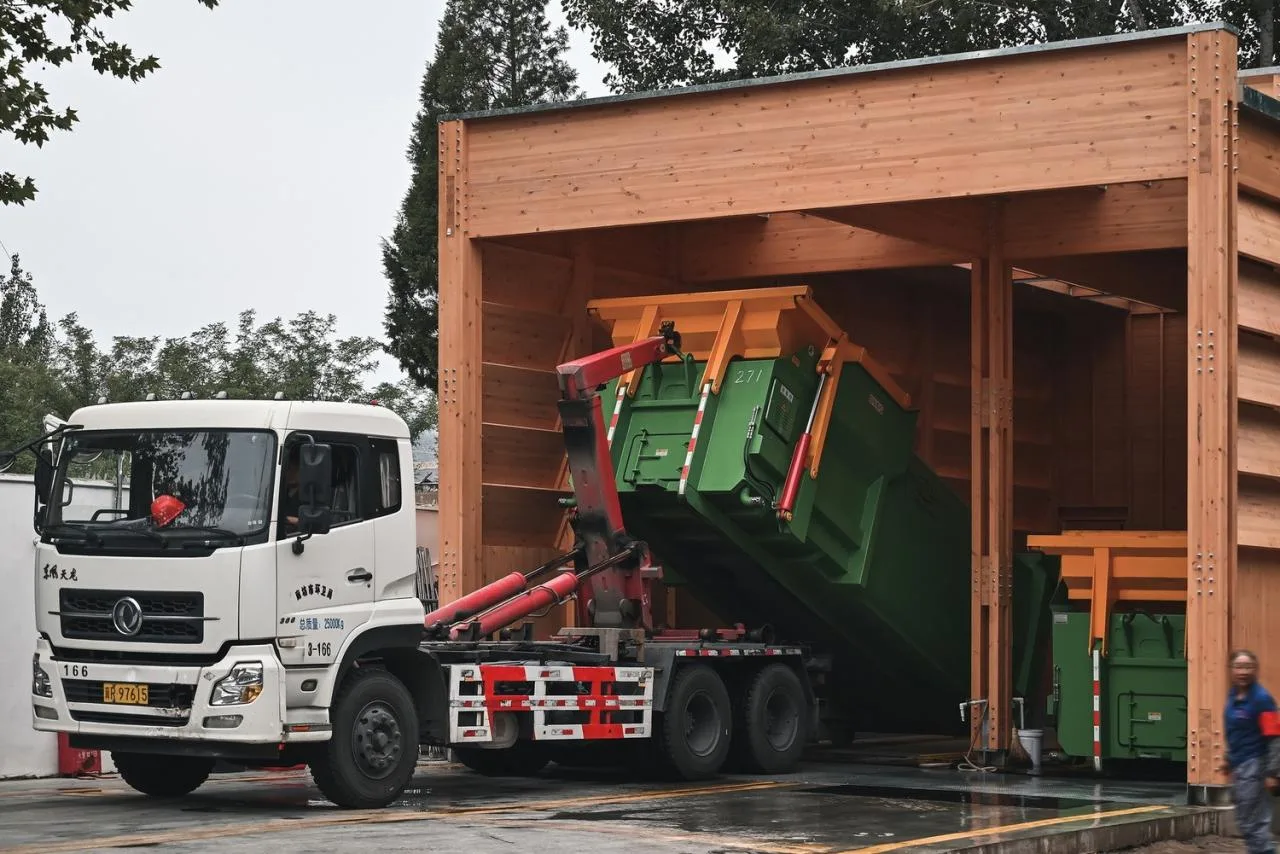
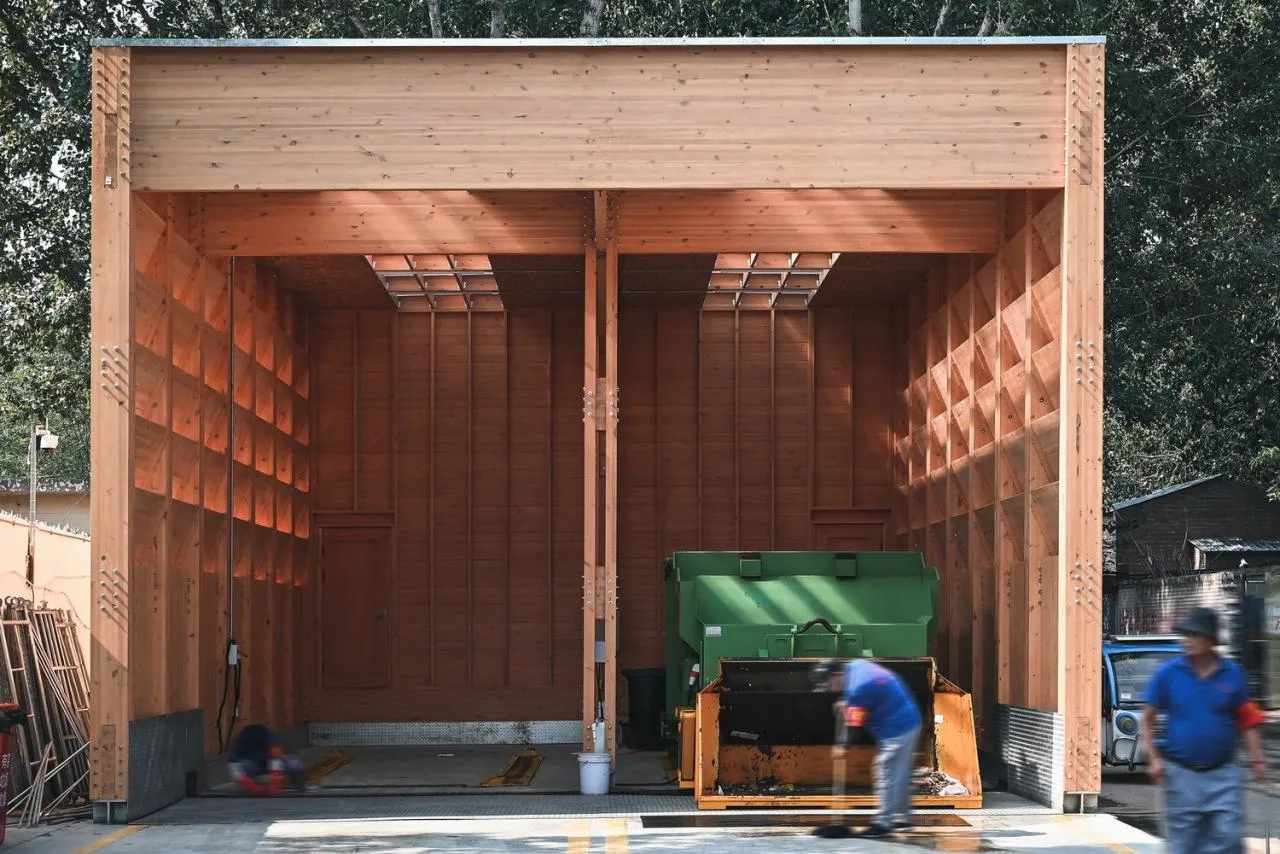
To address these goals, we chose glued laminated timber as the primary construction material from the outset. This choice was driven by two considerations:
- The environmental benefits of wood, which help reverse the typically negative image associated with garbage stations in urban areas;
- The inherent construction logic of timber beams and columns, which allows for a seamless integration of building, structure, and space—avoiding the common “build first, decorate later” approach seen in small-scale infrastructure projects.
This approach maximizes the balance between construction cost, spatial efficiency, and overall impact within a restricted budget and site area.
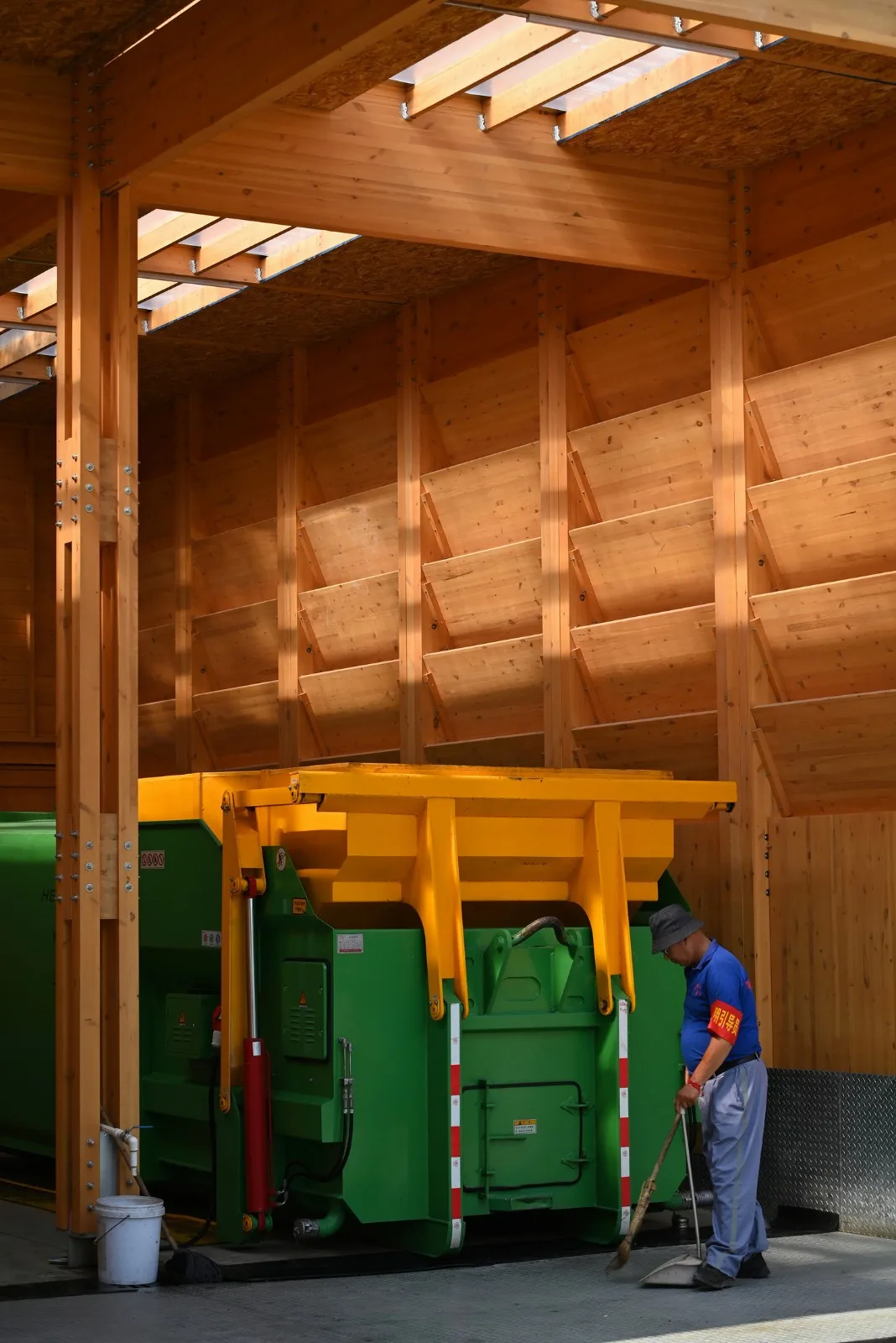
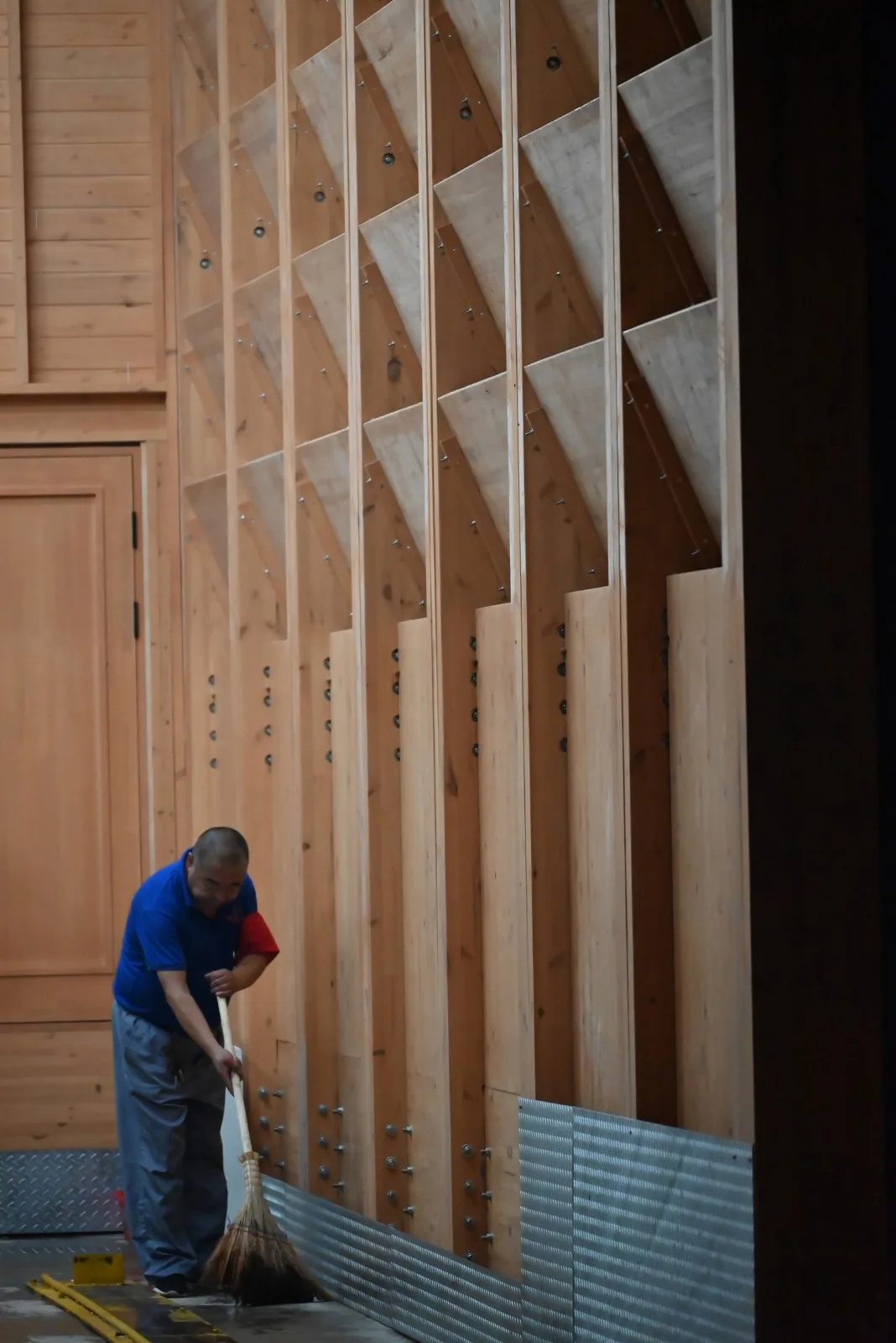
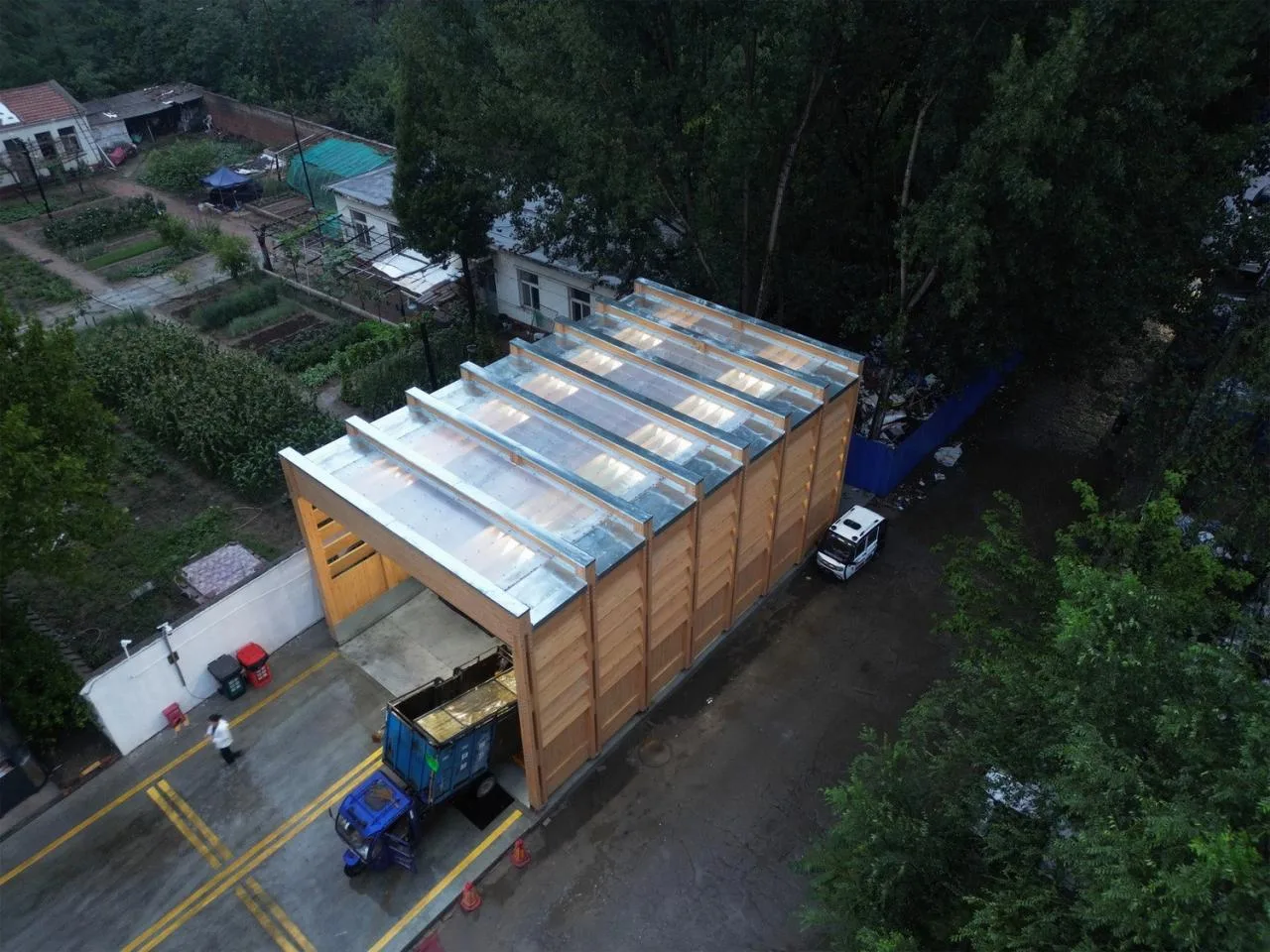
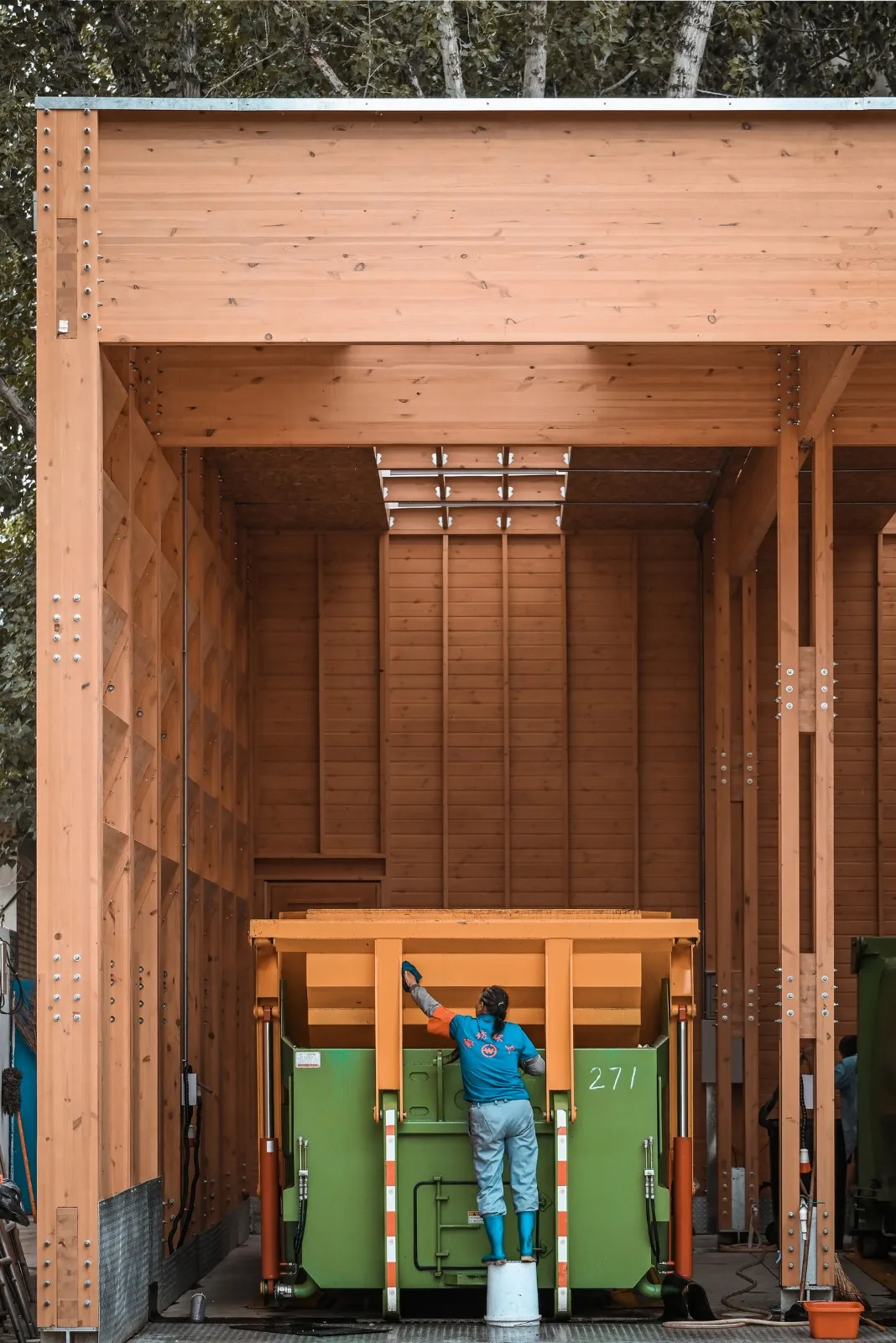
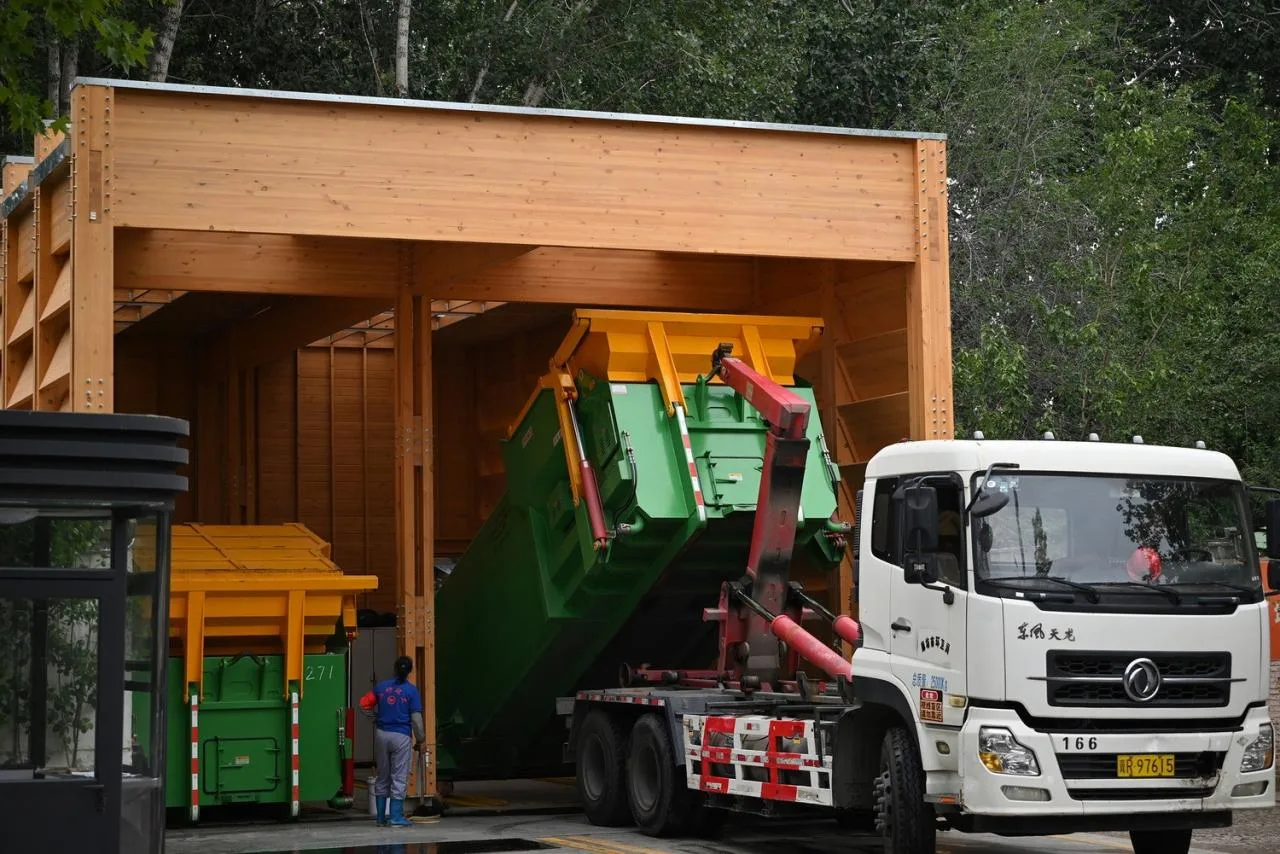
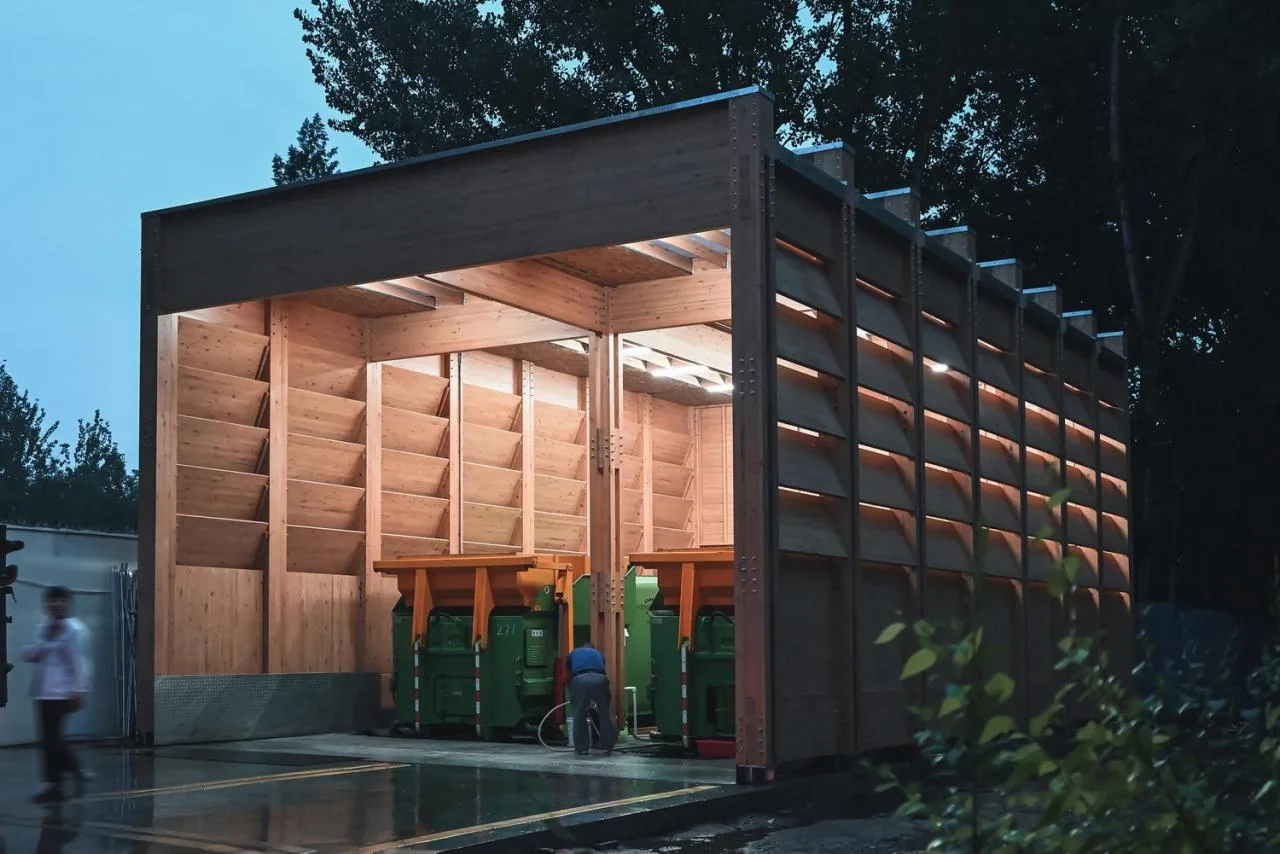
The building is composed of seven modules arranged from south to north, each measuring 7,800mm in width and 1,800mm in length. The width of 7,800mm efficiently accommodates two garbage trucks side by side, while the depth of 1,800mm provides adequate space for basic operations.
The layout from south to north includes:
- Two depths dedicated to garbage collection and transportation;
- Three depths allocated for main garbage truck parking;
- One depth reserved for tool storage.
Regarding height, the building’s internal clearance is set at 5,500mm to meet the maximum clearance needed for garbage truck loading and unloading. An additional 1,200mm is added for structural elements.
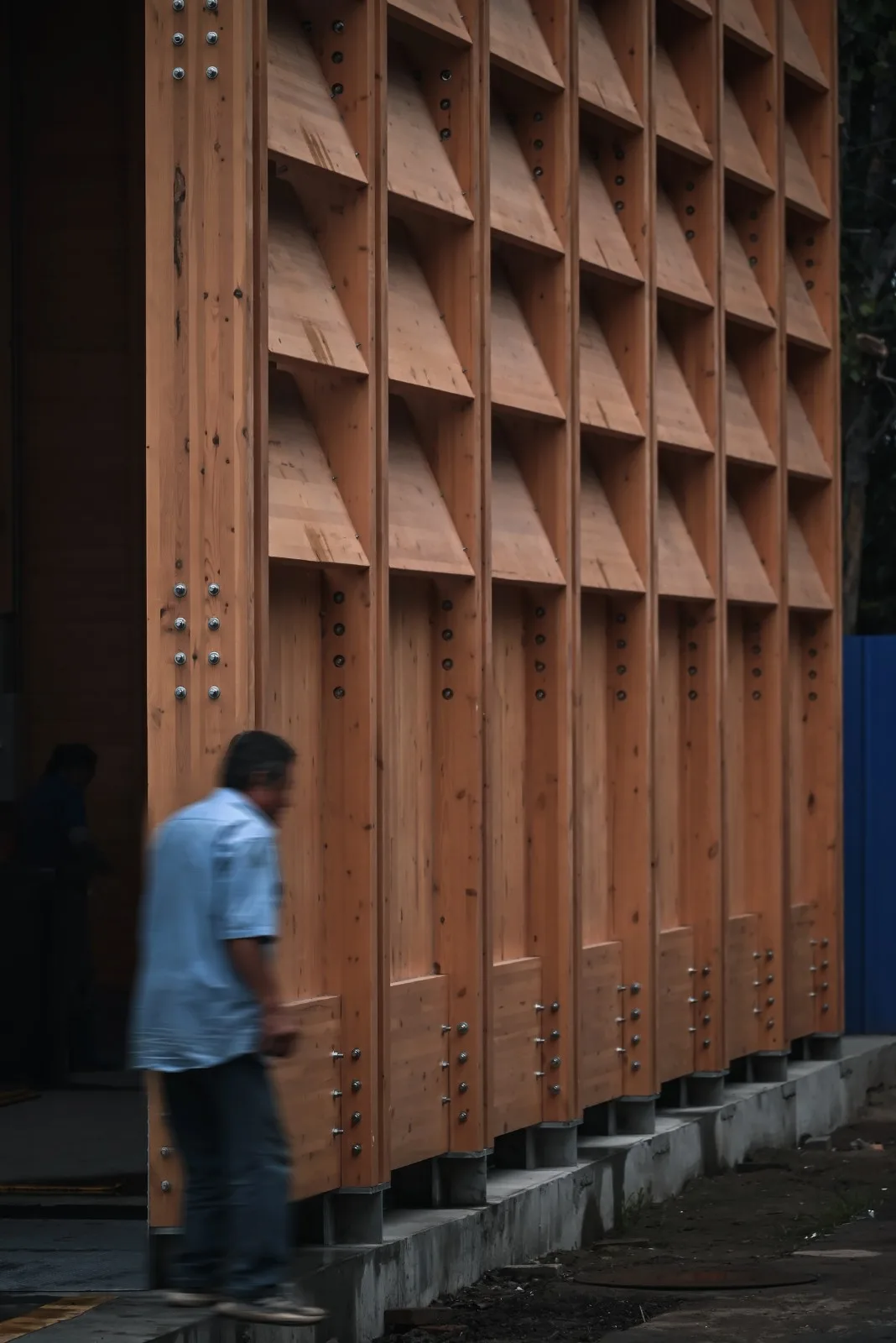
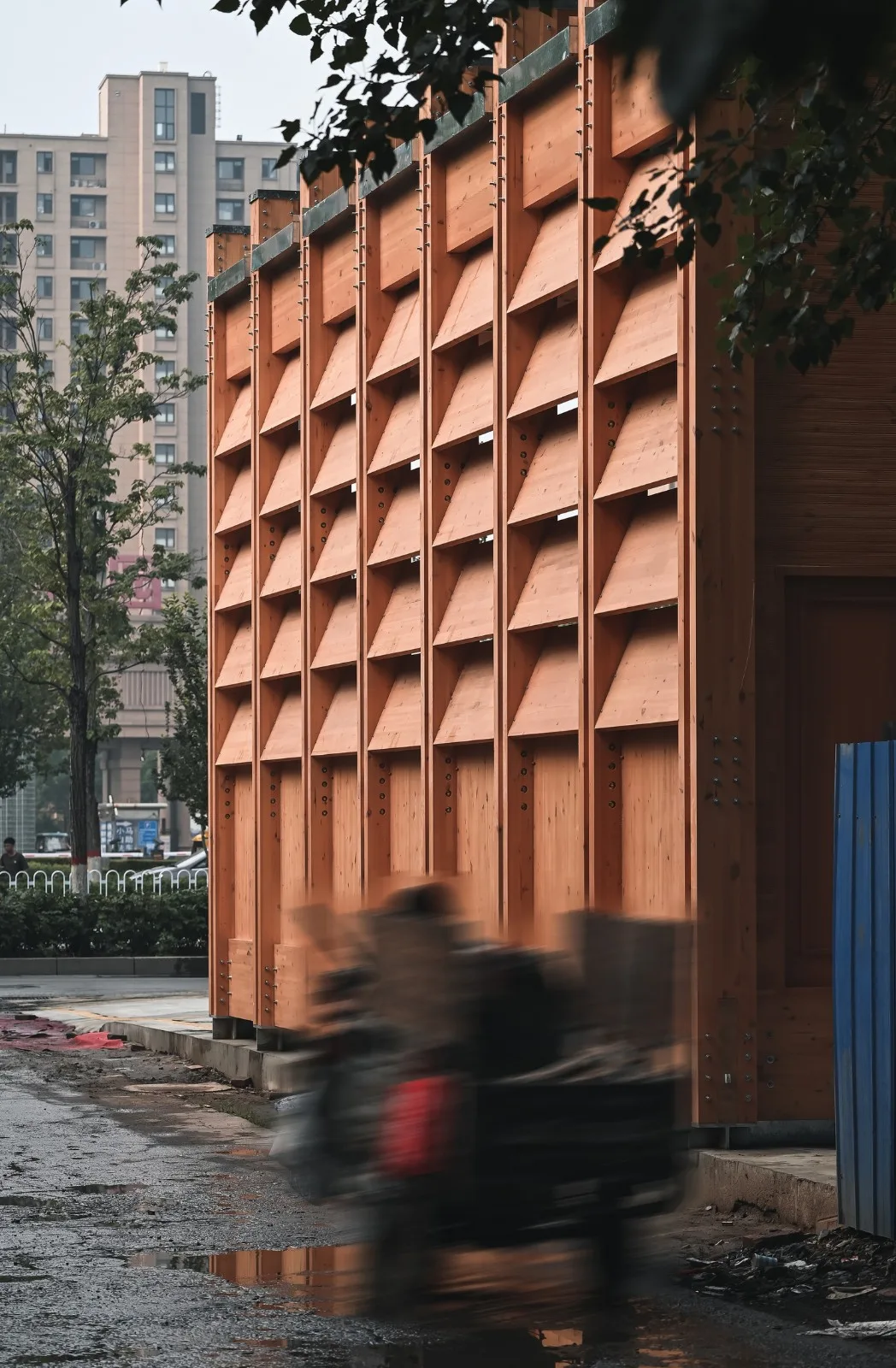
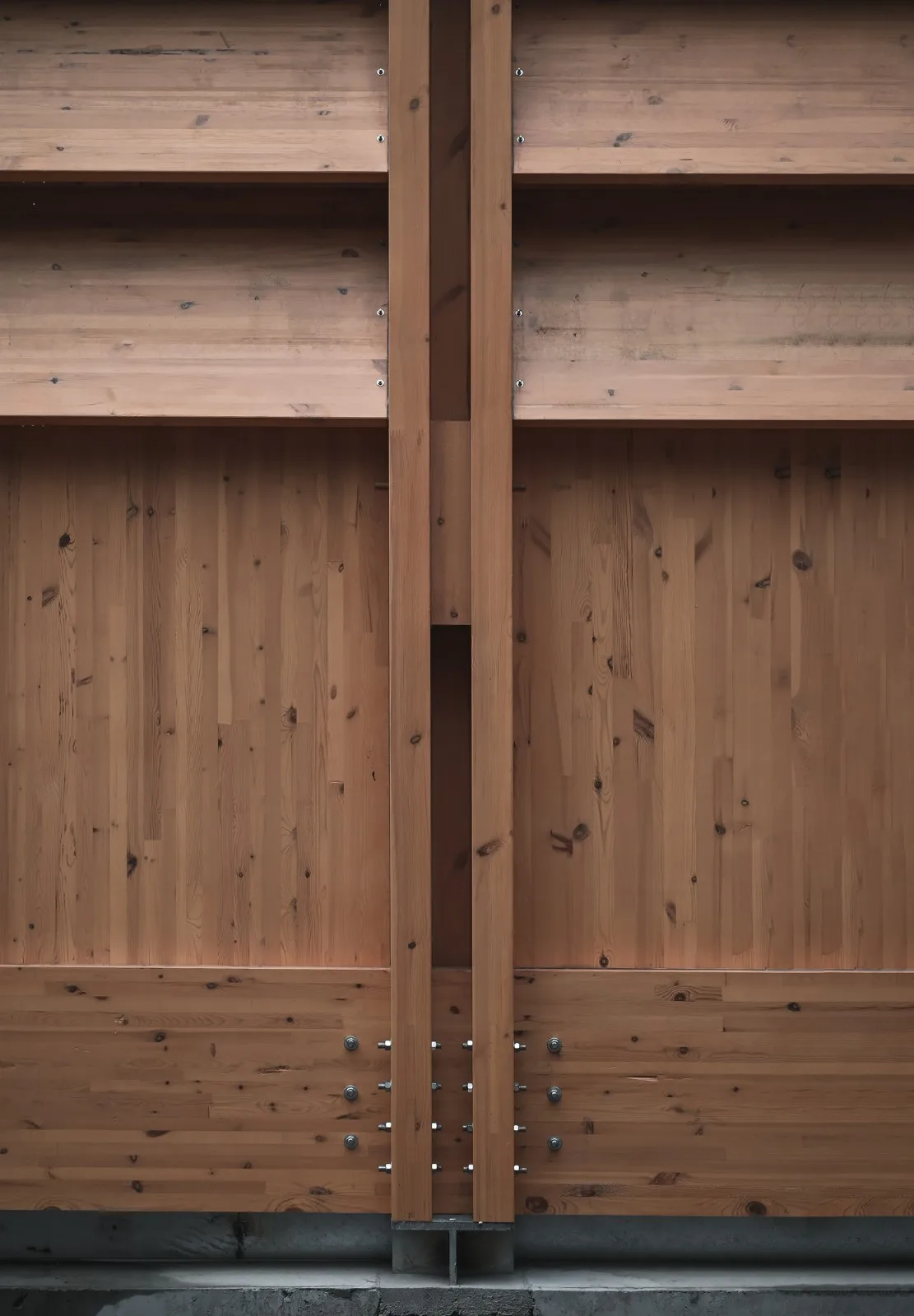
The east and west facades are also built using laminated wood but are divided vertically into two sections to meet internal functional requirements. The lower section, standing 2,000mm tall, features vertical laminated wood boards placed between columns without windows, corresponding to the height limit for garbage truck parking.
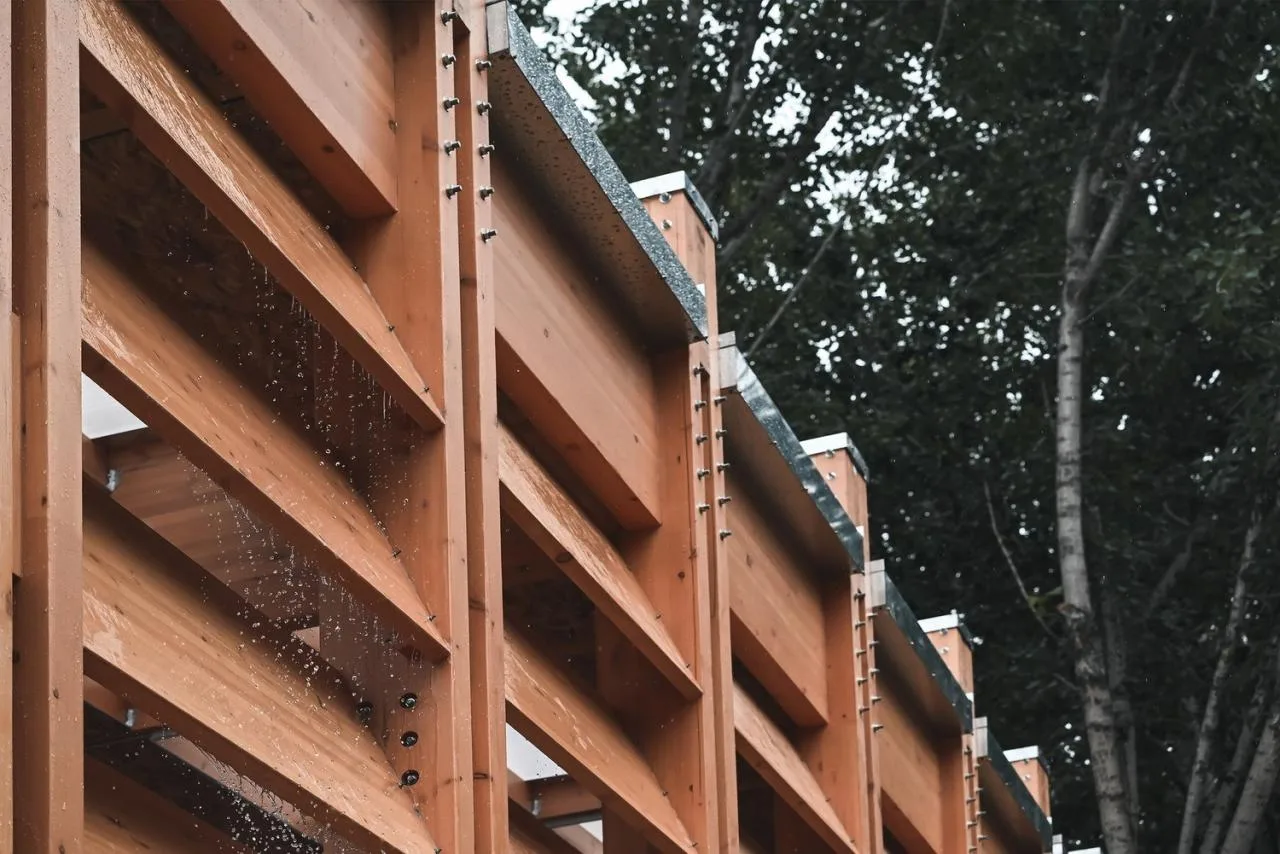
The upper section is 3,000mm high and uses angled plywood panels that allow natural airflow and indirect lighting into the interior.
The roof combines European pine boards and galvanized sheets, with integrated solar panels and windows for natural light above the garbage truck parking area. Eight elevated top beams divide the roof into seven separate sections, facilitating natural drainage.
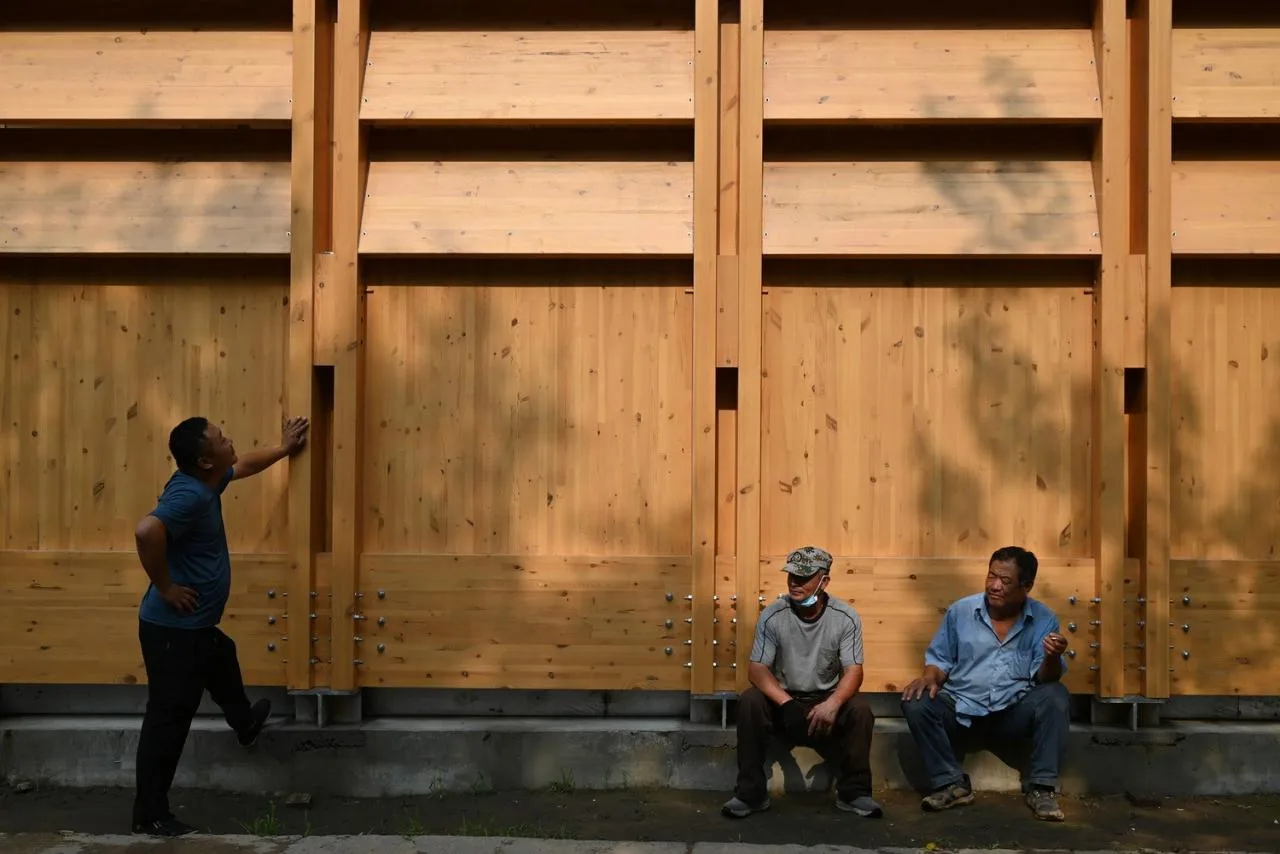
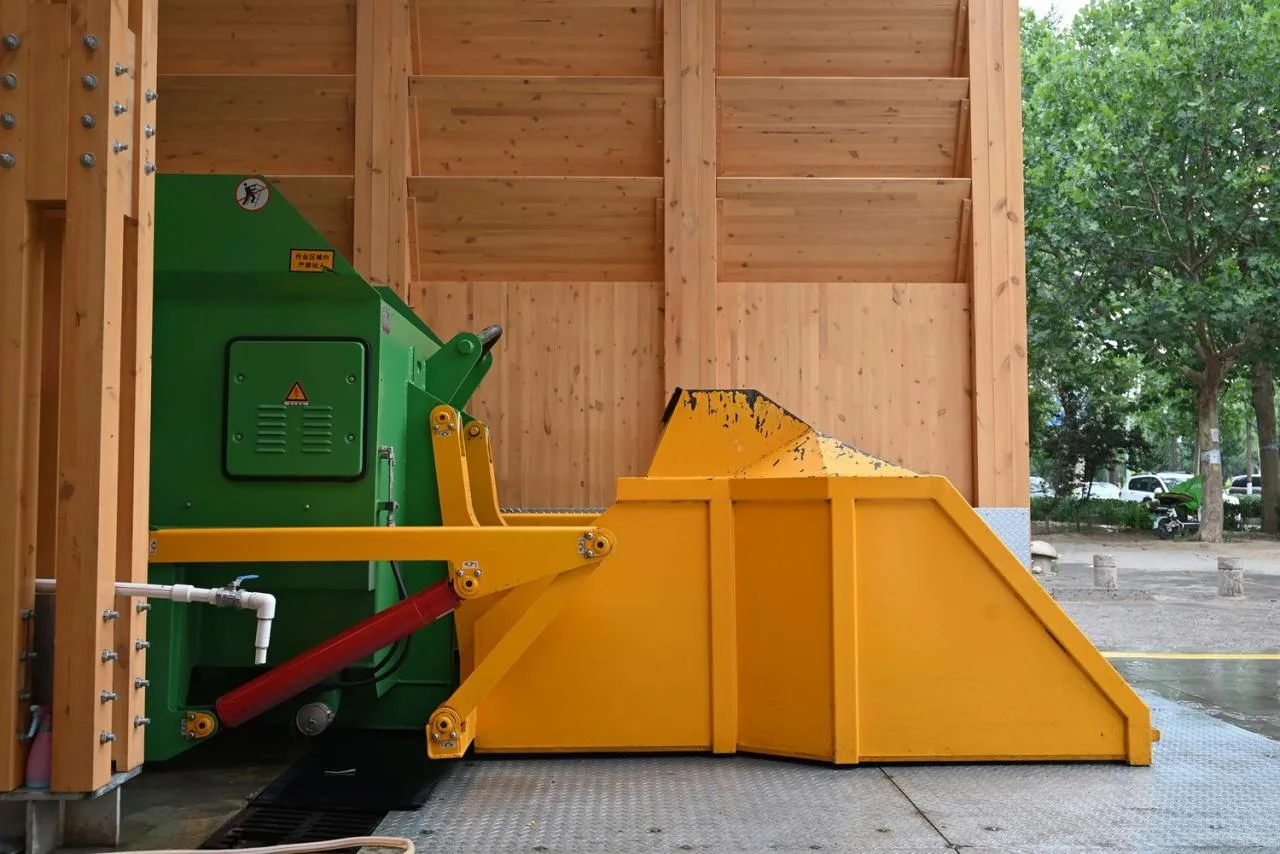
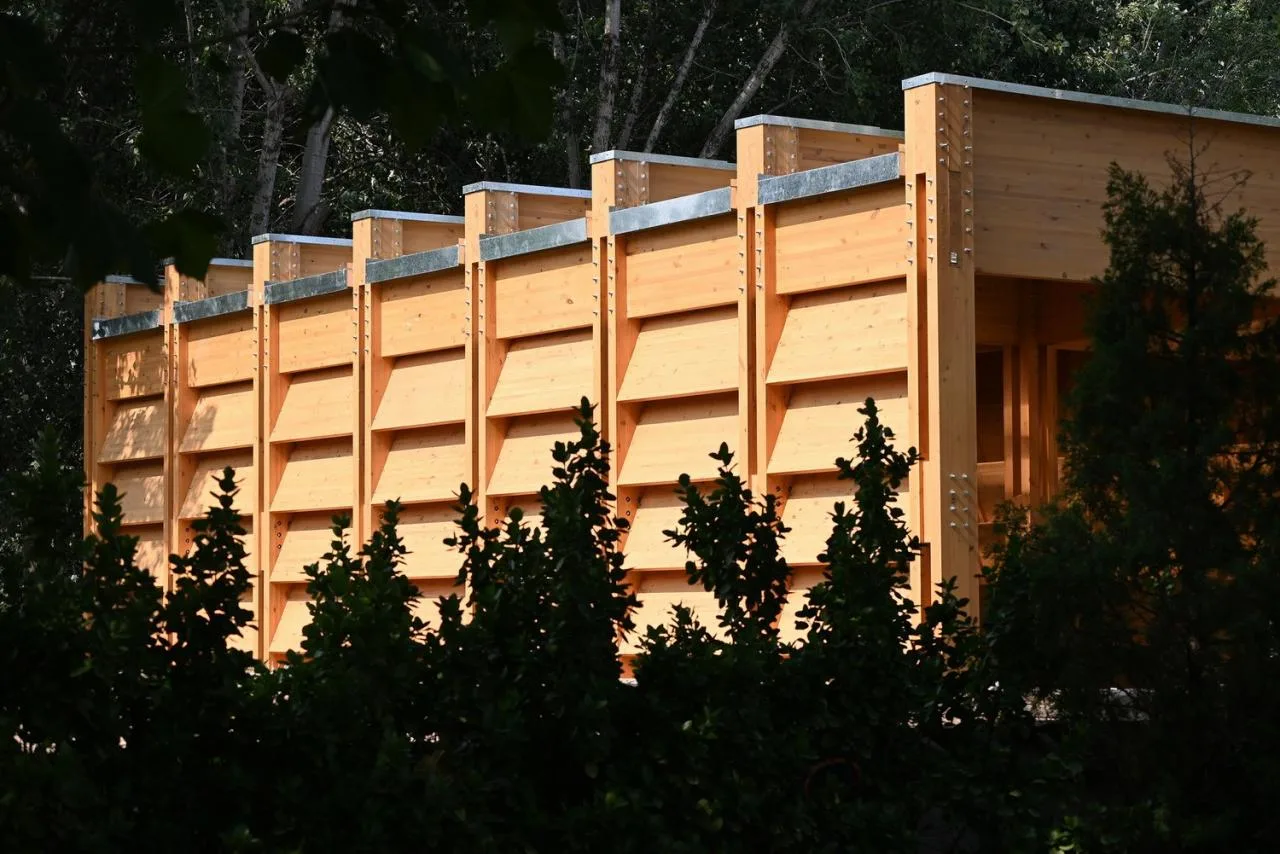
Upon completion, the project successfully addressed the two initial design challenges. The corner space was reestablished with a renewed order within the city fabric. Furthermore, the garbage station’s operational efficiency and exterior appearance were transformed through straightforward architectural intervention.
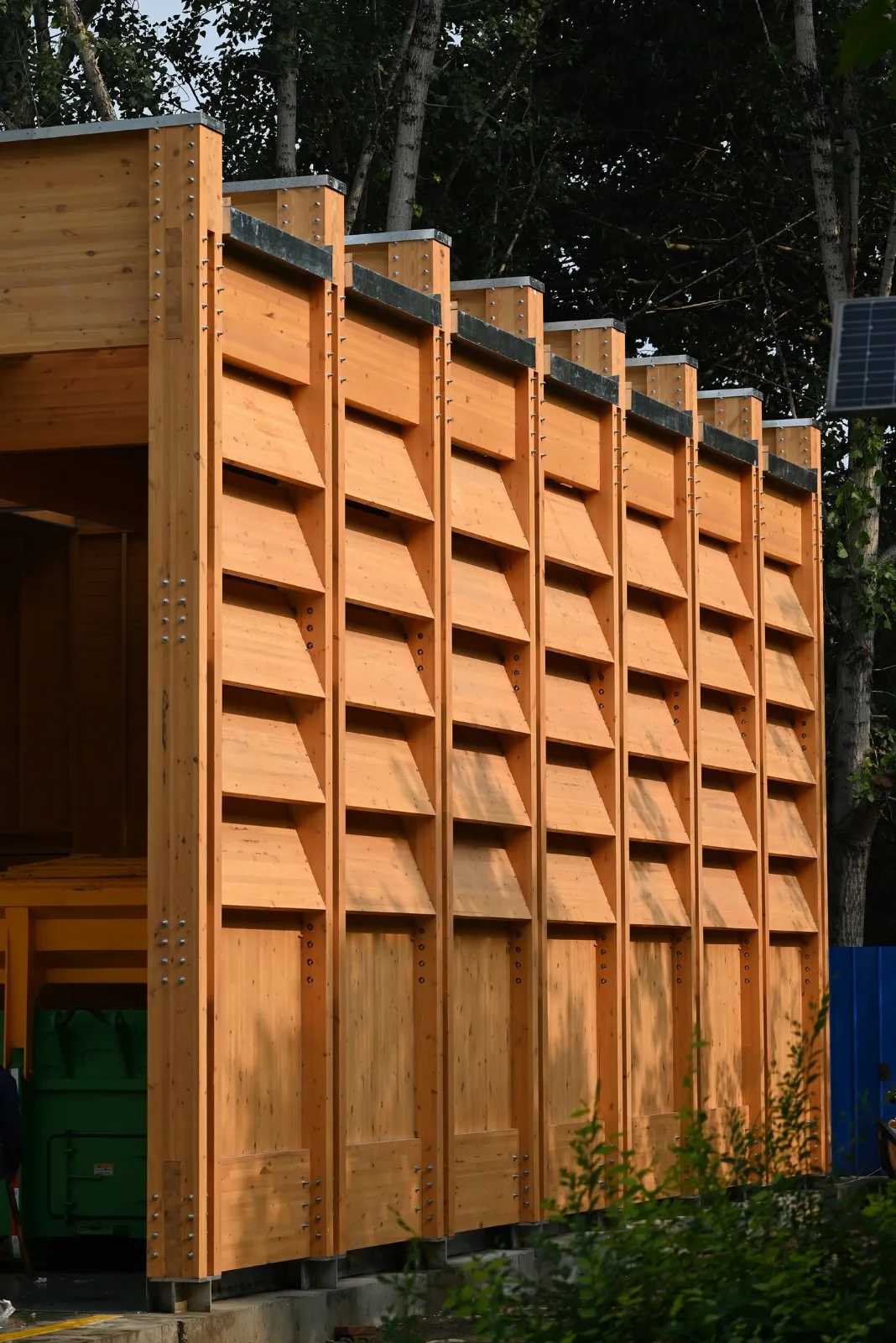
Project Drawings
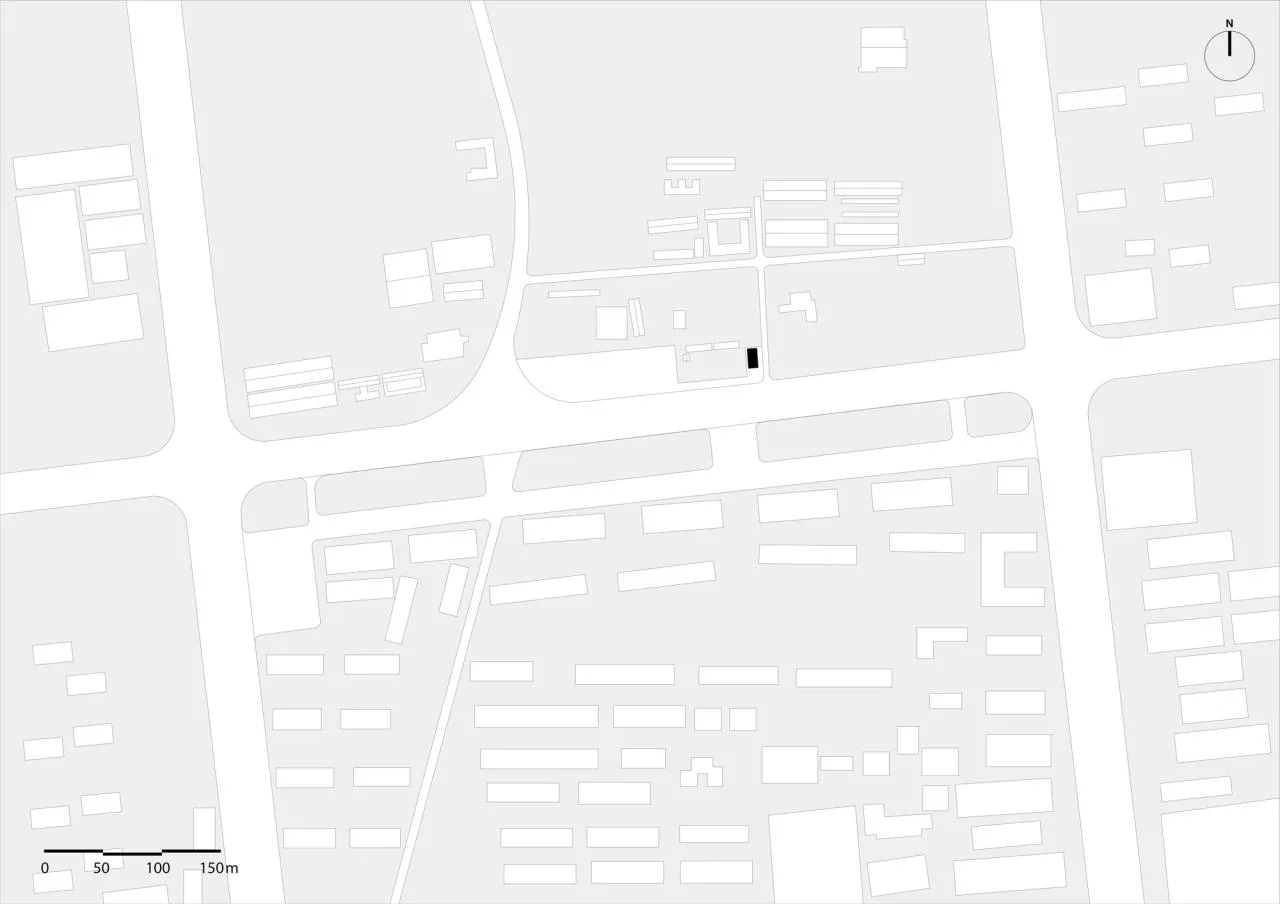
△ Base schematic diagram
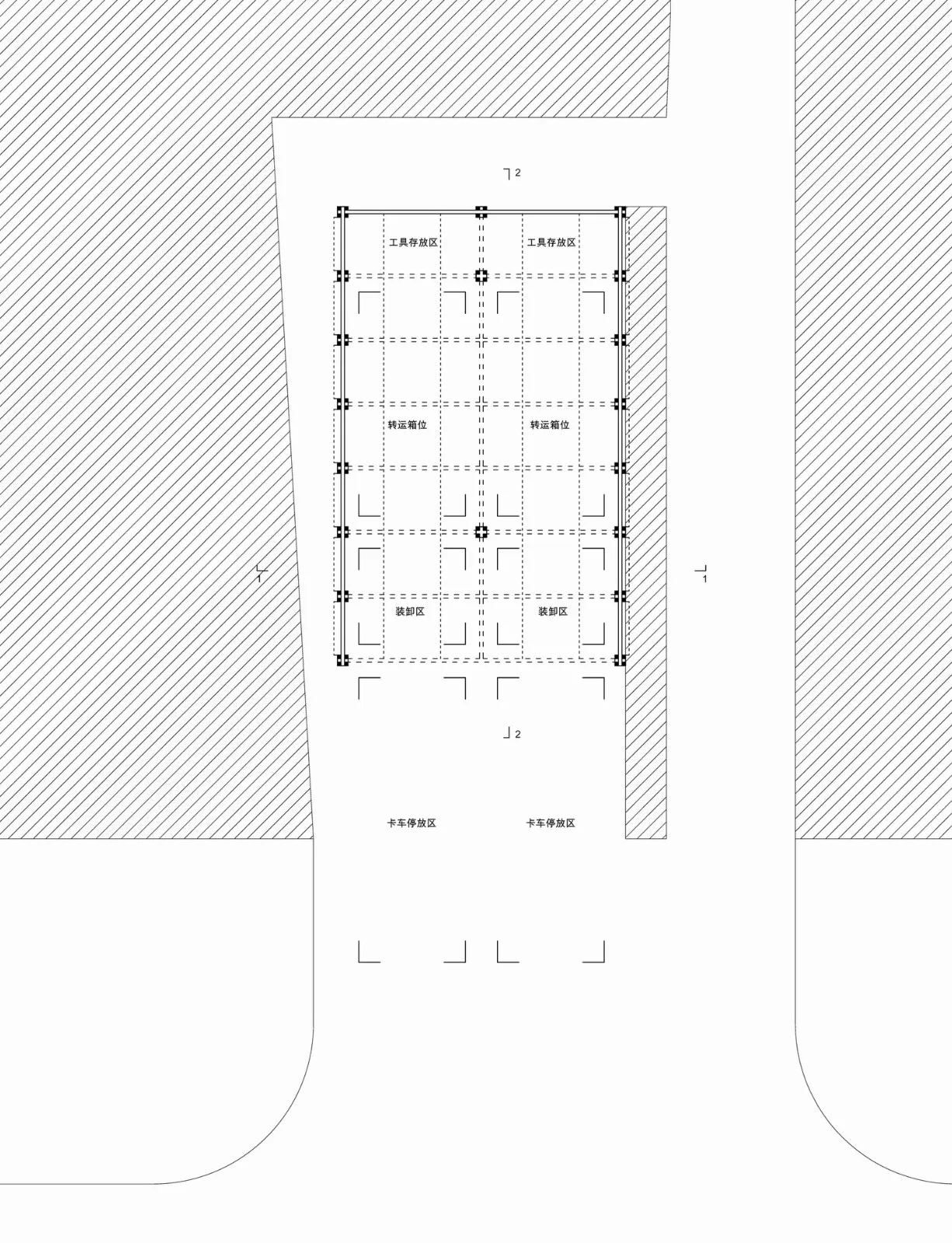
△ Plan view
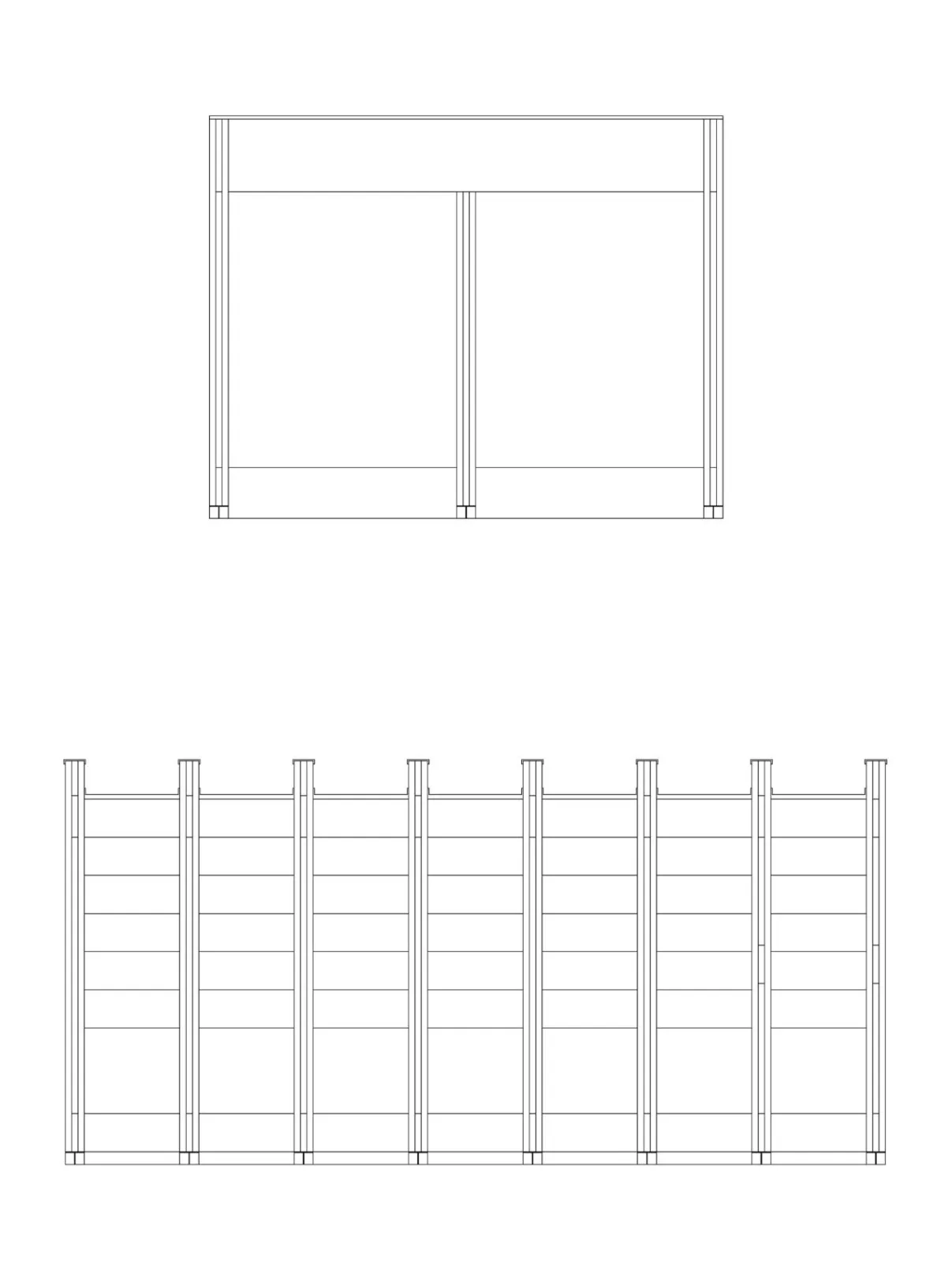
△ Elevation drawing
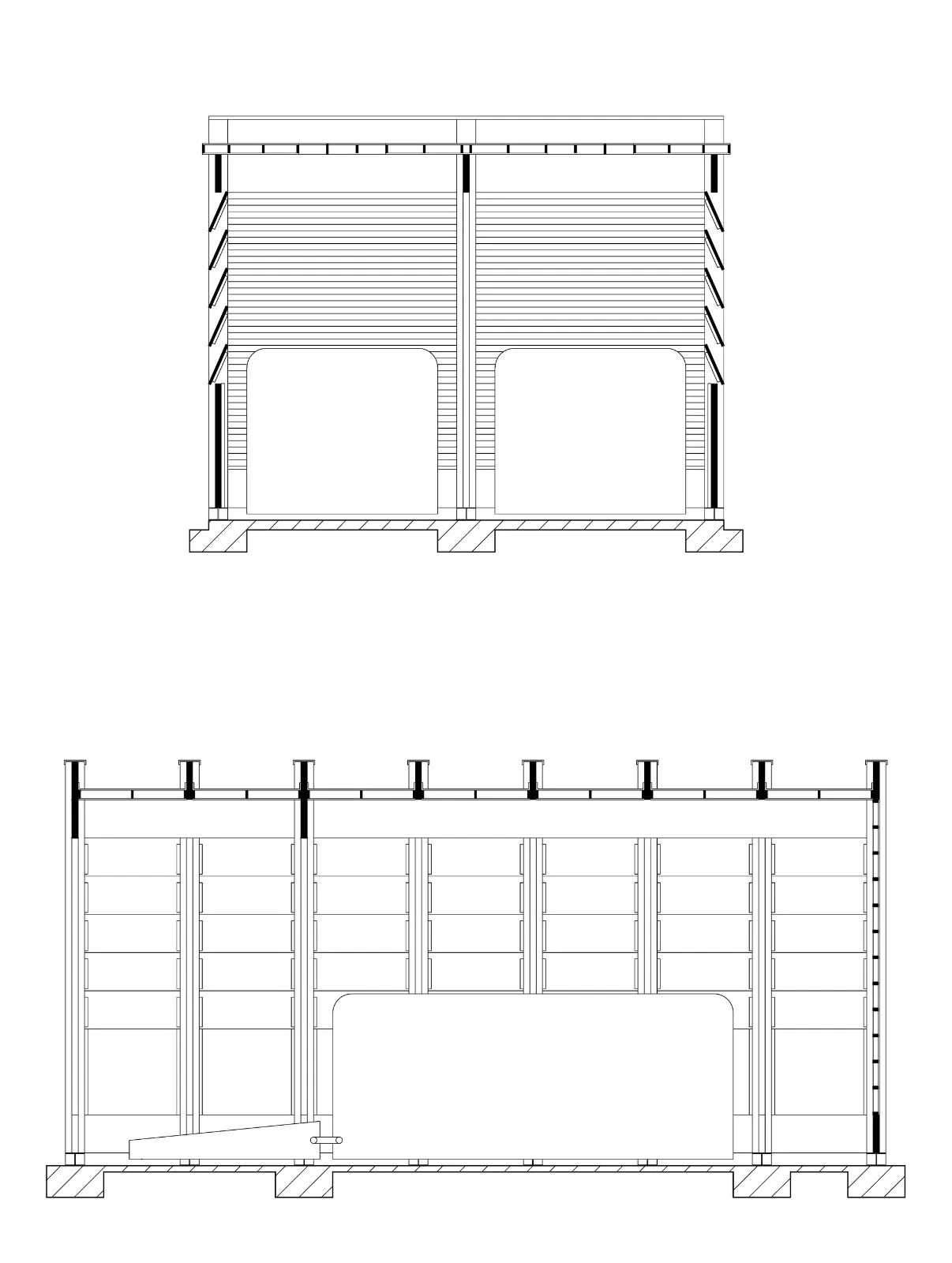
△ Section diagram
Project Information
Architect: Garden Architecture Studio
Area: 105 m²
Year: 2024
Photographer: Garden Architecture Studio
Lead Architects: Liang Hao, Jia Wenruo
Structural Design: Liaoning Jinbaisheng Wooden Structure Technology Co., Ltd
Construction: Zhang Guangyuan Construction Team
Client: Langfang Environmental Health Affairs Center
Location: Langfang














Must log in before commenting!
Sign Up