
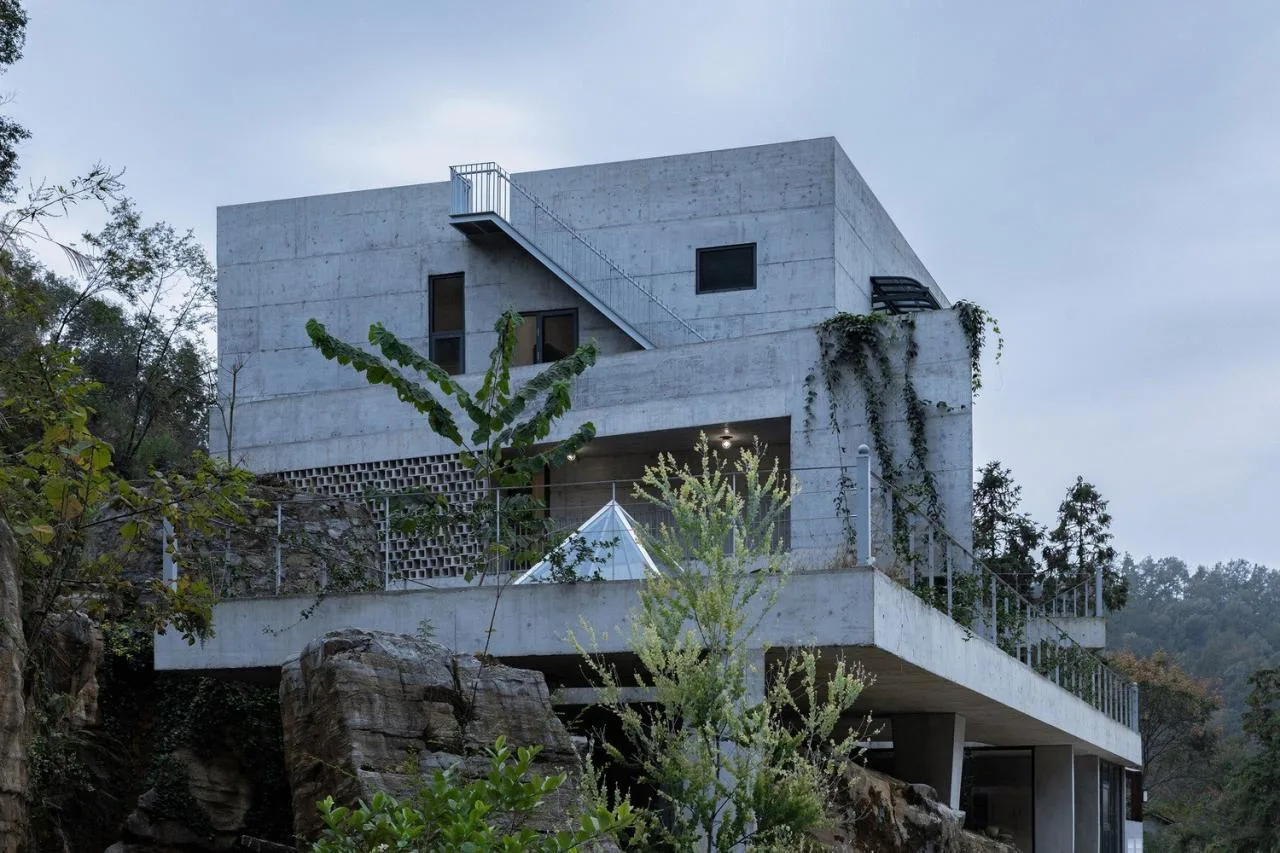
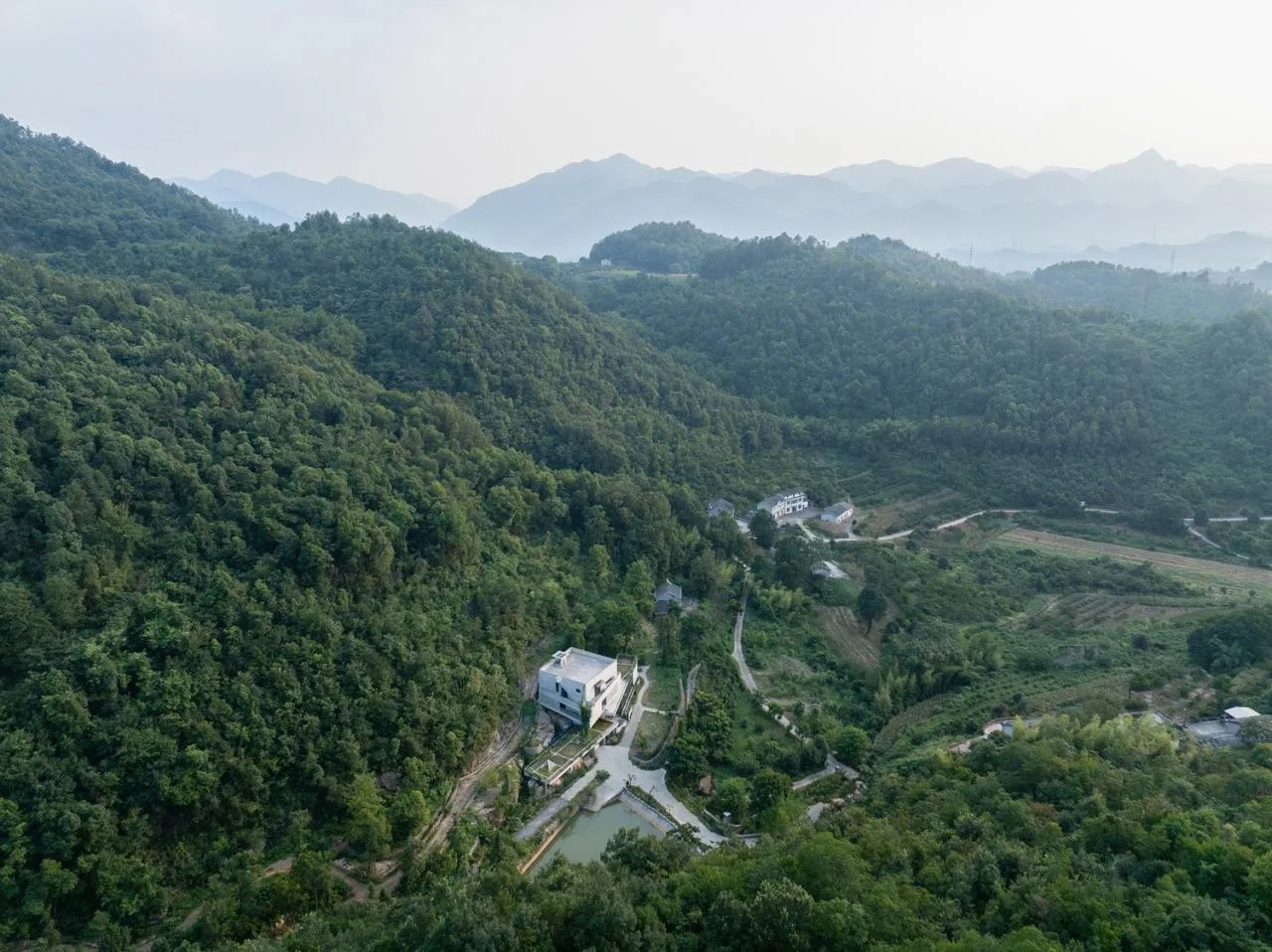
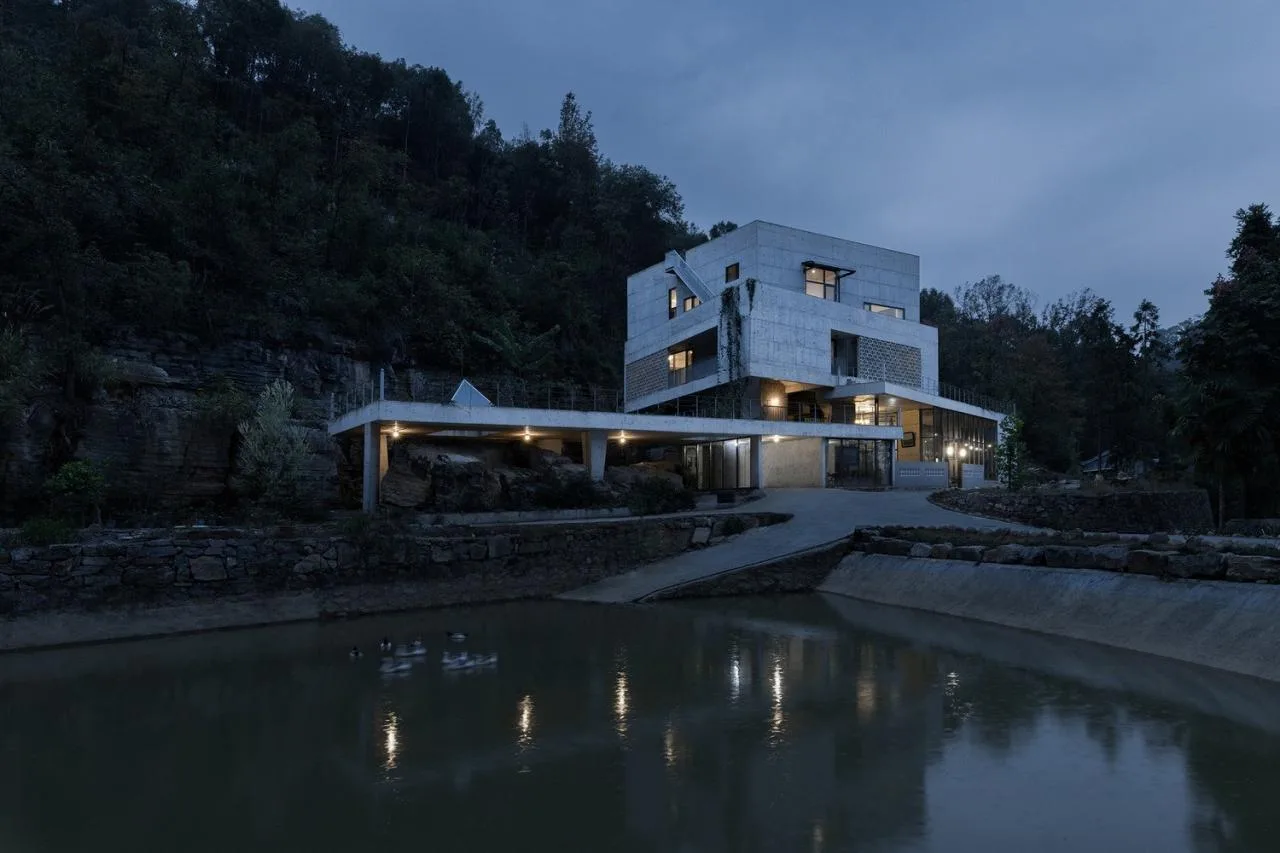
Located in Wuyanquan Town, Yidu City, Yichang, the Shiyangshan No.1 project is nestled quietly 1.5 kilometers below the national highway at the foot of Shiyang Mountain. Surrounded by forest and elevated terrain, the site offers expansive distant views. The owners, Mr. and Mrs. Xu, envisioned this place as their countryside retreat—a way to escape city life and reconnect with nature.
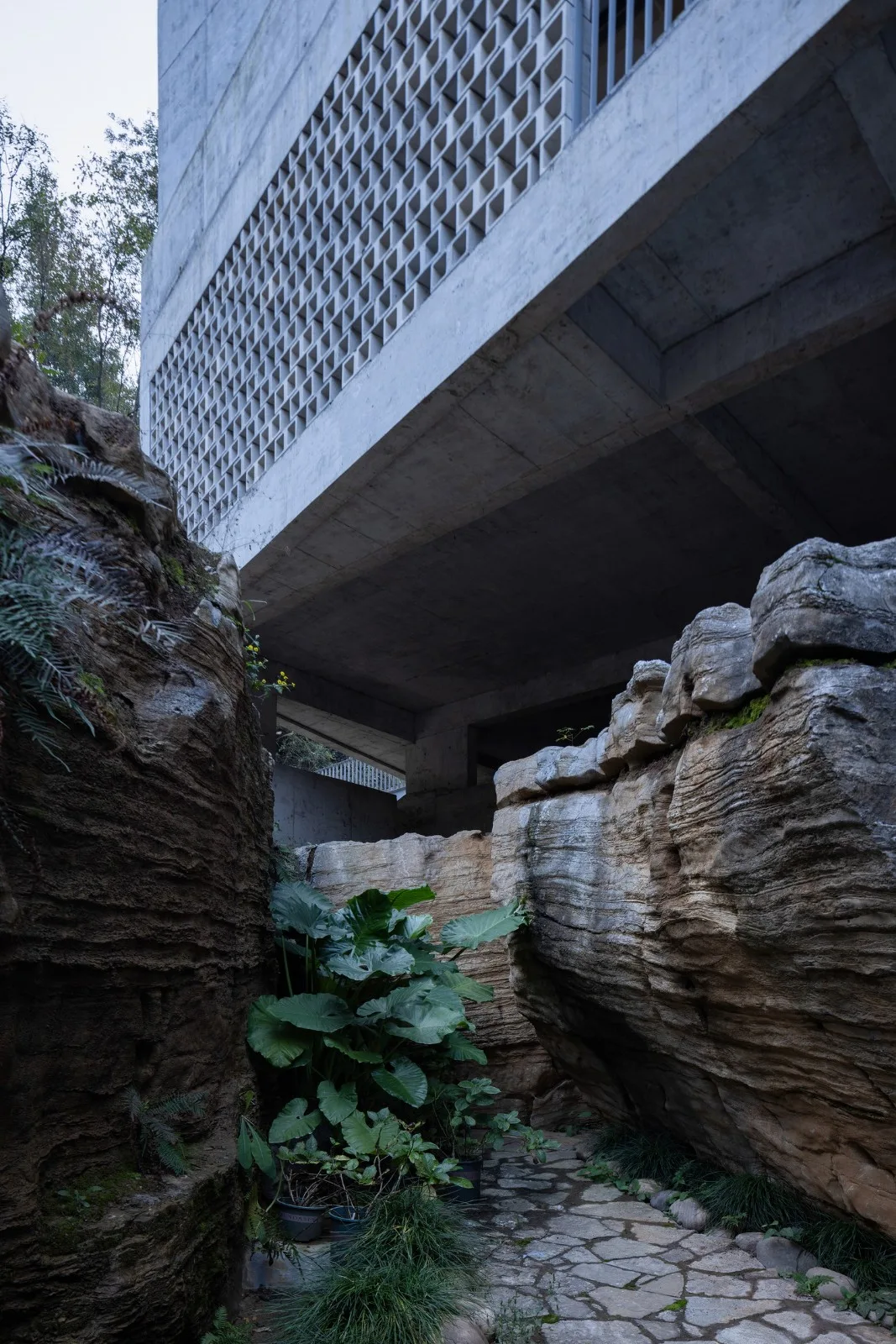
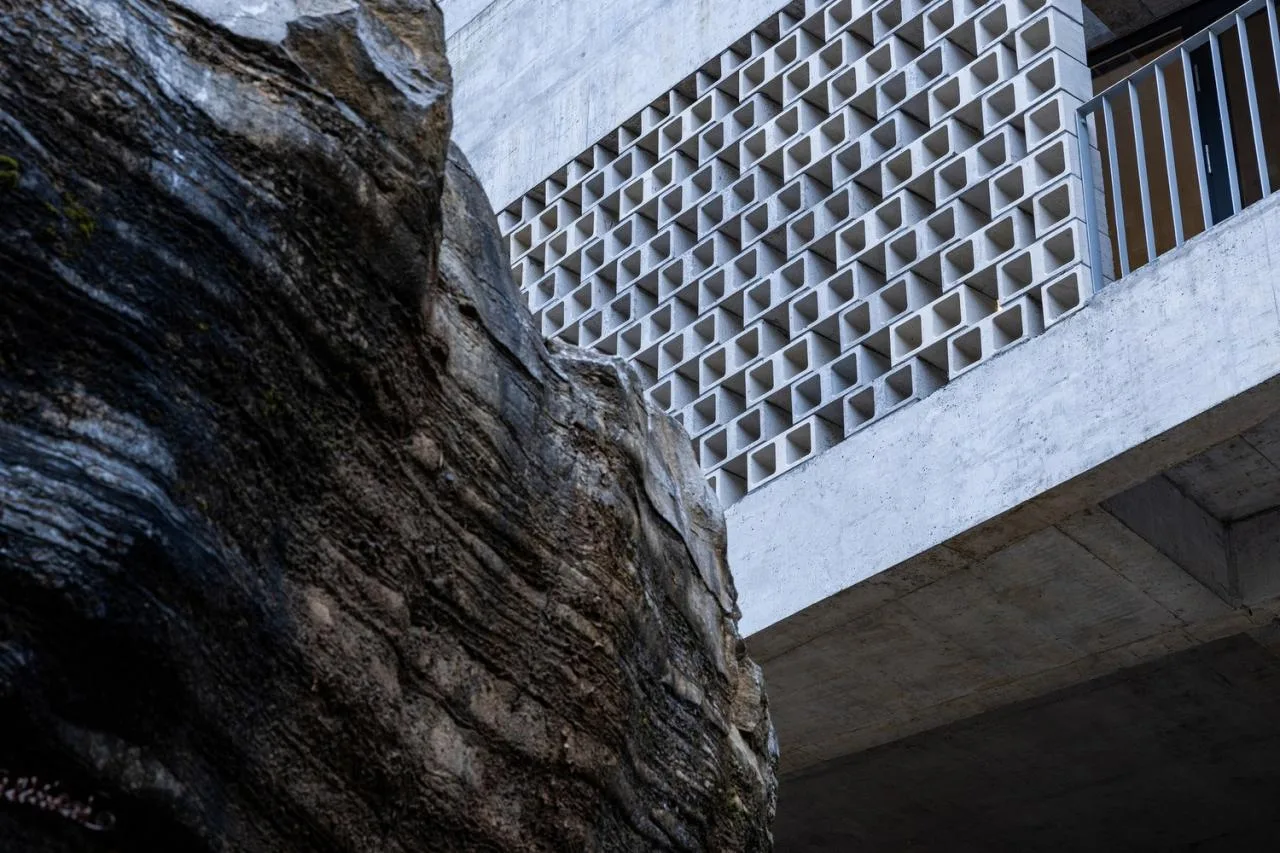
Shiyang Mountain is named after its many white stones that resemble grazing sheep. During the rainy season, water flows down the mountain, washing away soil at its base and exposing layered mud-yellow rocks that have weathered over time. These rocks are loosely bonded, and the owners carefully excavated soil from between them, revealing various-sized gaps that have become a signature natural feature of the site.
Borrowing Stones
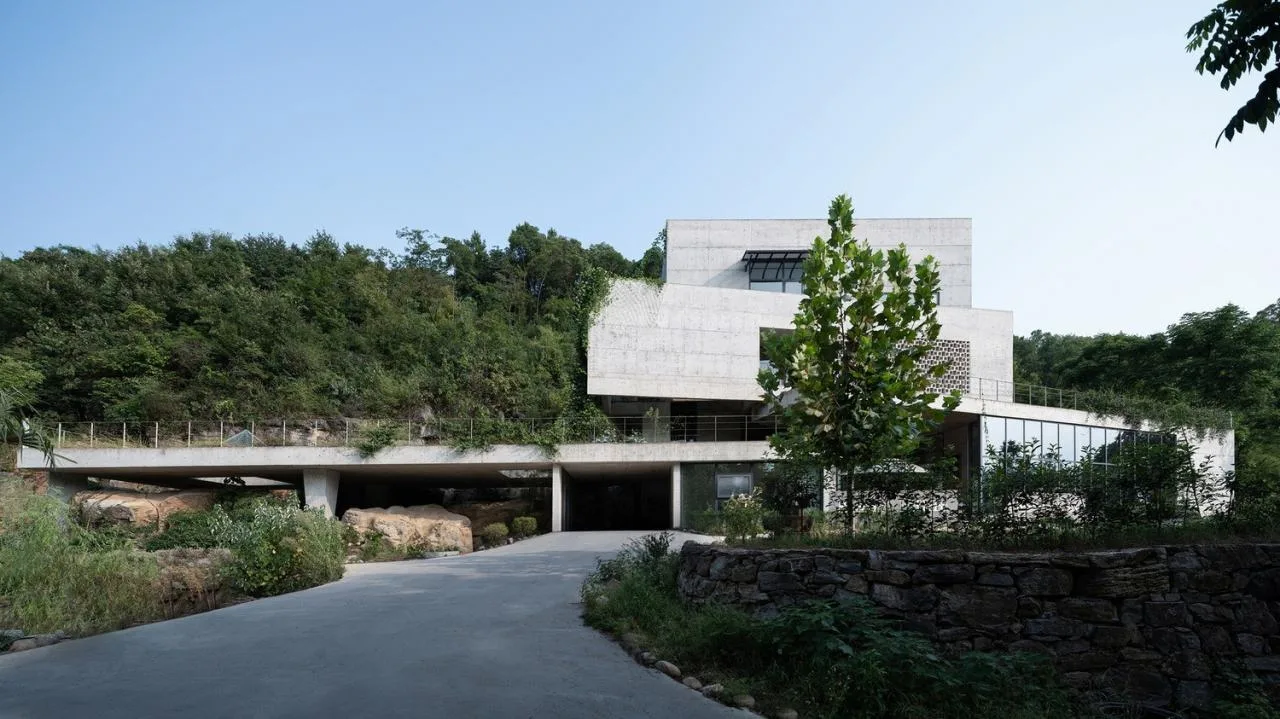
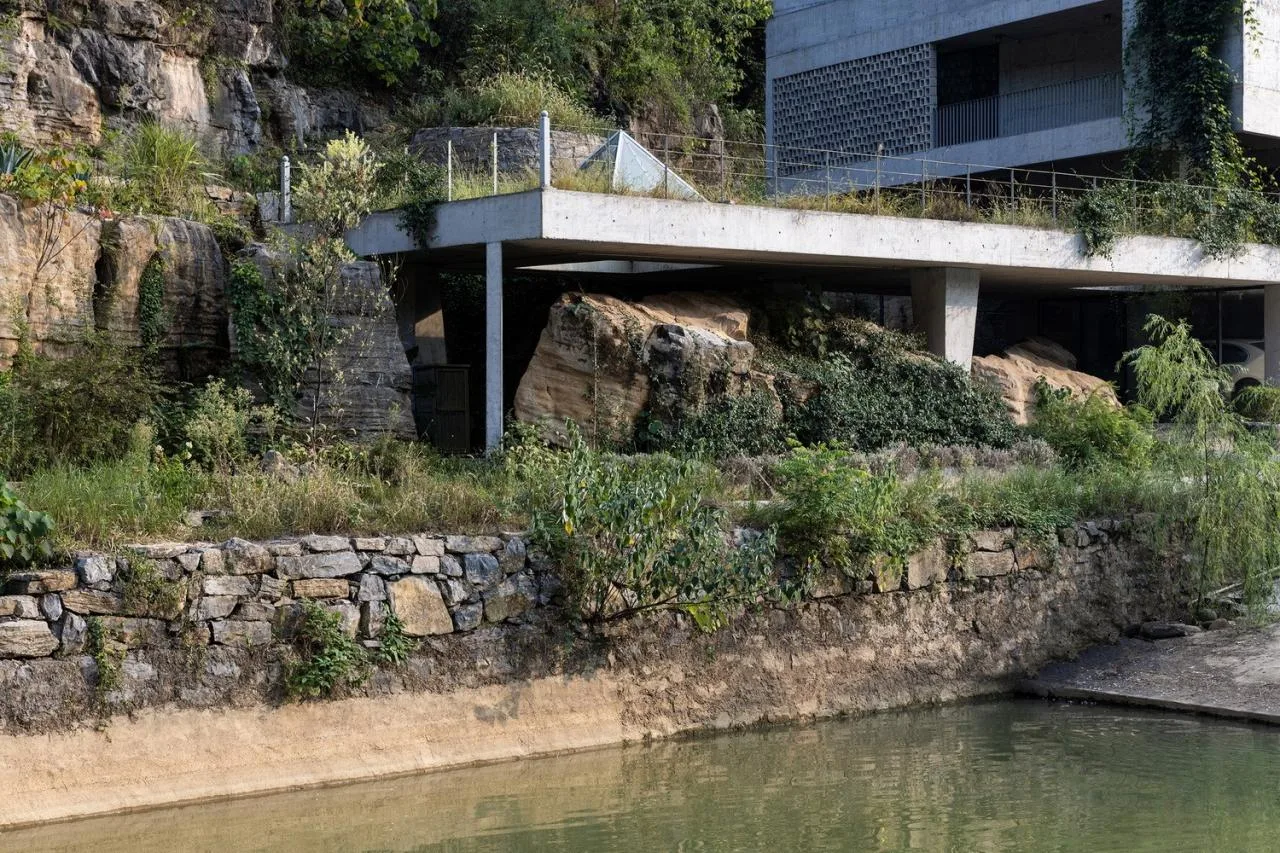
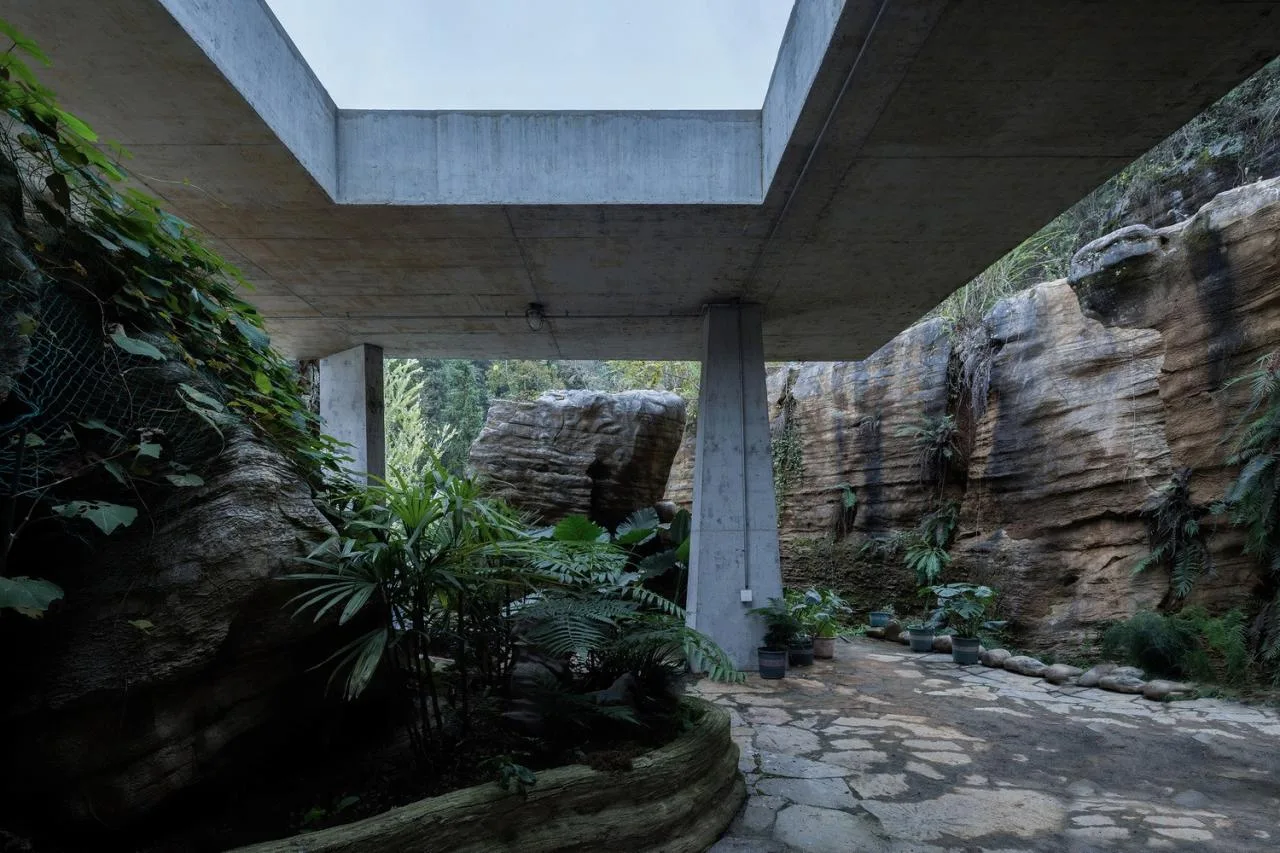
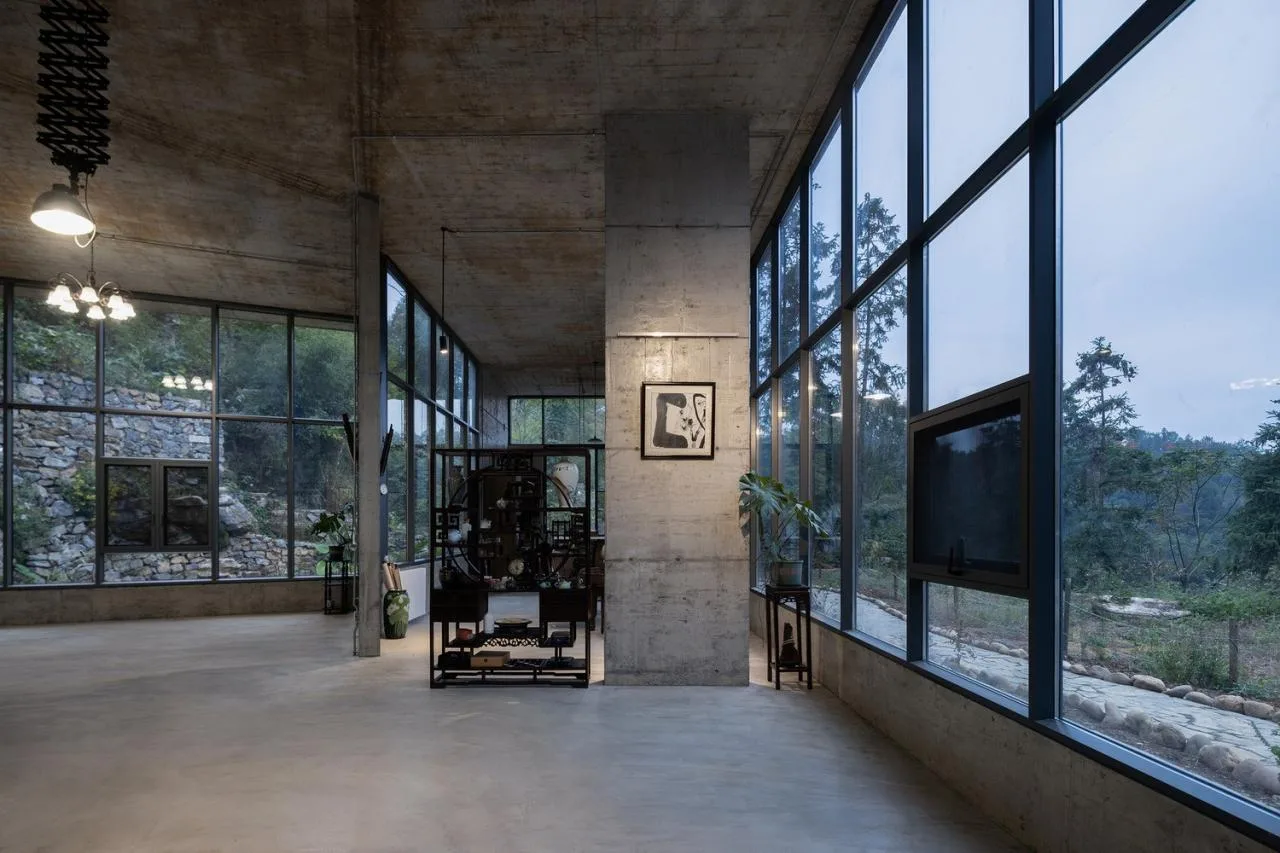
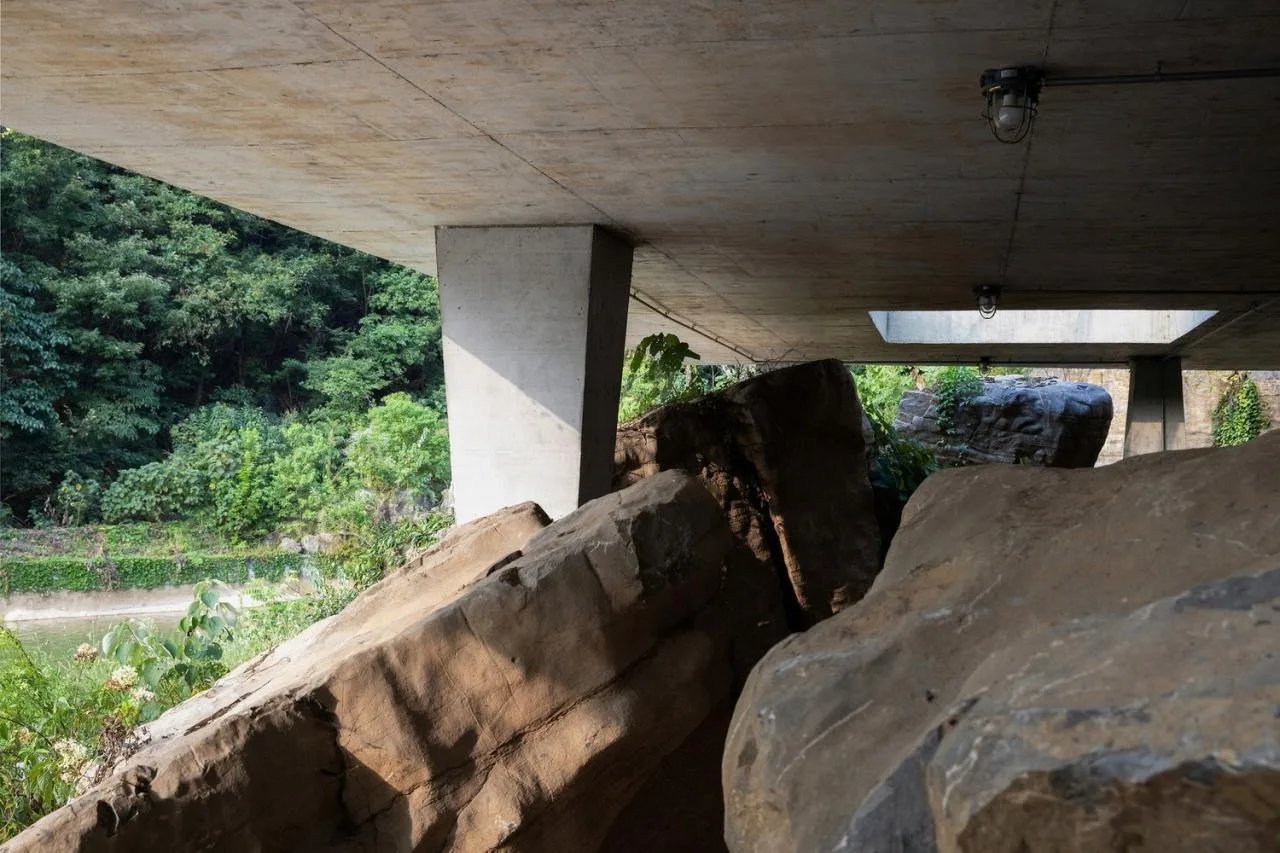
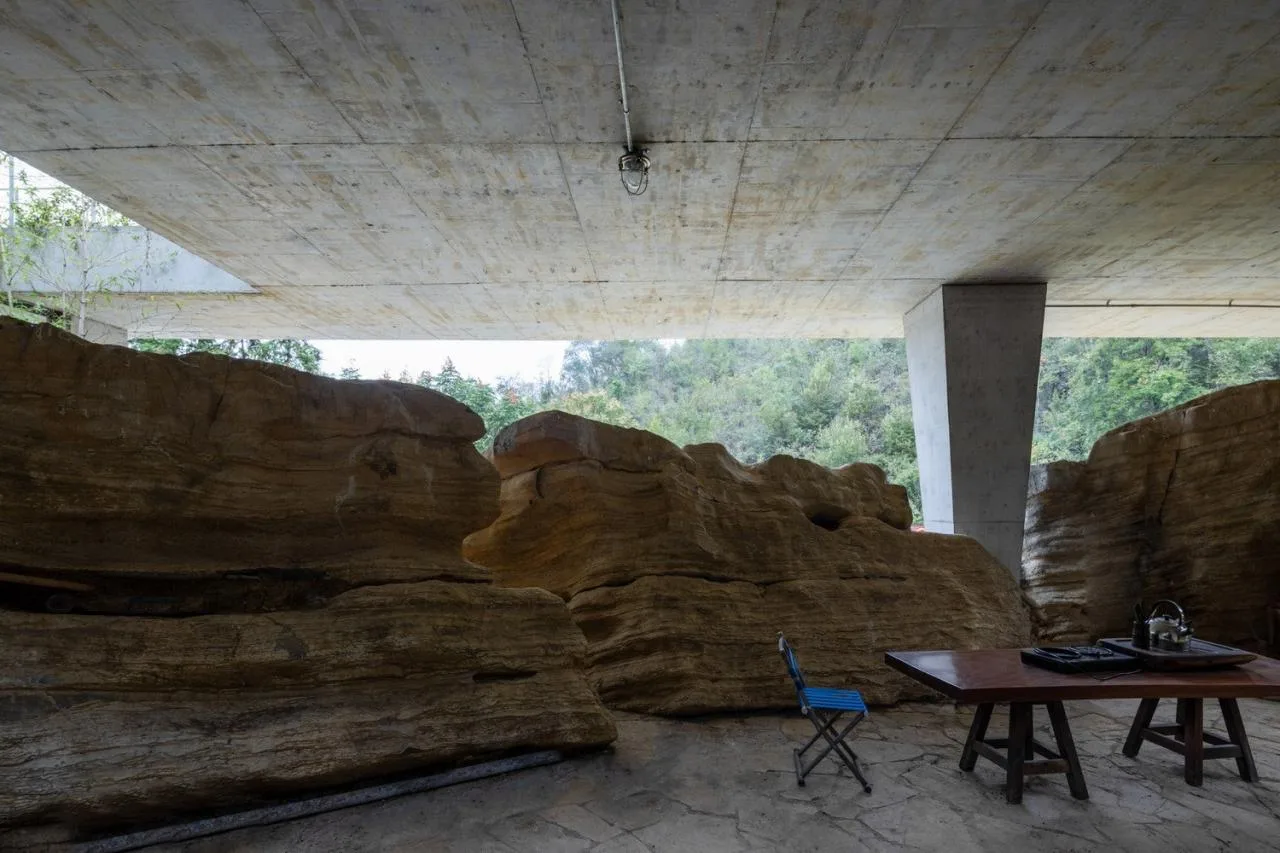
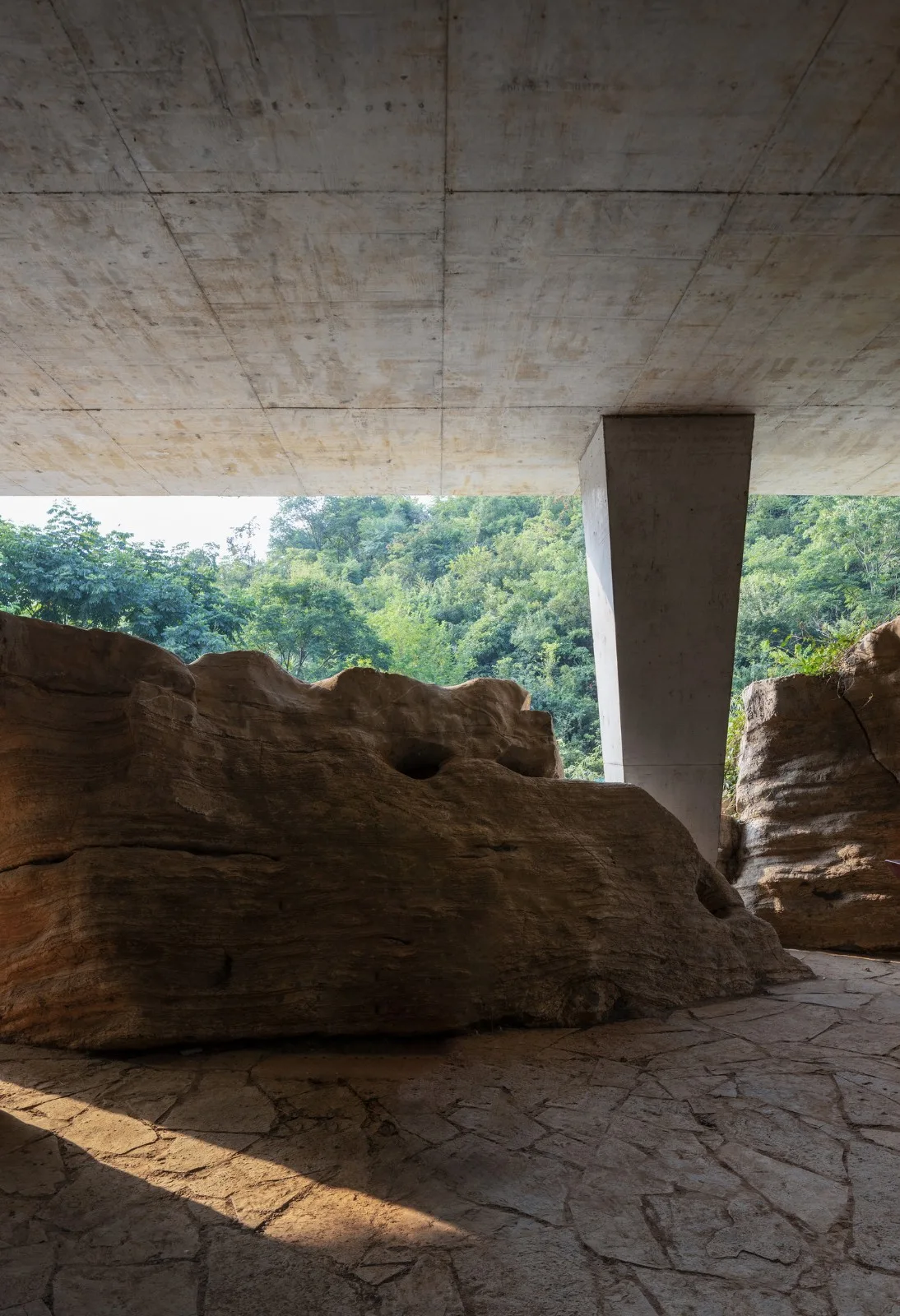
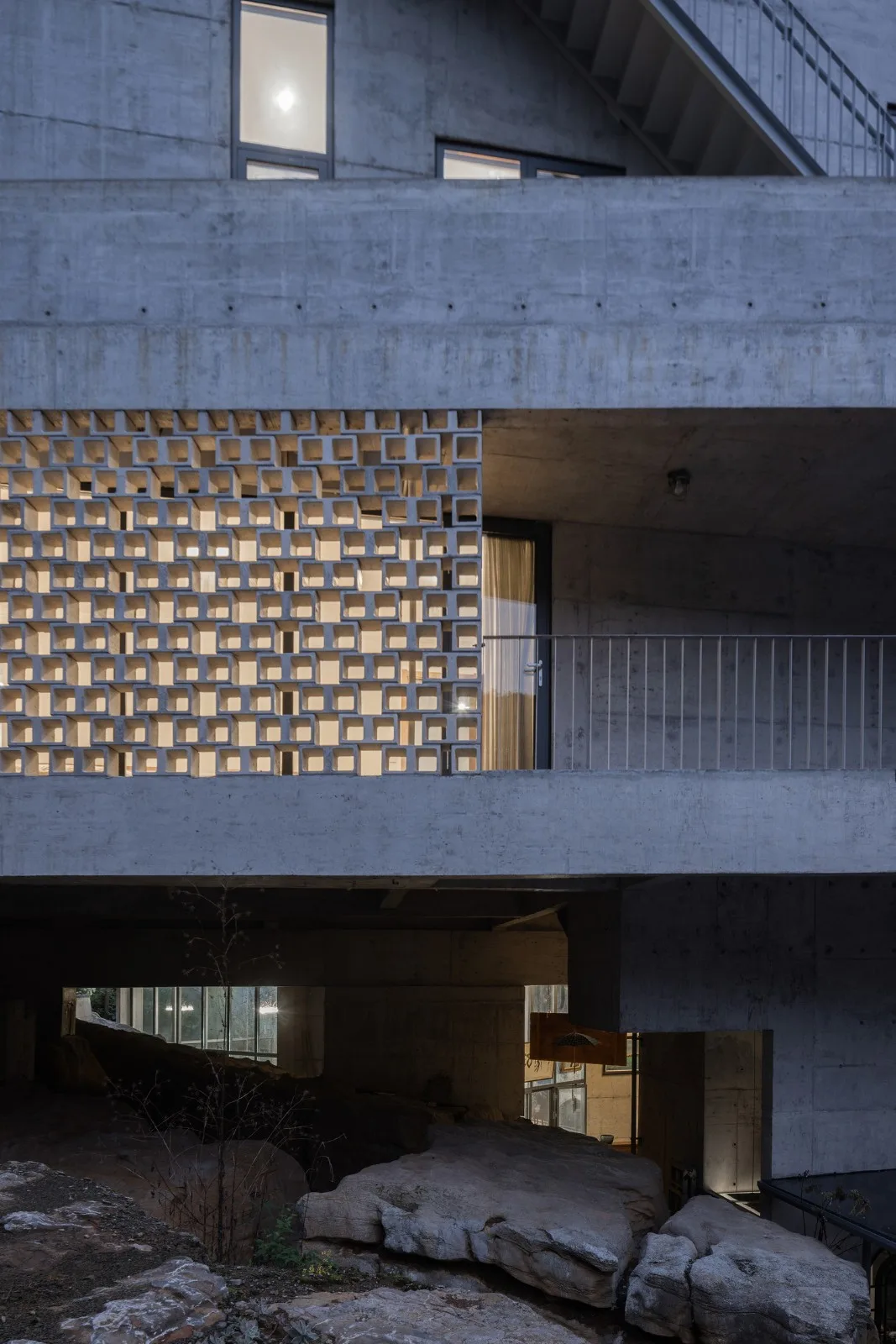
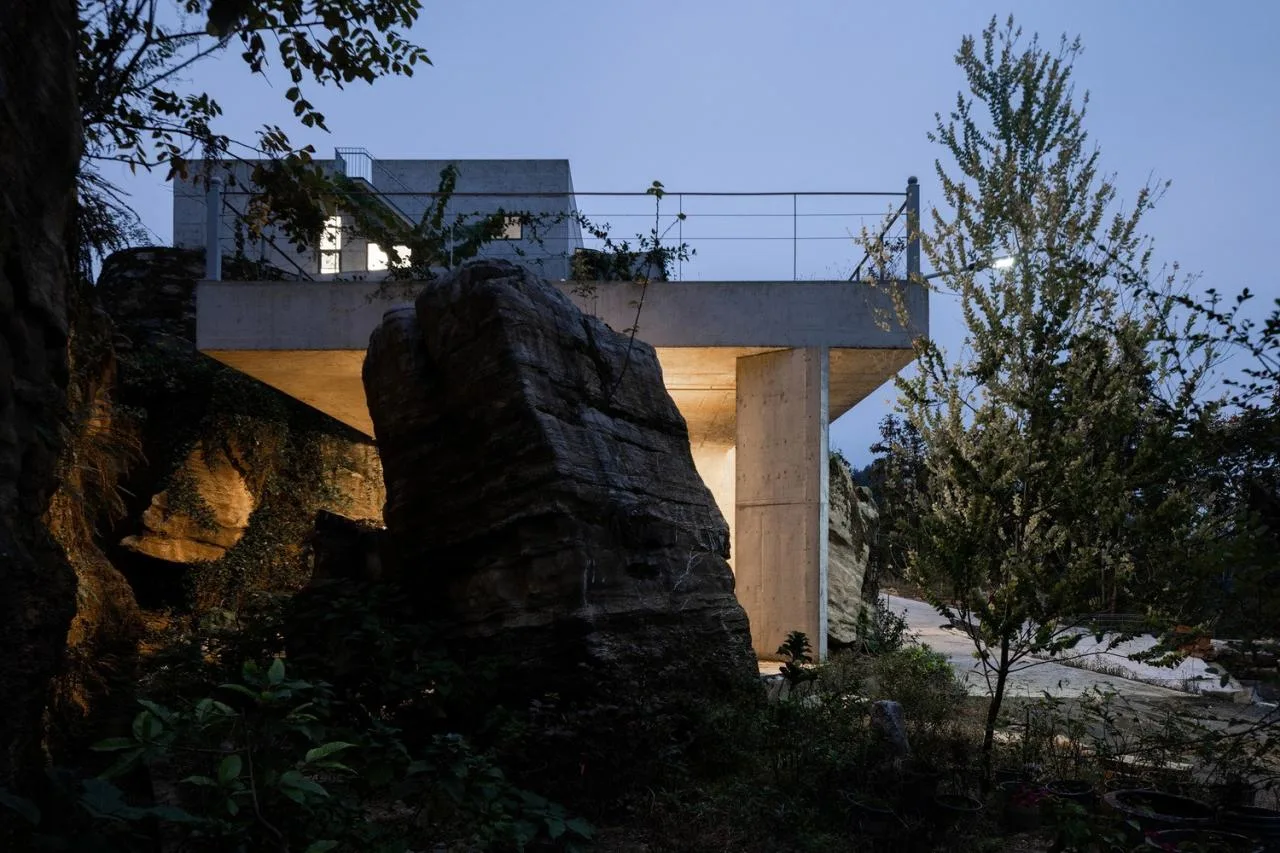
The architectural layout preserves a road on the east side leading back toward the mountain, allowing the building to nestle closely against the exposed rock formations. The ground floor features a “roof” made of wooden boards and “walls” constructed from stones. The rock density varies throughout the site, creating distinct spatial zones or “halls”. On the north side, where rocks are most concentrated, it forms an open hall-like space, while the sparser southern side is enclosed in glass, housing a restaurant.
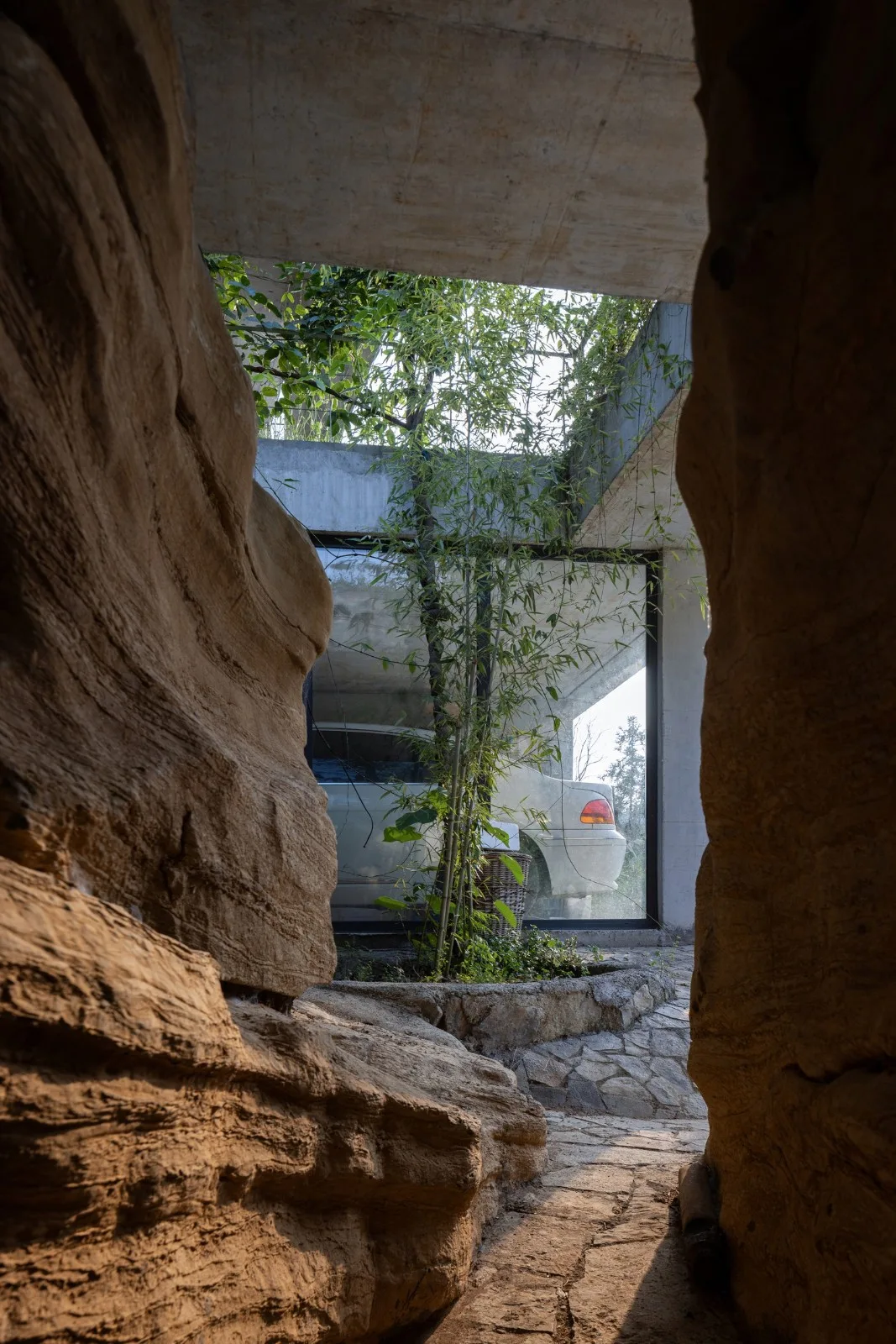
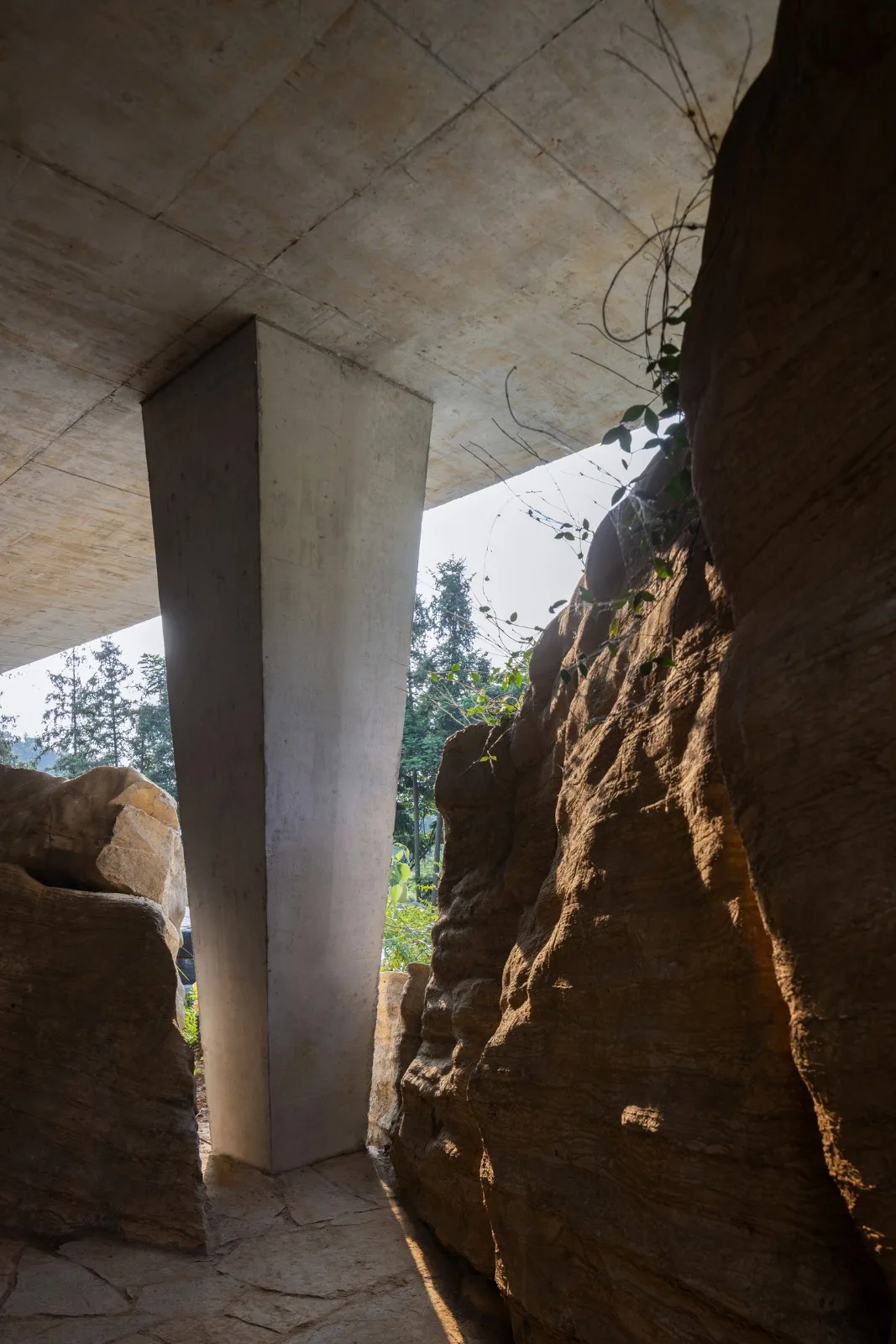
Behind the building, the mountain serves as a serene backdrop with rocks framing Professor Xu’s studio. The narrow, cleared stone crevices are integrated into the architecture—some sheltered beneath the second-floor slab, providing protection from wind and rain, others exposed, forming a distinctive stone corridor.
Building the House
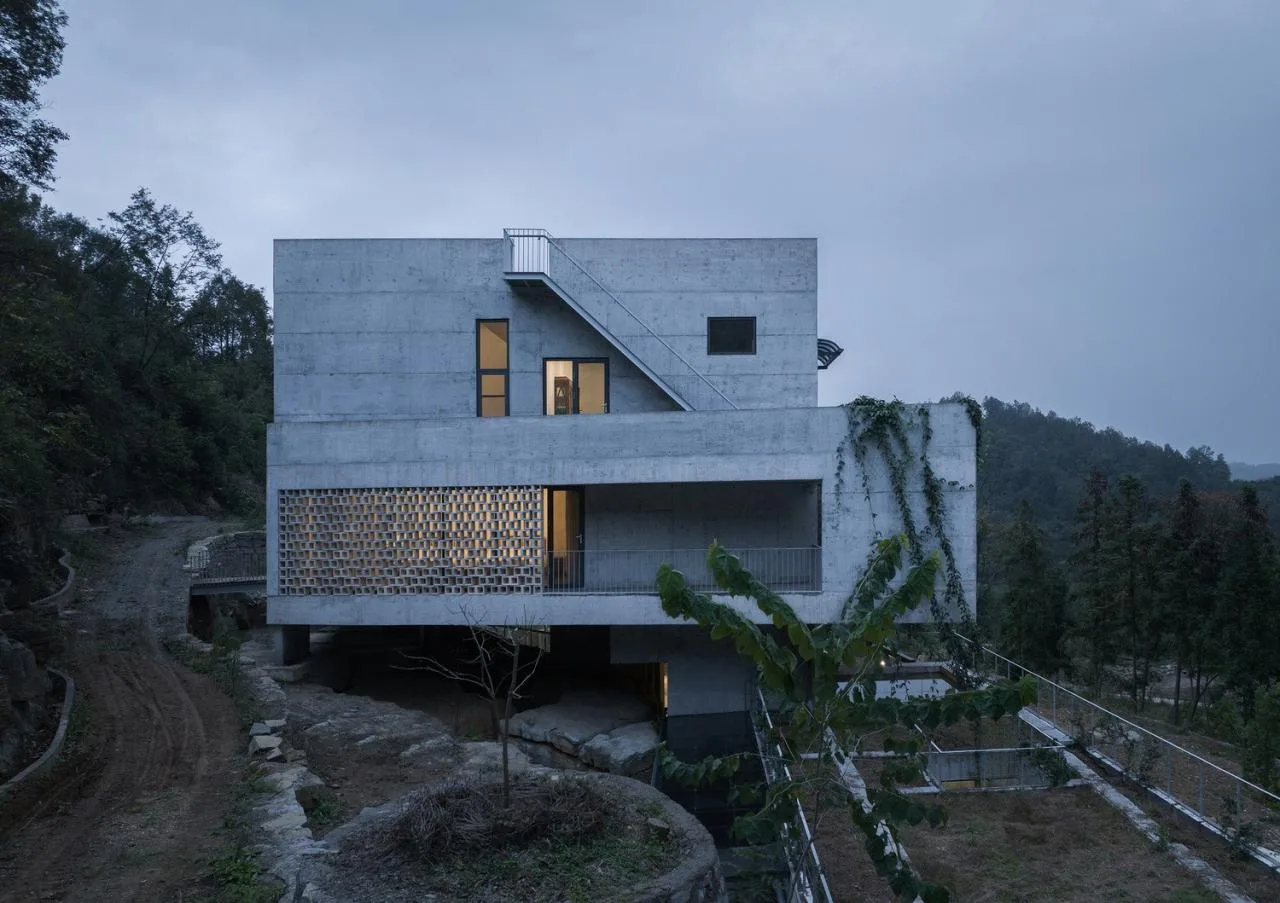
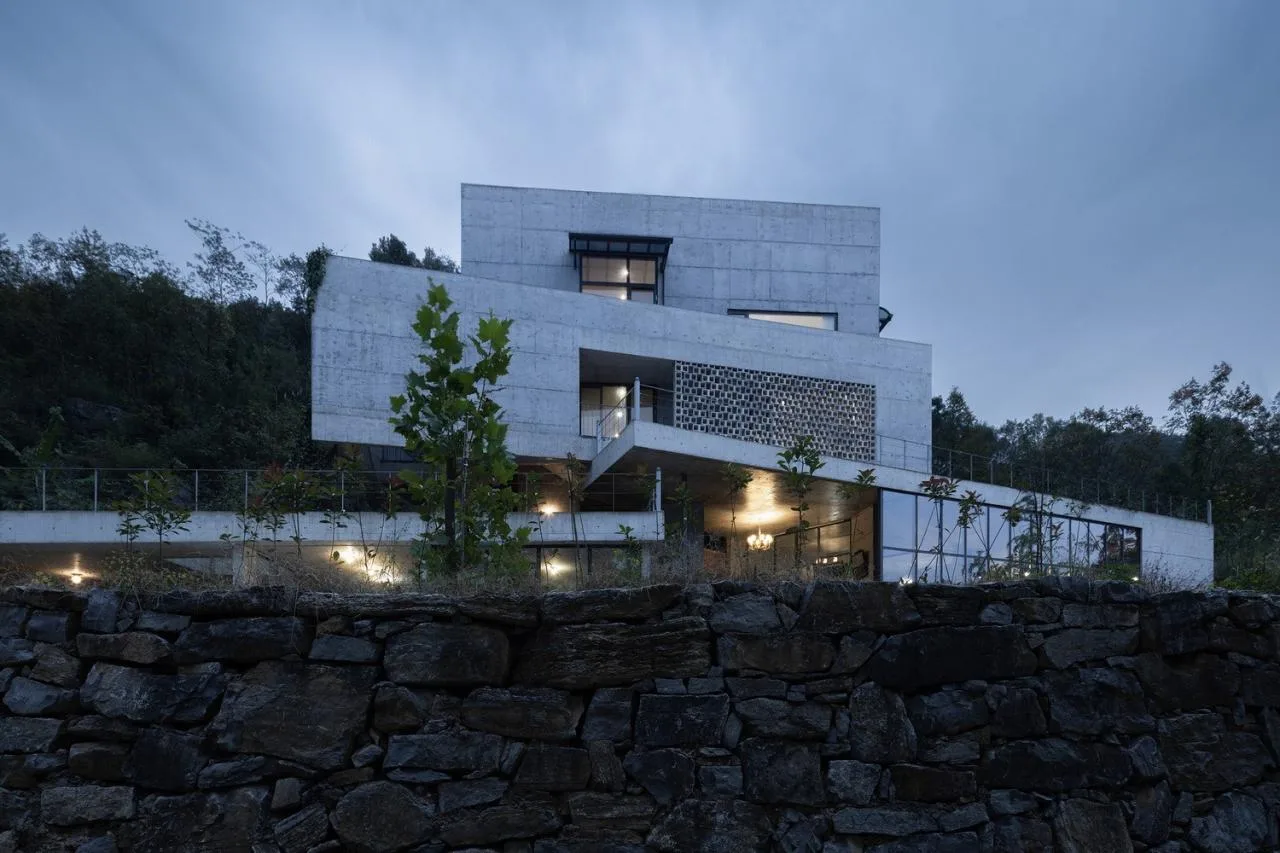
Constrained by the limited land area, the upper residential volume resembles two stones stacked atop the more expansive base layer. An elevator at the center is open on the first floor and conveniently connects all living spaces on the upper levels. Each room occupies a corner, offering its own distinct views.
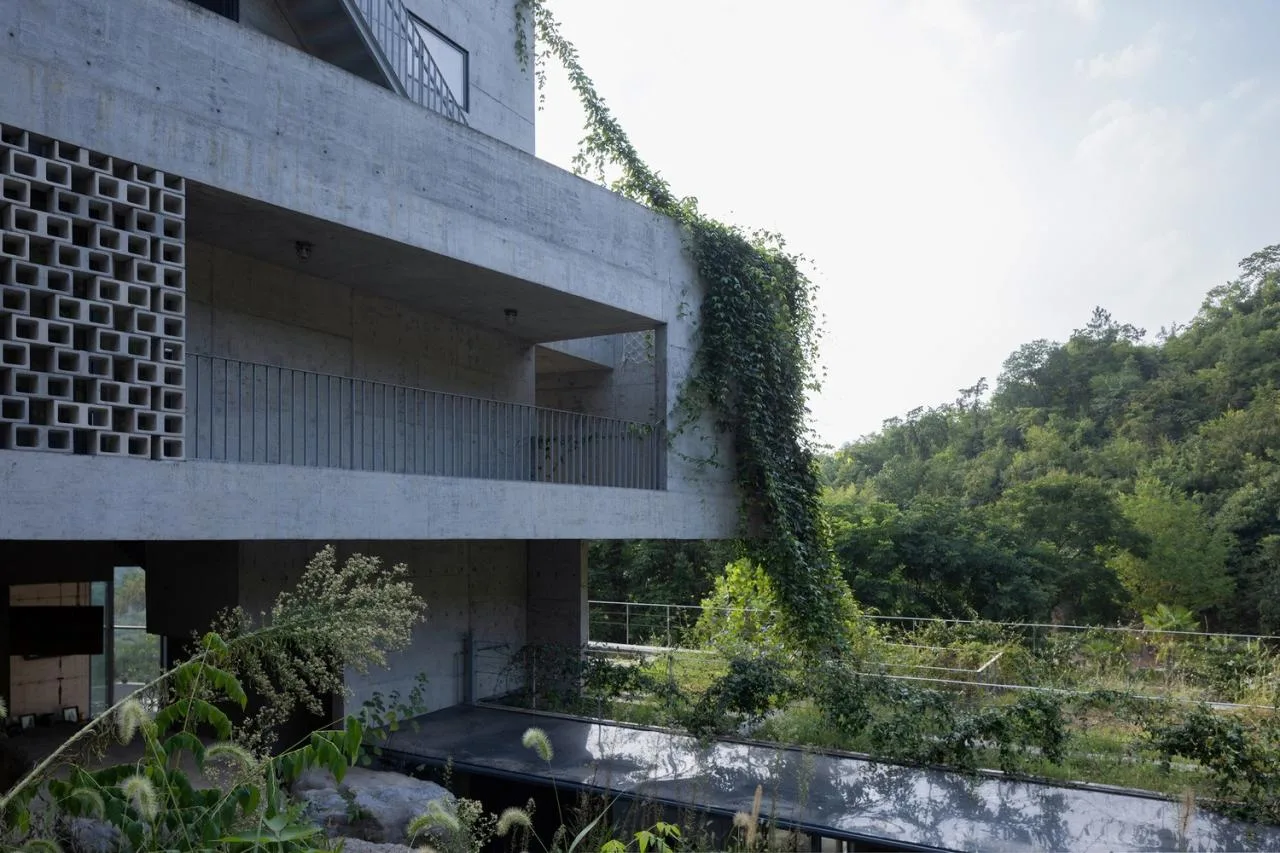
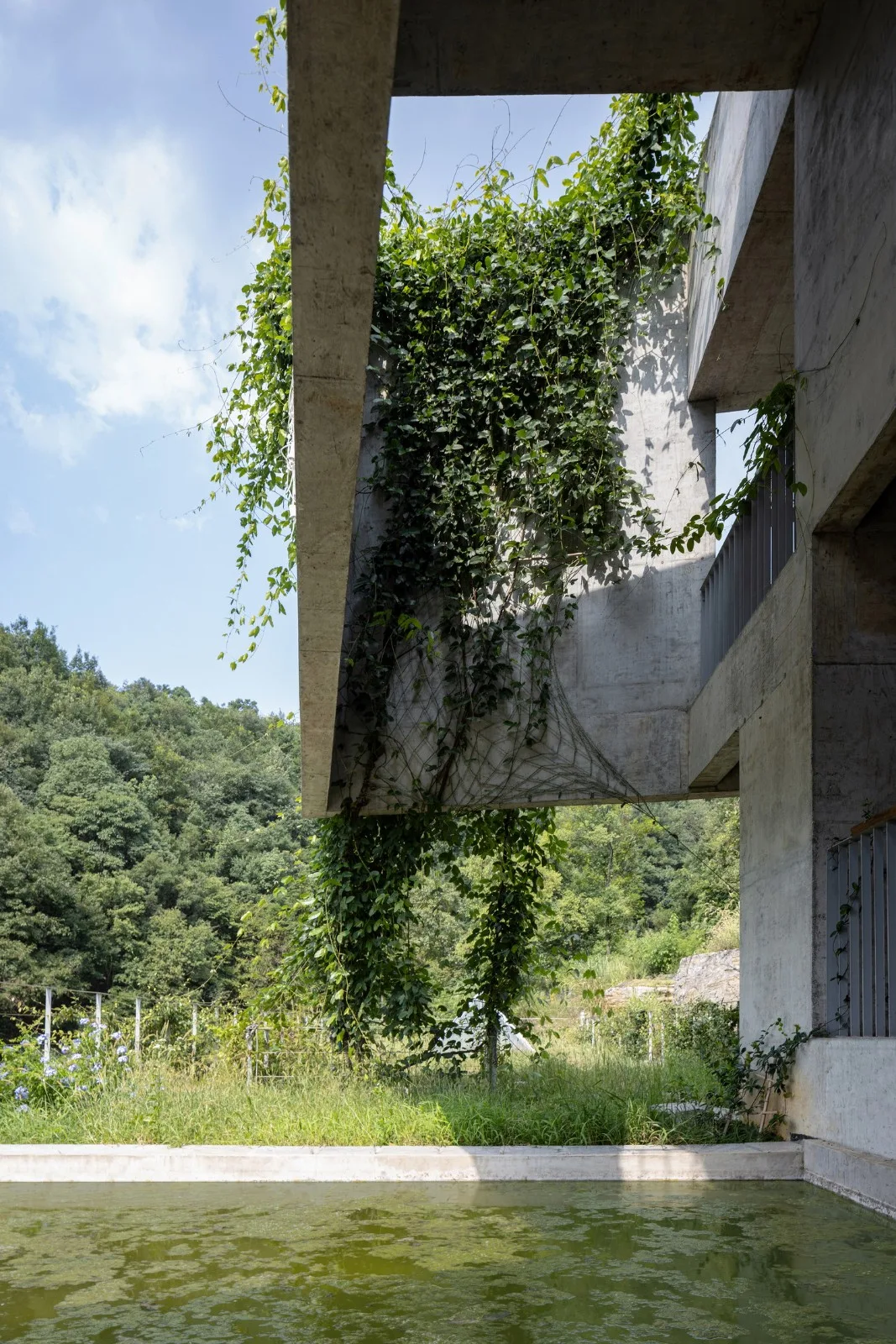
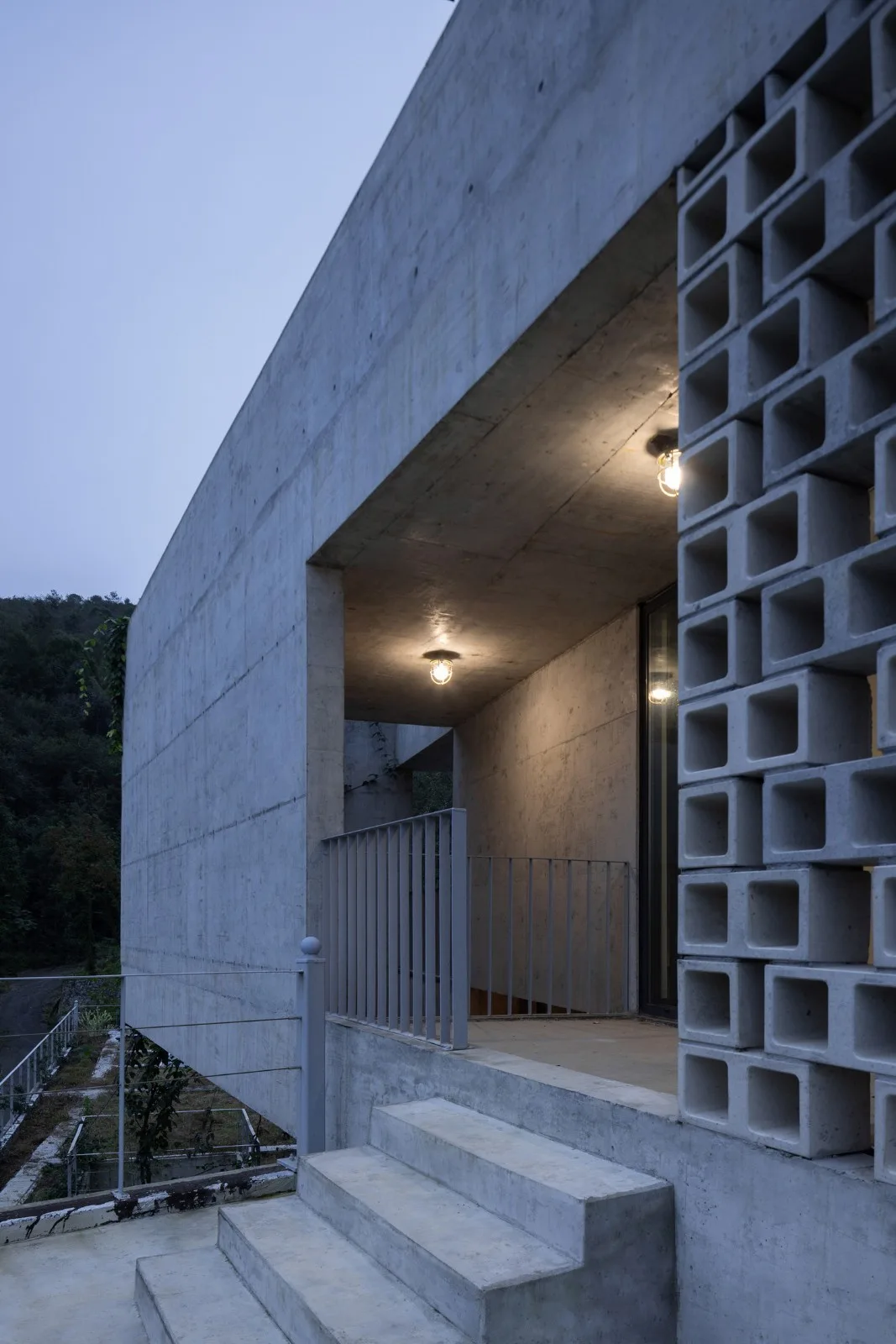
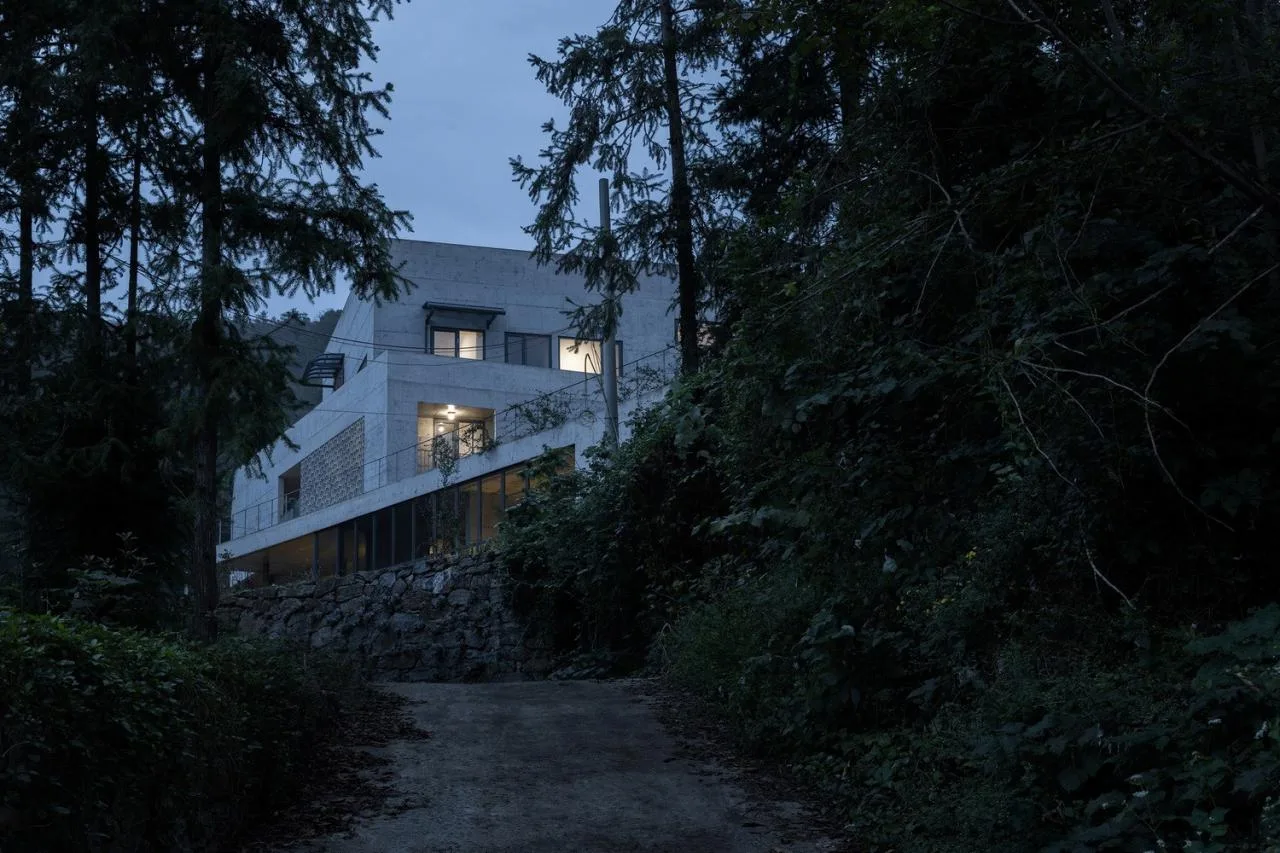
The two layers of “stone” blocks are rotated horizontally by 12 degrees, creating a second-floor balcony and a third-floor terrace through this structural displacement. The rotation also cleverly conceals the split air conditioning units within the gaps. The second floor can be accessed from the rear mountain side, with various spaces linked by stairs.
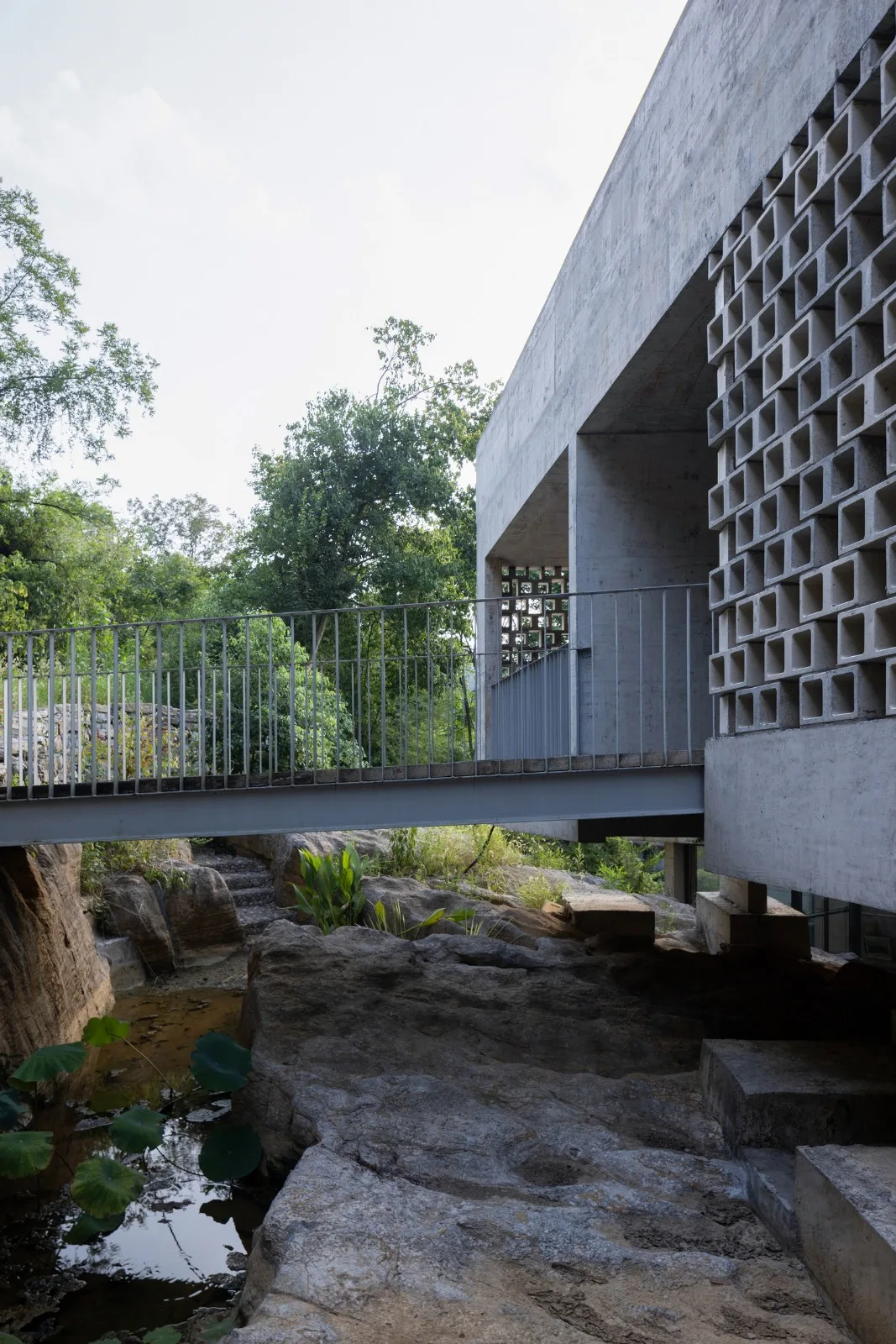
The balcony is partially enclosed with hollow bricks, allowing sunlight to enter while providing privacy. The third floor enjoys inherent privacy, with an open terrace that offers expansive distant views.
Construction Details
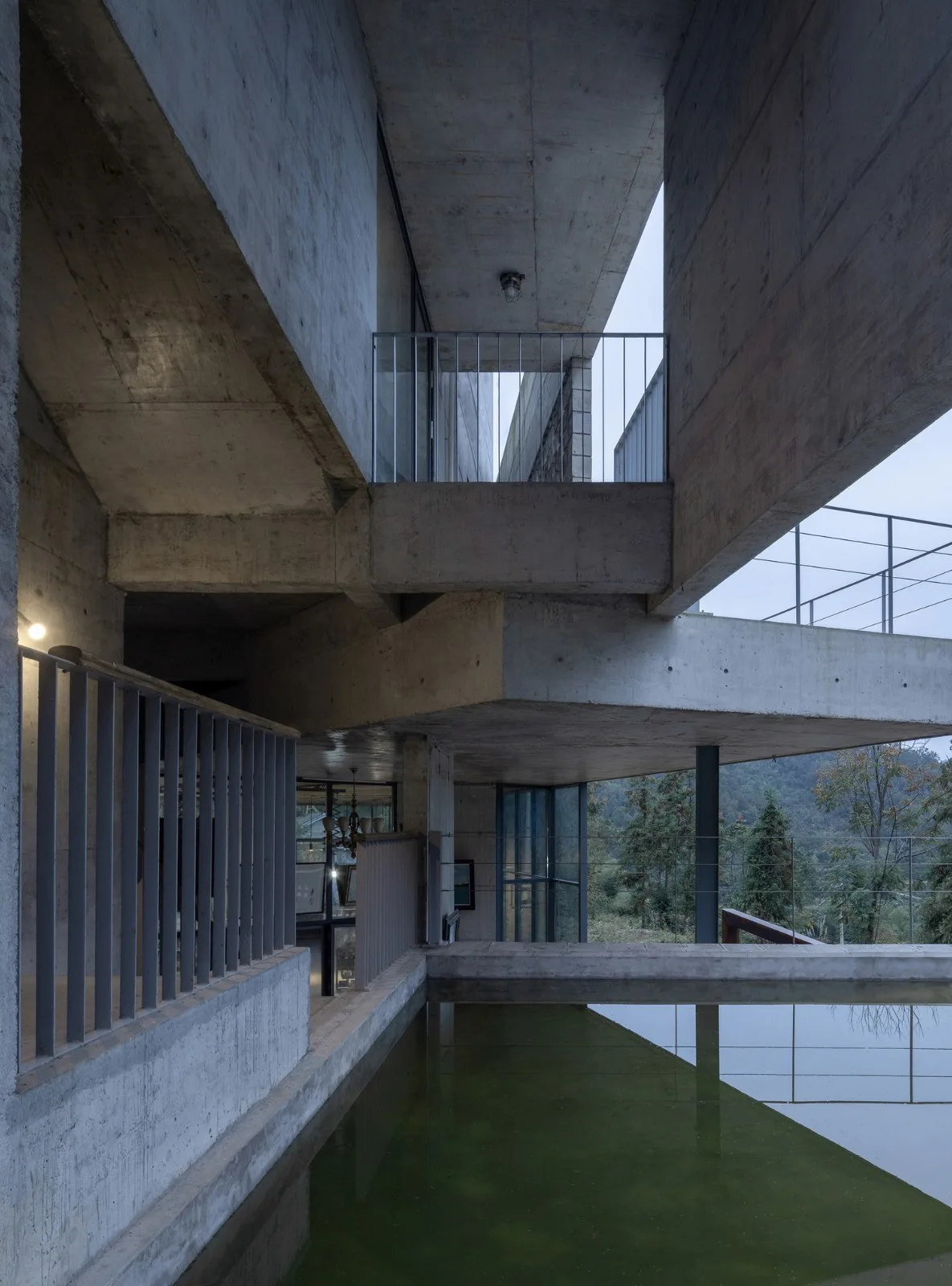
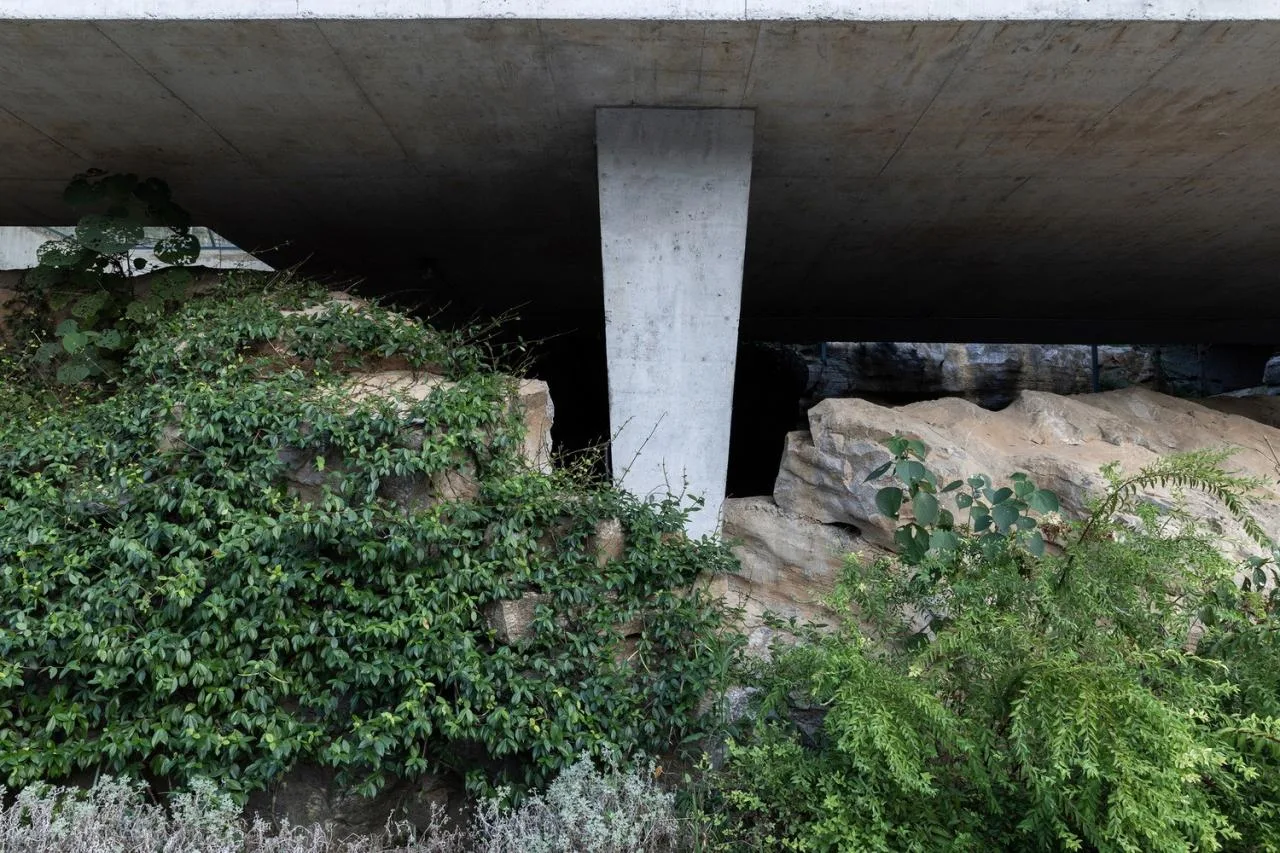
The exposed rocks at the foundation serve as a sturdy bearing layer and are integrated into the building’s structural system. However, their heights and forms vary—some structural columns rest directly on the stones, while others are positioned between them.
To minimize foundation excavation impact on the stone joints and reduce lateral thrust during rainy seasons, certain load-bearing components utilize lifted beams. The main structure features a shear wall system, enhancing interior spatial integrity. Non-load-bearing elements are also cast in place but with reduced reinforcement.
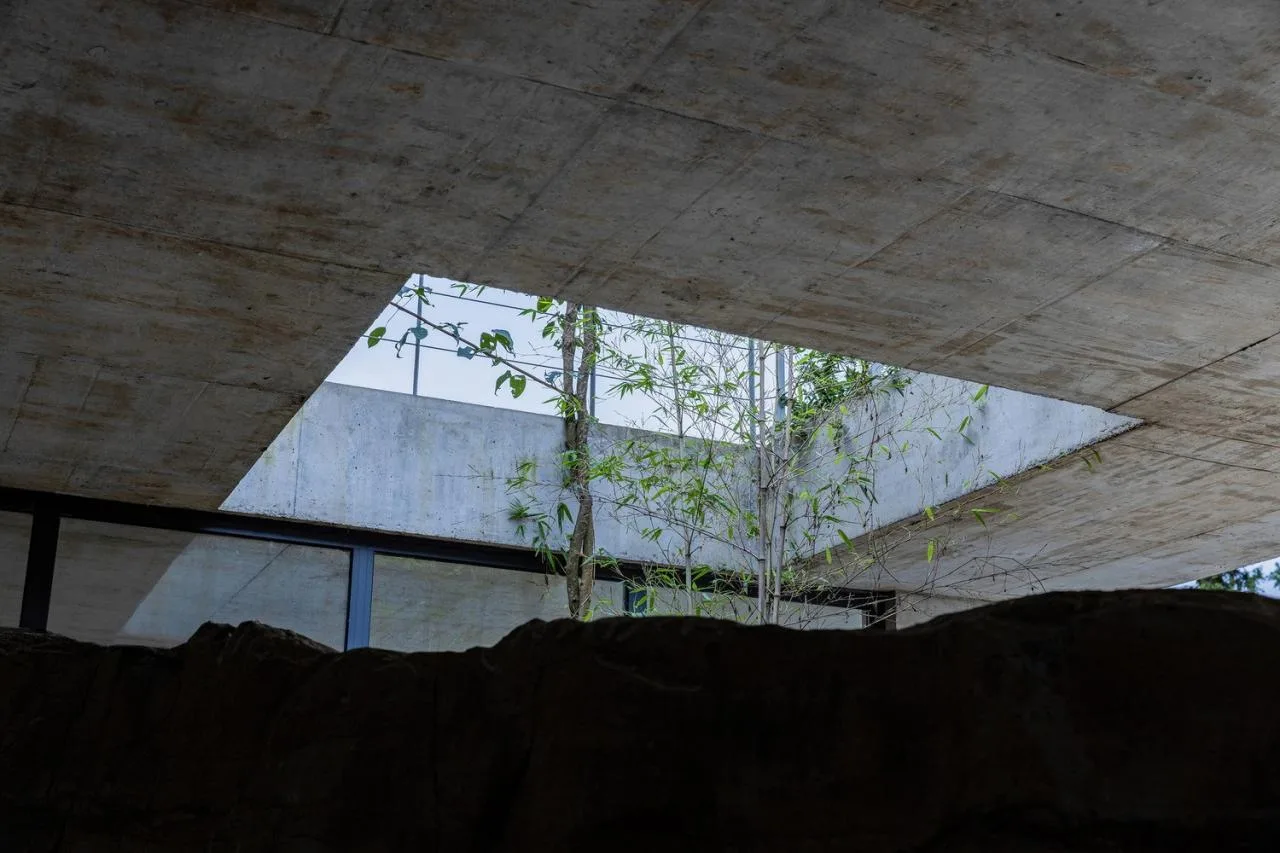
Steel columns at the entrance, contrasting with the stone elements, emphasize the building’s public character. Floor slabs over the original stone garden are supported by four concrete columns of varying shapes, creating a visual contrast with the grouted stones.
Integration with Nature
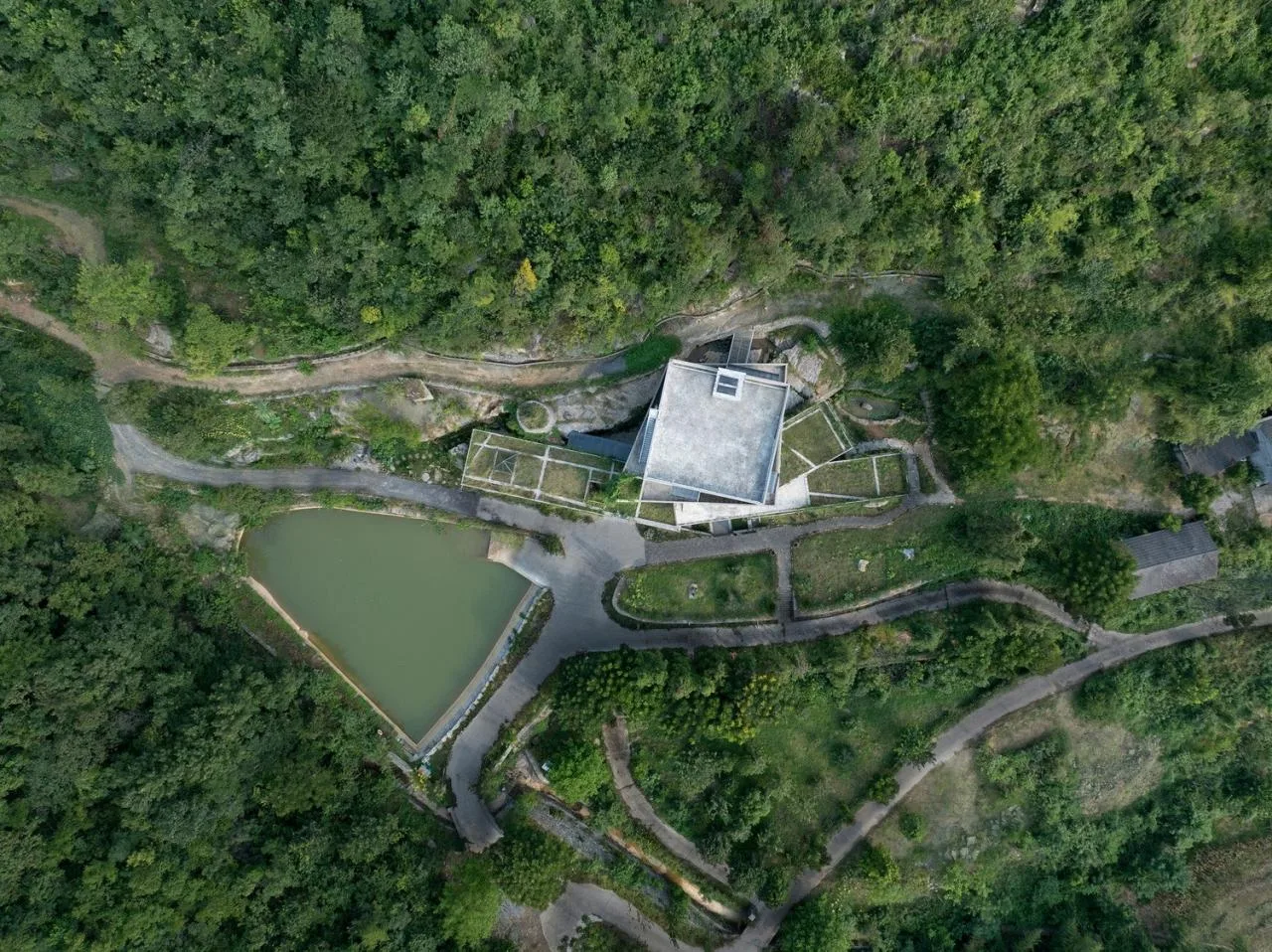
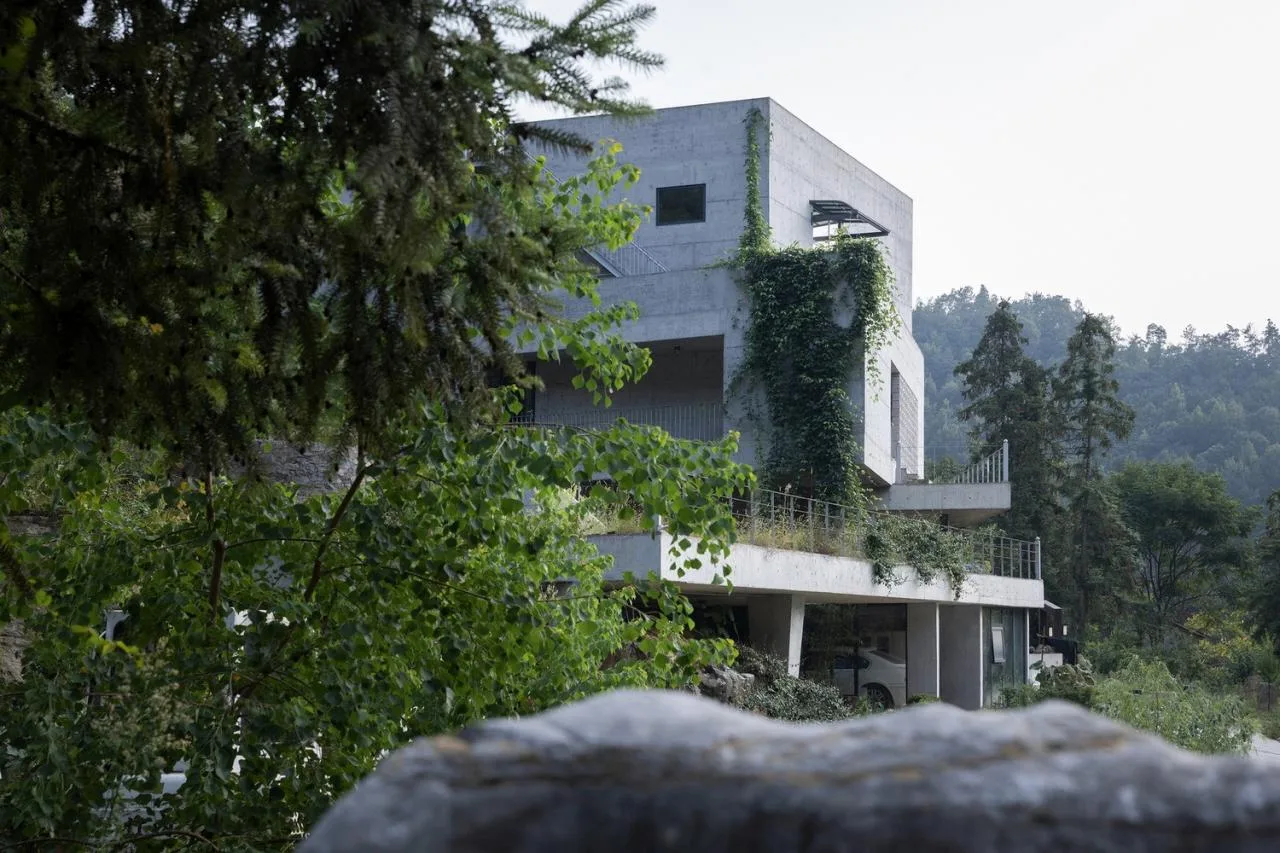
The building is constructed with cast-in-place concrete, with the first floor partially supported by stone columns. The roof is layered with soil that blends into the mountainside, creating a harmonious integration with the natural environment and softening the building’s visual mass.
Concrete walls act as a natural backdrop, forming real or imagined spaces through their rotated forms. Climbing vines cover these surfaces, softly blending the building into the mountain landscape. The upper, non-overlapping sections utilize lifted beams, giving the structure a layered appearance resembling stacked stones.
In response to local conditions, the building’s rough surfaces remain largely undecorated, embracing local materials and allowing the homeowners to adapt the space over time. Nature freely mingles with daily life—fallen leaves, insects, and birds move about naturally alongside the residents in the vegetable gardens, ponds, and fields.
Project Drawings
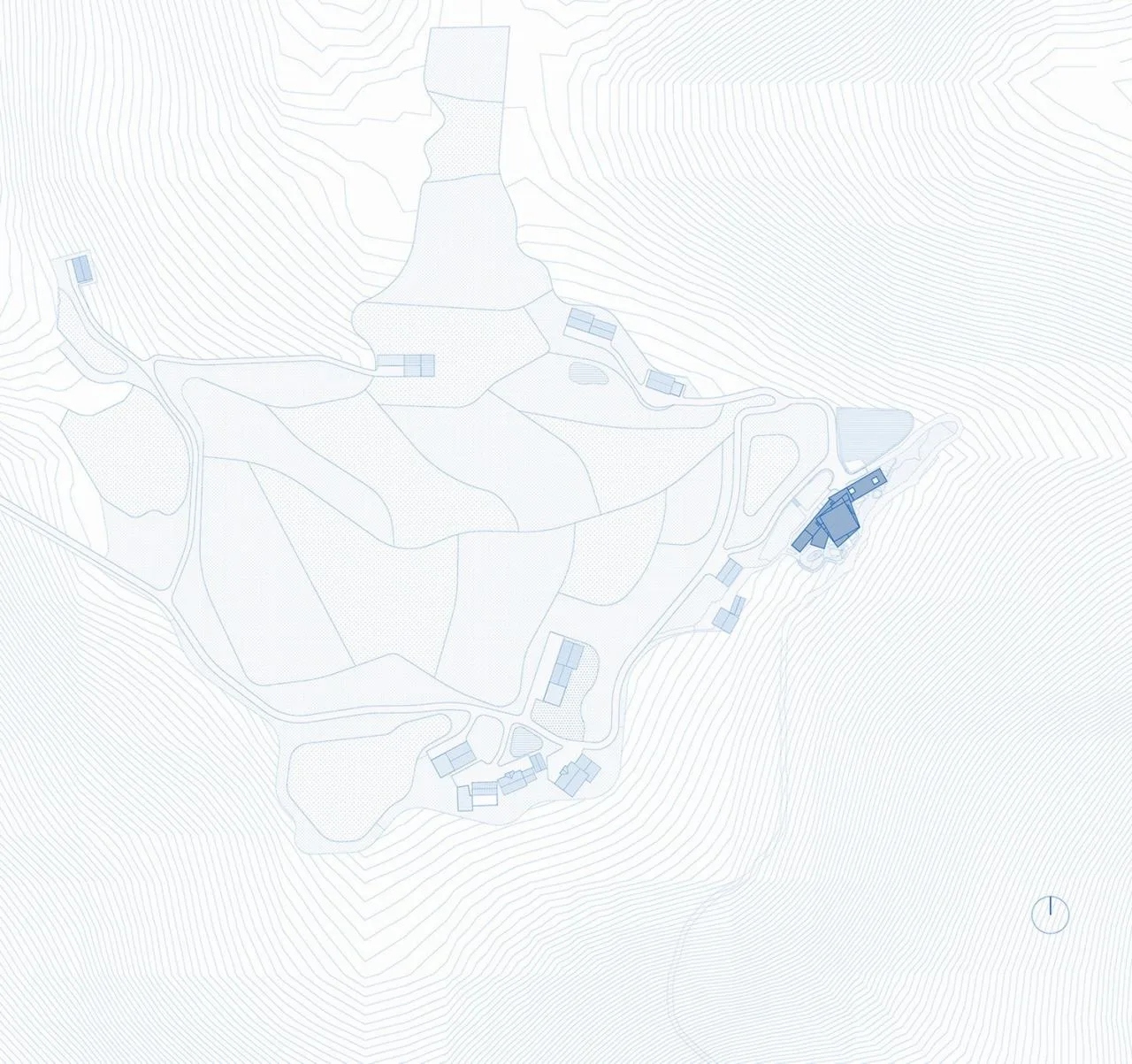
△ Base analysis chart
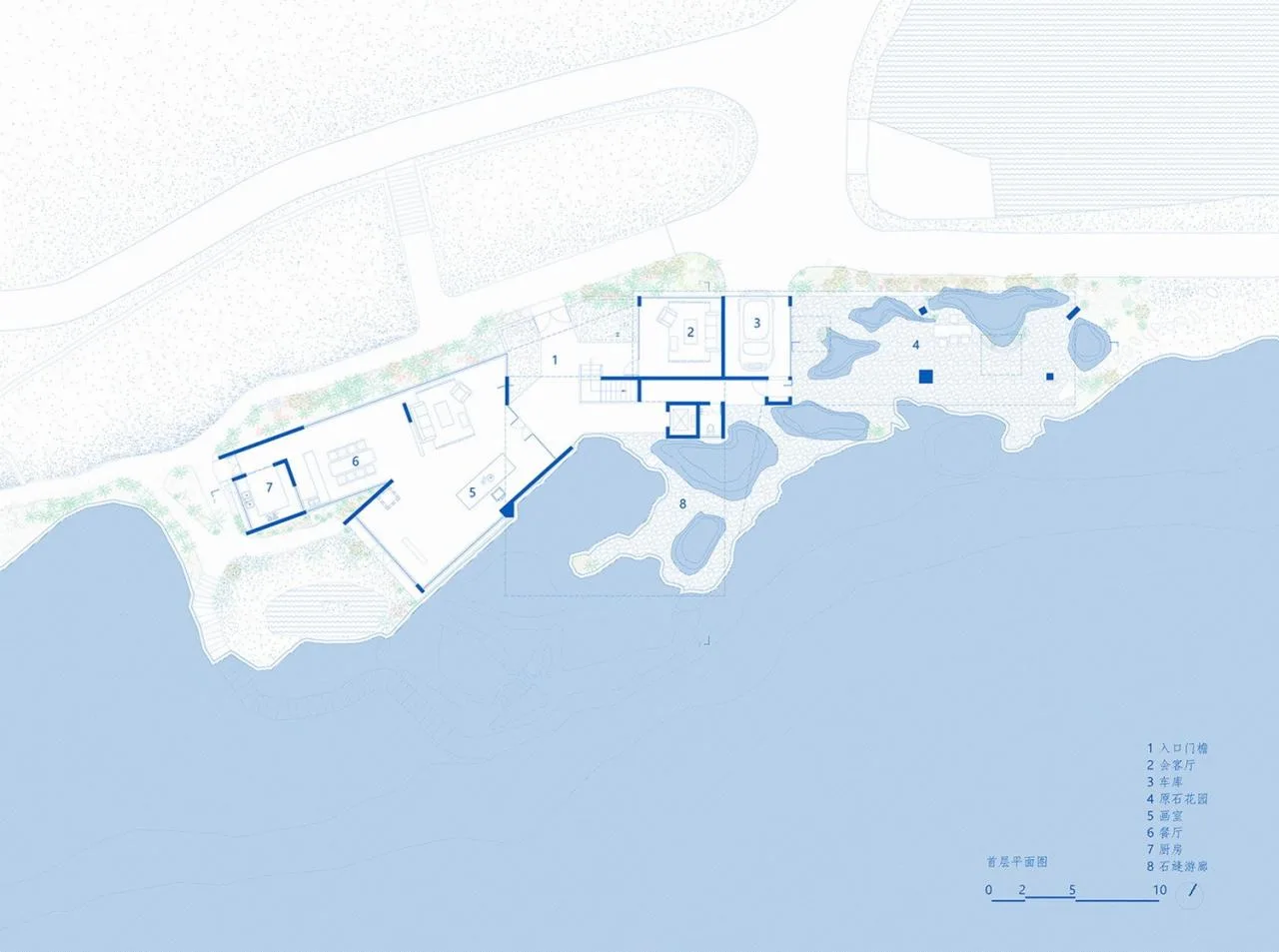
△ First floor plan
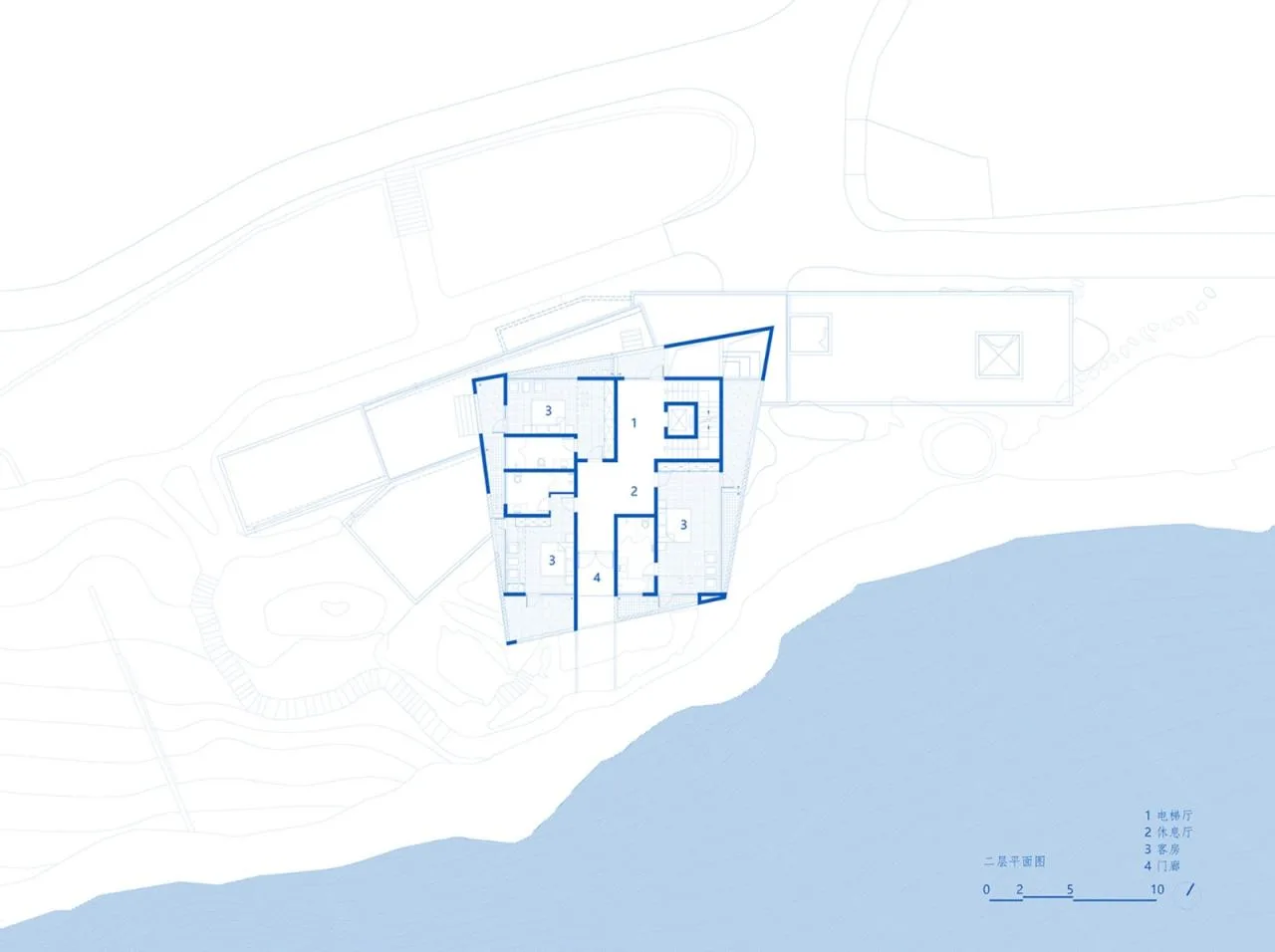
△ Second floor plan
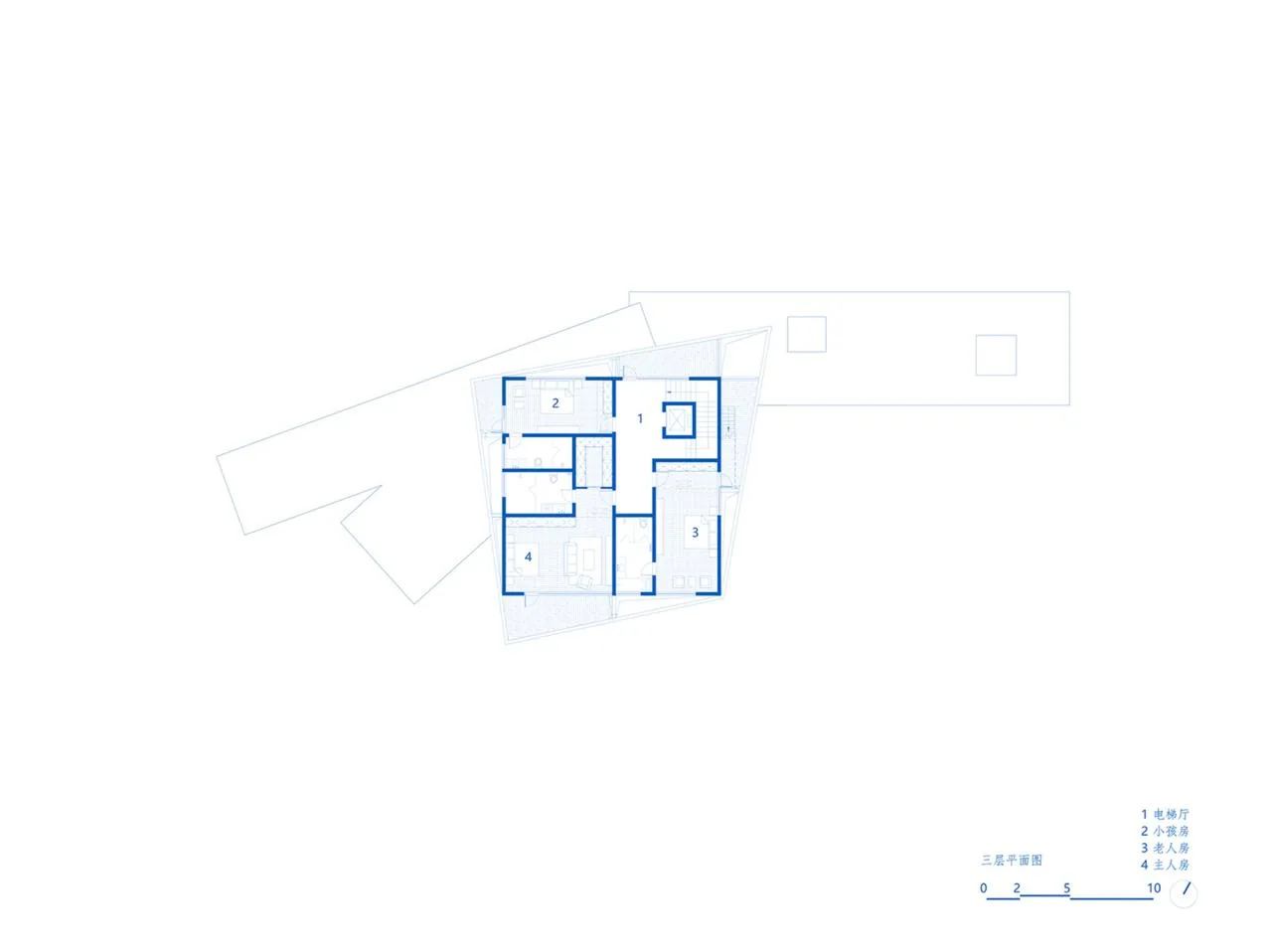
△ Third floor plan
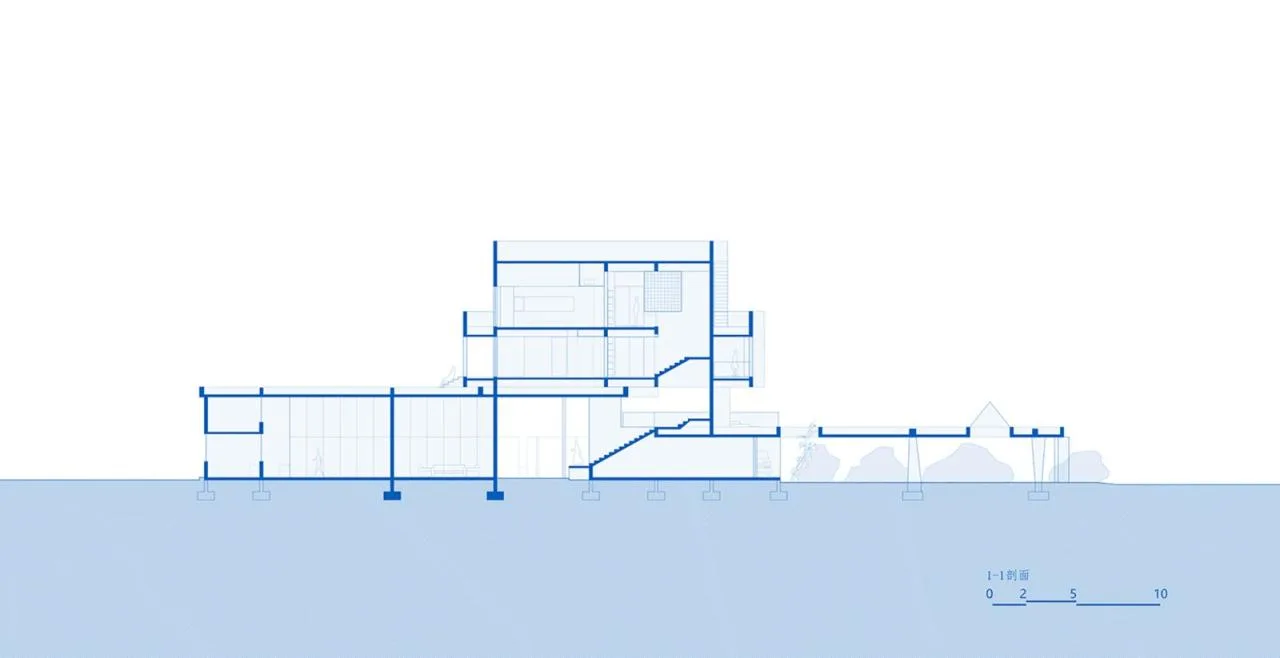
△ Section diagram
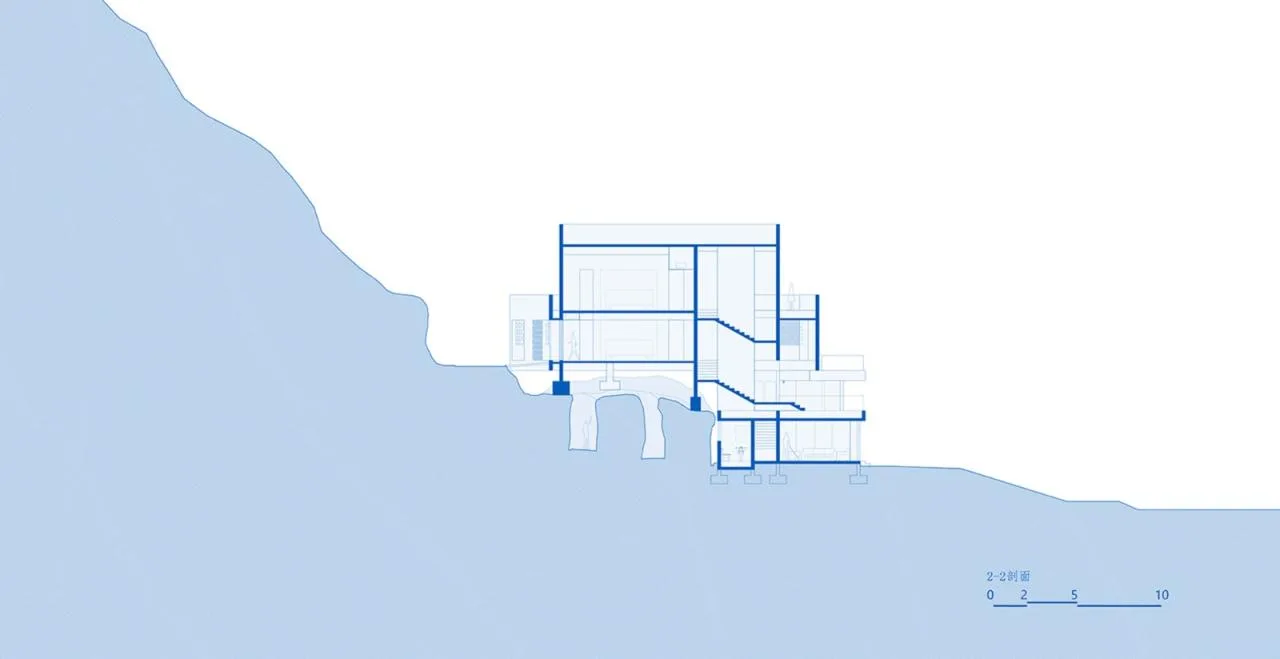
△ Section diagram
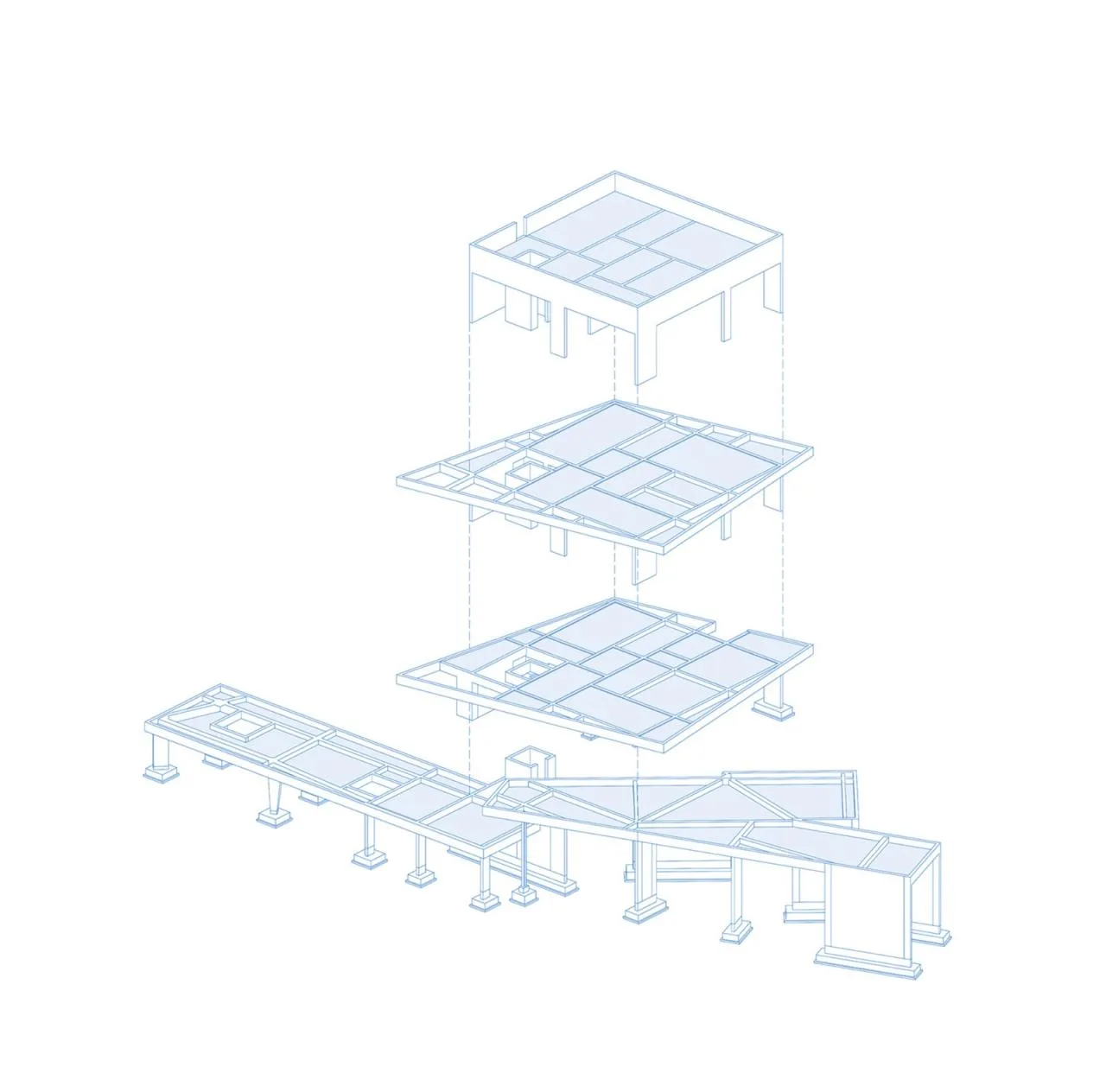
△ Explosion diagram
Project Information
Architect: Lowercase Architecture Firm
Area: 650 m²
Project Year: 2023
Photographer: He Lian / Literal Translation of Architectural Photography
Lead Designers: Li Wei, Yuan Yuan
Design Team: Lei Ling, Yuan Shuai, Jiang Peng, Ma Wei, Xiao Xudong, Fan Haitao, Wang Hao, Zhu Zhuqing, Li Liang, Tian Meng
Principal: Professor Xu
Structural Consultant: Wu Haisheng
Construction Manager: Li Chuncheng
Location: Yichang














Must log in before commenting!
Sign Up