
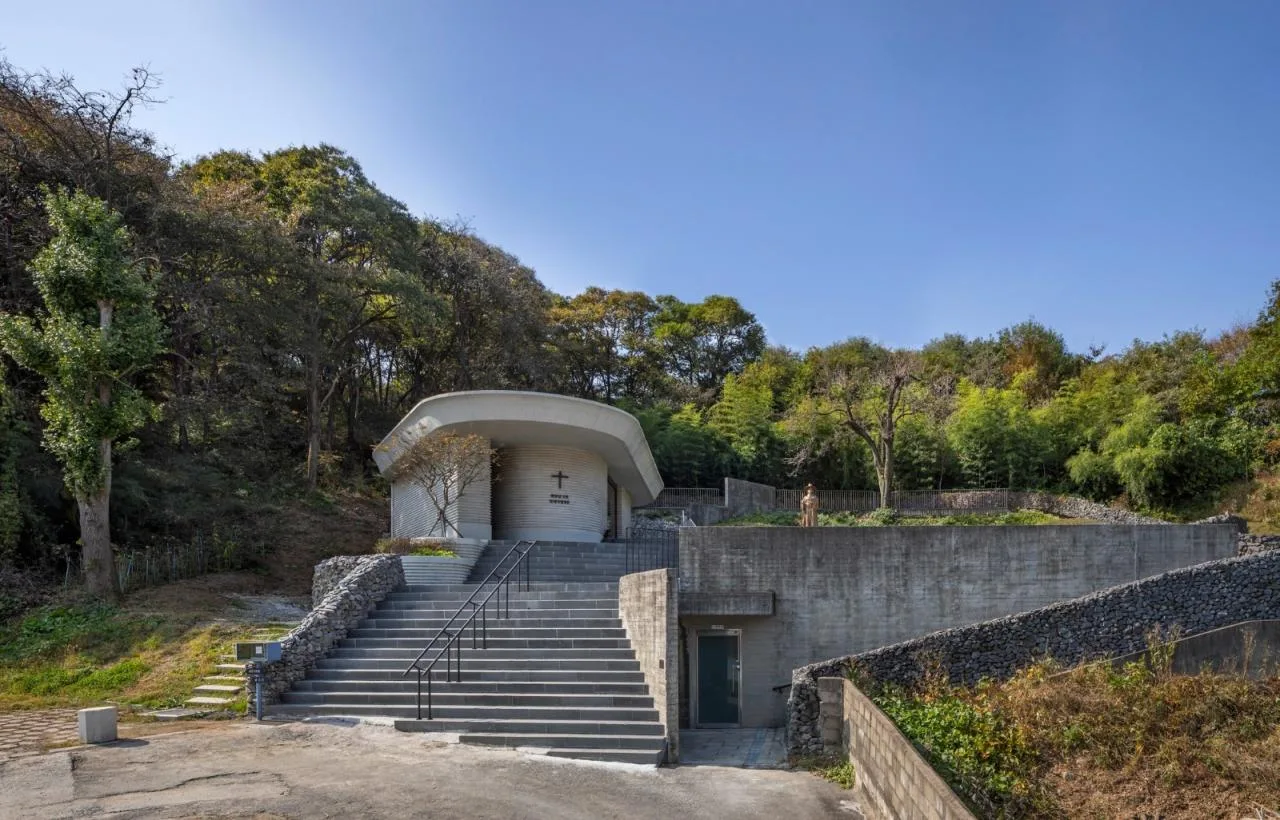
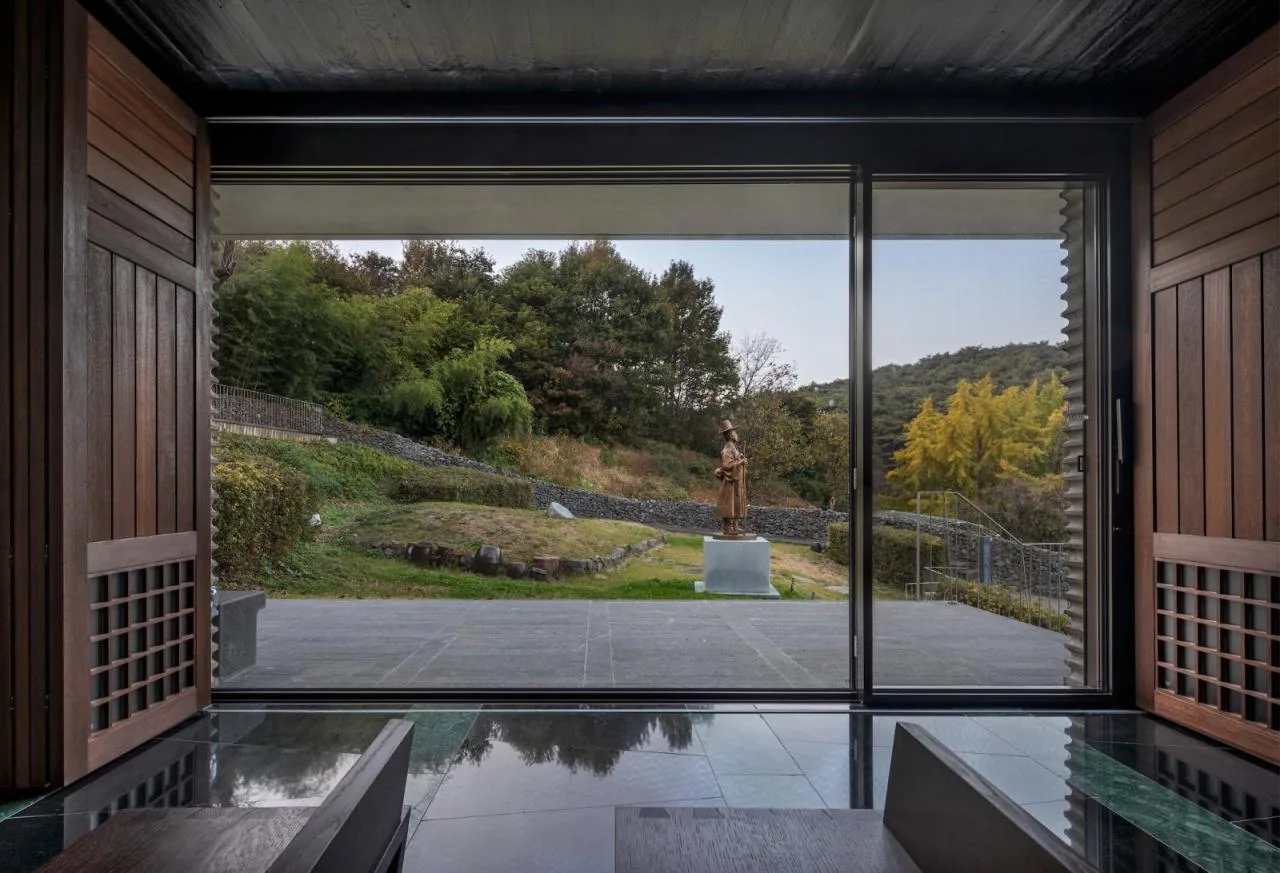
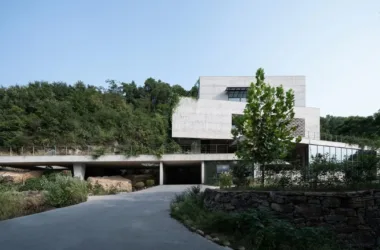
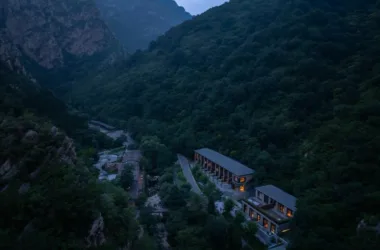
This modest chapel was constructed at the birthplace of Father Thomas Cui (1821-1861). In 2016, the Vatican officially declared Father Thomas Cui “venerable.” The chapel is a contemporary interpretation of the Zhongning Valley Cave, where he spent his later years. It serves as a public space open to people of all faiths, inviting introspection and reflection.
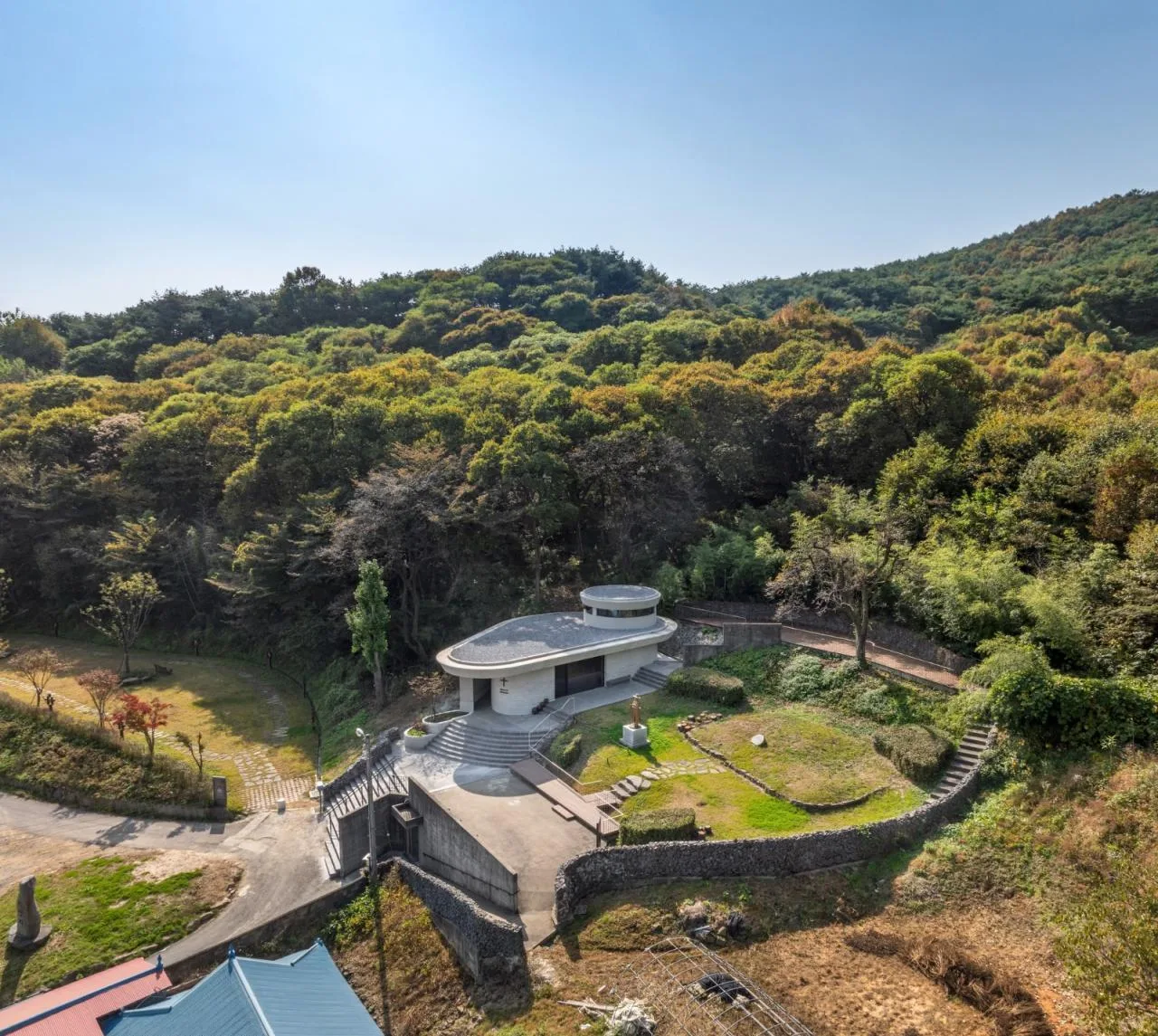
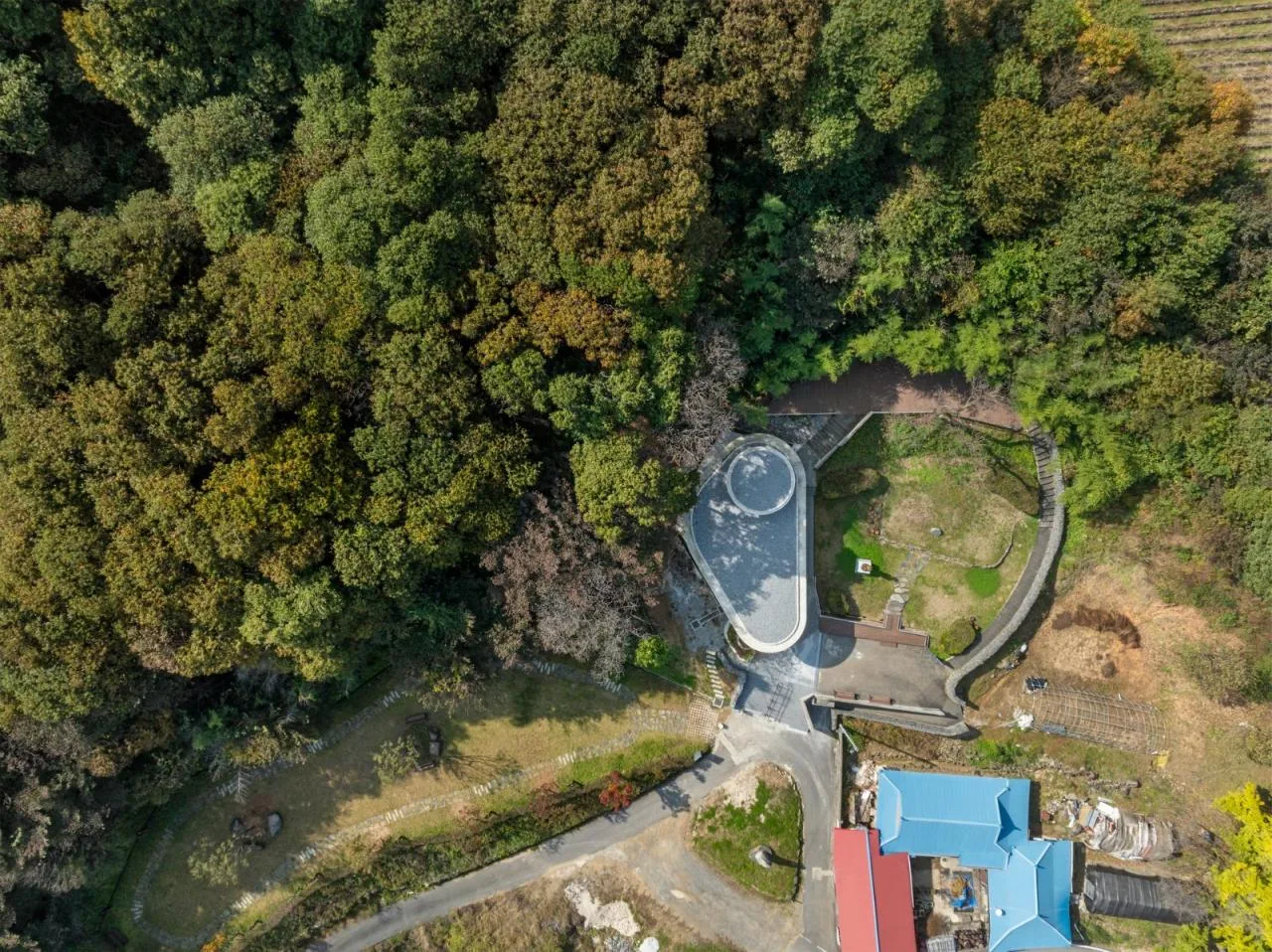
What sets this site apart from other sacred places? How will Father Cui’s legacy be honored here? These questions guided the architectural design. The site, dominated by a large persimmon tree, points the way to this holy land. Rather than constructing a large building to cover the entire site, the residential area is kept as small as possible to preserve most of the open space.
The design team sought to recreate the atmosphere of the priest’s past life within the chapel. Much like the dark, unlit paths he once traversed at night, the chapel embraces a dim, contemplative environment over bright lighting, enhancing the spiritual experience.
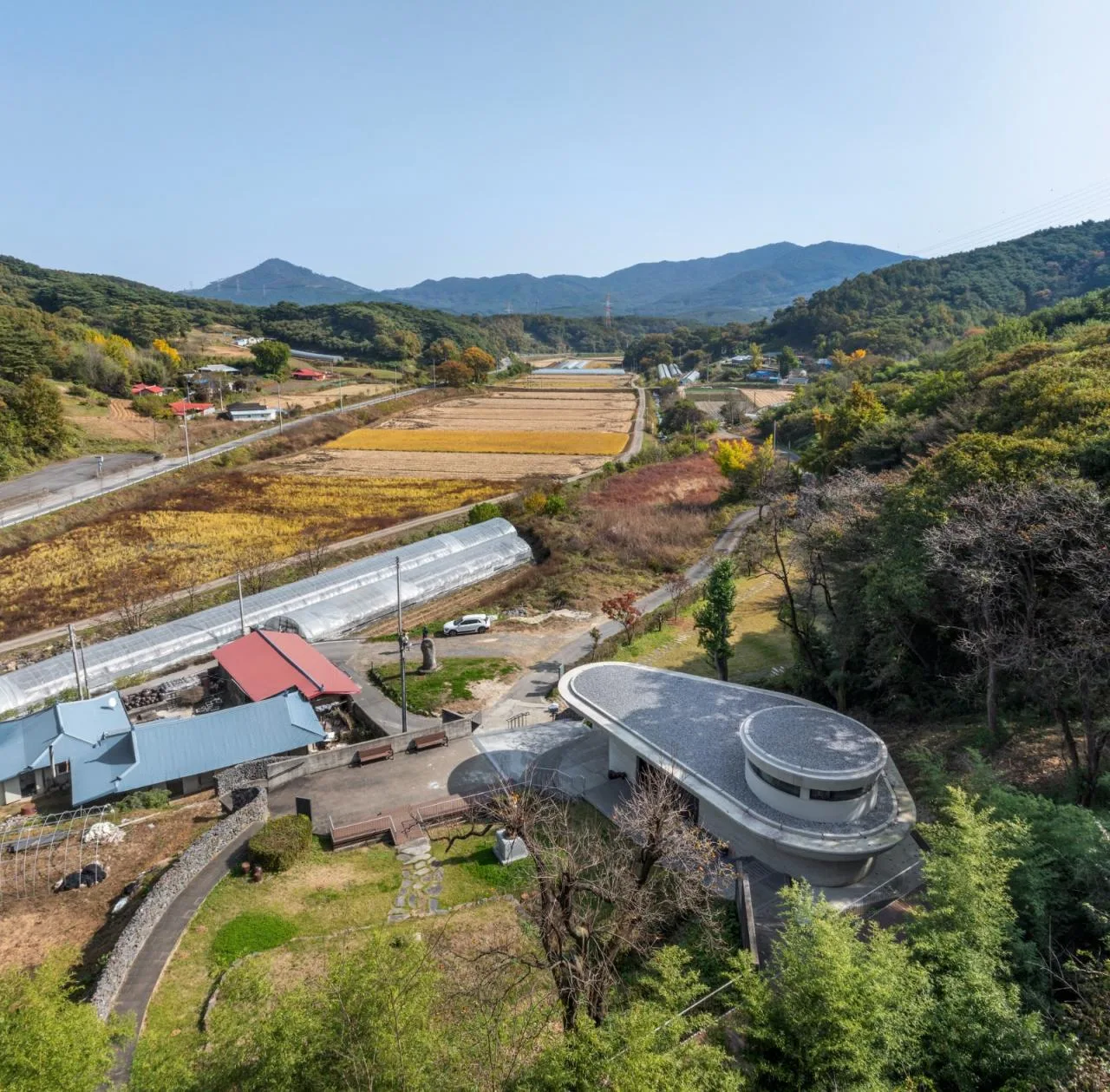
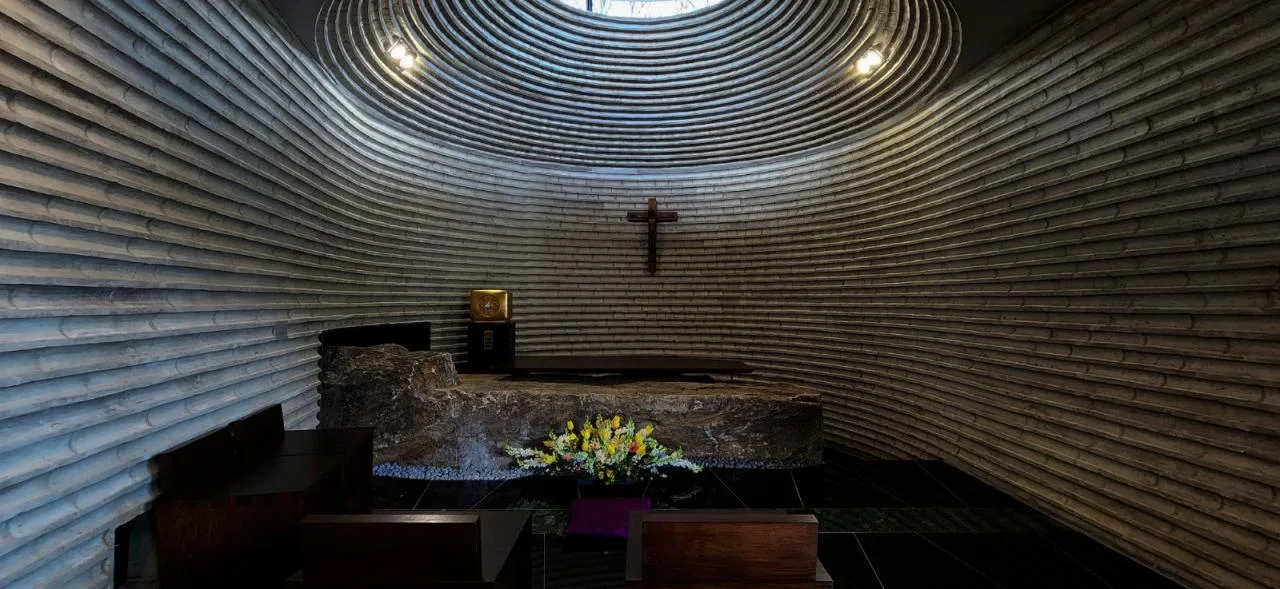
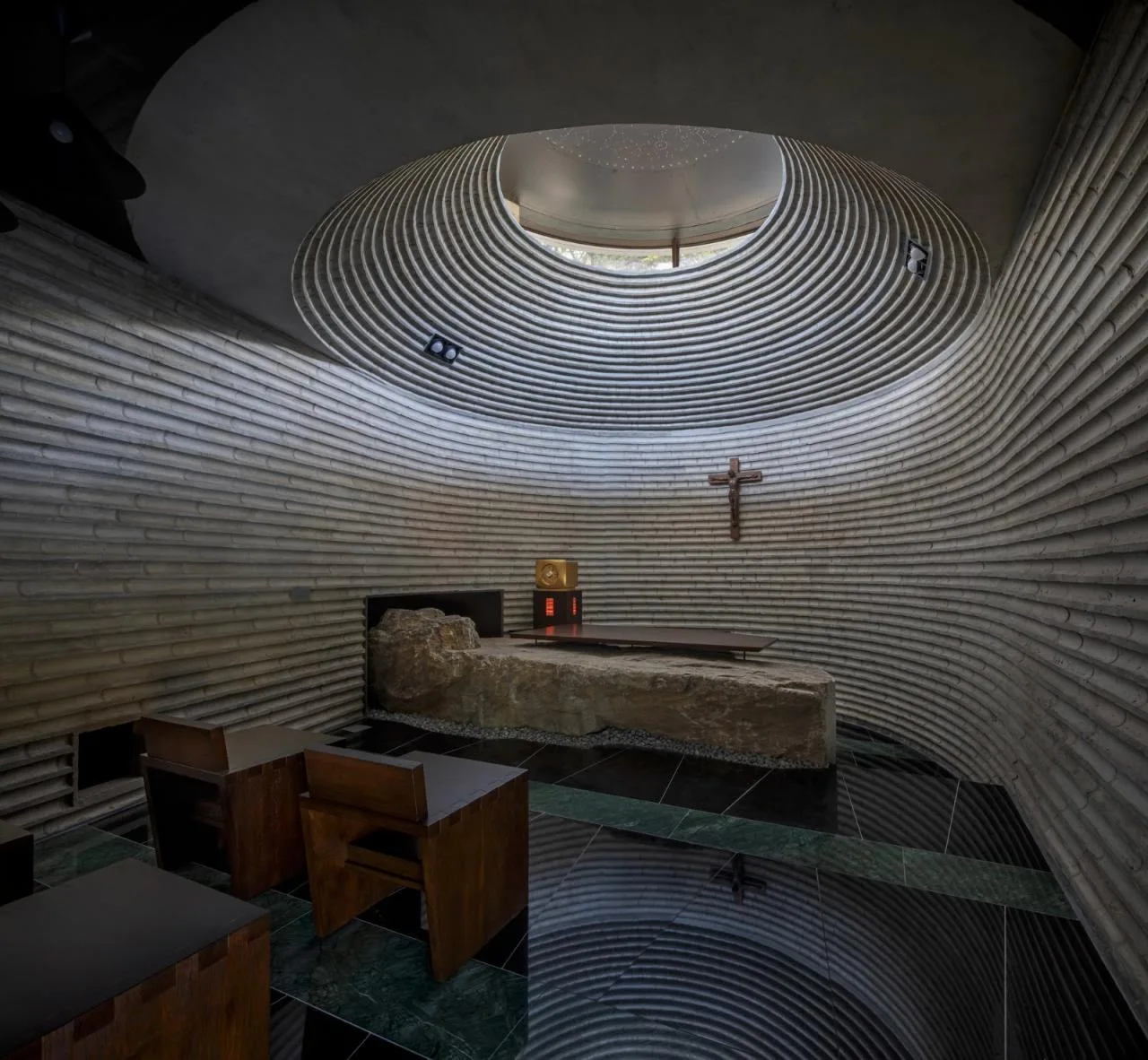
The Father Thomas Cui Birth Memorial Chapel evokes the Zhongning Valley Cave’s enclosed, cave-like atmosphere with its rough interior, subdued lighting, and a lowered altar. The chapel is a simple, compact yet spacious structure, oriented toward the priest’s birthplace. Visitors are first greeted by the long eaves, an important sustainable feature and structural element inspired by traditional Korean roof eaves.
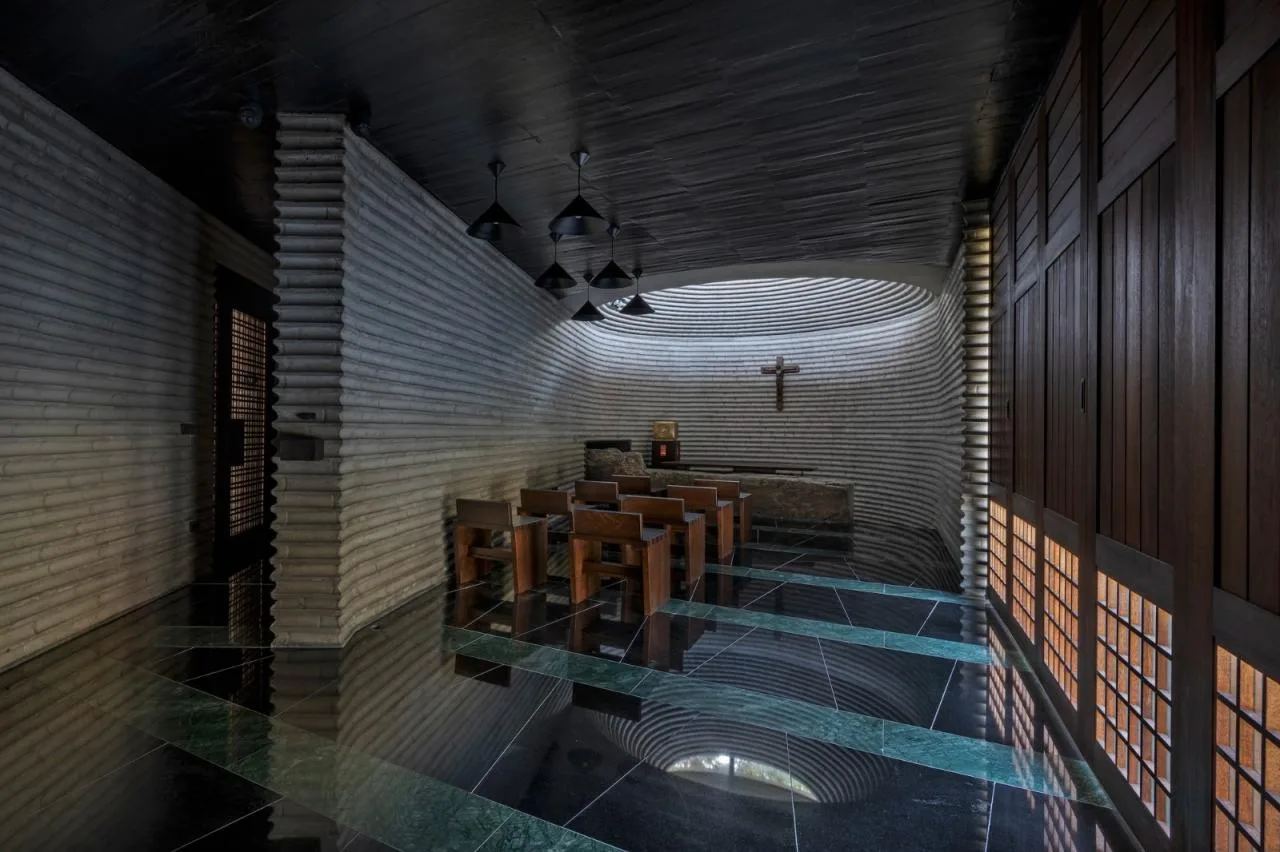
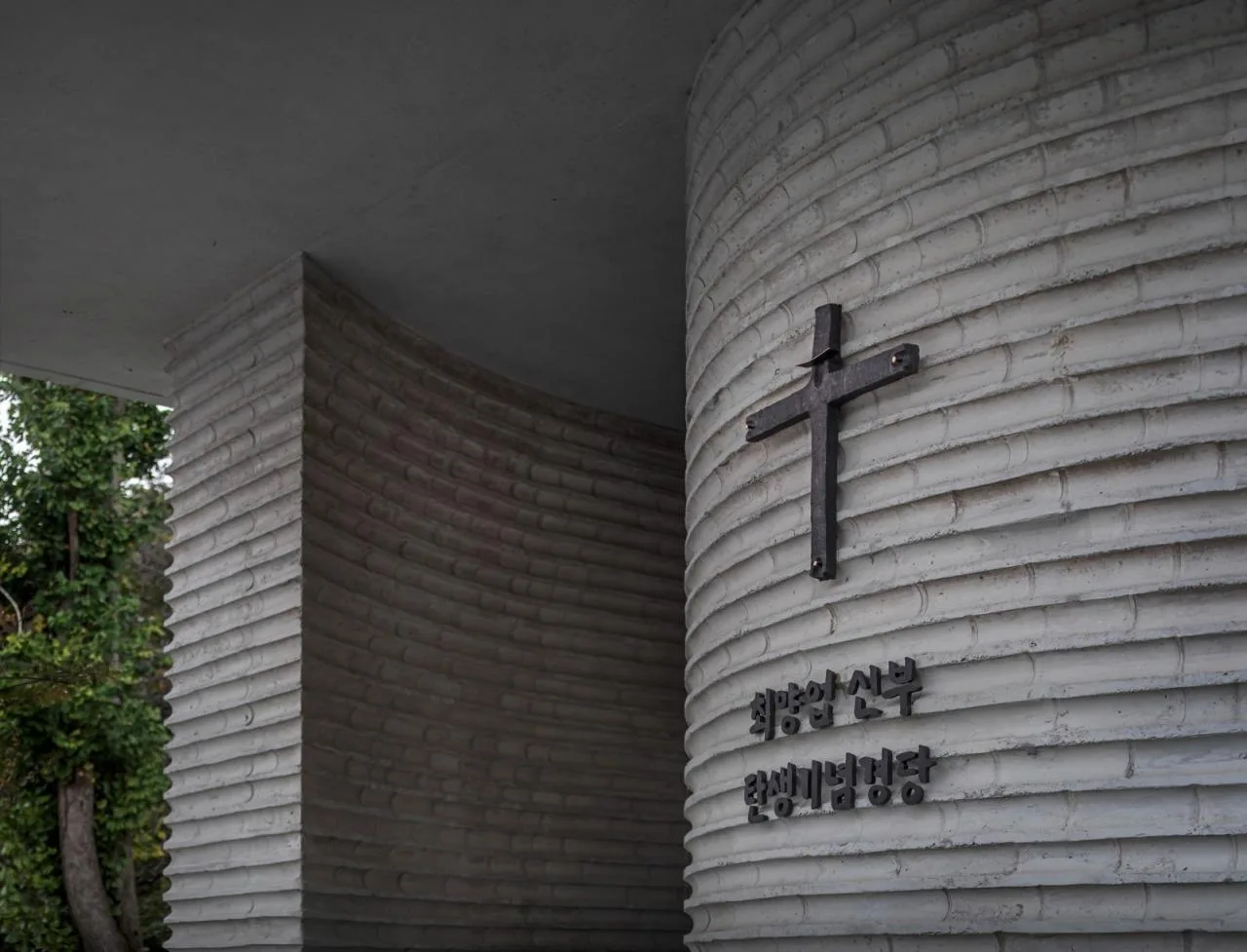
The ceiling features the “Cheonsang Yeolcha Bunyajido,” a star chart from the Goryeo era, illustrating Father Cui’s countless nights spent gazing at the stars. Over eleven years, Father Cui traveled approximately 90,000 miles (about 35,000 kilometers) on foot. This celestial map, known as the “Celestial Chart Stone,” symbolized his companions during these nighttime journeys. The stone altar beneath is composed of rocks originally from the courtyard of the Darakgol holy priest’s residence.
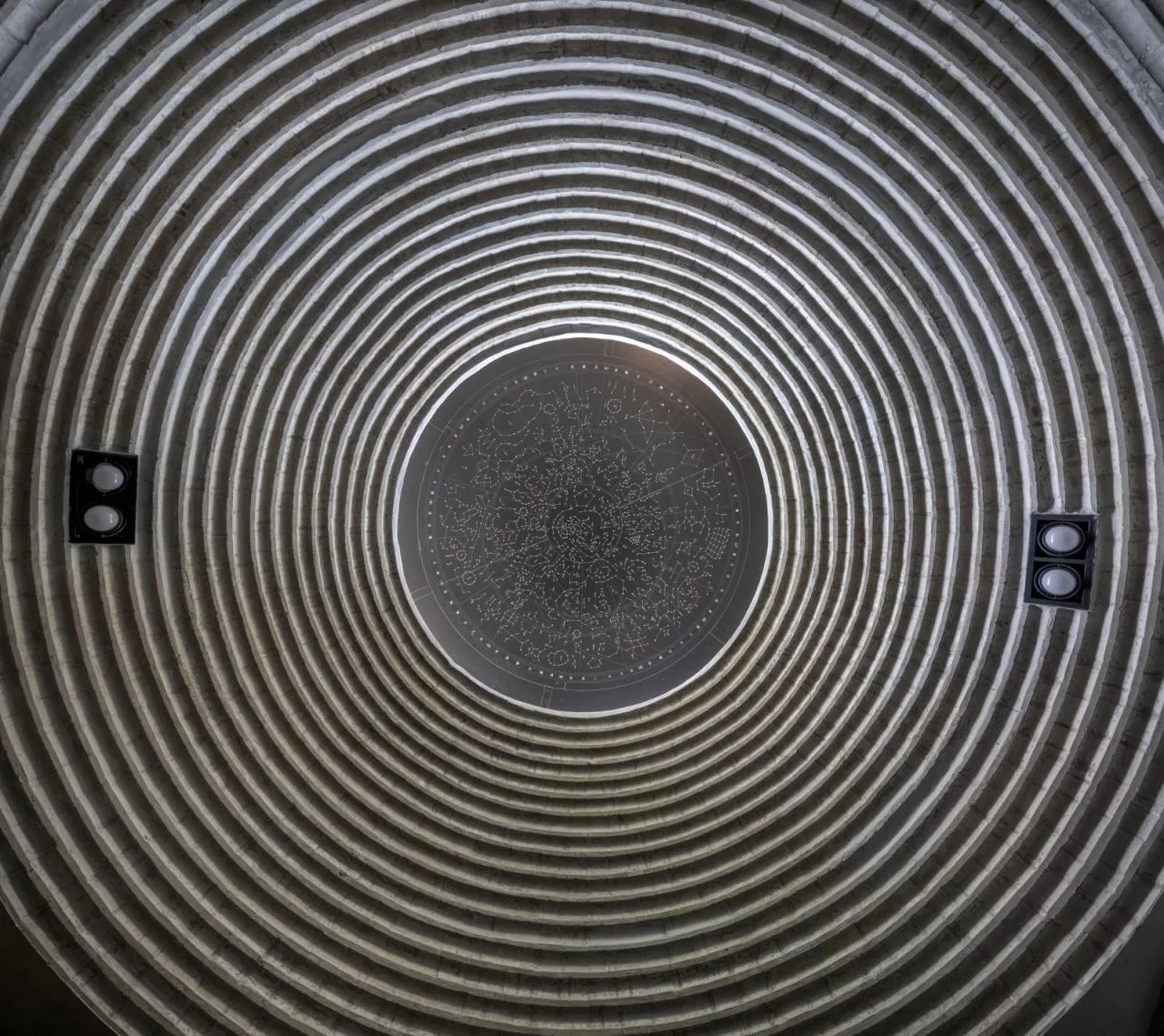
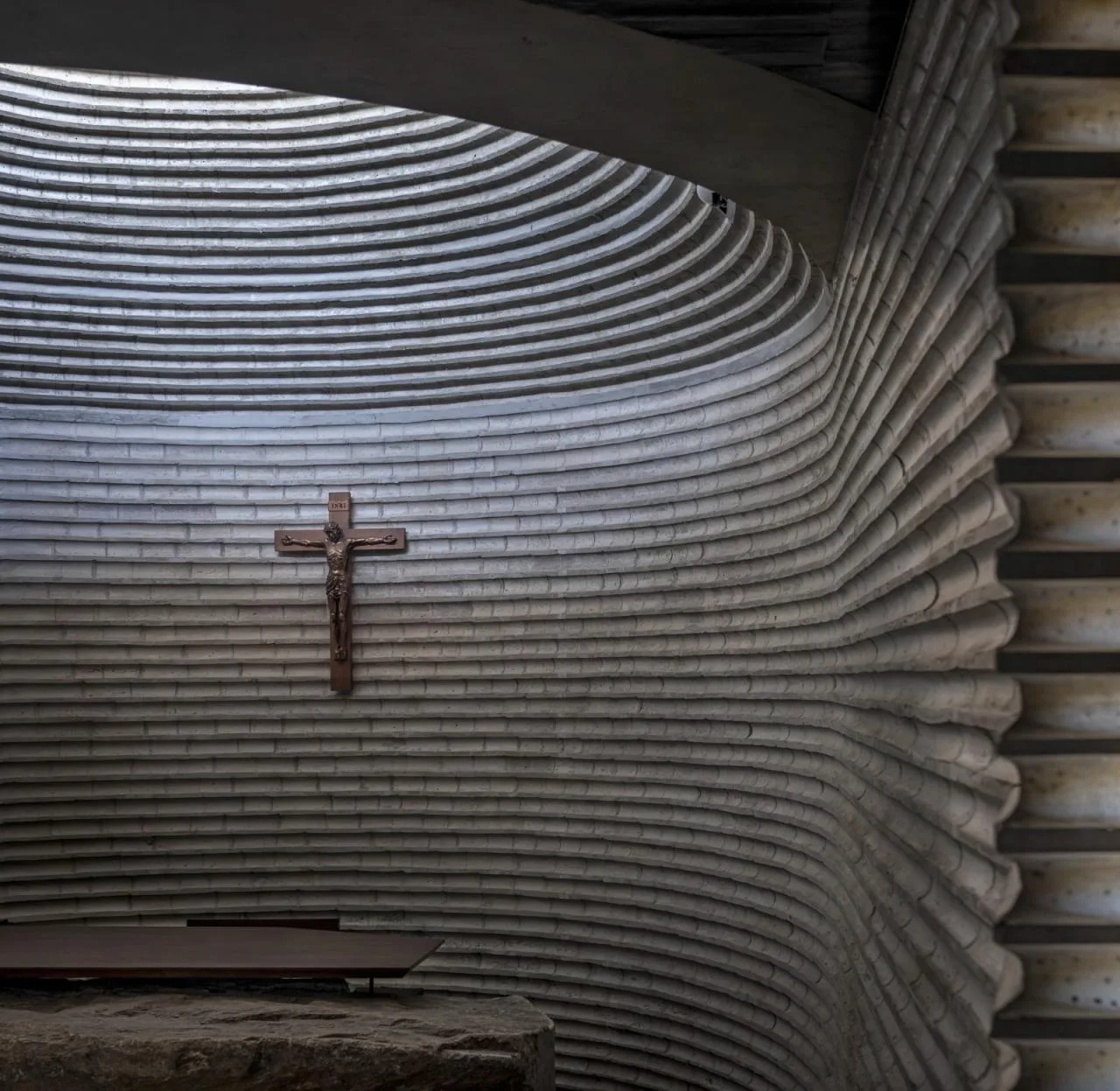
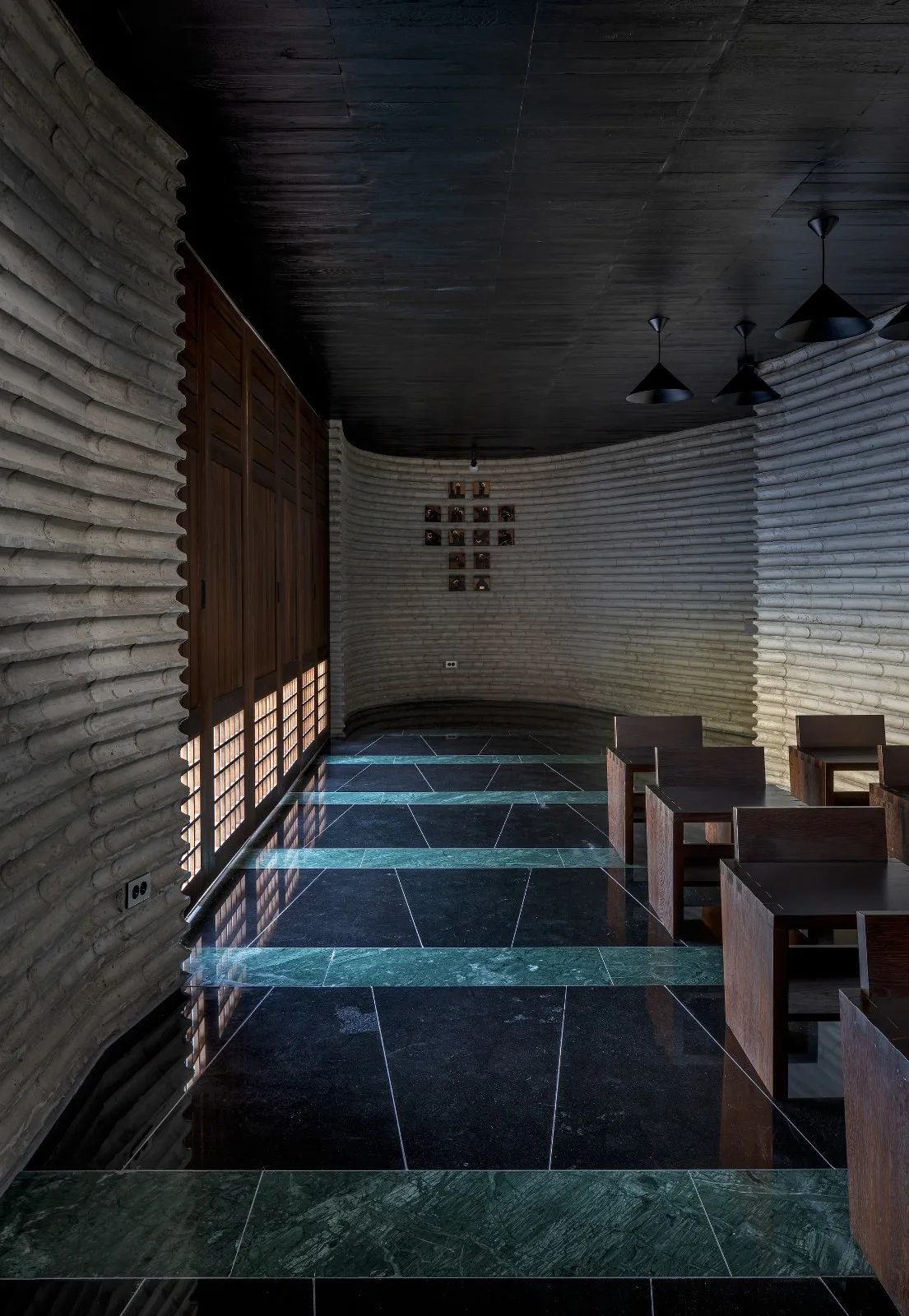
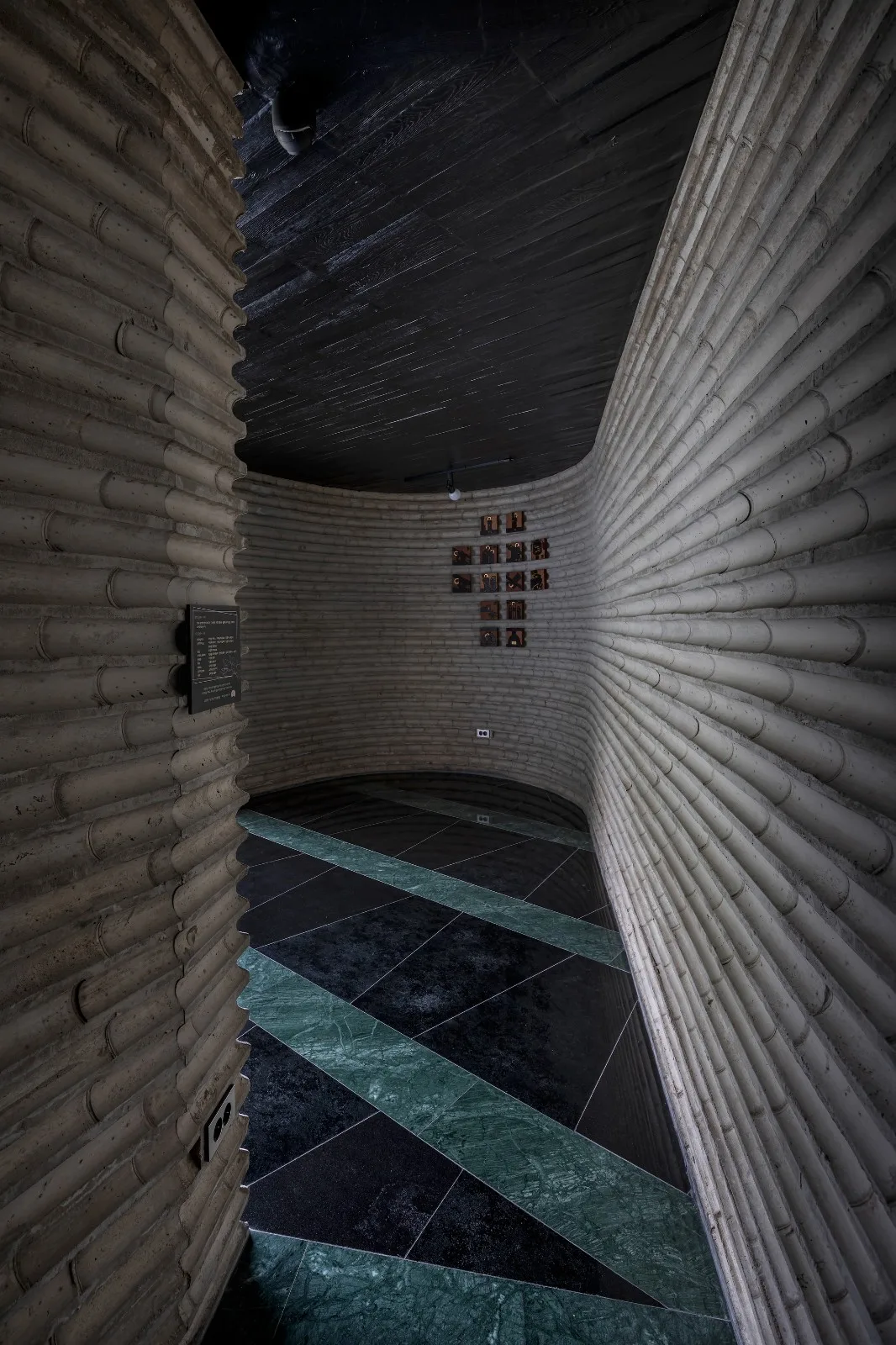
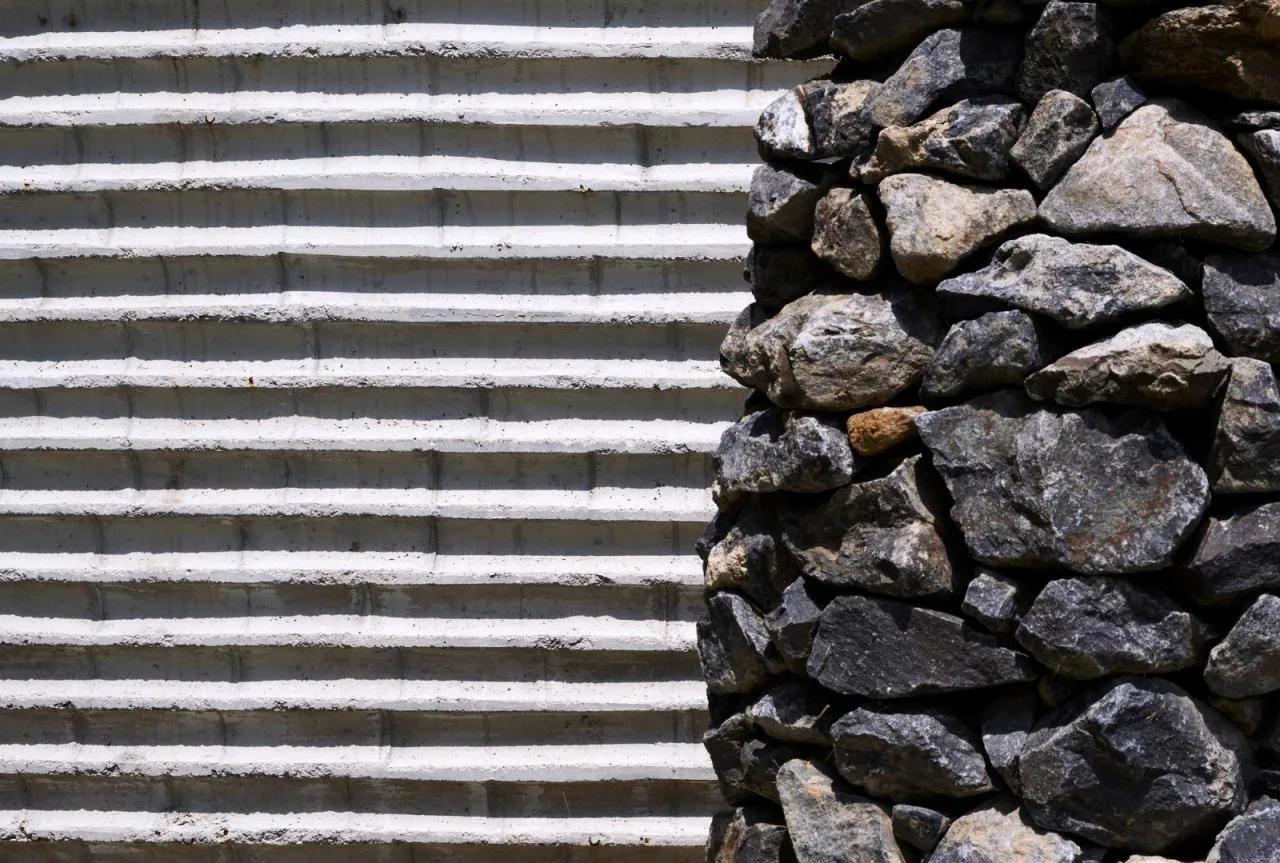
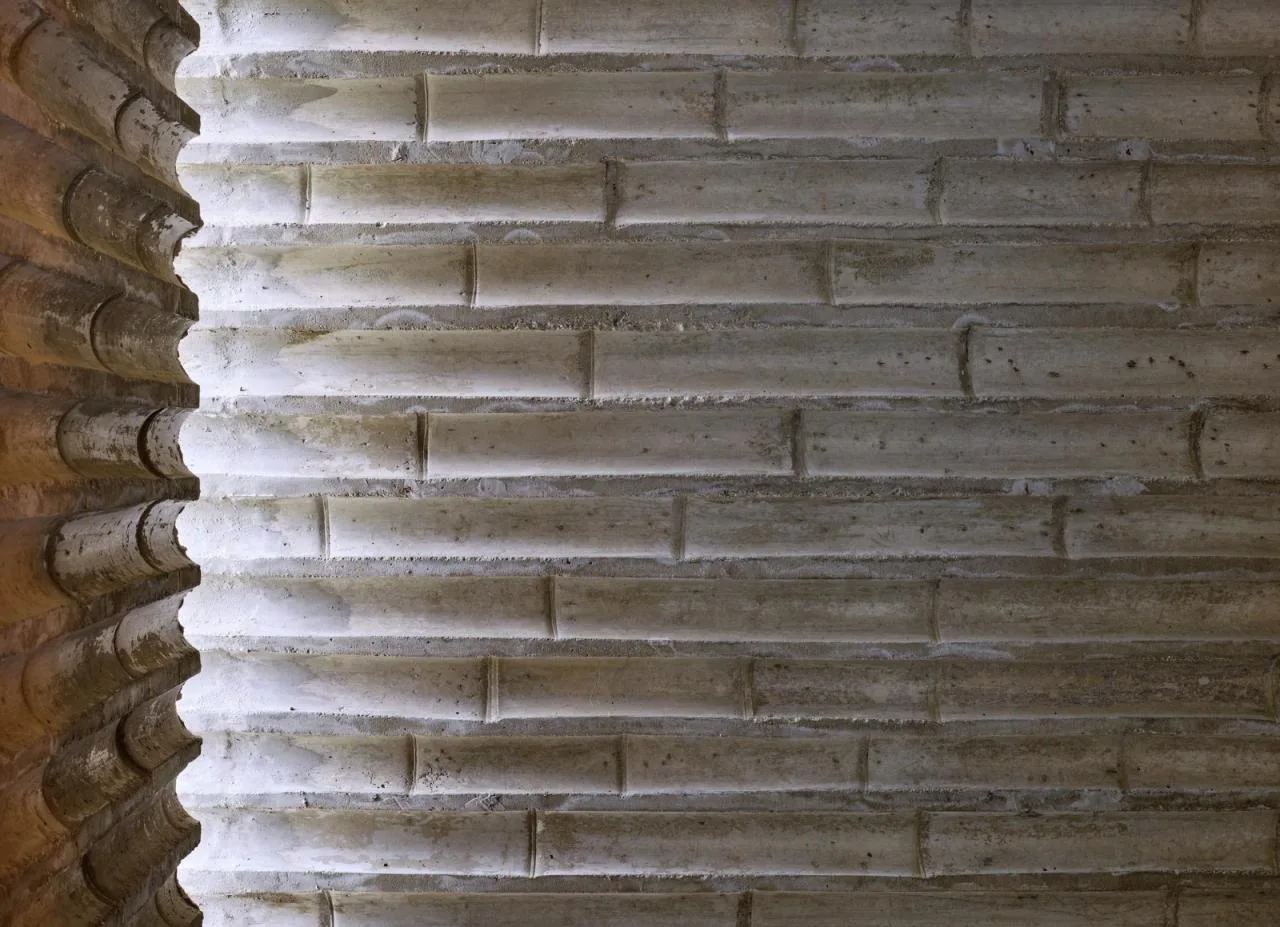
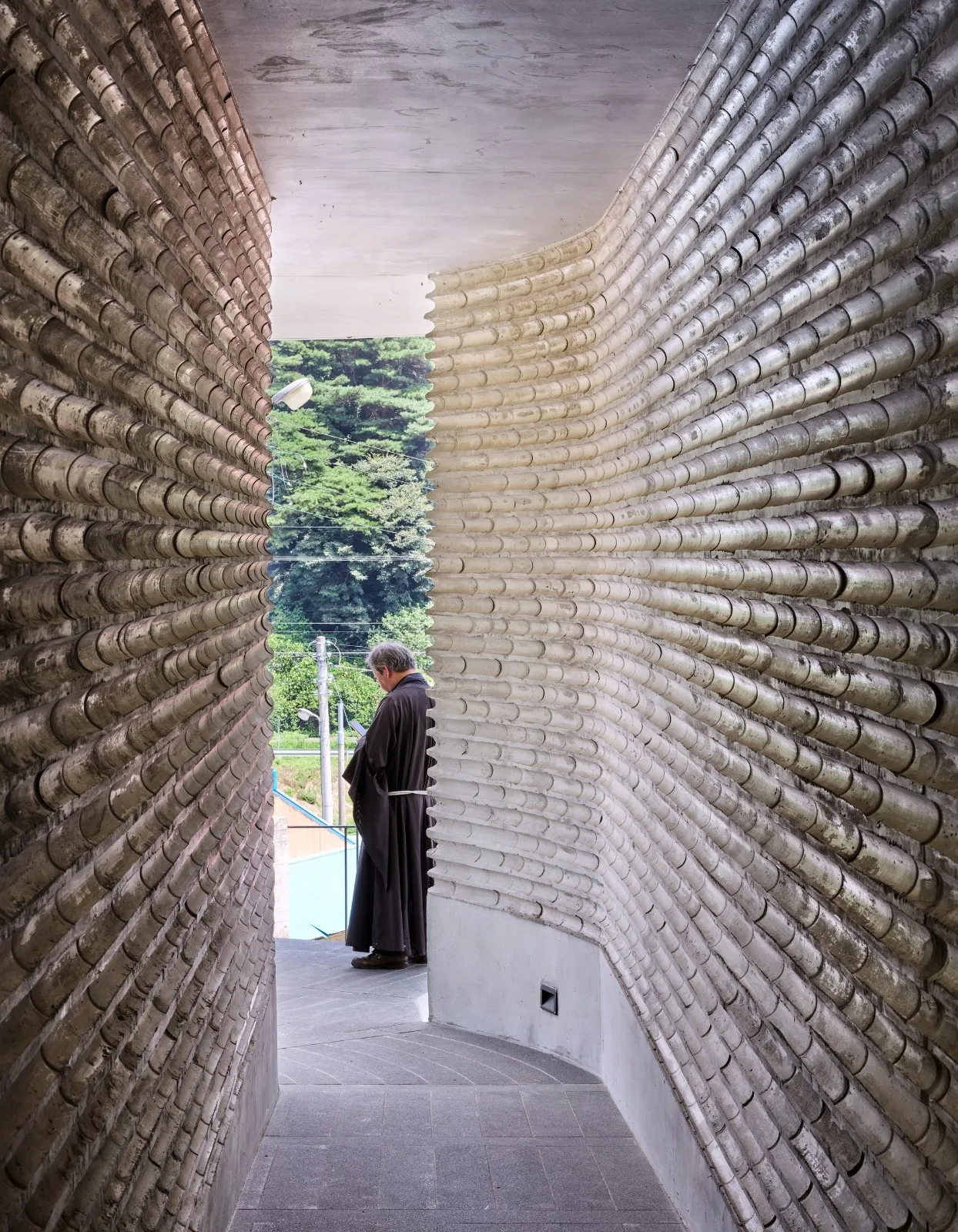
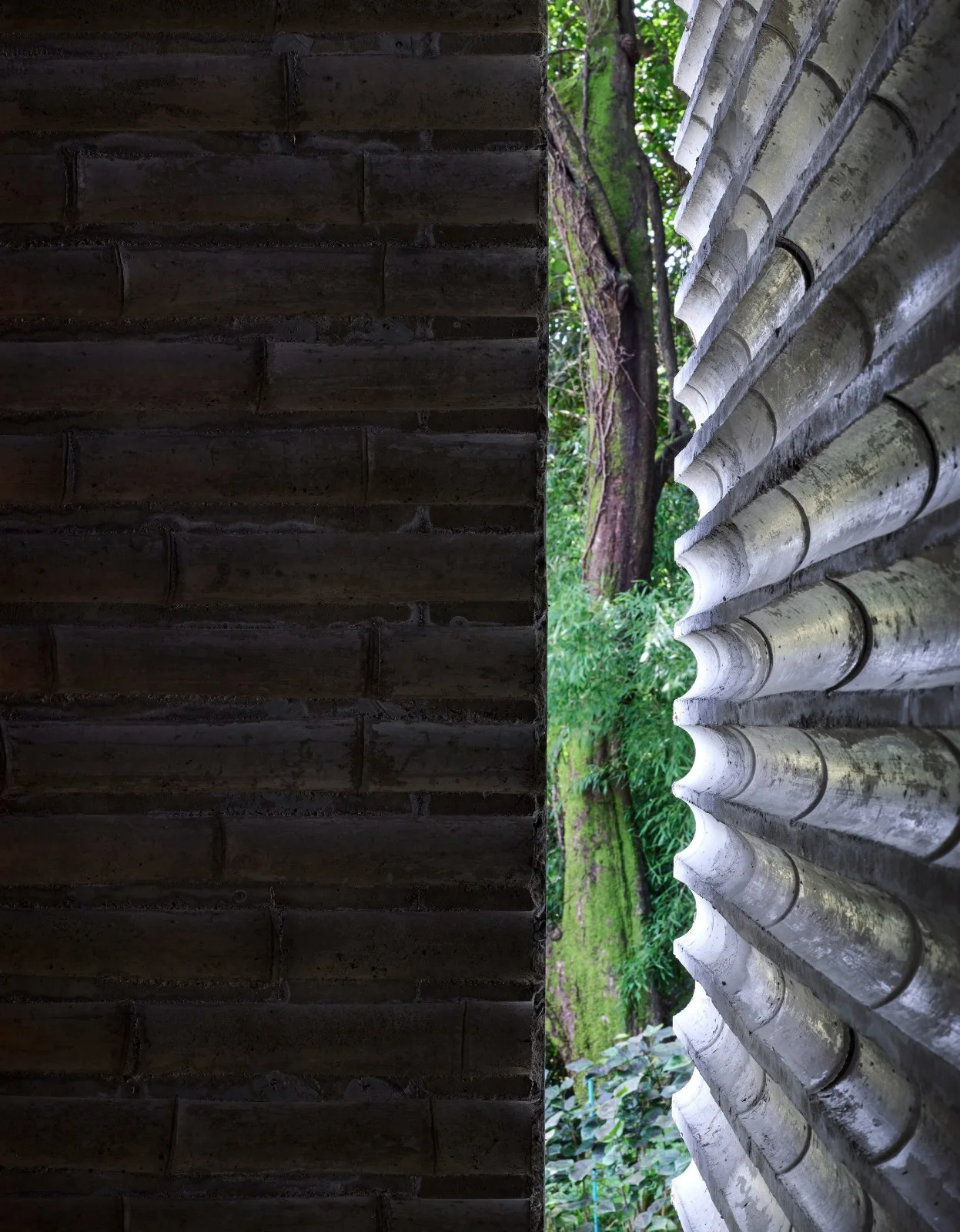
Visitors enter the chapel’s interior via winding, narrow corridors and gradually adjust to the darkness, culminating in the main dark space. The corridor walls are made of bamboo strips embossed with intricate patterns, crafted by hand from 60-millimeter diameter bamboo pieces. Due to the remote location and budget constraints, these were carefully hand-assembled rather than produced with metal molds.
This continuous horizontal texture flows seamlessly inside and outside the walls, converging again around the altar. Through this intimate space, visitors can appreciate Father Cui’s spirit of dedication during his solitary nighttime journeys. The chapel welcomes everyone, regardless of religious belief, offering a moment for personal reflection and harmony with the surroundings.
Project Drawings
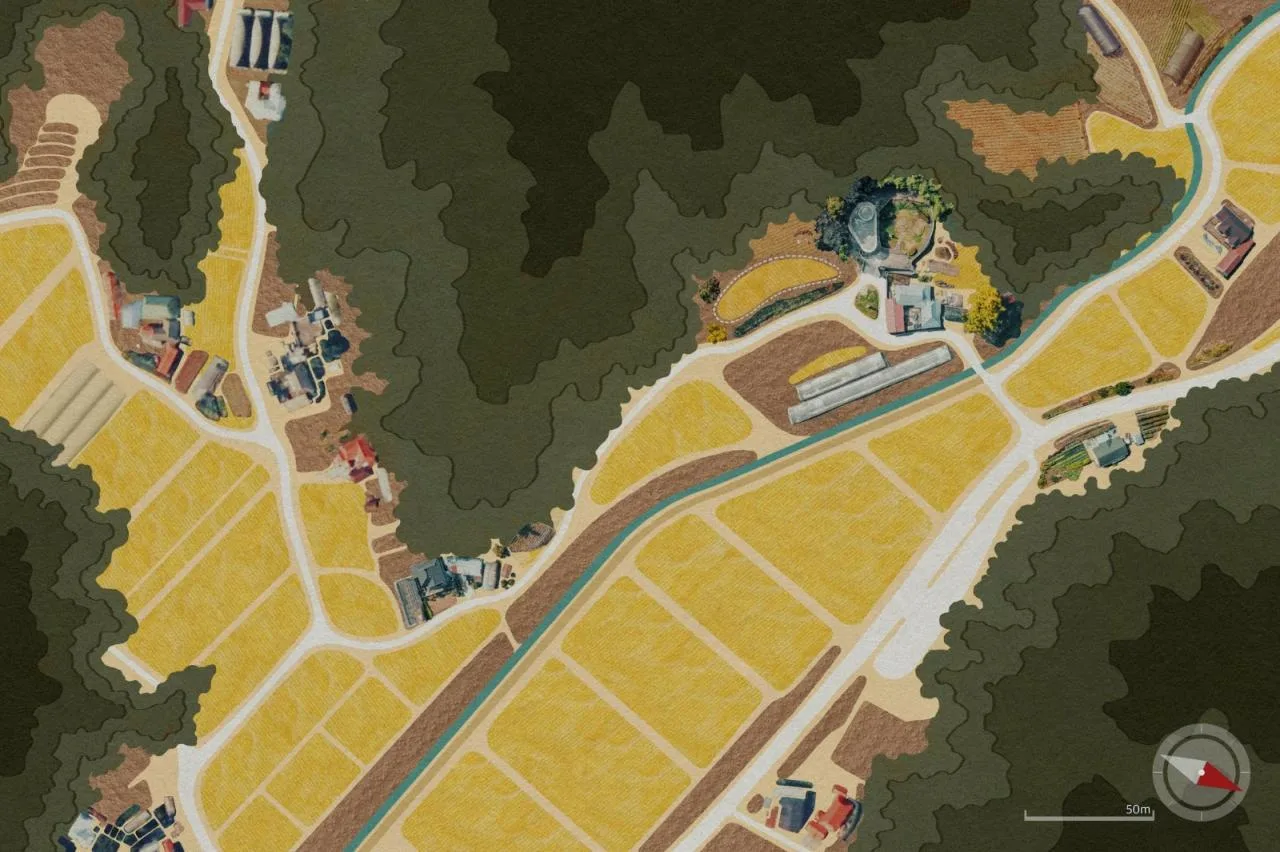
△ Base schematic diagram
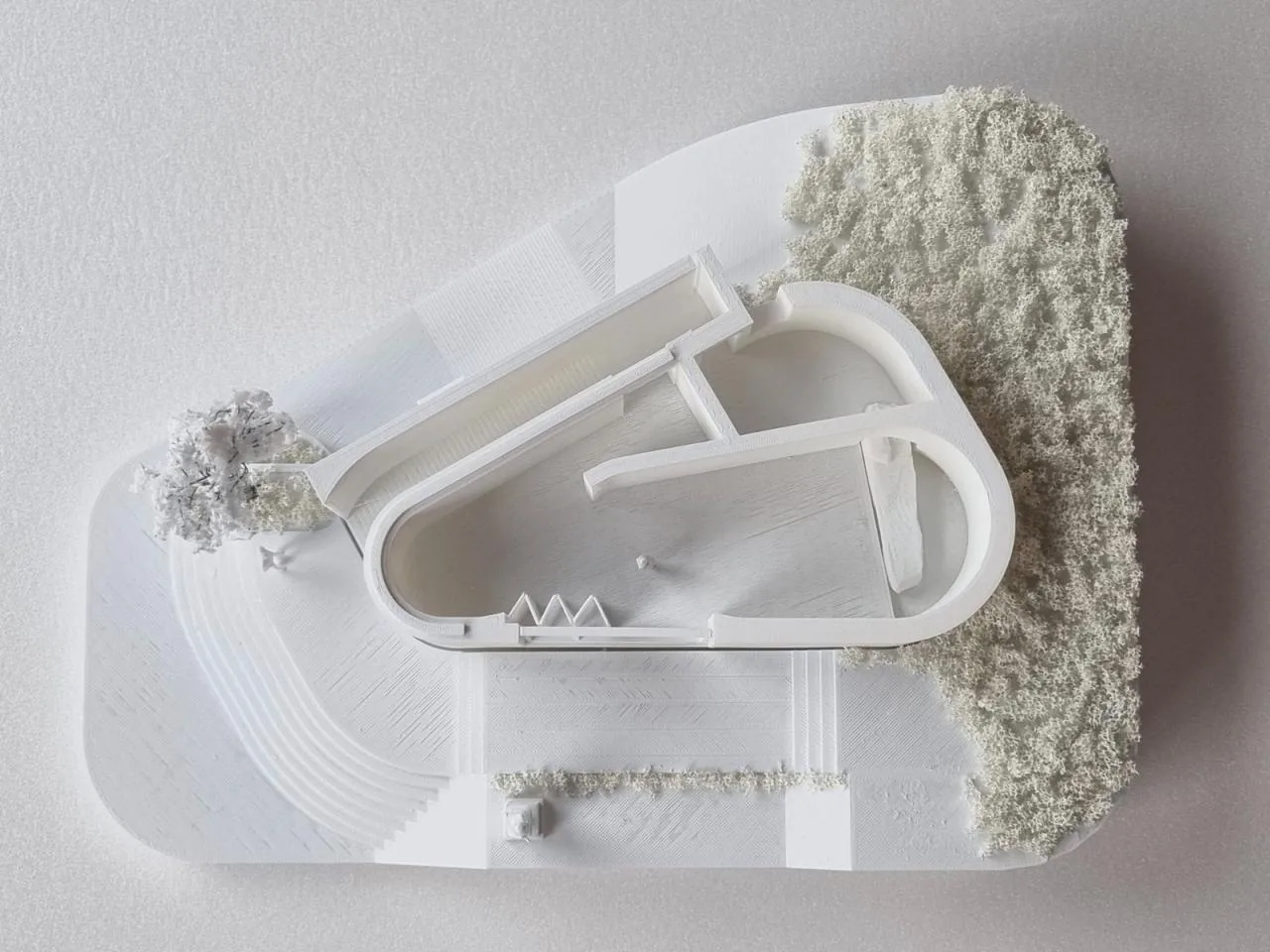
△ Model diagram
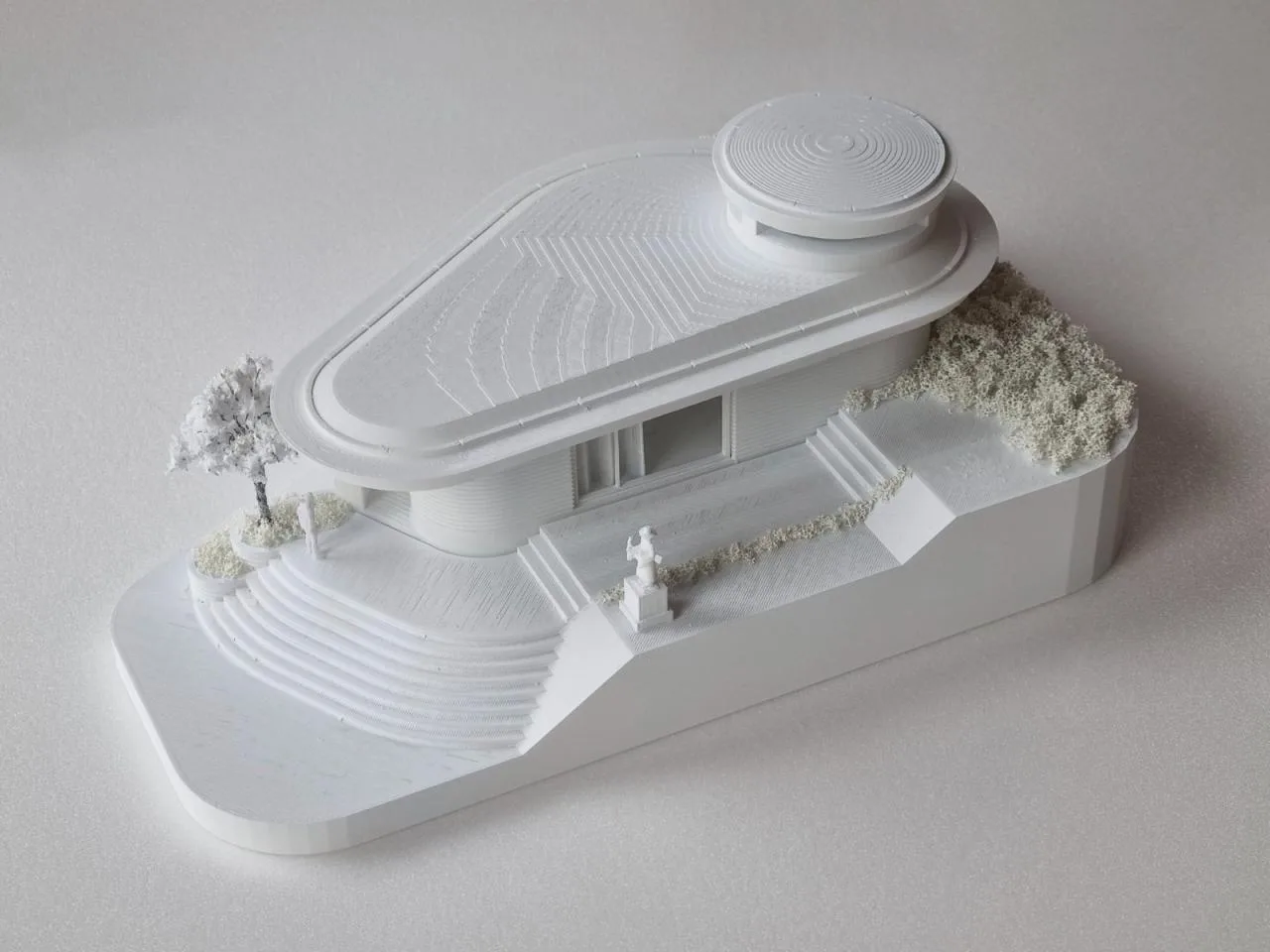
△ Model diagram
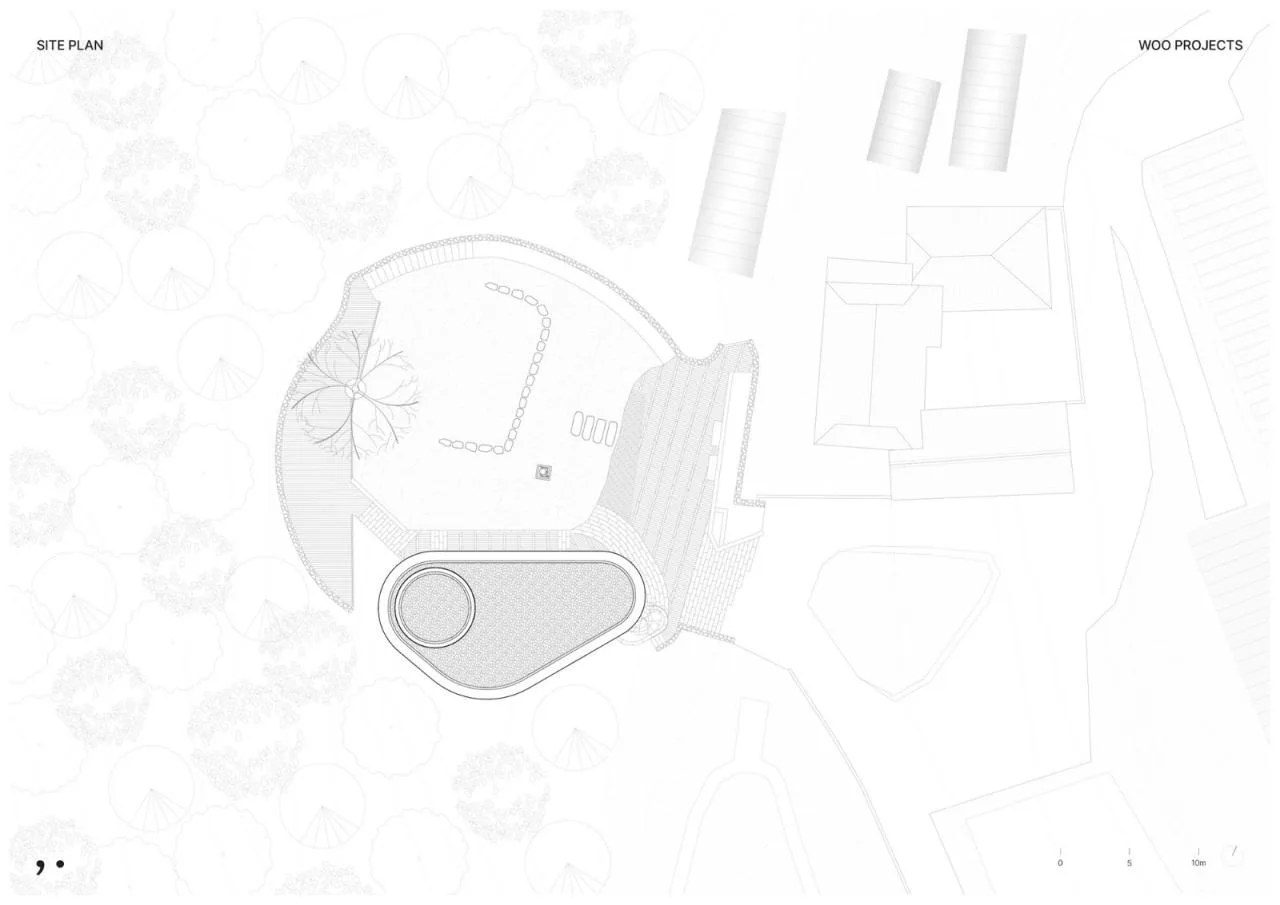
△ General layout plan
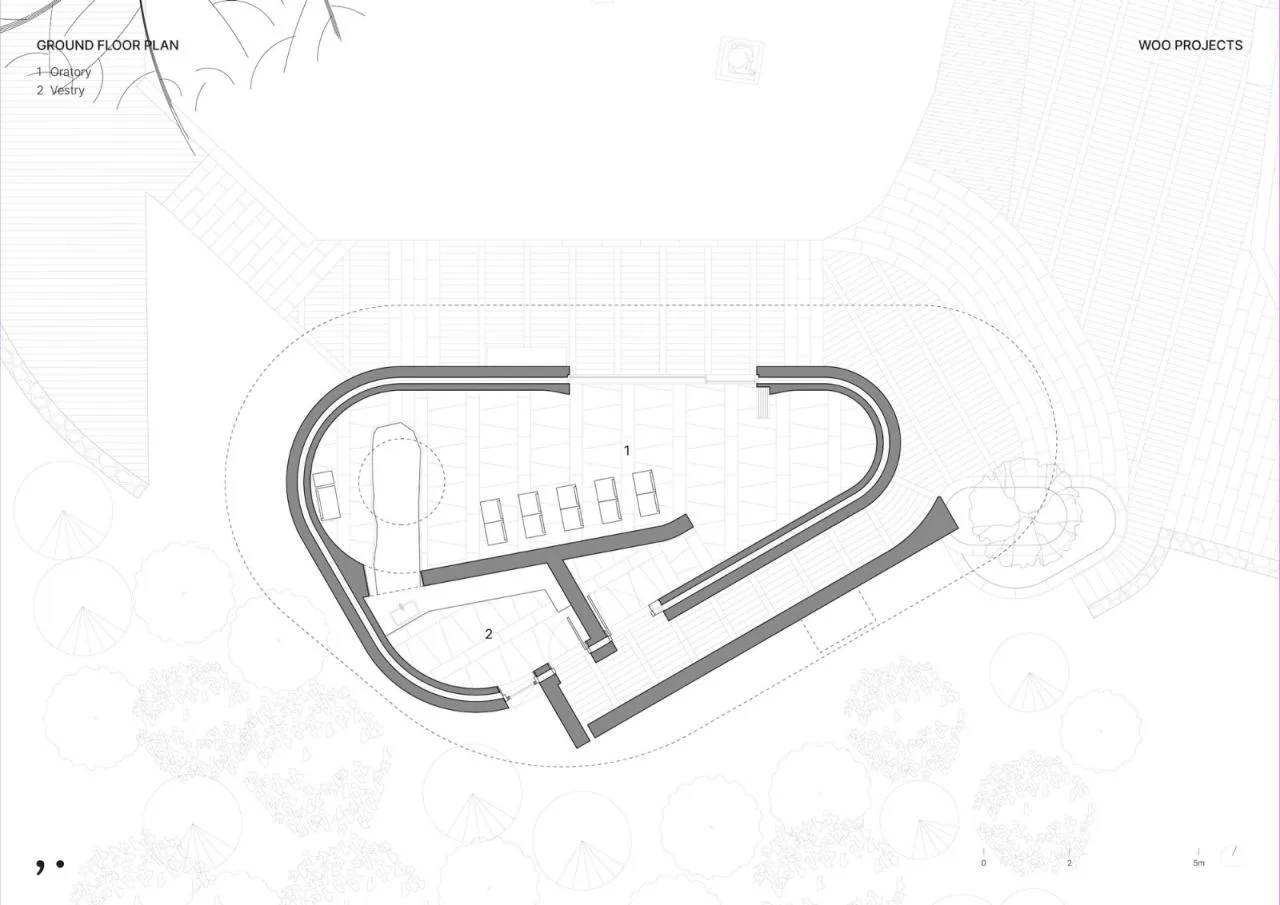
△ Plan view
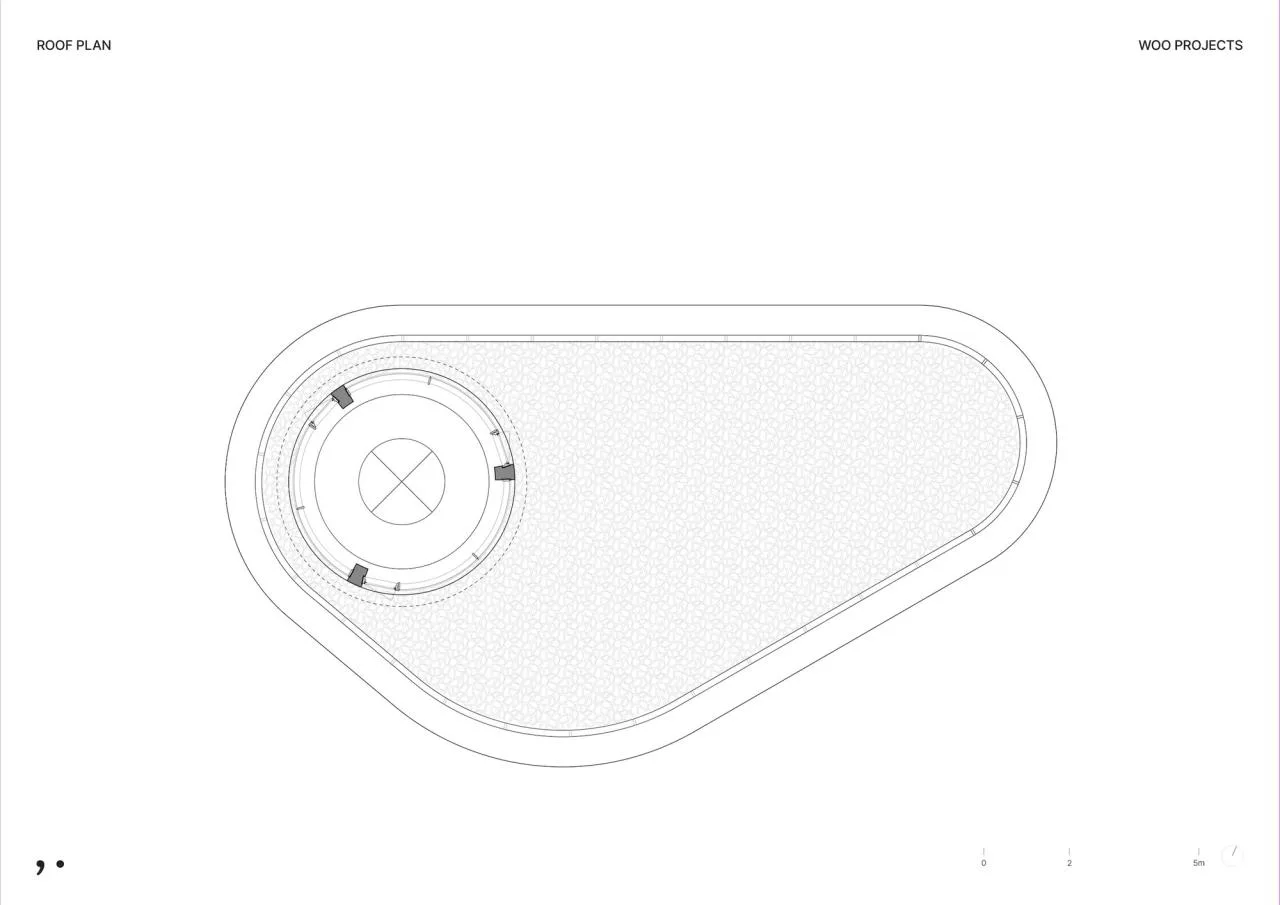
△ Roof plan
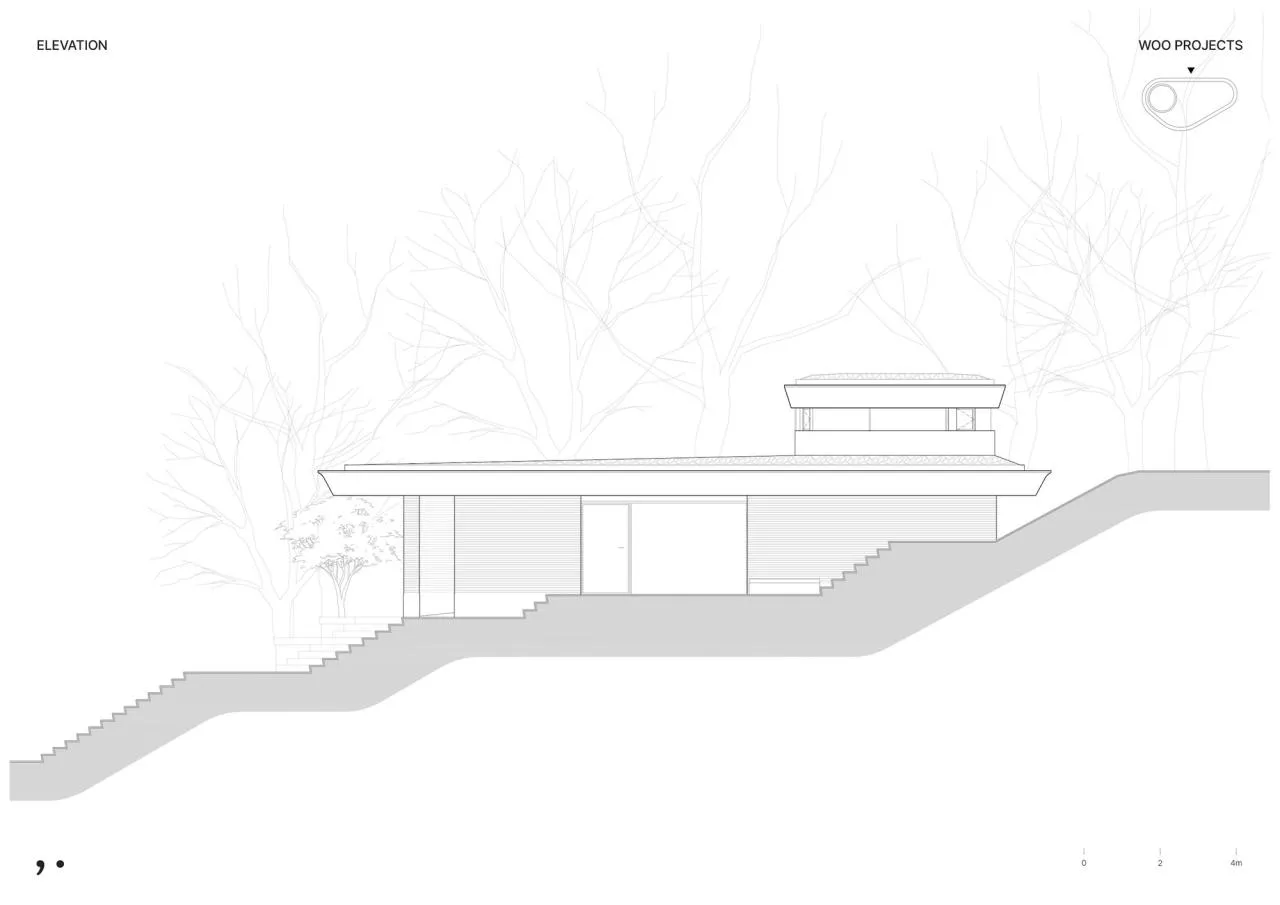
△ Elevation drawing
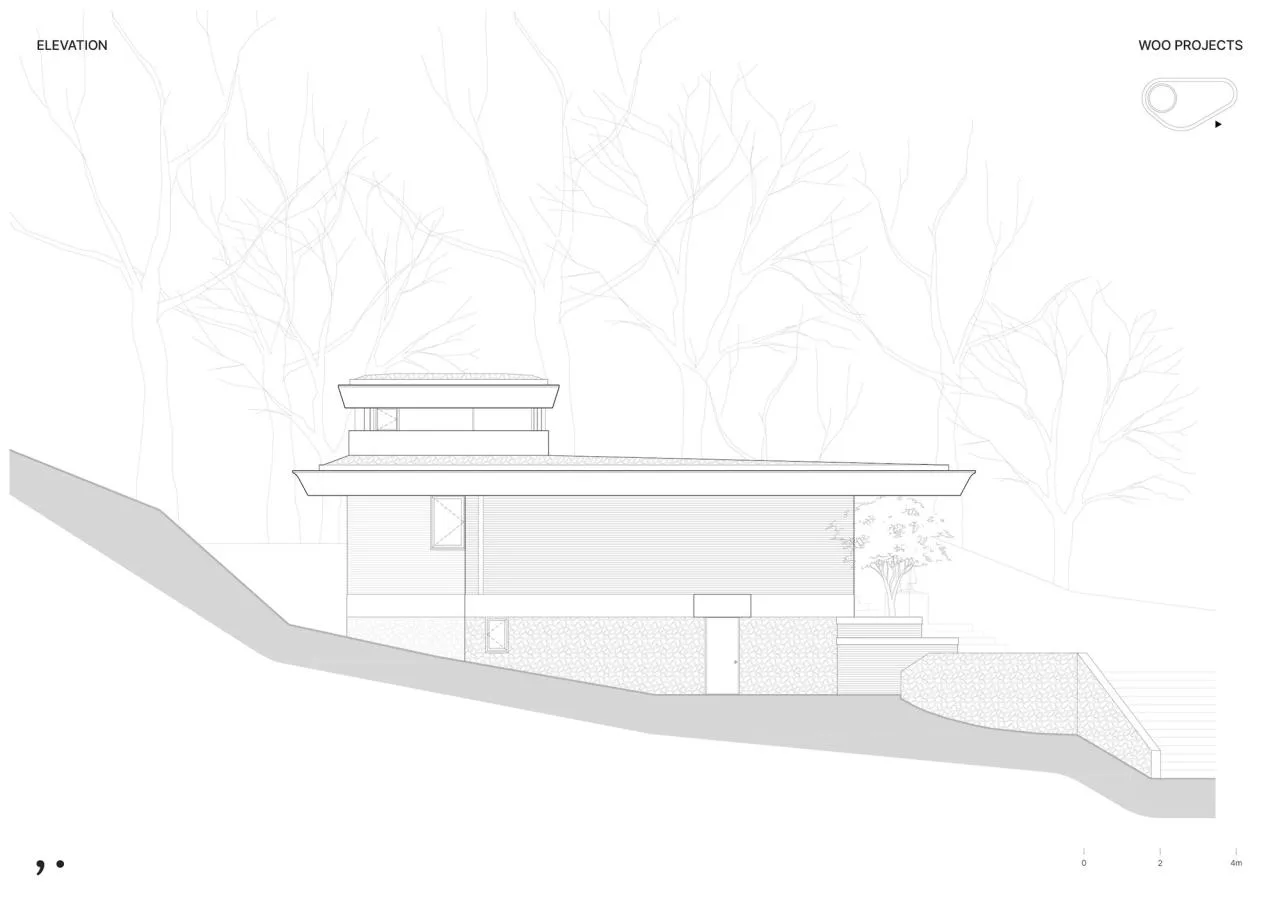
△ Elevation drawing
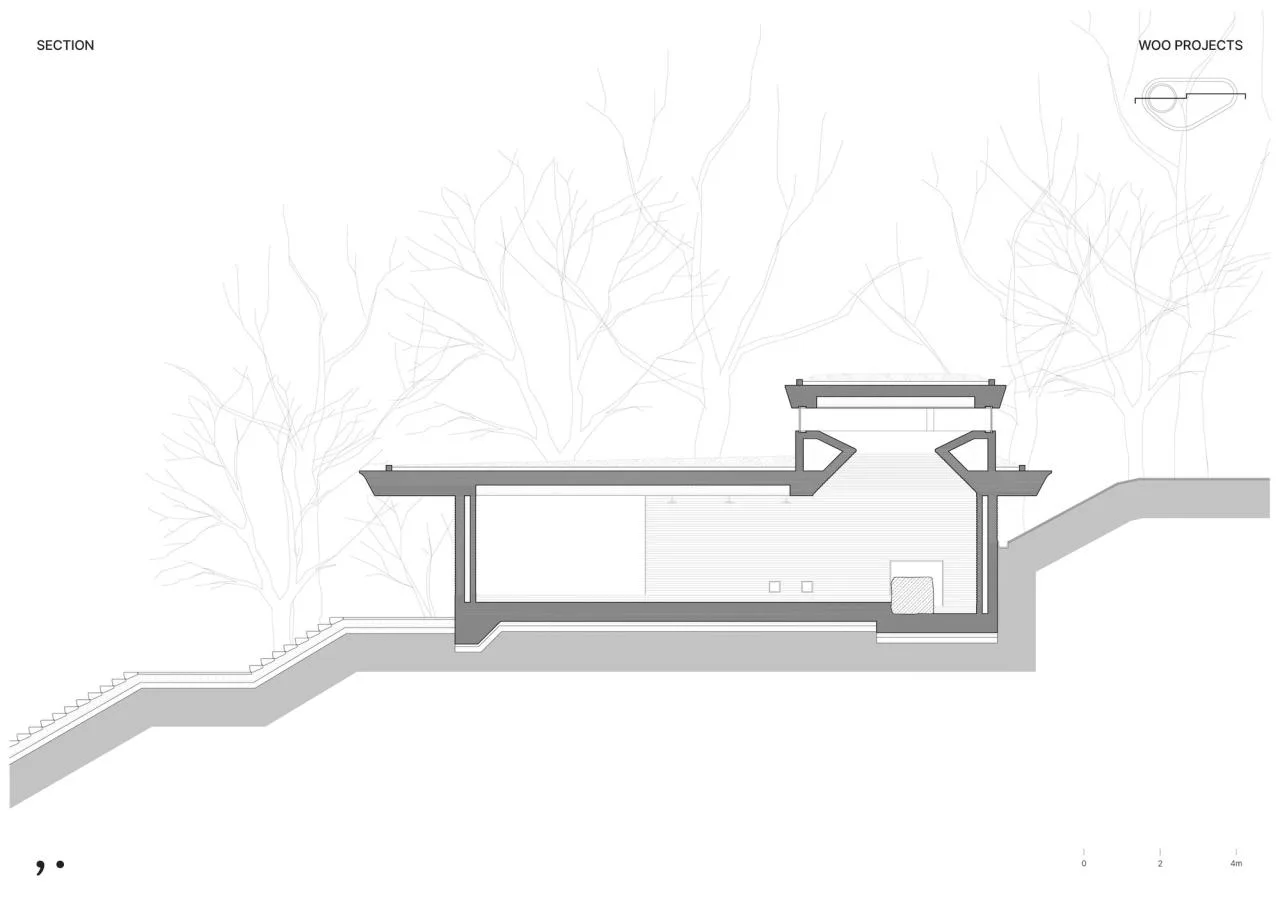
△ Section diagram
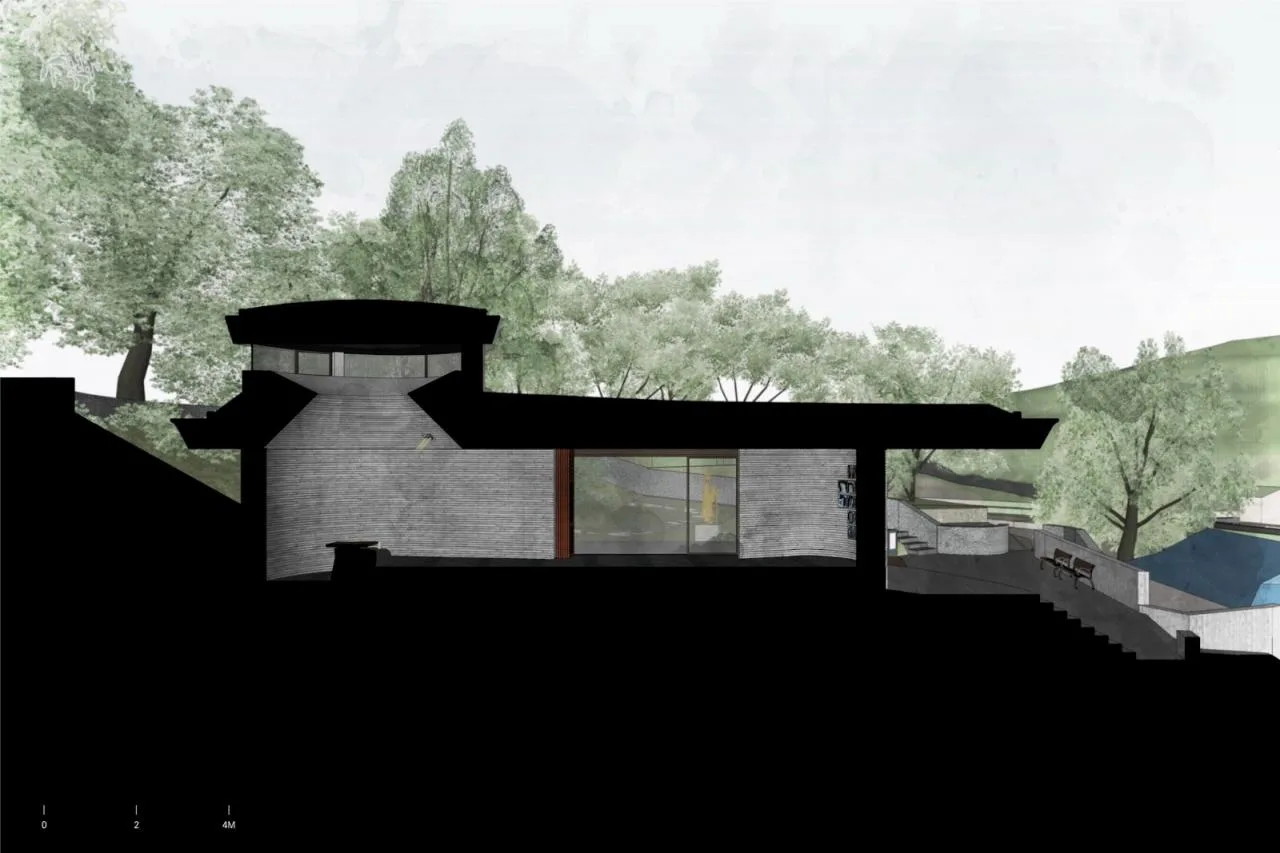
△ Section diagram
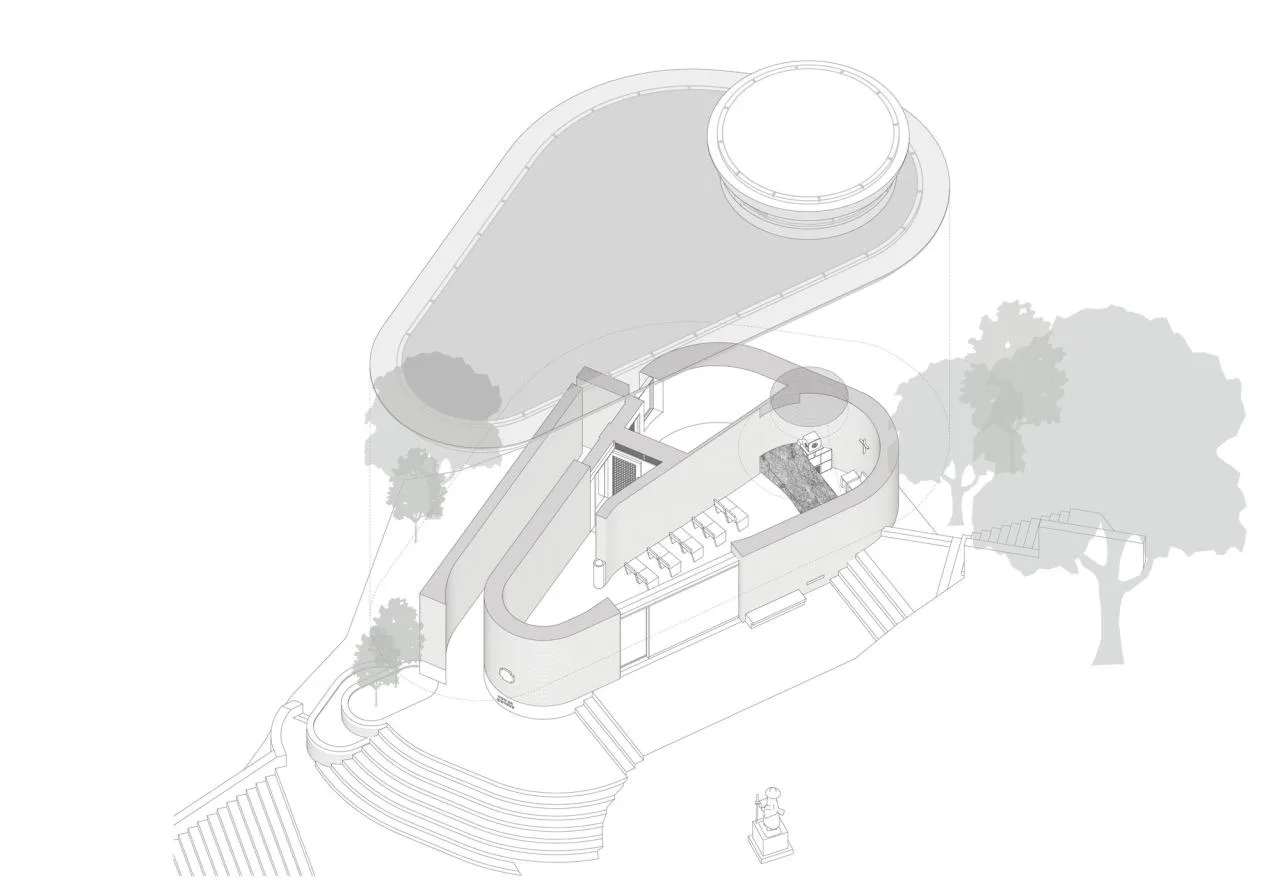
△ Axis measurement analysis diagram
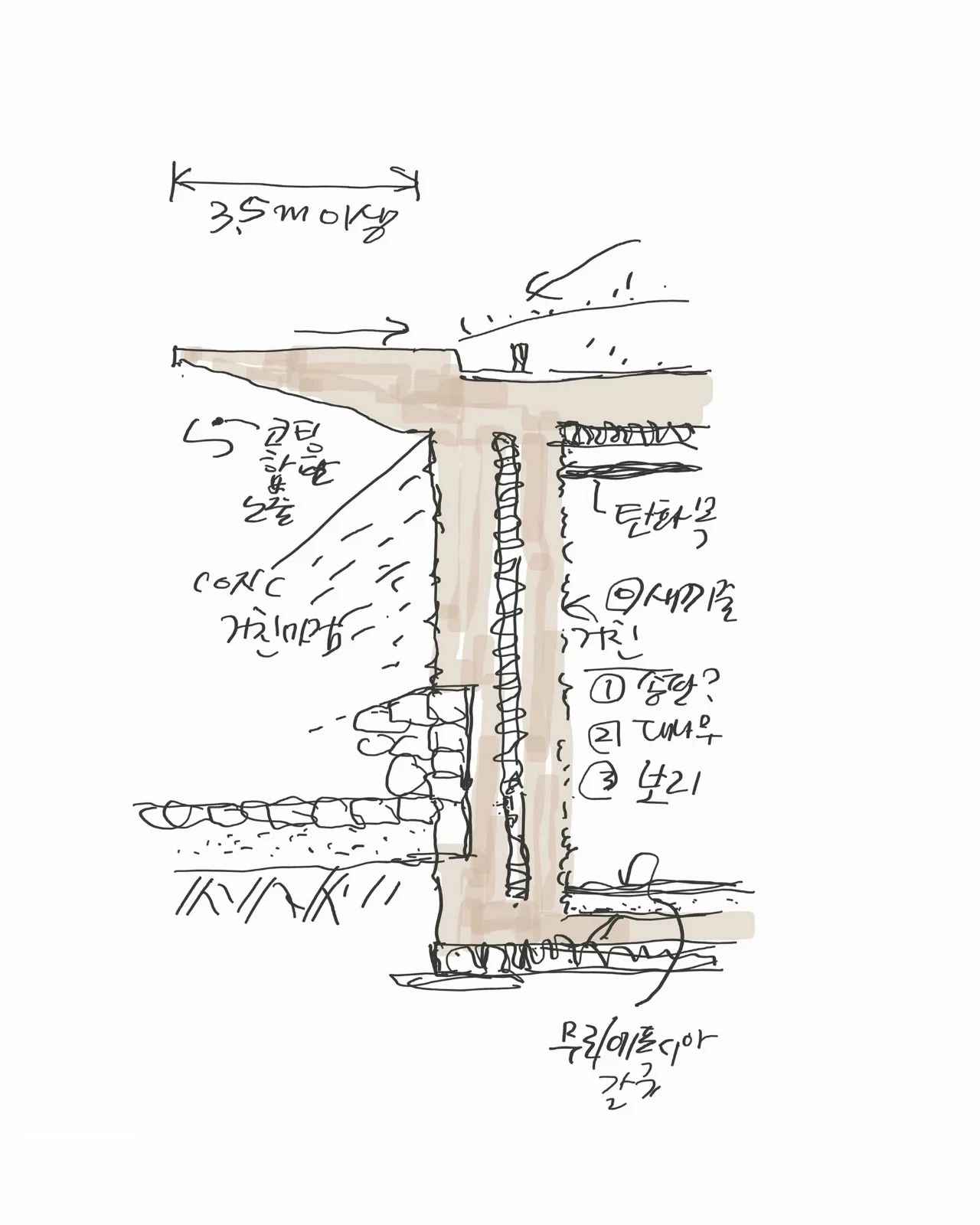
△ Hand-drawn node diagram
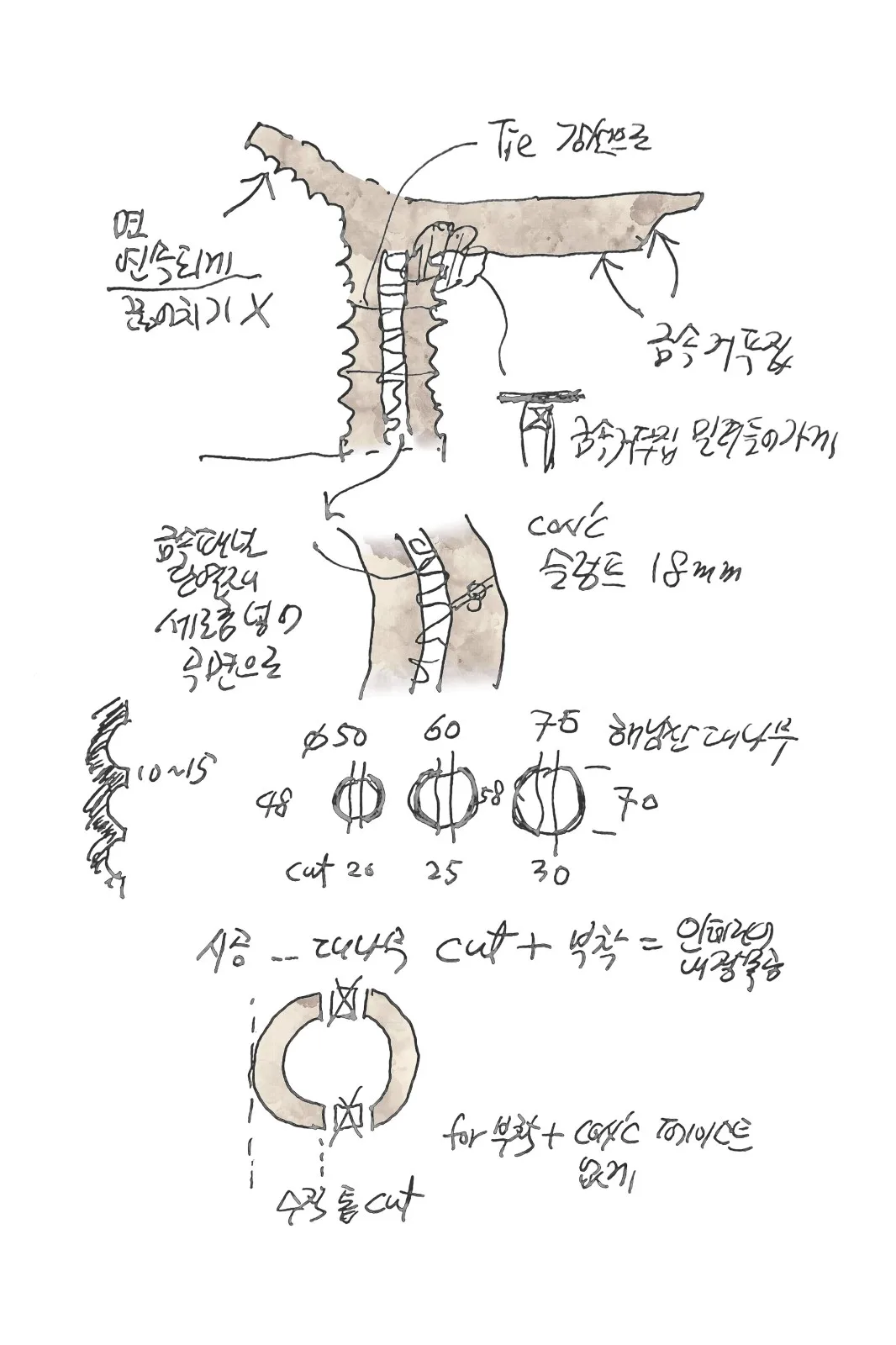
△ Hand-drawn node diagram
Project Information
Architect: Woo projects Architects
Area: 117 m²
Project Year: 2023
Photographers: Yoon Joonhwan, Kim Yongkwan
Lead Architect: Woo Daeseung
Design Team: Kim Jongdo, Song Byoungcheol, Lee Yeonkyung
Wooden Furniture: Park Taehong
Structural Engineer: Seoul Structural Engineering & Consulting Co. Ltd
Construction Company: Builder Dularc
Mechanical Engineer: Woojin Facilities
Electrical Engineer: Sejong Group of Technique
Location: Qingyuan County, South Korea












Must log in before commenting!
Sign Up