
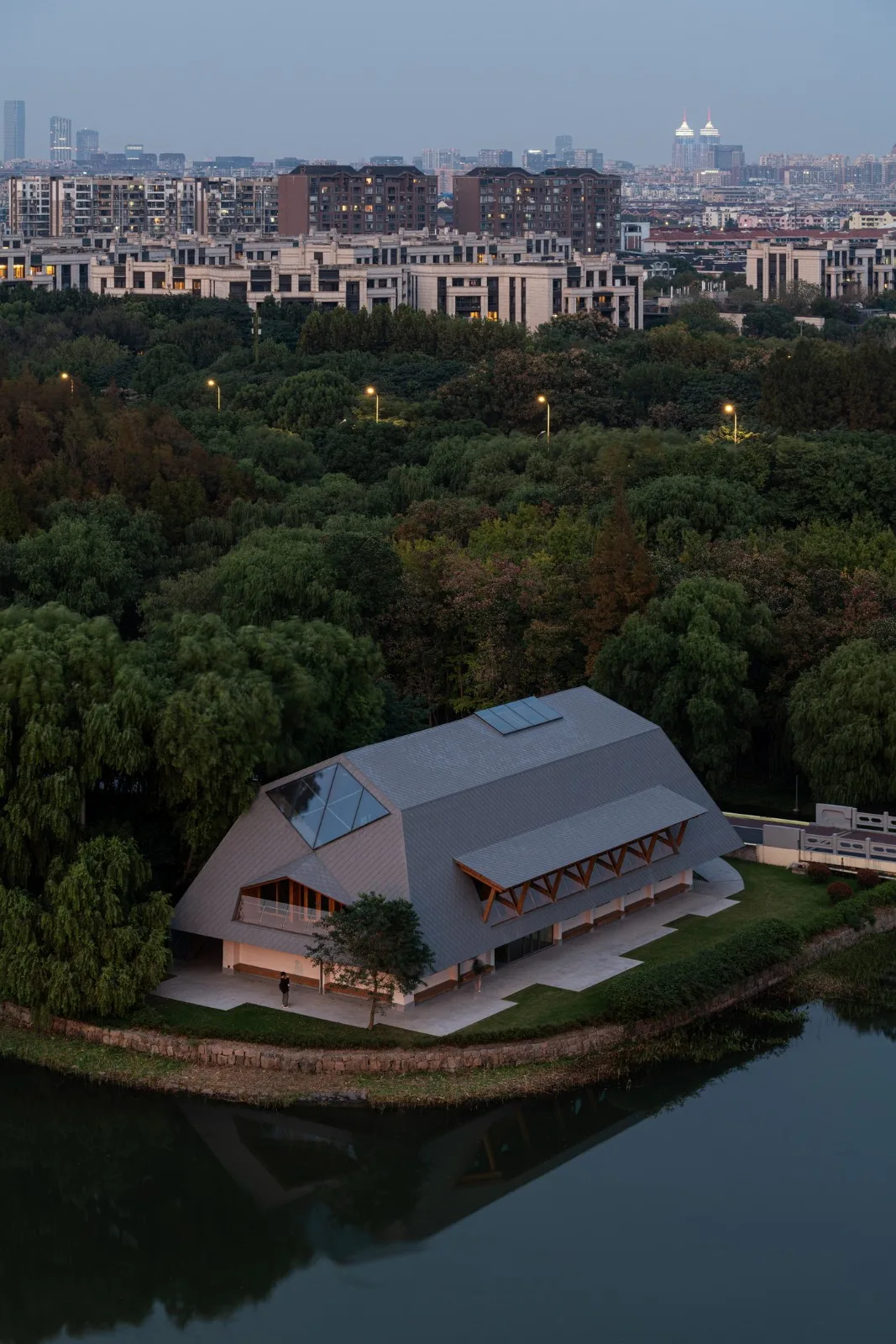
The Changning Outer Ring Ecological Park is situated within a 100-meter-wide forest belt between the Outer Ring Expressway to the west and the Outer Ring West River to the east, in Shanghai’s Changning District. It stretches approximately 6.25 kilometers, starting from the Suzhou River in the north and connecting to the Hongqiao Road Landscape Welcome Road in the south.
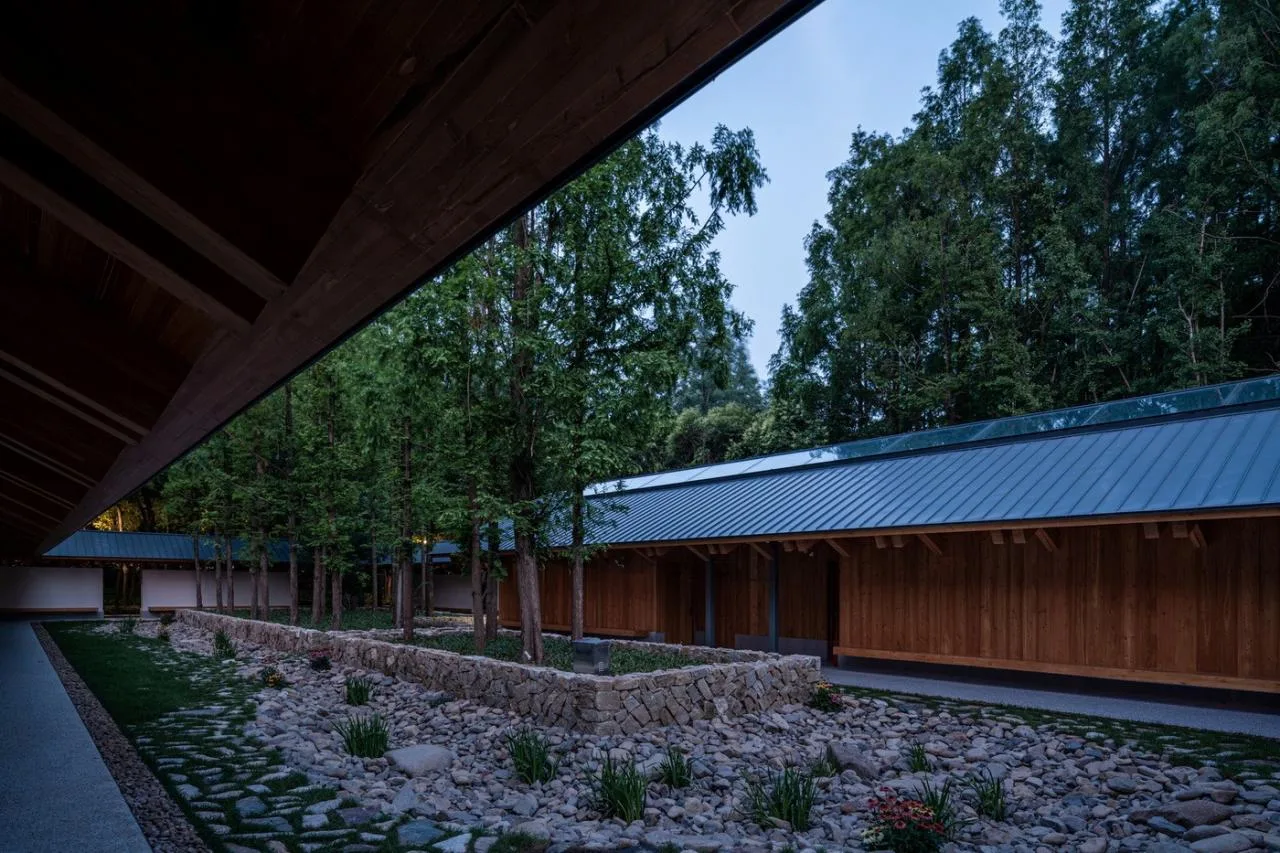
This park was transformed from the Outer Ring Green Belt Protection Forest, originally established in 1995. The project incorporates the renovation of four self-built rural houses from the 1970s and 1980s, which were discovered during surveys to have been used as roadside buildings and flood control warehouses. These buildings are repurposed as post stations, demonstrating a strategy of adapting to local conditions and maximizing existing spaces. This approach respects the history of the outer green belt and minimizes disruption to the built environment, aligning closely with principles of ecological sustainability.
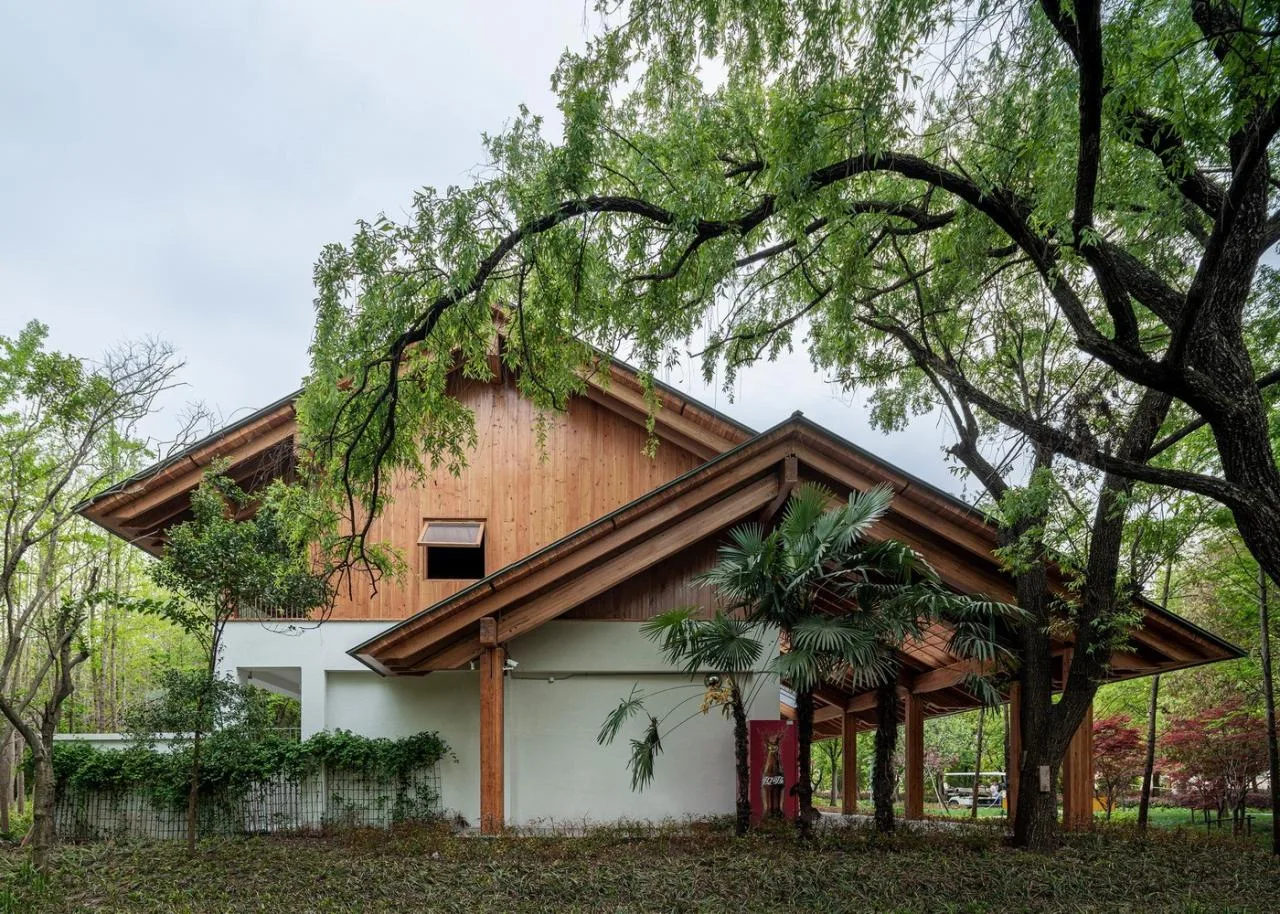
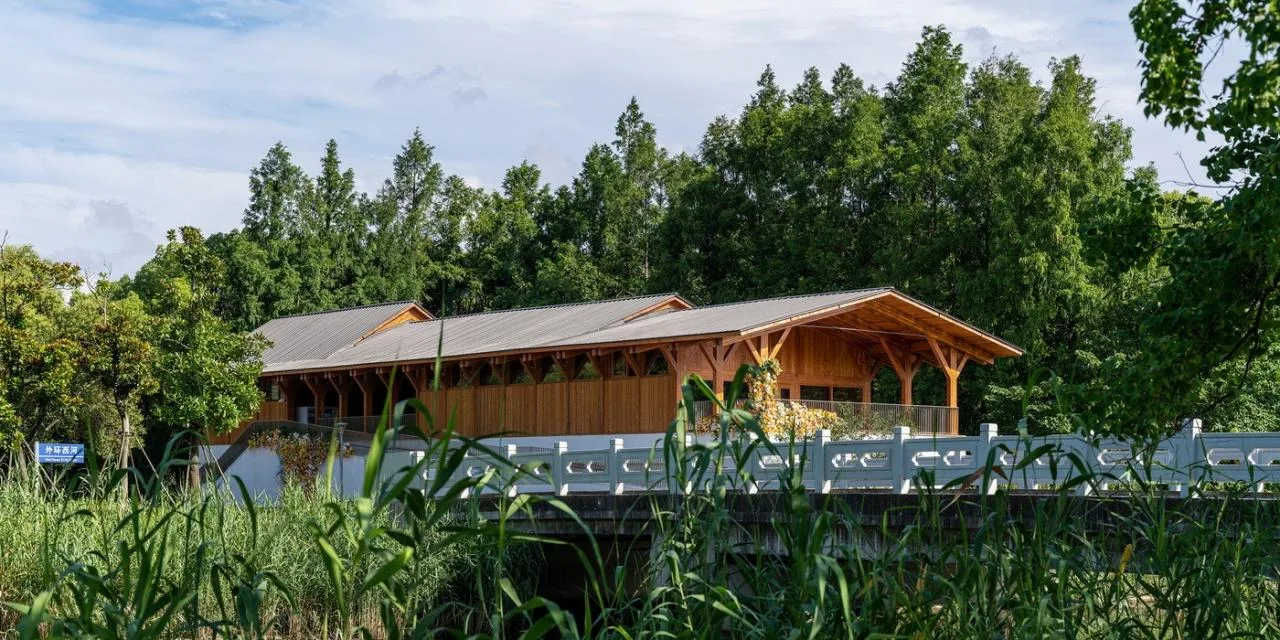
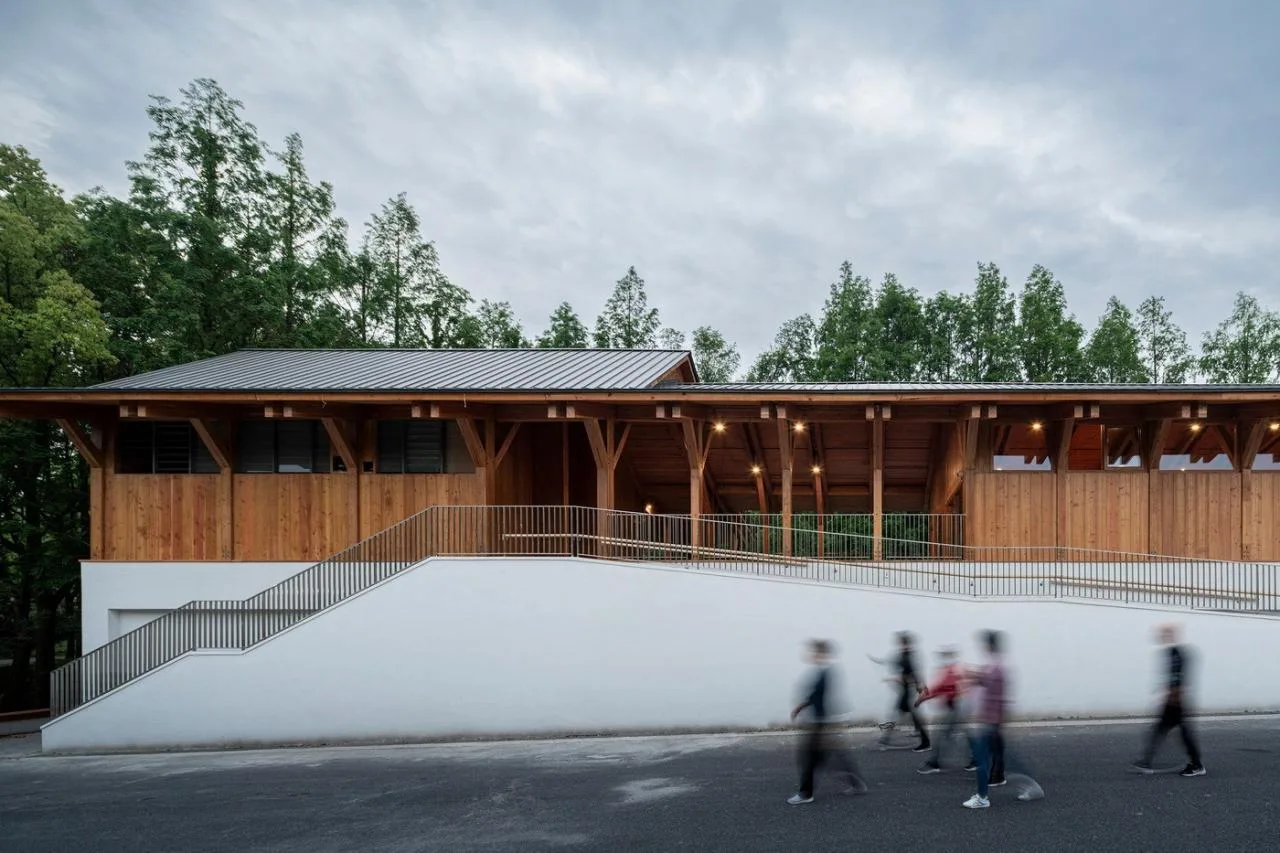
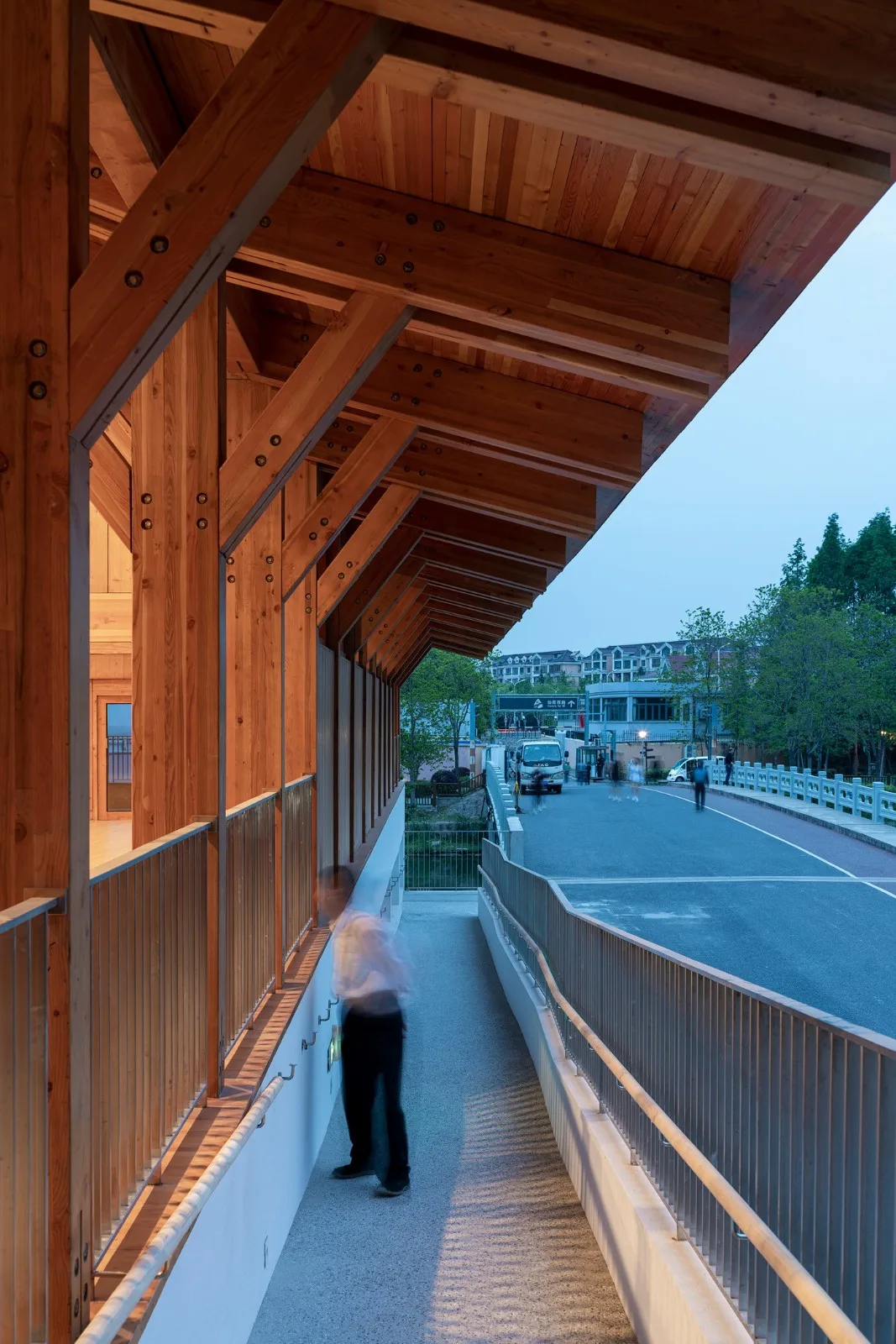
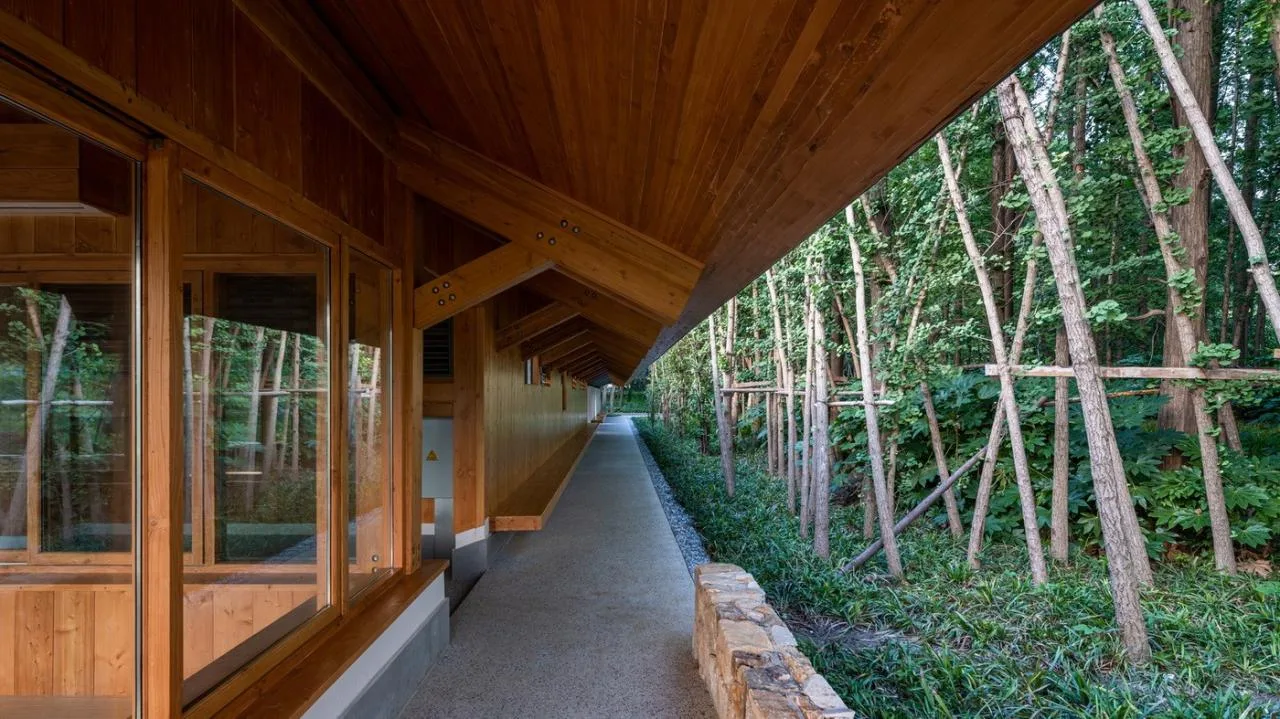
The post station primarily features public restrooms and toilets, integrating multiple functions such as information inquiry, reading areas, science education, and community activities. Additionally, the design incorporates “grey spaces”—including corridors, eaves, open walkways, and balconies—that provide leisure areas and convenient amenities like vending machines, shared umbrellas, and storage lockers.
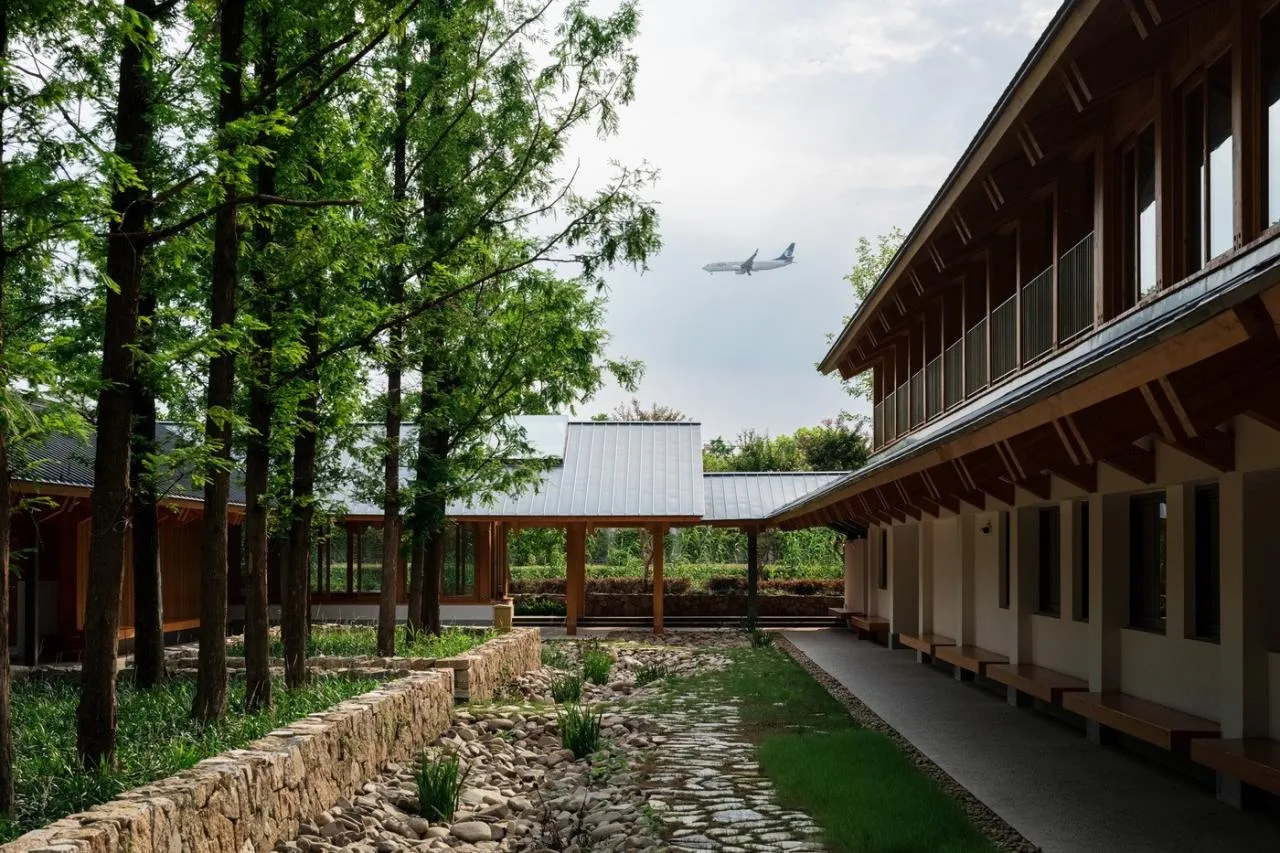
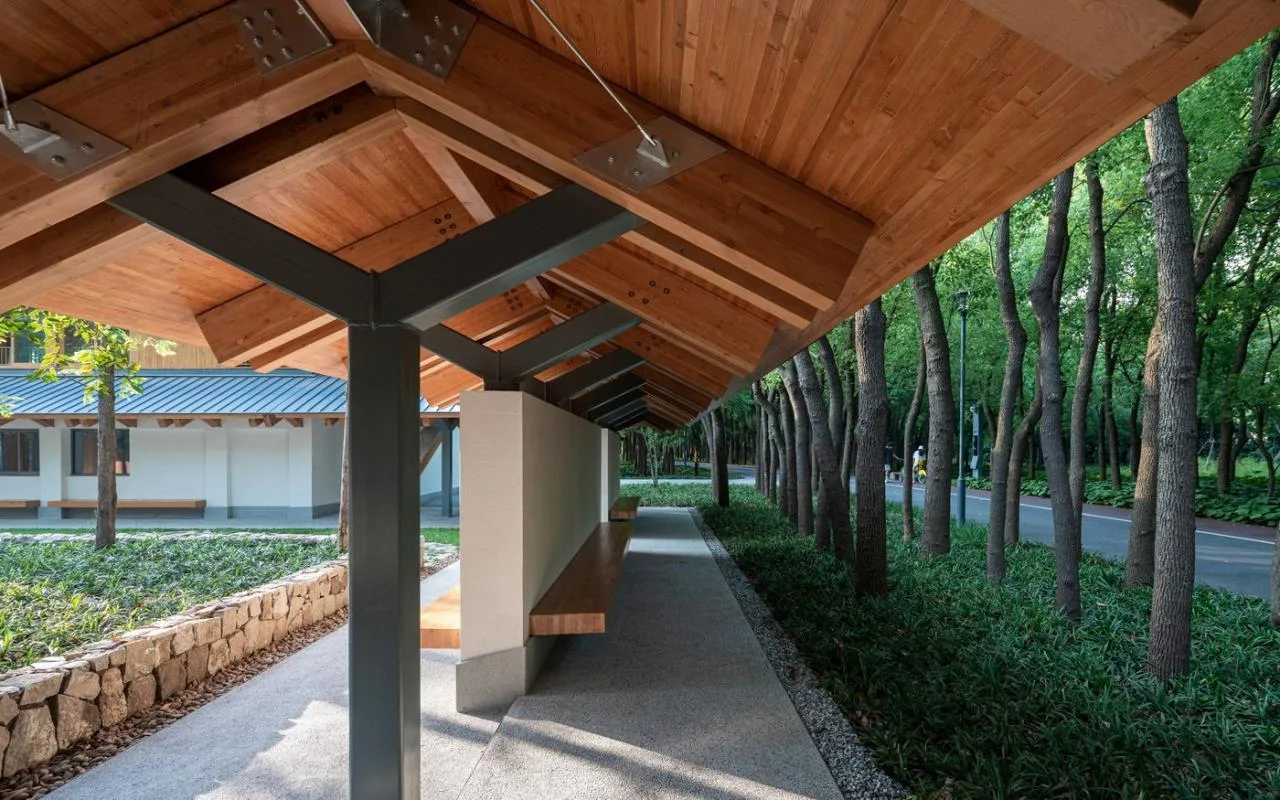
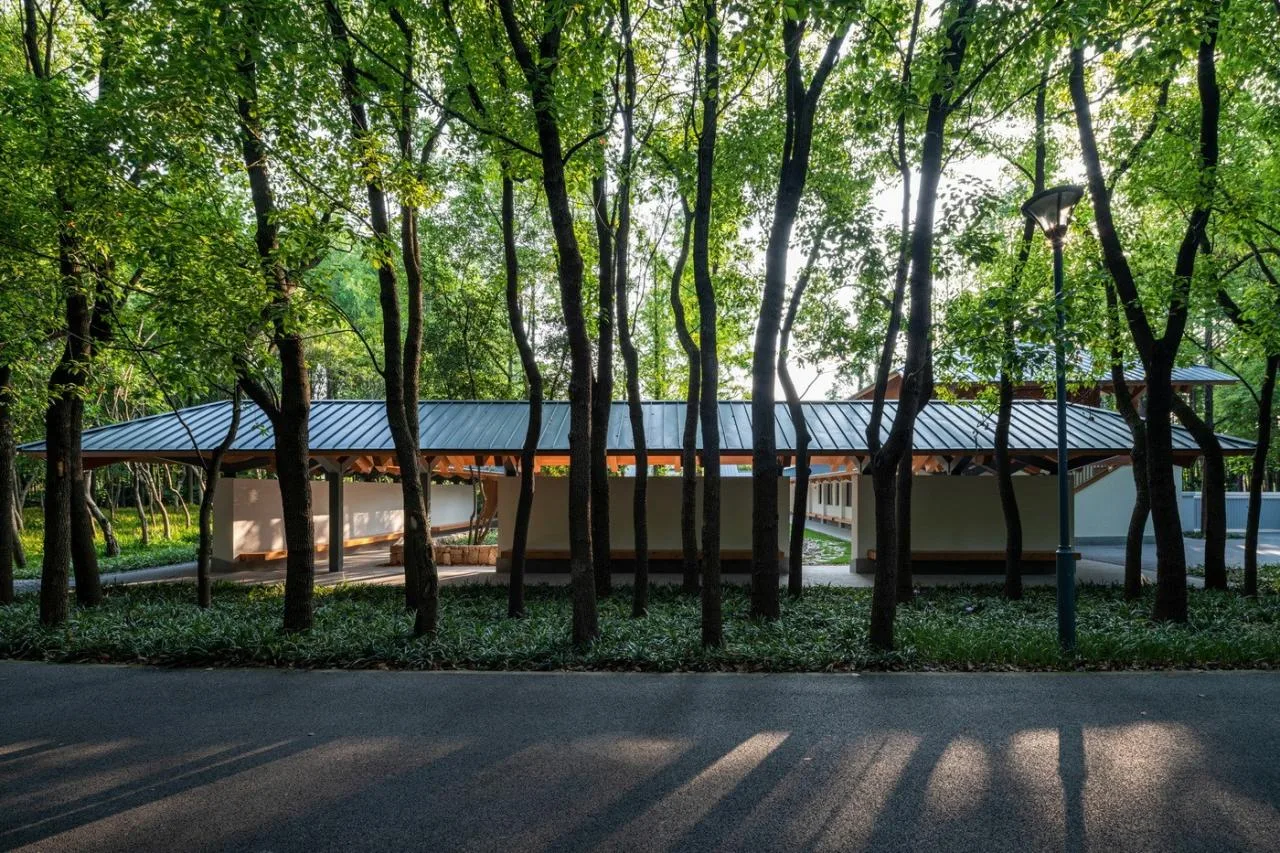
The architecture maintains the simple, natural character of the original rural houses, fully leveraging each building’s layout and blending harmoniously with the surrounding environment. These structures act as landscape enhancers that accentuate the site’s unique qualities.
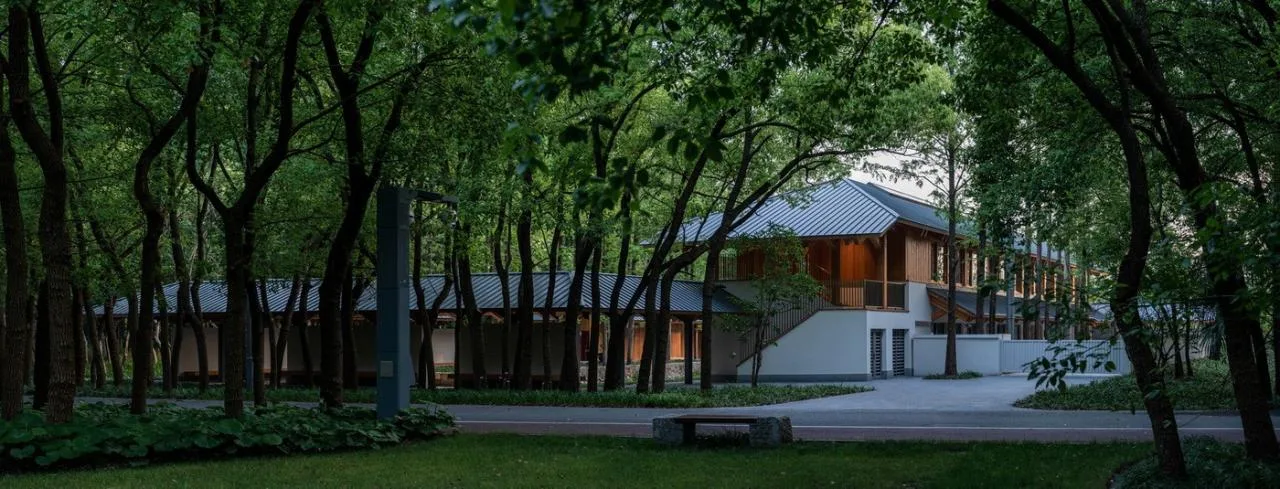
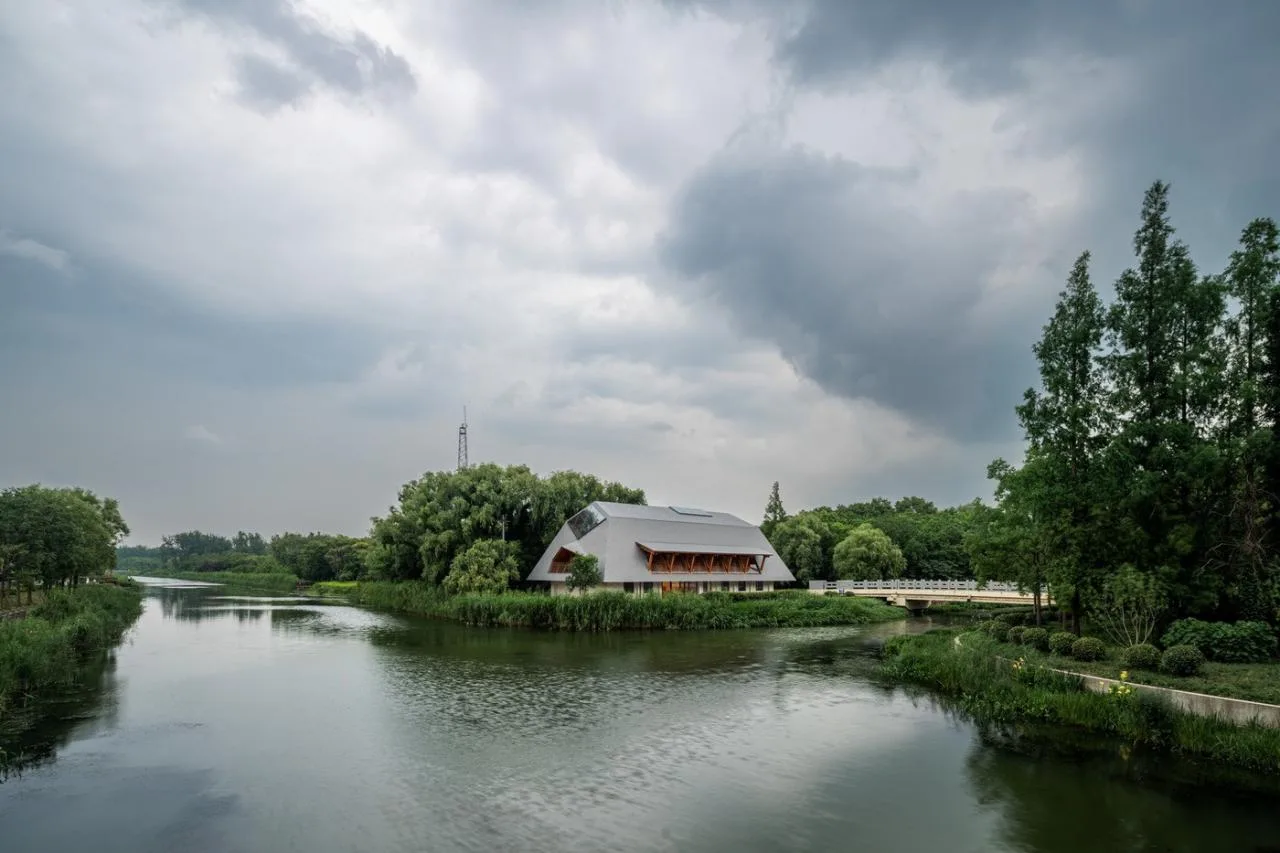
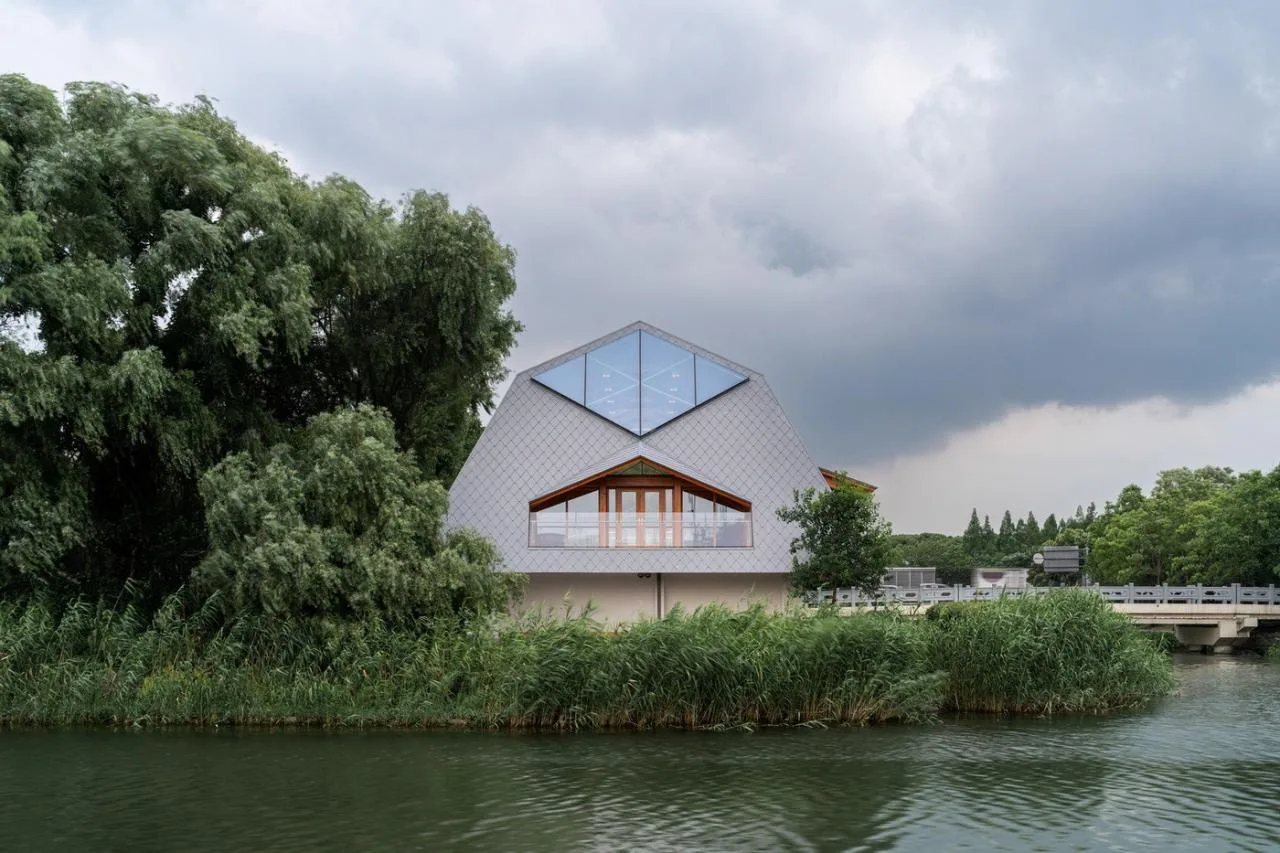
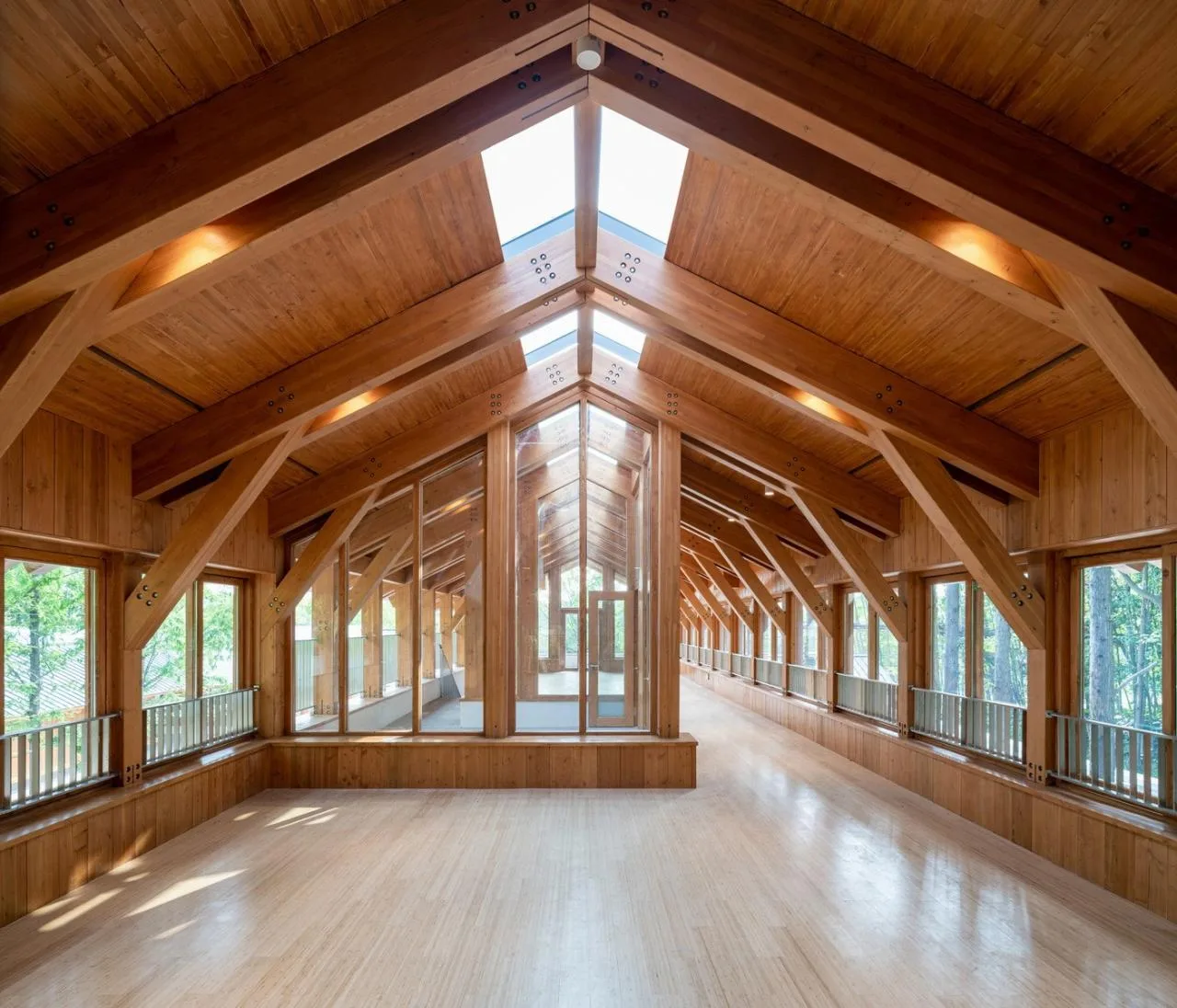
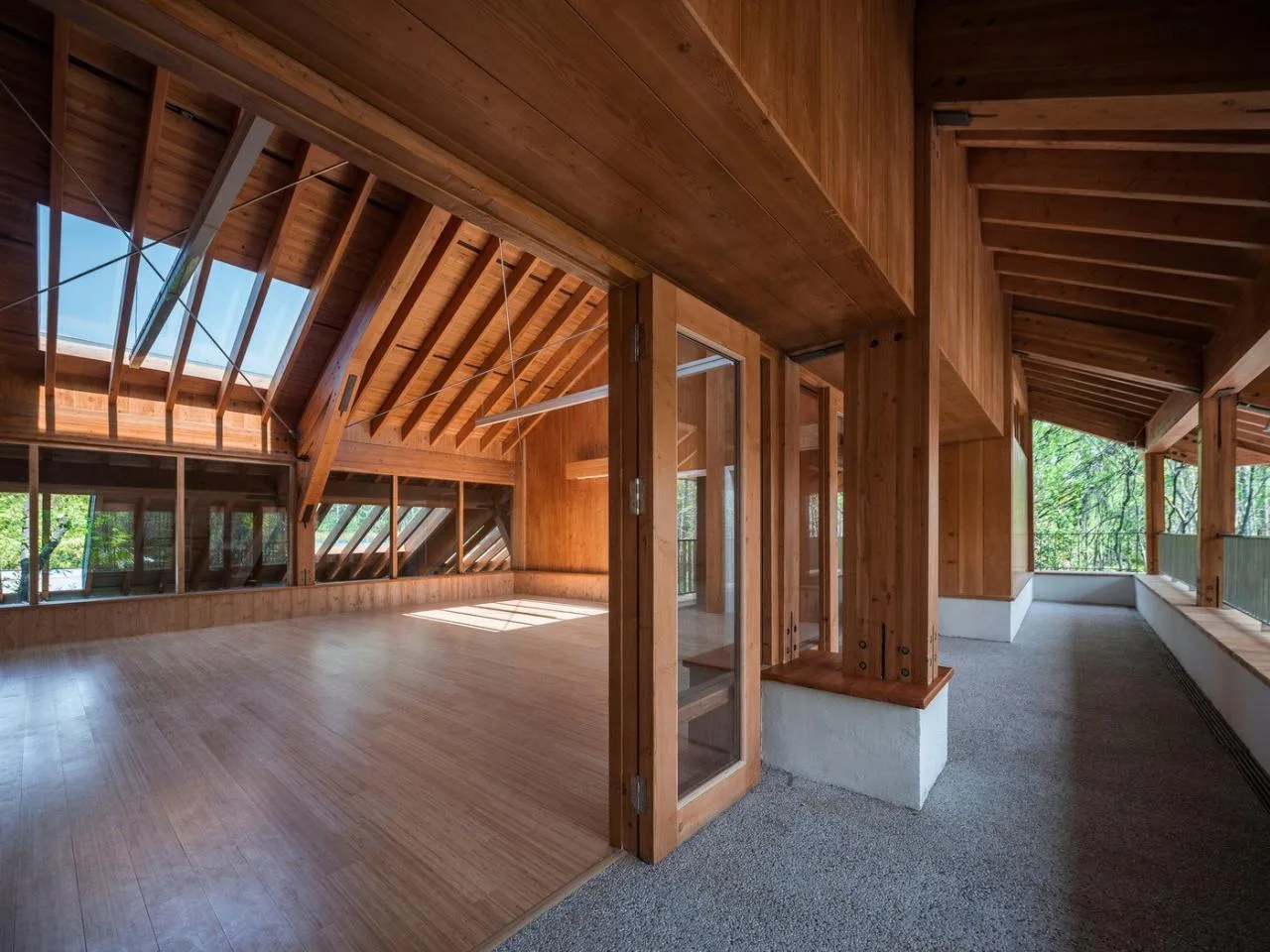
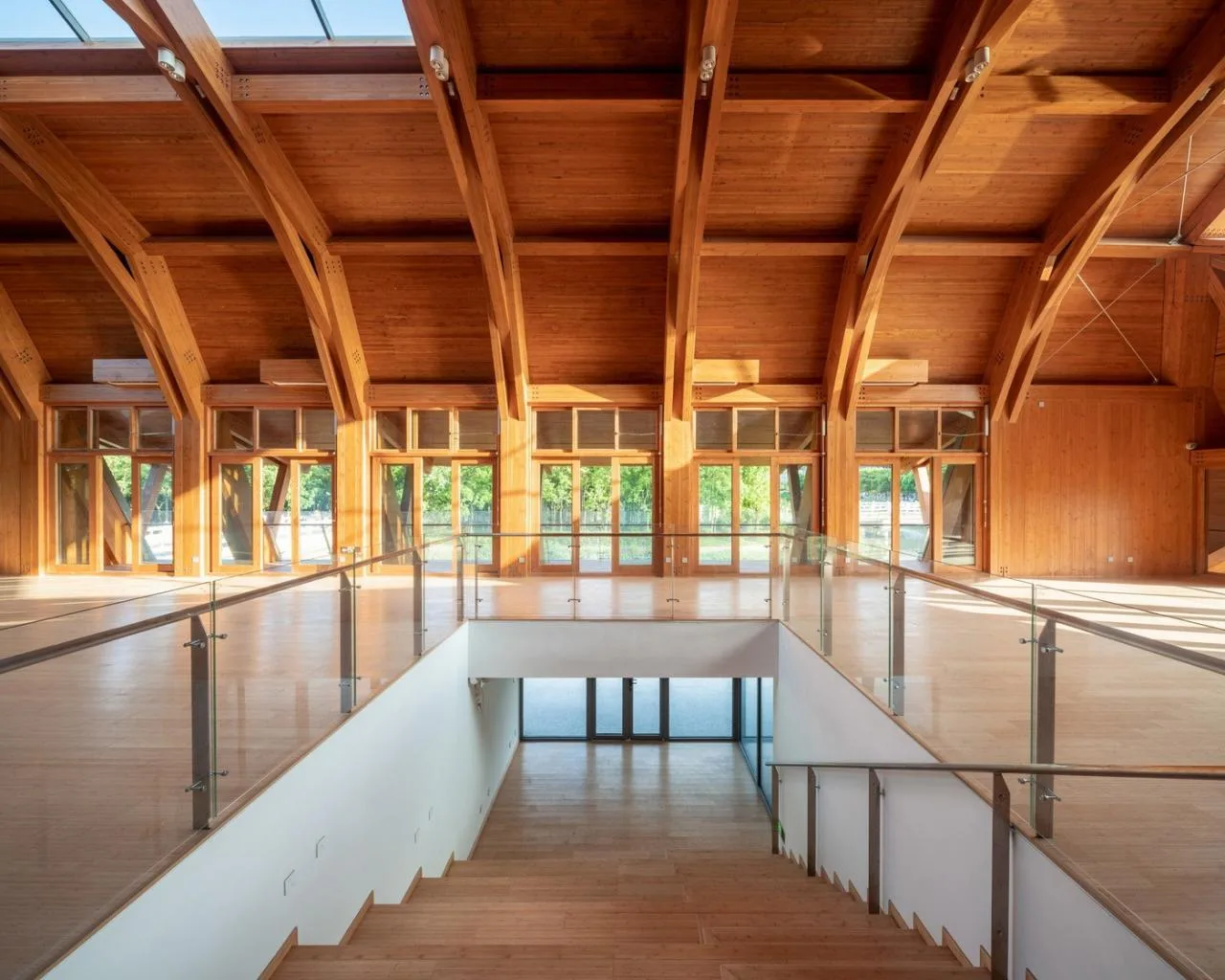
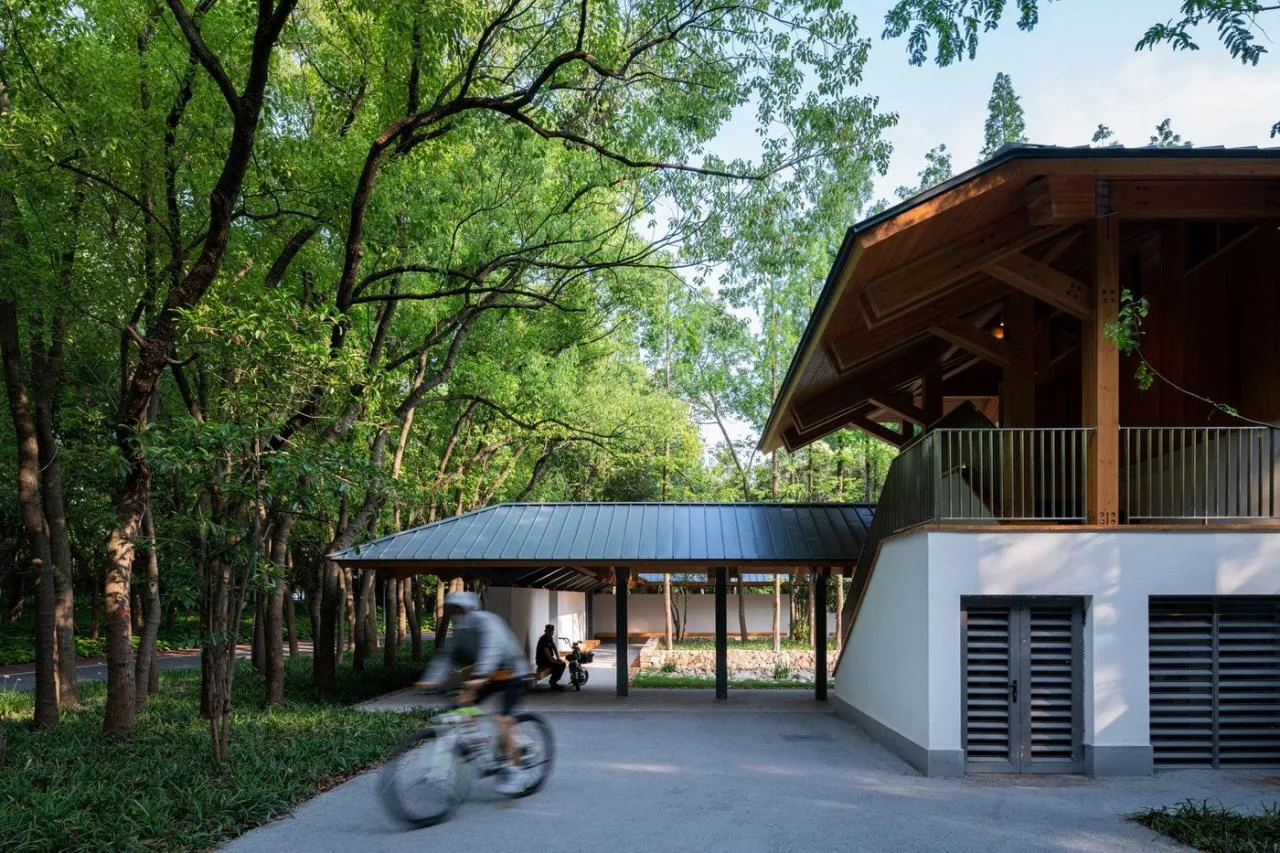
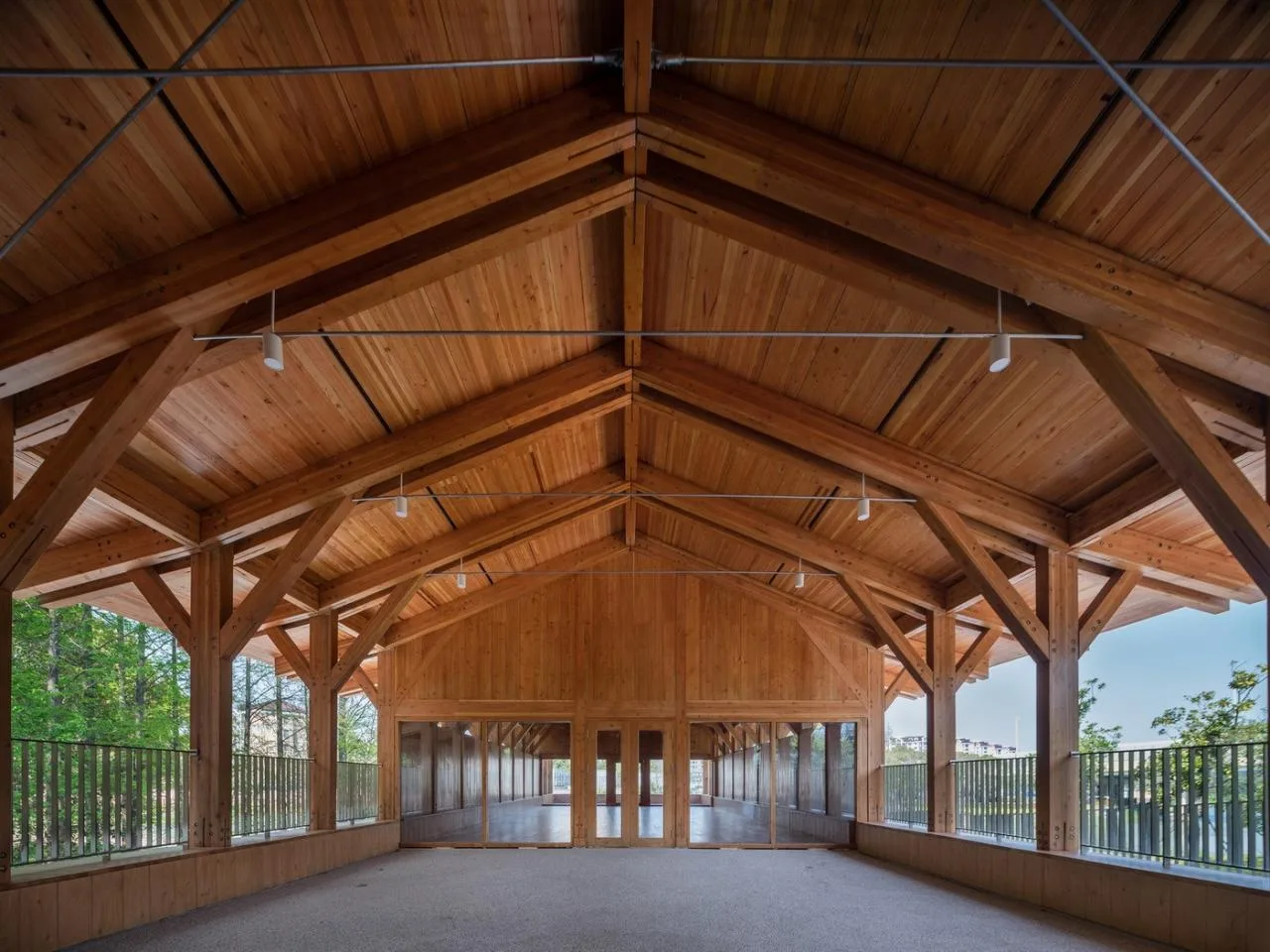
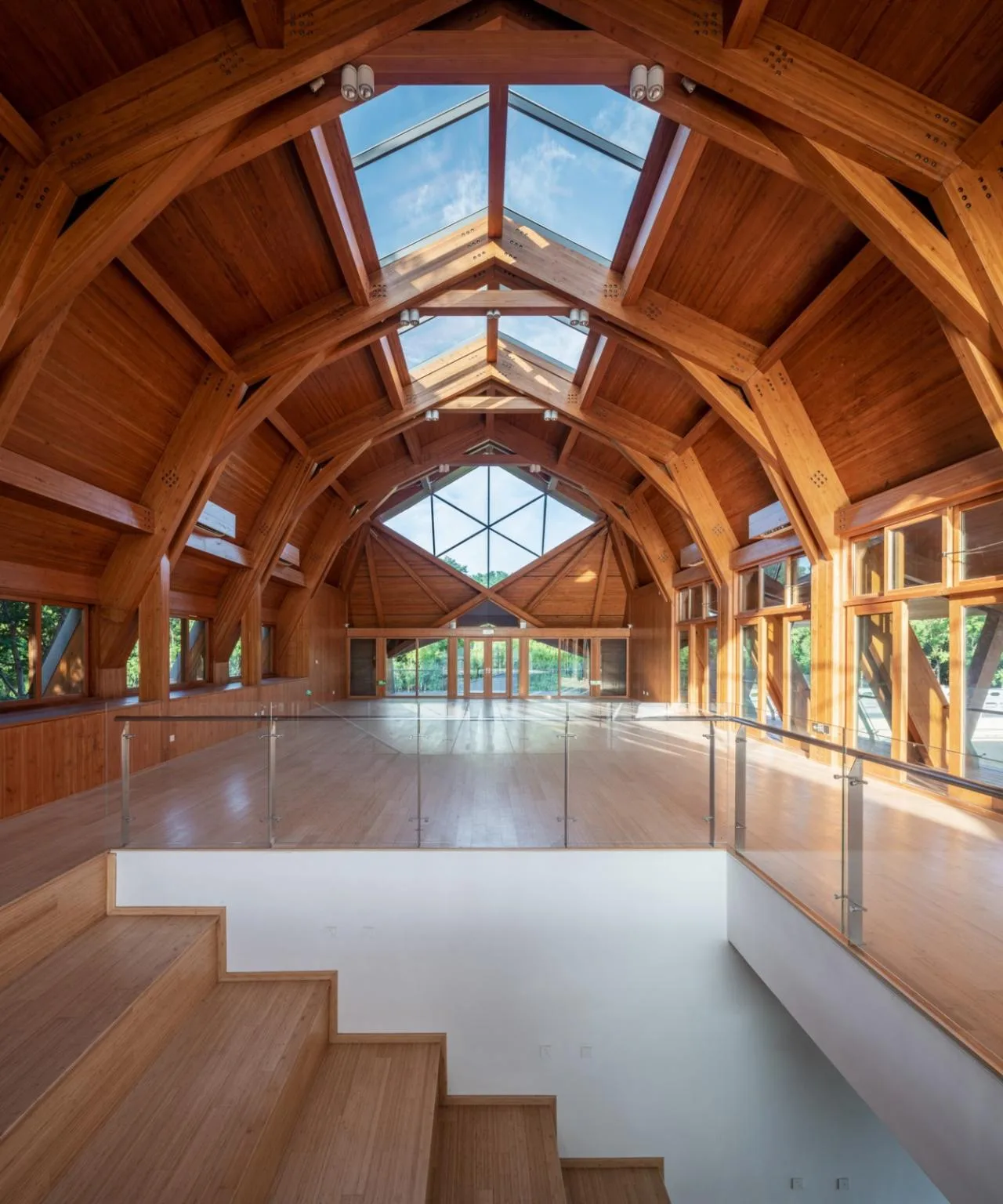
The original structures were mainly two-story brick and concrete houses, typically featuring wooden sloped and tiled roofs—a common style in Jiangnan residential architecture. The renovation plan retains and reinforces the first-floor brick and concrete framework, removes the upper floor above the second-floor slab, and replaces it with a laminated wood structure.
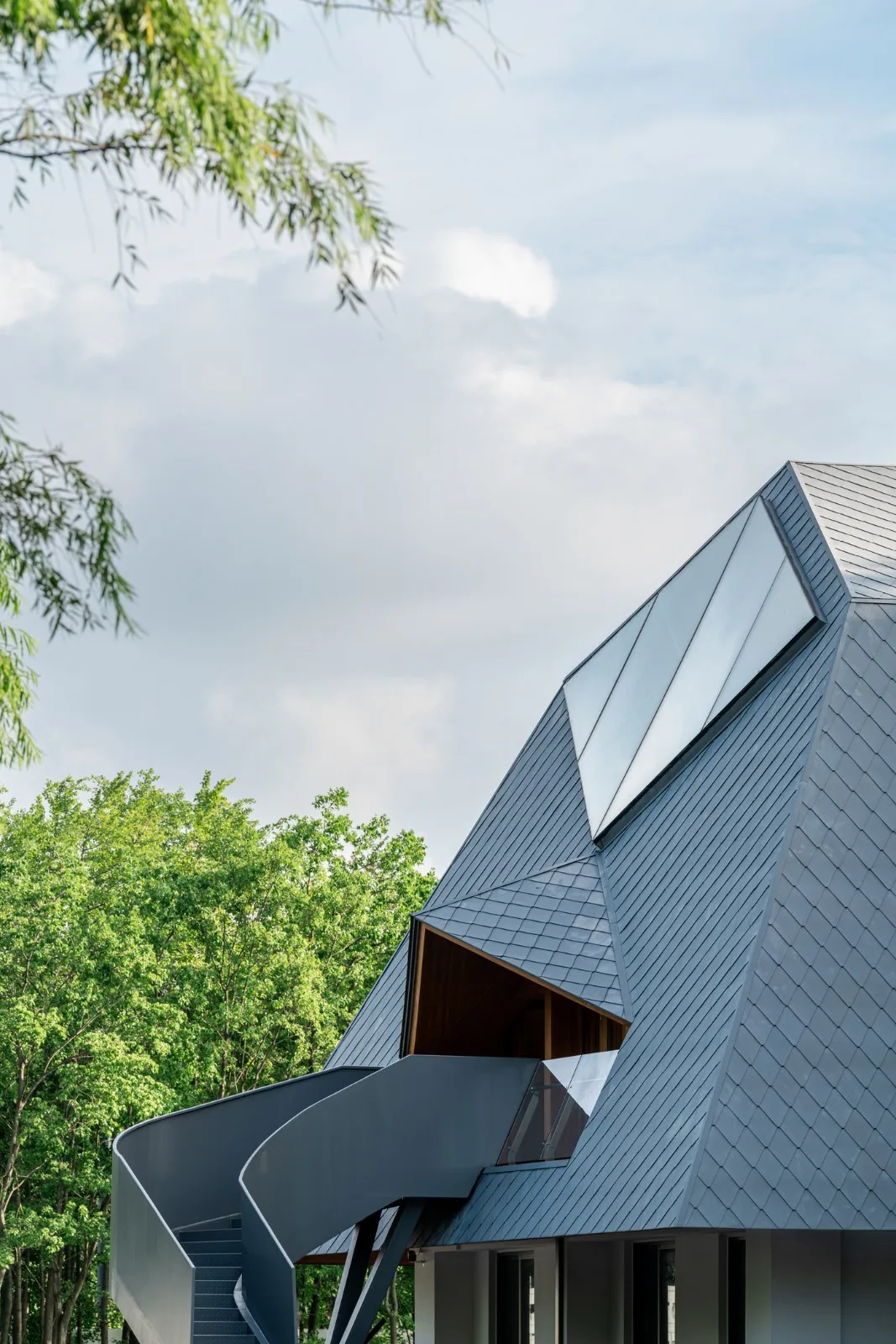
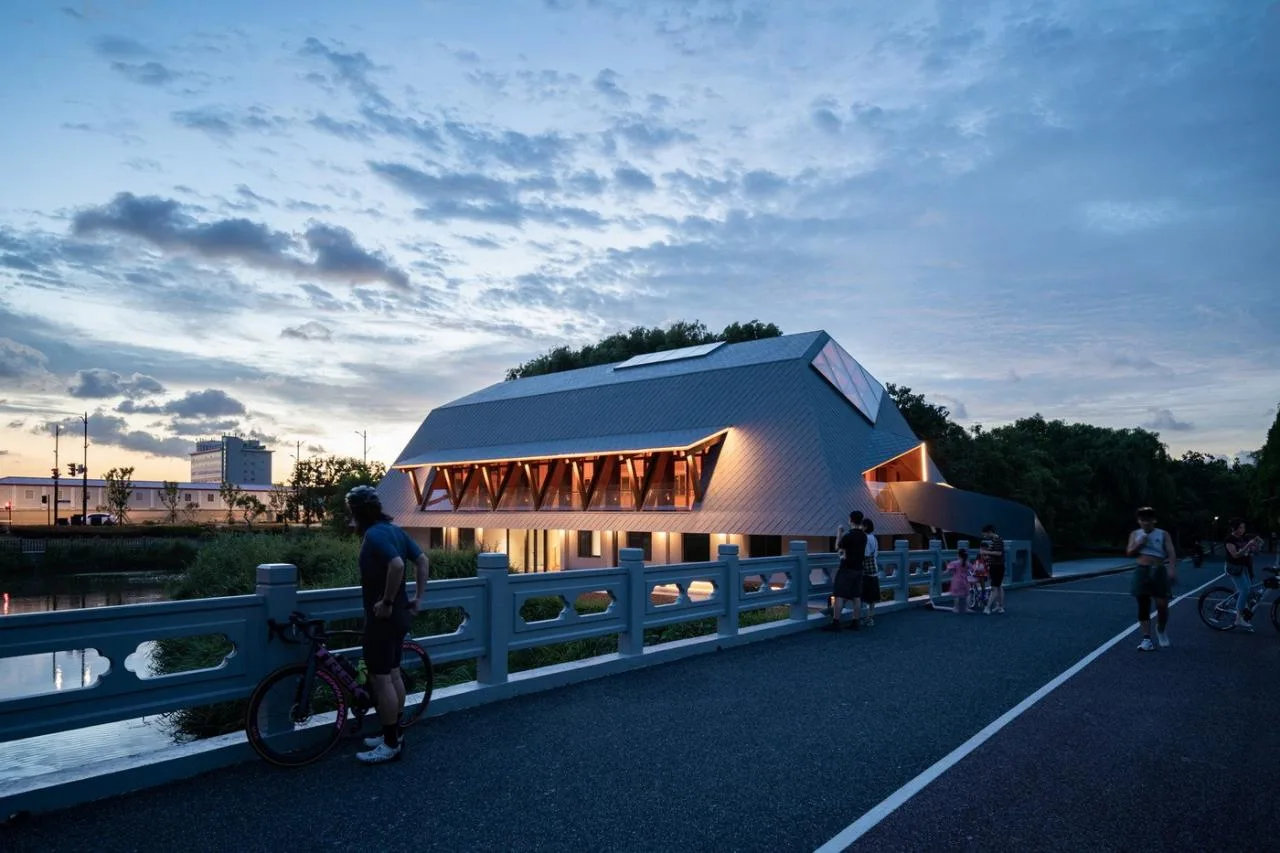
This structural approach results in unique hilltop forms for each of the four relay stations, tailored to their specific site conditions and spatial characteristics.
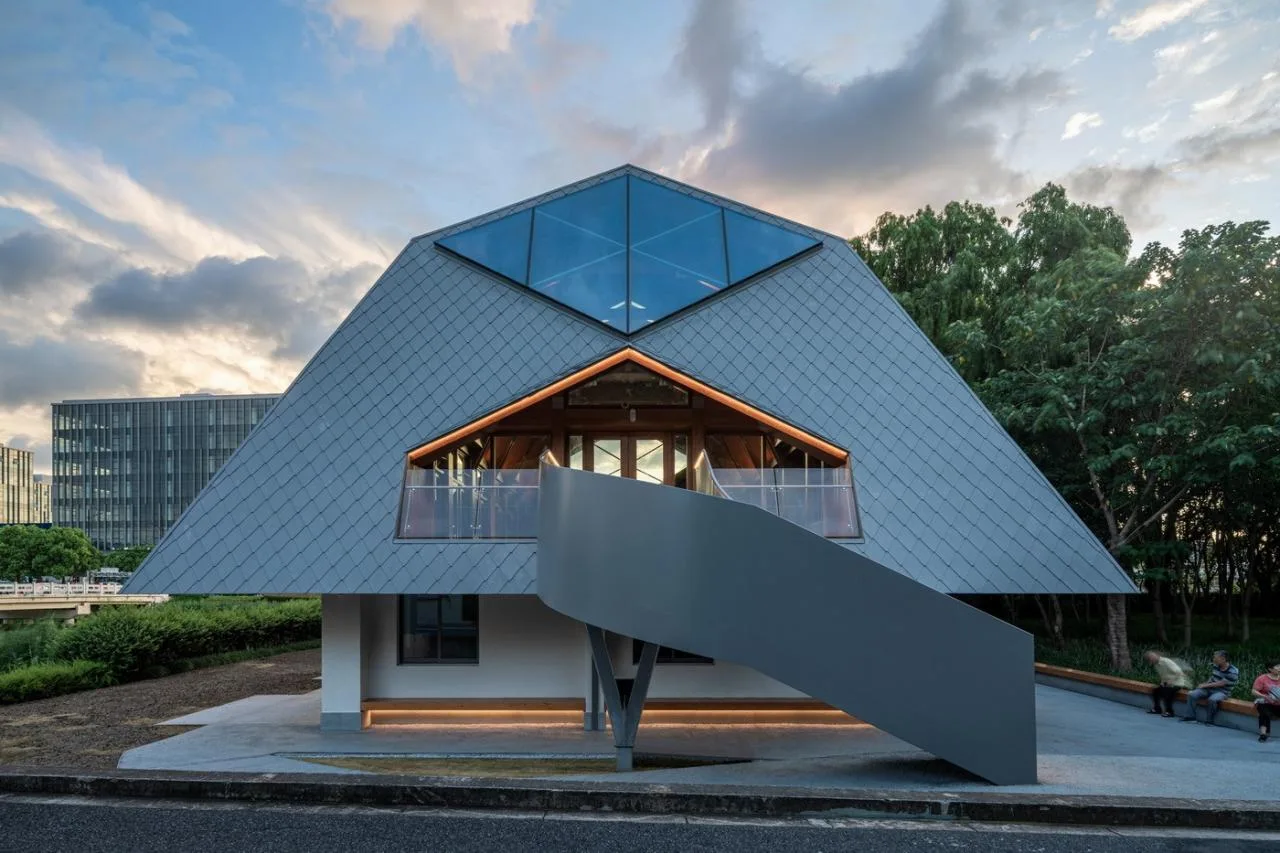
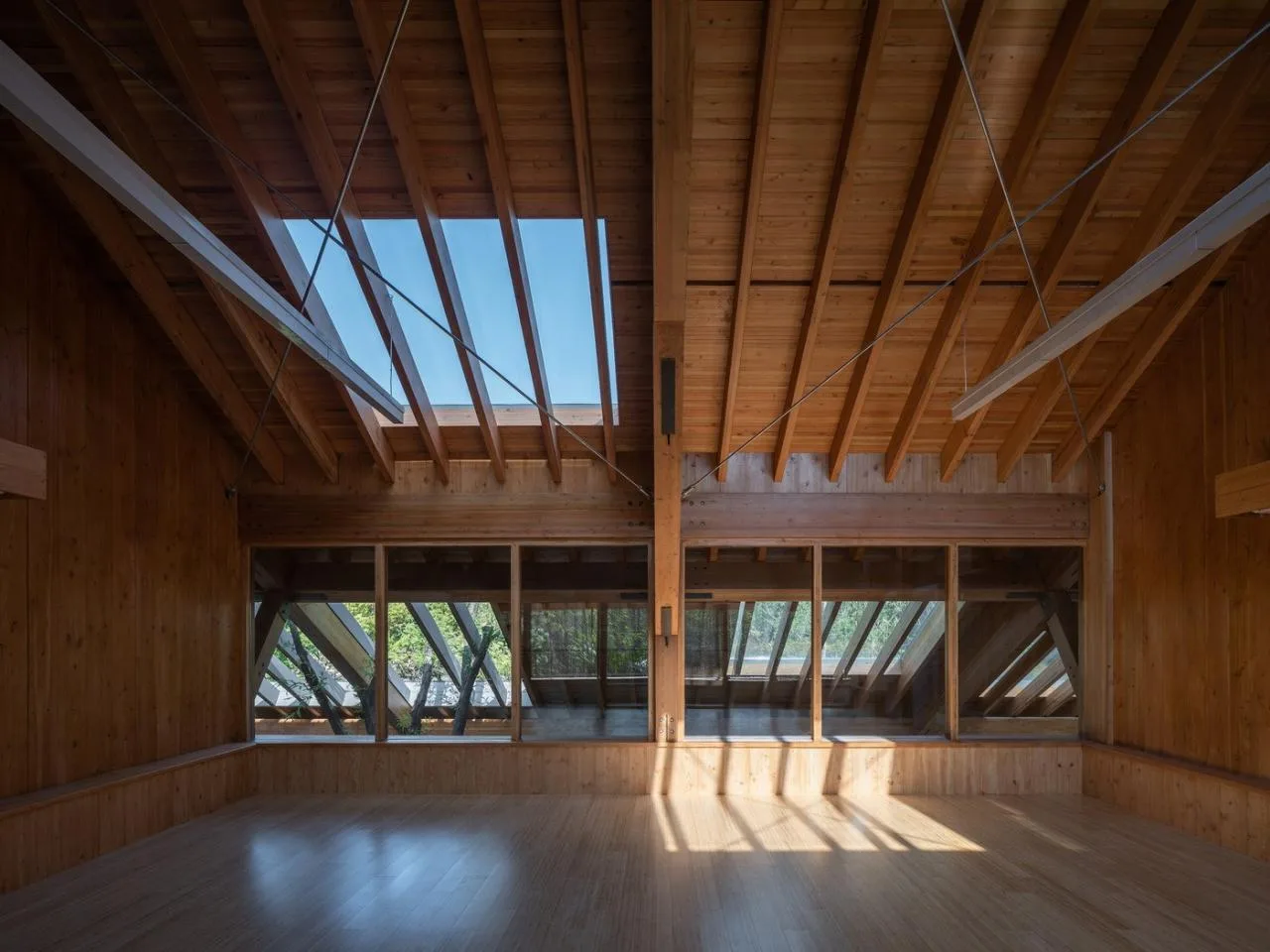
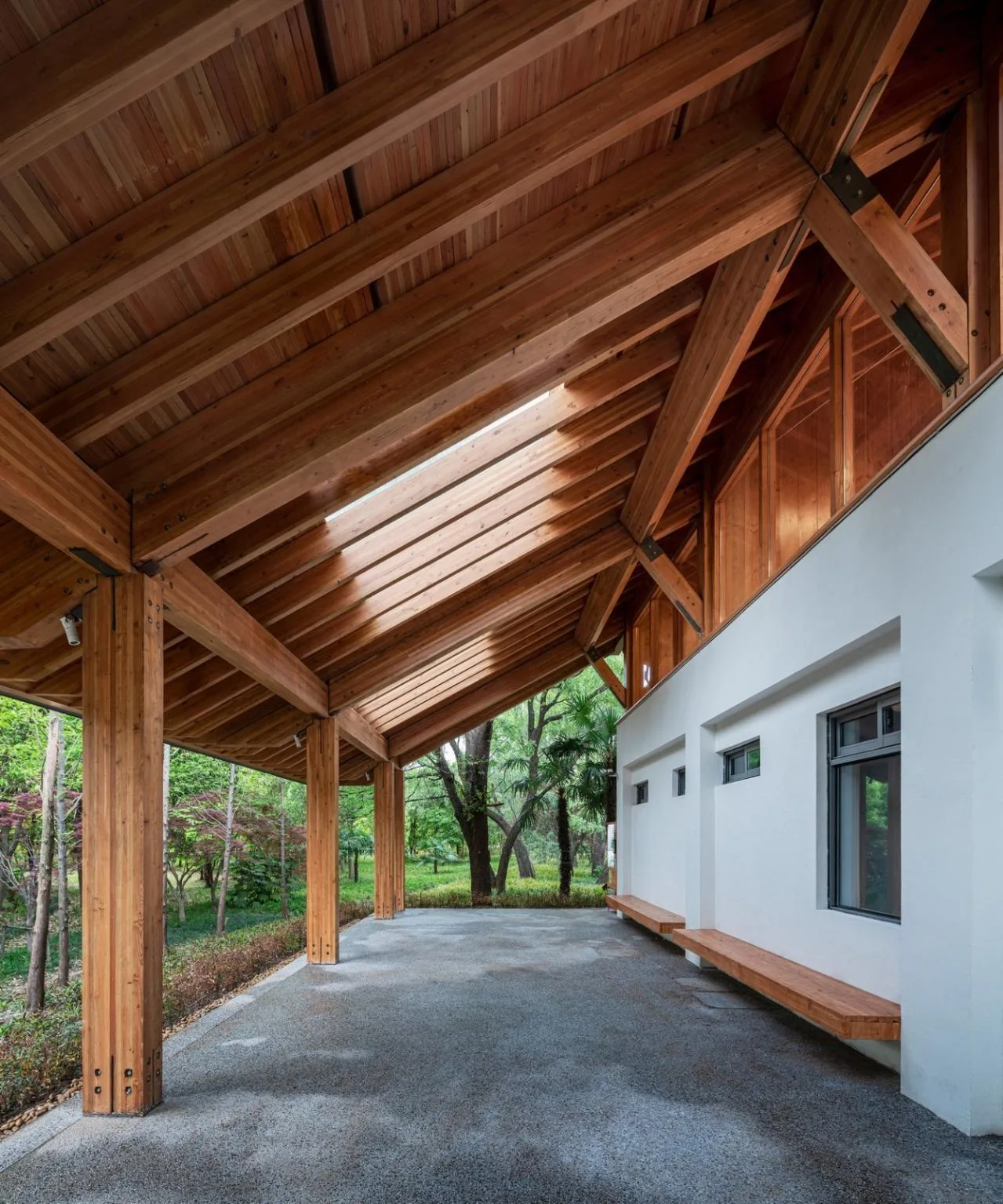
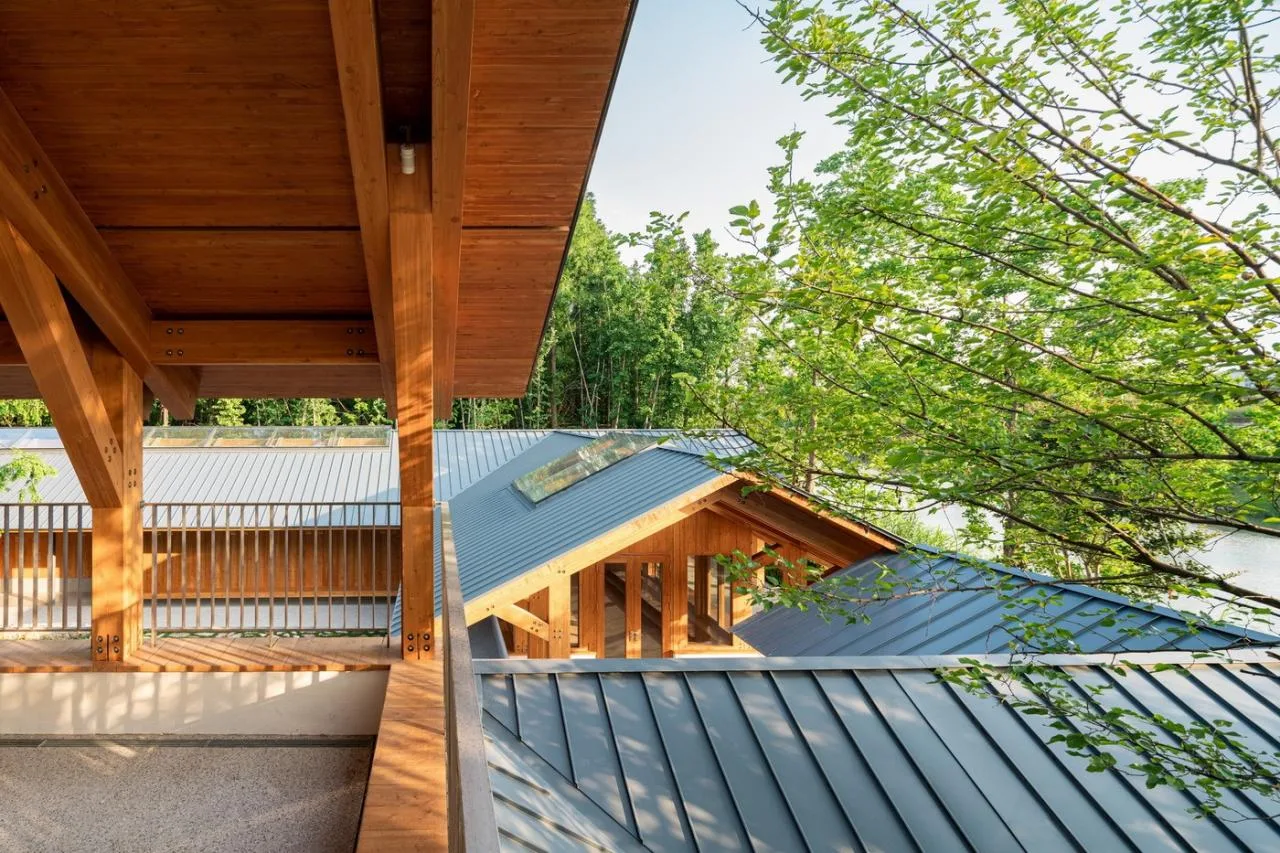
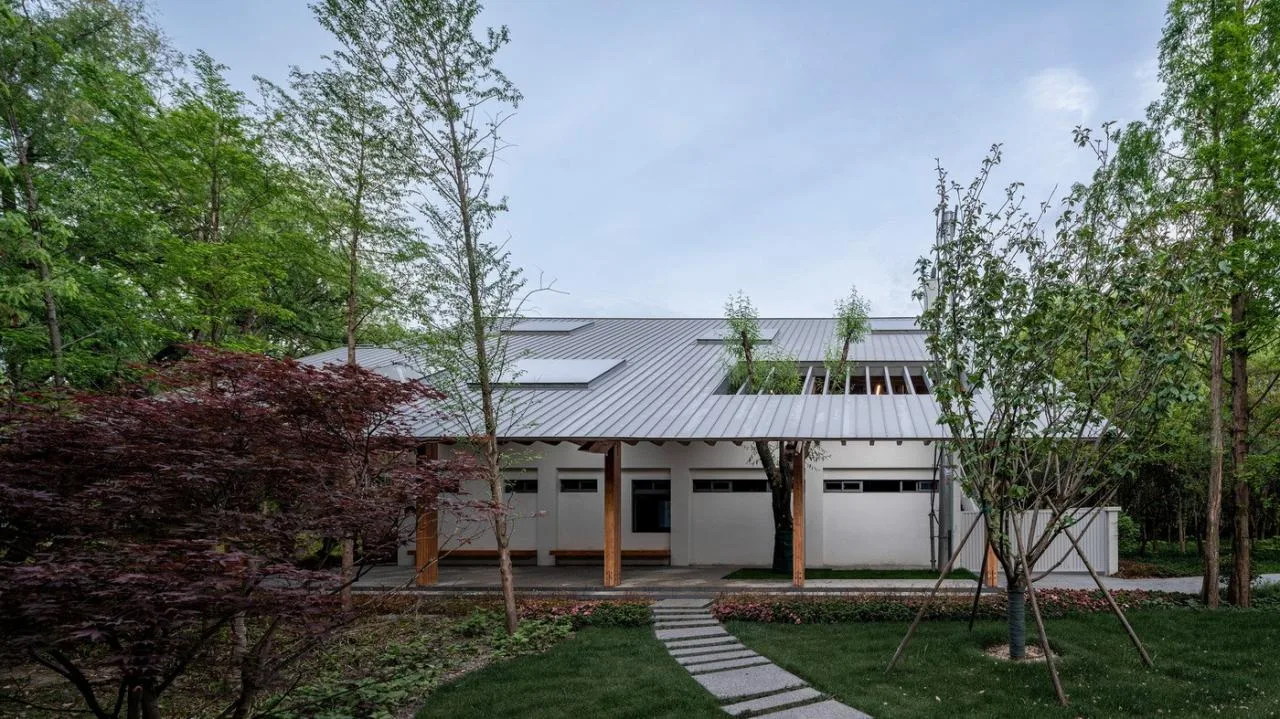
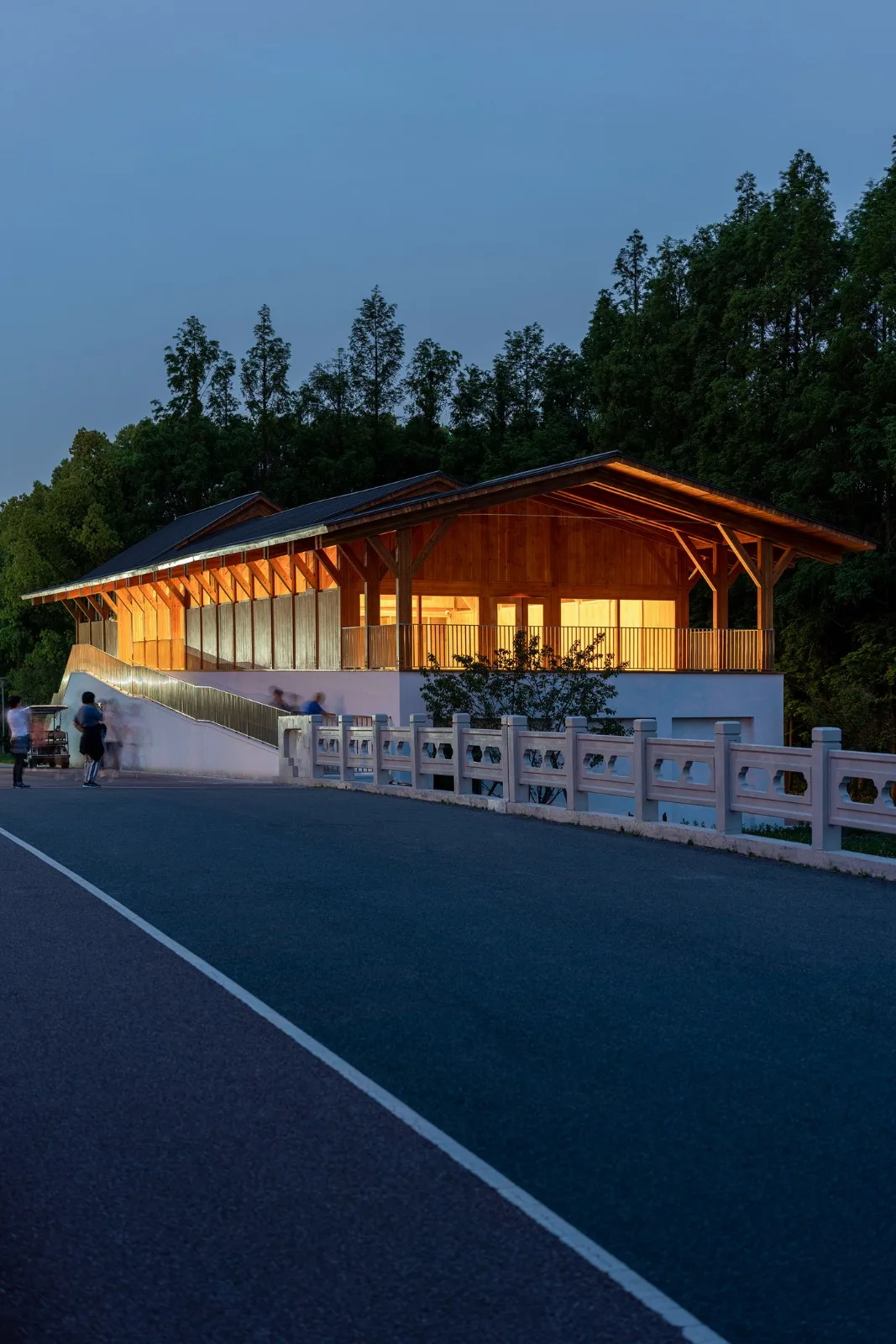
The design embraces simplicity and encourages user freedom and participation, reflecting a warm, thoughtful approach to construction and material use. The brick and concrete base is painted with white textured paint, while the upper sections expose wooden structural beams, columns, and observation boards, complemented by wooden siding on the exterior facades.
This cohesion between interior and exterior creates a seamless experience, blending the building’s exterior with its environment while providing natural warmth within the interior space. The sloped roofs feature deep eaves and are covered with matte dark gray or silver-gray titanium zinc or aluminum-magnesium-manganese metal roofing systems.
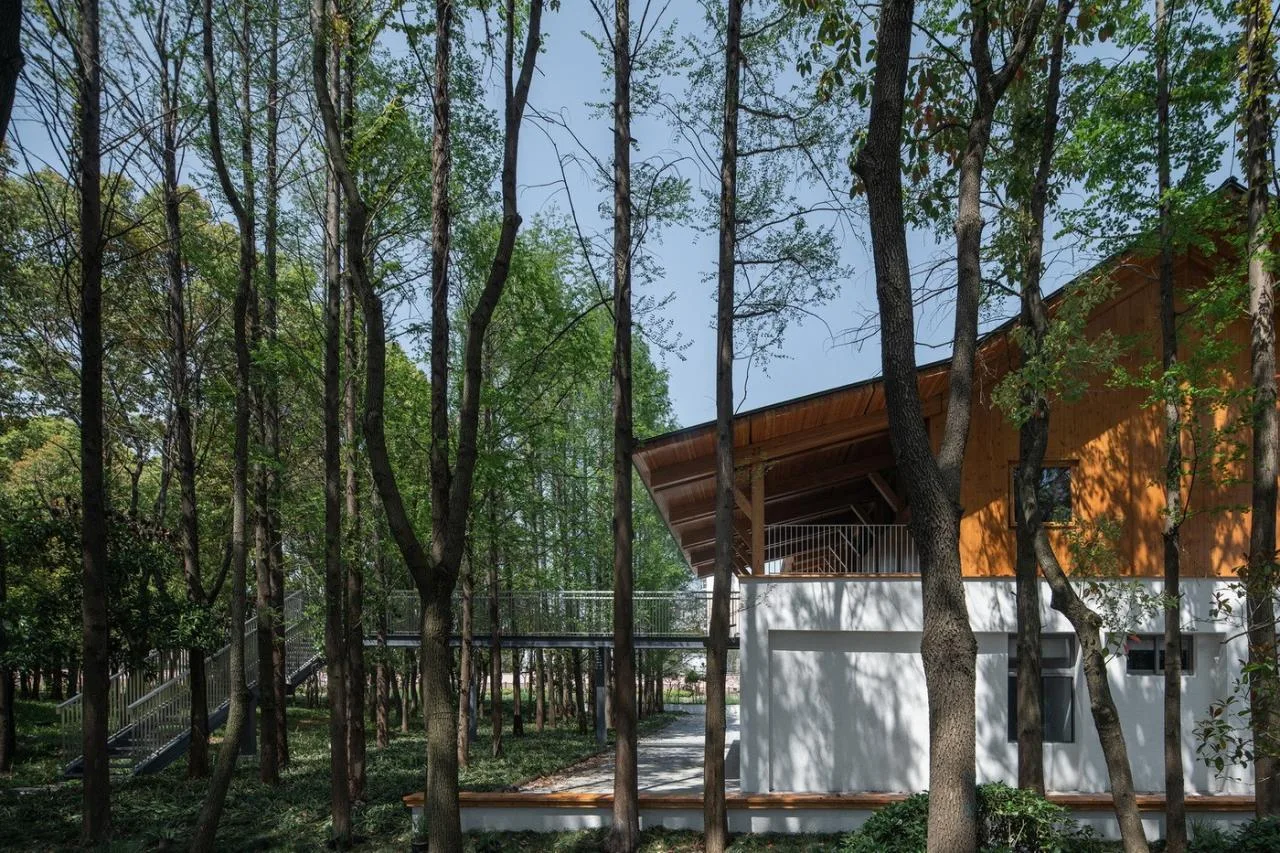
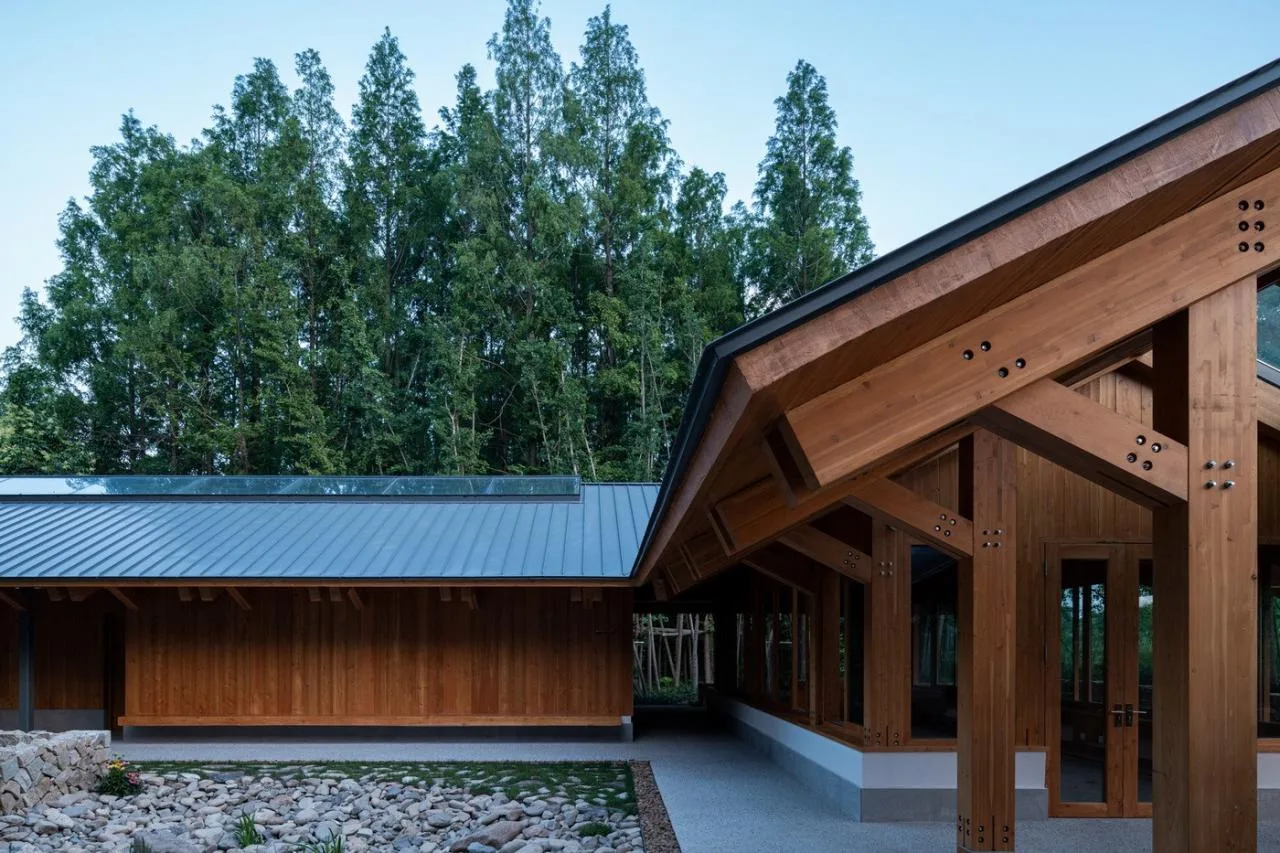
Cailv Ting – Post Station 1: This station features a courtyard densely covered with pine trees. Area: 521.2 square meters
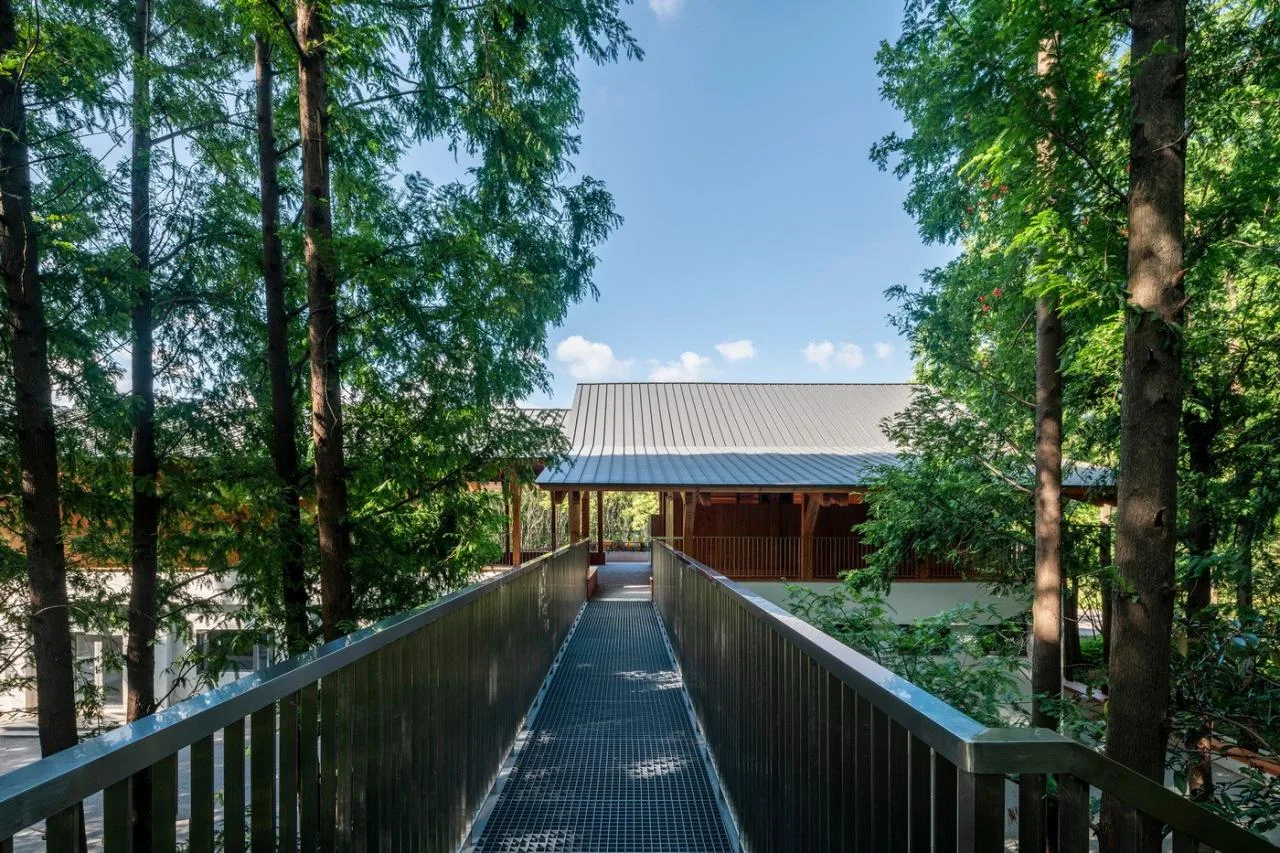
Yuli Pavilion – Station 3: A skybridge connects directly to the southern side of the Shuishan Forest. Area: 688.5 square meters
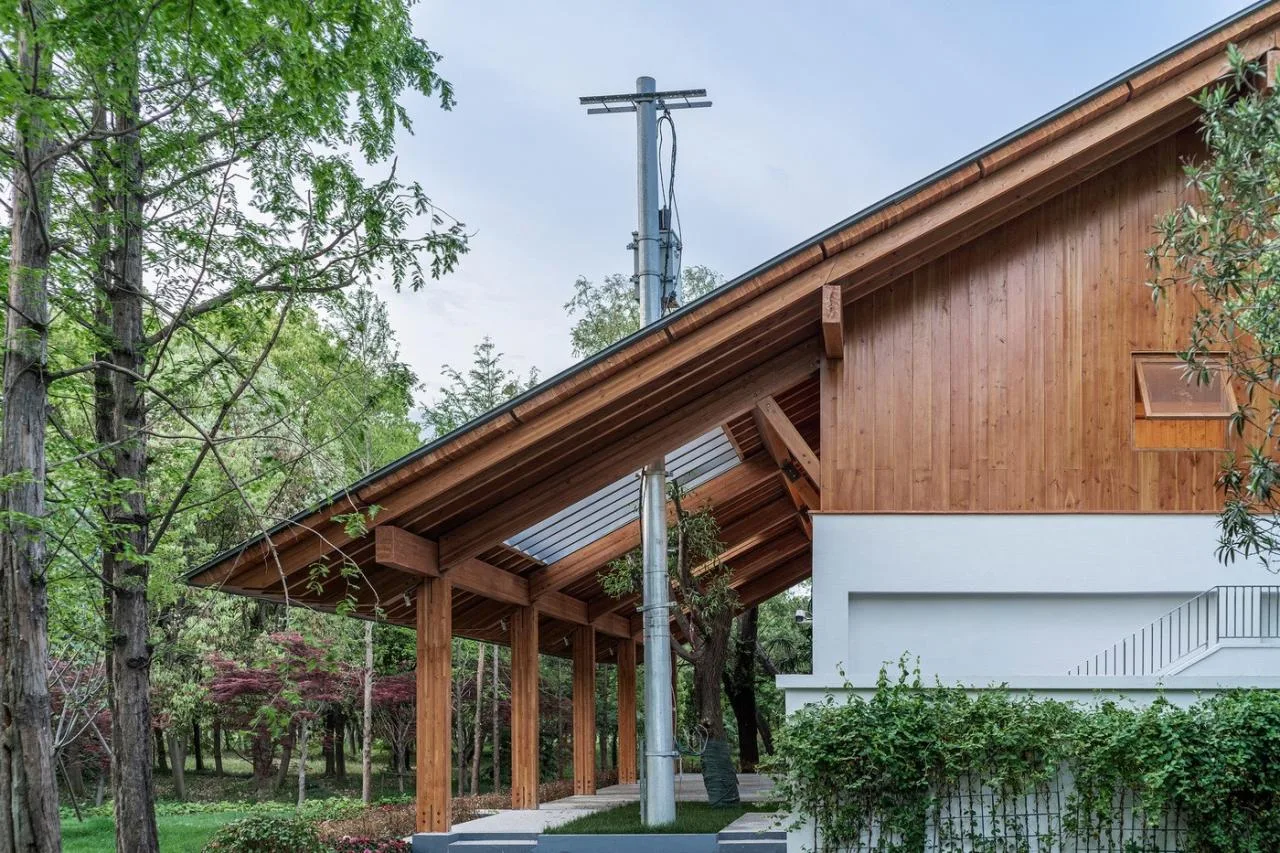
Zhenlu Pavilion – Station 4: Powerline poles extend from beneath the large eaves. Area: 353.9 square meters
Youtian Hall – Post Station 5: Inspired by the prototype of Canggu, this station transforms everyday life scenes into urban landscapes. Area: 515.3 square meters
Project Information
Architects: Zhizheng Architecture Studio, Yeshi Architecture Studio
Project Year: 2023
Photographers: Yang Min, North North
Lead Architect: Zhang Bin / Zhizheng Architecture Studio
Project Manager: Wang Jiaqi / Zhizheng Architecture Studio
Project Architects: Wang Jiaqi, Xu Yue (Construction Drawings) / Zhizheng Architecture Studio for Cailvting (Station 1) and Youniantang (Station 5); Li Danfeng / Yeshi Architecture for Yuli Pavilion (Station 3) and Zhenlu Pavilion (Station 4)
Design Team: Ye Kai, He Kanxuan, Zhu Xiaojun, Cai Han, Chen Ruoyue, Du Nan, Luo Yingchao / Zhizheng Architecture Studio for Cailvting and Younian Hall; Zheng Haifan, Wang Jinkai, Ye Zhifan / Yeshi Architecture for Yuli Pavilion and Zhenlu Pavilion
Client: Shanghai Changning District Greening Management Affairs Center
Structural Design: Shanghai Sanyao Construction Engineering Design Co., Ltd.
Construction: Shanghai Garden and Greening Construction Co., Ltd.
Lighting Design: Shanghai Tongji Architectural Interior Design Engineering Co., Ltd., Lighting Engineering Institute
Mechanical and Electrical Design: Shanghai Zhisheng Architectural Decoration Design Co., Ltd.
Design General Contractor: Shanghai Xinwai Construction Engineering Design and Consulting Co., Ltd.
Wooden Structure Design: Shanghai Sikafu Construction Technology Co., Ltd.
Location: Shanghai, China















Must log in before commenting!
Sign Up