
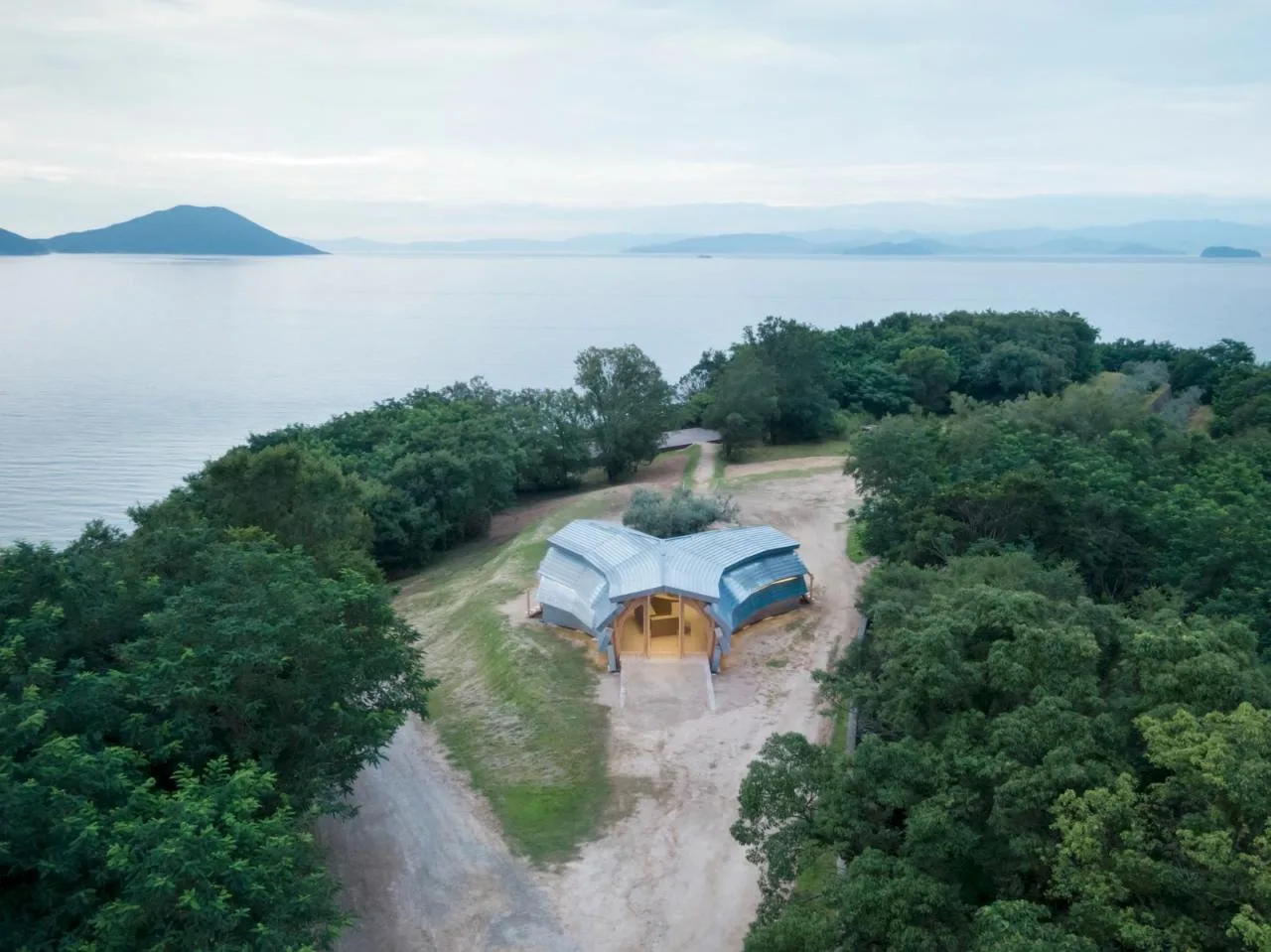
VUILD recently completed the “Little Bean Island Gateway Lounge,” introducing a new approach to the relationship between designers and clients. This project challenges the conventional reliance on island-only resources by establishing supply chains to support construction on remote islands.
Design Challenge
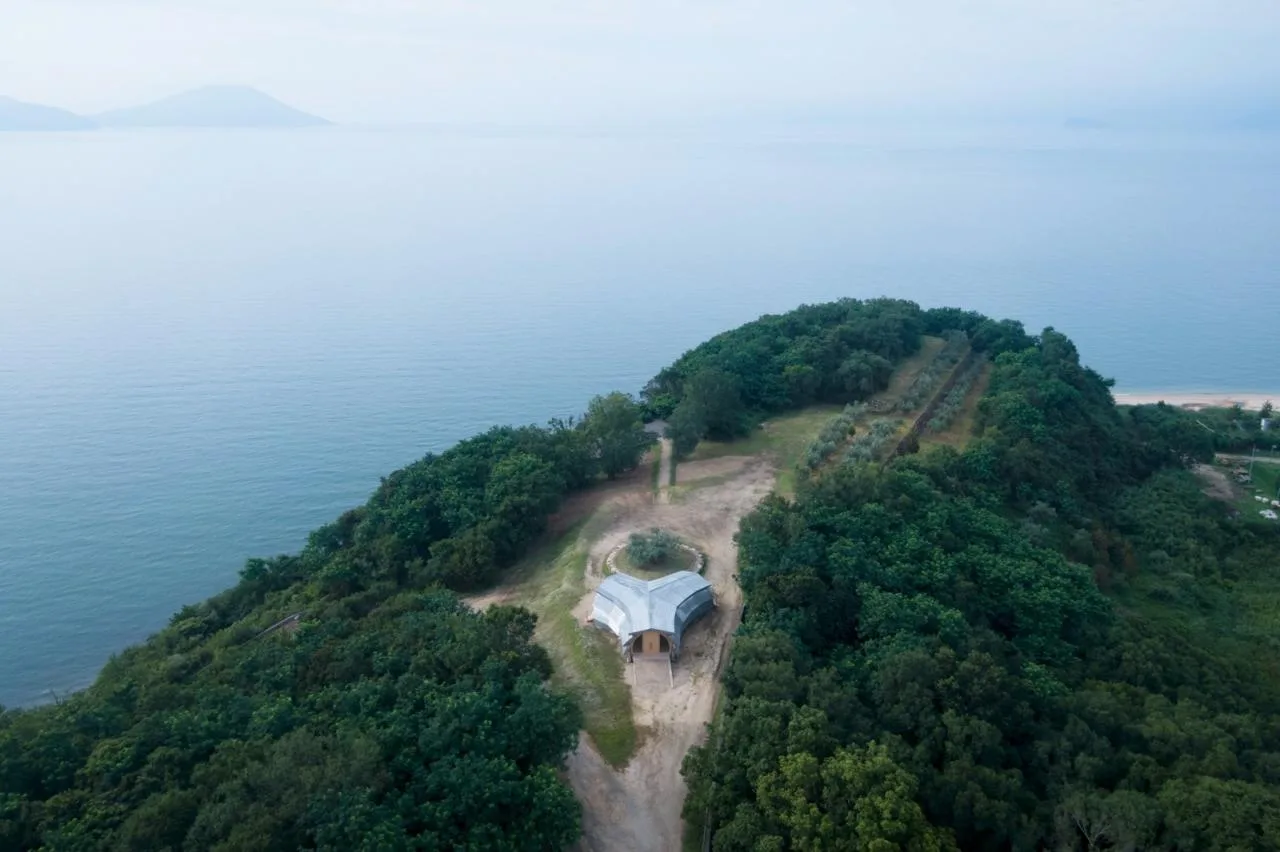
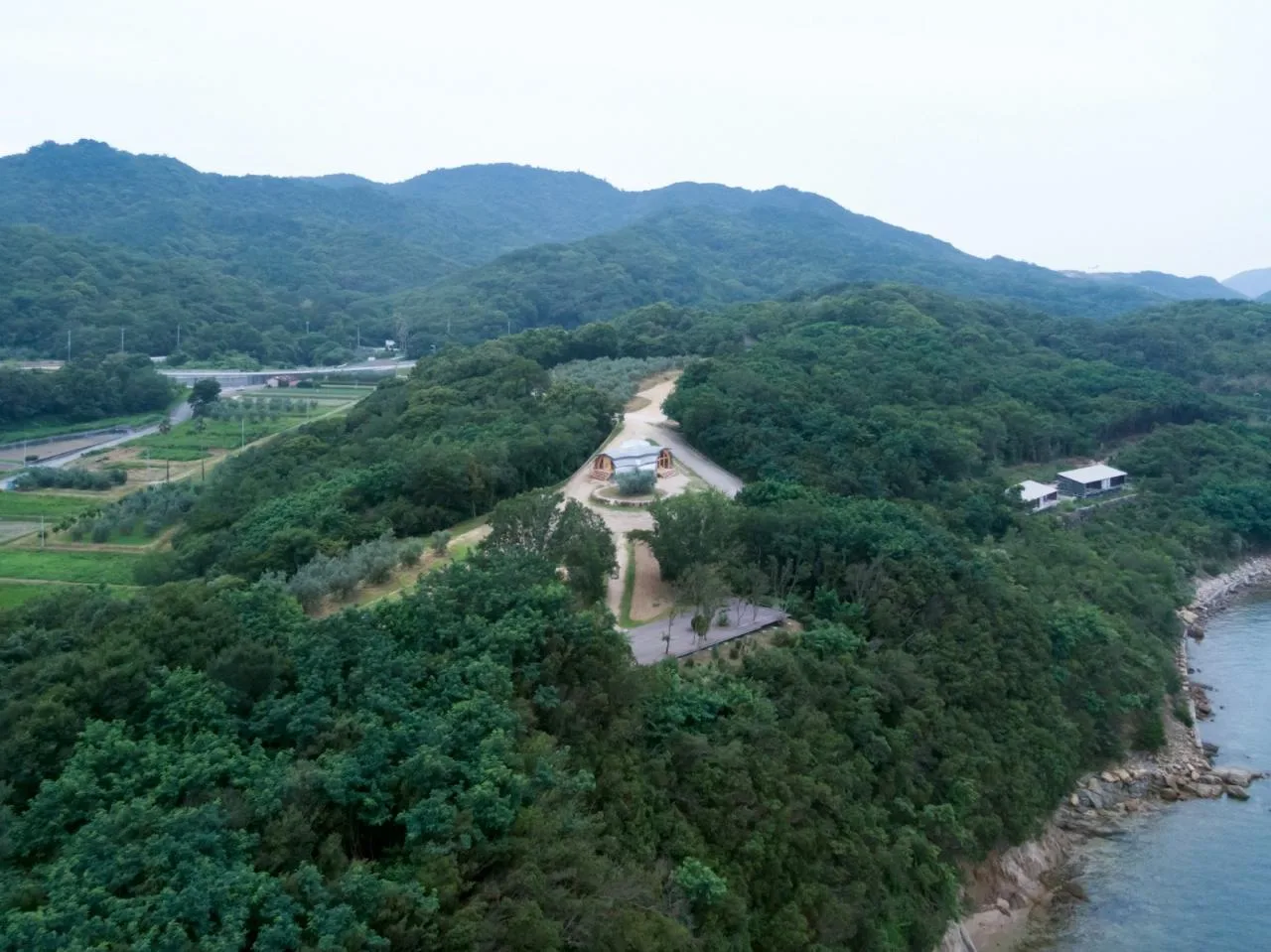
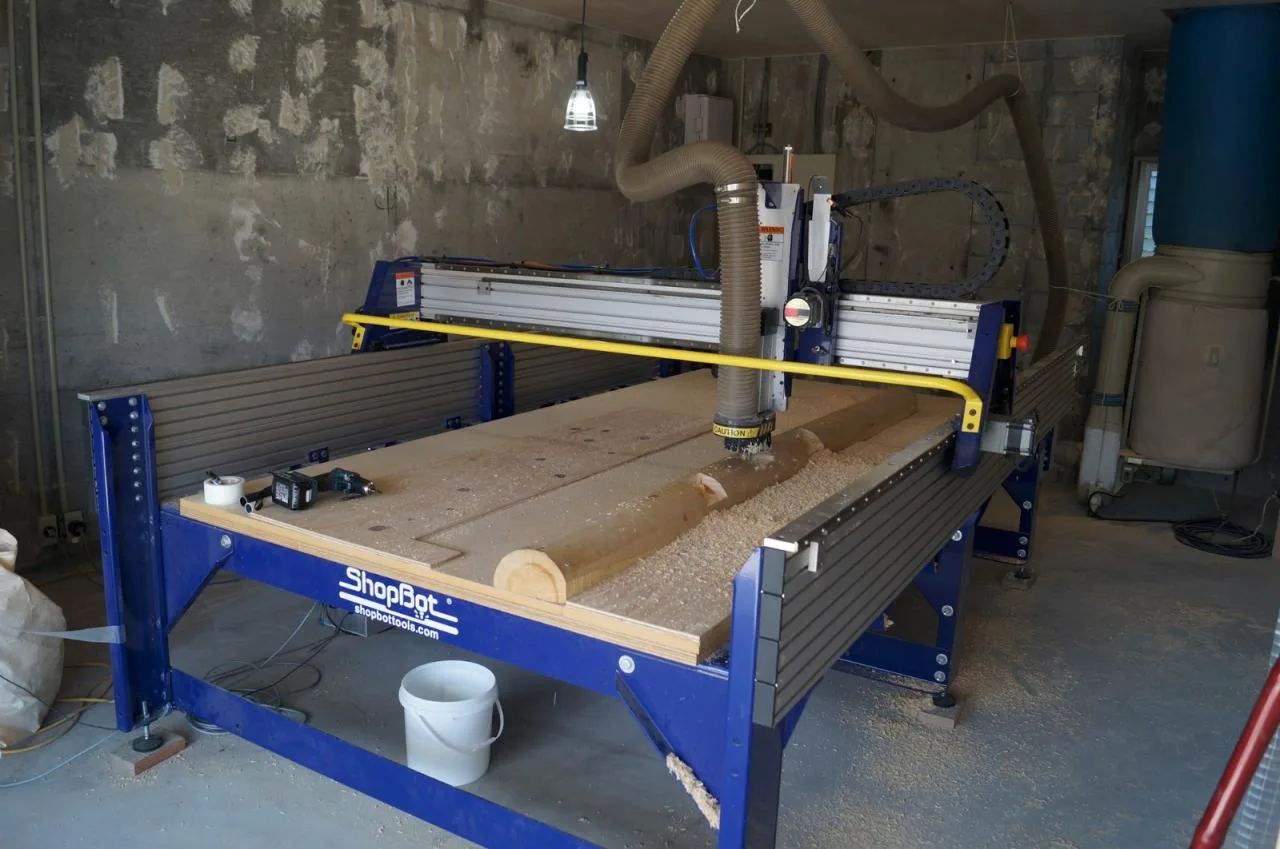
Located in western Japan, Shodoshima is 180 kilometers west of Osaka. Due to the island’s lack of drying and processing facilities, transporting wood materials off-island for construction results in high costs. VUILD proposed converting a plastic greenhouse into a drying facility and installing a small CNC machining machine to utilize the island’s existing cypress trees.
The client agreed to purchase materials and manually construct the facilities. Together, they completed this project, which benefits both the local community and the global environment.
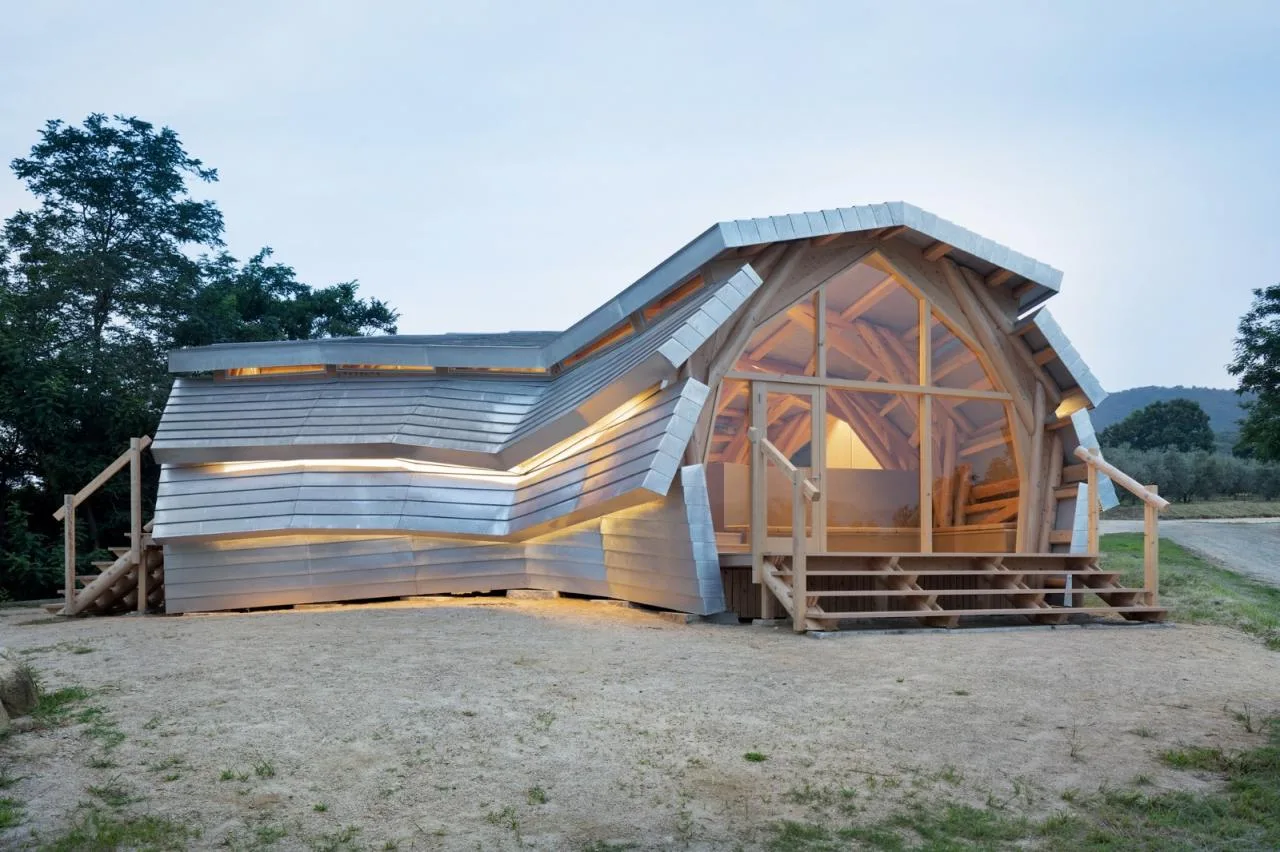
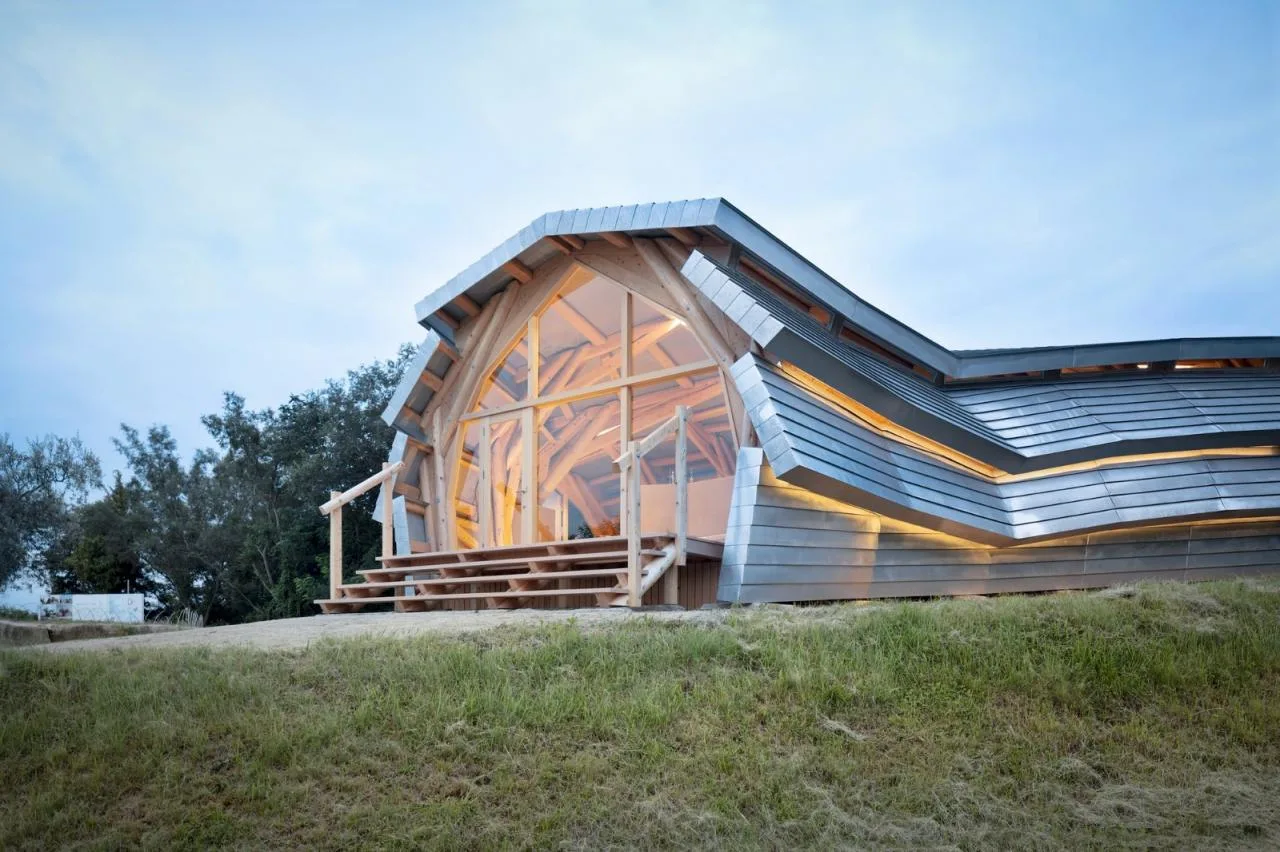
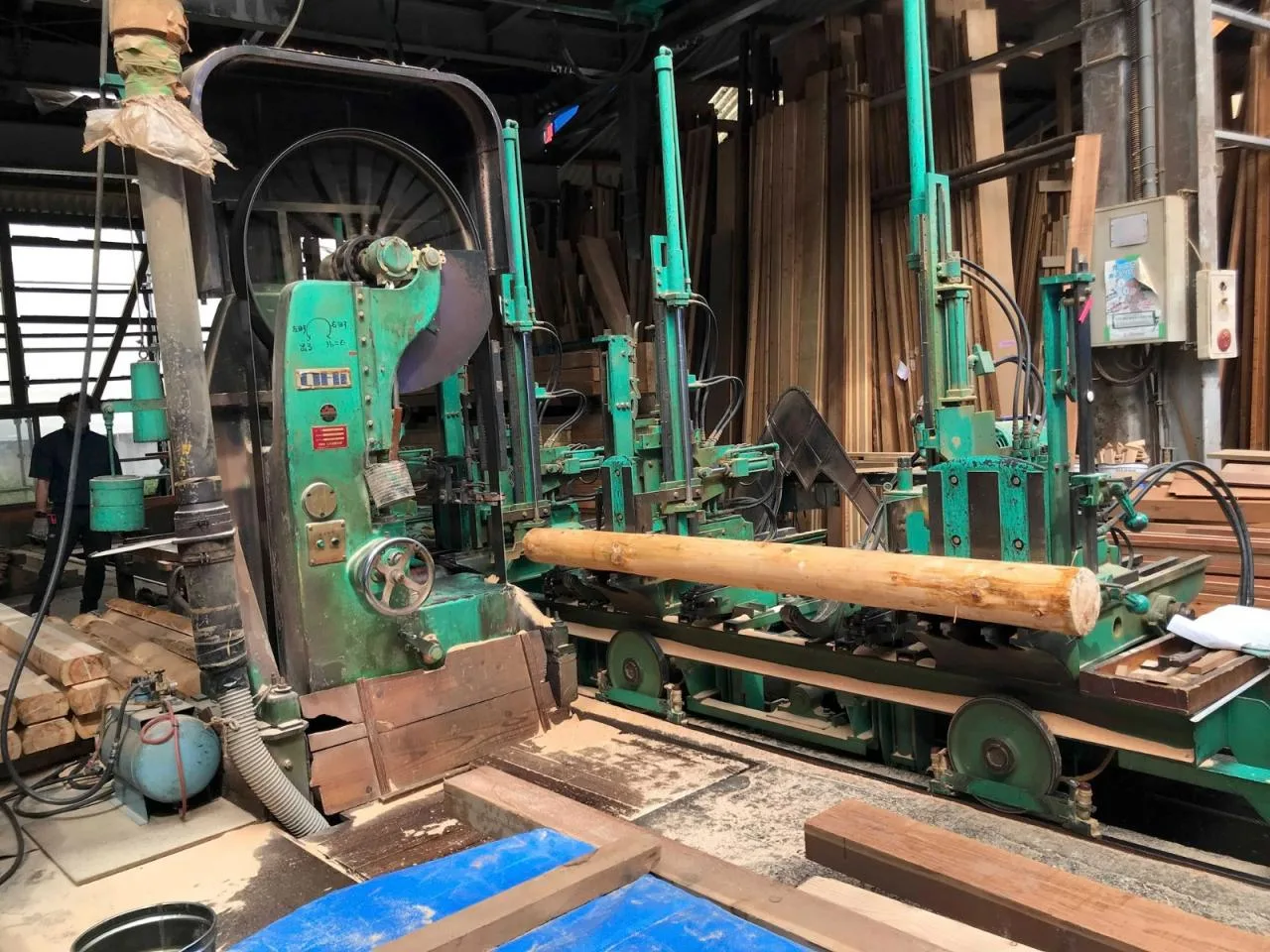
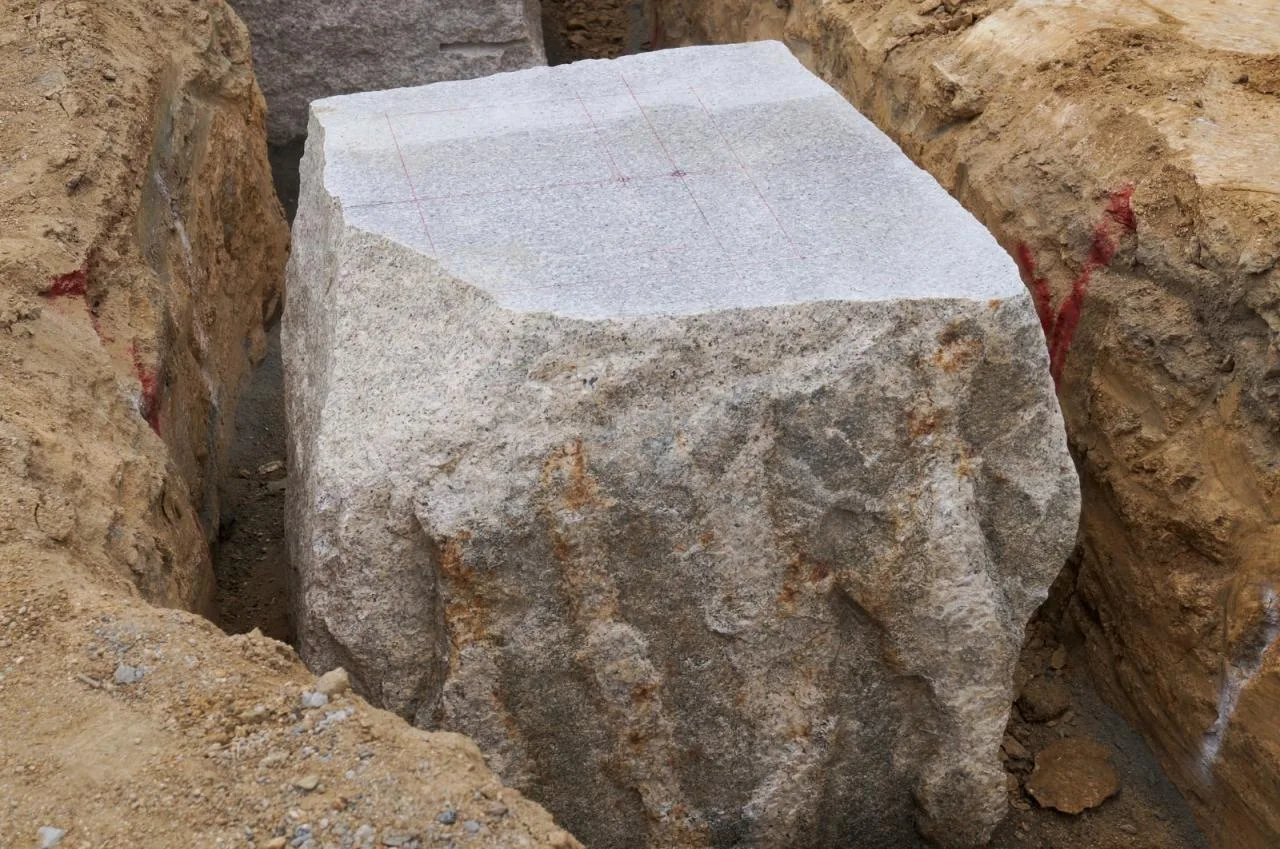
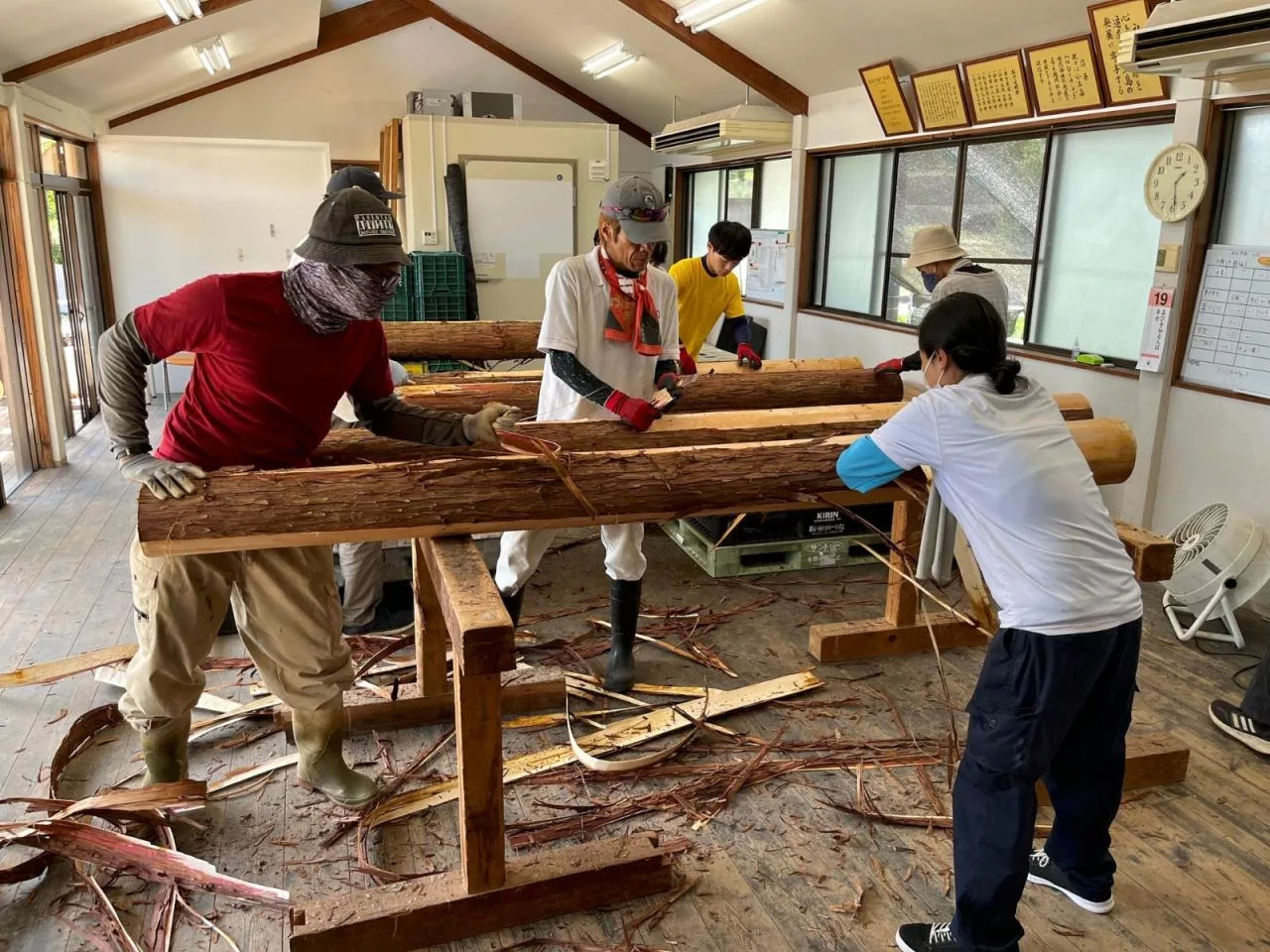
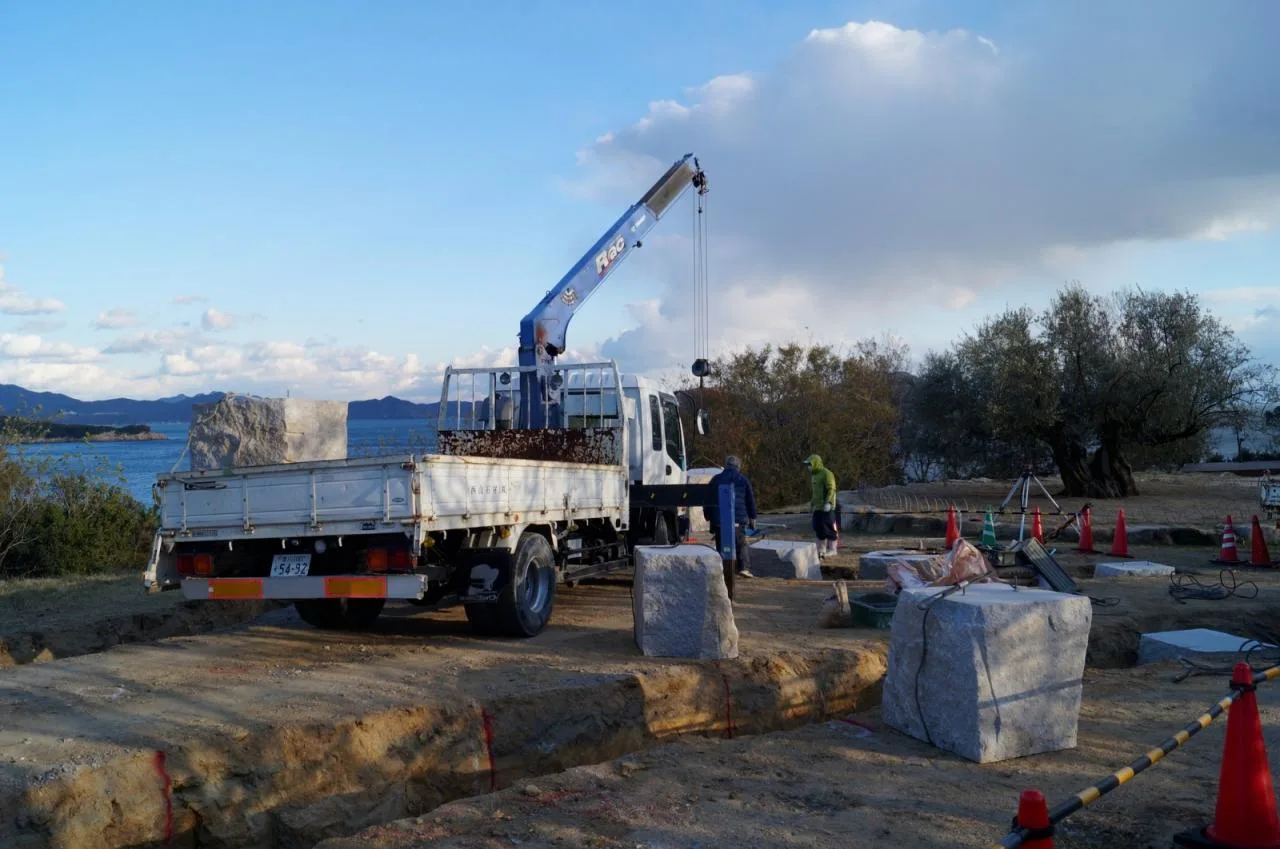
The client personally sourced stones and wood for the foundation within a 5.5-kilometer radius to minimize the carbon footprint. Under the guidance of architects and contractors, the client transported, peeled, and processed the wood by hand. VUILD took on the challenging role of guiding and coordinating the design and construction process.
Project Overview
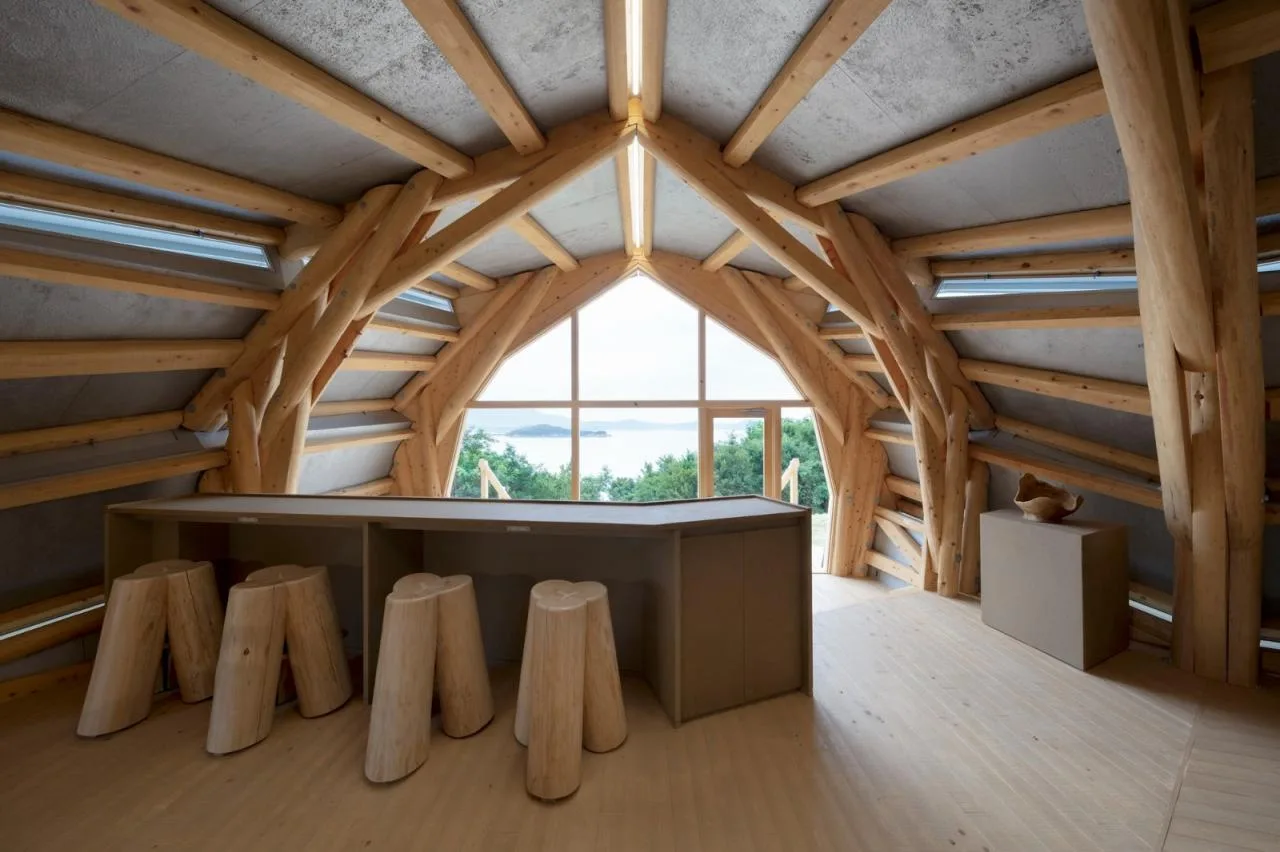
This project serves as a store and facility for customers involved in olive cultivation, research, production, and sales on Little Bean Island. Initially, the client sold olive products and cosmetics online; however, as their business expanded, they envisioned a physical space for direct sales and interaction.
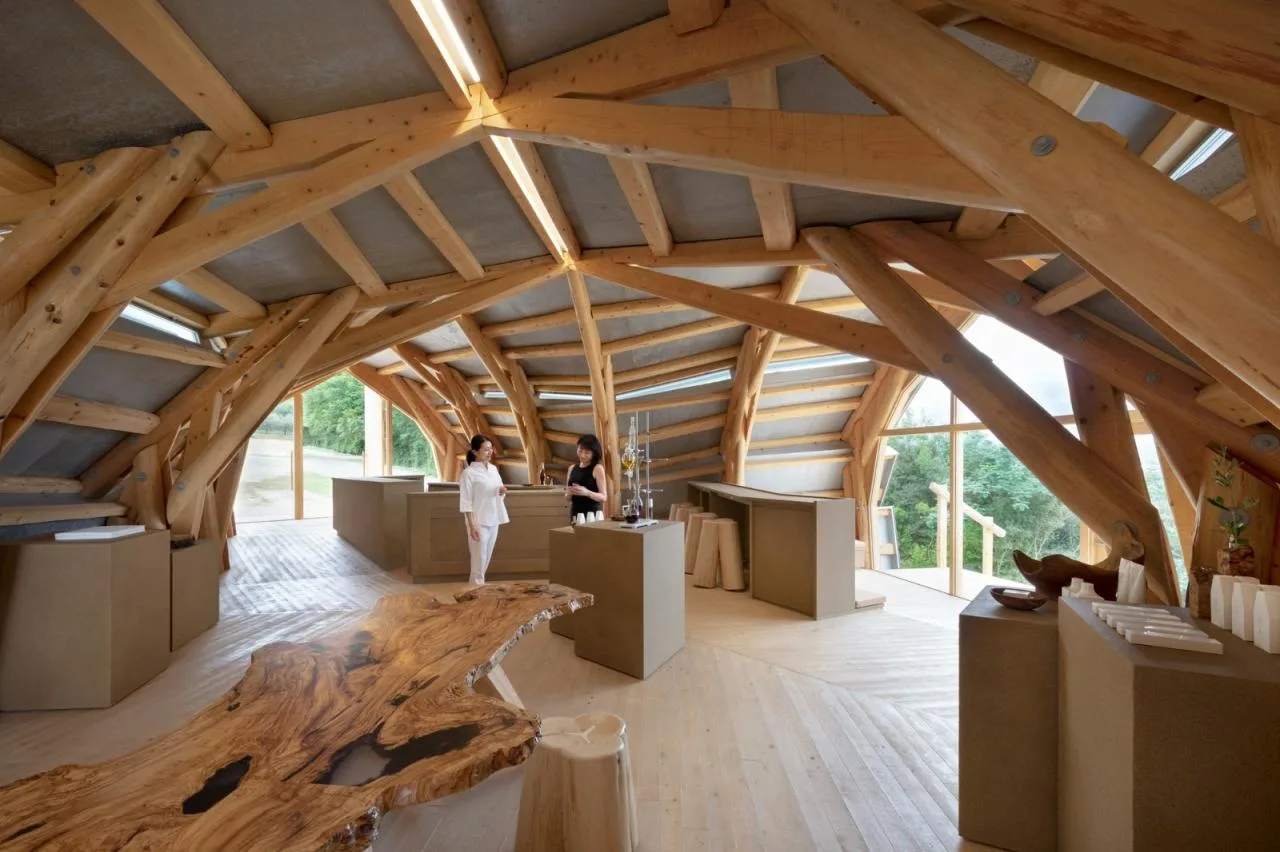
Visitors can experience products and services firsthand, observe the cultivation and extraction processes, and enjoy the climate and landscape that nurture local olives. VUILD designed this lounge as a welcoming space that encourages interaction, with the store as the foundation of this experience.
Environmental Considerations
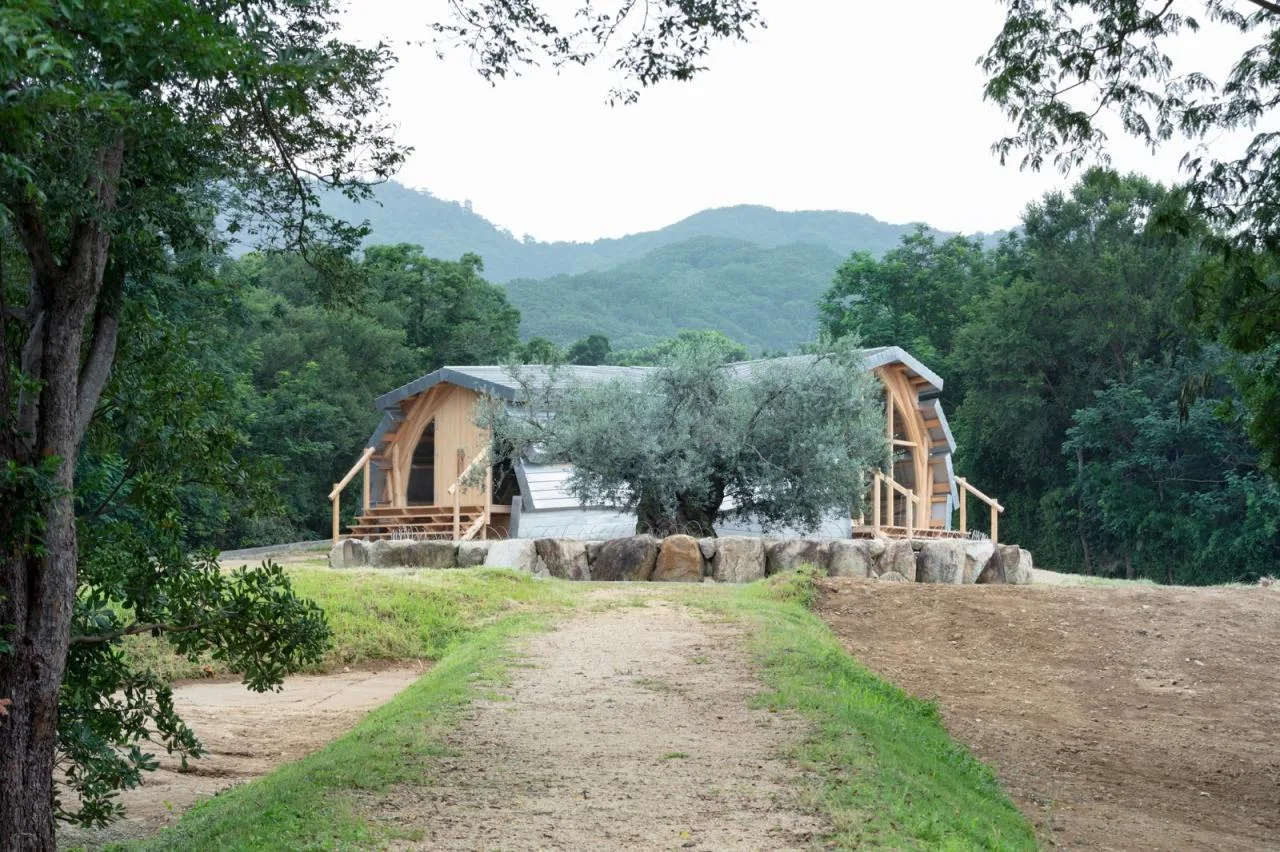
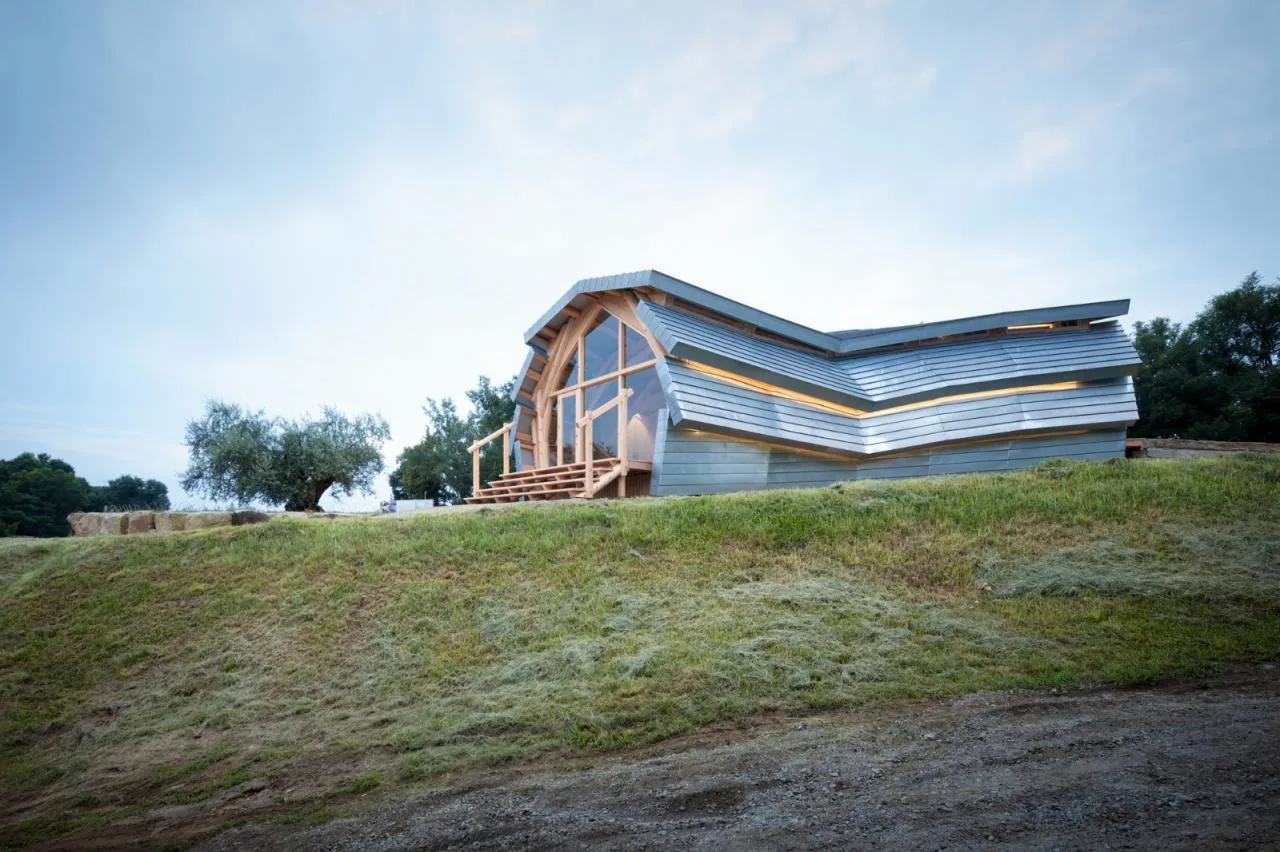
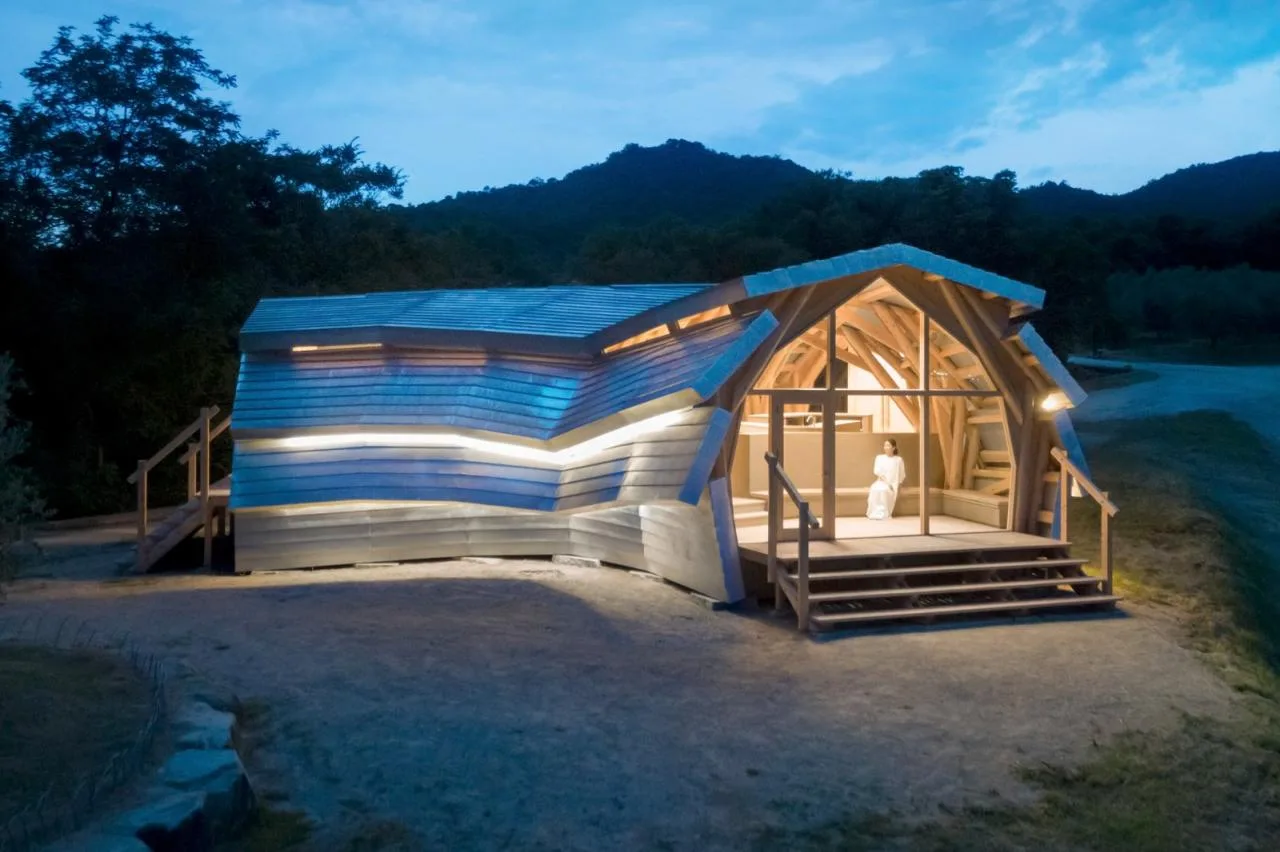
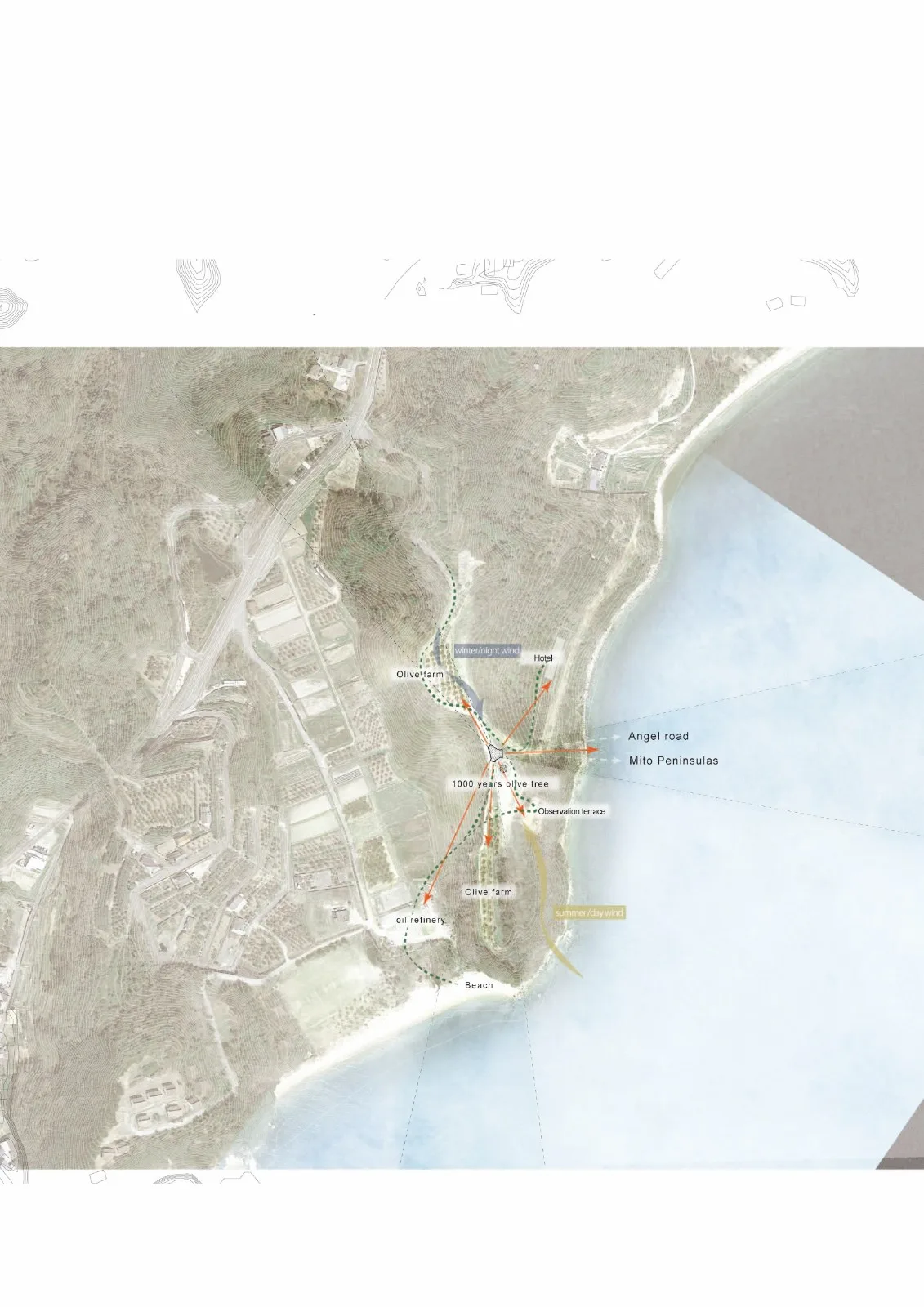
The site overlooks the sea, with the building constructed around a symbolic millennium-old olive tree. Architectural design carefully considers prevailing wind and sunlight directions.
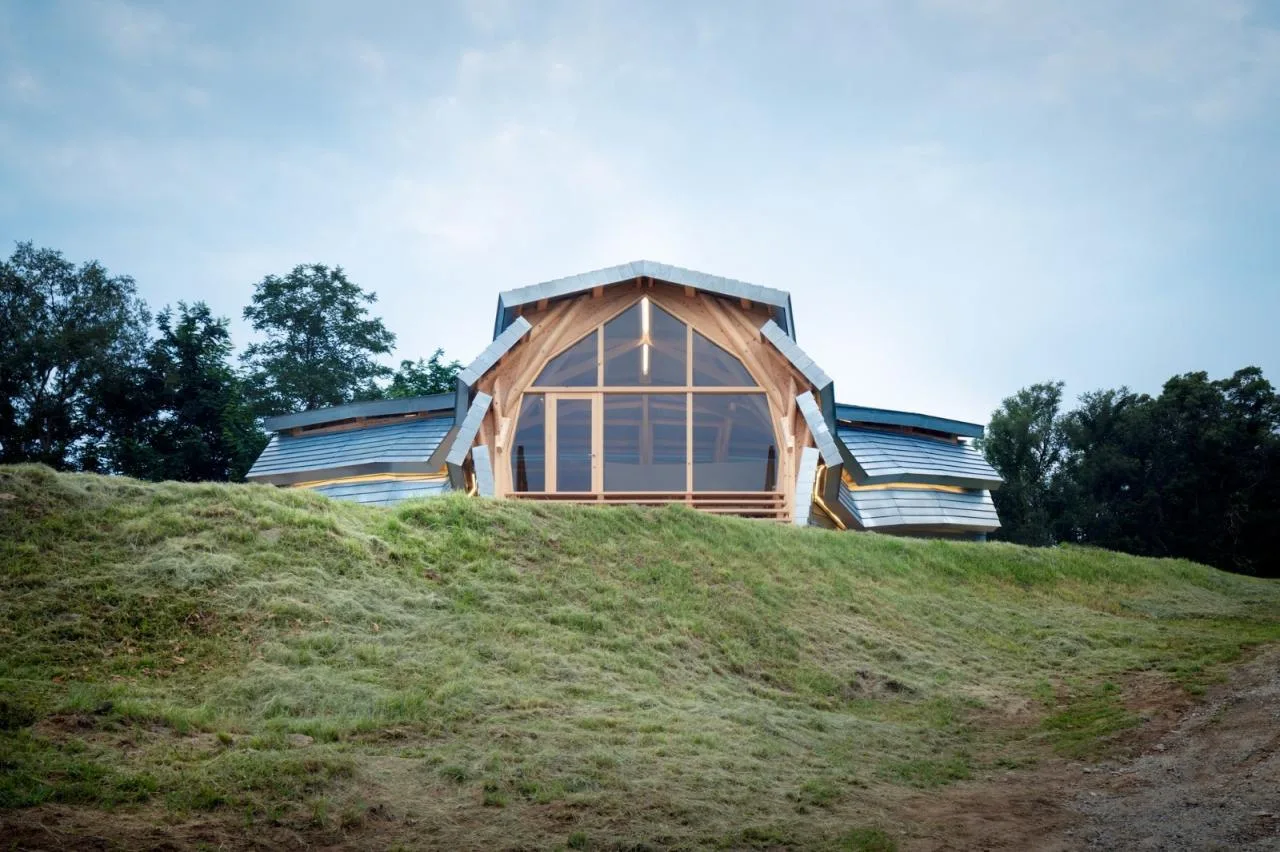
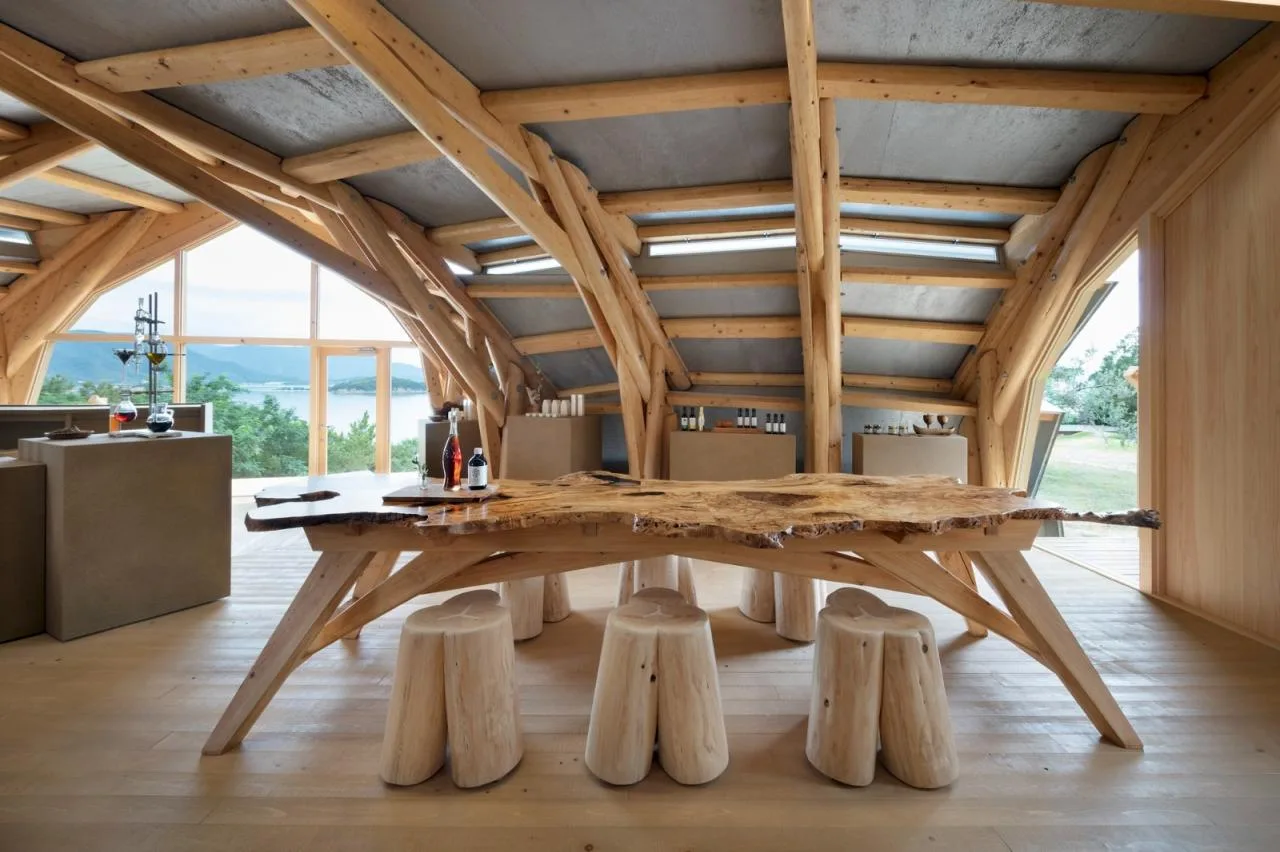
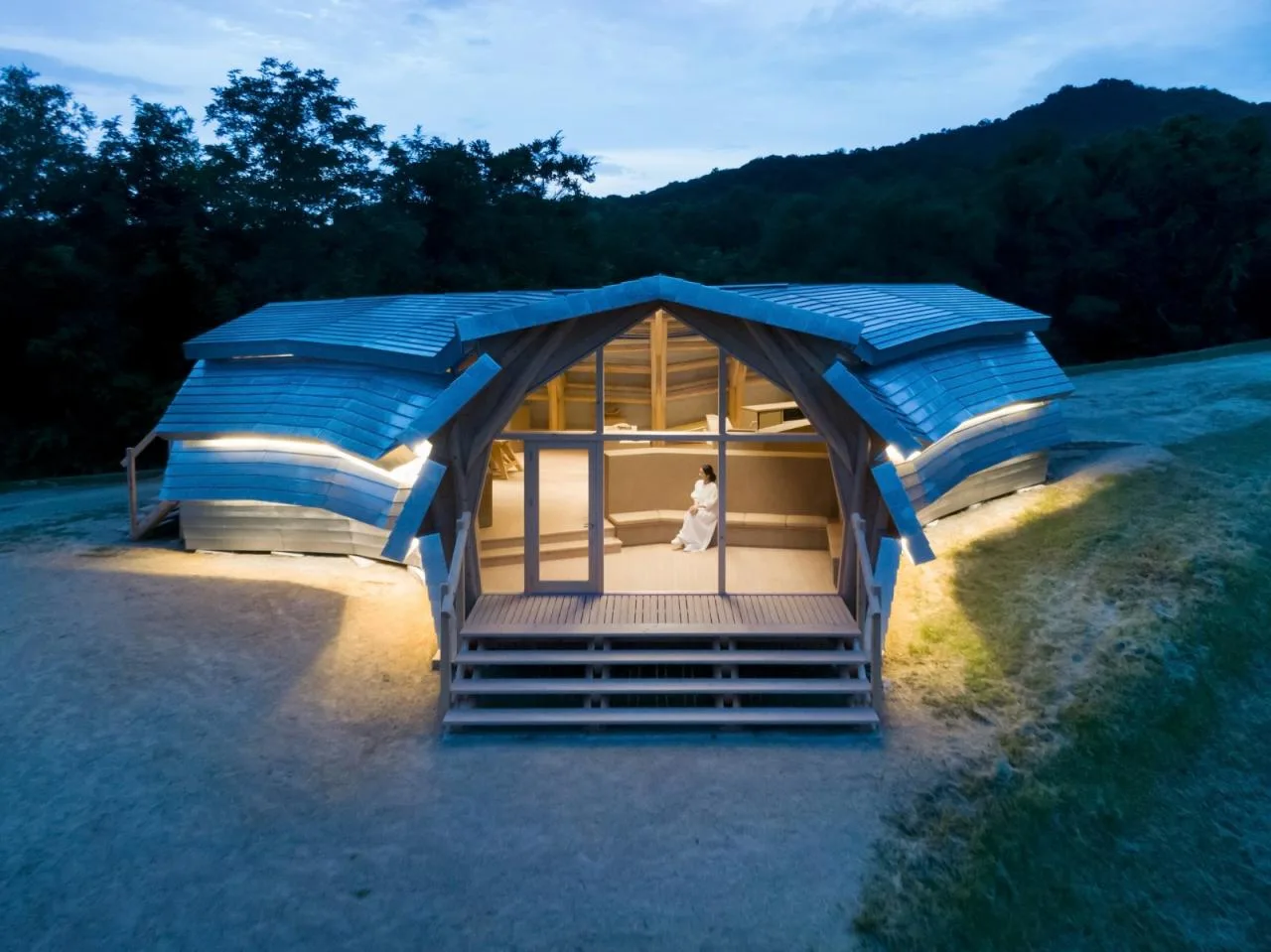
Sustainable engineers simulated sunlight and wind flow, optimizing the building’s three-dimensional form to promote natural ventilation and multidirectional airflow. The walls feature triple-layered slits that enhance natural lighting and ventilation. On clear days, the building’s central area receives approximately 500 lux of natural light.
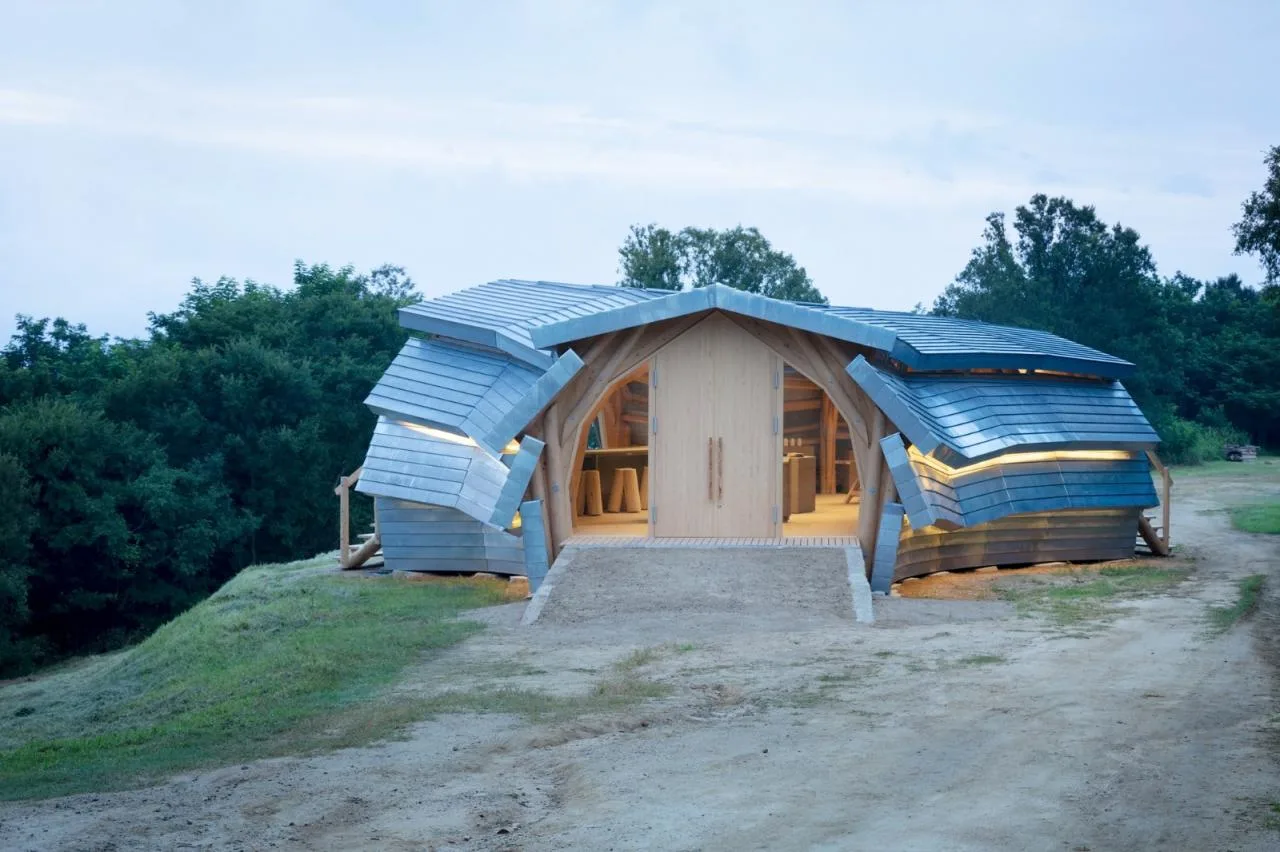
The building is divided into three sections to capture the sea breeze, which is then channeled inside through narrow slits, maintaining ventilation even with entrance doors closed, providing a gentle airflow of about 0.3 meters per second.
The foundation uses large granite rocks sourced locally instead of concrete, and the structural framework is constructed from 600 cypress trees harvested from the region.
Technology and Construction Methods
This project’s challenge extended beyond designing environmentally conscious spaces to accurately generating CNC machine cutting data for fabricating components used in the structure and walls.
Previously, such complex manufacturing required highly skilled carpenters, but now digital fabrication technology enables precise woodworking by anyone.
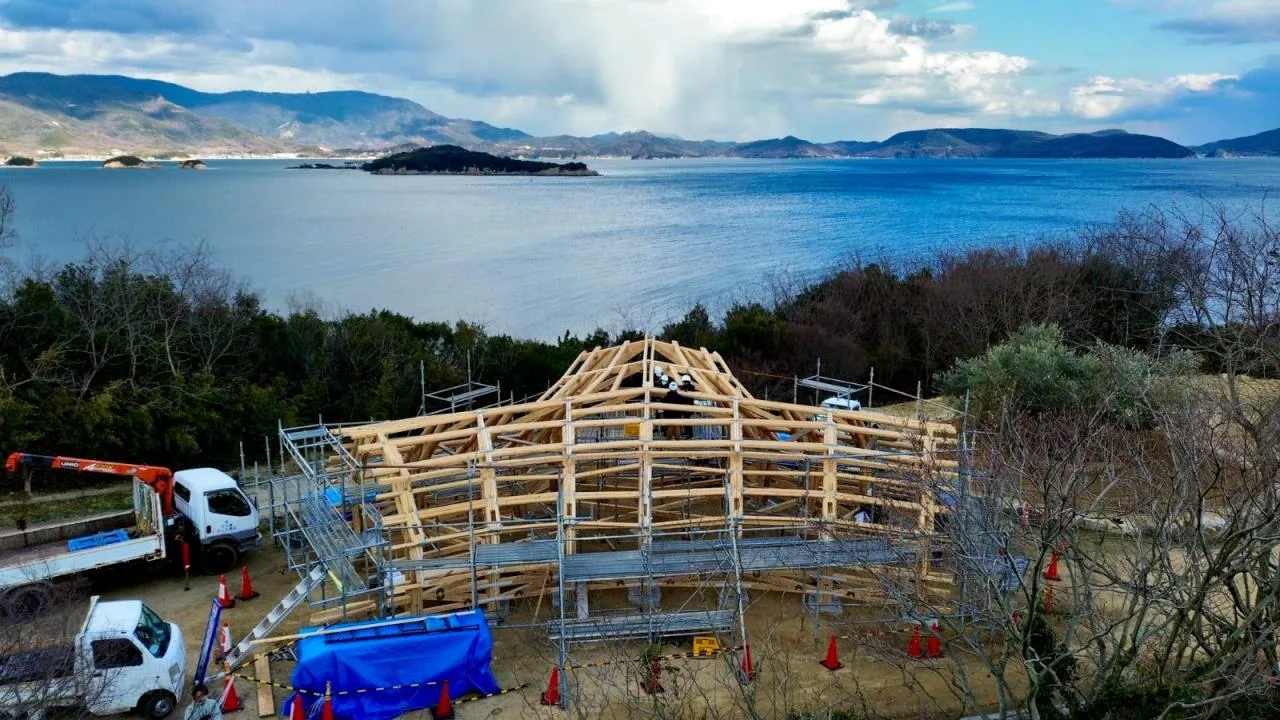
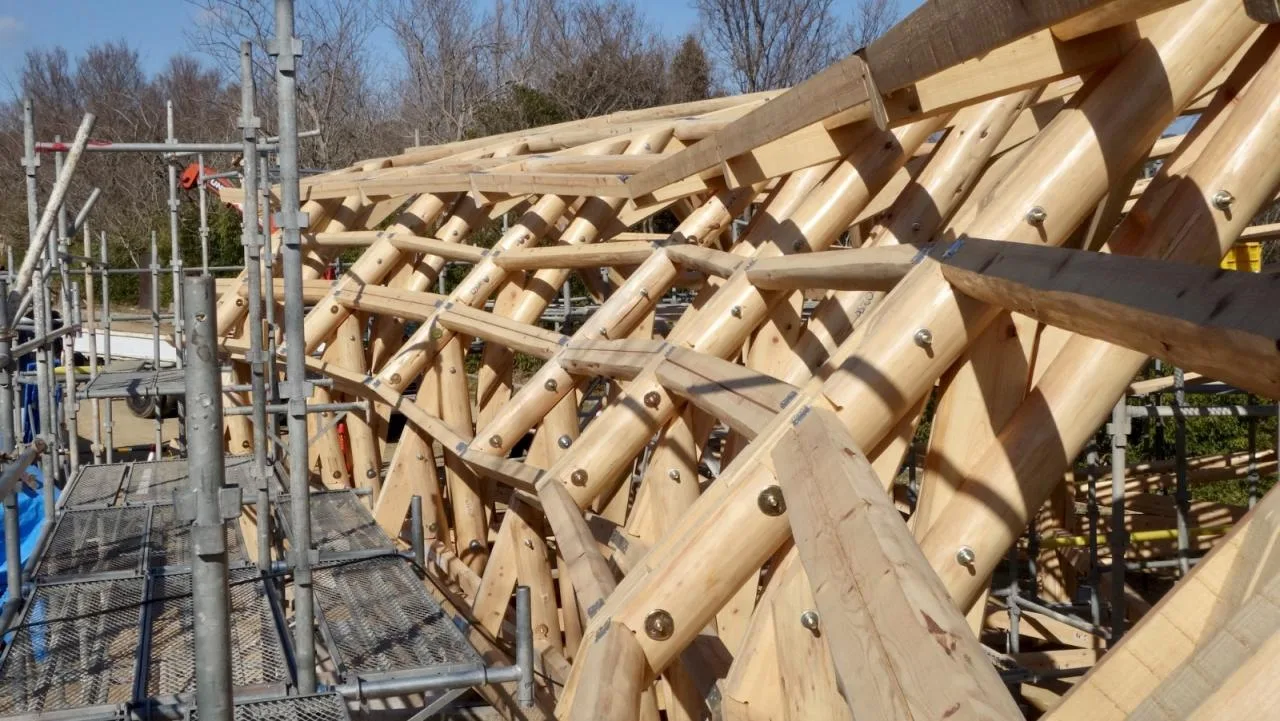
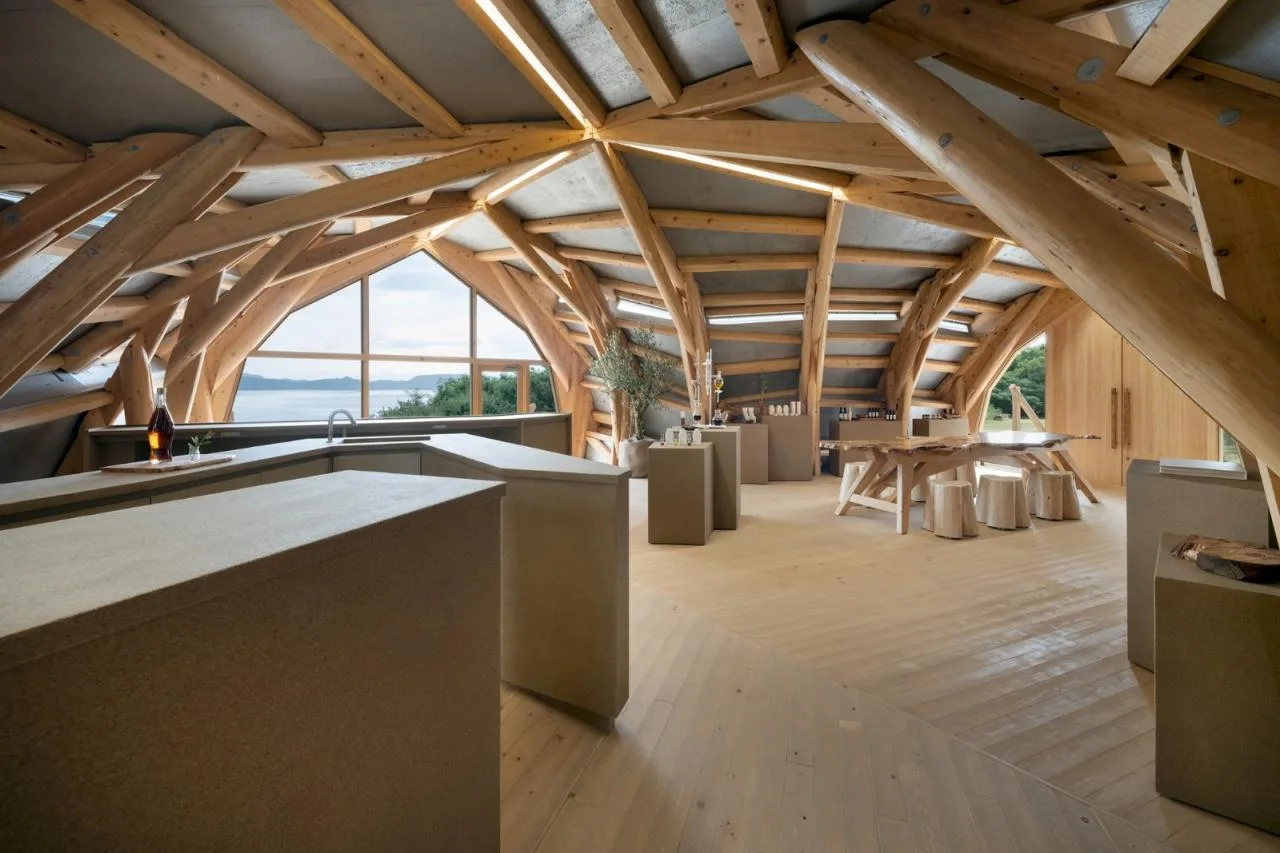
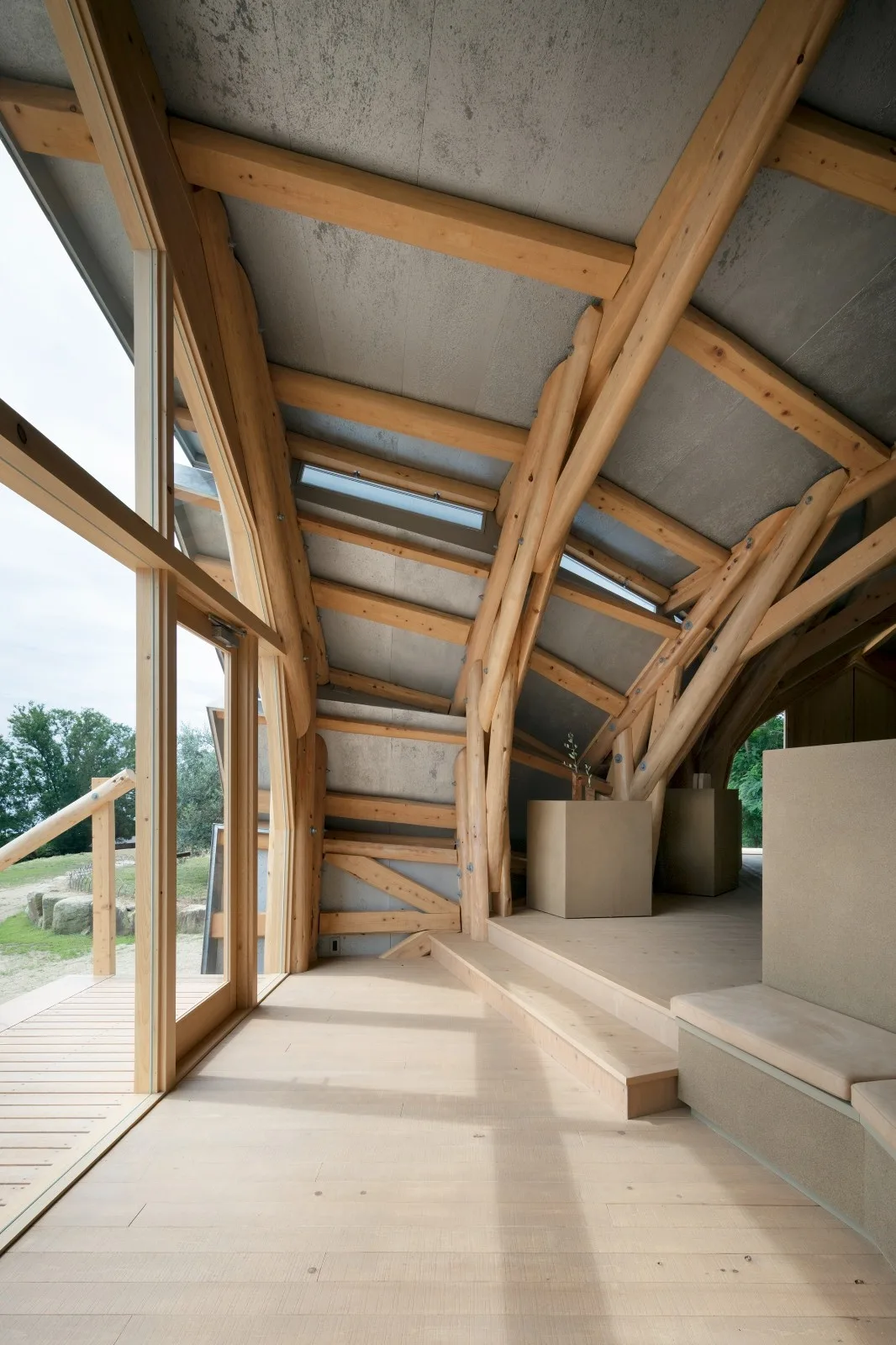
Structurally, the complex cut end components are pre-assembled into partial units of curved logs. Half-sawn and round wood pieces are alternated and secured with bolts to transmit structural stress.
The wood diameter ranges from 150 to 200 millimeters, easily sourced on Little Bean Island. Lengths are limited to 2.5 meters or less, matching the CNC machine’s maximum cutting capacity. This design aligns with the axial force system for vertical loads, reducing thrust while considering material availability and ensuring structural stability and efficiency.
Project Drawings
△ Base schematic diagram
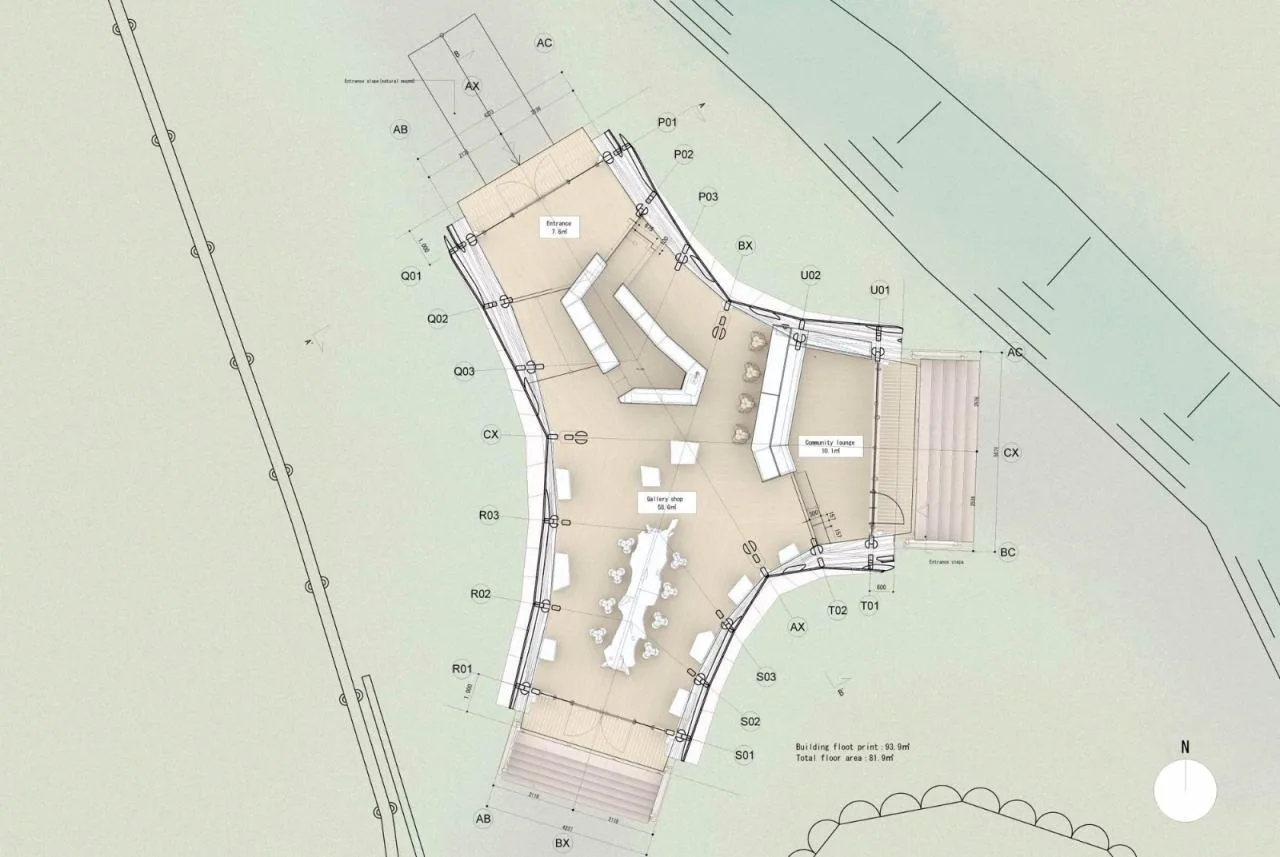
△ Plan view
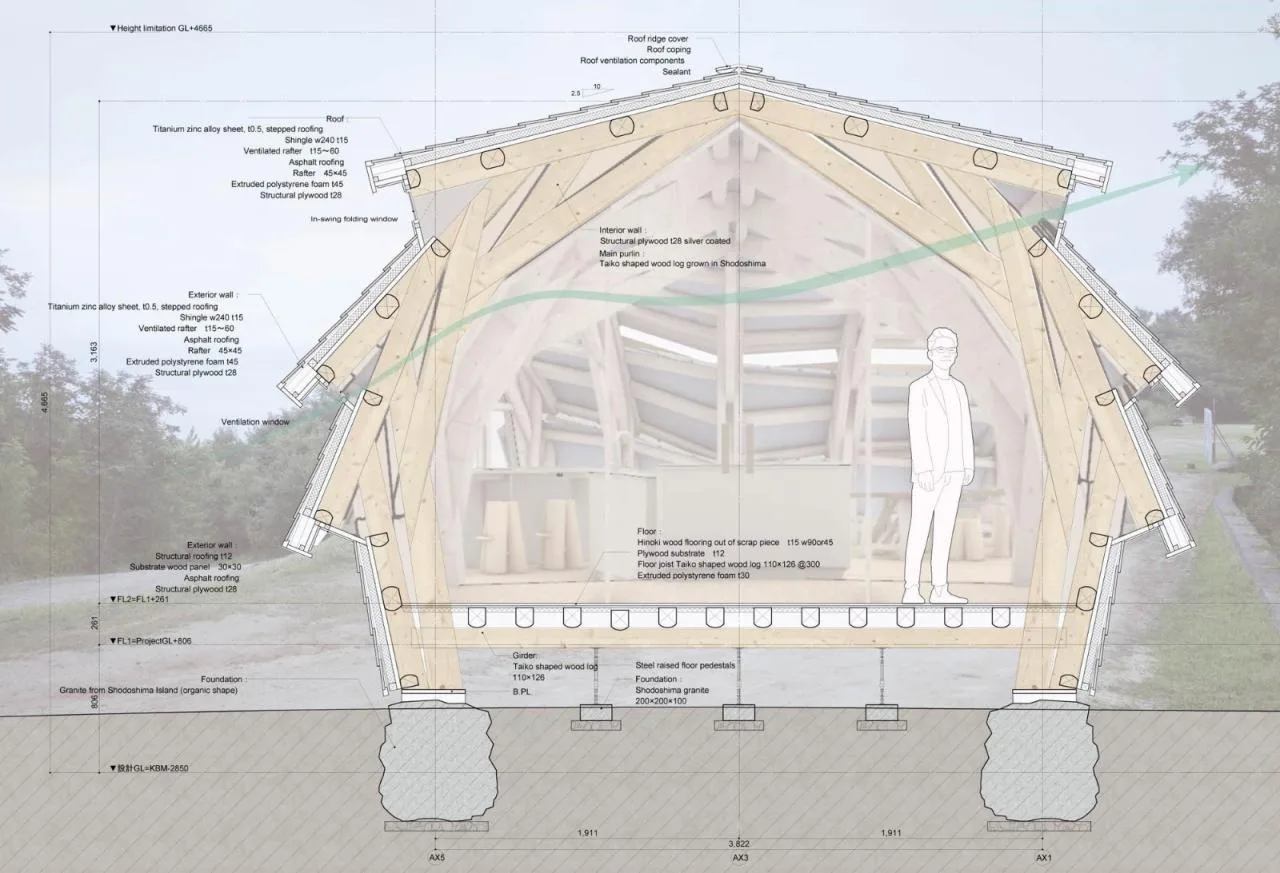
△ Sectional perspective
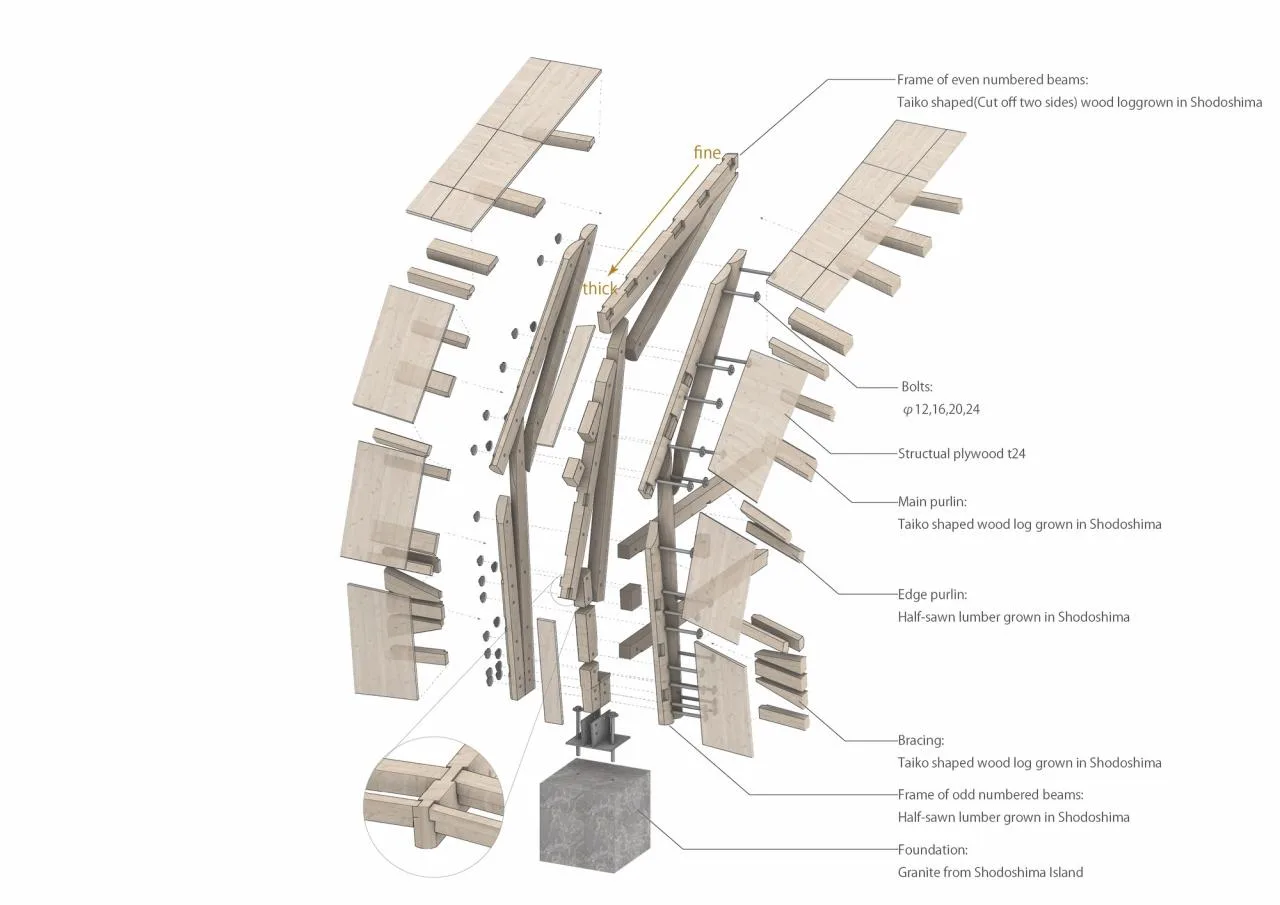
△ Structural schematic diagram
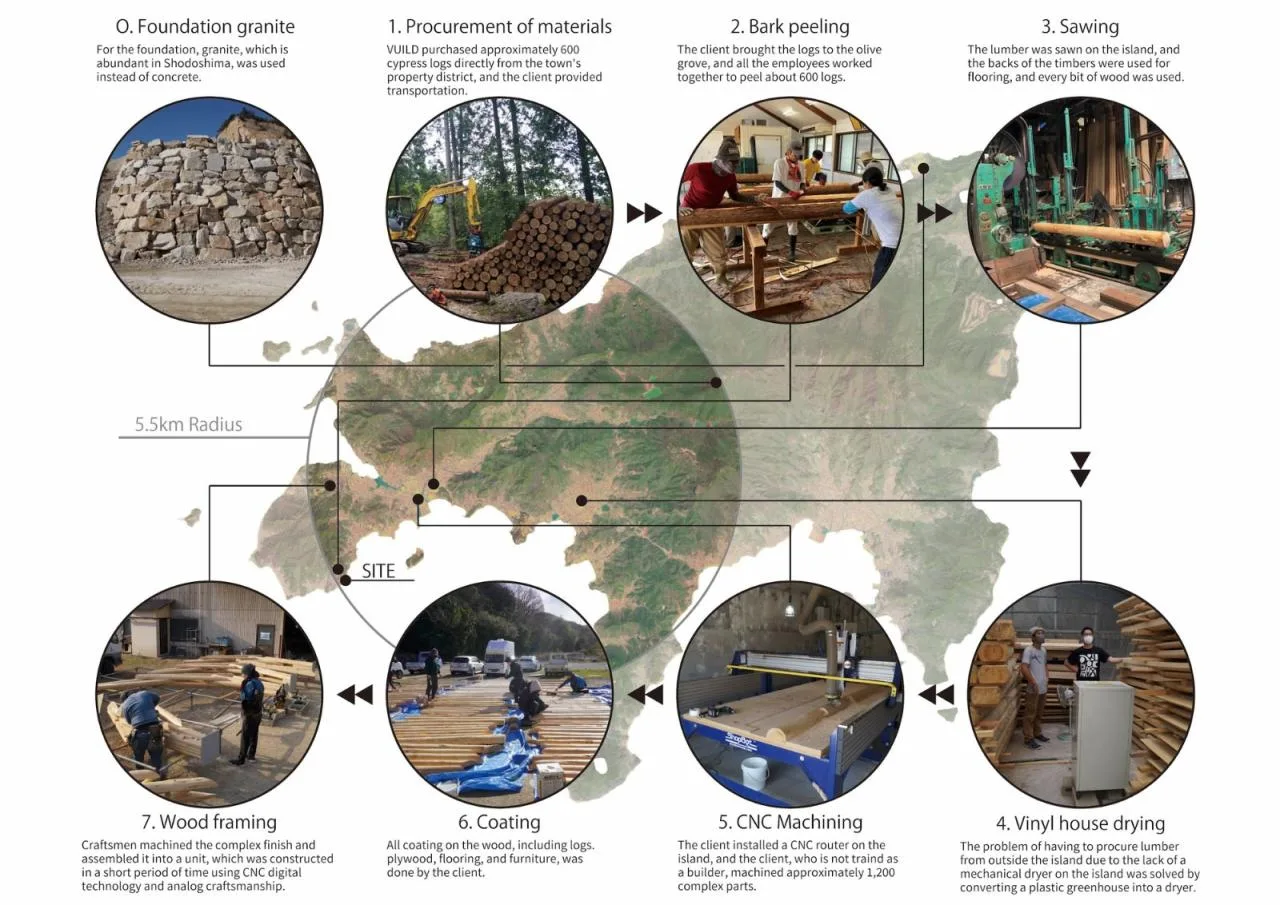
△ Analysis chart
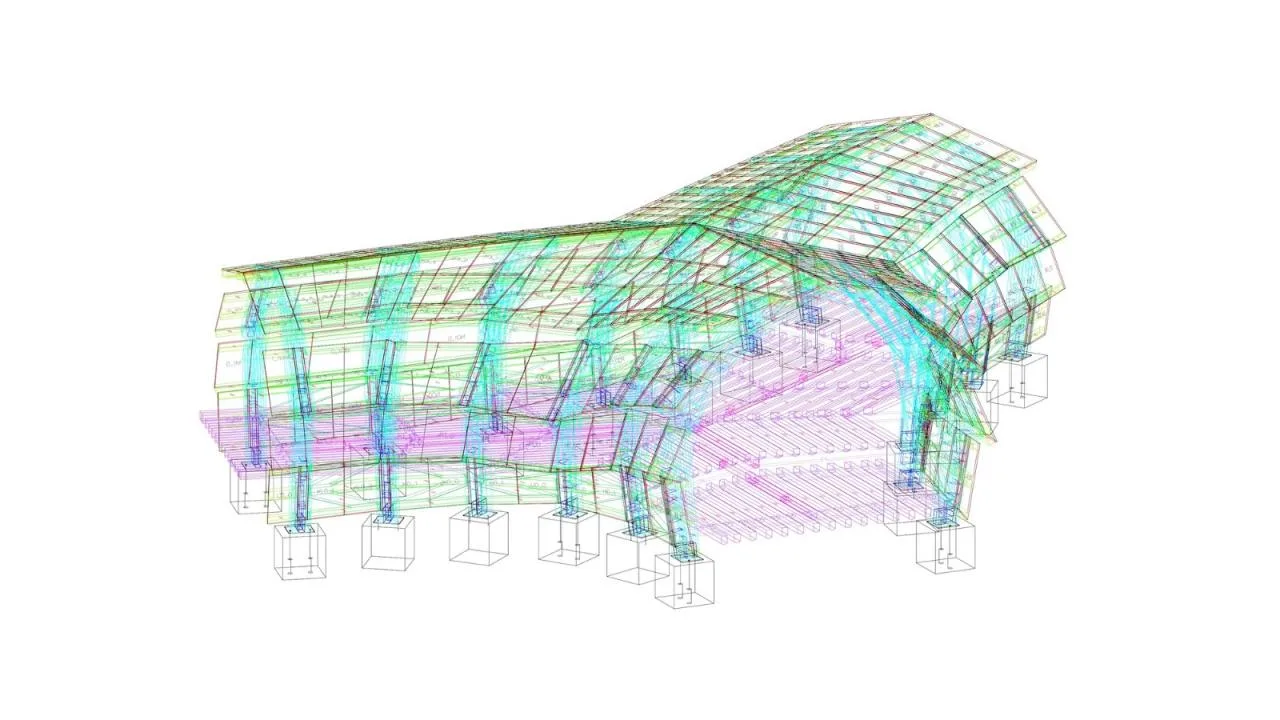
△ Structural analysis diagram
Project Information
Architect: VUILD
Area: 81 m²
Project Year: 2023
Photographer: Takumi Ota
Lead Architect: Koki Akiyoshi
Project Architects: Akito Nakai, Kenta Isebo
Structural Engineering: Graph Studio
Environmental Engineering: Studio Nora
Lighting Design: TILe
Construction Management: Maruki Inoue Koumuten
Location: Komatsu Island, Japan












Must log in before commenting!
Sign Up