
Xitang Tangquan, situated in Shenzhen’s Longhua District, is a contemporary spa center that offers a serene escape from the city’s fast pace. It embodies a spatial philosophy centered on emotional experience. As you wander through the reflective three-level corridor, each floor reveals distinct functional zones including bathing, soaking, massage, therapy, dining, relaxation, and entertainment. The atmosphere throughout is gentle and calm, designed to awaken a deep connection between people and space, focusing on subtle emotions rather than mere visual impact.
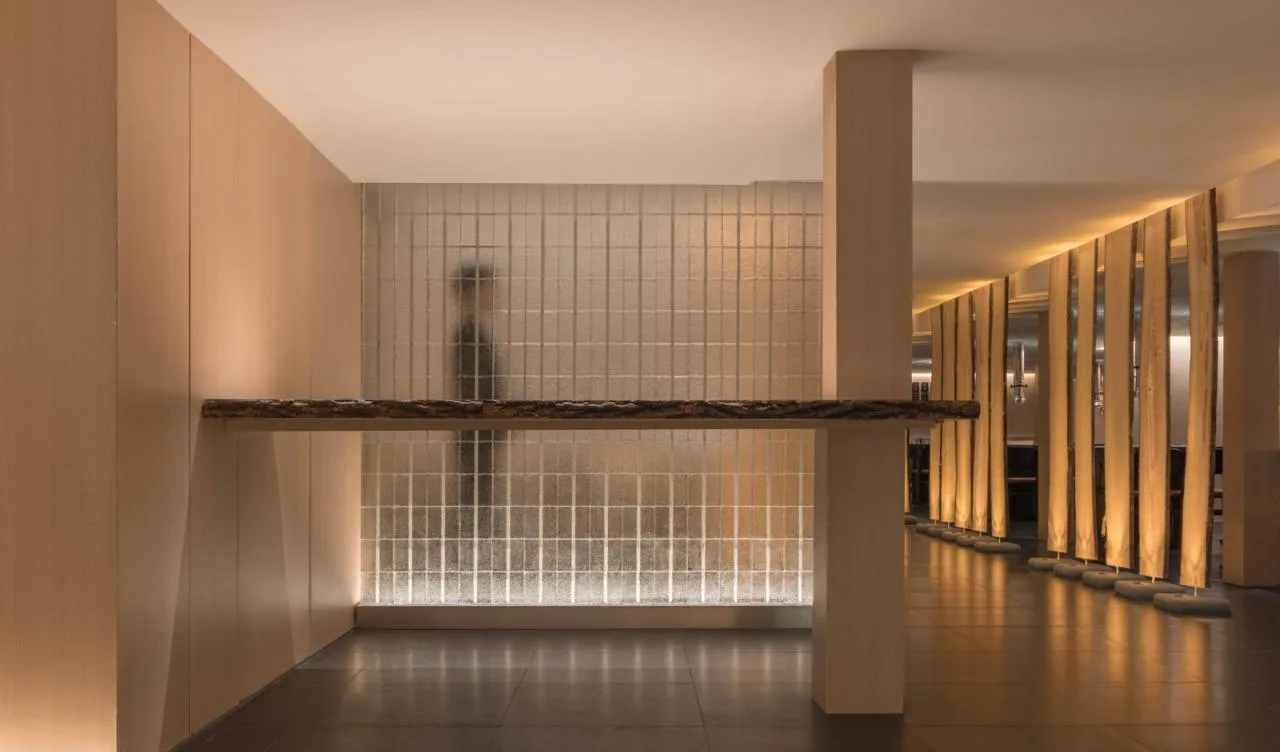
The material palette is thoughtfully selected and arranged in a harmonious sequence. Wood, stone, metal bricks, glass bricks, mosaics, and microcement finishes come together to create a unified sensory experience within varied spatial atmospheres.
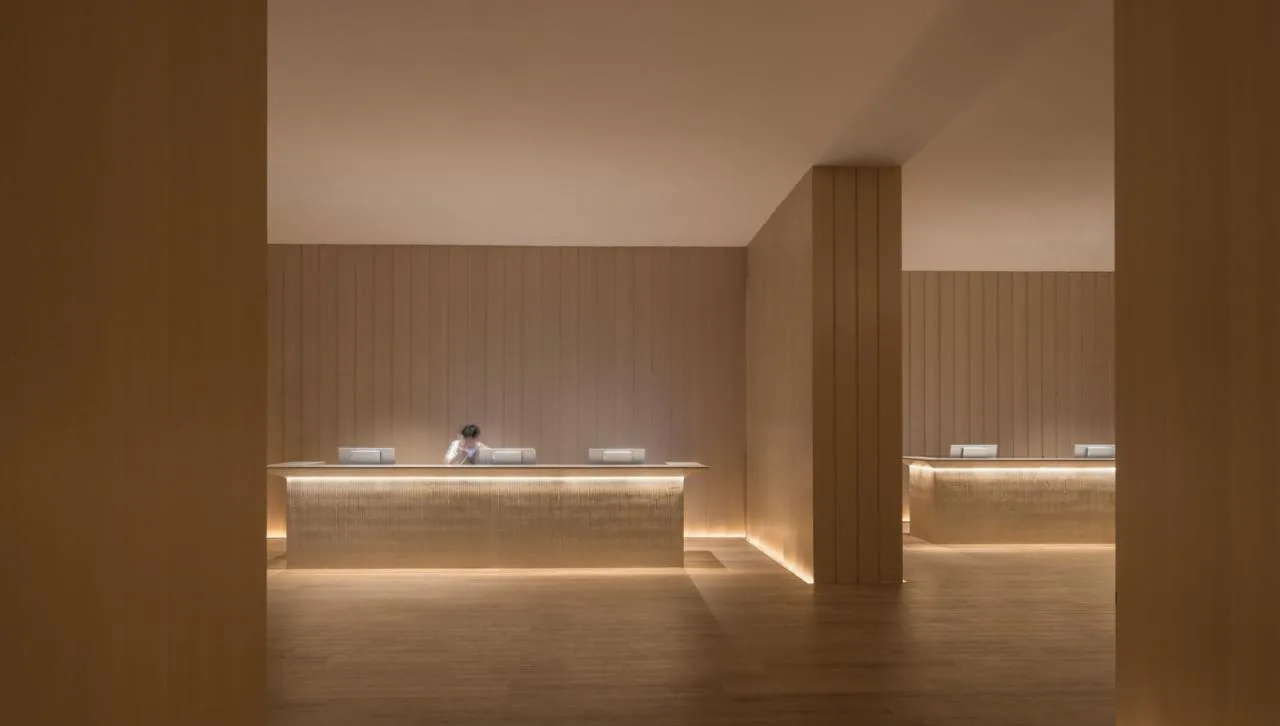
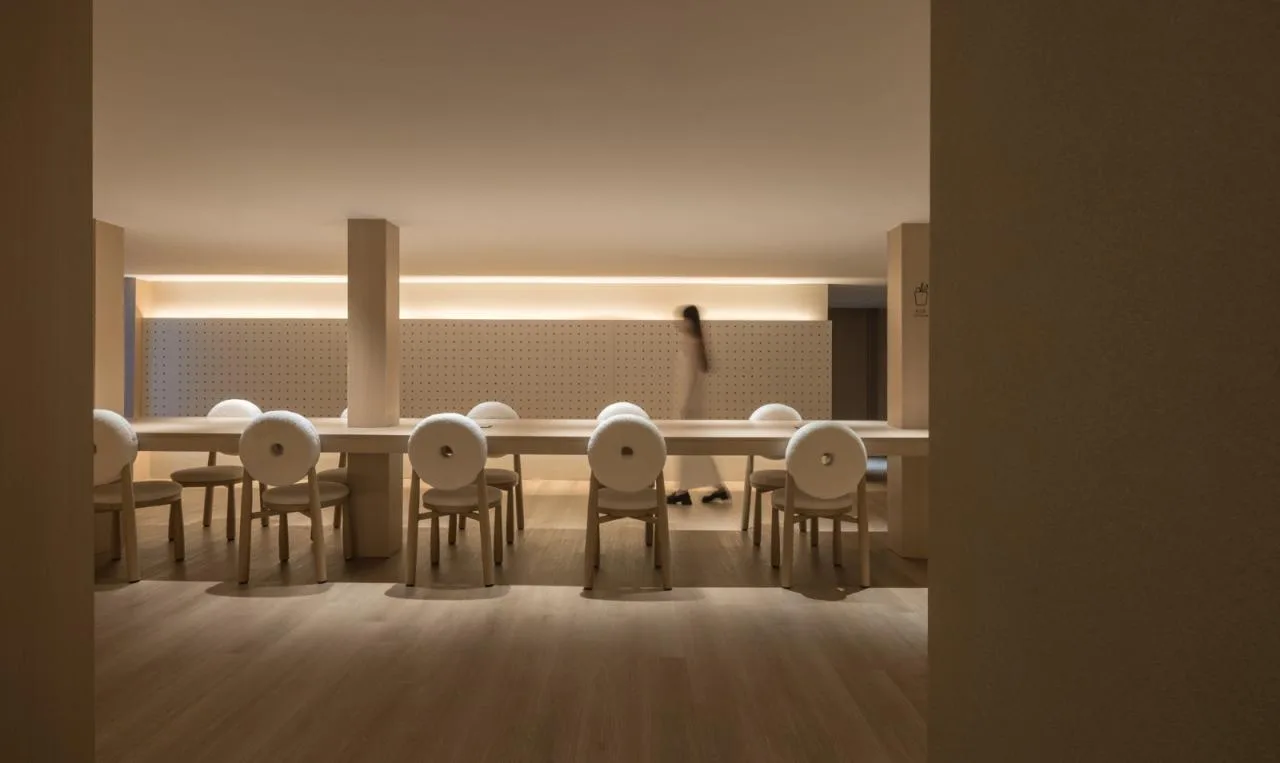
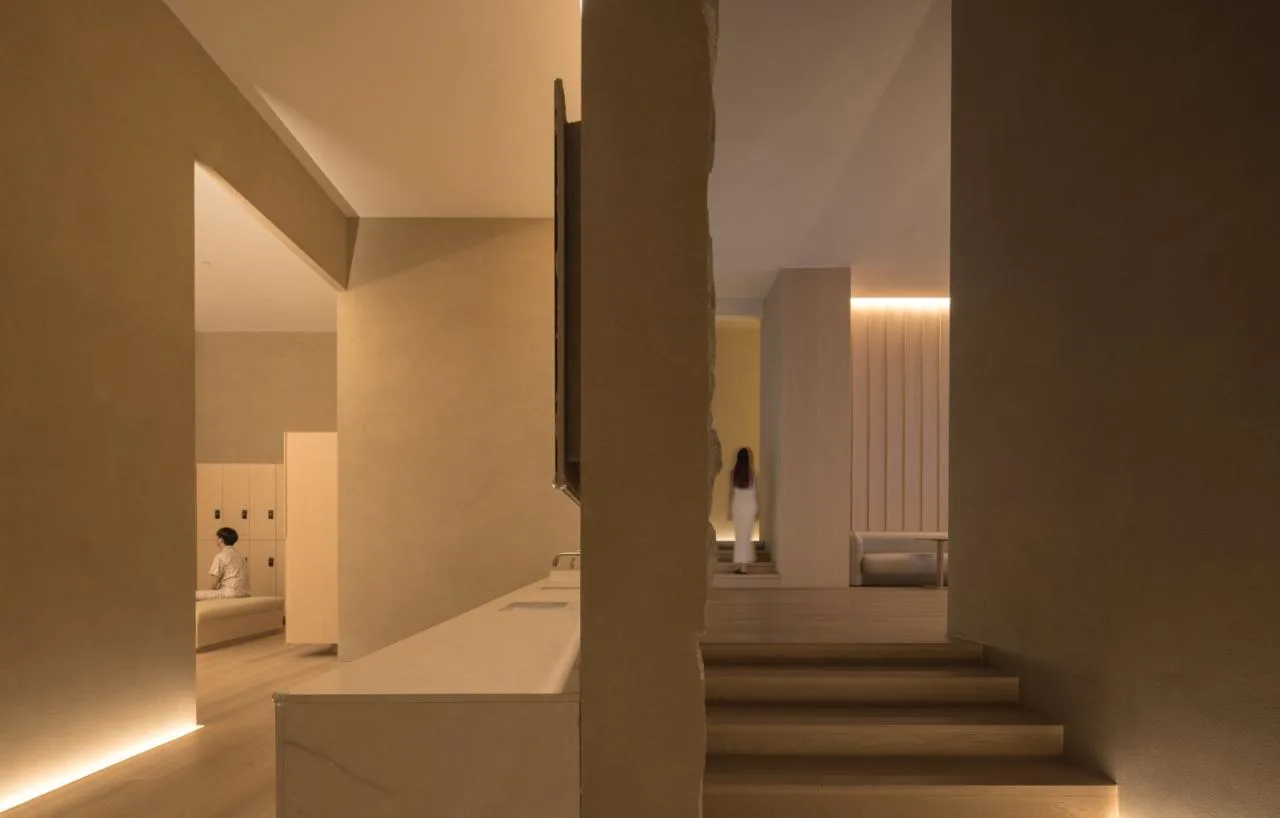
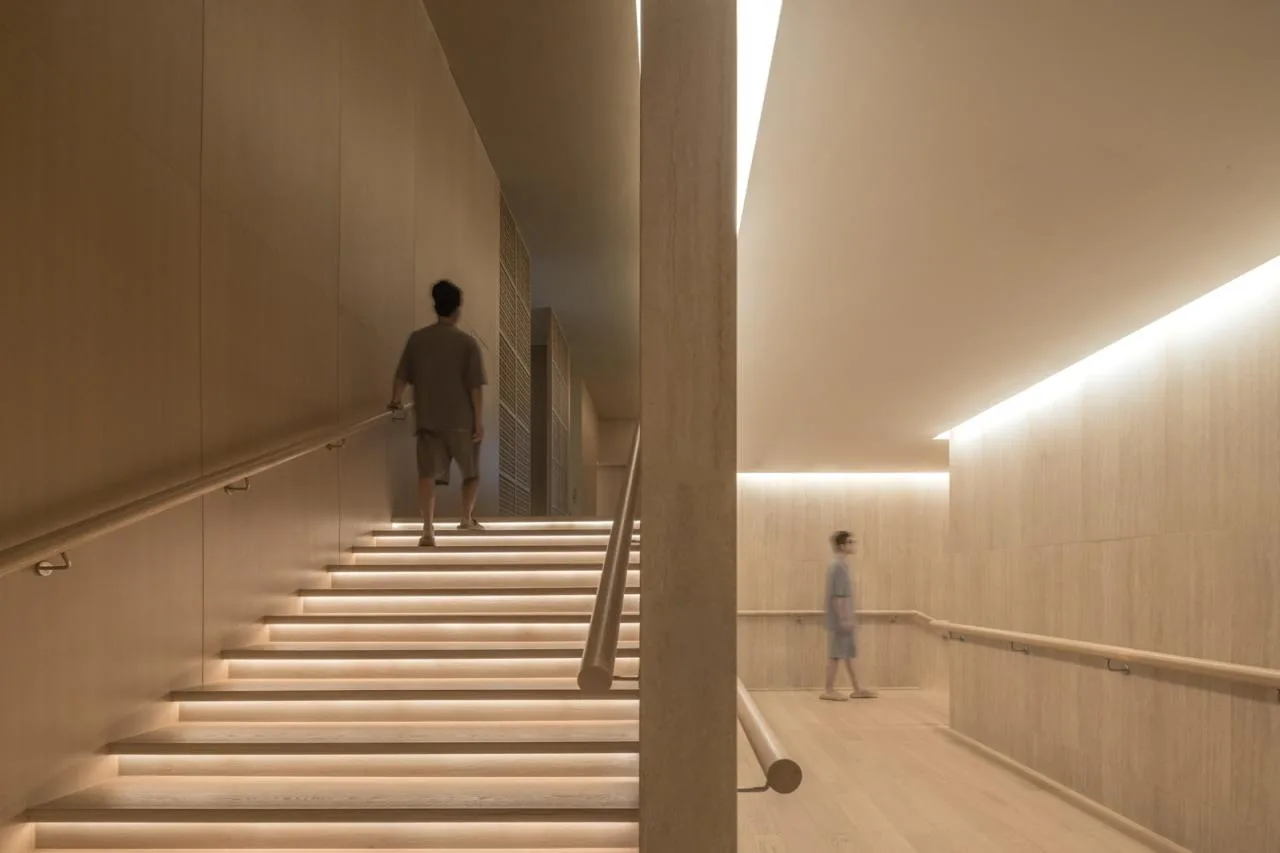
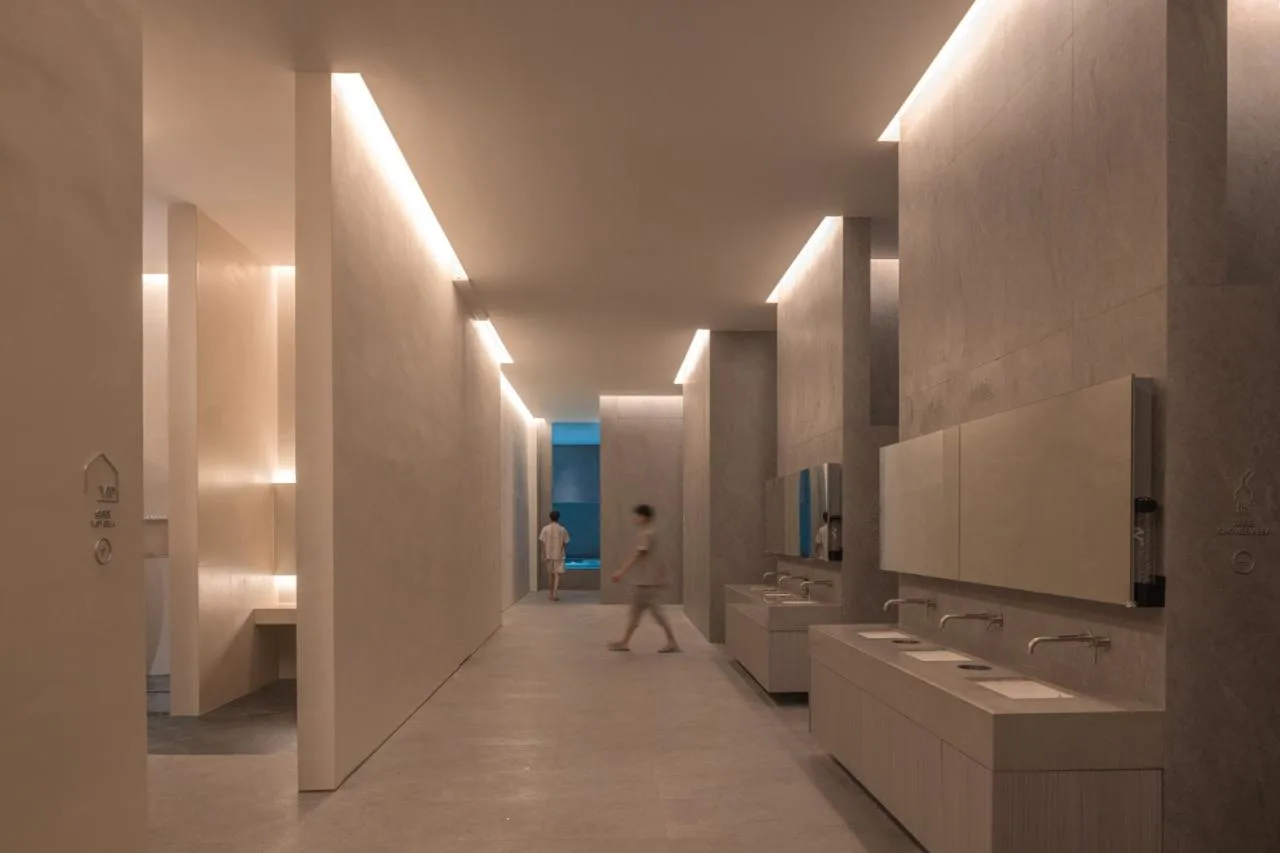
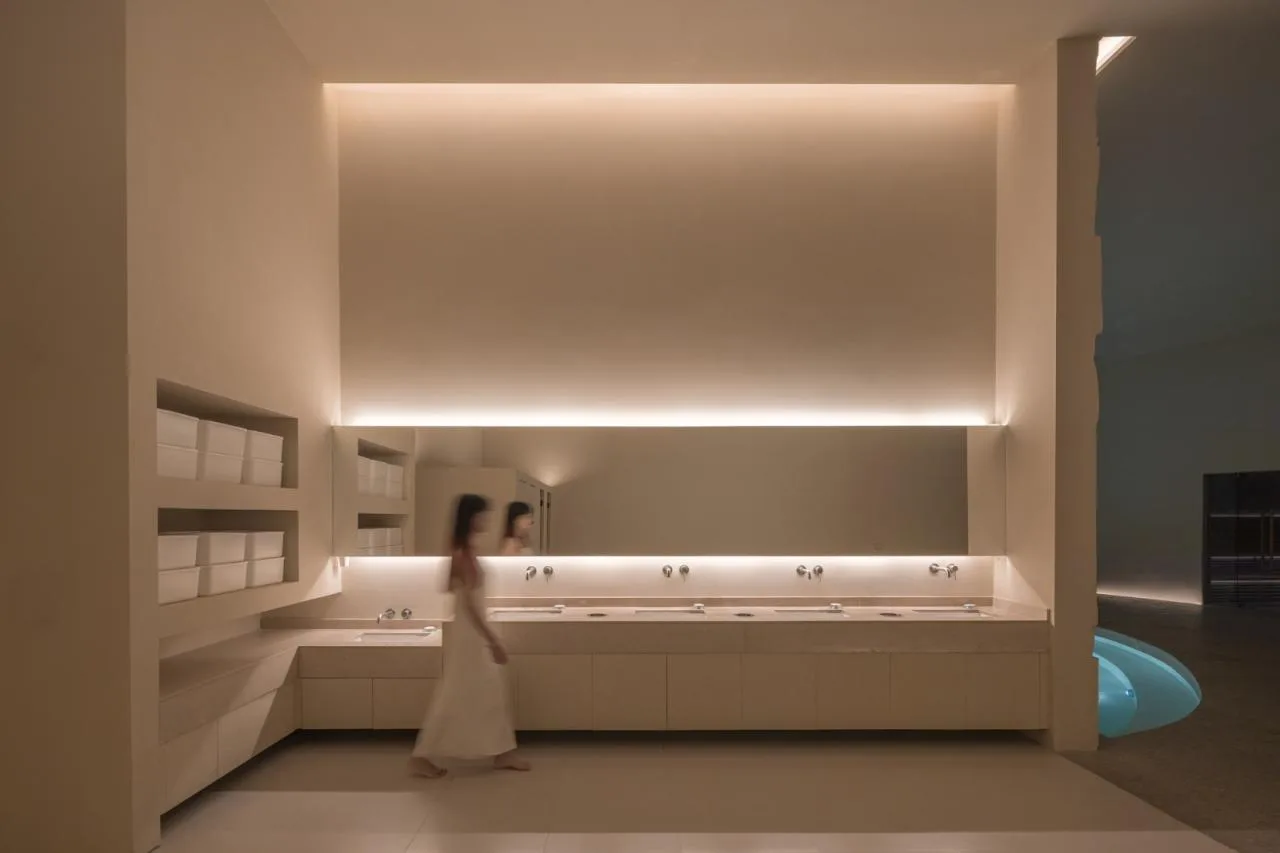
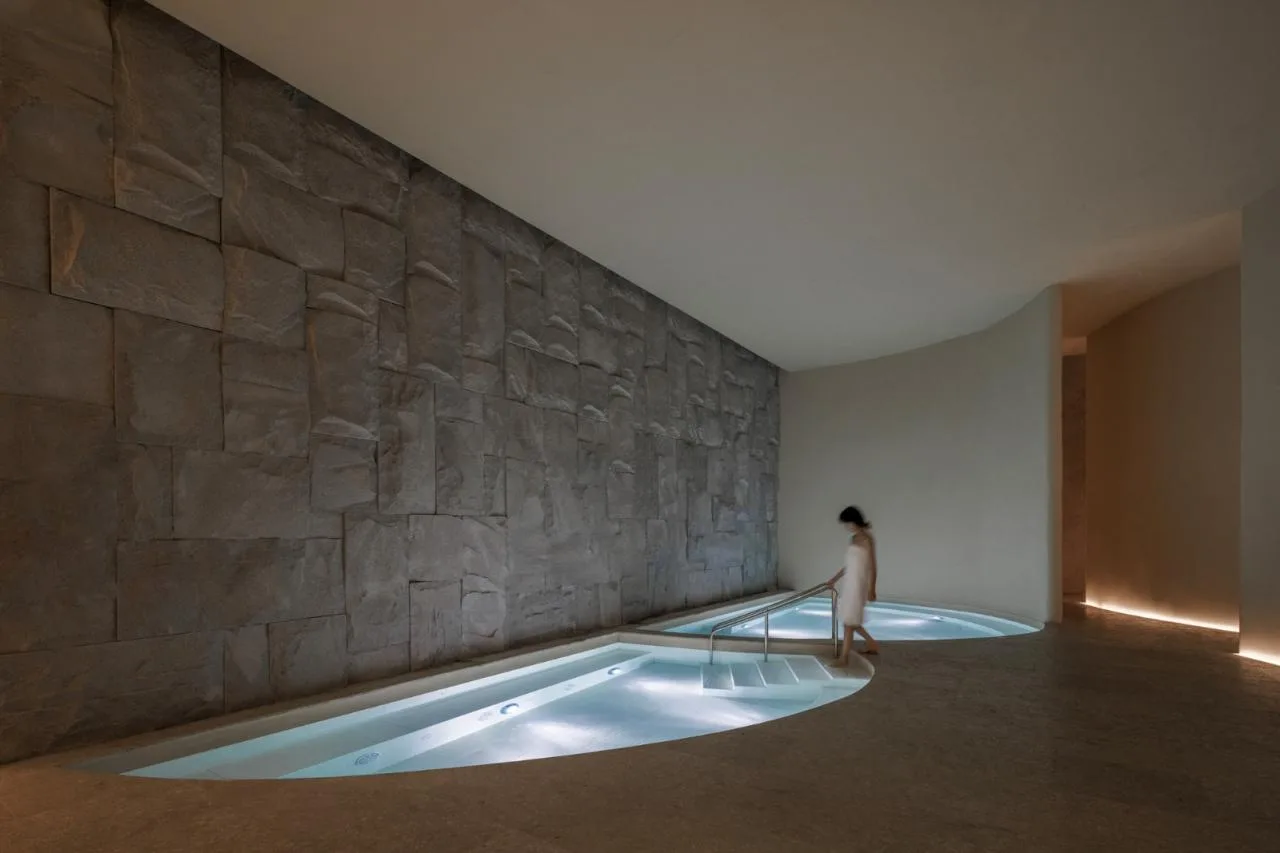
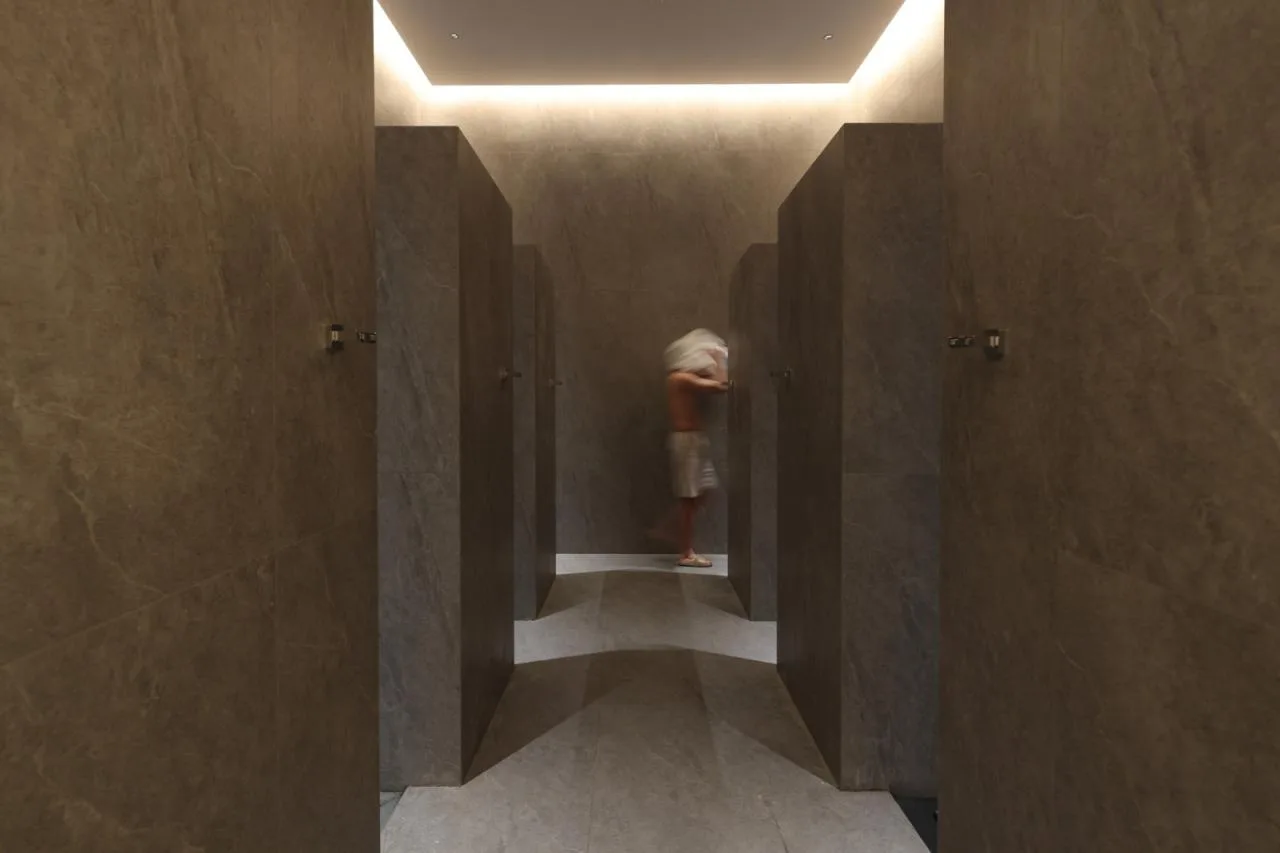
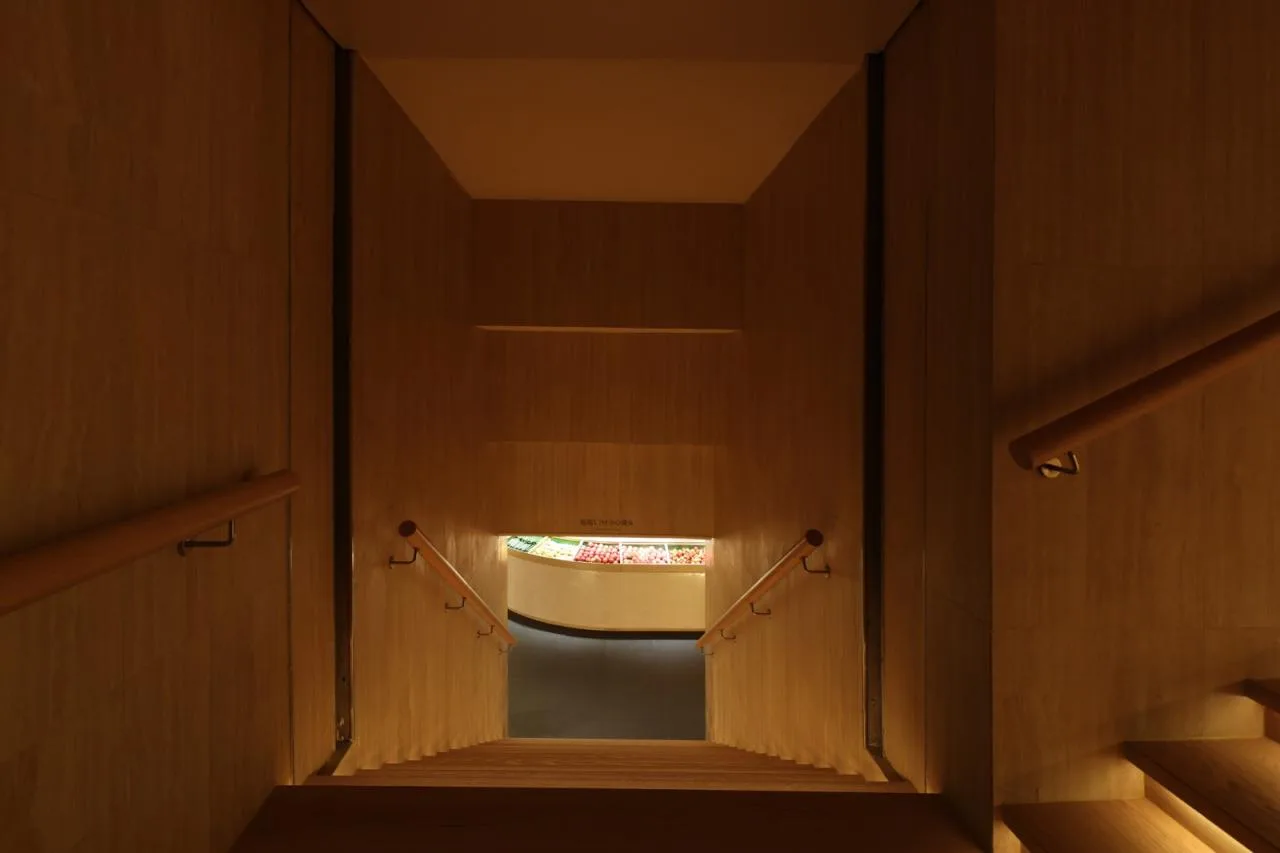
The spa area on the fifth floor is divided into separate men’s and women’s sections accessible from the lobby. After passing through elegant changing rooms and showers, guests arrive at the soaking pools. The women’s area features a softer ambiance with a semi-circular pool framed by white marble, evoking the feeling of standing beneath rocks surrounded by springs. In contrast, the men’s area is more vibrant, with a glimpse of blue water visible from the washing space. The blue hues create a sense of water flowing through the space. A square pool links to the warm sauna area, where contrasting color temperatures evoke sensations of glaciers and flames. Both areas descend through staircase tunnels that intertwine and lead to a bright water bar, blending dim guidance with inviting light.
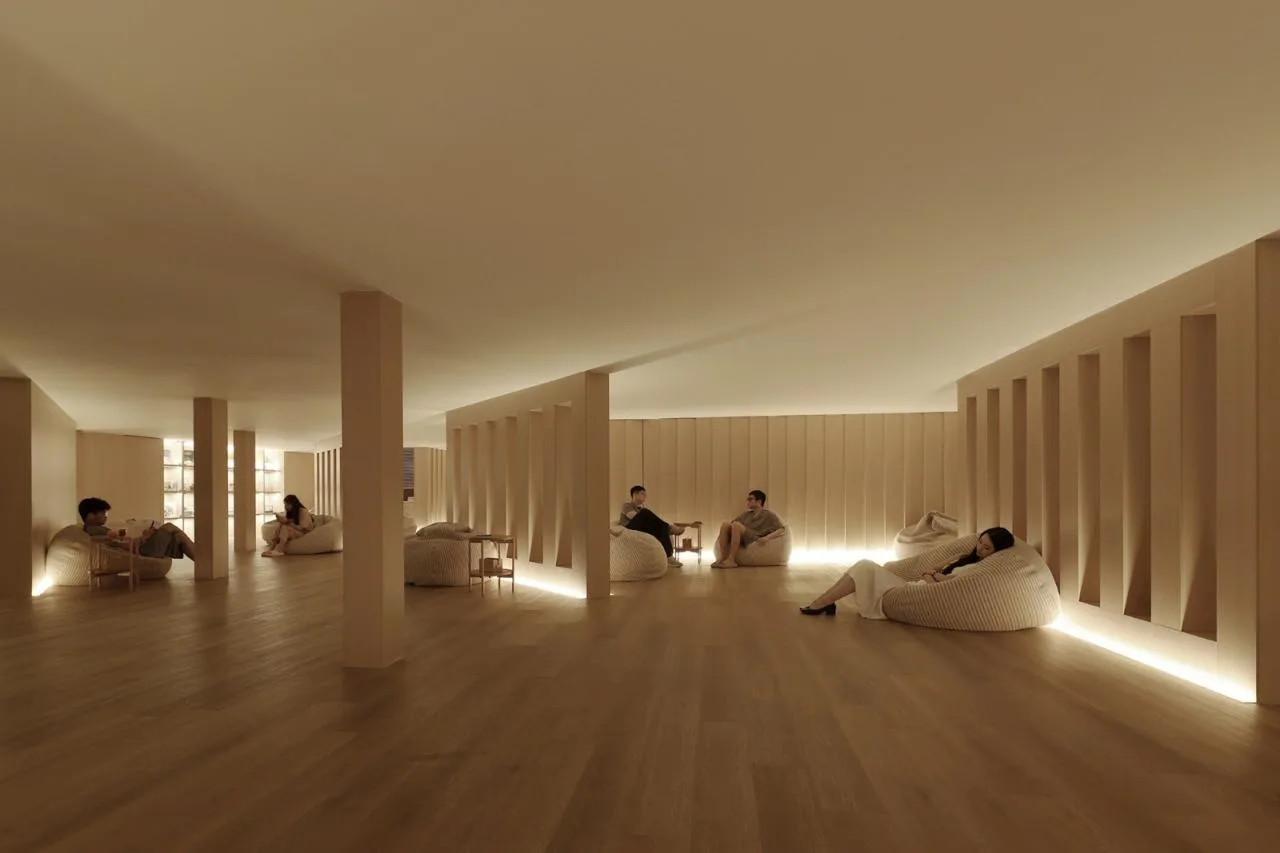
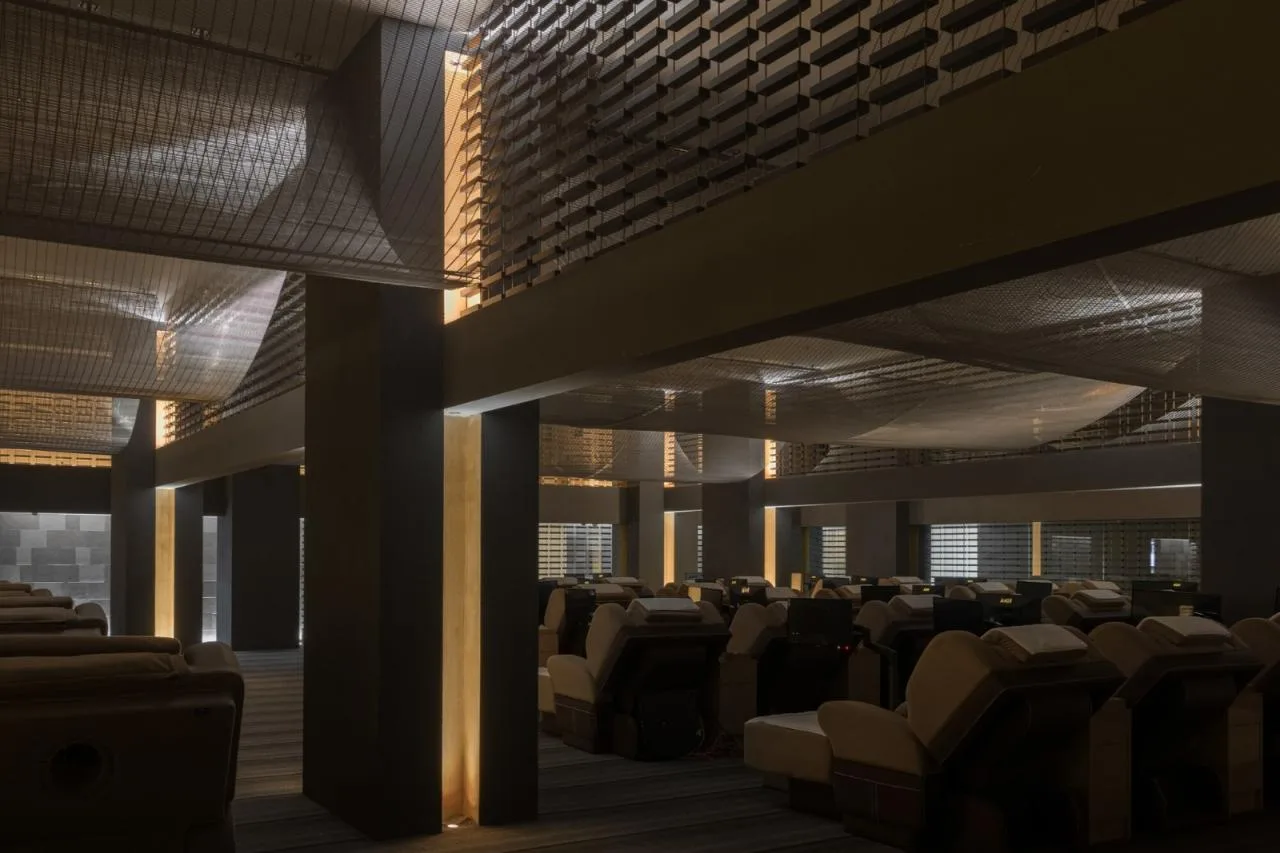
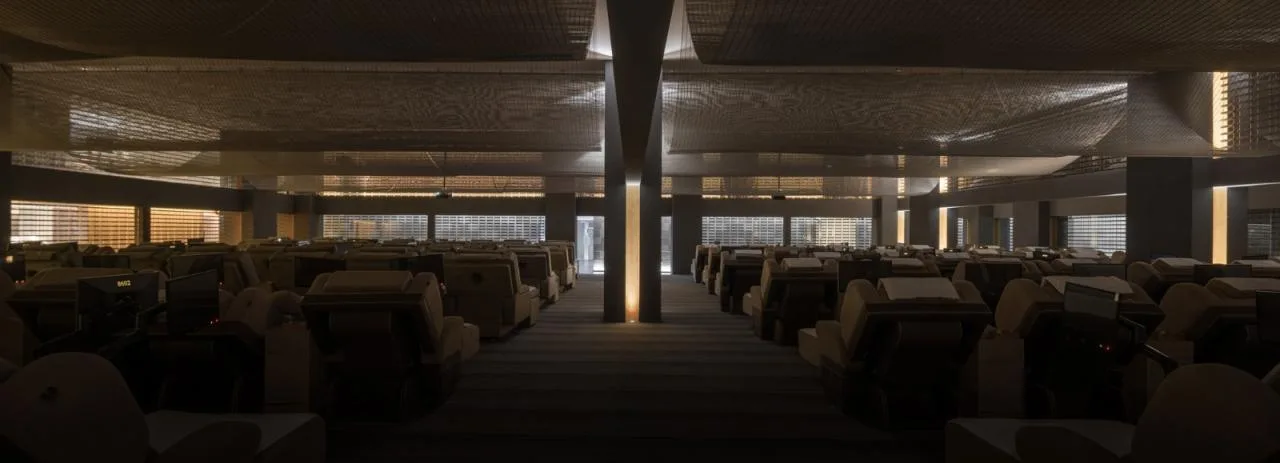
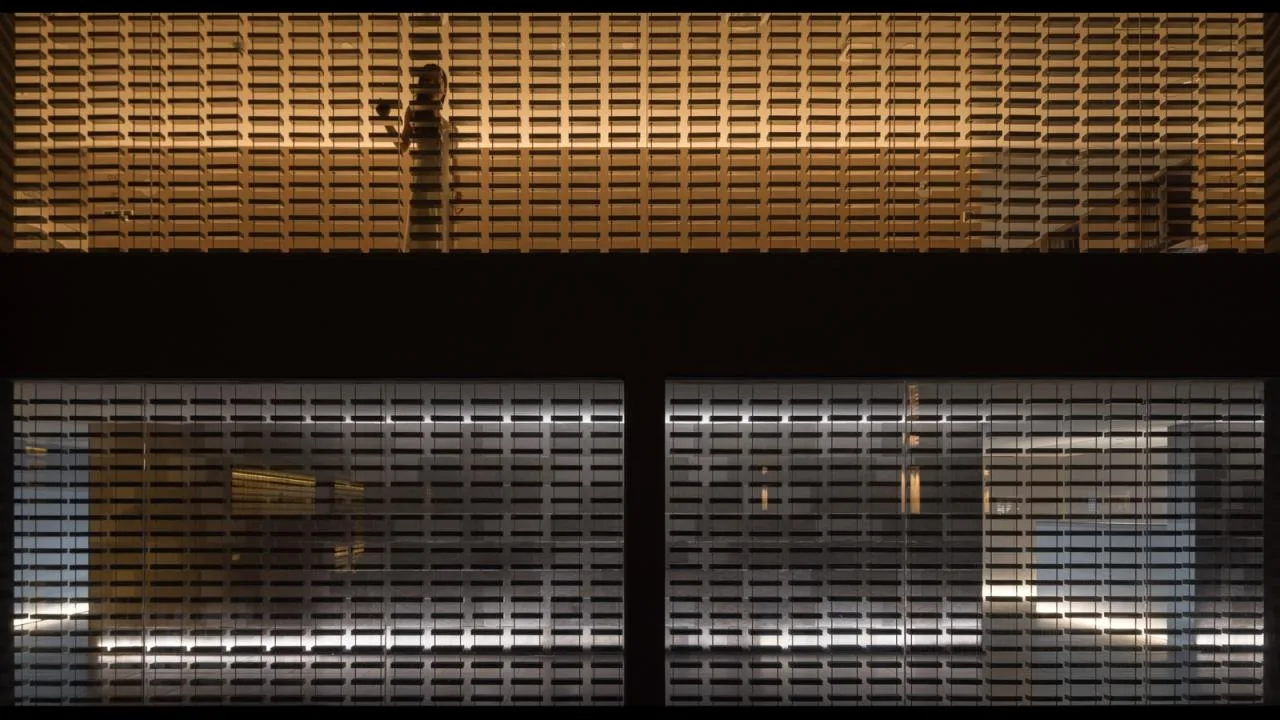
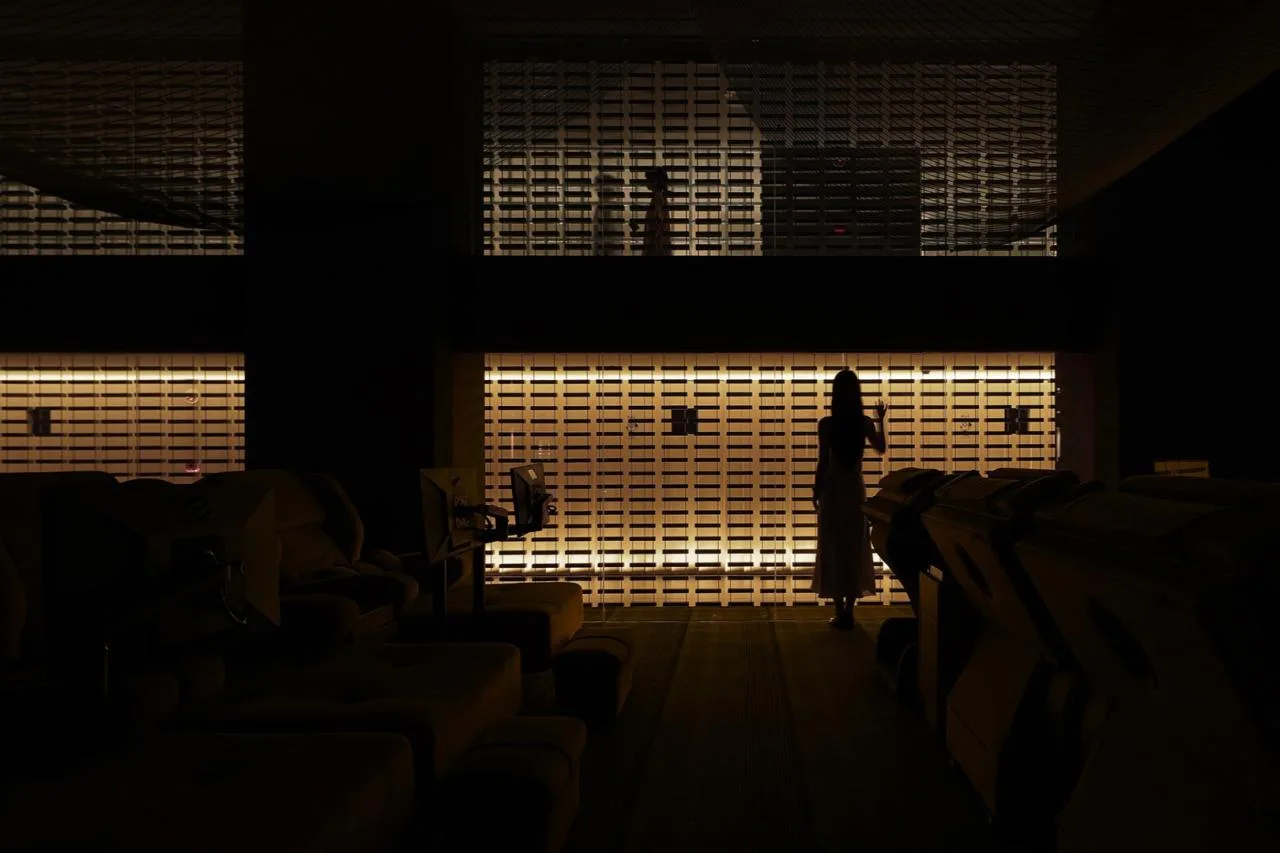
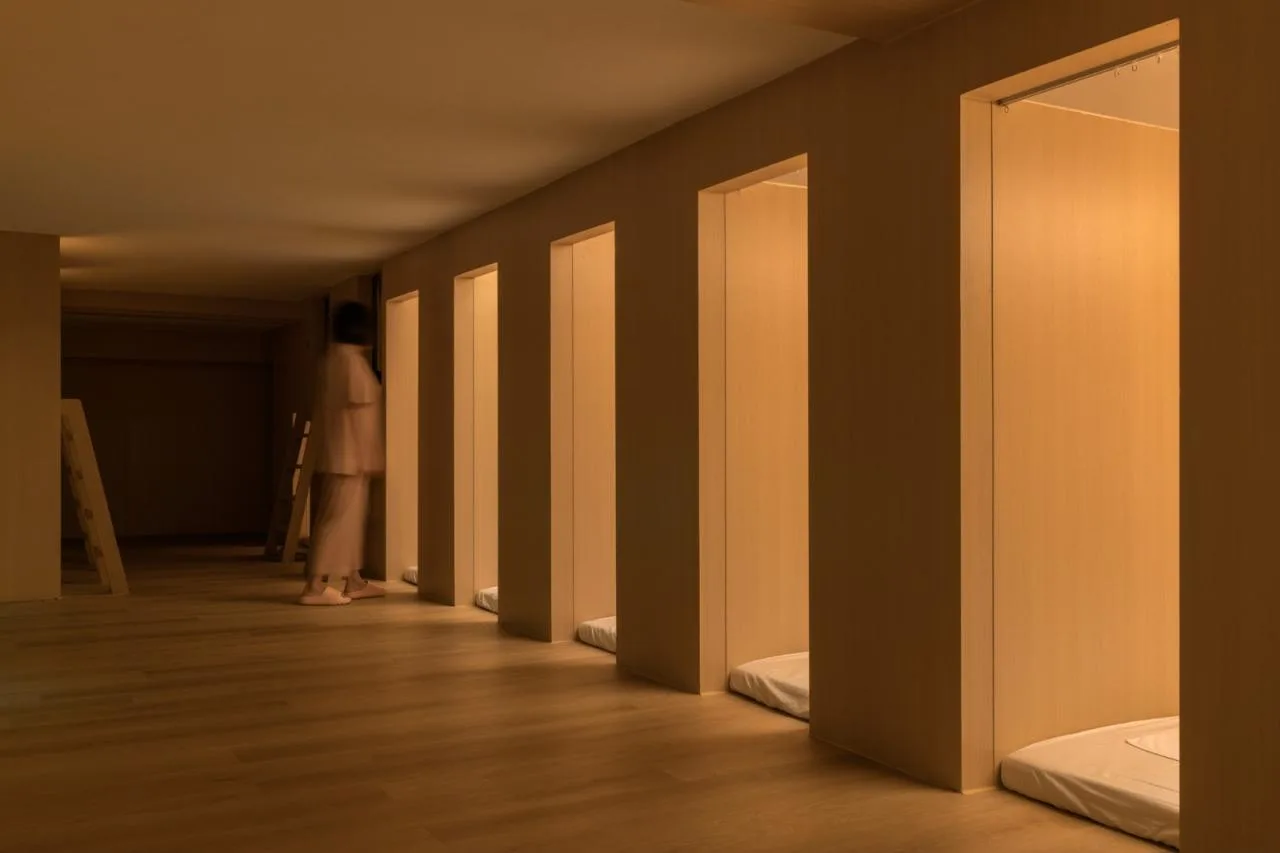
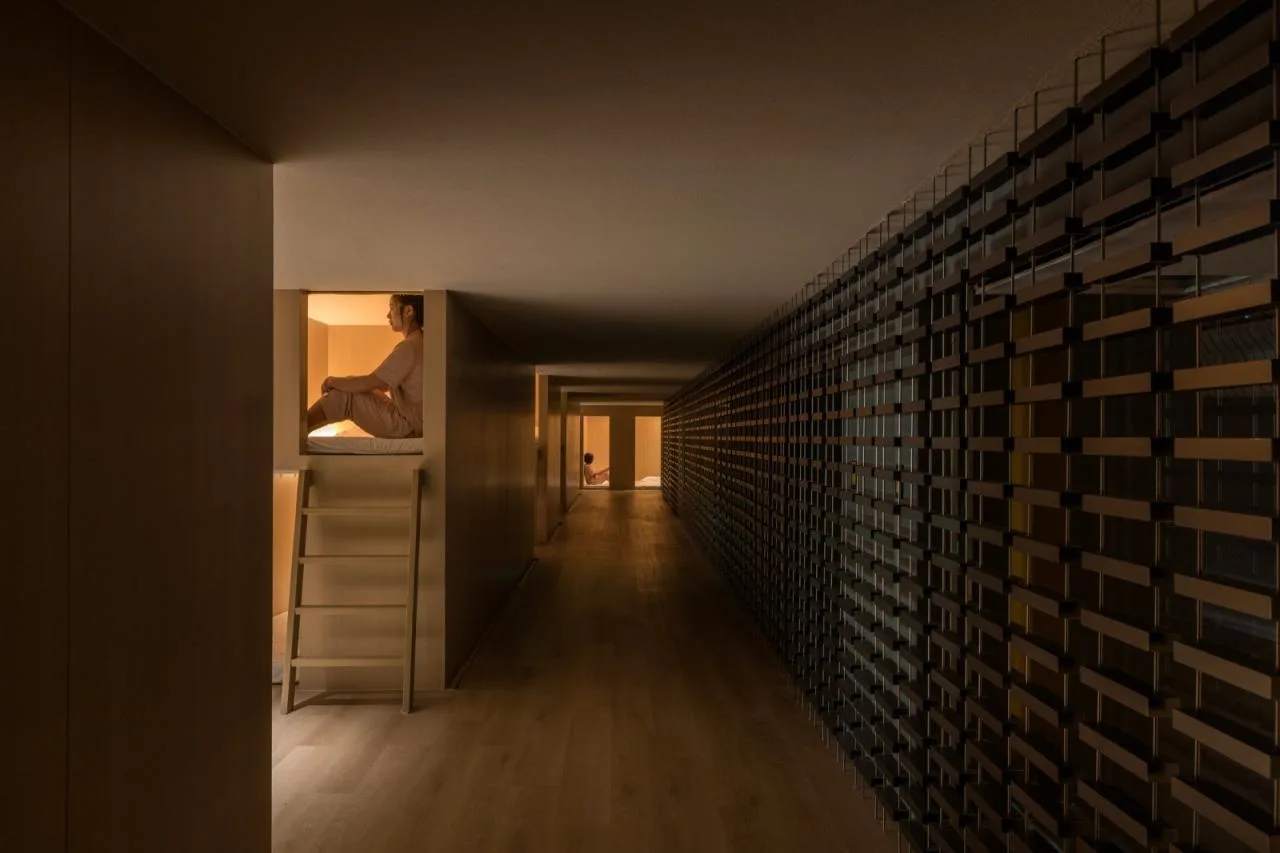
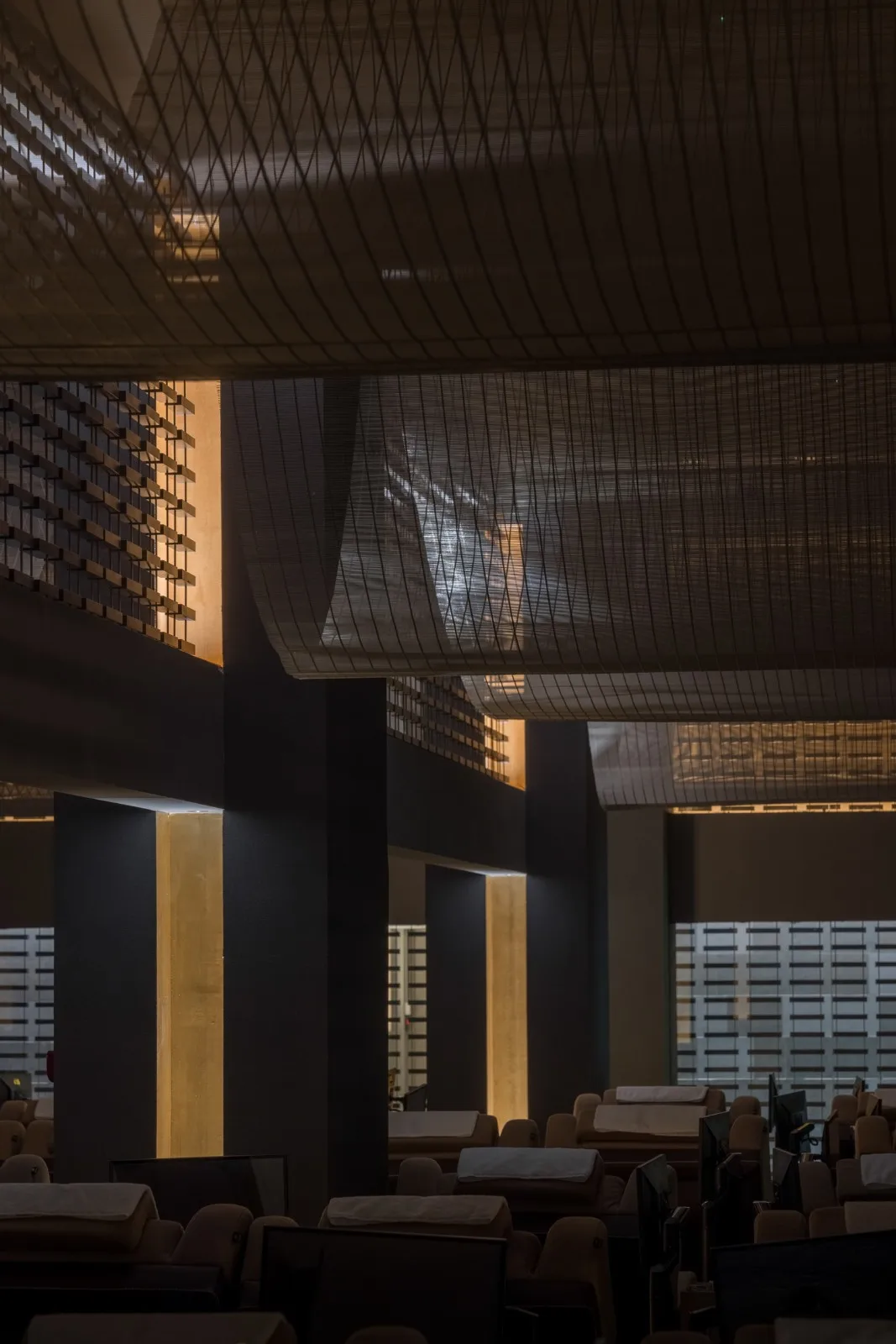
The rest hall is centrally located on the fourth floor and enclosed by corridors featuring glass and connected metal bricks. This design creates dual barriers that effectively block noise while providing a transparent sense of privacy. Within the hall, light and shadow interplay to evoke the feeling of being inside a shadow screen, surrounded by soft, dim lighting that casts gentle moving shadows. Metal bricks, sized similarly to green bricks, add an approachable yet refreshing texture, forming the most striking visual feature of the entire venue.
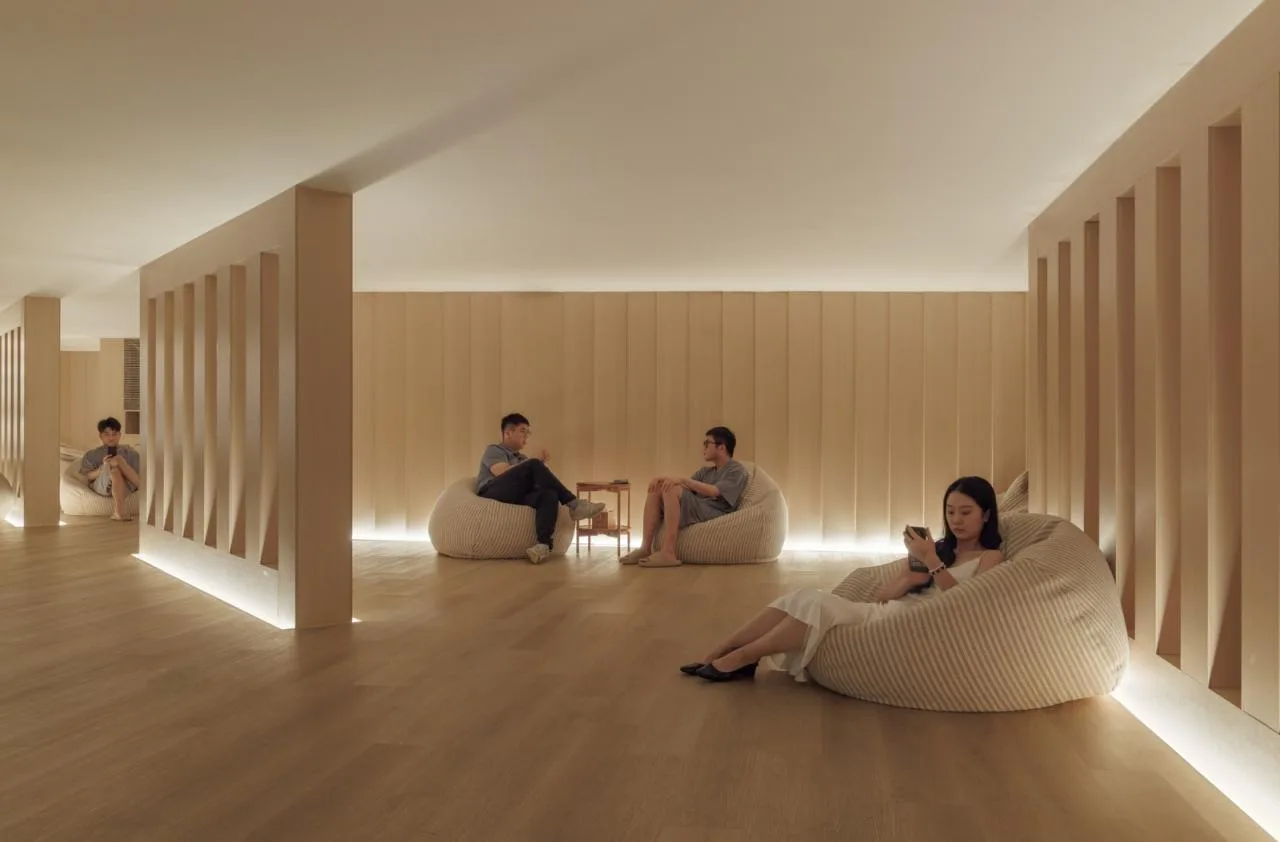
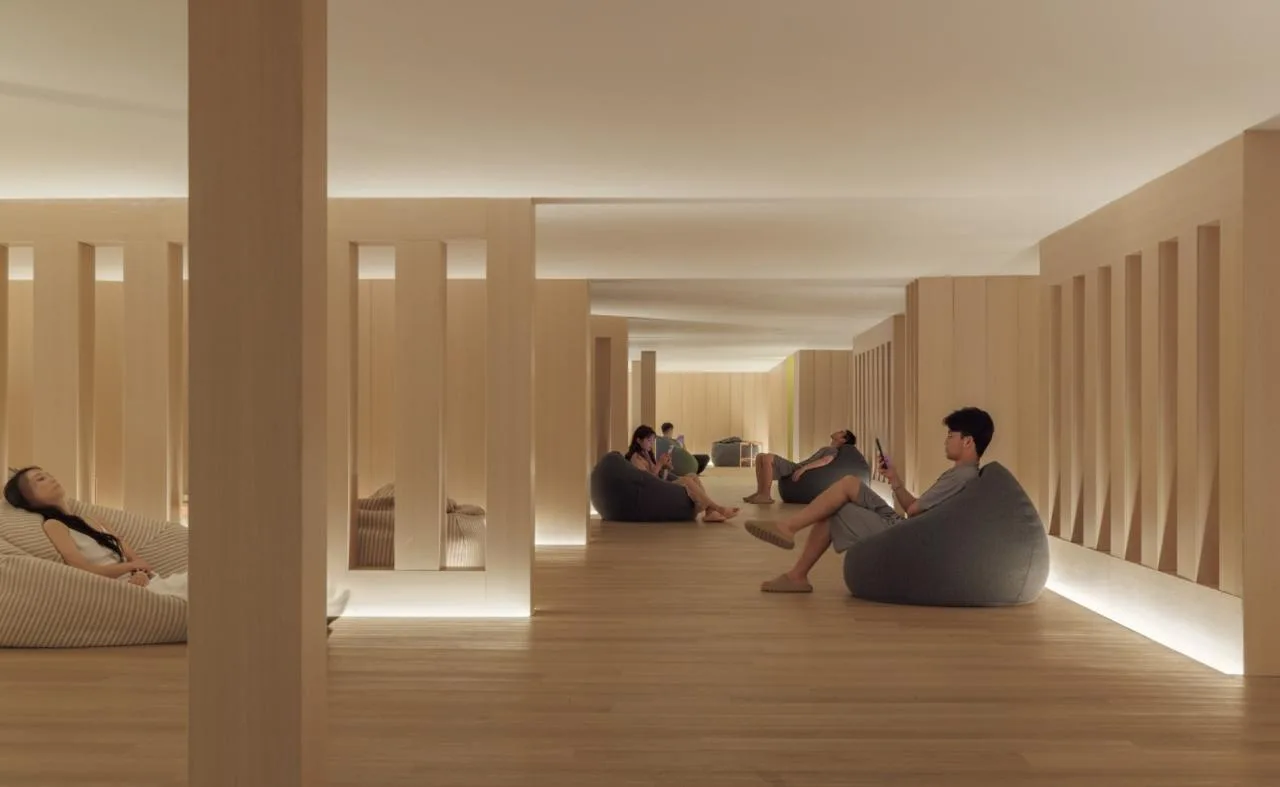
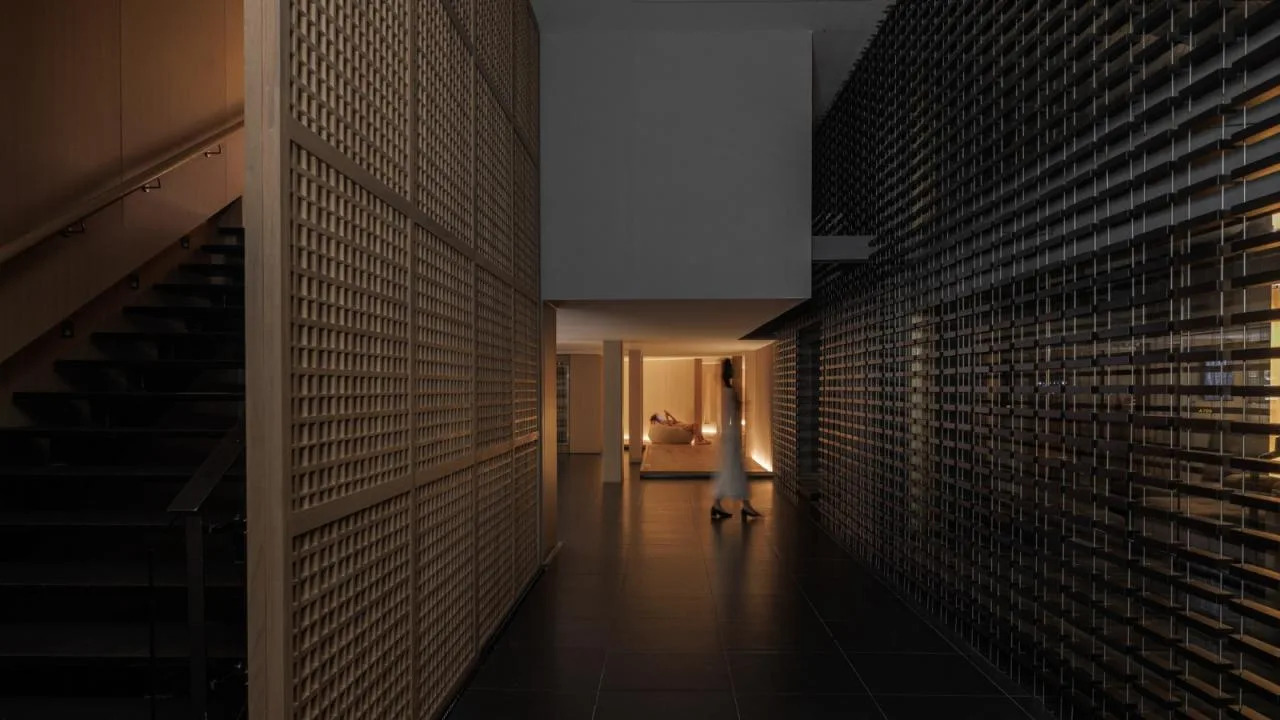
At the elevator hall exit, soft lighting guides your gaze toward a cozy lounge area with cave-like lazy sofas. Slanted wooden walls act as partitions, with hollowed-out sections creating screen-like fences. This continuous yet segmented space allows guests to overcome social anxieties, choosing solitude or company with ease. The subdued lighting shifts the visual focus to lower levels, enhancing a quiet, artistic ambiance. Wrapped sofas, subtle lighting, and warm yellow-toned wood foster a secure, calming environment.
Adjacent to the lounge, the restaurant space features a distinctive barbecue area dominated by natural wood tones, evoking a rustic charcoal fire ambiance. Black tiles reflect the flickering contrast between flames and wood, transforming the healing atmosphere into the warmth reminiscent of a fireplace. Each area feels like a stage, rich with events and emotional resonance.
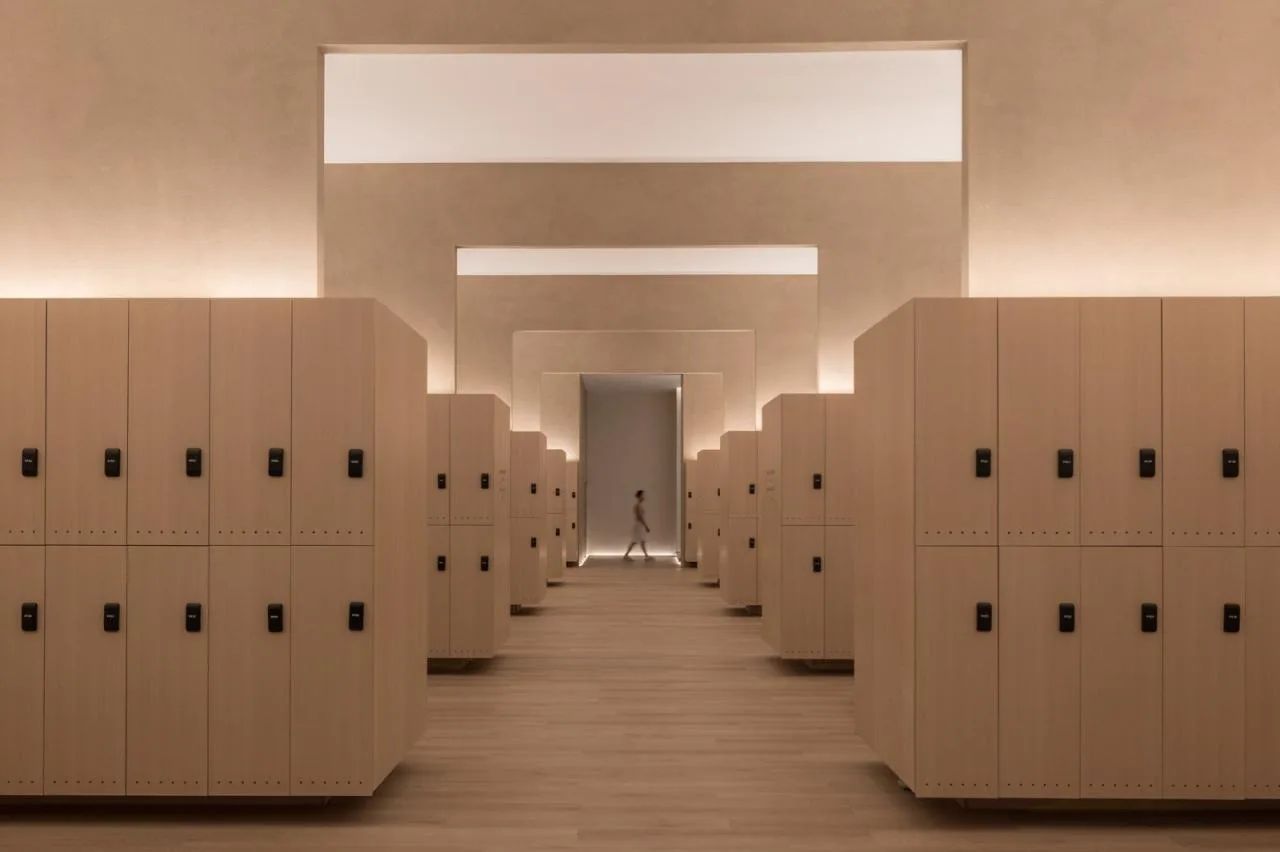
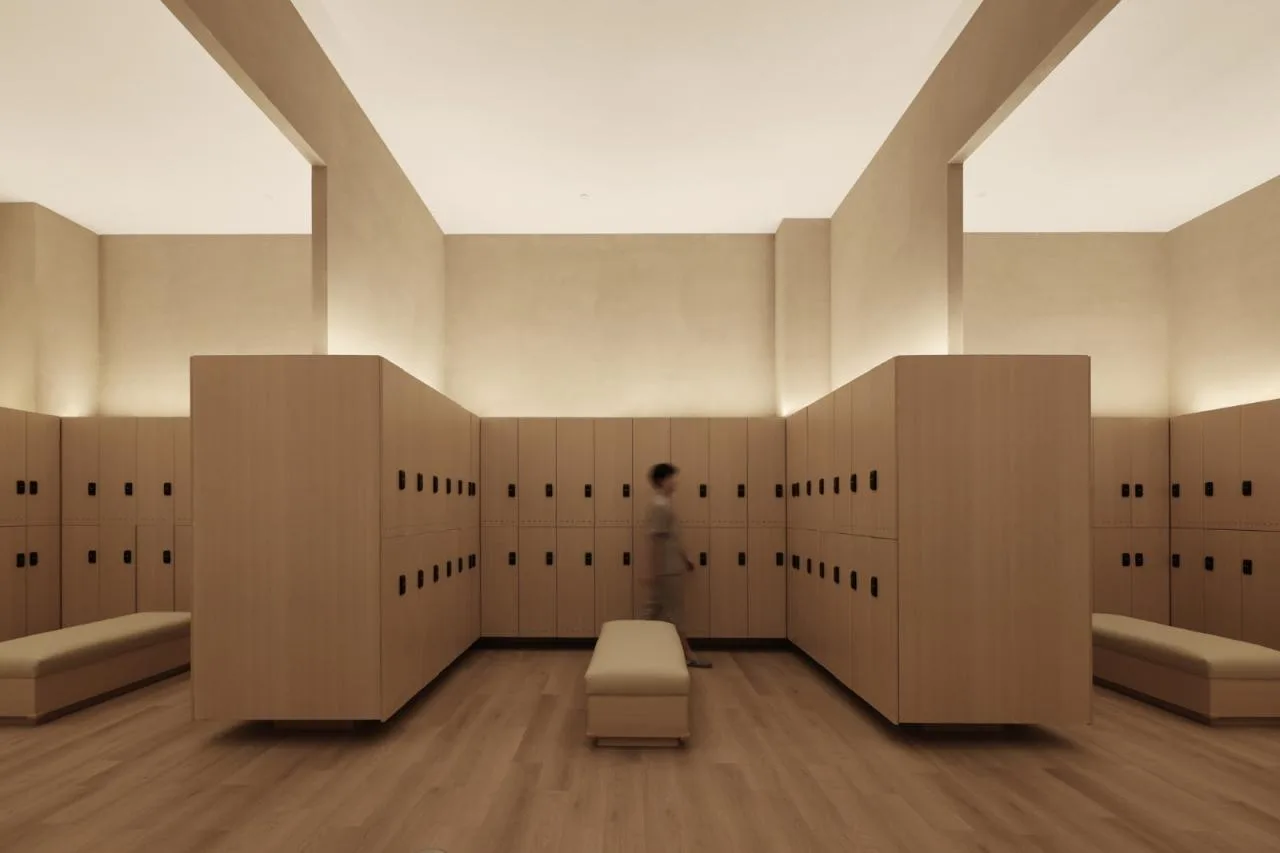
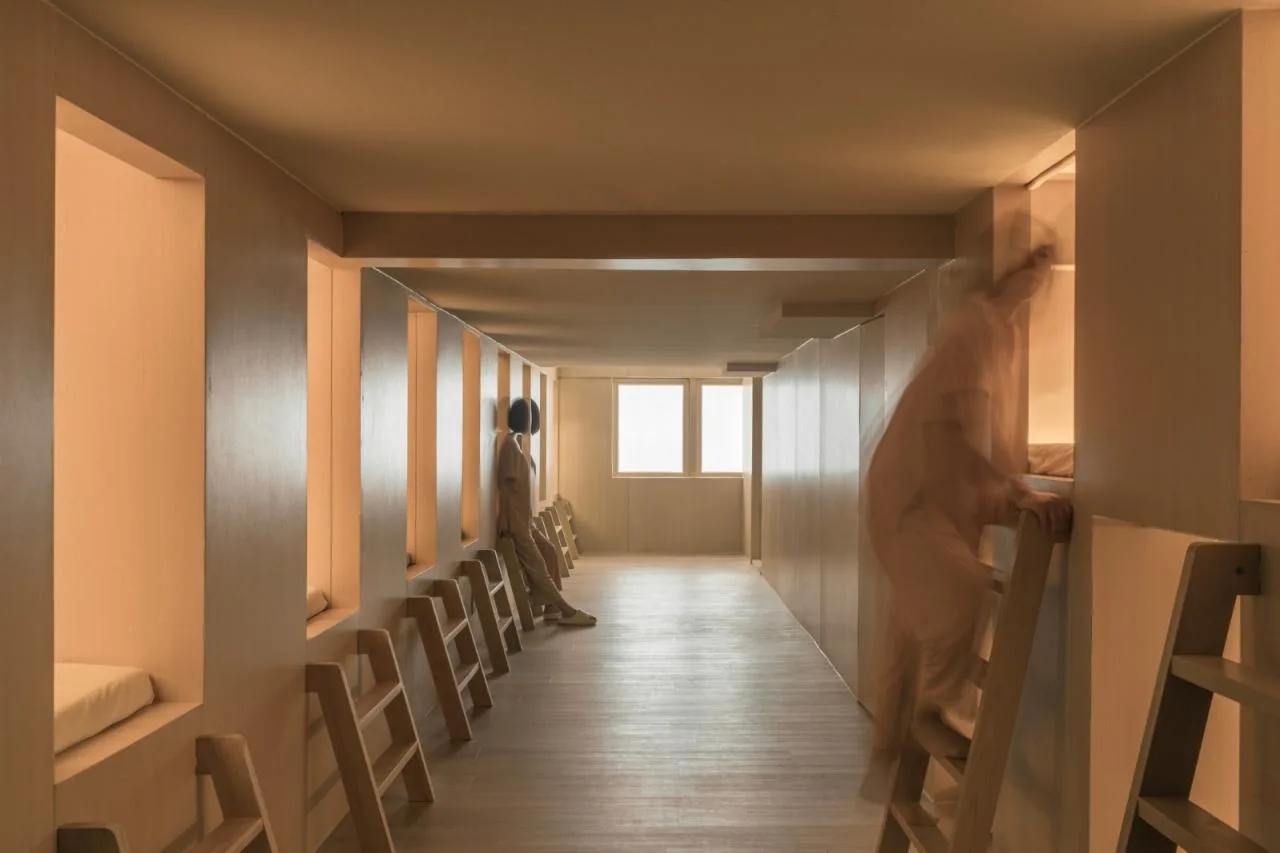
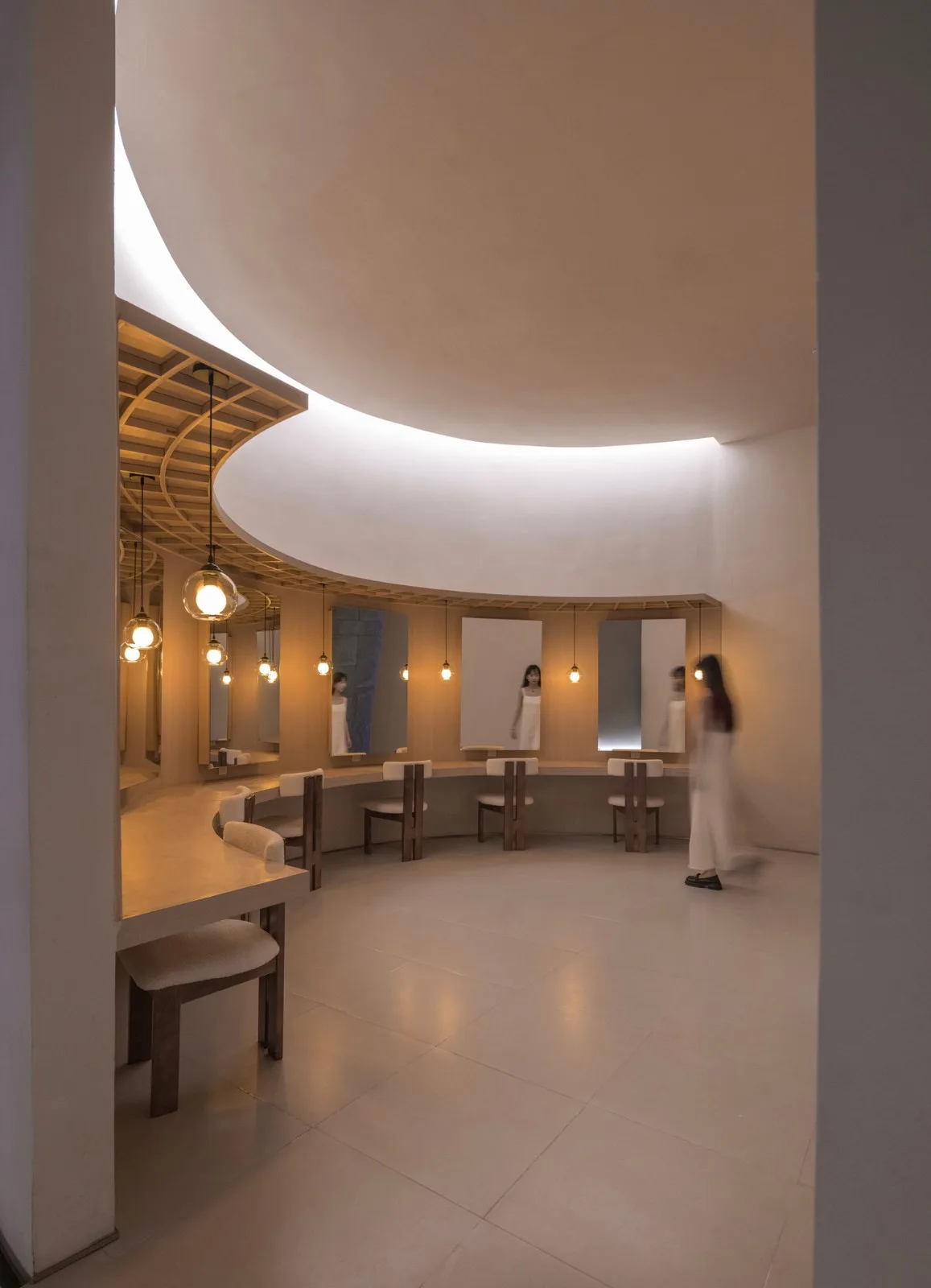
Within this tranquil world of light, shadow, and gentle water ripples, visitors find not only physical and mental relaxation but also deep emotional resonance in every subtle sensory detail. Tangquan Space is like a delicate emotional symphony, where each visit is a fresh experience and every corner a unique painting. This space allows guests to escape the city’s chaos and reconnect with inner peace through the harmonious blend of nature and art.
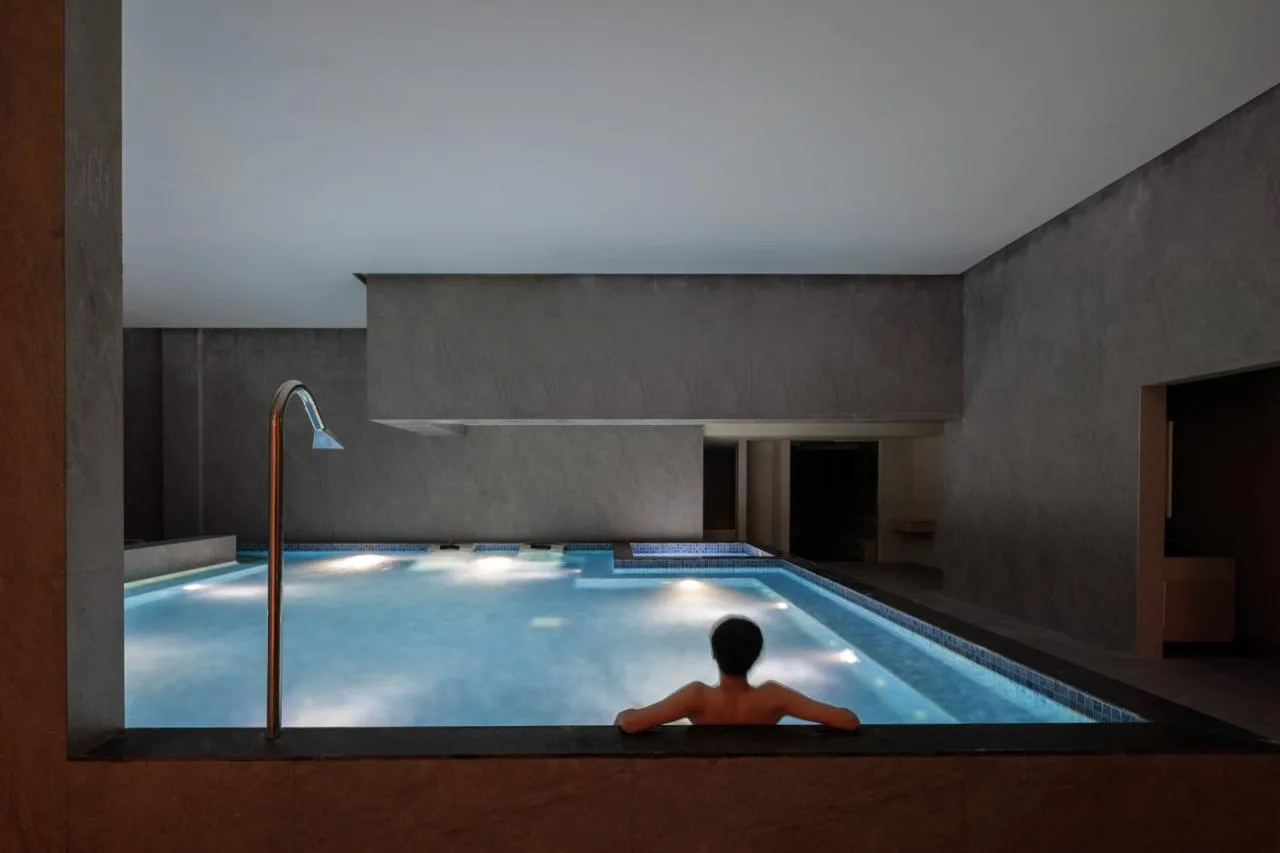
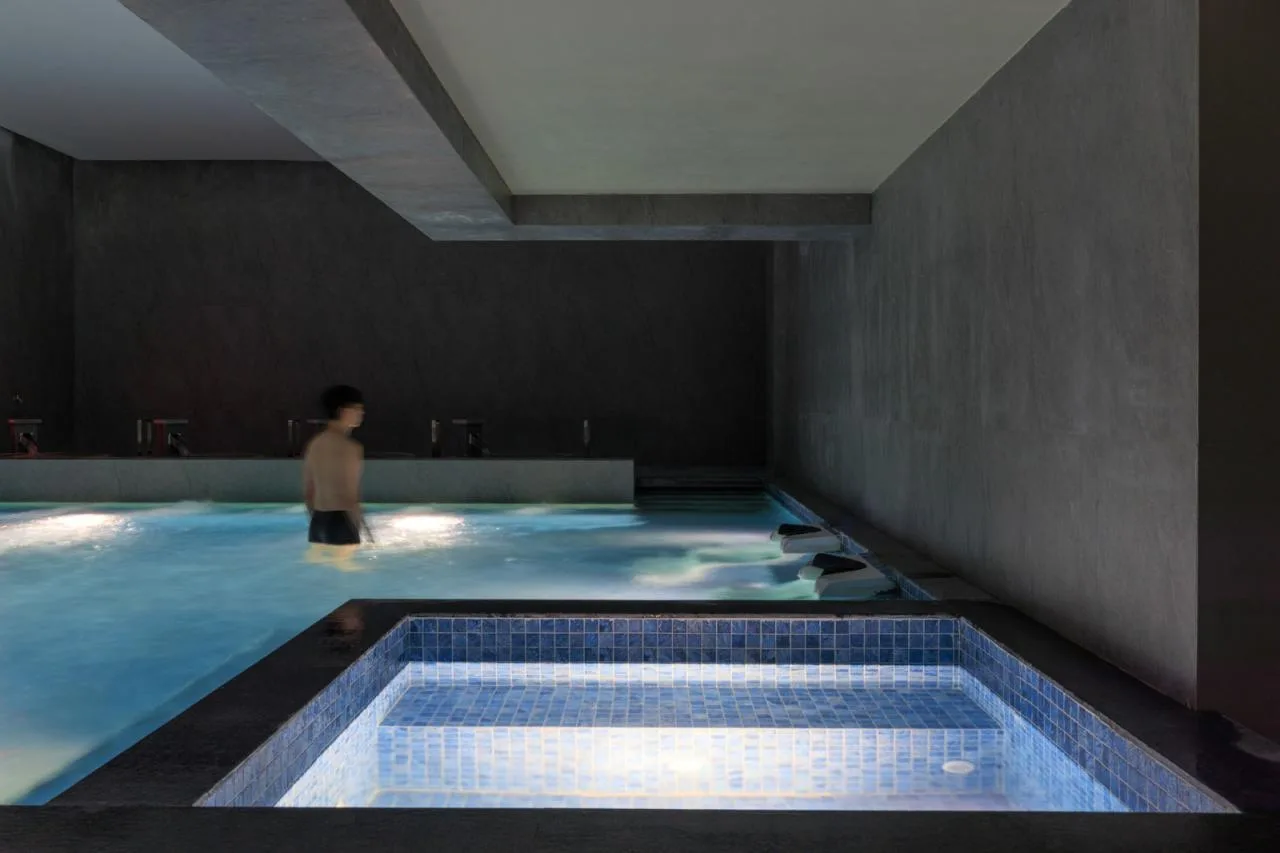
The spa embraces diversity like the sea welcoming all rivers. It is more than a spa center — its ever-shifting spaces act as vessels carrying emotions and sensations. Materials, lighting, and scale transform dramatically based on users’ interactions, reflecting the Wurou Research Institute’s deep understanding and expressive approach to flexible space design.
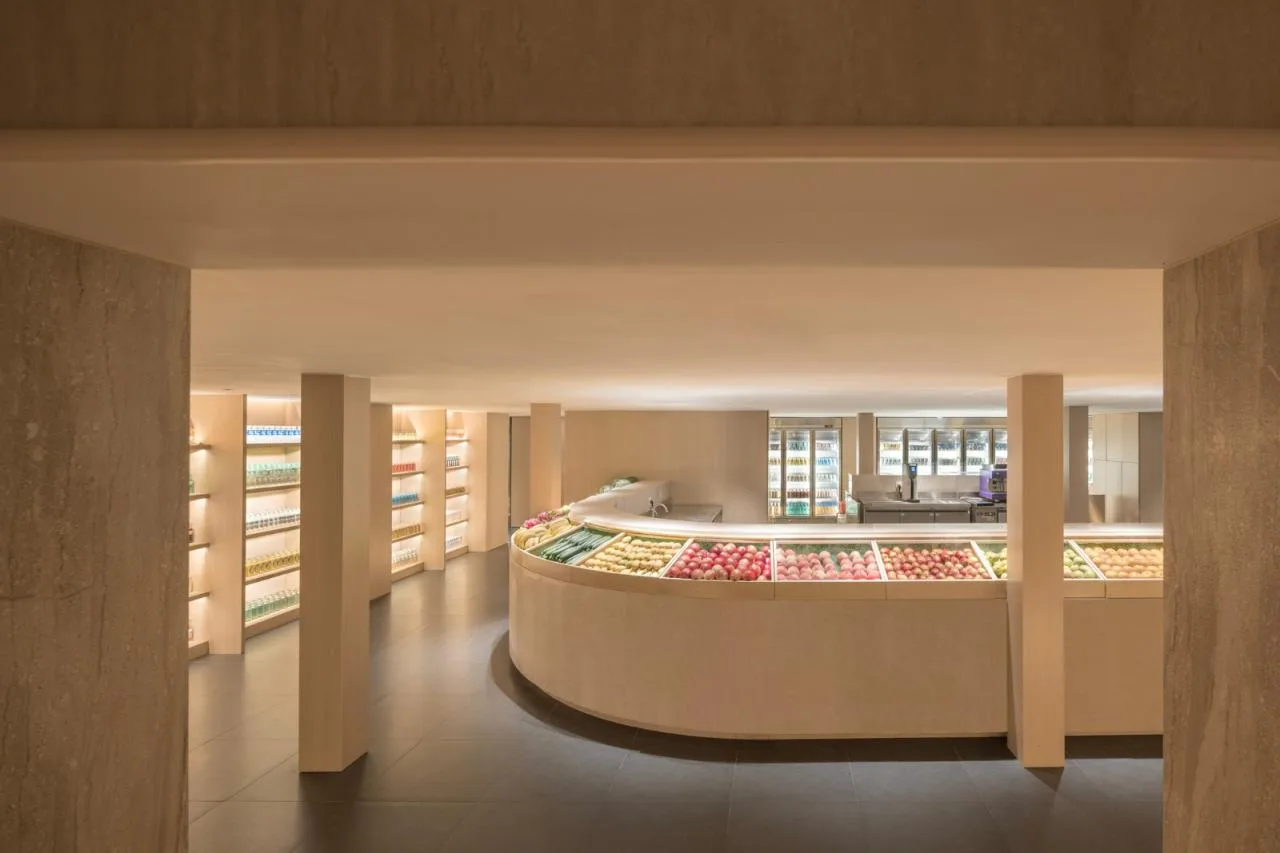
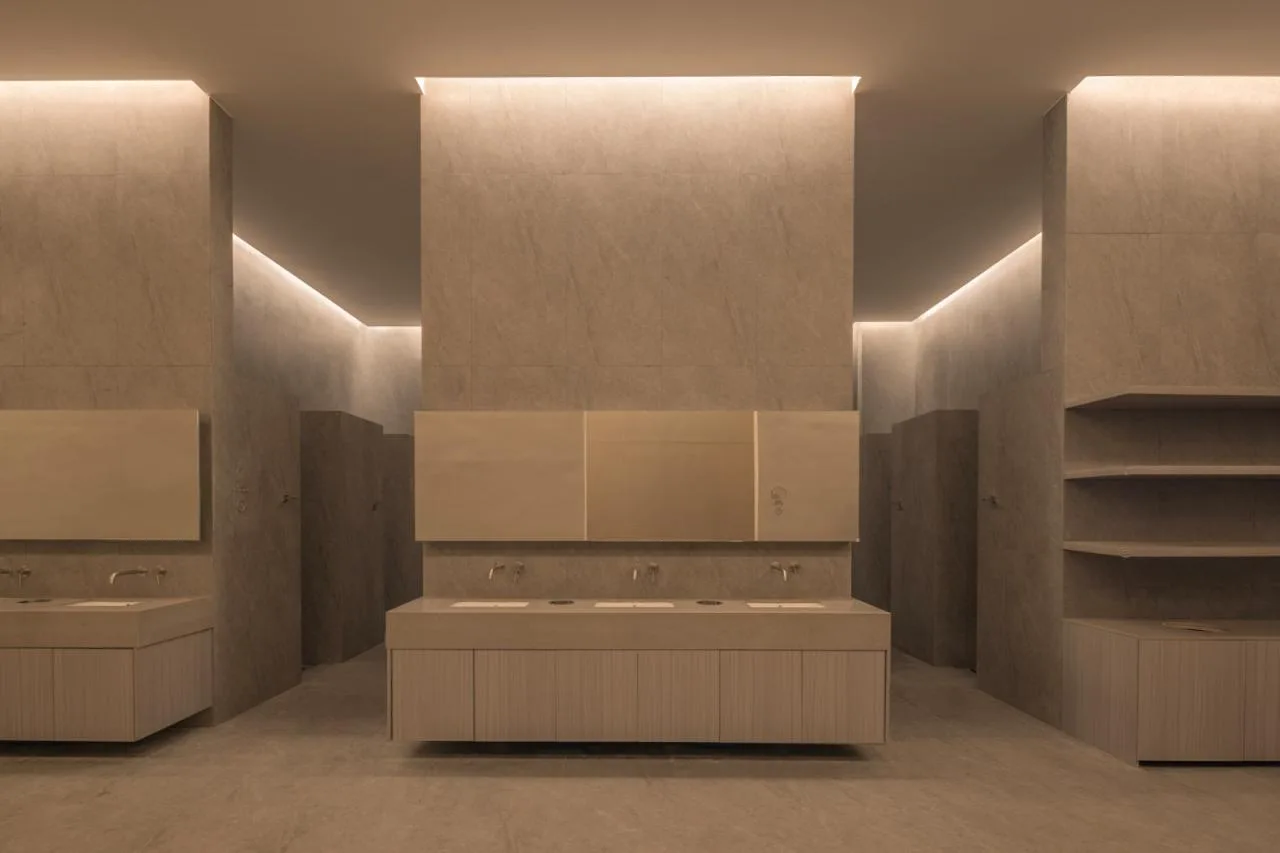
Project Drawings
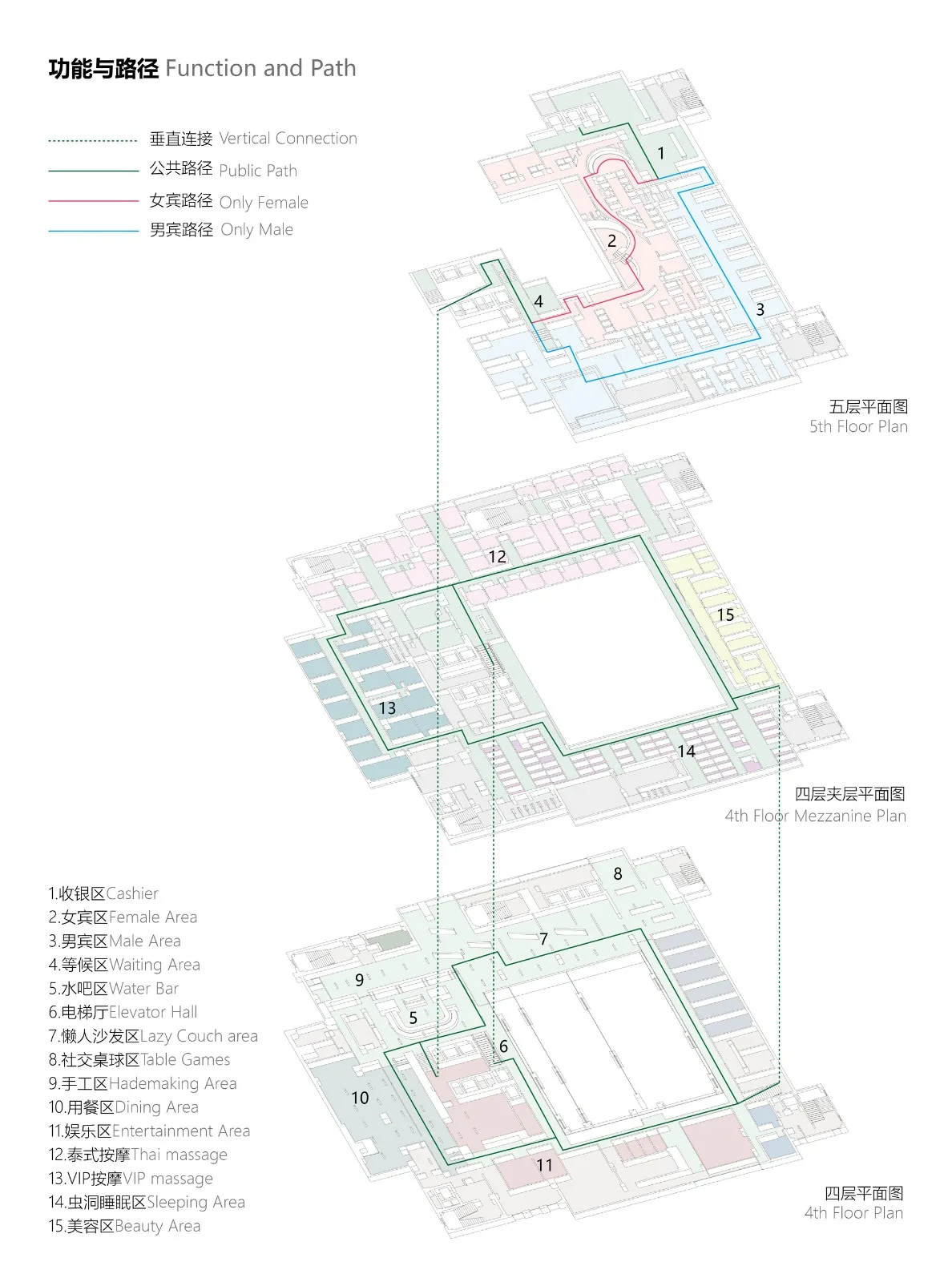
△ Function and Path
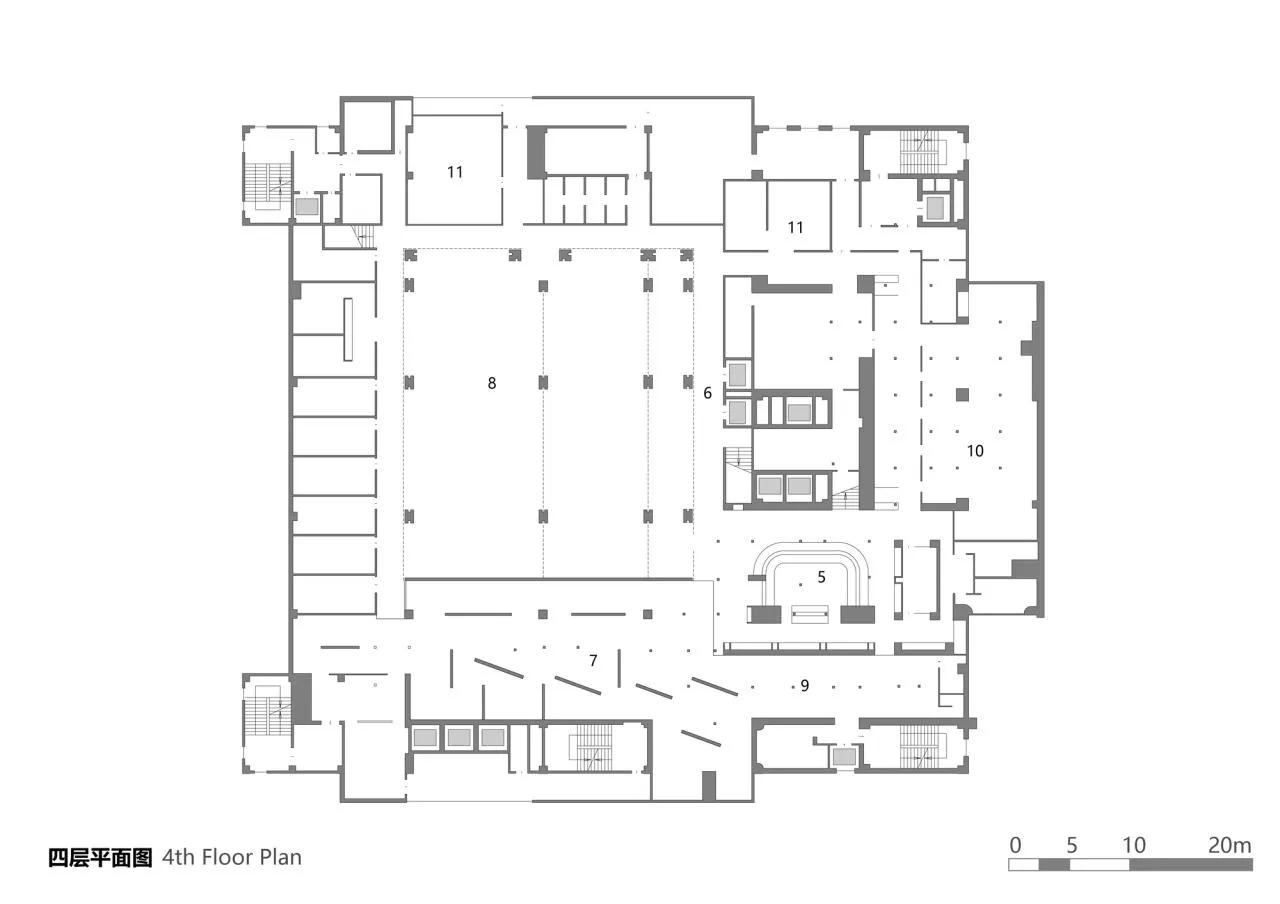
△ Fourth Floor Plan
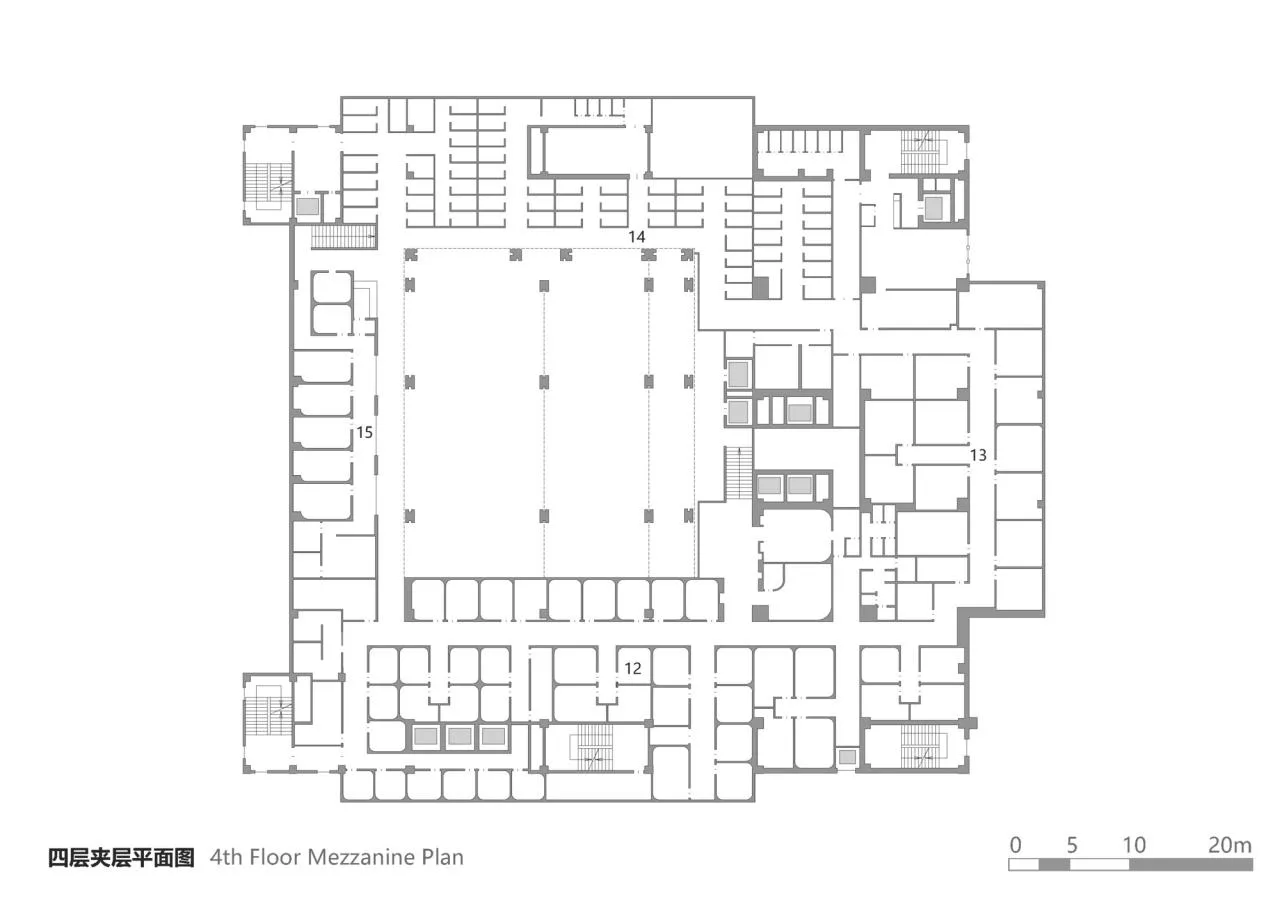
△ Four-Layer Mezzanine Plan
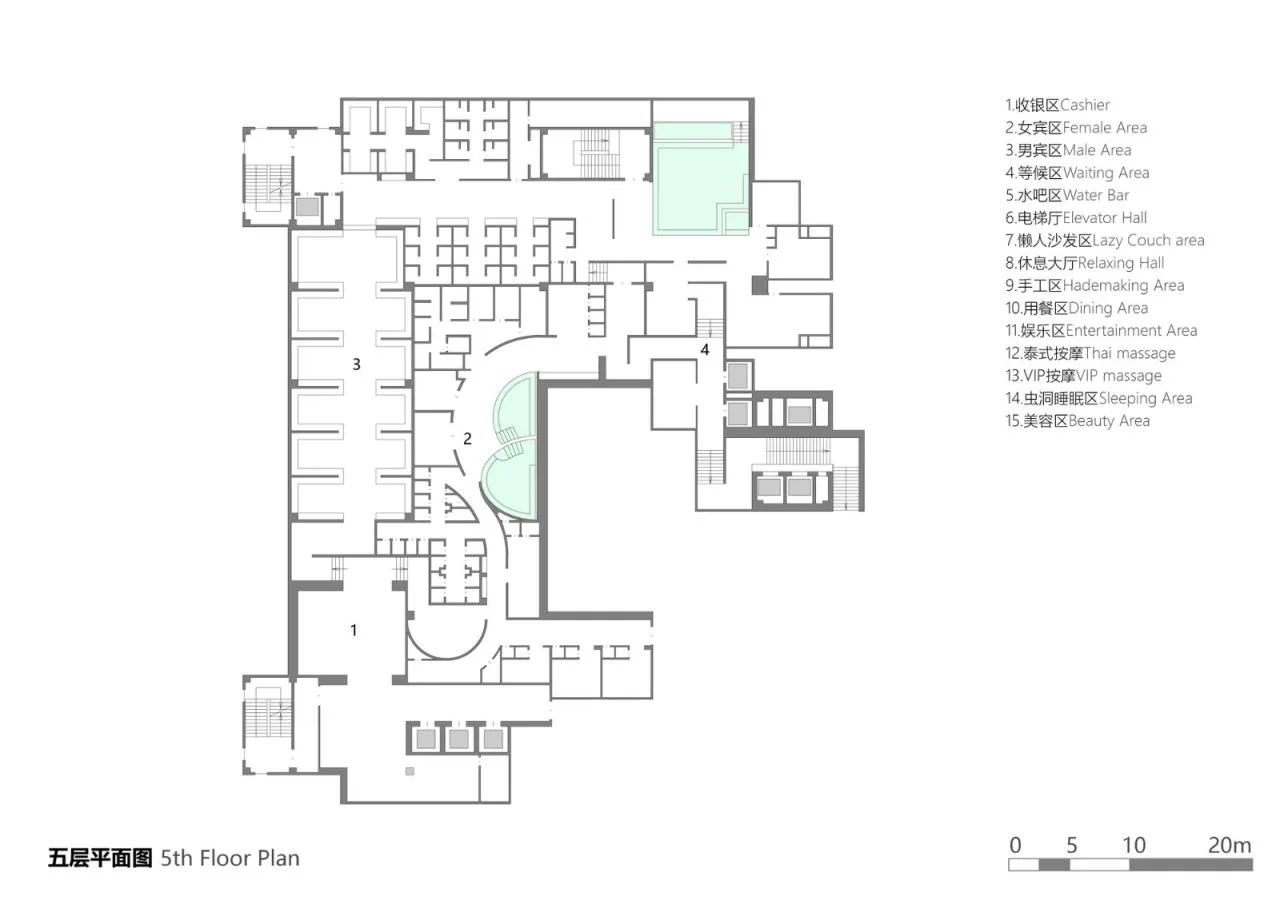
△ Fifth Floor Plan
Project Information
Architect: Wurou Research Institute
Area: 11,000 m²
Project Year: 2024
Photographer: Liu Guowei
Lead Architect: Yan Yifei
Design Team: Yan Yifei, Guo Ruocheng, Ding Qiuyao, Ye Chen, Wang Xi, Wang Qiqi
Client: Shenzhen Shuidu Holiday Hotel
Lighting Consultant: Artelds
Location: Shenzhen














Must log in before commenting!
Sign Up