
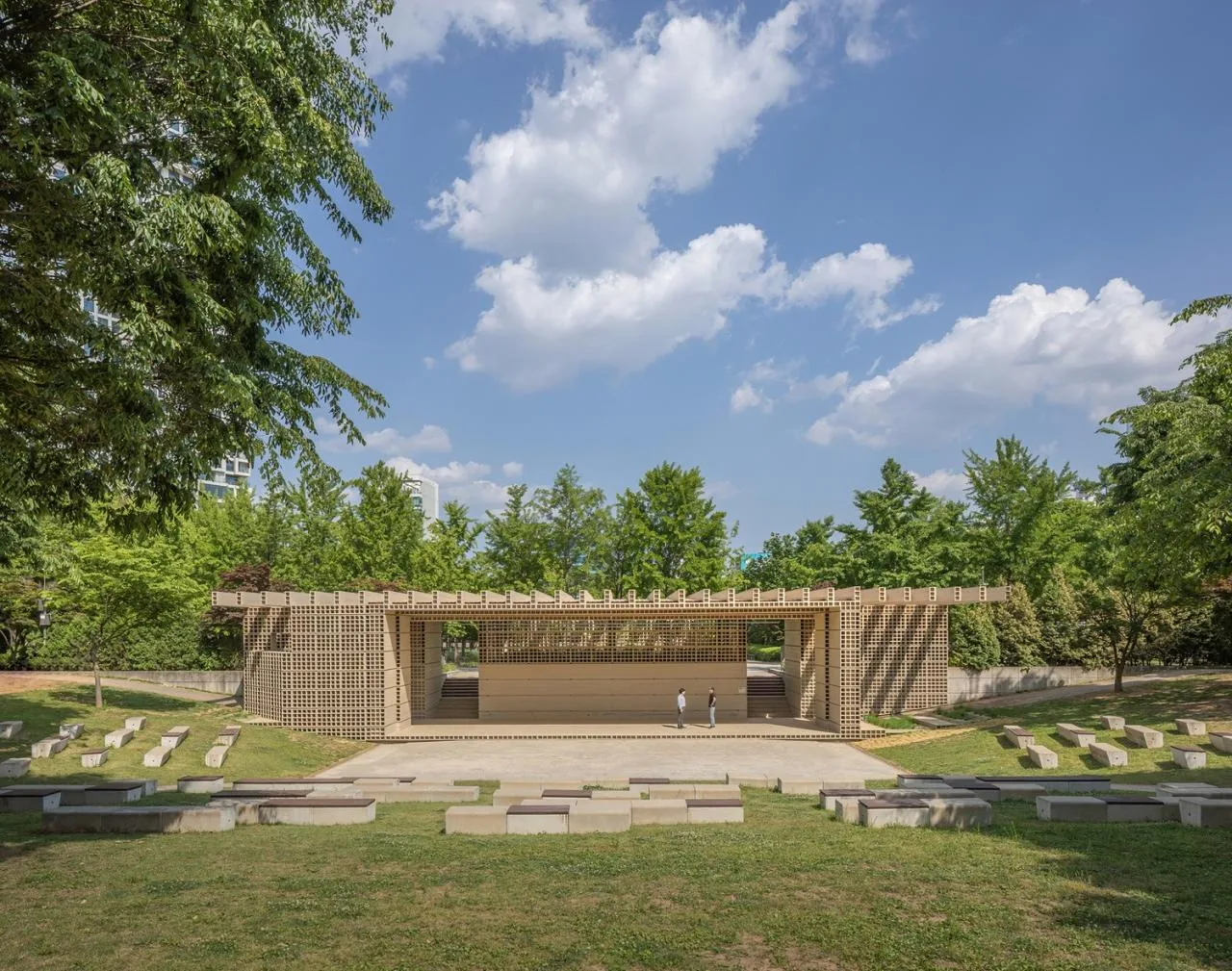
Throughout history, epidemics have posed both crises and opportunities. While they have brought suffering, they have also laid a strong and healthy foundation for urban development. The recent COVID-19 pandemic has highlighted ecological concerns, urging us to appreciate the importance of green spaces within cities. Seoul Forest, a landmark attraction in Seoul, has been transformed from a horse racing track into a vibrant ecological park. Our project, Ecological Matrix, Breathing Net, represents our architectural response to urban park facilities in the post-pandemic era.
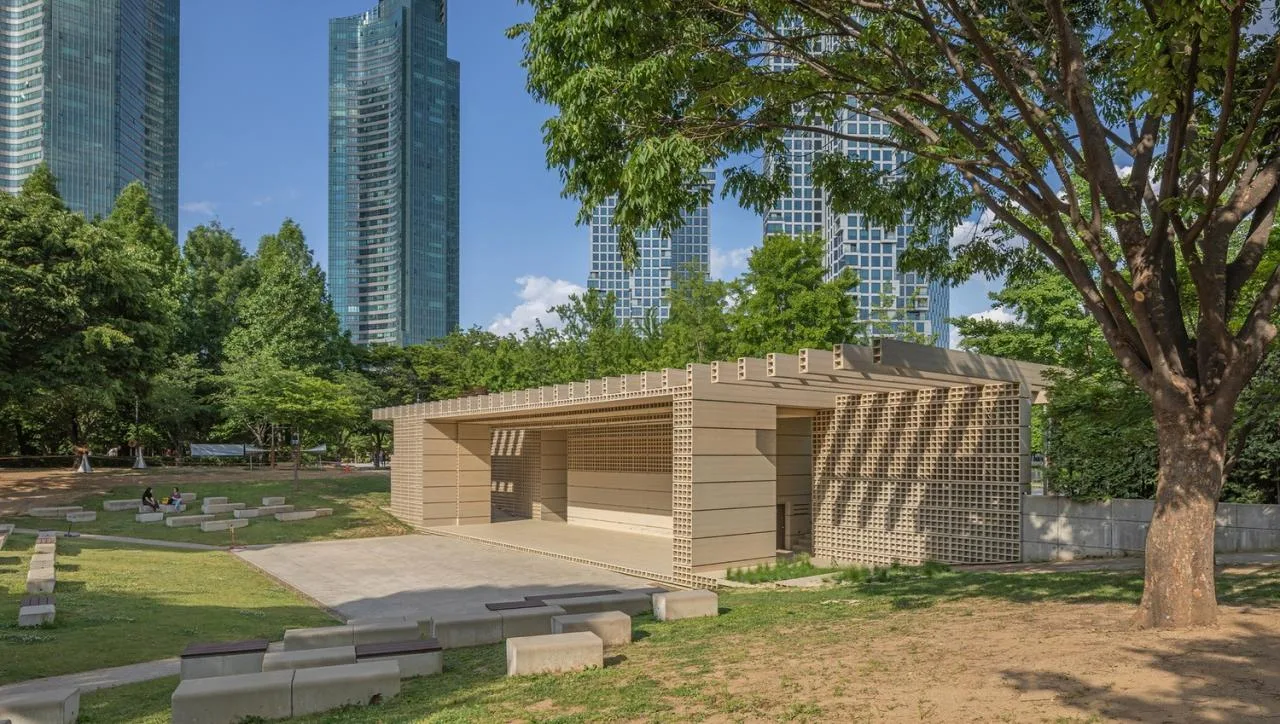
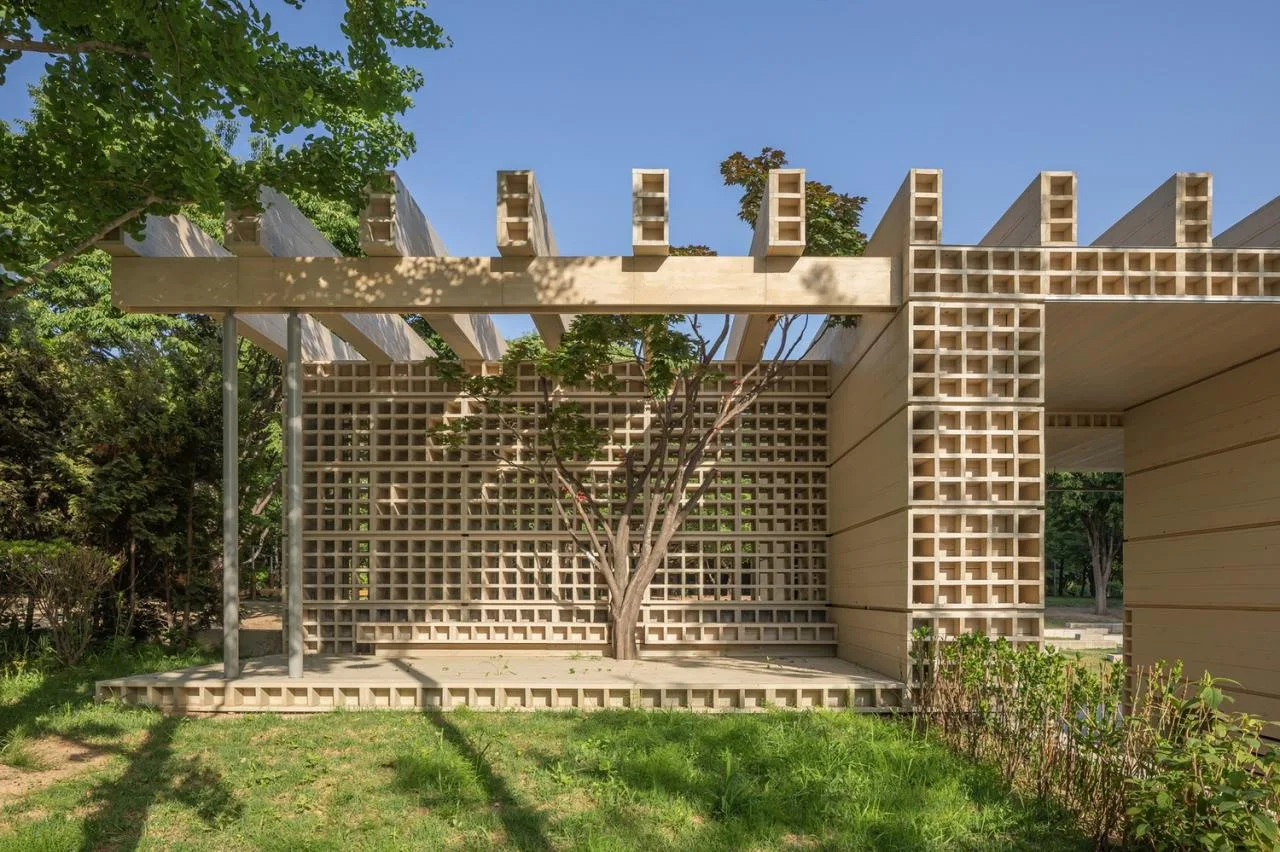
In a human-centered world, local elements serve as tools to support the whole. In contrast, within an ecological framework, one part can influence others beyond the boundaries of a single entity. Ecology teaches us that a cell becomes a material, materials form details, details expand into structures, which together shape the city. Similarly, wood consists of complex fibers and cells that grow into components, units, and ultimately its form. Our Ecological Matrix, Breathing Net pavilion is designed following this ecological principle—building from the whole to the parts and back again.
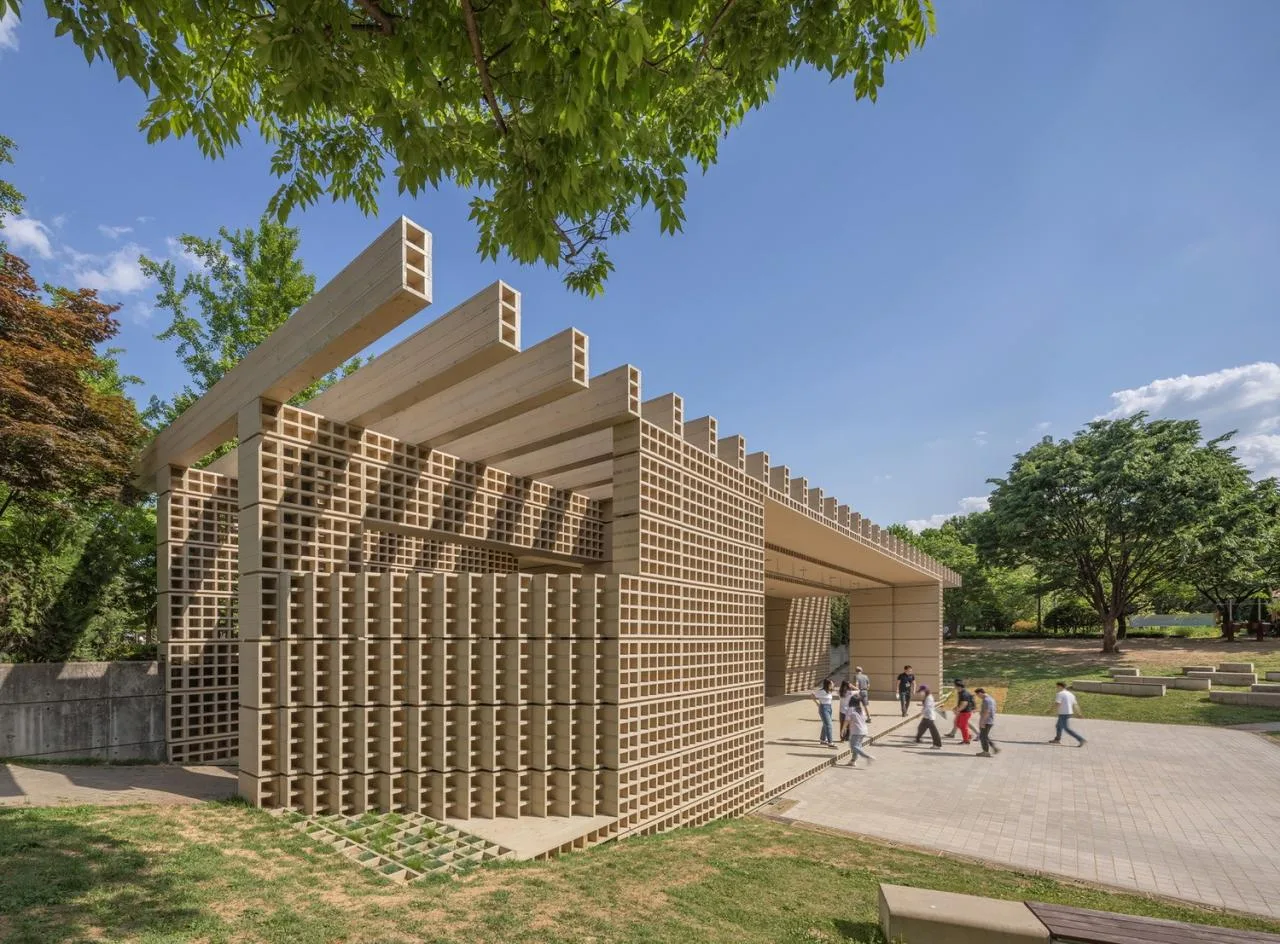
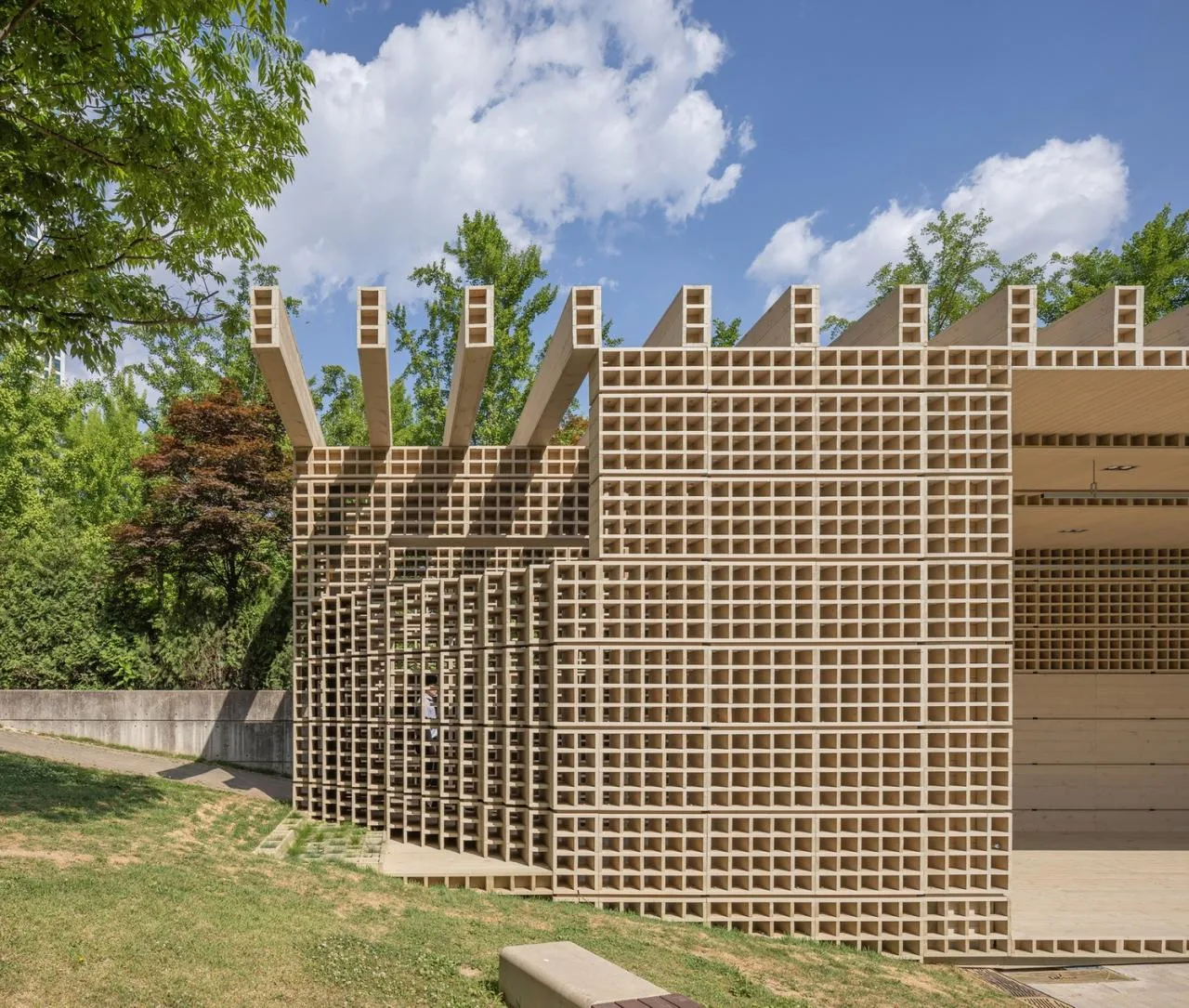
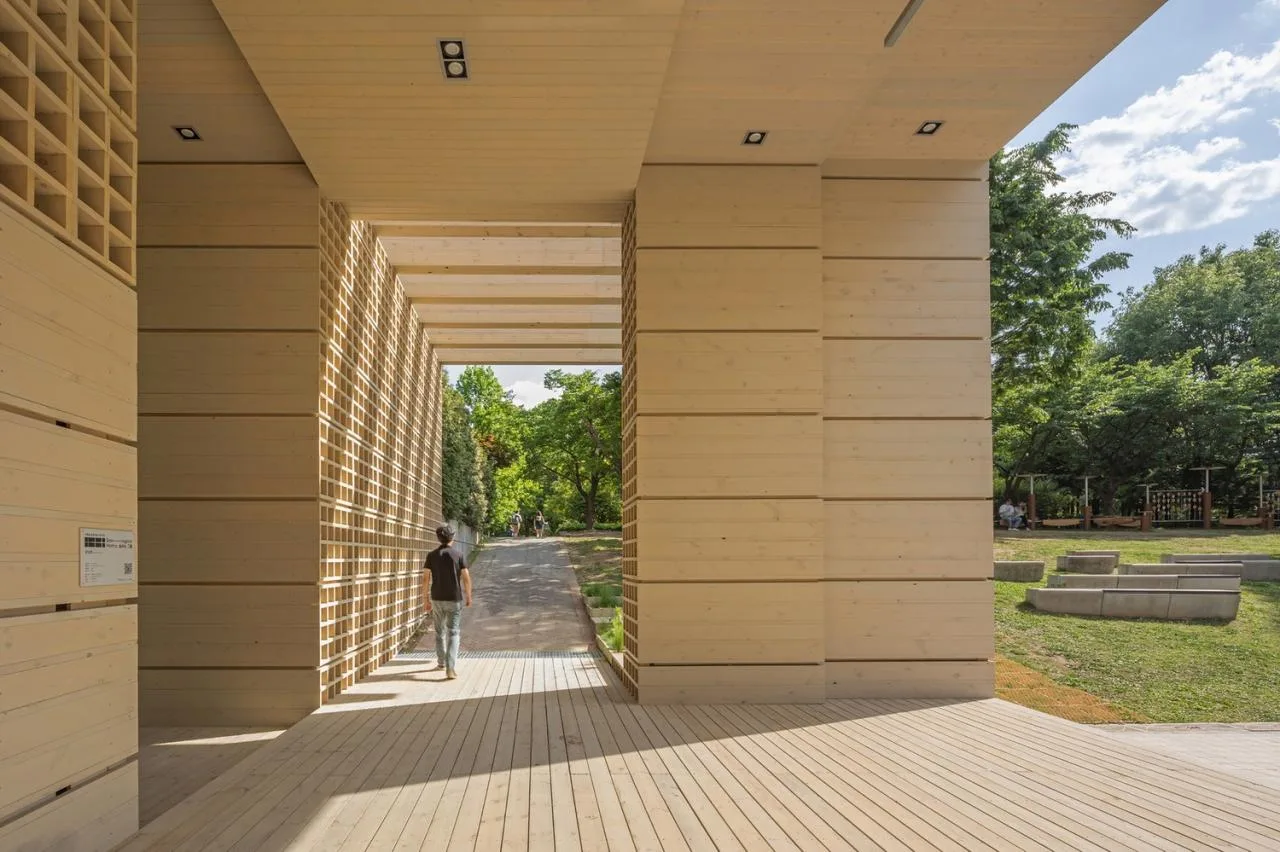
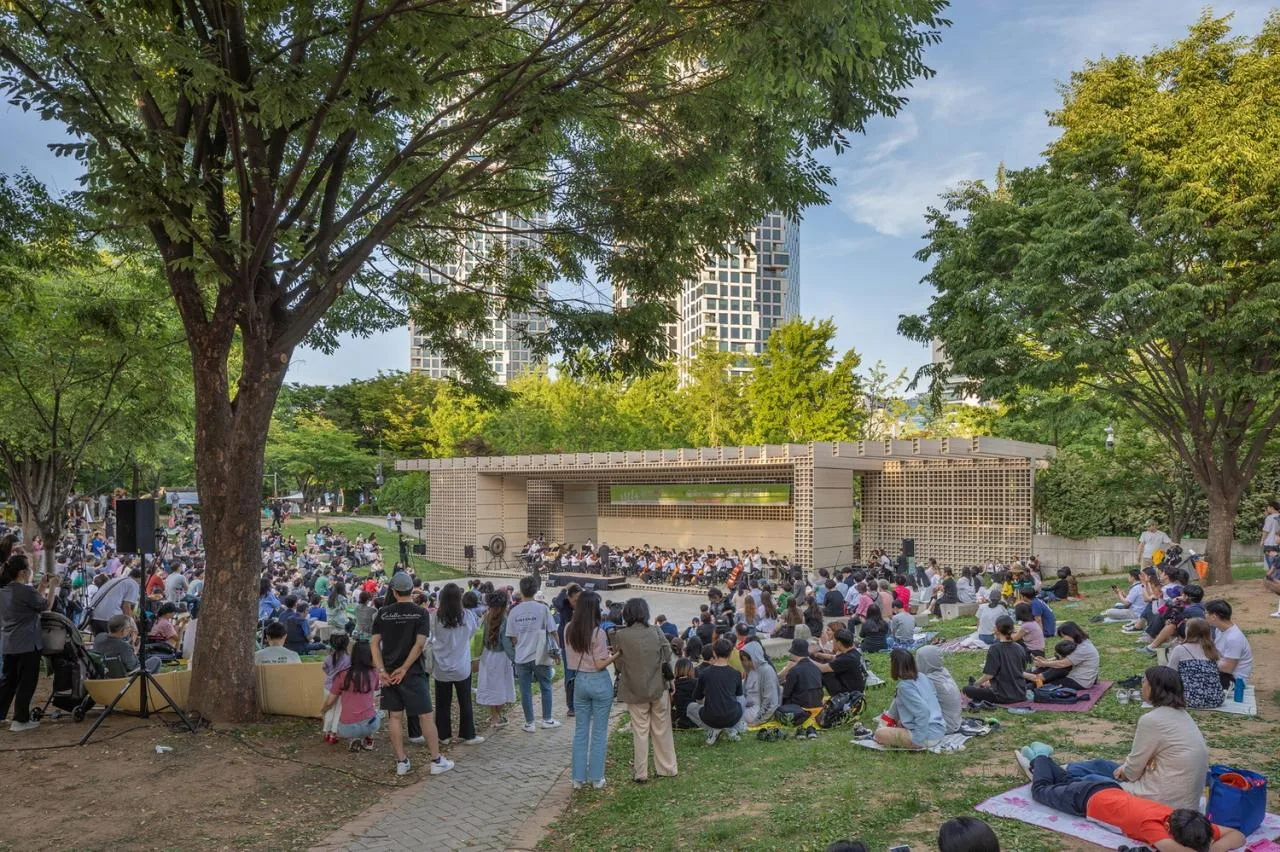
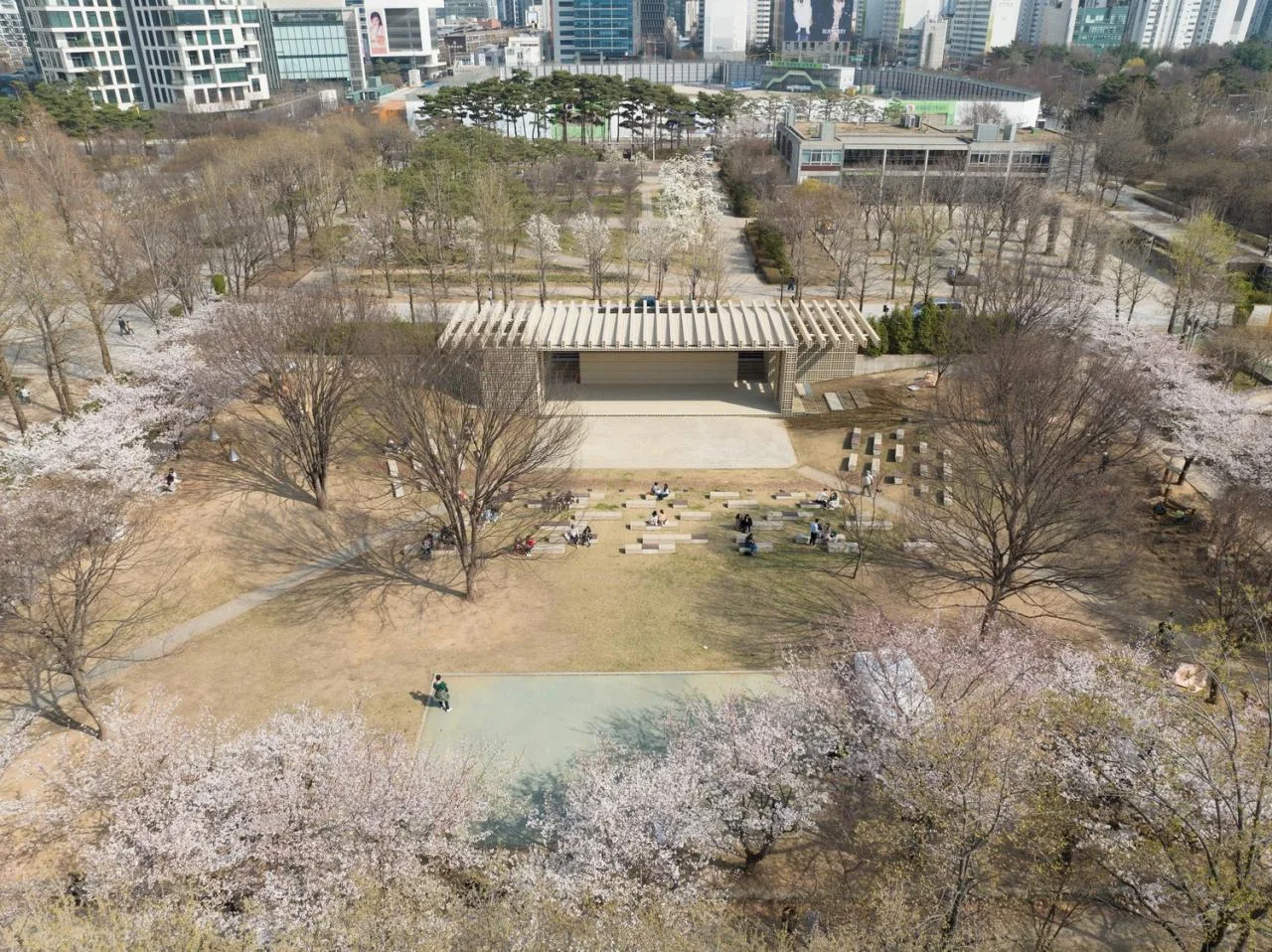
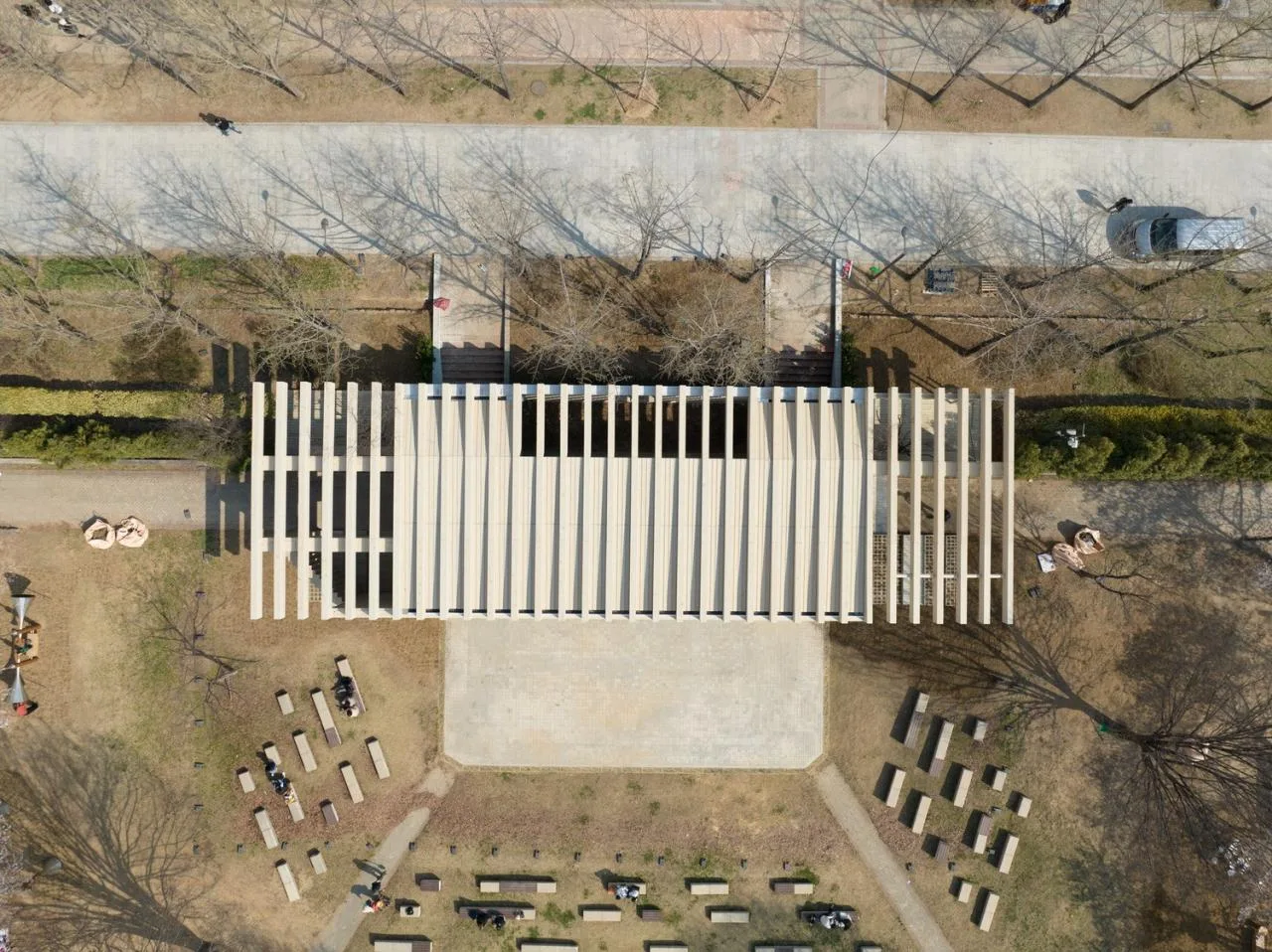
The Ecological Matrix, Breathing Net features a loose geometric order that weaves together diverse relationships. The original structures in Seoul Forest are rigid and purely functional. The old stage created separation between walkways and the park, as well as between front and back spaces. By repositioning the stage centrally, this pavilion connects four distinct pathways and two resting areas around the building. It now stands as a neutral form, integrating and fostering connections within its environment.
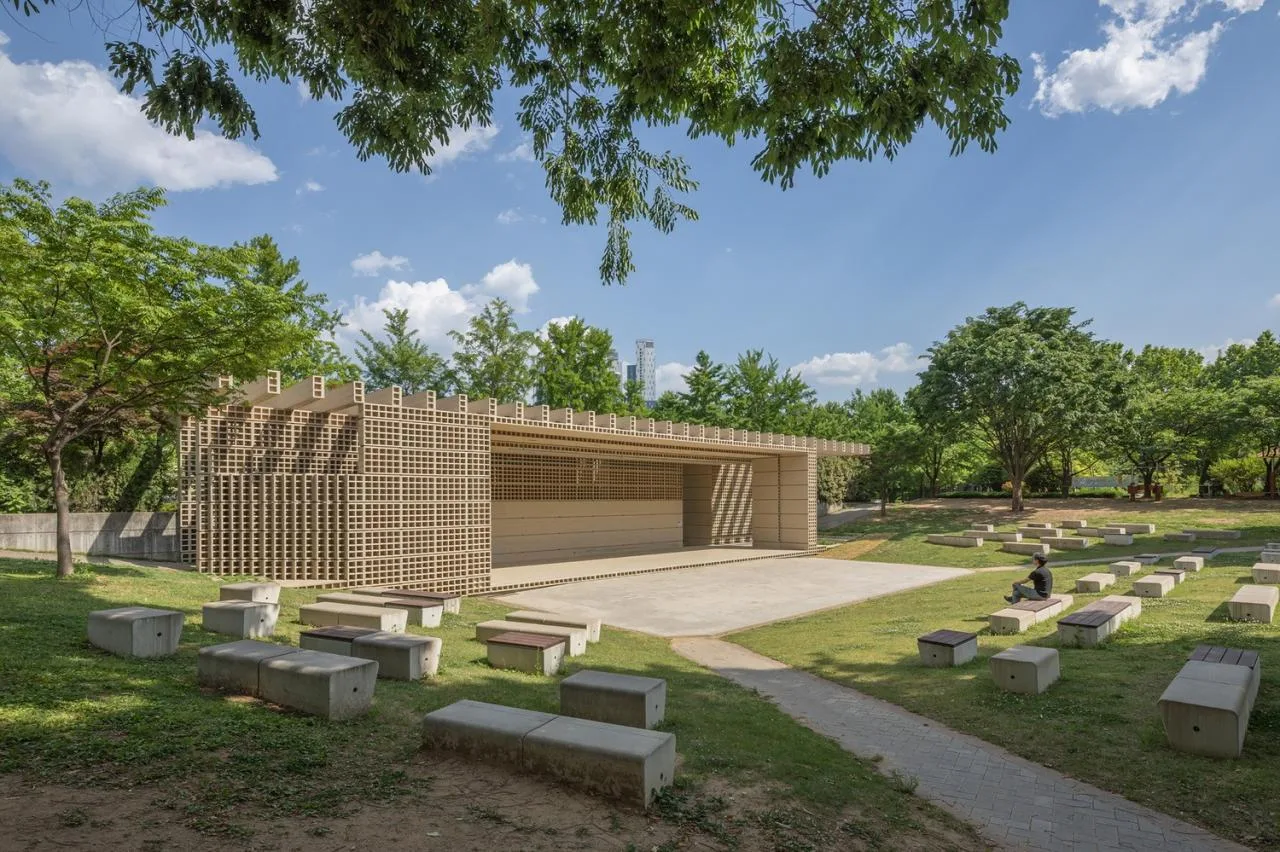
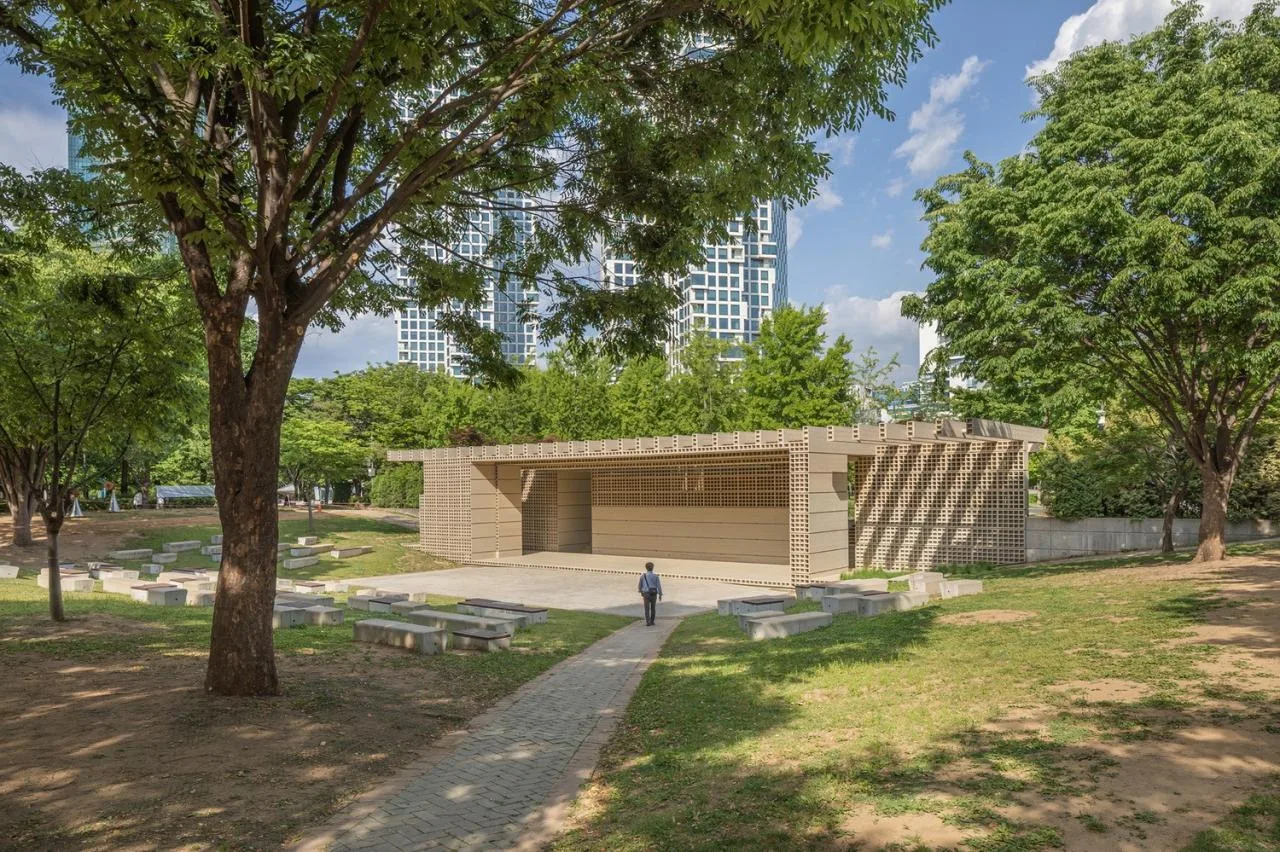
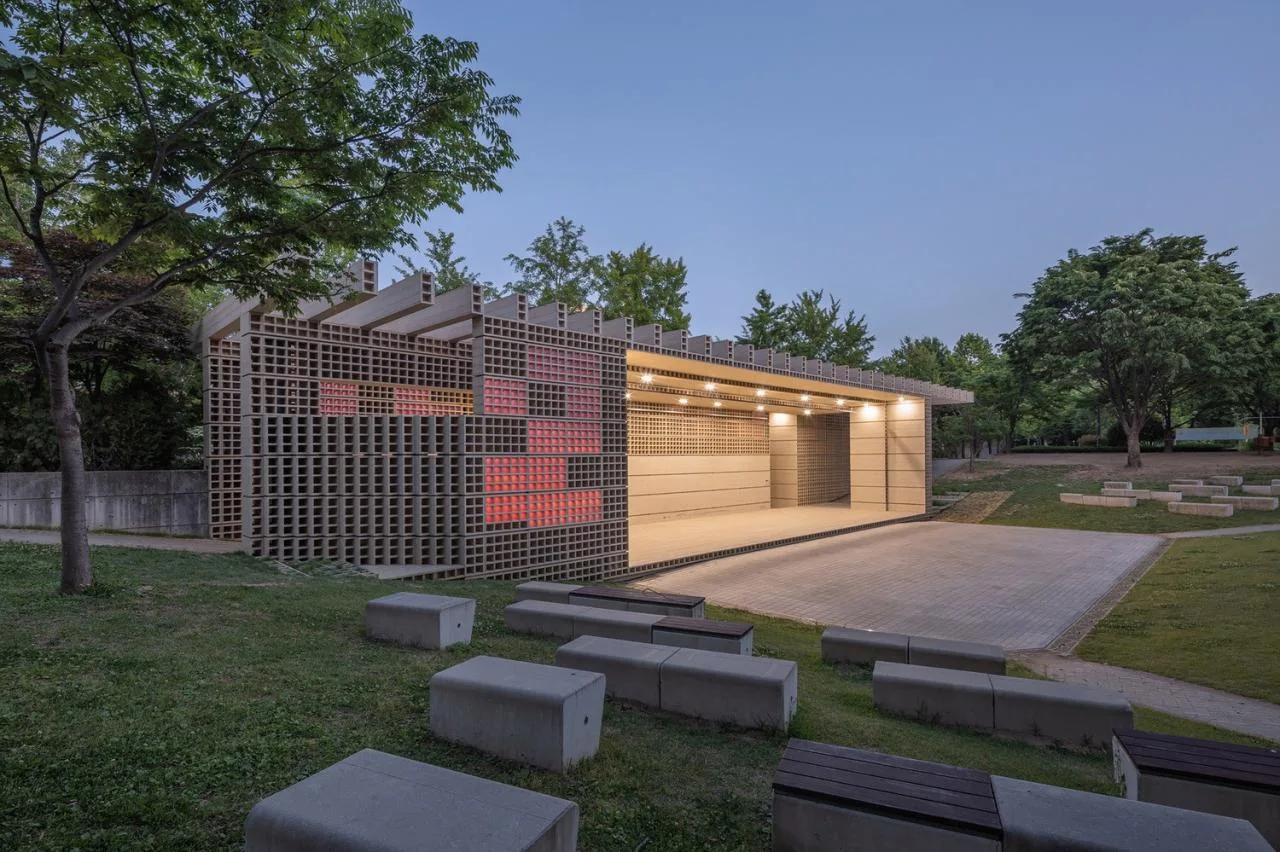
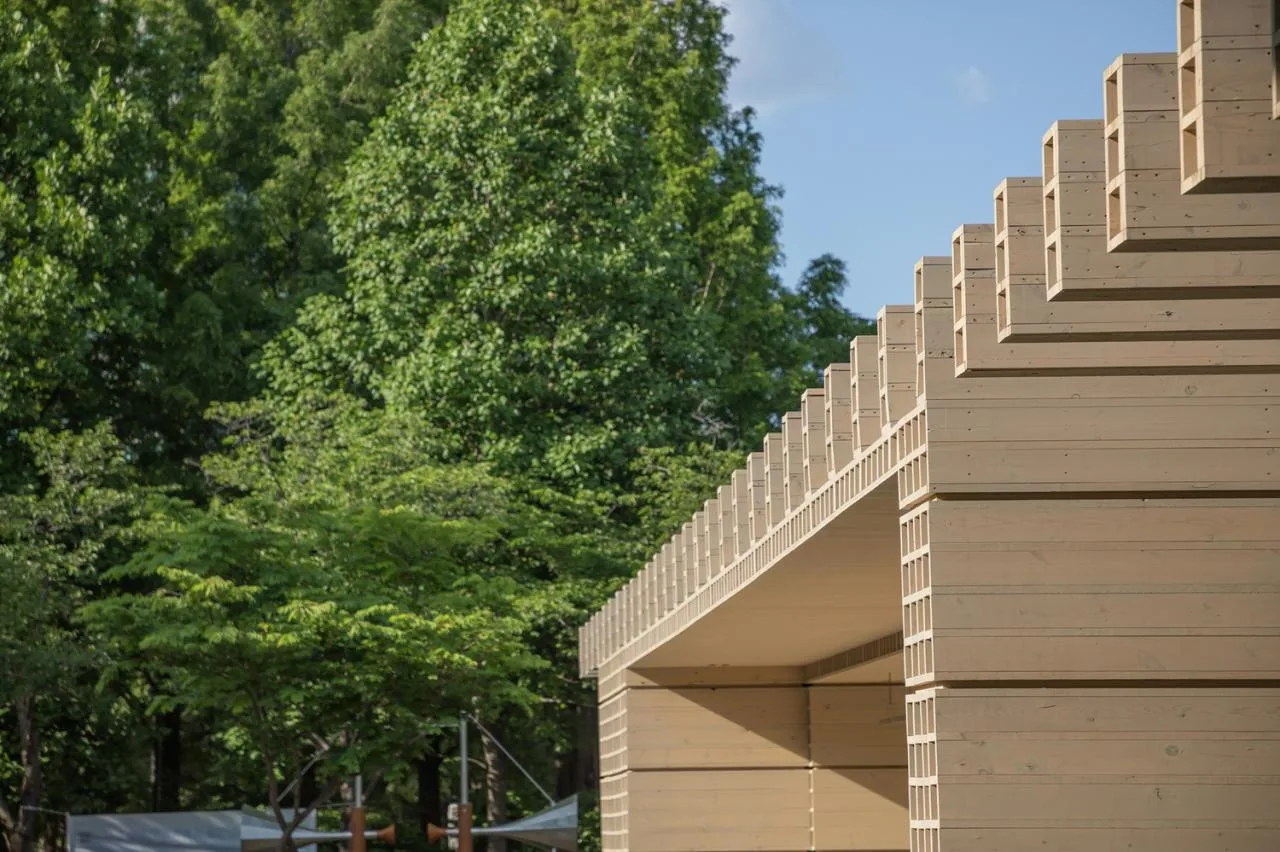
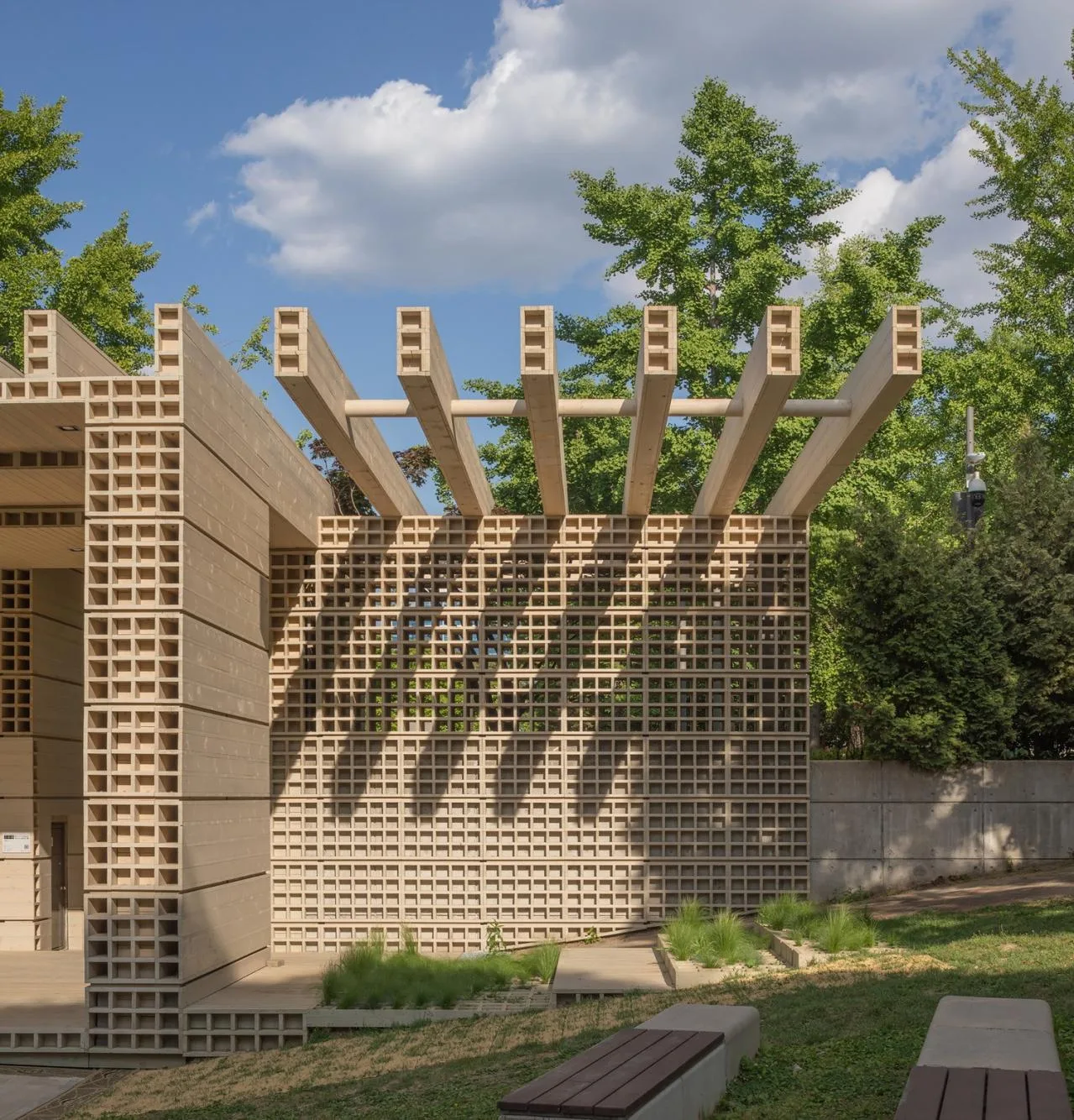
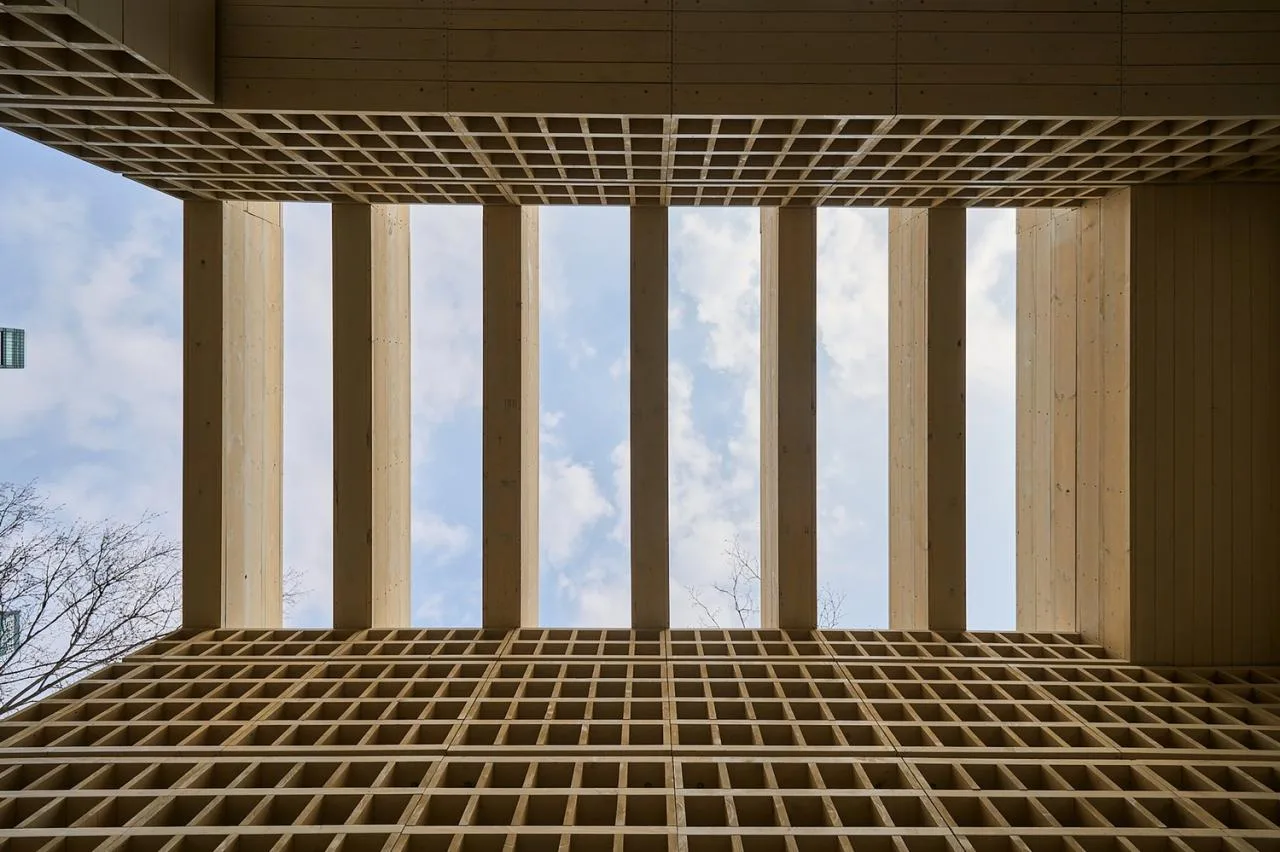
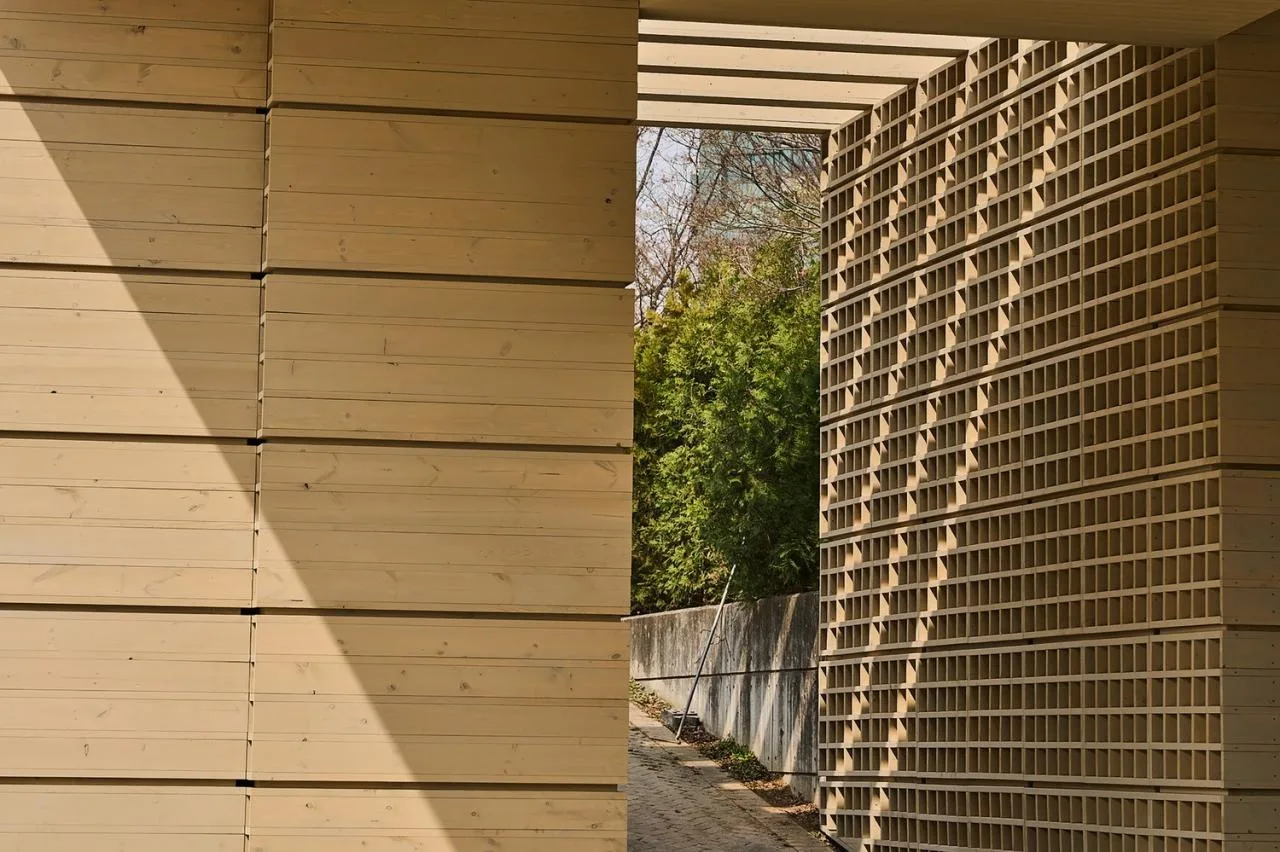
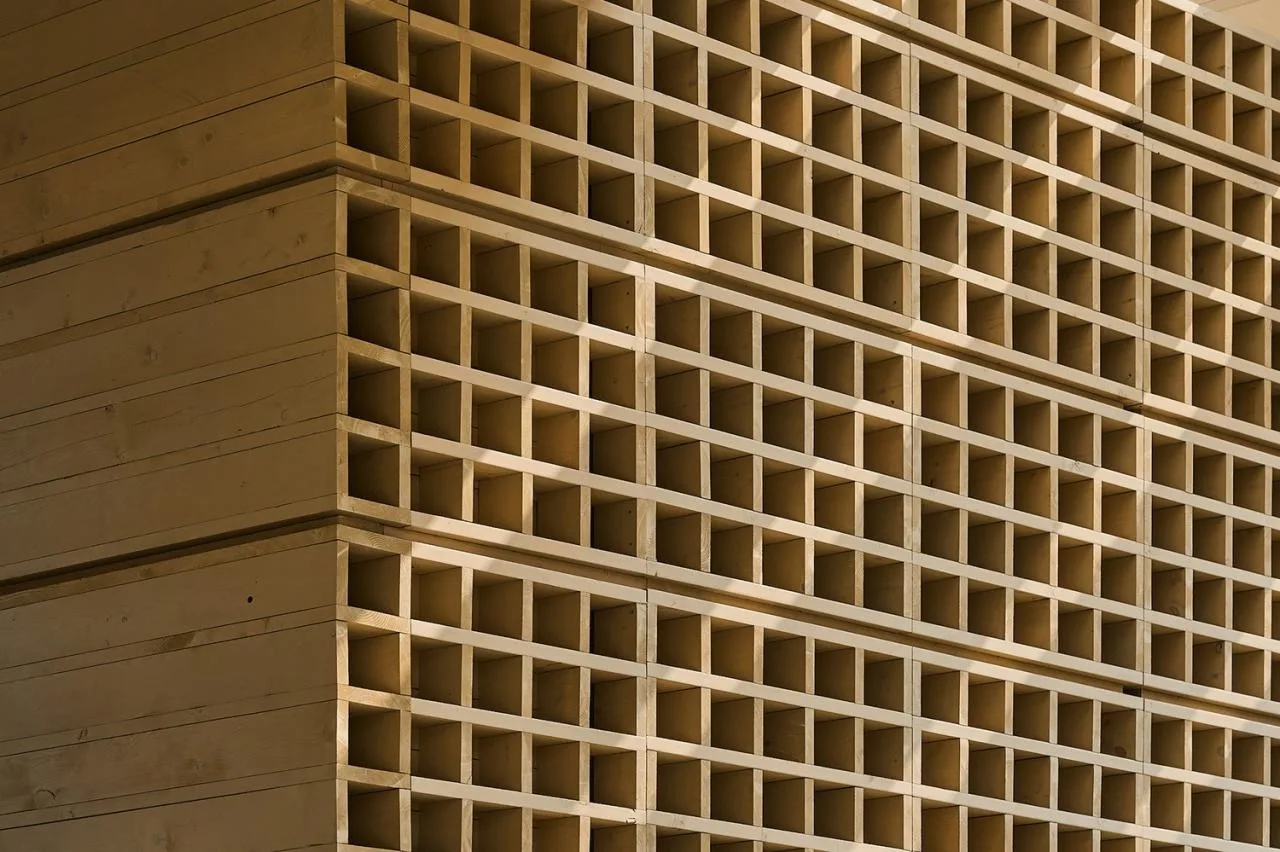
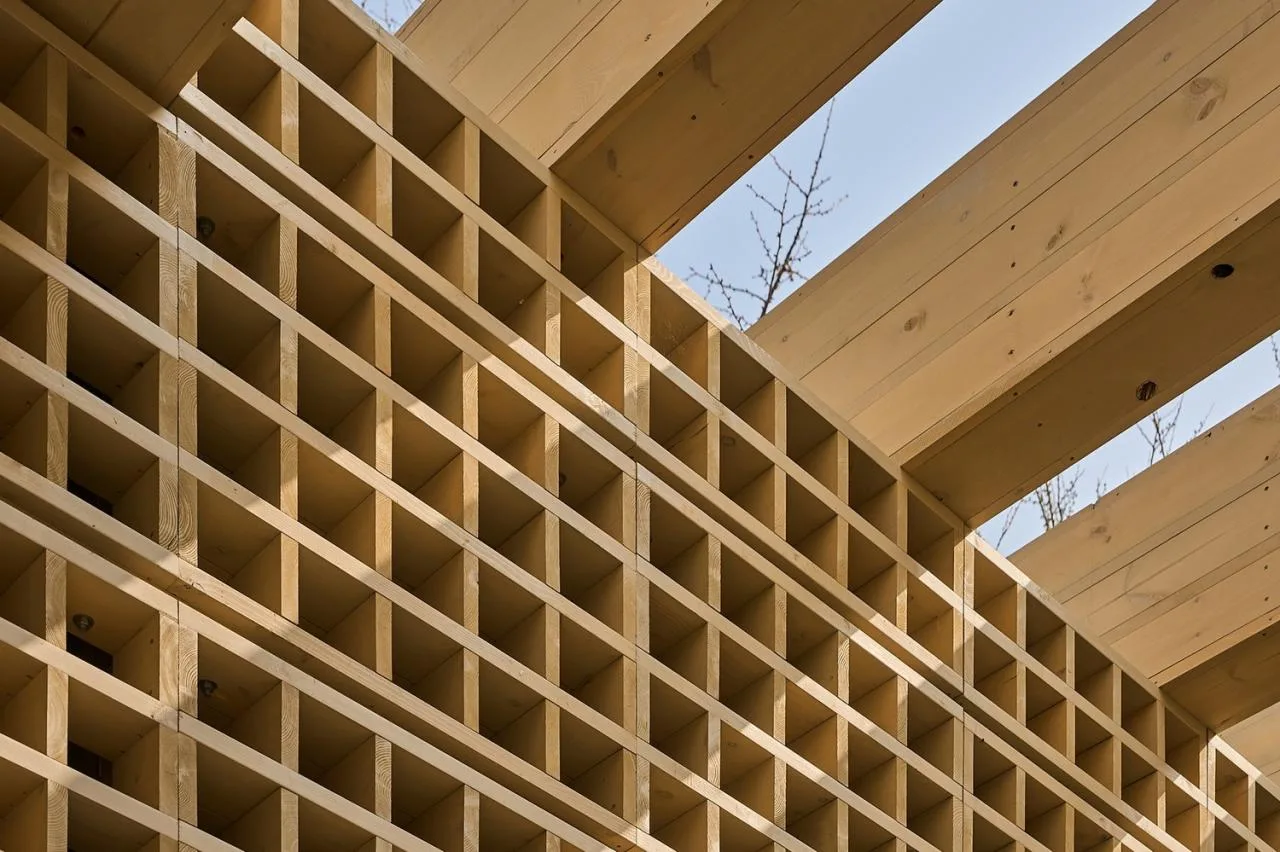
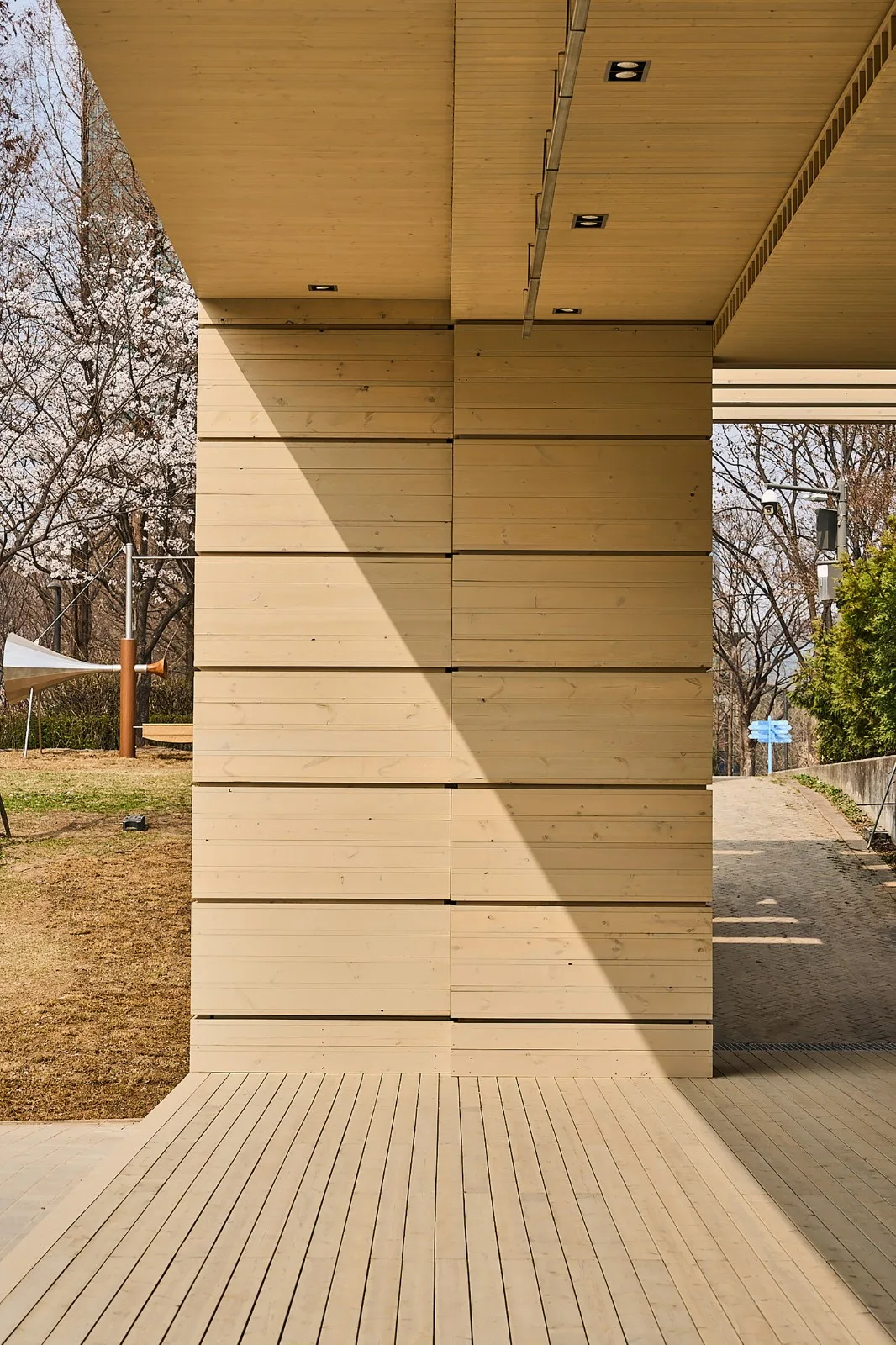
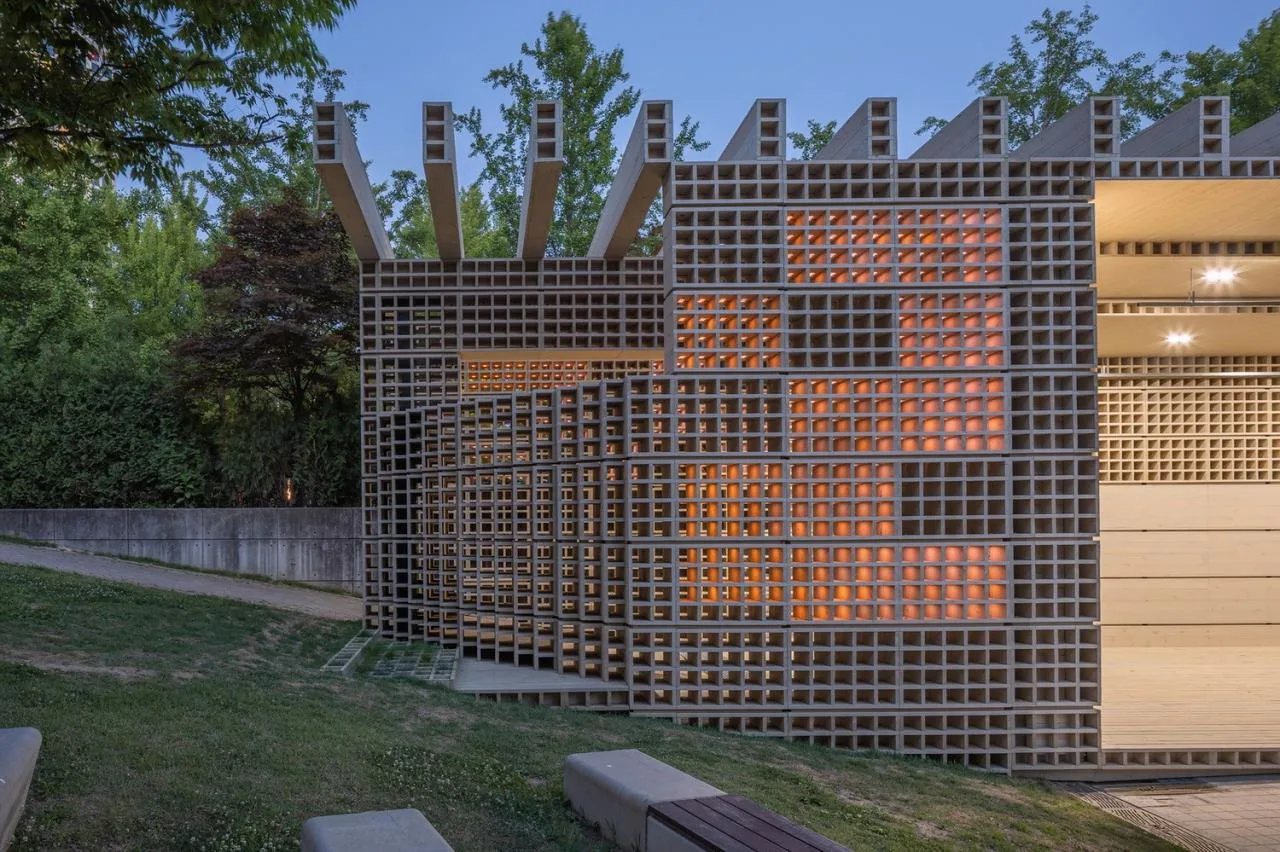
Wood is a material defined by its dual qualities of hardness and softness. We chose wood for its softness, especially as steel and concrete have become harsh, even intimidating materials. To balance hardness with softness, the right materials and structures are essential. We used thermally treated wood, which increases durability against weathering and deformation. Its porous structure also helps to overcome typical limitations of wood.
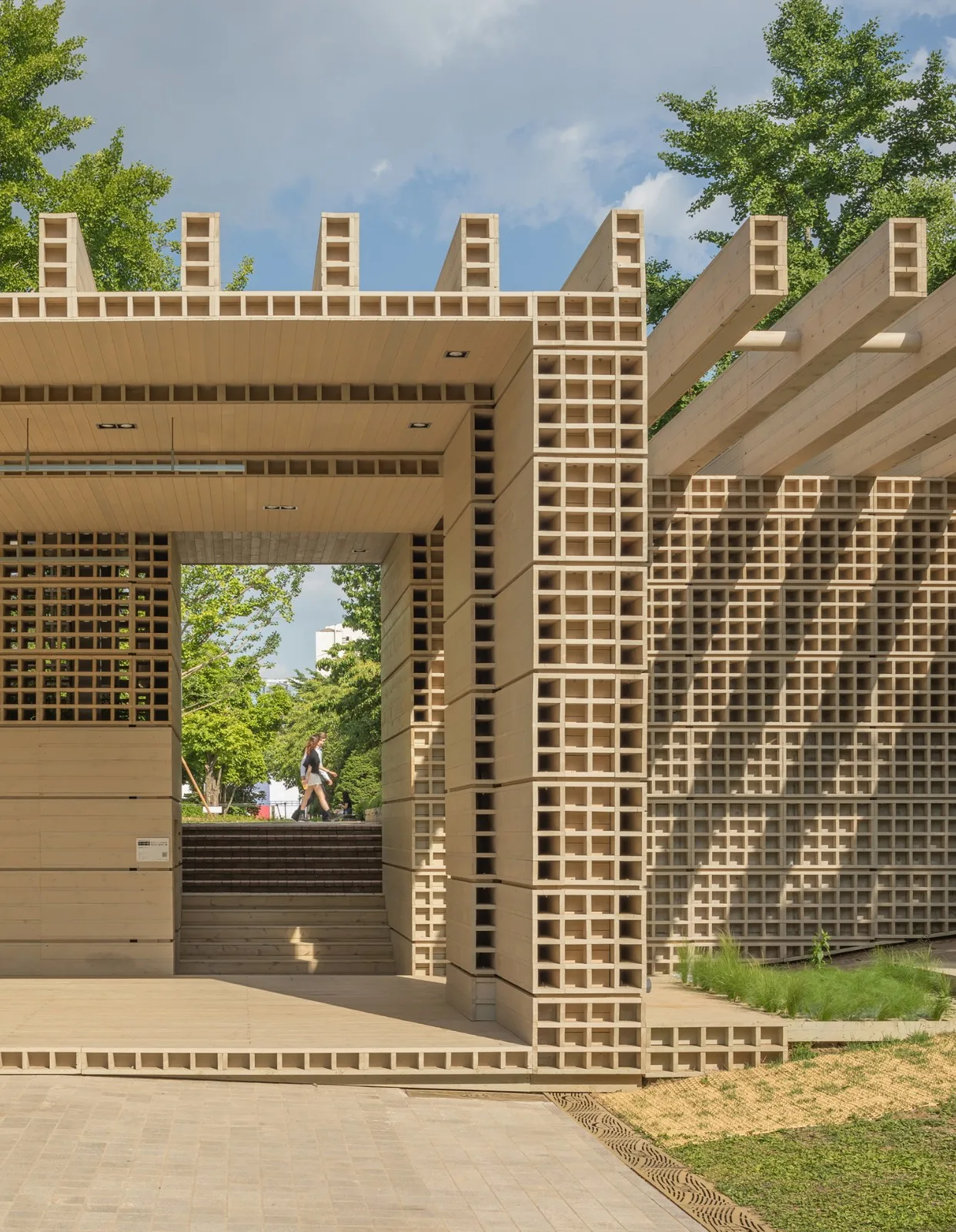
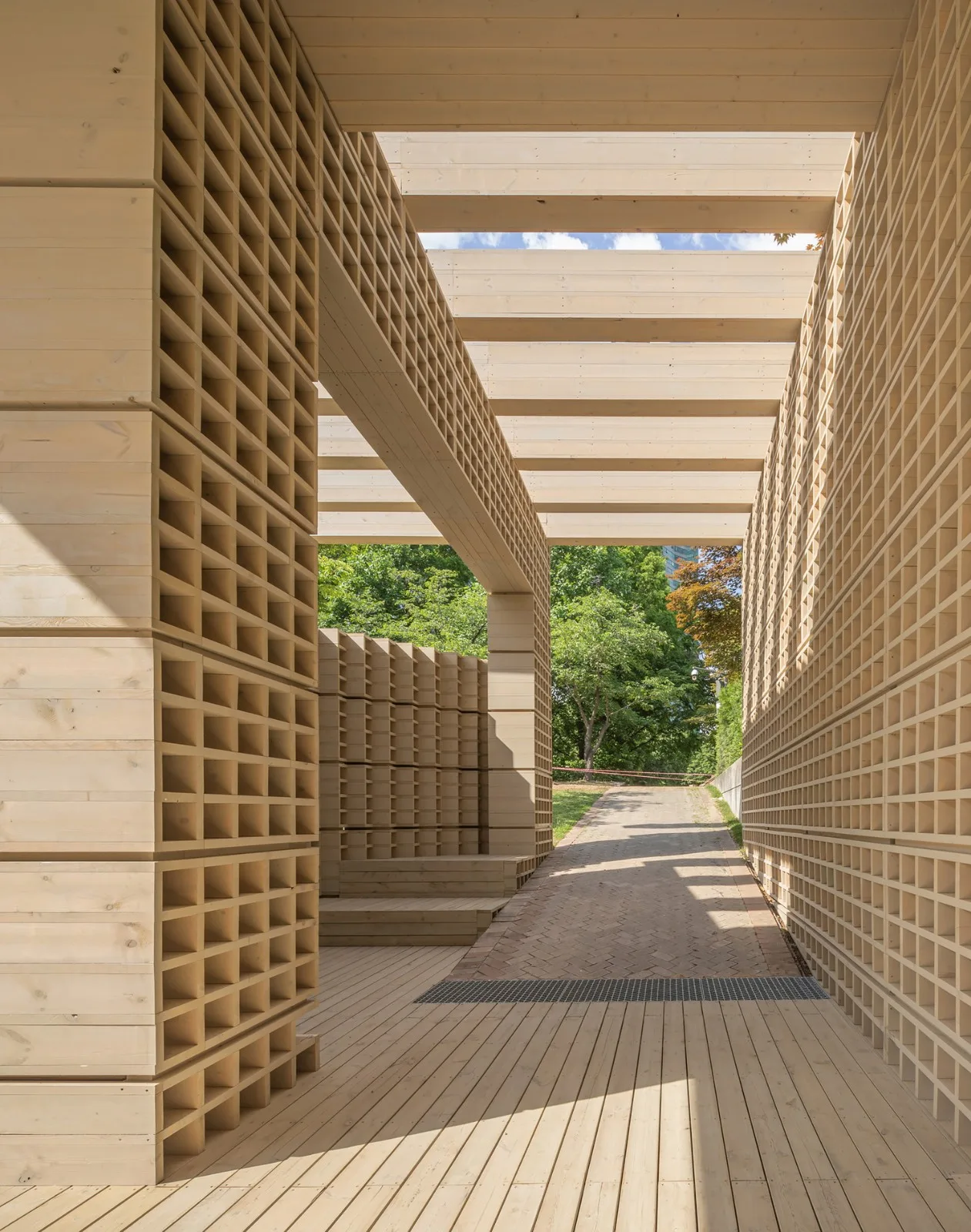
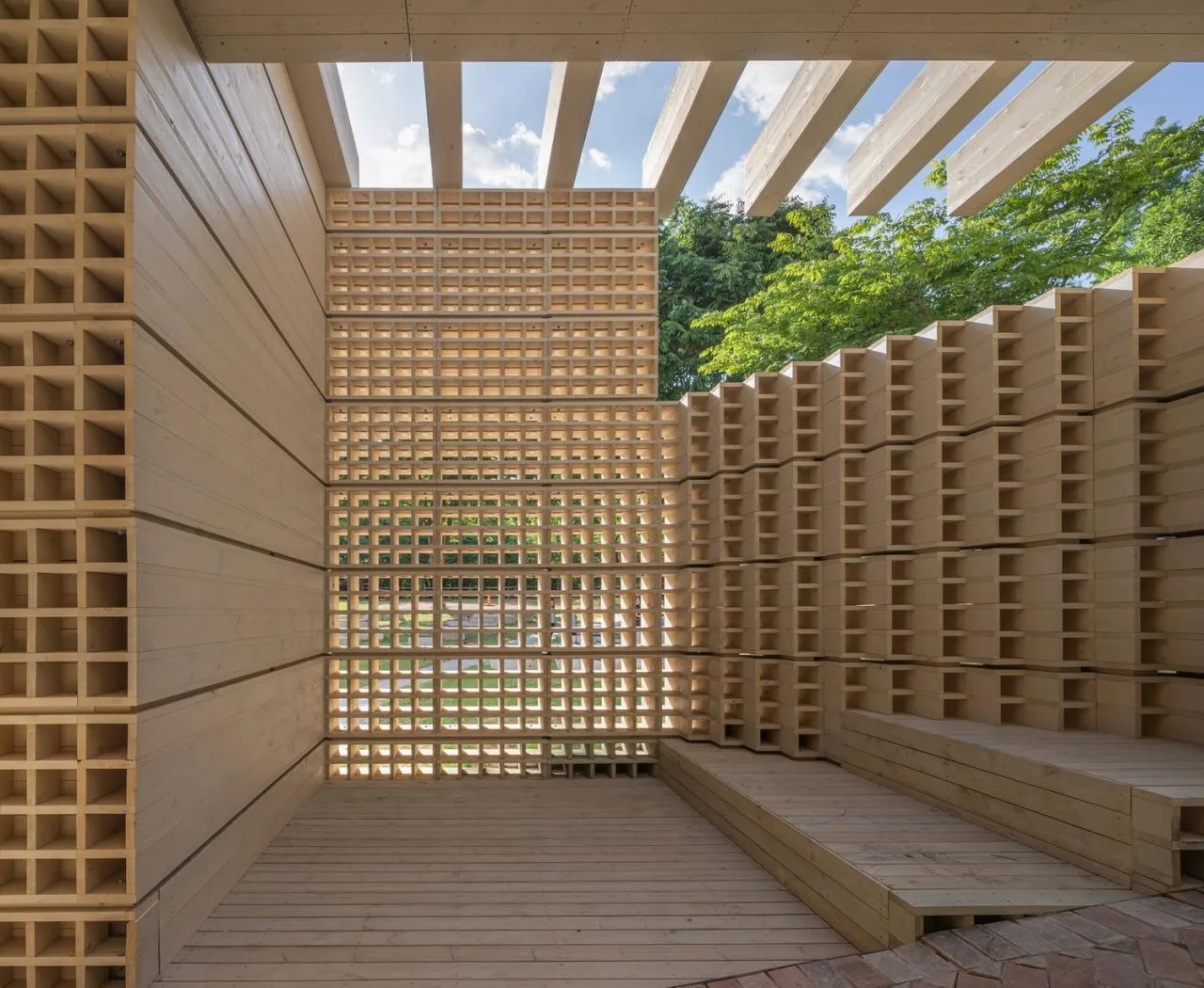
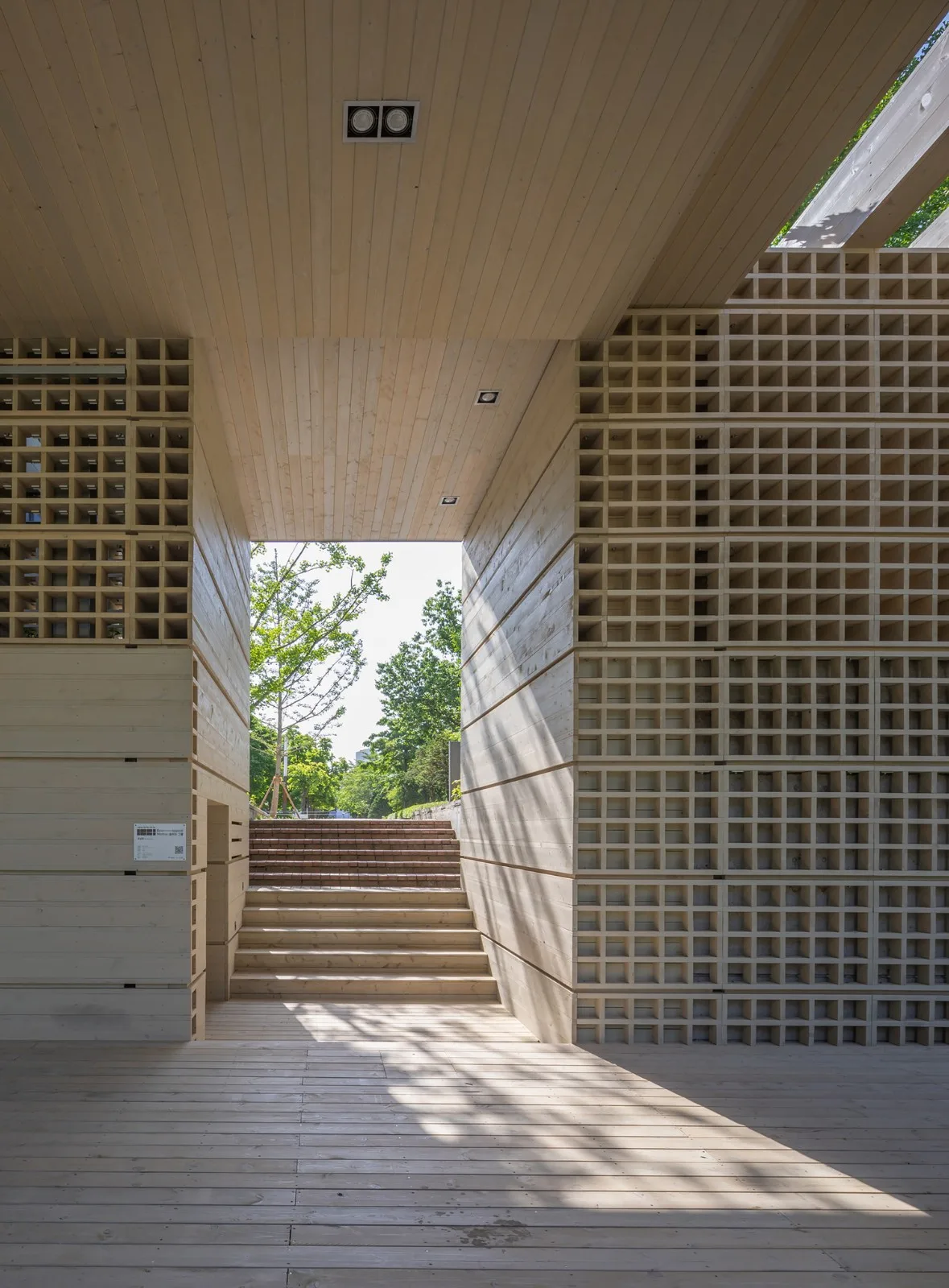
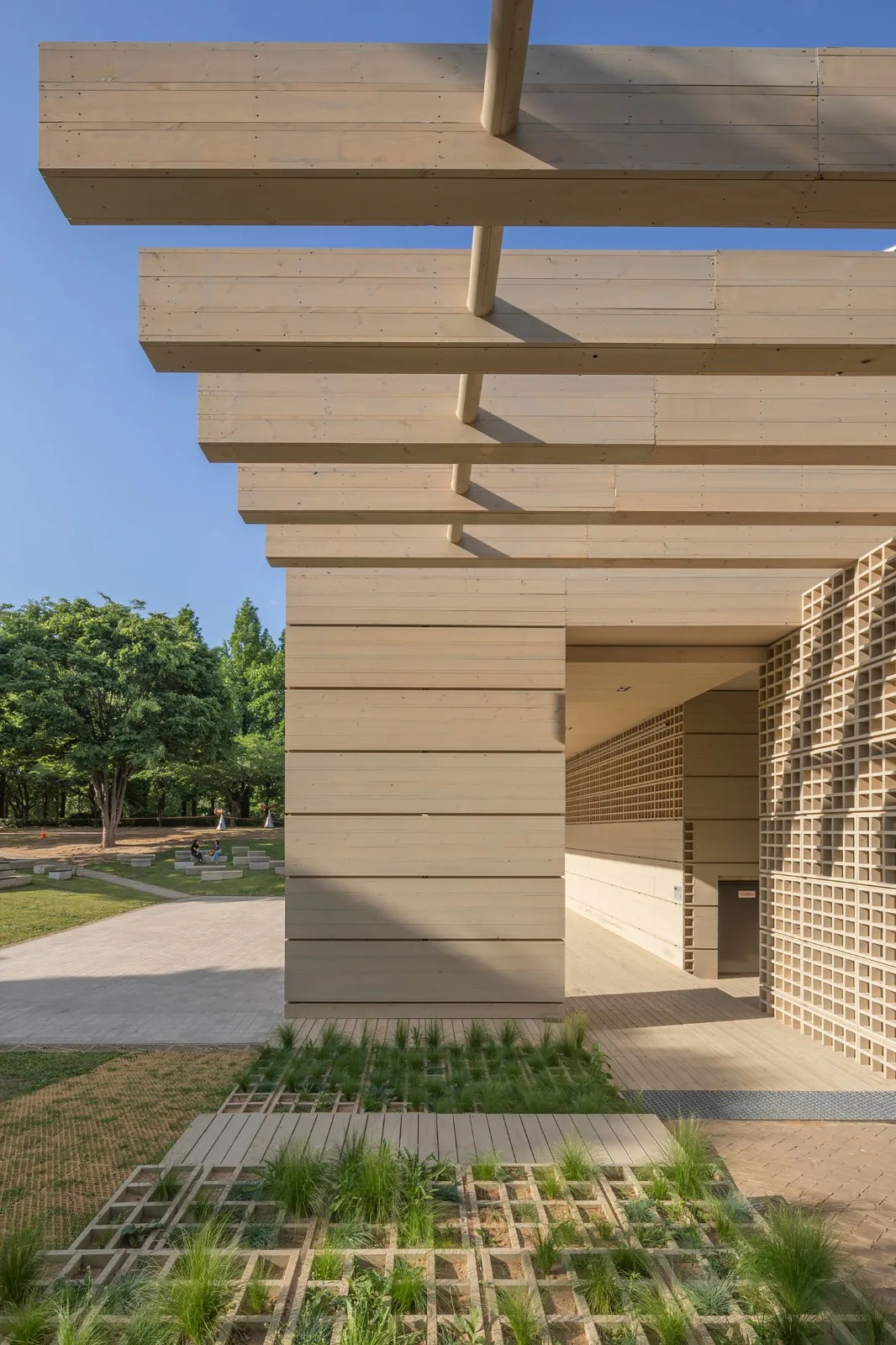
The porous design reduces exposed surface area, extending the wooden structure’s lifespan. The 200mm-thick, 1m by 1m porous panels create a unique surface identity, embodying the concept of the Ecological Matrix, Breathing Net. The 30m by 11.5m space includes a stage, corridors, and stairs, topped with a roof composed of rafters spaced one meter apart. This design allows the stage area to expand to an open 18-meter space, offering greater versatility than a traditional stage.
Project Drawings
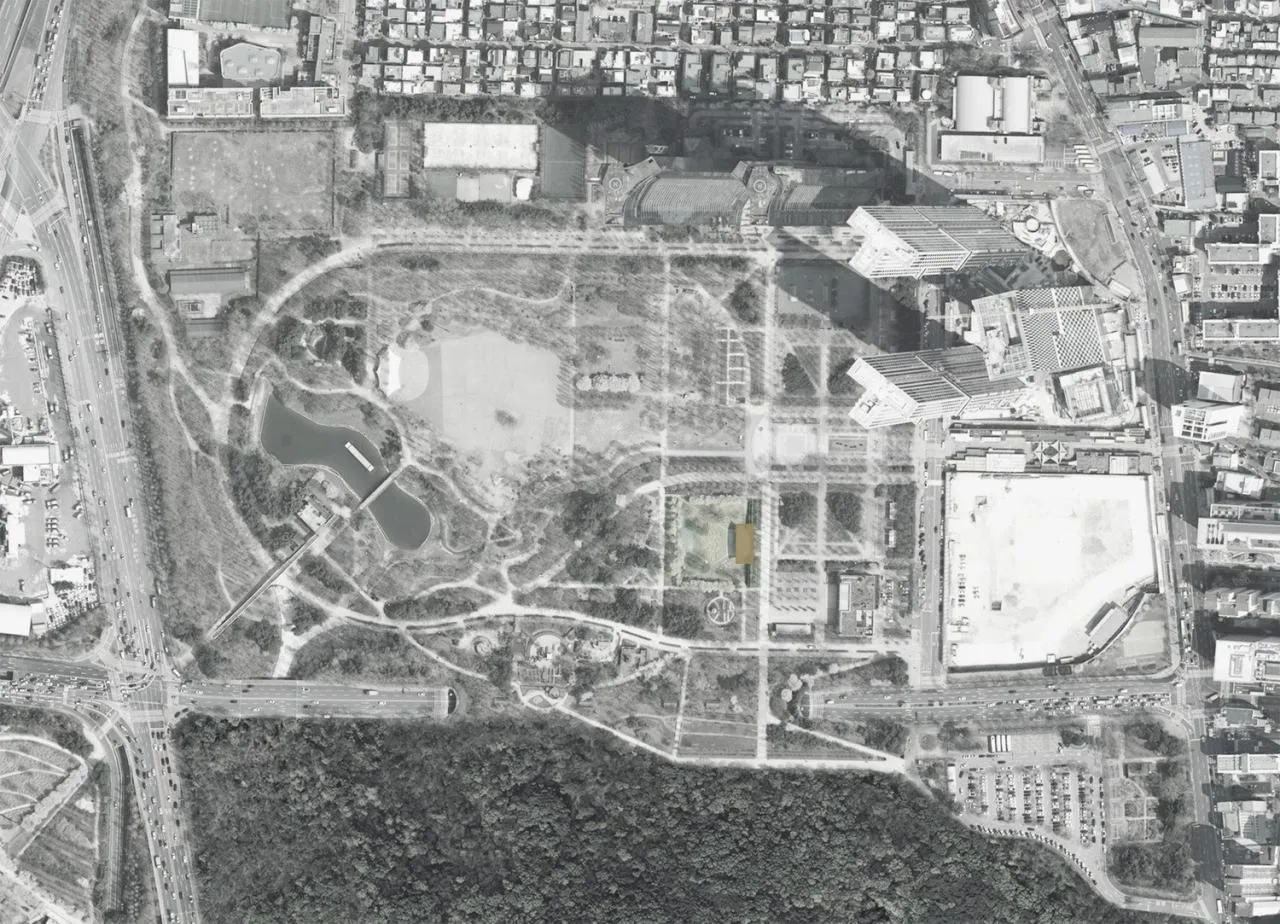
△ Base schematic diagram
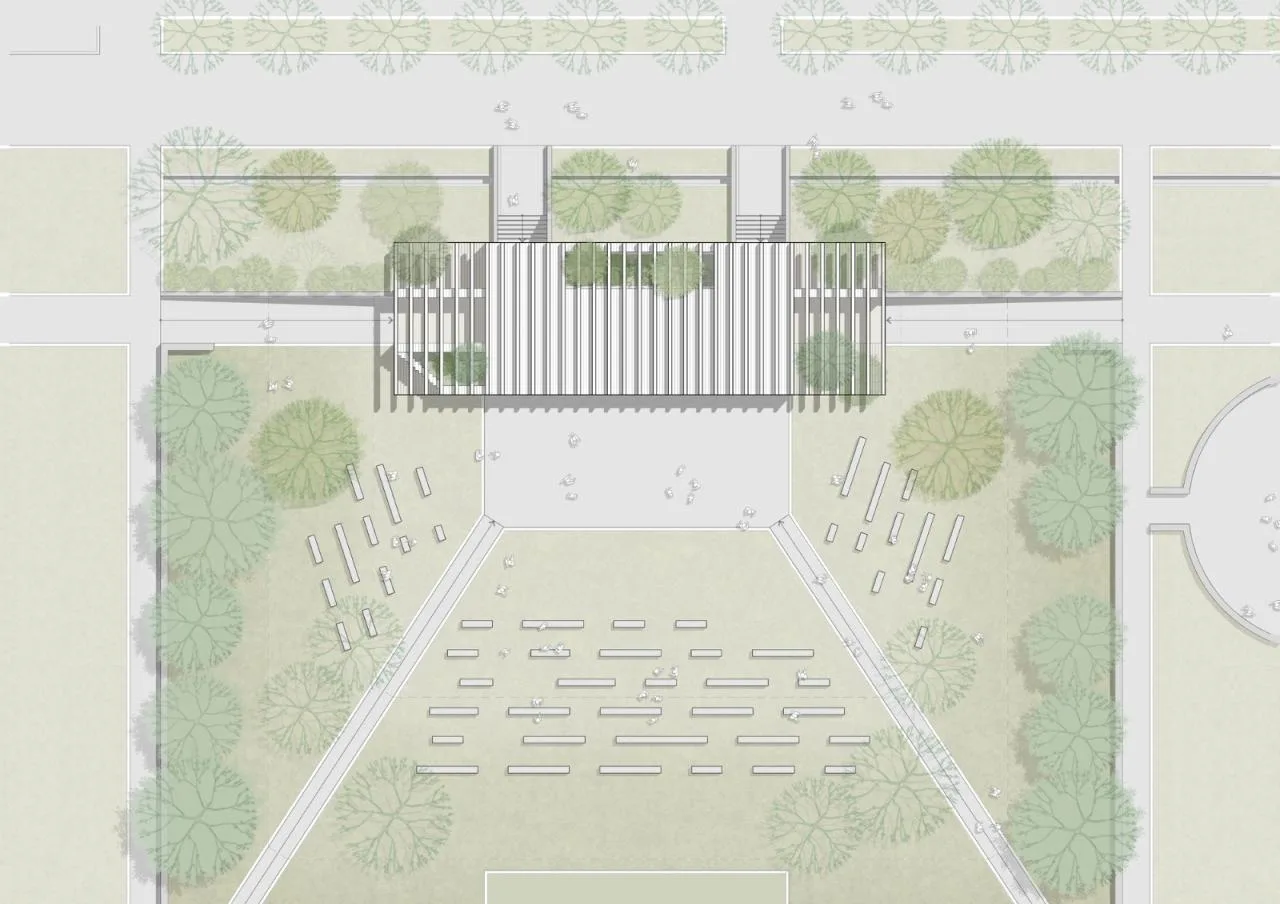
△ General layout plan
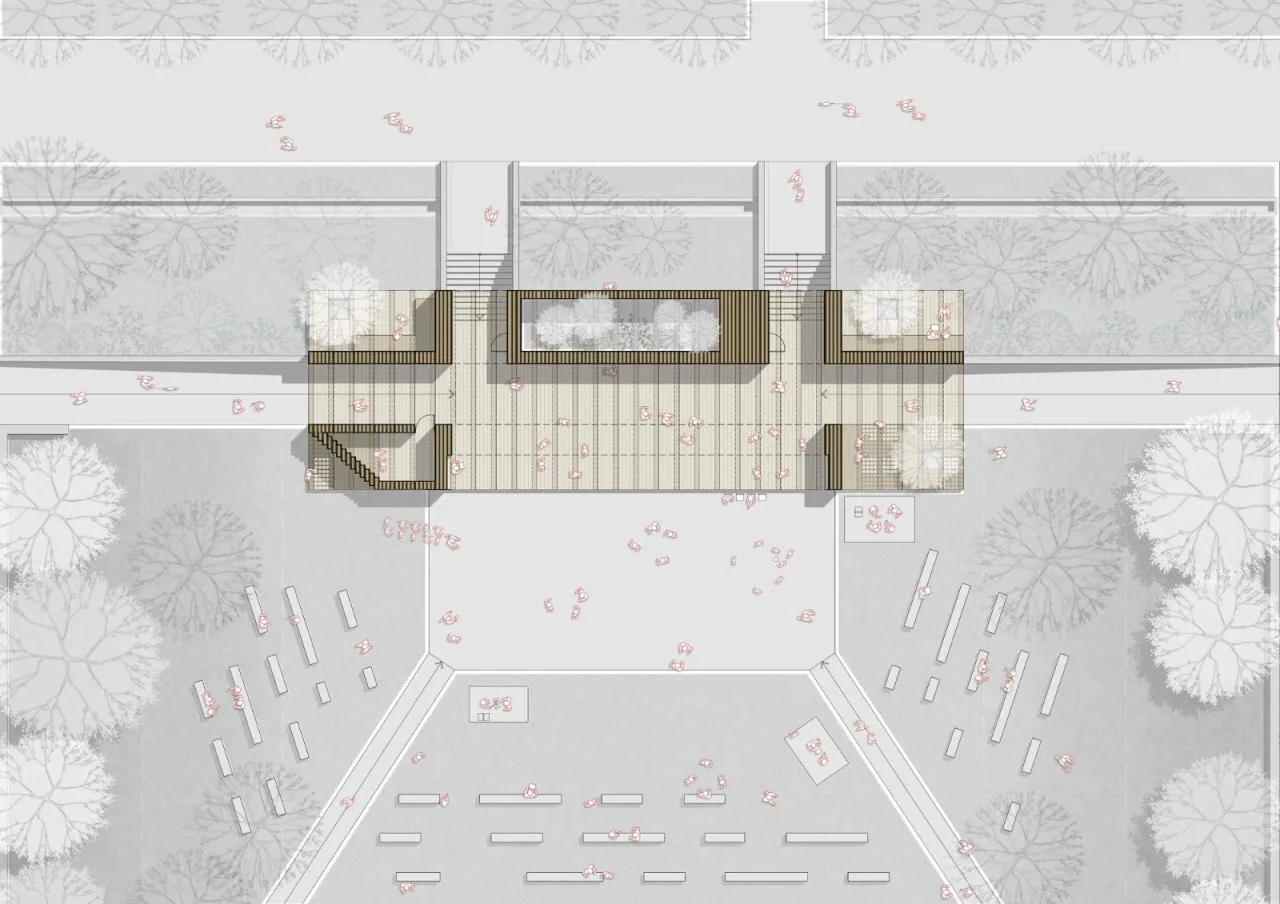
△ Plan view
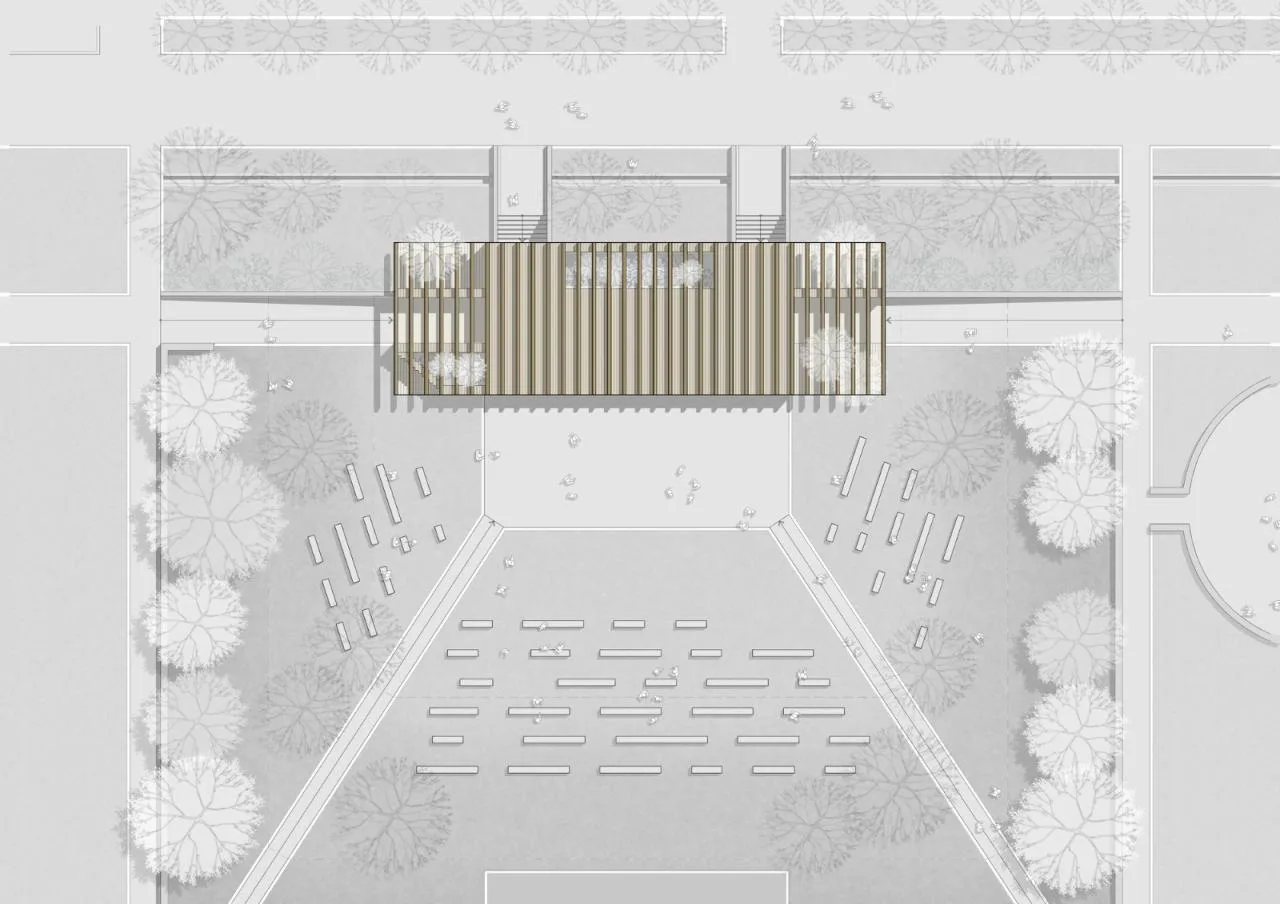
△ Roof plan
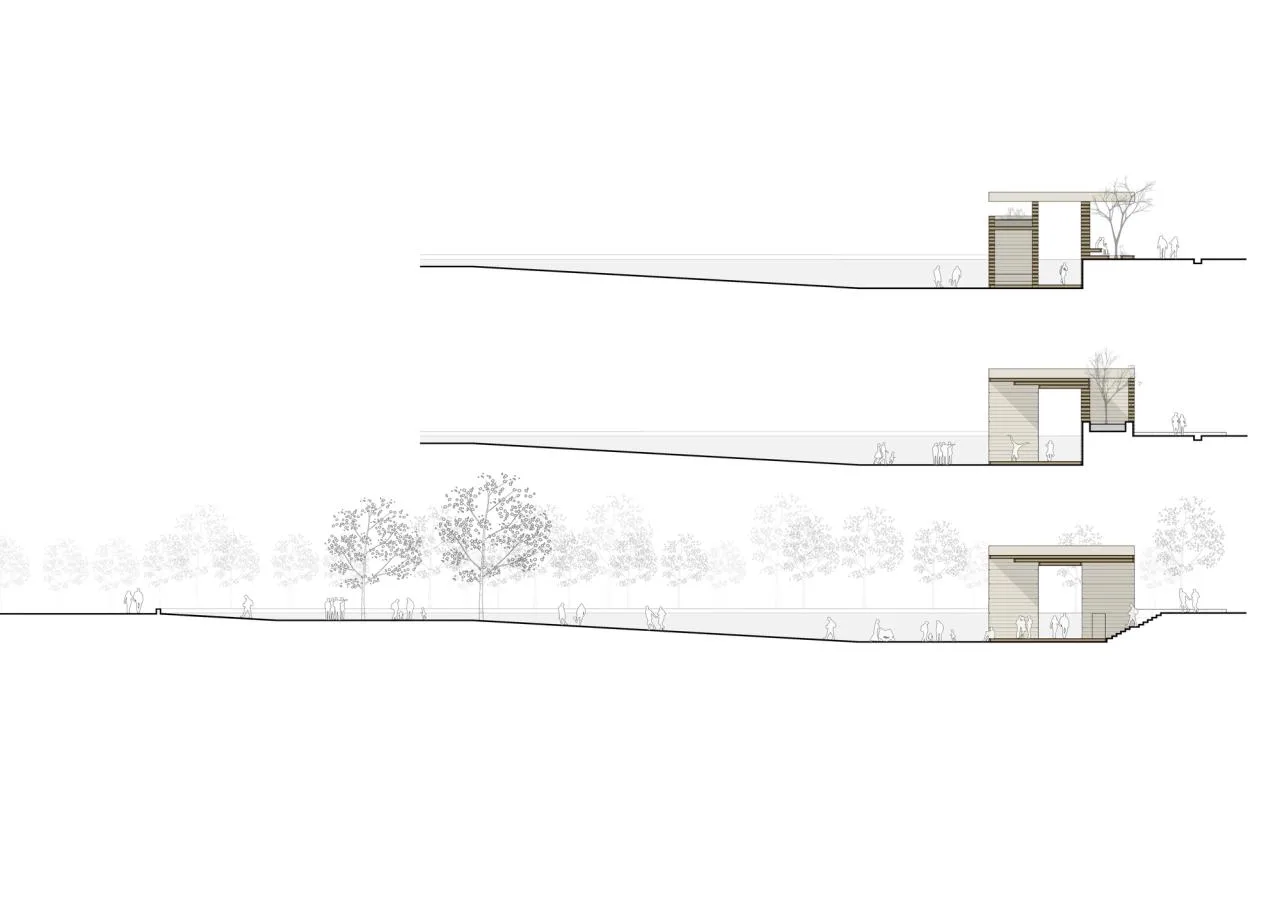
△ Section diagram
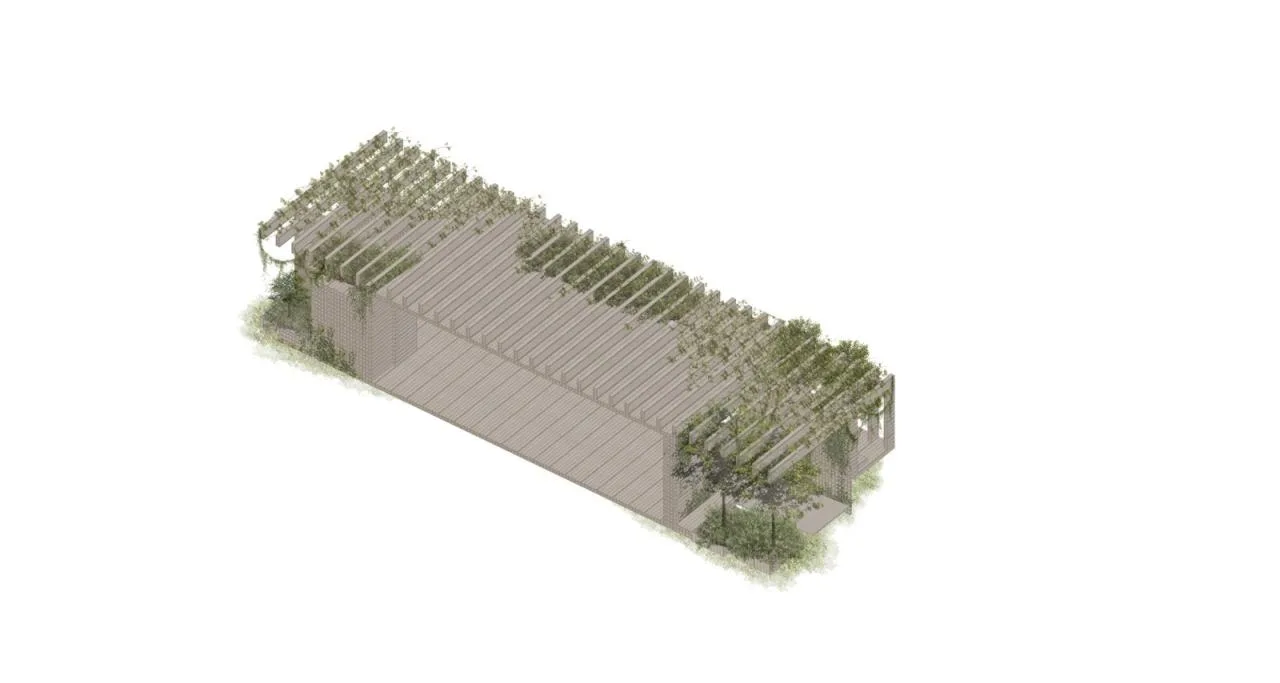
△ Axonometric diagram
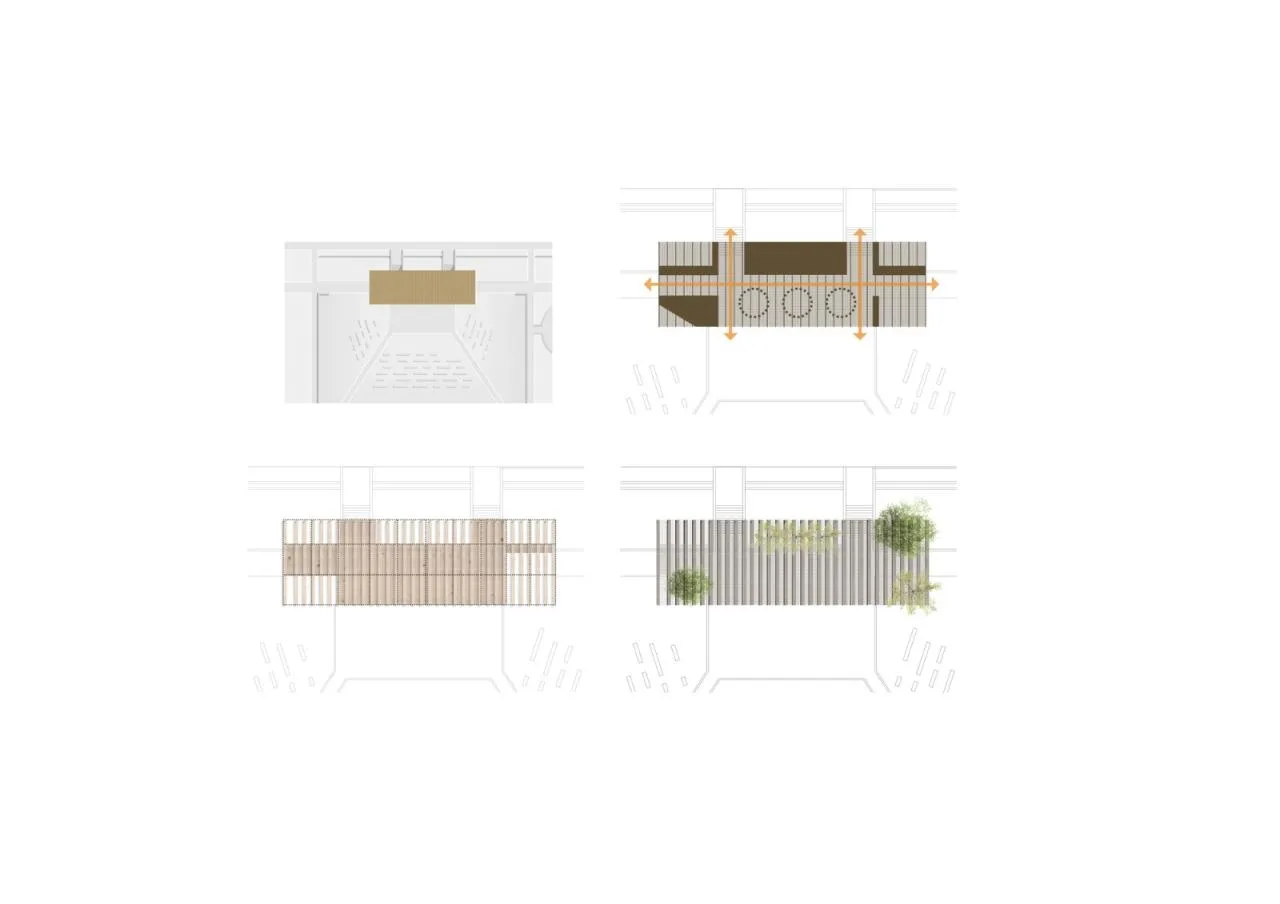
△ Analysis chart
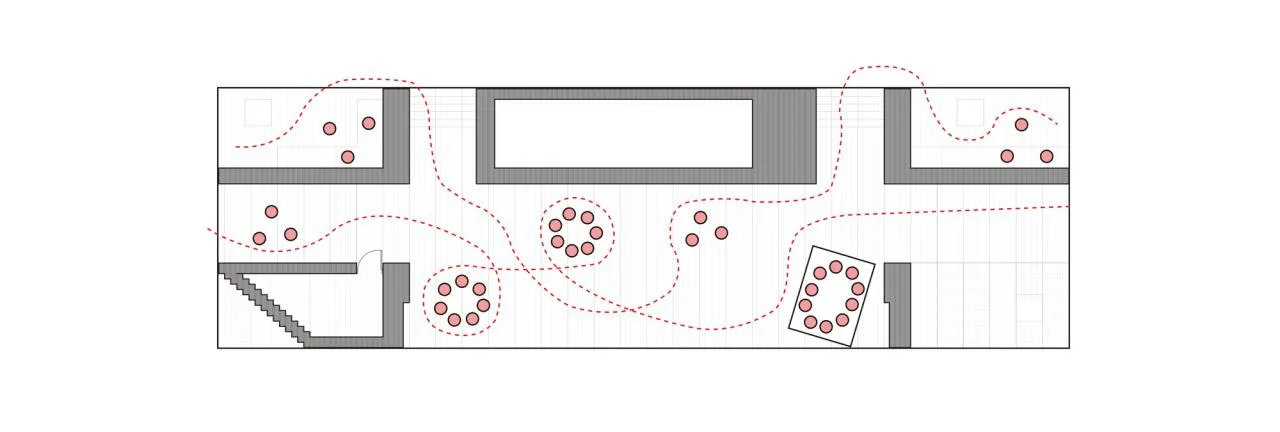
△ Streamline diagram
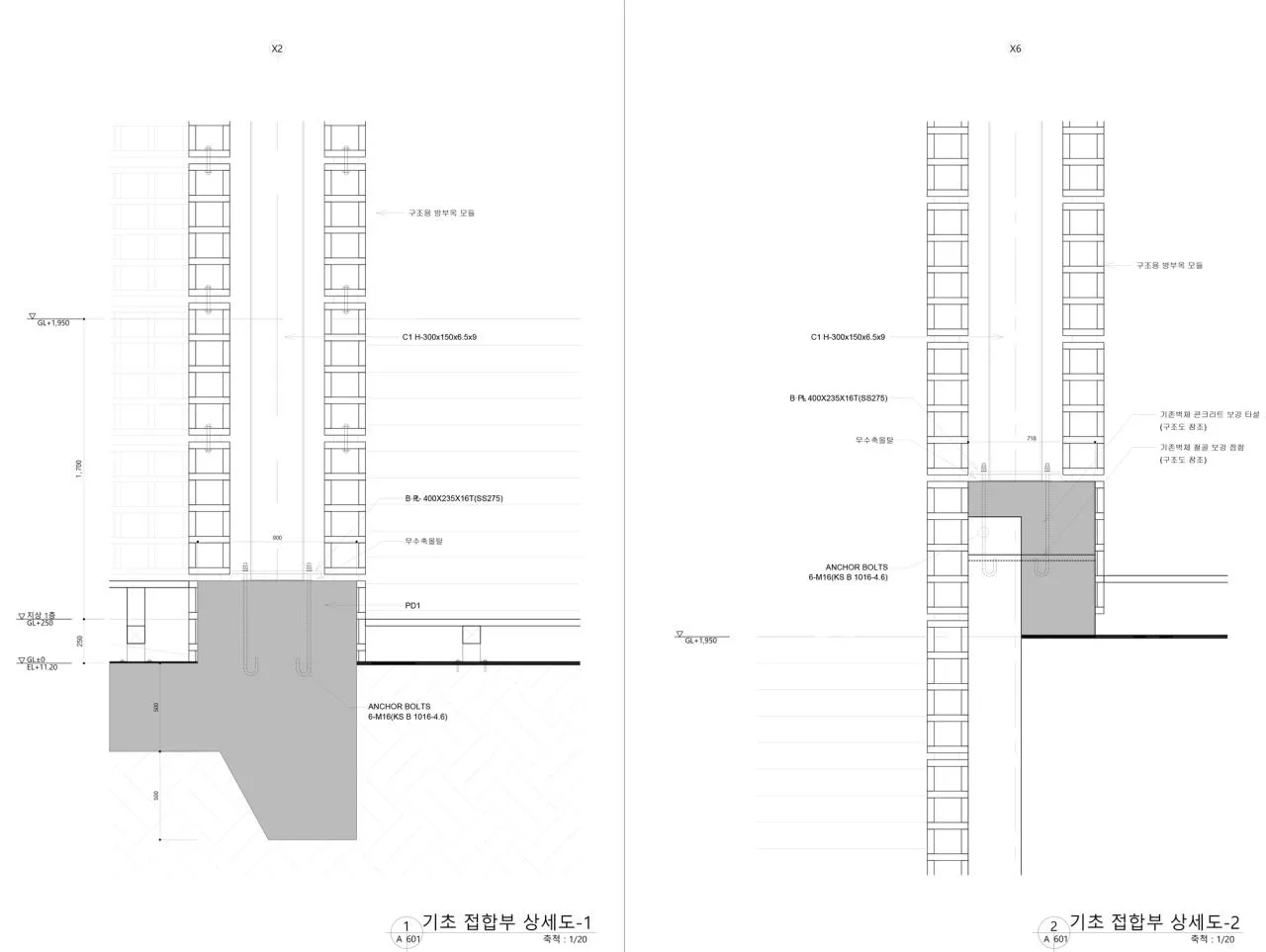
△ Detailed structural drawing
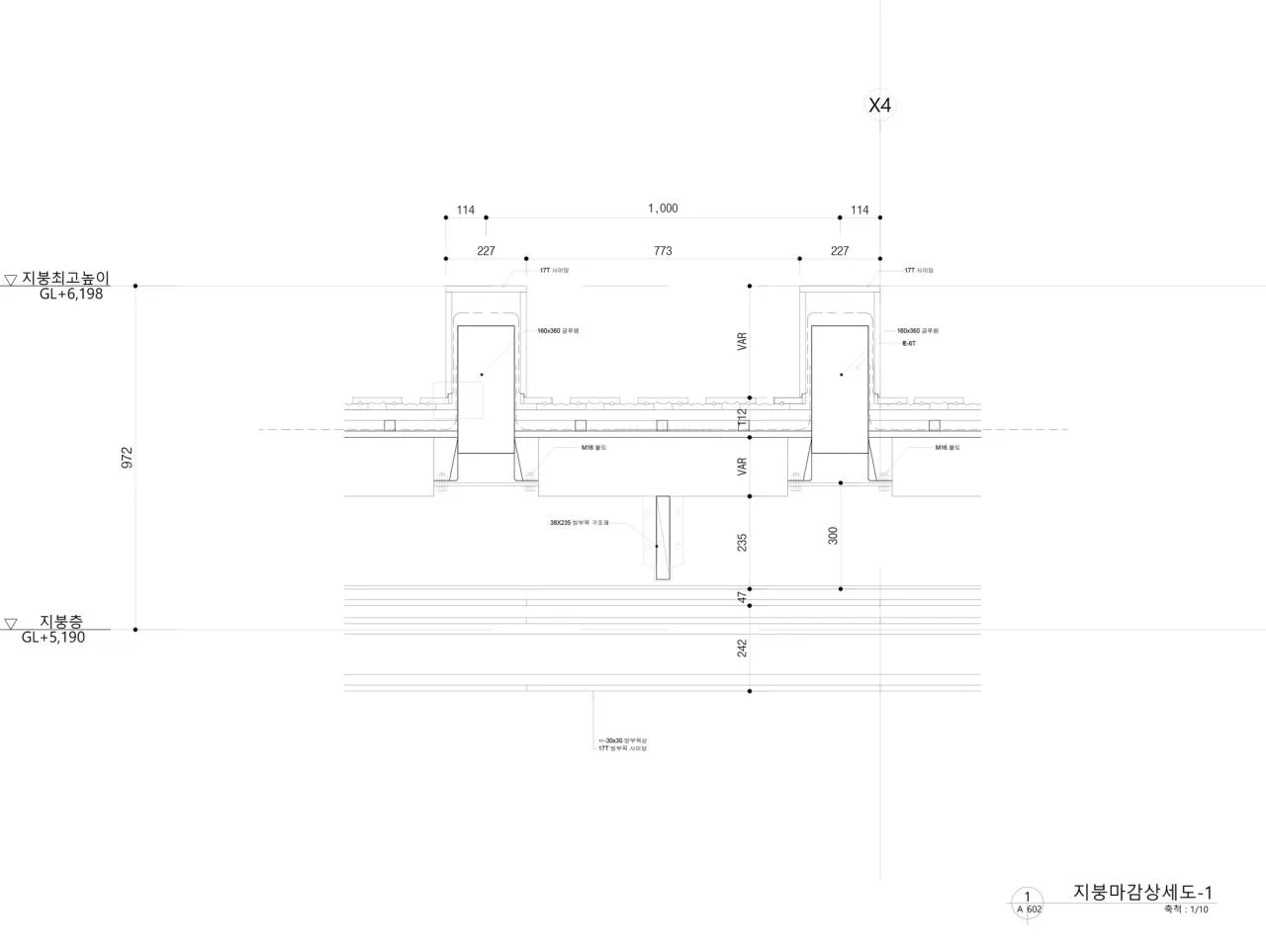
△ Detailed structural drawing
Project Information
Architect: Soltozibin Architects
Area: 310 m²
Year: 2023
Photographer: Yoon Joonhwan
Lead Architects: Cho Namho, Lim Kiung
Construction Team: Son Heejoo, Lim Kiung, Kim Boram, Lim Sooji, Lee Yukyung, Jung Gyeongyun, Heo Minha, Choi Jaehyun
Project Type: Outdoor Performance Stage Facilities
Construction Company: Supia Construction
Structural Engineering: GUMNA Structural Engineering
Location: Chengdong District, South Korea












Must log in before commenting!
Sign Up