
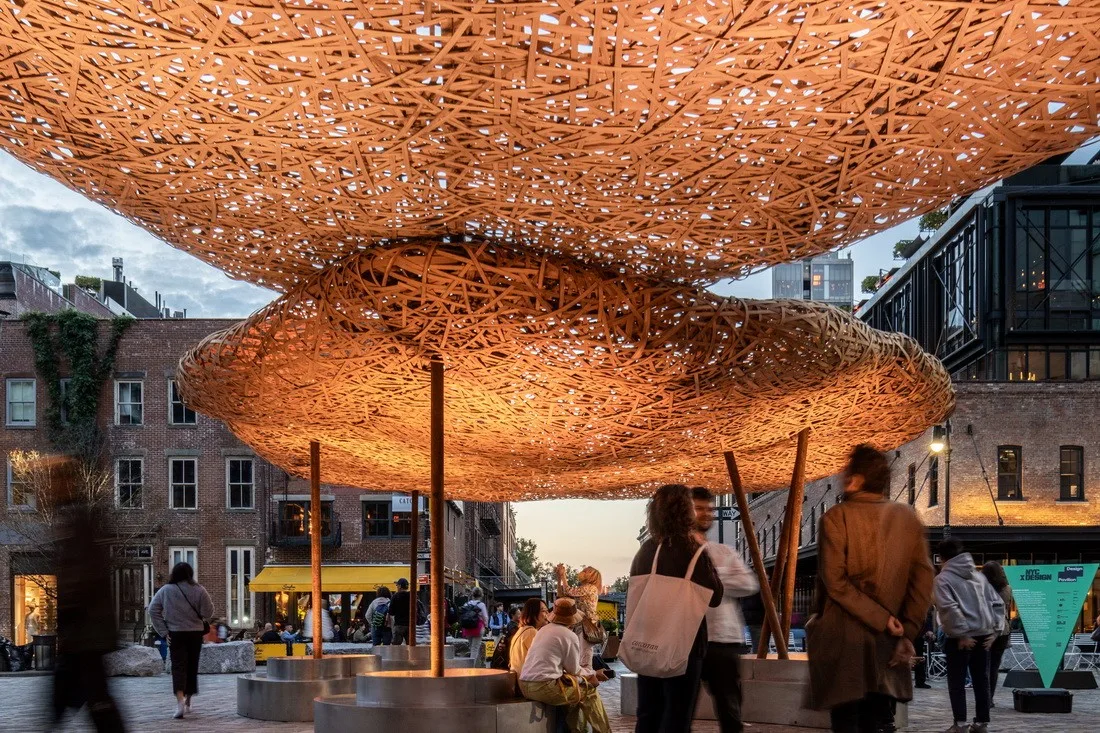
Zhuyun’s original concept was to create a spontaneous space that would inspire encounters and gatherings. In January 2022, after our previously completed Bamboo Canopy and Pavilions project in Yangshuo, Guilin gained attention online from the New York NYC x Design organization, we were invited to design a bamboo canopy natural space specifically for the public areas of Gansworth Square.
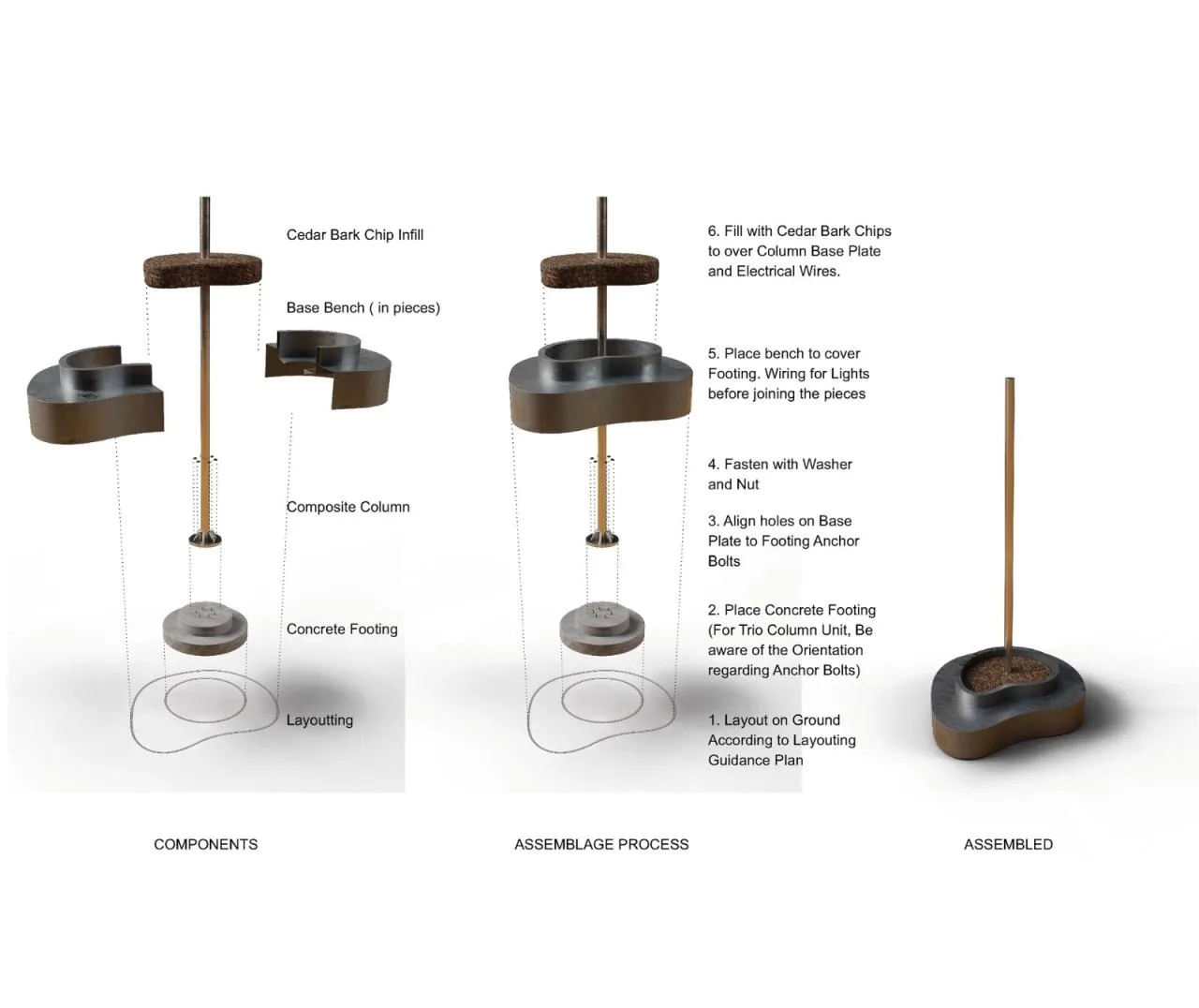
This marked the beginning of our research into assembly and disassembly techniques to construct bamboo weaving and movable natural environments.
Following the completion of the Yangshuo bamboo weaving project, we received invitations from various countries to participate in weaving construction and exhibitions. However, due to time constraints, geographical challenges, and transportation limitations, these opportunities could not be realized. The delays caused by the pandemic, however, allowed us valuable time for research, breakthroughs, and a revolutionary rethink on material usage and production.
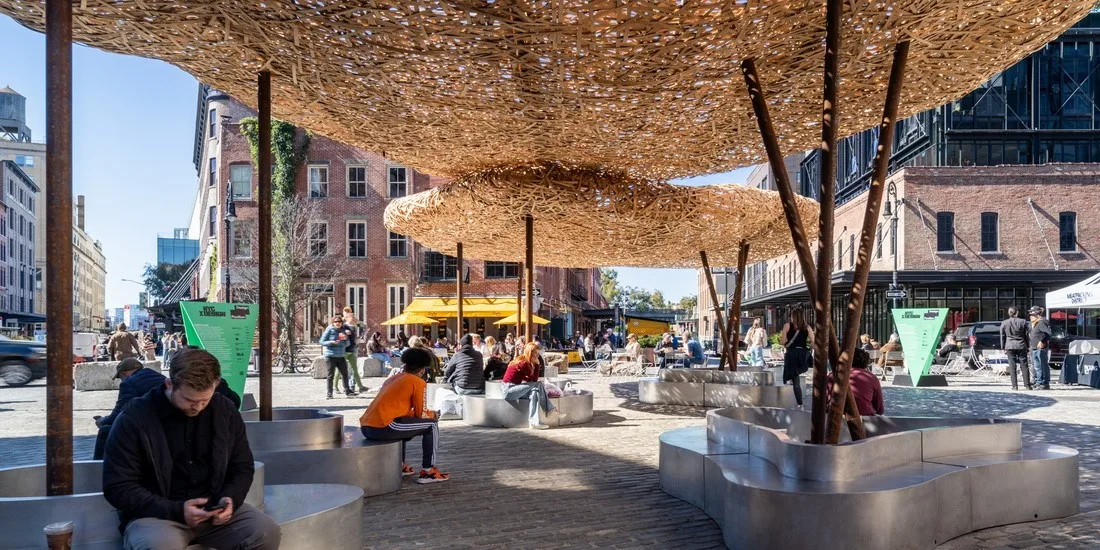
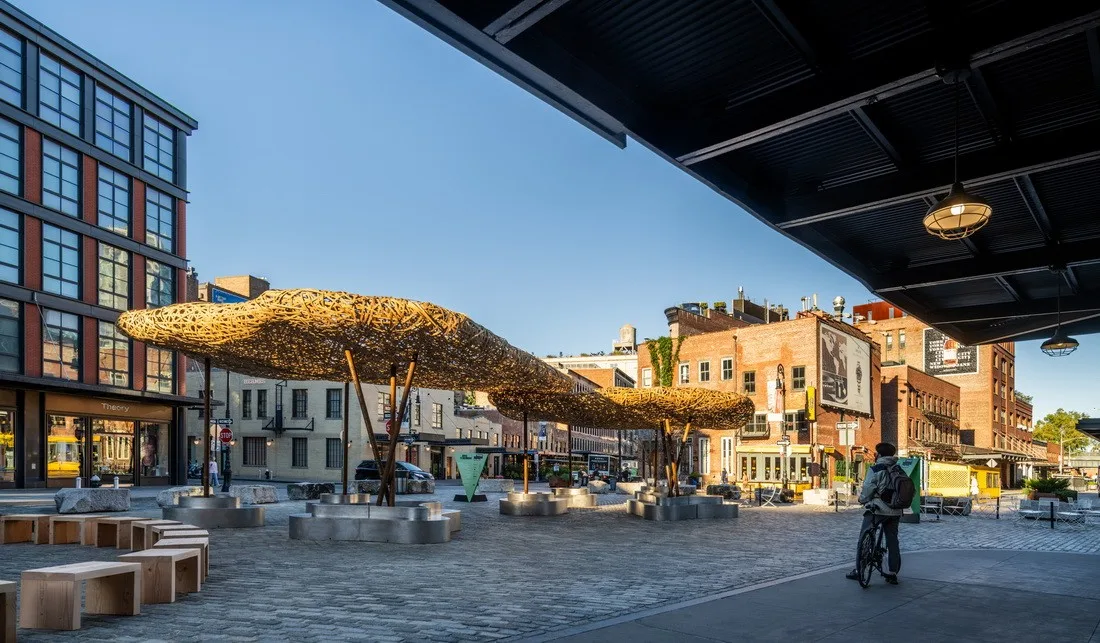
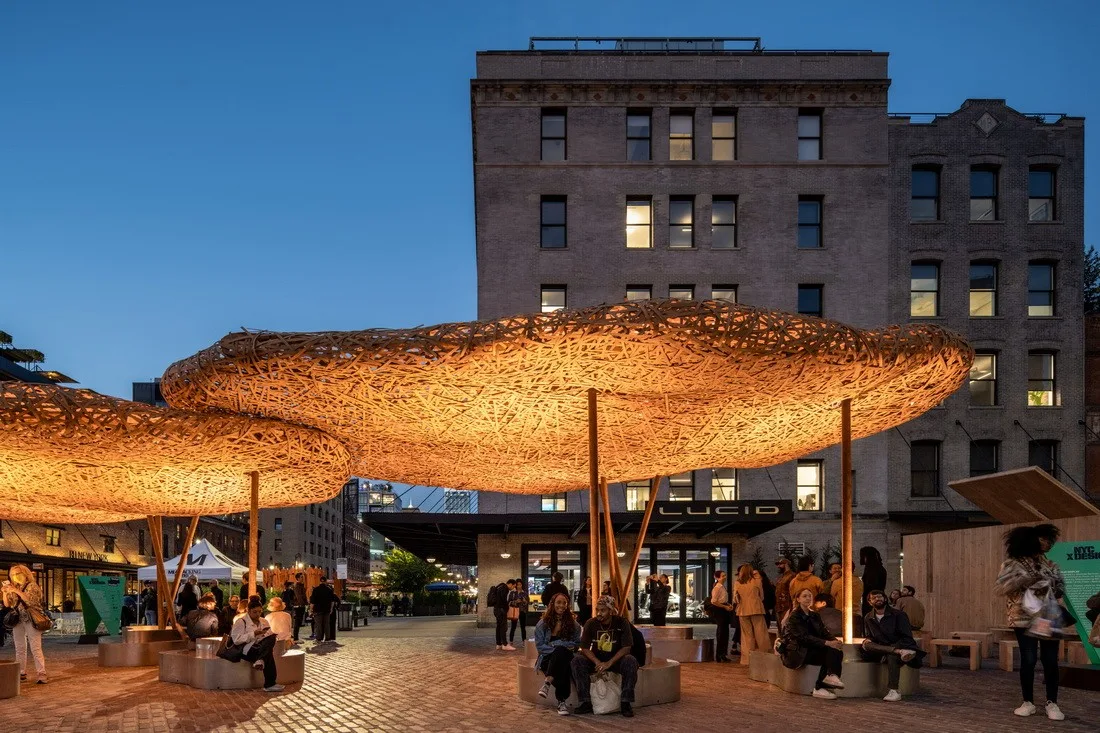
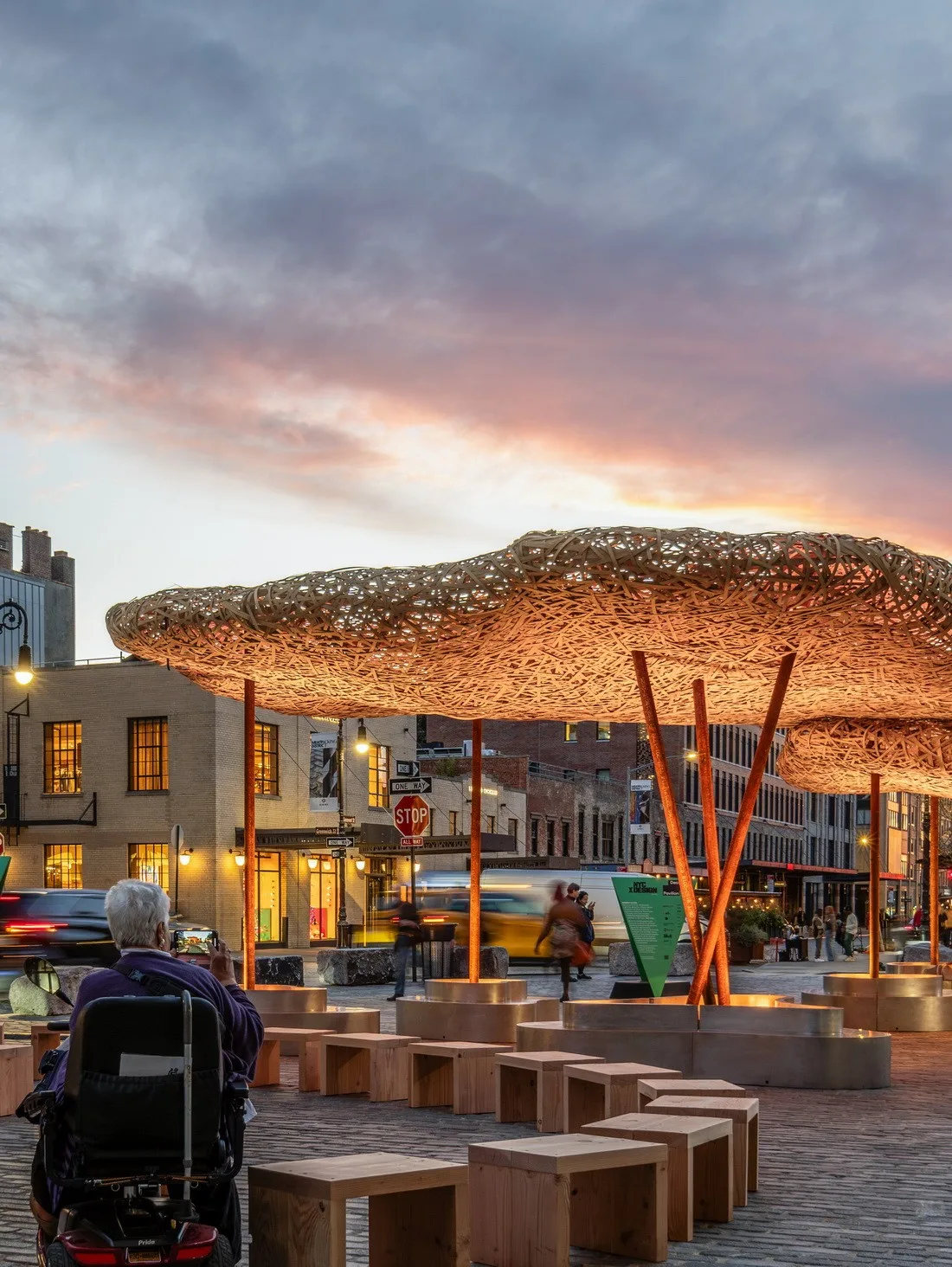
The exhibition, titled “Open To The Sky,” aims to maximize the use of bamboo by eliminating traditional structure, presenting floating bamboo clouds as the lightest form of expression.
While bamboo as a natural material and the hand-weaving techniques of Bamboo Clouds stimulate an appreciation for nature and environmental awareness, they are inherently limited by geographic factors and the availability of materials for handicrafts.
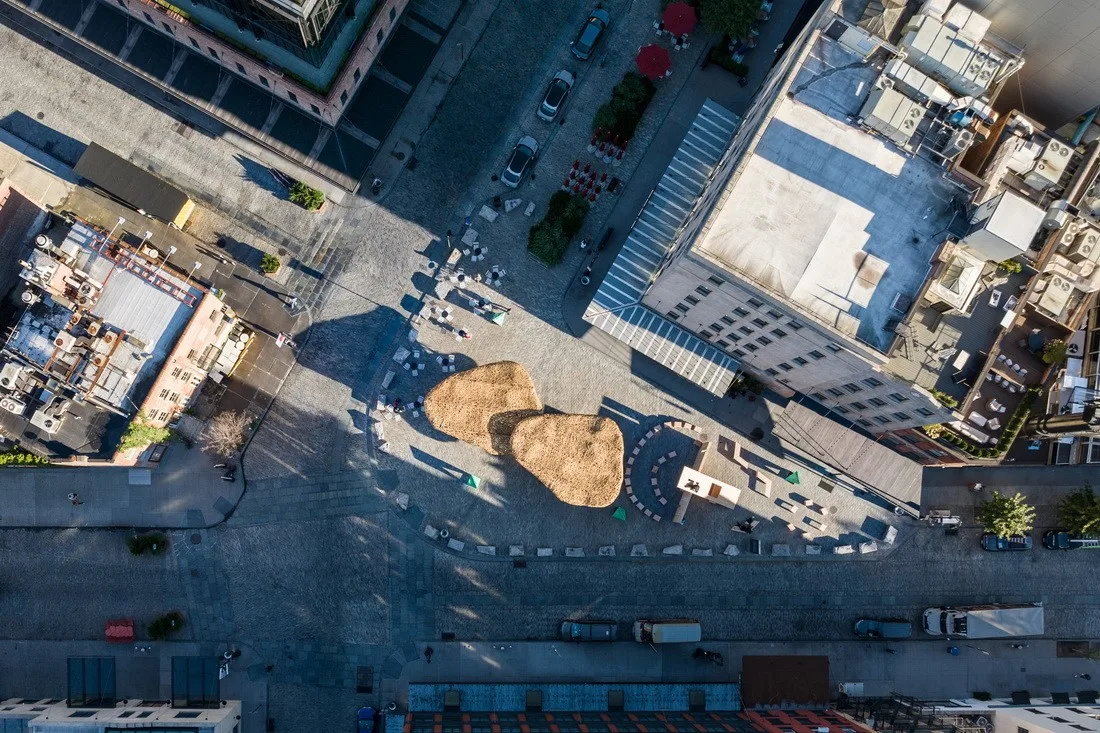
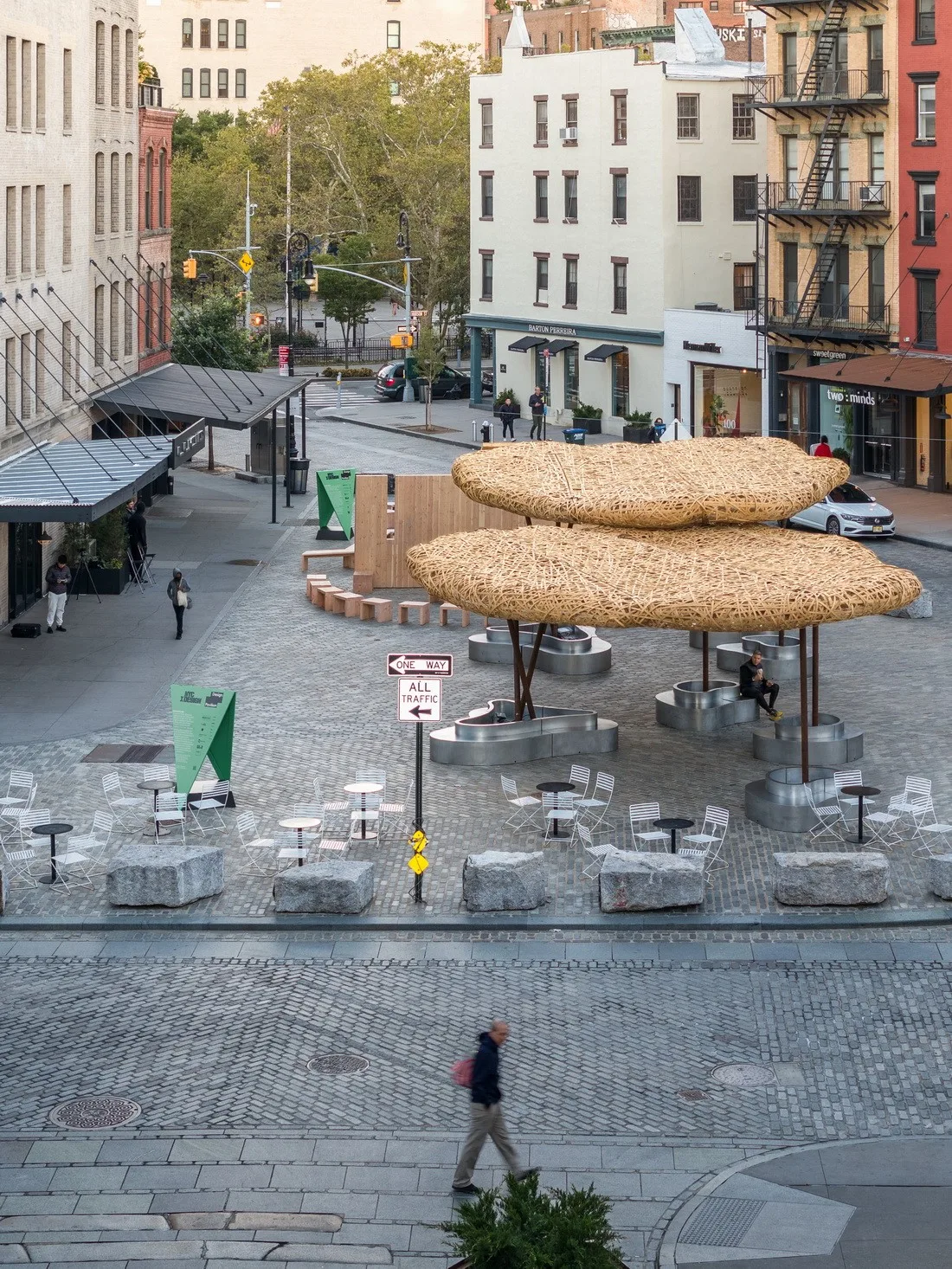
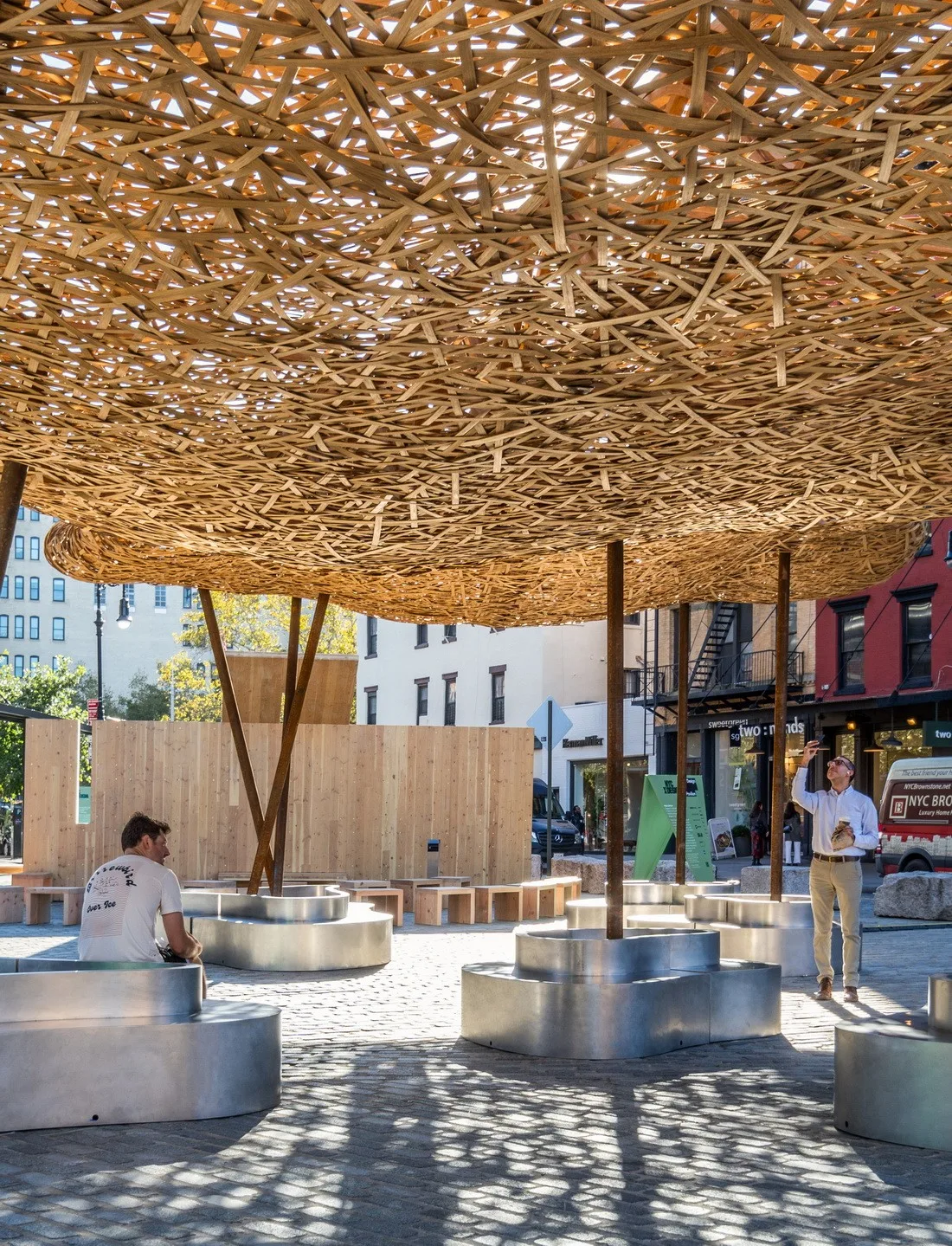
Zhuyun’s overall creative and construction approach seeks to overcome these inherent limitations by employing an assembly technique that transcends geographic and material boundaries. This approach brings natural awareness and spatial experience to previously inaccessible areas—like a fiber floating above New York City.
This seemingly contradictory form urges us to challenge past experiences, rethink the entire structural system, and innovate at every stage: weaving, shaping, building, and installation.
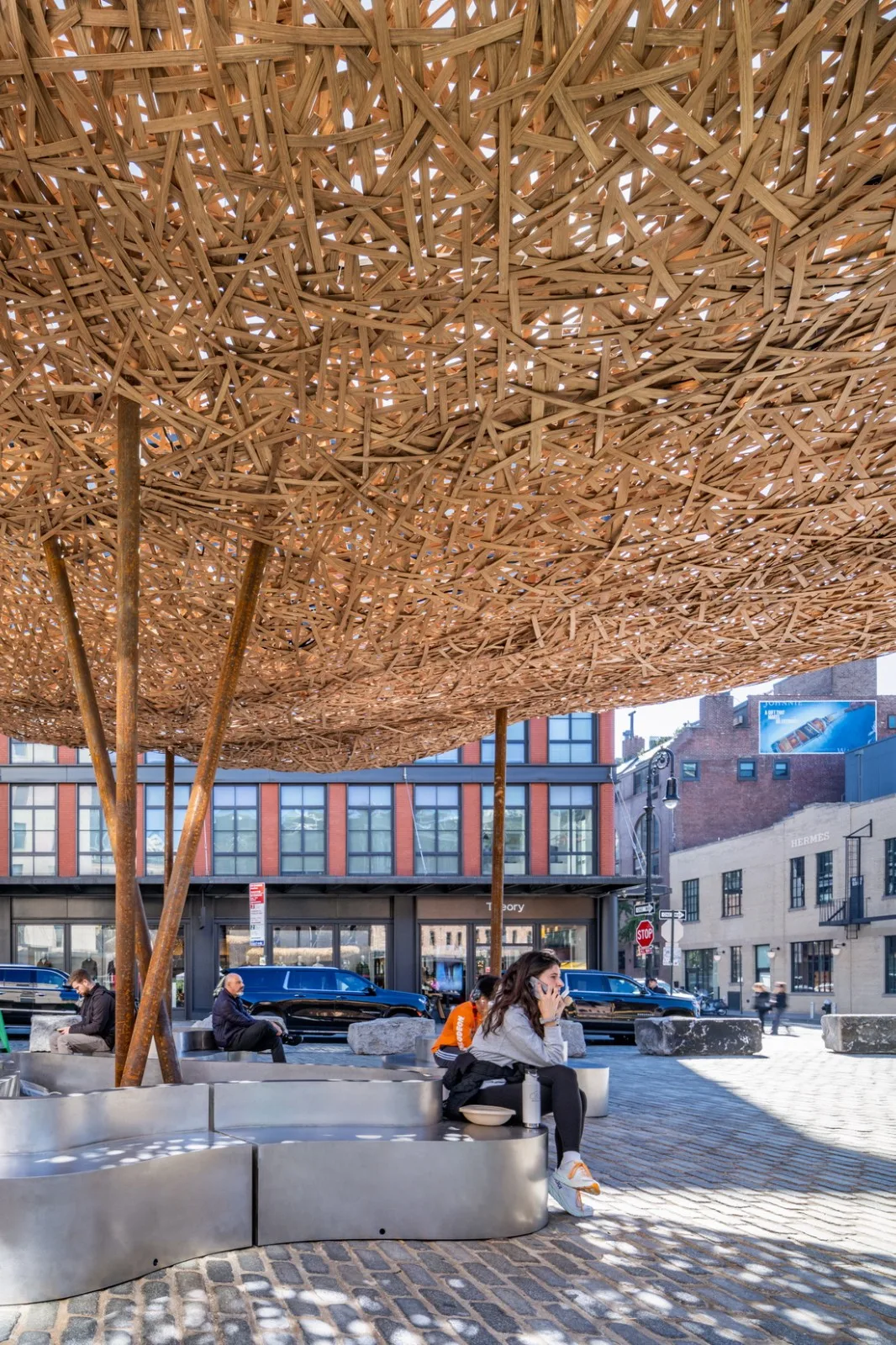
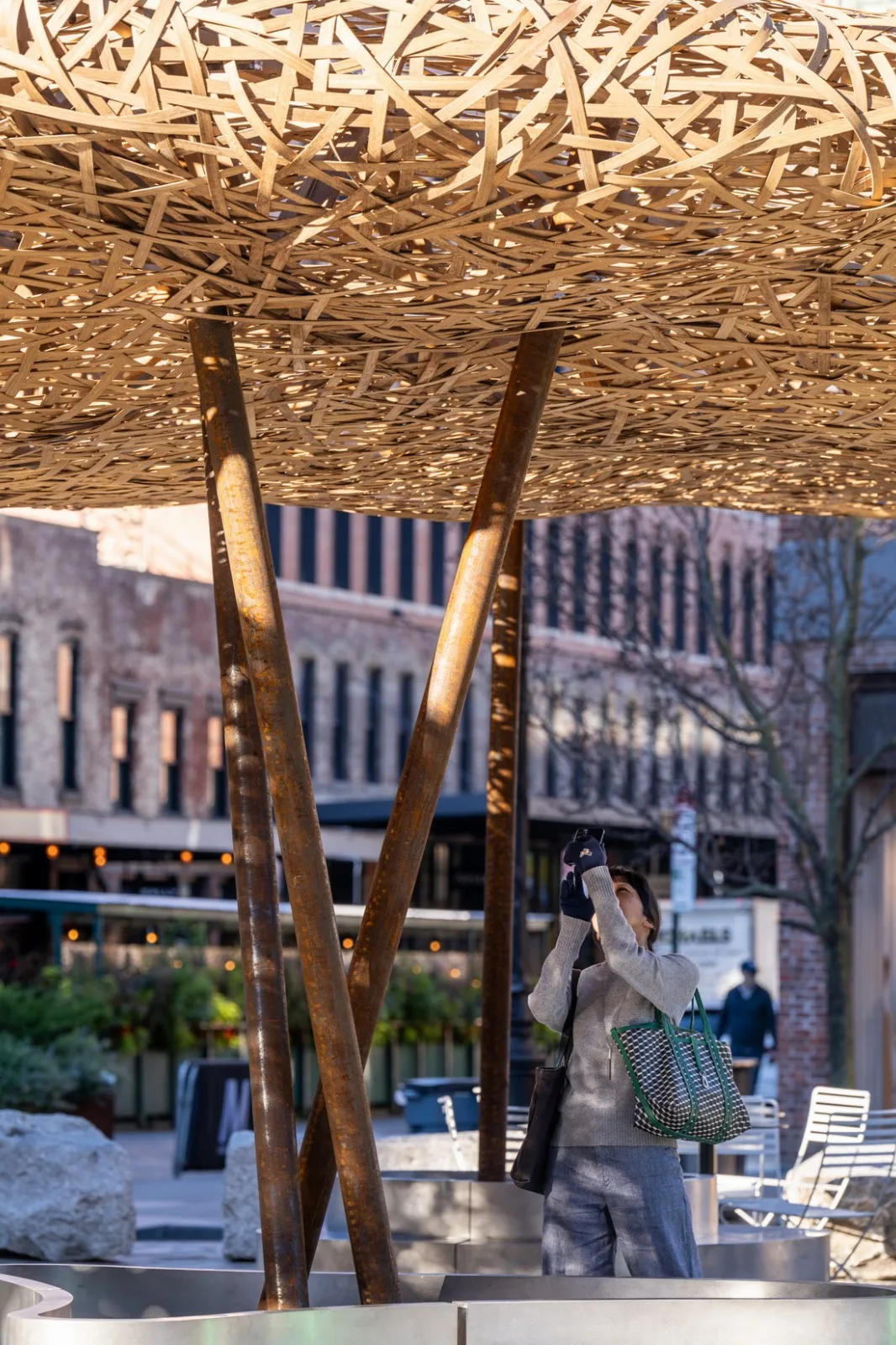
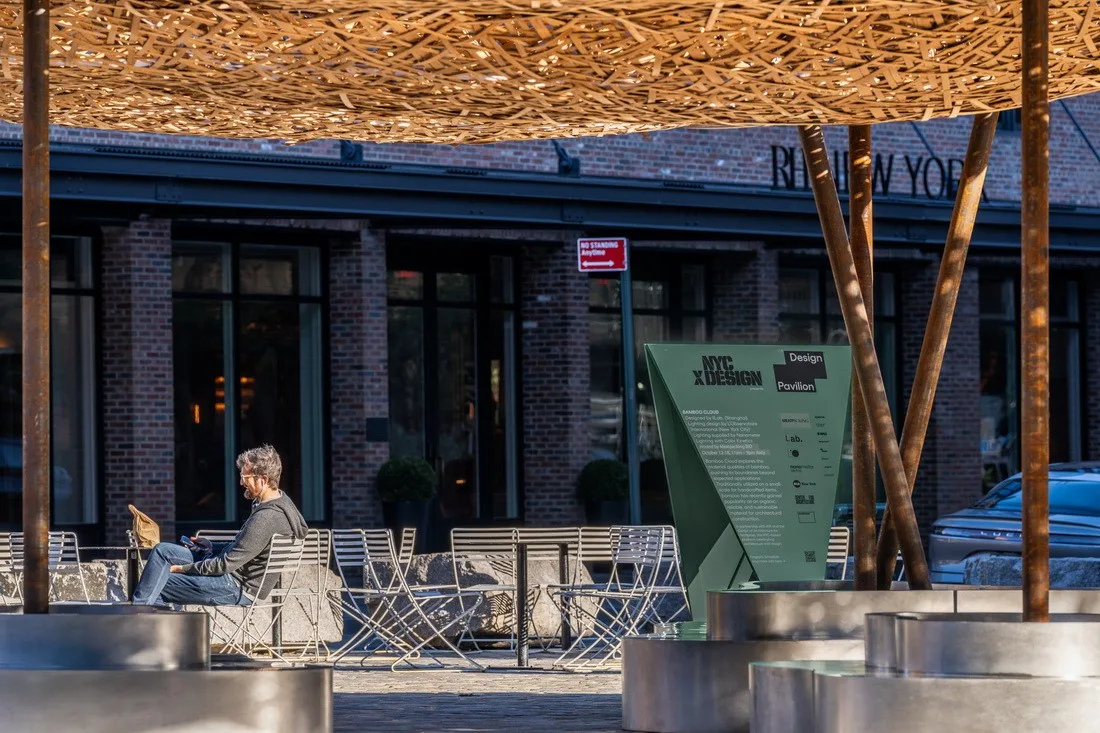
Bamboo remains a somewhat ambiguous material in construction. Often compared to wood as “engineering bamboo,” this comparison overlooks bamboo’s unique material characteristics. Zhuyun aims to unify raw bamboo and engineered bamboo in terms of material, application, properties, and physical expression.
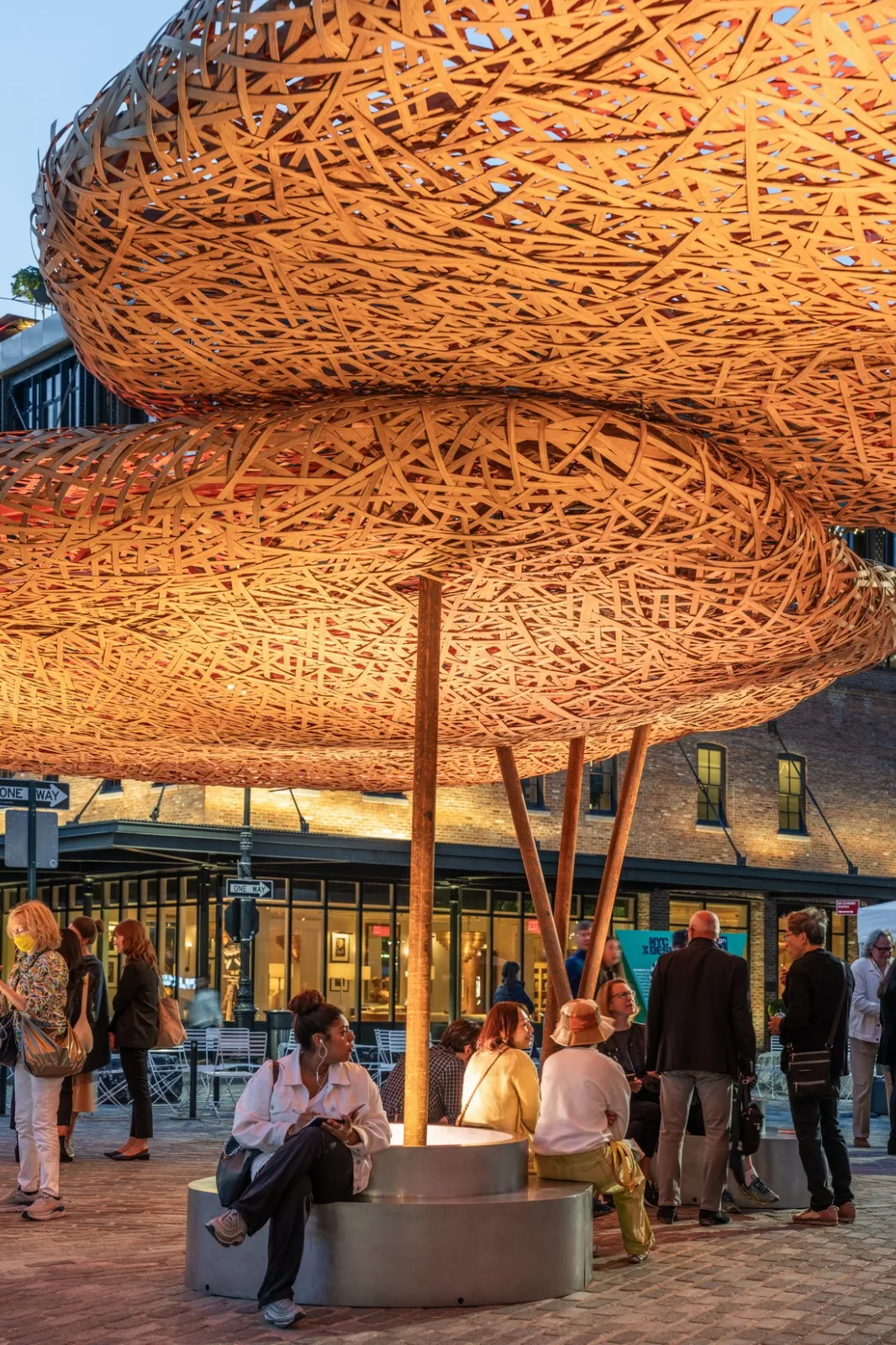
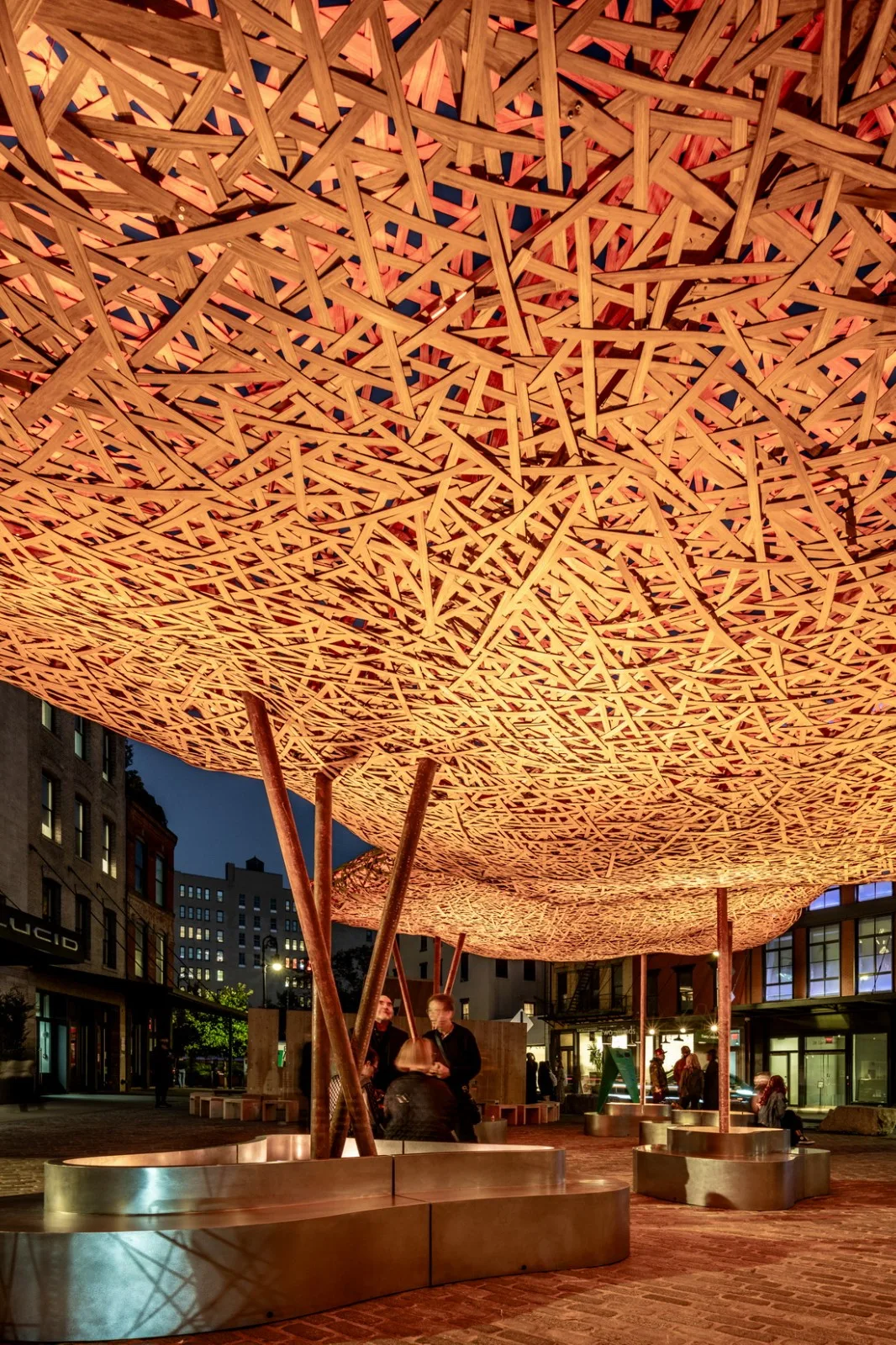
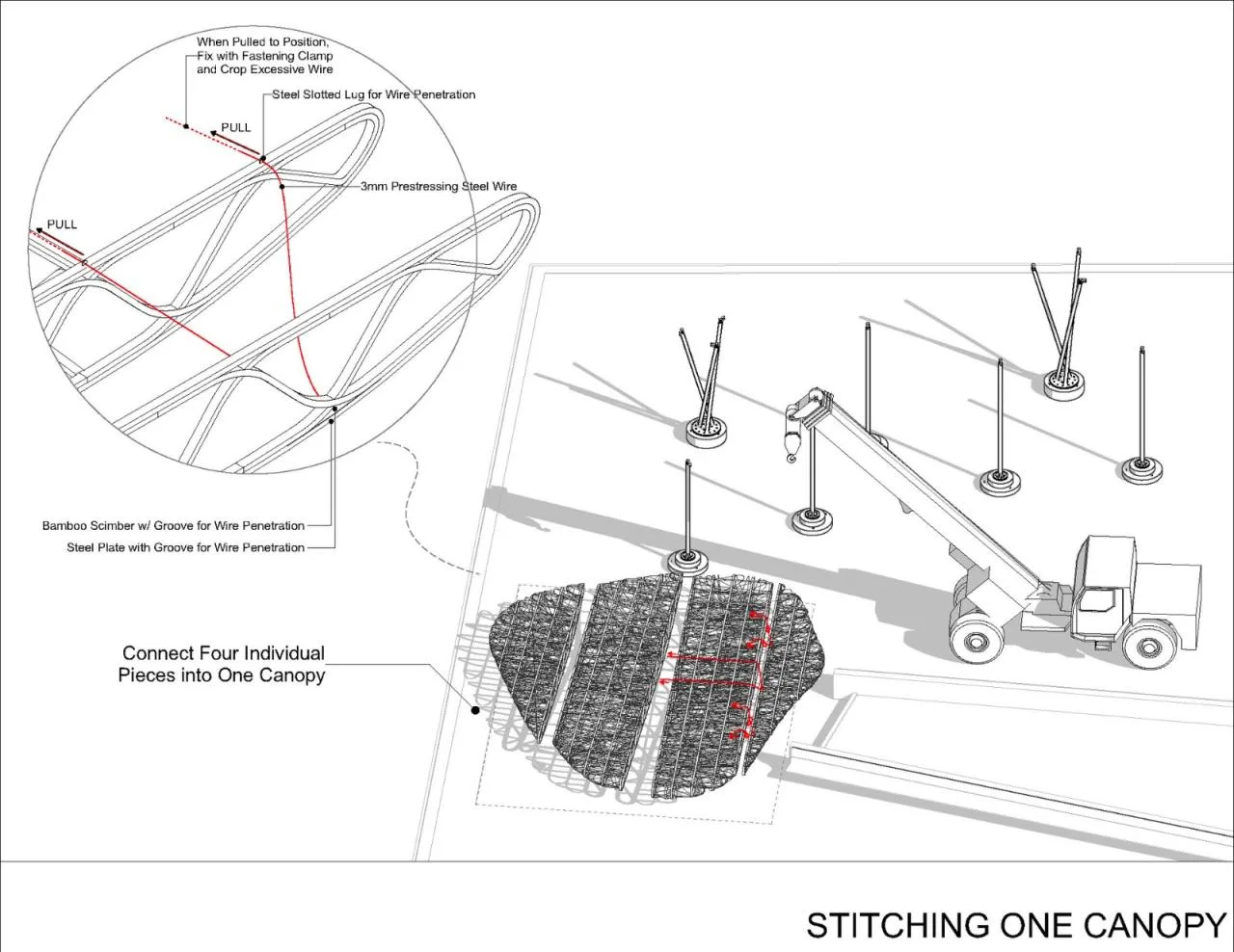
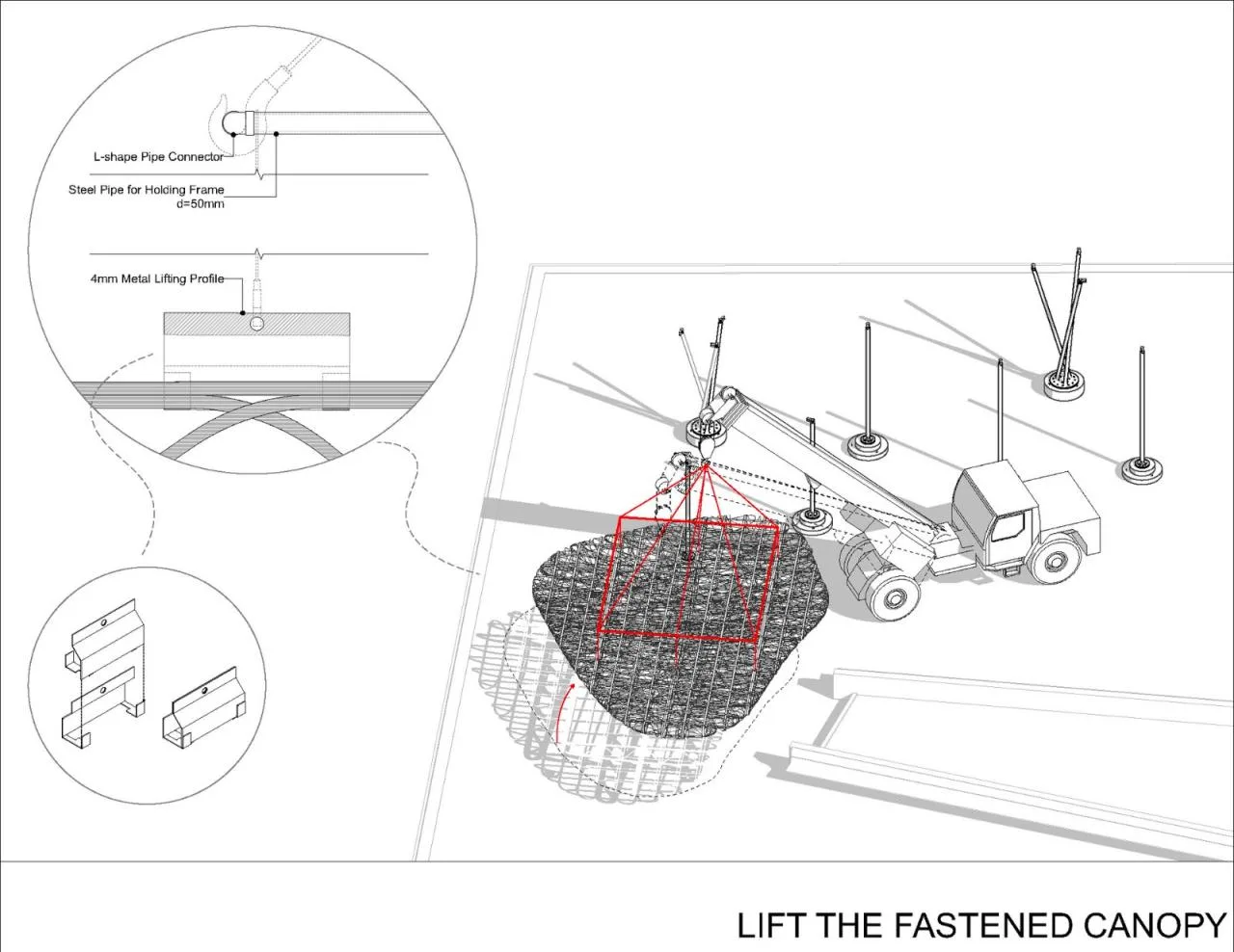
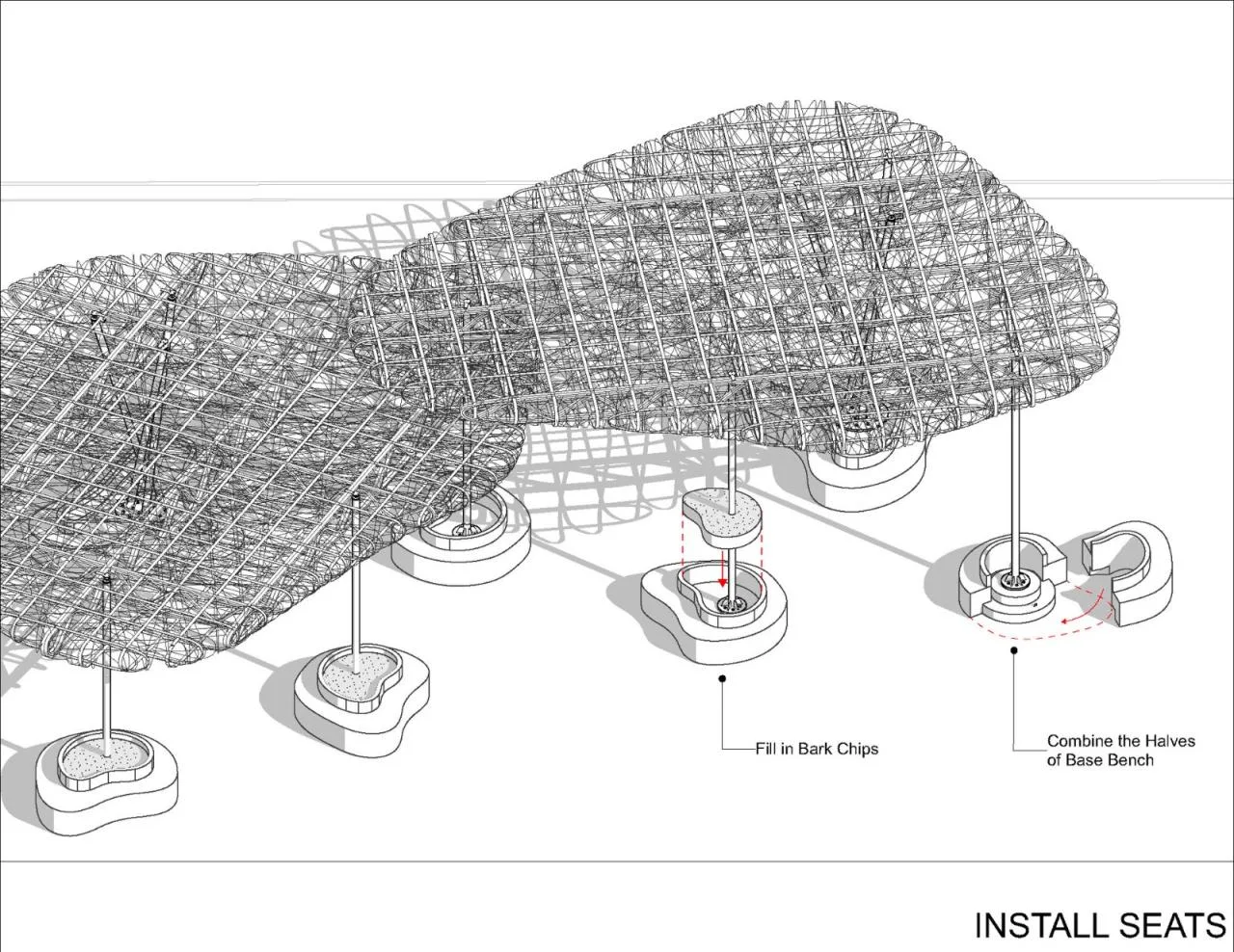
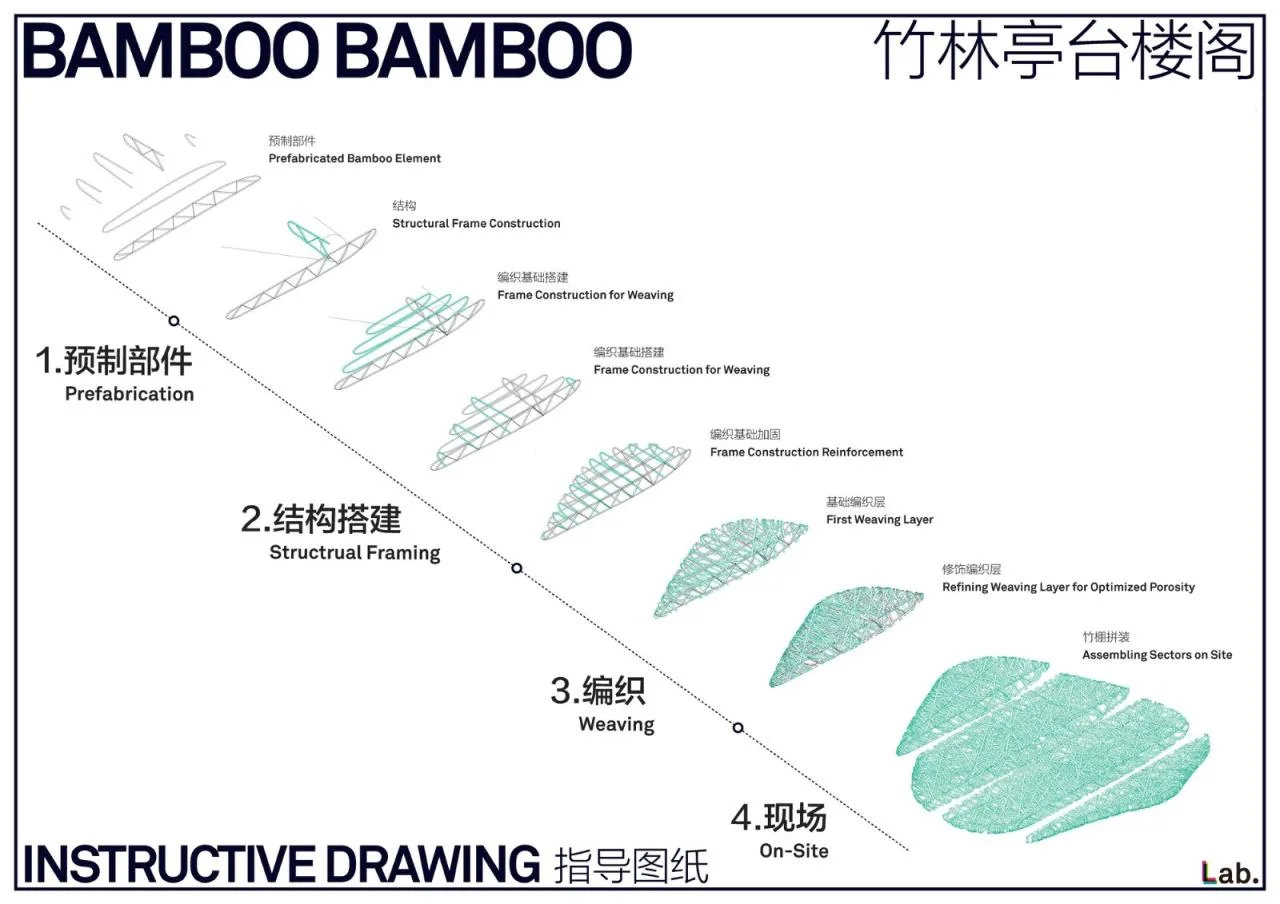
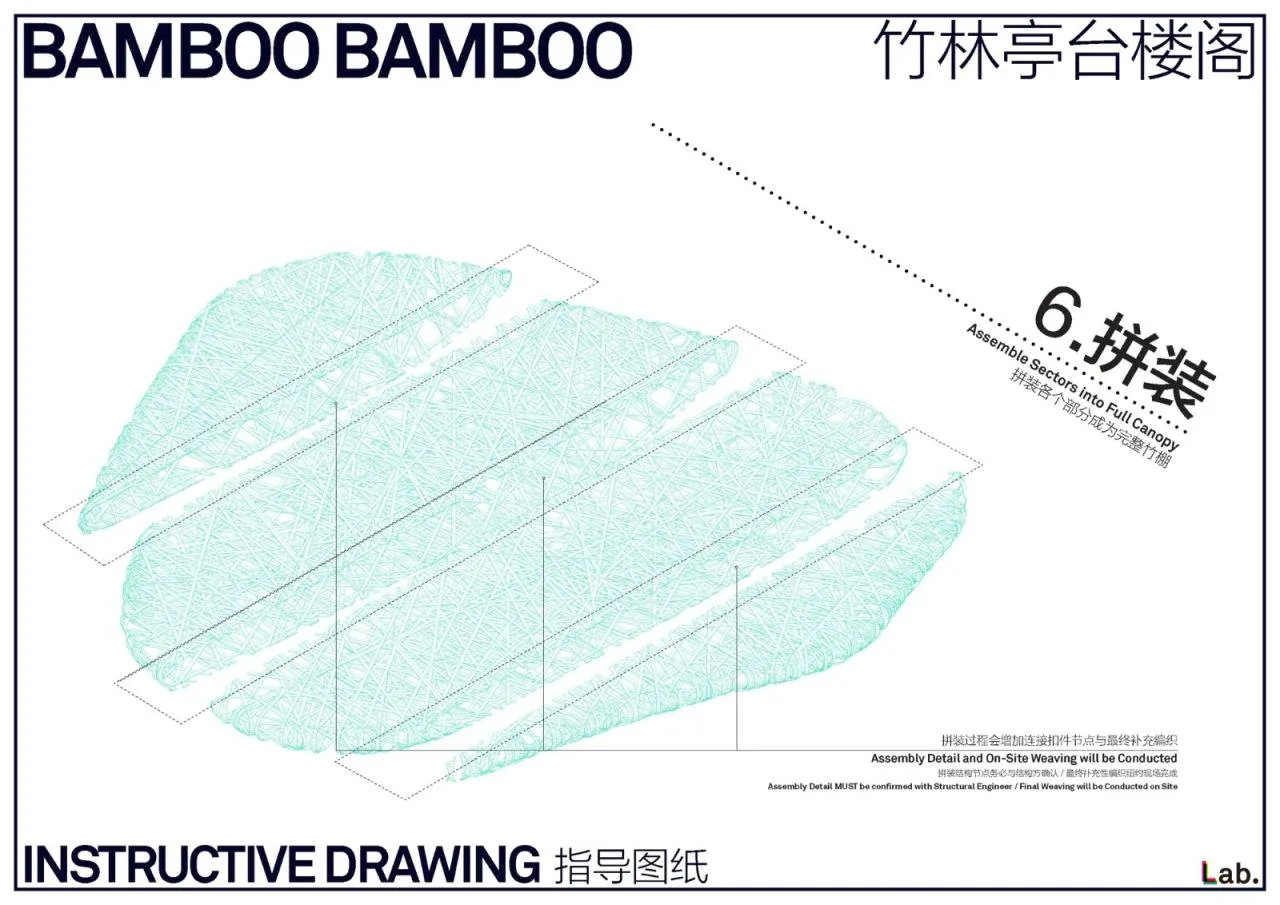
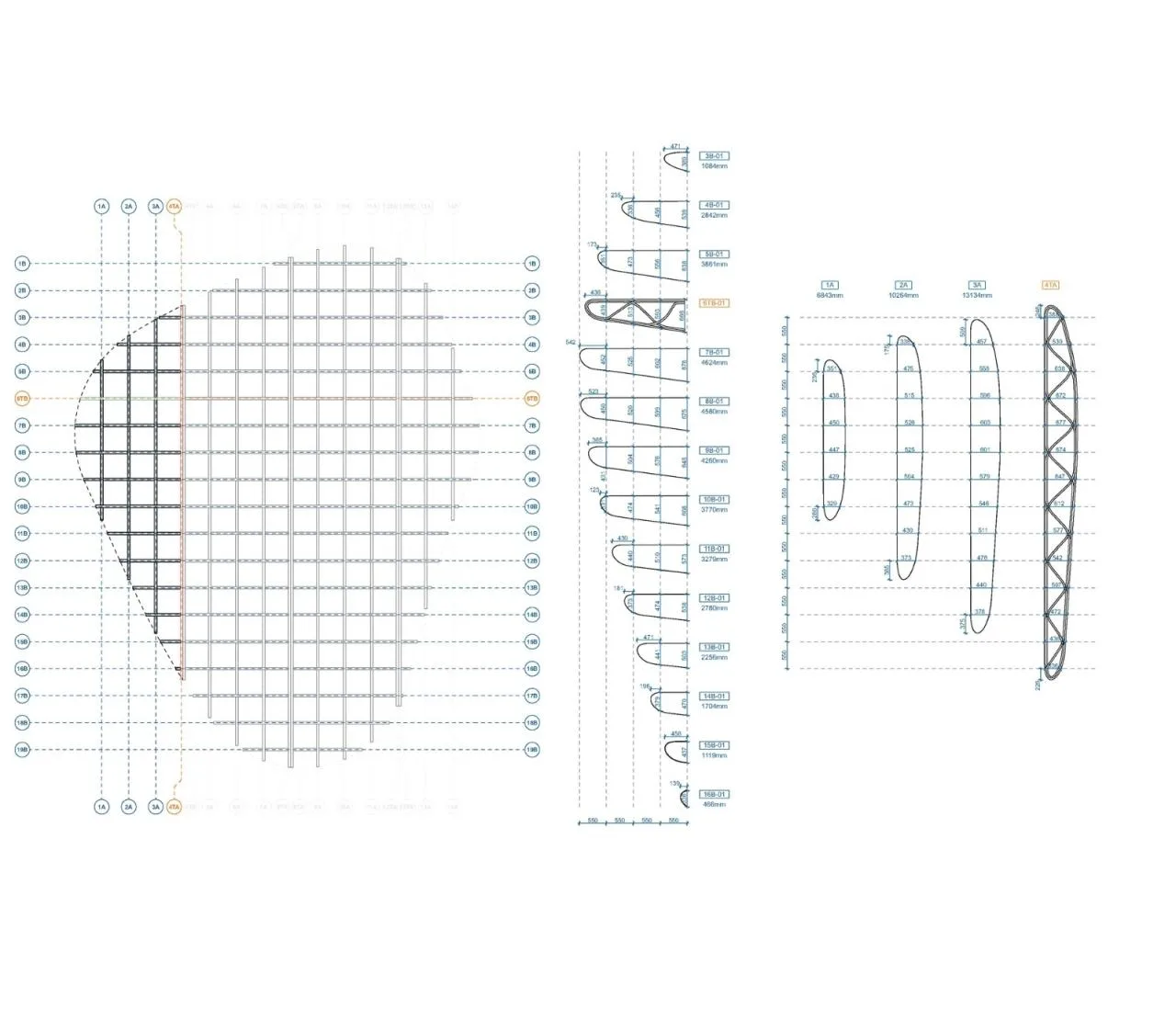
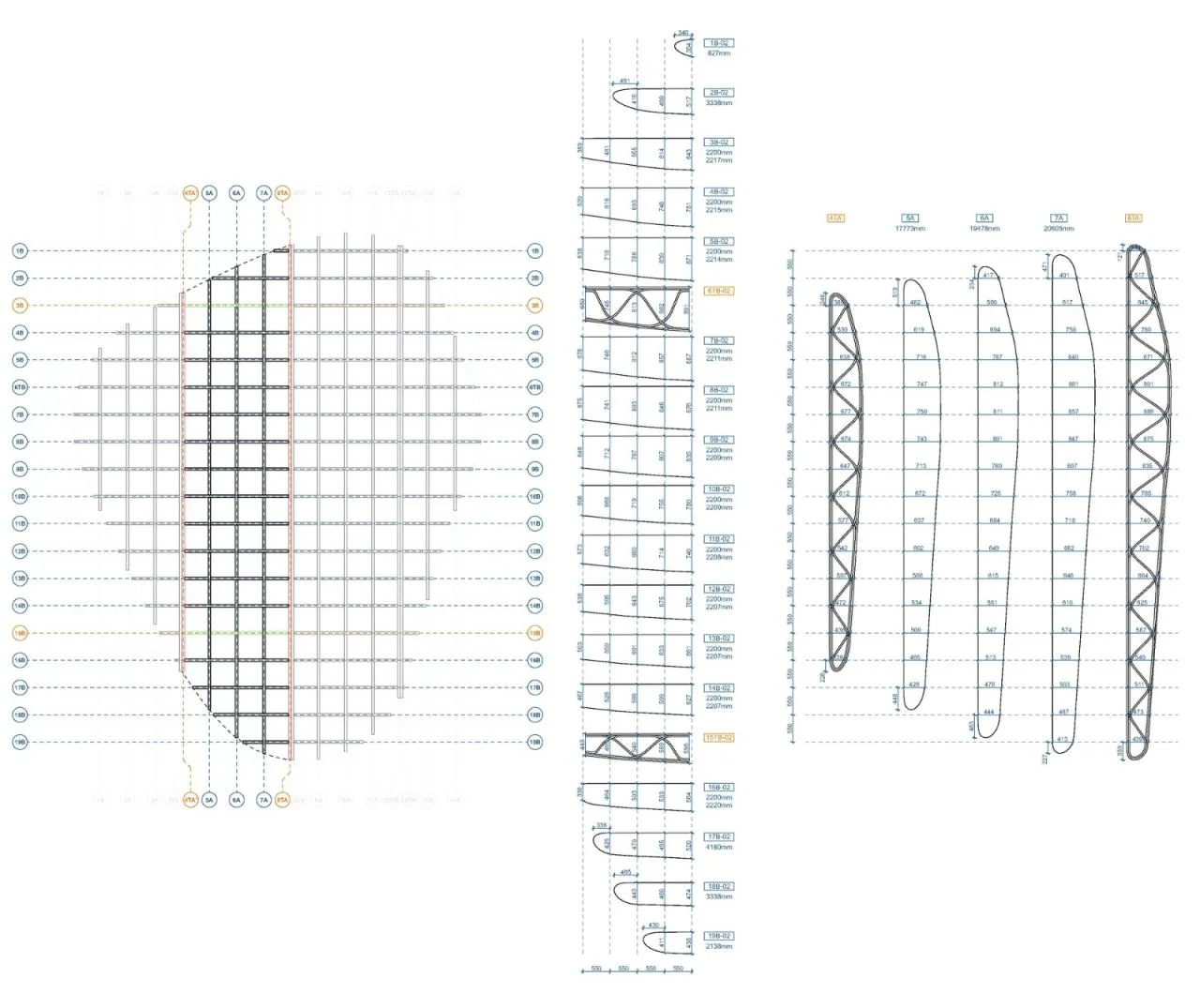
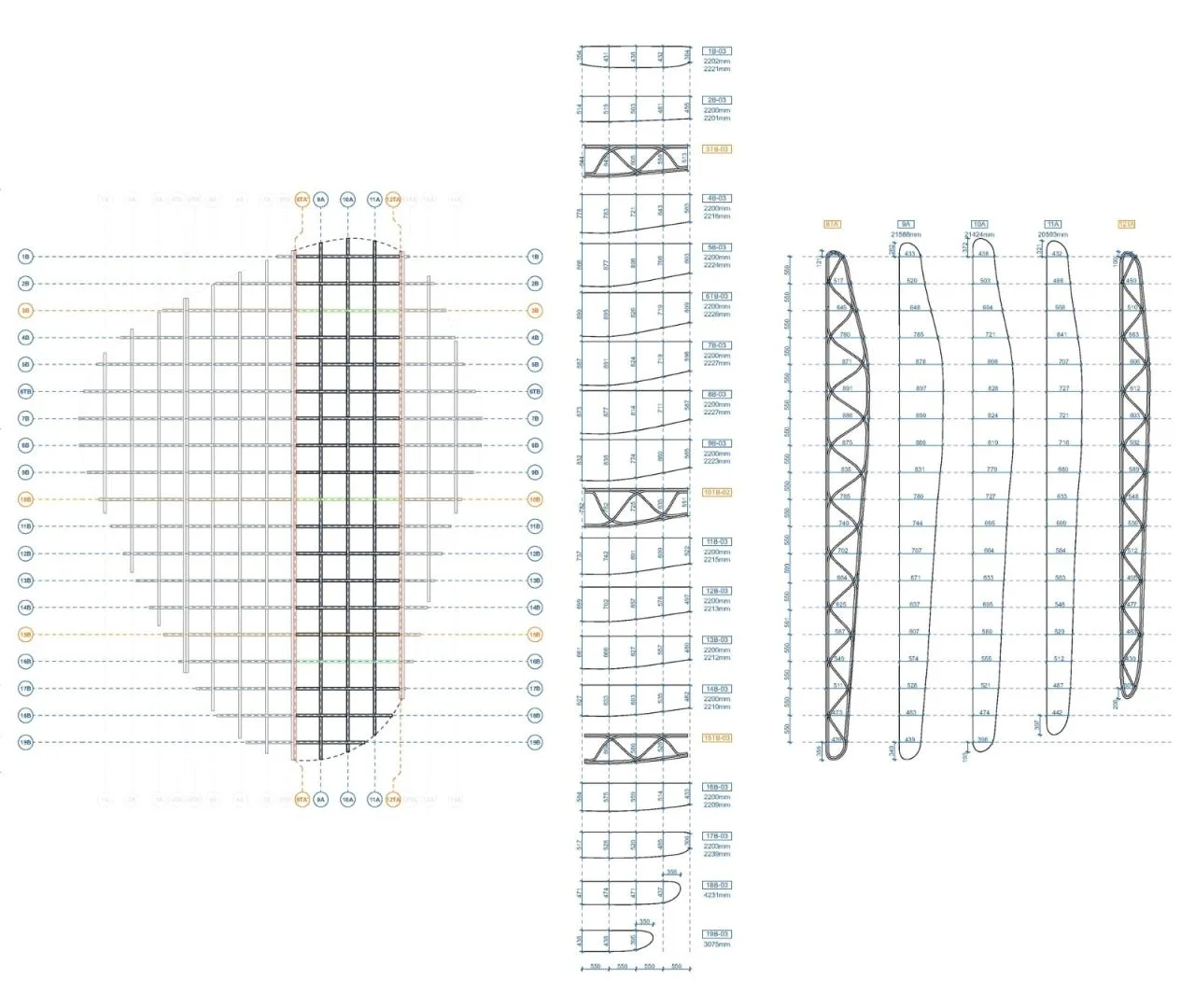
While bamboo naturally exhibits stress resistance and self-rebound properties, the assembly process interrupts the force transmission within the material. Considering transportation and overall composition, we established precise segmentation logic defining Bamboo Cloud’s assembly strategy.
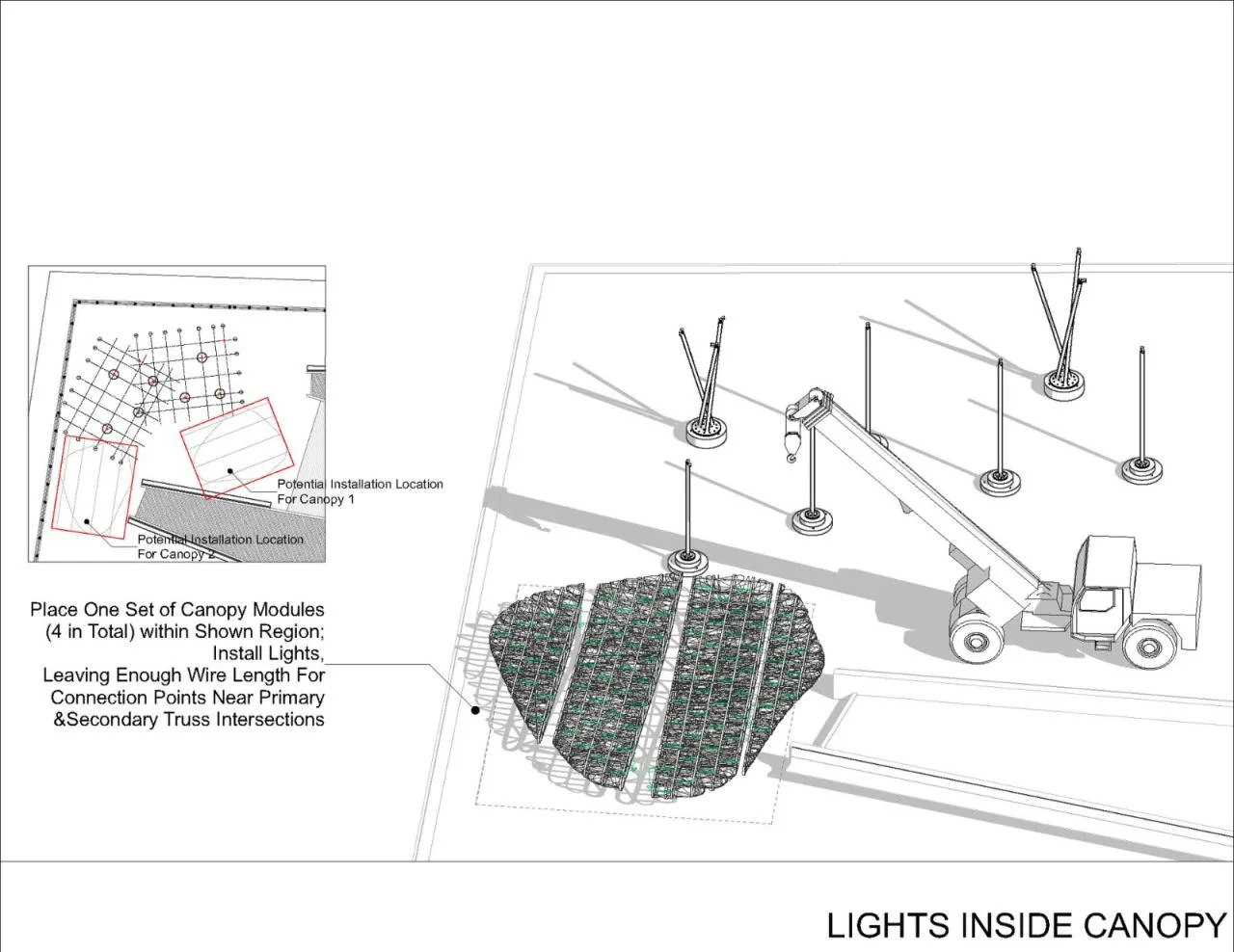
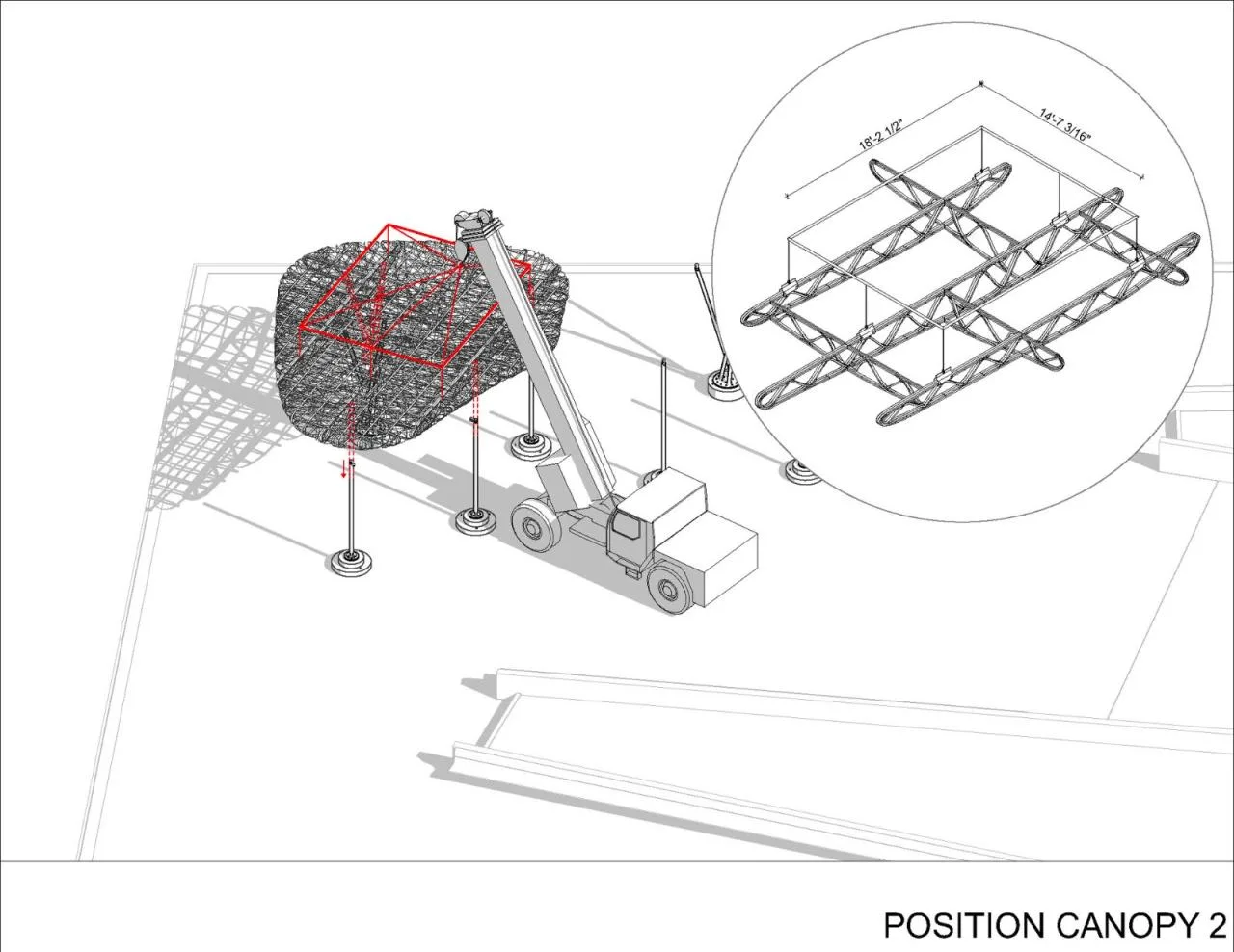
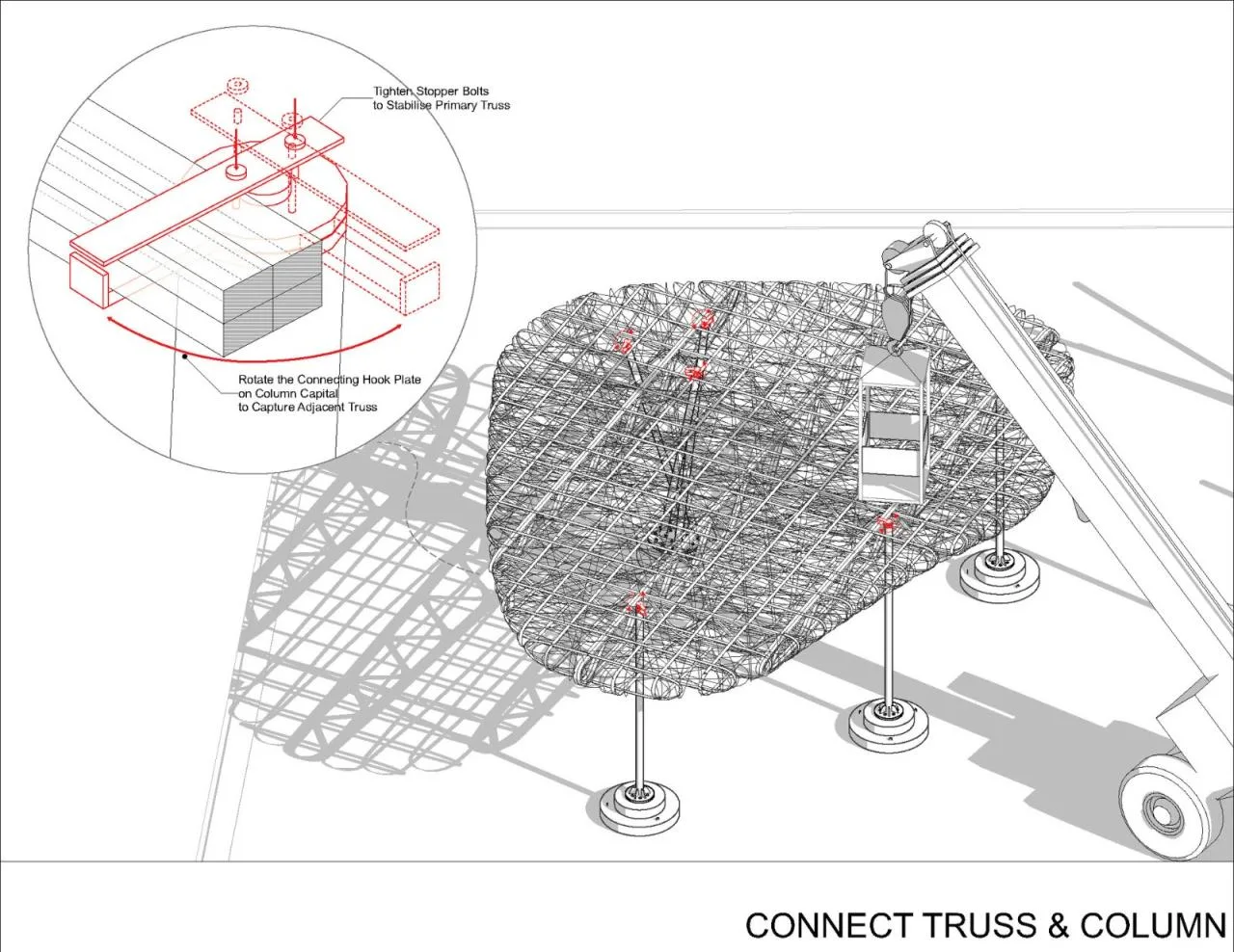
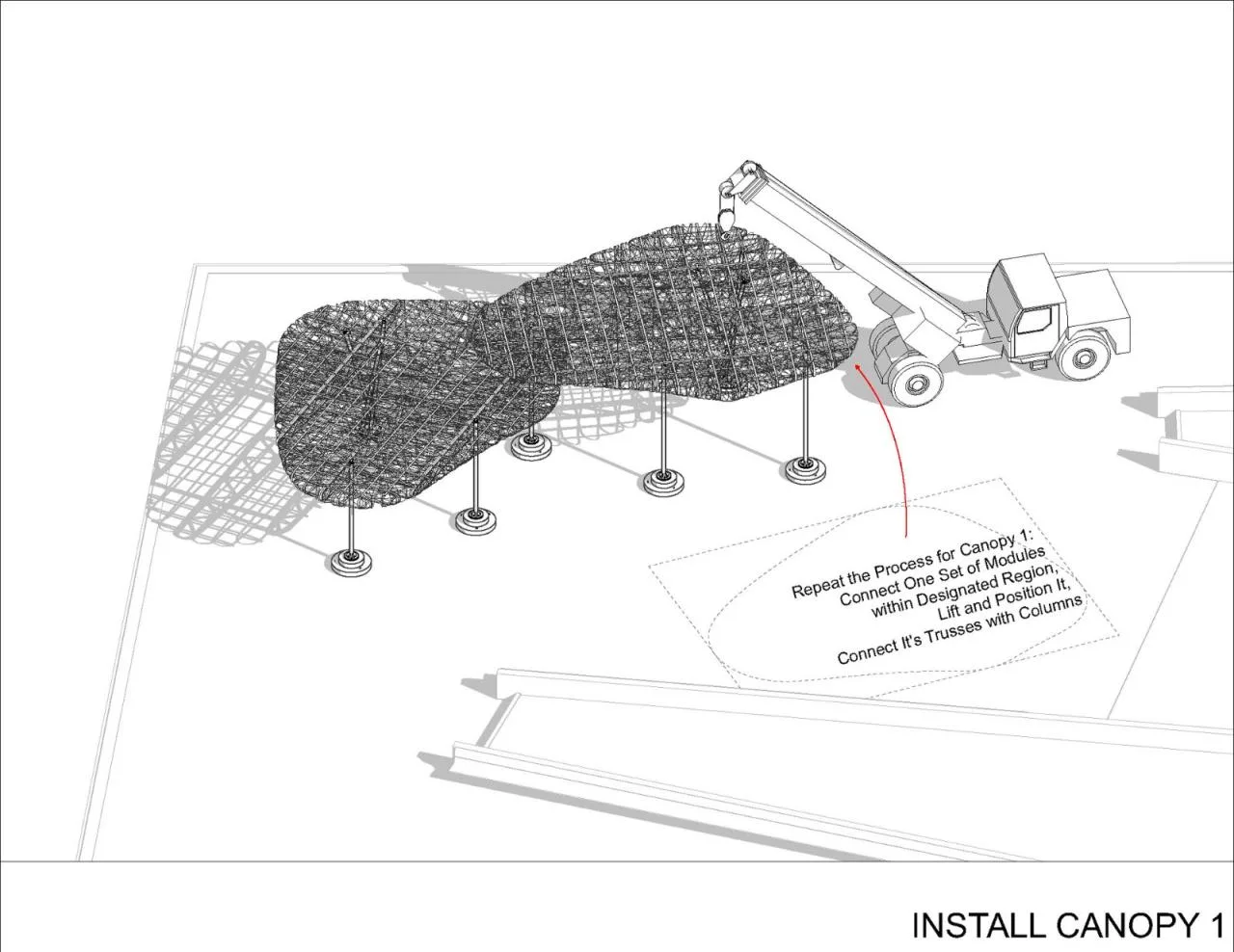
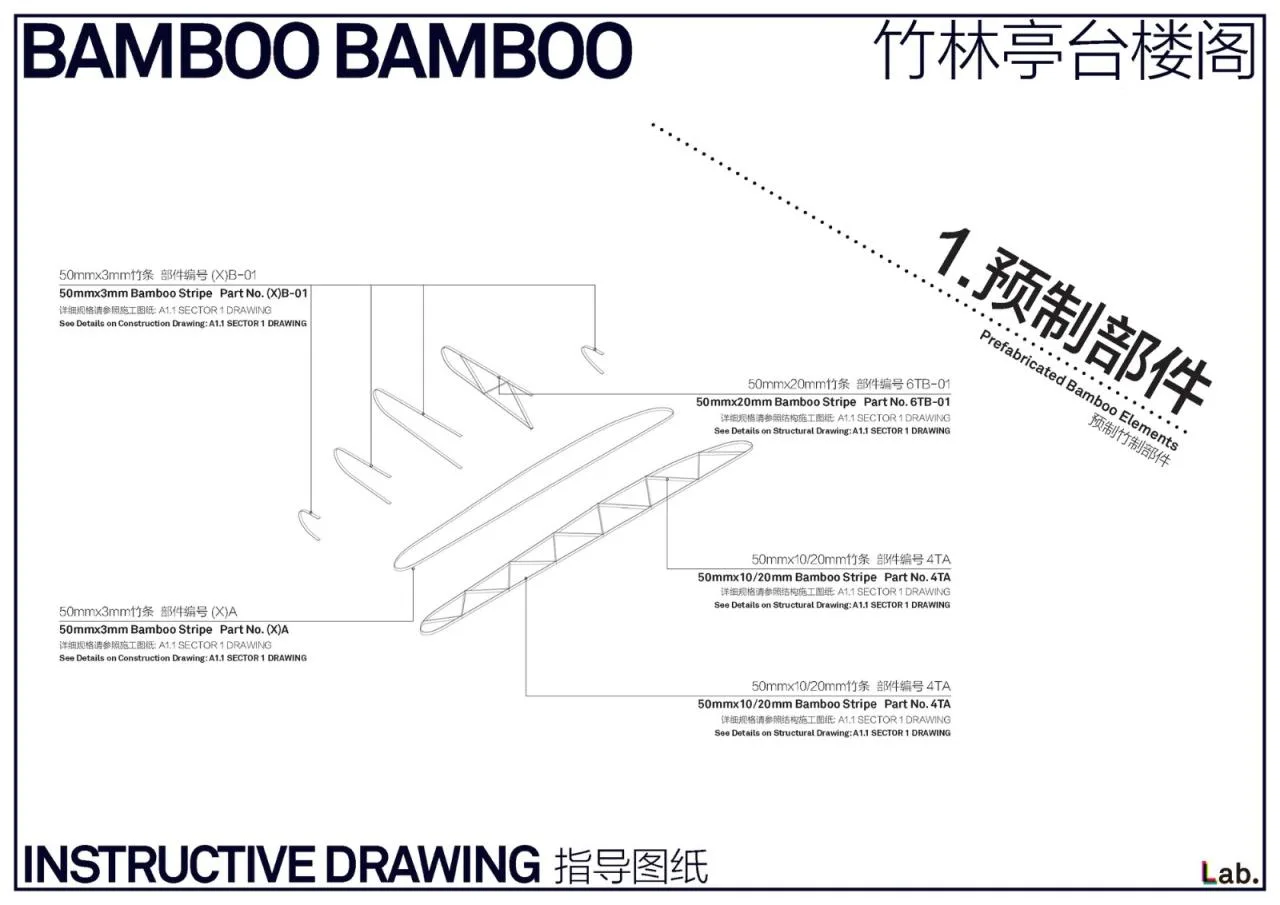
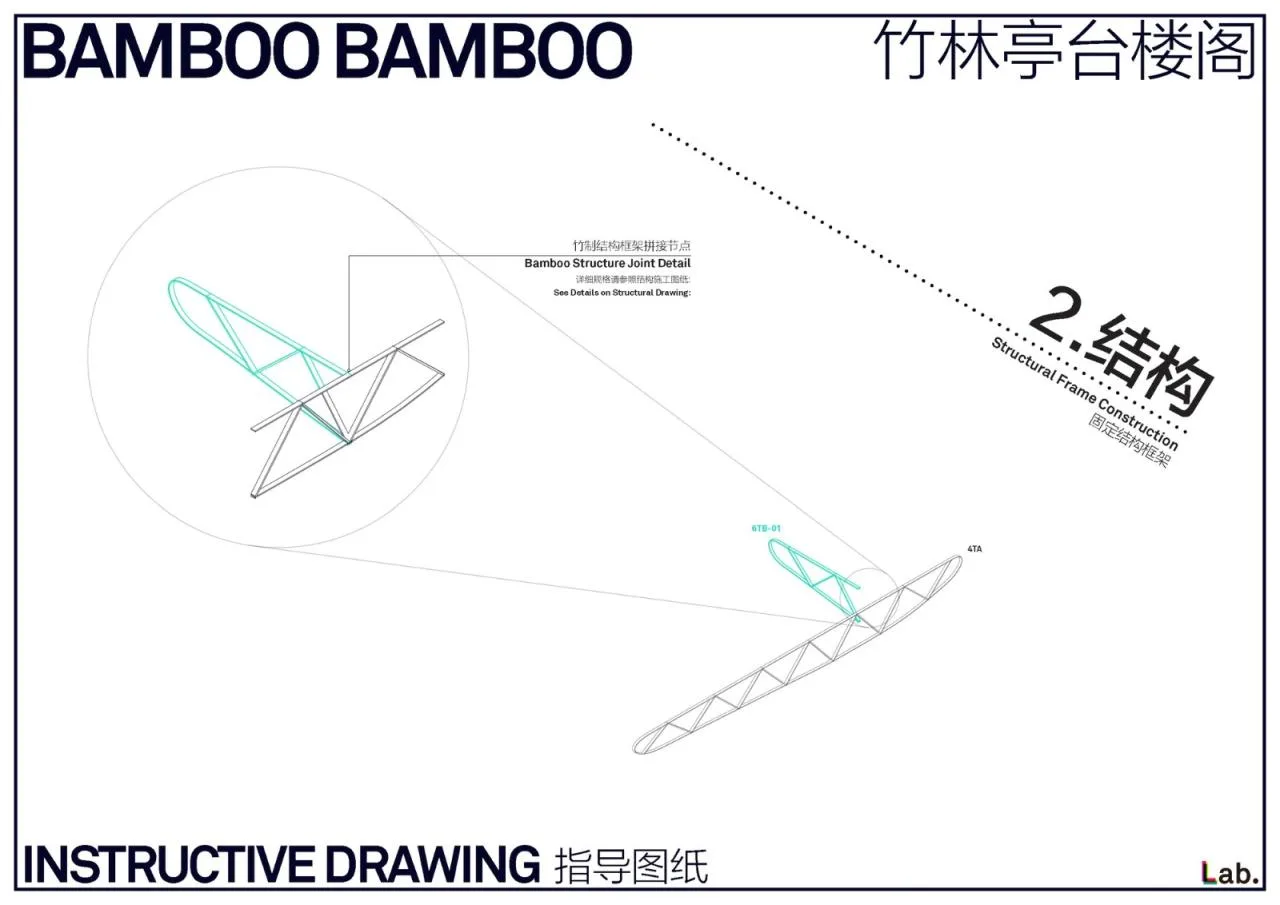
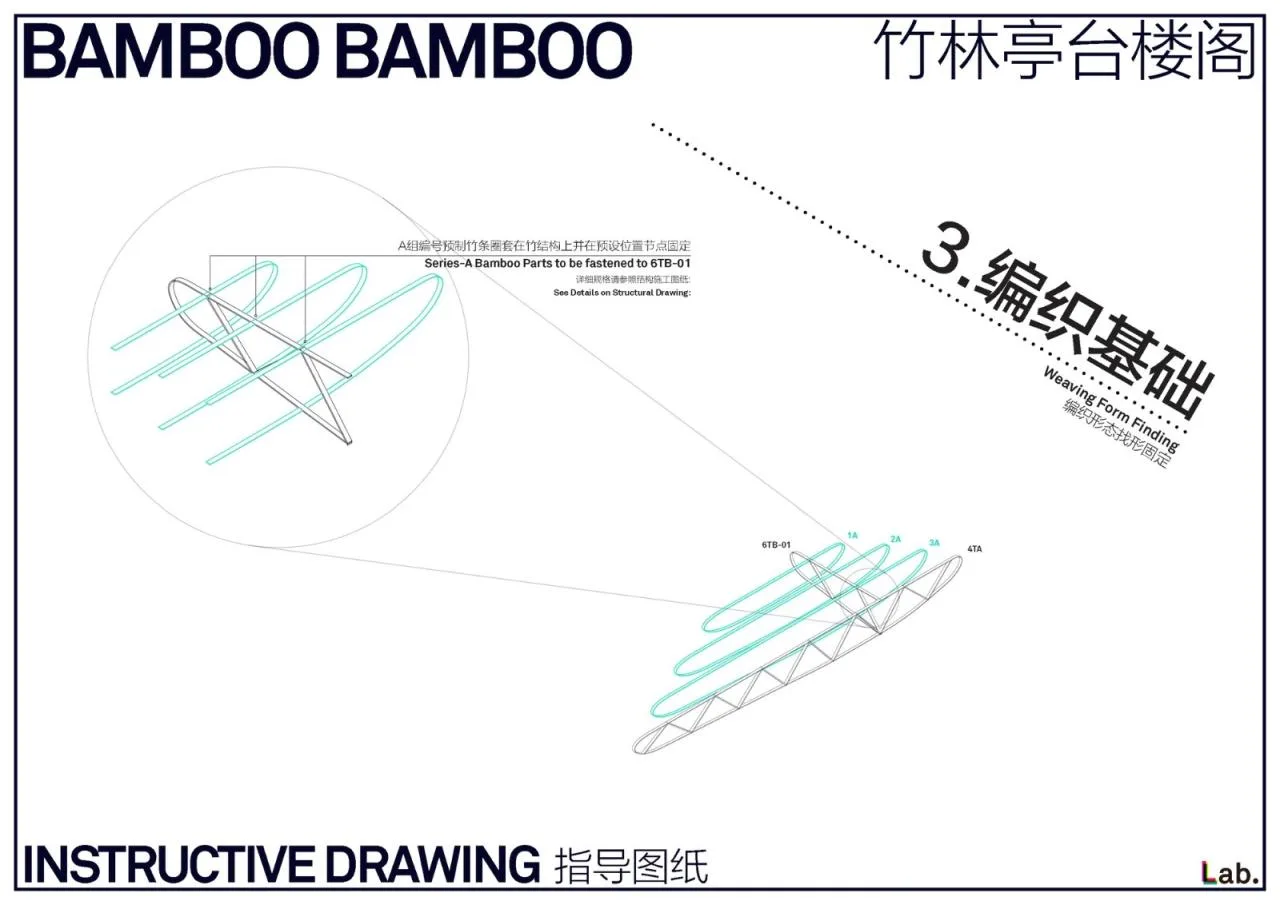
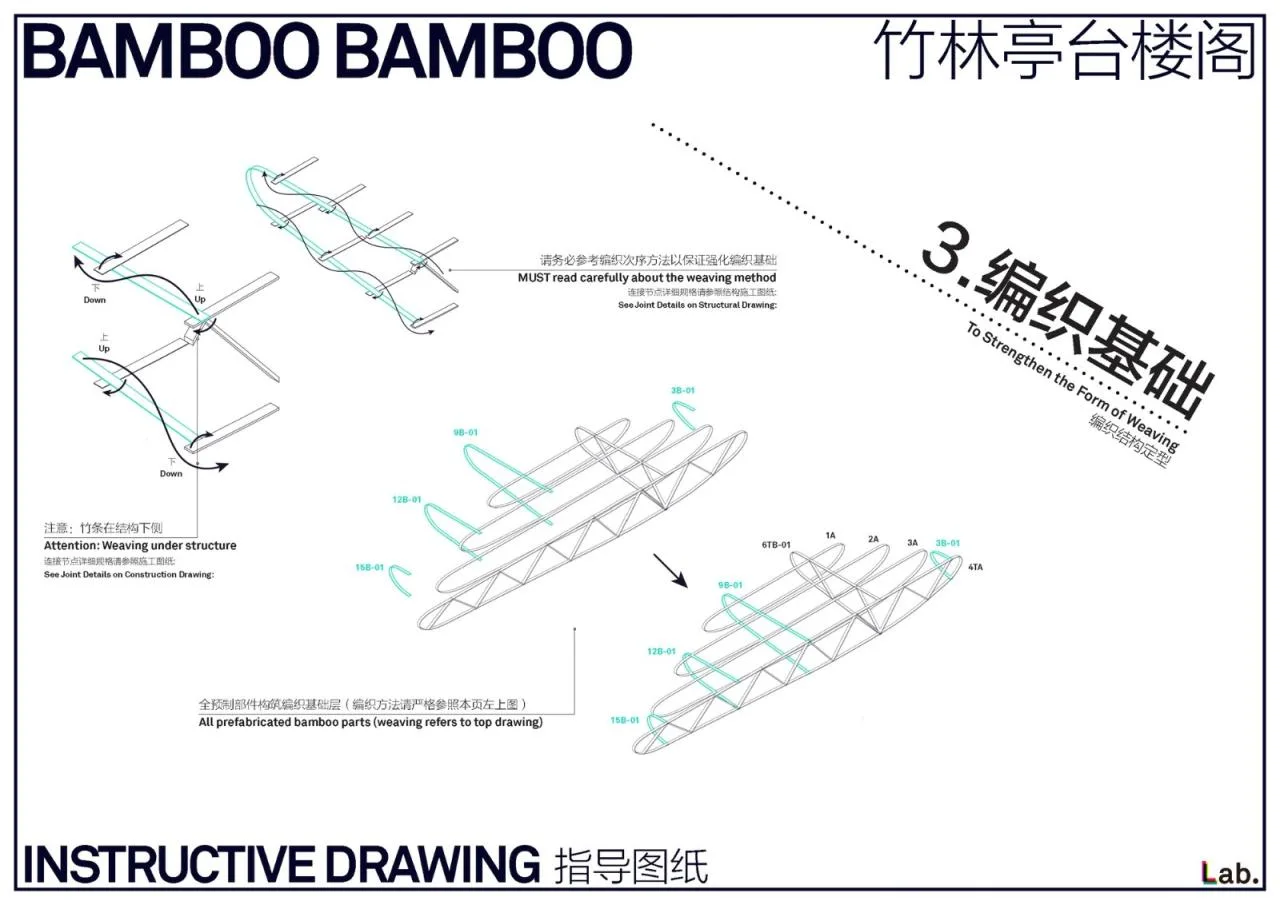
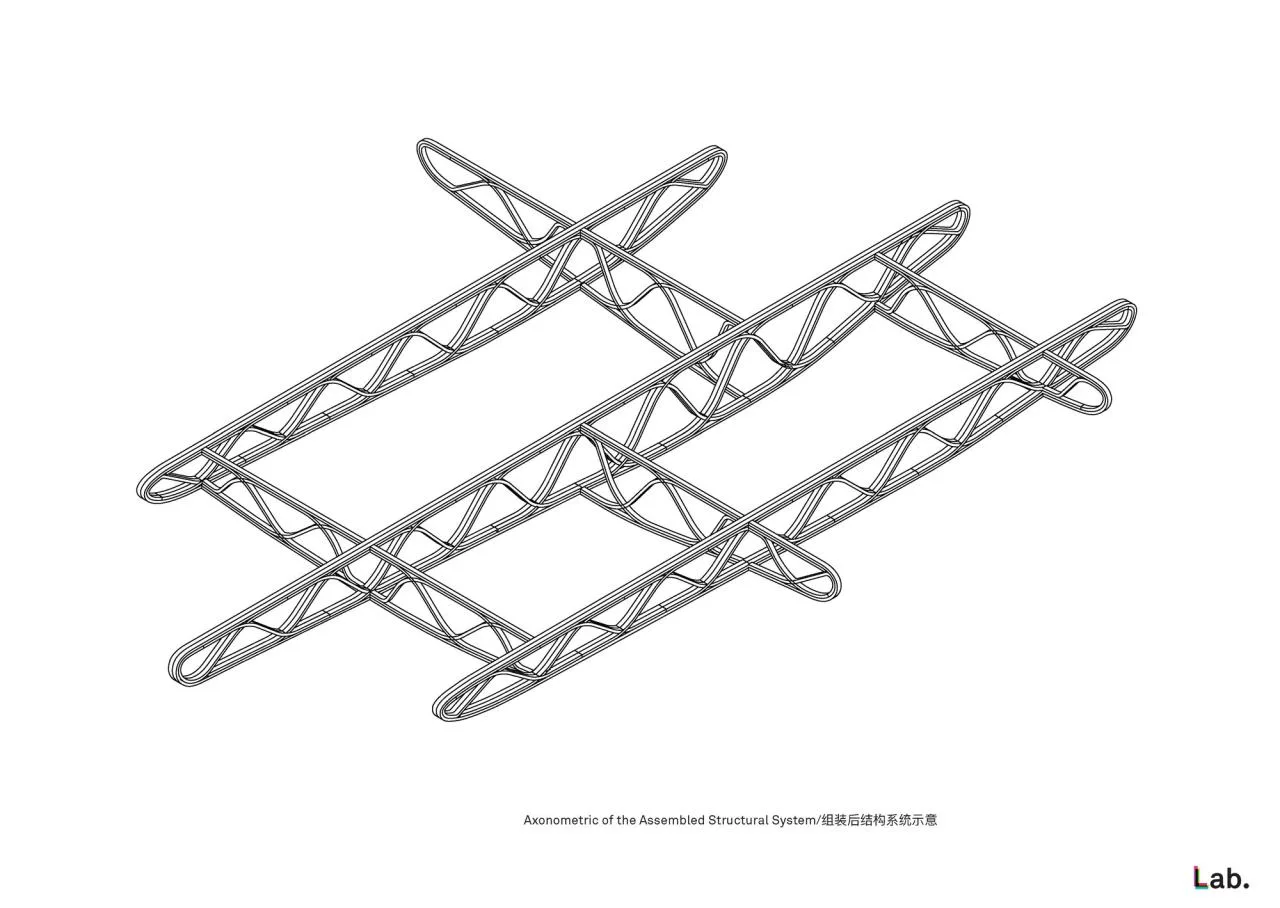
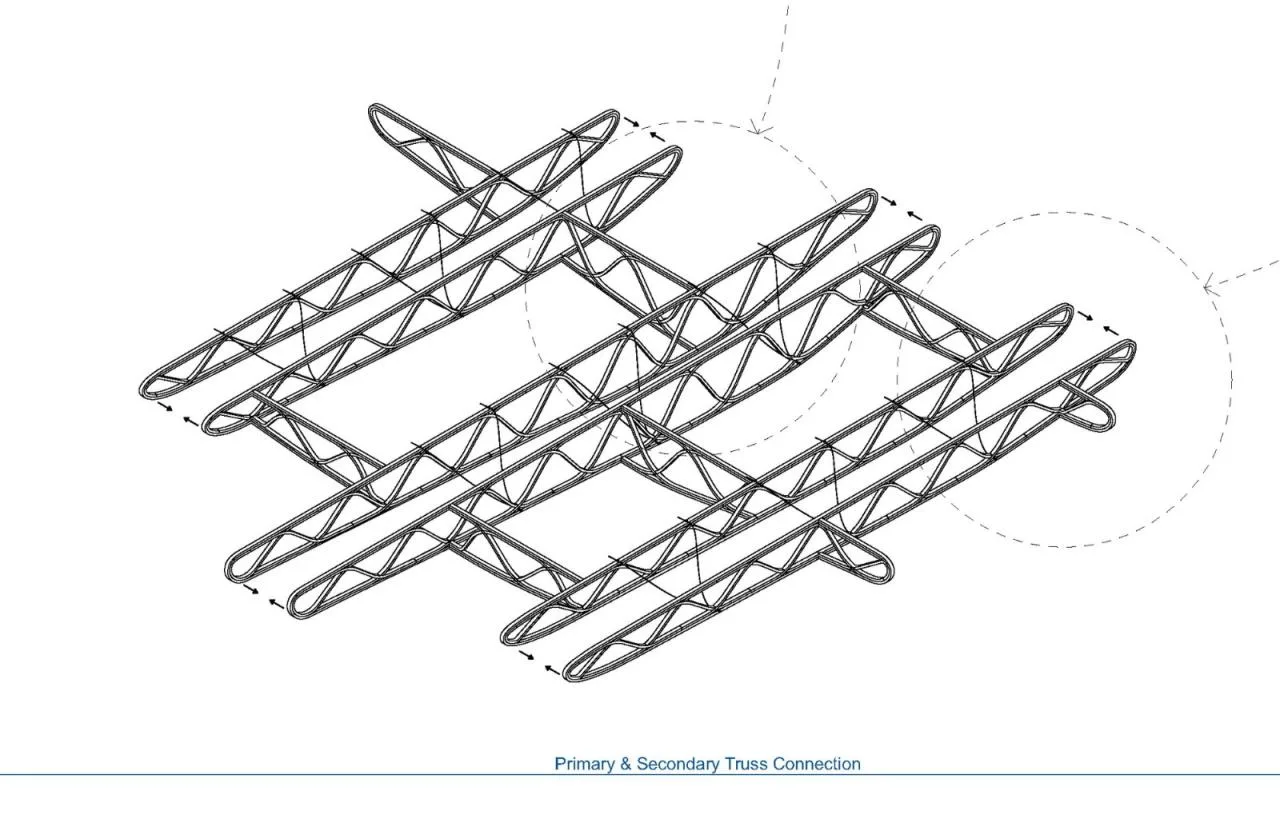
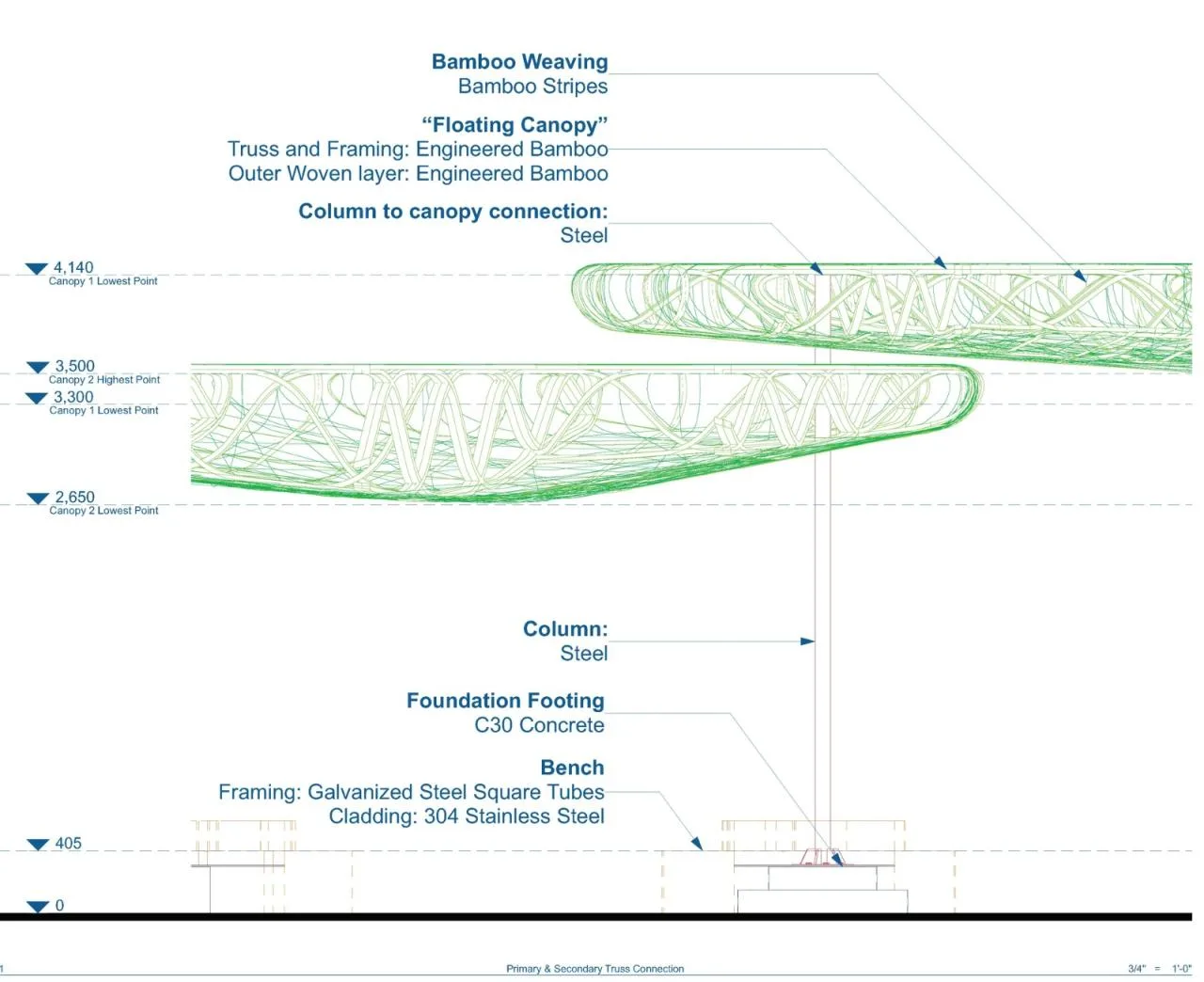
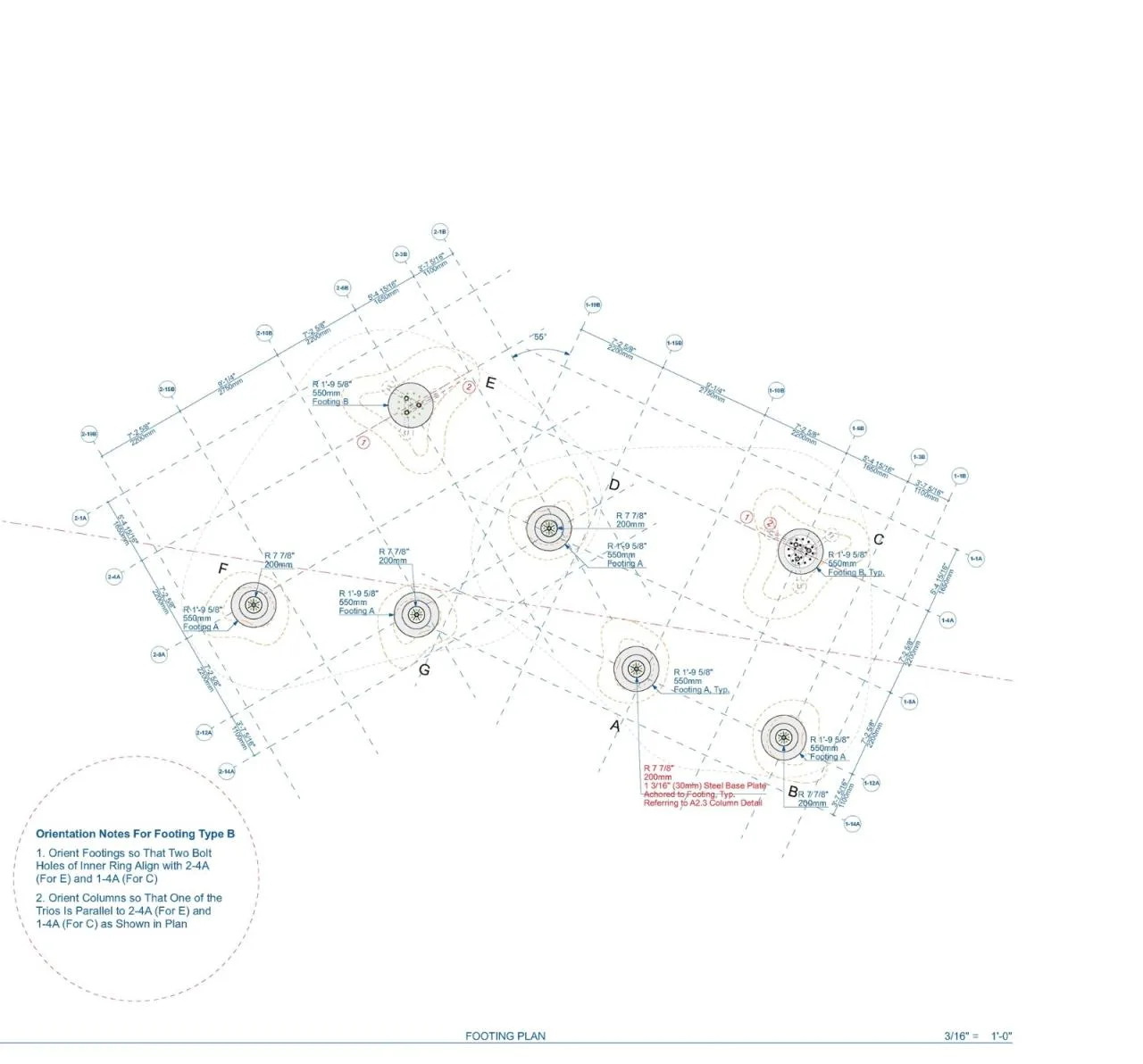
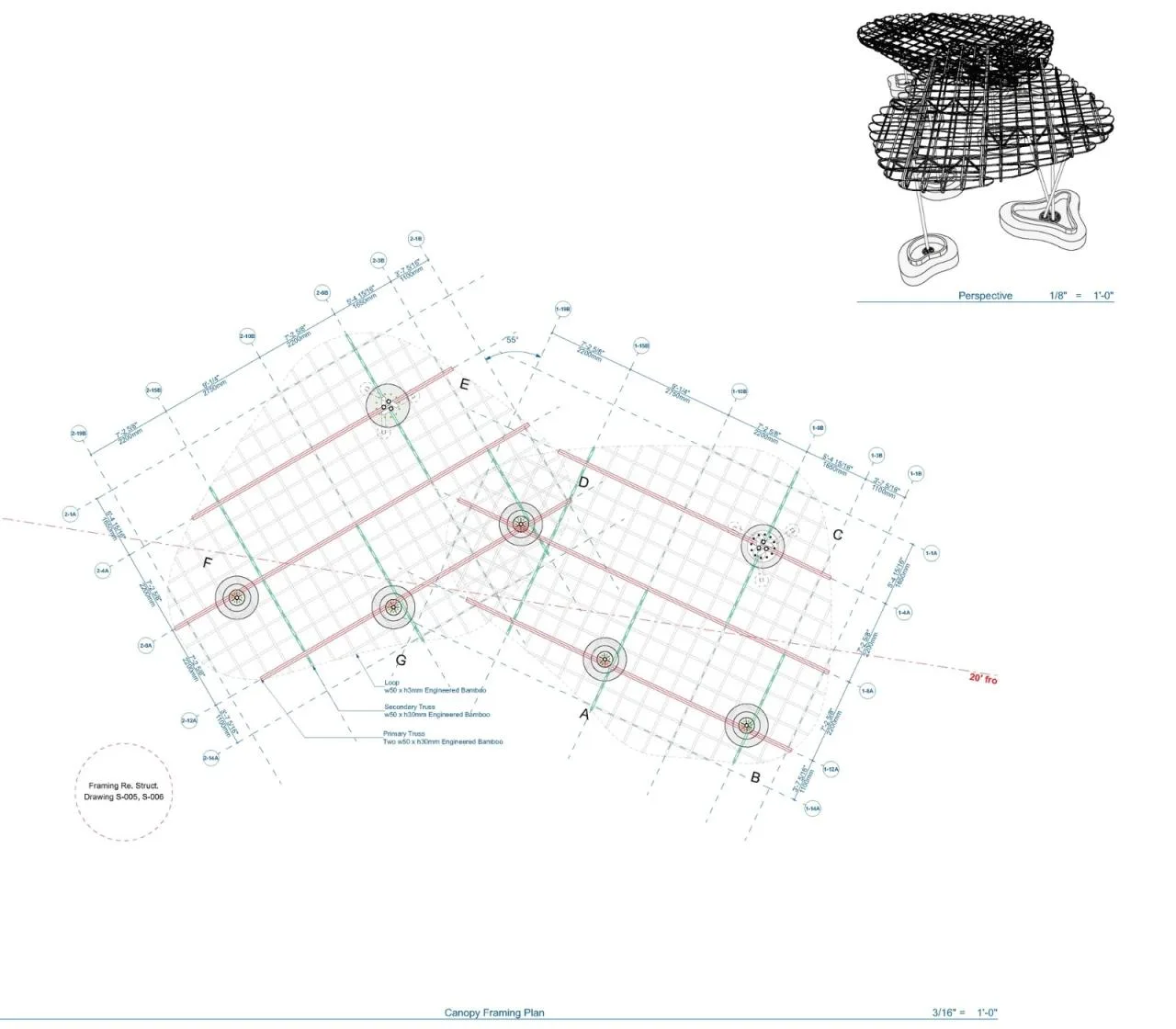
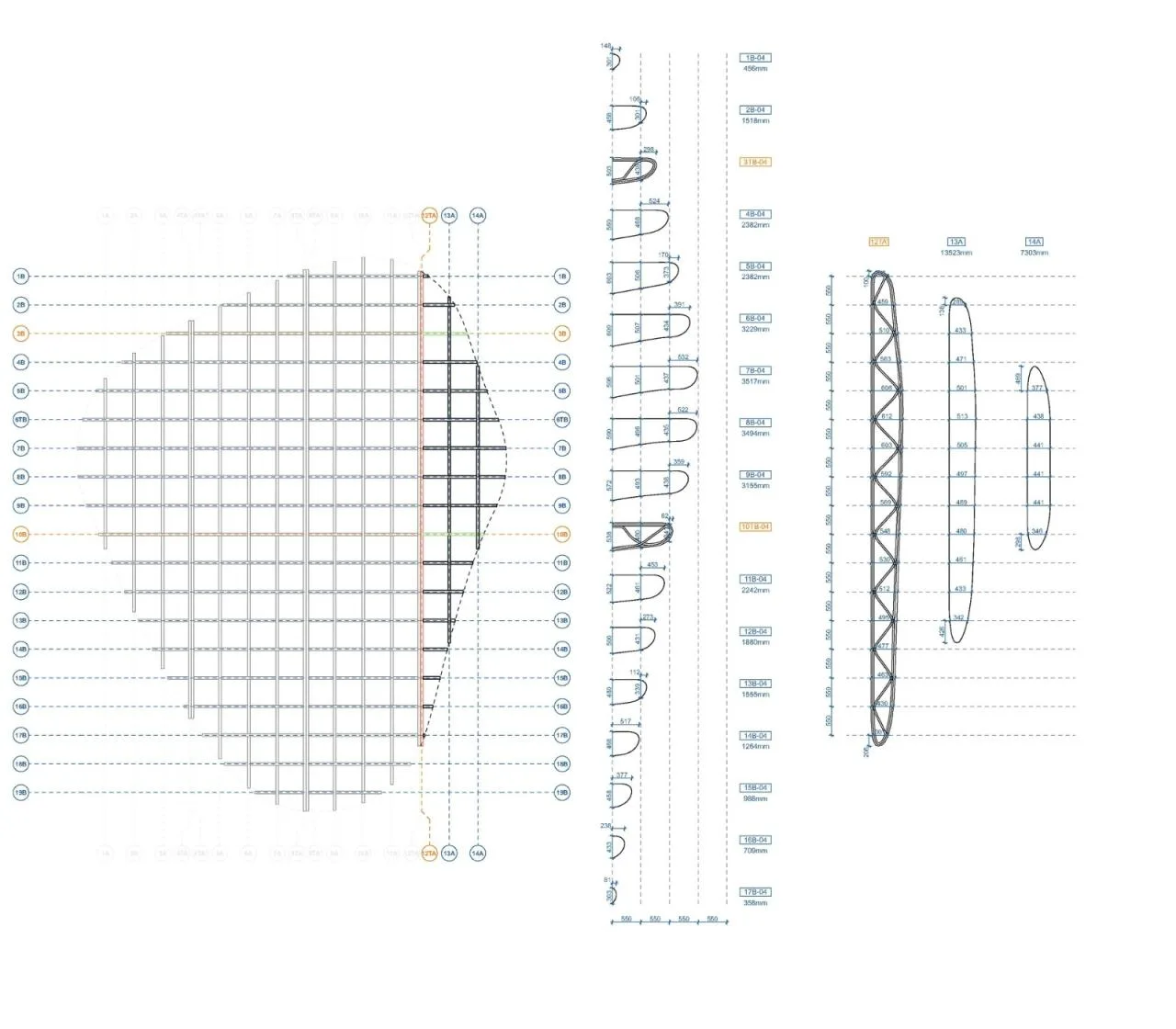
The critical assembly lines serve as positioning points for the main bamboo truss structure—also the assembly points for longitudinal support. The structural support and shape of the weaving parts are defined by secondary trusses that establish the weaving’s initial form, with the remaining shape maintained by the mutual constraints of the bamboo weaving strips themselves.
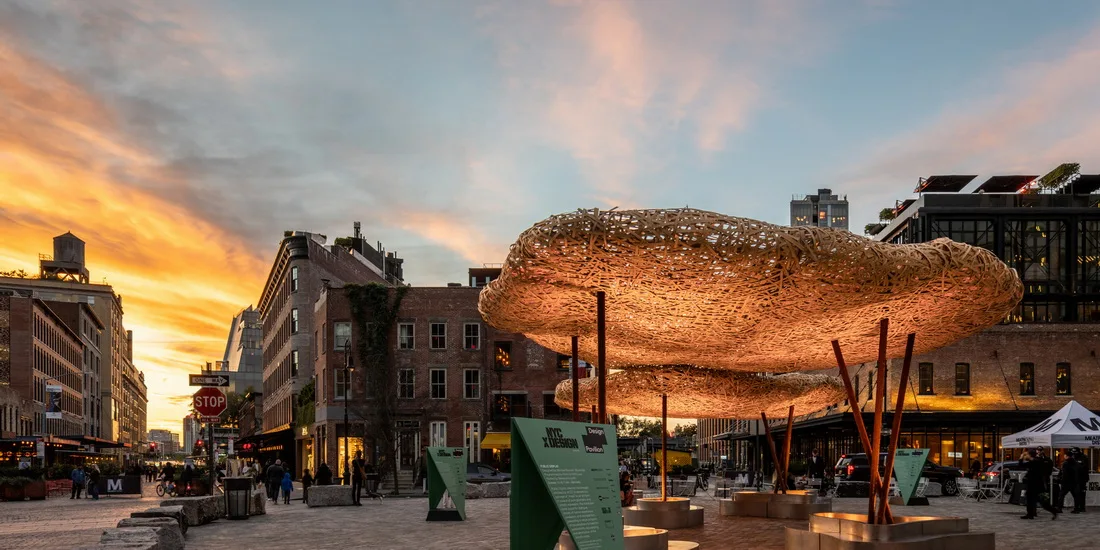
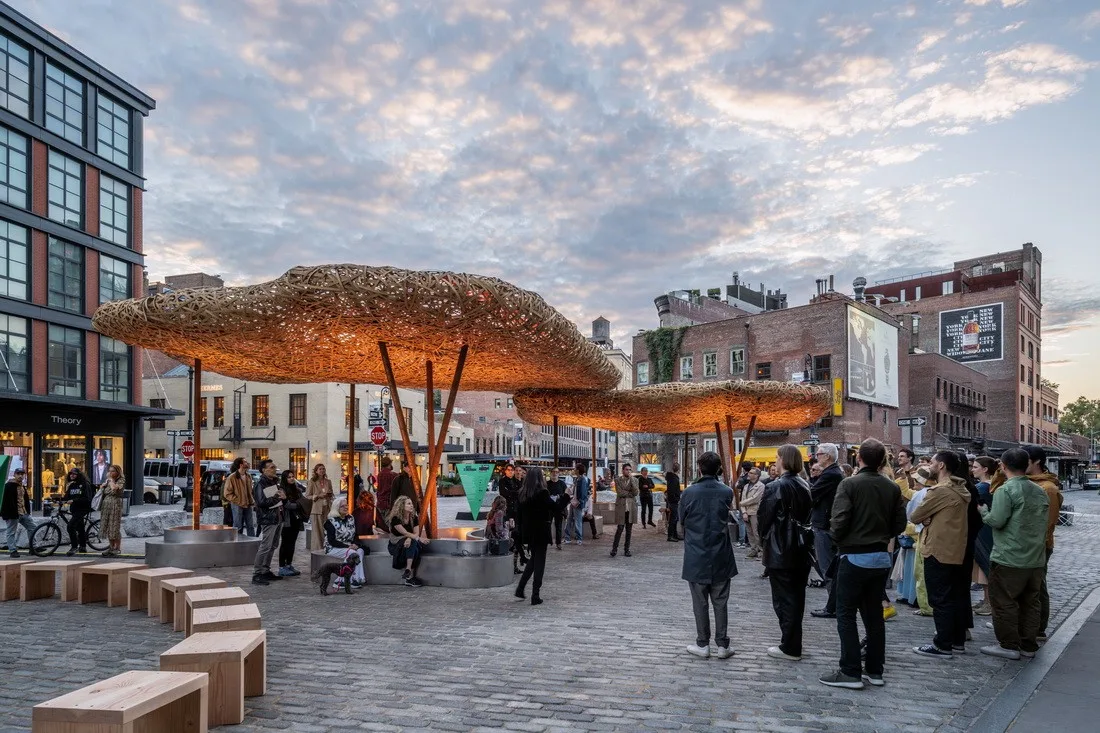
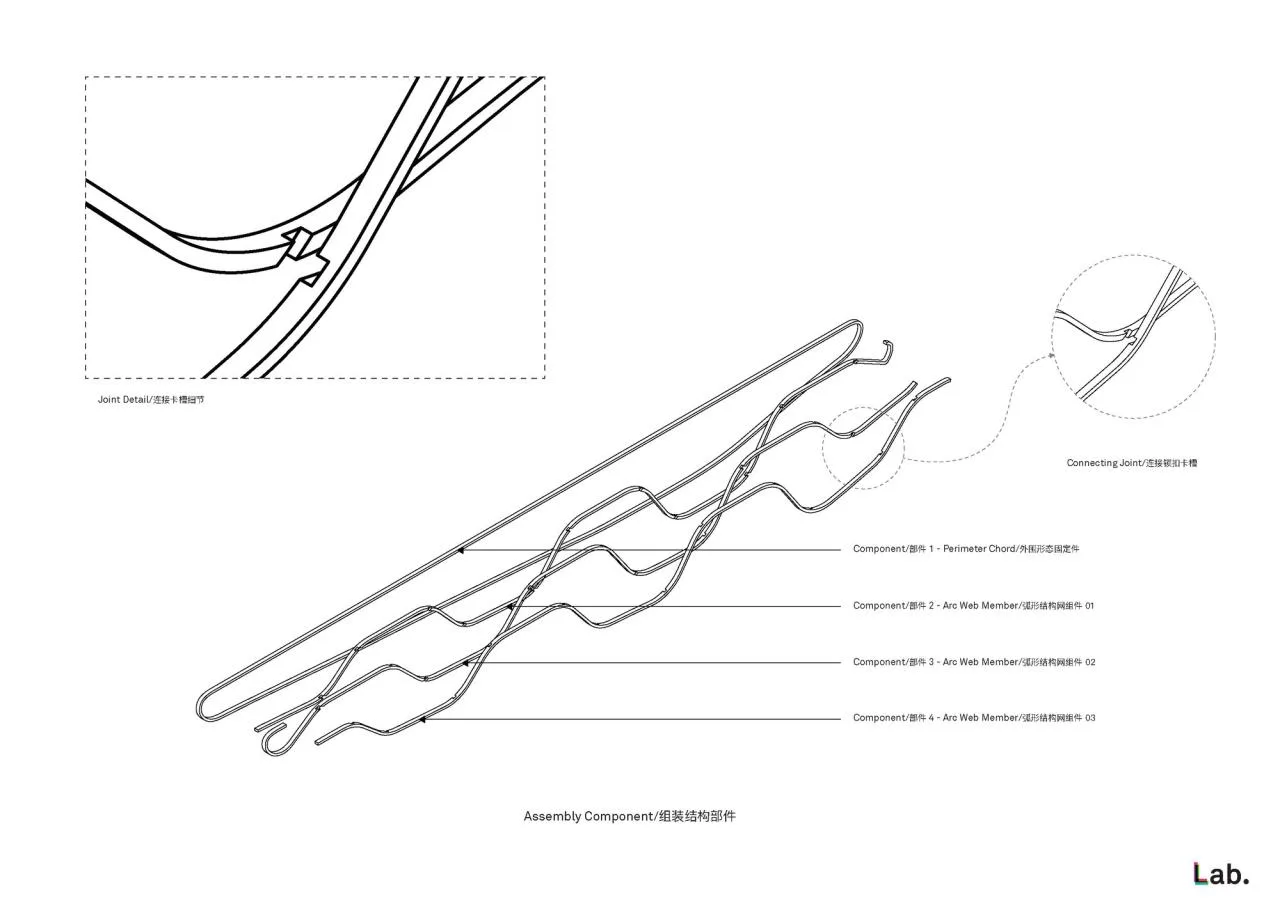
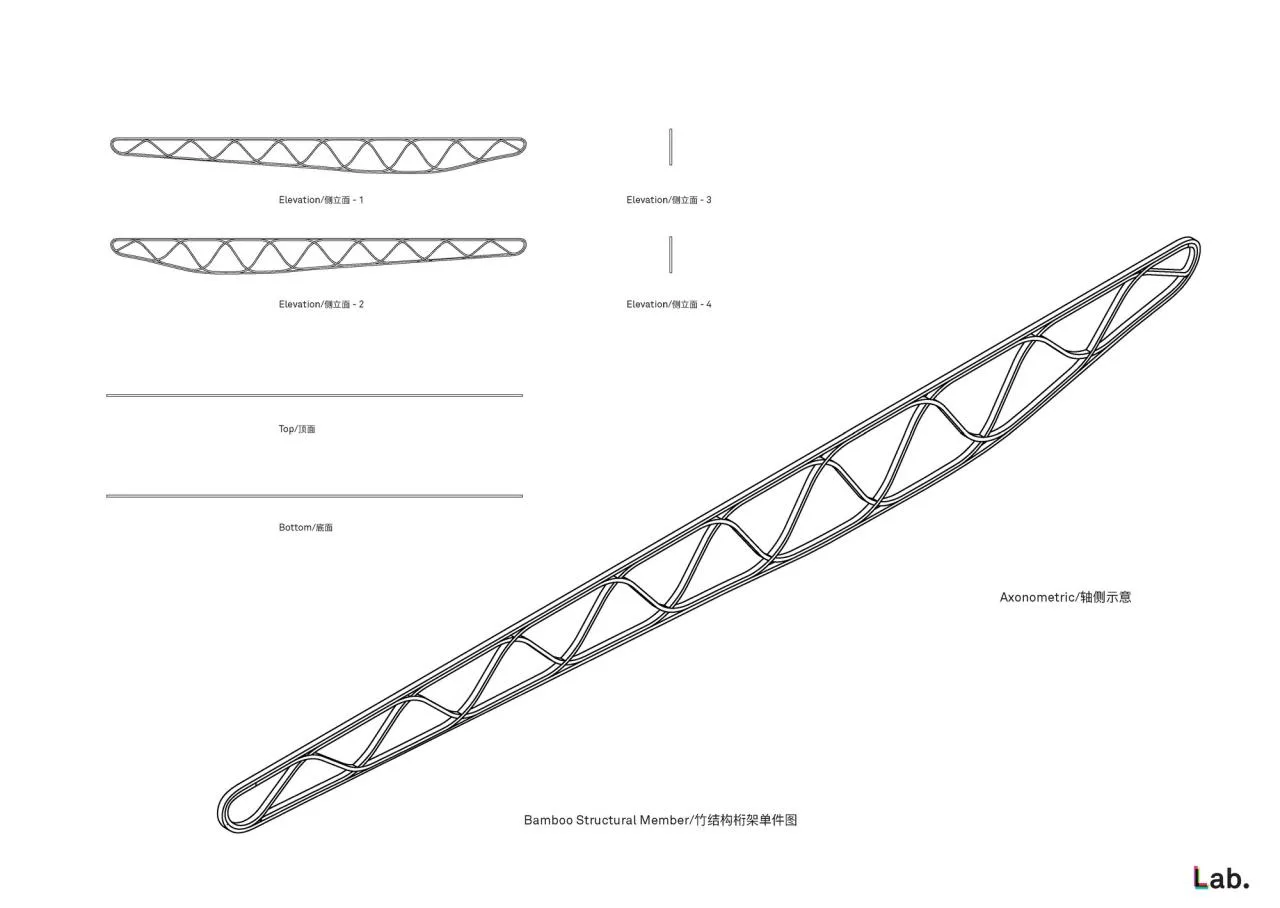
The main truss was designed to fit within the internal dimensions of a transport container for maximum coverage. The extensive use of bamboo created challenges, as the traditional triangular truss members and nodes did not align well with bamboo’s mechanical properties.
Therefore, the bamboo truss structure was reimagined by reconsidering the material properties. Traditional truss nodes and members were merged into a unified, wave-like form composed of interlocking, curved arcs fastened together. This design allows bamboo’s material properties to be preserved within the structural plane and body, while connections to the outer frame ensure surface fastening.
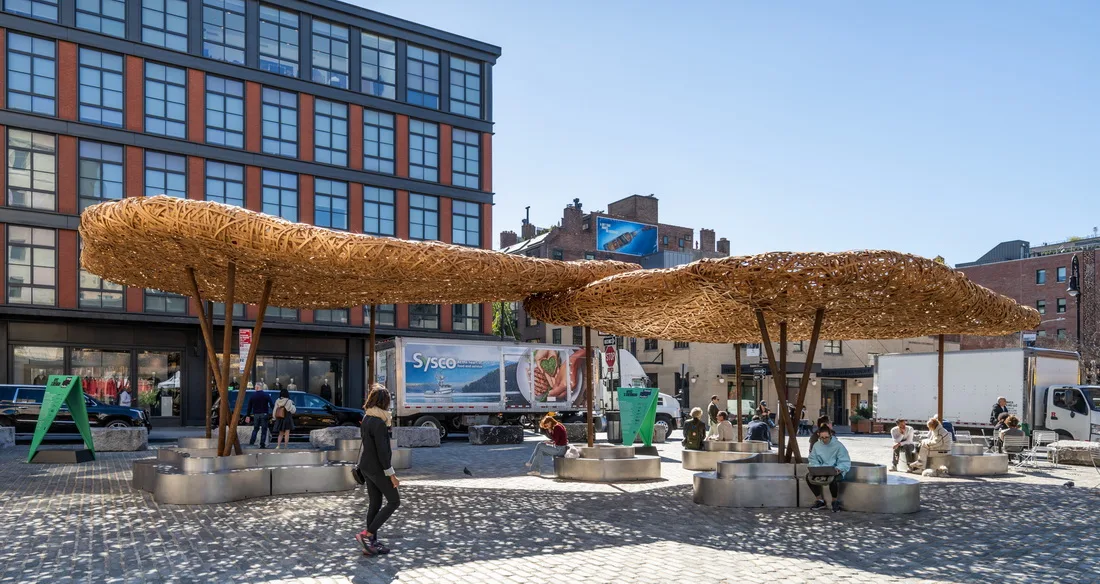
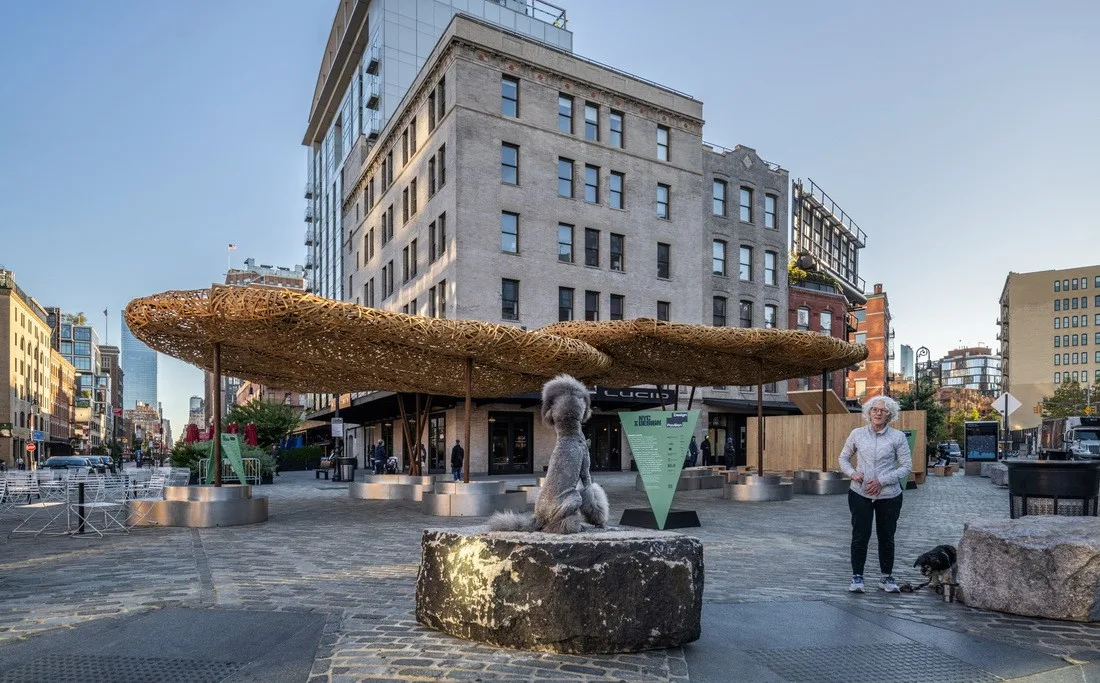
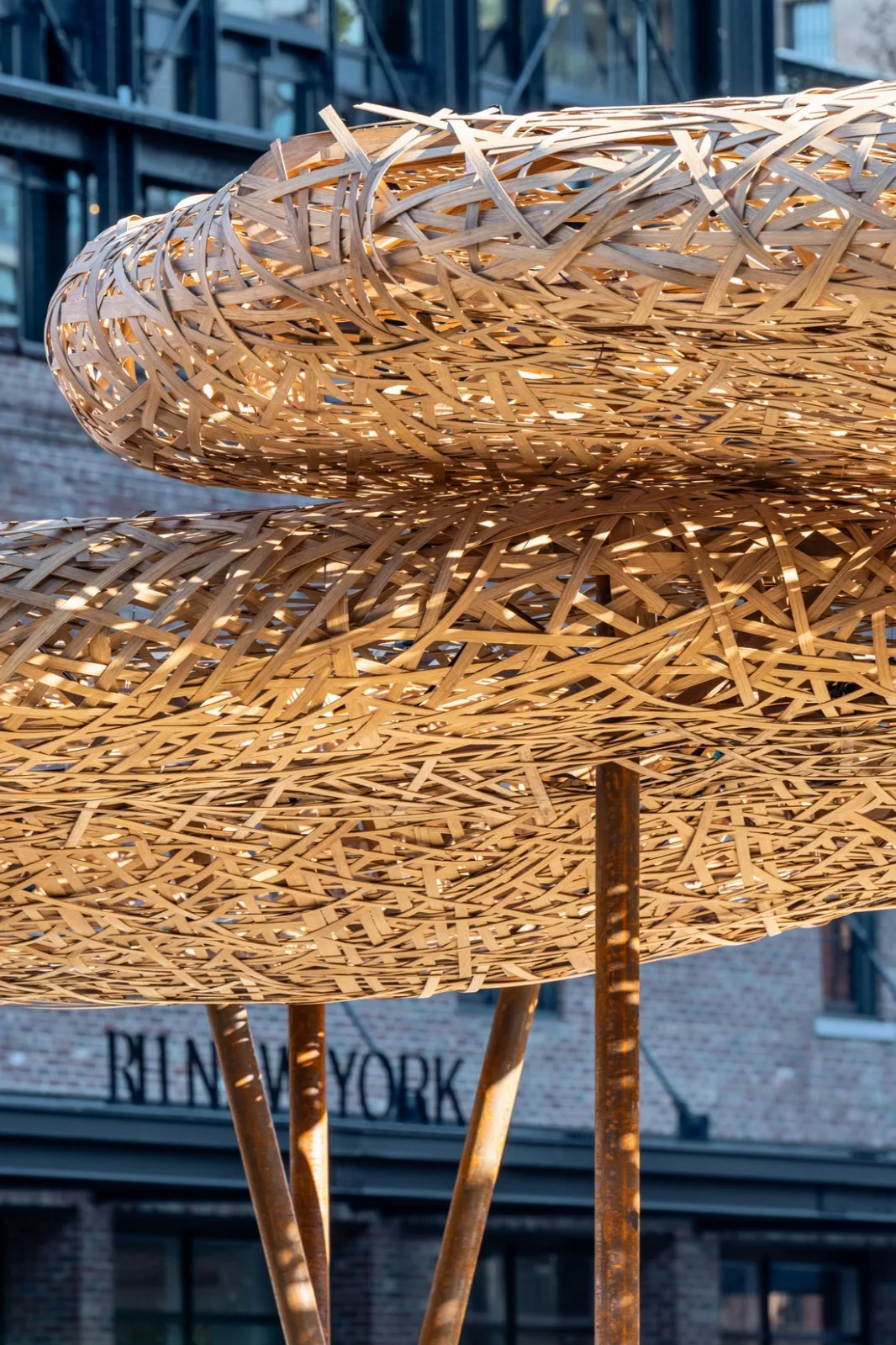
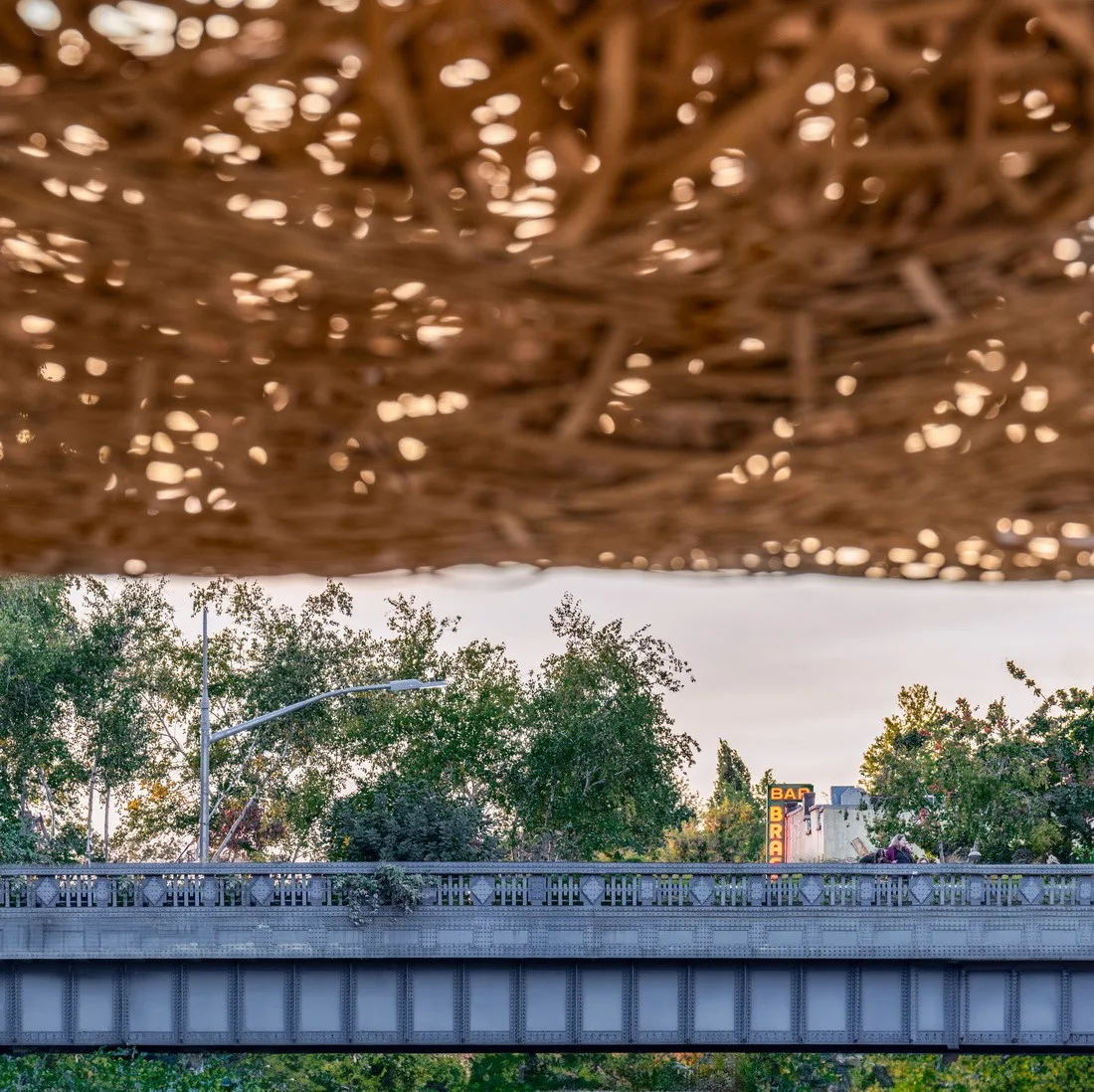
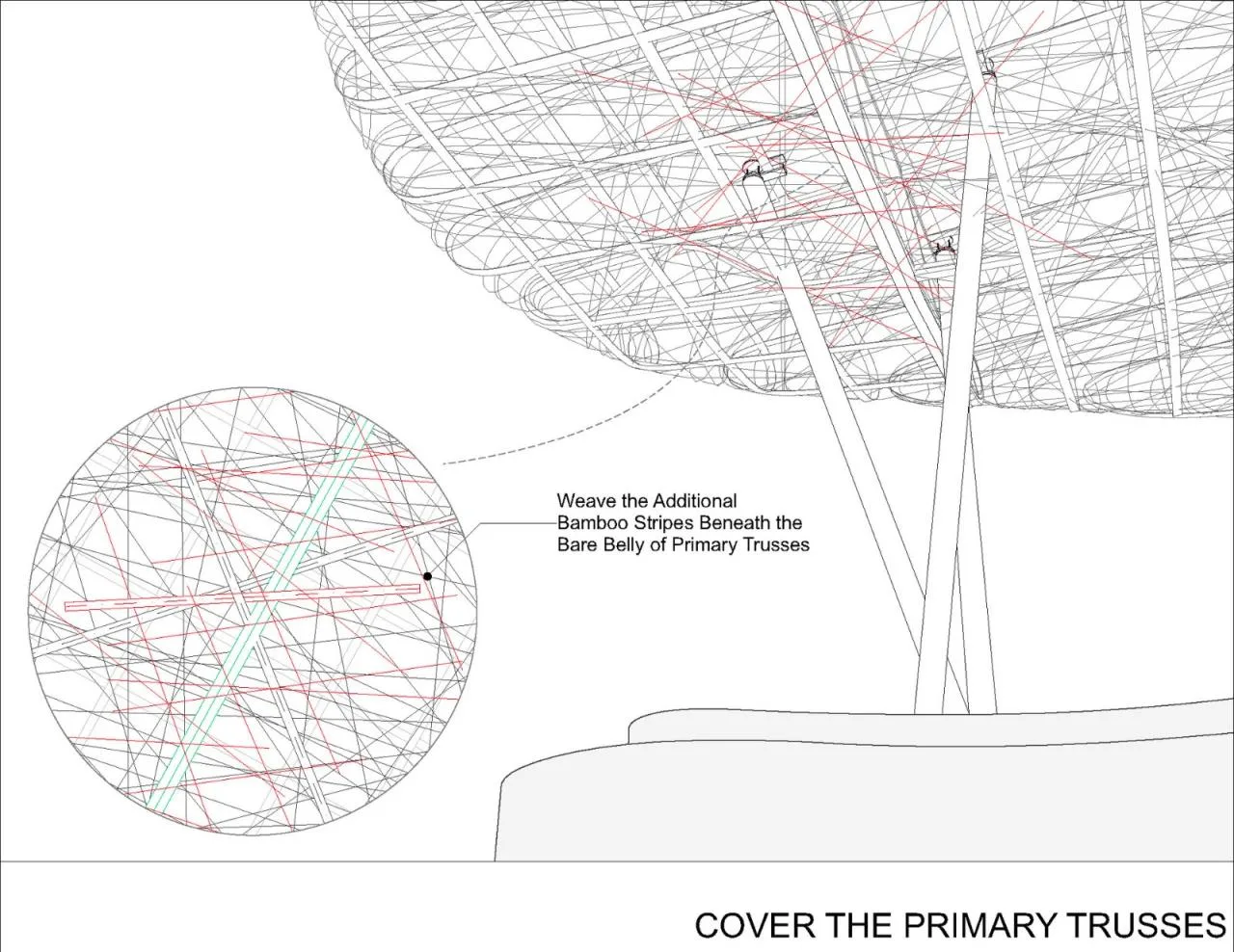
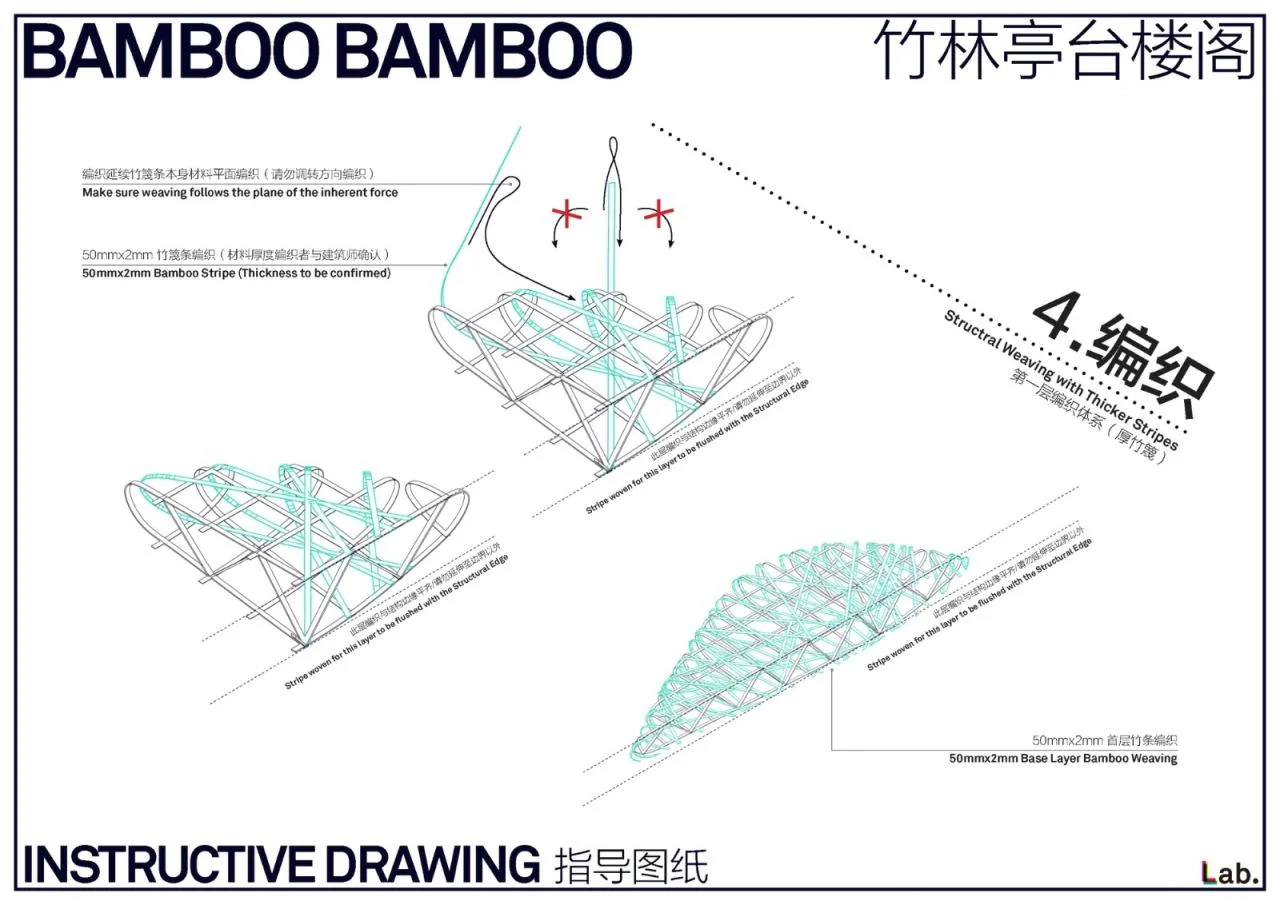
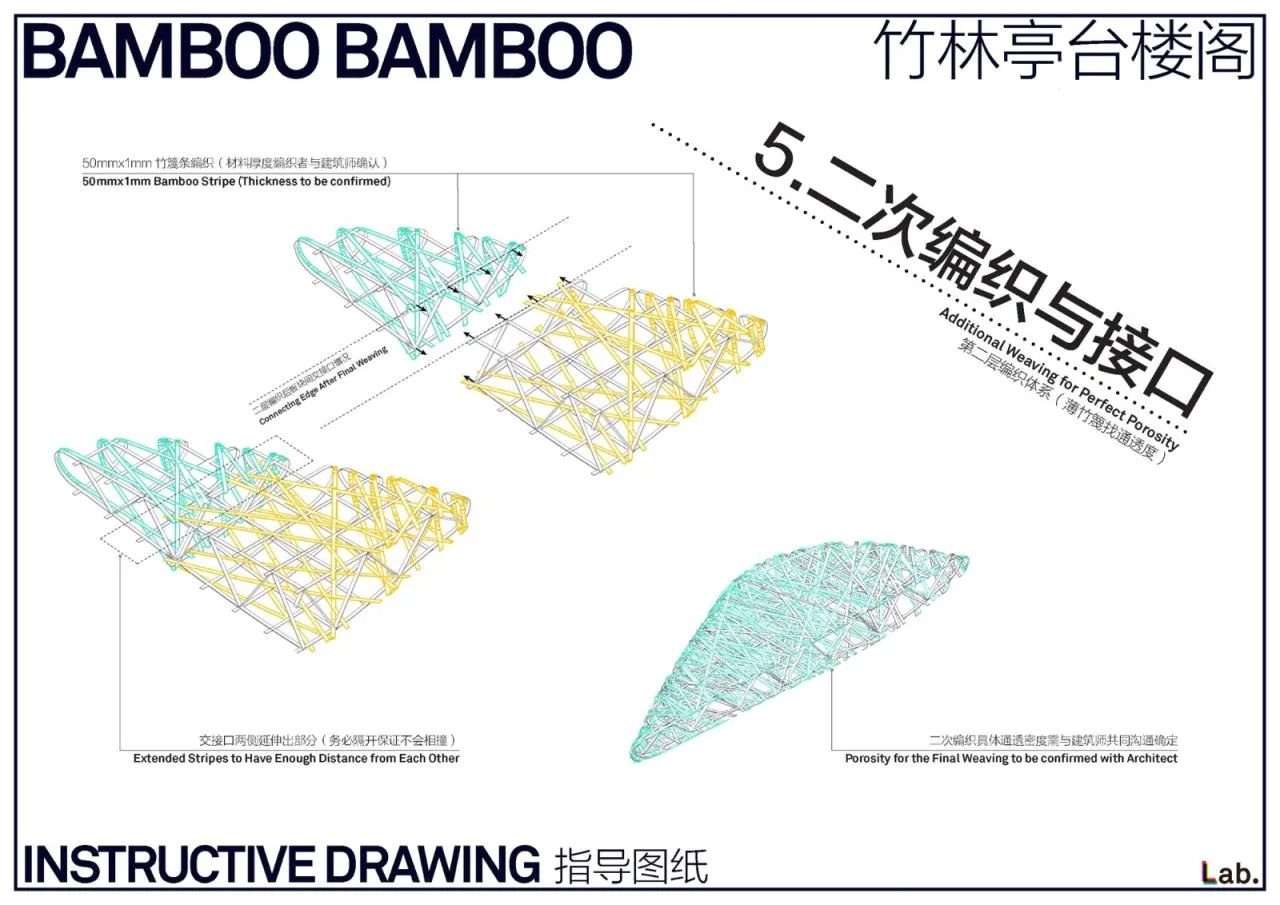
To maximize the “loss of structure” effect of Bamboo Clouds floating in the air and their shadows cast on the ground, the weaving process was executed entirely without relying on structural support. Instead, bamboo strips mutually constrain one another, forming the main structure that supports and stabilizes the Bamboo Cloud weaving.
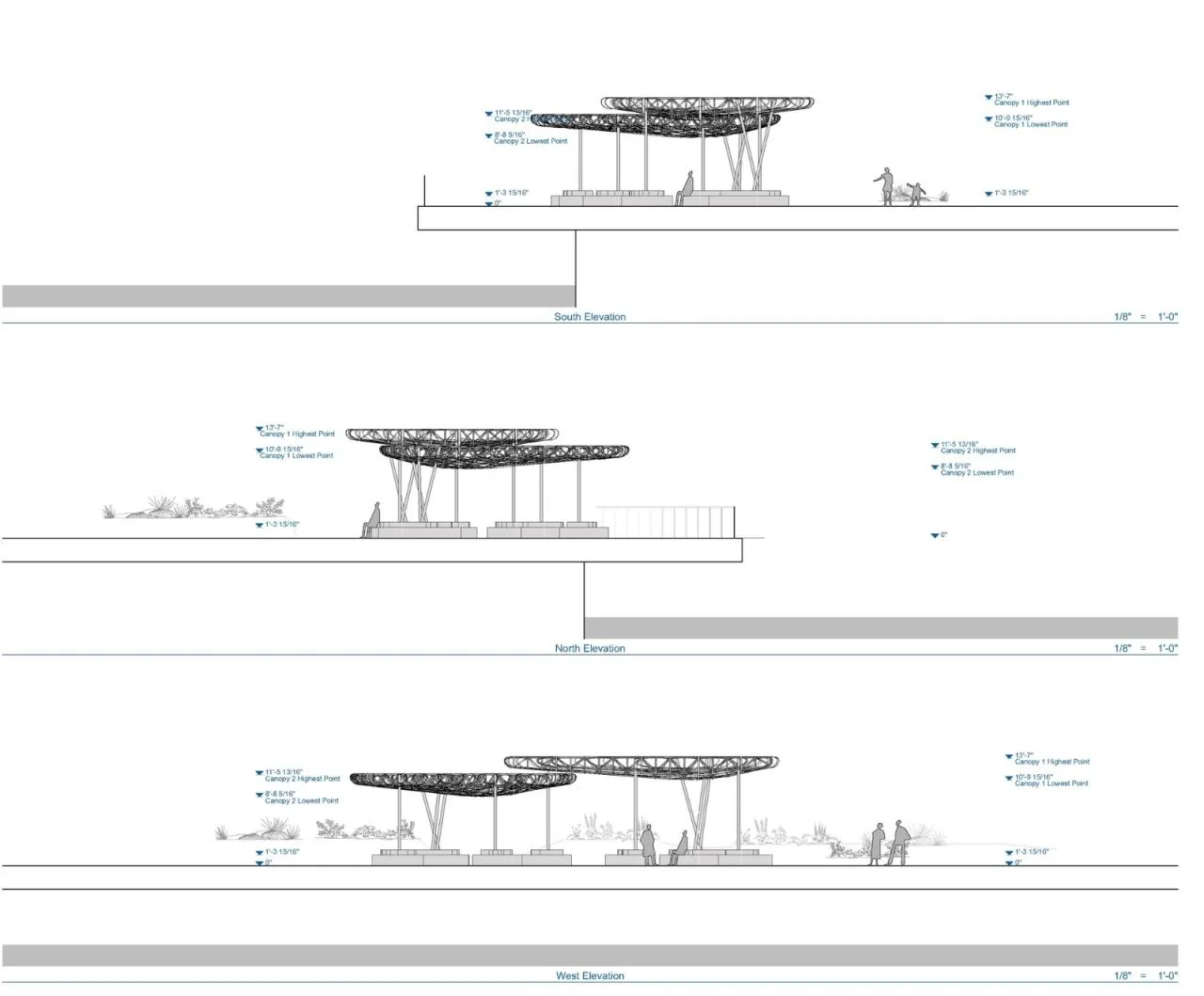
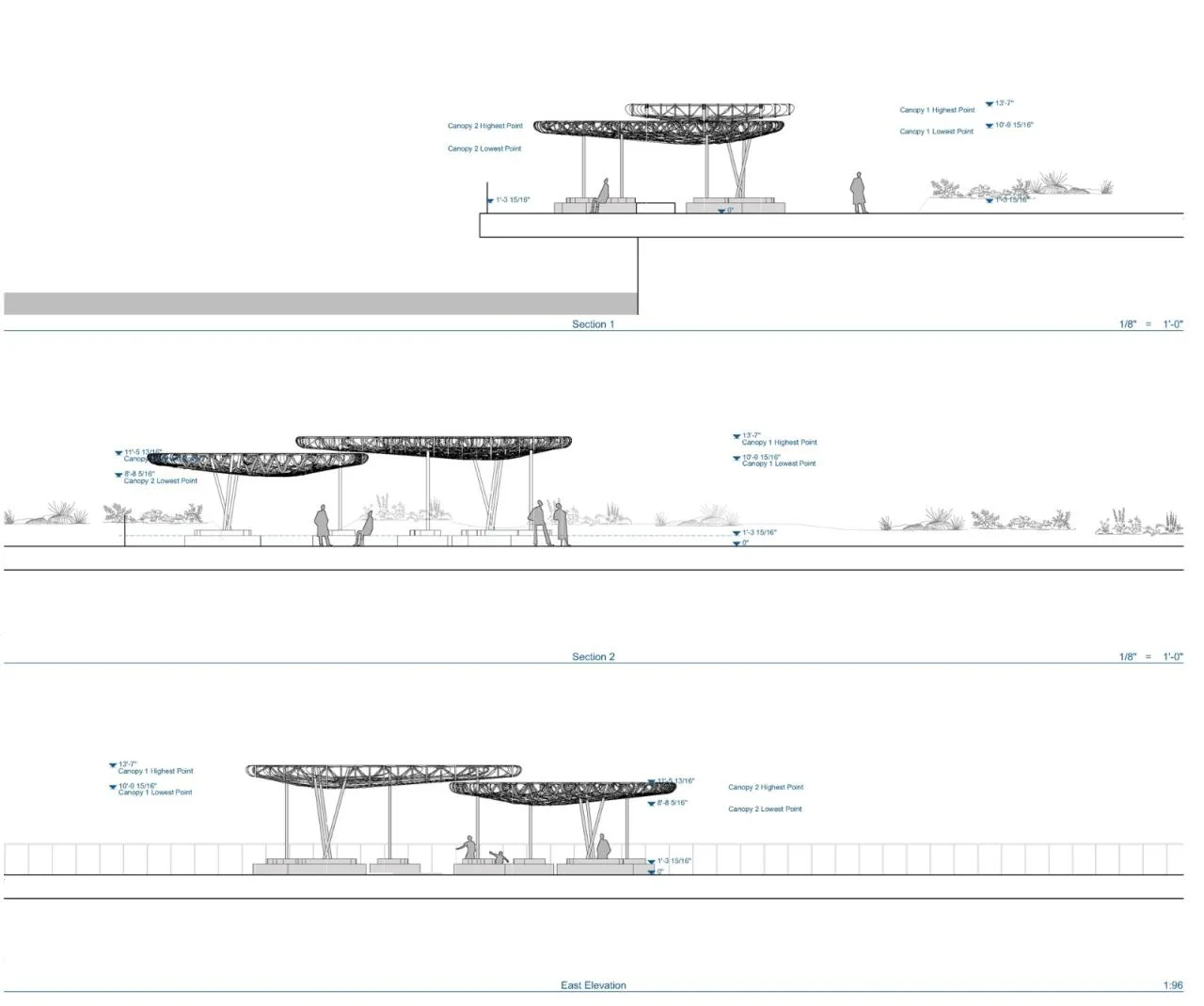
Covering approximately 120 square meters, the Bamboo Cloud space consists of 12 main trusses, 16 auxiliary trusses, and around 10,000 bamboo strips. This project seeks to bring a disruptive exploration to Gansworth Square by focusing on the relationship between bamboo’s inherent material properties and their potential applications beyond traditional boundaries.
Bamboo is primarily used at a handmade scale, with its recent promotion in sustainable building still in early stages. Despite its advantages, bamboo’s full potential remains largely unappreciated, and most applications are still superficial.
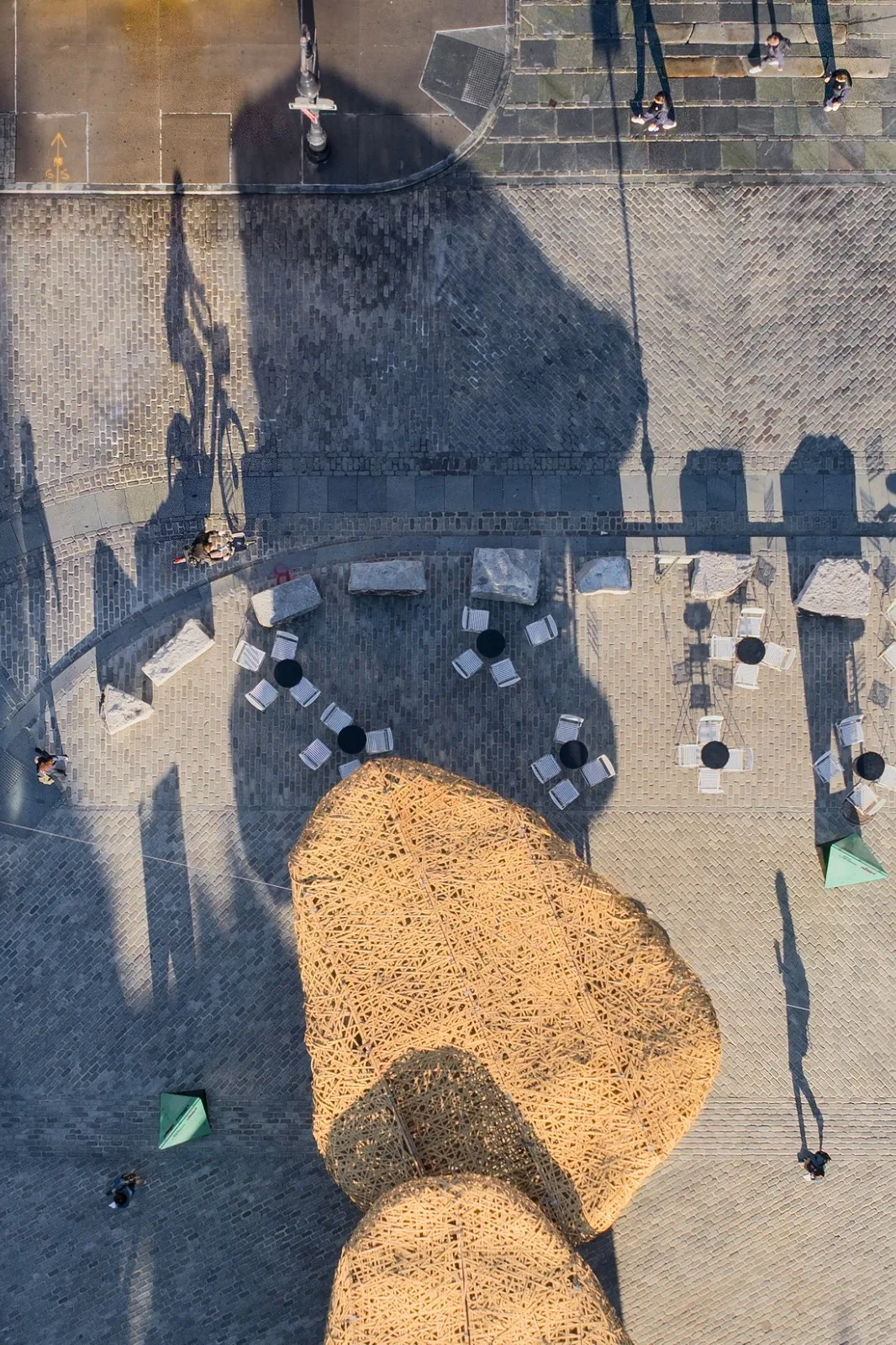
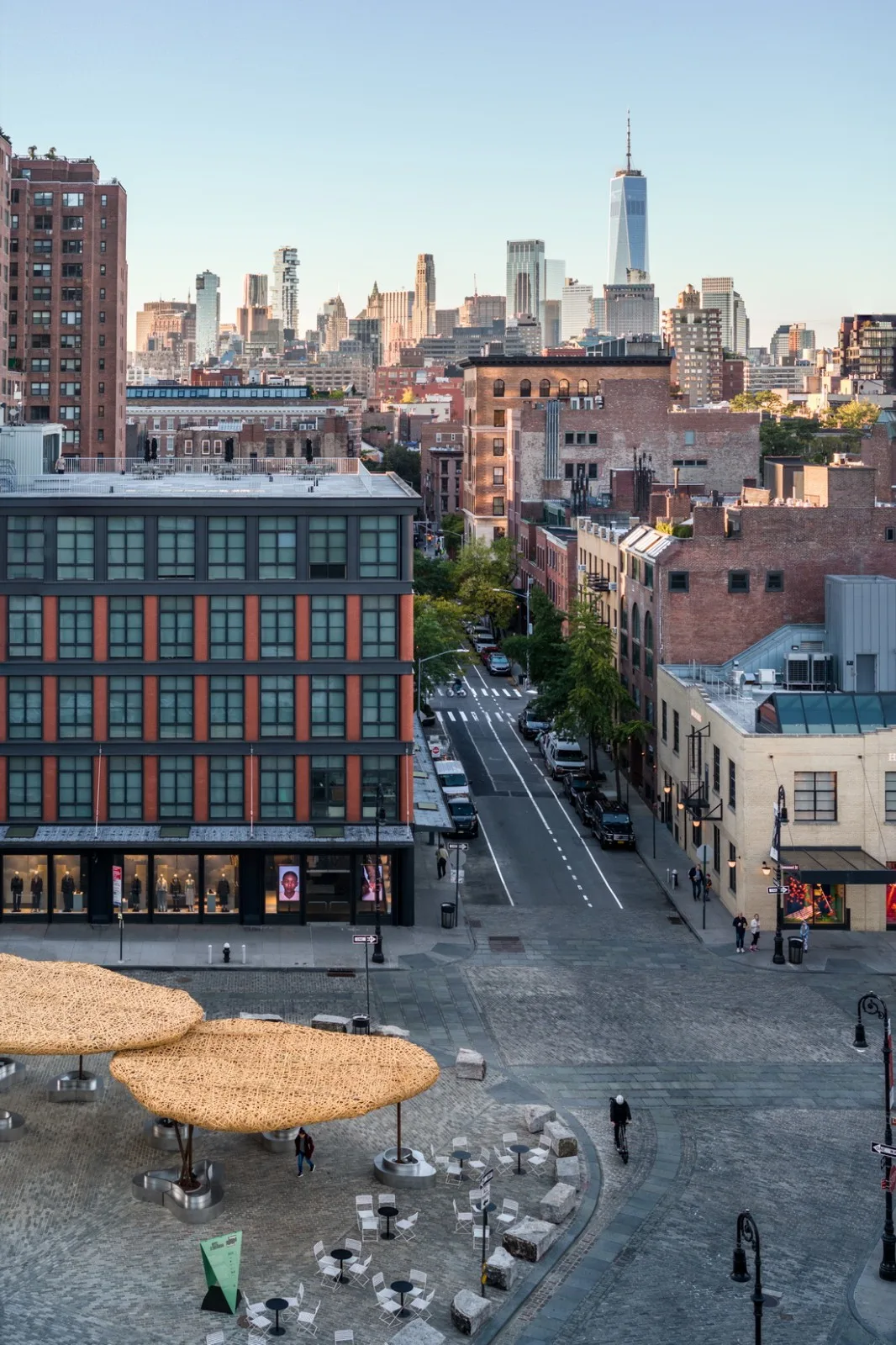
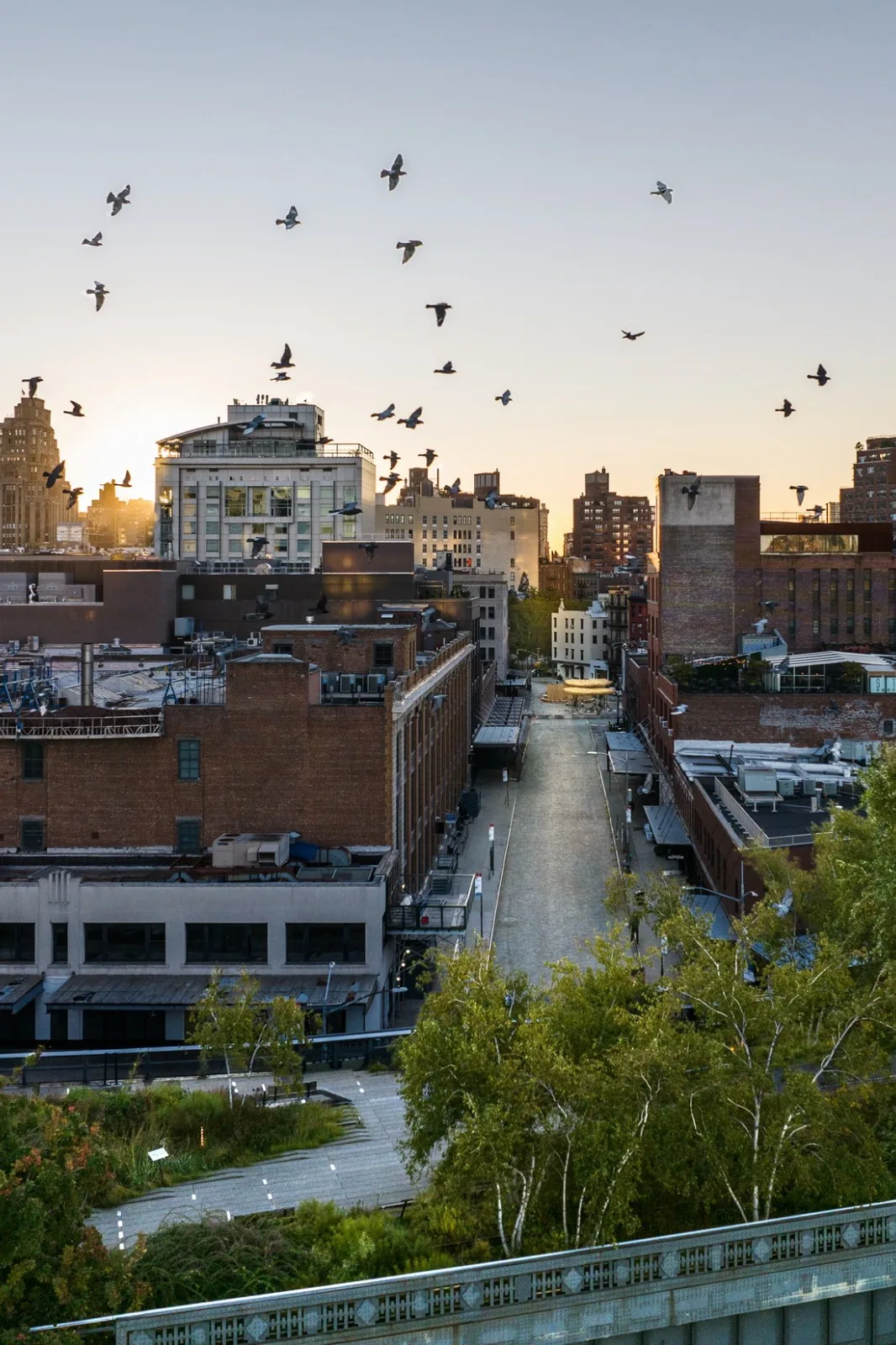
The creation of Bamboo Clouds further inspired the integration of form and structure. This process tests extreme performance to optimize efficiency, using bamboo as an organic building material far beyond its conventional applications.
During prototyping, bamboo strips under 5 millimeters thick and less than 5 centimeters wide were used to explore the limits of lightweight structures. This phase highlights bamboo’s unique material qualities, potentially broadening its building applications.
Zhuyun is a porous structure made from woven bamboo strips. Thanks to the internal elasticity of the material, it naturally assumes and stabilizes into a volumetric form, making it a promising concept for architectural scale. Zhuyun embodies the inherent strength of bamboo as form itself, enabling its development within architecture and culture.
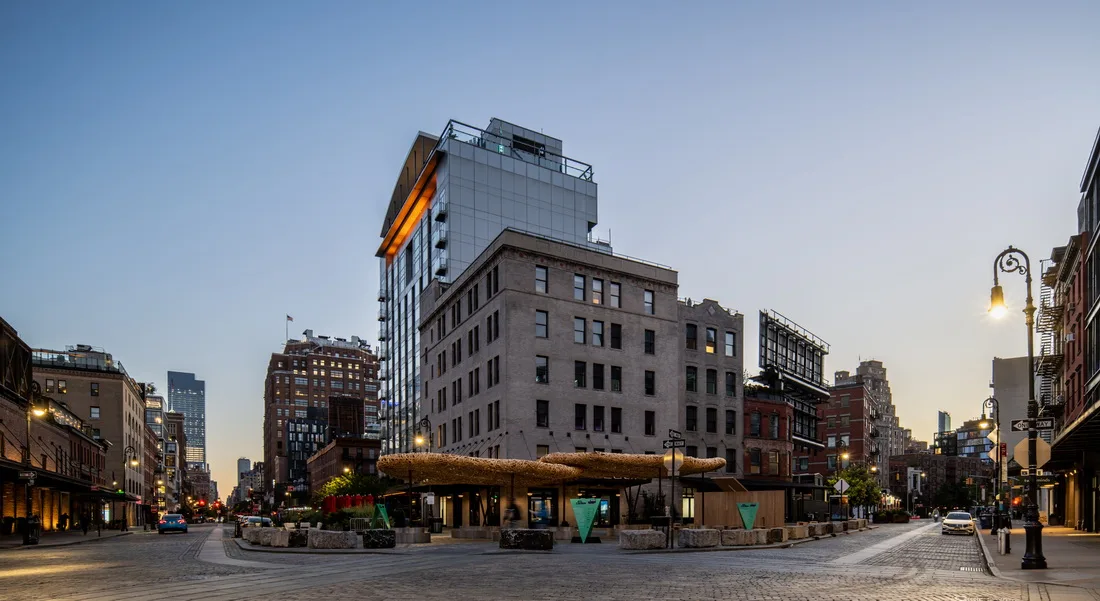
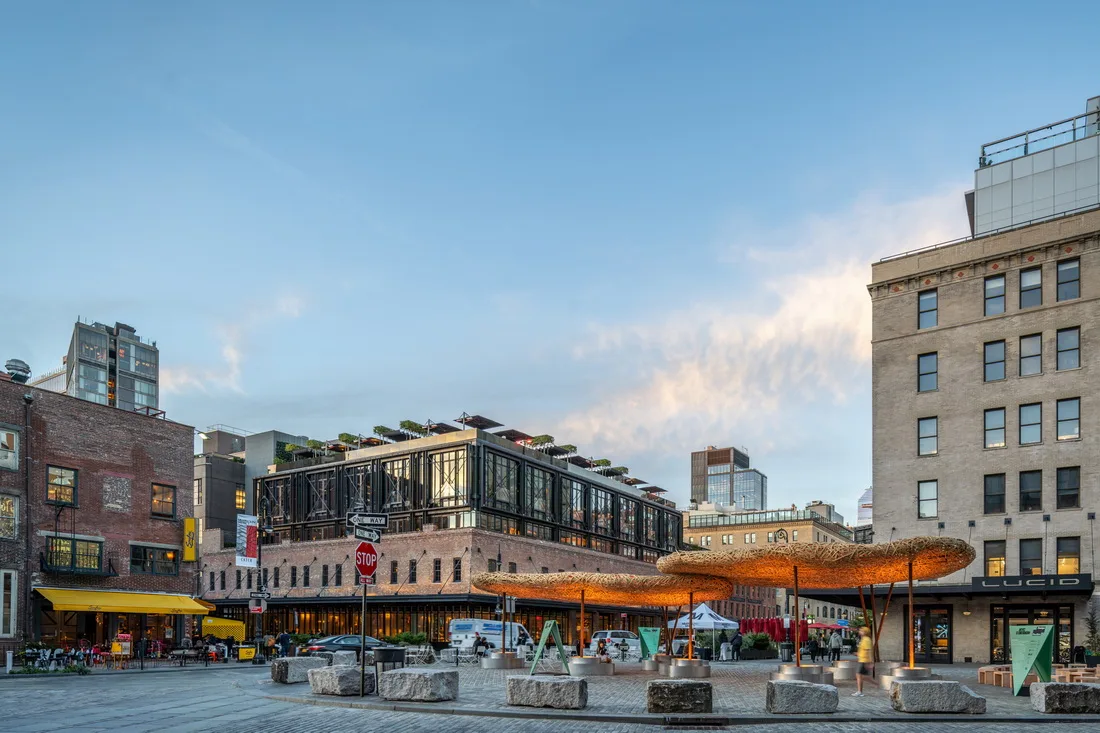
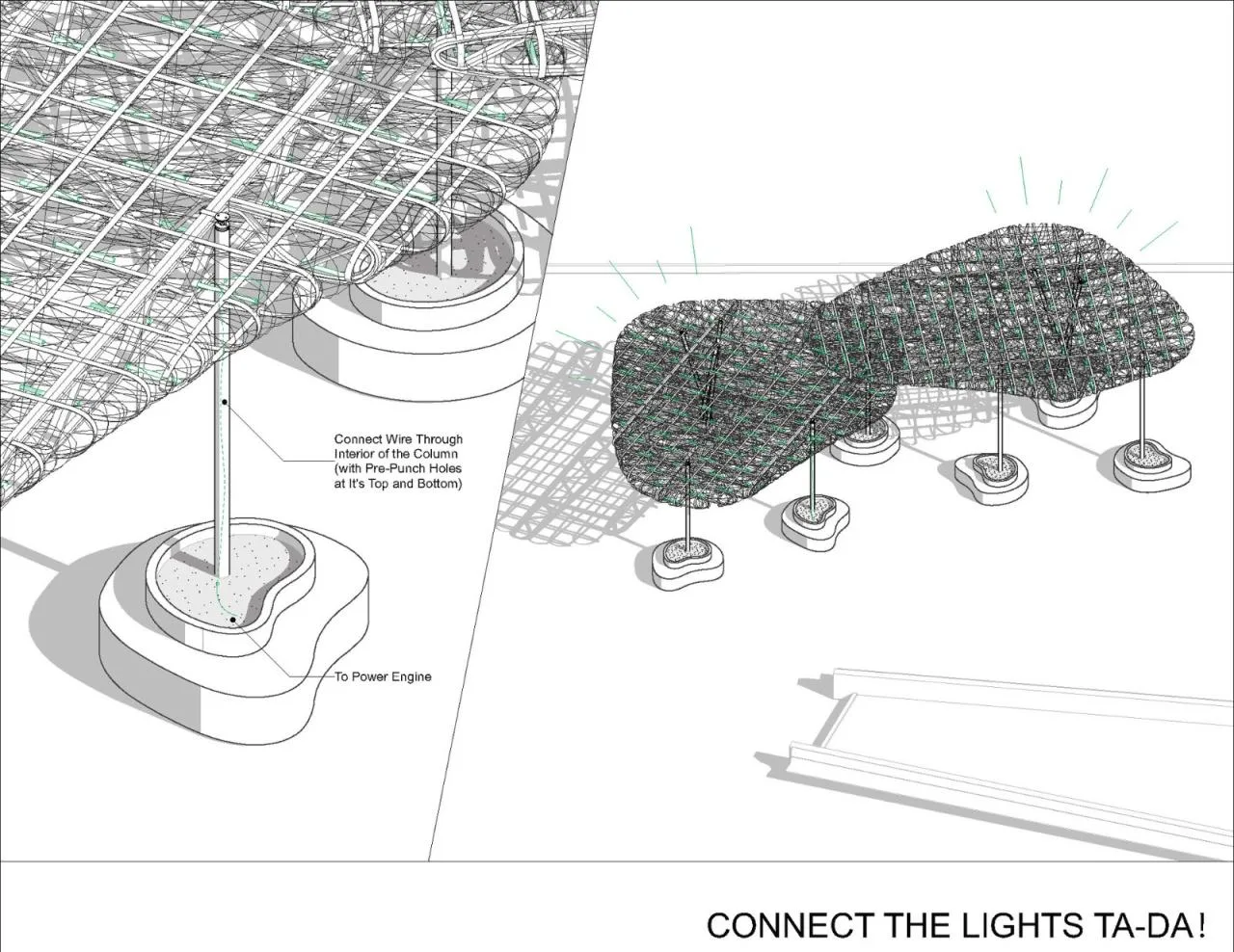
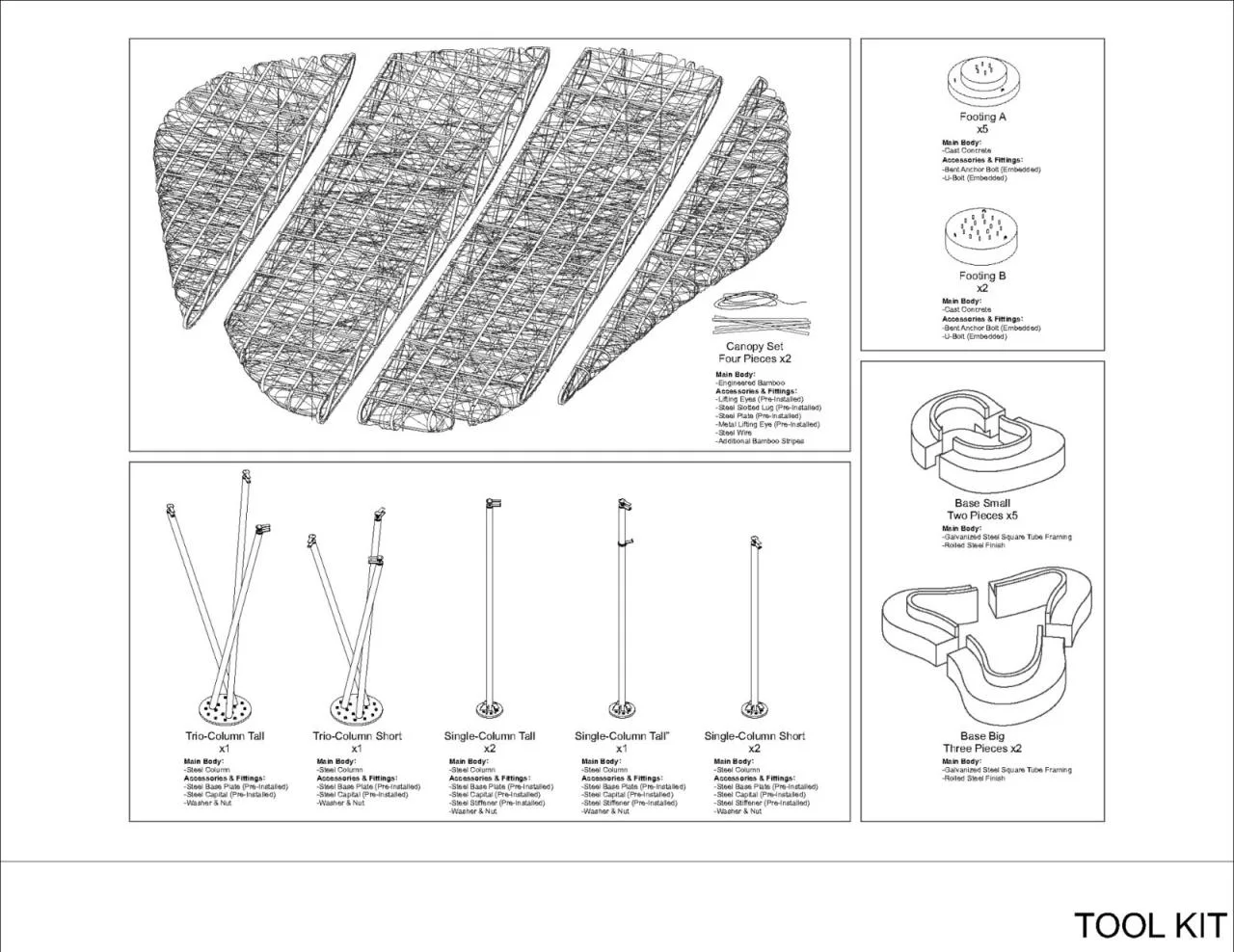
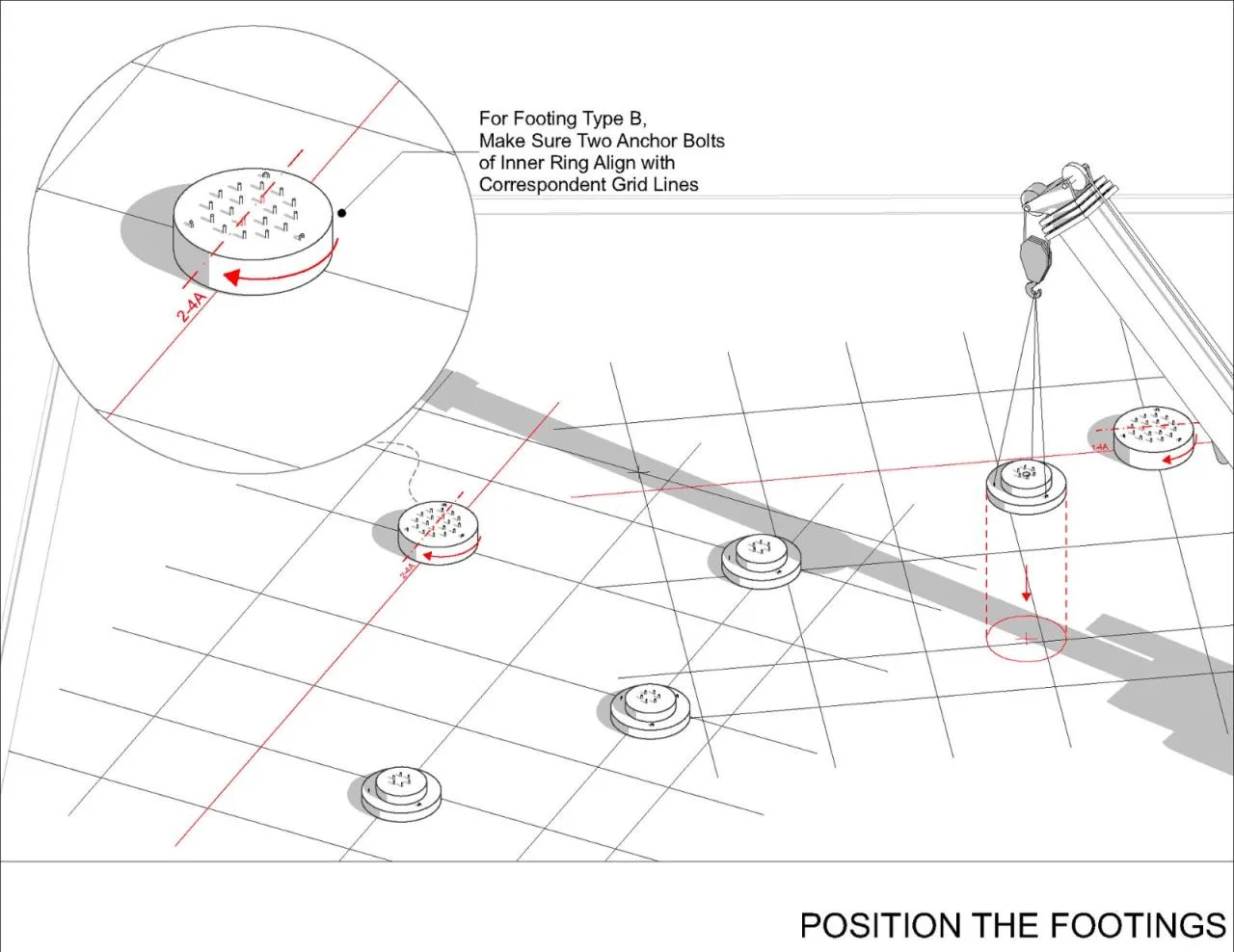
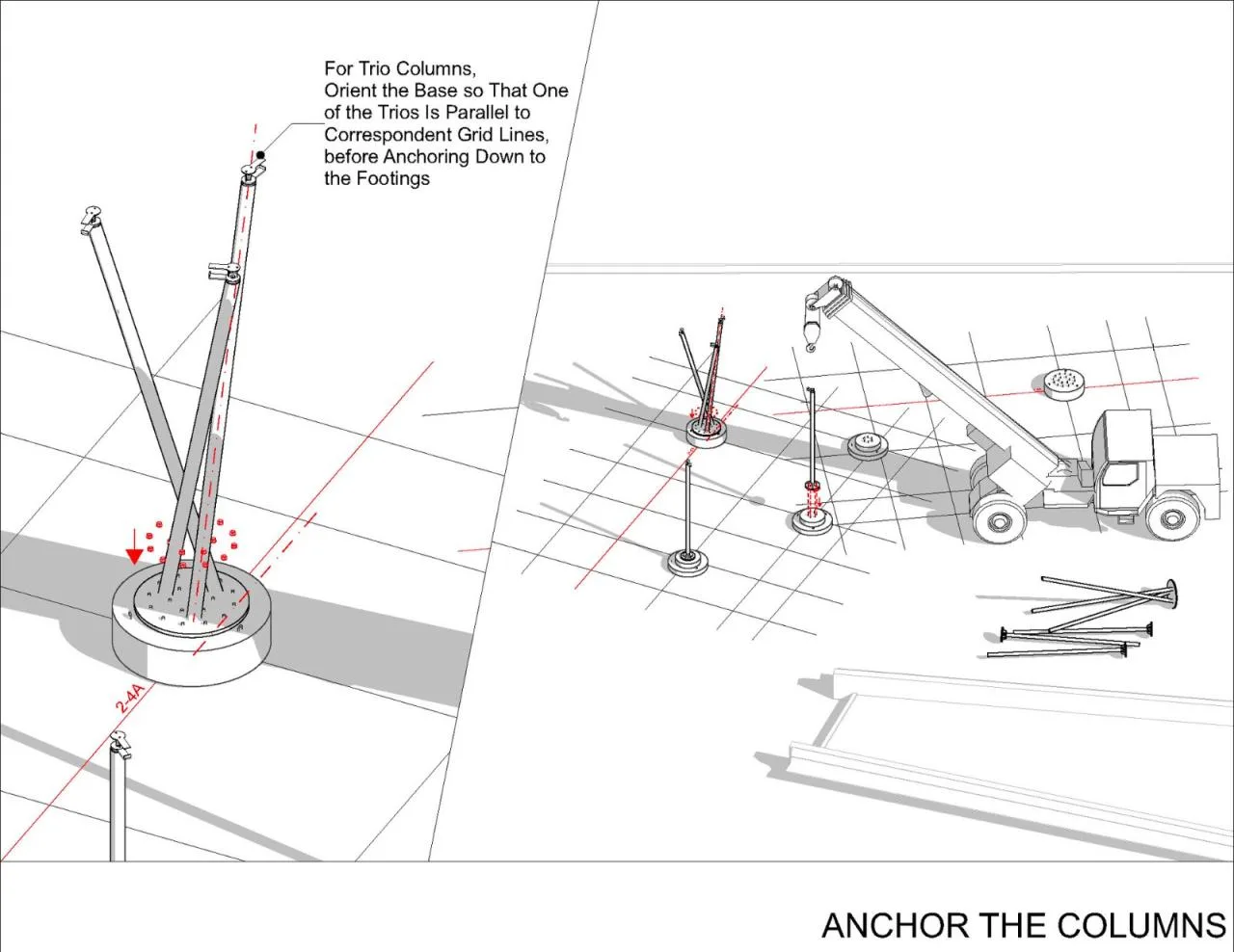
Project Drawings
Project Information
Architect: Narrative Architecture
Area: 116 m²
Project Year: 2023
Photographer: Chen Xi + Jin Zixiong
Architectural Design: Narrative Architecture
Architectural Design Team: Liu Hanxiao, Luis Ricardo, Hu Lexian, Chen Fei, Yan Yujun, Liu Lingling, Mi Lihua, Zhang Hao, Zeng Qiwei, Xie Suian
Structural Design Team: Luyang Luan Cong Structure
Engineering Bamboo Consultants: Li Hongtao, Luo Haiyan – Yizhu Fan Gong
Metal Work Consultants: Zeng Xiaohua, Chen Gege, Liu Beihu, Liu Peiyu
Bamboo Weaving Craftsmen: Wang Ping, Wang Guoxiang, Long Chunliang, Mu Hongchuan, Liu Qiongyao, Zhou Haifeng
Lighting Design Team: Hervé Descottes, Carlos Garcia, Esteban Varas, Jacinda Ross, Diksha Wahi Studio Dubuisson
Project Duration: January 2022 to October 2023
Special Thanks: Zhang Xilong, Liu Puqiang
Lighting Design: L’Observatoire International
Structural Design: Luanyu Structure
Location: New York, USA












Must log in before commenting!
Sign Up