
Project Origin
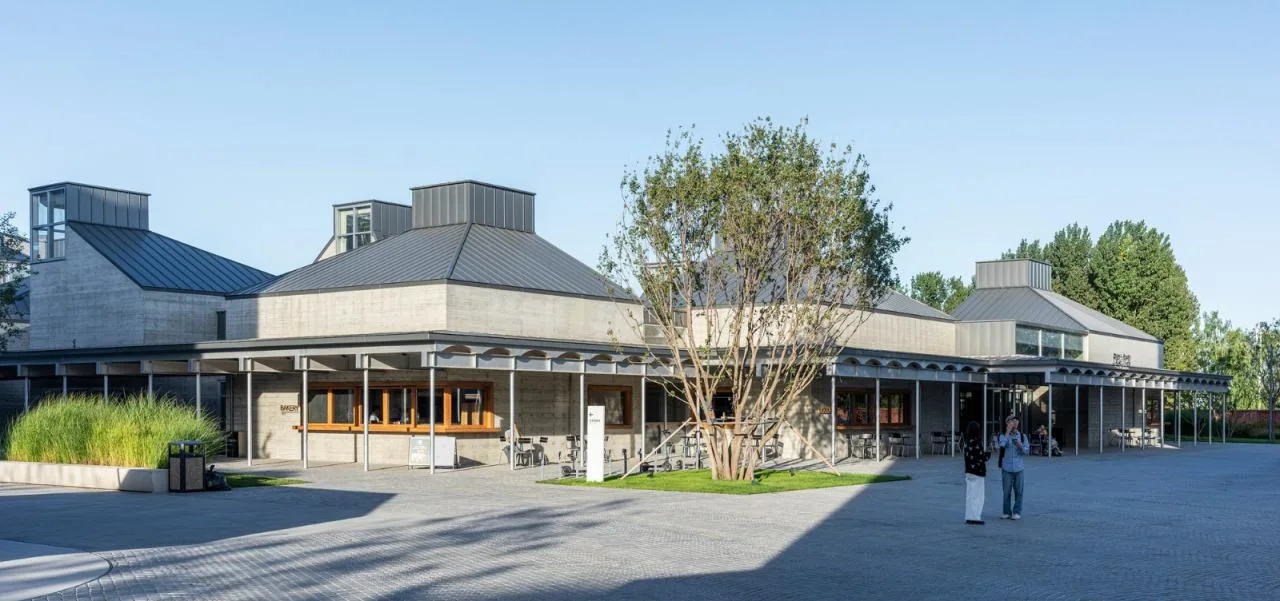
Located approximately 1 kilometer north of Beidaihe Gold Coast Park, south of Puhe Bridge, and adjacent to the mouth of the Dapu River at Bohai Bay, the Anaya North Bank Park is a coastal resort centered around yacht culture and creativity. The North Bank Market sits on the northern edge of the public cluster in the southern district. Alongside the North Bank Auditorium, the File Apartment in Friendship Bay, and the Friendship Home Club Hotel, it forms the park’s South Square.
To the east, the market is bordered by a green belt adjacent to the city road; to the west and north, it is surrounded by multi-story apartments. The northeast corner connects to a commercial strip that leads to the waterfront area of North Bank Park. Anaya’s self-operated cafeteria and supermarket offer affordable meals, fresh food, and daily necessities for the park.
North Bank Market is the first comprehensive building to combine a cafeteria and supermarket, also serving as an outdoor market venue on weekends and holidays, evoking the lively atmosphere of vacation markets for communities like Anaya.
Miniature City Market: Indoor Shops and Public Squares
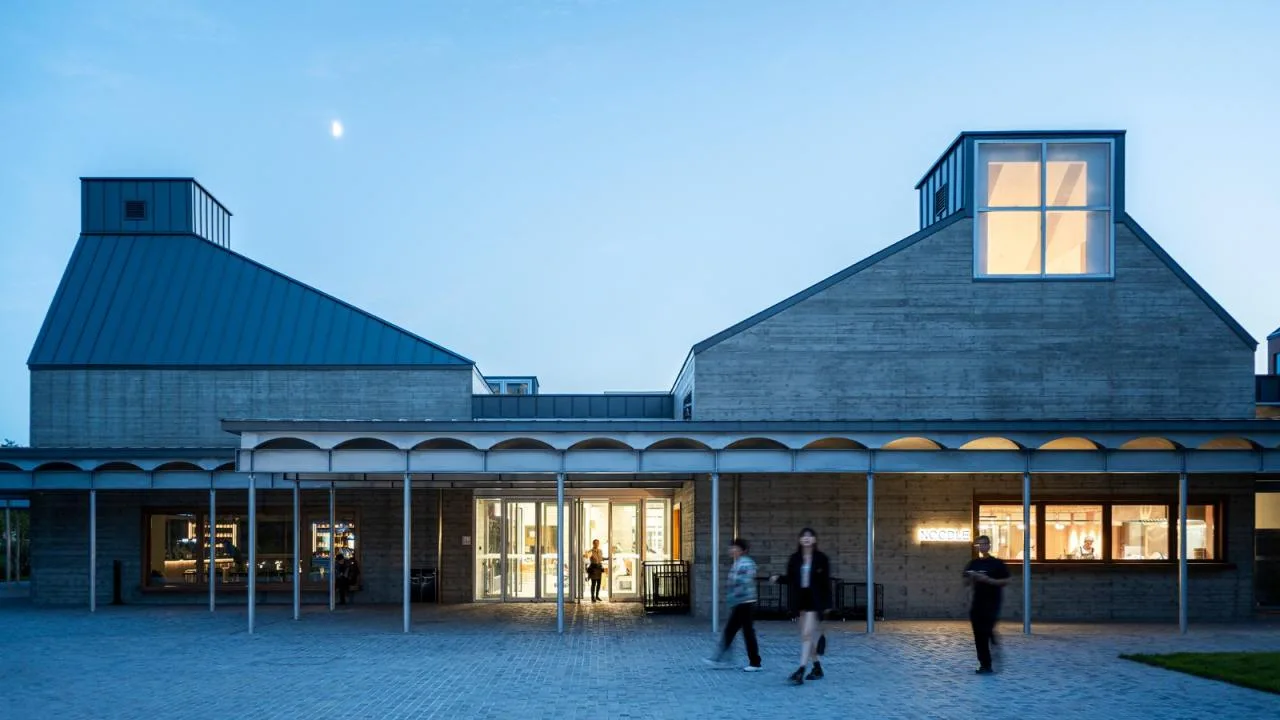
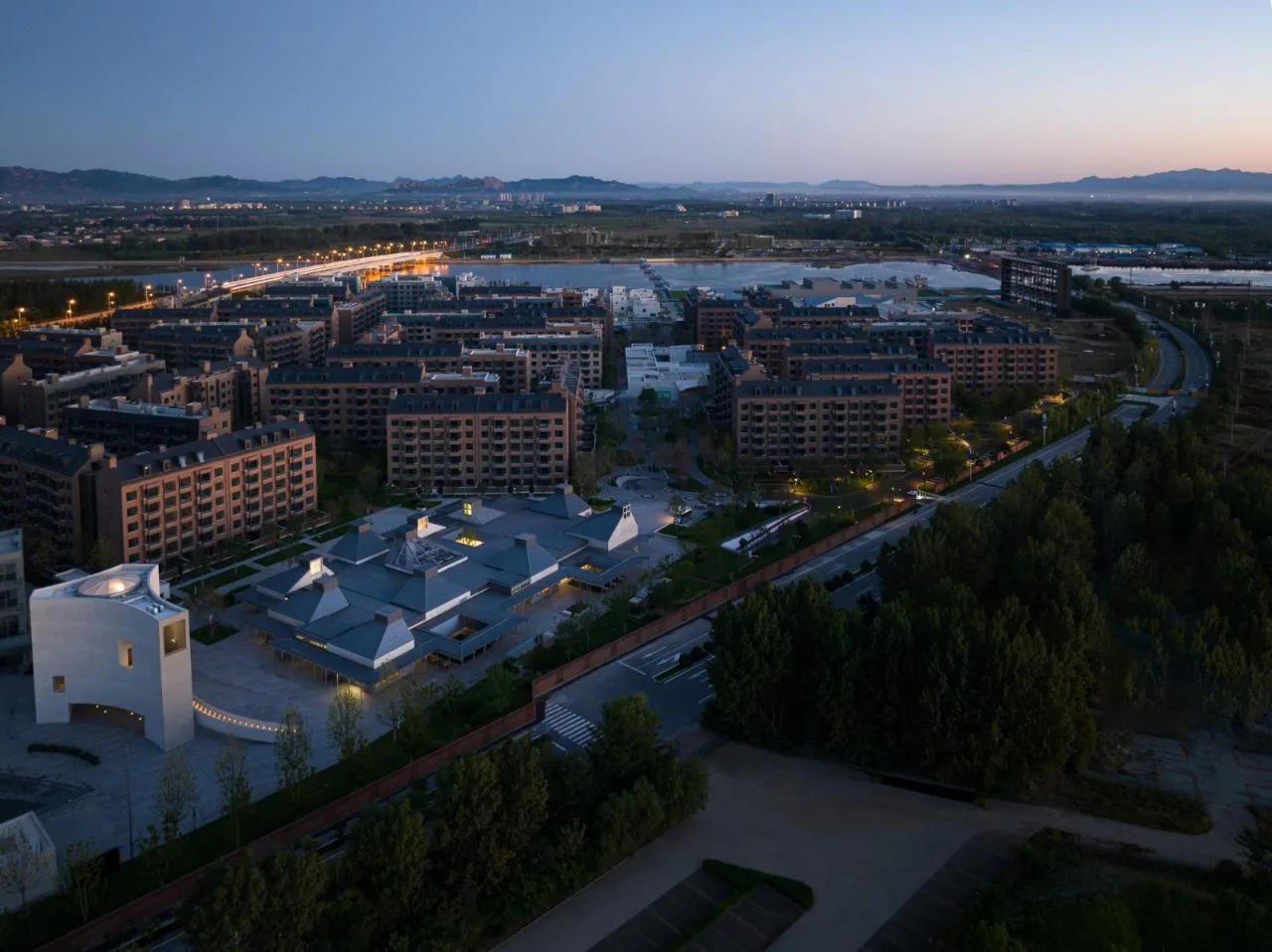
To preserve sea views and prevent visual interference for residents in the western apartment complex, the market is designed as a single-story flat building without tall structures. Conceptualized as a miniature urban market, it features an indoor arrangement of shops and squares.
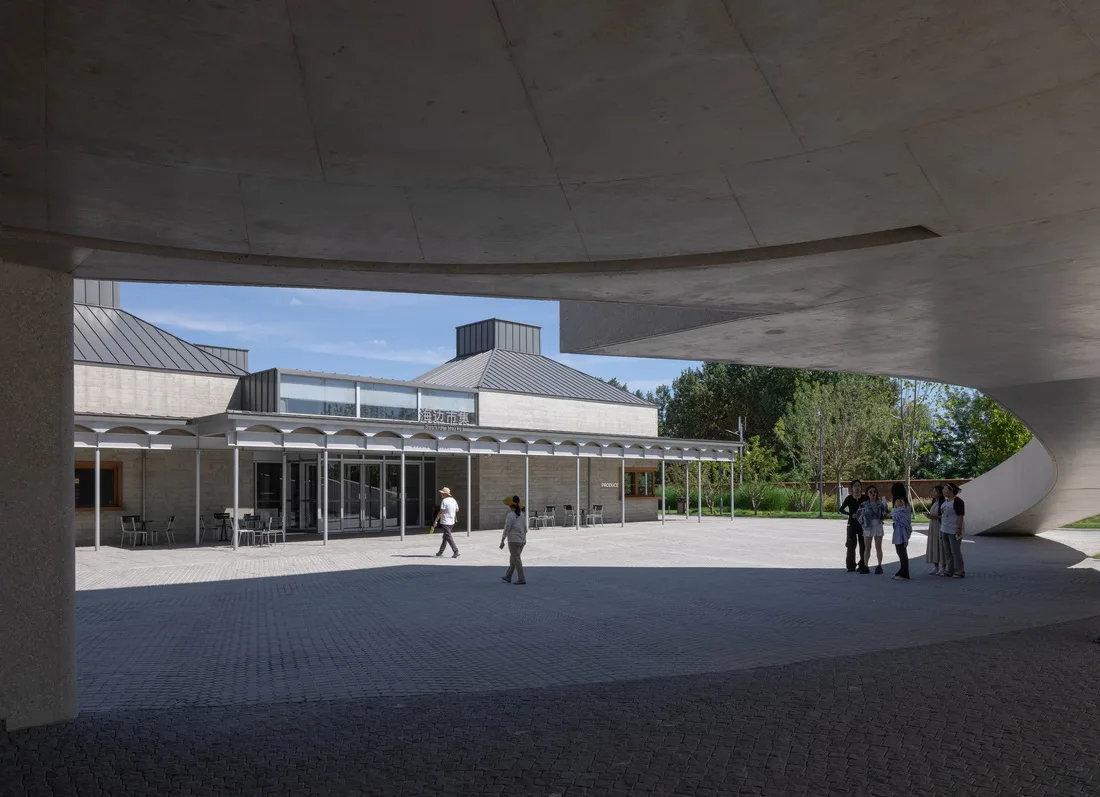
A series of small, slightly varied shops are arranged irregularly on the site, serving as unique stalls for a variety of market activities. The varying gaps between shops form short alleys that lead to a central square, enclosed by shops on the north and south sides, dedicated to the supermarket and cafeteria public areas. These alleys and squares are covered by a flat roof lower than the shops, while the cafeteria area features a green courtyard nested among inner squares and streets.
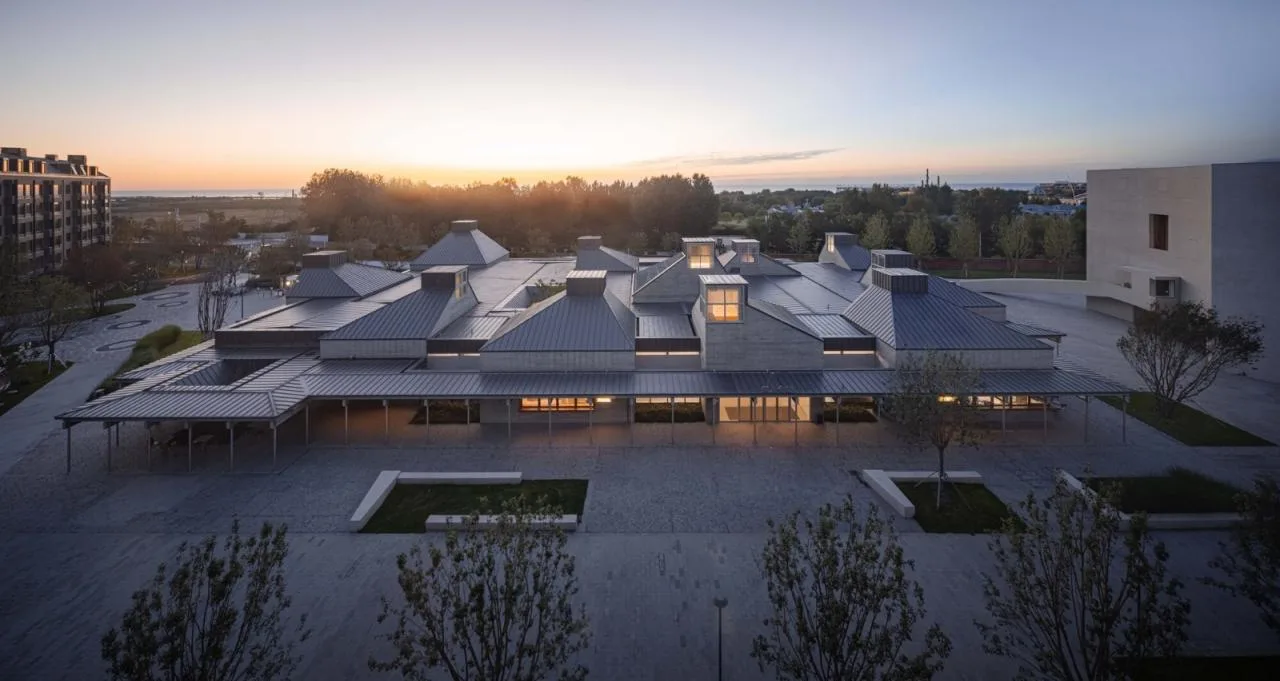
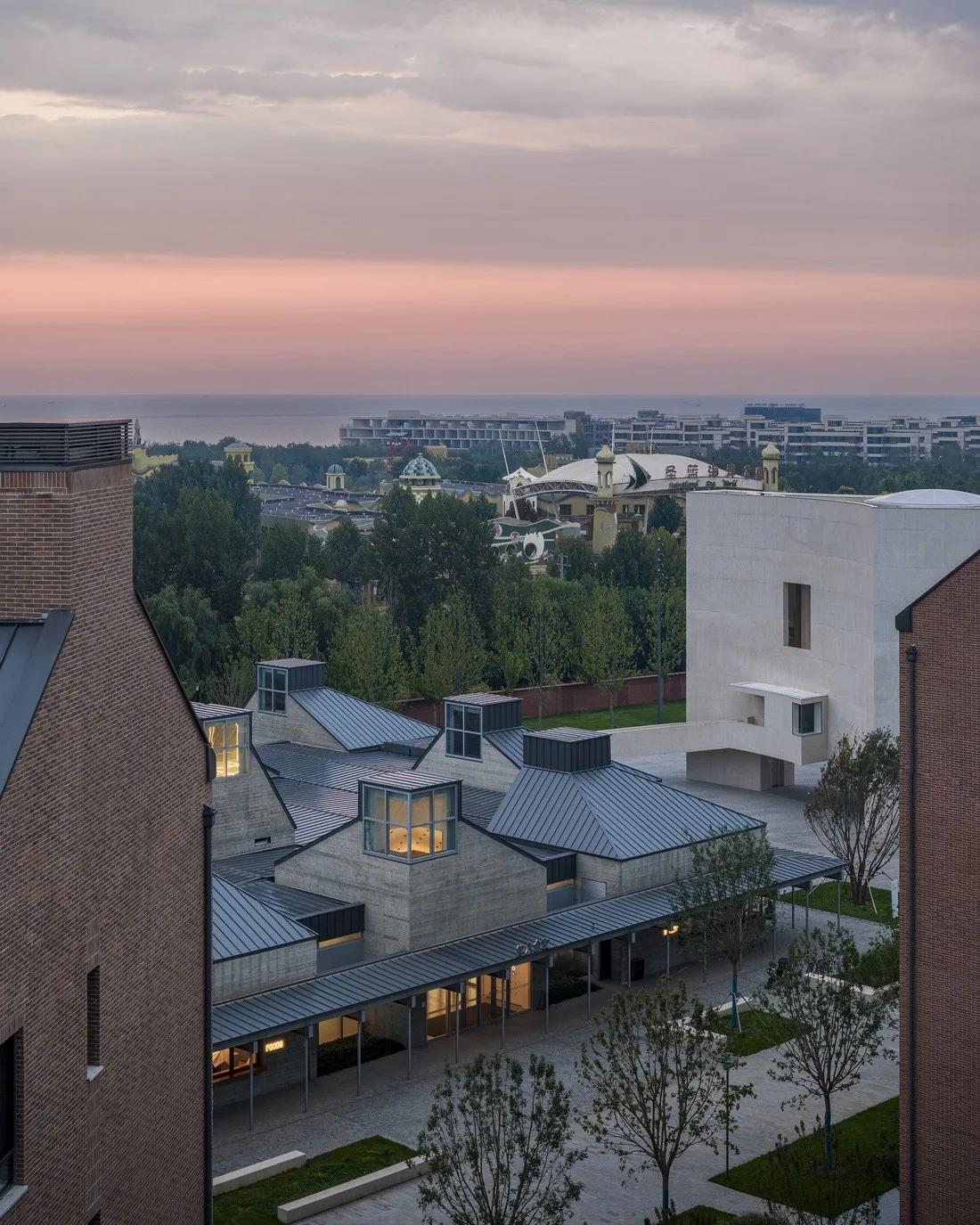
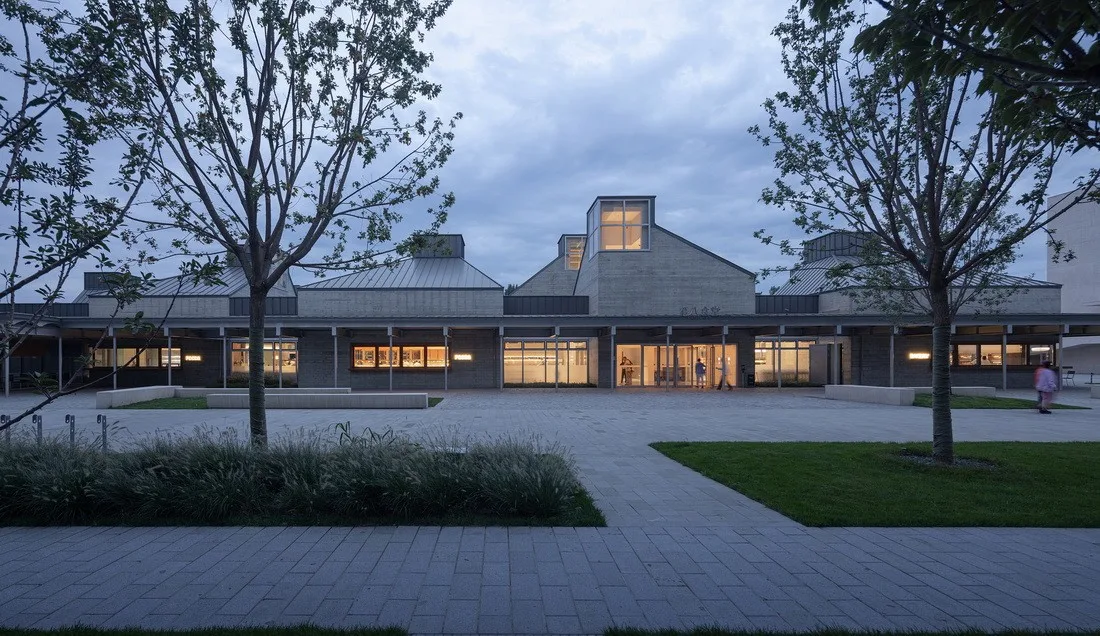
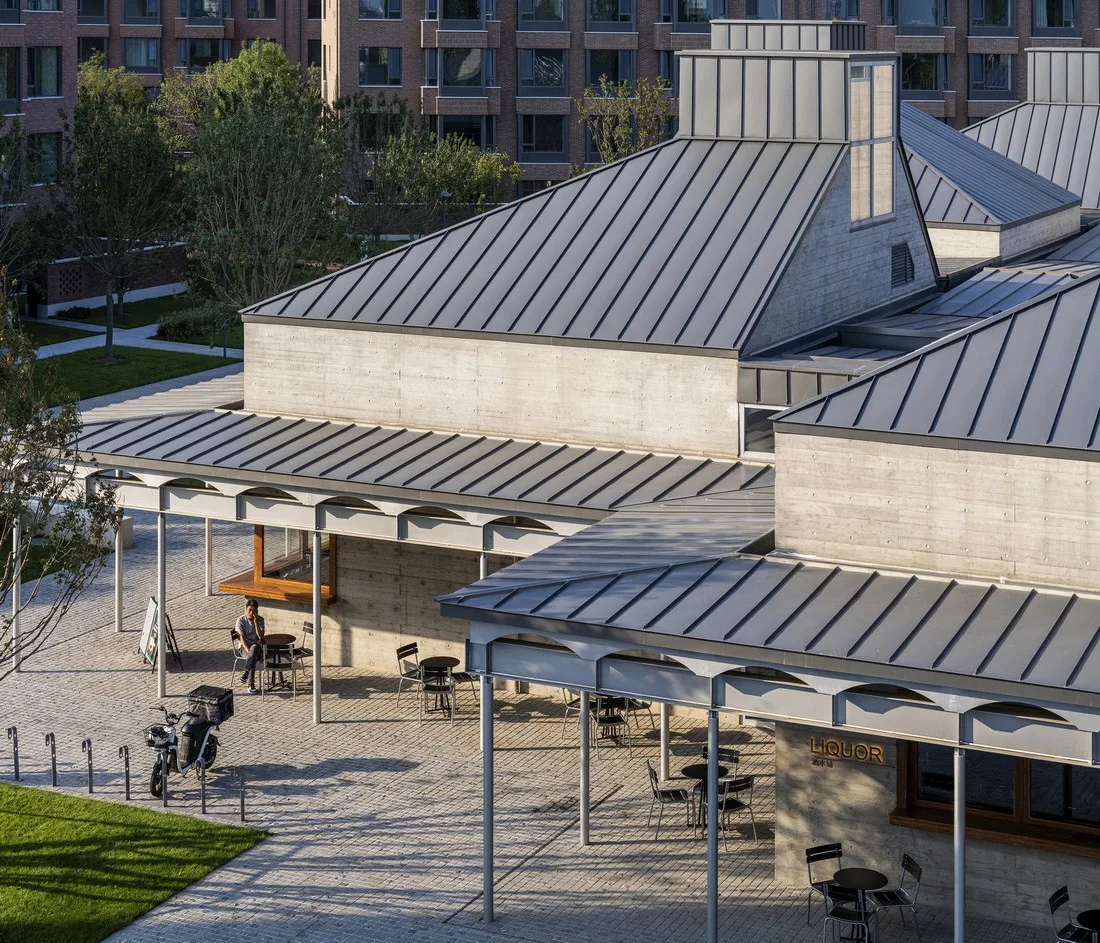
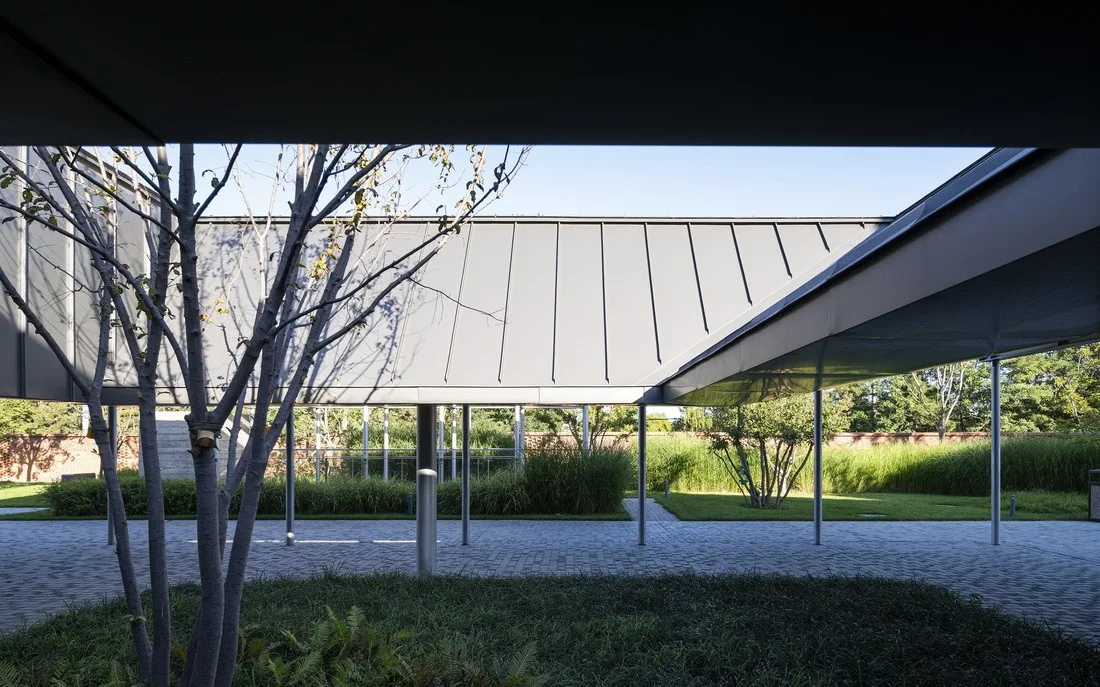
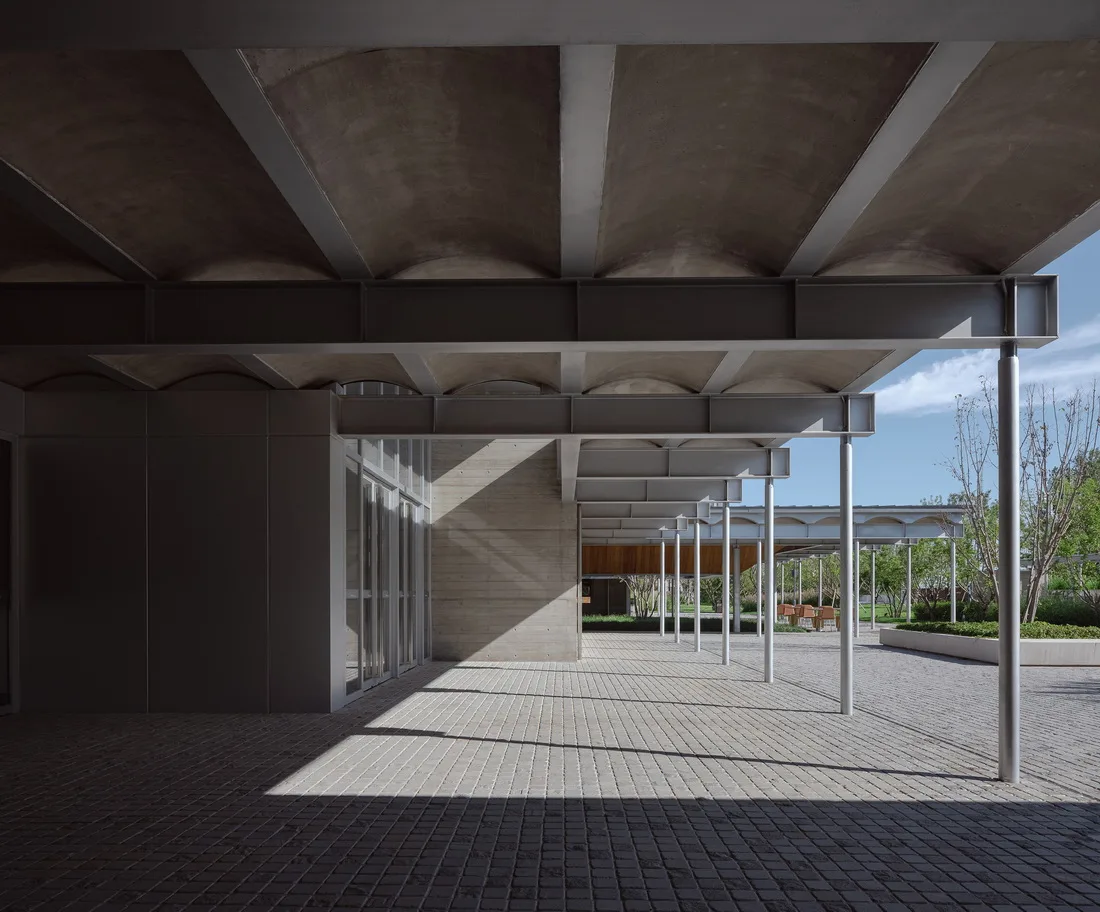
The market’s outermost edge features a continuous eave corridor with a lower roofline, serving as a transition between the market and the park space. Shops open onto this corridor with takeaway windows, while the corridor itself expands in winding forms at the east and northwest corners to create three green courtyards surrounded by corridors.
This eave corridor establishes a welcoming, continuous interface at a human scale, offering a strong sense of arrival from all directions. It also functions as extended outdoor display space during busy seasons and weekend markets. The spatial structure integrates into the park environment at a small scale while preserving the traditional market layout, forming a quasi-settlement characterized by dispersed small roofs.
Logistics spaces—including freight, warehouse, kitchen, staff changing rooms, and customer parking—are located in the basement, integrated with the large basement of North Bank Park.
Content and Space: Operations and Experience
Tasked with integrating the cafeteria and supermarket, extensive collaboration with the operations team shaped the North Bank Market’s spatial organization—a miniature city offering segmented, independently managed spaces that upgrade the traditional market service model.
The market distinguishes between the “square” (the public cafeteria and supermarket area) and the “stores” (specialty themed spaces). The square serves as the core dining and shopping area, while the shops surround the main entrance hall on the west-central side, which acts as the market’s front. The central zone houses bathrooms, passenger and freight elevators, stairs, and other logistics spaces.
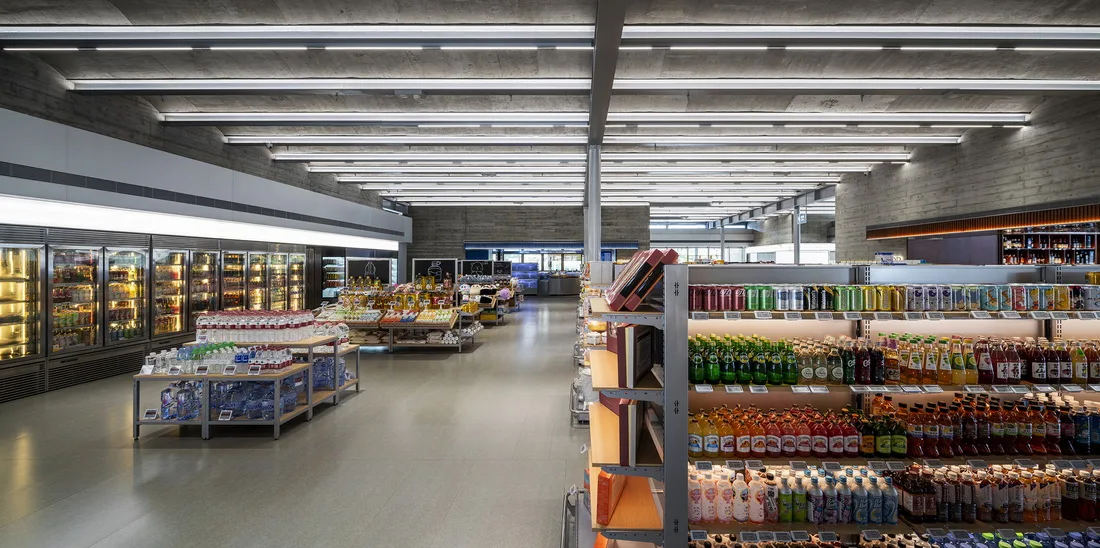
A clockwise ring of interconnected dining spaces—including noodle stalls, bars, and parent-child areas—circles the hall. The supermarket features eleven distinct themed zones such as seafood, produce, liquor, and bakeries, each with differentiated content and product lines.
This spatial-content synergy allows North Bank Market to transcend a single operator model, offering diverse themes comparable to traditional multi-entity markets. It also supports sub-brand operations and distinct brand identities for specialty product lines. This integrated logic of content, space, operation, and experience underpins both the construction system and spatial atmosphere design.
Composite Structure: Why Content Defines Structure
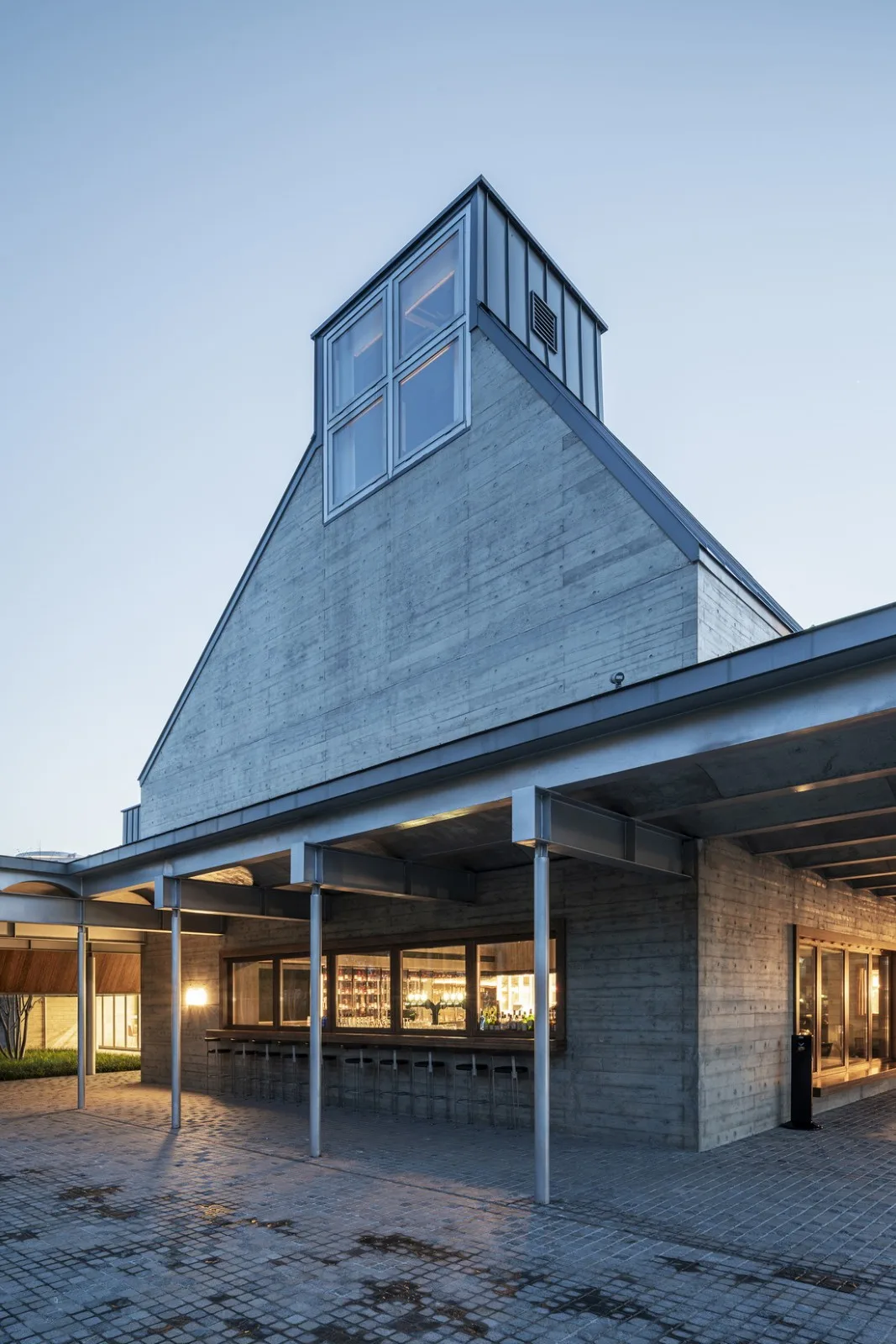
The construction system reflects the spatial differentiation: concrete shear wall conical roofs for the specialty stores, and steel frame flat roofs for the public squares and surrounding eave corridors. These contrasting structures reinforce the spatial experience of the market’s content.
The outer walls of the shops, whether facing the eaves or public areas, use small wooden formwork and plain concrete. Various door and window openings are tailored to the spatial themes and user activities, creating diverse, socially engaging storefronts. The public area’s steel structure incorporates glass curtain walls to create climate boundaries. In favorable seasons, some facades facing eaves, corridors, and courtyards can fully fold open, blending indoor and outdoor experiences and enhancing the square’s openness.
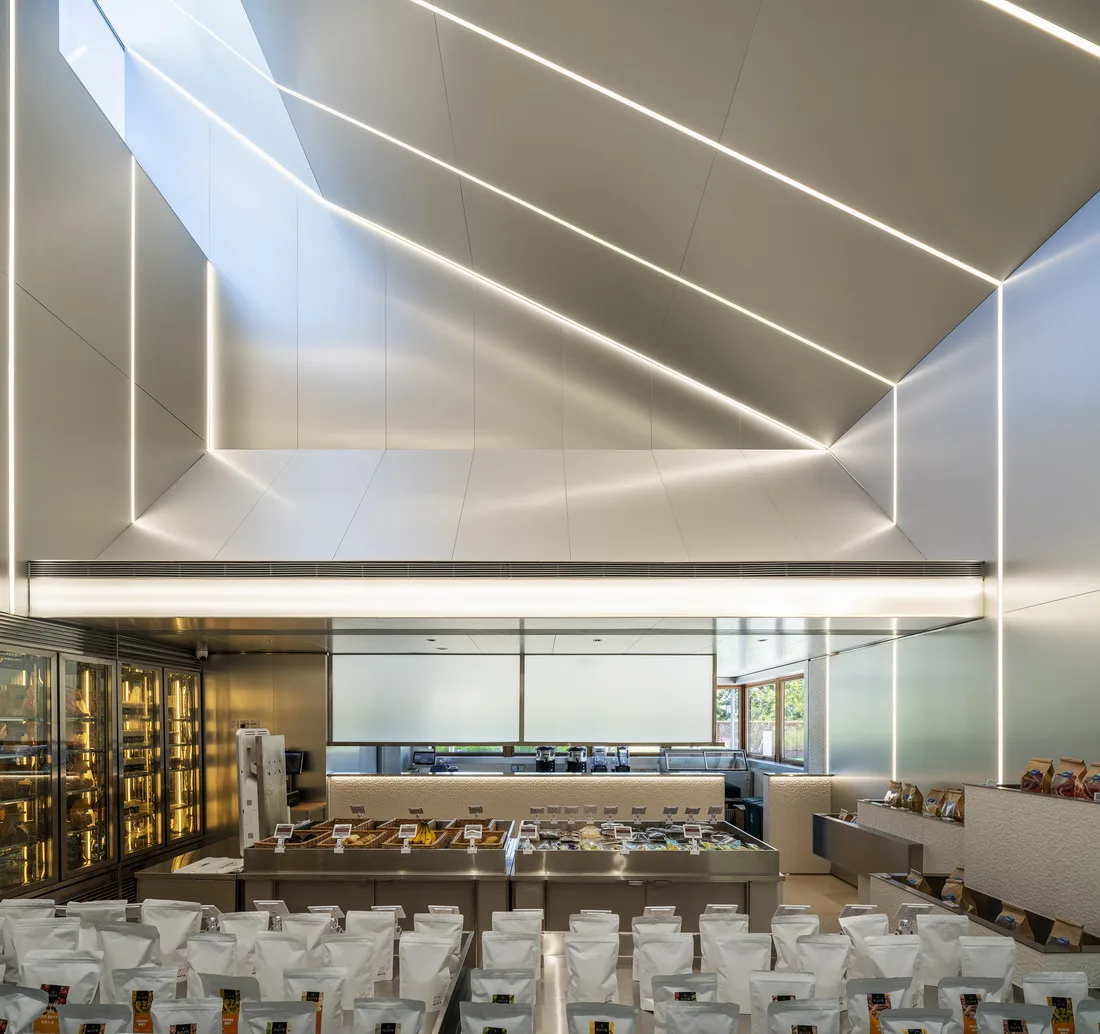
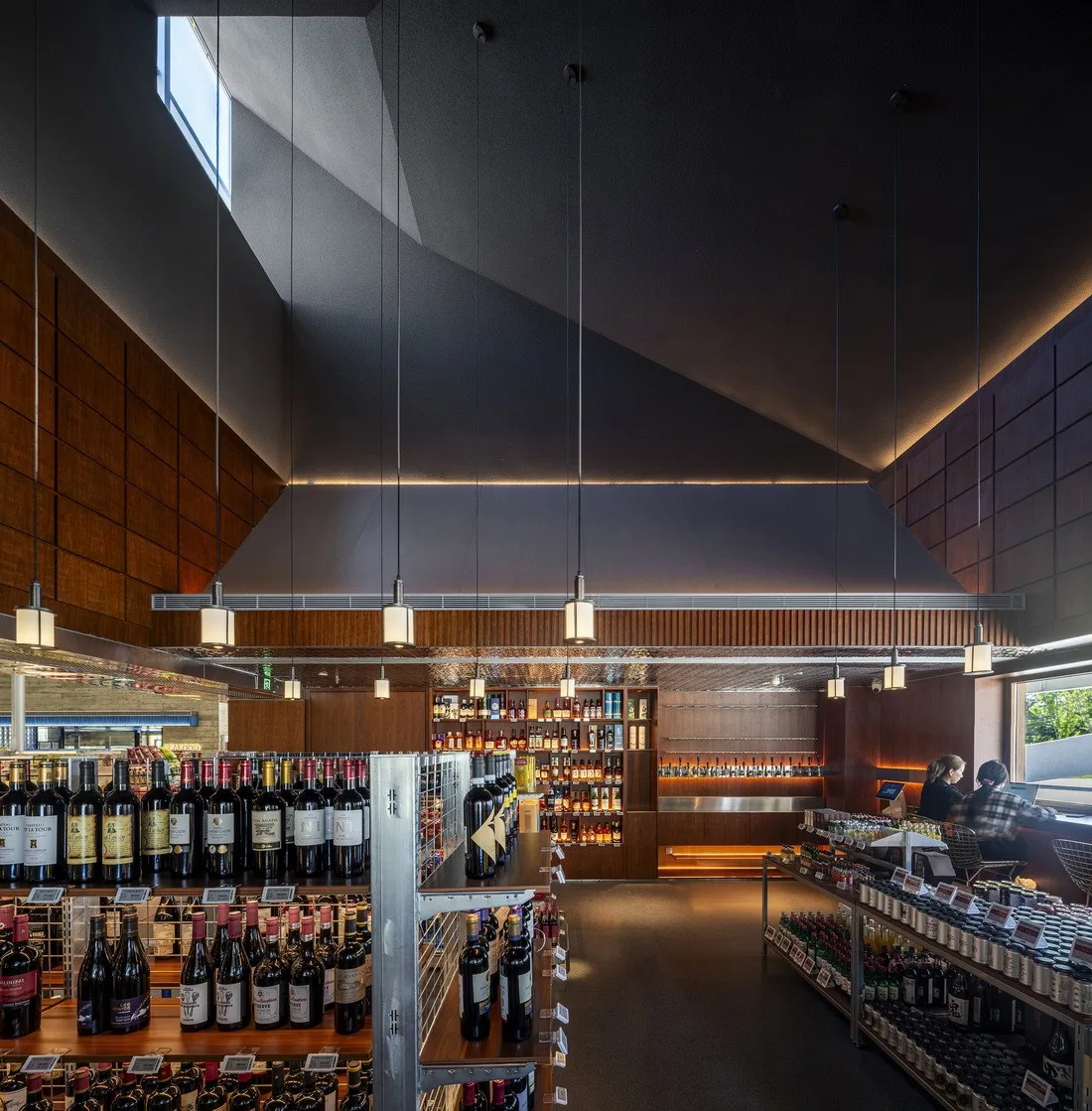
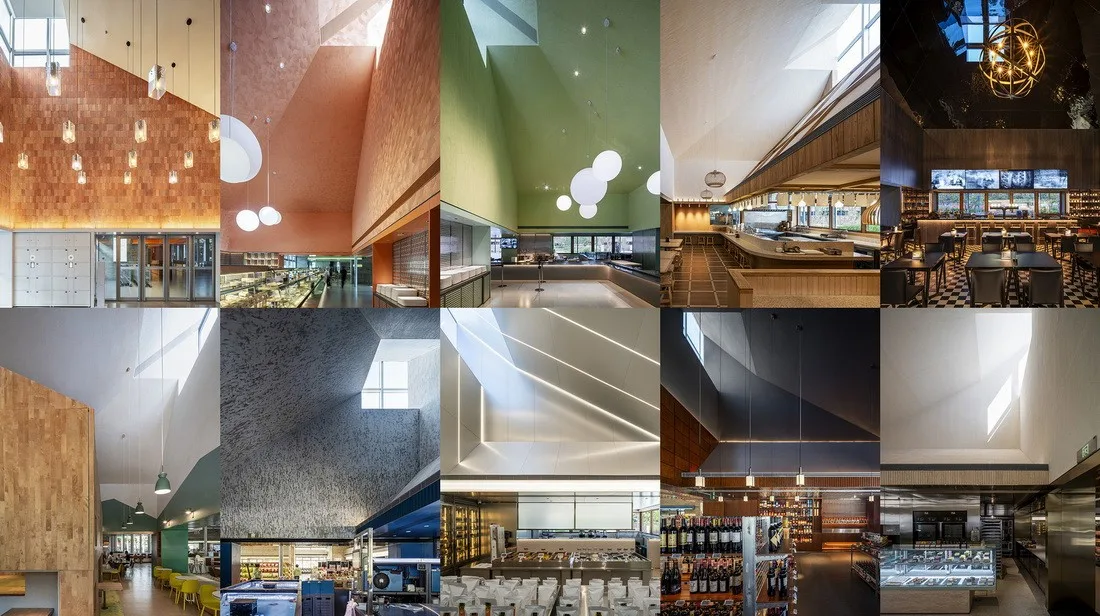
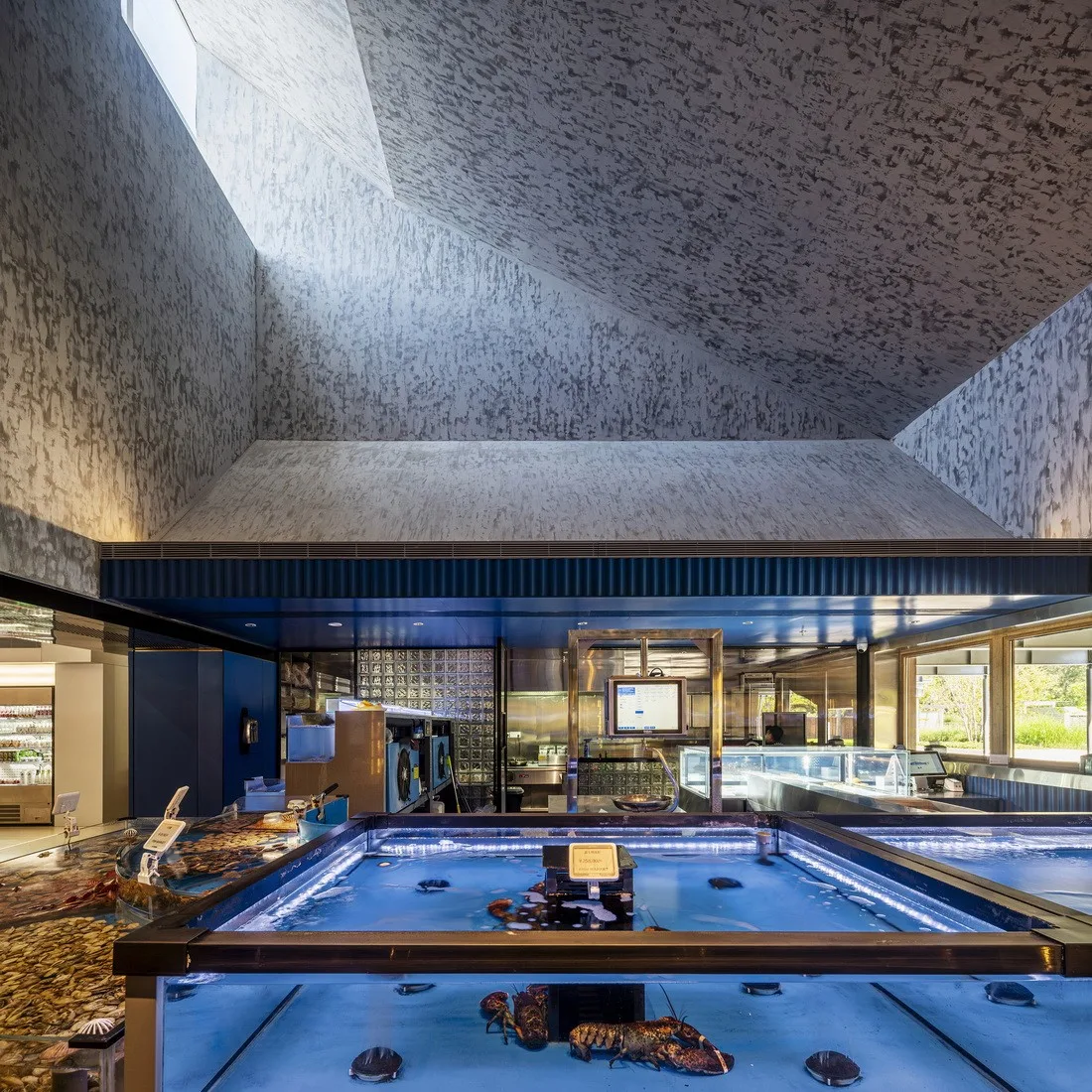
Vertically, the concrete shear walls provide horizontal stiffness to resist building lateral forces, allowing the steel columns to remain slender and free from horizontal loading. Store units feature tall, eccentric conical roofs with large skylights at the apex, complemented by square skylight cavities protruding from the cone platform, bathing each store in natural light and creating a deep spatial experience.
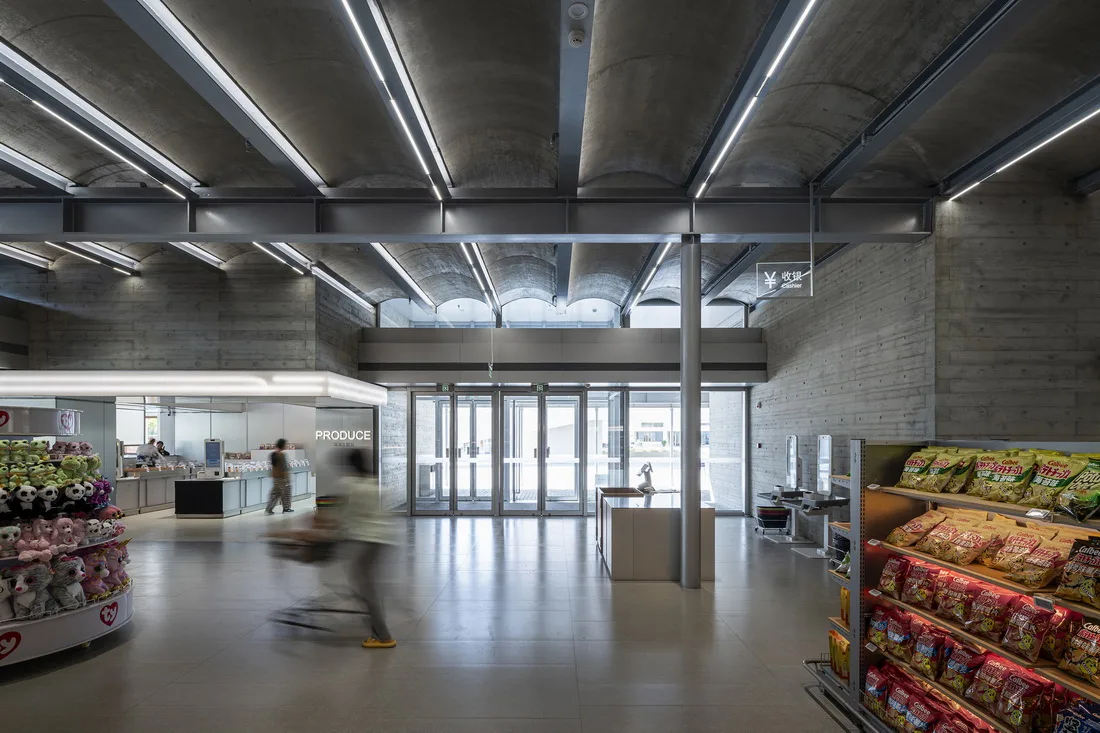
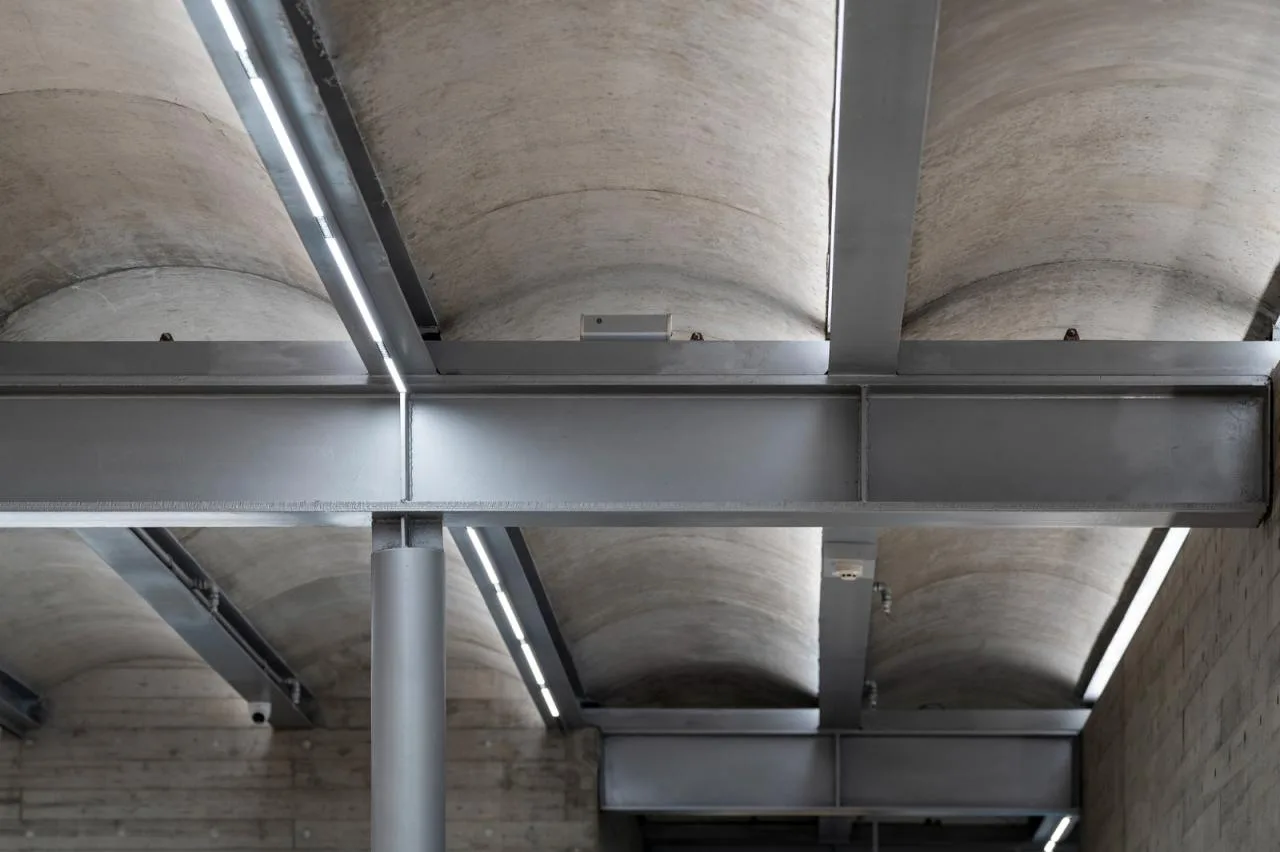
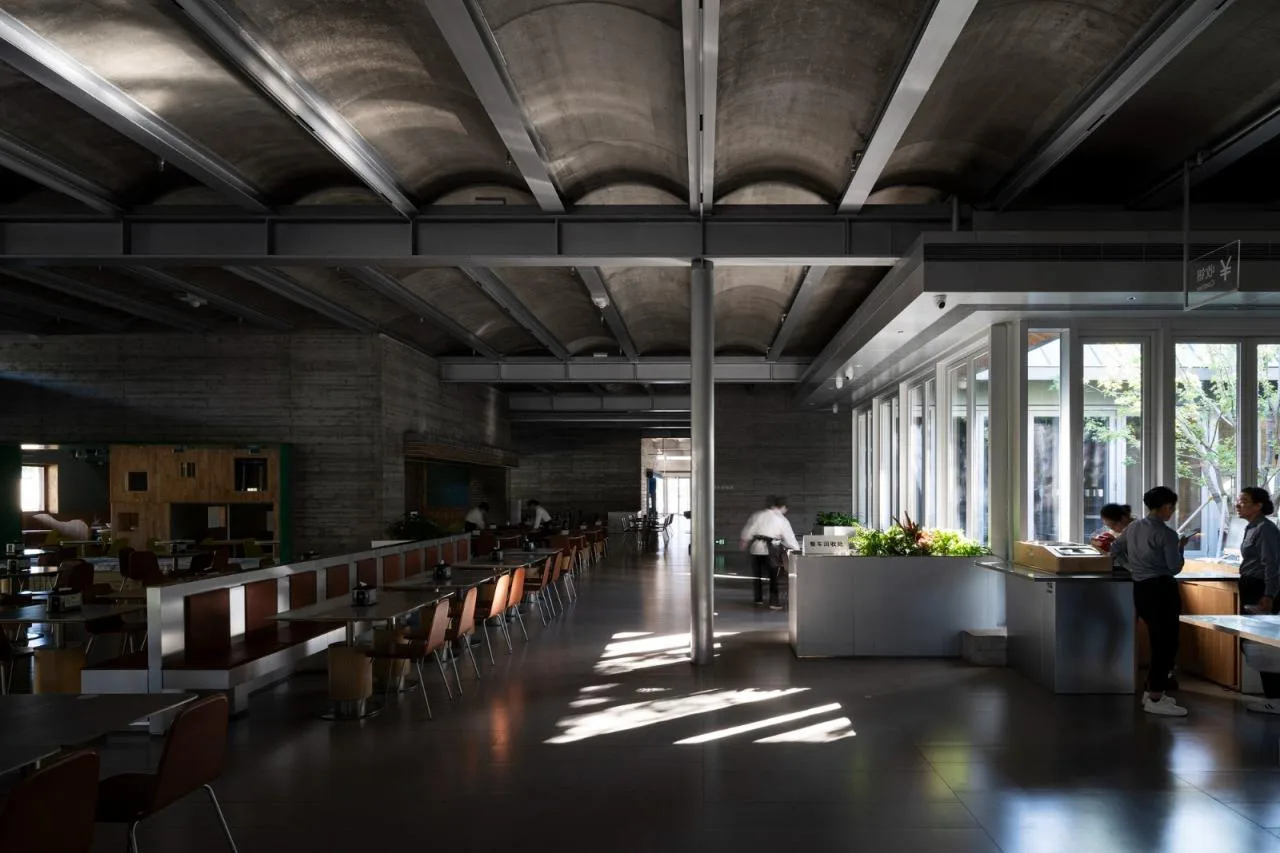
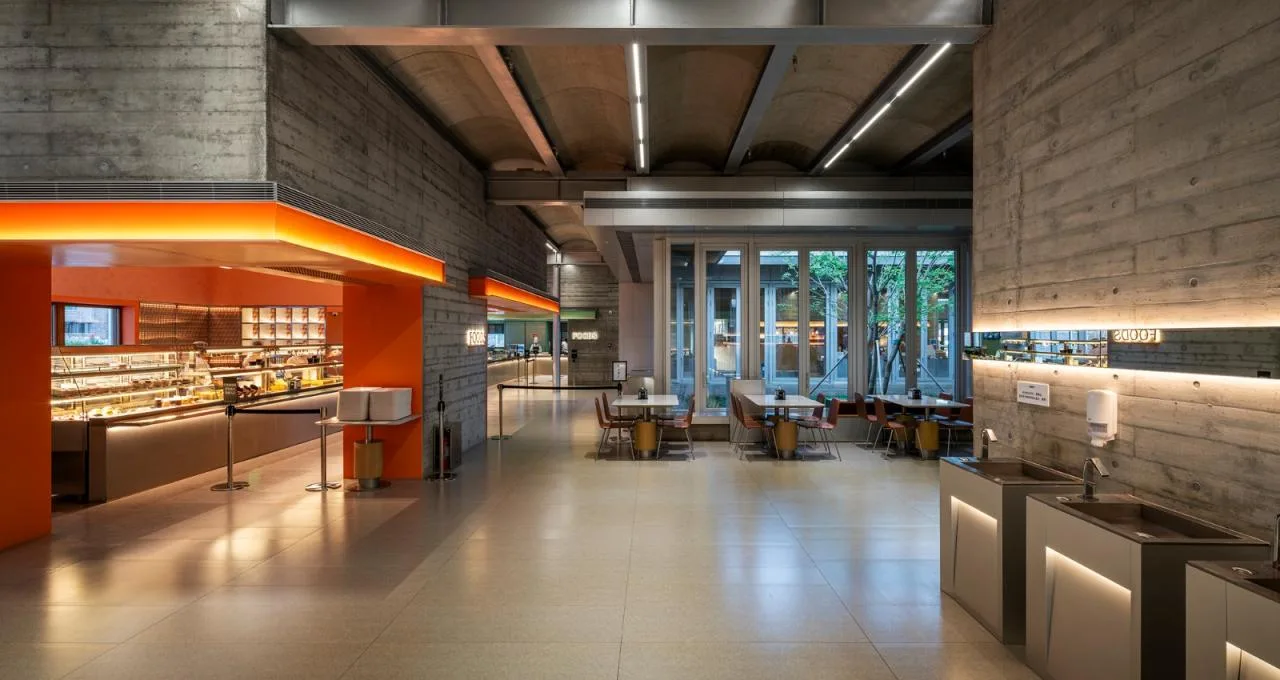
Public areas have flat steel beam grids with cast-in-place concrete roofs inspired by late 19th-century Catalan Vault prototypes. Steel columns support continuous east-west I-beam main beams, with equally spaced north-south I-beam secondary beams. Prefabricated concrete arch slabs placed between beam flanges act as formwork, forming a rhythmic ceiling. A reinforced concrete slab tops this, enhancing structural integrity, followed by waterproofing, insulation, and an aluminum-magnesium-manganese roofing system.
The outer eave corridor roof shares this structure but is lower. The eaves around the three courtyards are reduced to 1.8 meters in height, lined with bamboo and wood, creating a striking contrast against the gray corridor and an intimate viewing experience from below.
Though the roof design was inspired by the mature prefabricated concrete industry in Hebei, cost and production constraints led to the use of cast-in-place formwork for the roof slab—a significant compromise in the project.
Mechanical and Electrical Concealment: Enhancing Atmosphere
The exposed steel-concrete arch crowns in the market’s public areas presented unique challenges for mechanical and electrical installations. An aerial pipe gallery runs through the store side wall cavities and wraps around the building along the glass curtain wall to accommodate cable trays, air conditioning pipes, and fan coil units.
Air conditioning return outlets are distributed along the horizontal pipe gallery outer walls and integrated at store entrances facing the public area. A 15 cm high ⊥-shaped steel plate beneath all secondary beams creates a gap between upper and lower main beams. Lighting and sprinkler branches extend from slots atop the main beams in a fishbone pattern along secondary beams, hidden in belly grooves below the beams with only sprinkler heads visible.
The store interiors are lined with fire-resistant plywood to form pipeline cavities, supporting interior design. Shops with heavy kitchen equipment—such as noodle stalls, seafood, produce, liquor, and bakeries—feature small sloped roofs above processing areas, creating “houses within houses” to house fresh air supply and return outlets. Noodle and seafood stalls also have exhaust units within eaves. These inner eaves avoid skylights to maintain high ceilings while adding intimacy. Other stores conceal fresh air units within their top lighting chambers.
Interior Design: Enhancing the Experience
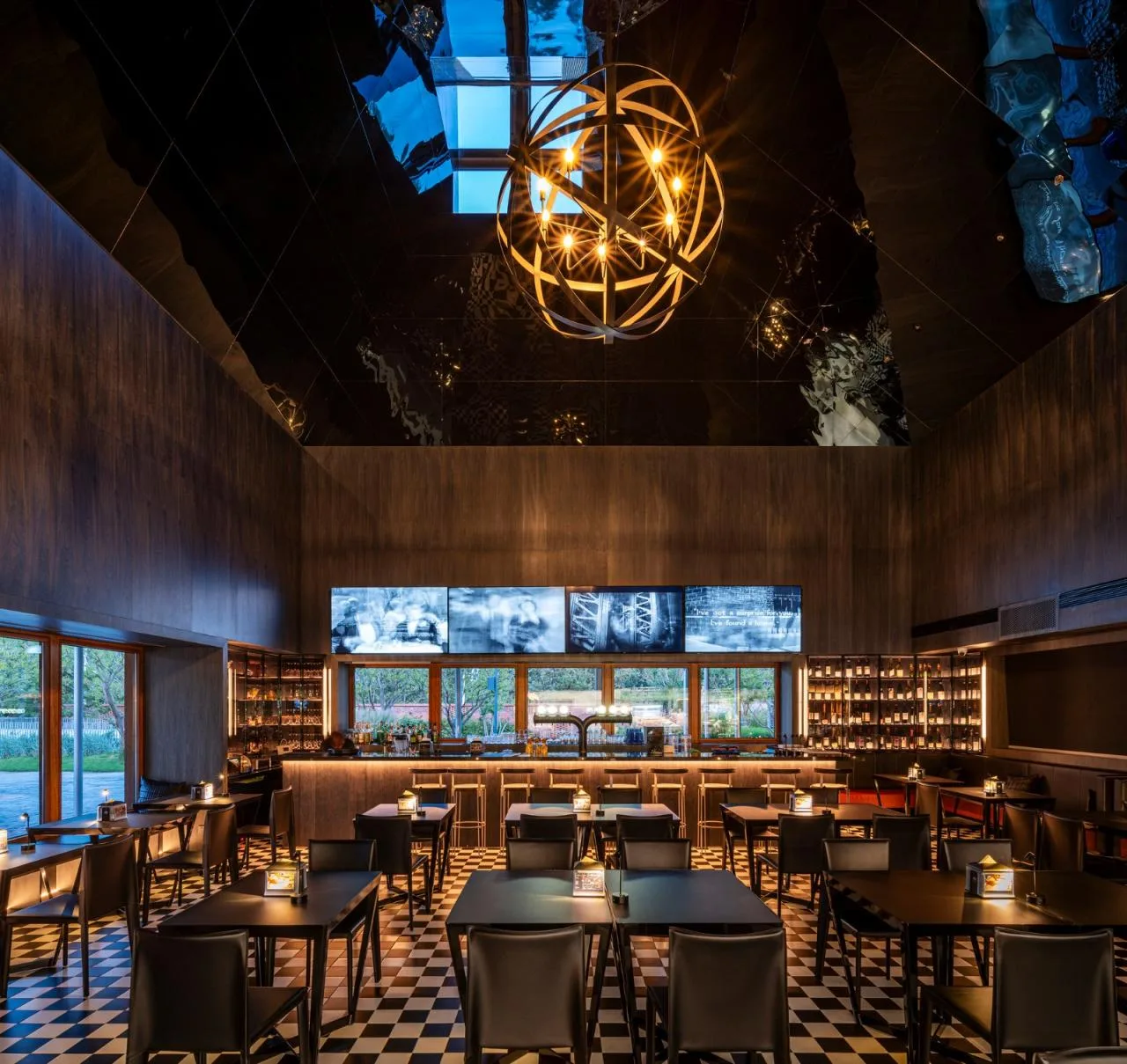
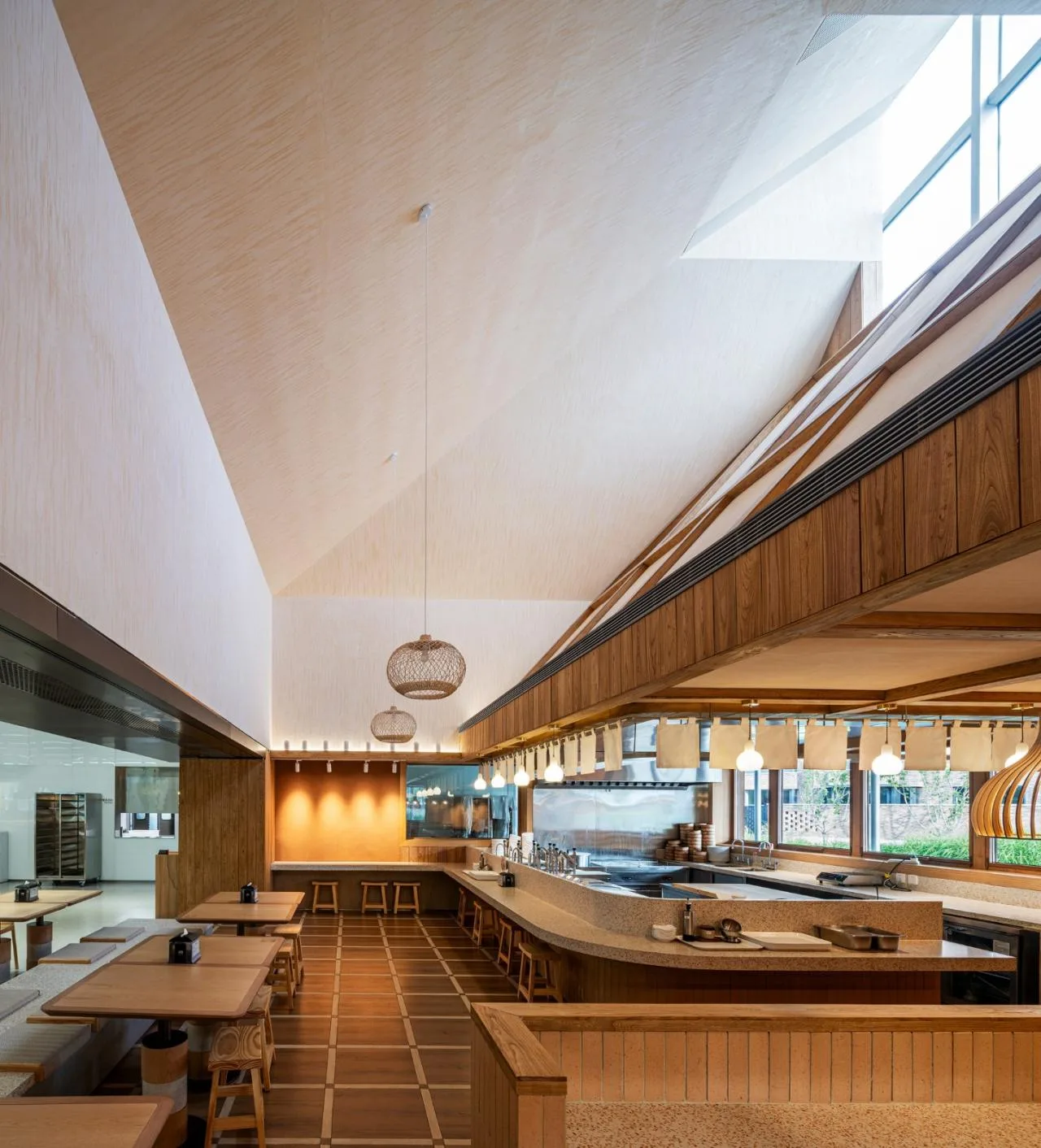
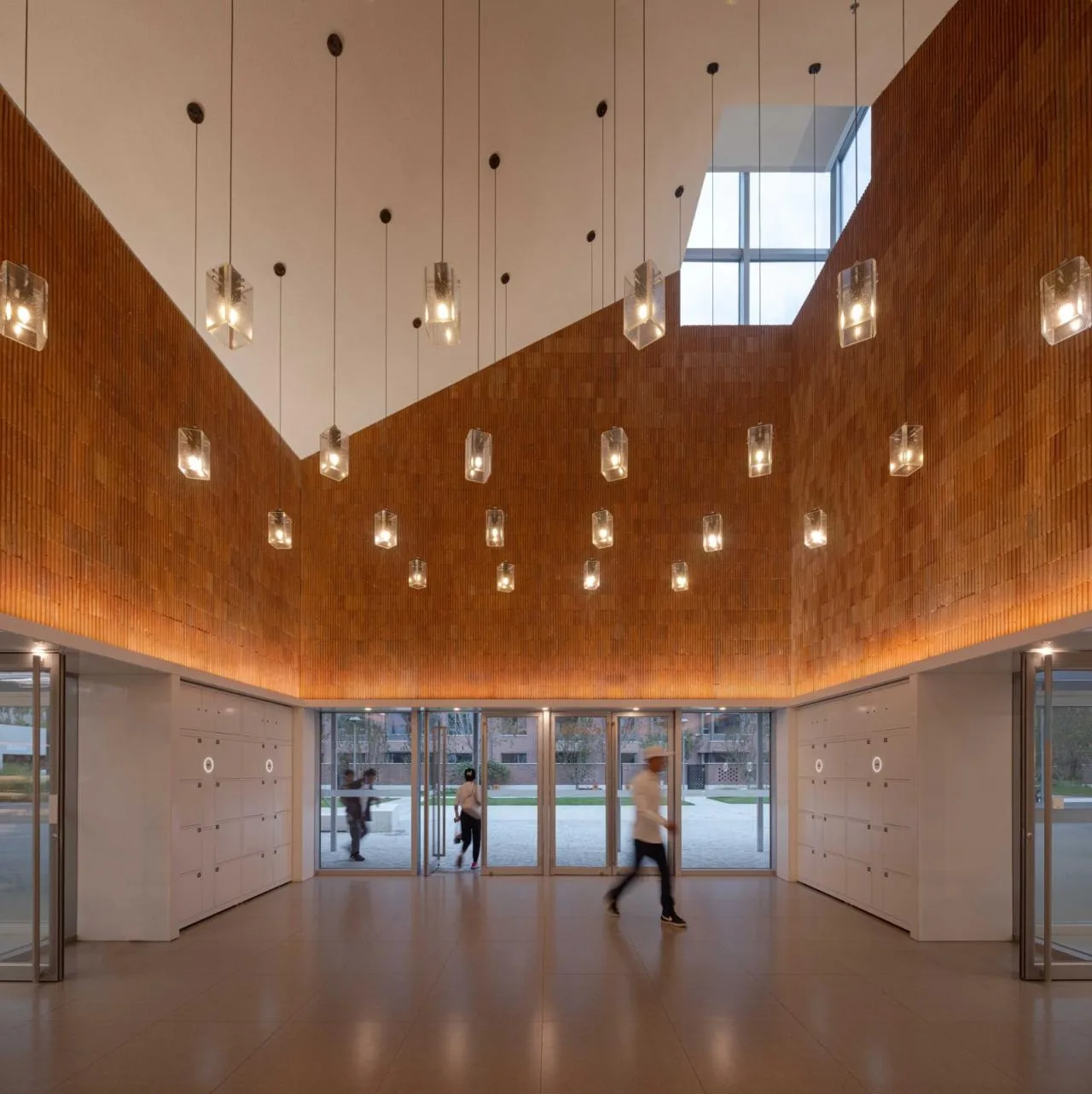
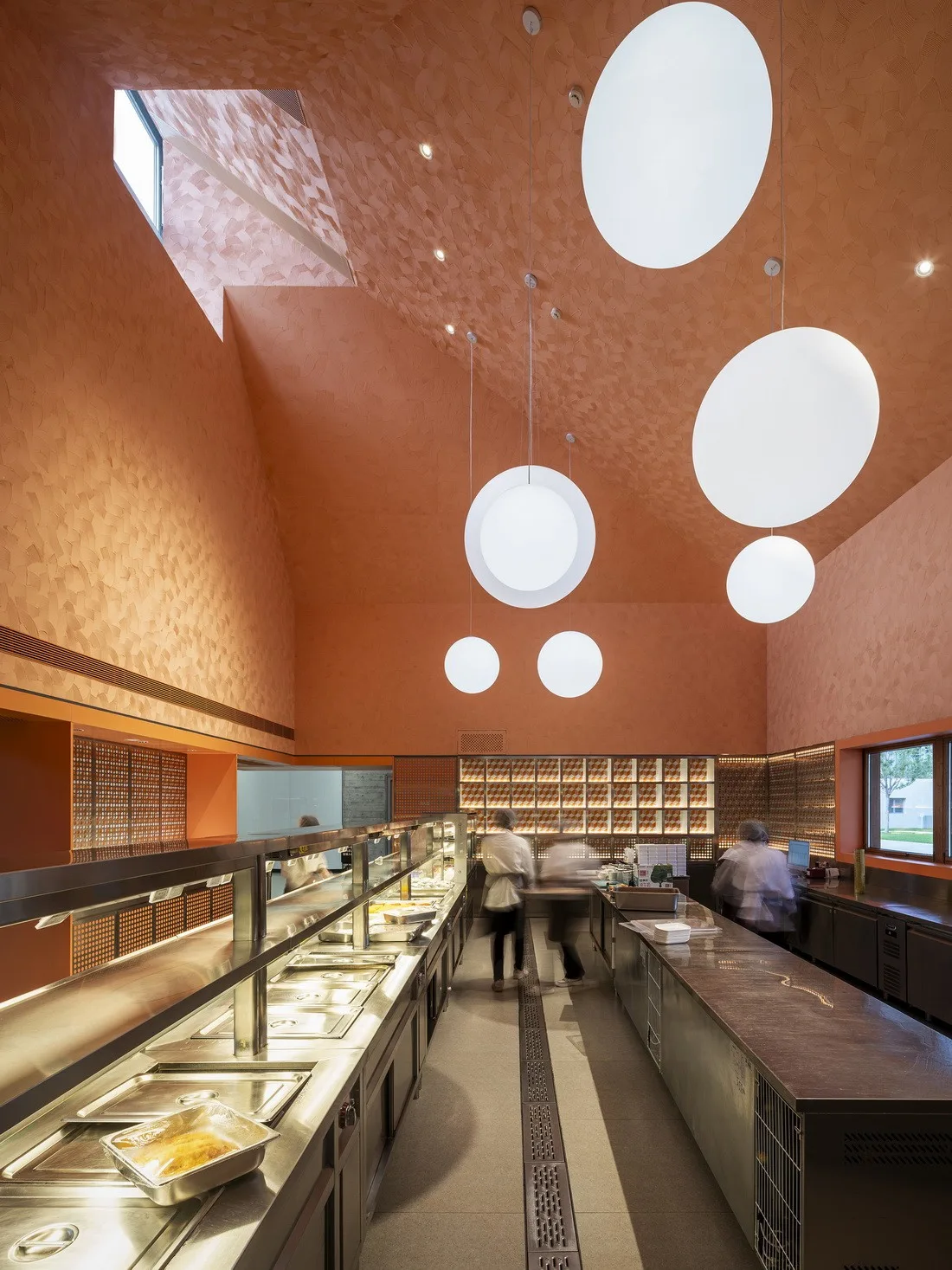
The interior design further amplifies the core concept’s sensory architecture by juxtaposing the spatial and content contrasts between “stores” and “squares,” allowing each to complement the other.
The cafeteria and supermarket’s public areas feature neutral tones with exposed concrete and steel structures, concrete-like floor tiles, hidden lighting strips washing the arches, linear fixtures illuminating spaces, and storefront signs highlighting each shop’s unique character. These areas lack additional hard furnishings, maintaining simplicity.
In contrast, the soaring interiors of the stores are filled with daylight and characterized by varied colors, textures, and atmospheres for each shop, evoking a strong sense of discovery. The relationship between the “square” and “stores” resembles that between the public spaces and exhibition halls of an art museum. Each colorful shop interior is akin to a small chapel or grotto temple adorned with murals.
This theatrical construction of daily consumption links the three daily meals and vibrant community life in Anaya’s vacation enclave with experiential community connections driven by mobile internet consumption.
Project Drawings
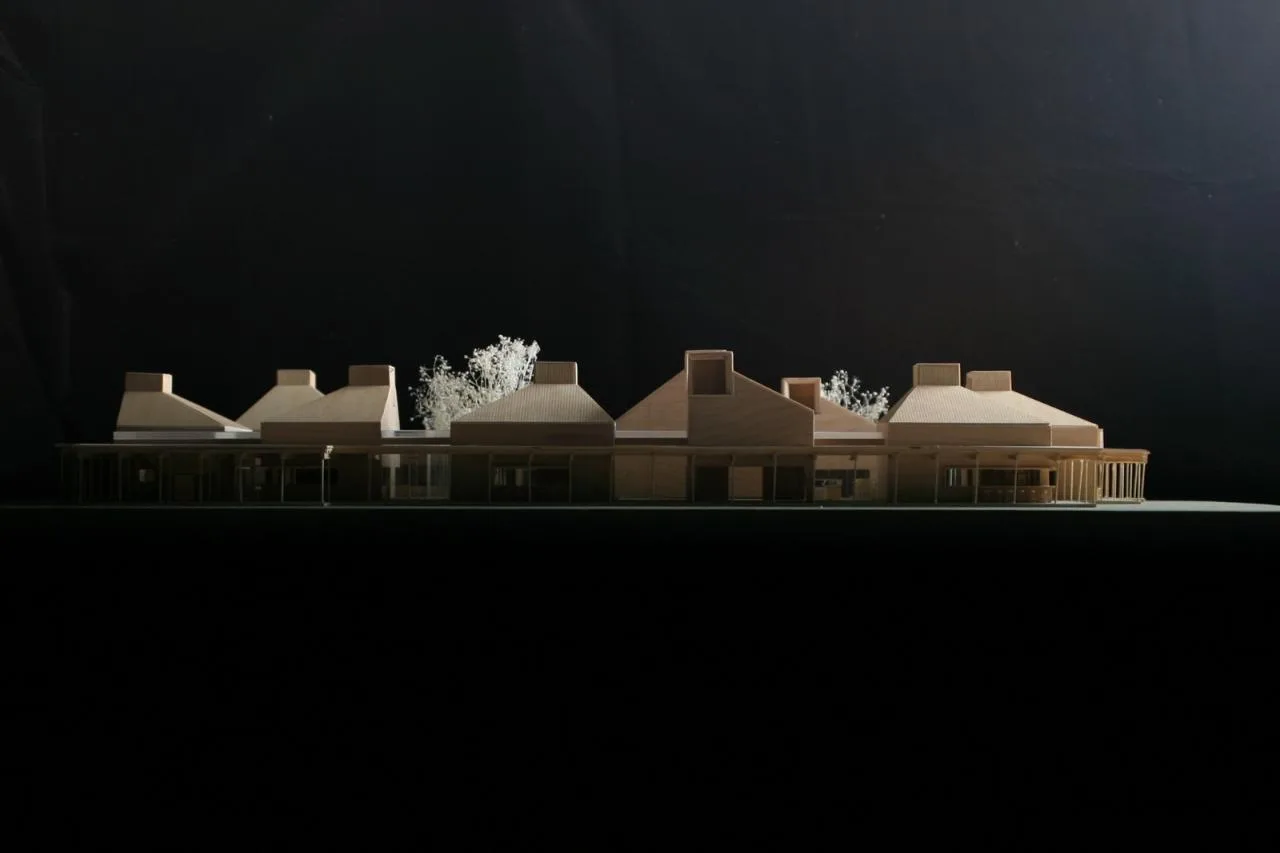
△ Model diagram
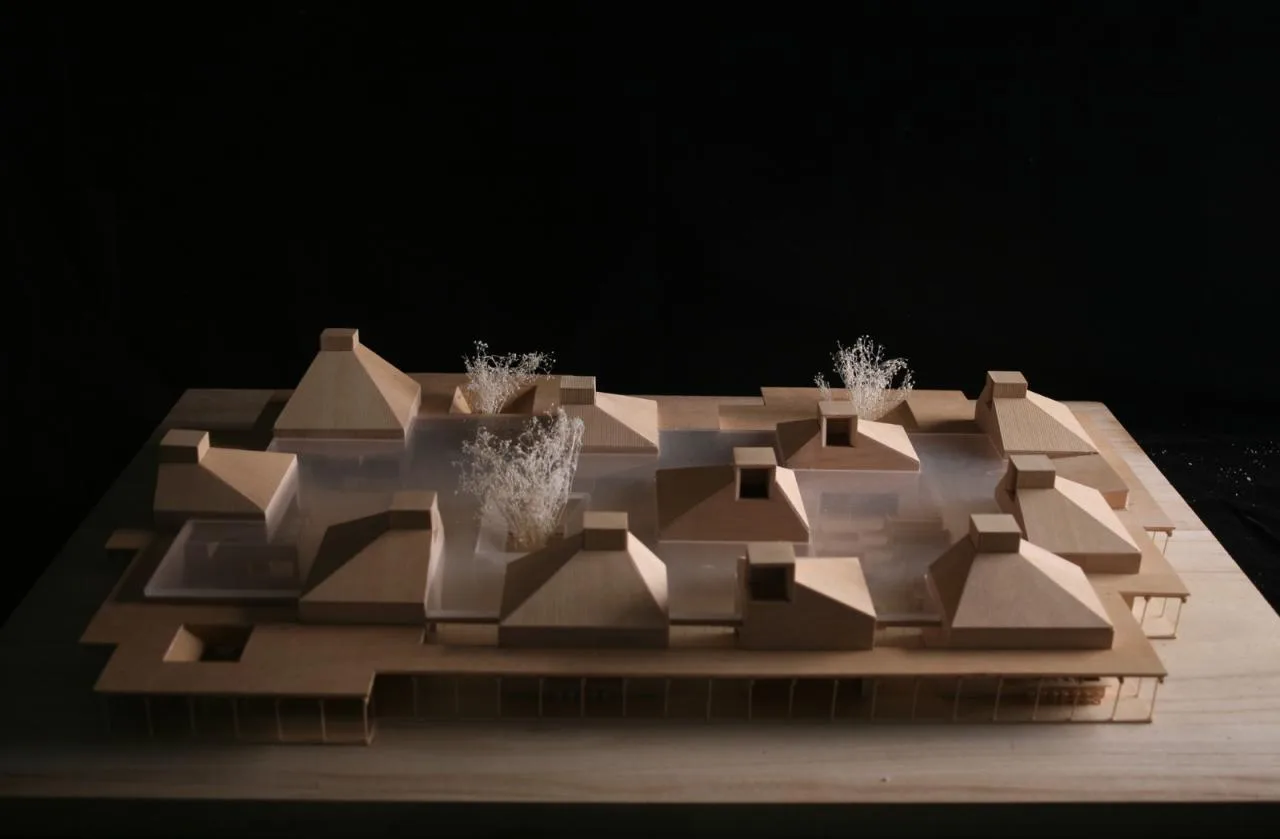
△ Model diagram
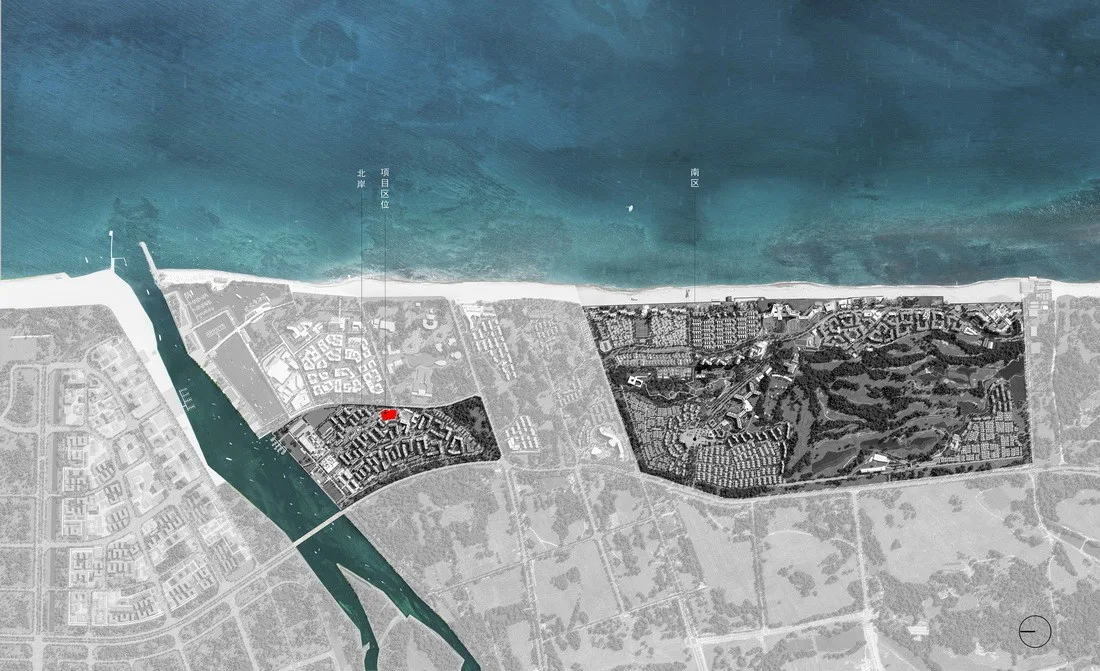
△ Base location schematic
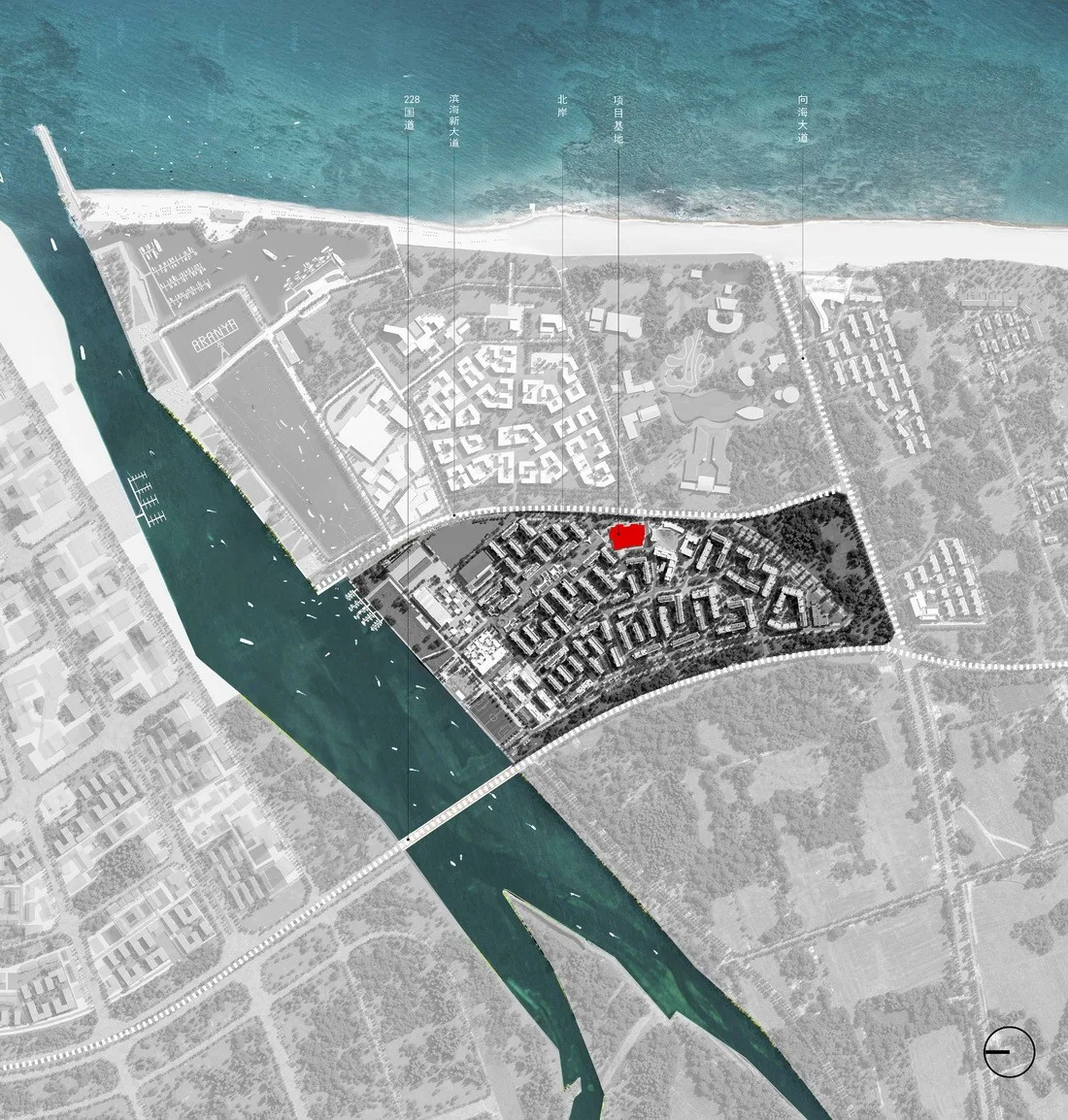
△ Base location schematic
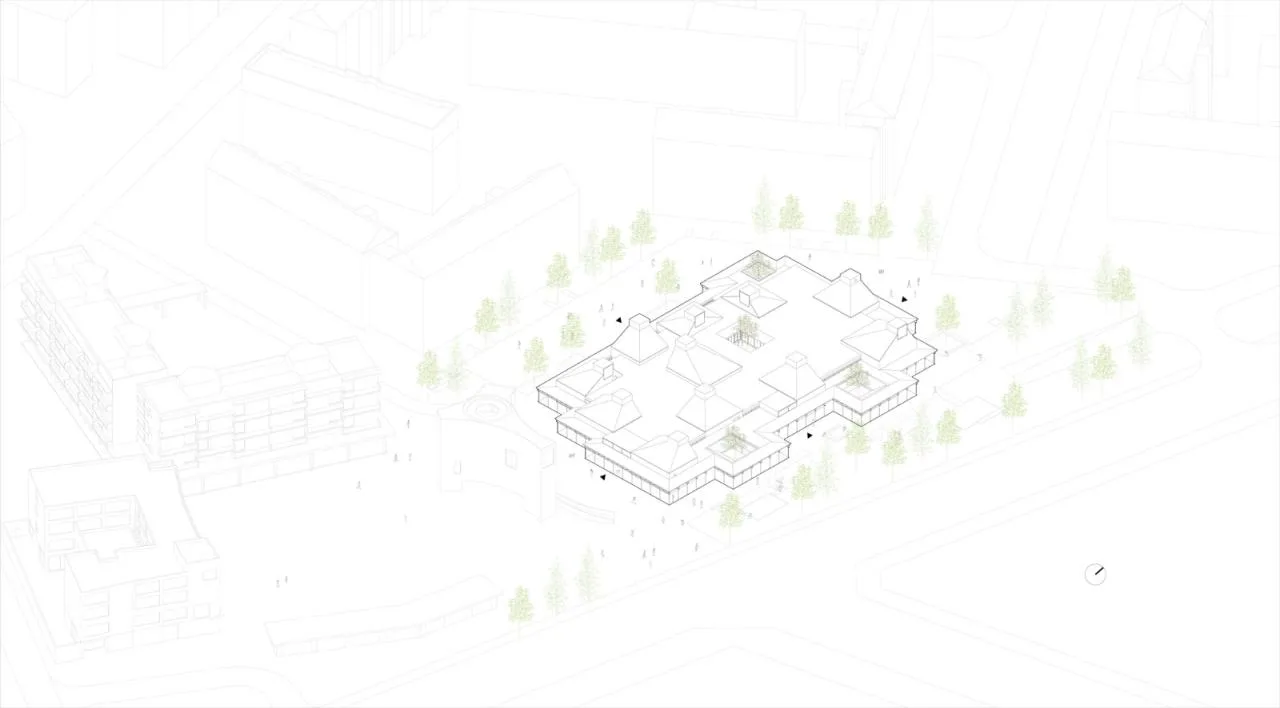
△ Aerial view
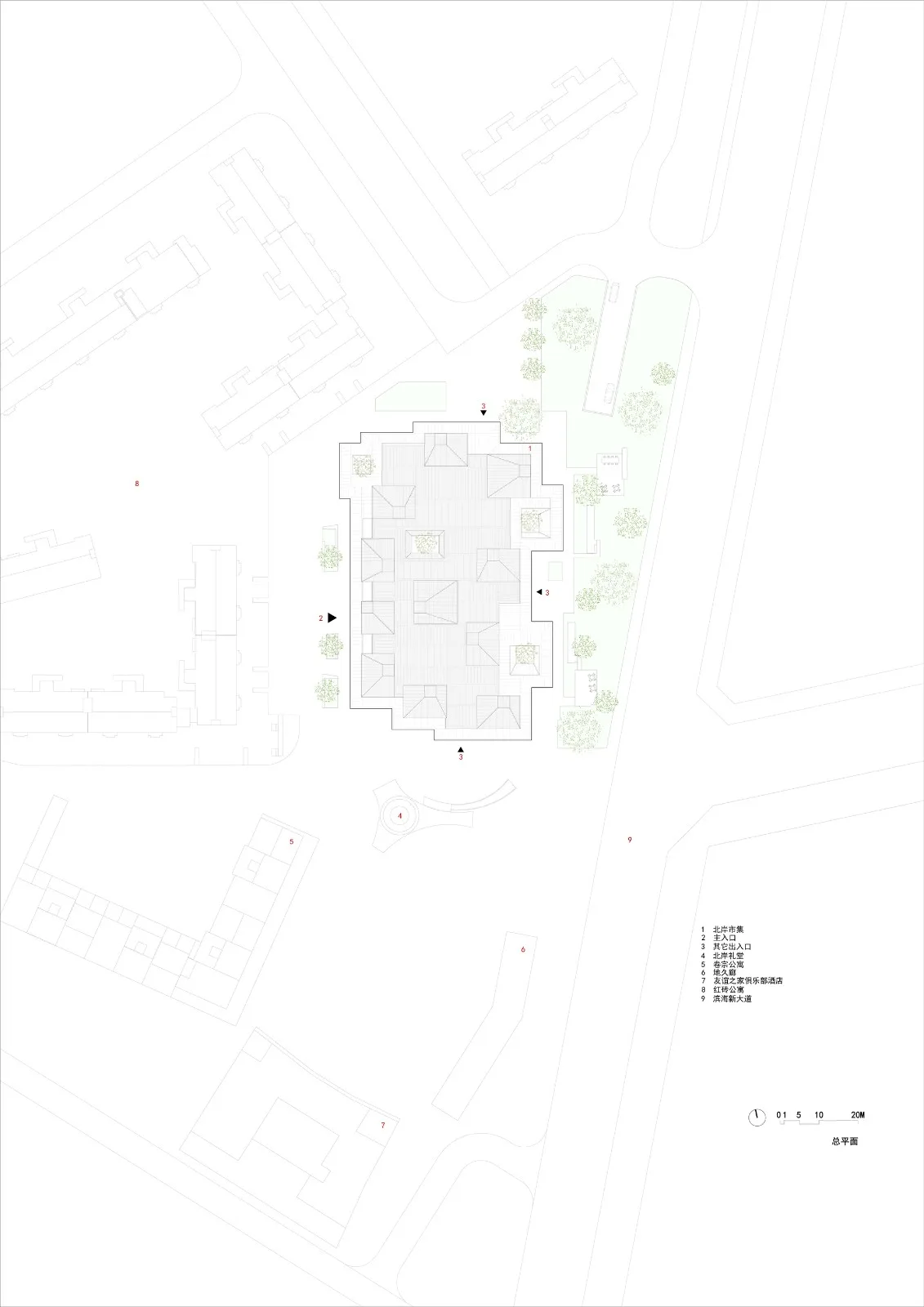
△ General layout plan
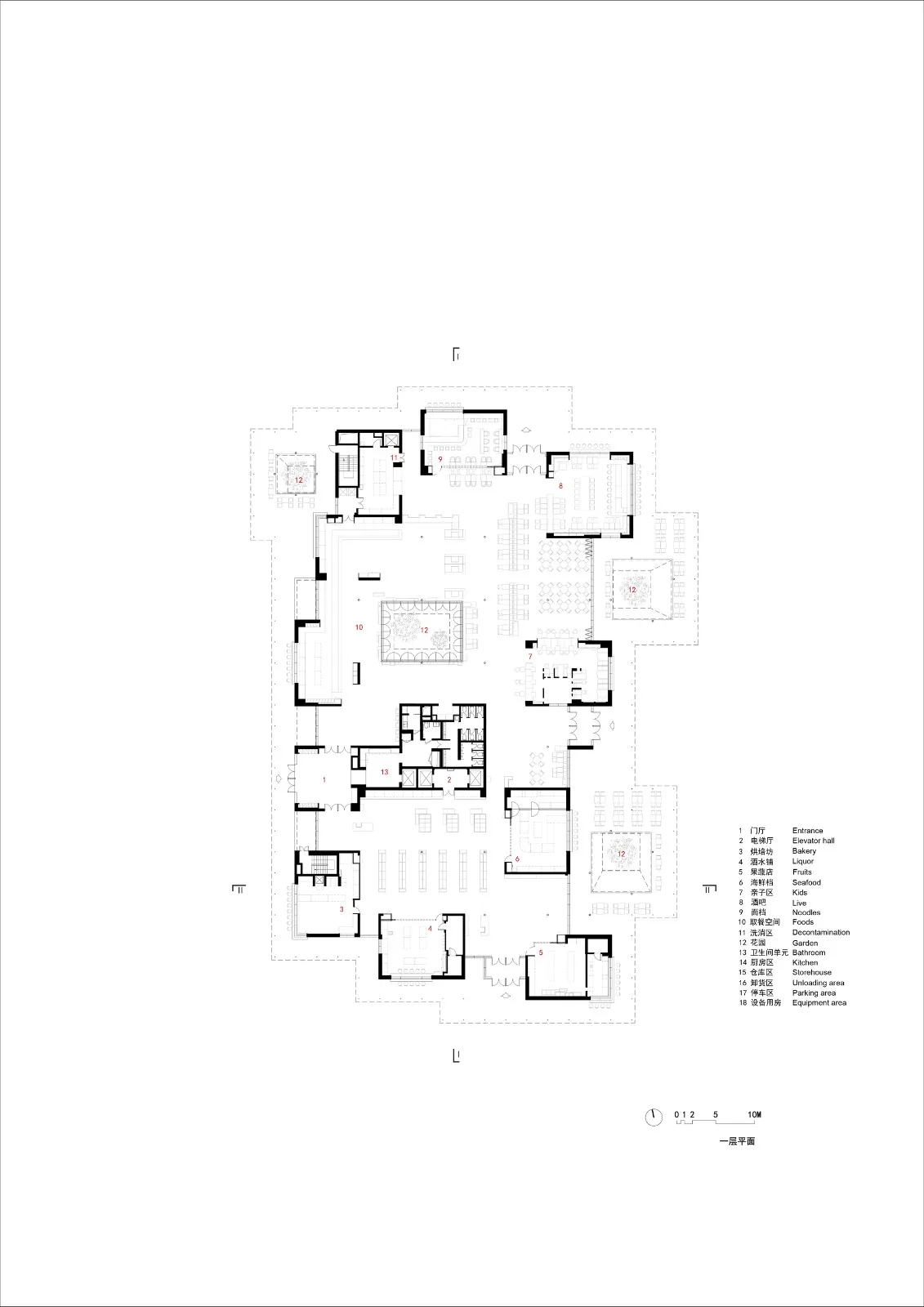
△ First floor plan
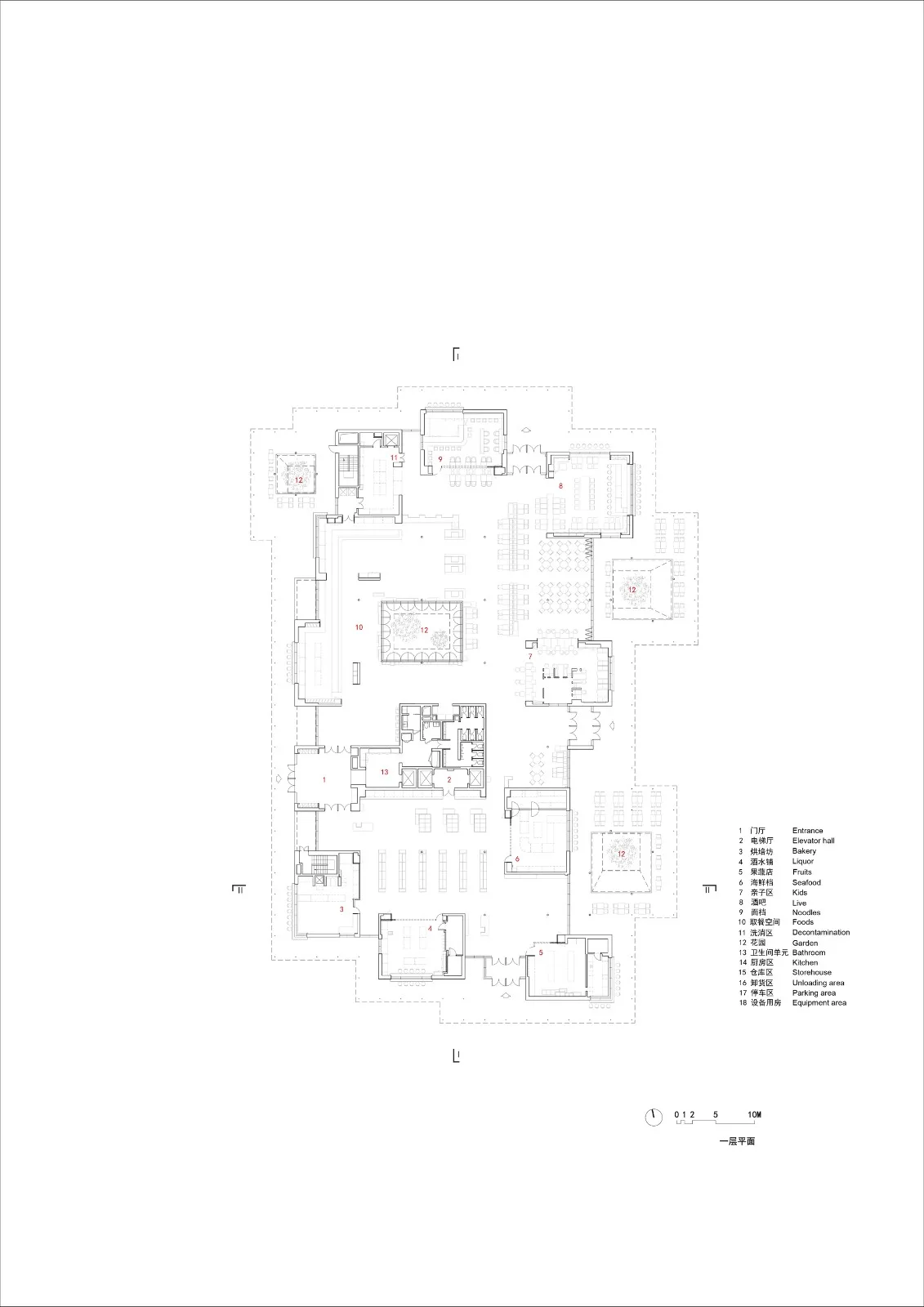
△ First floor plan
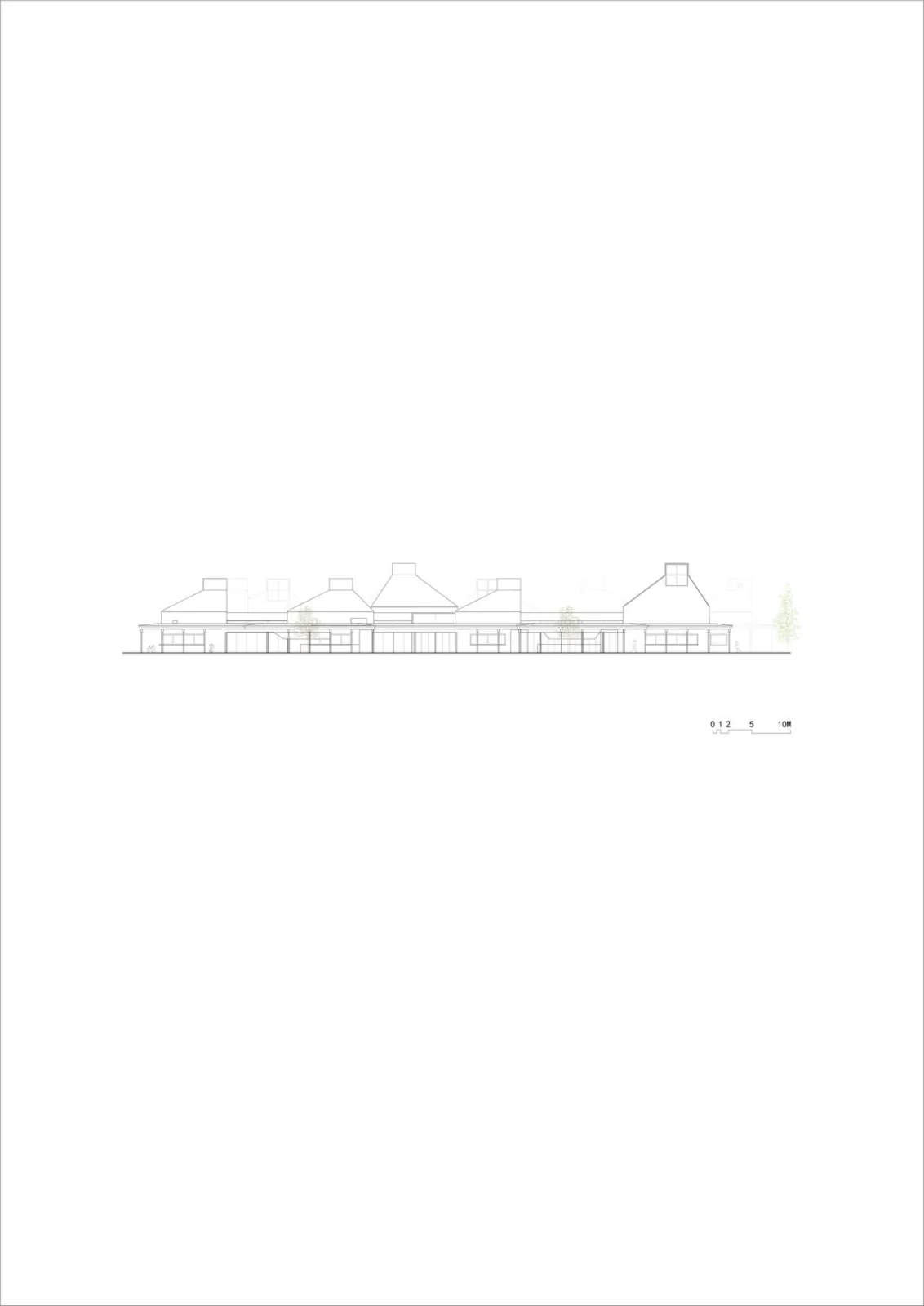
△ Elevation drawing
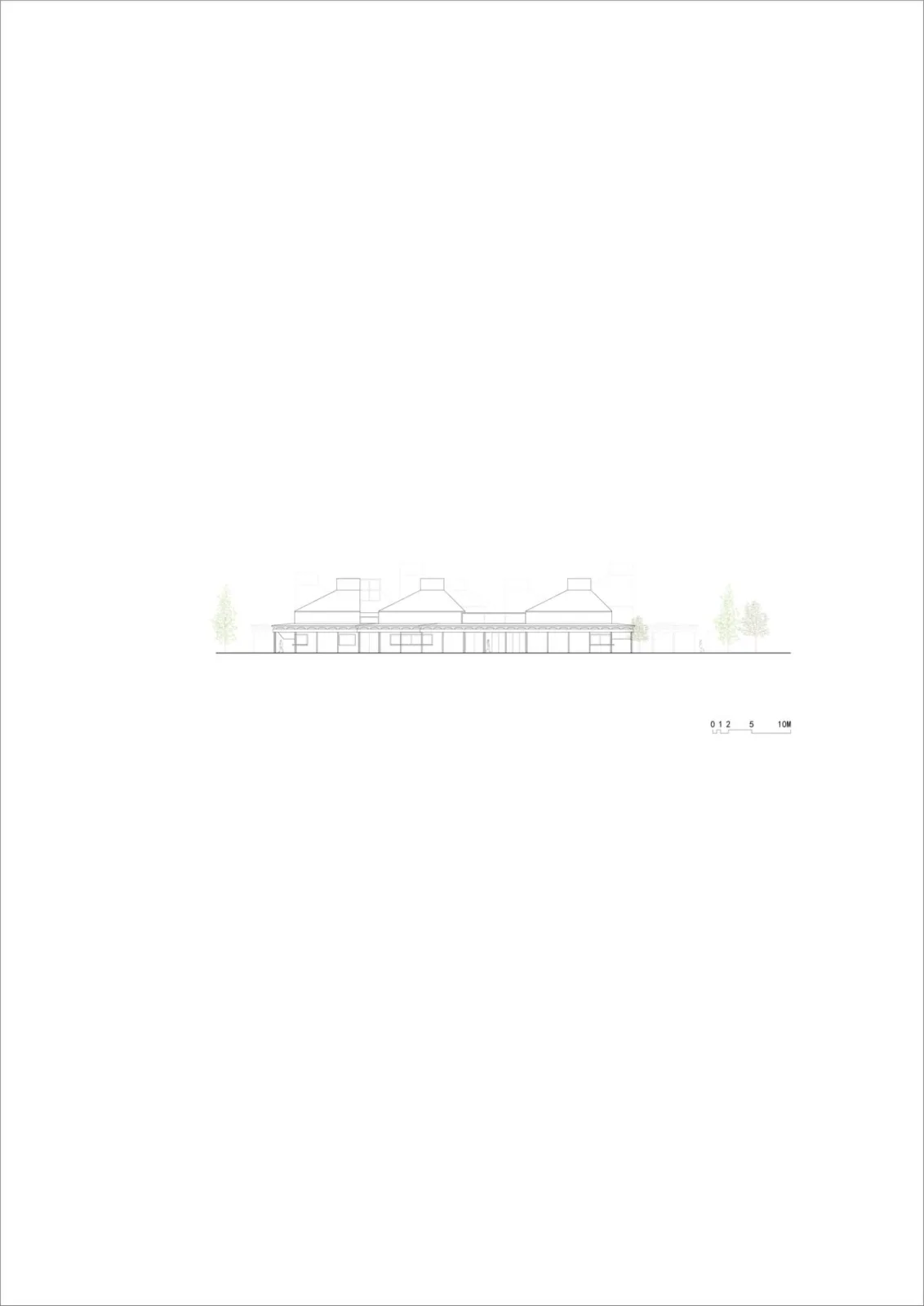
△ Elevation drawing
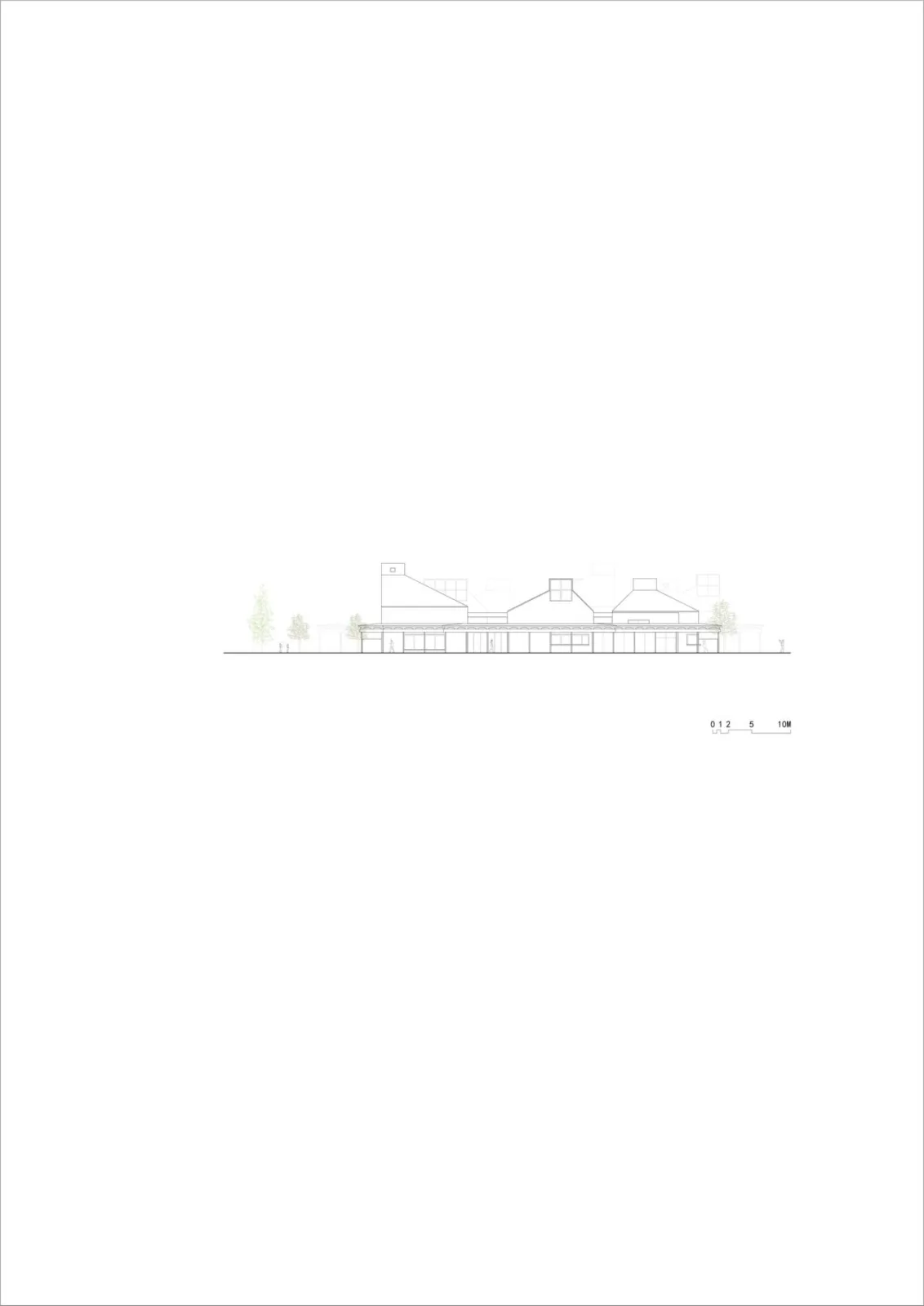
△ Elevation drawing
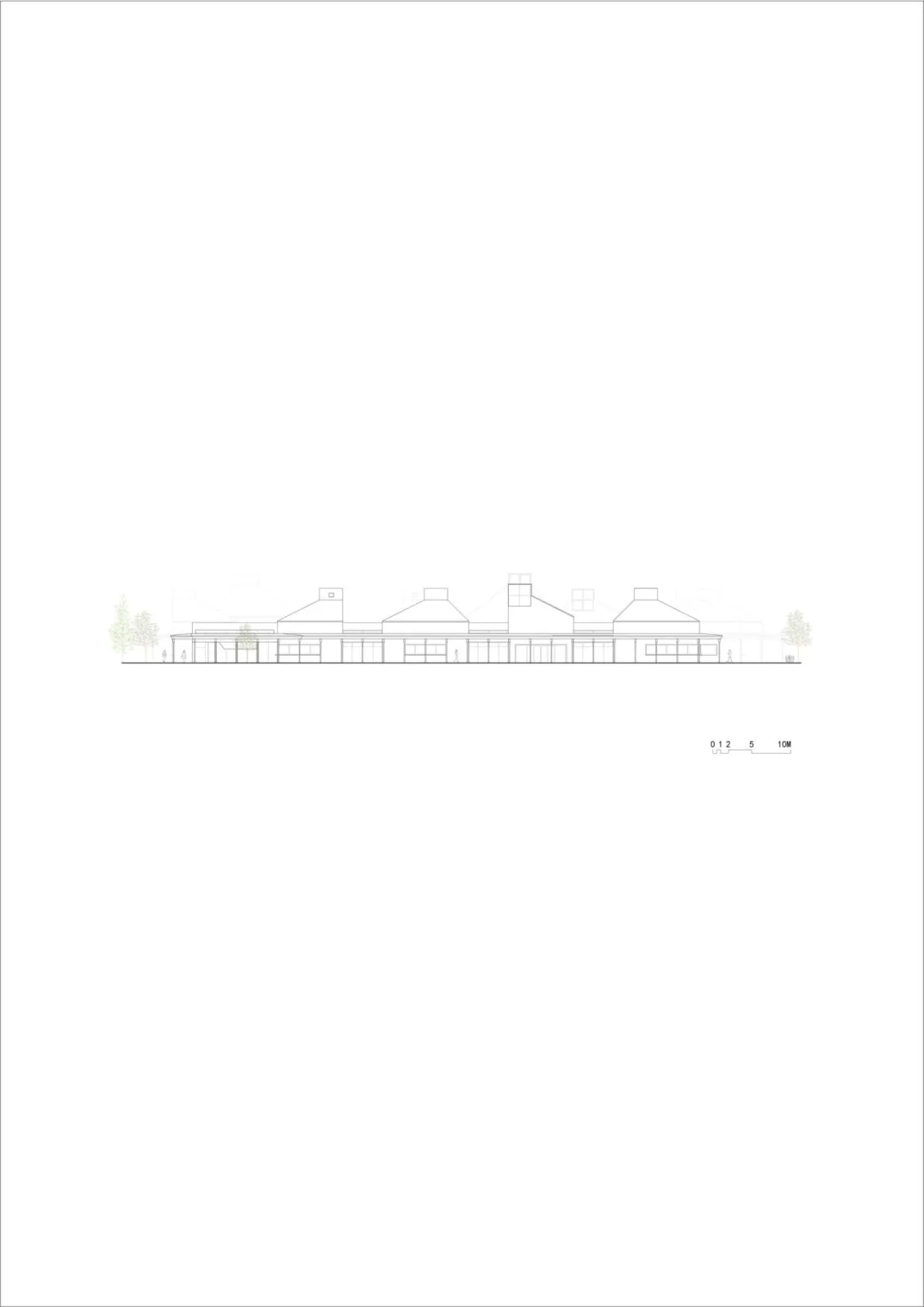
△ Elevation drawing
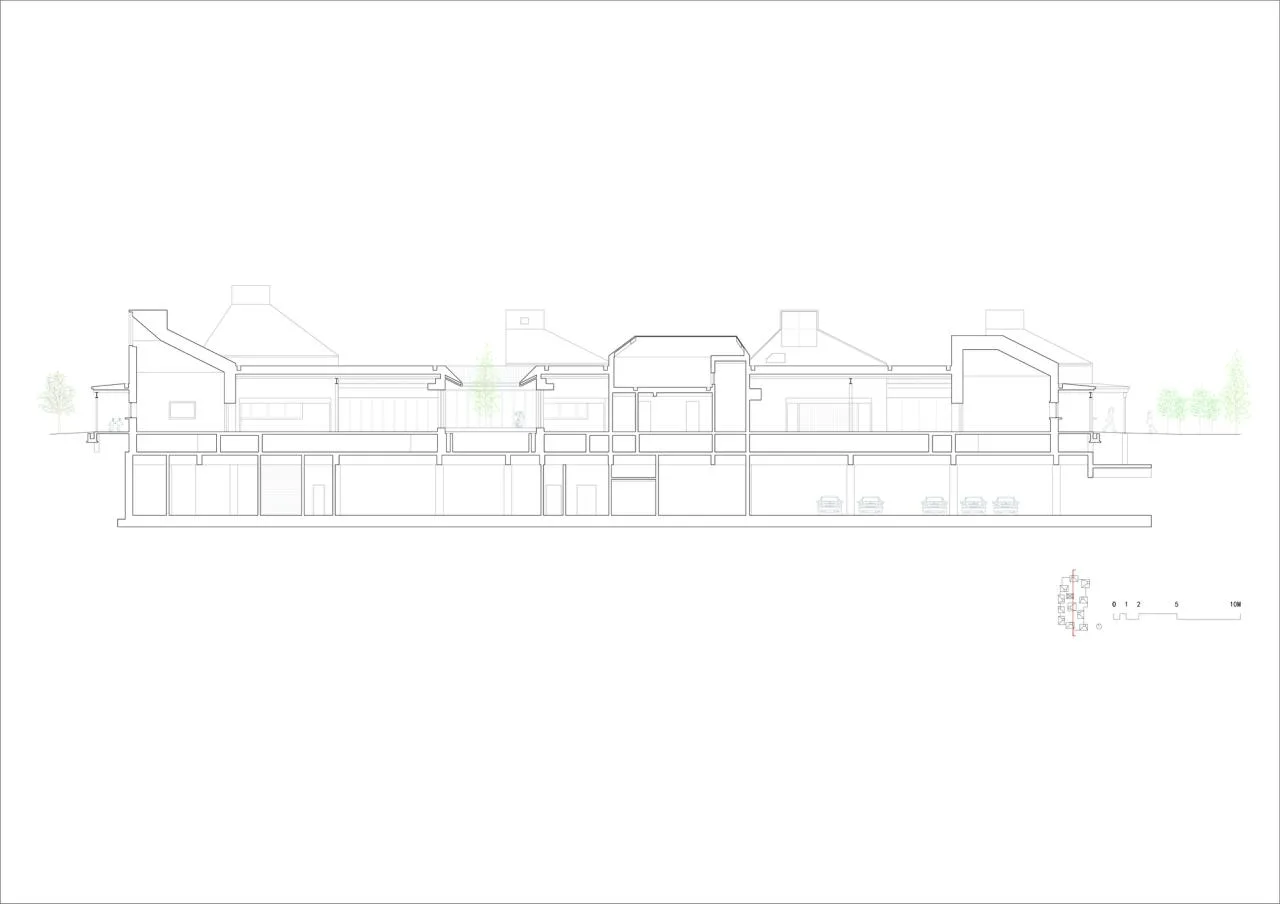
△ Section diagram
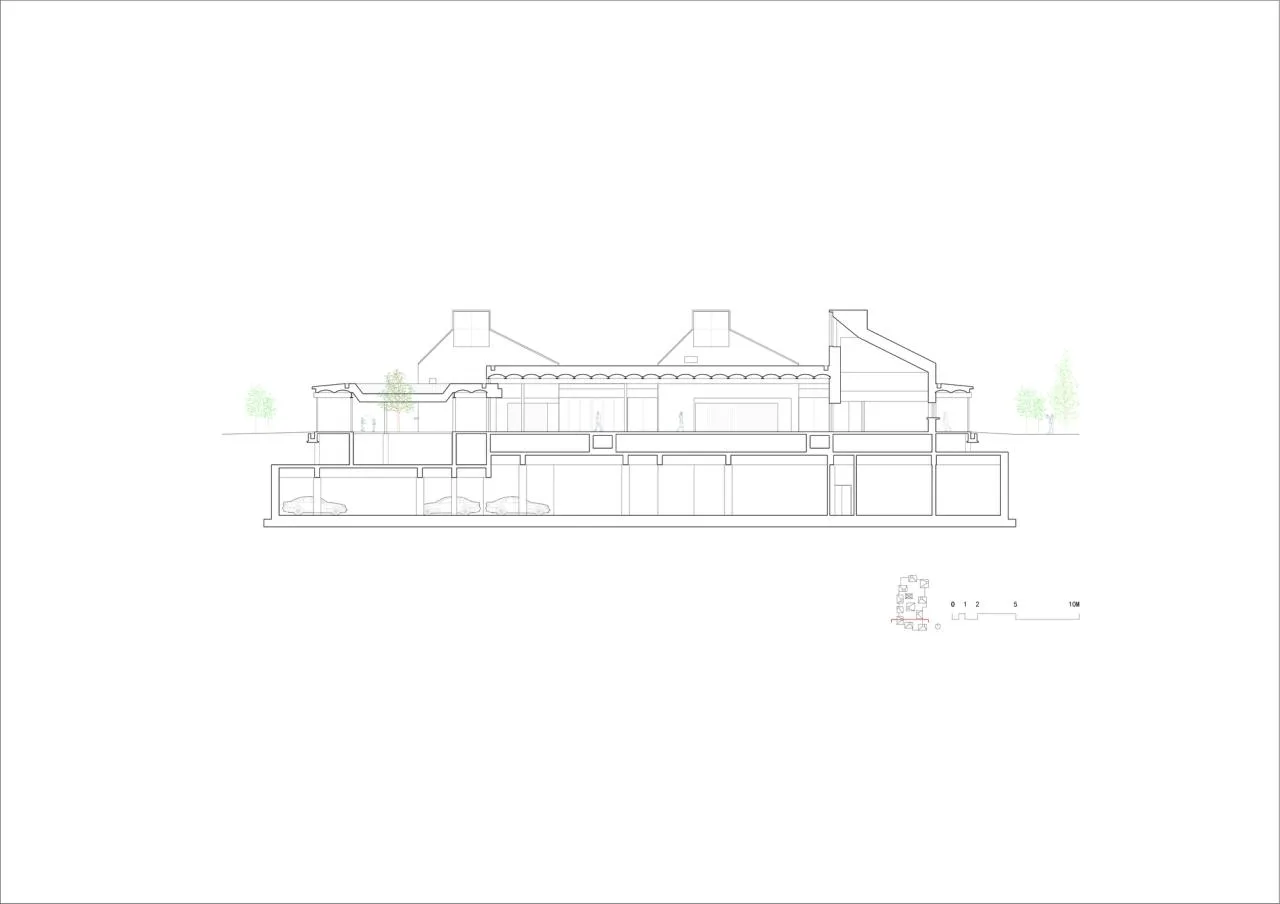
△ Section diagram
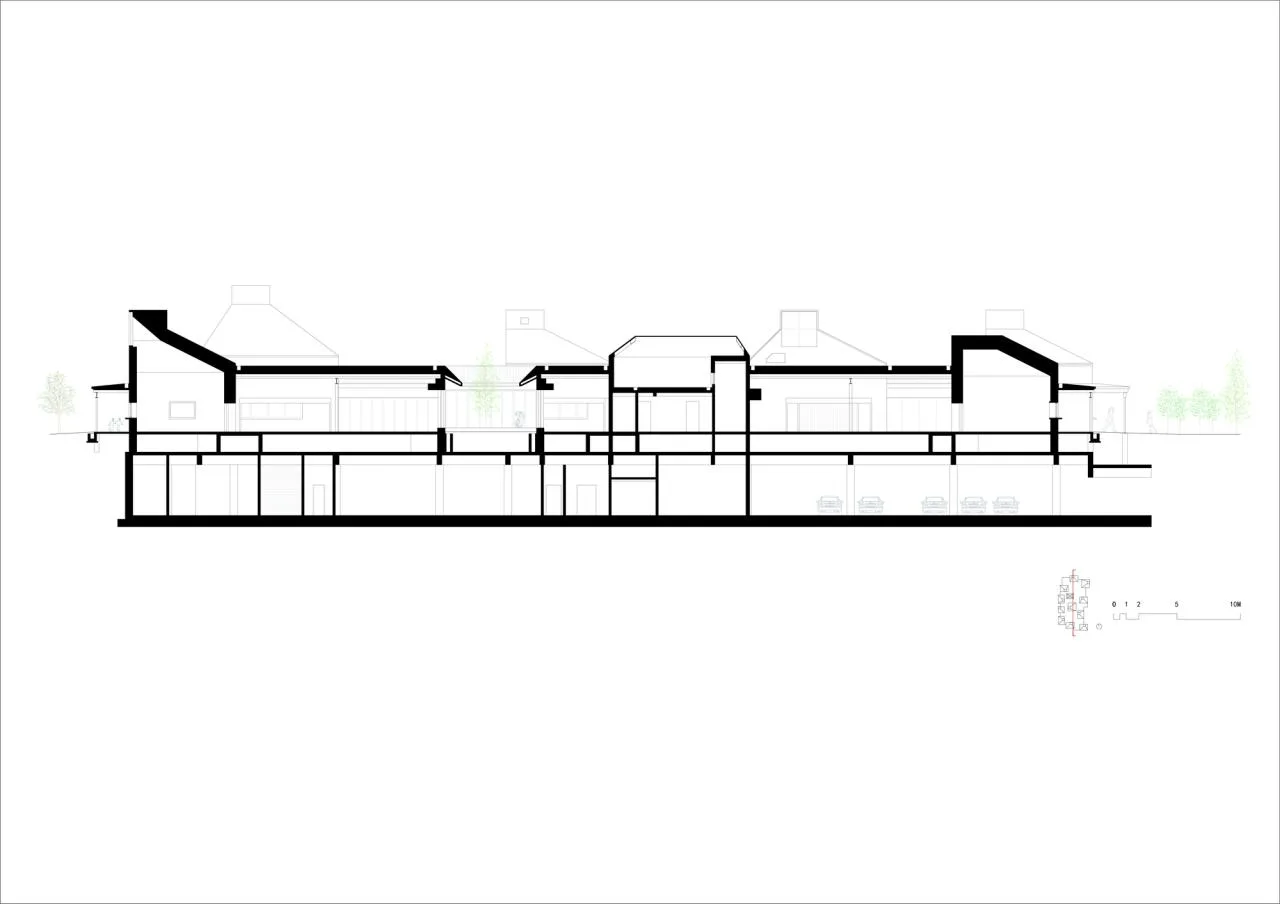
△ Section diagram
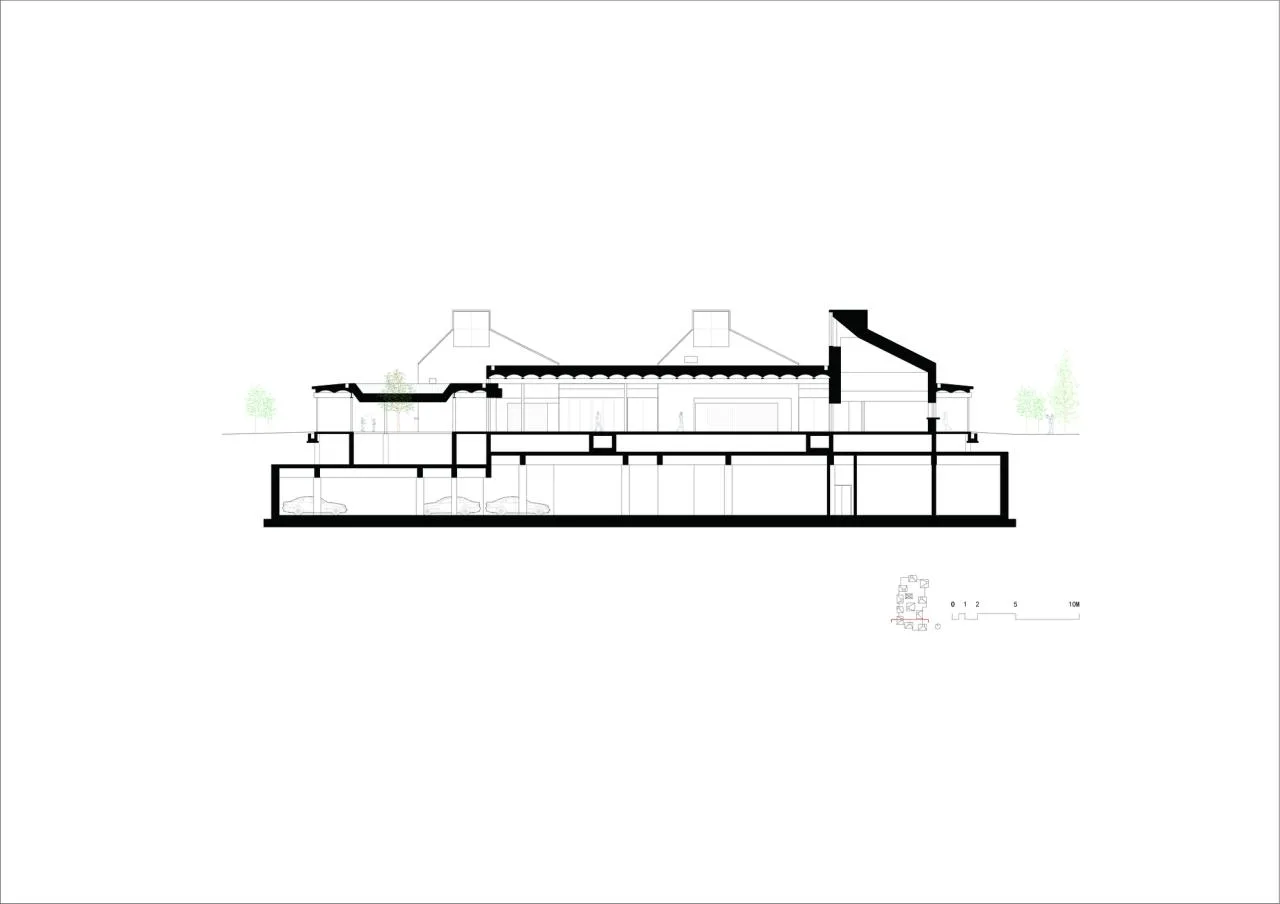
△ Section diagram
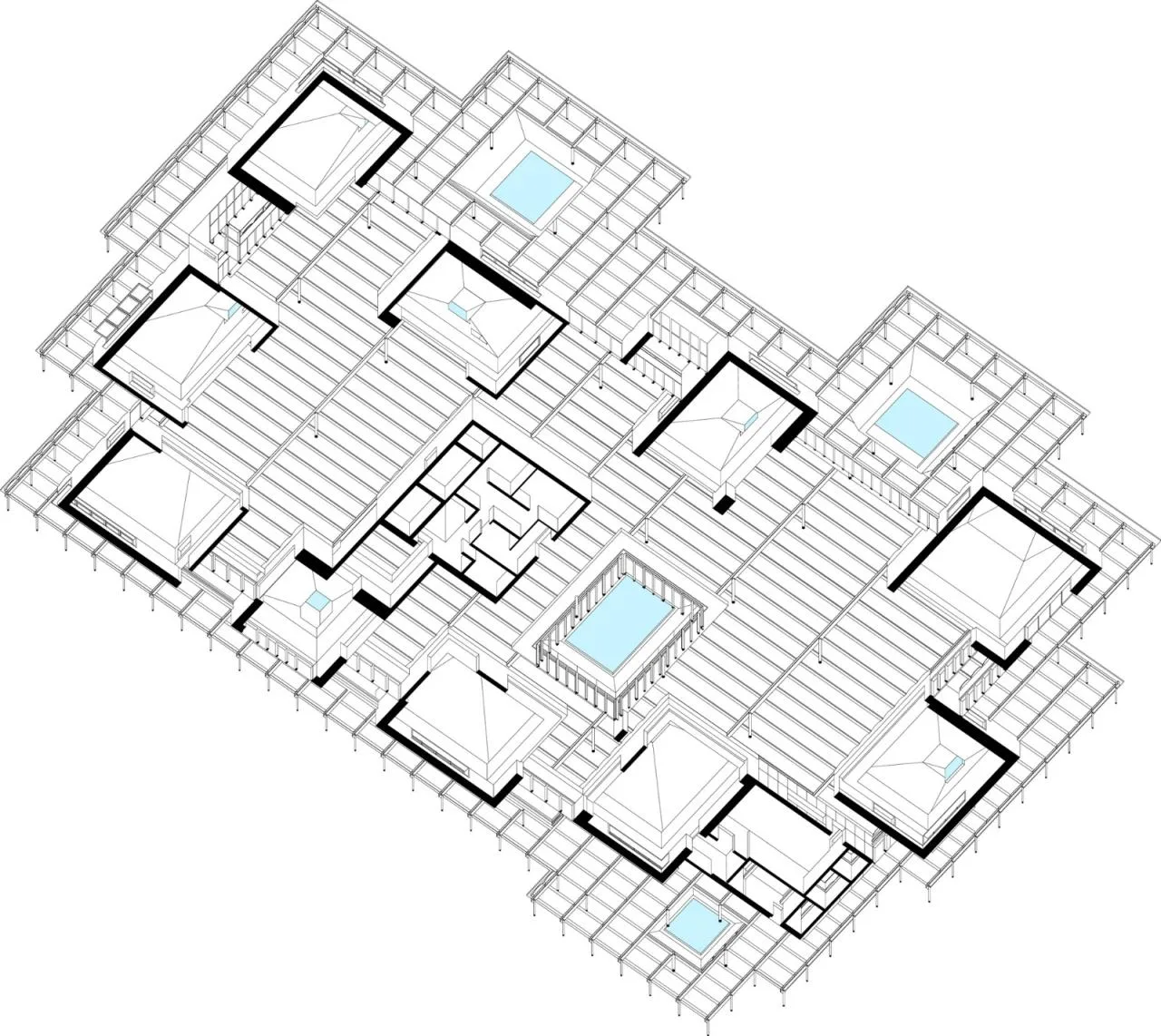
△ Axonometric diagram
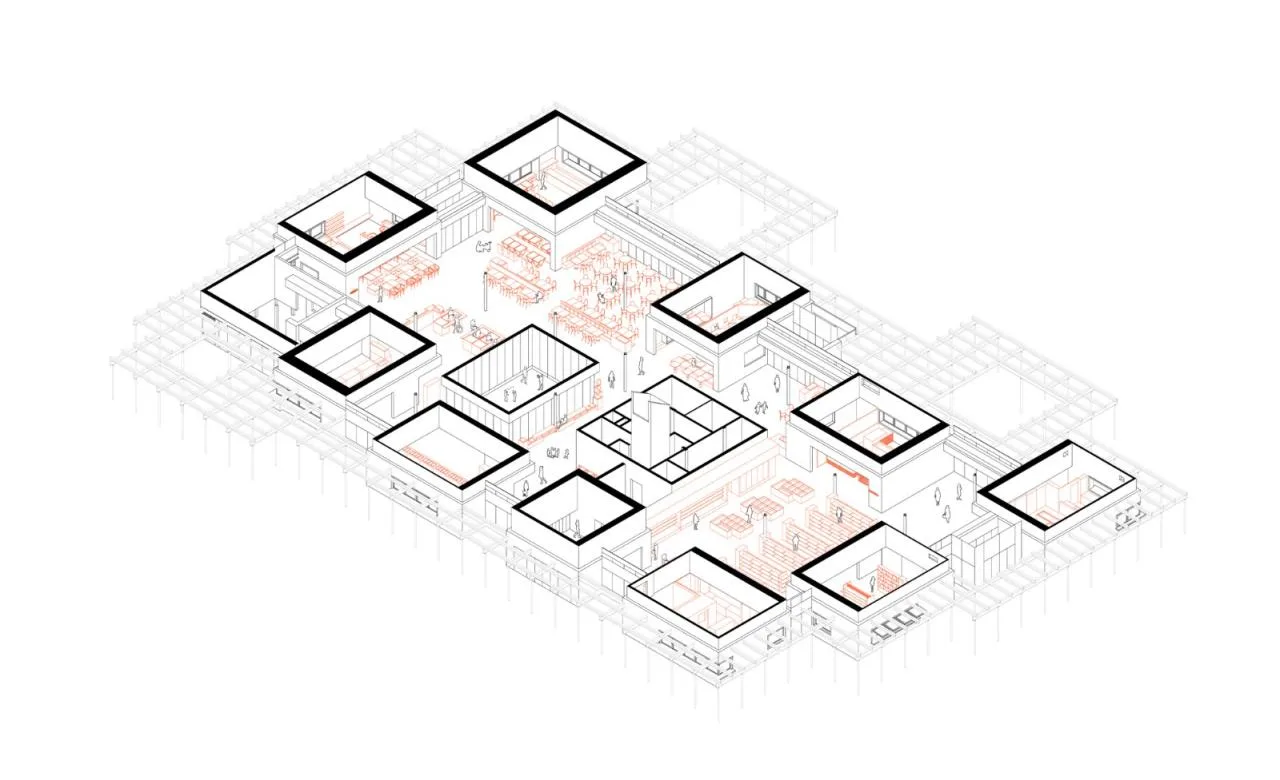
△ Axonometric diagram
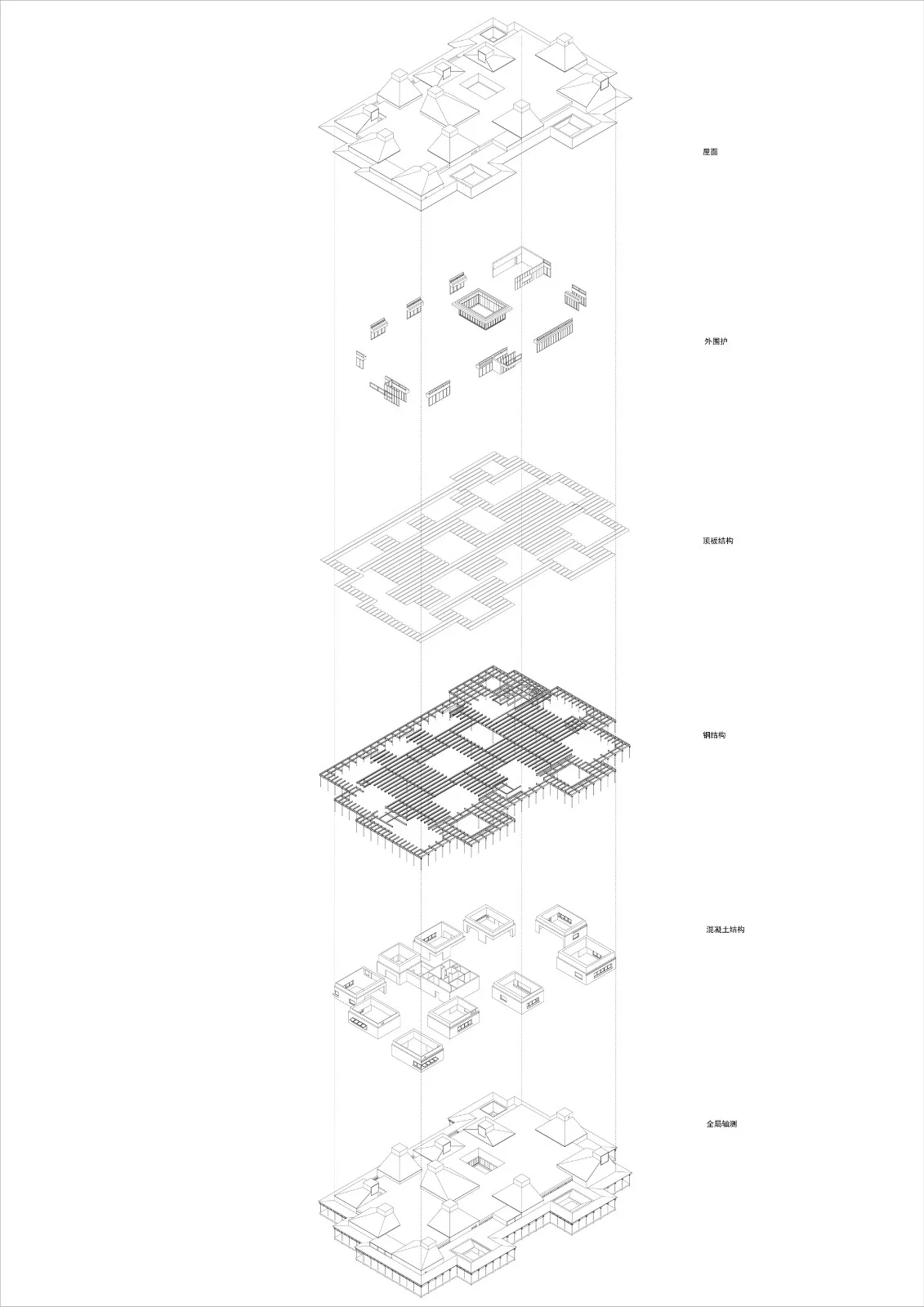
△ Exploded diagram
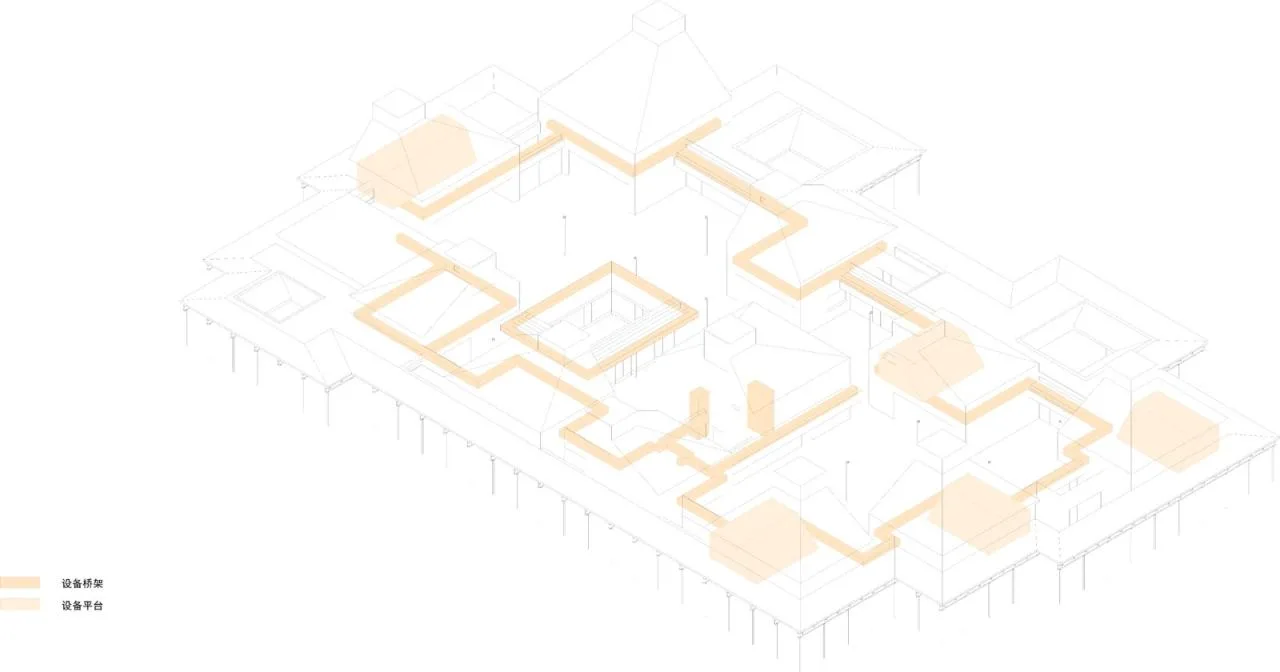
△ Analysis chart
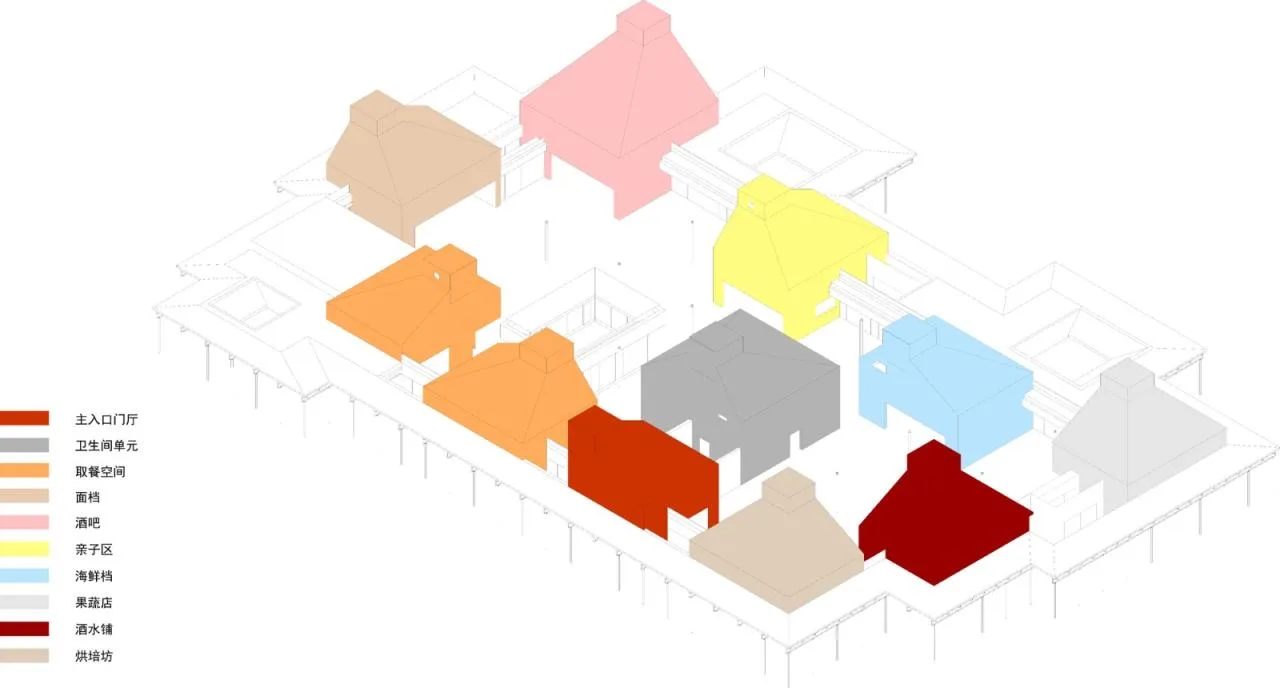
△ Functional zoning diagram
Project Information
Architect: Zhizheng Architecture Studio
Area: 3050 m²
Project Year: 2022
Photographers: Su Shengliang, Yang Min
Lead Designers: Zhou Wei, Zhang Bin
Project Architect: Jin Yanlin
Architectural Design Team: Liu Xiaoyu, Li Ang, Chen Zhaoming, He Yongxian, Wang Yan, Cai Han, Pan Yiting (Intern), Liu Zehua (Intern), Zhu Ying (Intern)
Interior Design Team: Chen Ying, Chen Zhaoming, Liu Xiaoman, He Yongxian, Yang Xinyue, Yang Shenghao
Resident Designers: Chen Ying, He Yongxian
Interior Construction: Zhongyu Sunshine (Beijing) Decoration Engineering Co., Ltd.
Design General Contractor: Dalian Architectural Design and Research Institute Co., Ltd.
Ground Floor Area: 3050 m²
Underground Building Area: 1615 m²
Principal: Qinhuangdao Tianxing Building Real Estate Development Co., Ltd.
Landscape Design: AECOM Yikang Design and Consulting Co., Ltd.
Civil Construction: Jiangsu Jiangdu Construction Group Co., Ltd.
Interior Lighting Design: Shanghai Tongji Architectural Interior Design Engineering Co., Ltd. Lighting Engineering Institute
Mechanical and Electrical Design: Shanghai Zhisheng Architectural Decoration Design Co., Ltd.
Soft Decoration Design: Mingyi Space Design Consulting Firm
Location: Qinhuangdao City















Must log in before commenting!
Sign Up