
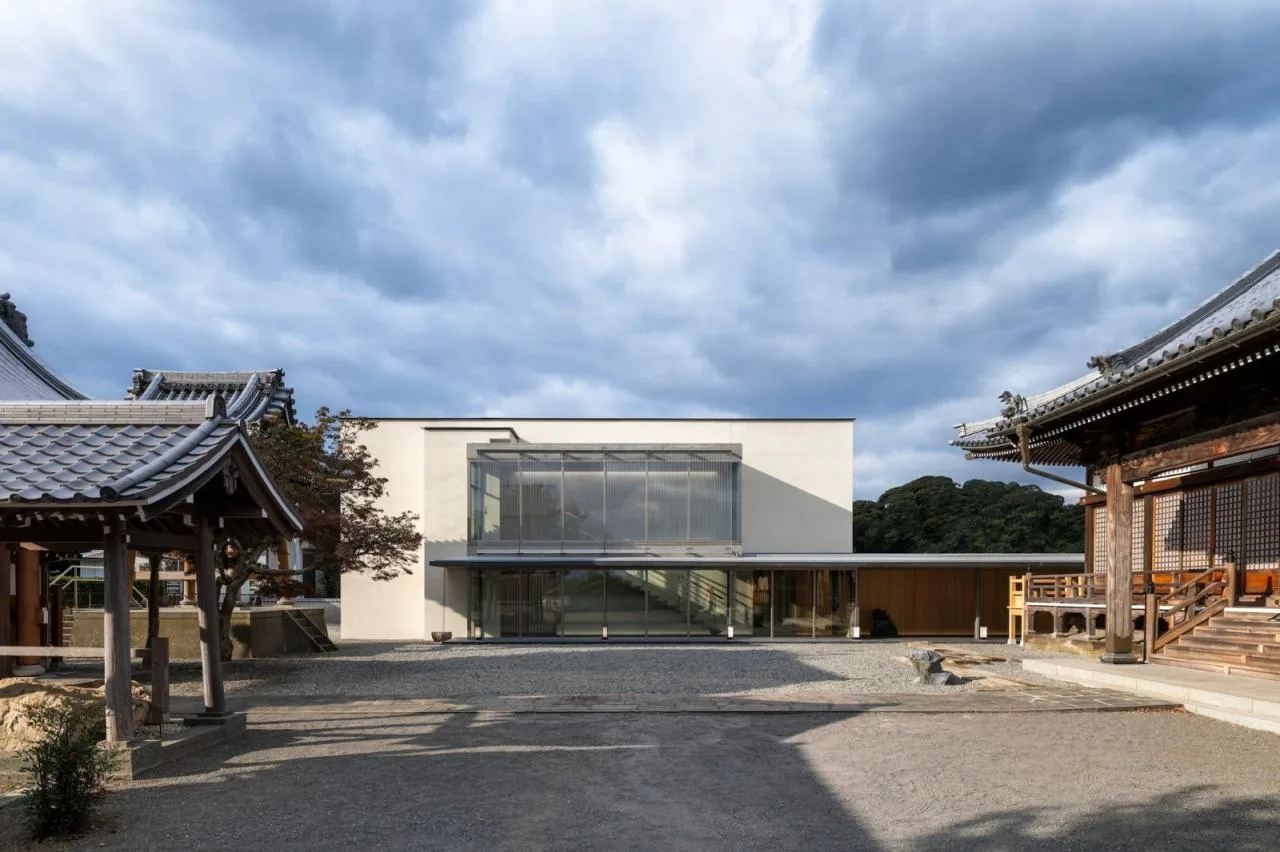
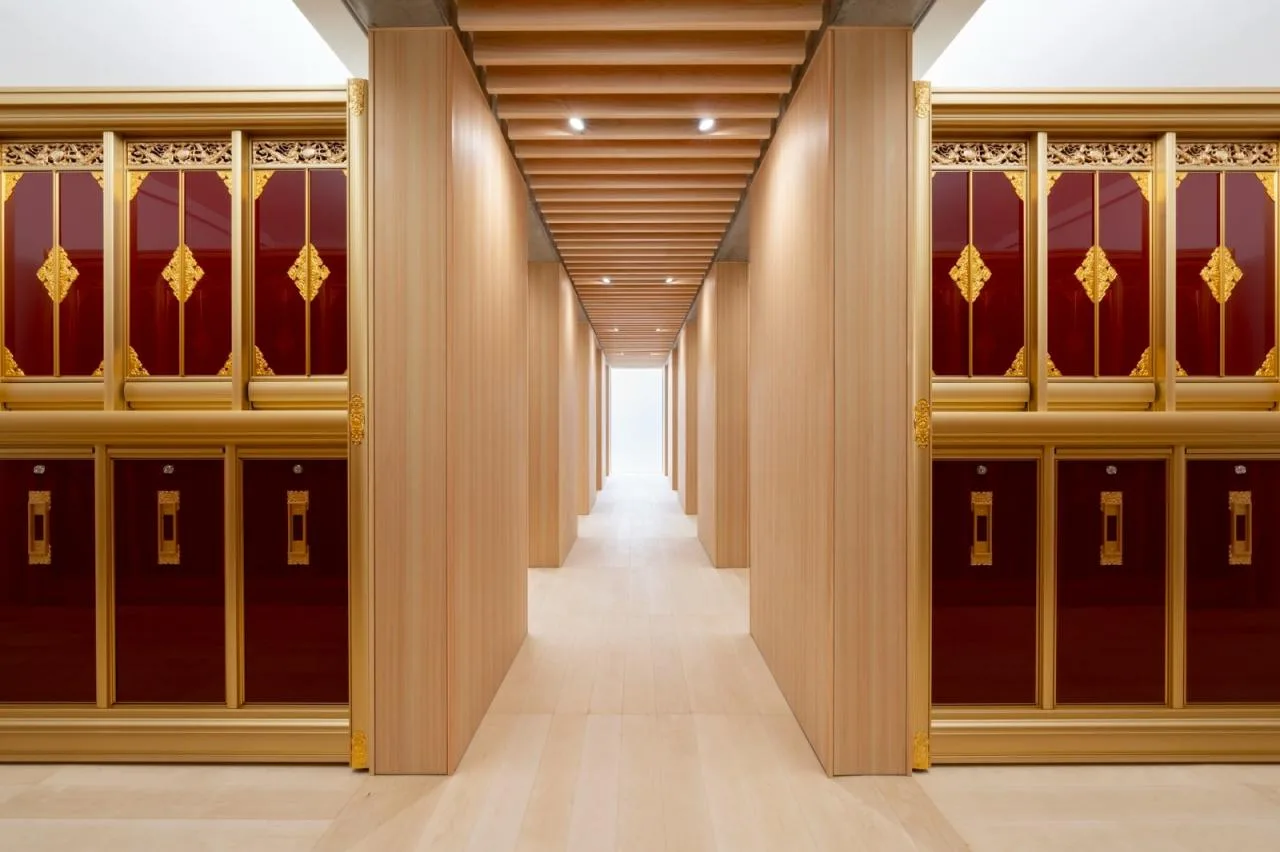
This project involves the design of the “nokotsudo,” or crematorium, located within Miaolian Temple Park in Oita Prefecture, Japan. These facilities offer an alternative to traditional cemeteries, typically featuring compact spaces—often resembling storage cabinets with small altars—used to store urns.
In recent years, factors such as population decline, rural-to-urban migration, and shrinking family sizes have increased the demand for crematoriums in Japan. This trend has made it increasingly difficult for families to maintain traditional cemeteries, especially those situated within local temple grounds. The design of memorial spaces that address both immediate needs and long-term societal changes provides a practical solution to this challenge.
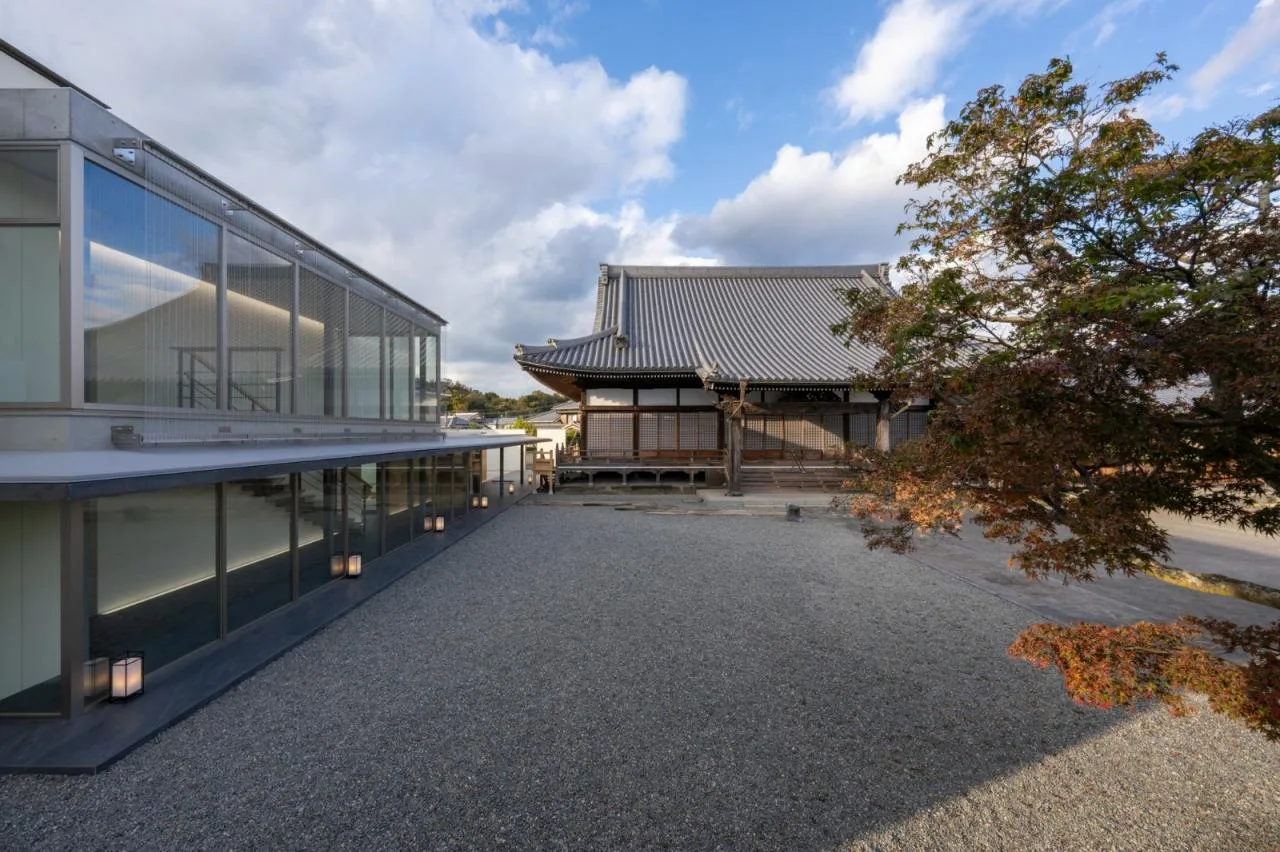
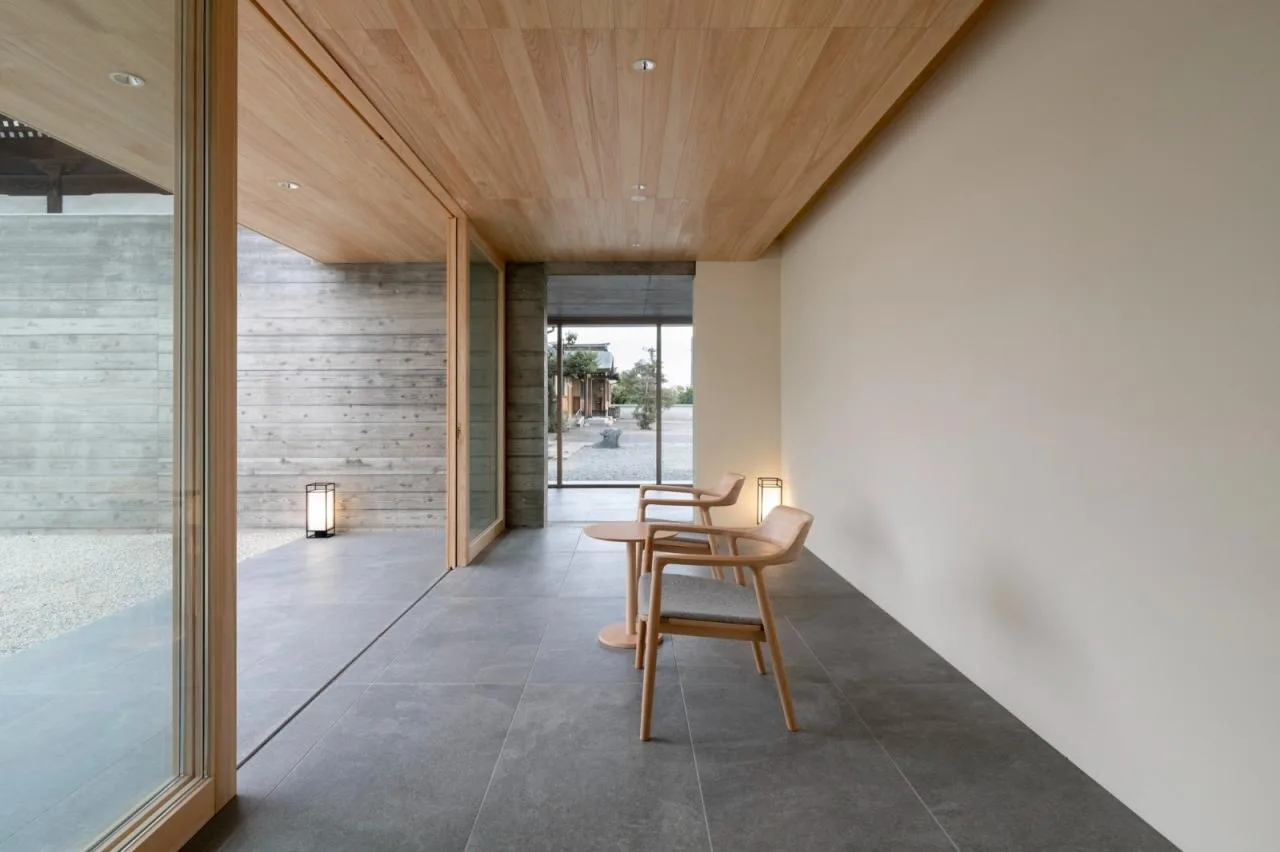
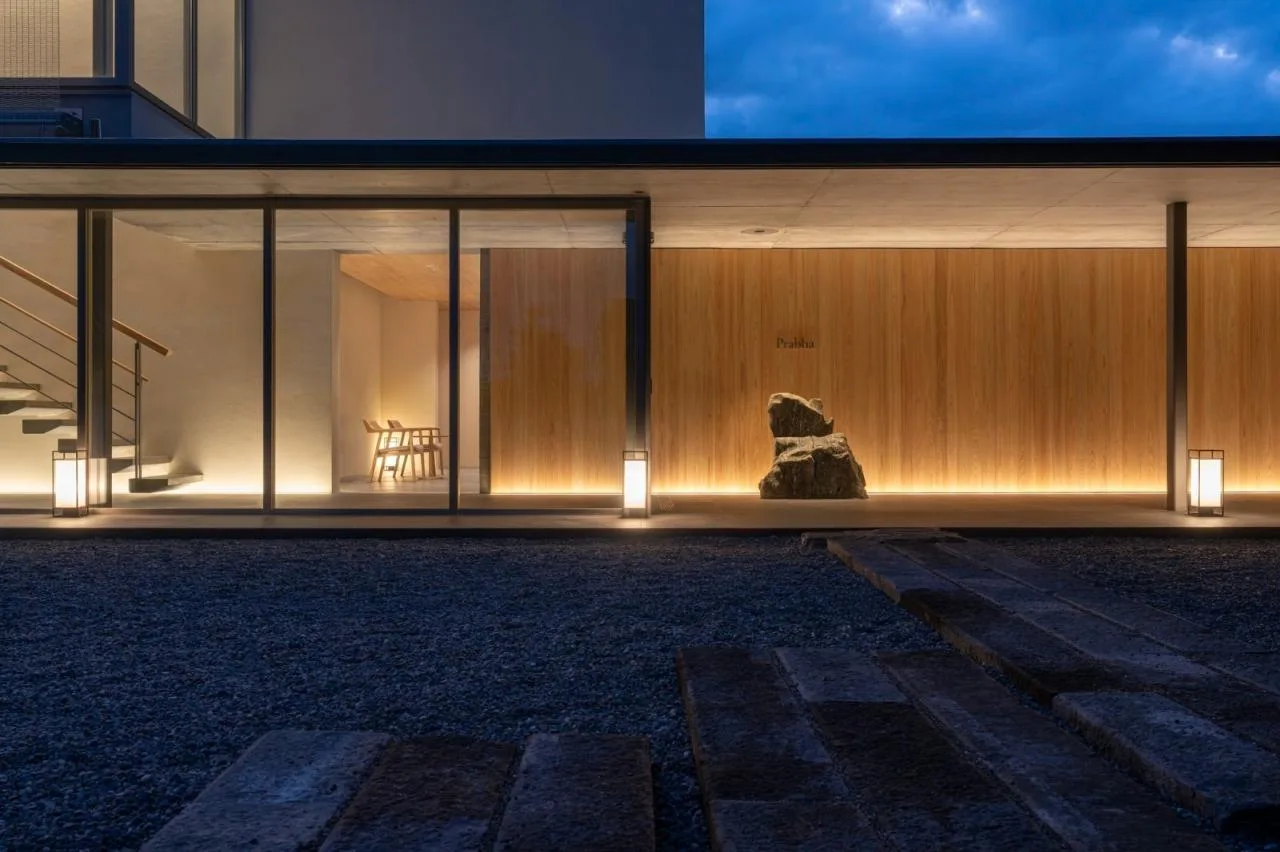
After discussions with the abbot of our client’s temple, we aimed to create a comforting space for grieving families—one that moves away from the typical dark, warehouse-like atmosphere of many crematoriums. Our design concept, “guest rooms for the deceased,” envisions a bright, welcoming environment reminiscent of a hotel or luxury inn.
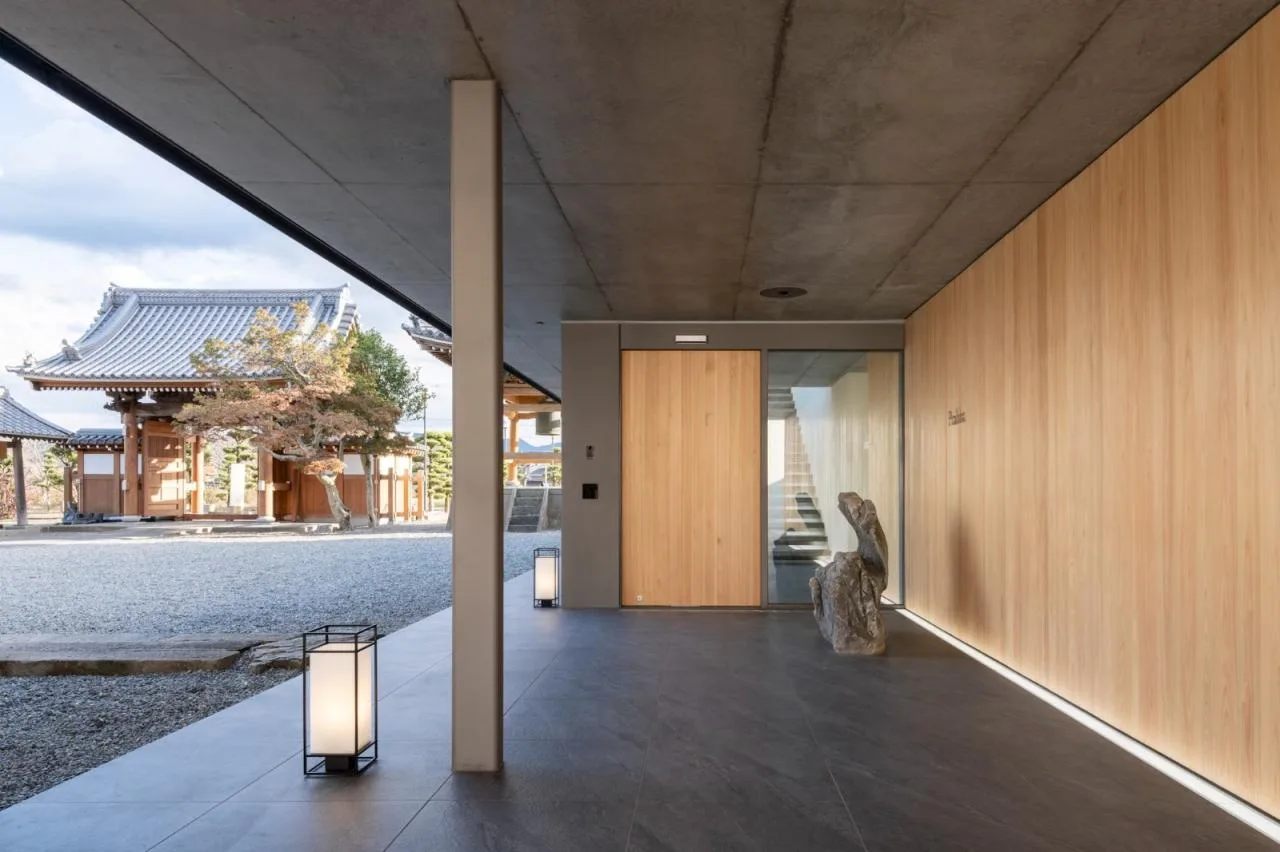
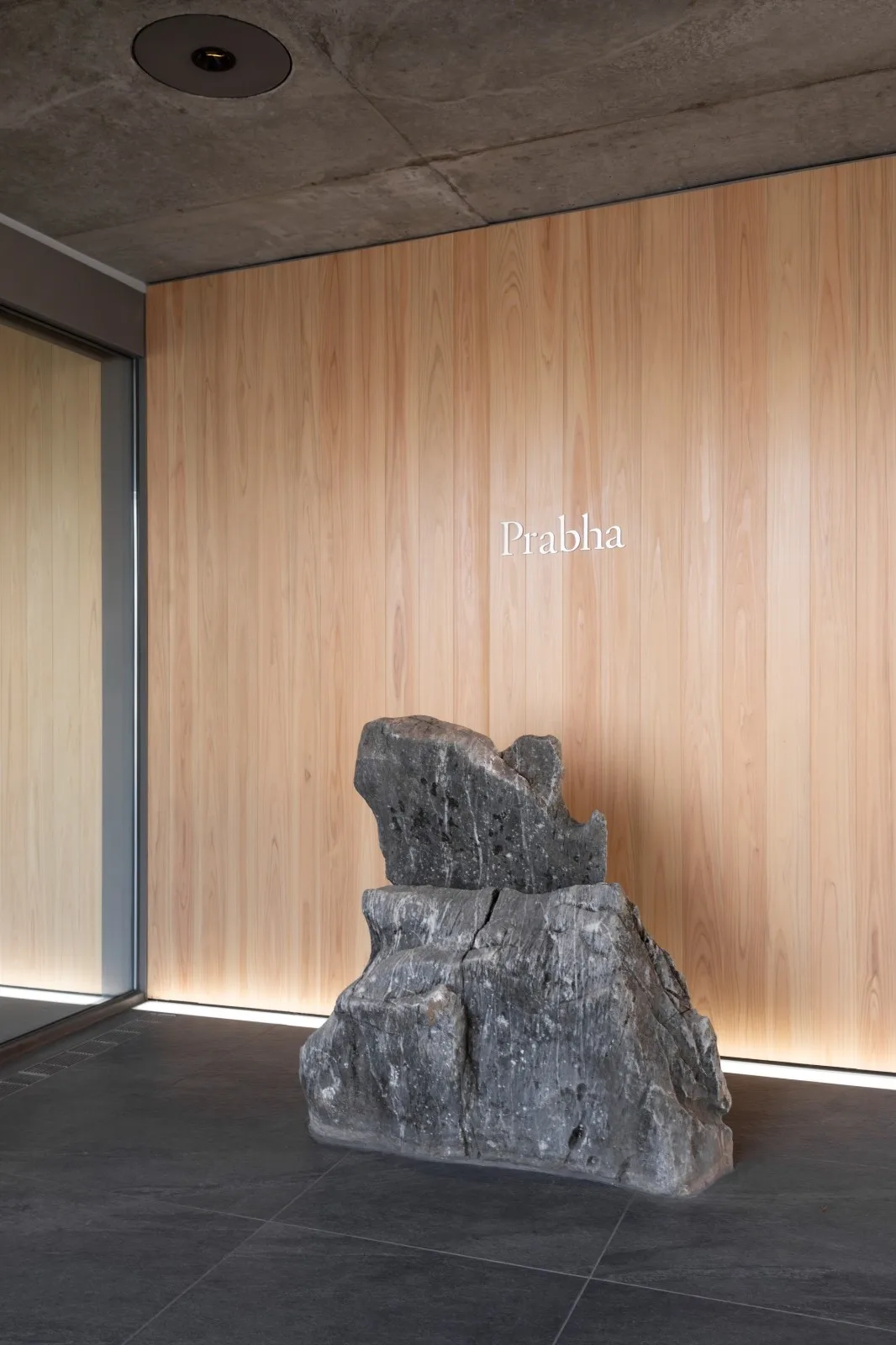
The facility is named “Prabha,” derived from ancient Indian scripture meaning “light.”
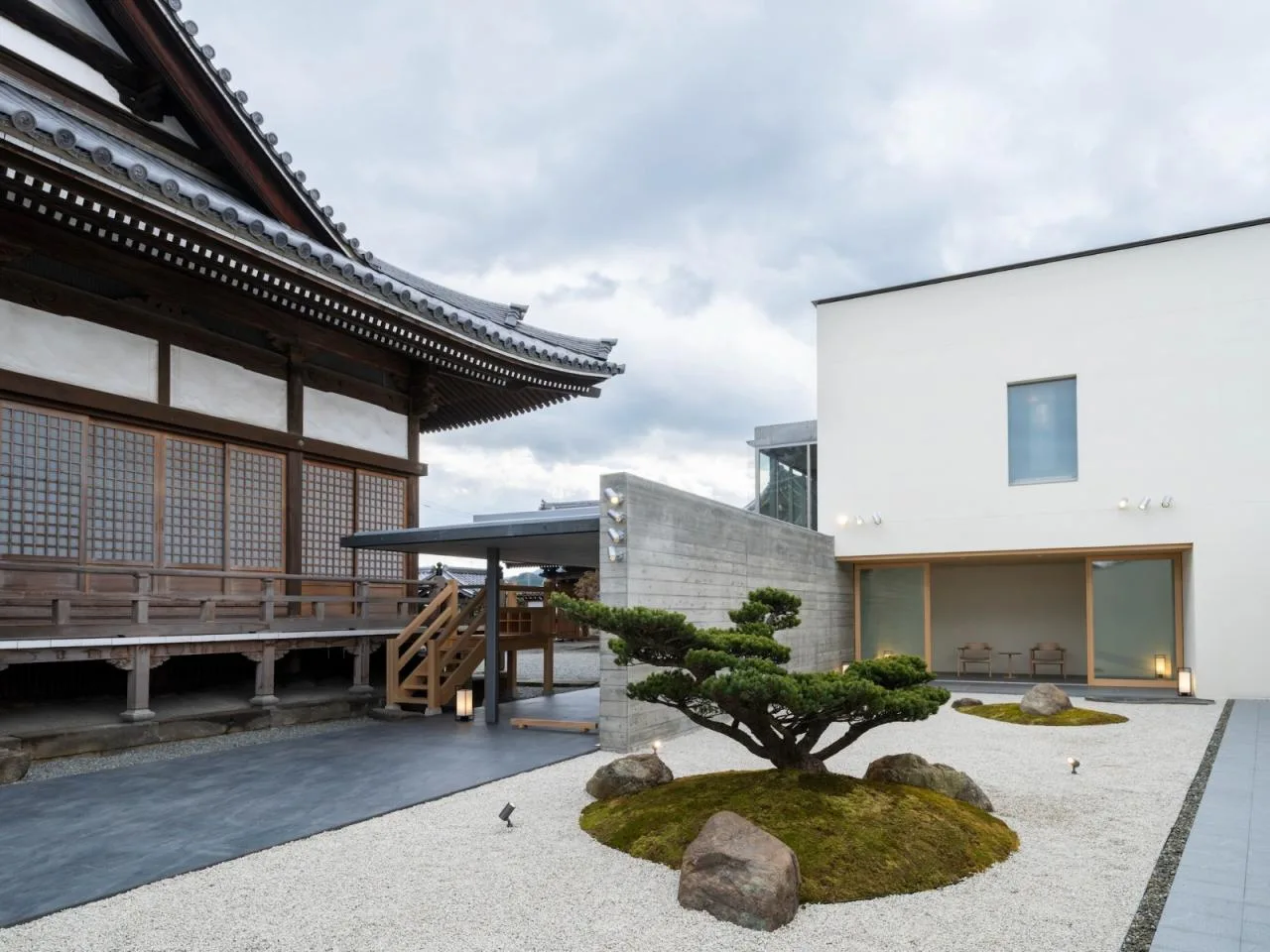
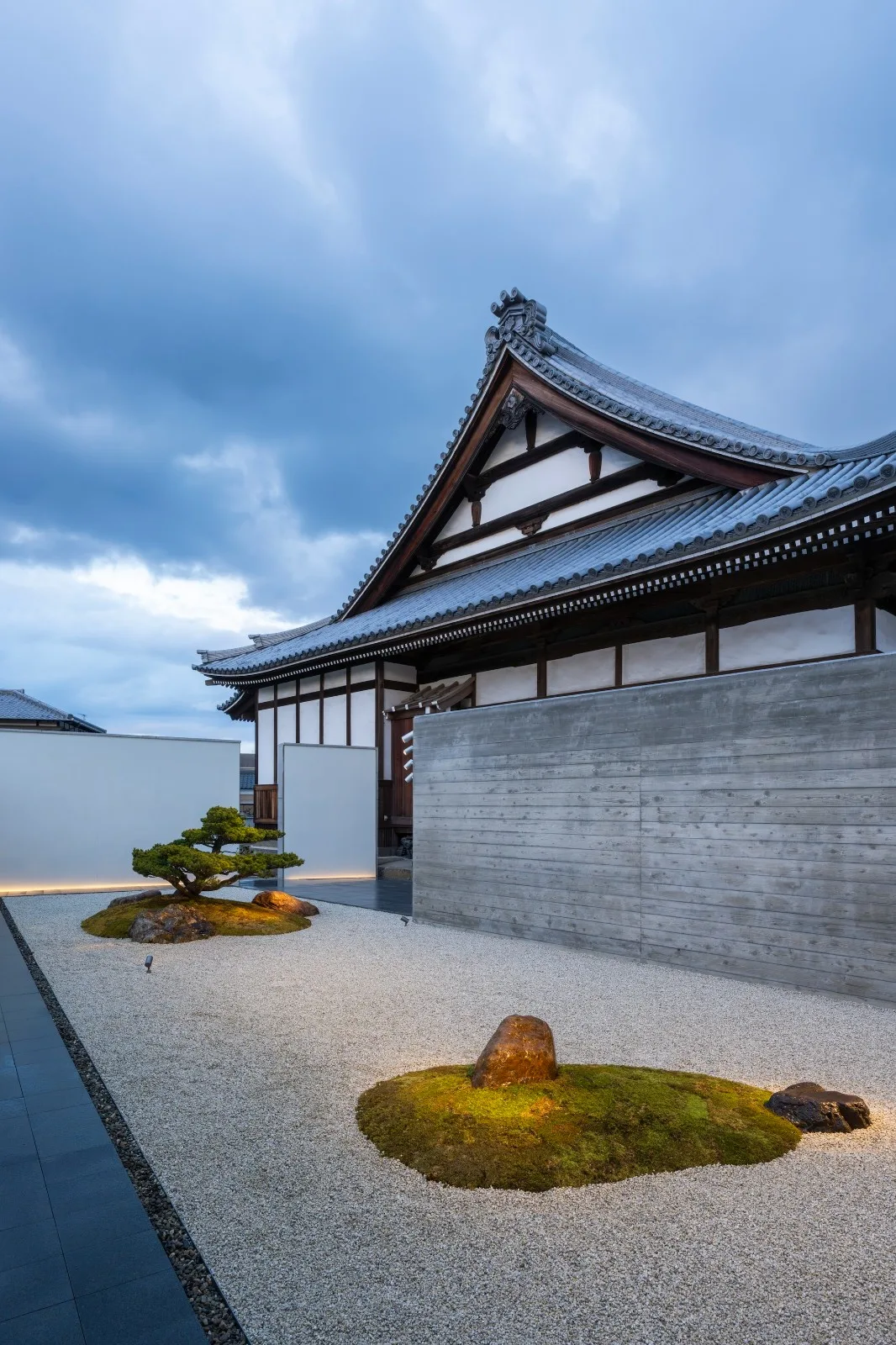
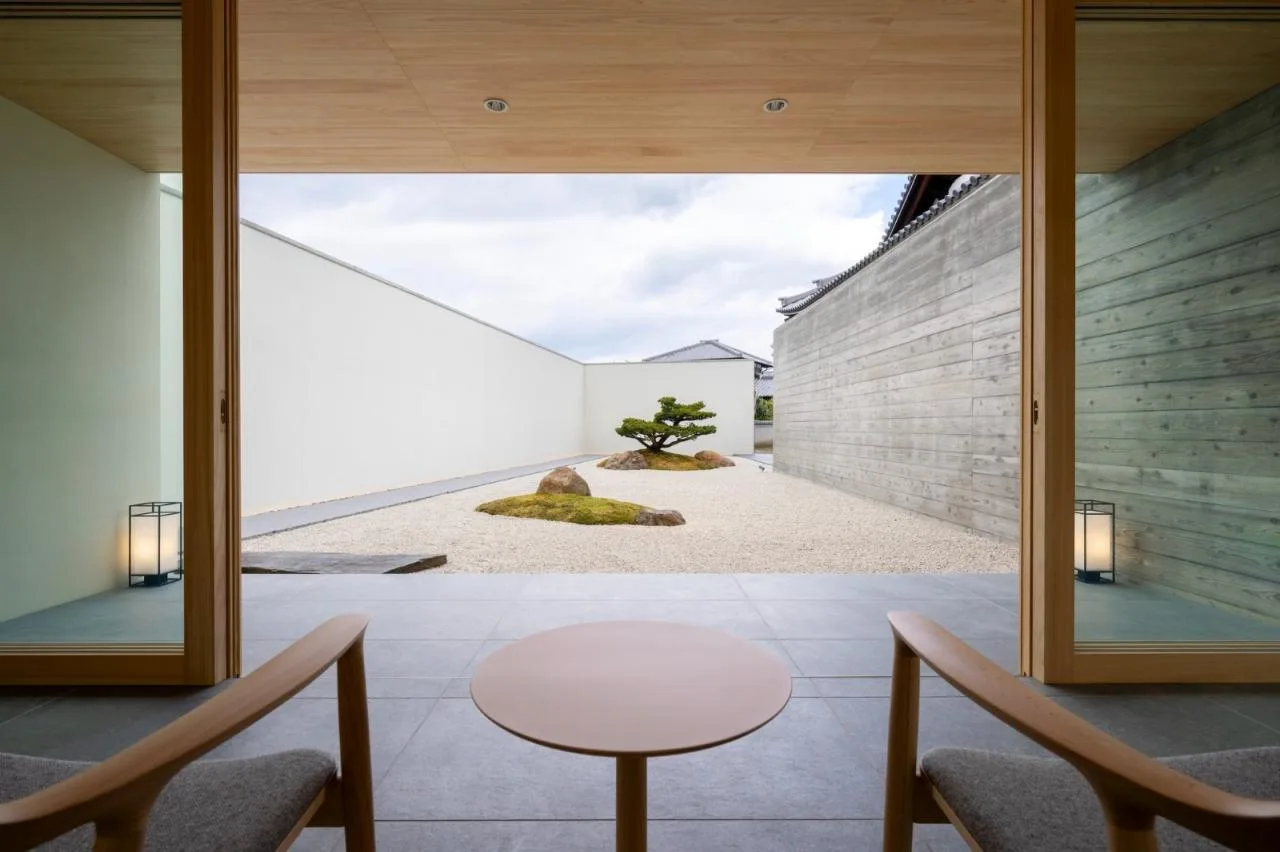
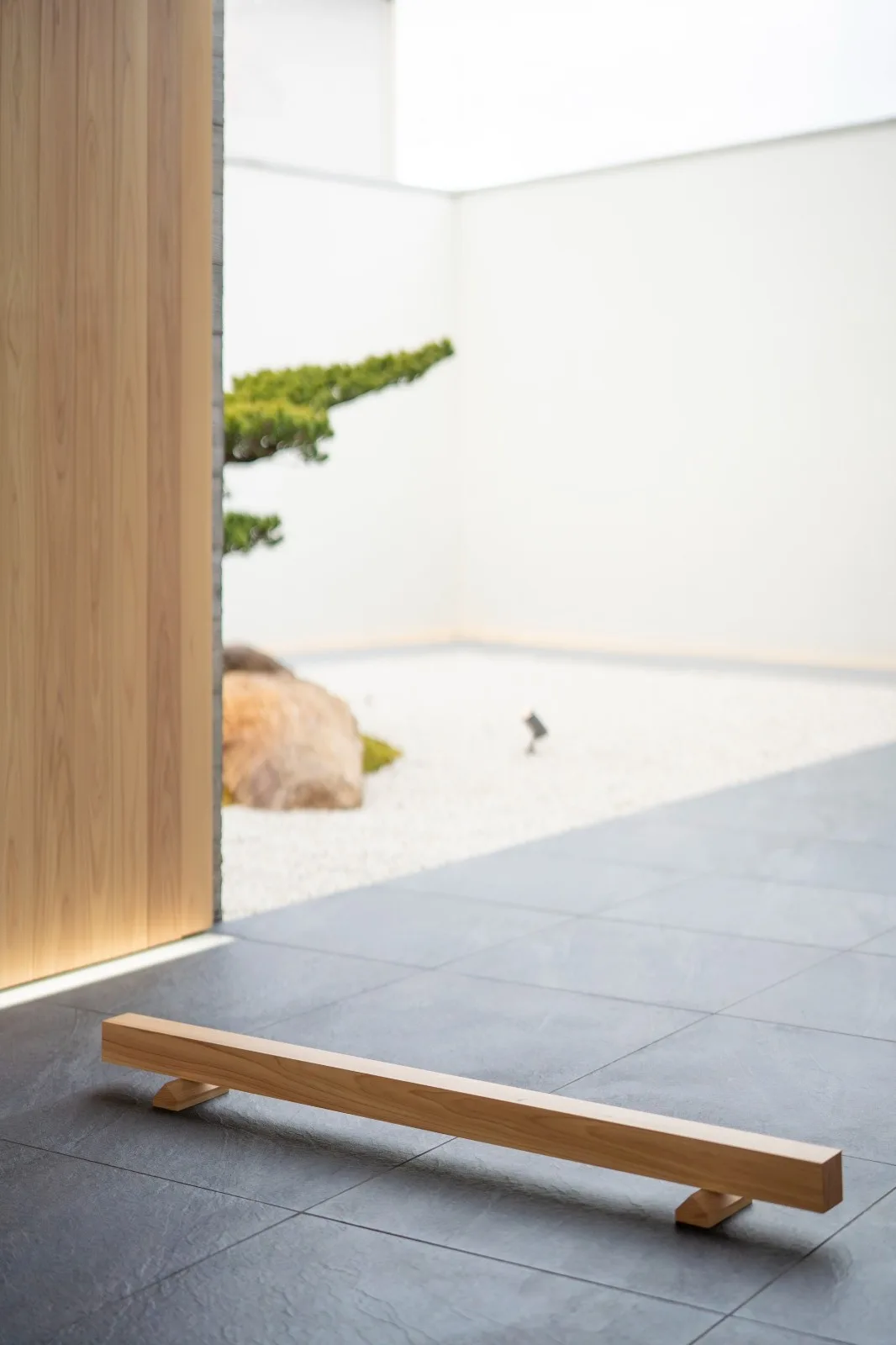
A key feature of the design is the “Silent Garden,” a withered landscape garden carefully balanced with pine trees and stones. The stones, sourced from within the temple grounds, deepen the traditional connection between the garden and the site. The specially selected Japanese white pine complements the surroundings perfectly.
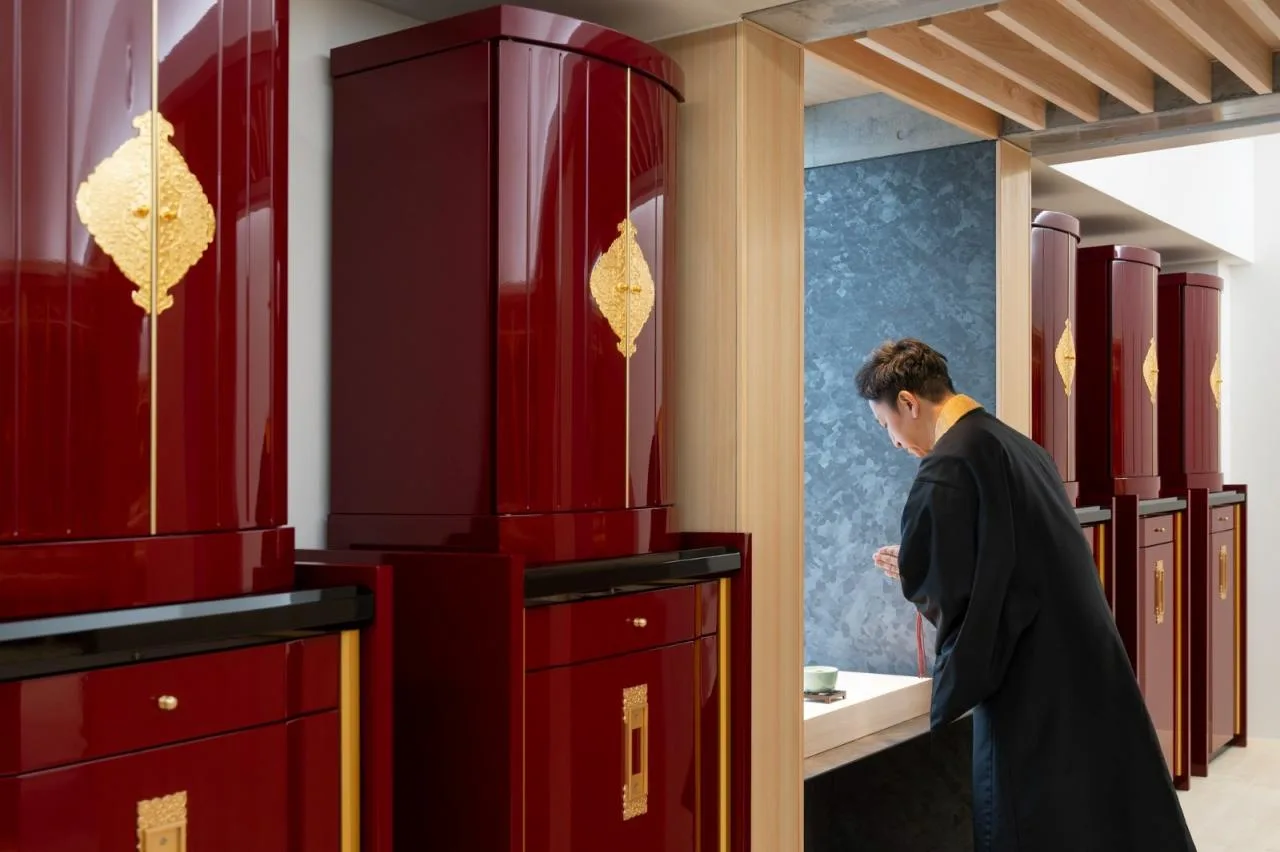
Visitors can relax on comfortable lounge chairs in a semi-open space overlooking the garden, immersing themselves in a tranquil atmosphere to reflect on their departed loved ones. Interior design prominently features white plaster walls and abundant wood. Instead of the traditional black, the Buddha altar is painted a deep red, symbolizing the radiance of the Western Pure Land and the colors of the sunset.
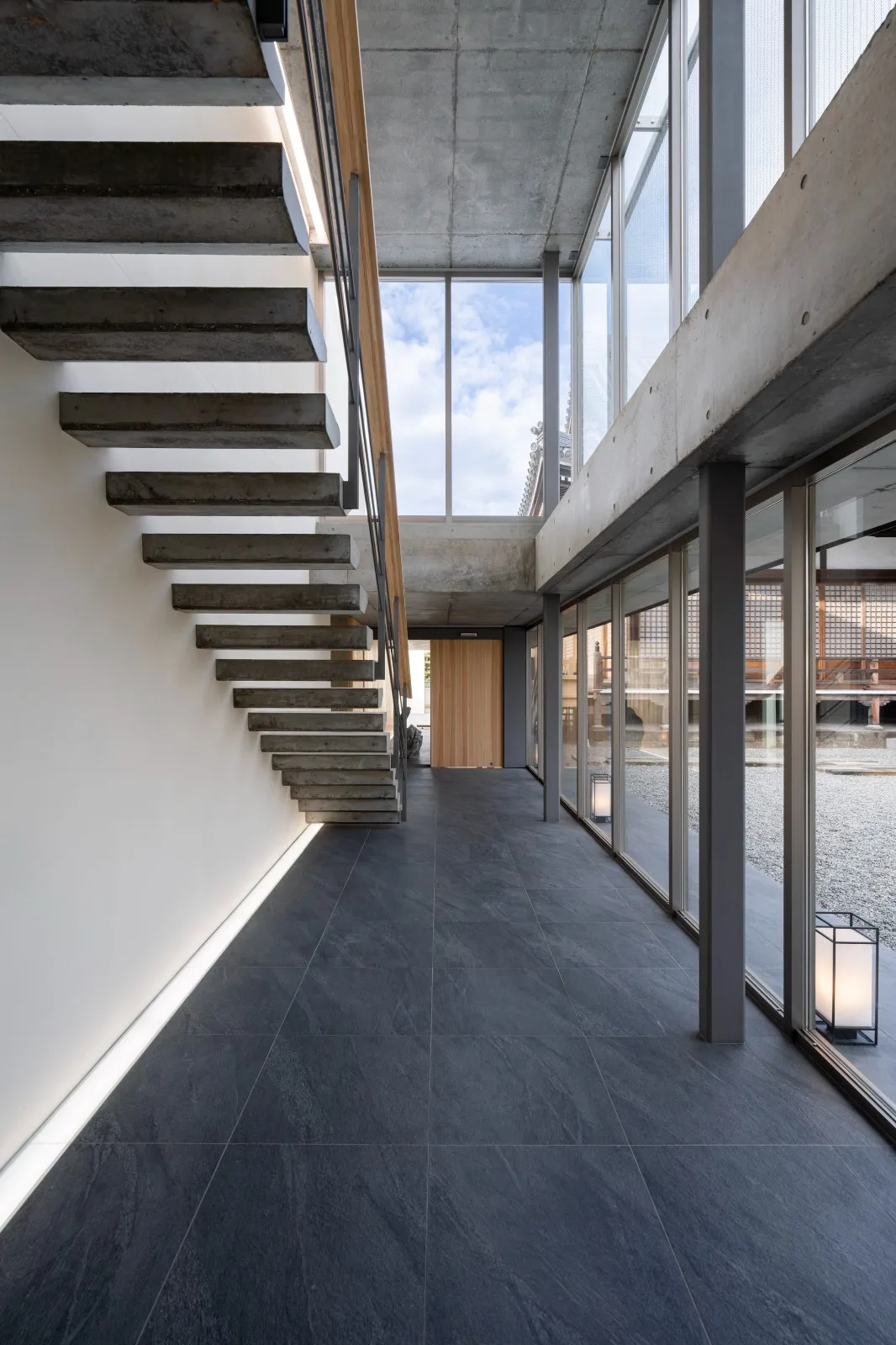
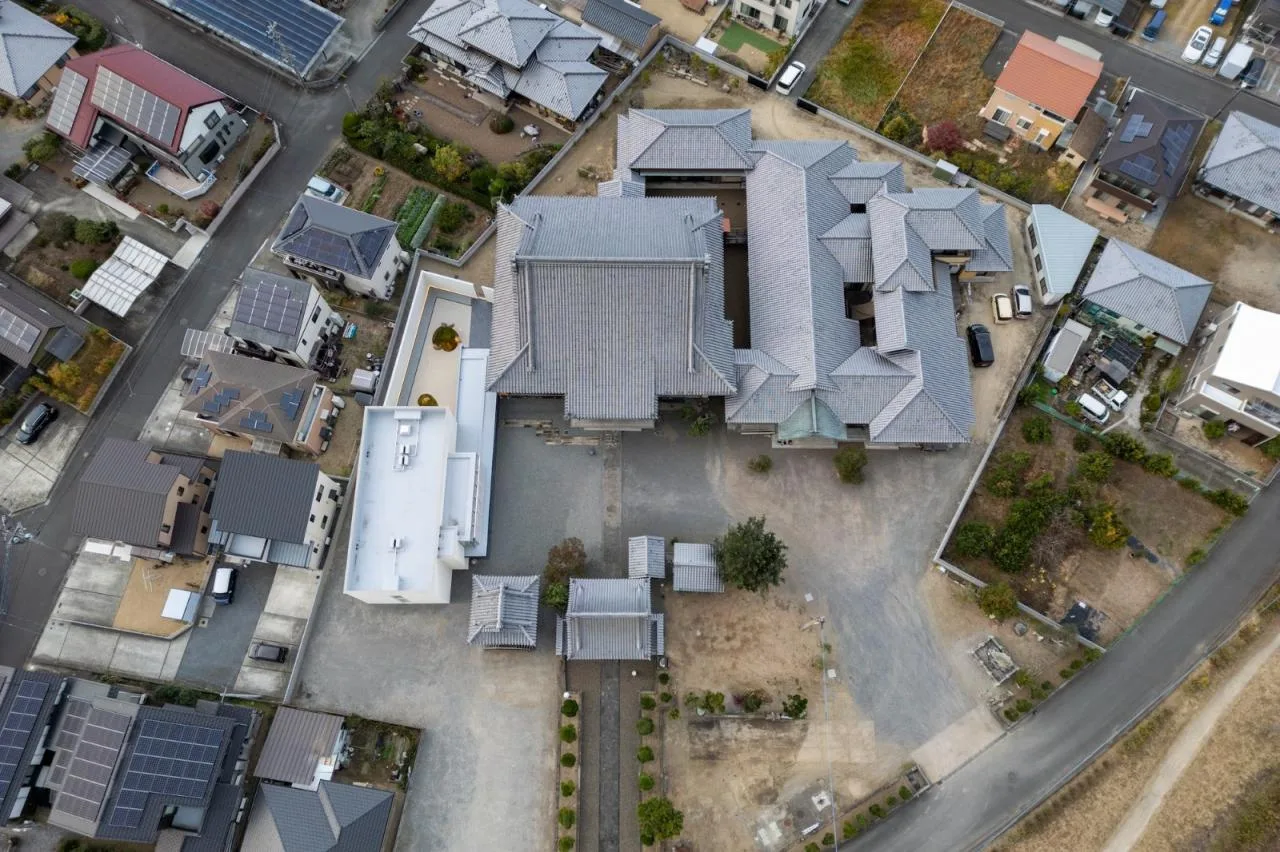
Our project also included multiple improvements to the temple courtyard. We assessed whether the main hall (built around 1750), main entrance, bell tower, and monastery complied with current building regulations. Additionally, a stone monument was relocated.
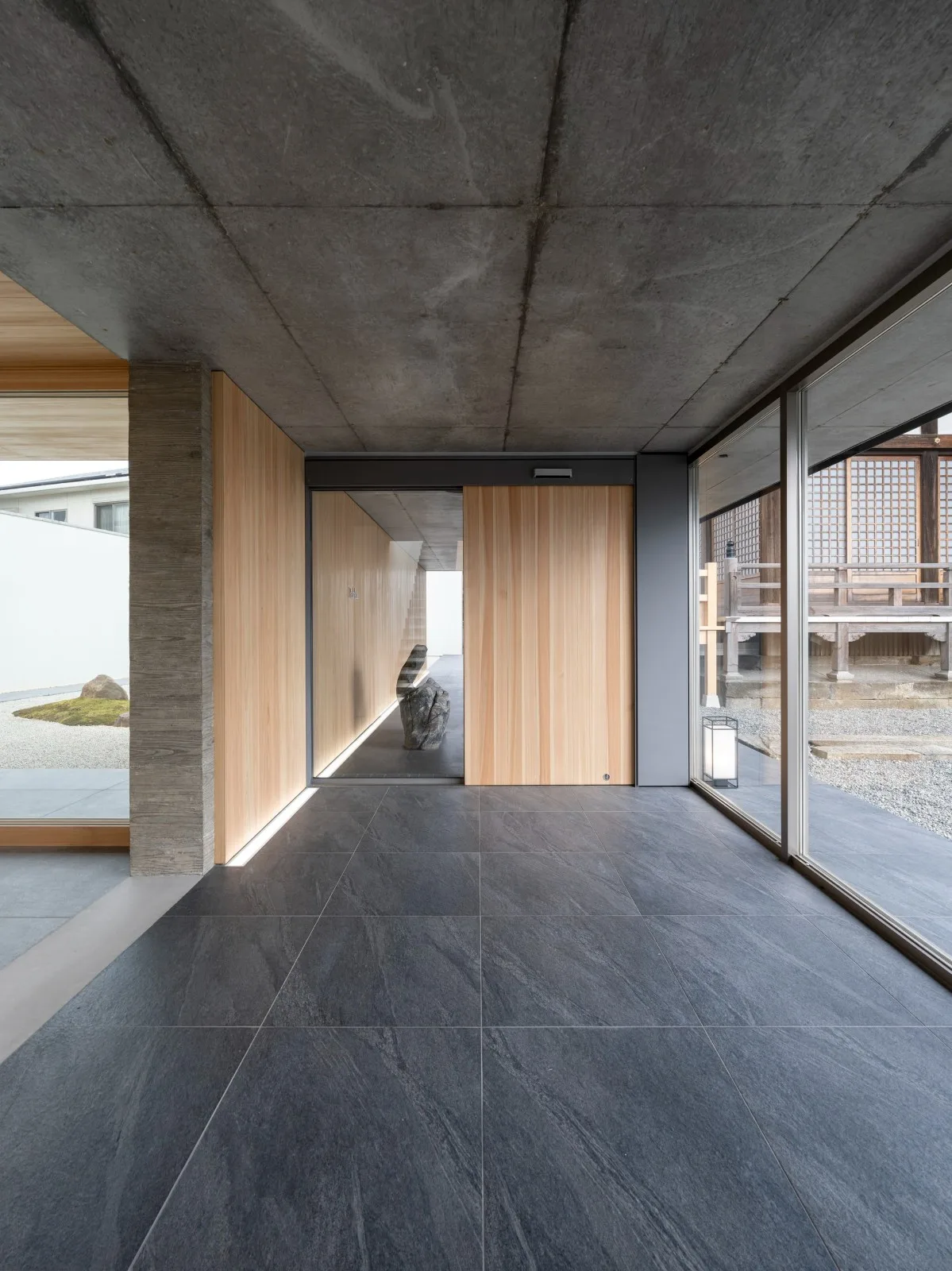
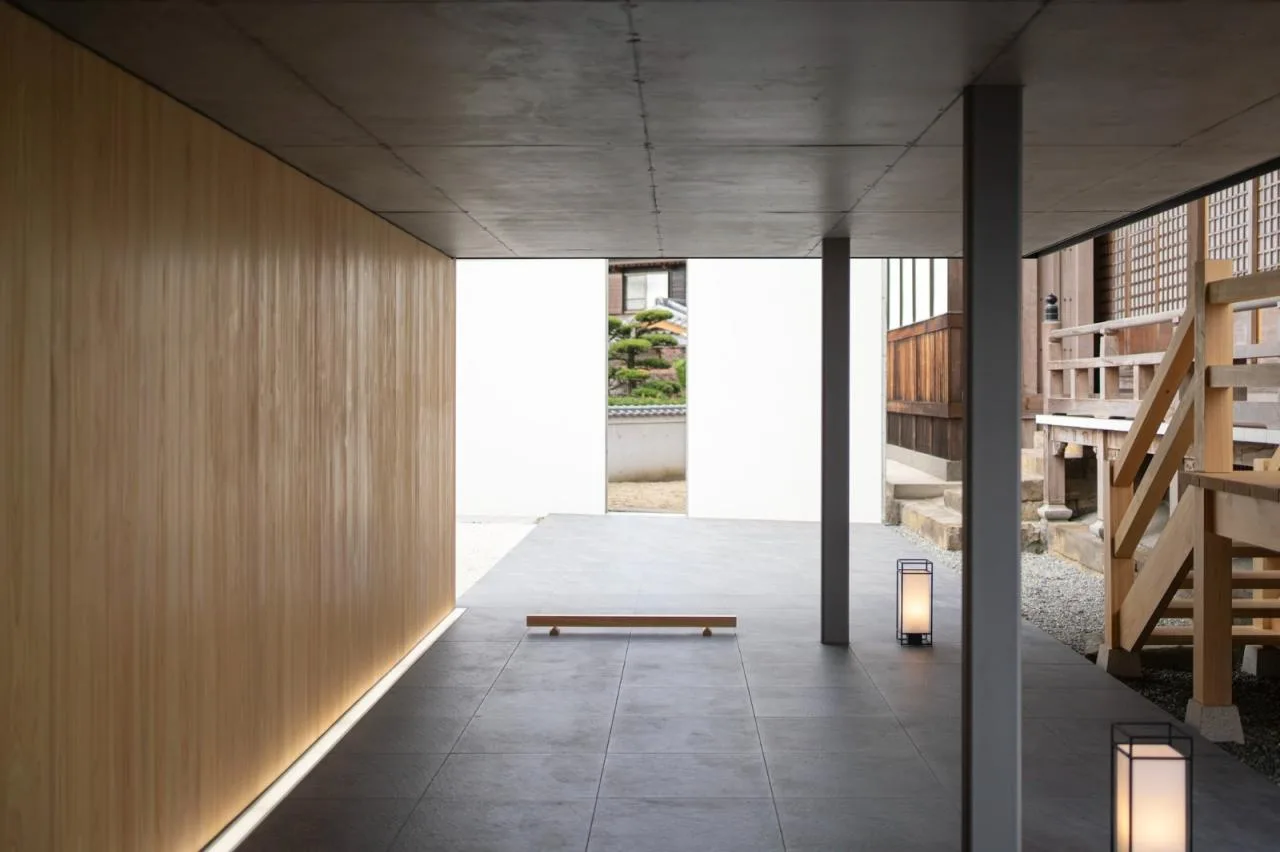
The new crematorium blends seamlessly with the traditional temple architecture. The building is not only visually appealing but also fully accessible, equipped with automatic doors, air conditioning, and elevators.
Prabha’s design highlights traditional architectural styles while enhancing their charm. This completed project embodies the core principle of “meeting tradition and modernity,” which is central to our company’s philosophy.
Project Drawings
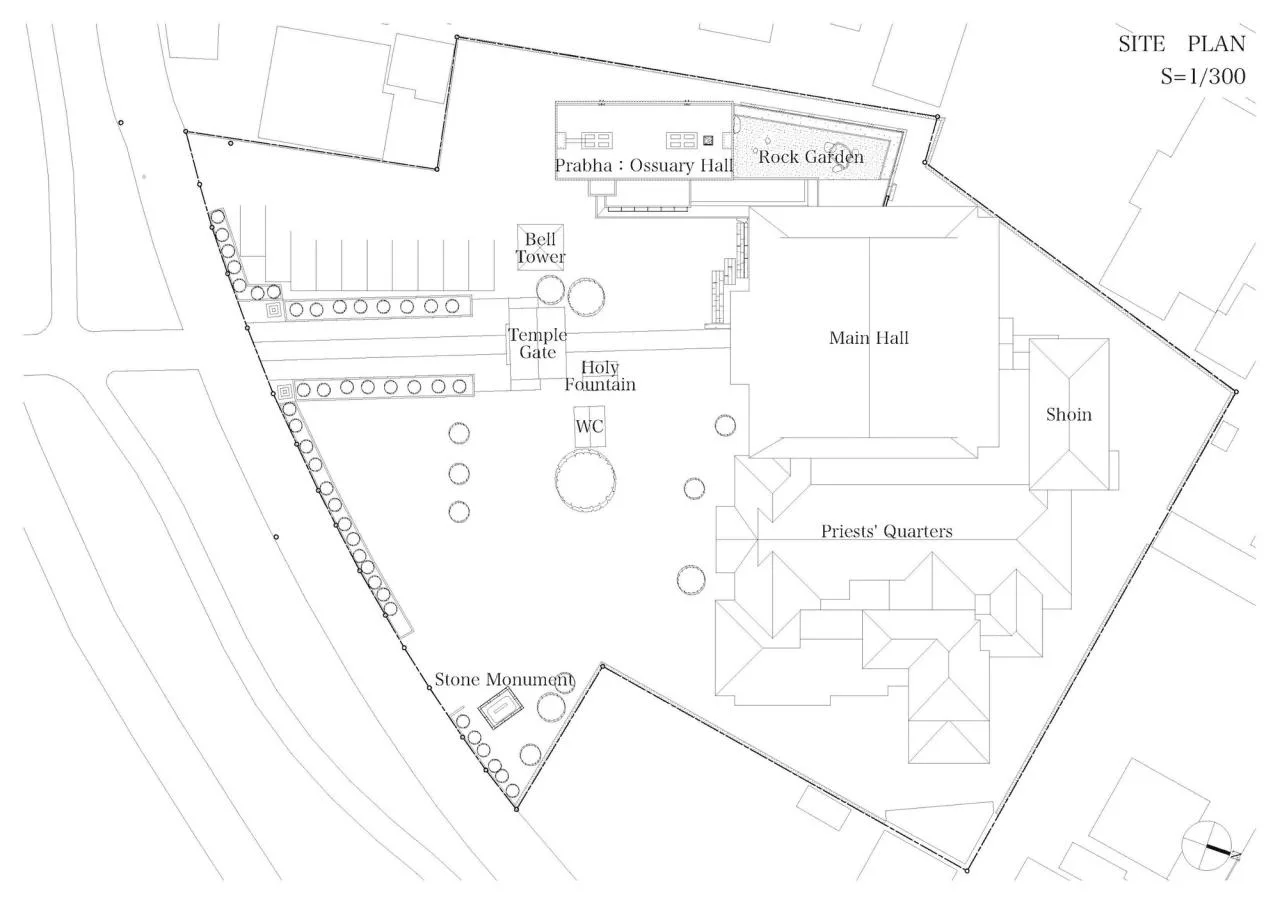
△ General Layout Plan
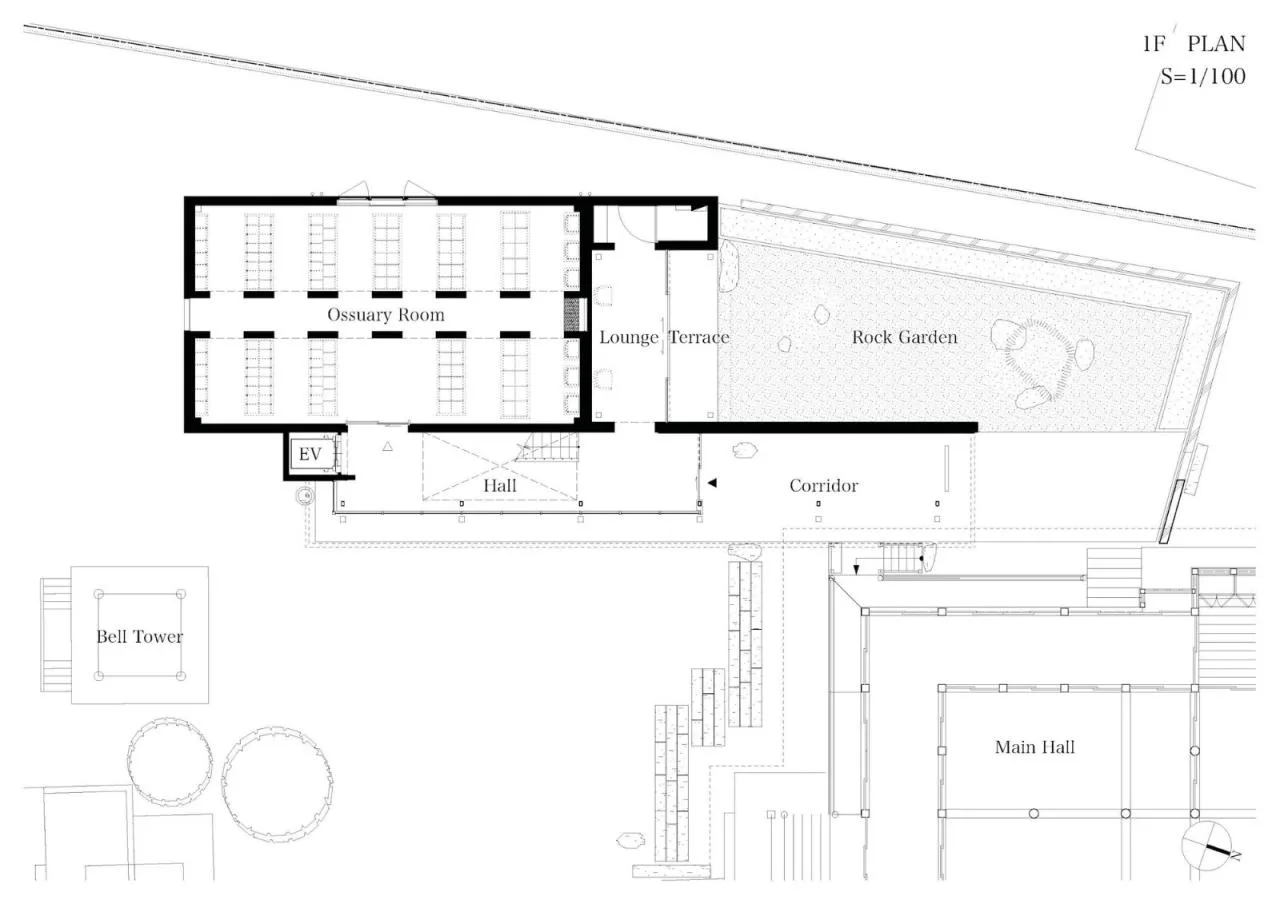
△ First Floor Plan
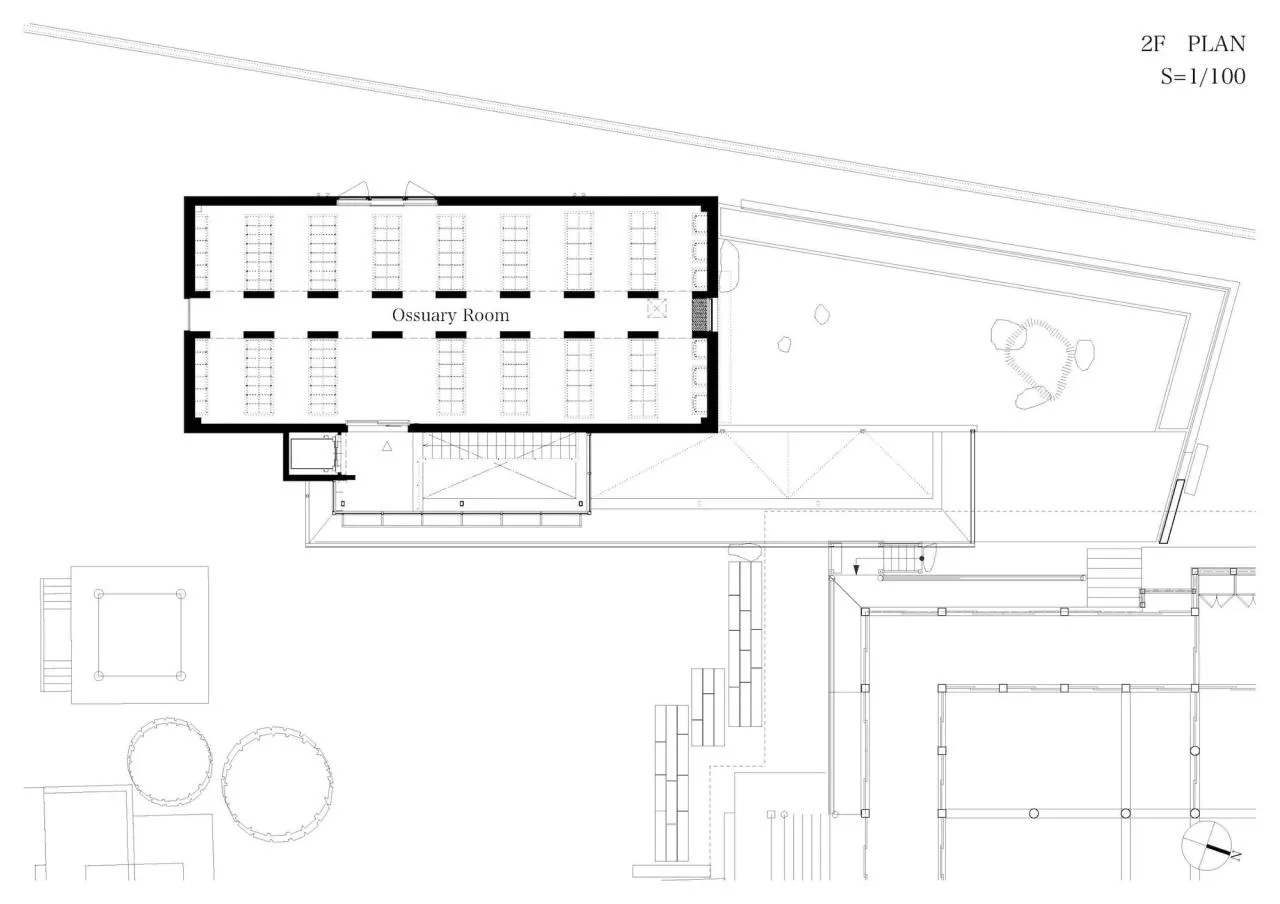
△ Second Floor Plan
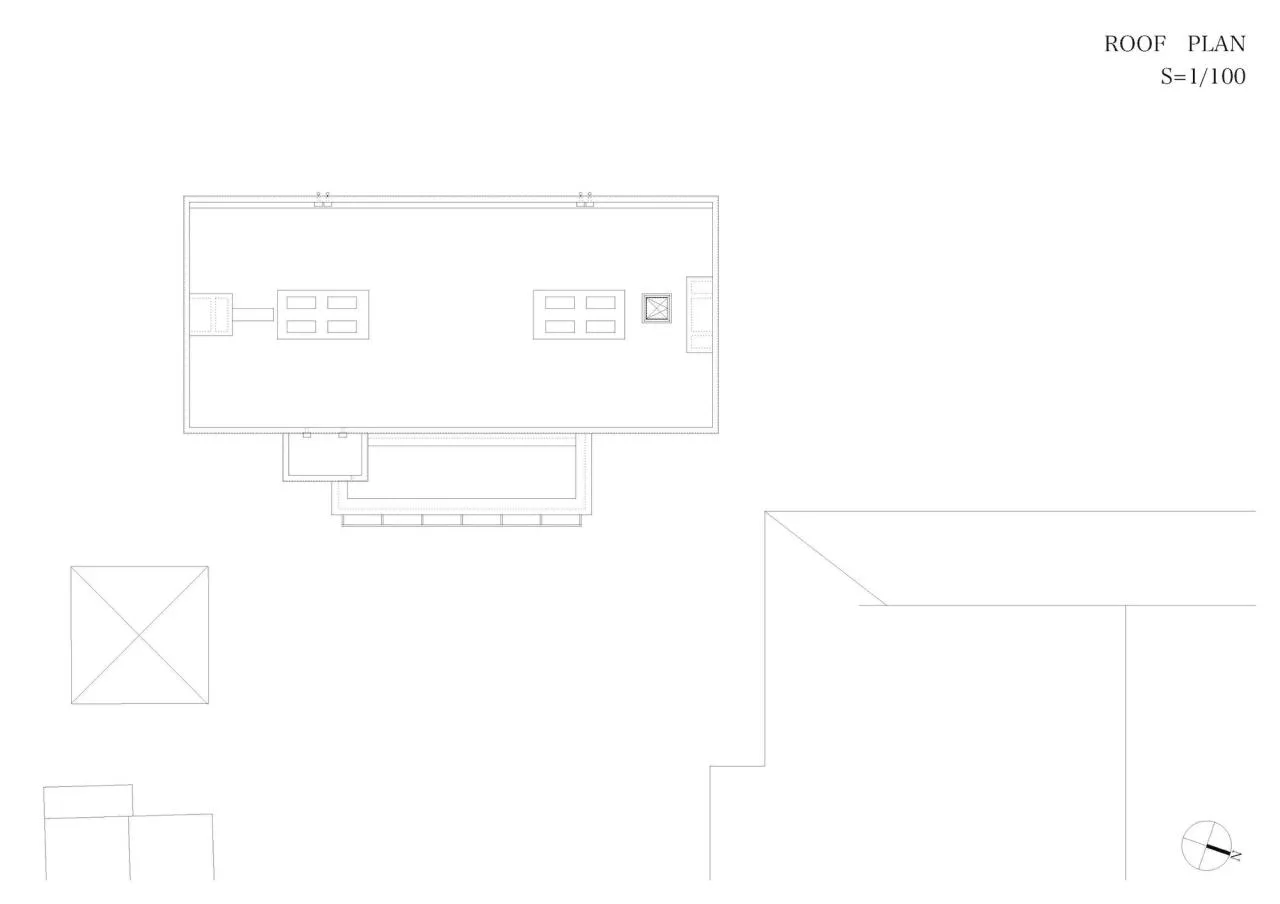
△ Roof Plan
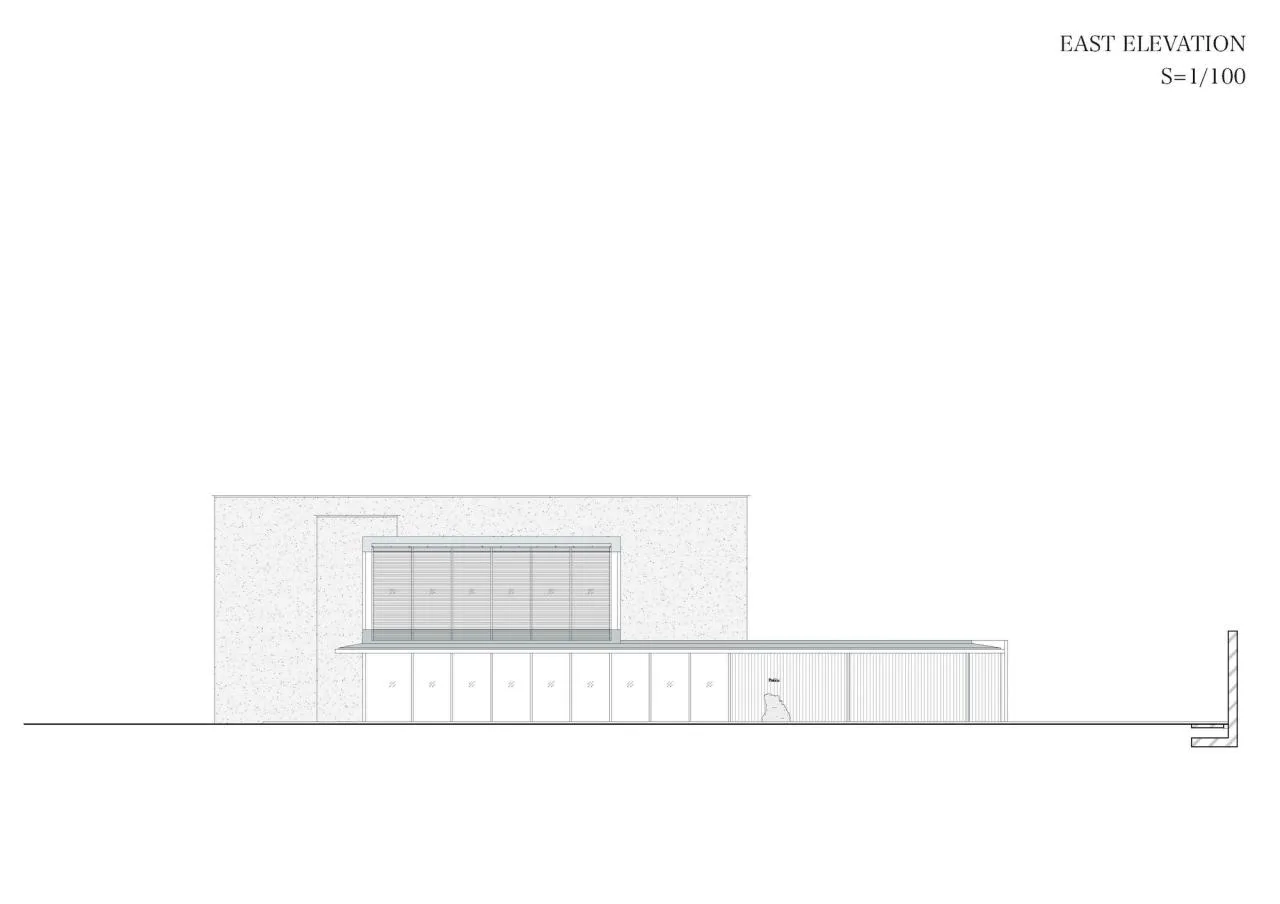
△ Elevation Drawing
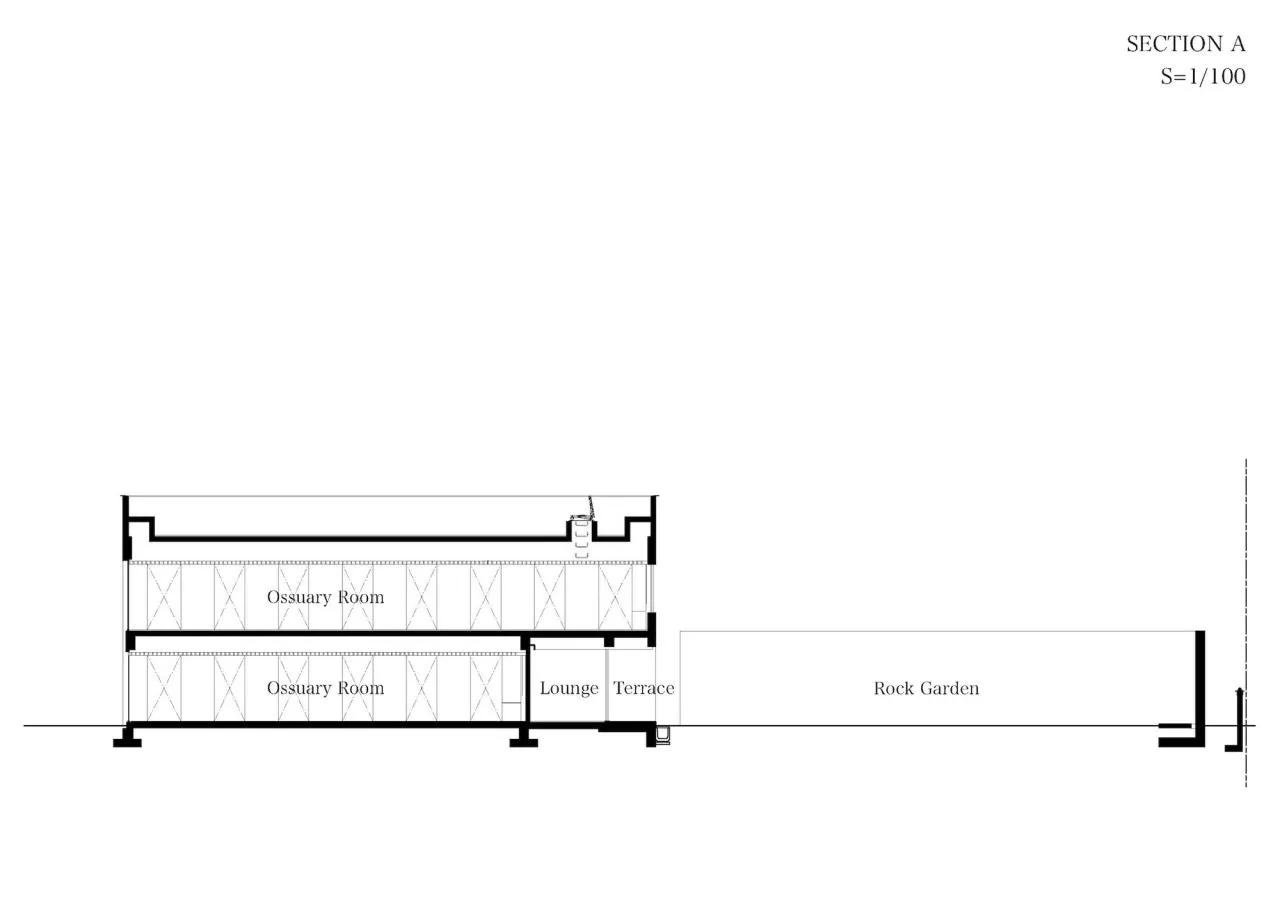
△ Section Diagram
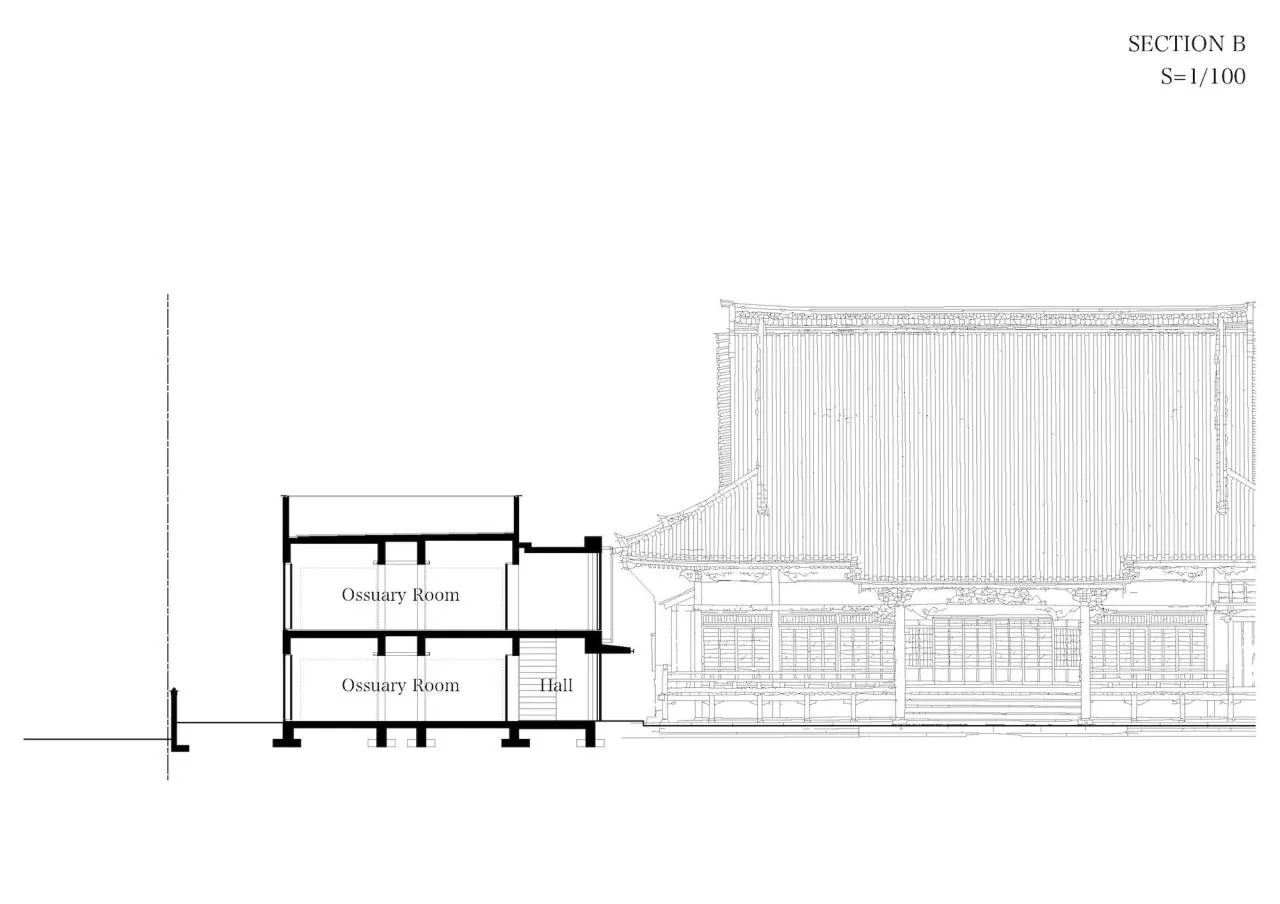
△ Section Diagram
Project Information
Architect: teamSTAR
Area: 323 m²
Project Year: 2023
Photographer: Tetsuya Ito
Lead Architect: Eitaro Satake / STAR
Senior Architect: Shinichiro Yamada / Yamada Studio
Main Architect: Kuniyuki Tanaka / Moires
Assistant Architect: Jundong Fan / STAR
Structural Engineering: Ryotaro Sakata Construction Design Firm, Kenchiku Shokudo
Mechanical and Electrical Engineering: NoMaDoS
Lighting Designer: Plus Y
Logo Designer: Clip
Location: Oita Prefecture, Japan













Must log in before commenting!
Sign Up