
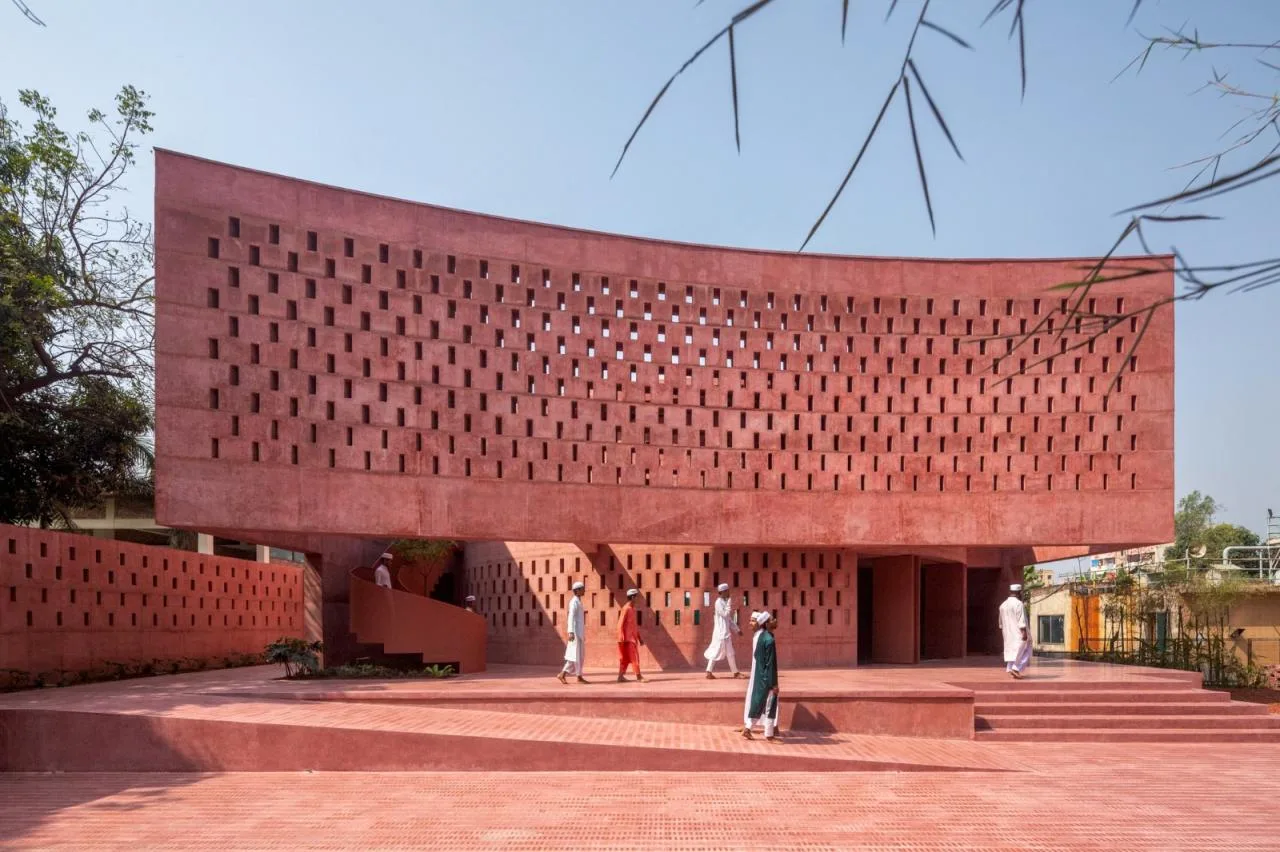
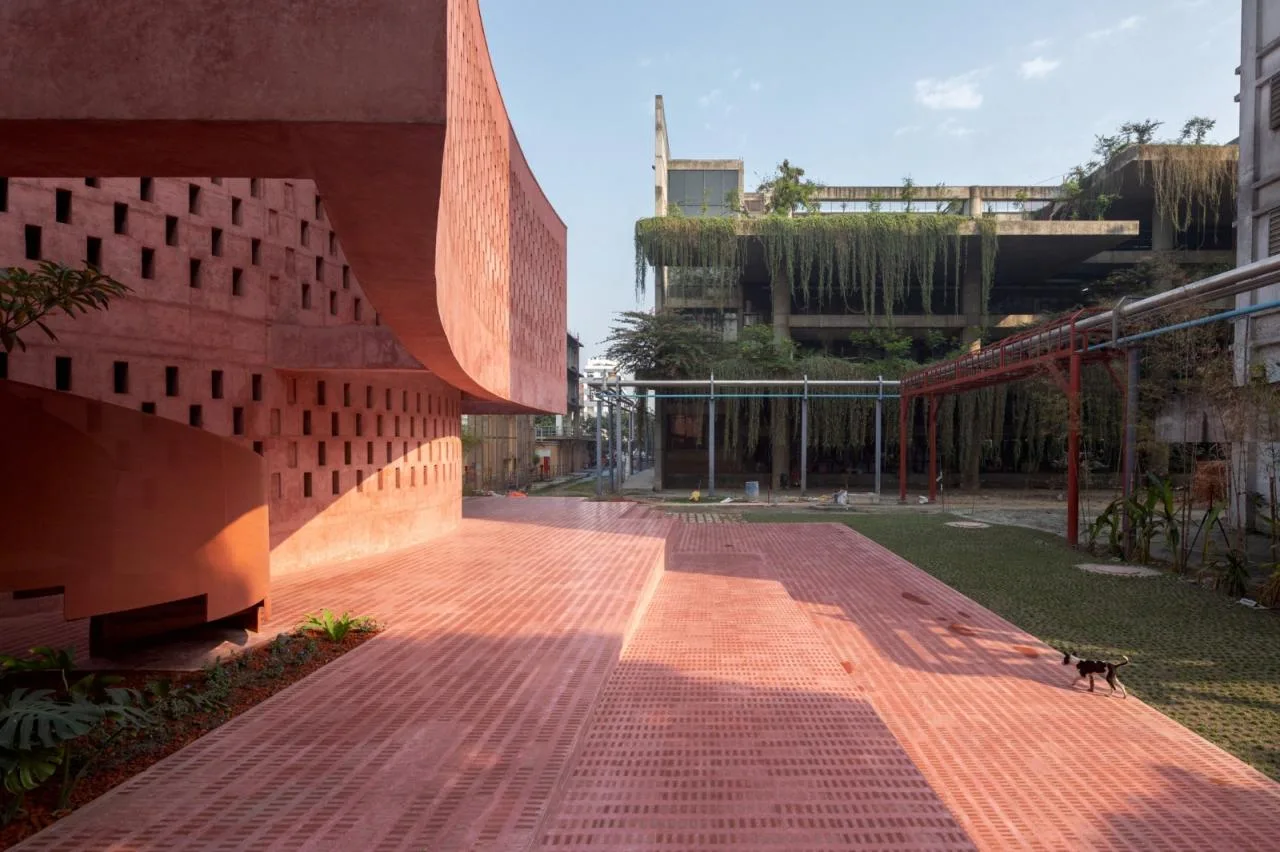
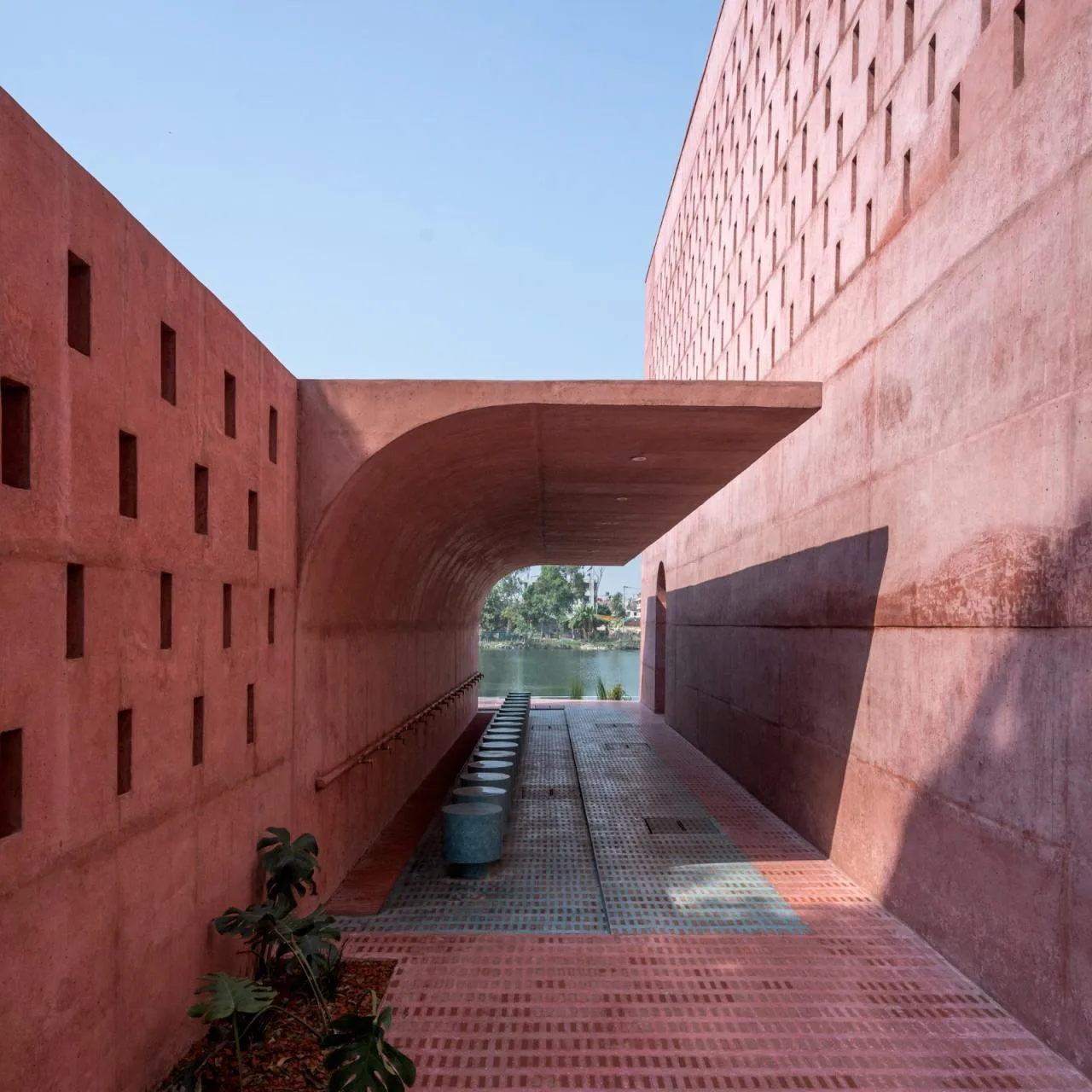
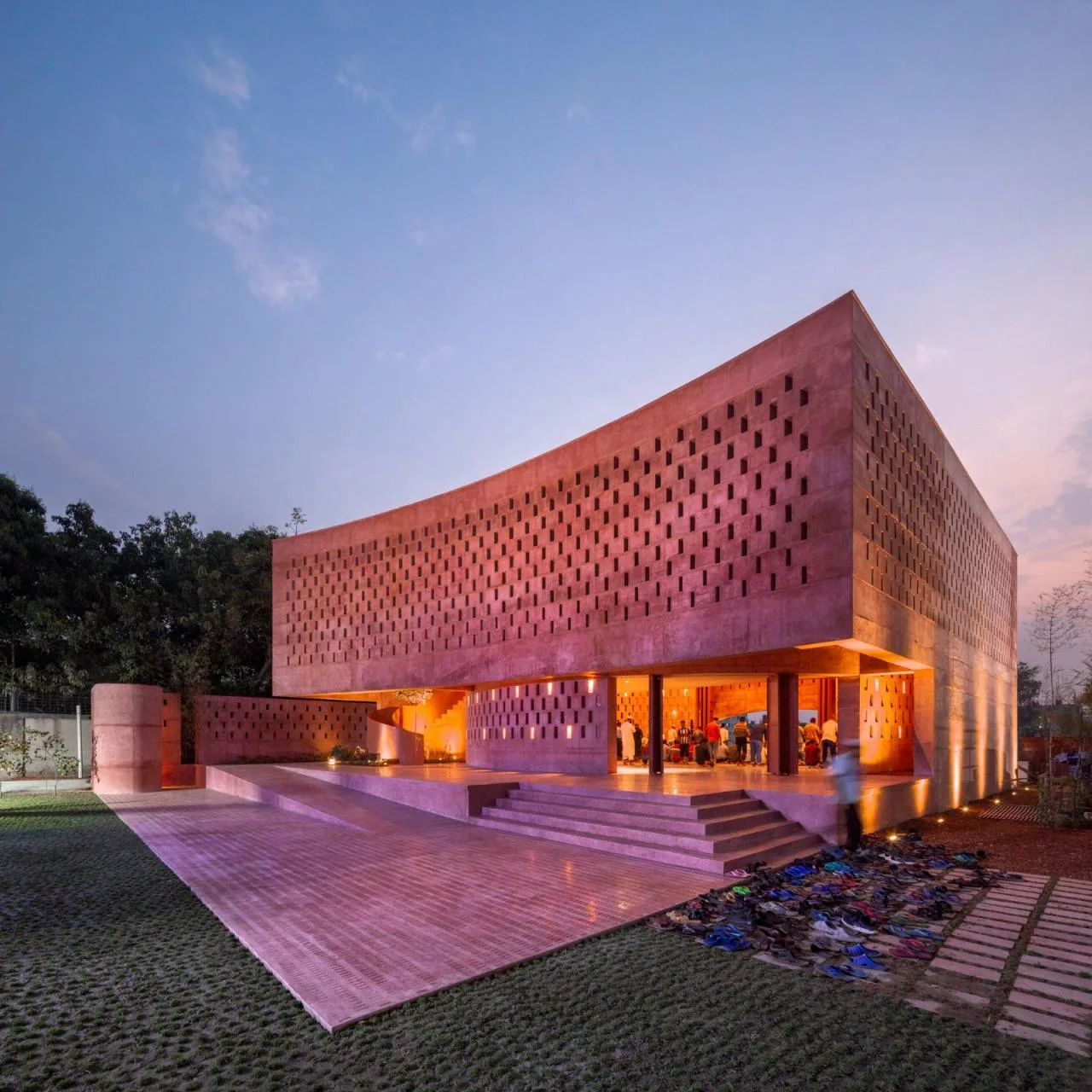
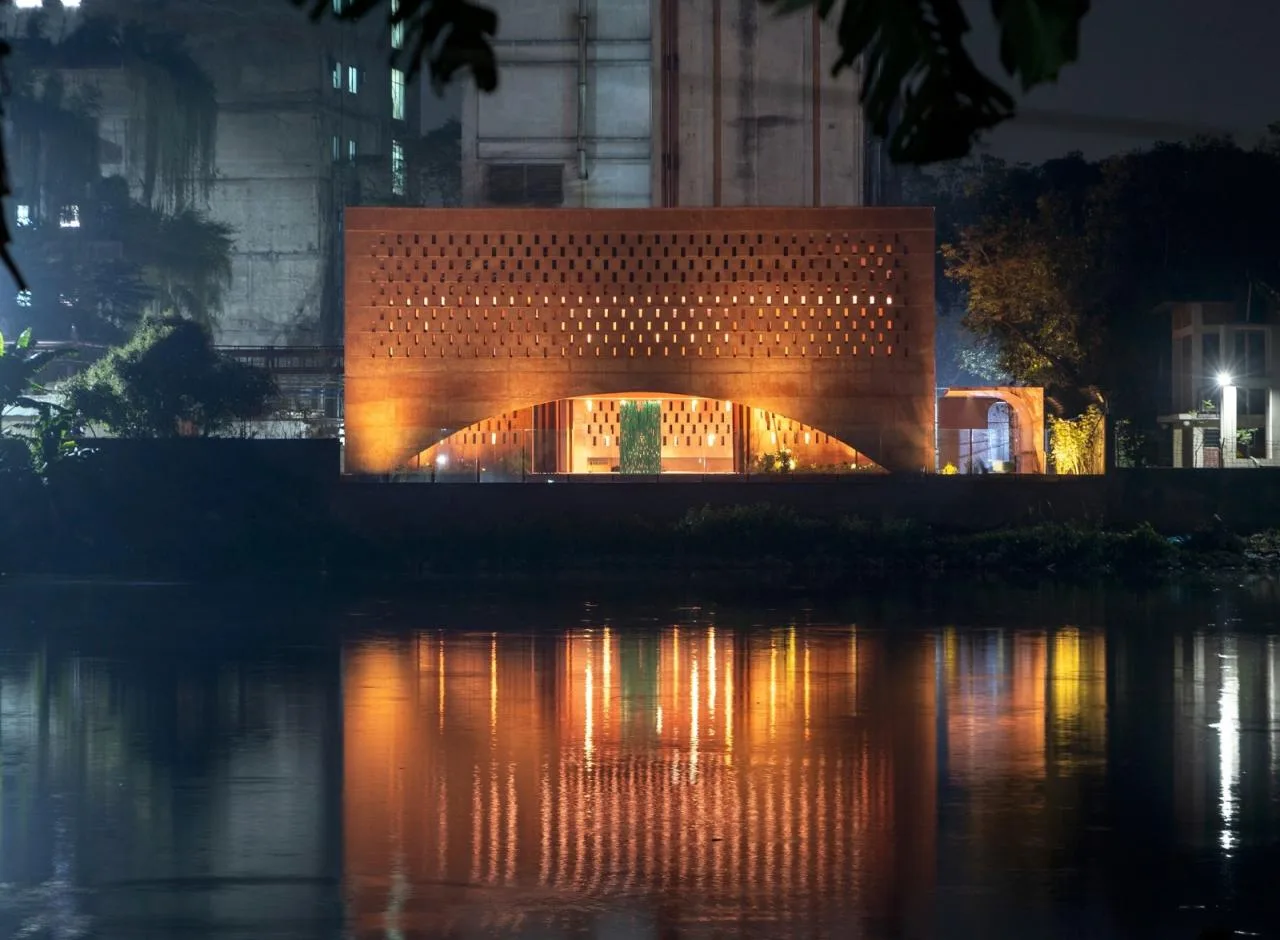
Located on the outskirts of Dhaka in a rapidly evolving industrial zone, the pink concrete Zebennesa Mosque gracefully sits beside an existing water body. Designed as a permeable pavilion, it fosters a harmonious connection between water and land, serving as both a spiritual sanctuary and a refreshing retreat within the industrial environment.
The industrial area’s owner commissioned this mosque to honor his late mother and to cultivate a calm atmosphere for the workers amid the harsh surroundings. This heartfelt motivation inspired the architects to create a space that nurtures spirituality and social unity, strengthening the bonds of care and trust between homeowners and workers.
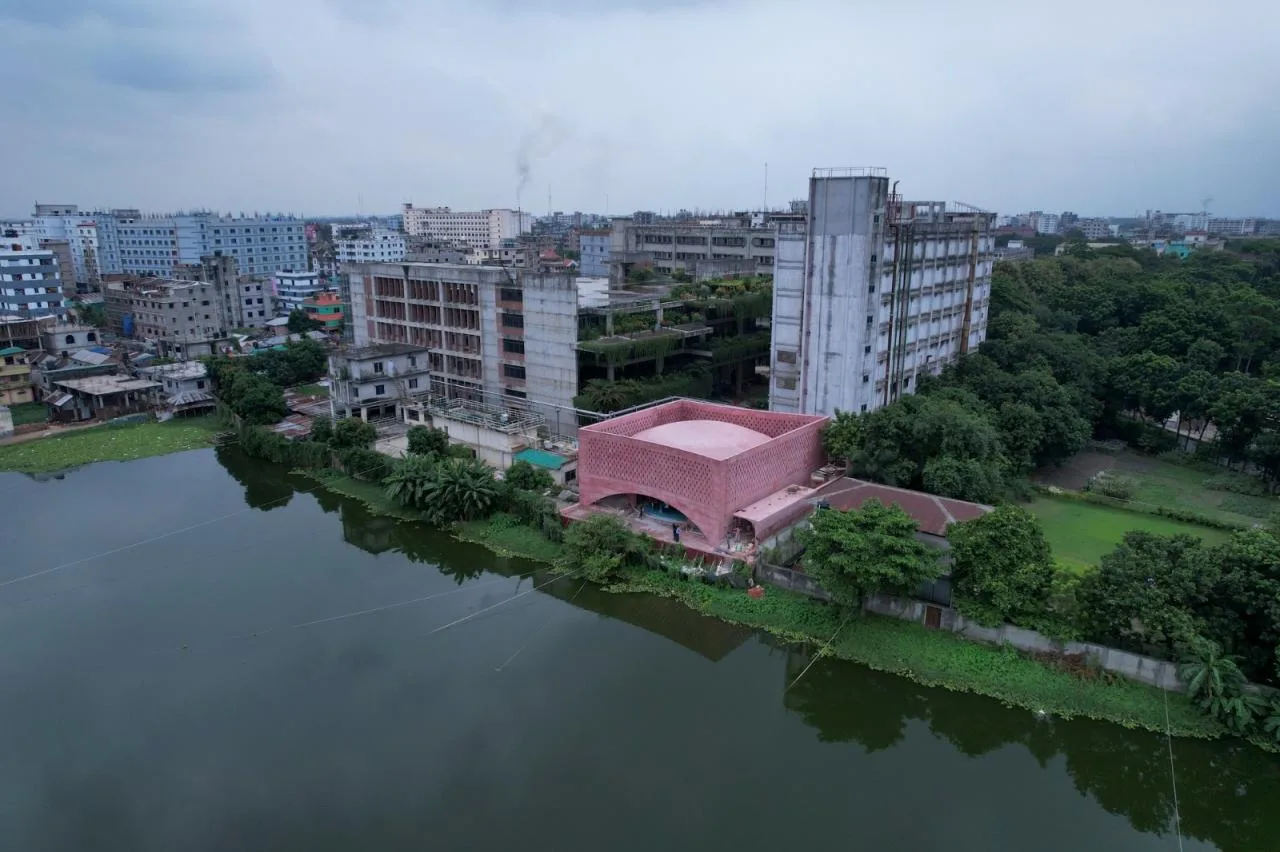
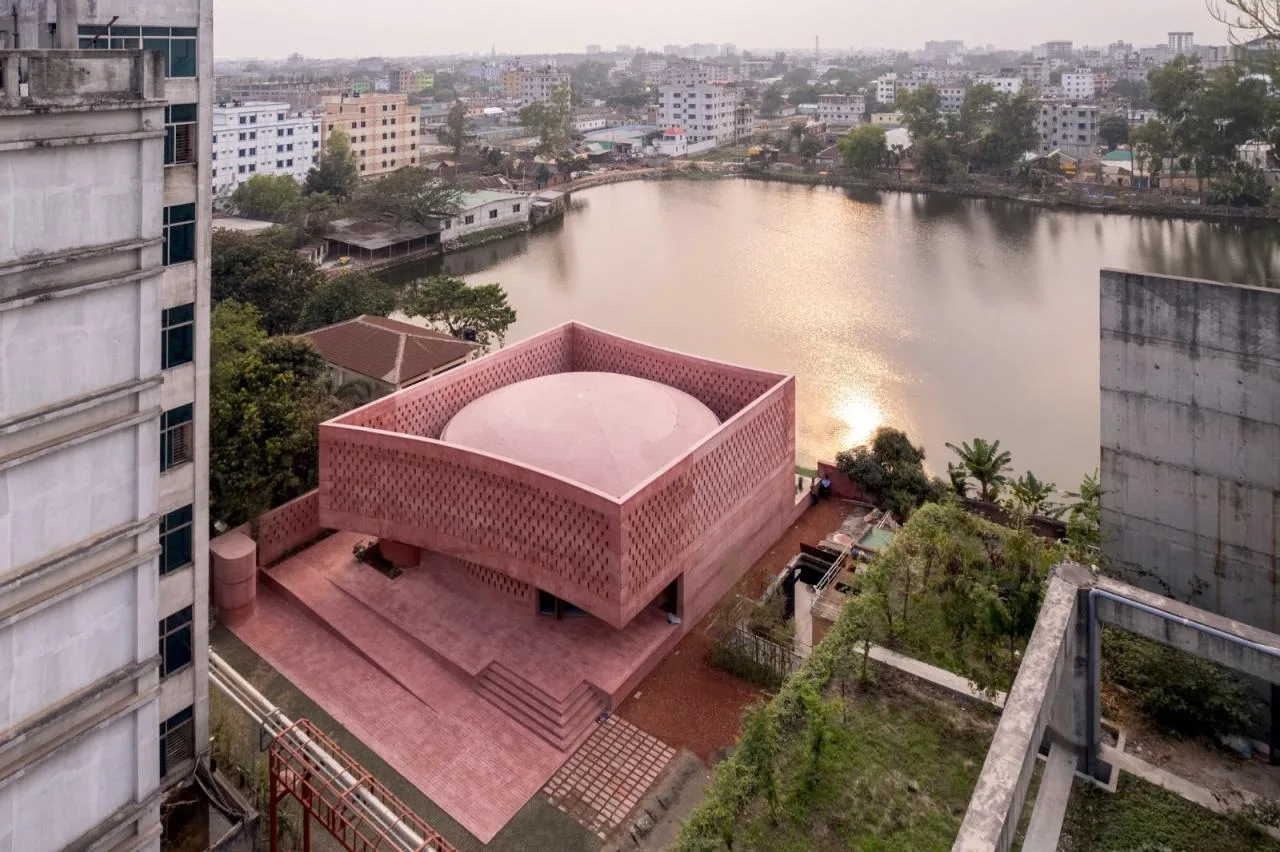
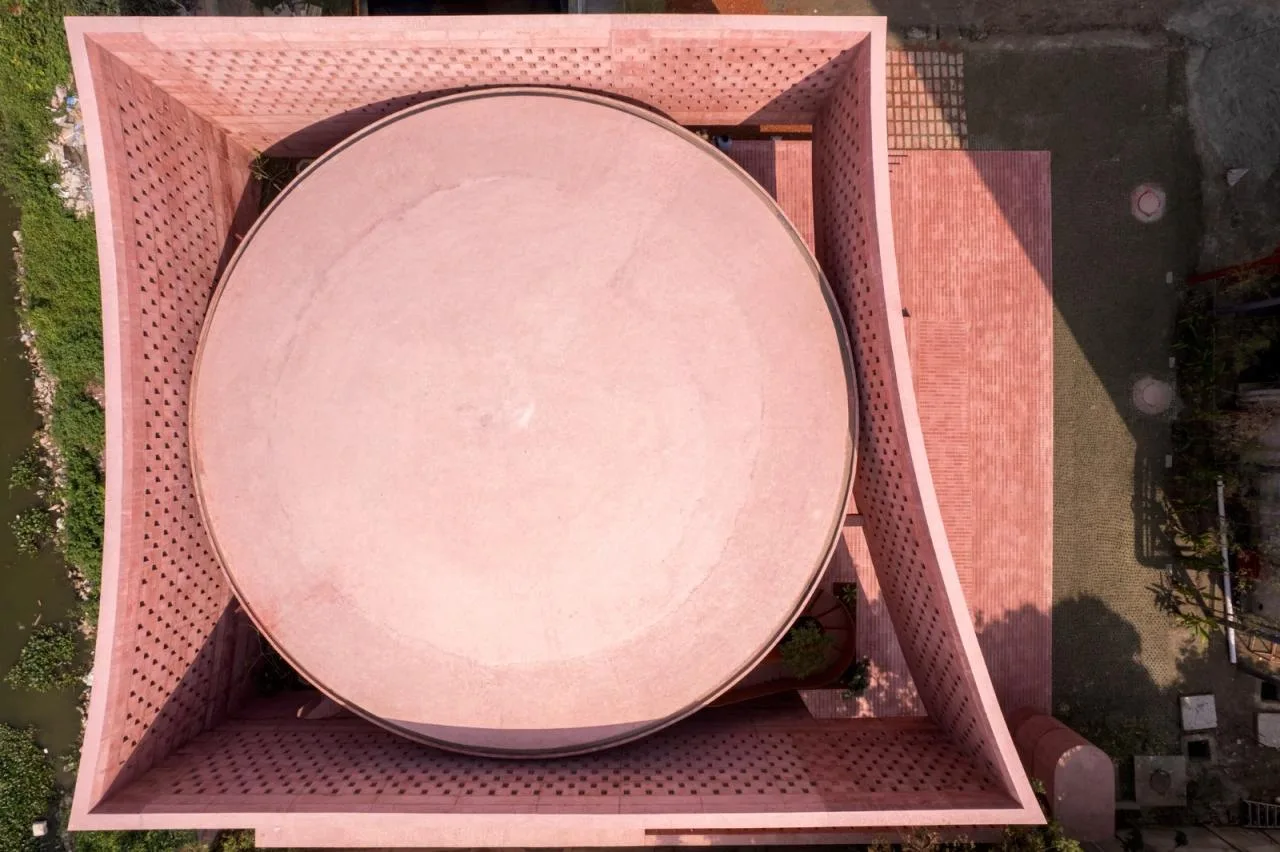
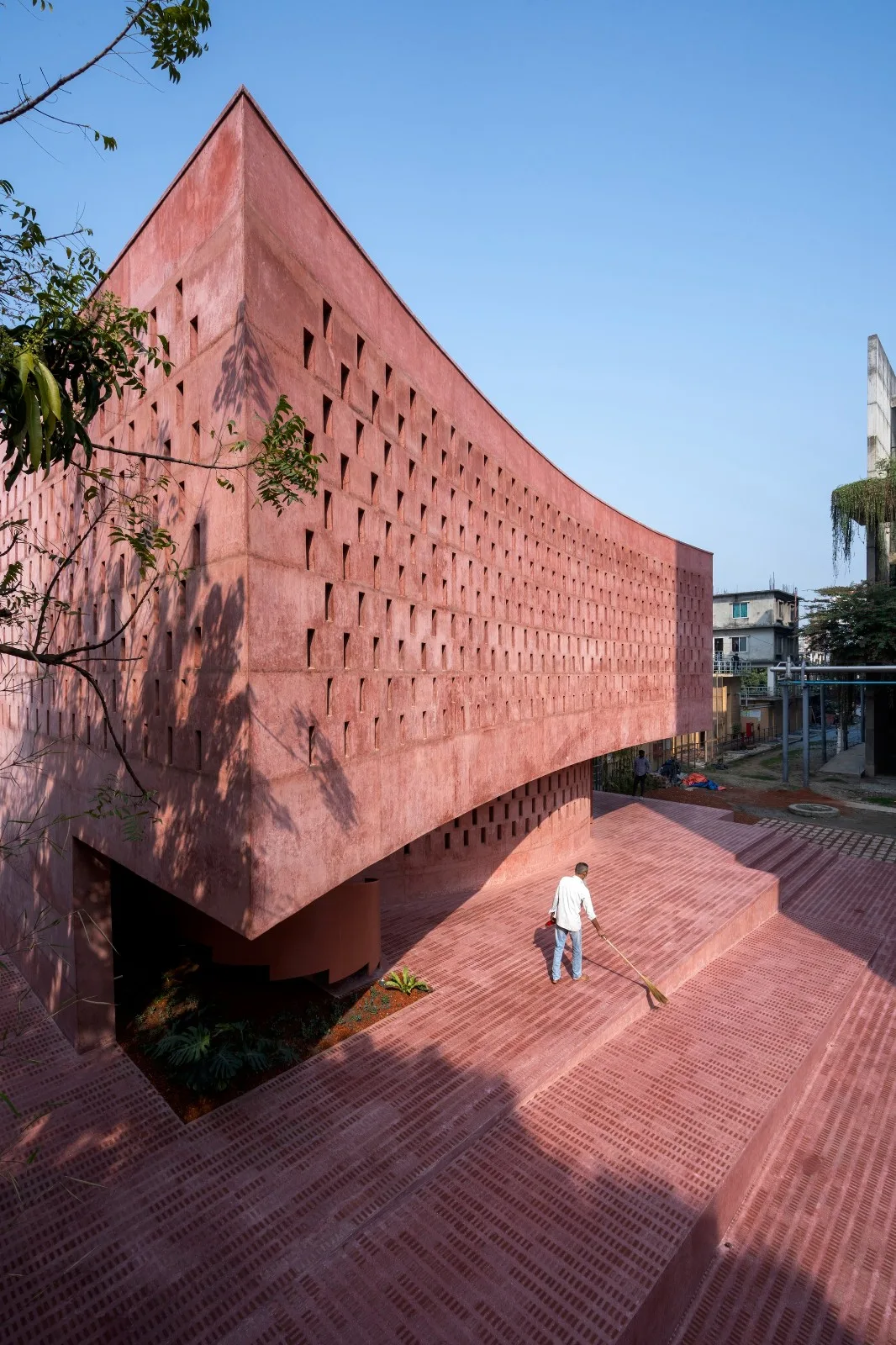
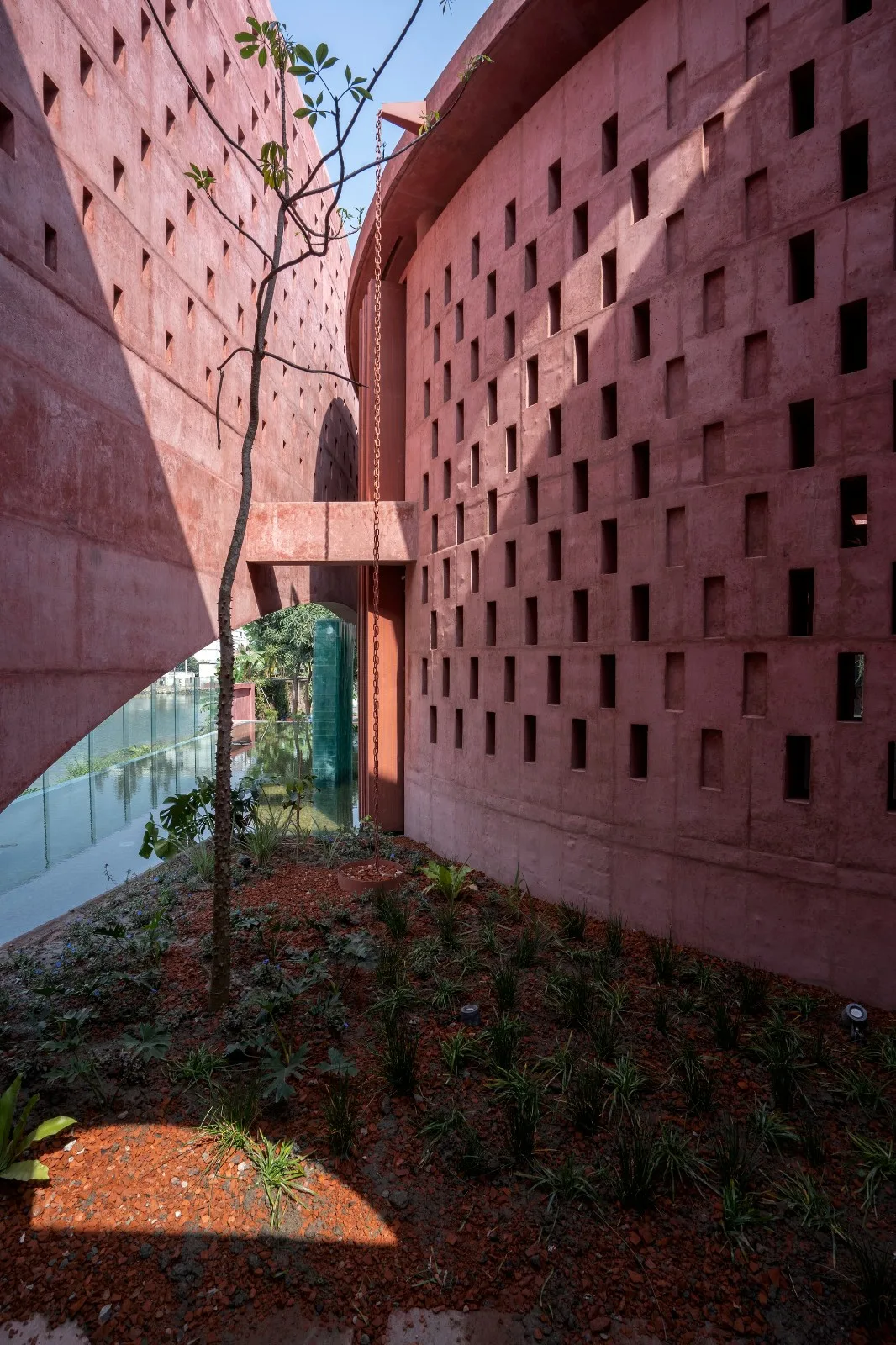
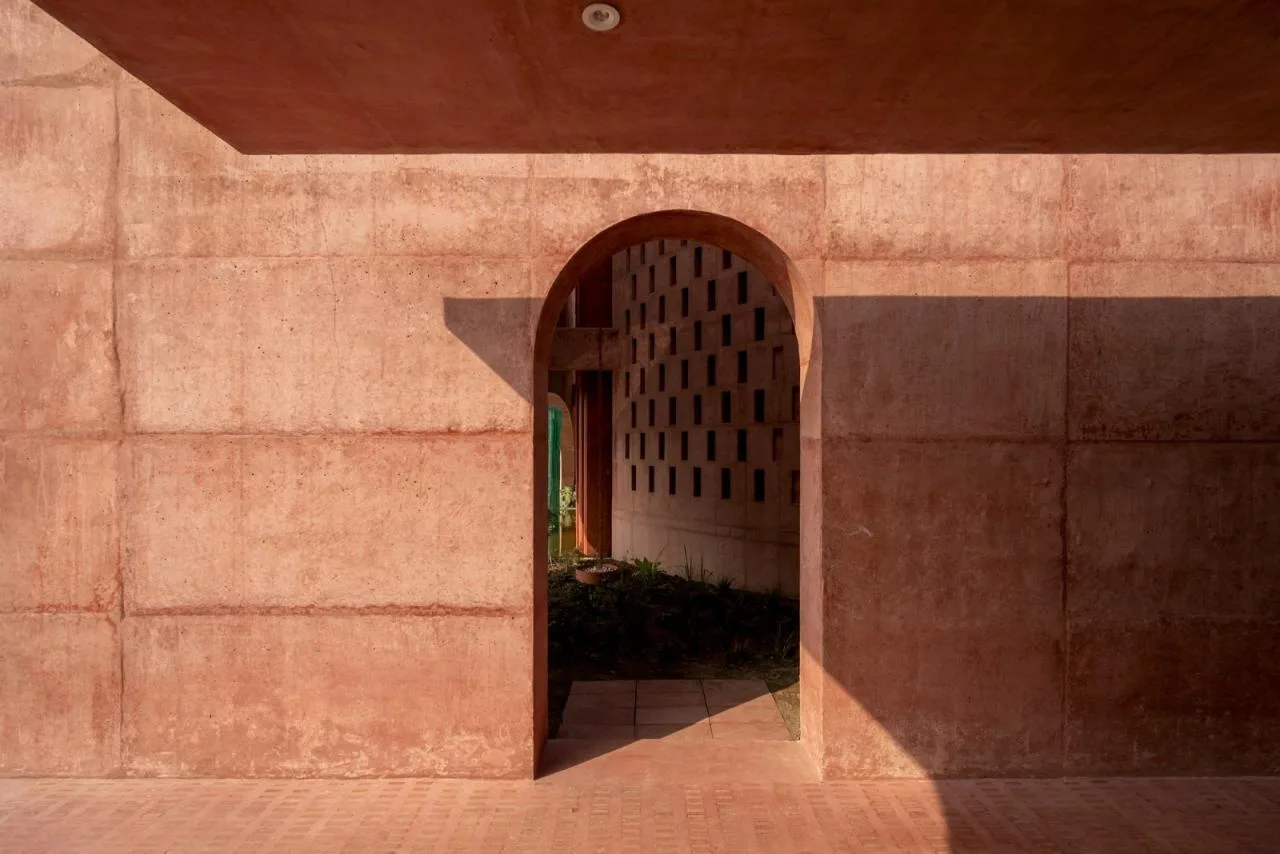
The mosque’s design embraces natural light and ventilation, creating what is described as a “breathing pavilion.” Elevated on a high pedestal, the structure echoes the traditional “Bhiti” earth mounds found in the delta terrain of Bangladesh. Its plan is a thoughtful combination of simple geometries: a square enveloping a circular core, which forms four enclosed gardens serving as light-filled courtyards on each side.
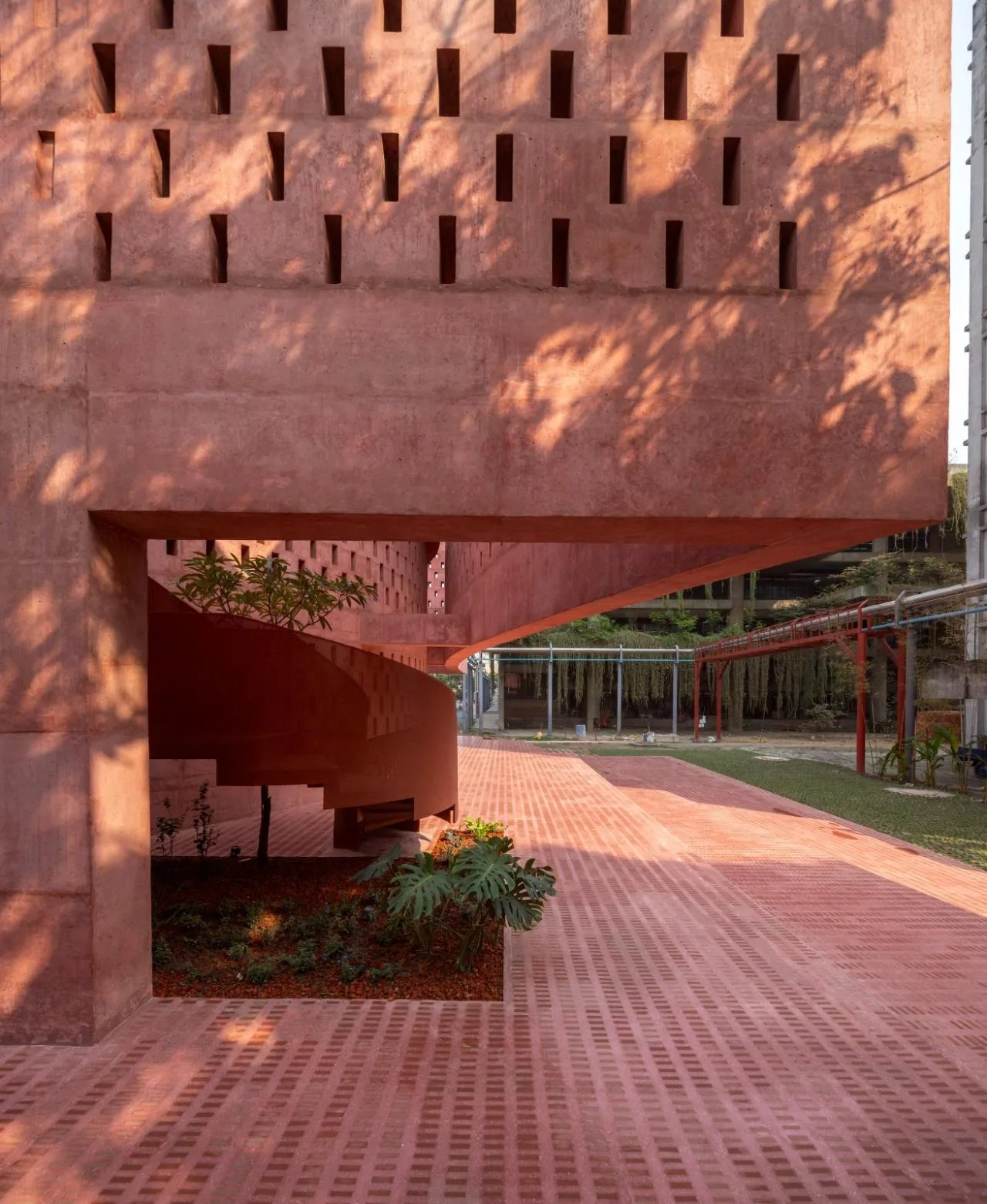
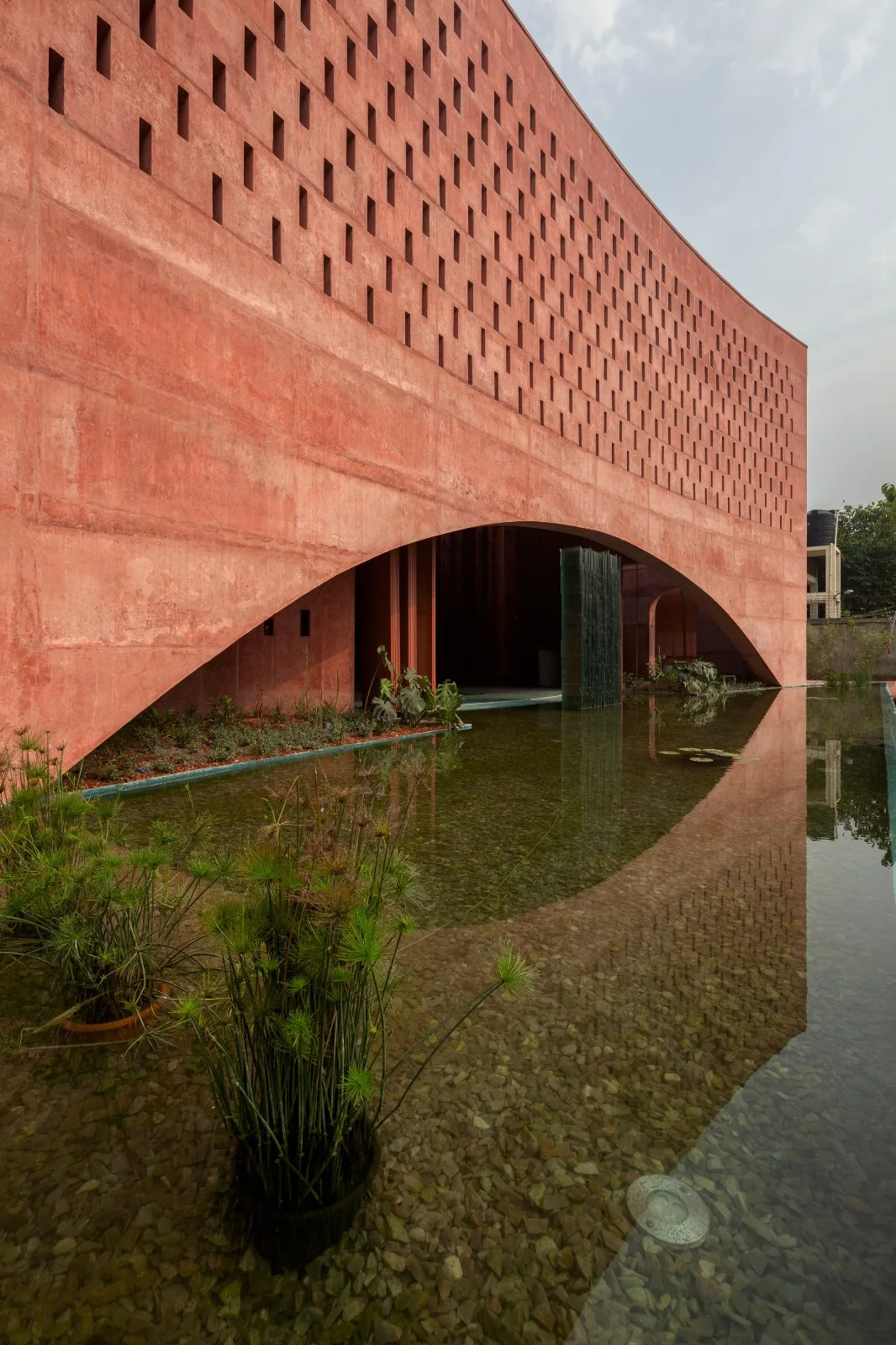
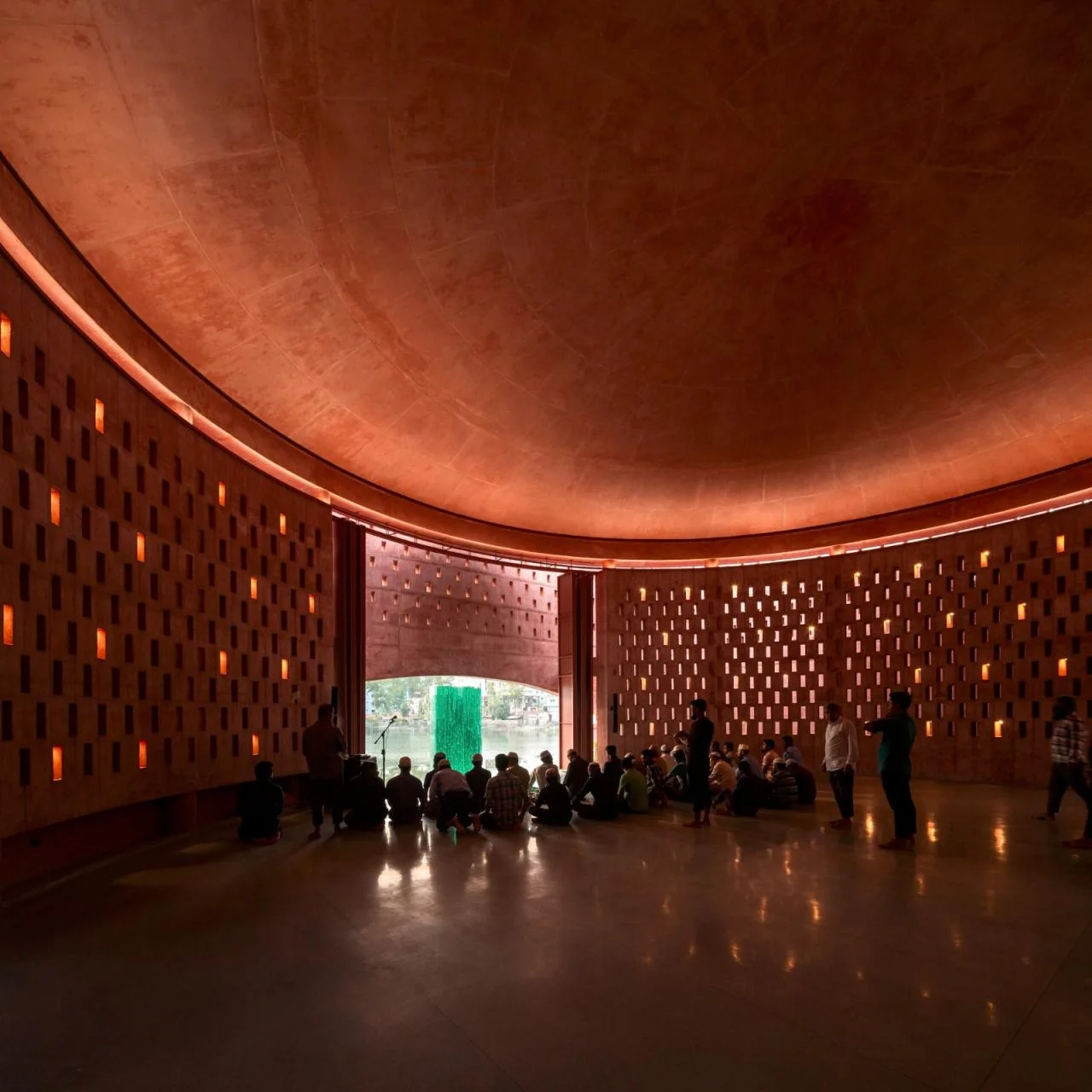
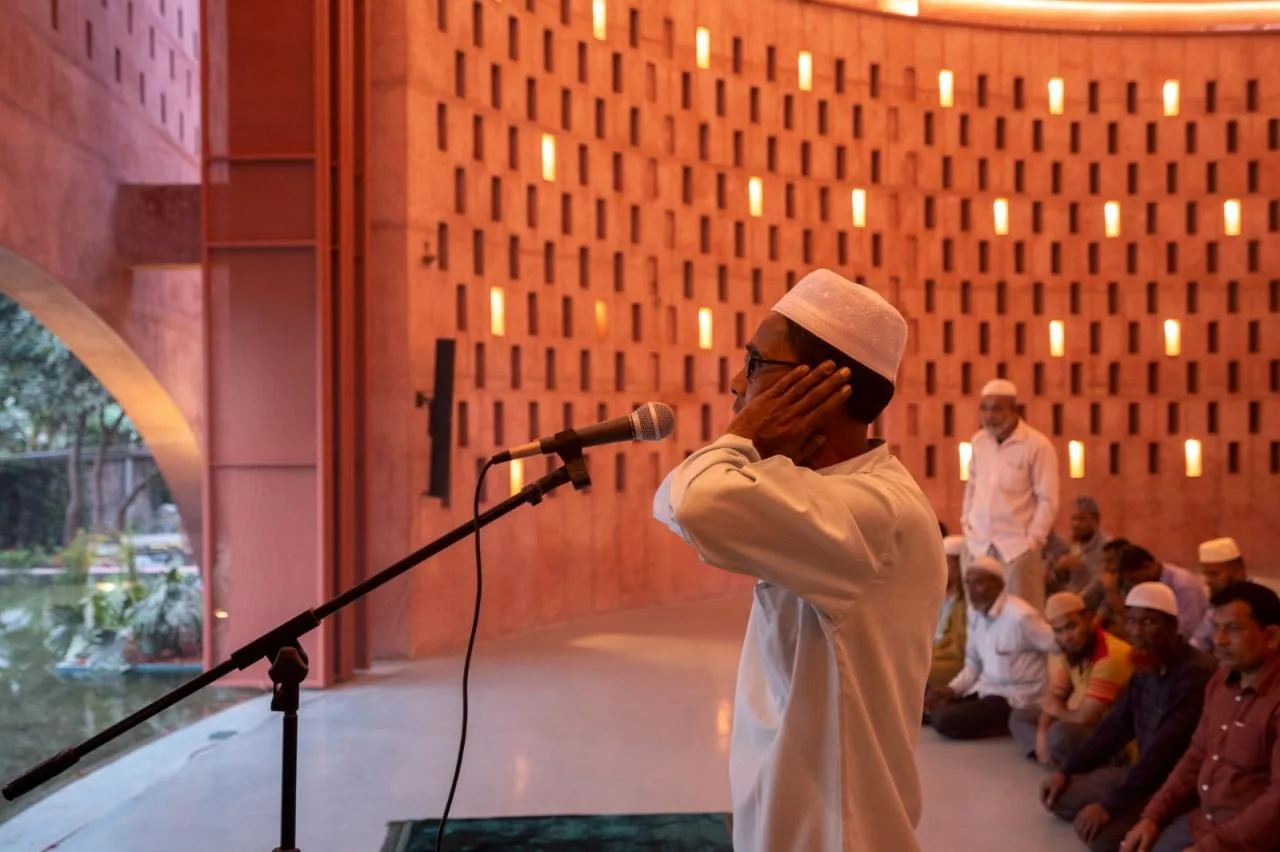
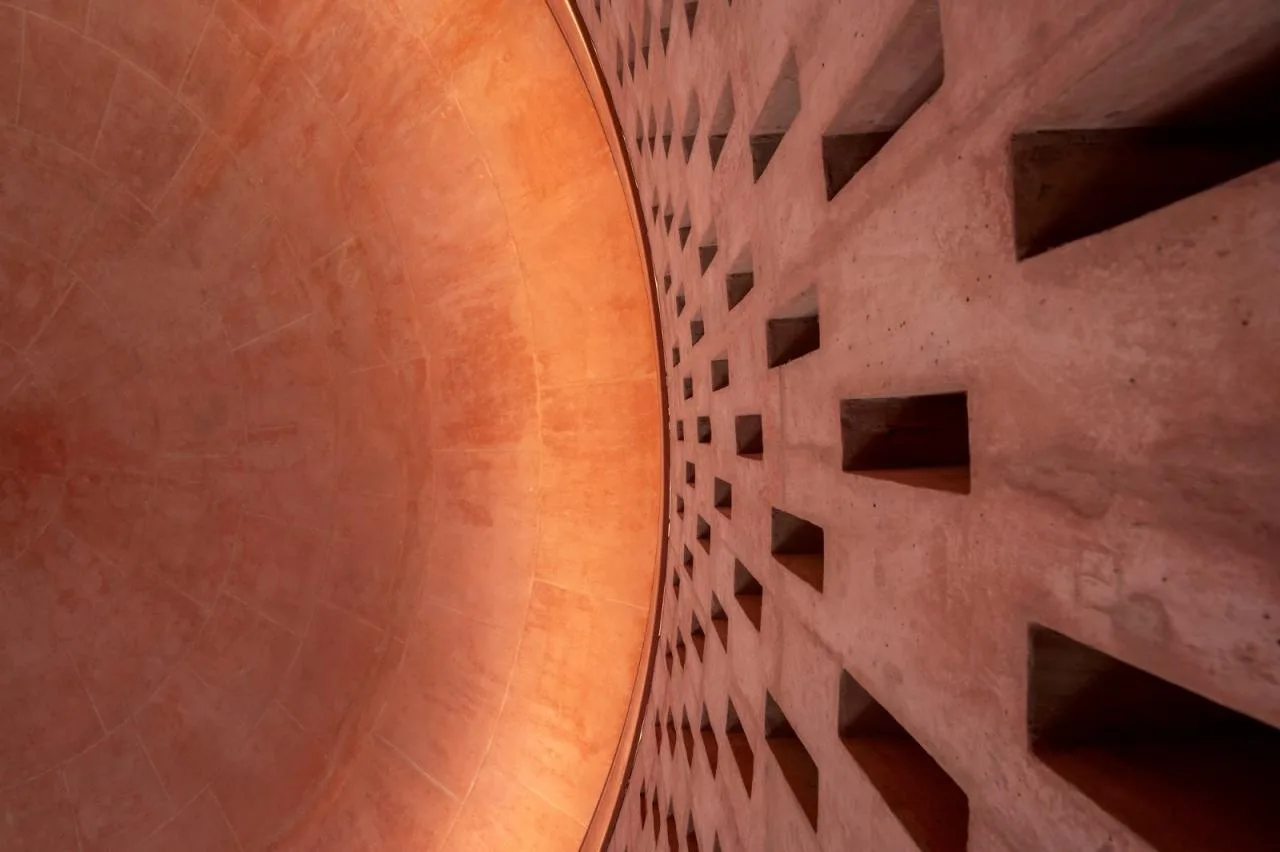
The external square gently curves east and west, engaging with the site’s forces. The main entrance is marked by a northeast overhang angle on the curved wall, strategically aligned with the two primary internal roads of the industrial zone. Numerous small rectangular openings punctuate the thick concrete walls, allowing filtered light to escape and resemble the hanging lanterns found in ancient mosques.
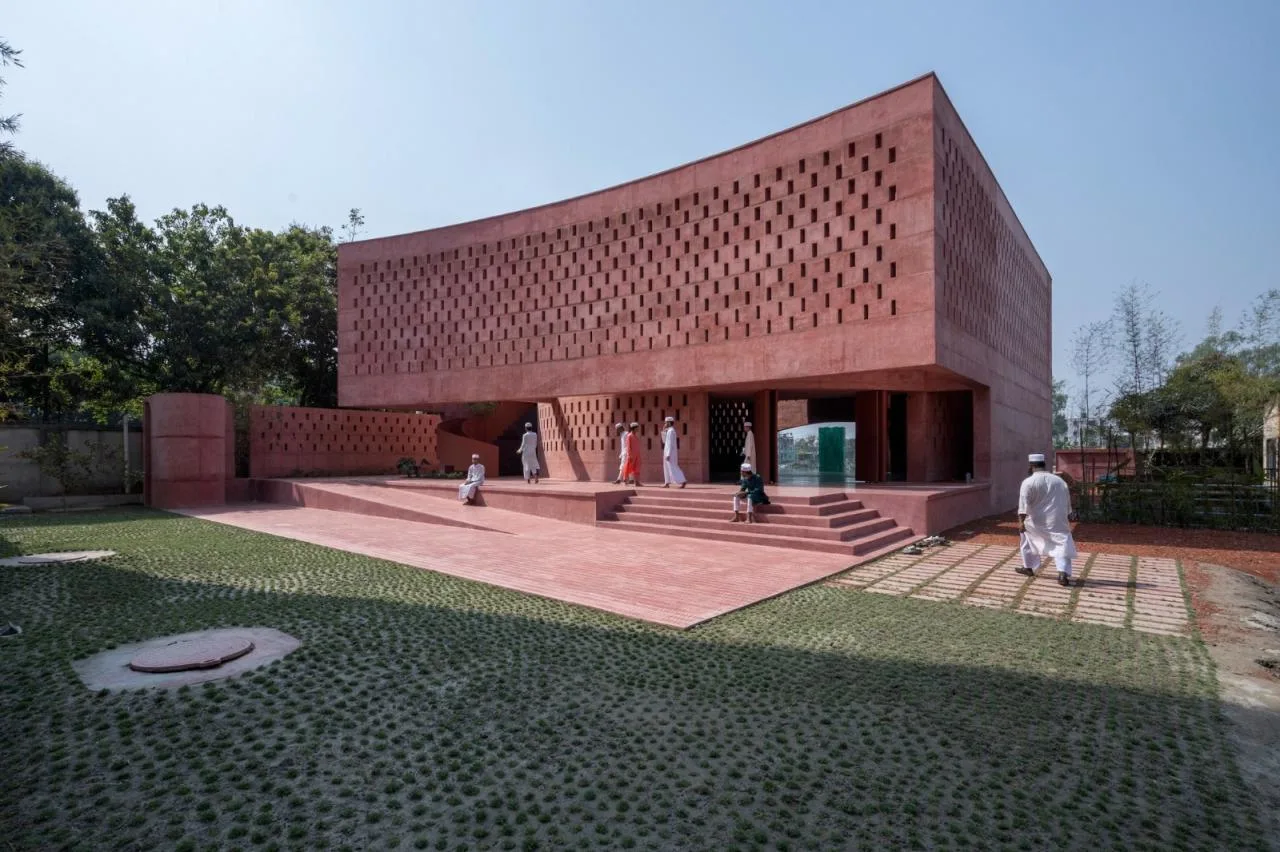
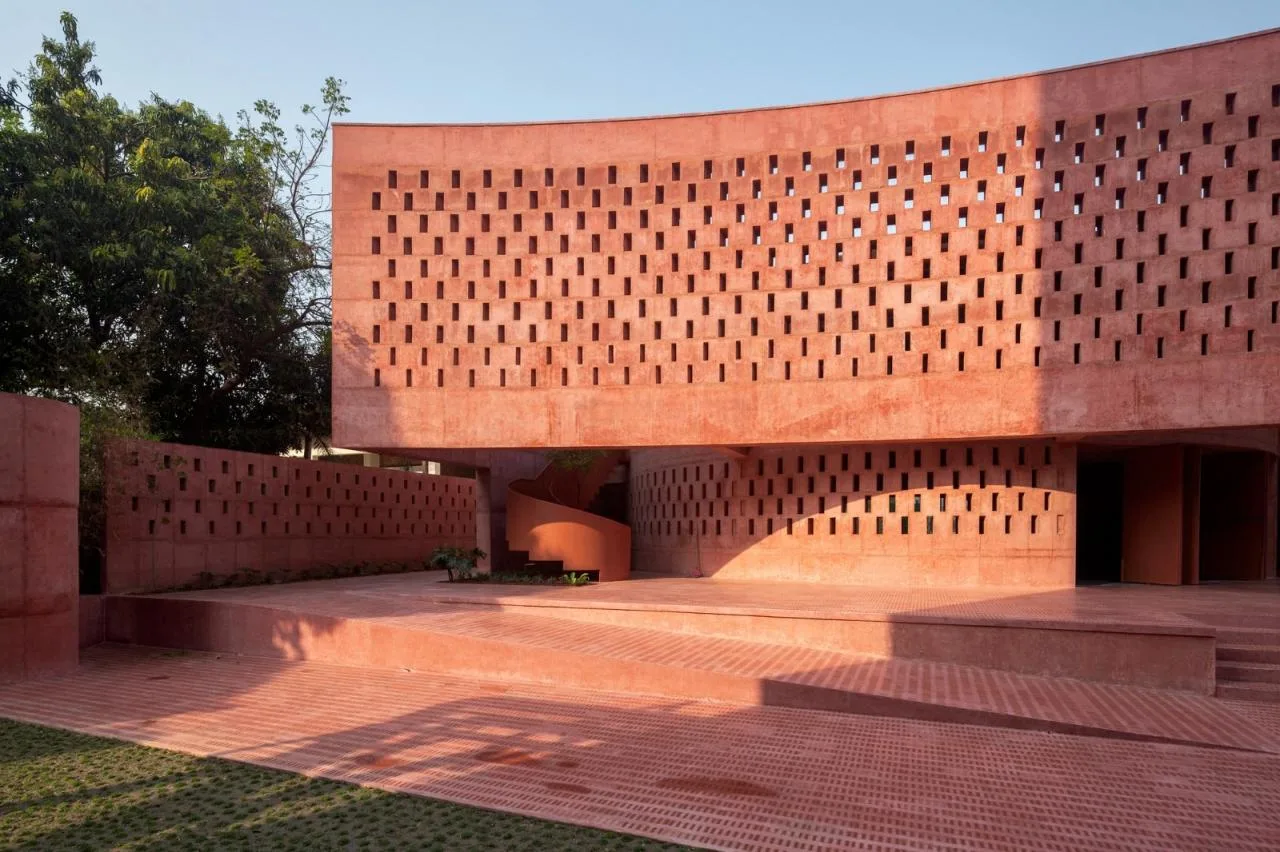
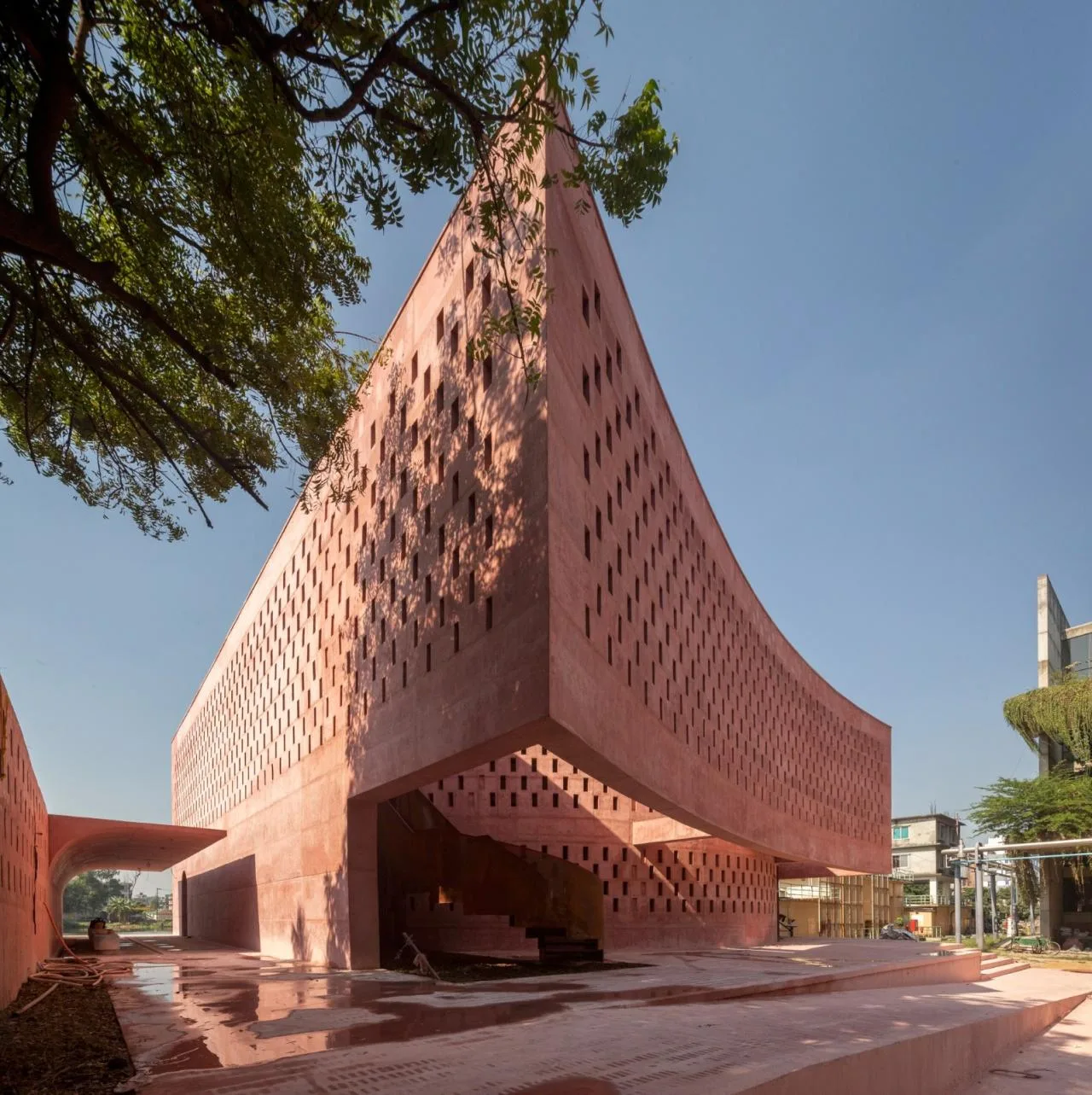
The mosque’s double-layered thick walls create a microclimate inside, ensuring thermal comfort throughout the day. Sunlight filters through the “jaali” openings into the garden courtyards, reflecting softly into the interior while heat dissipates naturally. Given the hot and humid climate, the mosque is fully ventilated by natural breezes flowing through all openings—from nearby water bodies, across the constructed pool, through the indoor prayer hall, and over the elevated pedestal.
Perforated metal plates in doors and thresholds filter airflow during monsoon seasons, maintaining ventilation without compromising comfort. These elements together embody the concept of a “breathing pavilion,” a deeply rooted architectural form suited to tropical climates.
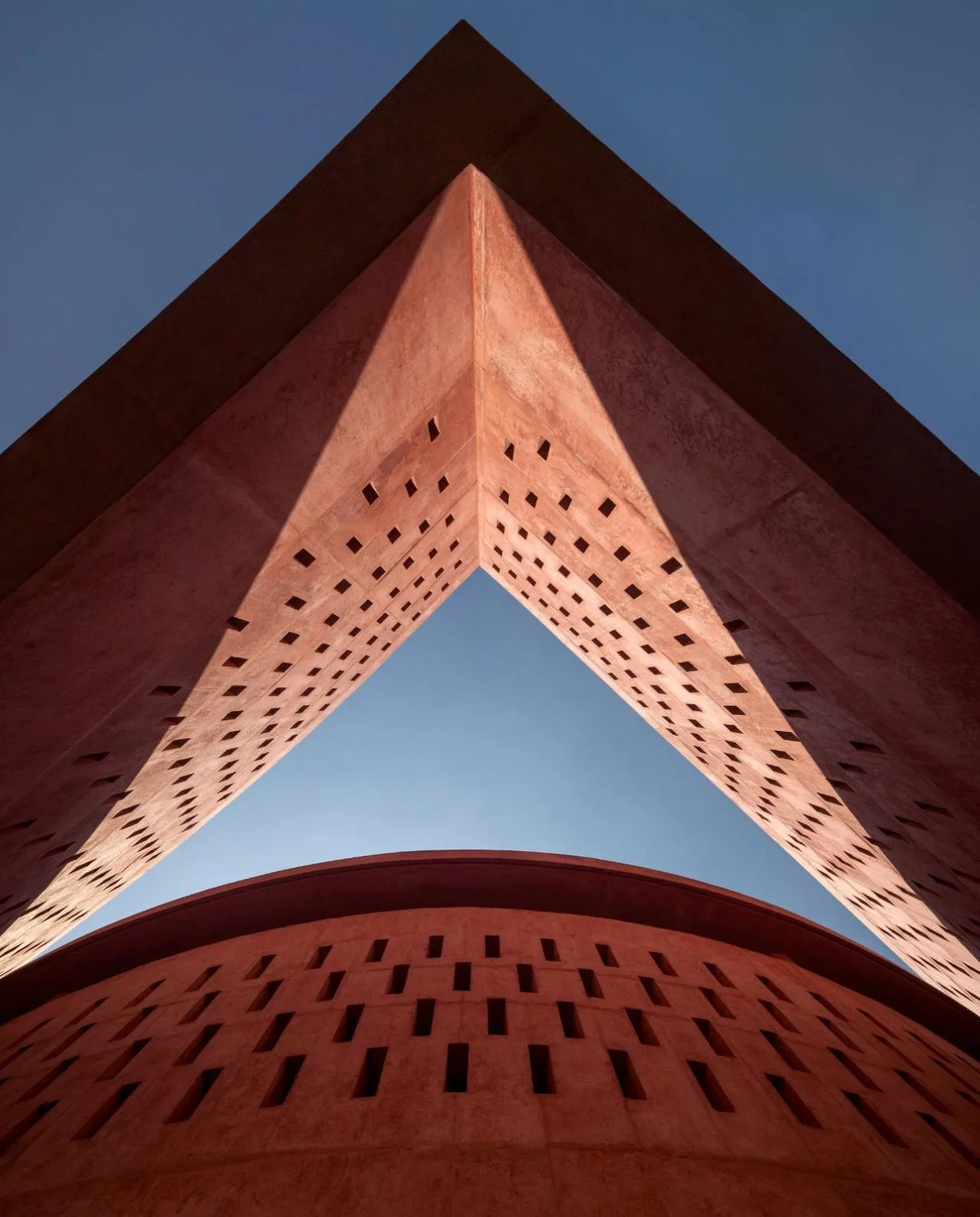
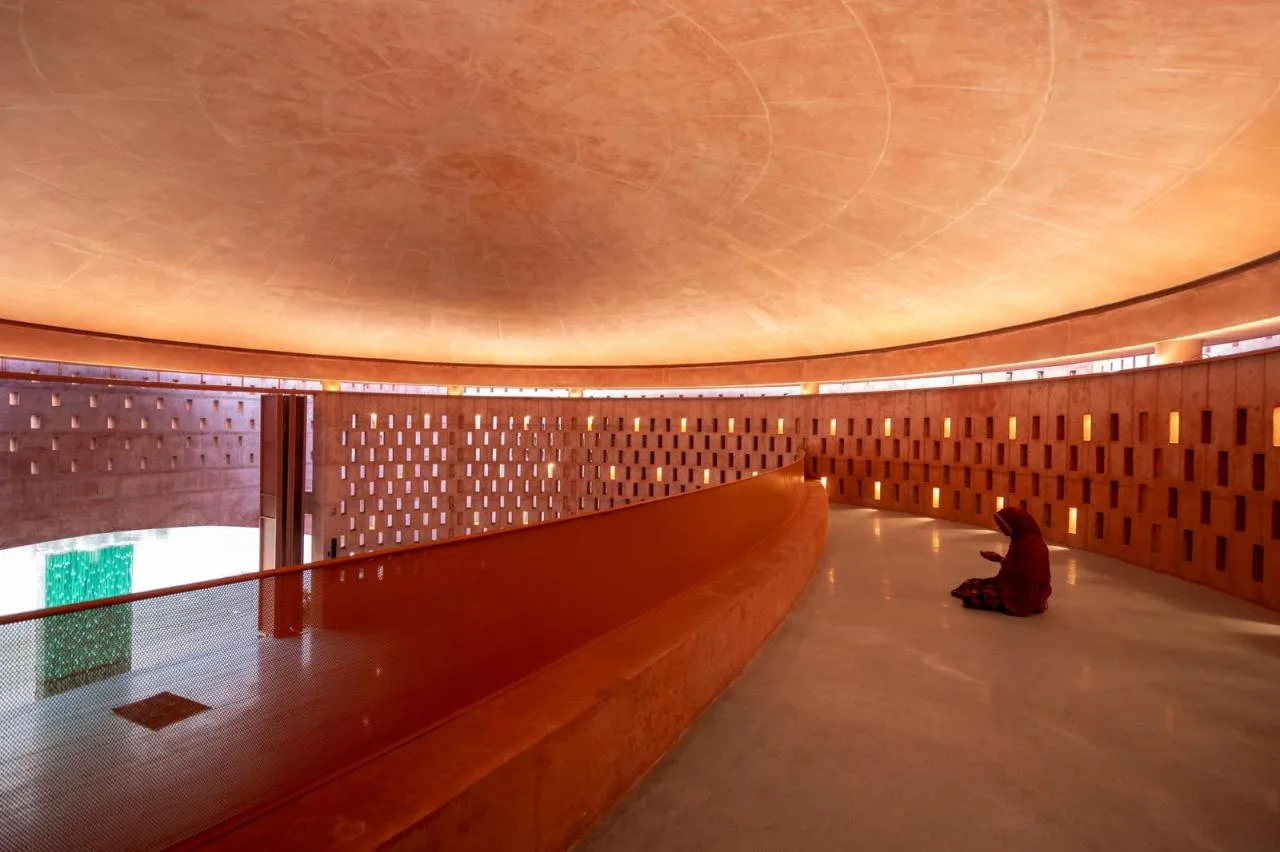
The shallow shell dome appears to float above the perforated curved wall, creating a unique and inspiring interior space within the prayer hall. This floating dome design echoes the ingenious structural advancements in Islamic mosque architecture, which allow for large open spaces without the need for intermediate supports.
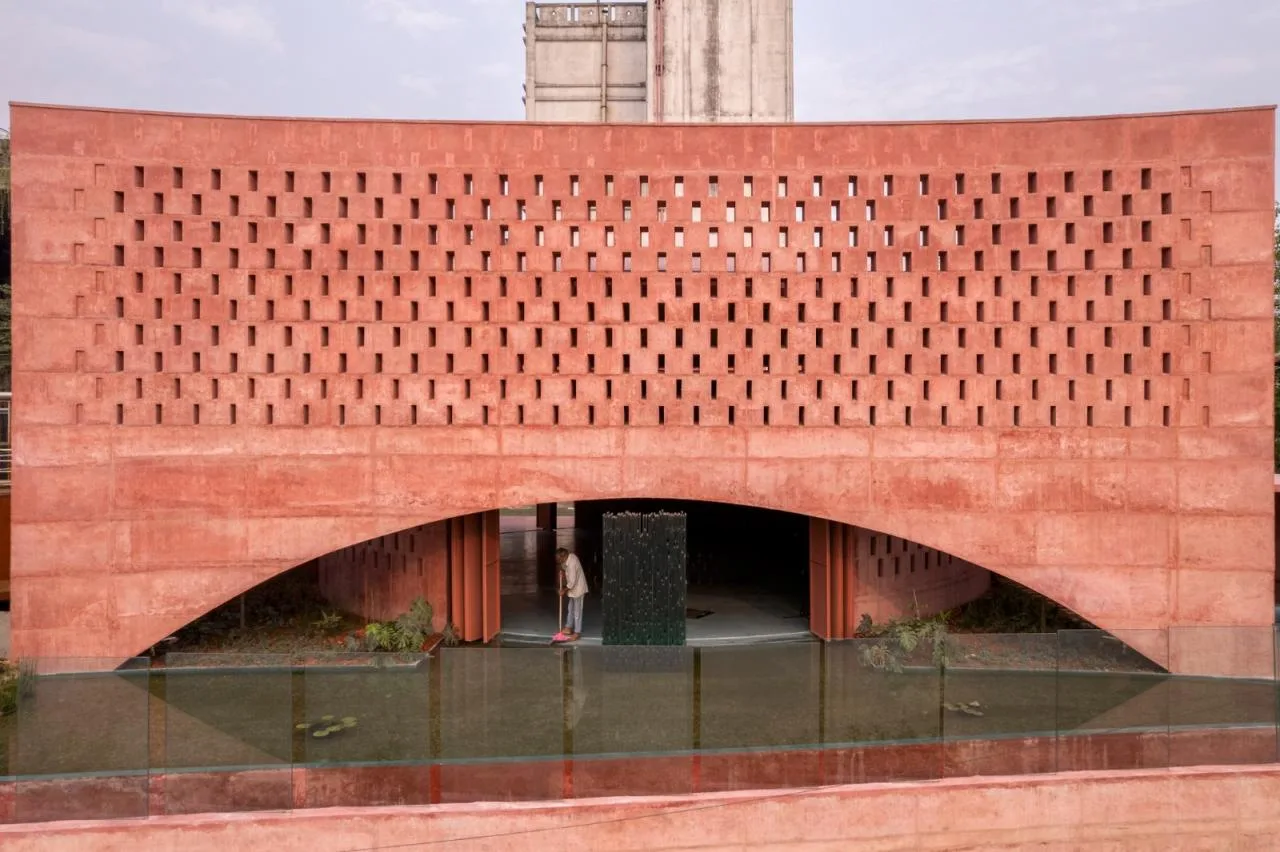
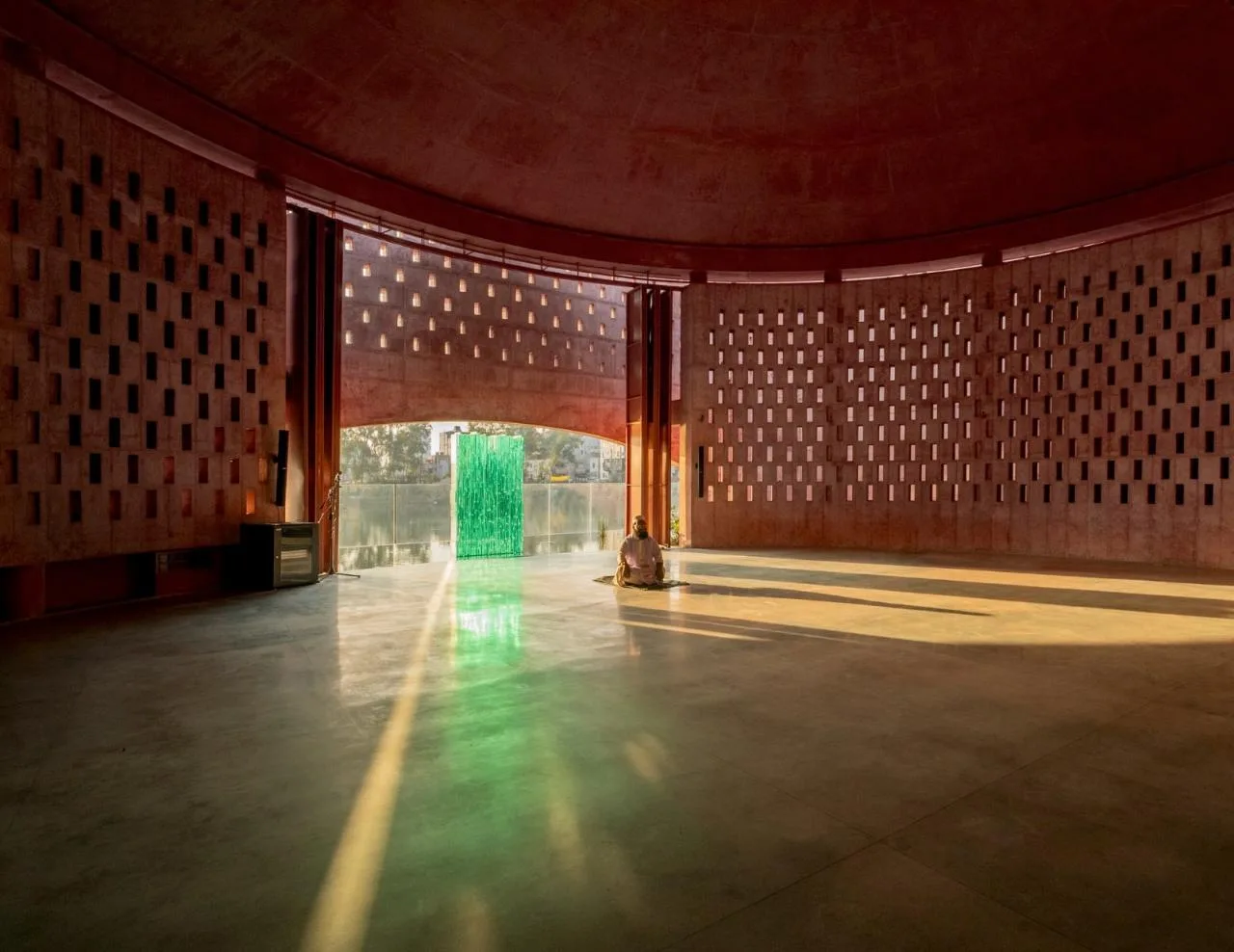
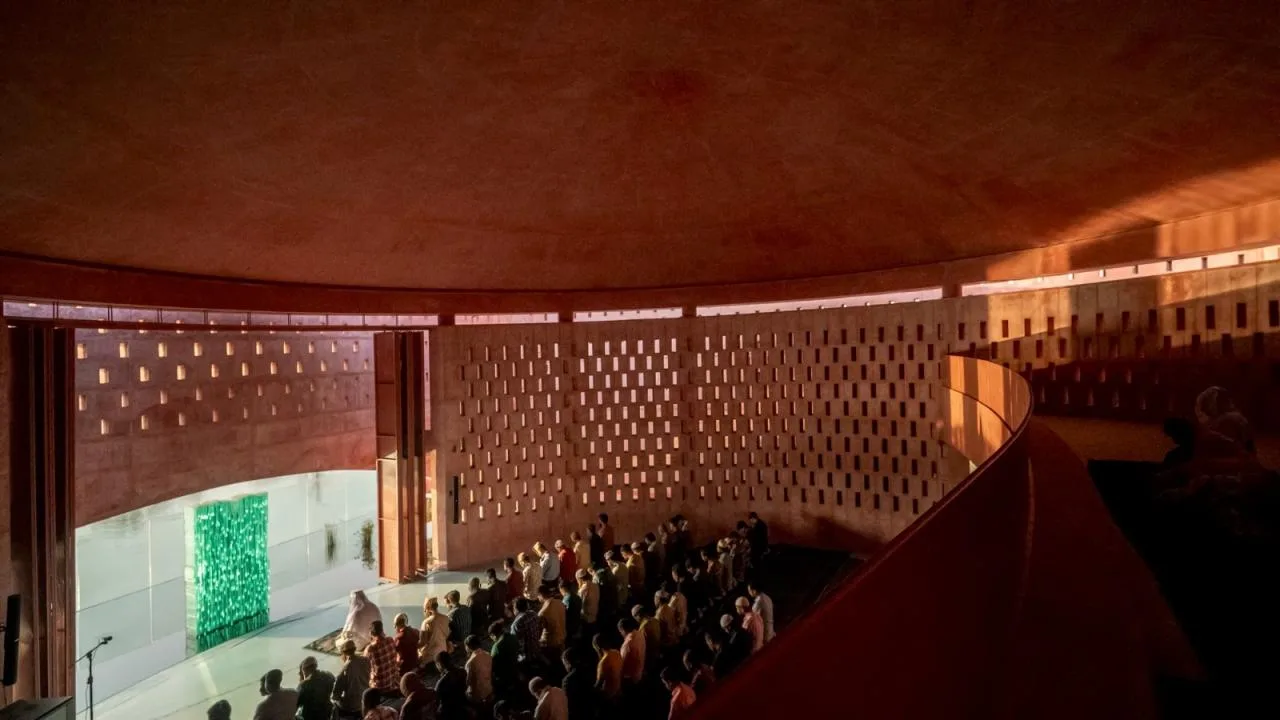
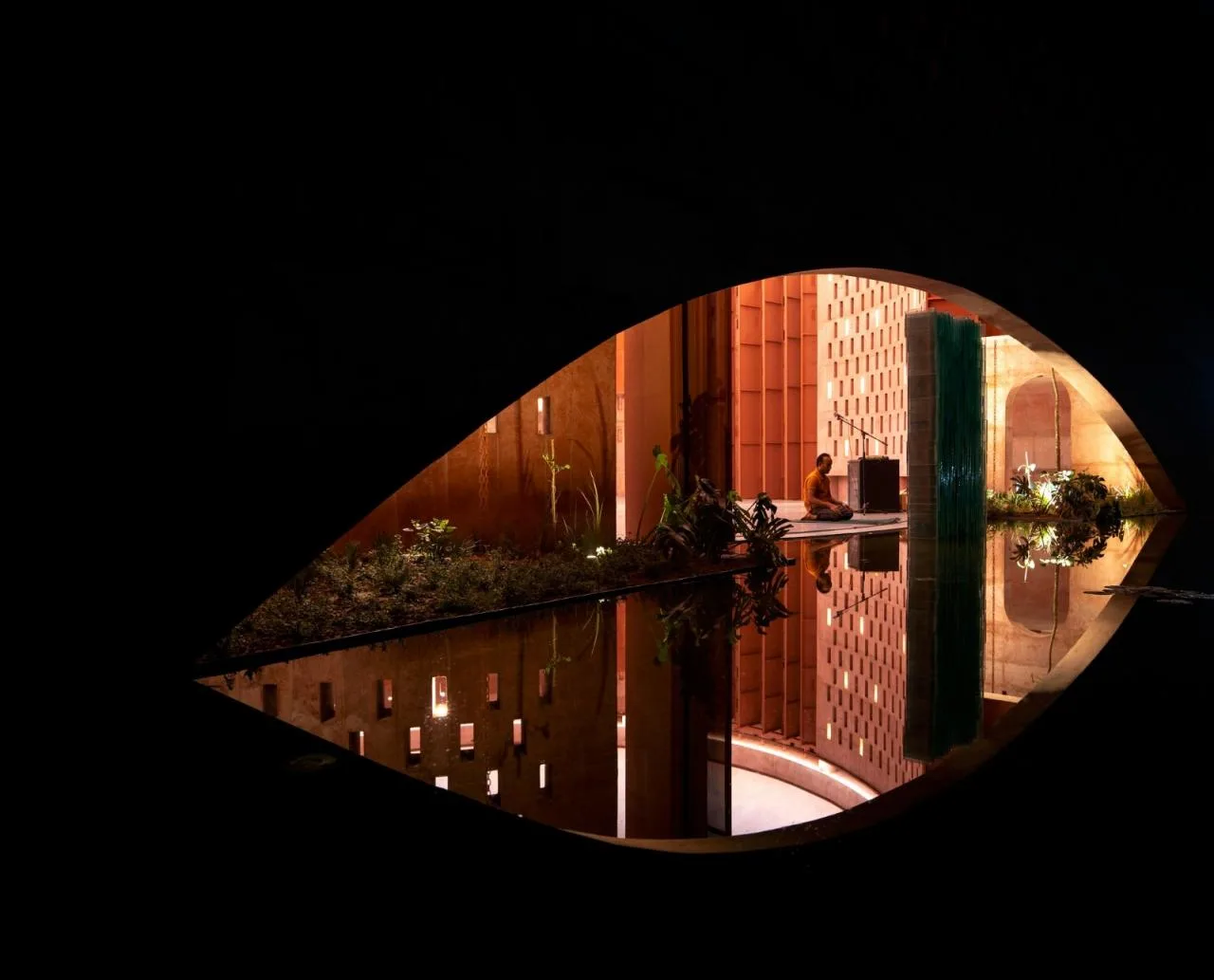
Departing from the traditional solid qibla walls, this mosque features a wide arched opening set within the delicately curved western wall to define the qibla direction. A reflective water body connects the turquoise mosaic interior with the existing pond through this arched opening, allowing the prayer space to extend seamlessly into an infinite, light-filled environment.
Inside, the mosque contains no glass surfaces except for the semi-transparent glass mihrab, made on-site using local glass sheets. This mihrab sits above shallow water, enhancing the tranquil atmosphere.
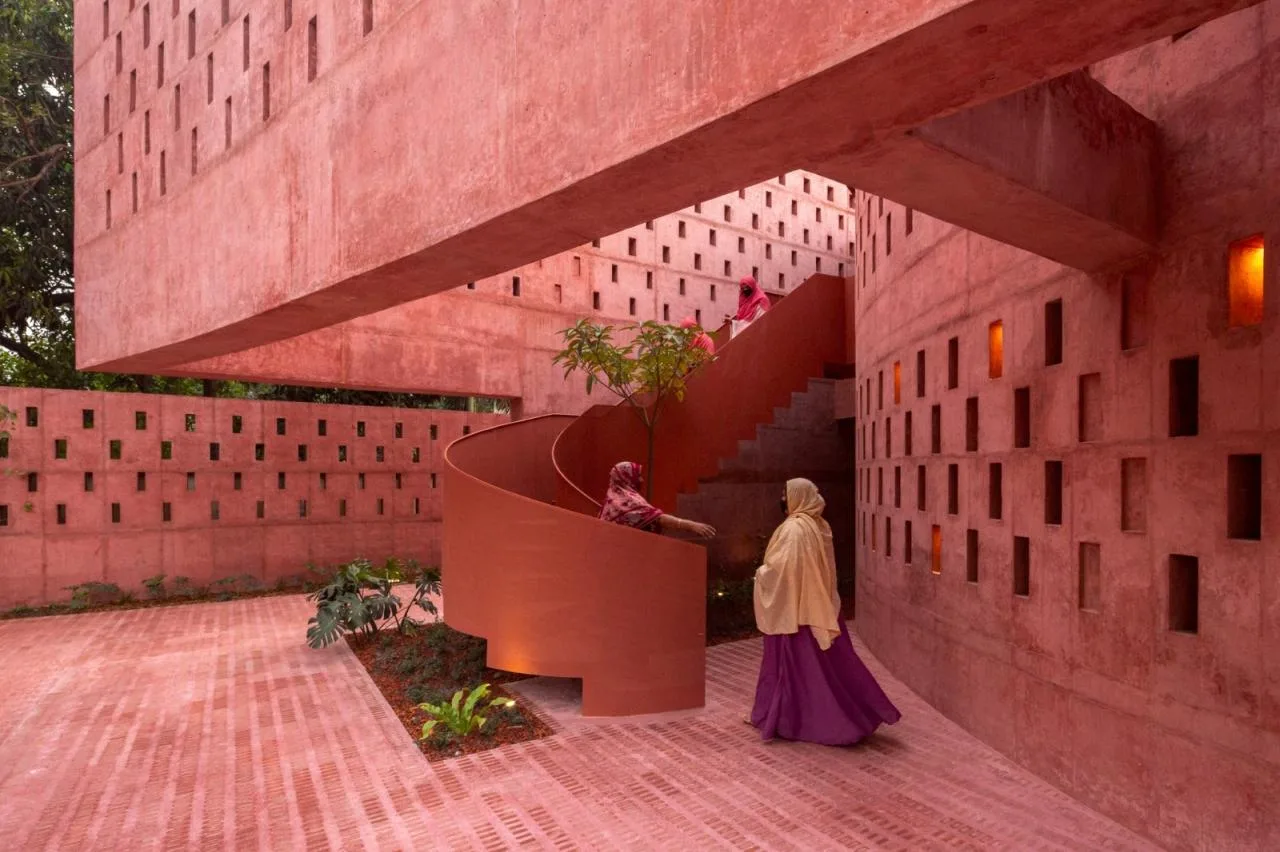
The mosque’s southeast courtyard features a perforated metal staircase leading to a crescent-shaped upper level. This space serves as a gathering and prayer area for female workers. Nearby, a ‘Chhatim tree’ has been planted, whose fragrant blossoms fill the air during blooming seasons. This thoughtful inclusion fosters empowerment and a sense of belonging among the female workforce participating in mosque activities.
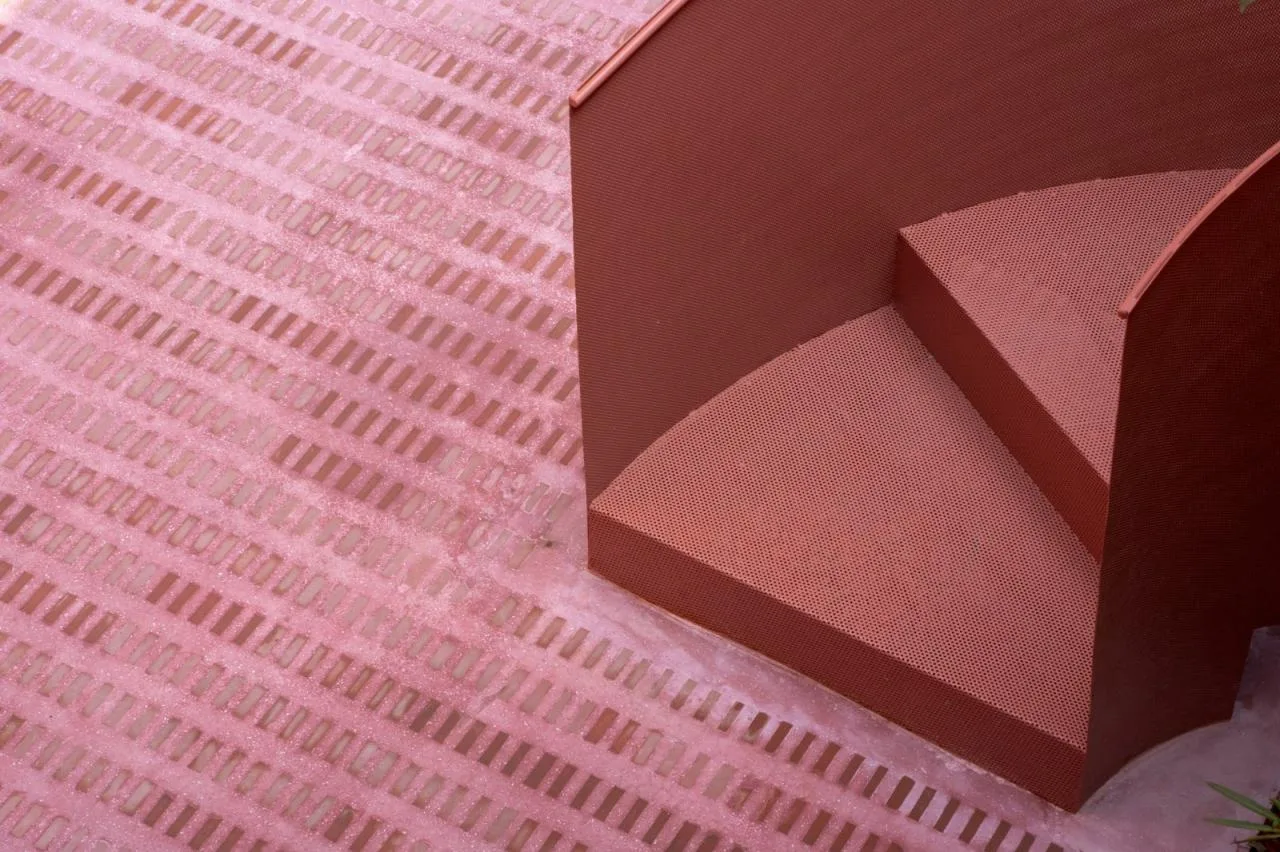
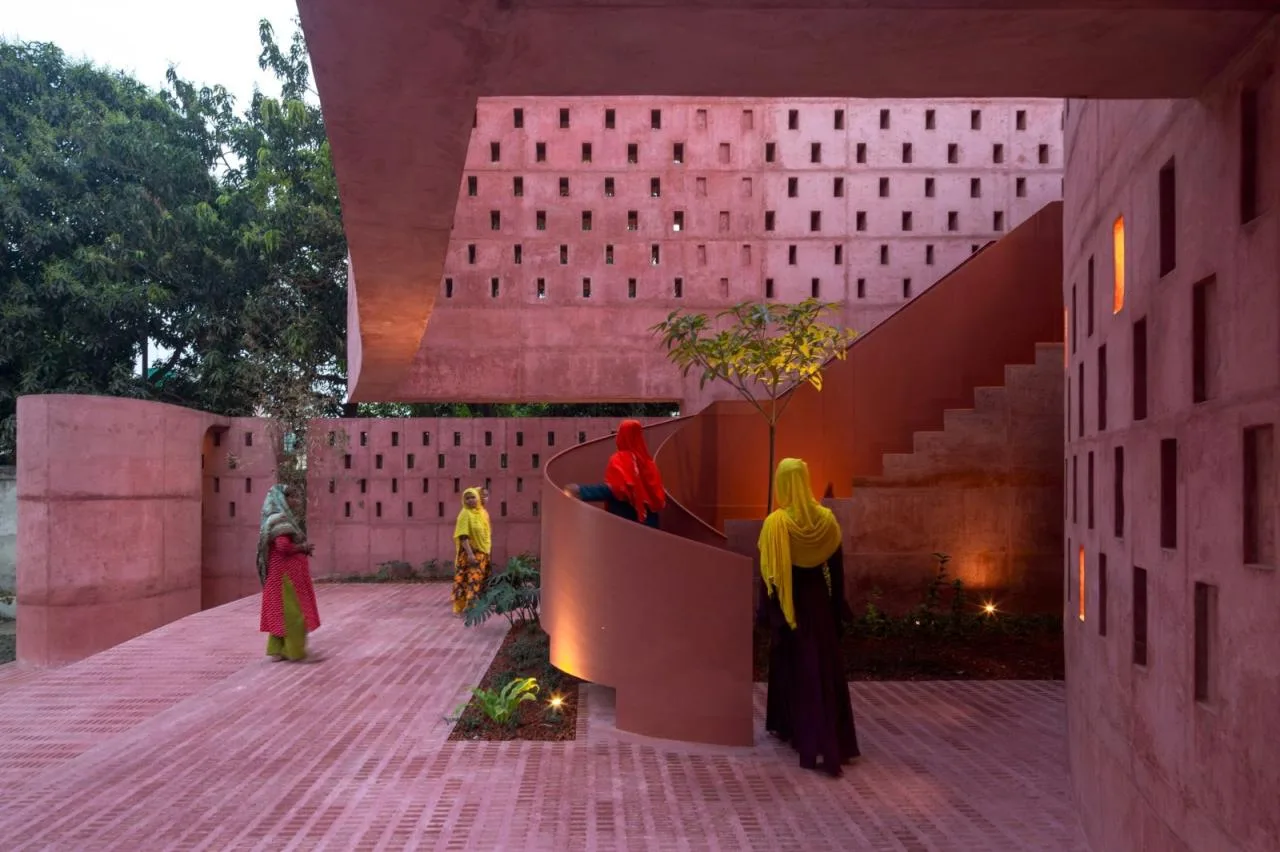
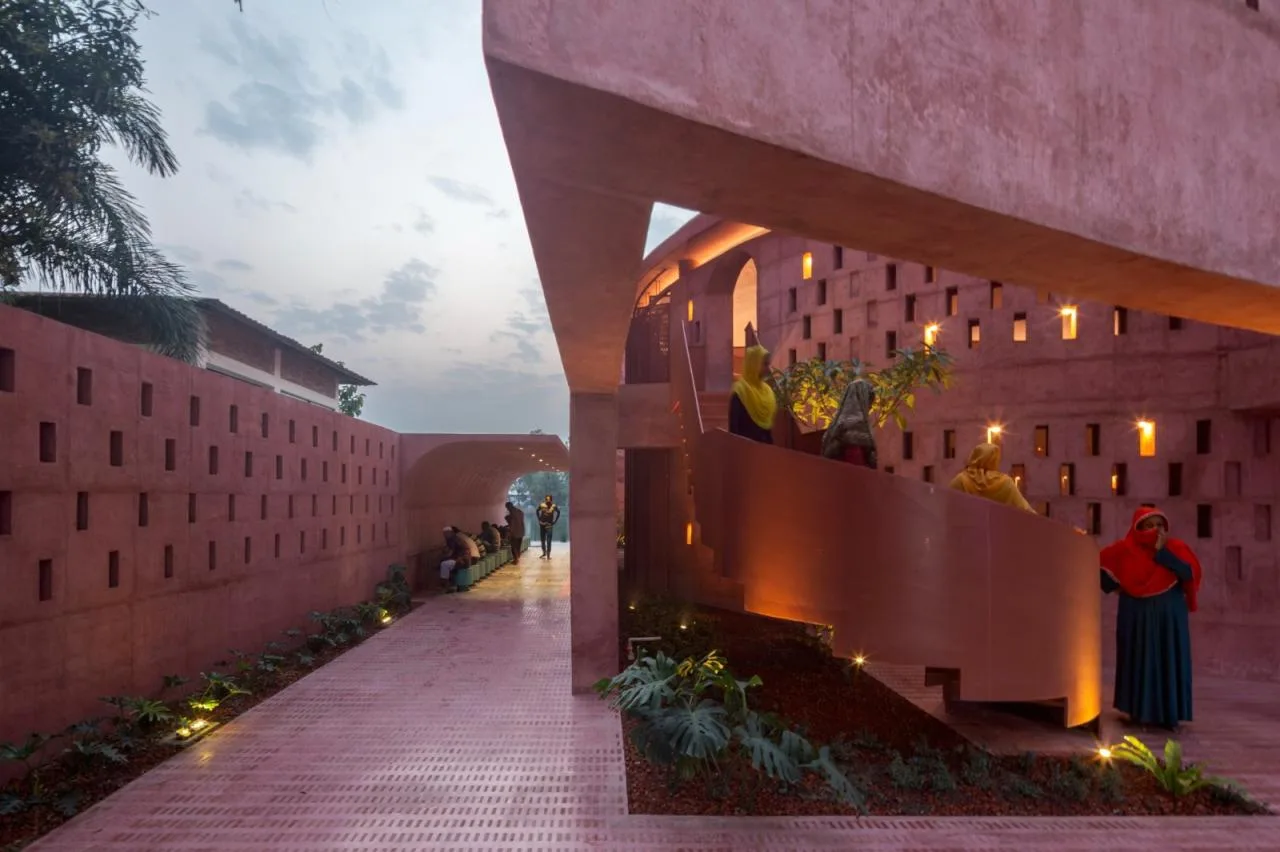
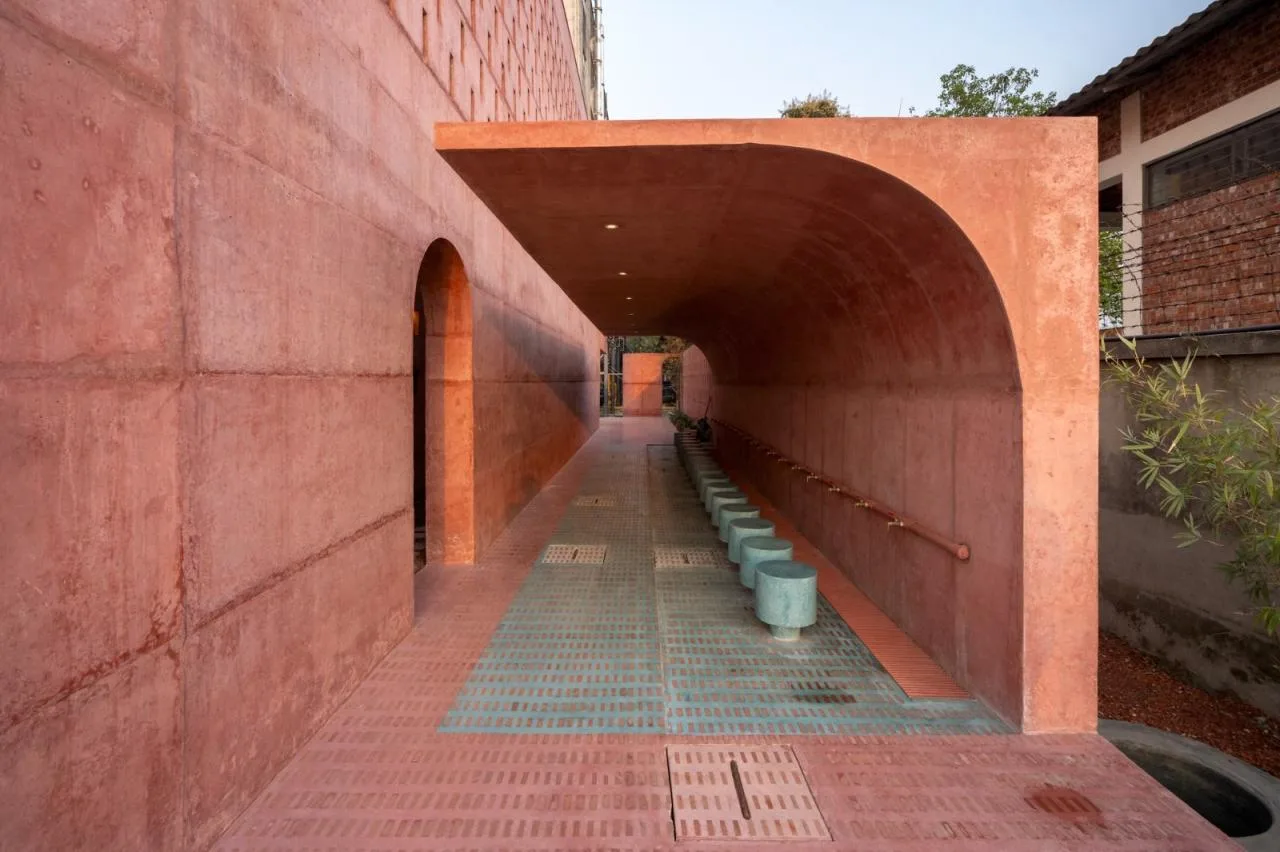
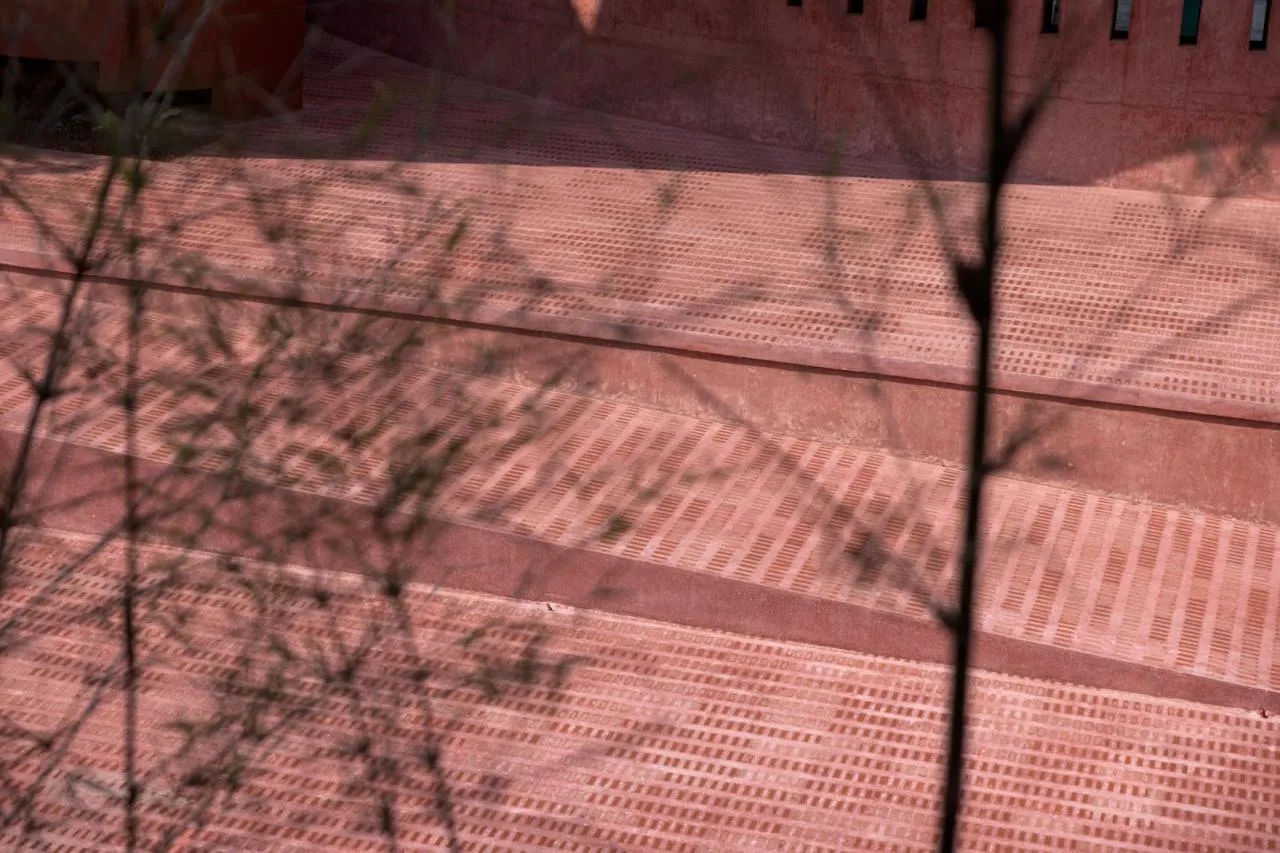
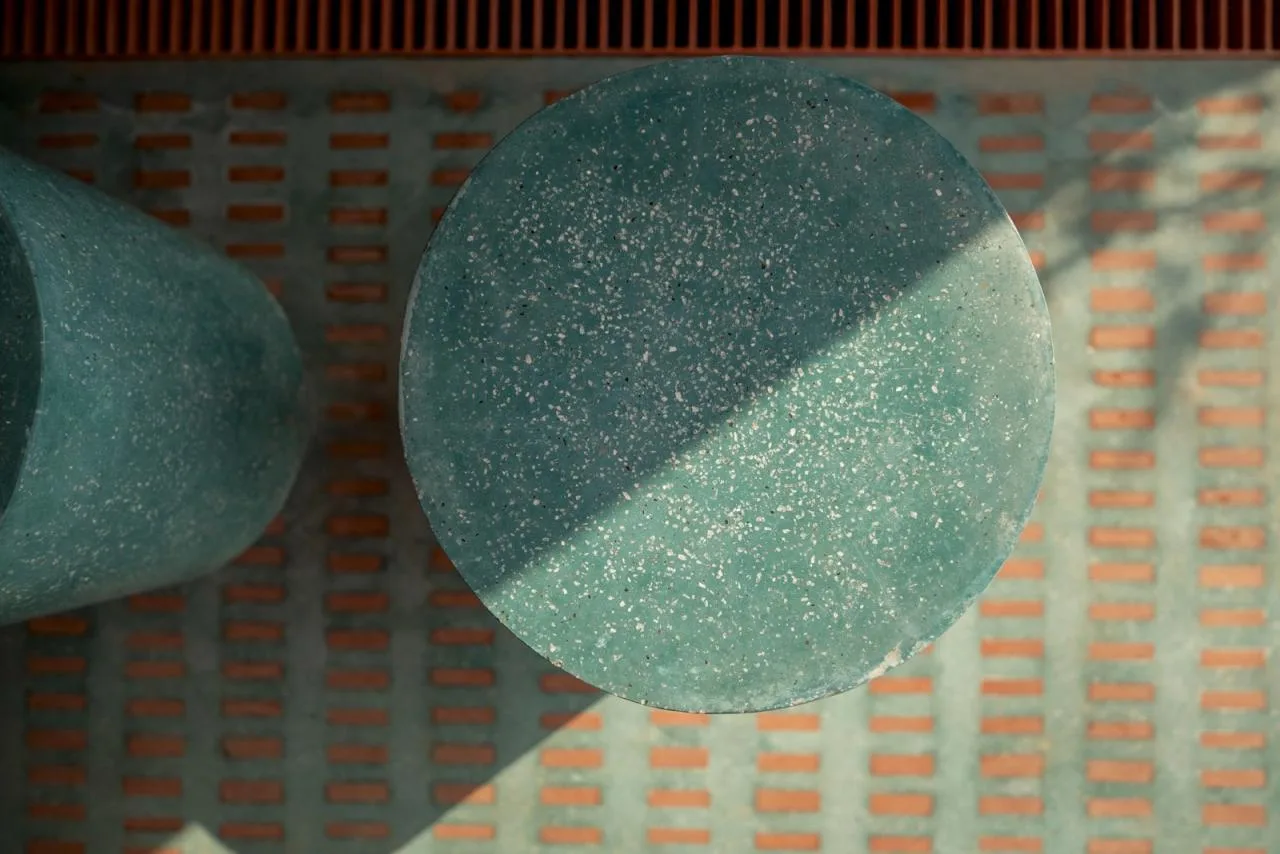
The mosque’s ablution area is thoughtfully designed to evoke spiritual serenity during purification before prayer. The simple pink mosaic floor transforms into a tranquil turquoise zone, symbolizing peace. These turquoise and pink mosaics beautifully complement the carefully arranged broken bricks, showcasing the exquisite craftsmanship reminiscent of ancient artisans.
These colors resonate deeply with the collective memory of its users. Additionally, used shower water is recycled to irrigate the garden plants, reflecting a sustainable approach to water management.
Project Drawings
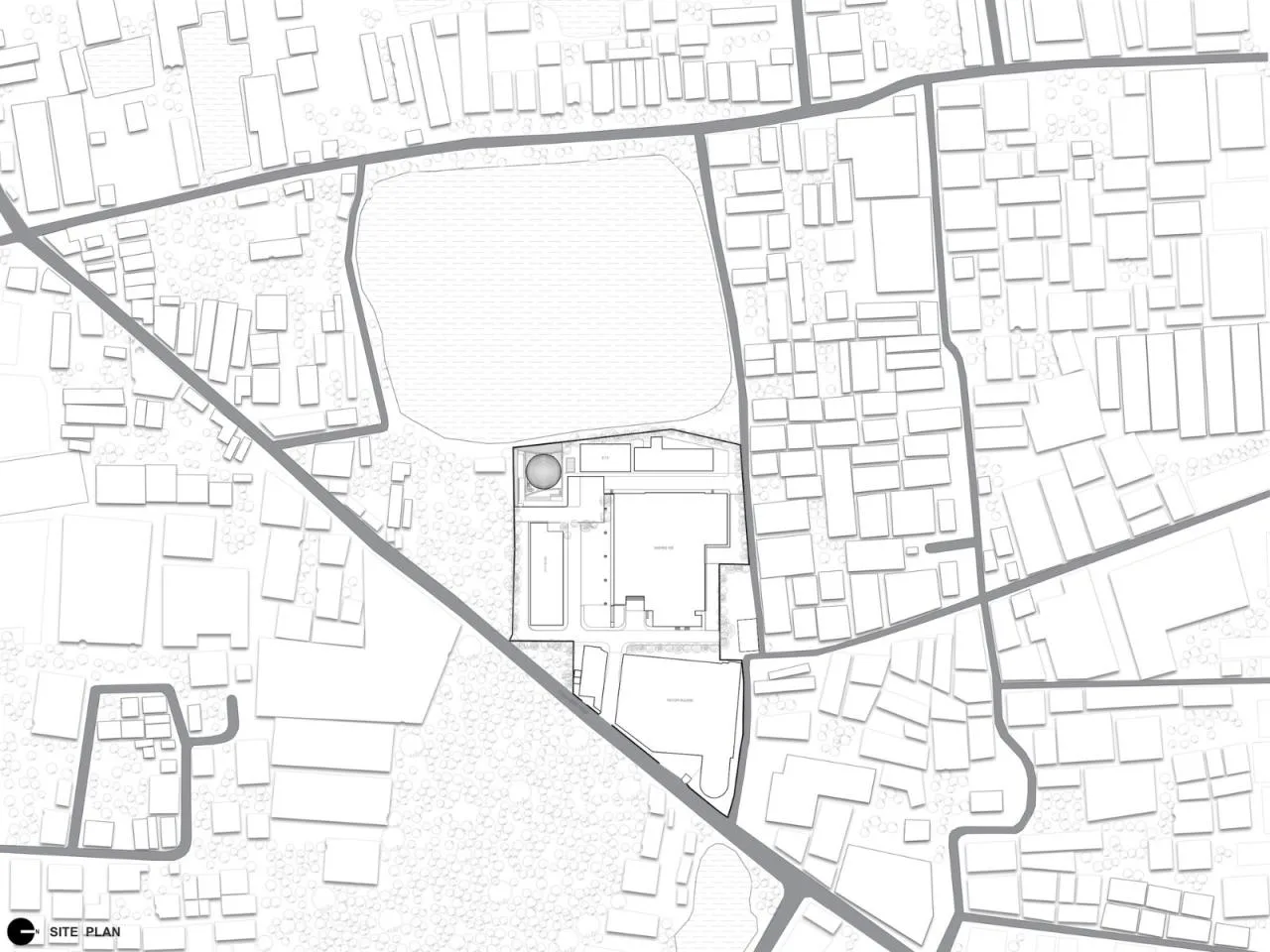
△ General Layout Plan
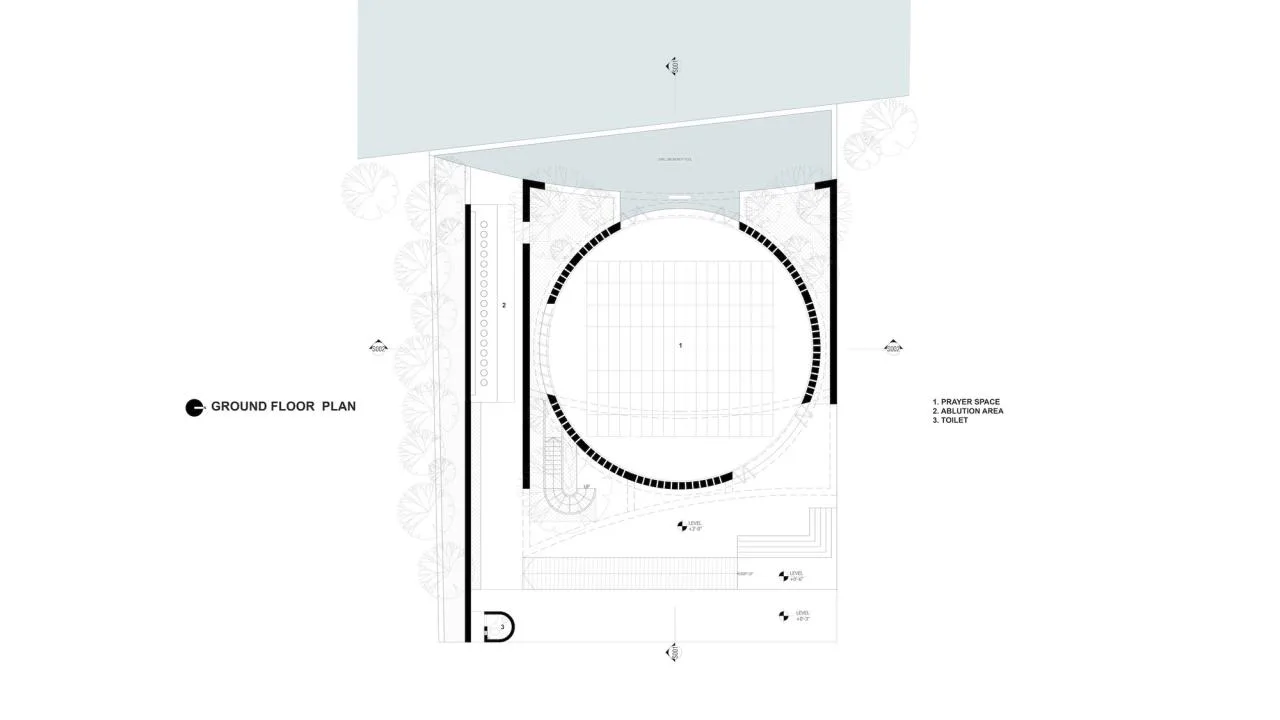
△ First Floor Plan
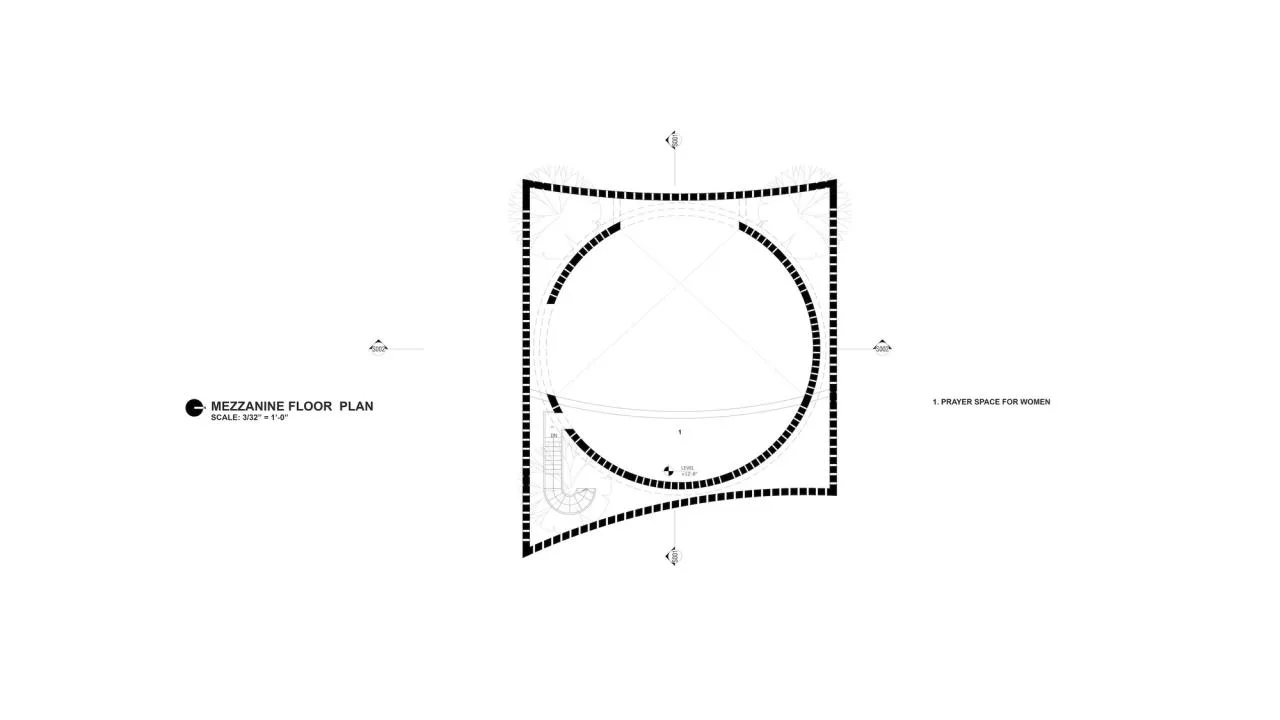
△ Aerial Plan
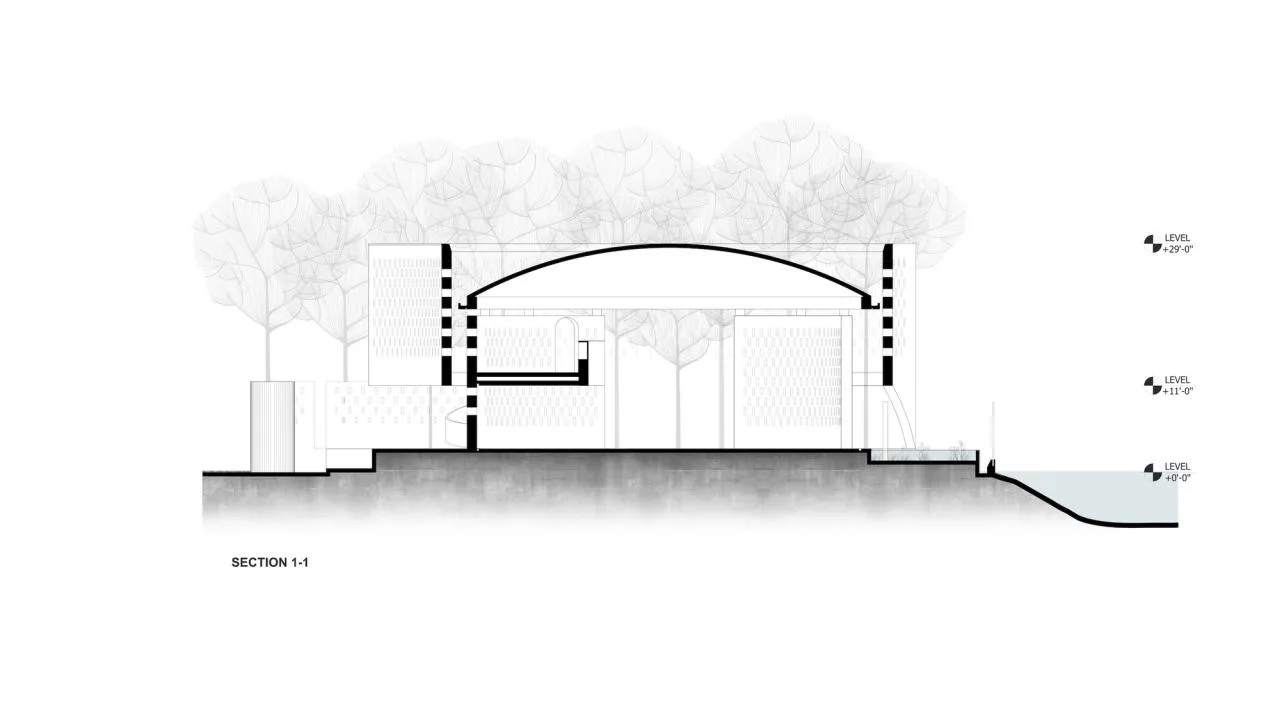
△ Section Diagram
Project Information
Architect: Studio Morphogenesis
Area: 6060 ft²
Project Year: 2023
Photographers: Asif Salman, City Syntax
Lead Architect: Saiqa Iqbal Meghna
Managing Partner and Design Team Member: Suvro Sovon Chowdhury
Partner Team Members: Shahla Karim Kabir, Minhaz Bin Gaffar
Associate Project Architect: Muntasir Hakim
Metal Staircase Structure Consultant: Faysal Anwar
Electrical Consultant: Eyashin Ahamad
Plumbing Consultants: Shafiqul Bari, Shah Newaz Kabir
Glass Collaboration: Artist Wakilur Rahman
Construction Firm: IDS Adress Maker
Structural Consultant: TDM
Location: Ashulia, Bangladesh













Must log in before commenting!
Sign Up