
If cultural heritage buildings focus on showcasing cultural and historical significance, the everyday spaces surrounding them serve as the living context that enriches their value and holds ongoing importance.
— Chen Binxin
Chief Architect, Goa Elephant Design
Lizhi Street is situated in the old city district of Shangyu, Shaoxing, within the historical and cultural area of Cao’e Temple. Located in the “Old Dam Bottom” zone, it is deeply intertwined with the local transportation culture, preserving the collective memories of Shangyu’s residents. With the emergence of Shangyu New City to the north, the old city area has encountered challenges such as deteriorating buildings, traffic congestion, and population decline. In response, a renewal plan was initiated. Over three years, Lizhi Street has evolved from a traditional market street into a unique space blending culture, commerce, and tourism, revitalized as the “Old Town Reception Hall.”
Ordinary historical sites not officially listed for protection
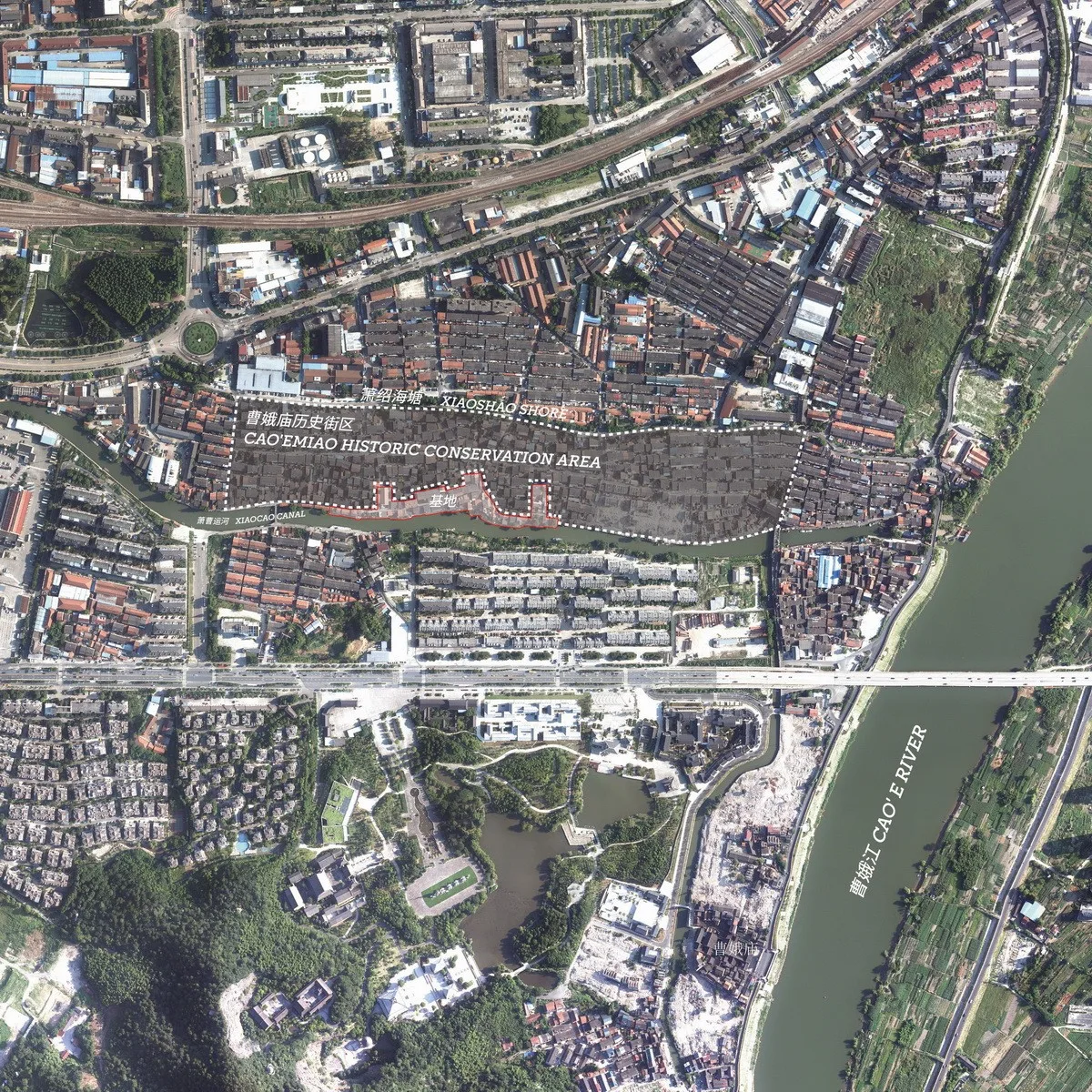
△ Original site location and surrounding context © Goa Elephant Design
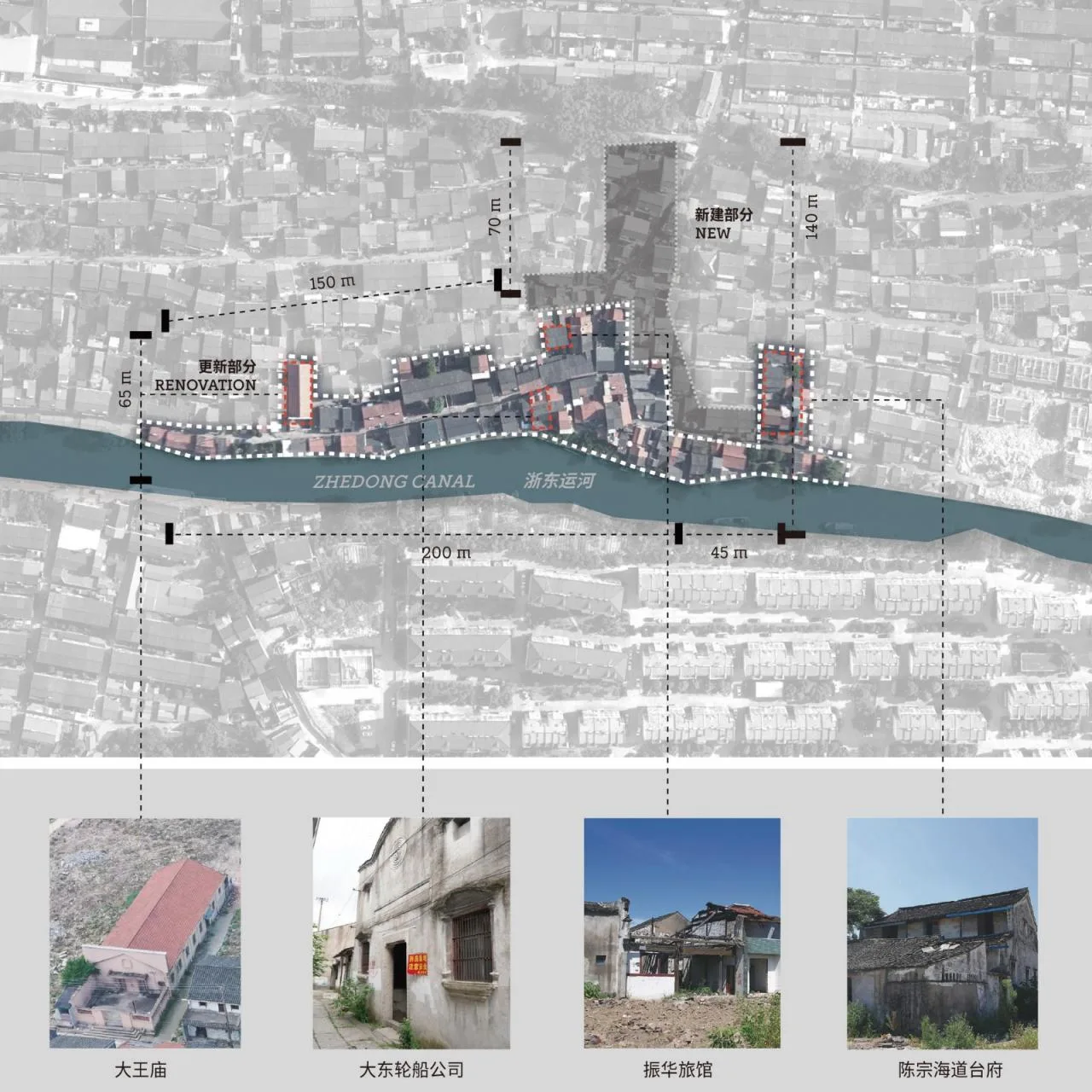
Overview of the site and historic buildings © Goa Elephant Design
Behind the approximately 200-meter-long Lizhi Street lies a rich tapestry of lived memories. The street is flanked by low-rise buildings constructed from the late Qing Dynasty and Republic of China era through the 1990s. Among these are scattered cultural heritage sites such as Zhenhua Hotel, Dadong Shipping Company, Dawang Temple, and Chen Zonghai Dao Tai Fu, alongside residential homes and small street shops.
As an isolated and deteriorated old street without official protection status, the original planning only mandated preservation of four scattered cultural heritage buildings. The rest of the street was slated for demolition and conversion into a canal park. Such an approach would have erased a vital spatial carrier of collective memory.
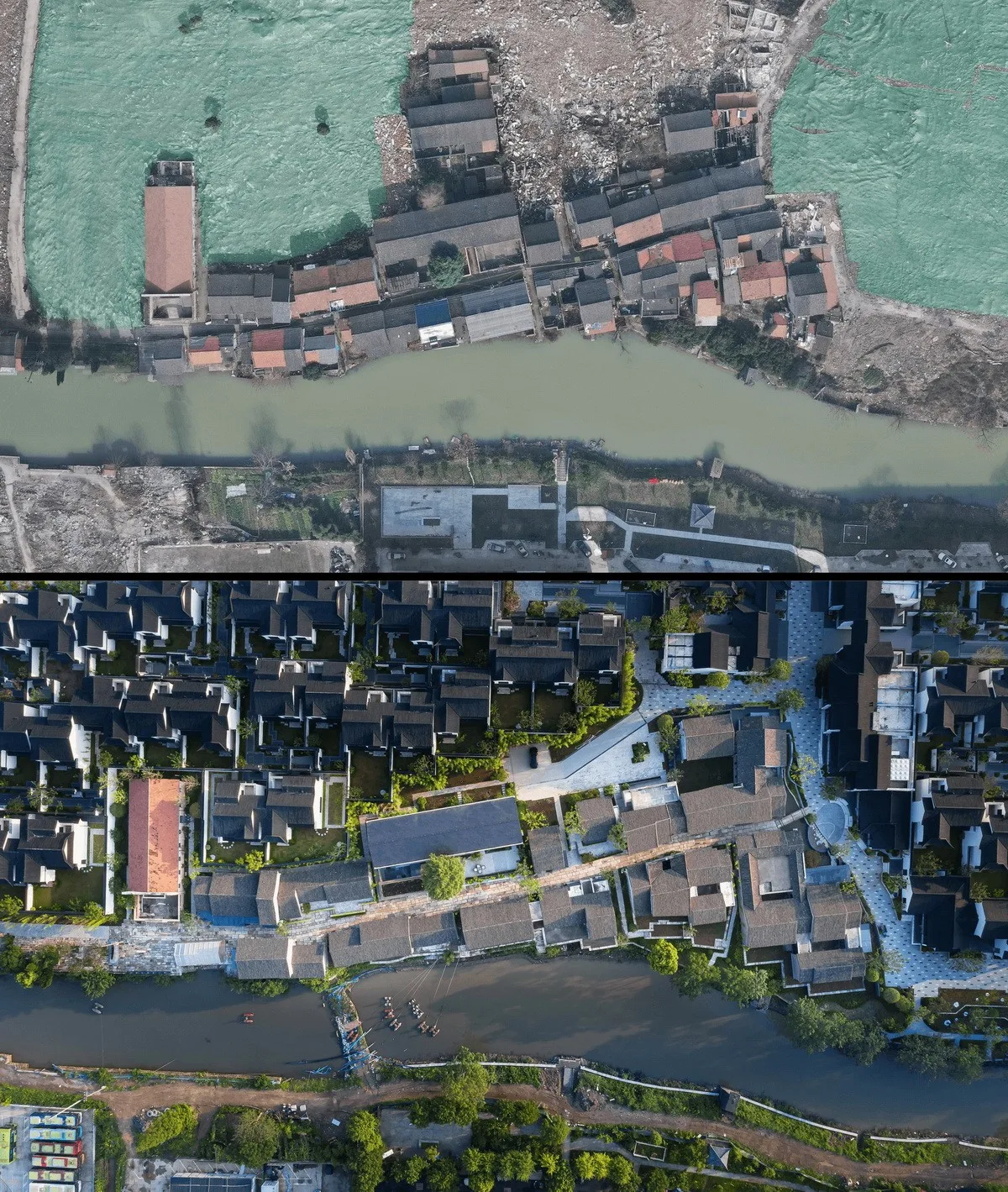
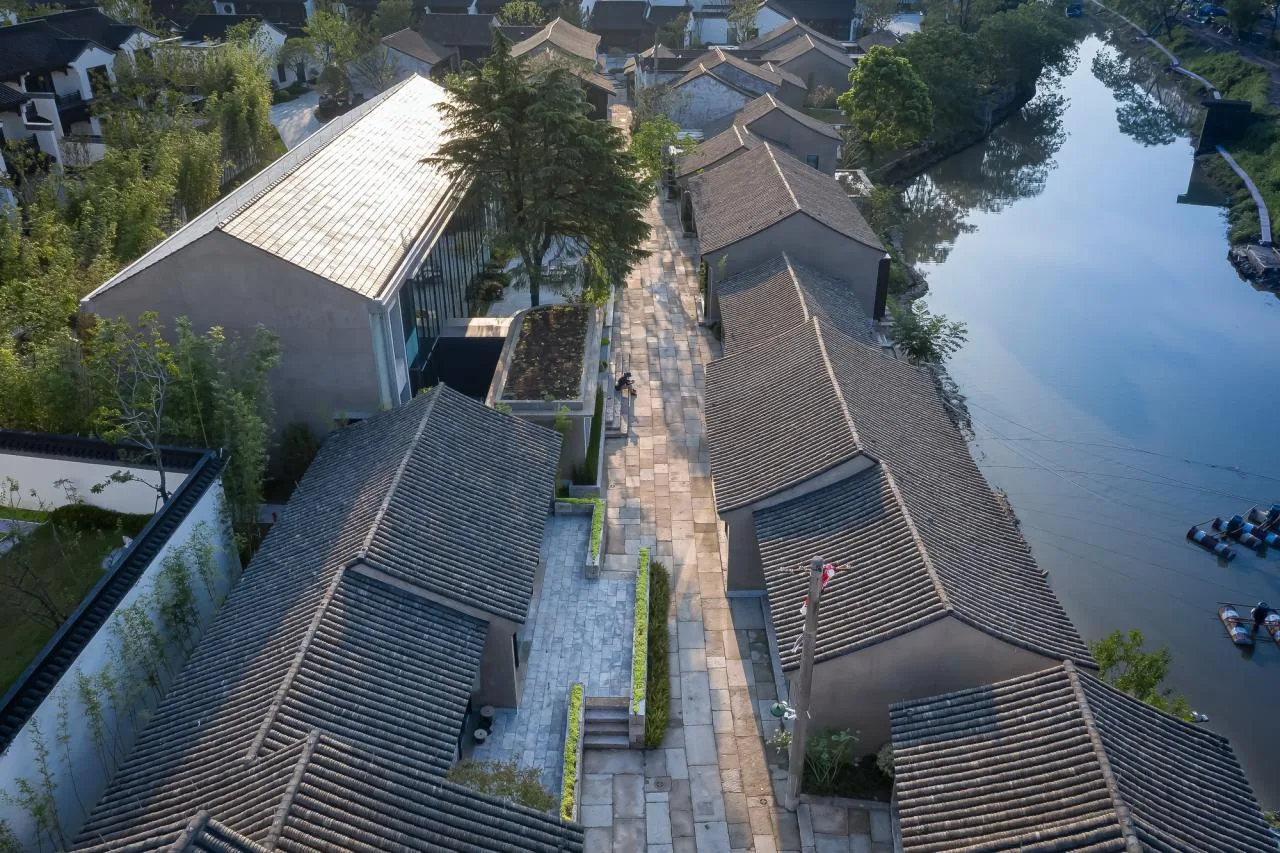
△ Aerial views of the original and renewed old street © Goa Elephant Design
At the project’s outset, the development team debated the merits of demolition versus preservation. They concluded that, like many ordinary town streets and alleys, Lizhi Street, though unprotected, “more fully reflects the traditional style and ethnic local characteristics of a specific historical period” and holds value as a “historic site.”1
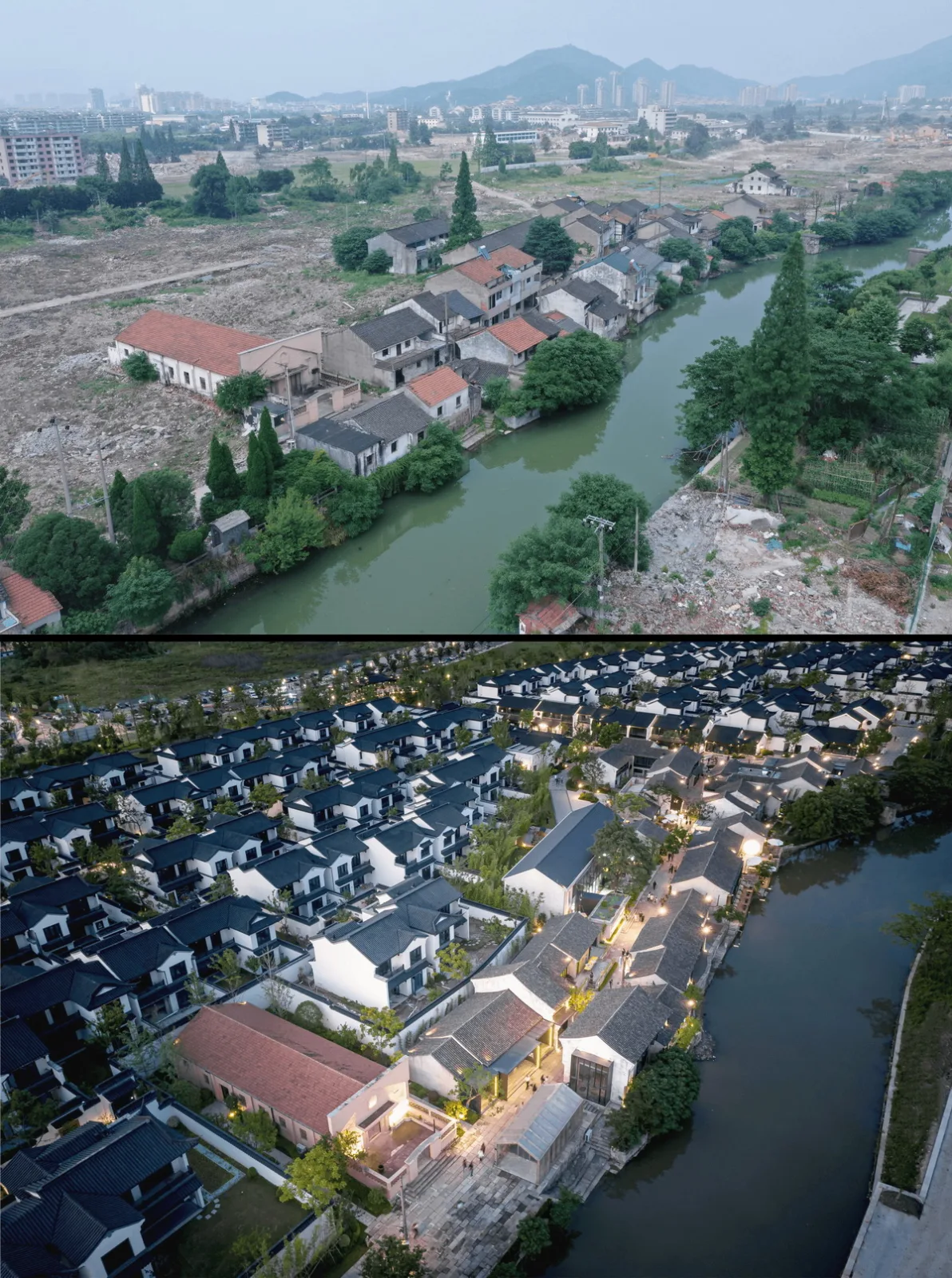
△ Aerial view comparison of Lizhi Street before and after renewal © Goa Elephant Design
Based on this understanding, the team agreed to implement stricter renovation criteria beyond planning requirements. They aimed to regenerate the street’s functionality while preserving its texture and character, thereby maintaining the town’s identity and enhancing urban public life.
The Spatial Layers Carrying Life Memories
The buildings along Lizhi Street represent a rich historical layering: from wooden frame structures of the late Qing and Republic of China eras to brick and concrete walls post-1949; from prefabricated brick and concrete houses of the 1970s and 1980s to small Western-style buildings emerging after the 1990s. This diversity defies classification under a single period or style.
However, the street currently faces multiple challenges. After population growth post-1949, street and alley boundaries were compressed, leading to disorder and congestion. Addressing these issues required alleviating overcrowding while preserving the textures and spaces shaped by everyday life, which give the street its unique character and memories.
The old street before reopening © Goa Elephant Design
Through multiple site surveys, the design team identified valuable segments to balance preservation with functional improvement. Their strategy involved three layers of intervention: overall spatial texture, spatial relationships, and detailed components.
1) The Xiaoshao Canal curves gently northward through the Lizhi Street section, creating soft street lines and spatial textures. The site features a subtle 30-centimeter height difference, which the design preserves by maintaining the original irregular plan and minor elevation changes.
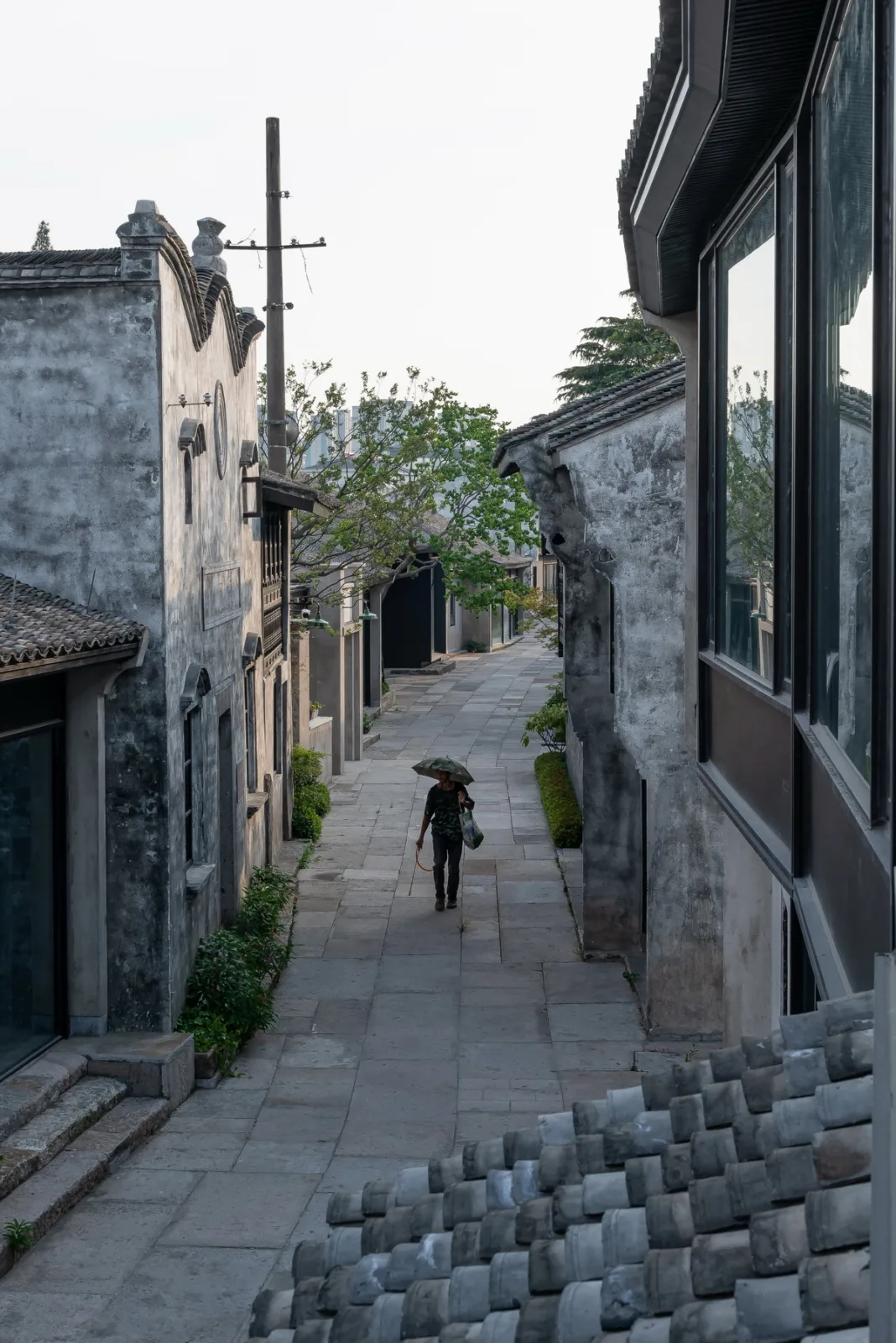
The old street before reopening © Goa Elephant Design
2) The street’s buildings have accumulated diverse forms over time, resulting in rich spatial relationships distinct from the uniform blocks of modern cities and full of human warmth. The design team carefully retained these spatial details, such as a curved courtyard wall between a two-story brick and concrete building and the street, designed to avoid blocking a neighbor’s doorway—a reflection of historic neighborhood interactions deliberately preserved.
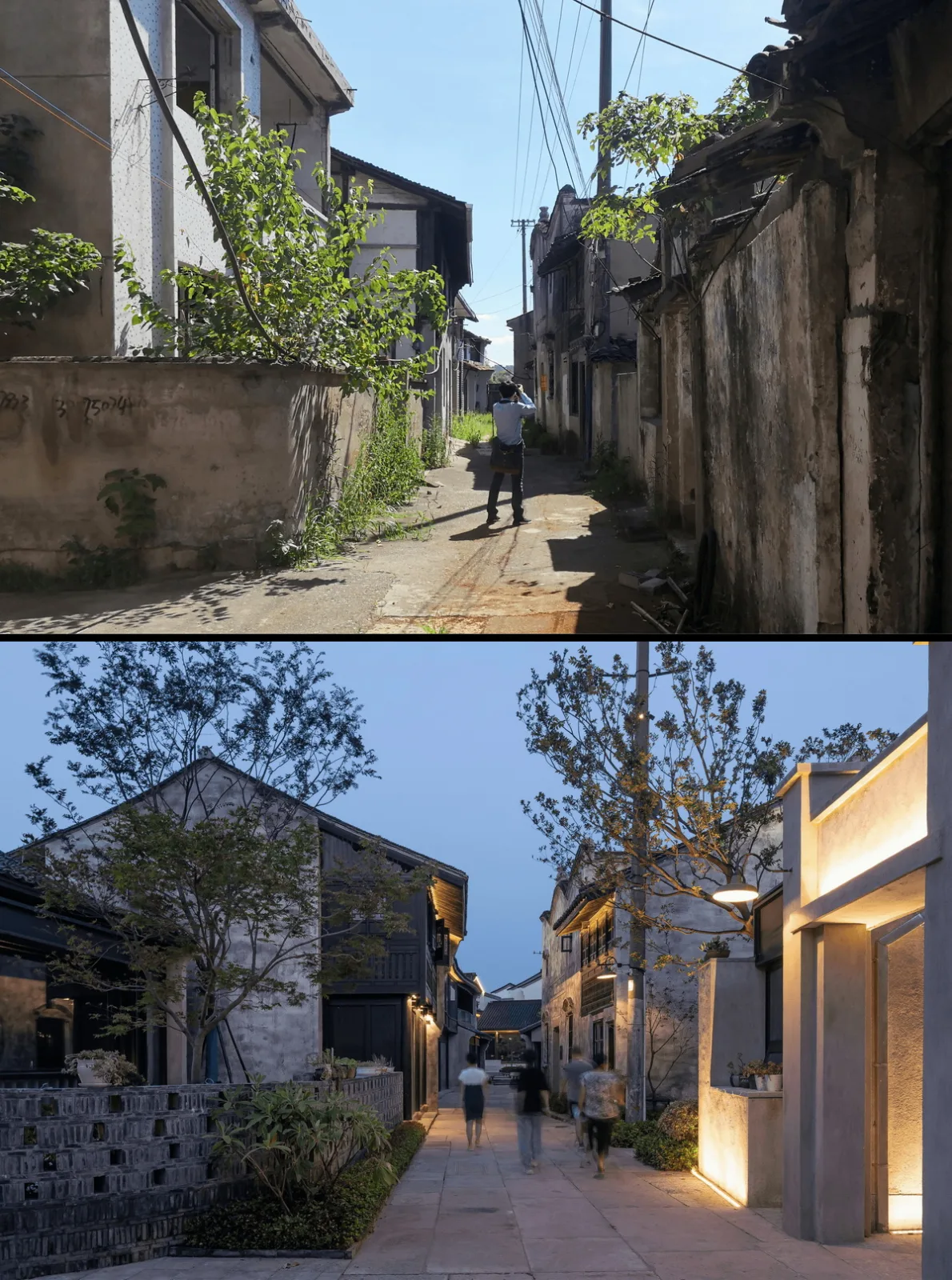
△ Before and after renovation of a residence with curved courtyard walls © Goa Elephant Design
3) The design also preserves key elements such as the canal moat, low walls, river piers, mature trees, street nameplates, decorative brick walls, and old furniture. To introduce modern functions, contemporary materials like glass bricks and aluminum panels are integrated, blending nostalgia with innovation.
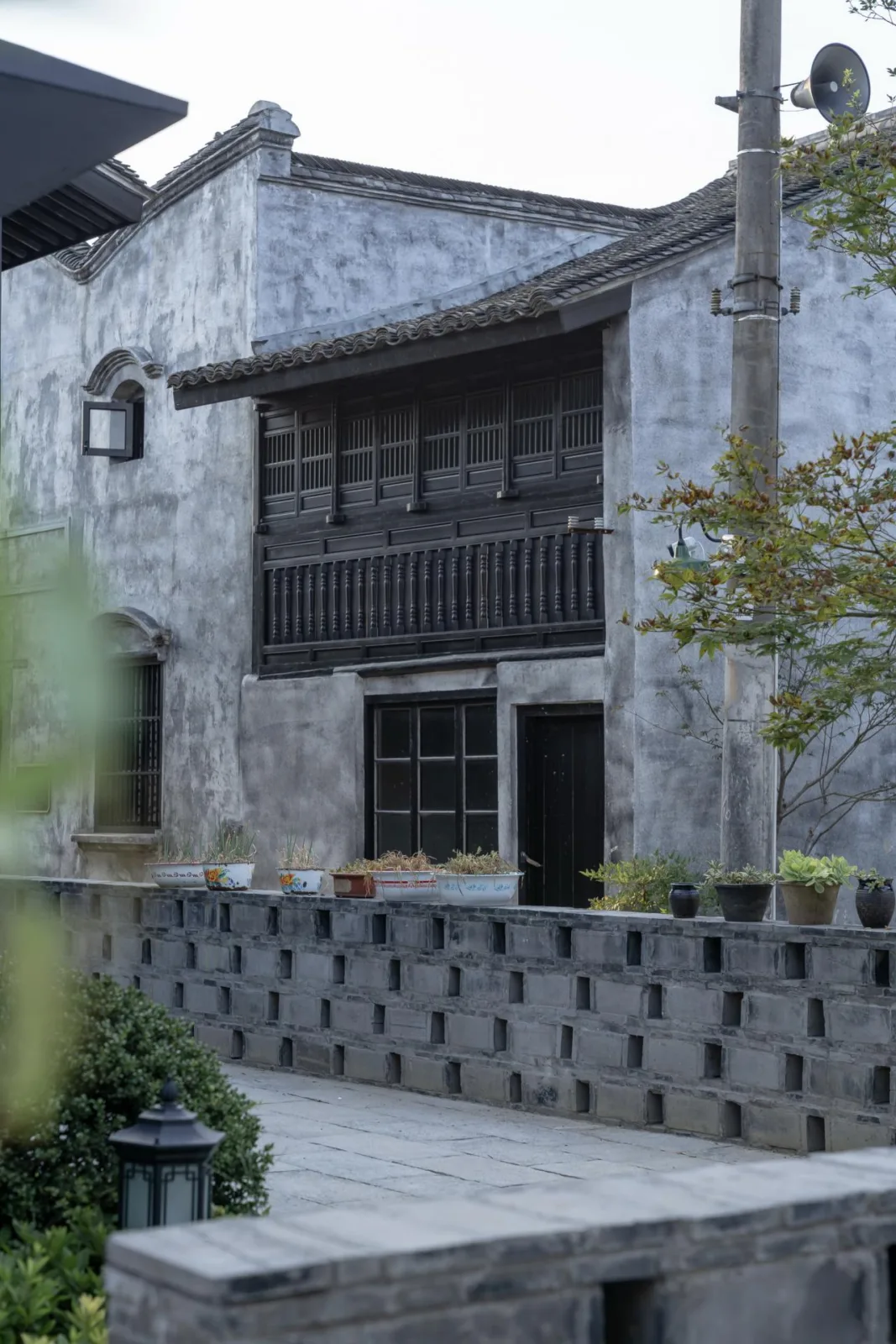
Some components (like utility poles and old courtyard bricks) have been recycled and reused in the updated streetscape © Goa Elephant Design
Functional Regeneration and Enhancing Public Access
The old street no longer met modern standards for commercial and cultural spaces in terms of spatial layout, safety, and accessibility. While respecting the original community fabric and the staggered building arrangement, the design team removed low-quality additions, unified fragmented spaces, increased indoor ceiling heights, and improved riverbank openness to accommodate contemporary uses.
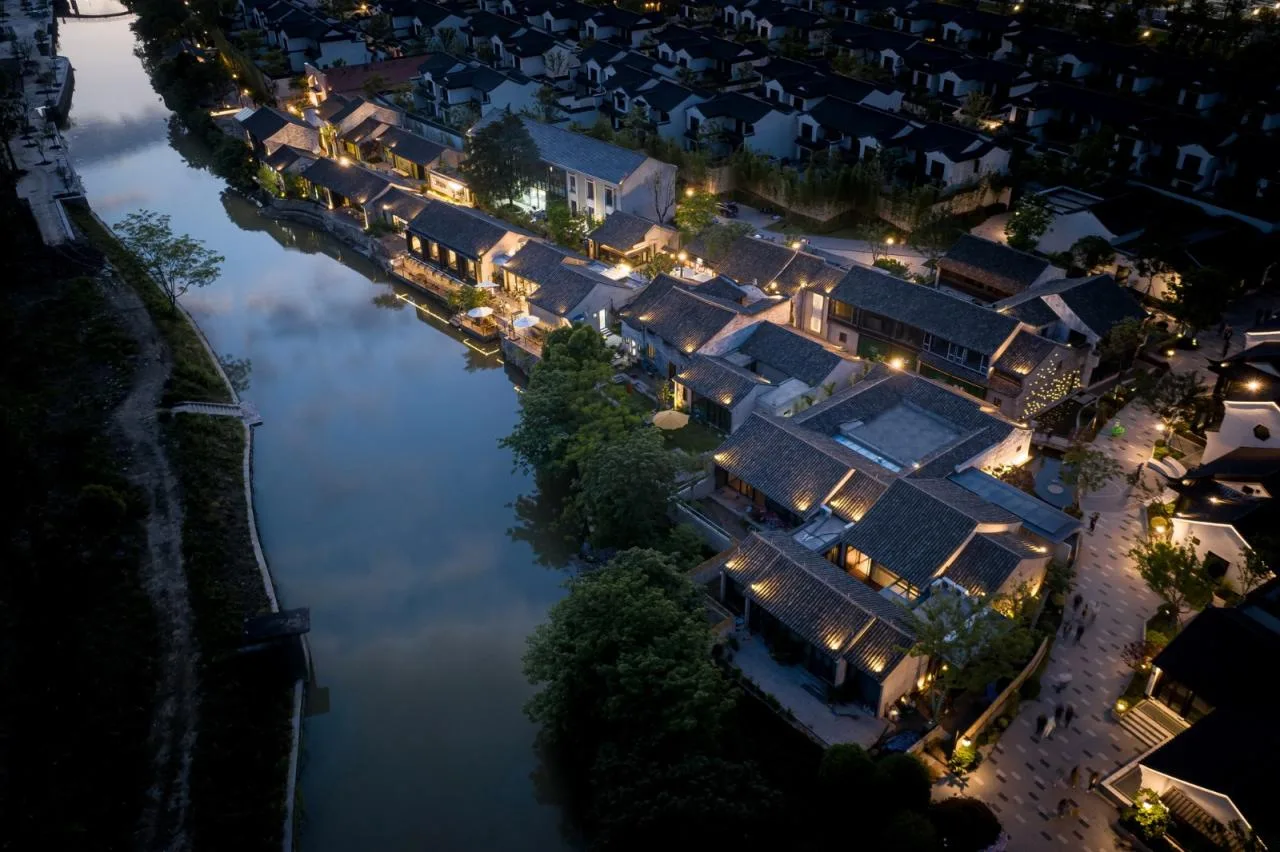
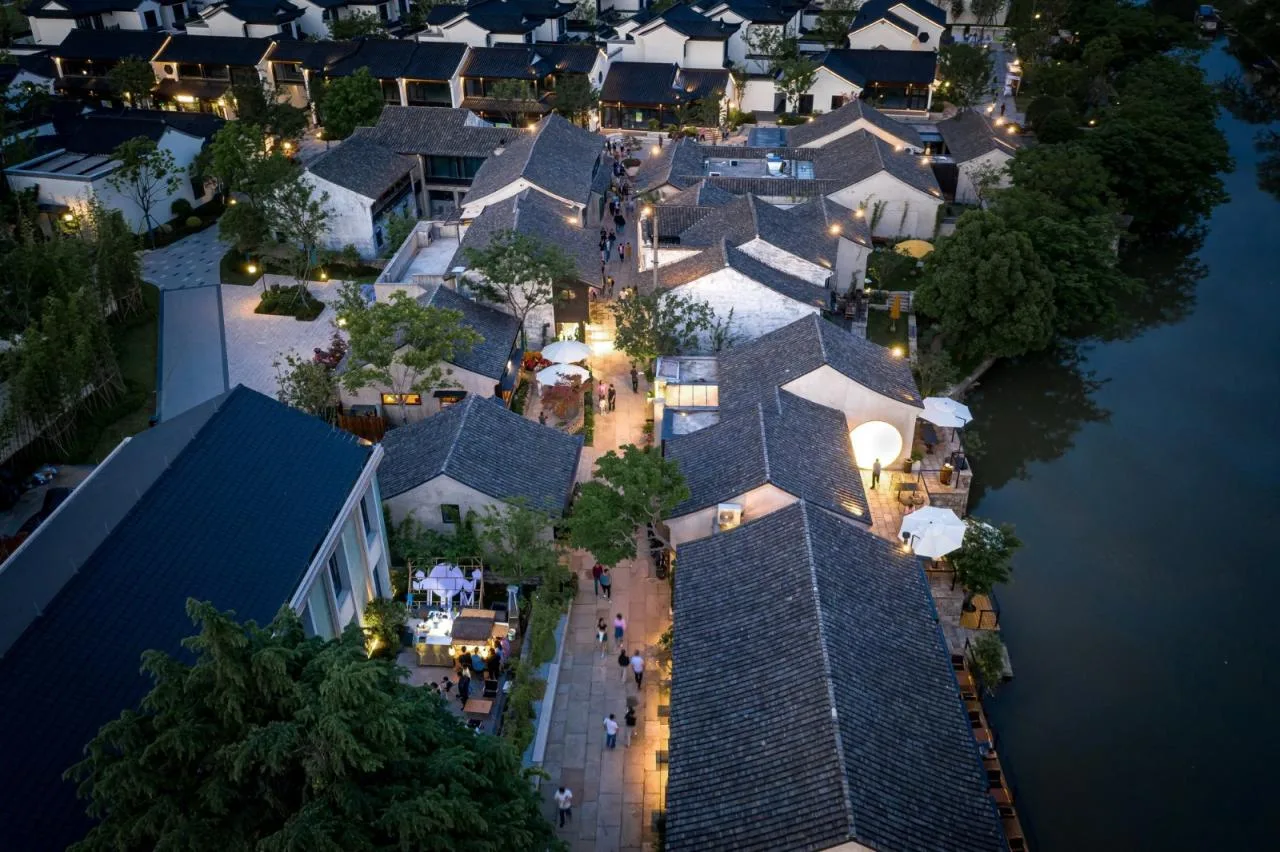
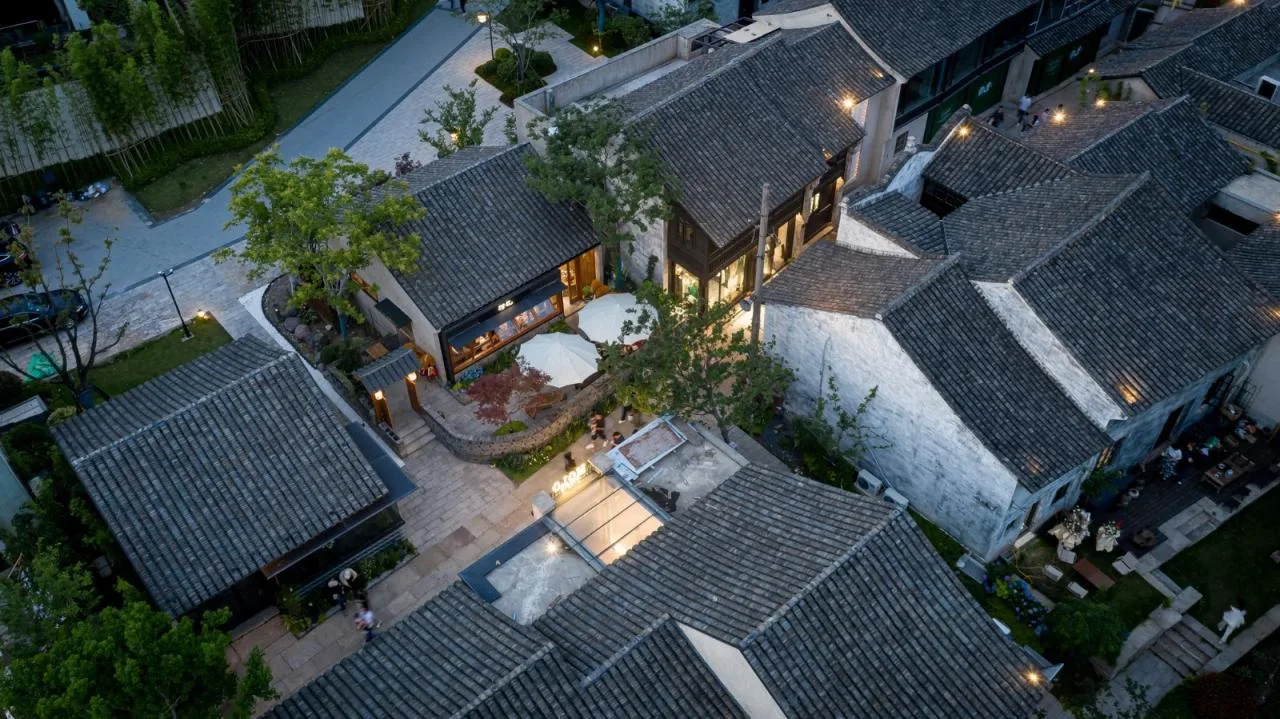
△ Street scene after reopening © Goa Elephant Design
Four cultural heritage buildings were renovated and repurposed as neighborhood public hubs. For example, Dawang Temple now functions as a multifunctional space for performances, gatherings, and exhibitions. Chen Zonghai Dao Tai Fu has been transformed into a public academy promoting local culture and hosting various cultural activities. Shops along the street vary from 40 to 500 square meters, including large courtyard-style and single- or two-story formats, providing flexibility for future uses.
Originally, residential buildings featured revetments, but the canal-side waterfront was underutilized. The design team reorganized this area by adding a courtyard viewing platform, riverside trail, dock embankment, and a gateway plaza, establishing a cohesive waterfront landscape that enhances public accessibility.
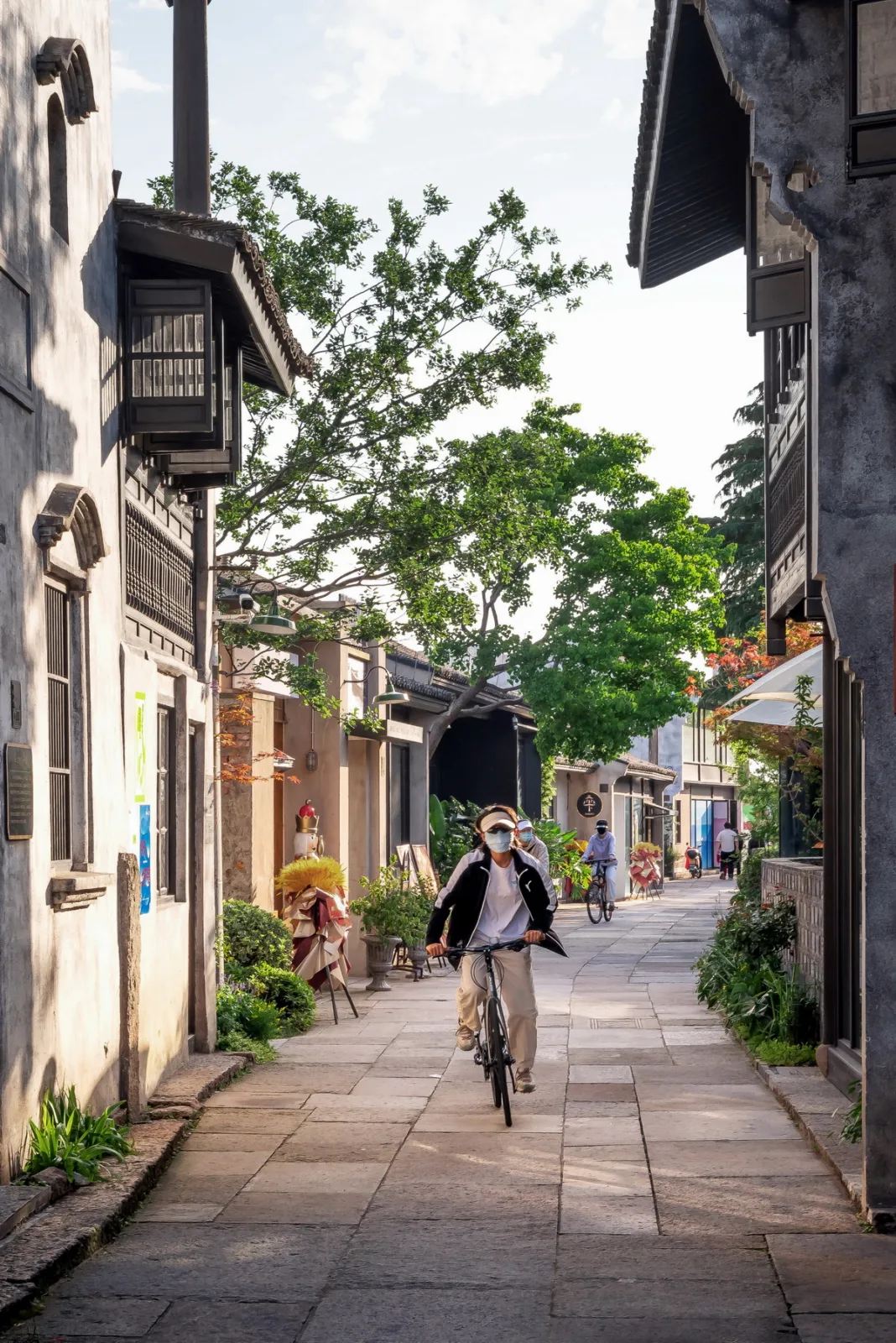
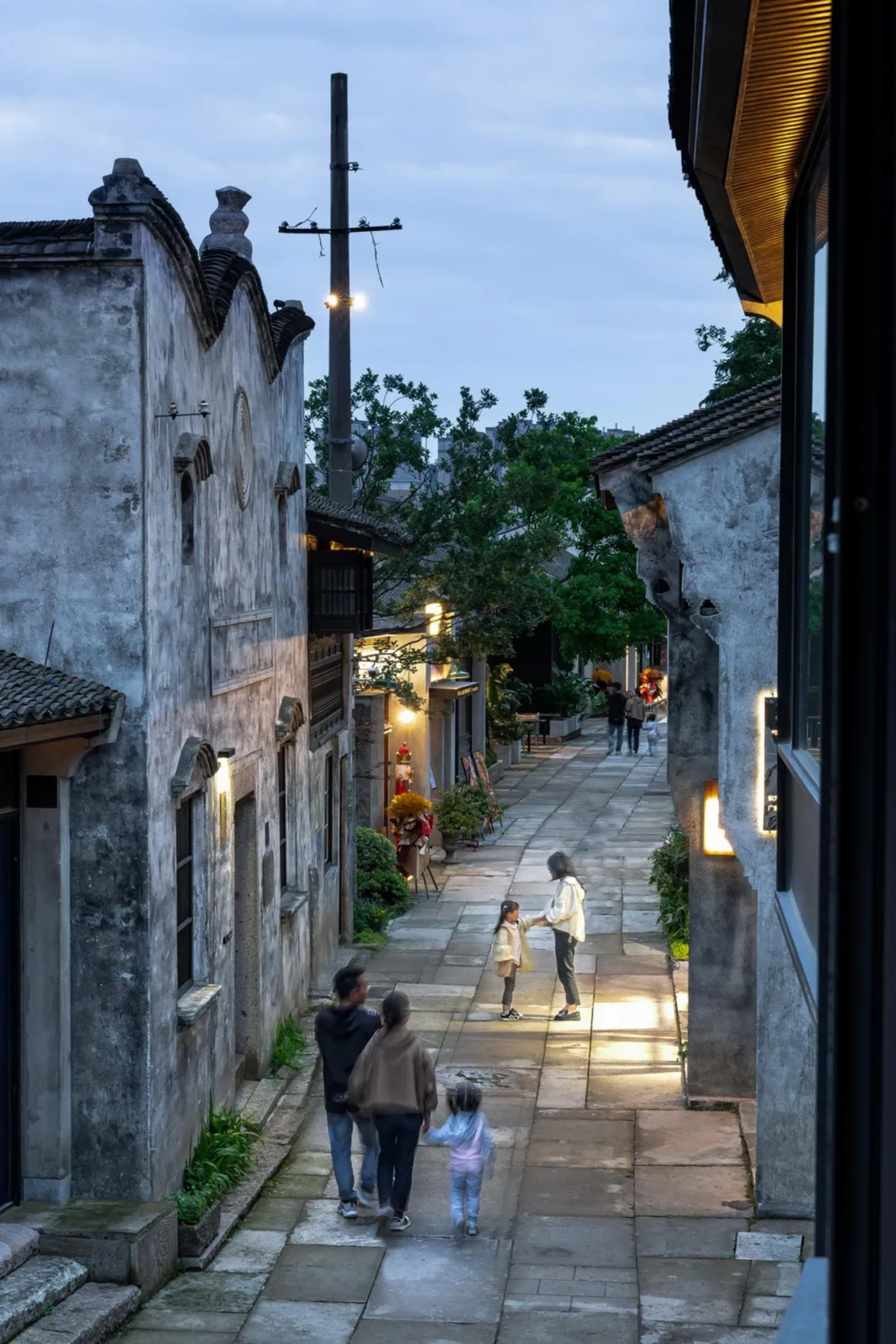
Street activities drawing crowds © Goa Elephant Design
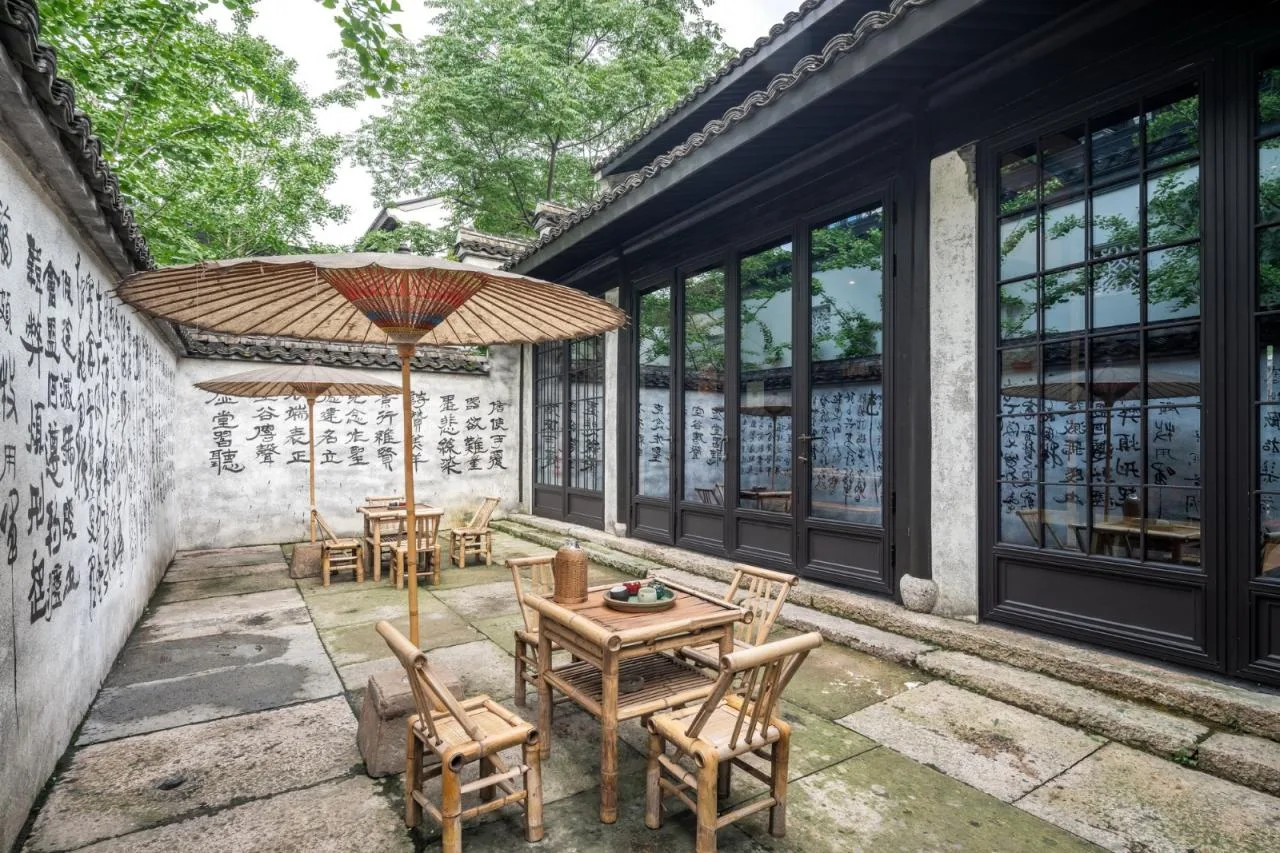
△ Daotai Academy (renovated Chen Zonghai Dao Tai Fu) inner courtyard © Goa Elephant Design
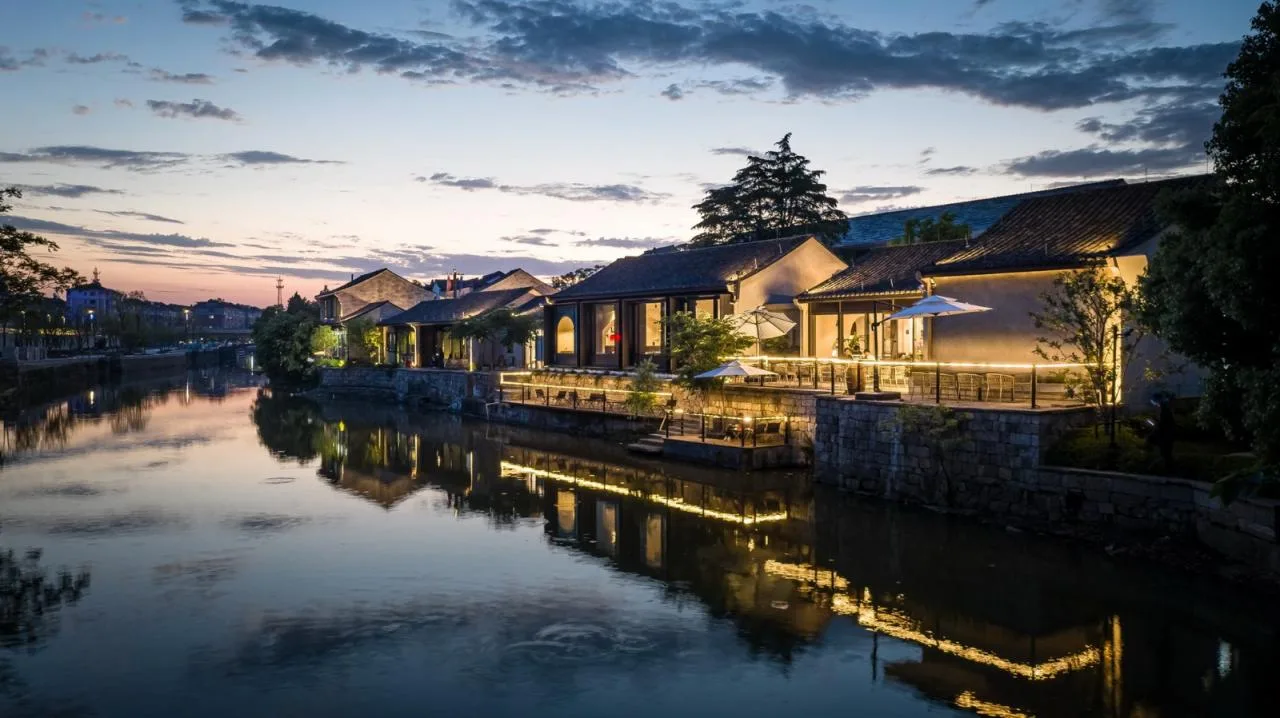
△ Night view along the river © Goa Elephant Design
Blending Old and New Materials and Techniques
Shaoxing residential buildings in eastern Zhejiang are characterized by light, slim eaves that not only conserve tiles but also convey a lightweight aesthetic. After renovation, these eaves were rebuilt in concrete to improve waterproofing, while retaining the original “lightweight” look through single-layer roof tiles and exposed eaves.
The design improves craftsmanship by reusing simple, time-honored materials from the old street. For example, walls were shaped with dry adhesive stone and treated for crack resistance, while baseboards and window frames feature terrazzo and washed stone finishes respectively. A notable material element is the nursing home built in the 1980s, where glass slag wall cladding techniques were preserved and enhanced by using smoother, non-angular glass slag and compacting methods to avoid surface damage.
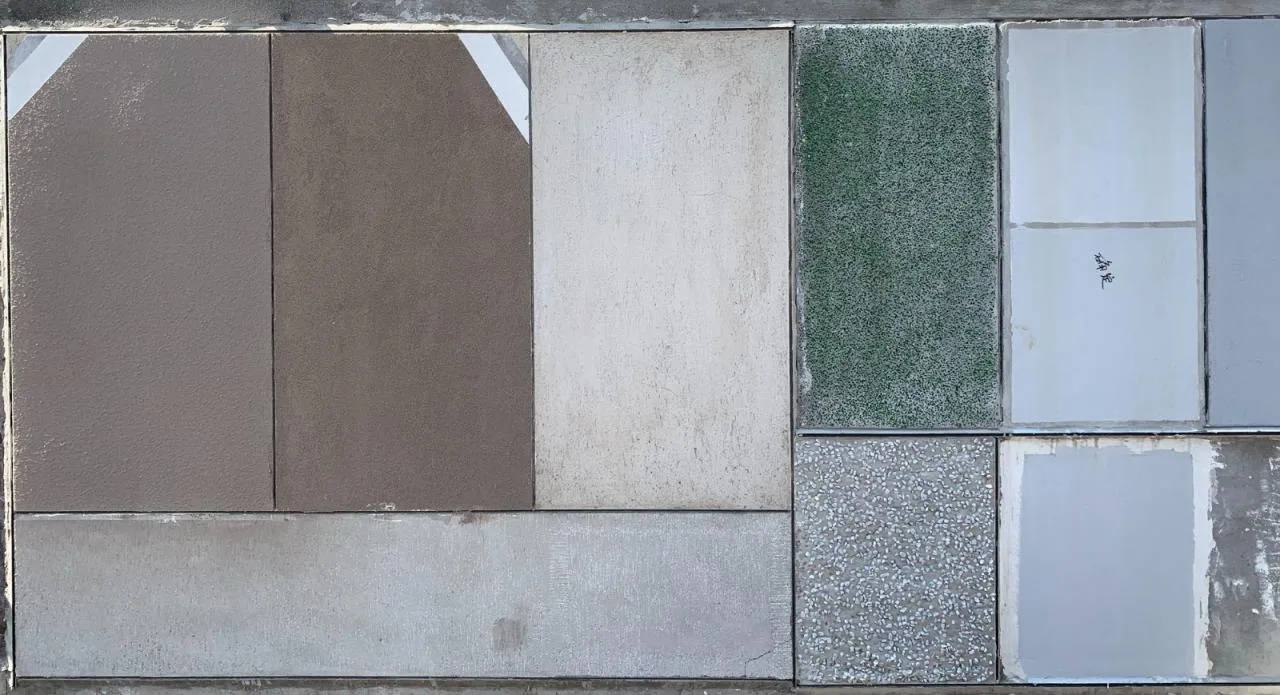
△ Sample of wall construction process © Goa Elephant Design
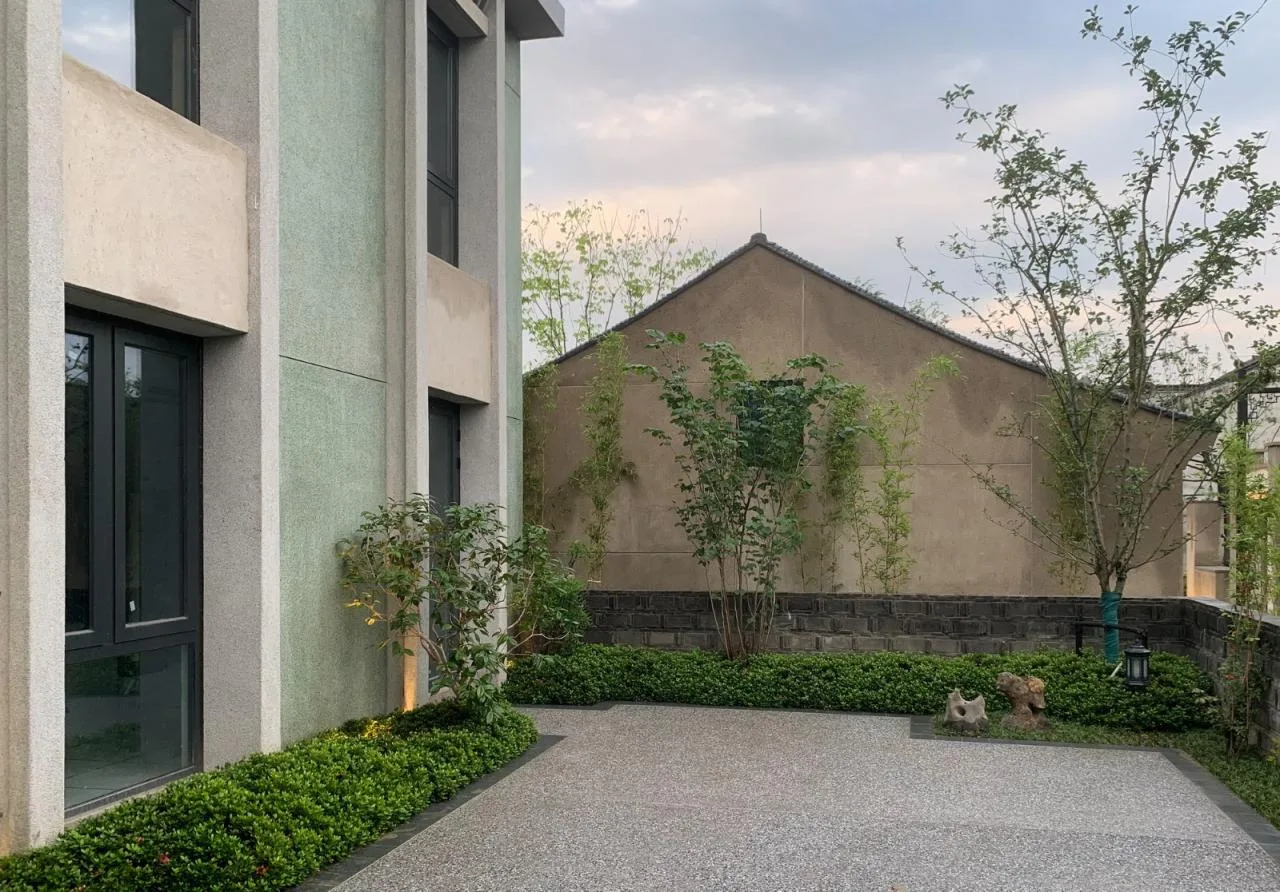
△ Facade of renovated nursing home building © Goa Elephant Design
The eastern entrance wall to the street leaves the first impression on visitors. The design team used a combination of hollow bucket brick walls and scattered translucent concrete bricks within traditional blue bricks during renovation. This technique metaphorically reflects the blend of old and new approaches applied throughout the street’s renewal.
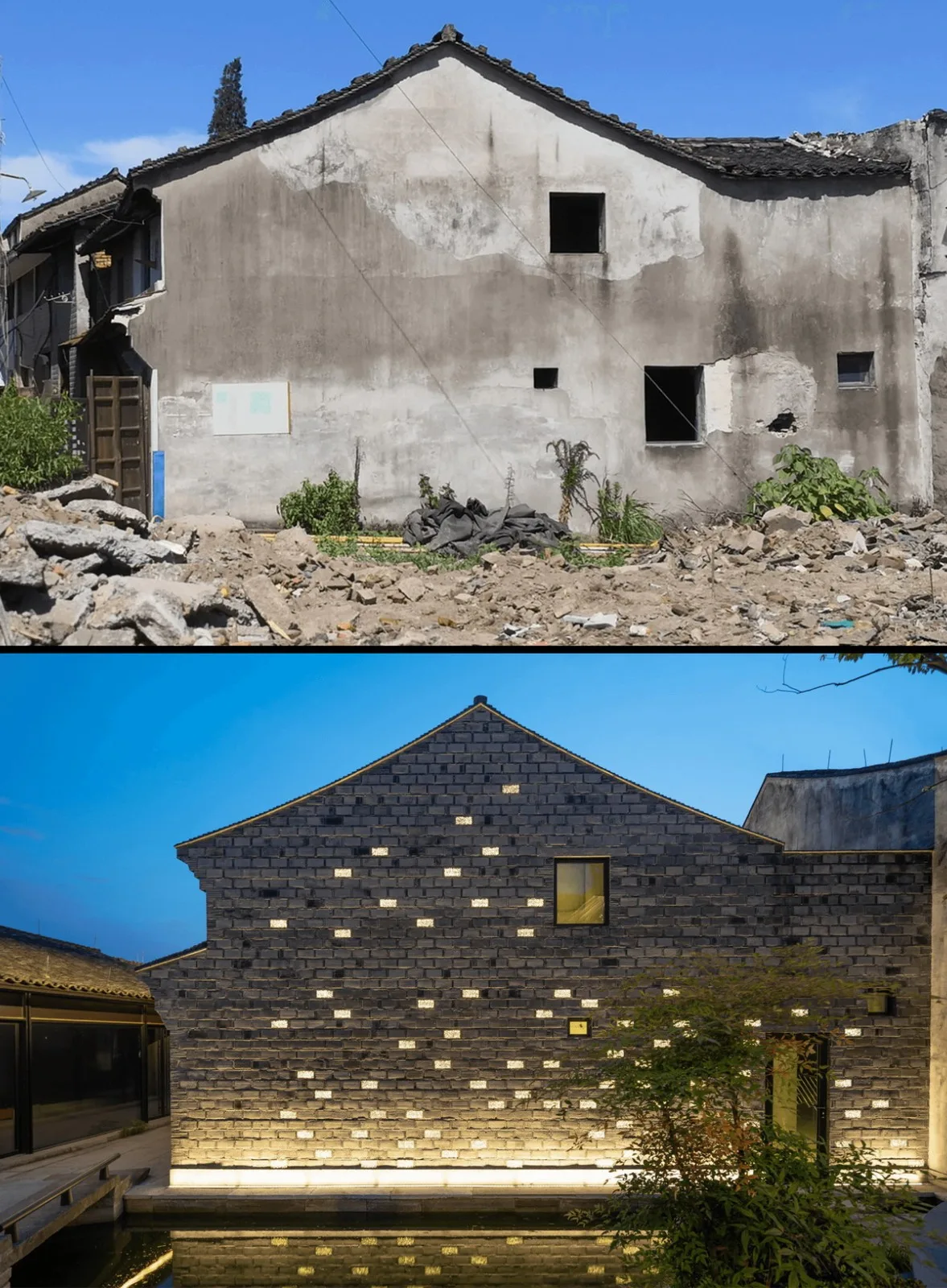
△ Original entrance mountain wall and major repairs © Goa Elephant Design
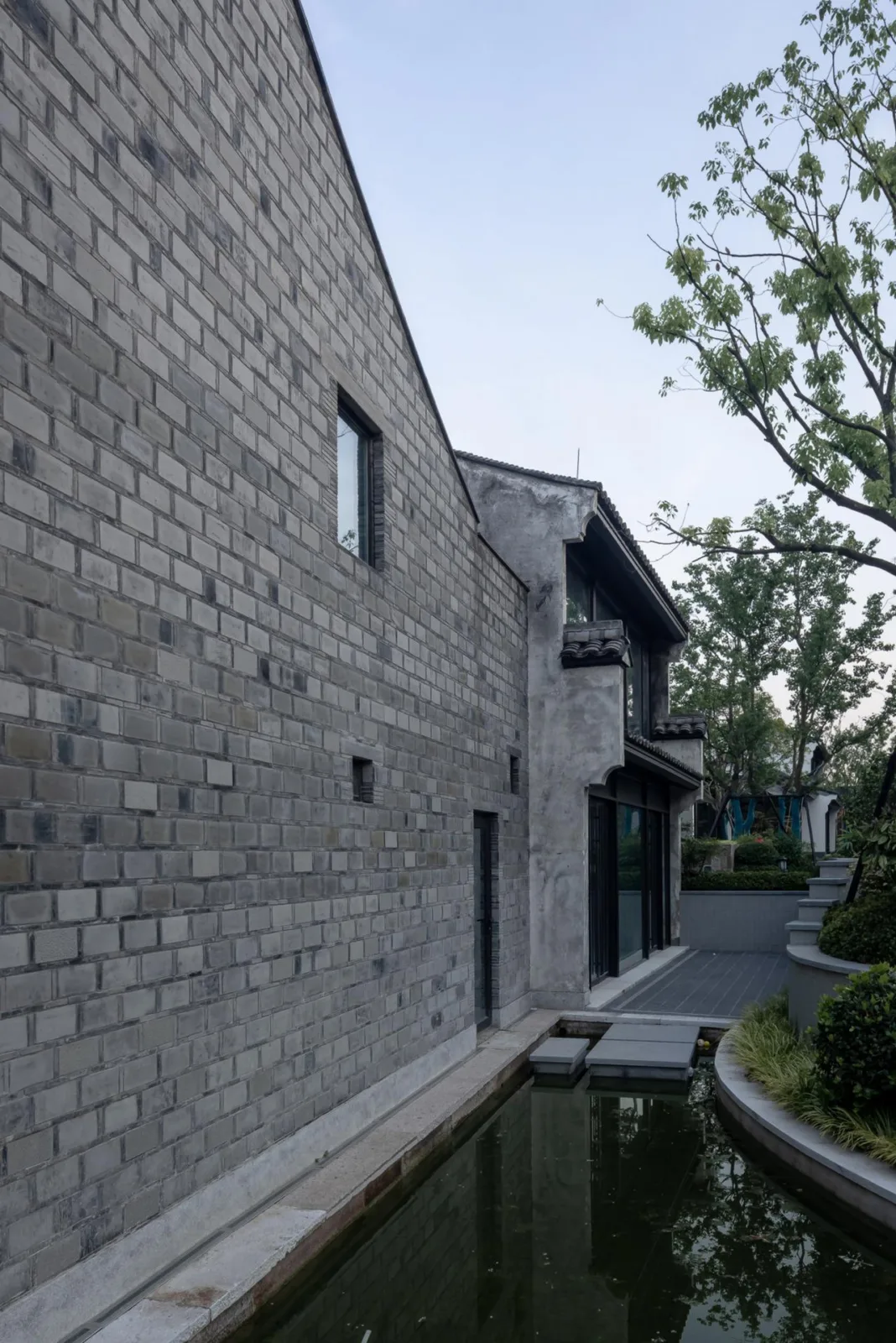
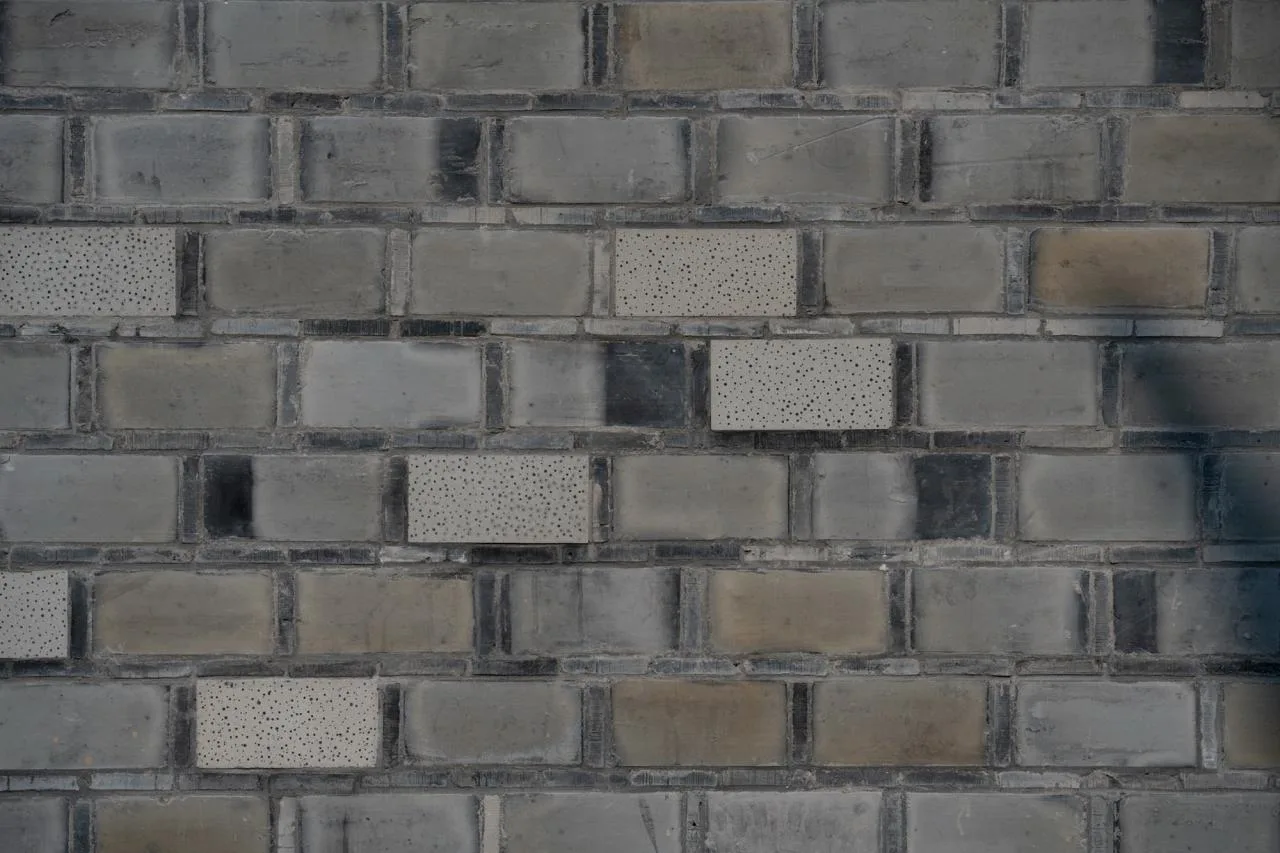
△ Wall details © Goa Elephant Design
In May 2023, Lizhi Street reopened, bringing back the lively atmosphere of canal merchants and bustling trade. A group of longtime residents returned to visit, with one 82-year-old local exclaiming, “After four years away, returning home, the old appearance remains vivid.”
1 Wang Jinghui, “The Concept and Practice of Protecting Historical Sites,” Urban Planning, 1998, (03): 34-36+63
Technical Drawings
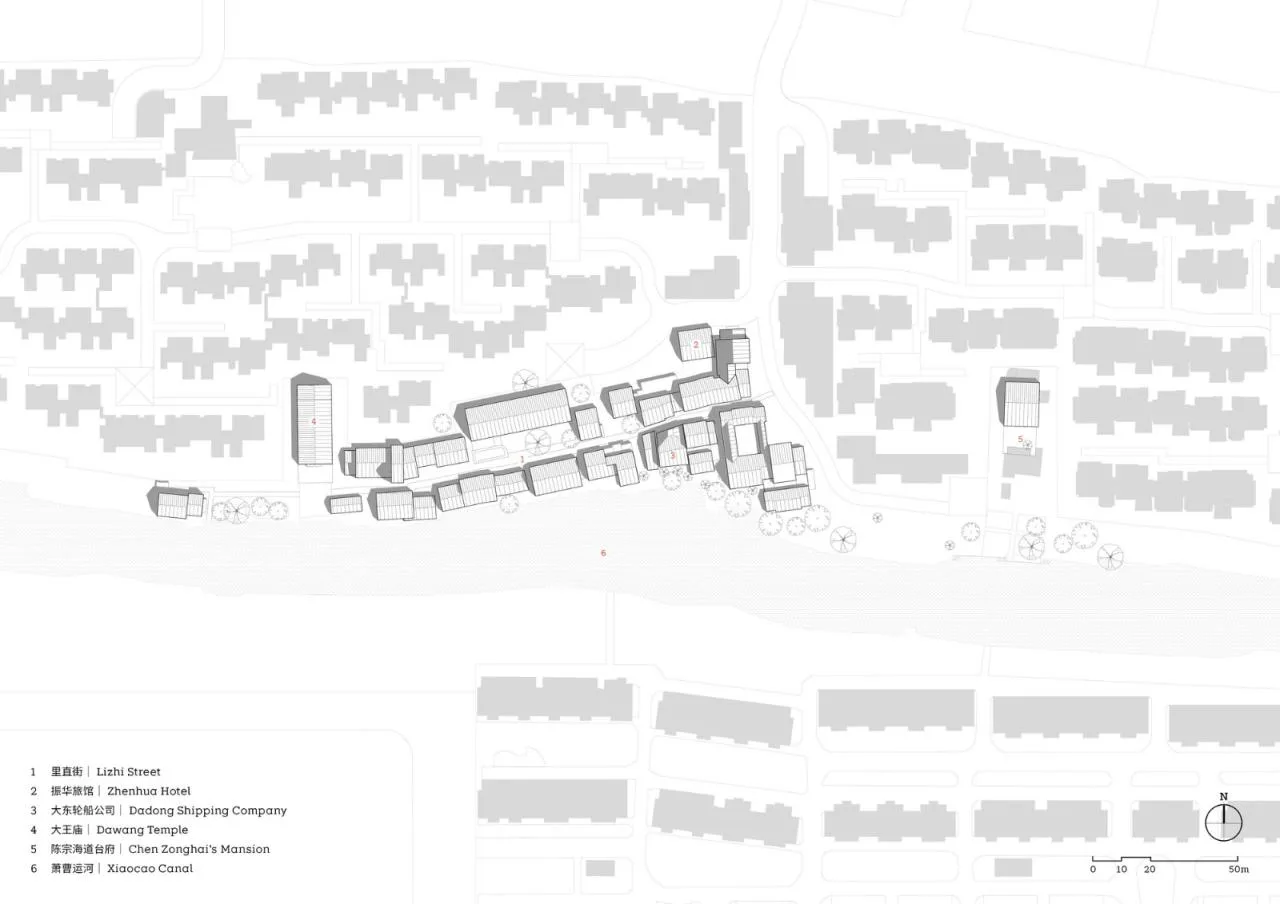
△ General layout plan © Goa Elephant Design
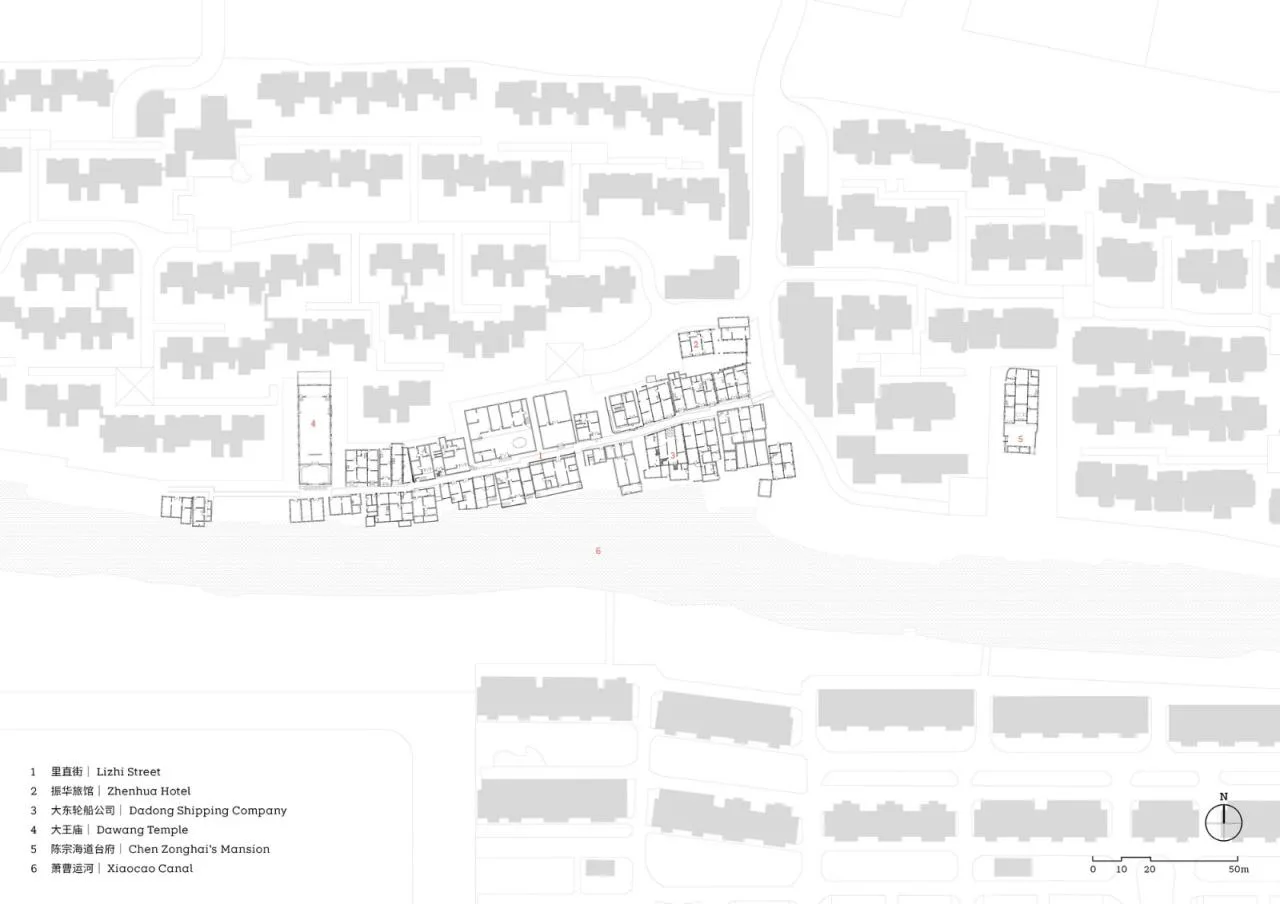
△ First floor layout plan (before renovation) © Goa Elephant Design
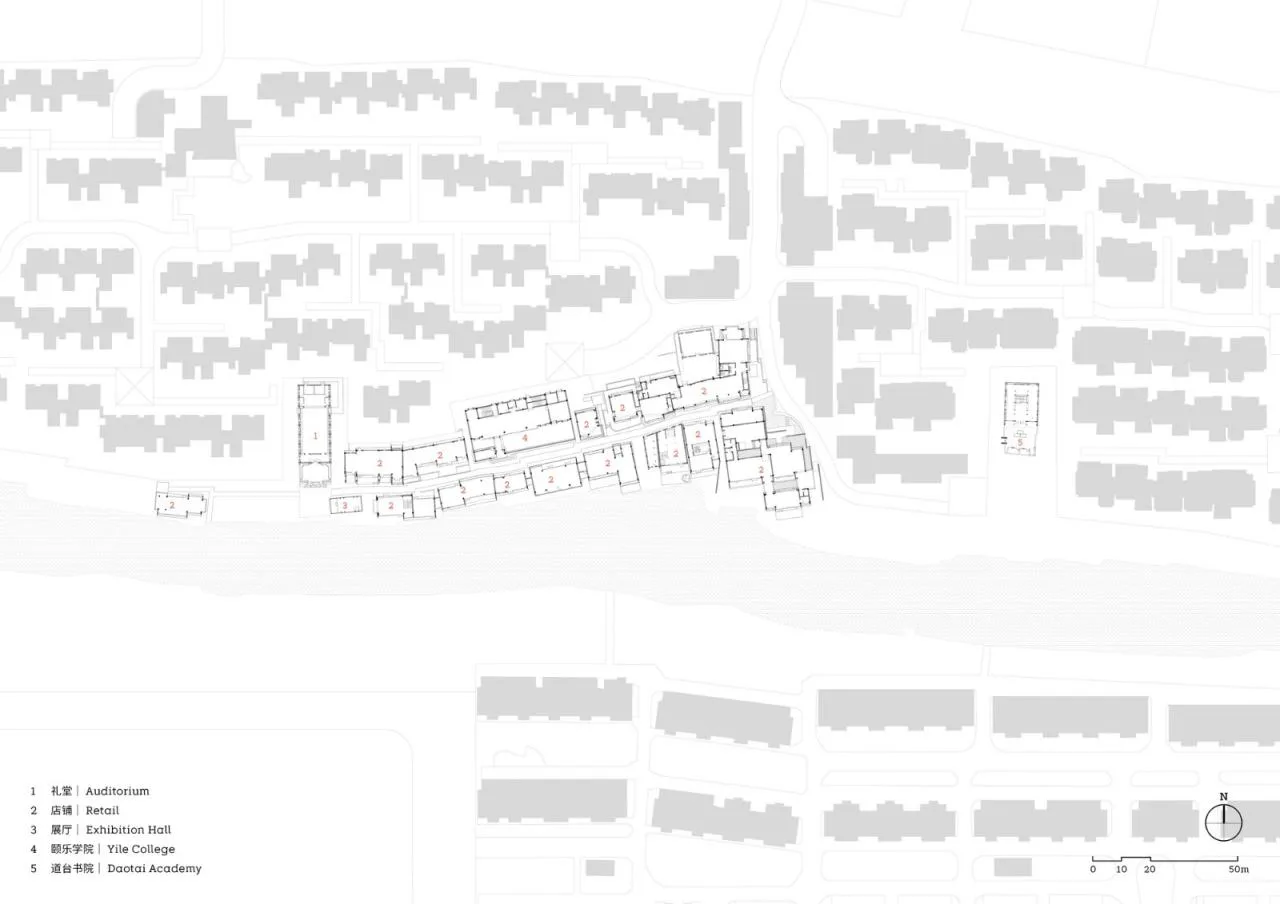
△ First floor layout plan (after renovation) © Goa Elephant Design
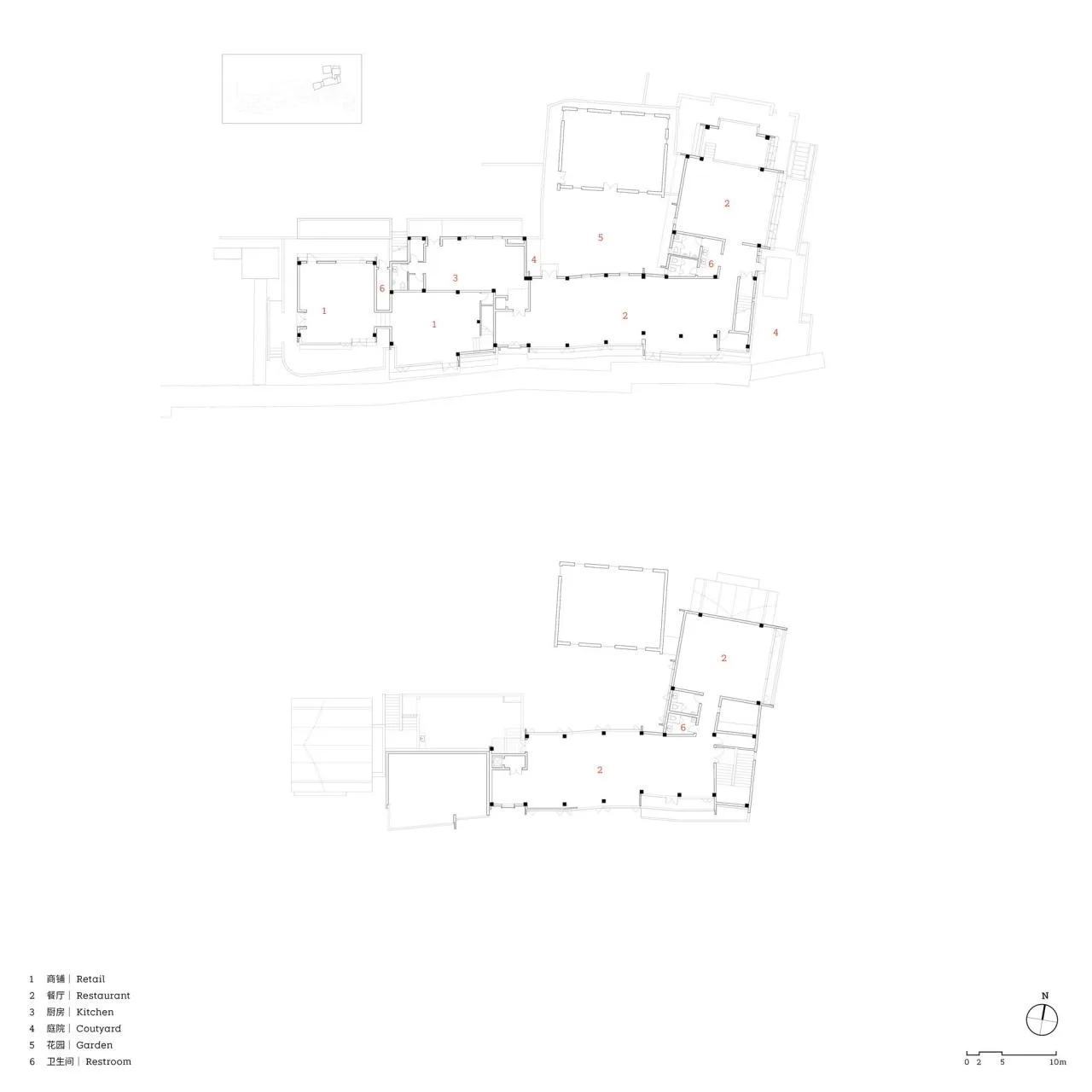
Plan of first and second floors of Building 1 (after renovation) © Goa Elephant Design
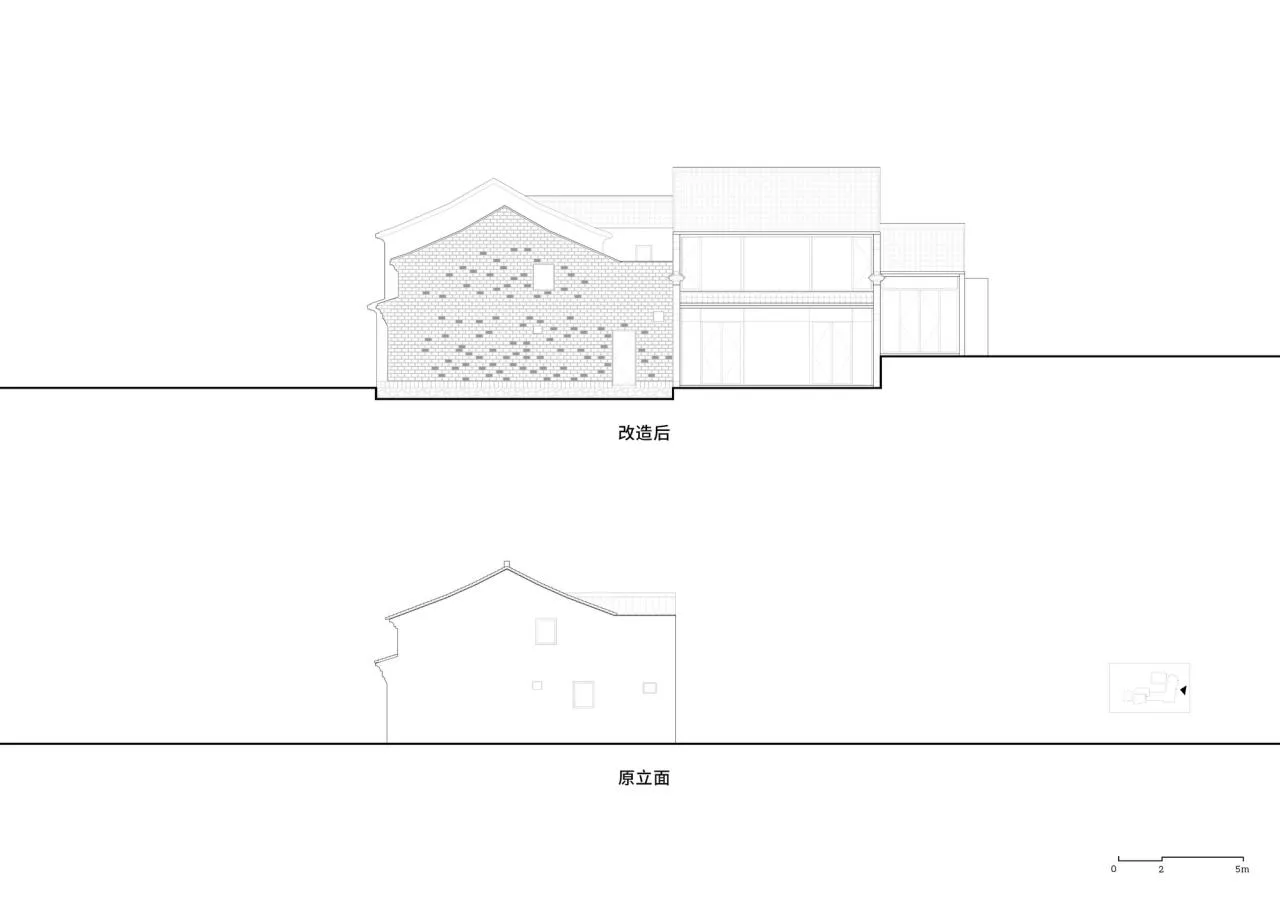
Comparison of east facade of Building 1 © Goa Elephant Design
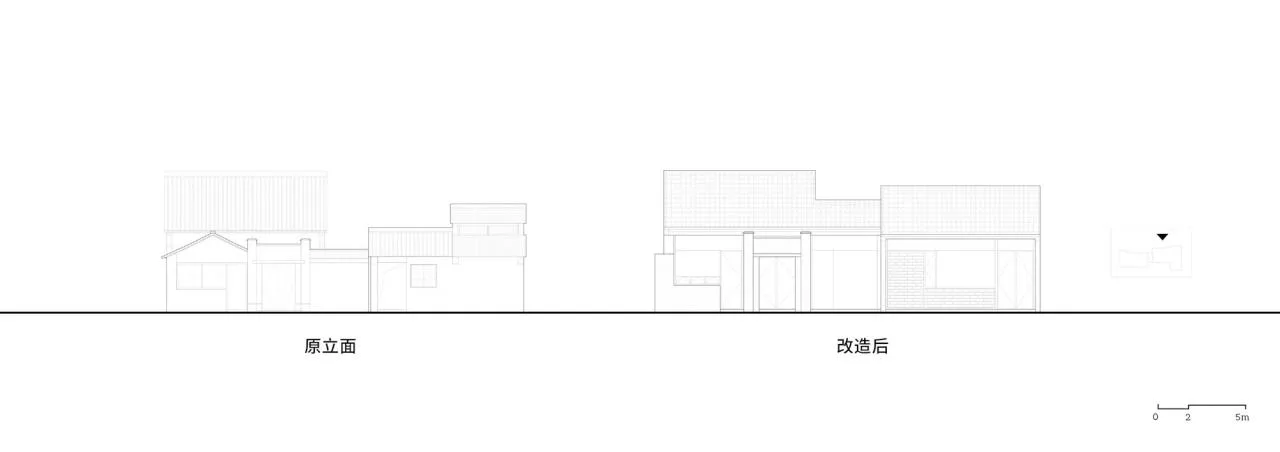
Comparison of north facade of Building 10 along the street © Goa Elephant Design
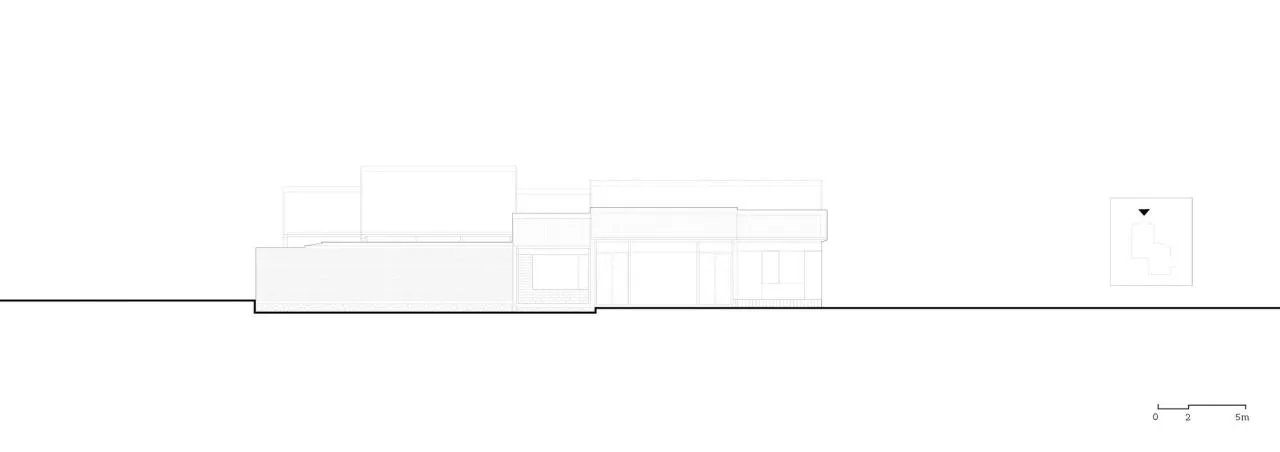
North facade of Building 13 along the street (after renovation) © Goa Elephant Design
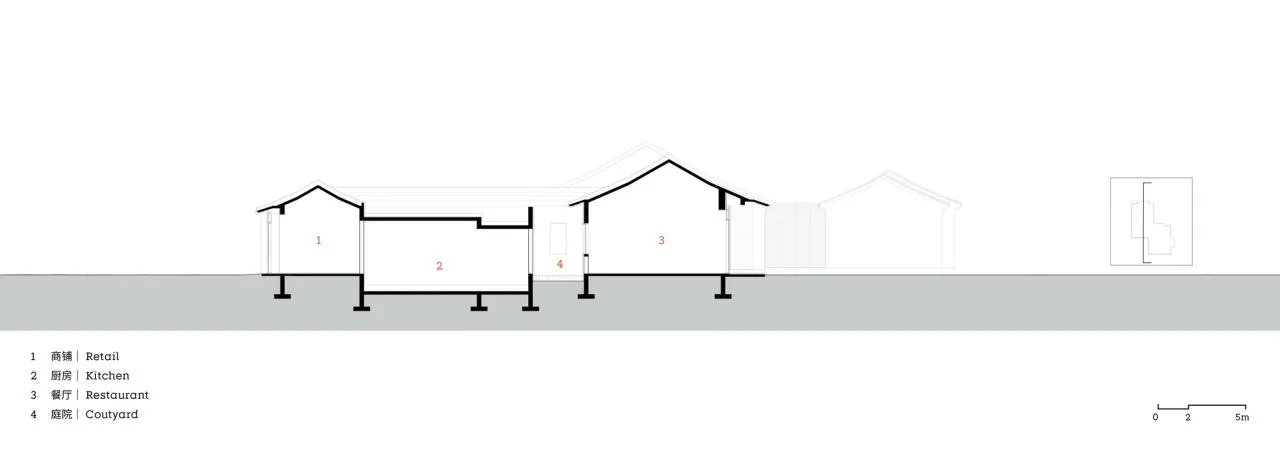
△ Section of Building 13 (after renovation) © Goa Elephant Design
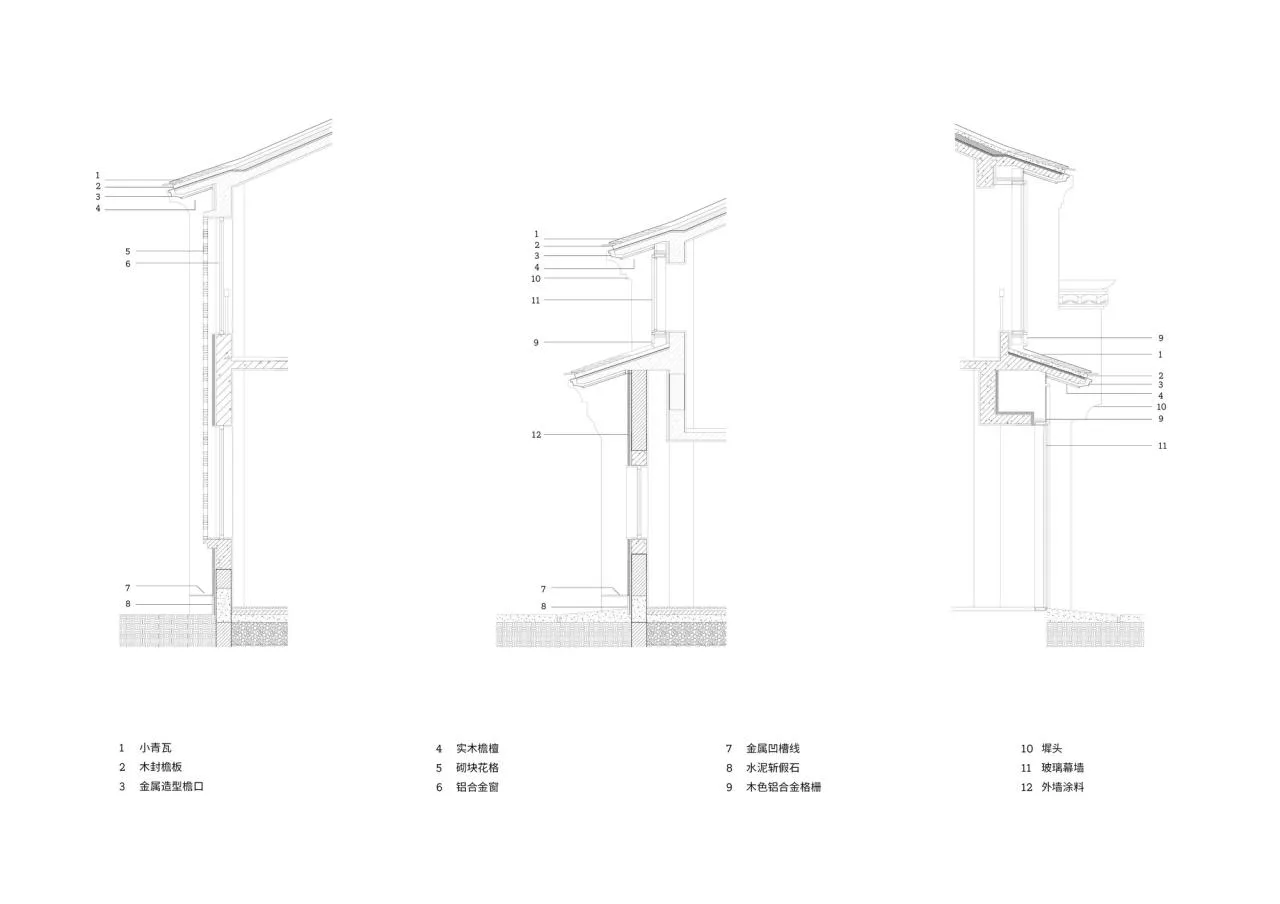
△ Wall detail drawing of Building 1 © Goa Elephant Design
Project Information
Project Name: Organic Renewal of Lizhi Street
Location: Shaoxing City, Zhejiang Province
Owner: Zhejiang Shangyu Cao’e River Tourist Resort Management Committee
Architectural Design: Goa Elephant Design
Landscape Design: Hangzhou Lansong Landscape Design Co., Ltd.
Design/Completion: 2019 / 2022
Building Area: 4,300 square meters
Photography: Goa Elephant Design















Must log in before commenting!
Sign Up