
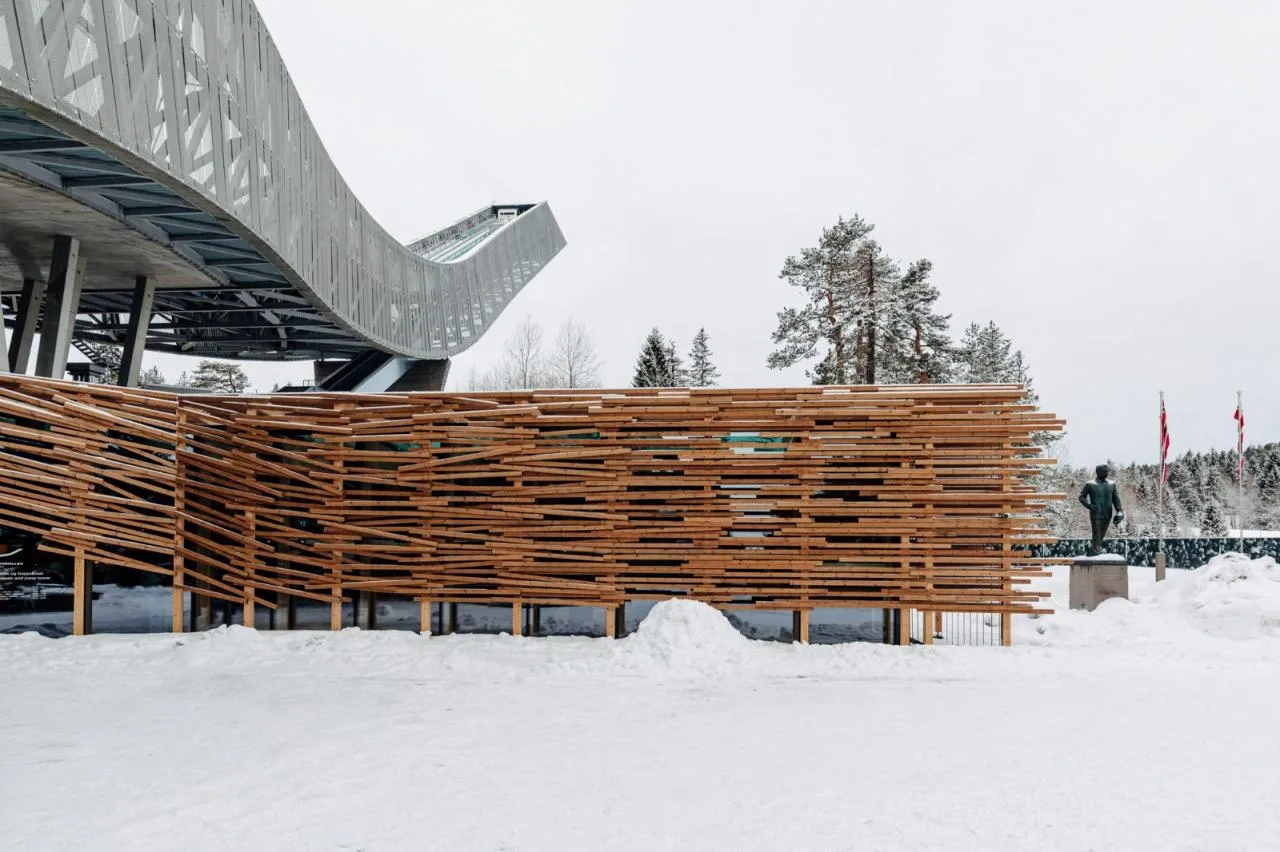
In 2010, the Holmenkollen Ski Jump underwent significant upgrades and renovations, which included a refresh of the Ski Museum. By removing some of the buildings below the ski jumping hill and adding new extensions and entrances, the museum gained improved accessibility and developed a distinctive identity of its own.
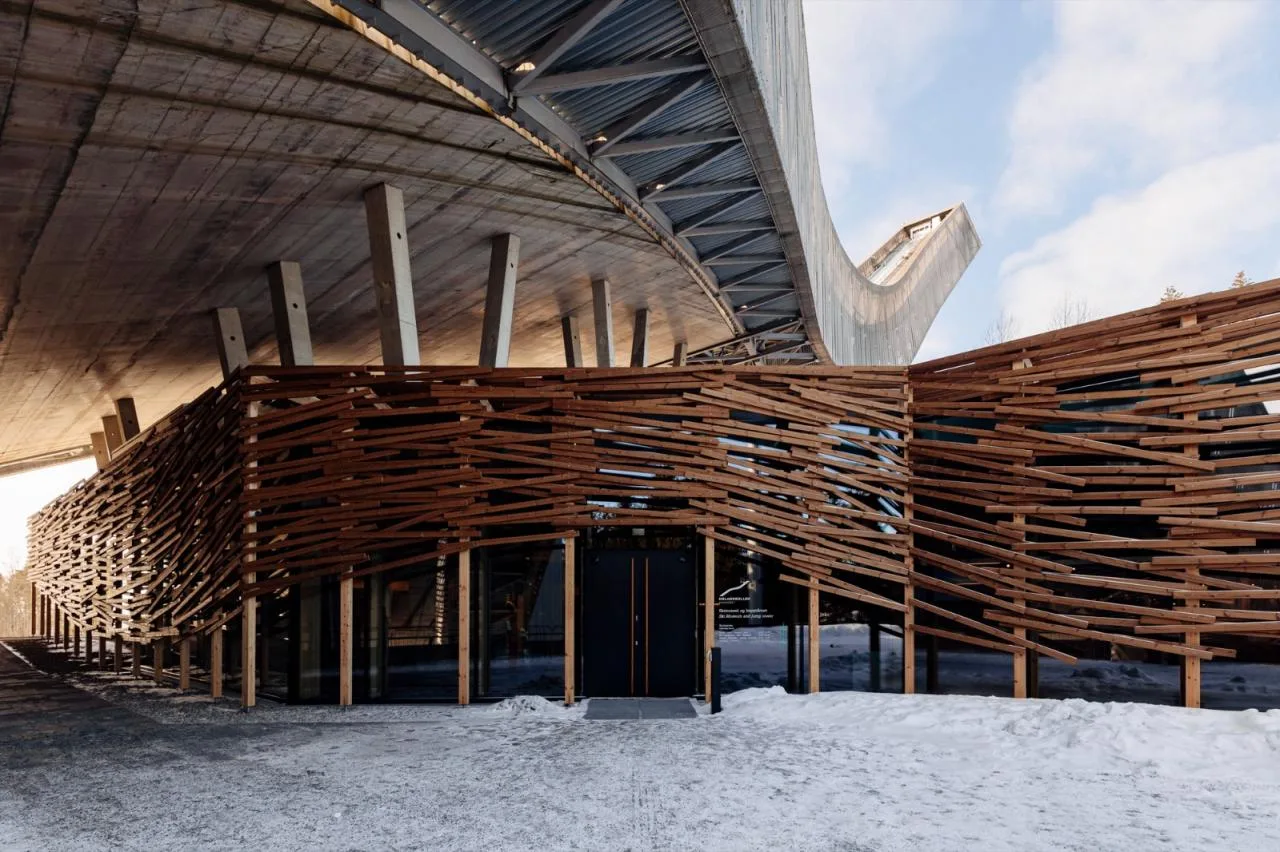
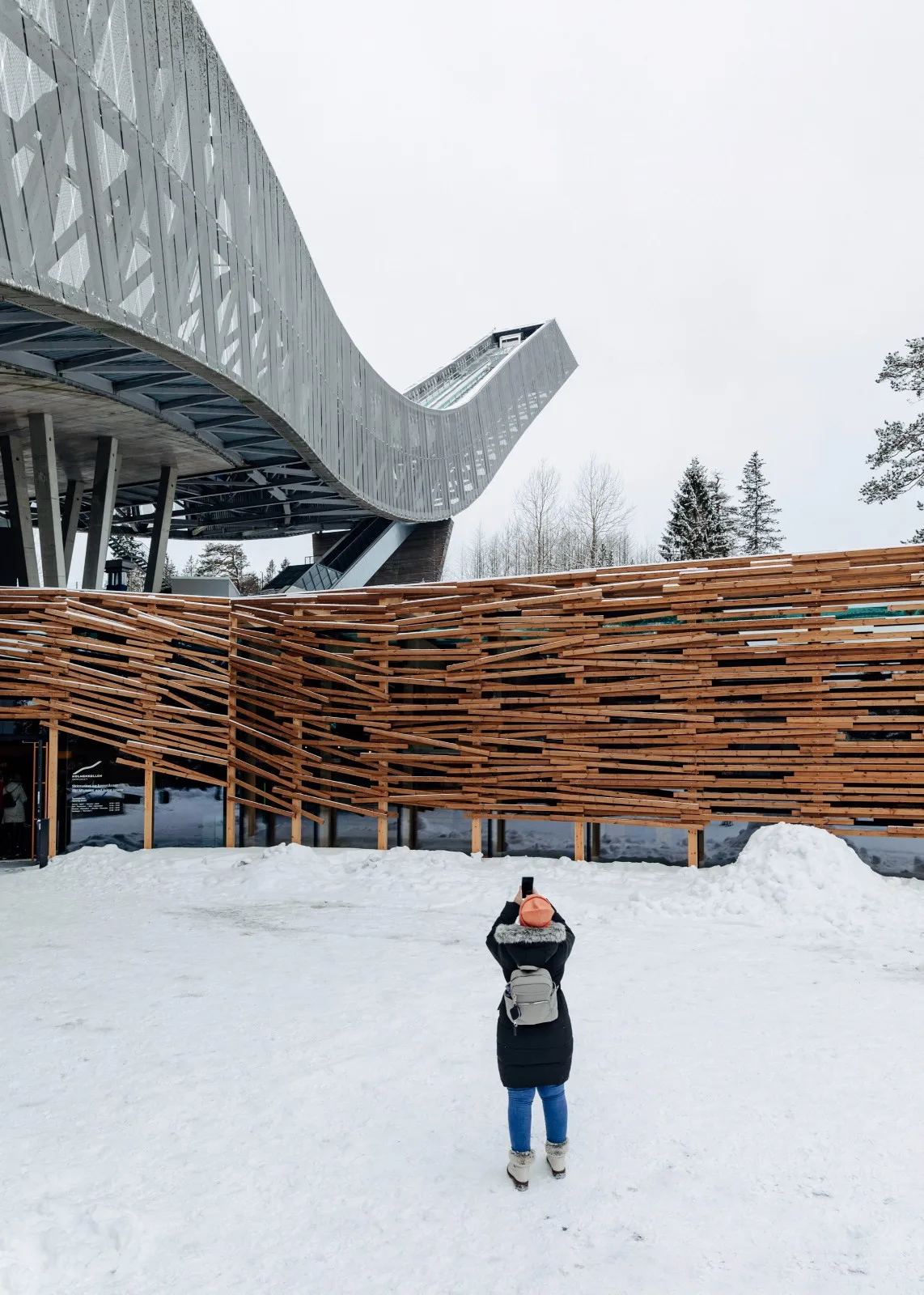
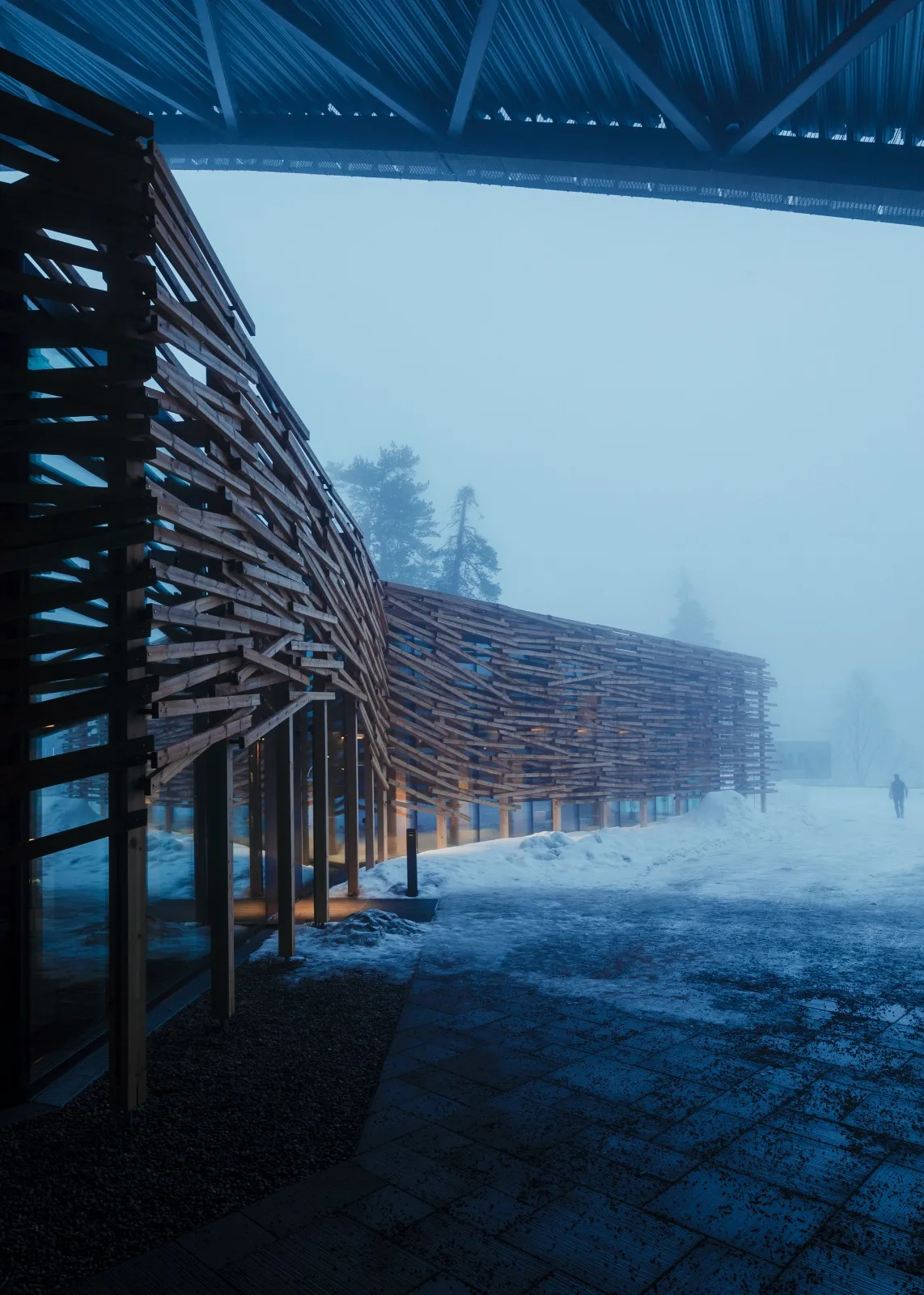
Visibility is crucial for ski resorts, and the museum’s new entrance needed to stand out from surrounding structures and break free from shadows. Since the ski jump platform and adjacent buildings are predominantly composed of hard materials like concrete, steel, stone, and dark colors, the design naturally contrasts these with softer, warmer surface elements.
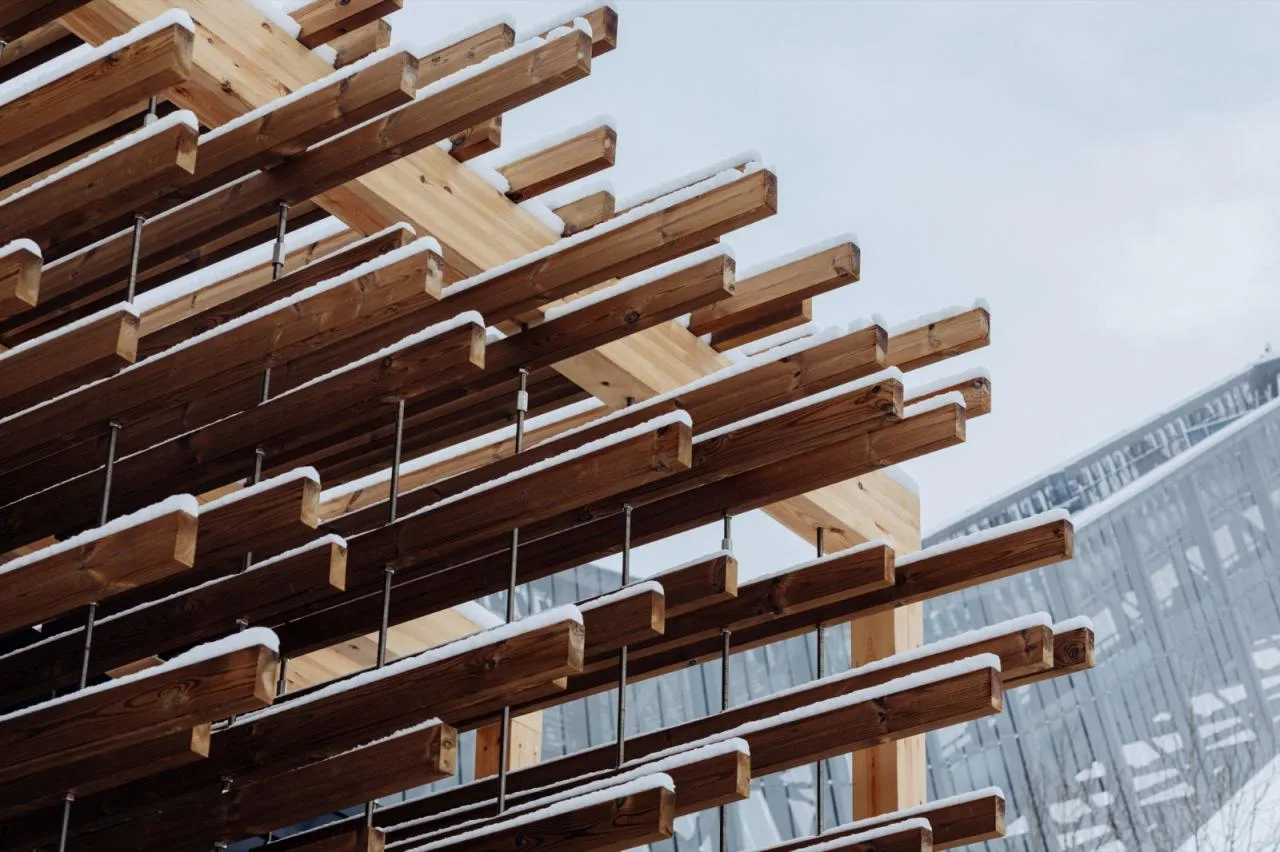
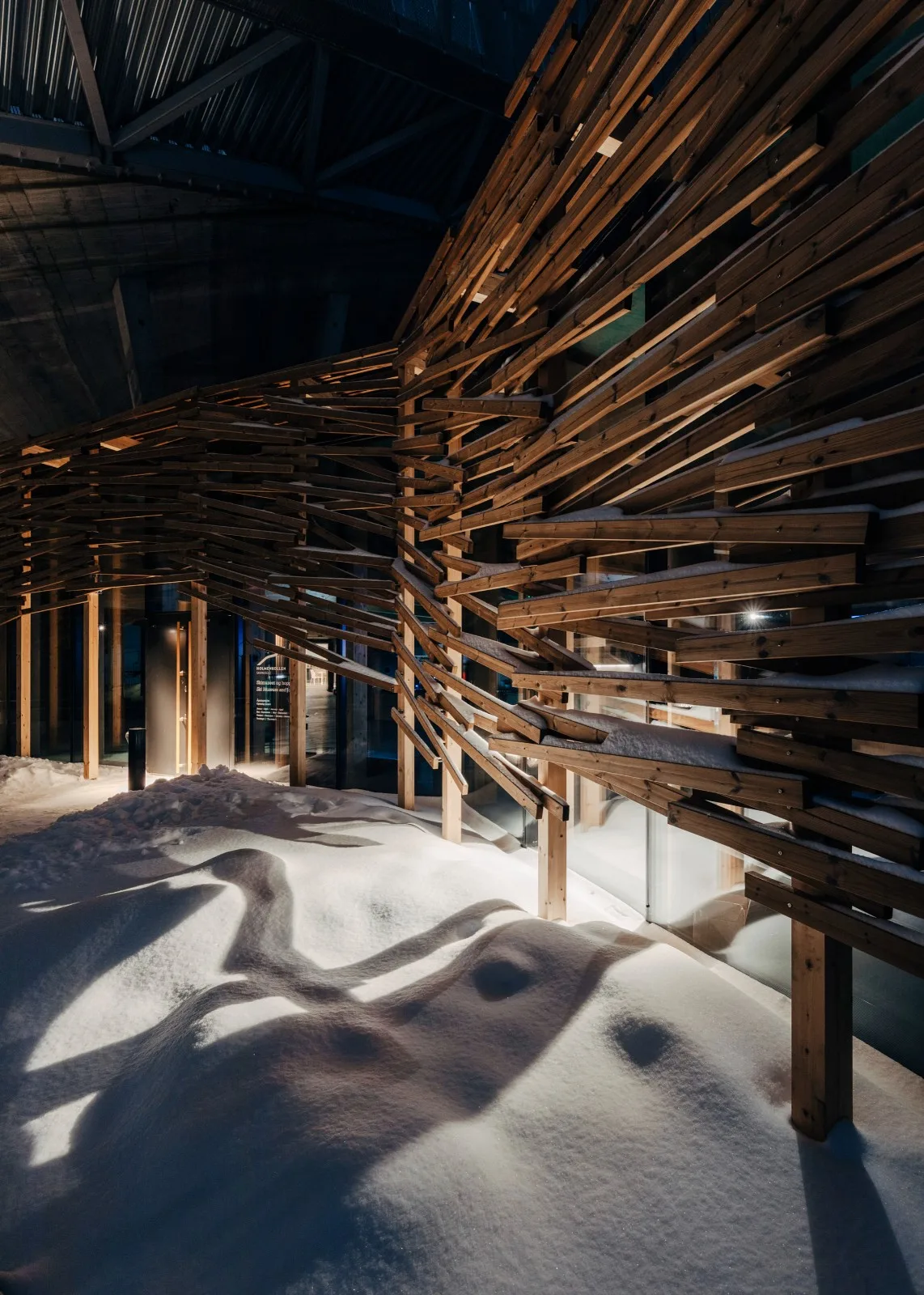
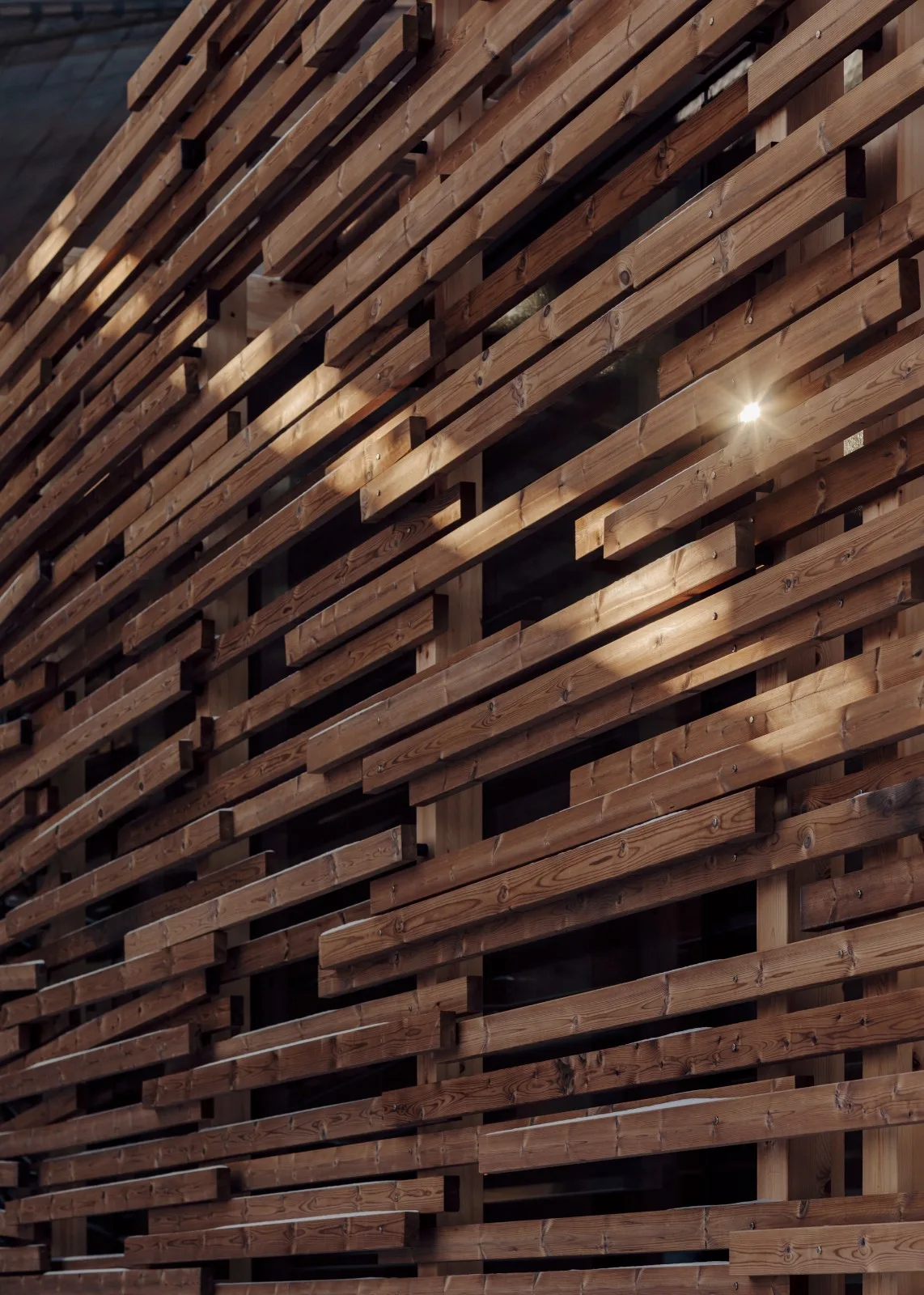
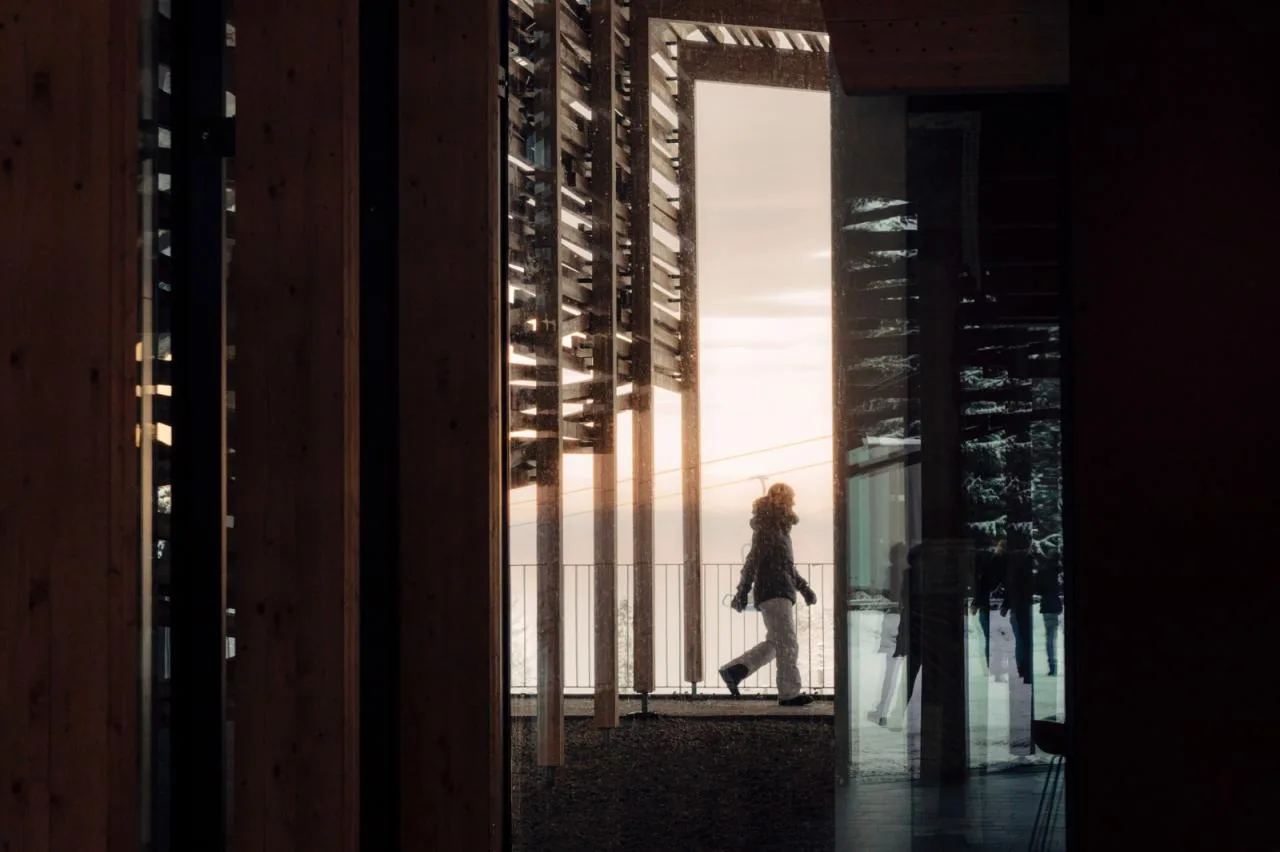
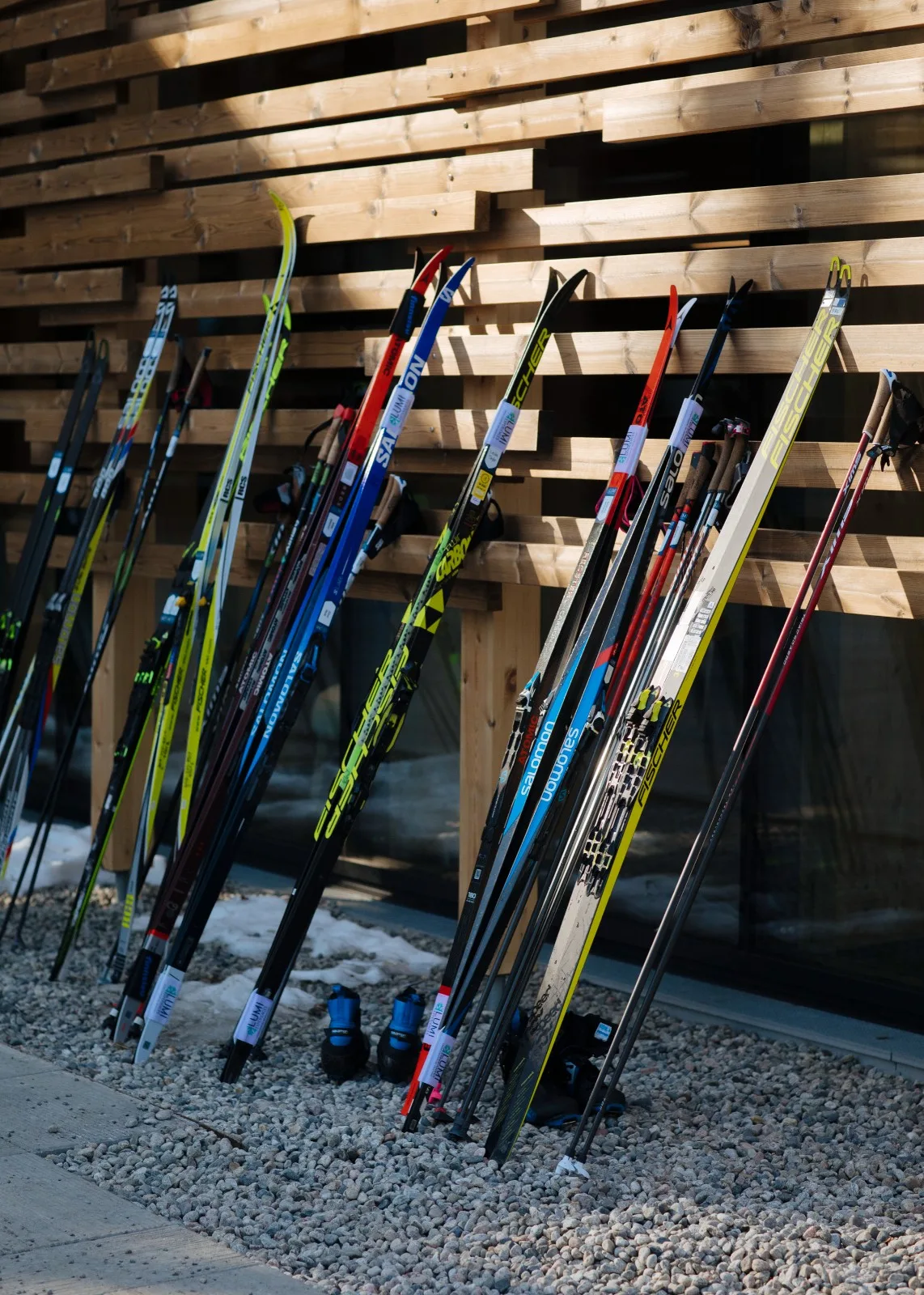
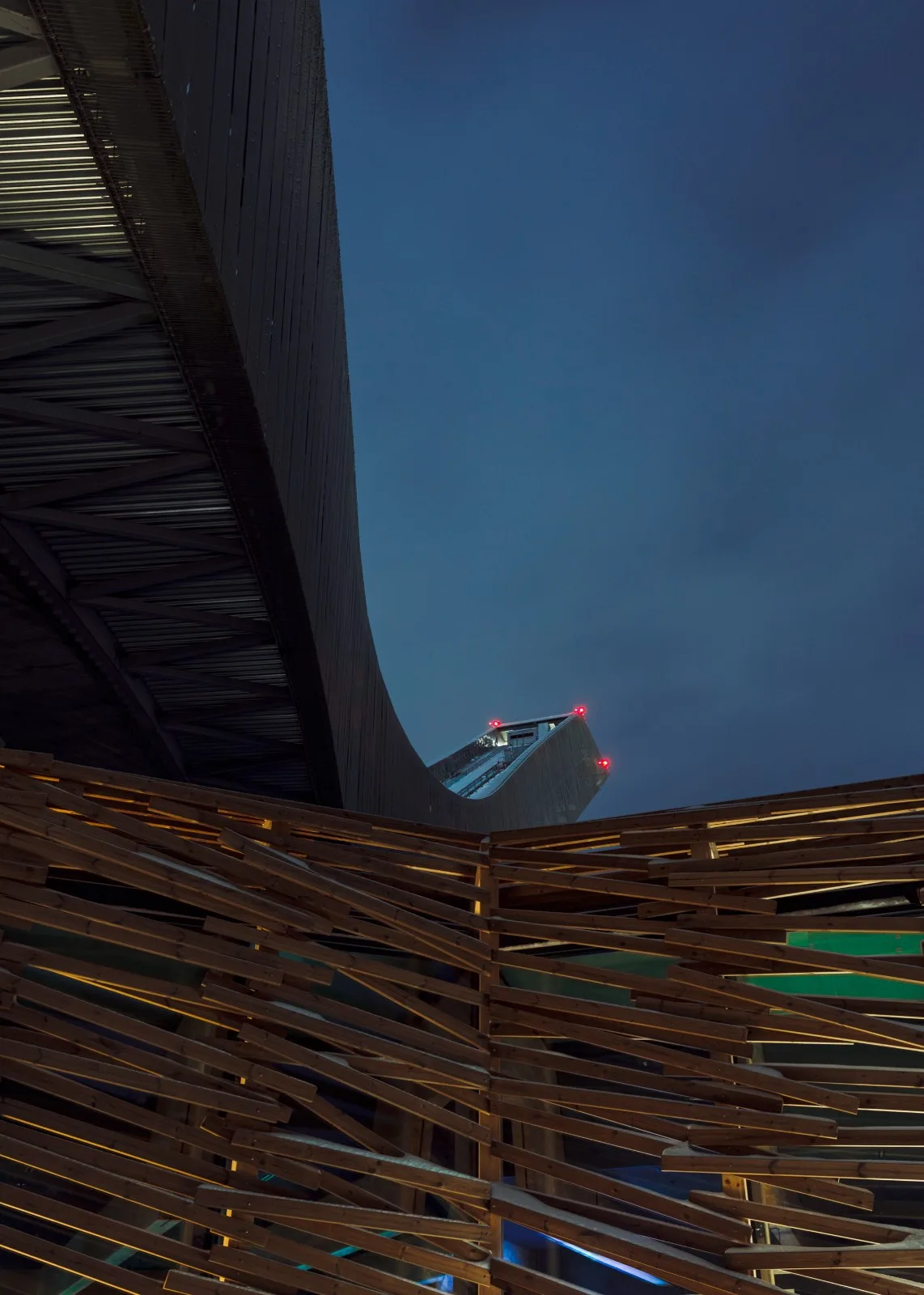
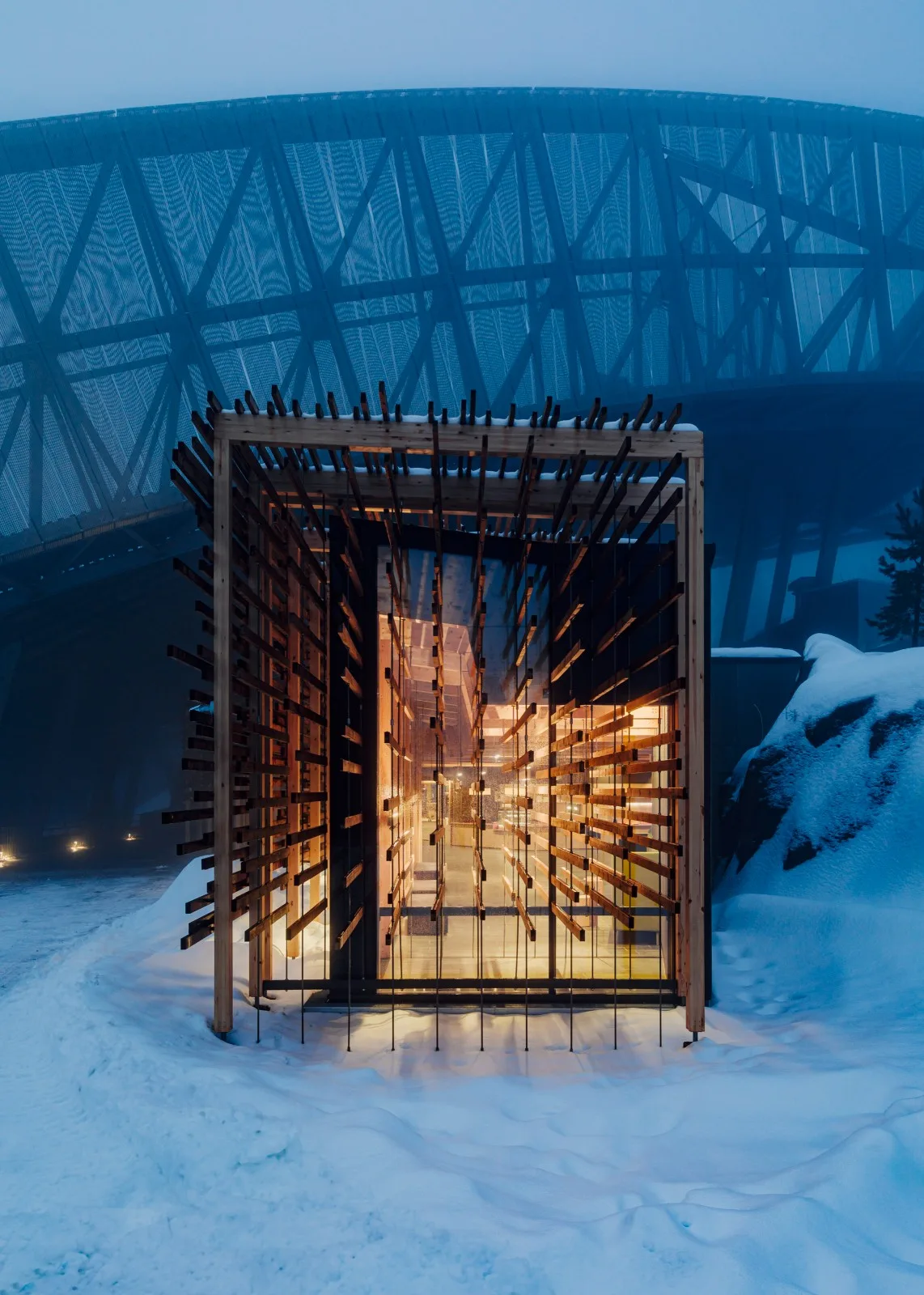
The design features a fence made up of 1,207 wooden boards. Its core concept is to restore the museum’s prominent position within the ski resort. Inspired by traditional skiing materials, the exterior walls combine glass with Norwegian pine boards, creating a striking façade that acts as a beacon for visitors. A five-meter-high glass wall is partially covered with these carefully arranged wooden boards, evoking the iconic ski fences.
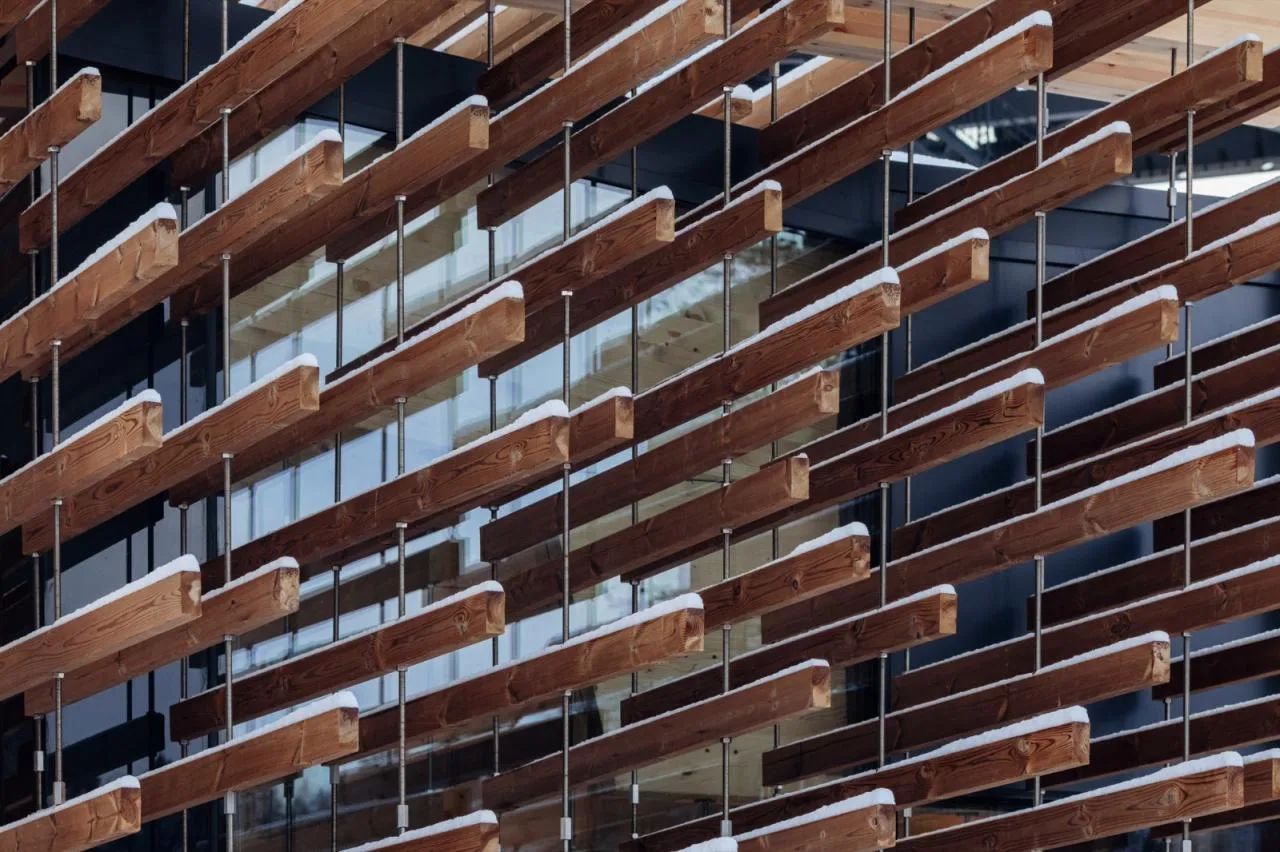
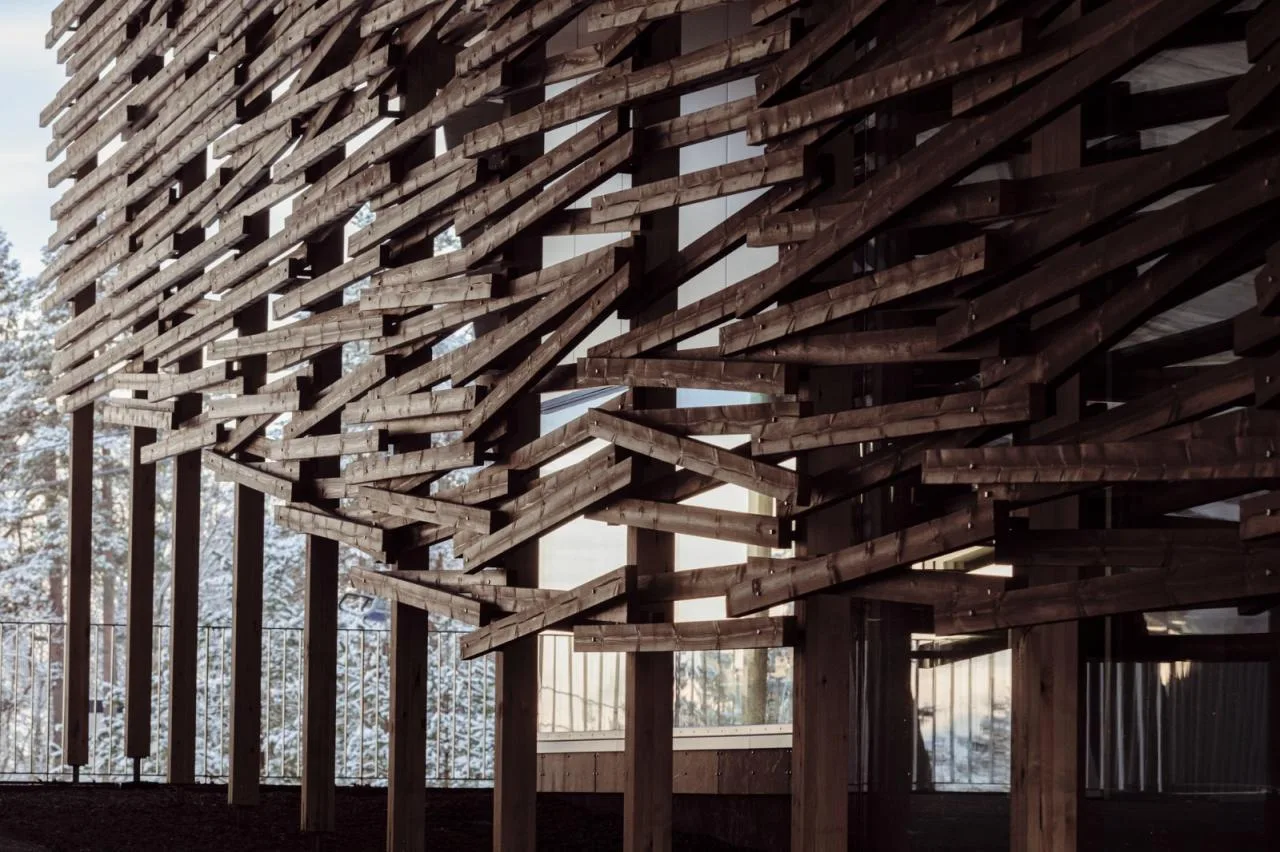
The façade guides visitors toward the entrance, creating a welcoming front courtyard. Its organic design allows light to flow freely in and out, giving the building a unique character and acting as a visual filter between inside and outside. At the entrance, the exterior wall shifts aside to reveal a wavy front door.
To minimize waste, the pine planks were cut in varying lengths between 2.5 and 5 meters, totaling 4,000 meters of wood cladding.
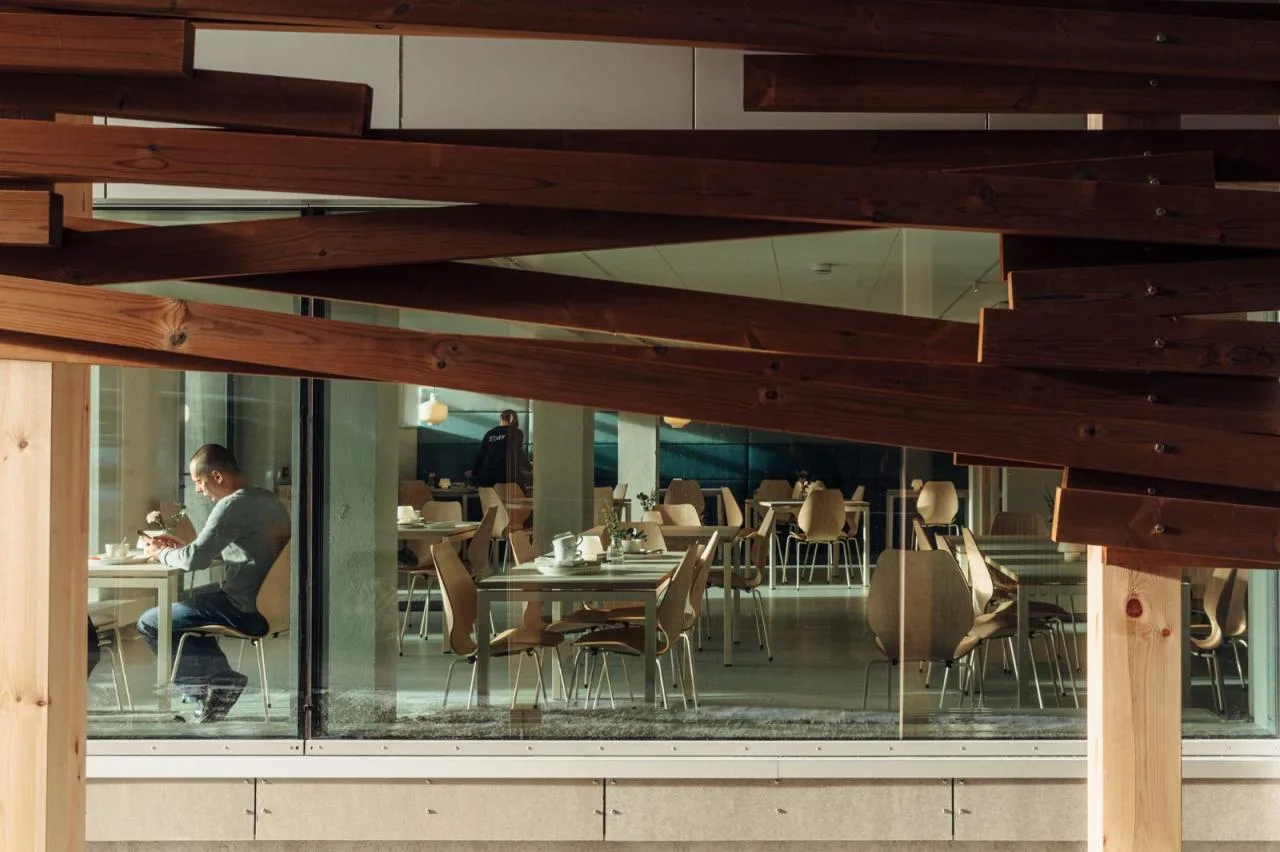
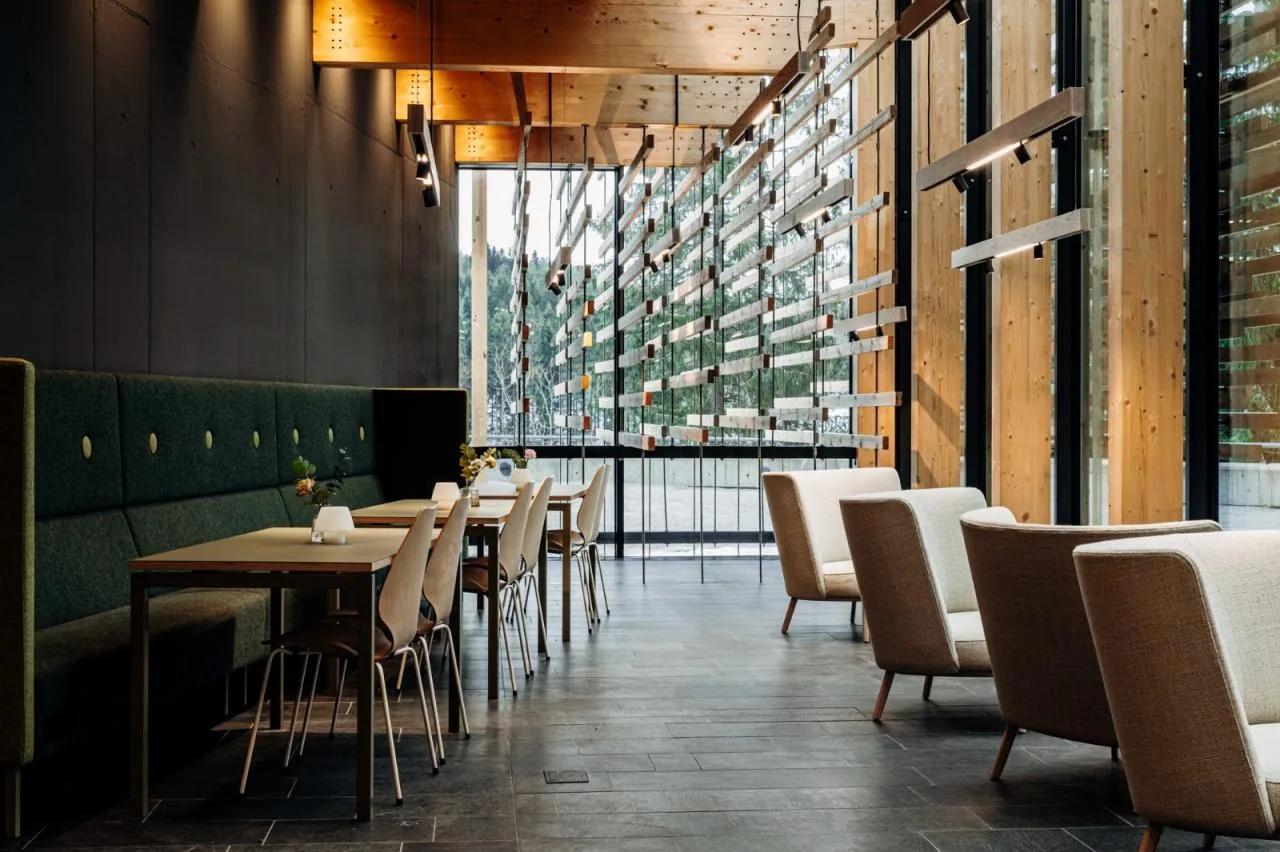
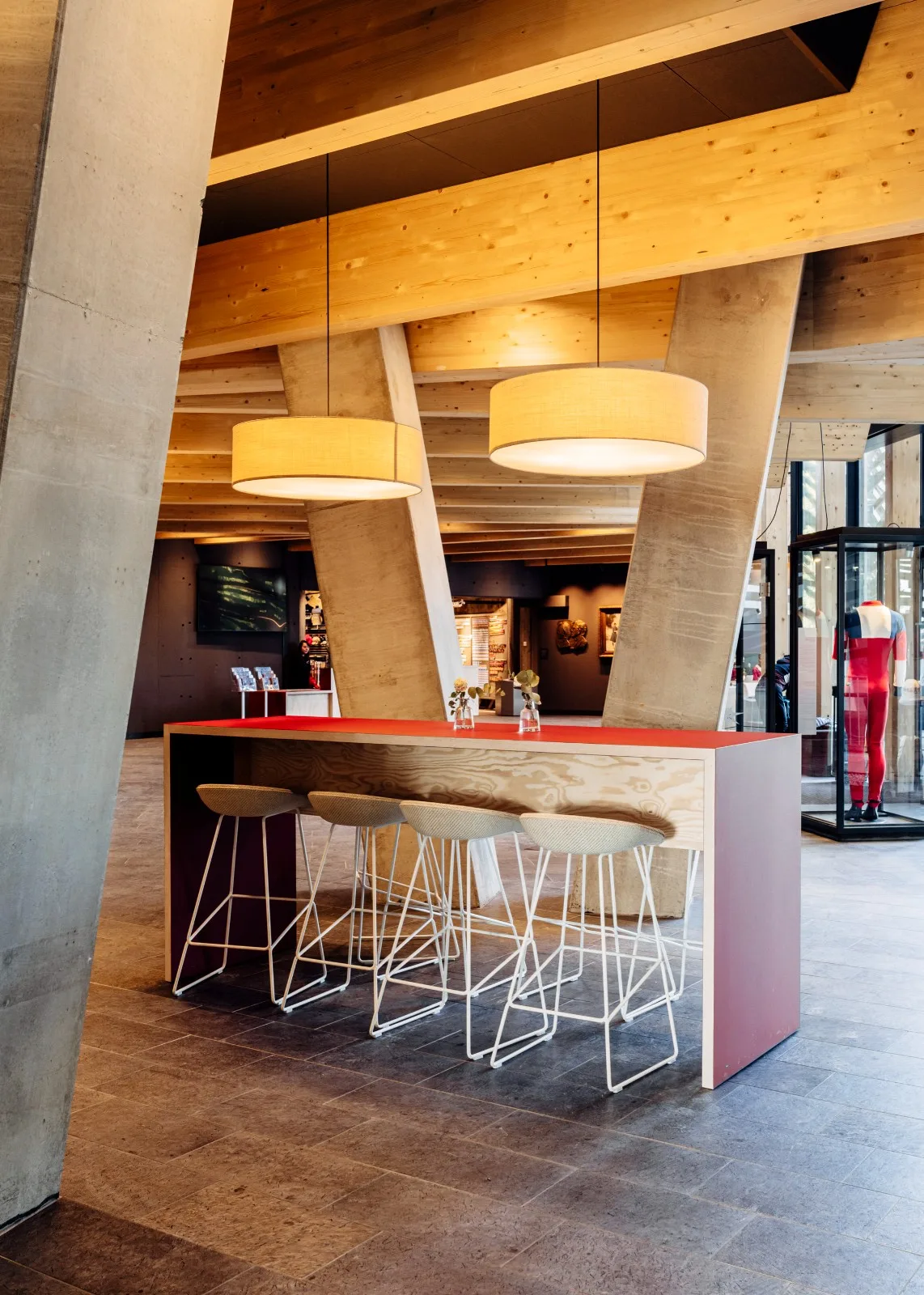
The combination of soft and hard materials is evident where the massive concrete pillars supporting the ski jump remain visible in the new extension. Laminated wood frames serve as the junction between the existing hard materials and the new soft elements. To provide shade, the density of the exterior wooden strips increases toward the building’s northern end. Sunlight streams through the wooden façade, casting dynamic shadows on the indoor stone floor during the day, creating a different ambiance in the evening.
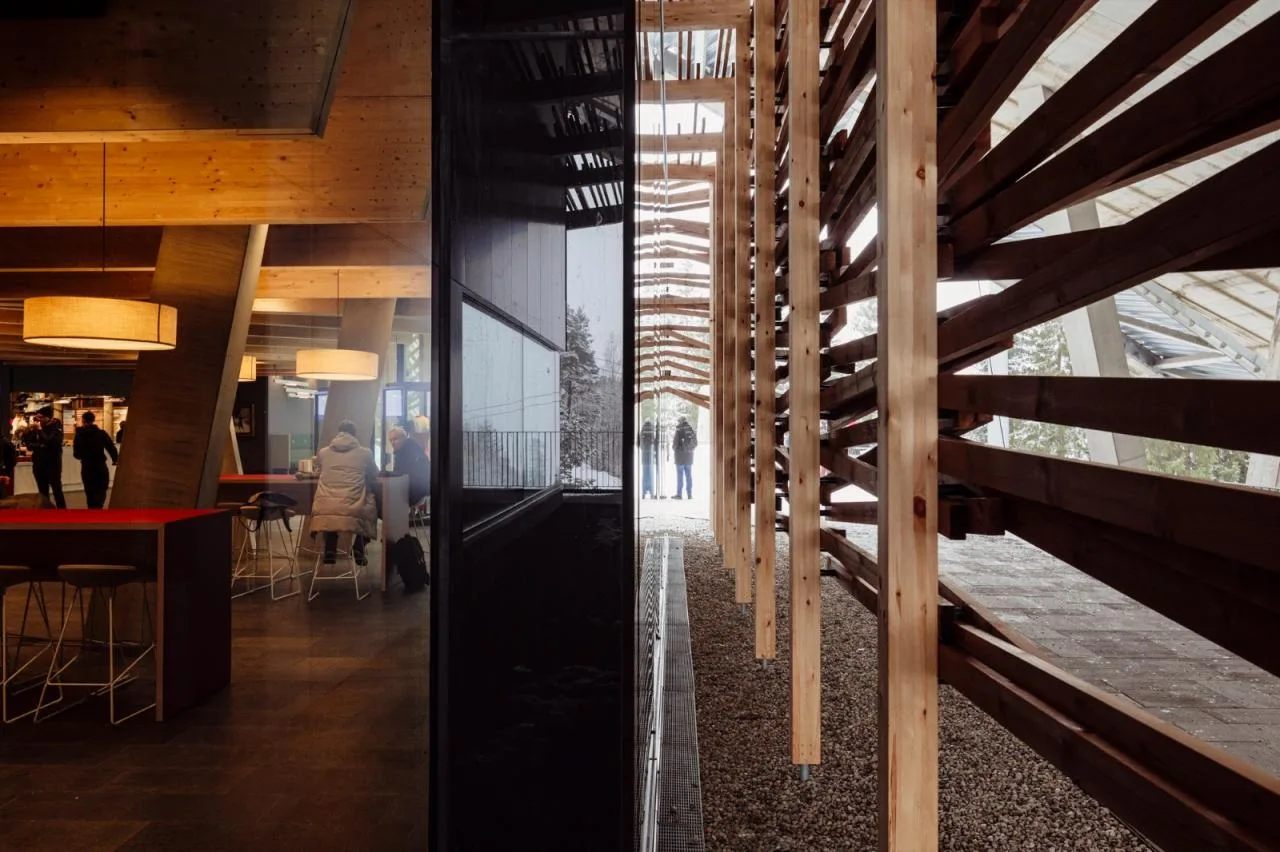
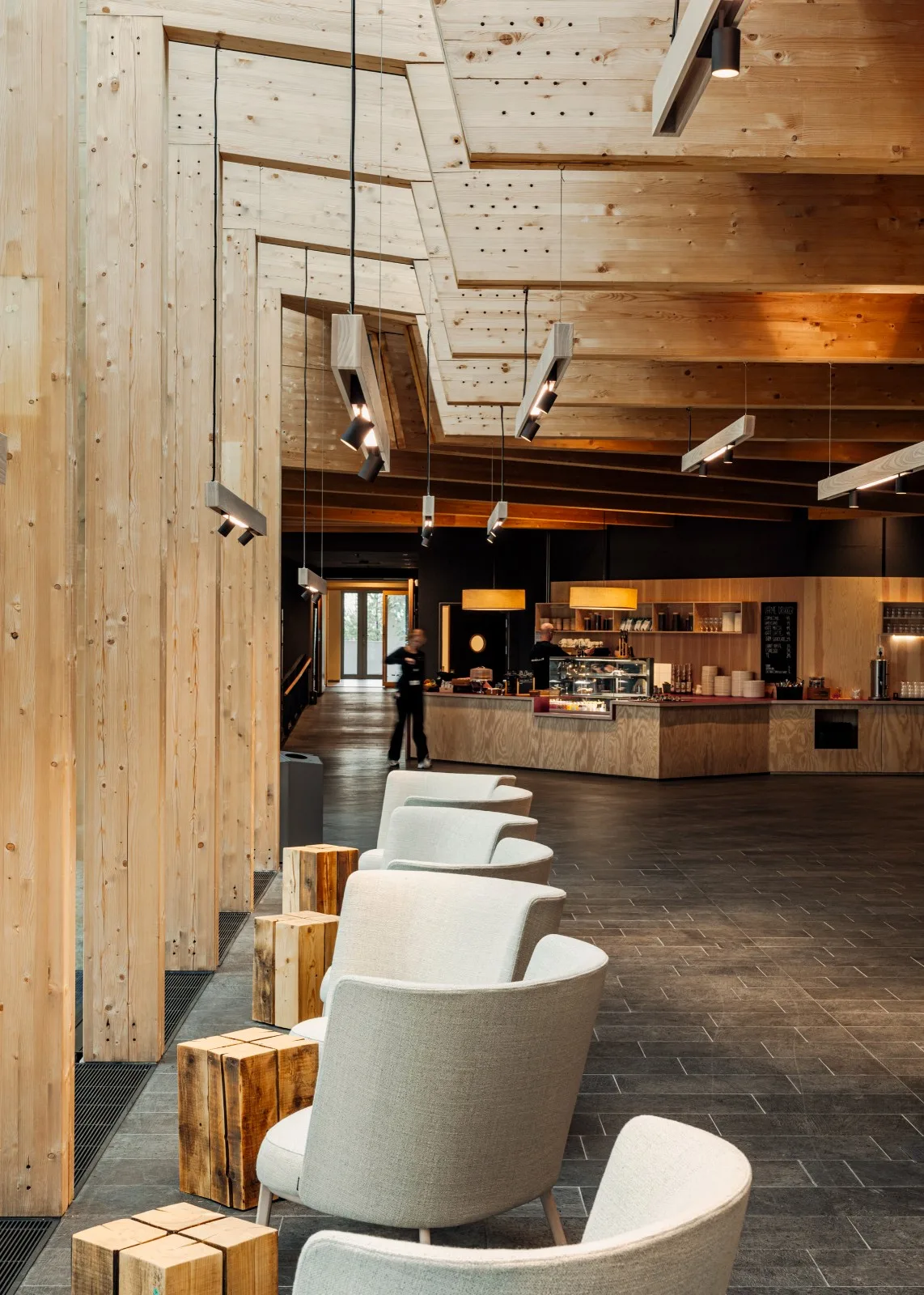
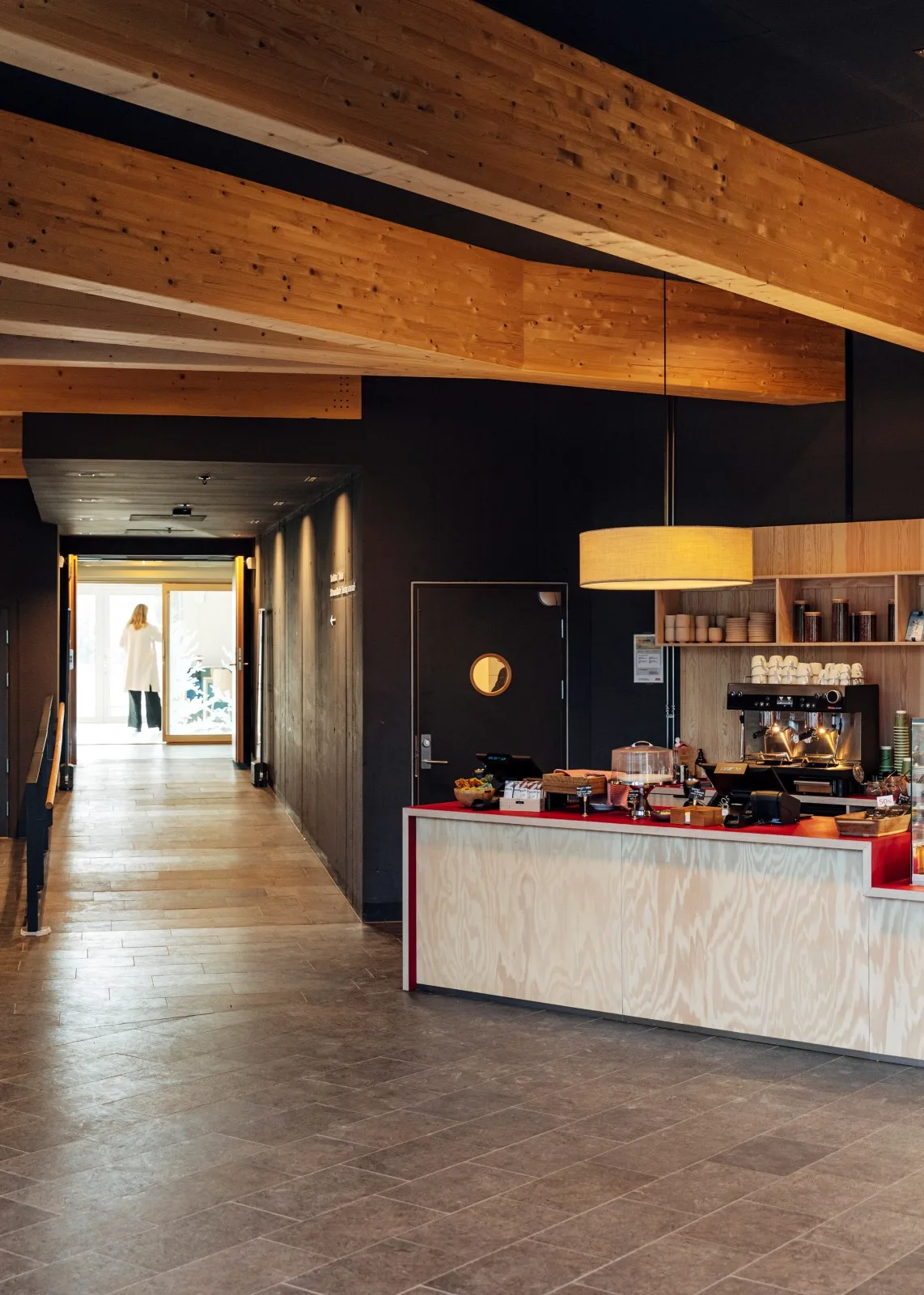
Carved into the rock with concrete walls and stone floors, the museum’s interior foyer contrasts sharply with the rugged surroundings. It offers a cozy cabin-like atmosphere, reminiscent of retreating indoors after a day in the forest. The furniture colors draw inspiration from Norway’s skiing culture—classic red ski suits, green spruce forests, and pristine white snow.
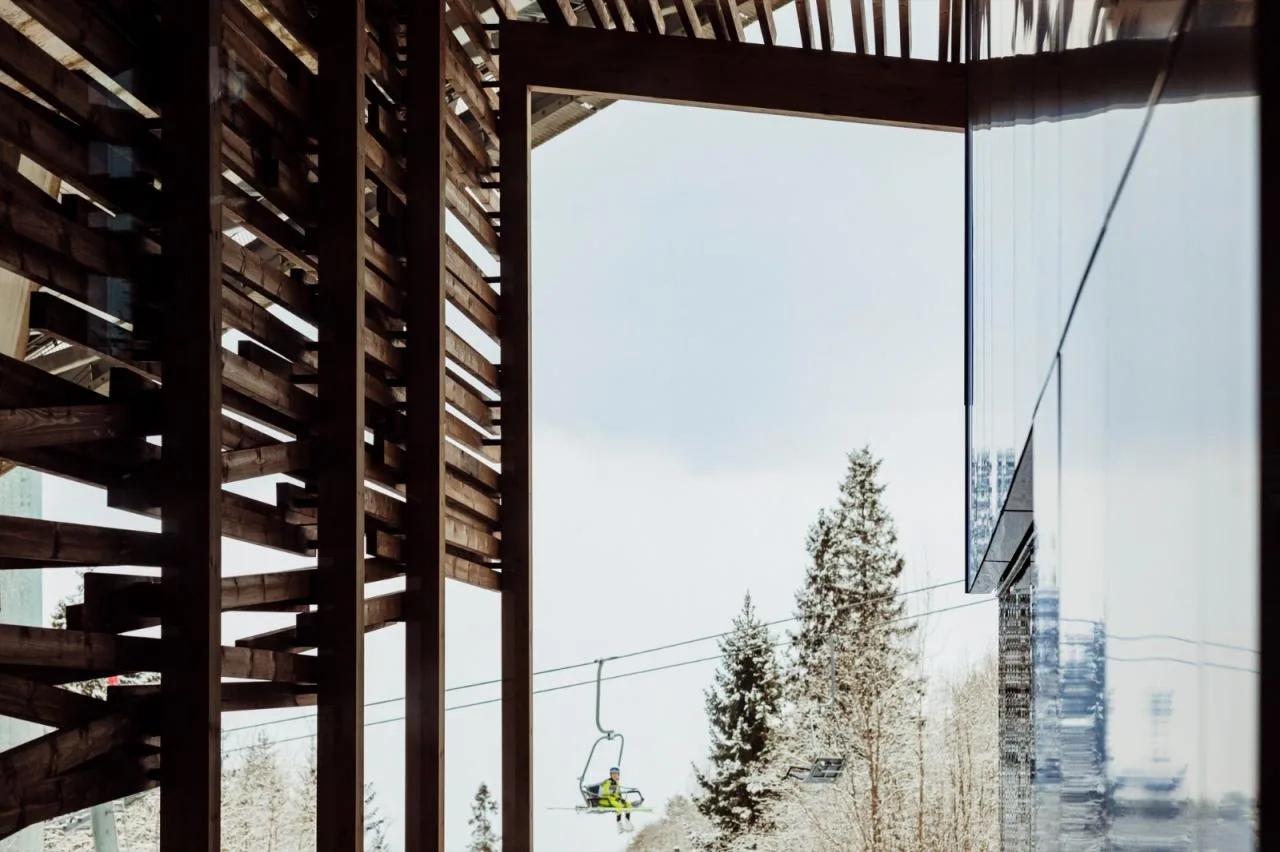
Paying tribute to the 1952 Olympic Games, the fixed interior elements and bar table are crafted from pine plywood topped with red felt. Soft cushioned chairs and long sofas are upholstered in Norwegian wool textiles. The cube table was handmade by Skiforeningen using pine wood sourced from the forests surrounding Holmenkollen. The lighting fixtures extend the design rhythm of the wooden cladding through the north glass curtain wall, which was specially designed for the project.
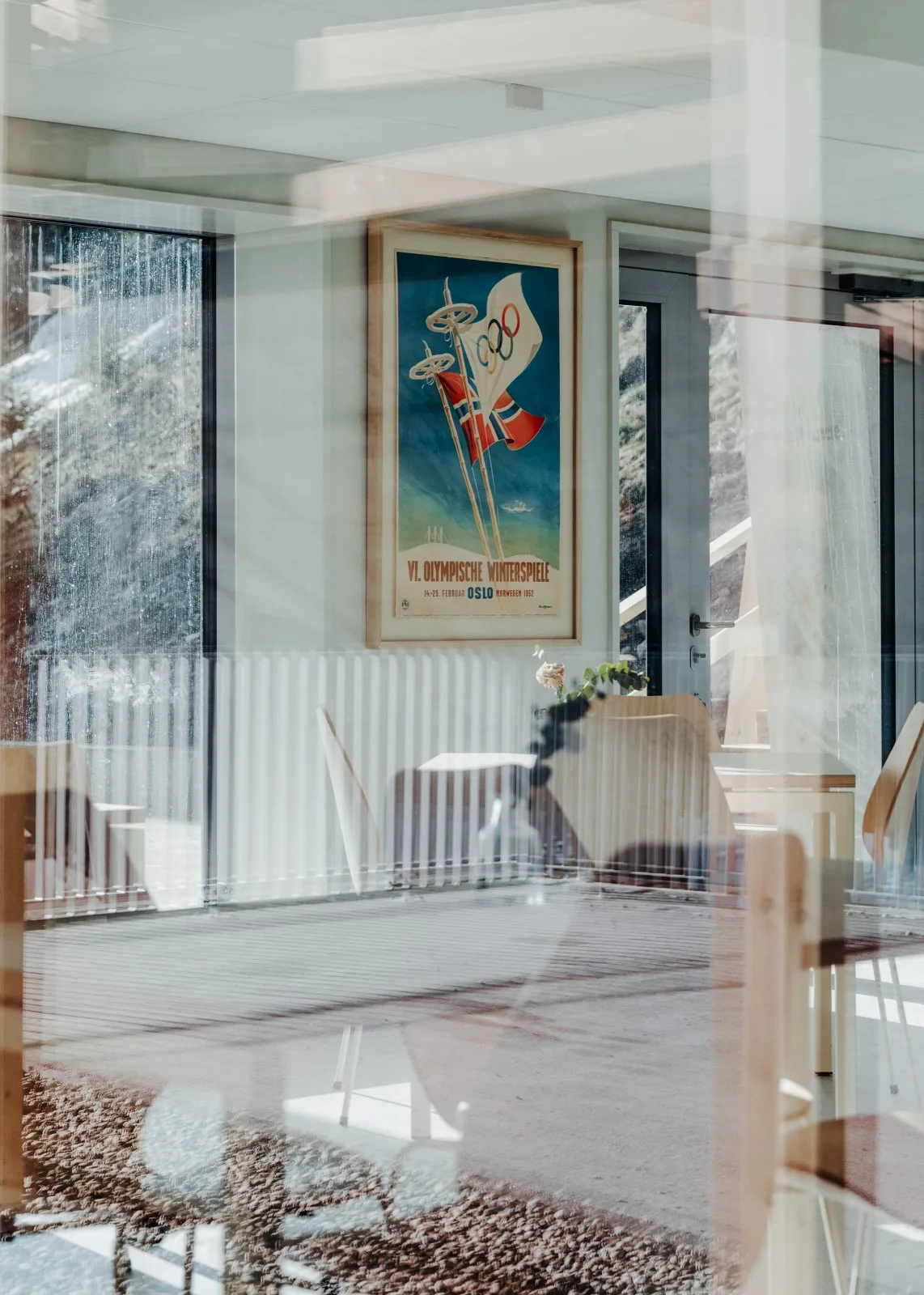
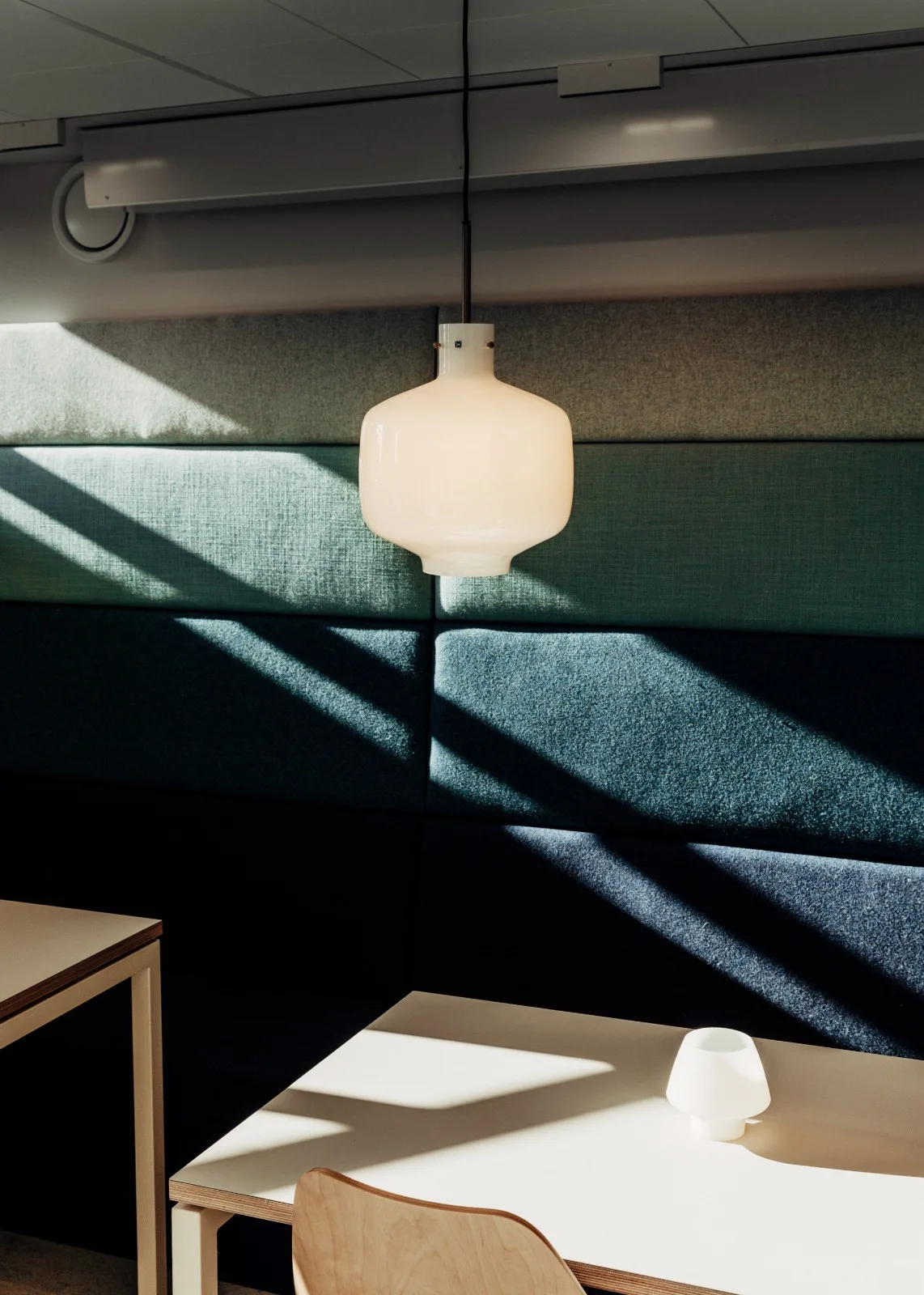
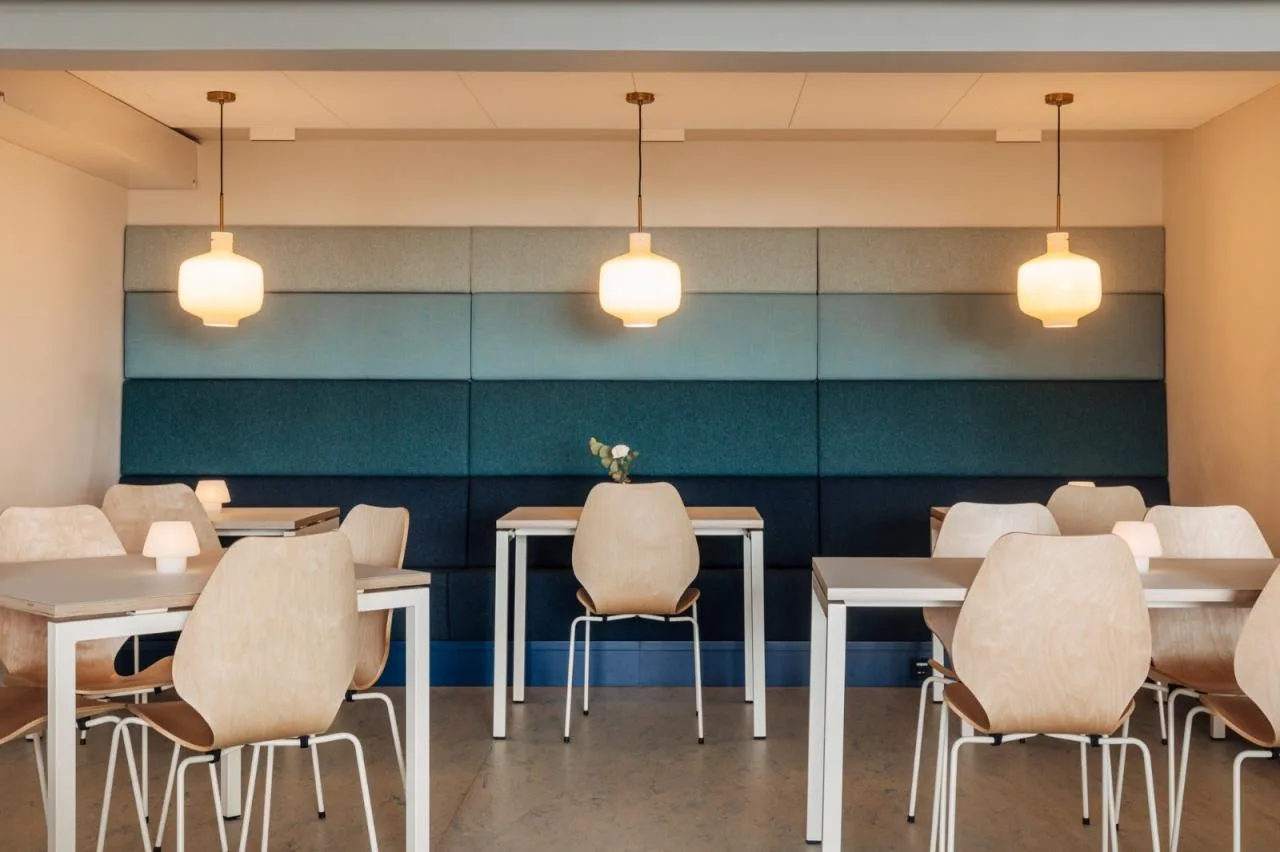
The new café is situated directly beneath the ski jumping hill, opening onto an outdoor dining terrace with views over the city to the south. Its interior design is inspired by 1950s color schemes, paying homage to the original ski jump and the 1952 Oslo Winter Olympics. The blue-green tones are drawn from vintage Olympic posters, while the fabric-covered sofa backs provide soundproofing and display a spectrum of blues—from the pale, cold winter sky to deep midnight navy.
Project Information
Architect: Snøhetta
Area: 525 m²
Project Year: 2024
Photographer: Thomas Ekström
Execution, wooden façade and fixed interior: Hoff snekkerverksted
Supplier, Wooden Buildings and Exterior Walls: Moelven
Glass façade: Glass365
Exhibition Architect: SixSides
Contractor: Veidekke AS
Location: Oslo, Norway














Must log in before commenting!
Sign Up