
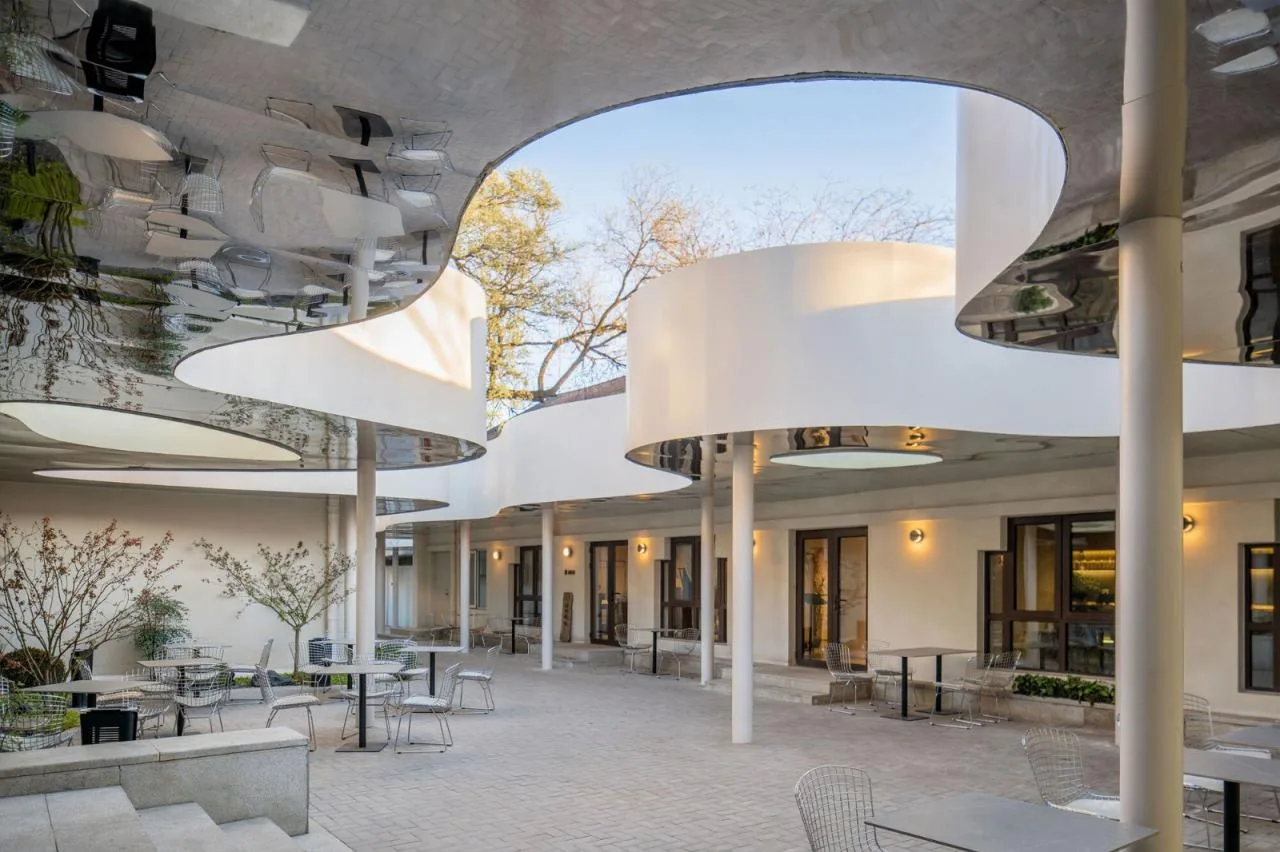
Wei/WAY Studio has designed a small mixed-use building located in the heart of Beijing. This renovation project uses cloud corridors to illustrate the connection between humans and nature, further exploring themes of urban renewal and the public character of the city.
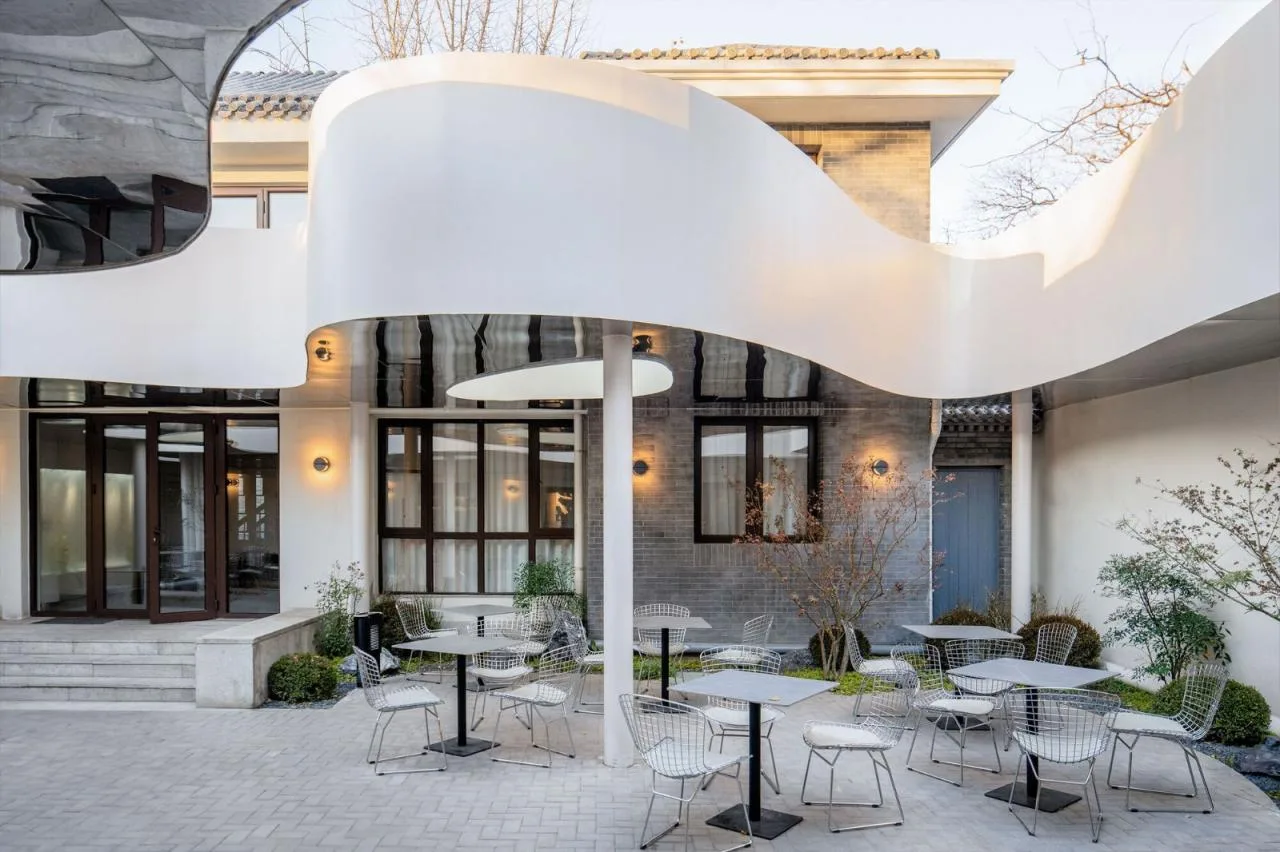
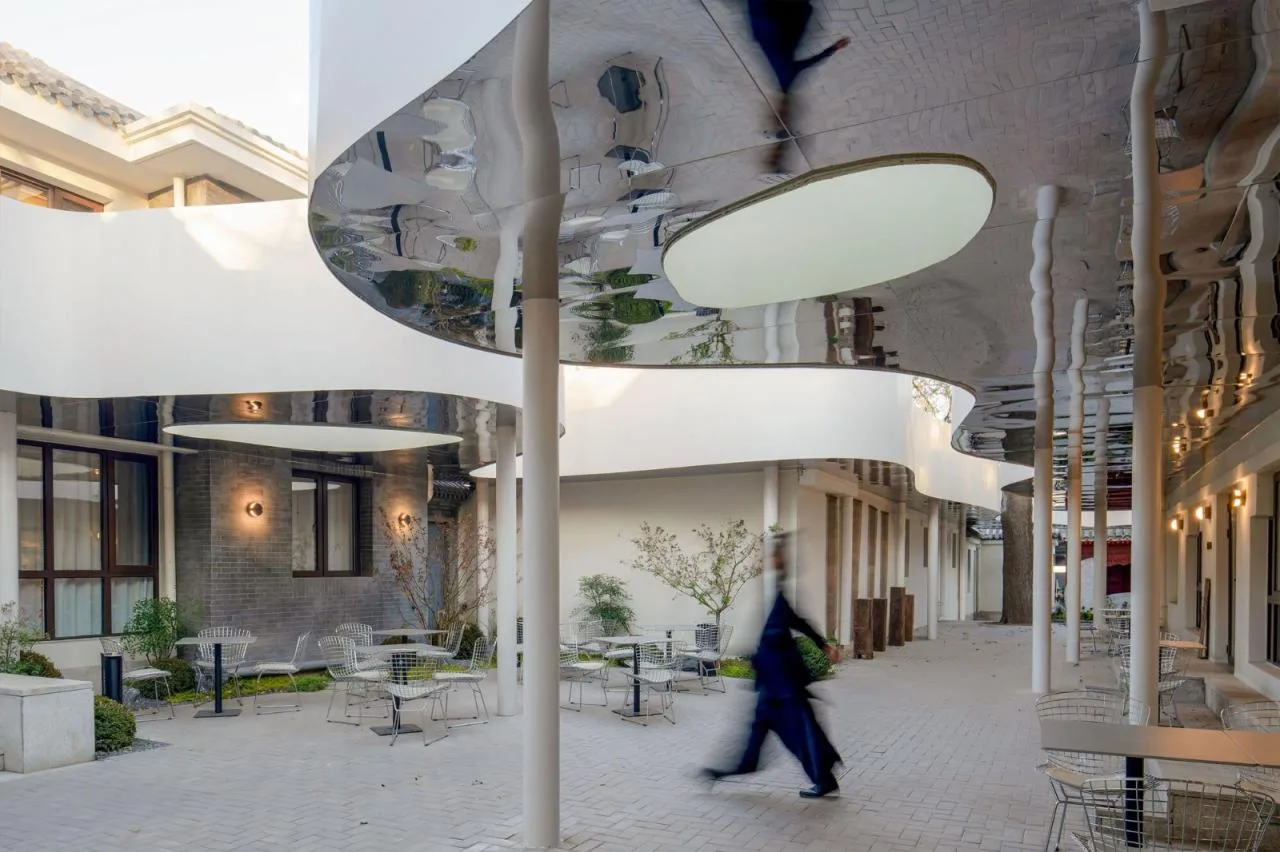
This project boldly explores the “alternation of old and new” by redefining the relationship between people, architecture, and nature. Instead of replicating existing pavilions, towers, and courtyards, the design employs modern curves to reinterpret traditional elements, highlighting their value through thoughtful reflection on both preservation and innovation.
Located in central Beijing, adjacent to the east side of the Forbidden City, the site was converted into a private courtyard in the 1990s. The design seeks to reshape the spatial order and challenge conventional perceptions of traditional courtyard houses.
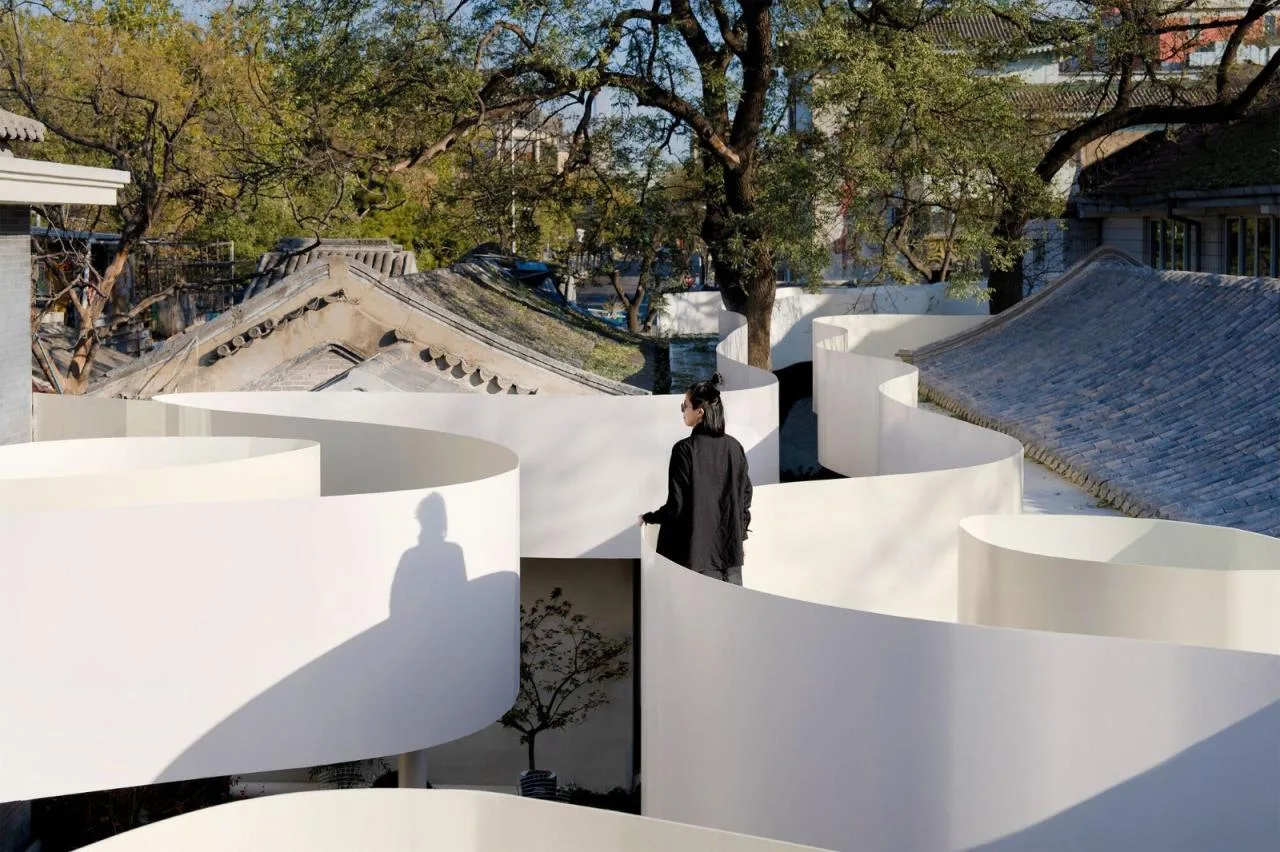
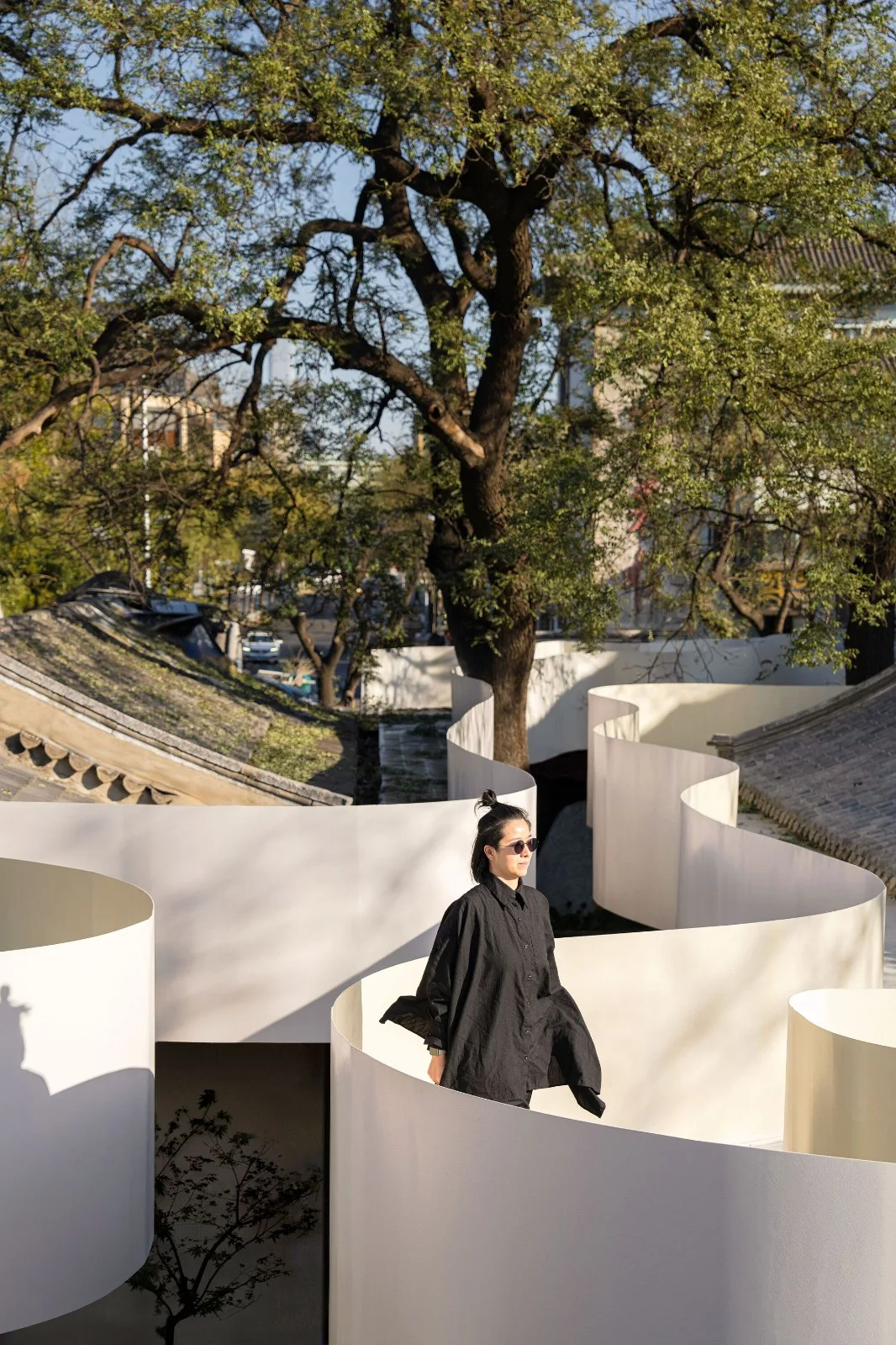
The renovation transforms the original private courtyard into a modern, multifunctional urban public space. Covering 420 square meters, the courtyard functions as an urban living room designed to meet diverse city needs.
While maintaining the principles of traditional Chinese courtyard houses, the design introduces an upper and lower double flow line system. This change converts the previously private and disorganized layout into a small commercial complex with modern functionality and clear spatial hierarchy.
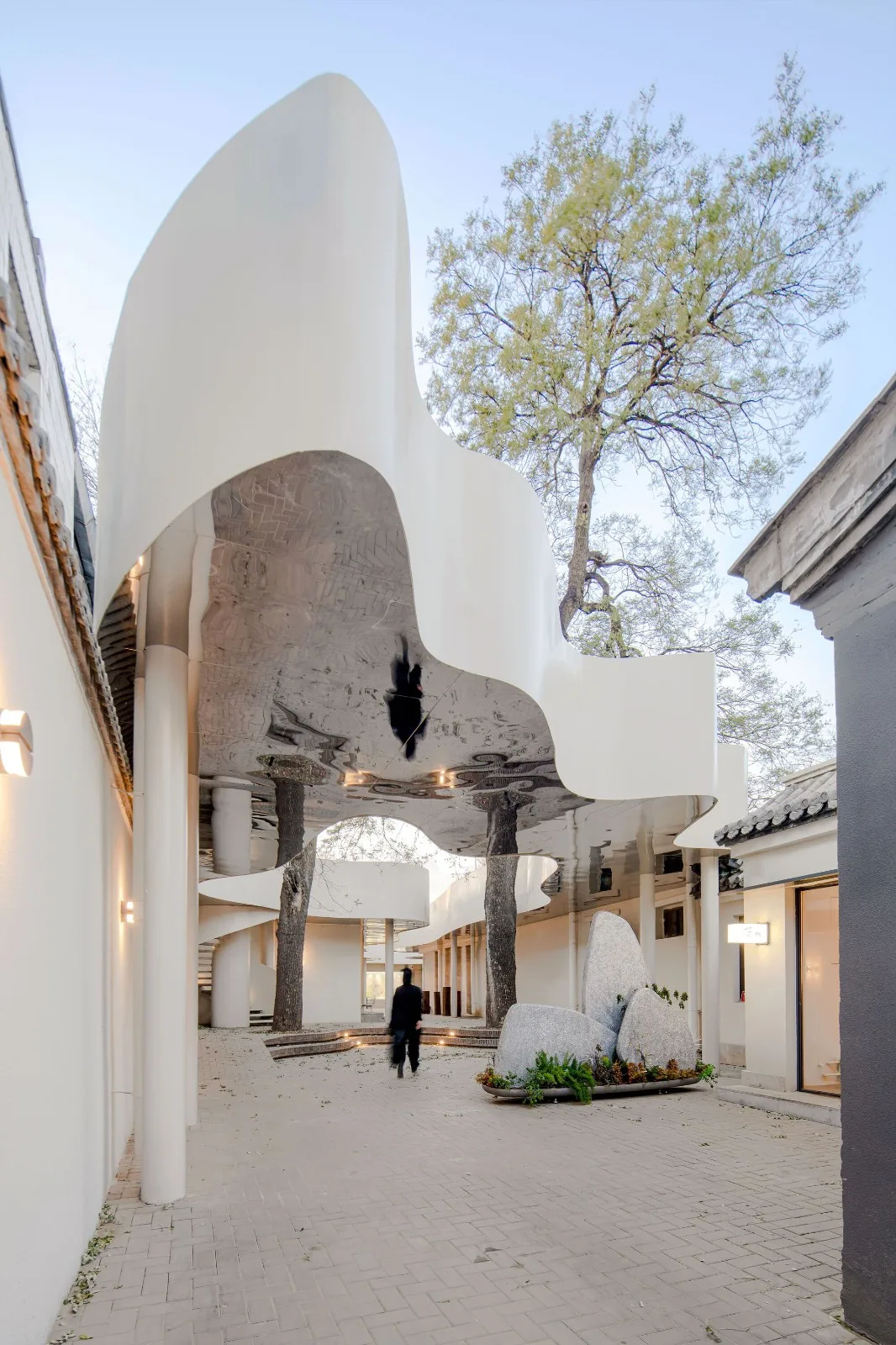
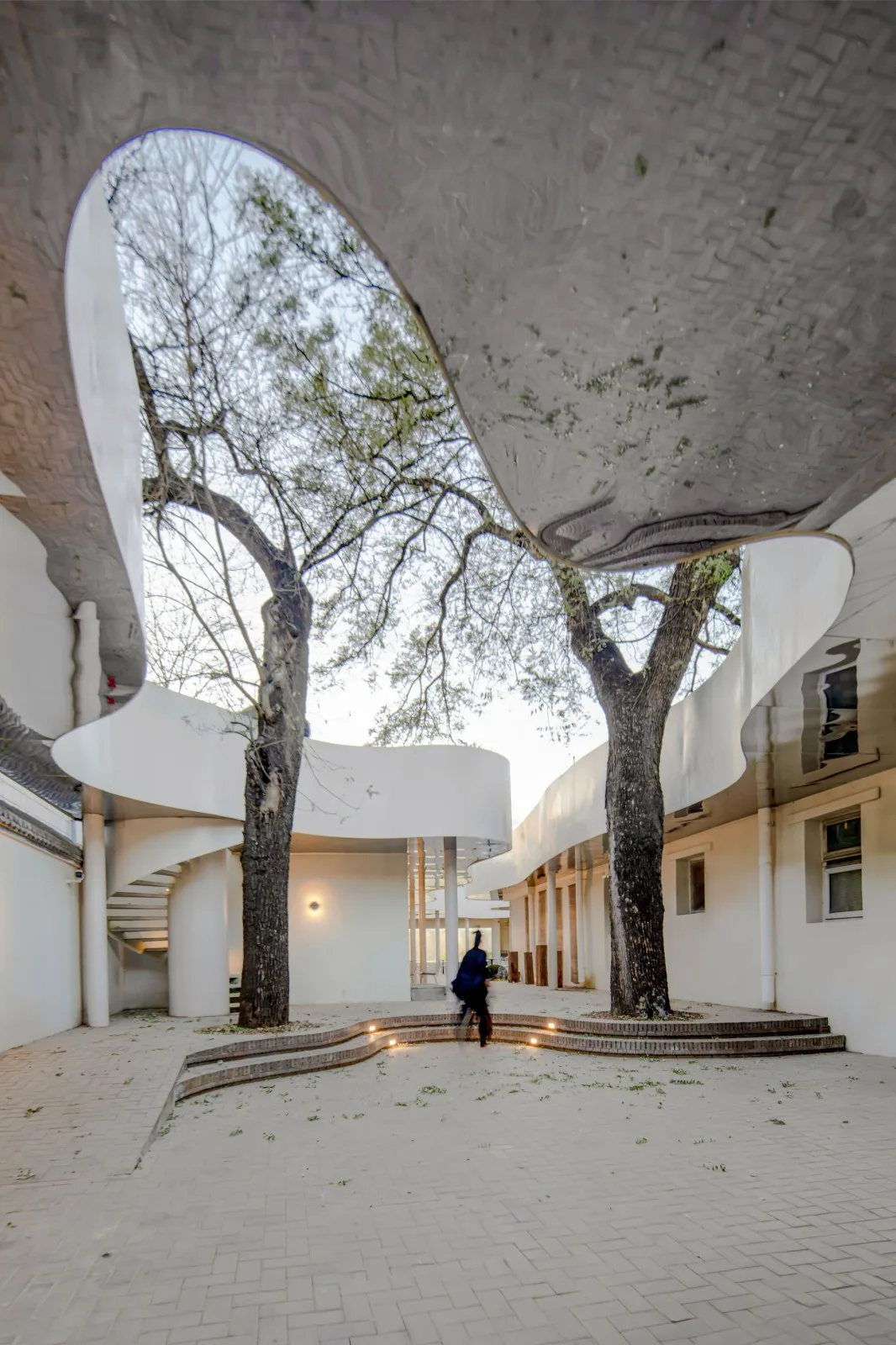
To activate this urban public space, Wei/WAY Studio introduced the Cloud Corridor and Cave Sky People—features that blend man-made, natural, and scenic elements.
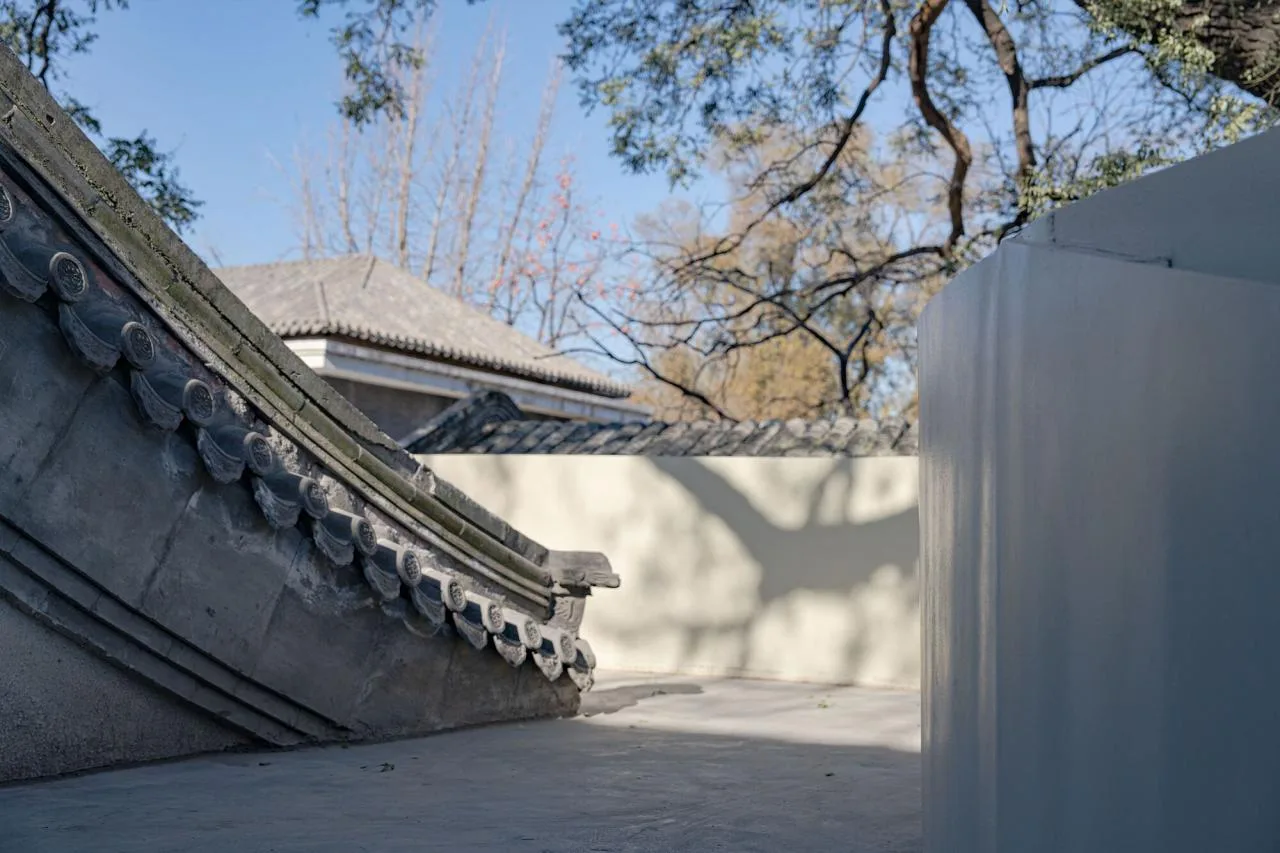
Rather than altering the traditional buildings themselves, the renovation adds corridors and bridges that create “emptiness” within the courtyard. These elements engage in a spatial dialogue reminiscent of installation art, embodying the concept of “unity of heaven and man.”
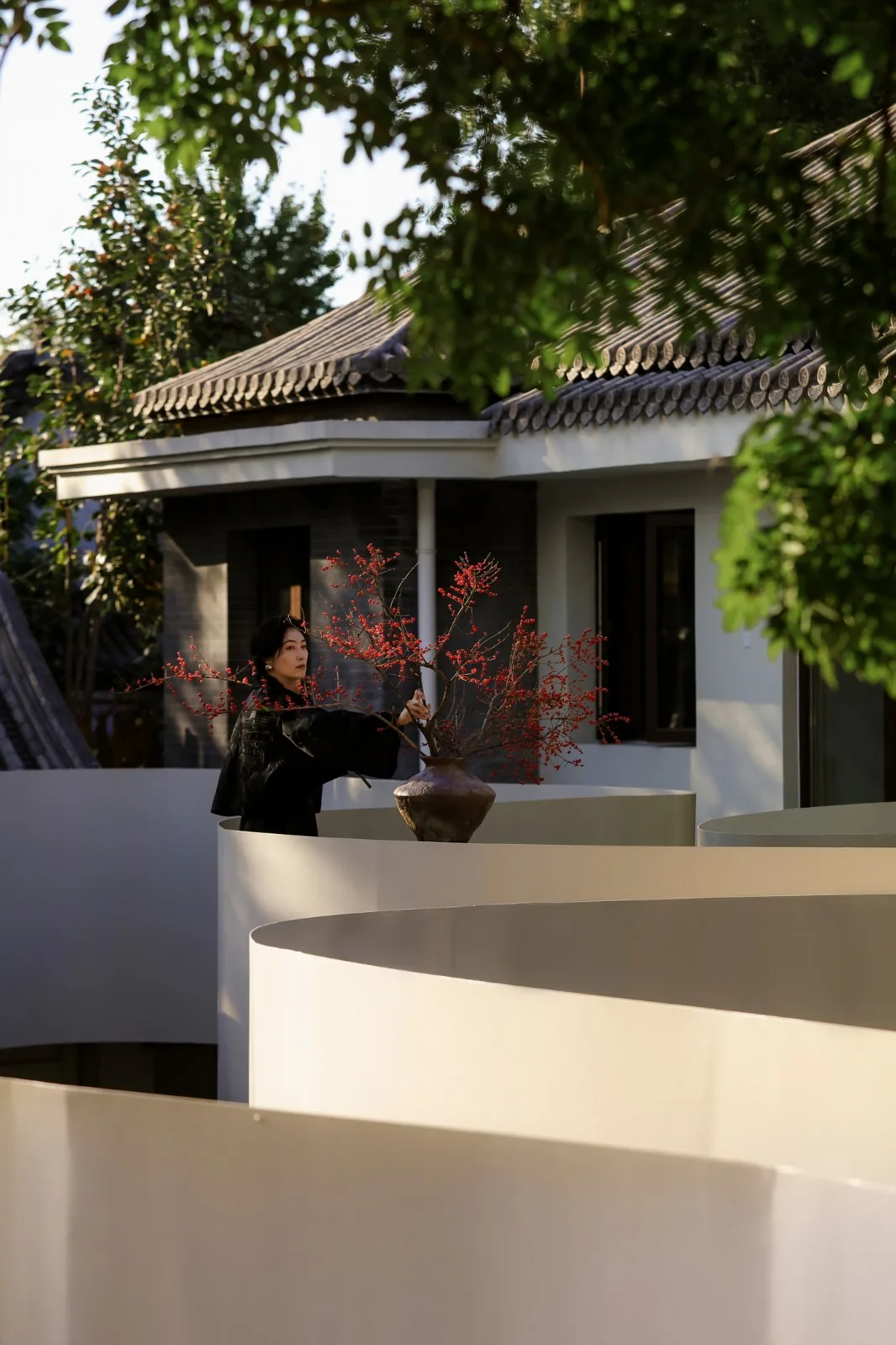
Humans have an innate fascination with curves, which the design embraces to resonate harmoniously with the natural human form. The cloud-like corridors reshape the traditional quadrangle courtyard skyline, establishing a new relationship between nature and built space.
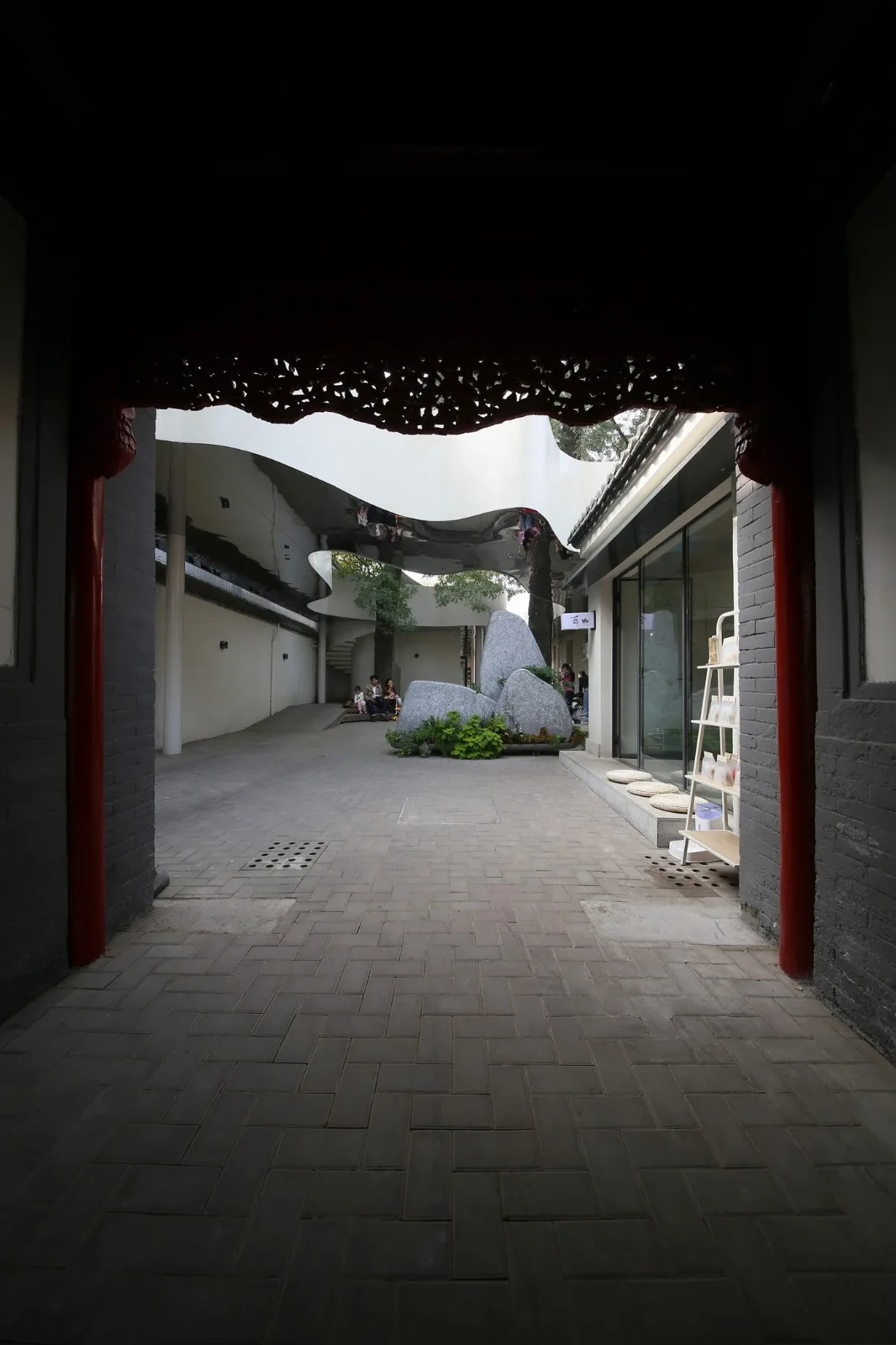
Upon entering, visitors encounter a courtyard embraced by a cloud-like corridor surrounding two towering locust trees. Their shade provides refreshing relief throughout the summer. Suspended abstract and distorted mirrors on the ceiling transform the atmosphere into a surreal and captivating experience as night falls.
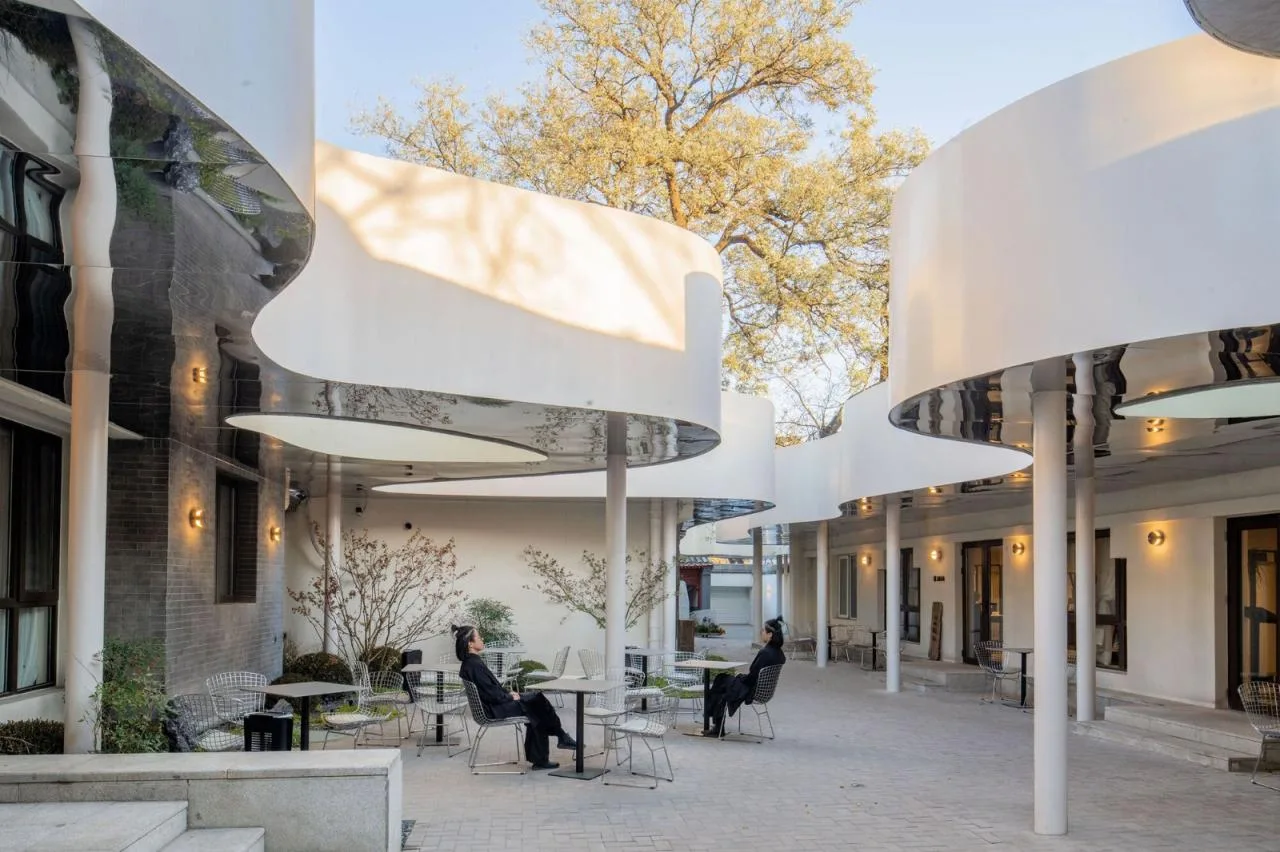
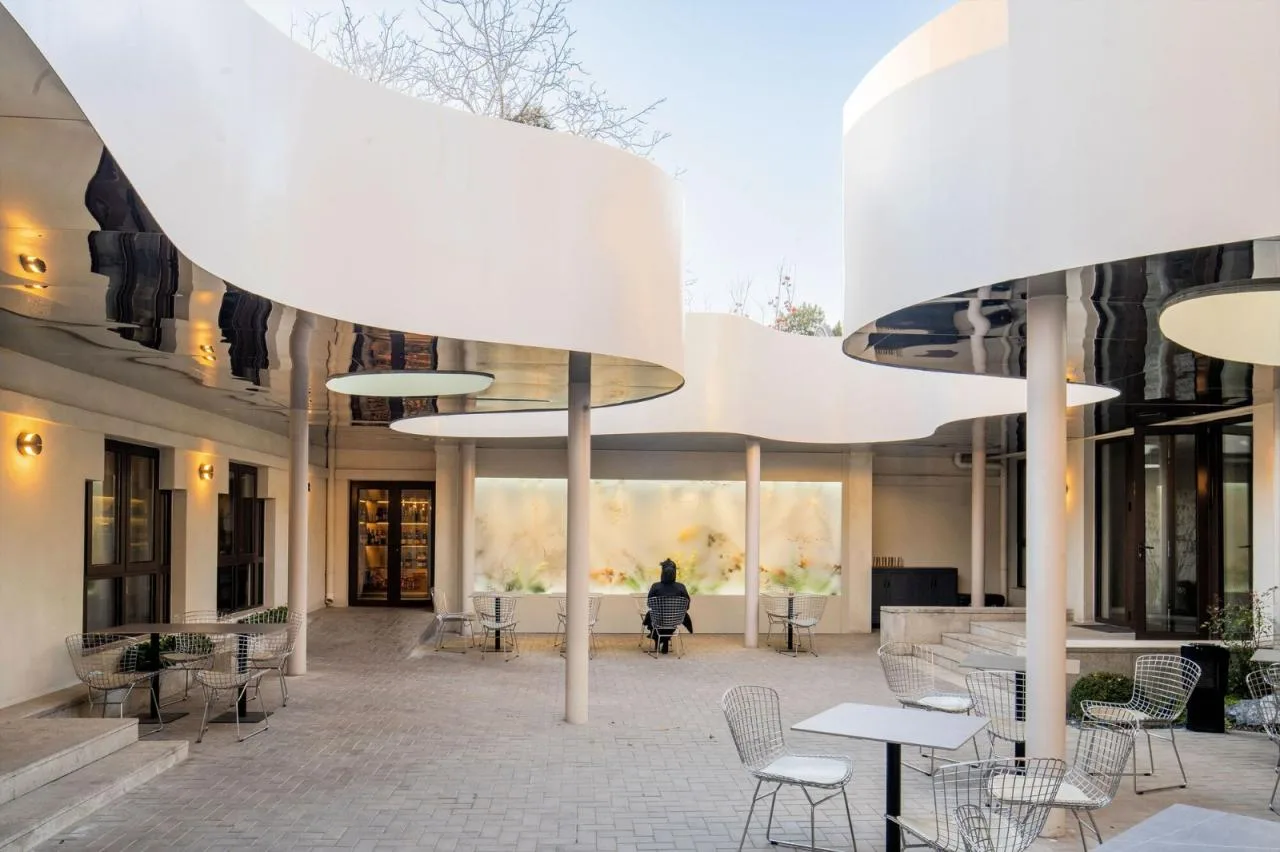
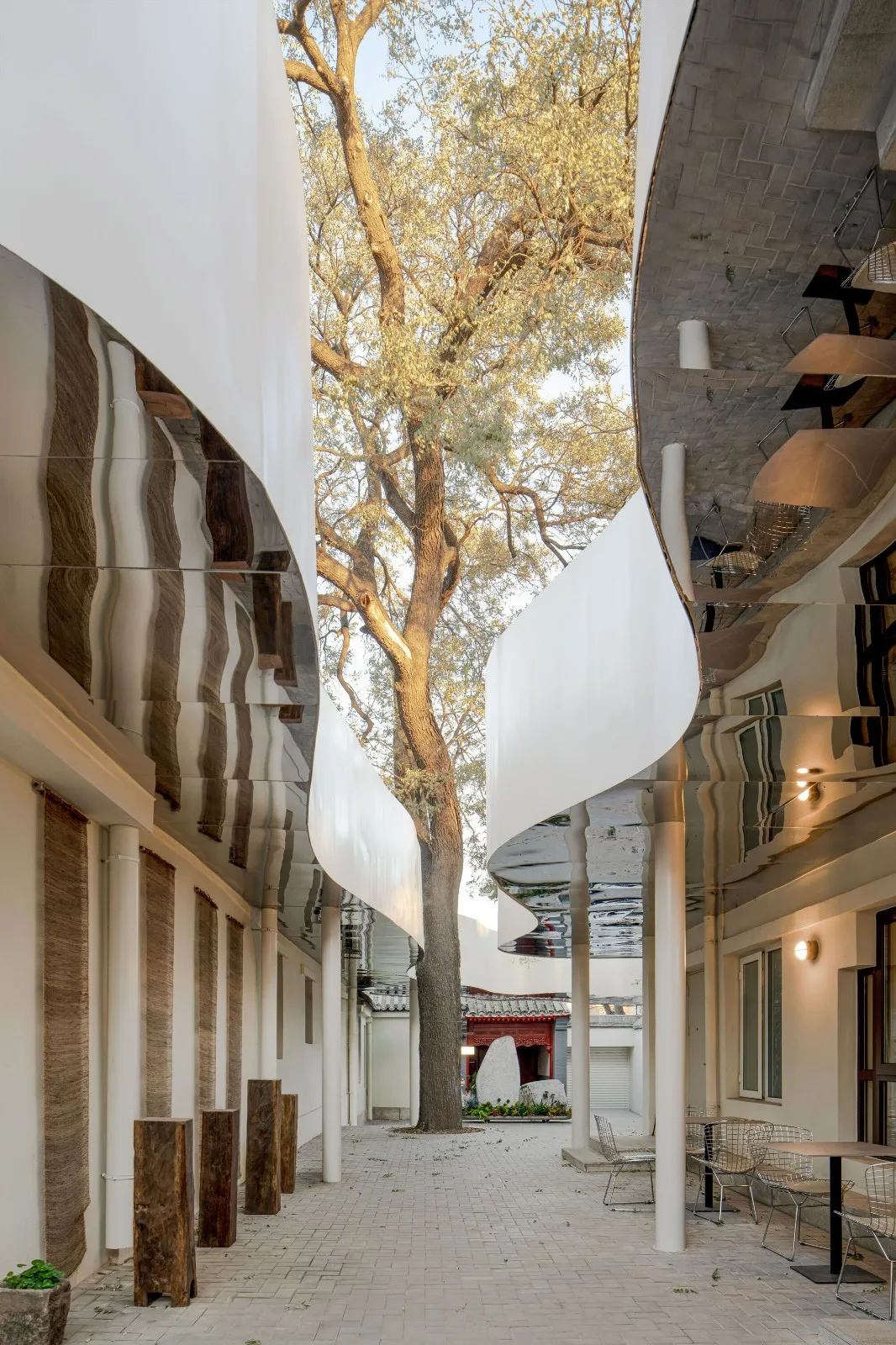
As the winding path leads to the main courtyard, the traditional quadrangle courtyard image disappears, replaced by a dynamic interplay of reflections, sky, and water.
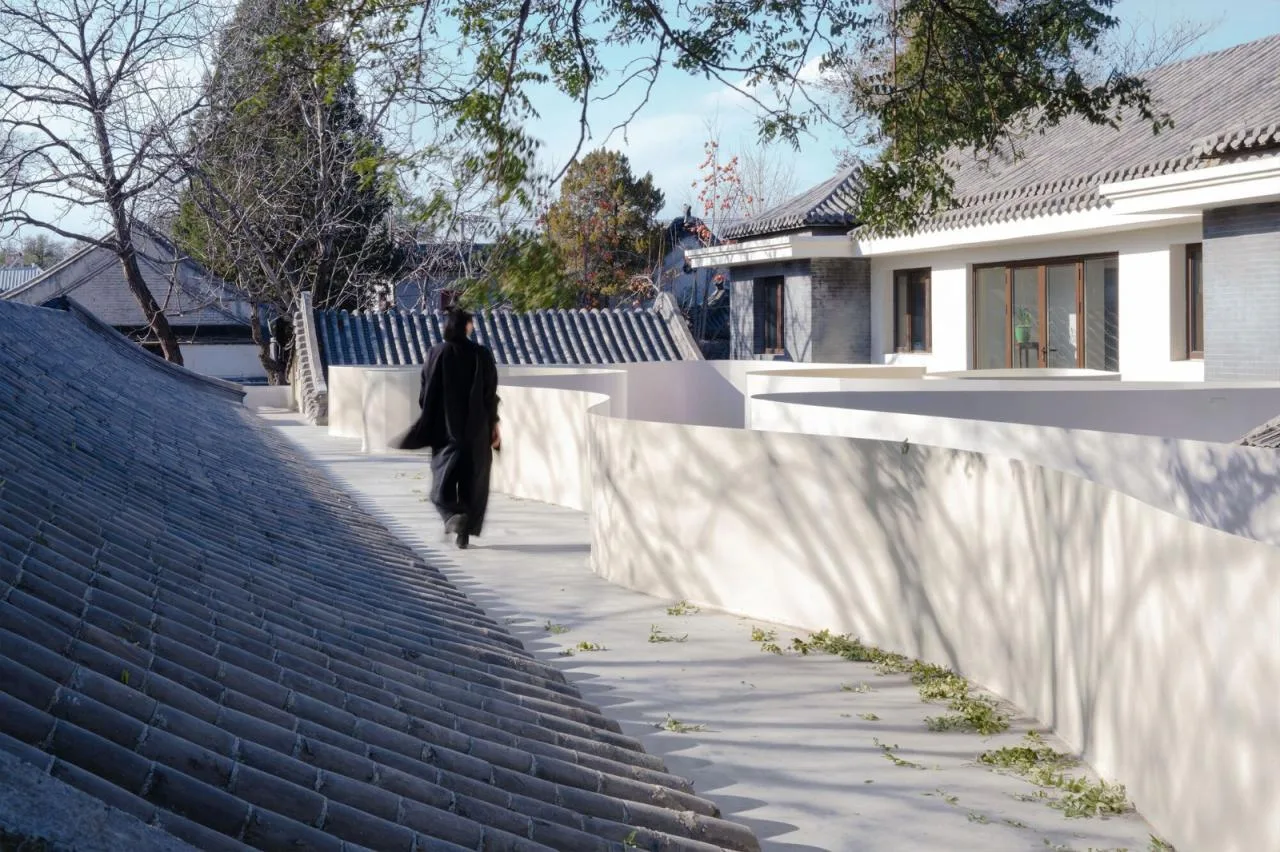
The cloud-like corridor establishes a new skyline among the courtyard houses. Acting as an extension of the building, the corridor bridges reorganize the boundaries between virtual and real spaces, creating a “grey space” that blurs the lines between indoors and outdoors.
These human-scale spaces provide shade and shelter, emphasizing the role of urban living rooms and promoting social interaction within the architecture.
Two staircases connect the interior and exterior to the cloud corridor. Walking along it, the traditional courtyard roof appears as an island embraced by the corridor, inviting visitors to explore and engage with the space.
The cloud corridors on the second floor outline the first-floor courtyard with rich layers, while the dramatic curved railings encourage interactive experiences, adding a vital humanistic touch to the environment.
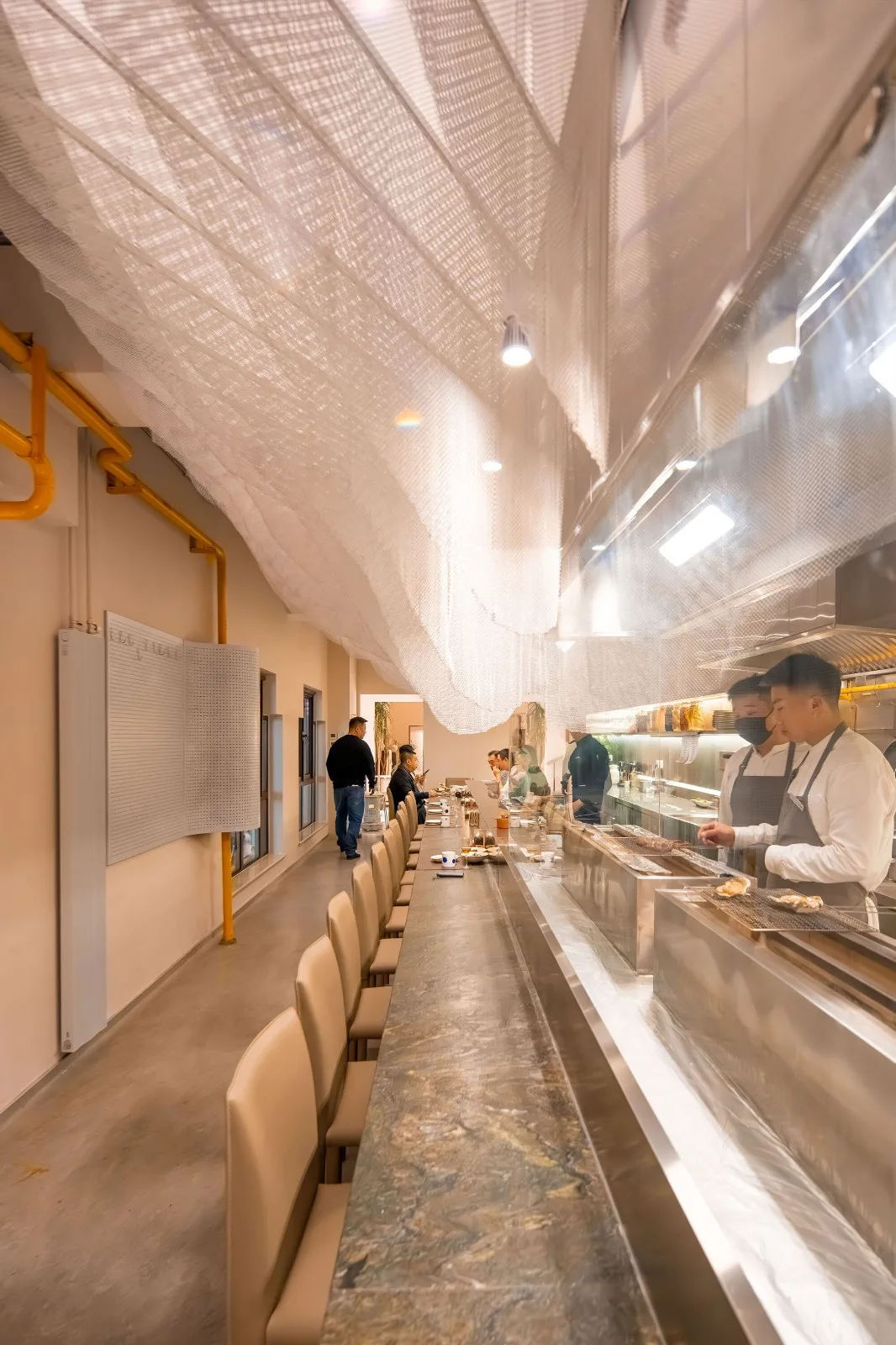
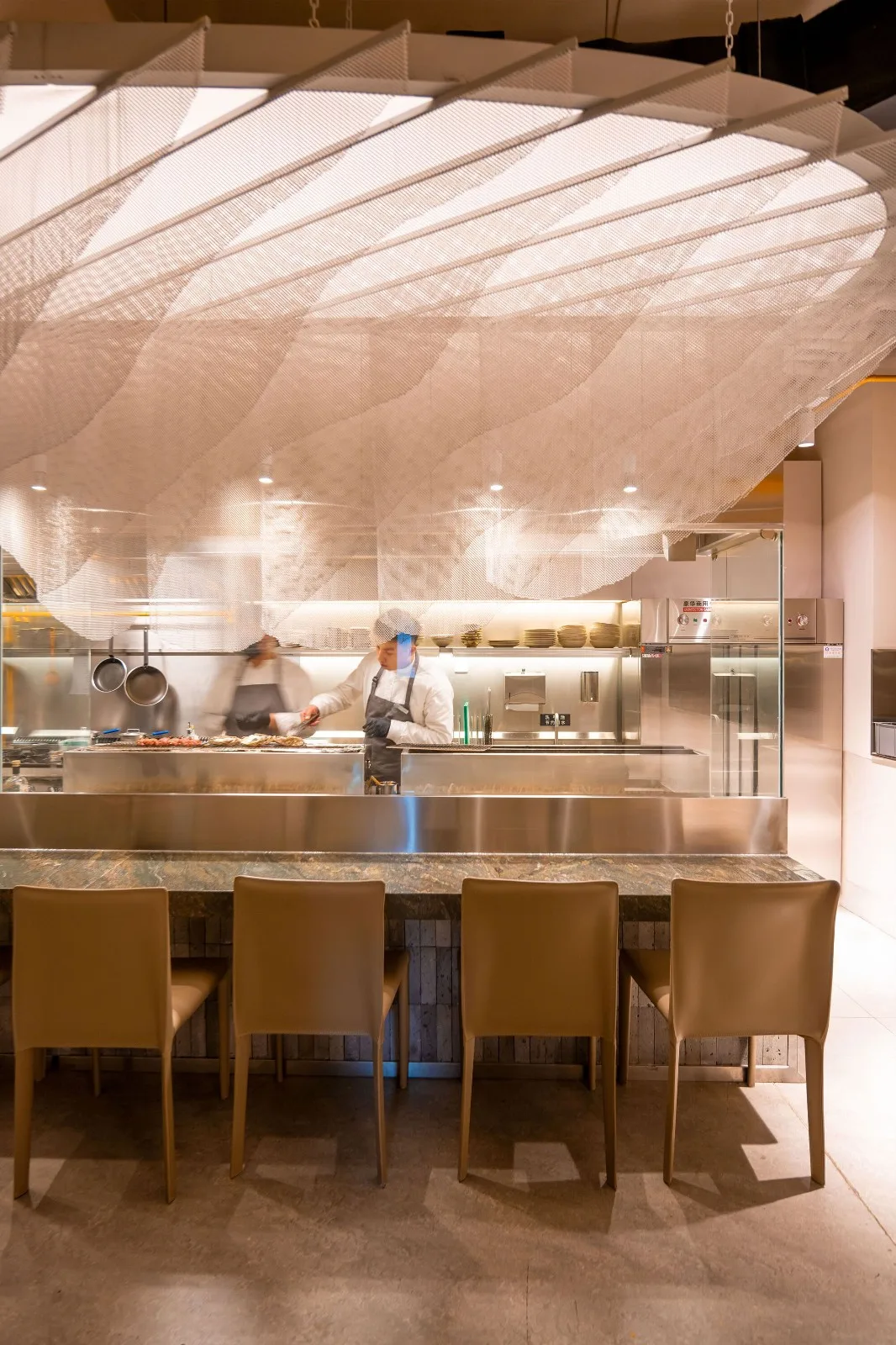
The flexible urban living rooms and small complex spaces are carefully planned to accommodate a variety of functions while preserving spatial ambiguity and multifunctionality to adapt to different needs.
Indoor areas are divided into four main sections: the entrance courtyard; the original northern passage transformed into a coffee and tea house; the south room of the main building connected to an exhibition hall and a long bar seating 14 for dining; and the northern room’s first floor used as a private space, with the second floor serving as a center for Chinese studies, including a tea room and Chinese school.
These thematic spaces adjust according to day and night cycles, festivals, and events to optimize usage and coordination of the courtyard’s public areas.
The garden undergoes a full-day ecological transformation to adapt to modern diversity, forming a cycle of sunrise, sunset, and rest states.
Operating as a restaurant in the evening, the courtyard can accommodate around 50 guests comfortably, with a maximum capacity of over 200 during larger events. This responsiveness to varying needs exemplifies the creation of a flexible urban public space.
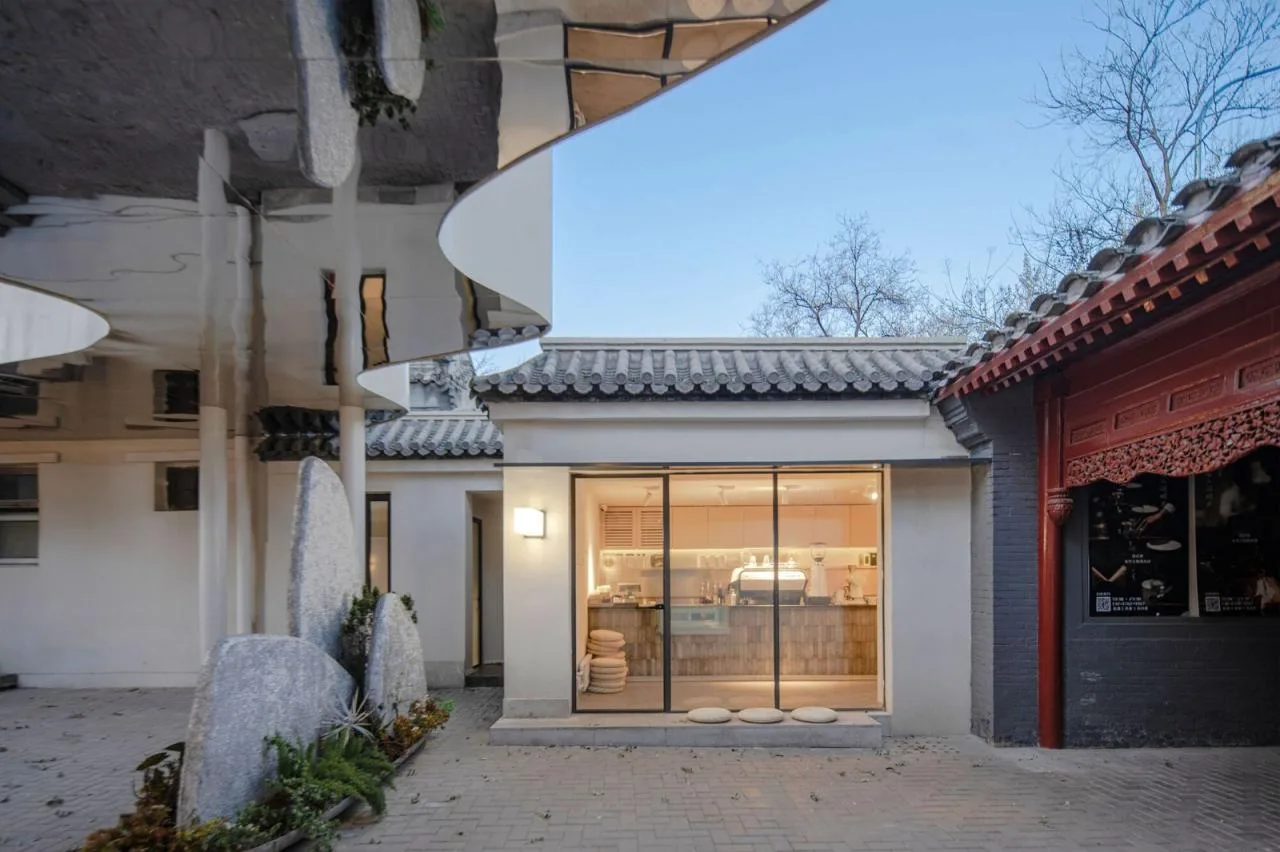
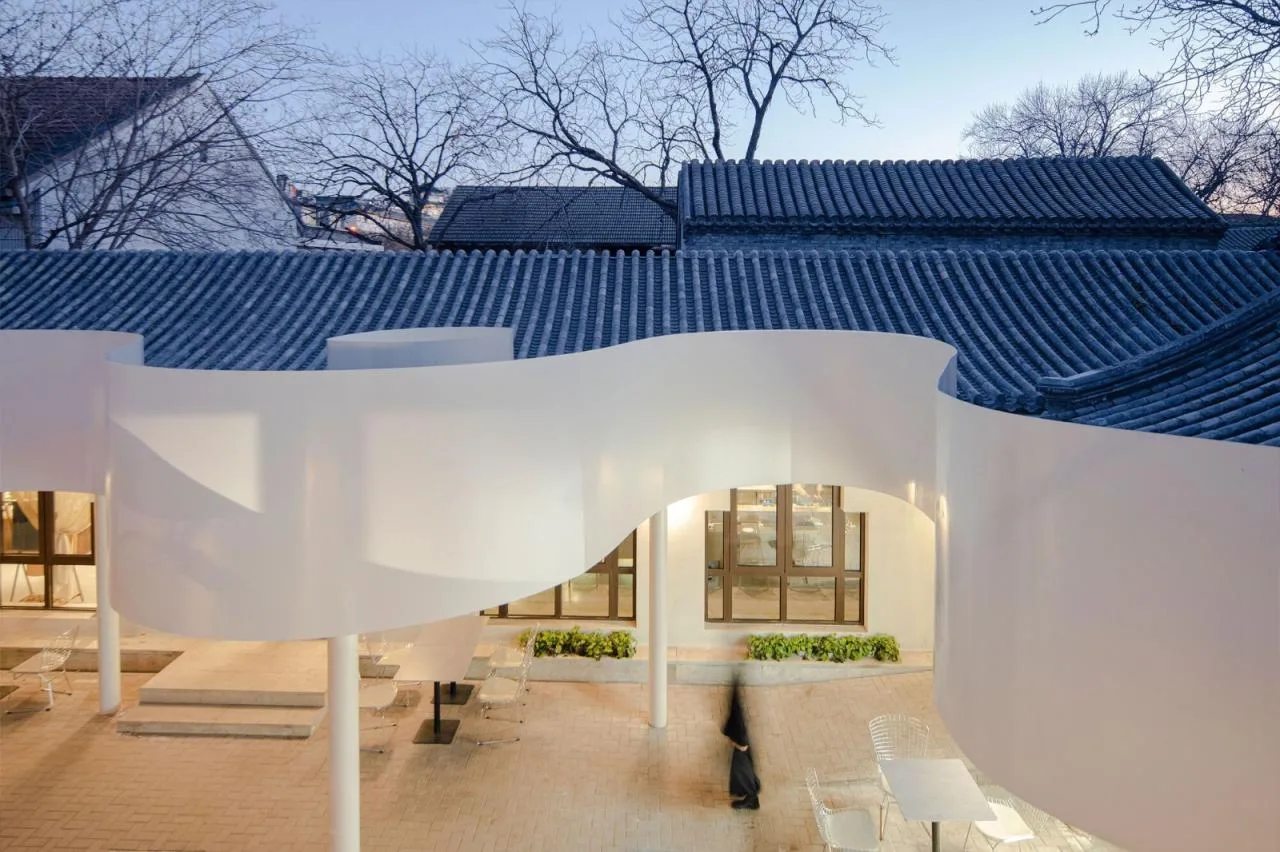
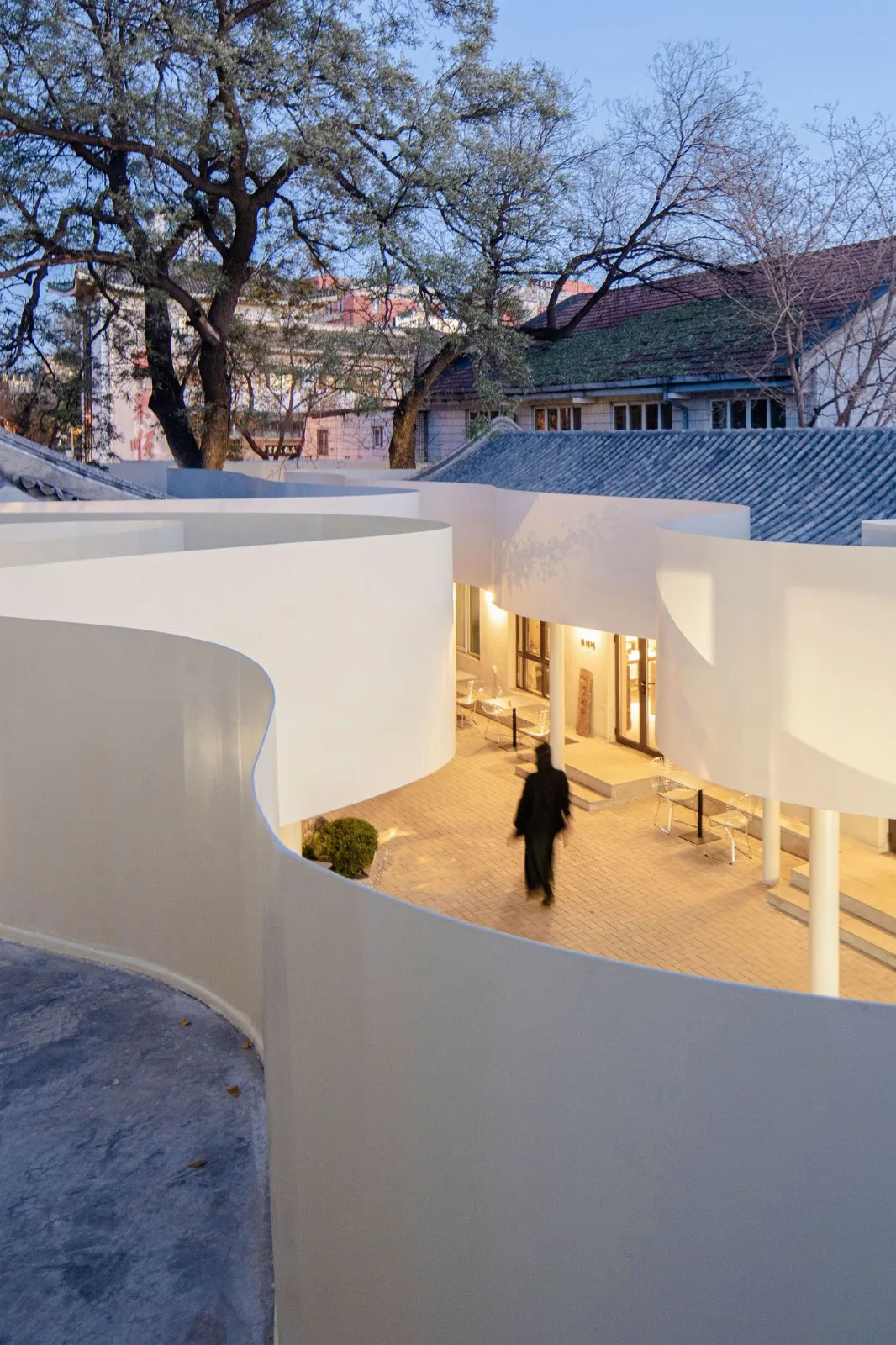
The project, titled “No. 35 Courtyard of Oriental Aesthetics – A Different Heaven and a Different World,” is an innovative exploration of Eastern aesthetics. It challenges conventional impressions of “Chinese style space” by merging modern functionality with traditional aesthetics.
The concept draws inspiration from Li Bai’s poem “Questions and Answers in the Mountains,” where the poet questions why Yu desires to live in the blue mountains and responds with laughter, leaving his heart at ease. The imagery of peach blossoms and flowing water evokes a transcendent world beyond the mundane.
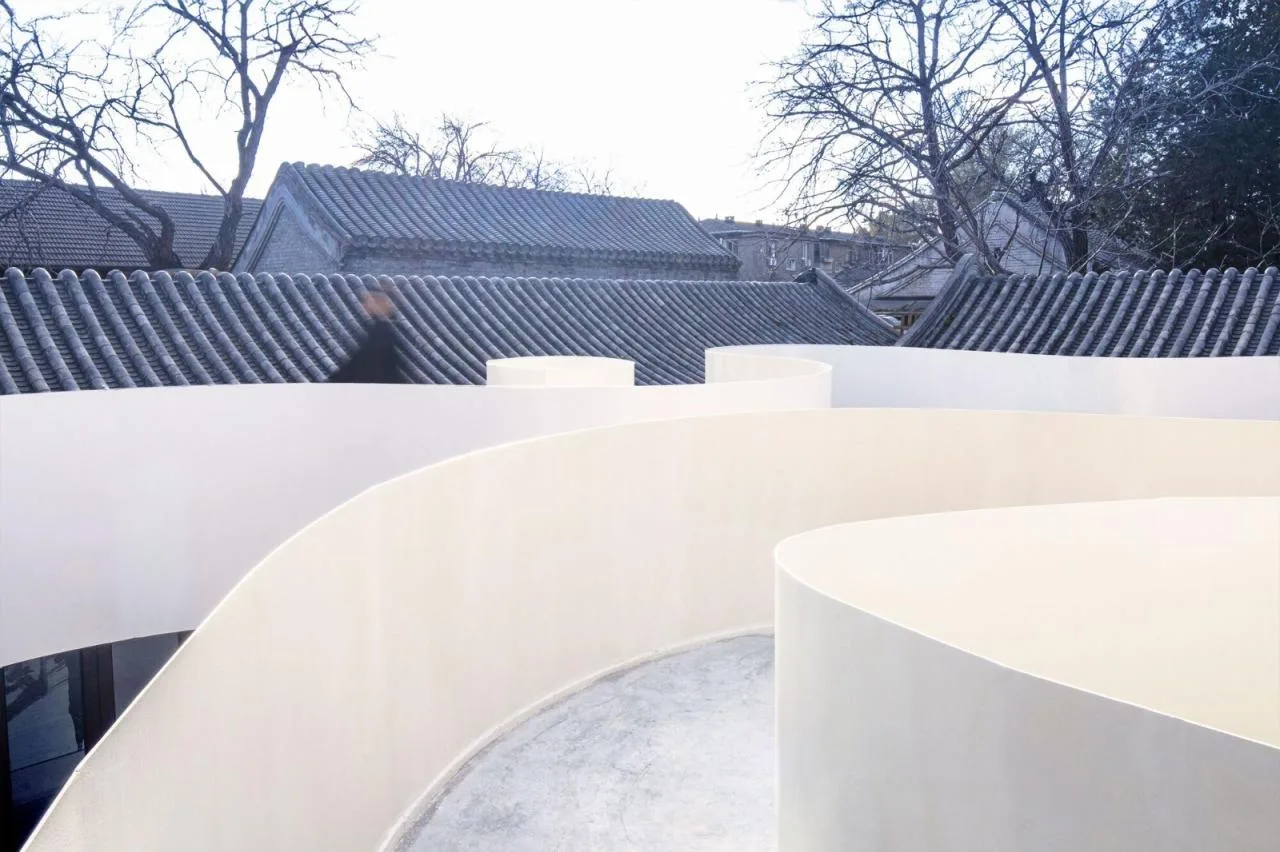
Project Drawings
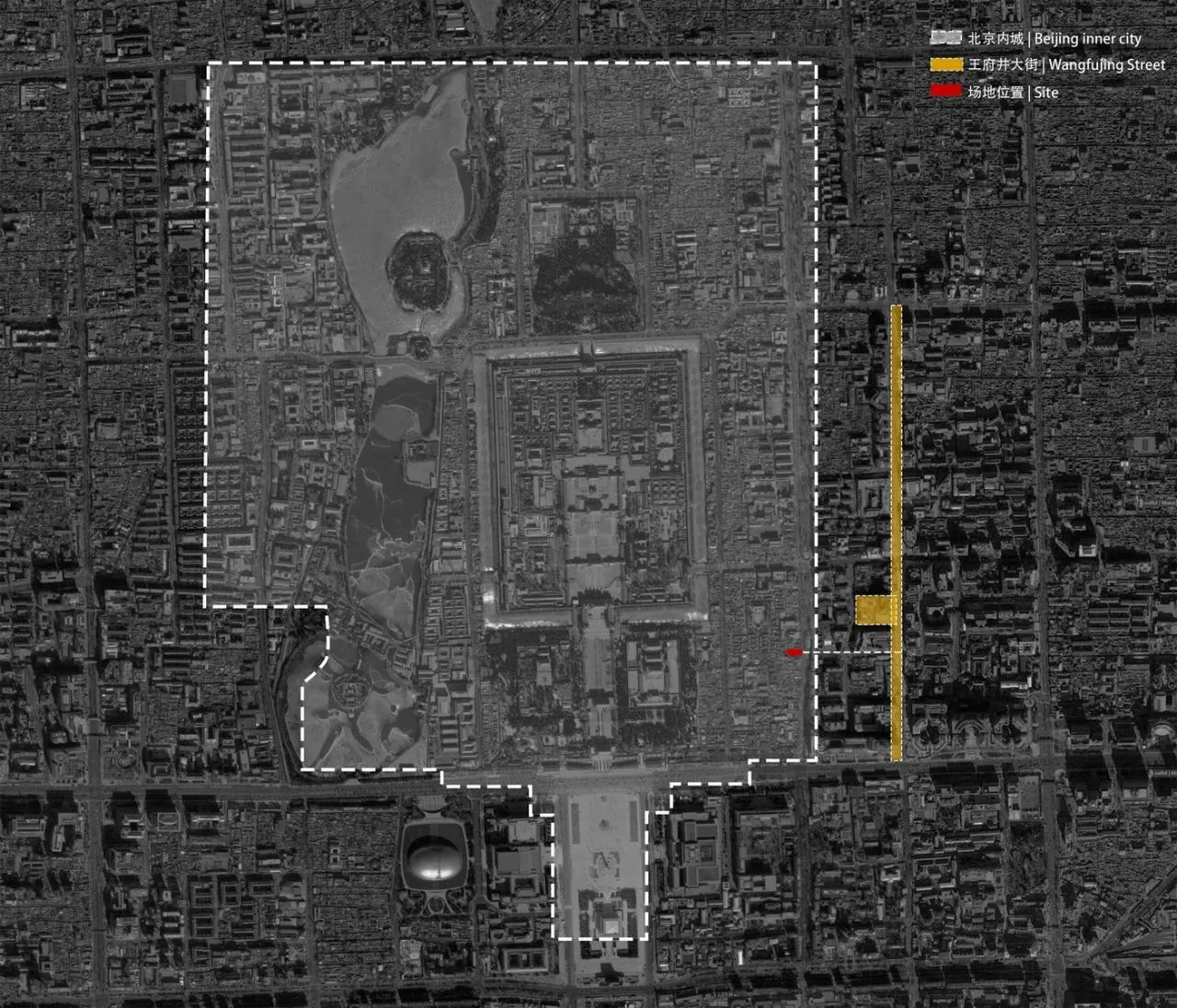
△ Base schematic diagram
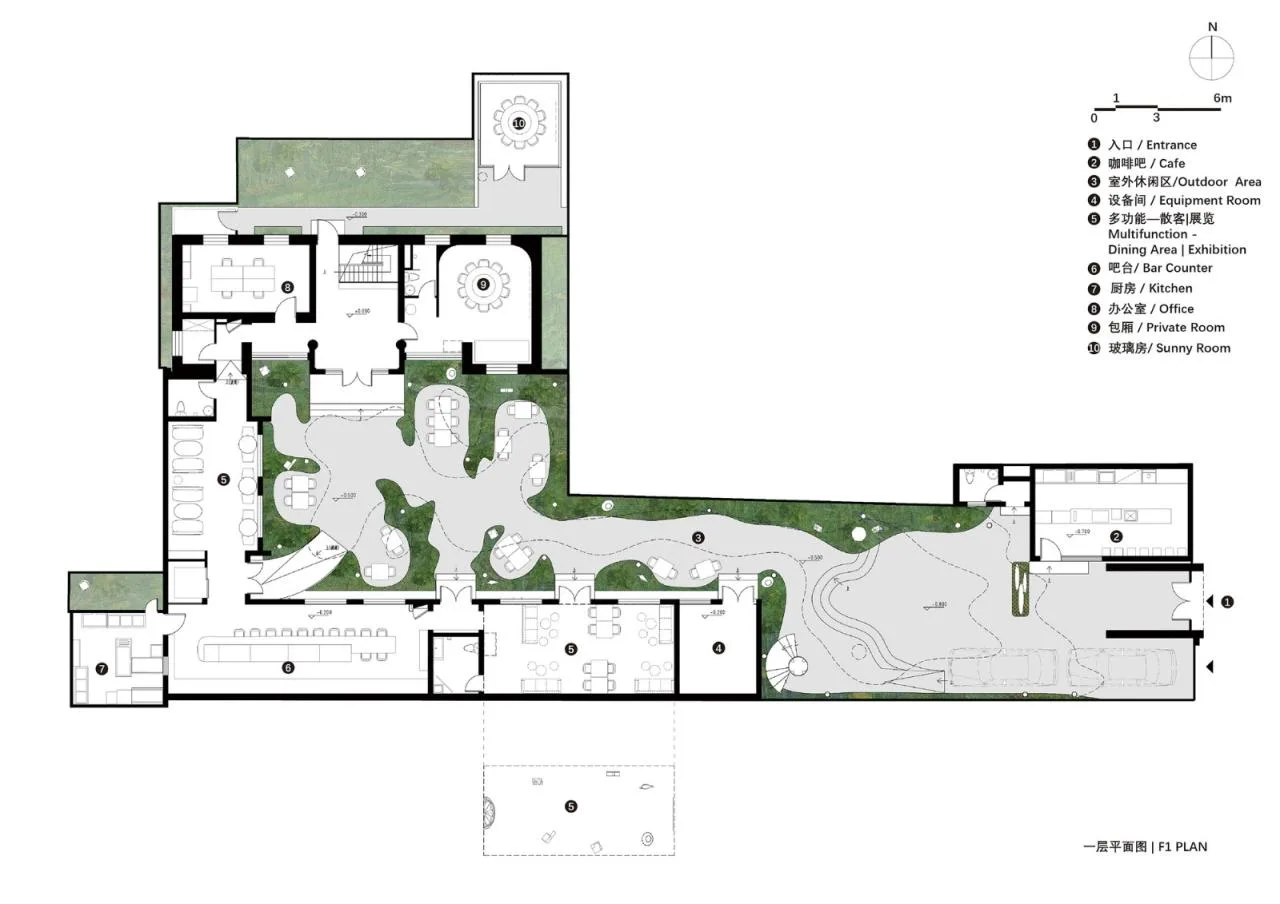
△ First floor plan
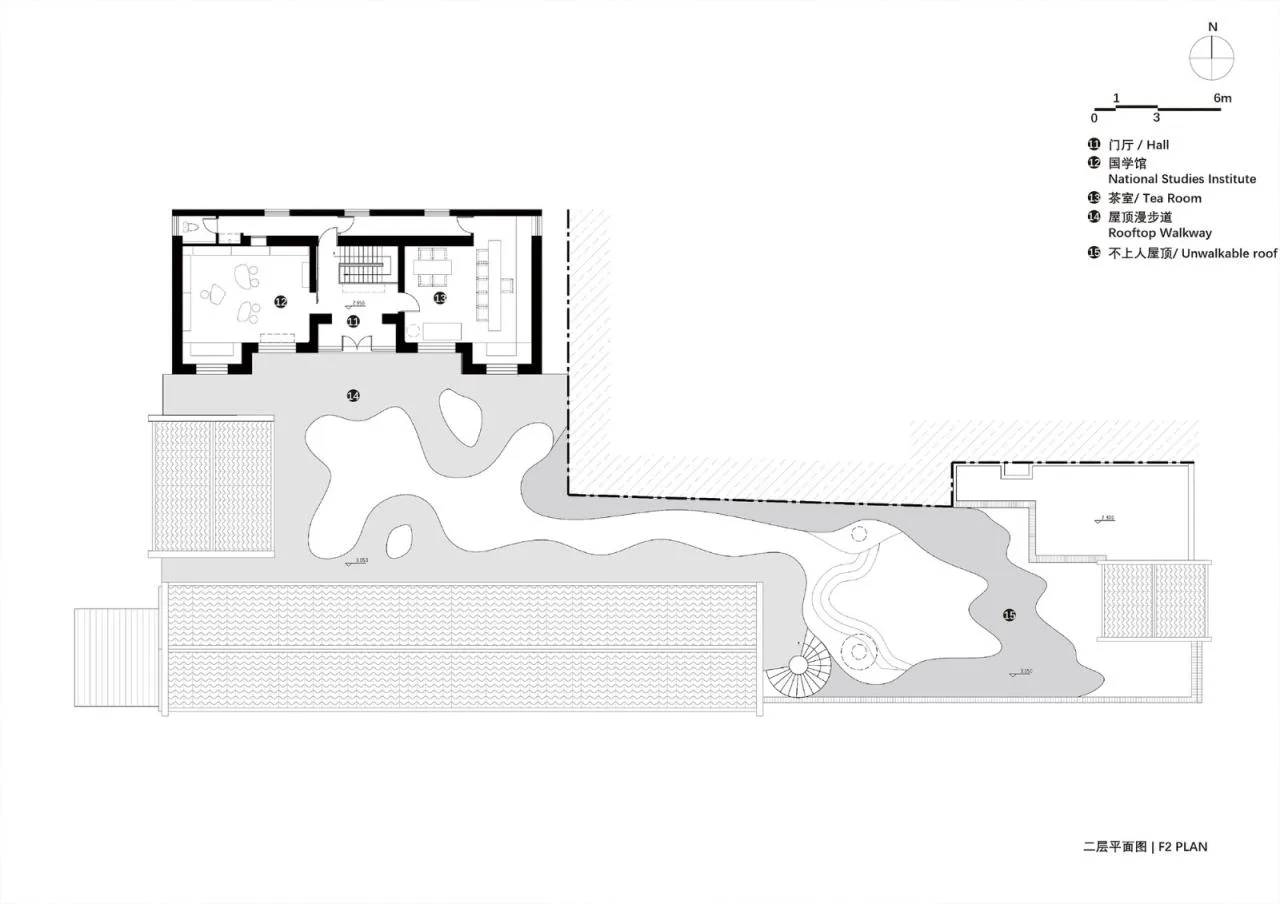
△ Second floor plan
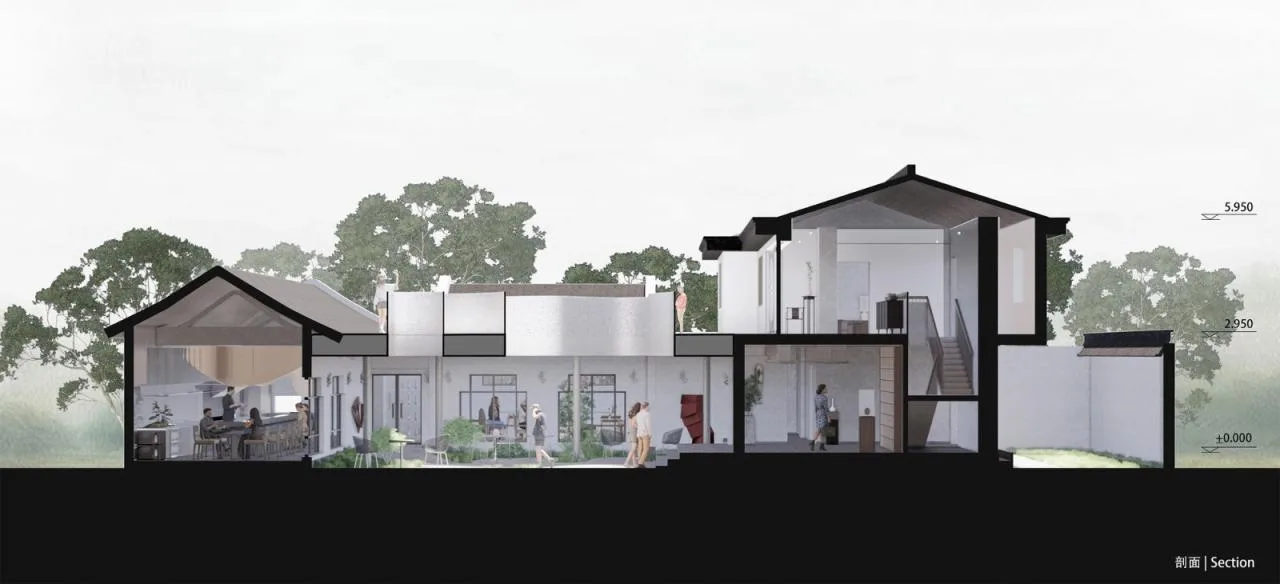
△ Section diagram
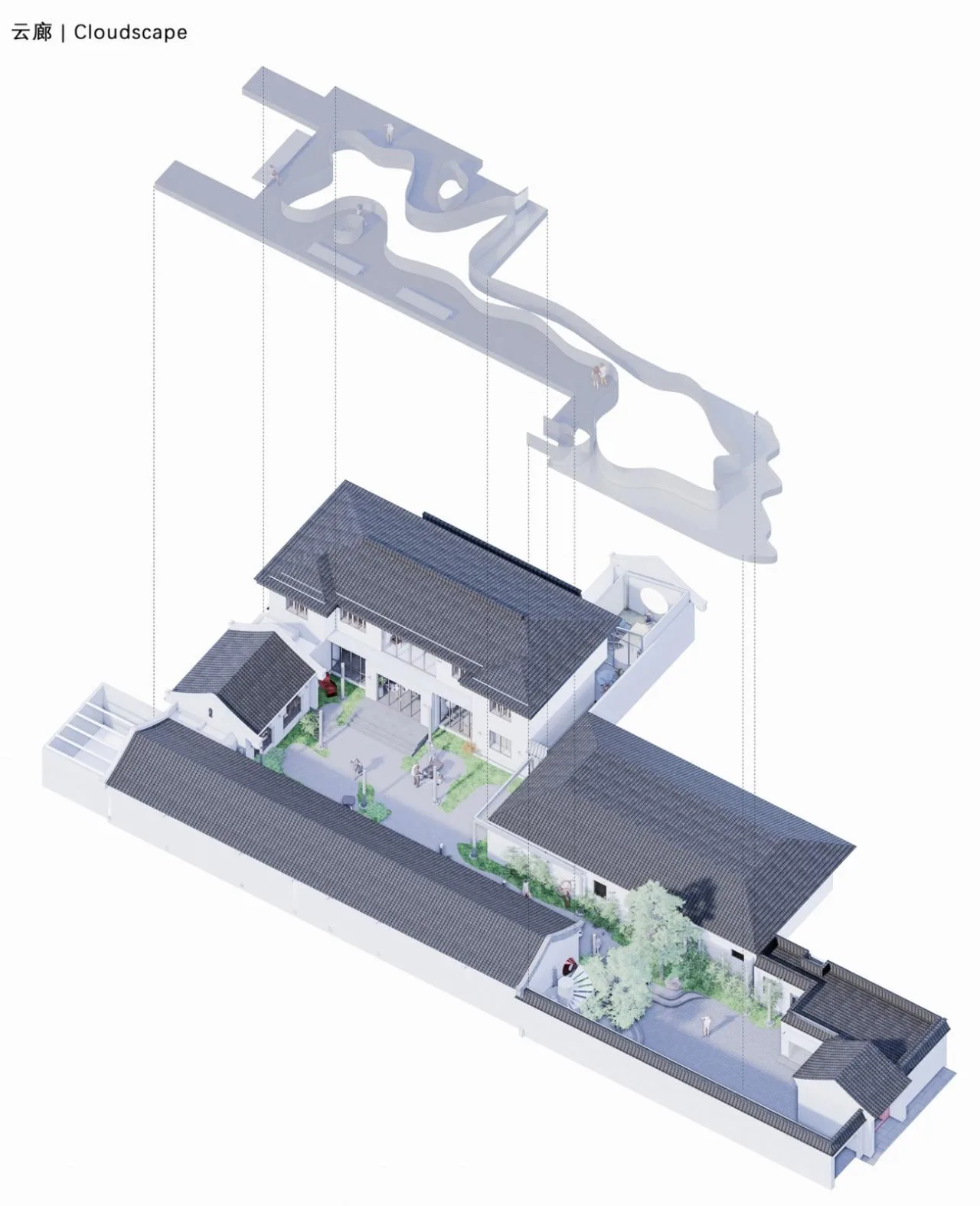
△ Cloud Corridor Diagram
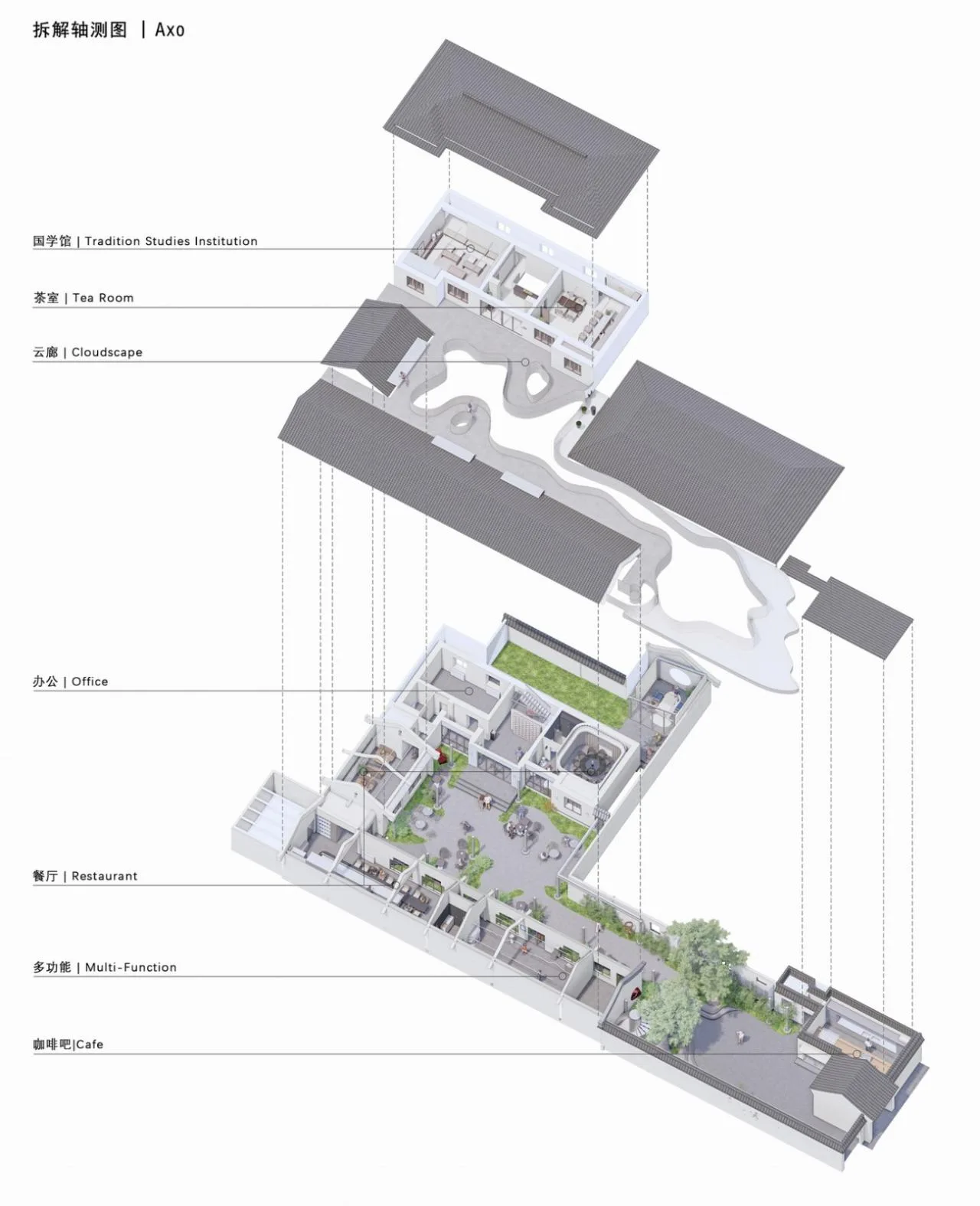
△ Explosion diagram
Project Information
Architect: Wei/WAY Studio
Area: 440 m²
Project Year: 2023
Photographers: Gao Yuan, Zeng Hao
Design Team: Zheng Tao, Fernie Lai, Zhang Zequn, Fang Wen, Wang Tianmo, Chen Yu
General Contractor: Beijing Helida Building Decoration Engineering Co., Ltd
Location: Beijing














Must log in before commenting!
Sign Up