
Many young professionals often wonder about the differences between CAD technology and BIM. Today, I would like to share my perspective on this topic, especially in the context of the growing trend of BIM adoption. Is my viewpoint accurate and reasonable? I welcome any feedback or guidance.
1. Information Expressiveness
Traditional CAD technology represents three-dimensional architectural elements—such as points, lines, and surfaces—using symbolic representations. When detailing specific architectural features, designers must draw these spaces separately and provide accompanying text explanations. This process can become labor-intensive and lacks sufficient expressiveness, especially for complex structural projects.
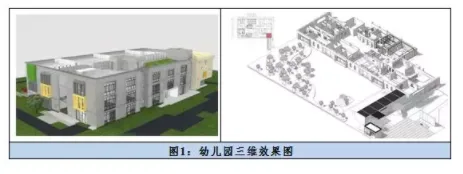
In contrast, BIM effectively addresses these limitations by enabling the creation of comprehensive 3D visualization models. These models offer a seamless 360-degree view of the entire project, allowing all stakeholders to clearly understand the building’s appearance. Details can be explored through interactive model manipulation such as rotation, scaling, and stretching, significantly enhancing clarity and understanding of the project’s overall concept.
Moreover, BIM incorporates parameterization, allowing data such as size, quantity, and cost of building components (e.g., doors and windows) to be embedded within the model. It also supports analysis of the project’s overall performance. This means that BIM models not only illustrate the design intent and details but also take into account future applications and sustainability considerations—capabilities that traditional CAD technology struggles to provide.
2. Collaboration Across Design Teams
Collaboration has traditionally been a major challenge with CAD models. Design teams often consist of members from different organizations, working independently with minimal communication. This lack of coordination can lead to frequent redesigns and increased workloads when issues arise.
BIM offers a powerful solution by establishing a collaborative platform that integrates data and information from various disciplines and project phases. This allows designers to share information freely and identify conflicts or issues within their own work at any time. Additionally, BIM facilitates tasks such as clash detection and design optimization, which help improve efficiency, reduce errors and omissions, and prevent conflicts caused by poor communication. As a result, BIM enhances design effectiveness and improves overall project quality.
3. Interconnectivity and Linkage
One of the significant drawbacks of CAD is the lack of linkage between different parts of the design. When changes are made, designers often must redraw multiple components individually, which is time-consuming and prone to errors. This results in frequent rework during construction and higher costs.
BIM excels in this area by offering dynamic interconnectivity. When a design modification occurs, only the affected parts need adjustment; related elements update automatically. For example, if the ceiling height changes, the positions of doors and windows will adjust accordingly. This capability greatly reduces repetitive work, improves accuracy, shortens the design cycle, and allows designers more time to focus on building performance and other critical considerations.
In summary, I have outlined some key differences between CAD technology and BIM based on my personal observations. My intention is not to compare or favor one over the other but to explain why BIM is increasingly becoming the preferred choice in the industry.














Must log in before commenting!
Sign Up