
Abstract: This article offers an in-depth introduction to the use of BIM technology in managing prefabricated steel structure engineering projects, illustrated through a specific project case. It highlights the benefits and value of integrating BIM technology with the EPC general contracting management model across phases such as component design, factory processing, and on-site construction.
Keywords: BIM technology; Information model; Prefabricated component; Prefabrication
1. Project Overview:
This project involves constructing a three-story prefabricated steel structure kindergarten, covering a total area of 5,354 m², with a building height of 12.2 m and designed to withstand a seismic intensity of 7 degrees. The primary structural system is a steel frame, while the floors utilize inverted T-shaped prestressed concrete composite slabs, reinforced concrete composite slabs, and cast-in-place slabs. The exterior walls are assembled using prefabricated panels attached to the steel structure, achieving a high assembly rate of 93%. As a finely decorated project, it faced challenges such as tight schedules, numerous complex node types, and difficulties in technical handover across multiple disciplines. The adoption of BIM technology significantly enhanced work efficiency and simplified on-site management.
Application of BIM in Project Management
2.1 Design Phase
2.1.1 Façade Design Analysis
The project’s exterior walls feature external cladding, with interior partitions constructed from ALC strip boards. The prefabricated building employs a non-plastering construction method, while the northwest corner is finished with light steel keel and aluminum buckle panels. Using the BIM 3D model, the building’s form is vividly presented in a three-dimensional, intuitive way—covering structural dimensions, material types, color schemes, and lighting effects. This provides valuable insights into the structural design’s rationality, the aesthetics of decorative elements, and layout feasibility. (Refer to 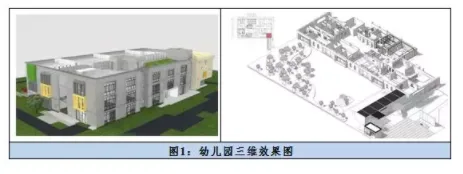 )
)
2.1.2 Integrated Decoration Clash Detection
BIM technology was effectively utilized to create precise models of each component, followed by collision detection to identify numerous conflicts—such as clashes between pipelines and structural elements, or among various pipelines themselves. BIM engineers categorized these issues and communicated them to the relevant design teams. Designers then developed targeted solutions, optimizing building structure, pipeline layouts, reserved openings, and construction sequences. This early-stage coordination reduced design changes, rework, and idle labor. (See 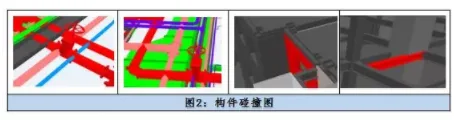 )
)
2.1.3 Node Sample Inspection
The project includes numerous prefabricated components such as steel beams, columns, cladding panels, and composite panels. The wide variety and complex node structures demand advanced construction techniques. Relying solely on 2D drawings presented significant challenges for on-site management. To address this, BIM QR code technology was introduced, with unique QR codes affixed to each component. On-site staff can scan these codes to access detailed information—including dimensions, weight, position, material properties, and installation instructions—directly from the BIM model via mobile devices. (See 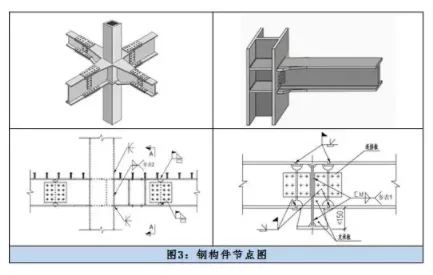 ) This approach ensures efficient construction, refined management, and enhanced visualization of building technologies.
2.2 Factory Production and Processing Stage
2.2.1 Detailed Design
Early in the project, a detailed drawing review meeting was held for prefabricated components, with various disciplines providing specific feedback. The factory leveraged BIM technology to optimize component modules, enabling precise production. This ensured high accuracy of prefabricated parts, improved on-site assembly speed and quality, and guaranteed the quality of component fabrication and node connections.
2.2.2 QR Code Encoding
BIM engineers generated unique QR codes for every prefabricated component. After factory processing, these codes were printed and affixed to components before dispatch. Upon leaving the factory, management staff scanned each code to verify component quality. The information was uploaded to a cloud platform, allowing real-time monitoring of component delivery, transportation, installation, and acceptance through the cloud-based project management system. (See 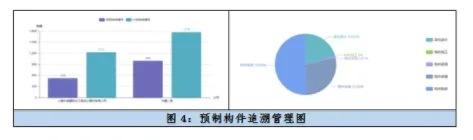 )
)
2.2.3 Component Production
The project features a large volume and diverse range of prefabricated components. Key technical processes during production include steel bar cutting for PC components, embedding of parts in composite and exterior panels, hole reservations, and bolt hole settings for steel structures. The factory applied BIM technology to deliver clear, multi-angle component information to production workers. This comprehensive visualization clarified complex part support methods, boosting factory processing efficiency and facilitating production management. (Refer to 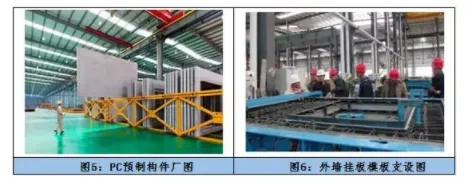 )
)
2.3 Construction Phase
2.3.1 Construction Site Layout
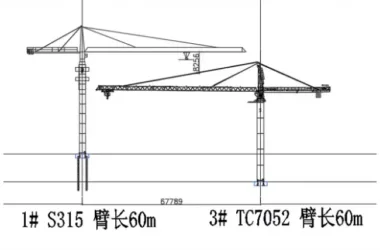
Organizing and dividing functional areas on the construction site is fundamental to project success. A well-planned site layout enhances construction efficiency and reduces costs. BIM technology’s 3D visualization significantly supports site planning and project management. This project used BIM combined with actual site conditions to arrange roads, material yards, processing rooms, and lifting equipment, ensuring compliance with construction standards. A 1:1 scale accurate BIM model was created to visualize the layout, clarifying relationships among personnel, machinery, materials, and environment. This allowed quick adjustment of unsuitable placements, resulting in an efficient and orderly site layout.
2.3.2 Component Arrival Verification and Hoisting
During construction, numerous components arrive daily, requiring careful acceptance and management. On-site personnel scan QR codes to retrieve detailed product information (see 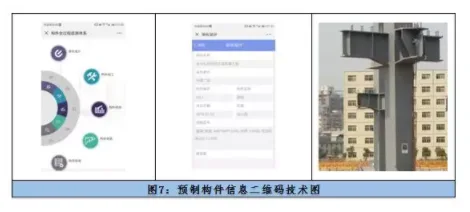 ). This enables quick verification of compliance with design and factory standards. Damaged or non-compliant components can be promptly replaced by notifying the factory with the component number. During hoisting, workers scan codes to instantly access weight, dimensions, installation locations, and assembly sequence. Integrating BIM technology into site management promotes efficient, orderly construction and better progress control.
2.3.3 Quality Management
Ensuring high-quality construction technology implementation is essential for building quality. To verify the rationality of construction arrangements and the application of new processes—such as prefabricated component installation and non-plastering exterior façade techniques—a dynamic simulation was performed via the BIM platform. Three-dimensional visualizations of critical construction details—including connections between exterior wall panels and floor slabs, binding of connection bars in composite panels, and methods for filling wall panel gaps—ensured accurate transmission of construction technology information. This prevented deviations between actual work and technical requirements caused by workers’ unfamiliarity with new methods, safeguarding overall construction quality.
3. Conclusion: The integration of BIM technology with the EPC general contracting management approach significantly enhanced project control across design, procurement, and construction stages. It enabled early detection of design conflicts, facilitated factory production management, optimized on-site layout, and improved coordination among disciplines and workflows—resulting in refined, comprehensive management of prefabricated building construction.
4. References:
He Guanpei. BIM Overview. Beijing: China Architecture & Building Press, 2011.
Analysis Report on BIM Application in China’s Construction Industry (2017). Beijing: China Architecture & Building Press, 2017.
Shi Guangxi. The application of BIM management concept in construction project management. Engineering Technology Research, 2017, (12): 148-149.
Yellow Strong. On BIM. Beijing: China Architecture & Building Press, 2016.
Author: Liao Xiaoming, Chen Gong, Li Yajun













Must log in before commenting!
Sign Up