
Anti-Collision Construction Plan for Group Tower Crane Operations
To meet the structural requirements of the building, four tower cranes must be installed on the construction site. This anti-collision plan has been developed to prevent collisions between tower crane components and other objects, ensuring the safe and efficient operation of all cranes.
Anti-Collision Construction Measures
Safety Collision Guidelines
1. When operating multiple tower cranes simultaneously, each crane operator must coordinate closely. Cranes should avoid lifting at the same time within overlapping boom areas. Lifting schedules should be arranged to maximize the use of available space without interference.
2. Signal personnel must strictly adhere to the “Ten No Lifting” rules:
– Do not lift if the load exceeds the crane’s rated capacity.
– Do not hoist if signals are unclear.
– No one is allowed to stand or pass under suspended loads.
– Do not suspend objects buried underground.
– Avoid diagonal pulling or dragging while objects are suspended.
– Loose items must be securely tied before lifting.
– Do not lift vertical components or large templates without clamps.
– Items without proper containment or packaging should not be hoisted.
– Do not lift loads when their weight is unknown.
3. Both crane operators and signal personnel must use walkie-talkies with a unified, frequency-locked channel. Users must not adjust frequencies and must use their own assigned devices, refraining from borrowing.
4. Signal workers and crane operators should be assigned permanently to their respective cranes and should not be replaced unless necessary.
5. During operations, signalers must continuously monitor the crane, hook, and boom rotation, while also observing the status of adjacent cranes and sounding safety alarms as needed.
6. When a tower crane is idle and there are no obstacles within its rotation radius, the hook should be raised to about 5 meters, and the trolley retracted approximately 10 meters from the tower body. The boom should be stopped facing downwind. Hanging heavy objects on the hook during downtime is strictly prohibited. Rotation of the boom in the wind should never be restricted without reliable measures.
7. In case of a sudden power outage or malfunction, manual adjustment of the boom orientation is necessary to avoid interfering with other cranes and reduce collision risk. If manual rotation devices are unavailable, the boom should be fixed in position, and surrounding cranes should maintain a safe distance.
8. A safety agreement must be signed between all cranes that have potential collision risks. This agreement outlines rules and responsibilities. Any party causing collisions due to negligence shall bear full responsibility and compensate for damages. If multiple parties are involved, losses will be resolved through joint consultation, fault identification, and proportionate compensation.
9. Crane operators must be physically fit, receive professional local training, pass relevant exams, and obtain official operation certificates before assuming their roles.
Collision Prevention for Horizontal Plane Movements
To avoid collisions between the lifting arms of low-level cranes and other objects, the crane layout is carefully planned considering site constraints and integrated decoration needs. Ensuring that the distance between cranes and surrounding structures is greater than the length of the crane arms prevents contact between any crane components and nearby objects.
Collision Prevention for Vertical Movements
Measures are in place to avoid interference between the lifting arms of low-level cranes and the hoisting cables of higher-level cranes. The four cranes are positioned to avoid overlapping work zones. Experienced signal personnel with qualified certifications must oversee lifting and lowering operations. Operations must cease when wind speeds reach level 6 (10.8-13.8 m/s). After each use or during downtimes, hooks are lifted to the highest position and trolleys are moved to the crane arm root, allowing the crane to rotate freely like a weather vane.
Operation Management for Tower Cranes
It is crucial to monitor the external environment closely during construction. Initial lifts must not exceed the height of nearby low-rise buildings. A turning limit zone should be established, with special attention to workers, vehicles, and nearby power or communication lines to prevent accidents.
1) Protective frames must maintain at least a 4-meter distance from high-voltage lines. Double-row steel pipe scaffolding is required below the lines, while bamboo scaffolding is used above. The height above the highest line must exceed 4 meters. Protective frames should be stable and wind-resistant.
2) Scaffold steps should be spaced 1.8 meters horizontally and vertically from upright poles. Steel pipe scaffolds must not exceed the lowest high-voltage line and must have adequate cross bracing and horizontal supports. Two to three floor braces should be installed on the south side, firmly anchored to the ground.
3) When scaffolding reaches the lower part of high-voltage lines, bamboo scaffolding should replace steel pipes.
In summary, tower crane construction environments are complex. Adhering to regulations, carefully considering site conditions, and planning lifting operations methodically are vital to ensuring safety, improving efficiency, and laying a solid foundation for the successful and high-quality completion of your project.
Principles for Tower Crane Construction
① Low Tower Supporting High Tower: Cranes in main positions or busy areas should be installed higher, with secondary cranes installed lower. Low-level cranes must monitor high-level crane operations and take action only after assessing the situation.
② Yielding to the Rear Tower: When cranes operate in overlapping areas, the crane entering the zone later must yield to the one already operating.
③ Moving Crane Yielding to Stationary Crane: In cross-operation zones, moving cranes must avoid stationary cranes occupying fixed positions.
④ Load Priority Principle: When two cranes work in overlapping zones, cranes without loads must yield to those lifting loads. Cranes handling lighter loads or smaller objects should avoid those lifting heavier or larger loads.
⑤ Yielding to the Main Crane in Guest Crane Areas: Cranes operating outside their designated zones must actively avoid interfering with main cranes.
Overall, the construction environment for tower cranes demands strict regulatory compliance, thorough site and environment assessment, and well-planned lifting operations to maintain safety and efficiency throughout your project’s duration.
Tower Crane Operation Management Measures
1. Crane operators must follow unified signals from signalers but have the right to reject commands if the boom exceeds safe limits.
2. During rotation, operators and signalers must maintain safe distances between their own crane booms and those of adjacent cranes to avoid collisions.
3. Operators must control rotation speed near limits to prevent abnormal situations.
4. Cranes starting rotation later must yield to those already rotating.
5. Operators and signalers should provide feedback and suggestions to management during initial operations after each lift.
6. Before sharing walkie-talkie frequencies between cranes, management must verify channels to prevent interference and notify all parties before frequency changes.
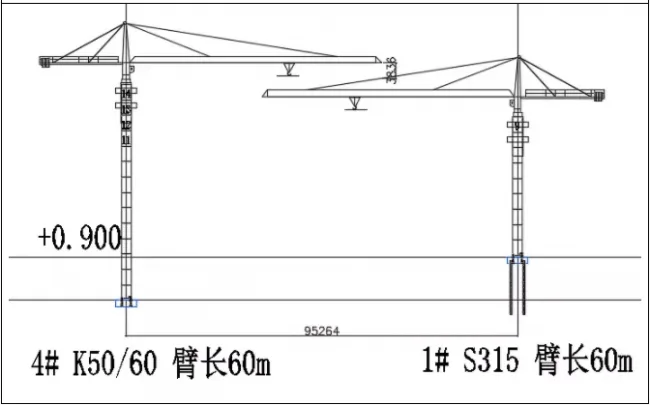
1# and 3# Facade Positions
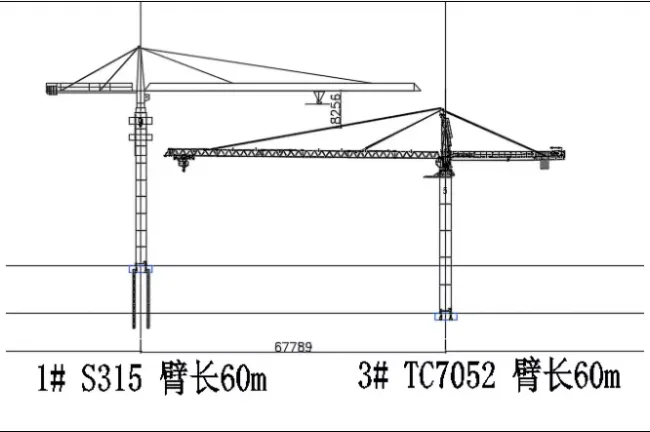 Anti-collision construction plan for prefabricated building tower group operation
2# and 3# Facade Positions
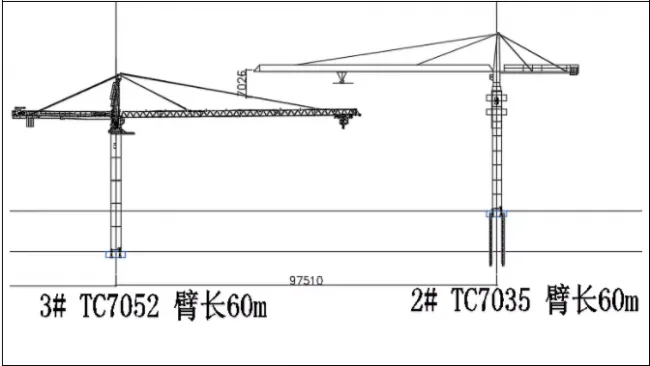 Anti-collision construction plan for prefabricated building tower group operation
2# and 4# Facade Positions
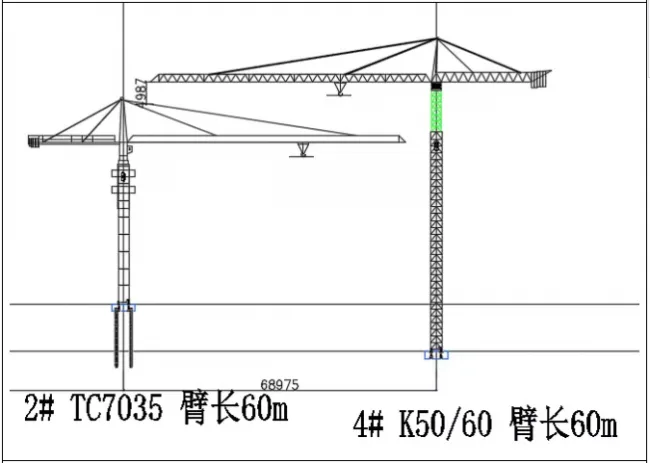 Anti-collision construction plan for prefabricated building tower group operation
3# and 4# Facade Positions
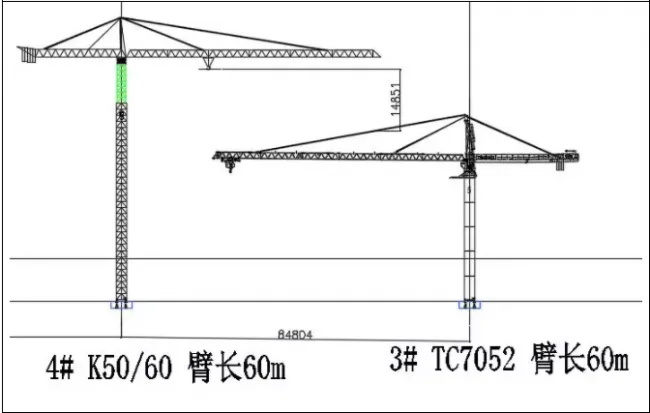 Anti-collision construction plan for prefabricated building tower group operation
1# and 4# Facade Positions













Must log in before commenting!
Sign Up