
Abstract: Industrialization in construction is an unstoppable trend in China’s construction industry. Currently, the benefits of industrialization are not fully leveraged, as most parts and components remain custom-made with limited compatibility and standardization. This results in a variety of interface types and poor interchangeability among components. This article selects representative interface types for research, aiming to lay the groundwork for interface standardization.
Keywords: Construction Industrialization; Building Components; Accessories; Connection Interface; Standardized Interface
Preface
For many years, China’s engineering construction has relied on traditional, resource-intensive methods, causing the construction industry to lag behind other sectors. International experience shows that the key to advancing construction lies in industrialization—transforming the industry into a fully integrated industrial production system.
To achieve this, buildings should be treated as standardized products to overcome challenges such as prefabrication difficulties, dispersed construction sites, and inefficiencies in industrial production organization. This requires a comprehensive approach covering building design, material production and supply, component fabrication, onsite construction and installation, and management, all applying new technologies to optimize technical and economic outcomes.
Currently, construction industrialization is an irreversible trend in China. The government has introduced various policies and technical standards to encourage industrialized construction. However, most building components remain custom-made rather than mass-produced, limiting their universality and interchangeability. Therefore, researching standardized interfaces is vital to transition from custom products to standardized ones, facilitating construction, installation, and maintenance.
From a systems perspective, an interface is a shared connection point where functions are transmitted between components. In prefabricated buildings, an interface refers to the shared boundary between independent systems, modules, or parts. A standardized interface features uniform size specifications, tolerance fits, and modular coordination, enabling the interchangeability and universality of components.
1. Interface Technology for Peripheral Protection
Peripheral protective components are difficult to replace. Ideally, they should match the main structure’s lifespan and offer durability along with functions such as windproofing, waterproofing, sound insulation, and thermal insulation. Research shows that concrete peripheral protective walls and glass curtain walls perform well. Due to the maturity of glass curtain wall technology and limited involvement of typical functional building spaces in this study, this research focuses on precast concrete exterior wall cladding.
*Supported by the 13th Five-Year Plan National Key R&D Program: Research on Industrial Building Components and Parts, Main Structures, Building Decoration, Modular Coordination of Equipment, and Standardized Interface Technology (2017YFC0703701)
(1) Interface between Exterior Wall Cladding and Main Structure
1. Current National Standard: “Prefabricated Concrete Exterior Wall Hanging Panels”
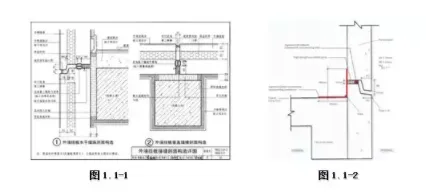
The insulation exterior wall panels use a waterproof and drainage system combining material and construction waterproofing. The cladding is separated from the main structure by a 30-50mm gap, sealed with fire-resistant materials, and elastic joint materials are applied at the top and bottom (see Figure 1.1-1).
2. Singapore – Exterior Wall Design (Without Insulation)
Here, the waterproof layer is applied on the inner side, and there is no gap between the exterior wall panel and main structure. The horizontal seam is raised to the skirting level, allowing internal repairs by removing the skirting (see Figure 1.2-2).
3. Summary
Singapore’s method eliminates the gap between exterior cladding and the main structure, demanding high precision in manufacturing and installation. In China, the 30-50mm gap accommodates deviations during production and installation, and meets fire prevention, waterproofing, and sound insulation requirements between floors.
(2) Interface between External Doors and Windows and Prefabricated Concrete Sandwich Insulation Wall Panels
1. Current National Standard: “Design Example of Prefabricated Concrete Structure Residential Buildings (Shear Wall)” 15J939-1
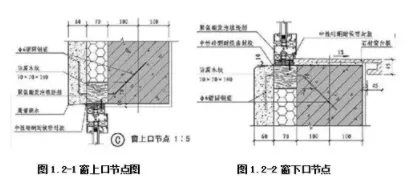
Windows are installed by fixing anti-corrosion wood at the insulation layer, connecting window frames to the exterior wall panels via this wood.
2. Engineering Case (1)
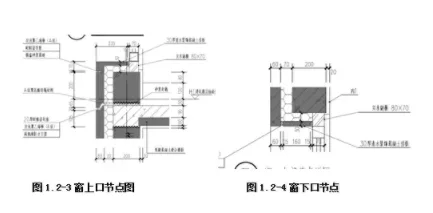
Windows are installed between inner and outer leaf panels with corner joints, wrapped in insulation, pressed tightly against the anti-corrosion wood at the window frame edge, and sealed with insulating mortar.
3. Engineering Case (2)
The outer panel is wrapped with insulation, and the window is installed on the outer panel (see Figure 1.2-5).
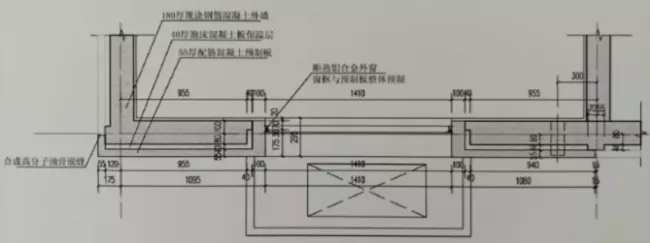
Figure 1.2-5: Detailed Drawing of Standard Nodes on the Exterior Wall Plan
4. Summary
In national standards, doors and windows are installed using anti-corrosion wood positioned at the insulation layer, which may raise waterproofing and stability concerns. Engineering Case (1) shows good stability with windows installed on the inner panel. Case (2) offers better waterproofing but creates a thermal bridge, making it more suitable for southern China.
2. Interior Partition Category Interface Technology
(1) Internal Partition Walls
This study focuses on lightweight strip partition walls, particularly autoclaved lightweight aerated concrete (ALC) strip walls, as light steel keel partitions are already mature and will not be further discussed. The focus is on the connection interface between the ALC strip partition wall and the main structure.
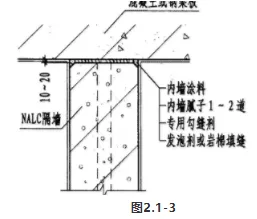
1. Interface construction between ALC boards and the main structure (quoted from “Detailed Drawing of Autoclaved Lightweight Aerated Concrete Board (NALC) Construction” 03SG715-1):
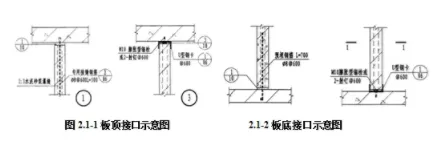
A 10-20mm gap is required between the top and bottom structural panels of the wall panel. Dry installation details for the top seam are shown in Figure 2.1-3.
2. Engineering Cases
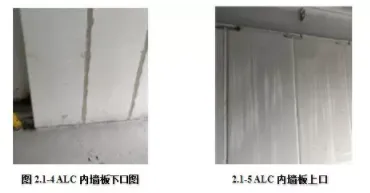
The top of the ALC strip wall is securely fixed by a slot, leaving a 20mm gap at the bottom for pouring fine stone concrete.
3. Summary
Research suggests a 20mm interface gap between internal partition panels and the main structure accommodates construction and installation tolerances. The partition boards are fixed with U-shaped steel clips using a wedge method, and the top joint is backfilled with elastic material to ensure wall stability, earthquake resistance, and prevent cracking.
(2) Integrated Storage Systems
Integrated storage consists of modular factory-produced components assembled onsite to meet storage needs. Functional storage types include entrance hall, living room, bedroom, dining room, kitchen, bathroom, balcony, and standalone storage.

In case (1), gap sizes between storage units and surrounding components vary up to 20mm, making cleaning difficult. Case (2) features smaller, glued gaps. Market research indicates storage systems are simpler but highly flexible, with disorder in variety and specifications. Hence, establishing a preferred size sequence based on modular coordination and strict tolerance control is necessary.
(3) Integrated Kitchens
1. Engineering Case (1)
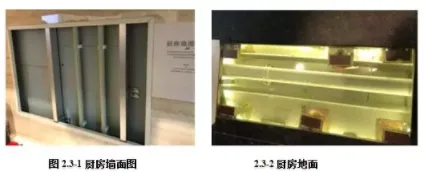
Dry construction methods are used for walls and floors. The interface gap between kitchen walls and surrounding supports ranges from 80 to 100mm (adjustable), and floor height varies between 50 and 100mm.
2. Engineering Case (2)
Wall panels are installed on surrounding components using aluminum embedded parts. The installation strips support the wall panel weight and serve decorative purposes. However, there are concerns about oil stains accumulating and cleaning challenges. This method requires the interface gap to be just a few millimeters.
3. Summary
The interface size between walls, ceilings, and floors of integrated kitchens and surrounding supports depends heavily on manufacturers’ construction techniques and kitchen pipeline layouts. Standardization of connection interfaces based on modular coordination, followed by pipeline joint standardization, is essential.
2.4 Integrated Bathrooms
1. Current National Standard: “Integrated Sanitary Ware” (GB/T13095-2008)
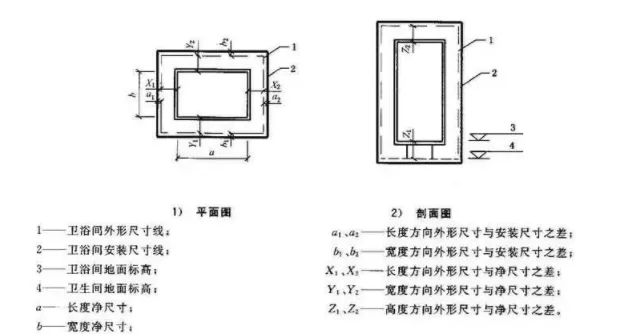
Figure 2.4-1
Horizontal dimensions: X1 + X2 = 80–100mm, Y1 + Y2 = 80–100mm;
Vertical dimension: Z1 + Z2 ≤ 500mm;
The permitted difference between installation and external dimensions (a1 + a2, b1 + b2) ranges from 20 to 40mm.
2. Ke Yi Integrated Bathroom
The minimum installation size exceeds the internal bathroom size by 150mm in both length and width directions.
3. Haier Integrated Bathroom
The minimum installation size differs from the internal size by 110 to 200mm in both directions.
4. Summary
Market research shows integrated bathrooms typically feature a six-sided raised design, with the elevated space size depending heavily on manufacturer processes, resulting in significant variation. Standardization of connection interfaces and pipeline joints based on modular coordination and preferred size ranges is necessary.
3. Conclusion
The study reveals that, due to the early development stage of prefabricated buildings in China, interfaces between building components are primarily determined by manufacturers based on their product features and construction processes. This has led to diverse connection interfaces. For example, window installation methods on enclosure walls differ significantly between northern and southern China, and interface dimensions for integrated kitchens and bathrooms vary widely.
The primary cause is the absence of modular coordination and guidance in product development, manufacturing, and installation by component and accessory producers. This results in random product development, lack of product coordination, poor compatibility, and limited universality, preventing standardization and serialization of connection interfaces.
Moving forward, modular coordination should be adopted as a guiding principle. Optimal dimensions and tolerances for building components must be considered alongside current technologies and market applications. Starting from interface dimensions, while accounting for performance and form, a standardized interface technology system should be developed to guide design and production, achieving universal compatibility and interchangeability of components.
References:
Yoshiya Uchida, General System for Building Industrialization. Shanghai: Shanghai Science and Technology Press, 1983.
Gao Weiqing et al., Analysis of the Integration of Industrialized Parts System. Reform and Strategy, 2008 (10): 175-177.
Chief Editor, Ministry of Housing and Urban-Rural Development of the People’s Republic of China, Technical Standard for Prefabricated Concrete Building. Beijing: China Architecture & Building Press, 2017.
Editor-in-Chief, China Building Standards Design and Research Institute, Prefabricated Concrete Exterior Wall Hanging Panel. Beijing: China Planning Press, 2008.
Authors: Li Wenbai, Congmin, Hu Wennan, Wang Miaowu Ming














Must log in before commenting!
Sign Up