
Residential buildings must balance aesthetic appeal with economic feasibility and local climate considerations. Traditional 2D models struggle to incorporate all these factors effectively. However, with the introduction of BIM technology, the practical value of buildings is greatly enhanced, leading to increased resident satisfaction. BIM also allows for comprehensive consideration of natural features such as terrain and landforms, as well as local customs and climatic conditions. Moreover, it can simulate traffic flow to separate pedestrians and vehicles, ensuring residents’ safety. Today, let’s explore the key benefits of BIM technology in residential building design.
Benefit 1: Simplifying 2D Components with 3D Models
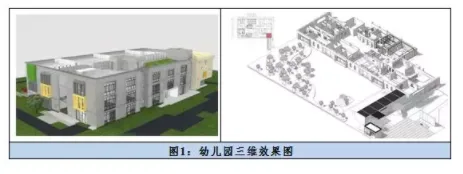
Traditional residential designs rely heavily on 2D drawings, which become cumbersome when dealing with complex and numerous building components. This has long been a challenge for designers. BIM technology enables the creation of detailed 3D visualization models through specialized software. Every building component—such as prefabricated stairs, beams, and exterior walls—can be modeled physically, with attributes like size and material standardized for better accuracy and quality.
Using BIM’s mapping capabilities, 2D drawings can be exported directly from the 3D model, allowing for simple supplementary processing. This approach supports the creation of vertical, horizontal, and sectional views, while preserving essential information to avoid errors and omissions, ultimately enhancing the overall design quality.
Benefit 2: Efficient and Reasonable Spatial Planning
Terrain analysis plays a vital role in residential building design. Traditional 2D drawings are limited in their ability to convey spatial relationships clearly, often leading to unforeseen problems during construction, which results in costly design changes and rework. BIM technology overcomes these limitations by enabling 3D visualization models that represent both geometric and non-geometric aspects of building spaces.
These models allow designers to quickly grasp spatial relationships and expedite spatial analysis. By assessing visibility and indoor sightlines, BIM aids in optimizing space usage and resource allocation. It also assists construction teams in better understanding the building layout, enhancing safety during construction. Additionally, BIM enables adjustments, such as modifying floor heights to accommodate large-span structures, without compromising the original design’s spatial intent.
Benefit 3: Enhanced Visualization of Interior Decoration
Traditional 2D layouts fall short in effectively communicating decorative designs. They rely on symbols and annotations, or separate rendering software to present final visualizations, which may lack accuracy and hinder effective communication. BIM technology allows for the creation of realistic 3D models that showcase different decorative styles clearly to all stakeholders.
Through BIM’s rendering, simulation, and walkthrough features, lighting, furniture, materials, sanitary fixtures, and equipment can be dynamically visualized, greatly improving the user experience. Designers can create adjustable decoration modules, enabling flexible changes to colors, styles, and combinations. Multiple design options can be presented to users, facilitating timely communication and resolution of issues.
Furthermore, BIM supports interactive sharing of data and material lists related to the design schemes, simplifying their use during construction.
In conclusion, the application of BIM technology in residential building design offers significant advantages. As BIM use continues to deepen and expand in China, it is becoming increasingly common in residential projects. We anticipate that BIM will play an even more important role in the future of residential construction worldwide.














Must log in before commenting!
Sign Up