
In our country, BIM enterprises started relatively late and have seen limited application. However, this has not hindered the promotion and development of BIM in China. Especially in recent years, many domestic companies have eagerly adopted BIM technology, transitioning from broad industry exploration to individual experimentation—a trend that continues to flourish. Today, I want to discuss the value of BIM applications.
Value 1: Breaking Down Information Barriers
In traditional construction projects, each discipline, unit, and team typically works independently. Communication usually occurs only during handovers or at necessary stages, which often causes delays and disrupts the smooth progress of the entire project. With the introduction of BIM, all professional and comprehensive project data can be integrated into a single BIM-based platform. This creates a unified engineering data source that ensures consistency and accuracy of information among all parties involved, enabling seamless data exchange and sharing.
BIM fundamentally solves communication obstacles between project participants by eliminating information silos and enhancing interaction across all stages. It effectively addresses information gaps and the absence of coordination among different links in the project chain.
By applying BIM, construction projects achieve comprehensive digitization and informatization. Combined with emerging technologies such as “Internet+,” BIM’s application scope and information exchange capabilities expand further. This advancement promotes improvements in engineering performance, quality, safety, energy consumption, environmental impact, and the development of smart cities throughout all project phases.
Value 2: Enabling 3D Design
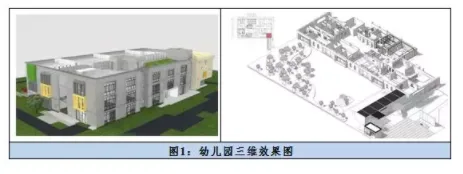
Traditional design methods often lack necessary connections and information exchange before implementation. BIM changes this by allowing automatic generation of drawings and documents based on 3D visualization models. The data embedded within the model remains logically linked to the model components. This means that when design changes occur, designers do not have to redo everything. Instead, they only modify the affected components, while related elements, layers, and interfaces automatically update based on logical relationships, greatly enhancing work efficiency and accuracy.
Furthermore, BIM facilitates the creation of a collaborative work platform where various disciplines can share data seamlessly without repeated input. This reduces redundant work, ambiguity, and errors. As a result, designers can allocate more resources to complex tasks, ultimately improving the quality and efficiency of the project.














Must log in before commenting!
Sign Up