
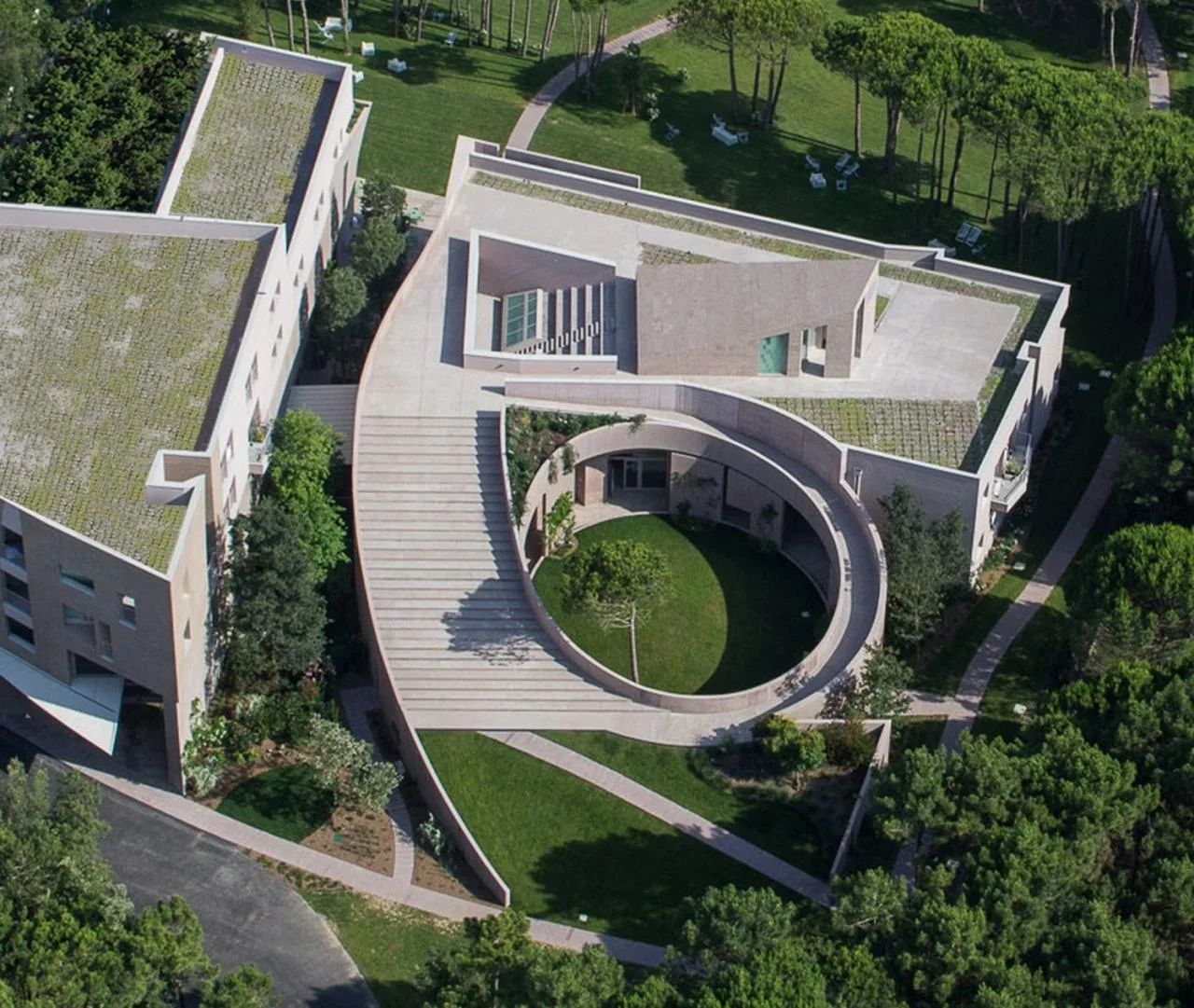
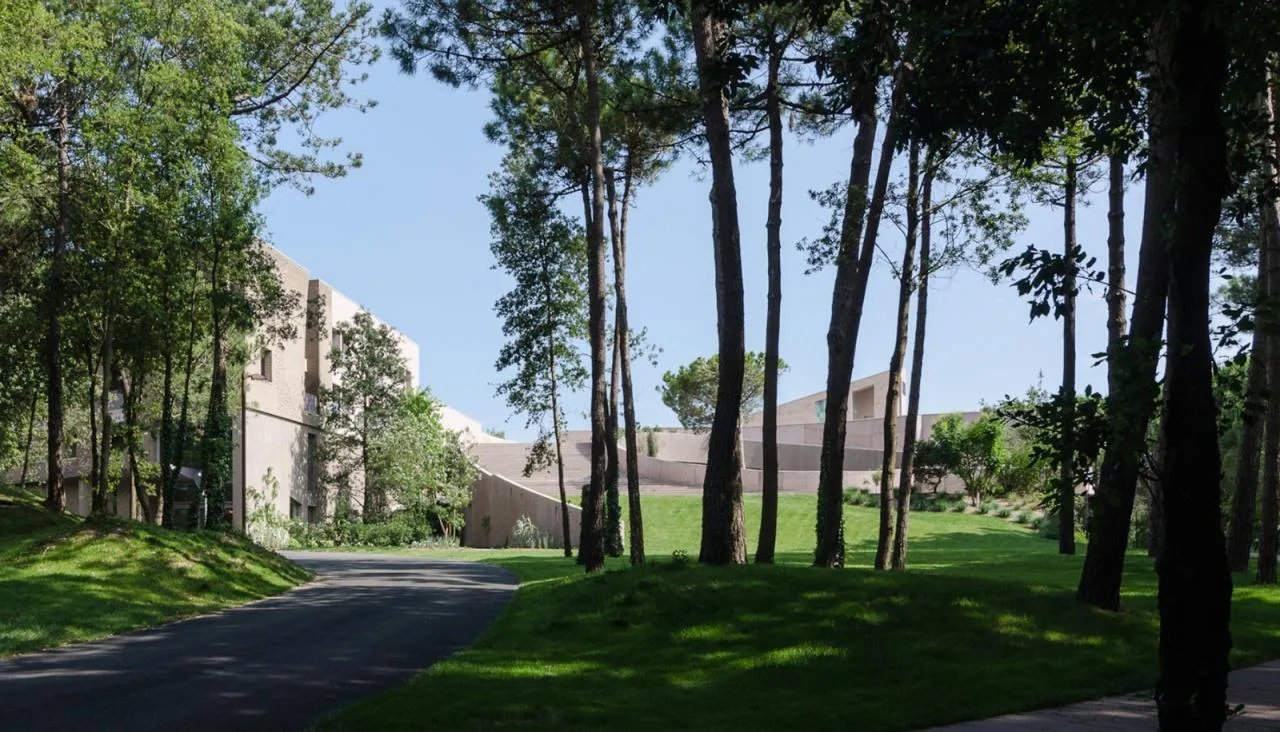
StellaMaris is an underground design intervention that creates a meditation space within small churches and corridors, tailored for disabled guests and their families. Nestled in a stunning natural setting, the project is surrounded by a vast pine forest overlooking the Adriatic Sea. The earth gently rises, breaking free from the pine forest’s shadow, forming a plateau level with the pine tree canopy, and suddenly revealing the expansive sea beyond.
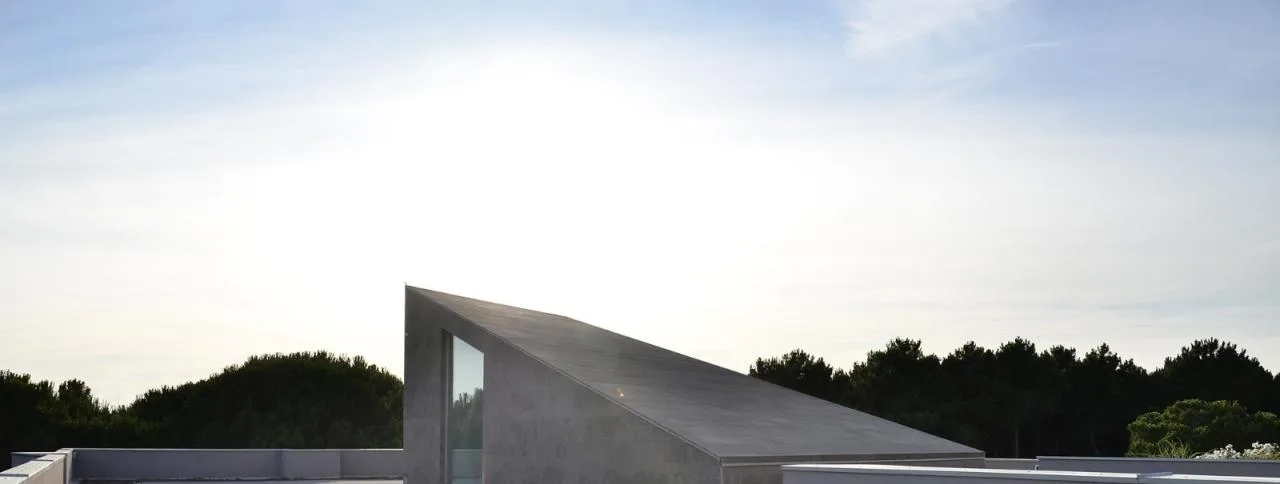
A large sand dune reshapes the open garden space, connecting it seamlessly with the architectural volume below. This natural formation initiates a process of excavation and refinement, where ascending visitors experience a sense of void—a sudden pause that invites contemplation but cannot be entered. The corridors enveloping this sacred area are accessible only from the chapel and remain nearly invisible from the outside.
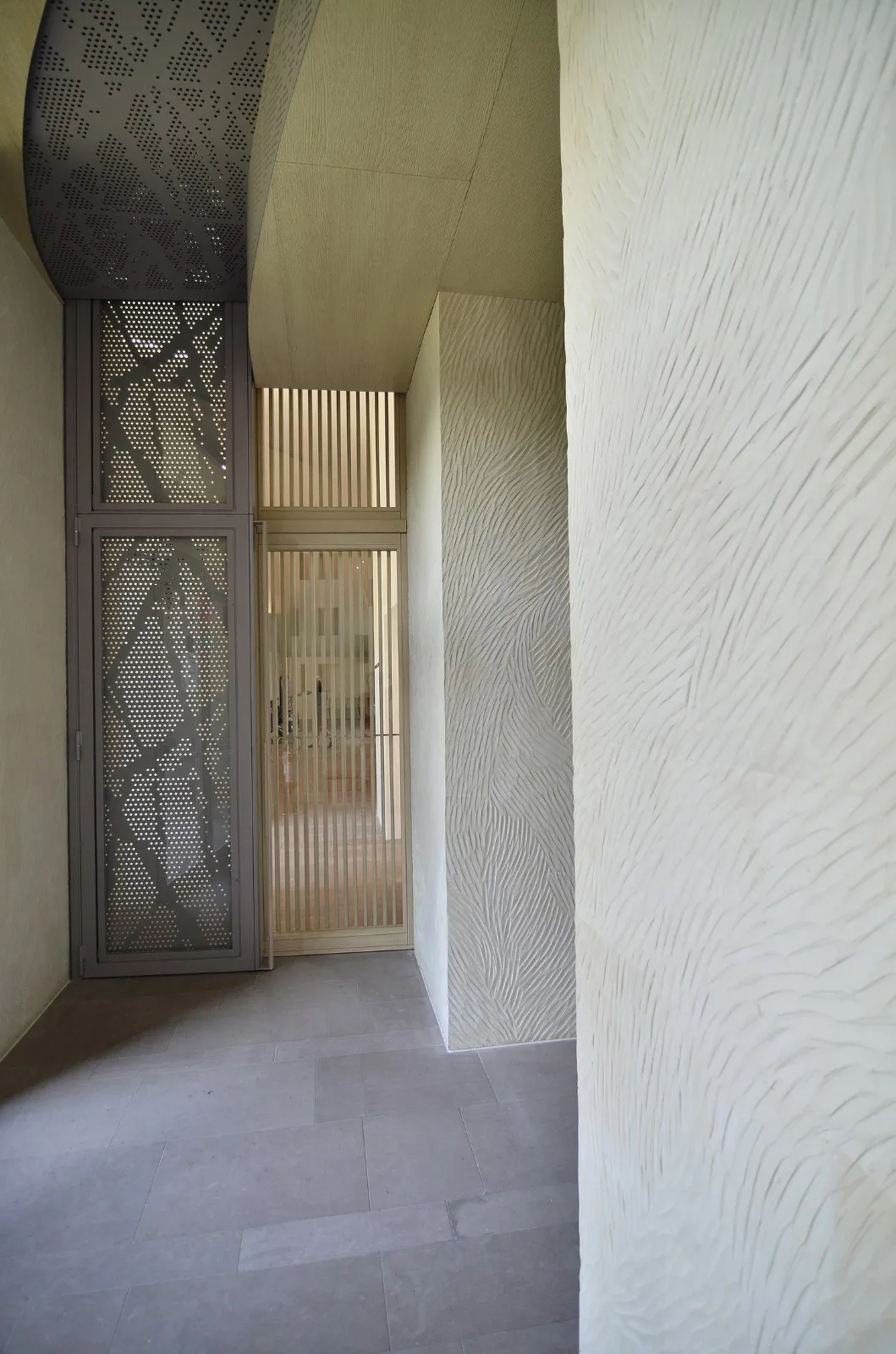
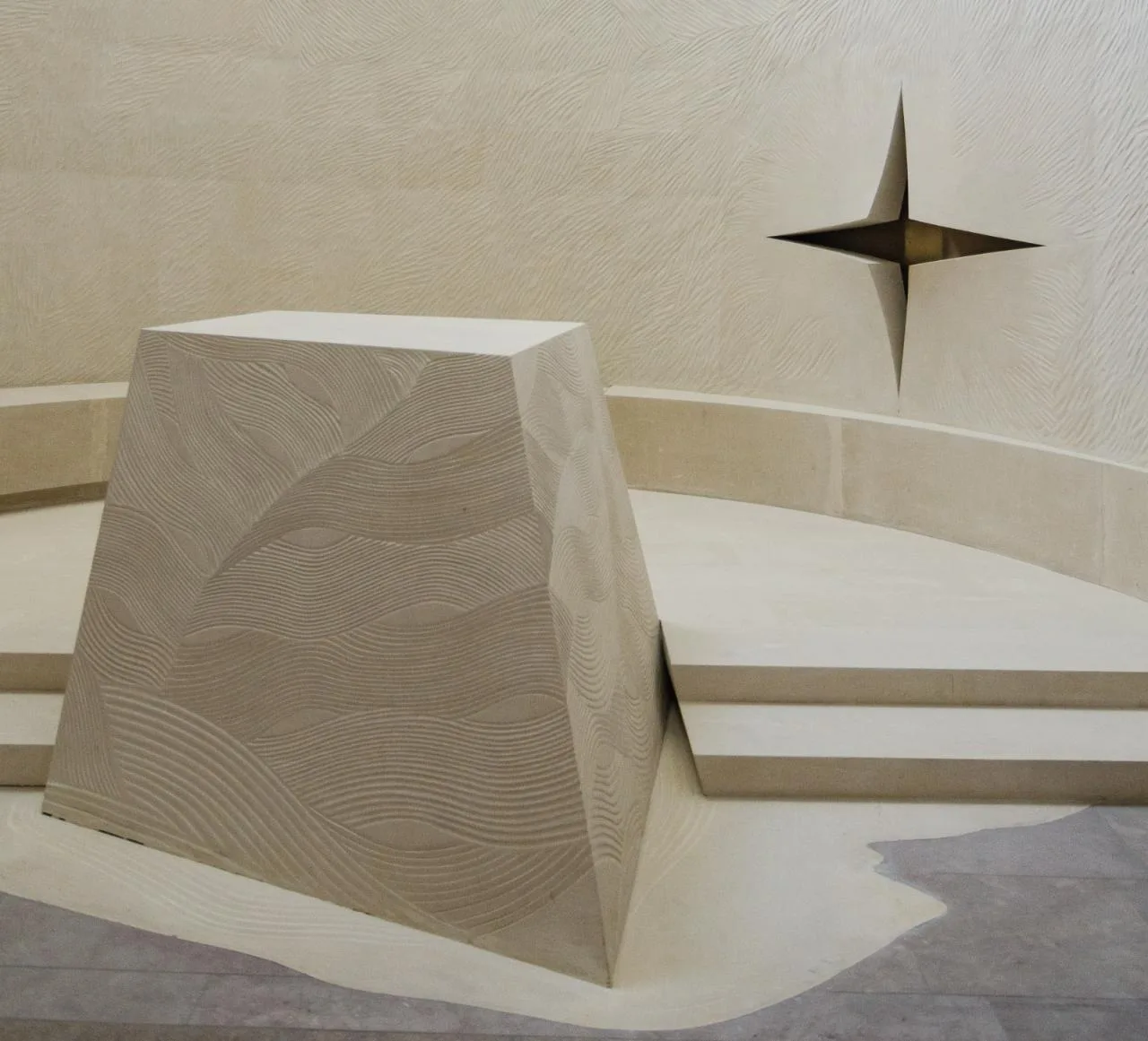
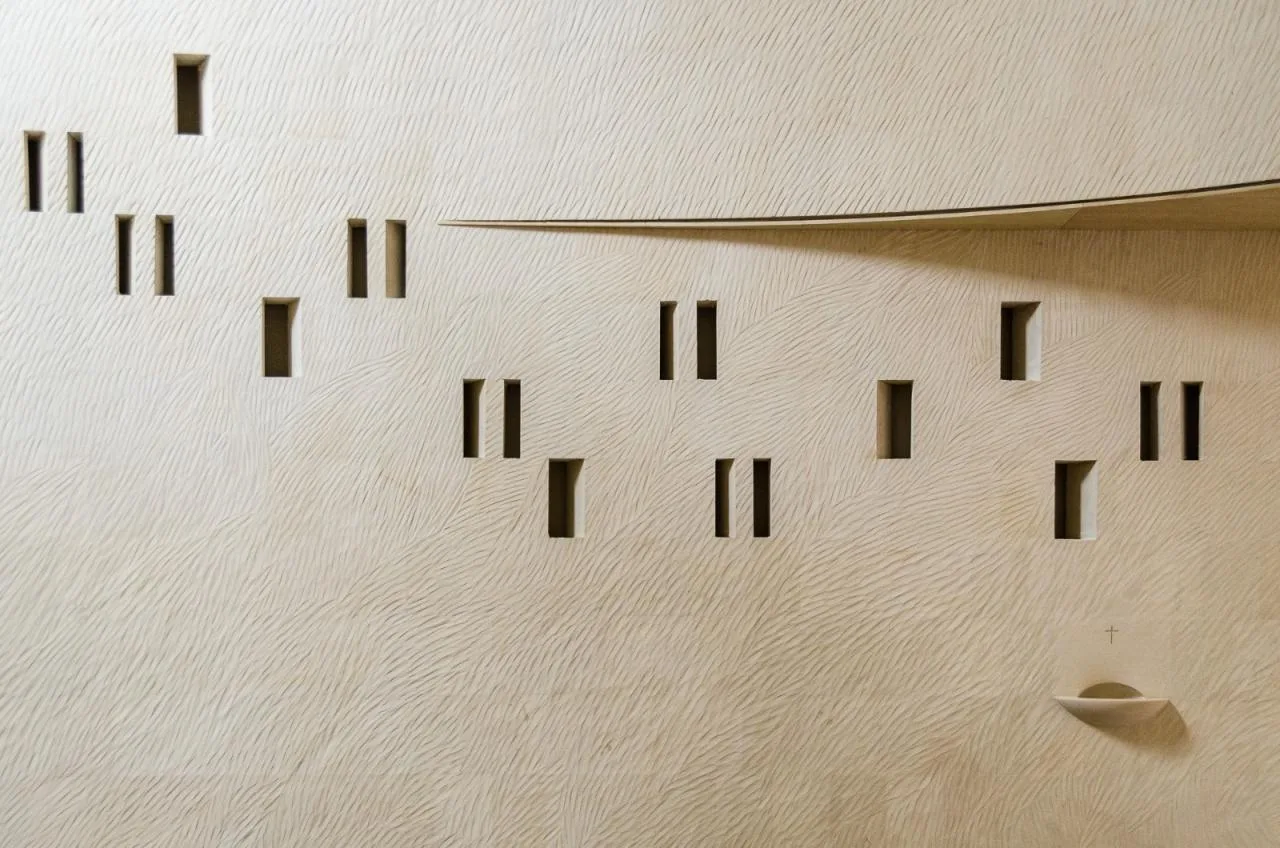
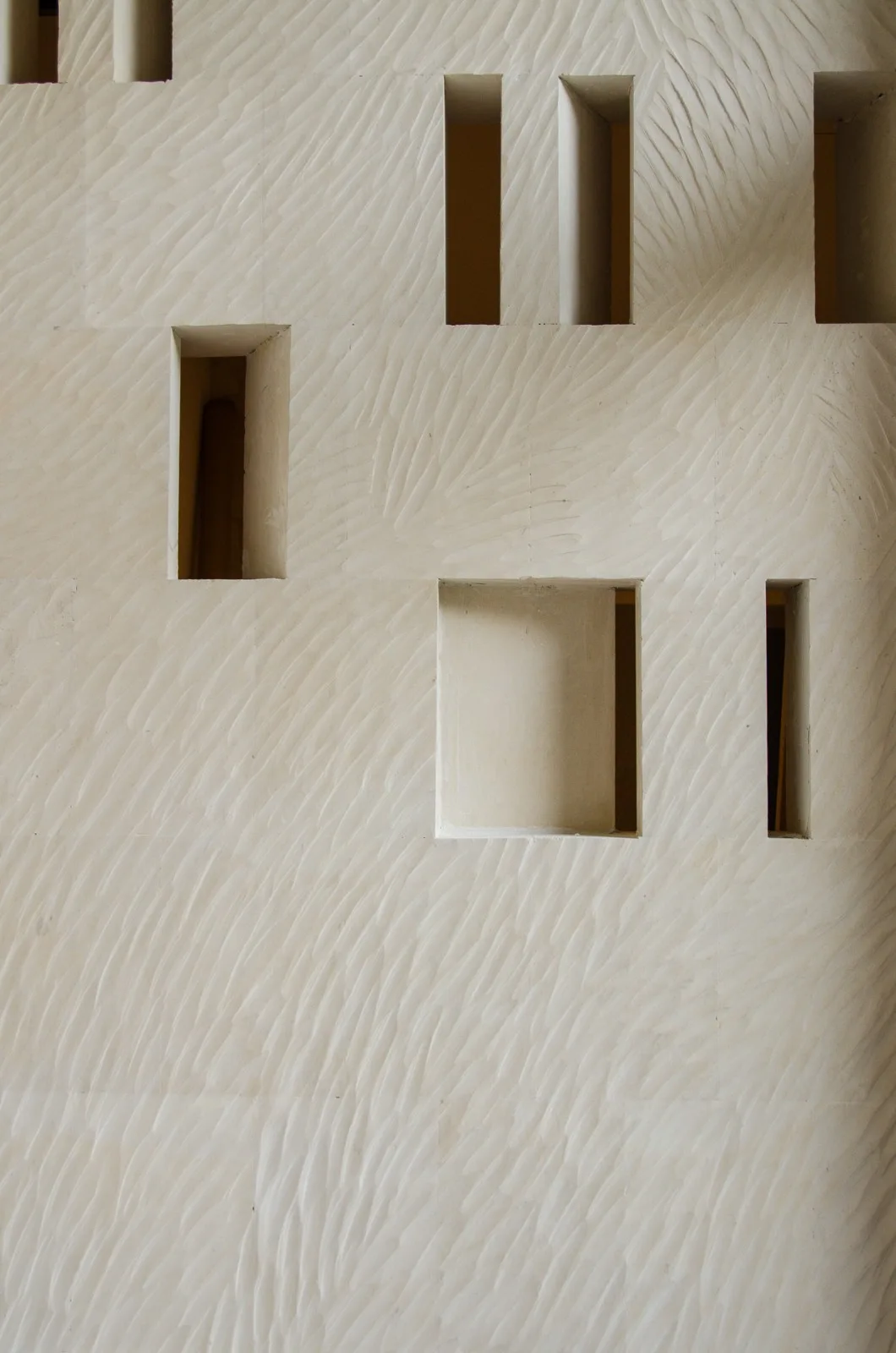
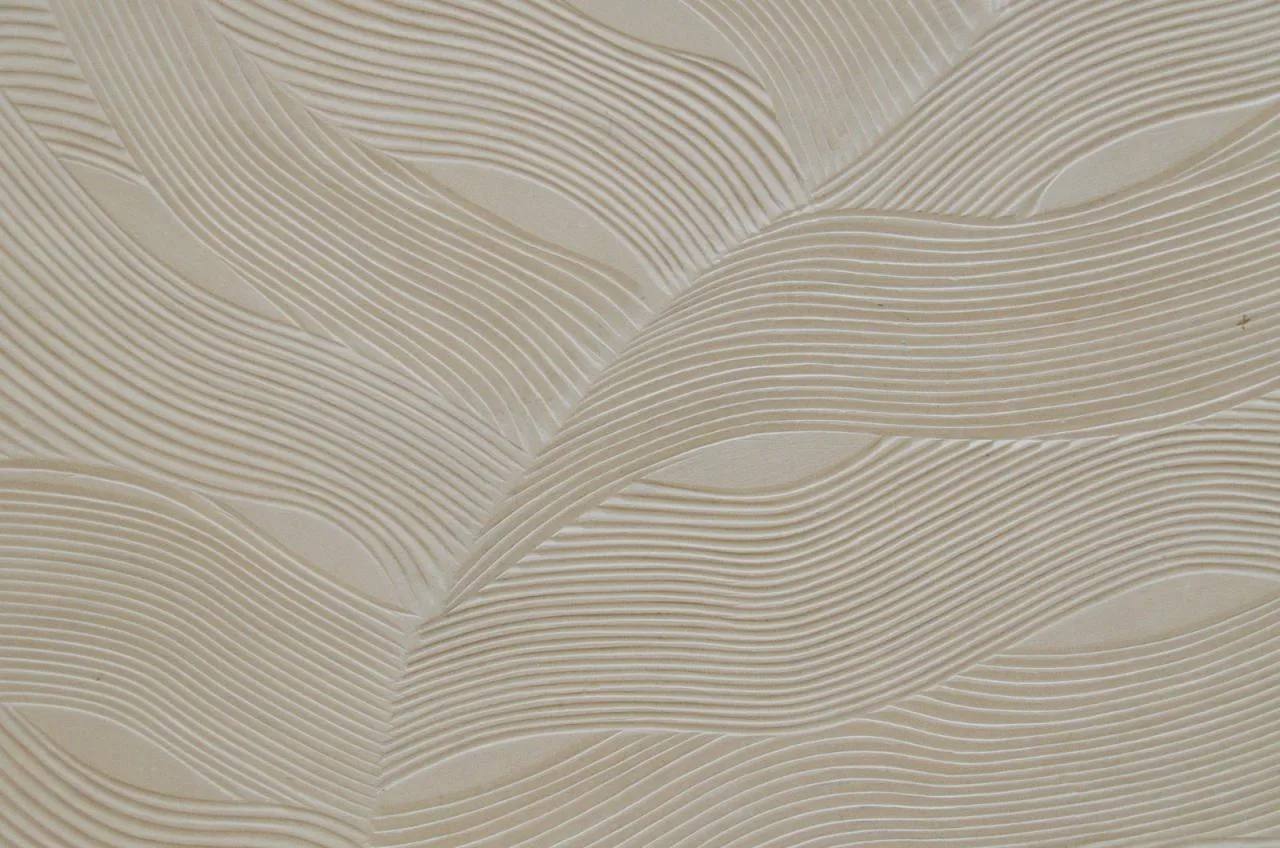
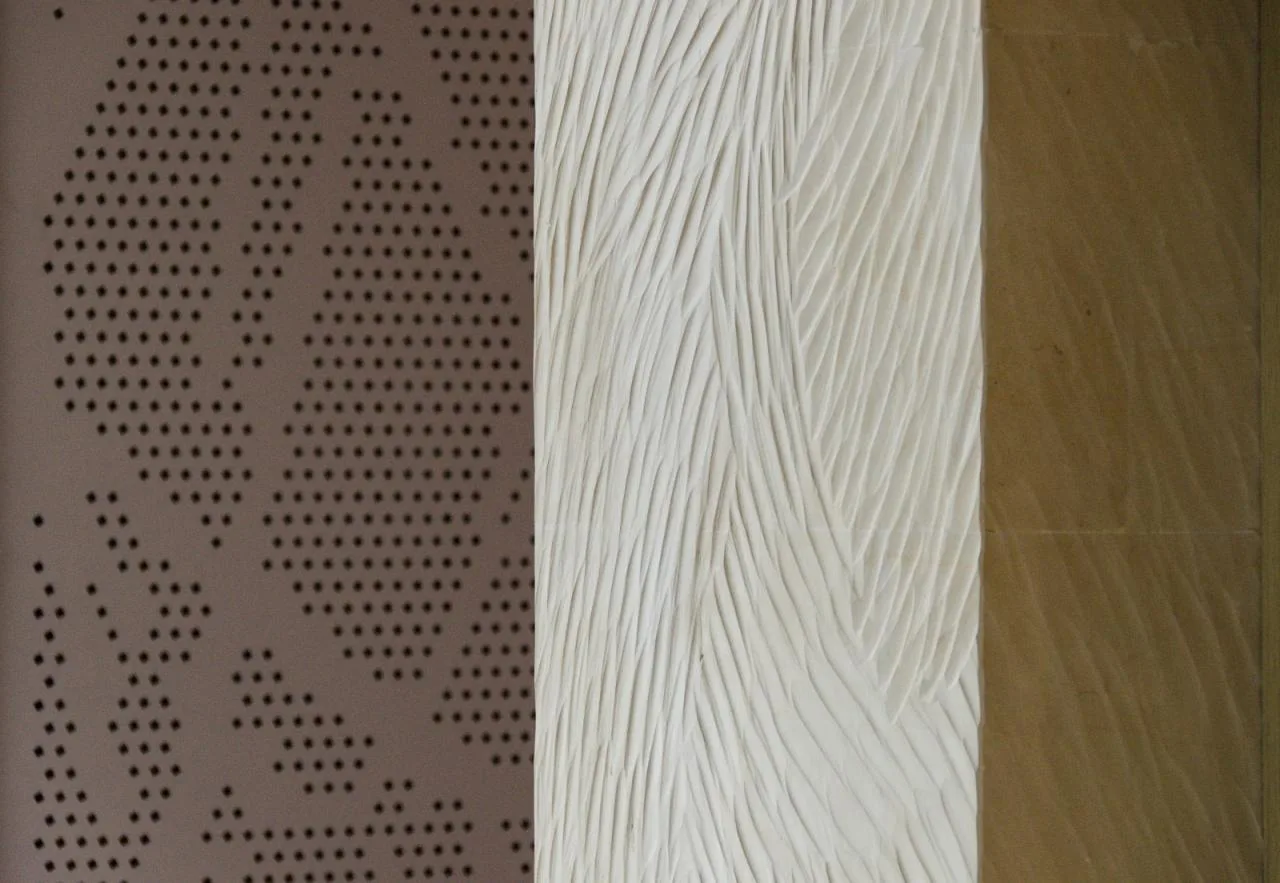
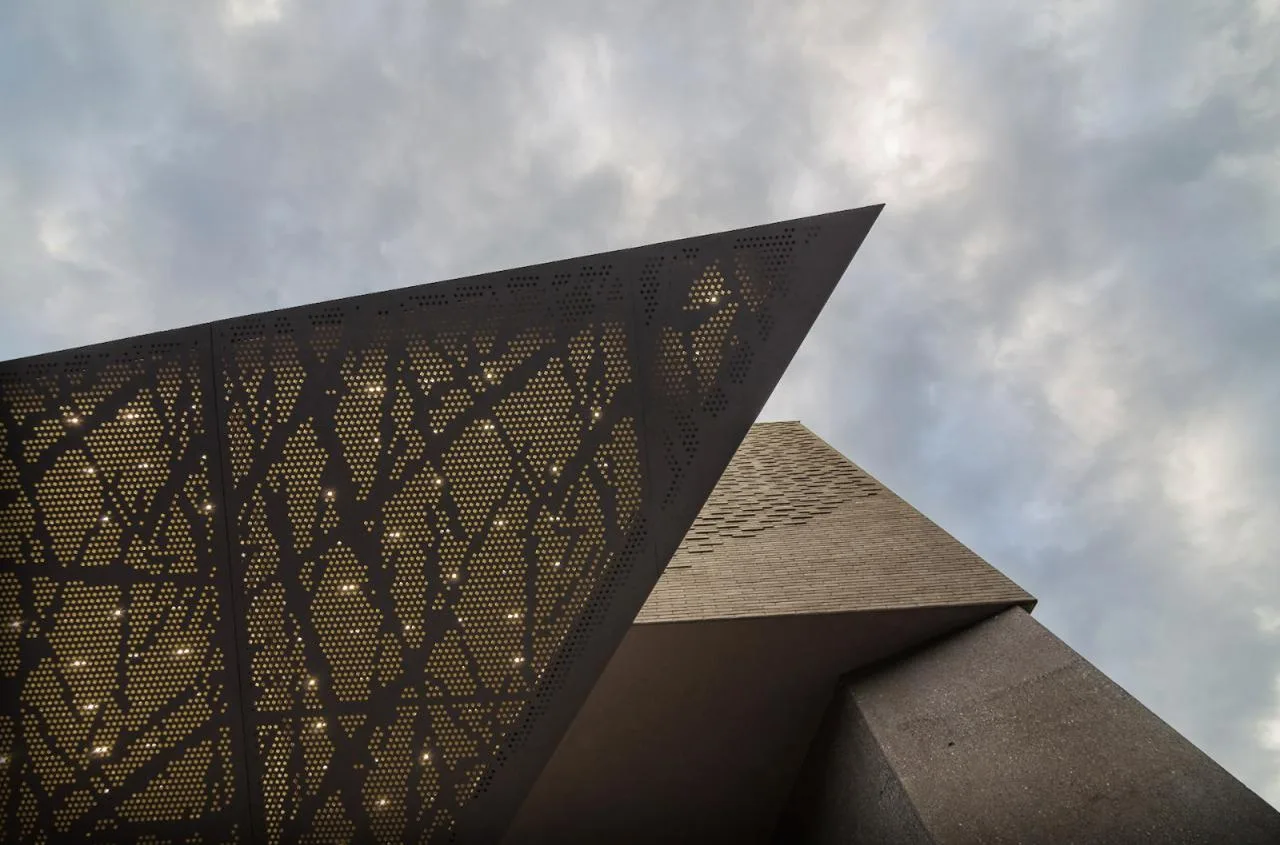
This underground cathedral is constructed from stone, featuring a surface treated with special milling techniques that erase visible joints, giving the impression that it was carved from massive monoliths. Natural light filters in through a single slit facing east, welcoming the morning sun.
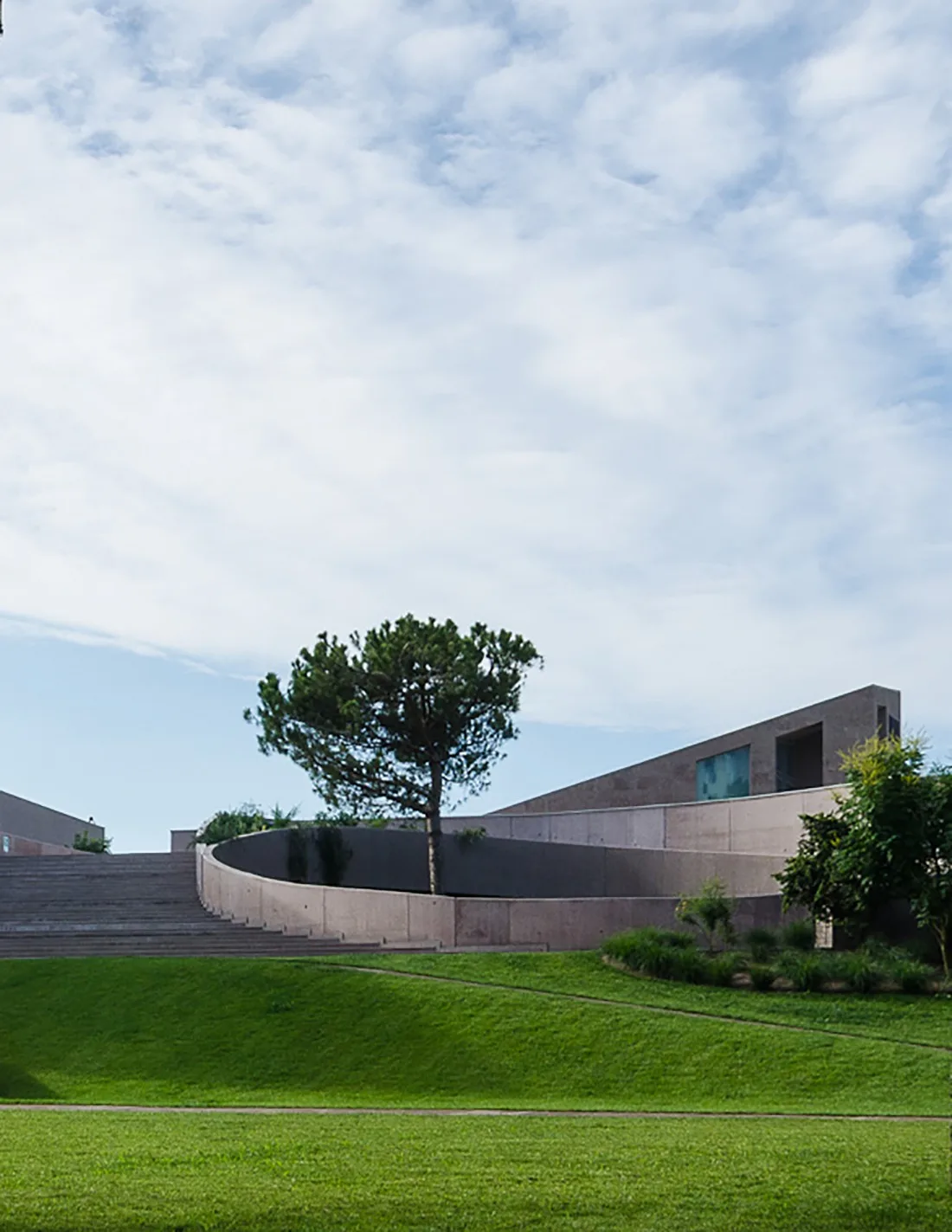
The corridors surrounding this sacred space are accessible only through the chapel, maintaining an almost imperceptible presence from the outside. Inside, movable walls are intentionally limited in width but not in height. These walls allow the small church to expand by merging the conference area with the main hall, transforming the meditation space into a significant ceremonial venue when needed.
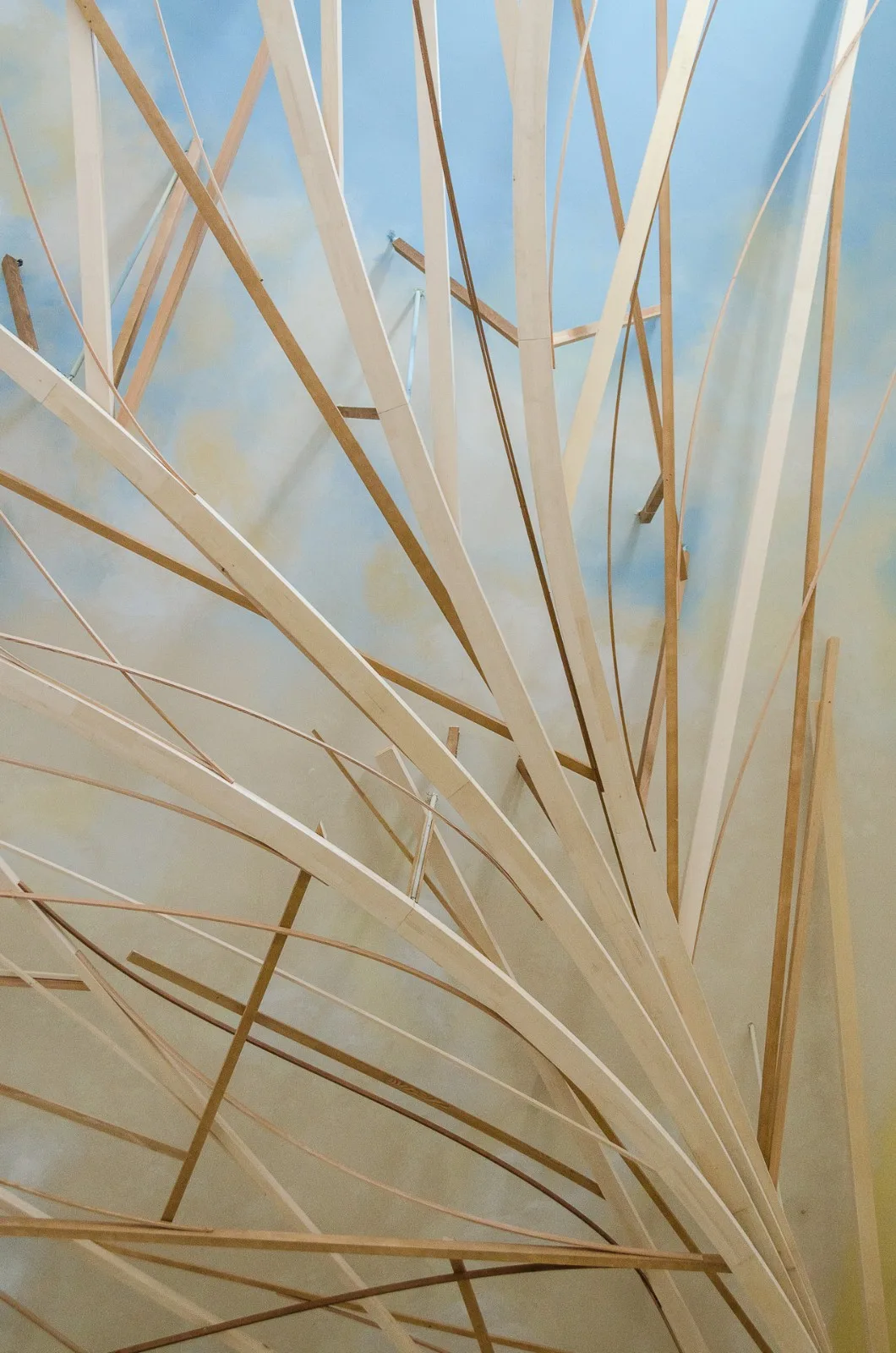
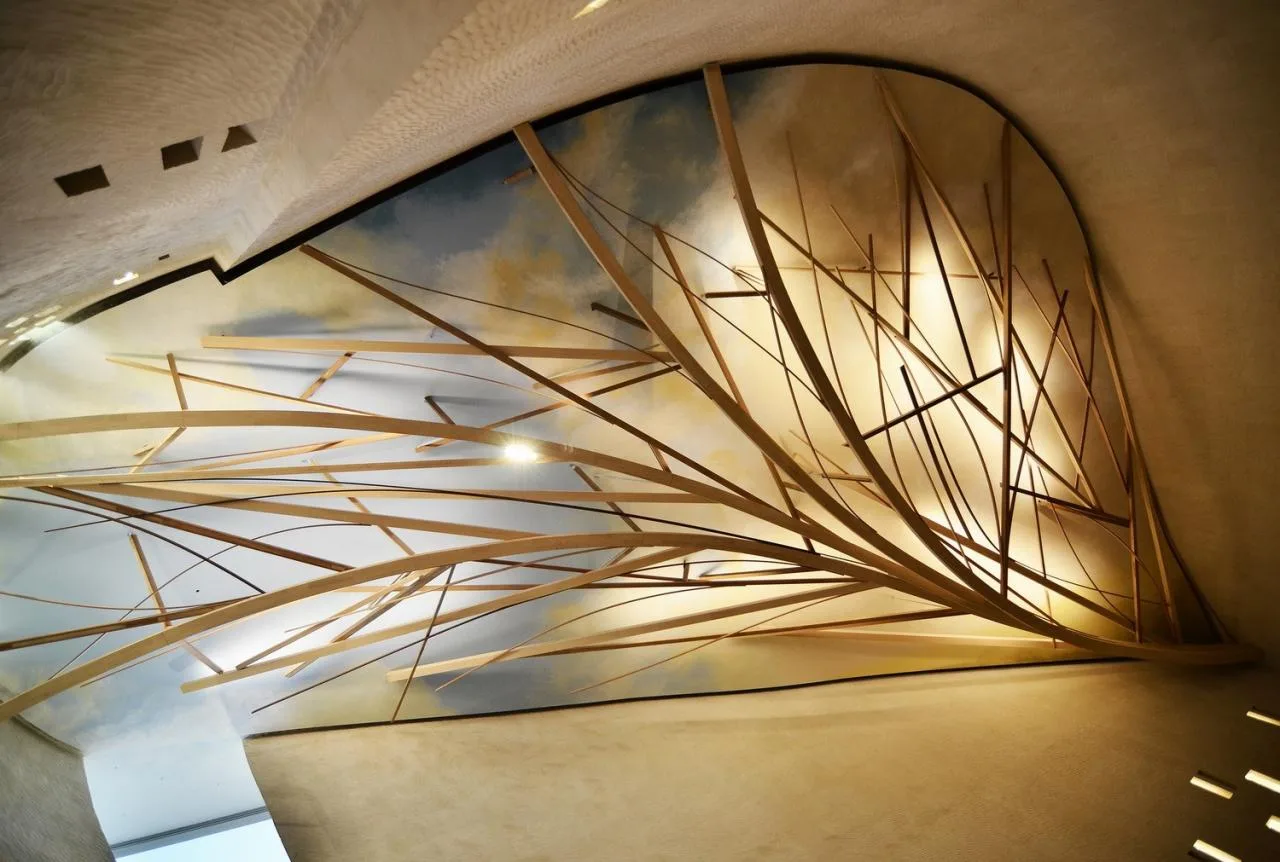
Stone plays a central role here; the tall walls appear as if sculpted from a single massive block. A specialized technique eliminates joints between the stones, creating a seamless surface that shimmers under natural light. Above, an artistic ceiling features woven branches against a painted sky, emphasizing the upward movement of the walls.
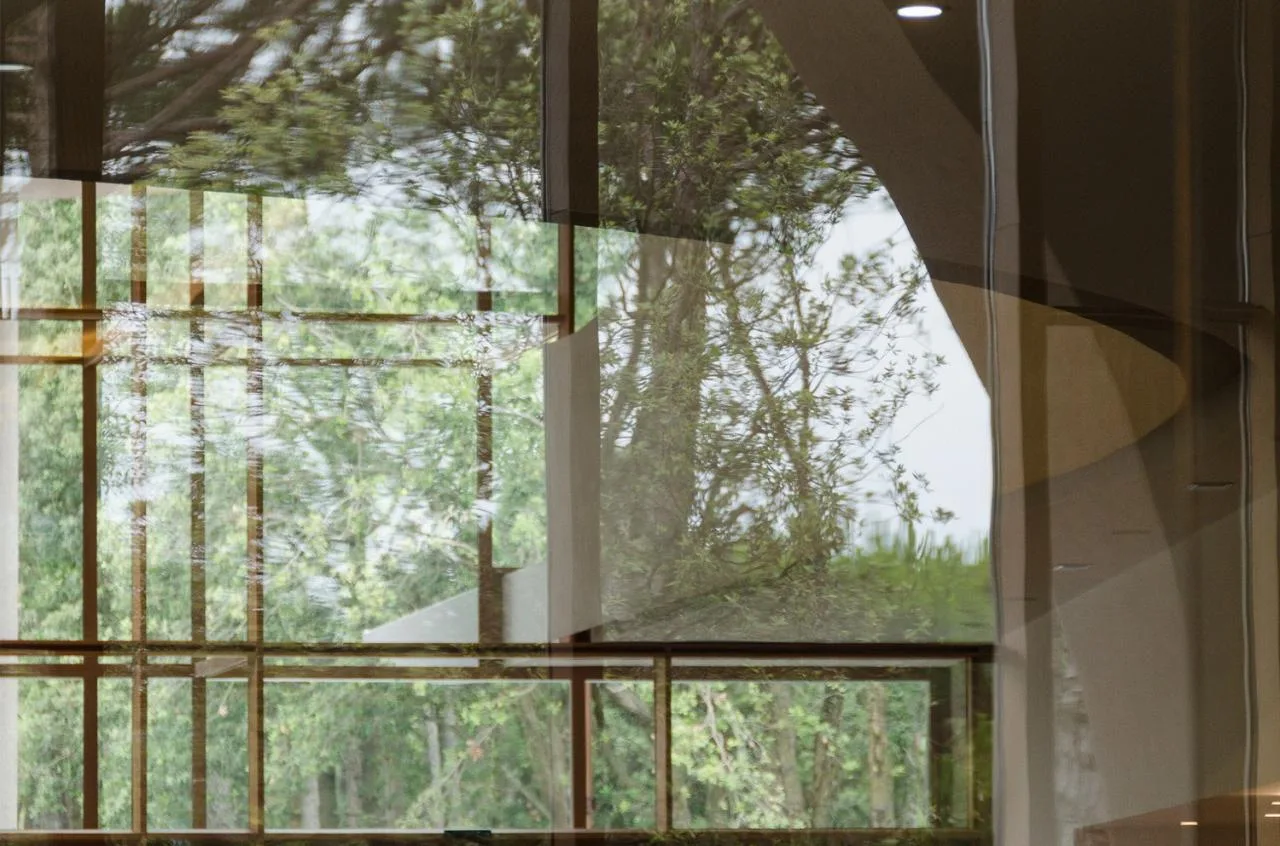
The presence of a pristine natural environment inspired a “botanical” design approach. This strategy aims not only to protect the pine forest from human impact but also to treat architecture as a modifiable, temporal image that responds functionally to its surroundings. Material choices and detailed specifications were developed simultaneously with the initial design.
The rough bark of pine trees, which ranges from gray to red or brown without changing color under light, served as a constant reference for selecting materials.
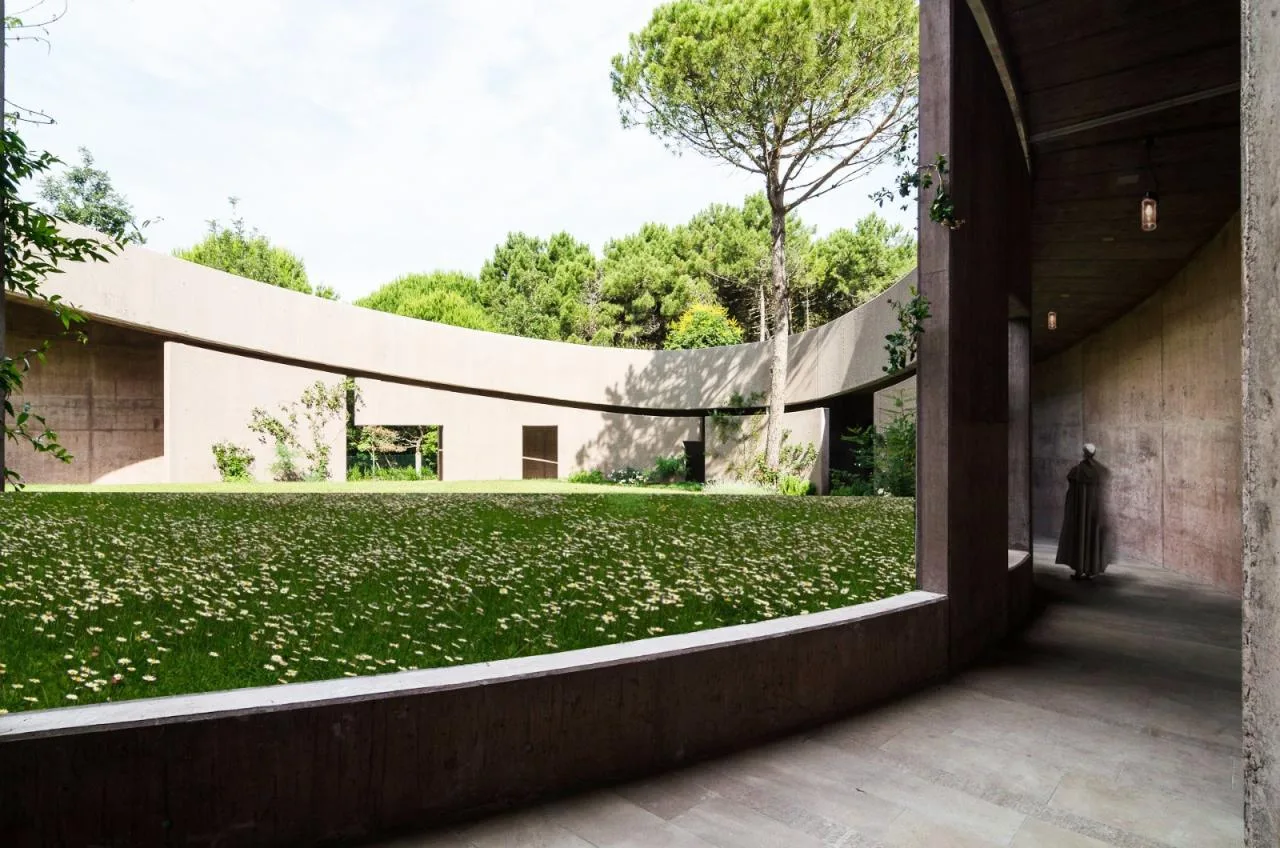
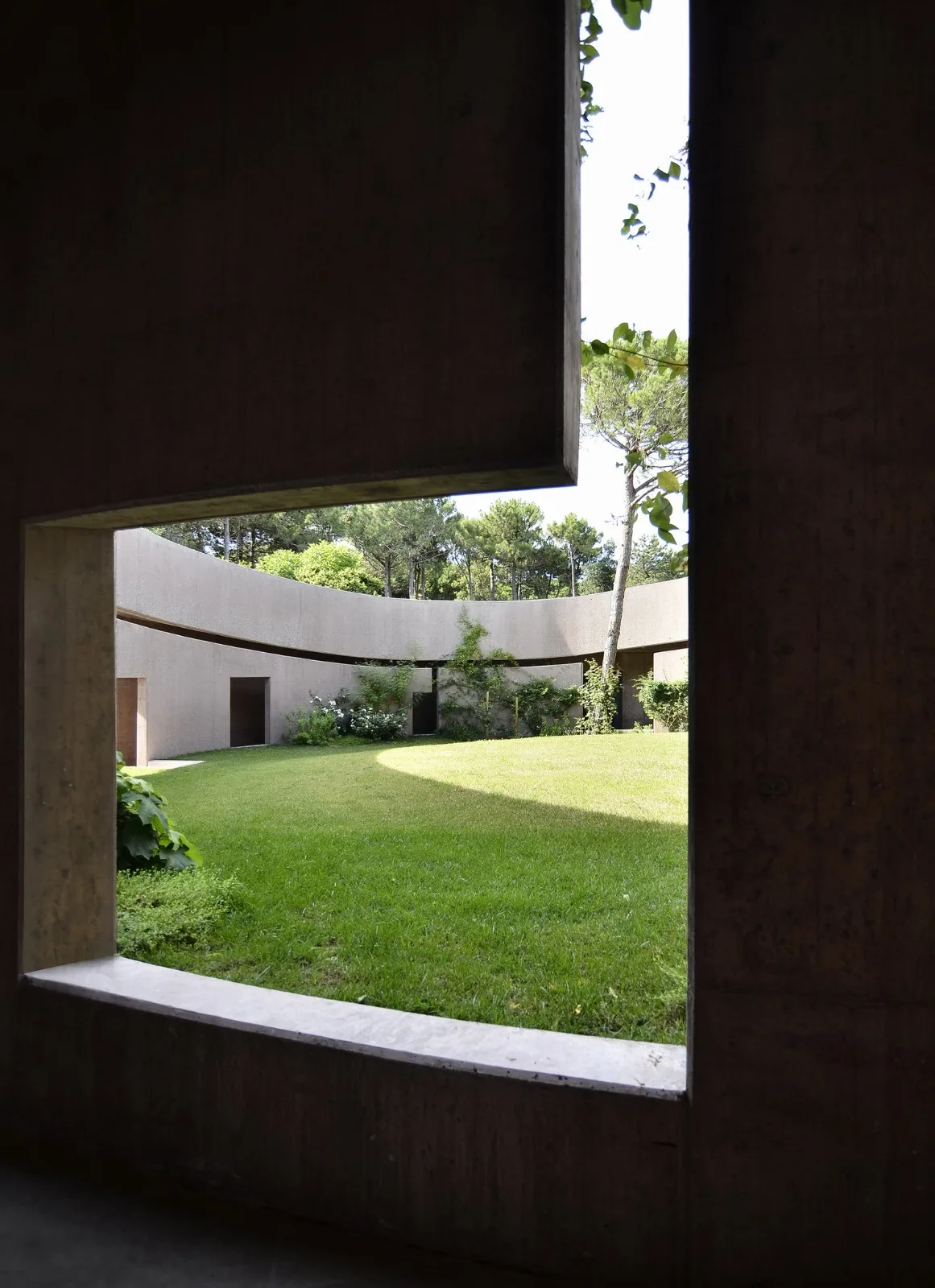
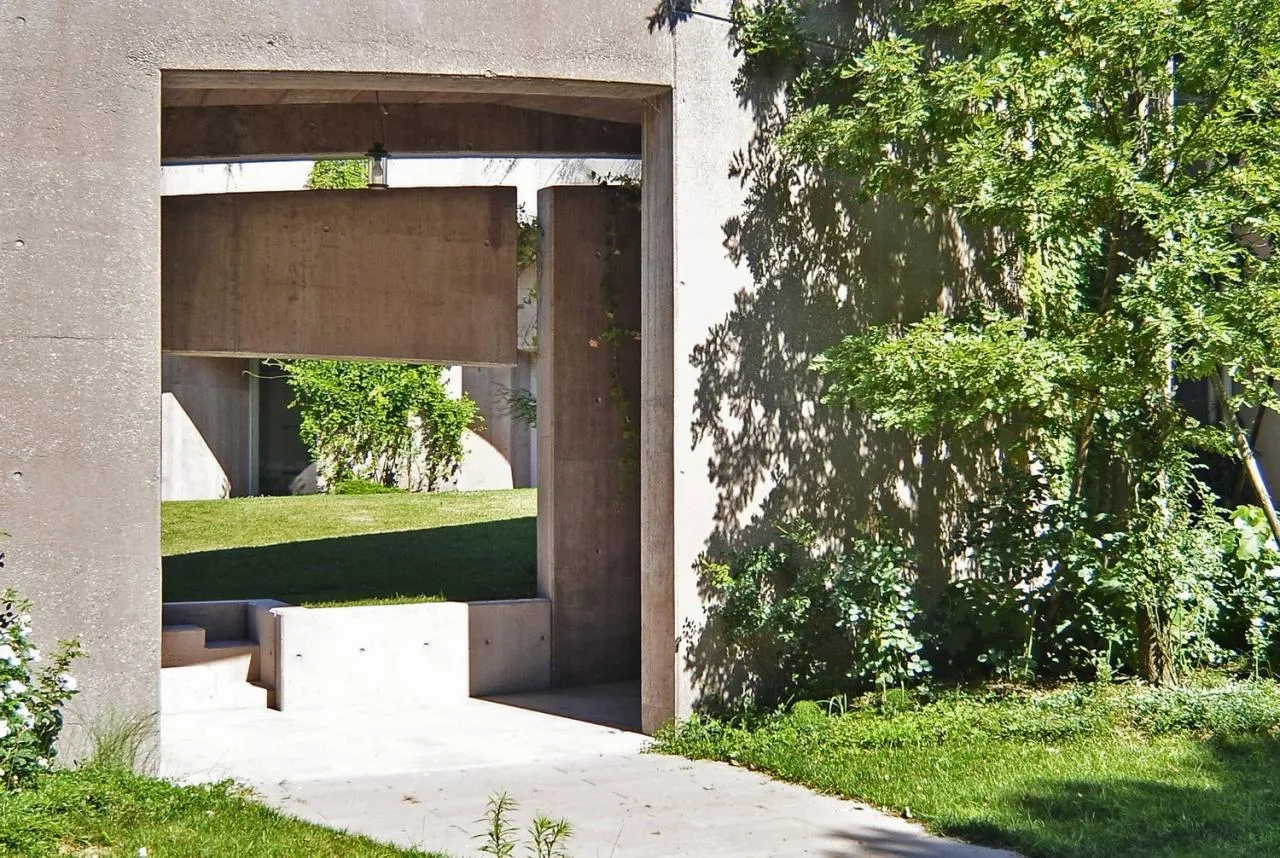
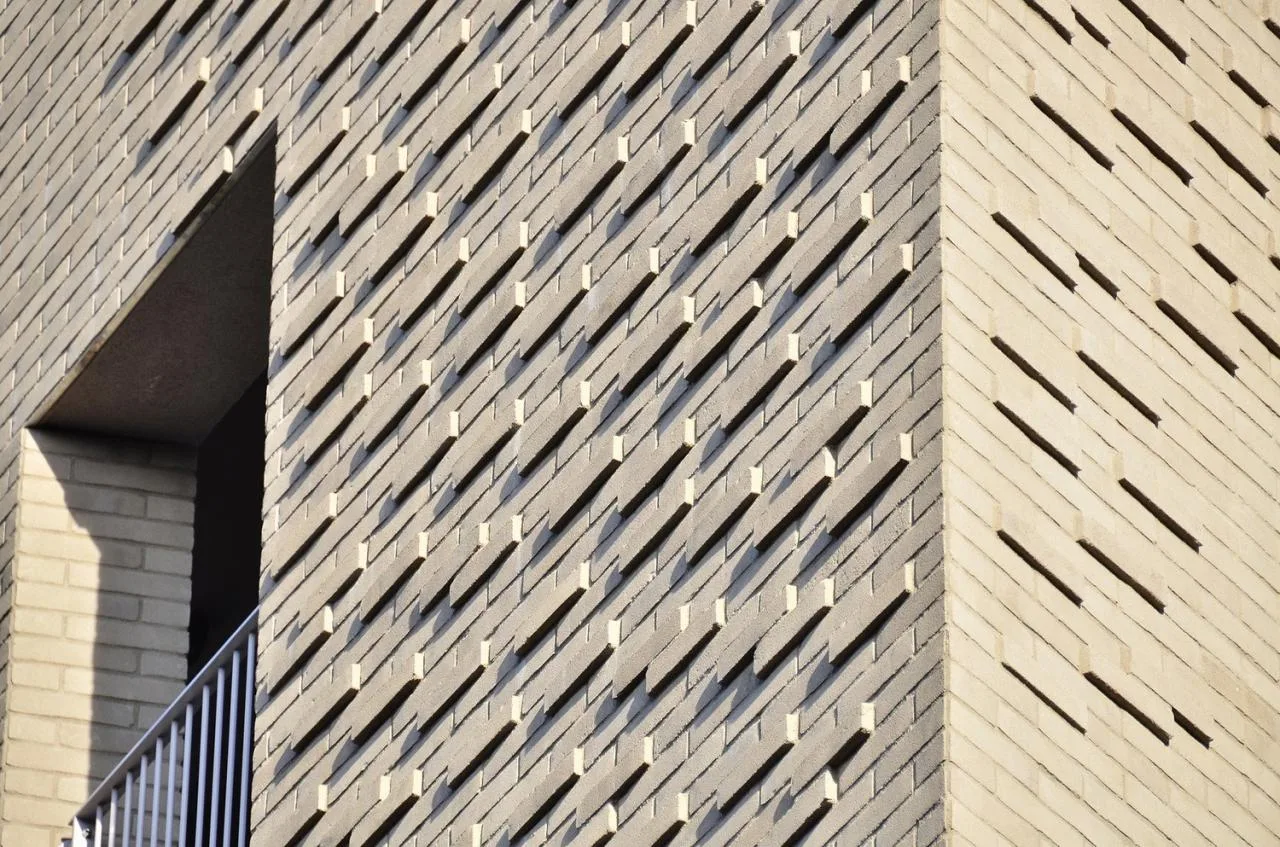
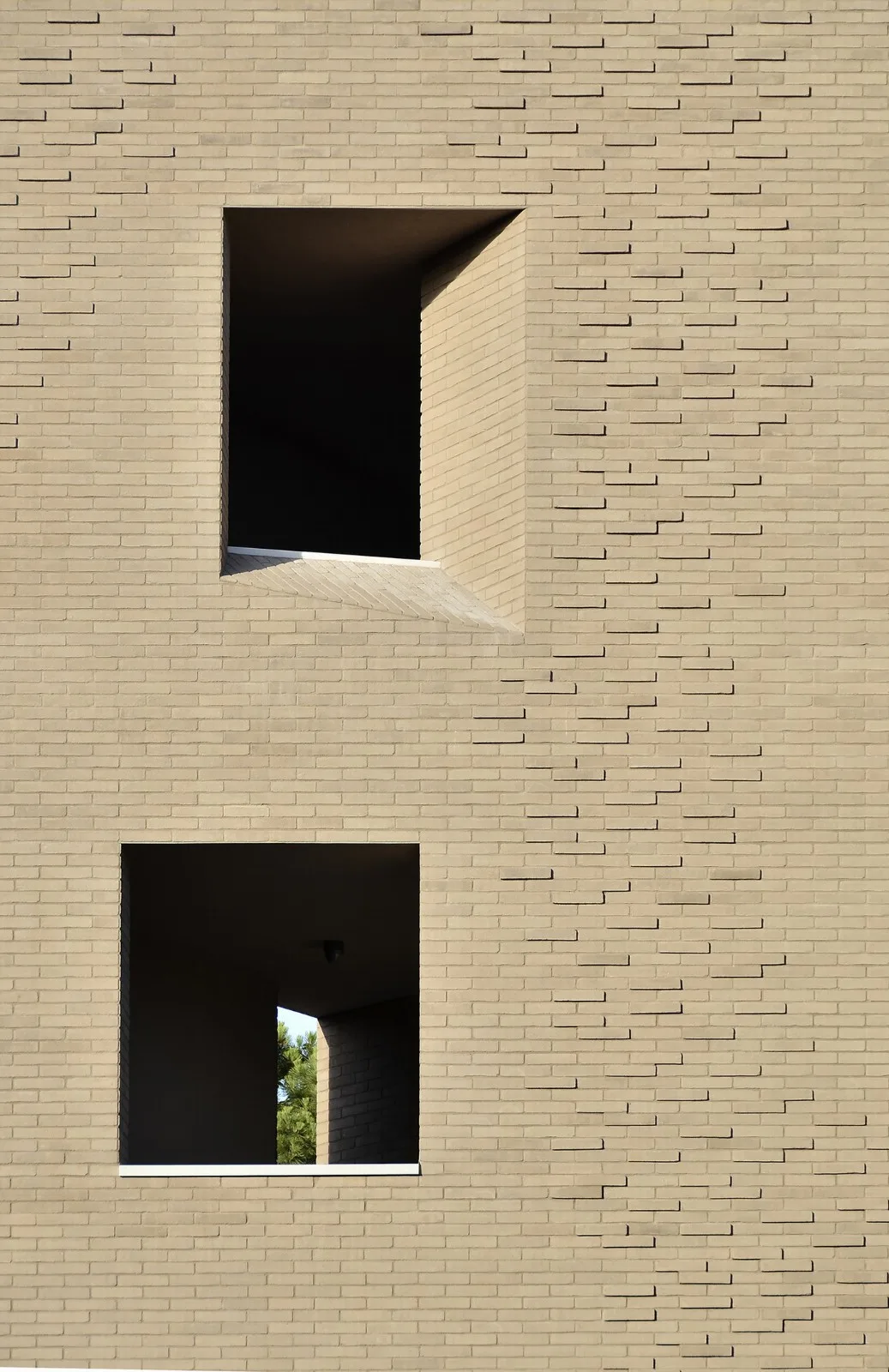
To enrich the surface texture, passivated plain concrete was created using a special mixture of inert soil and oxides. Additionally, handmade bricks were laboratory-tested to achieve the perfect oxide composition.
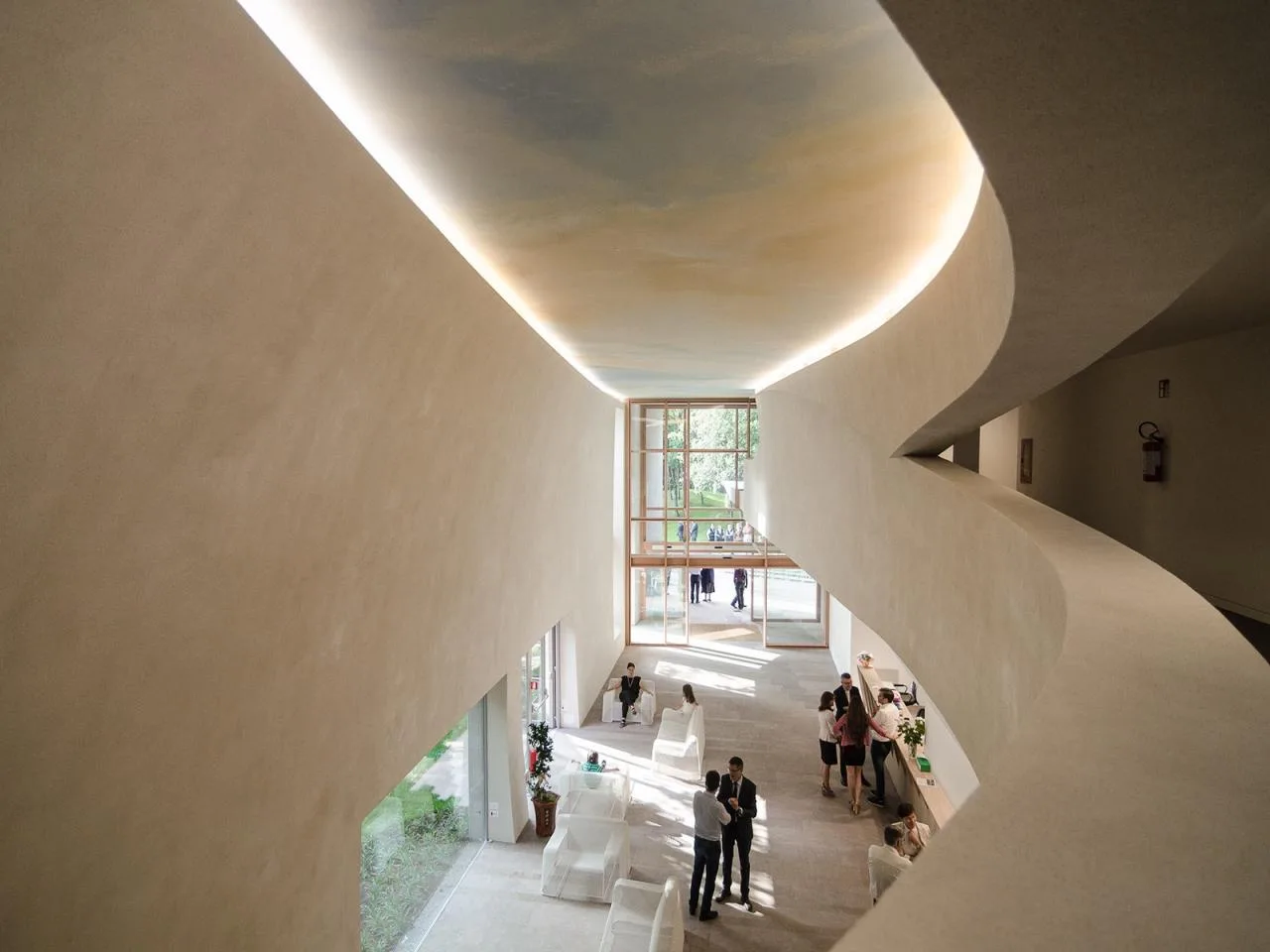
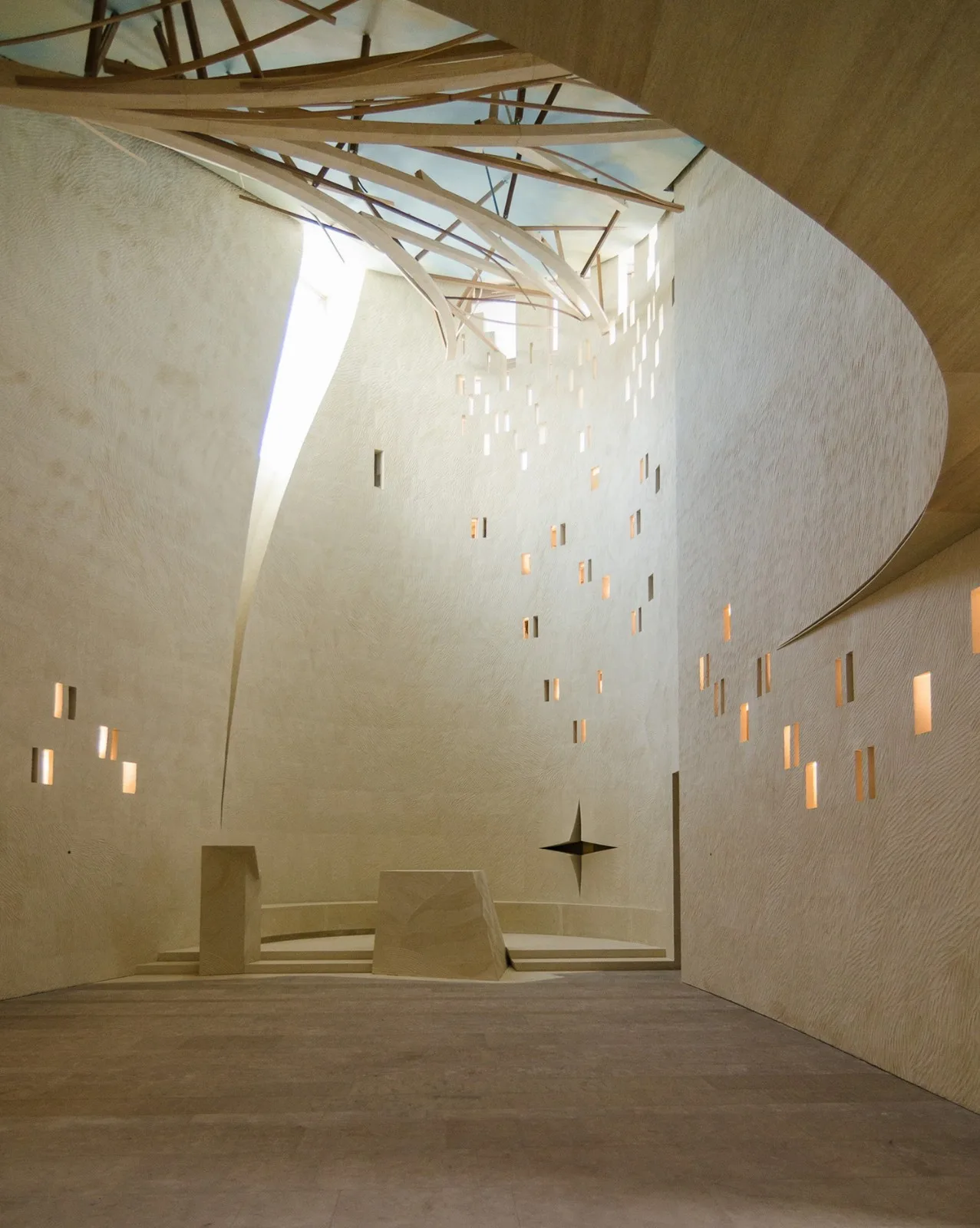
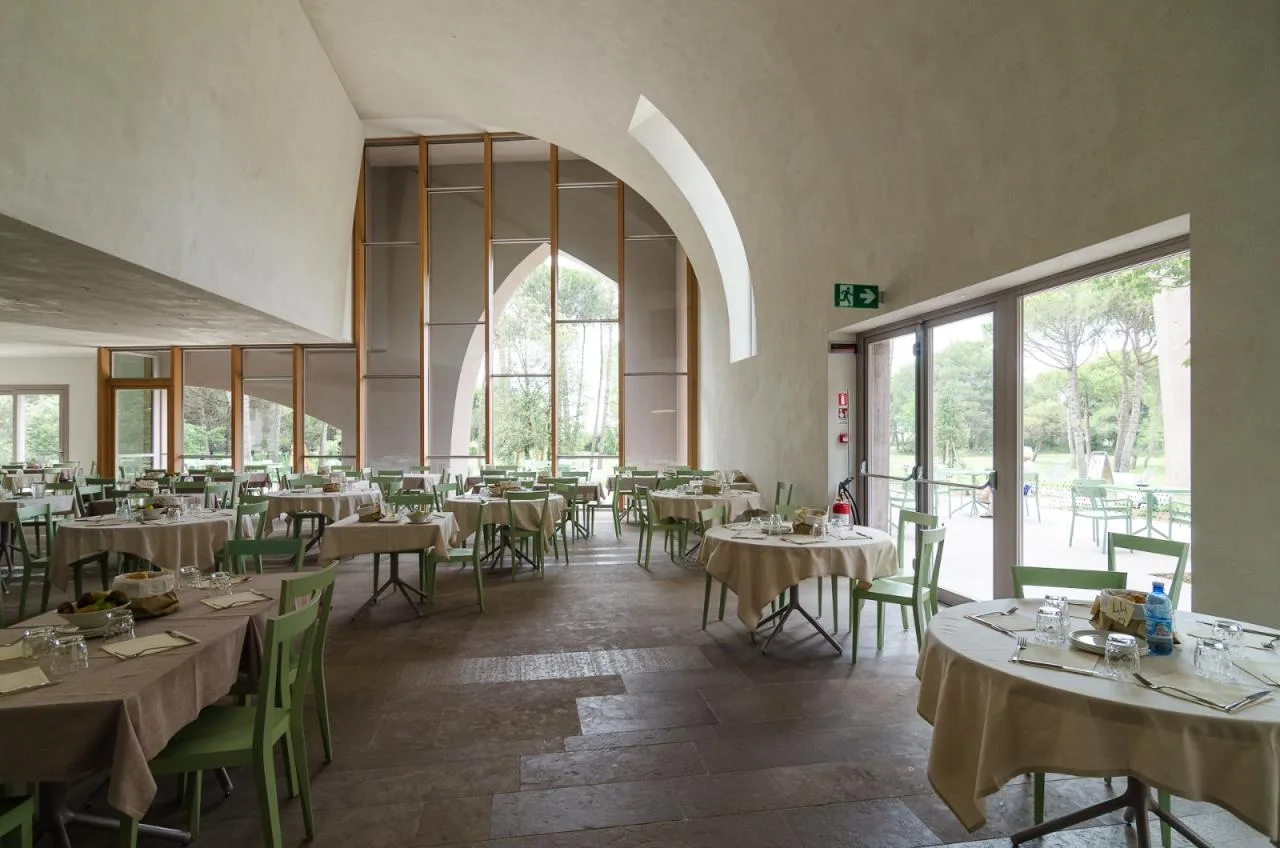
The interior and exterior floors, along with some external cladding, are crafted from Santafiora stone. This choice is based not only on the stone’s color but also on its versatility in surface treatments. The varying shades within this single color palette help minimize the building’s visual impact and harmonize it with the surrounding environment.
This project exemplifies a thoughtful response to the pressing challenge of maintaining building quality throughout all stages of construction and use.
Project Drawings
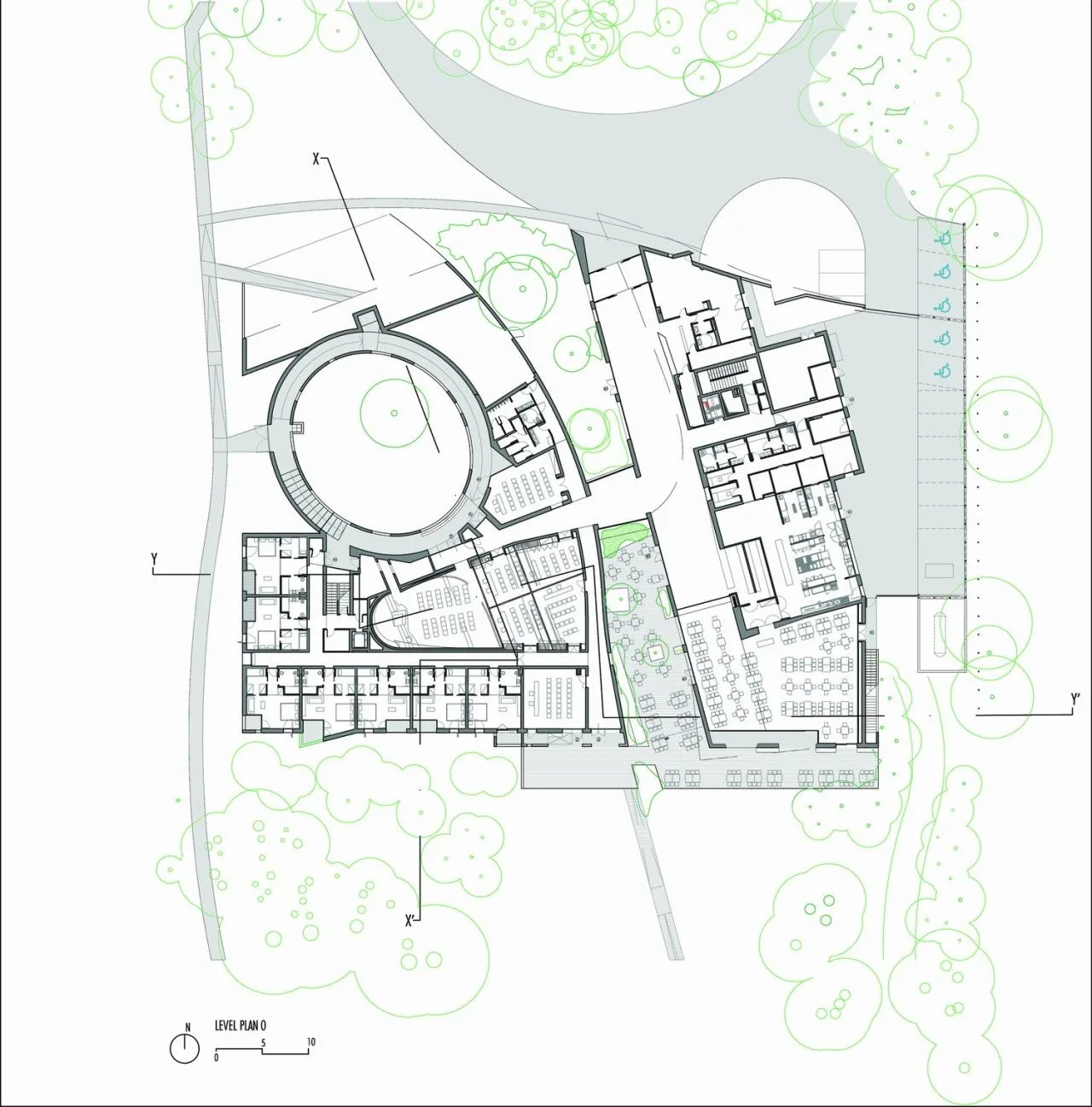
△ Plan view
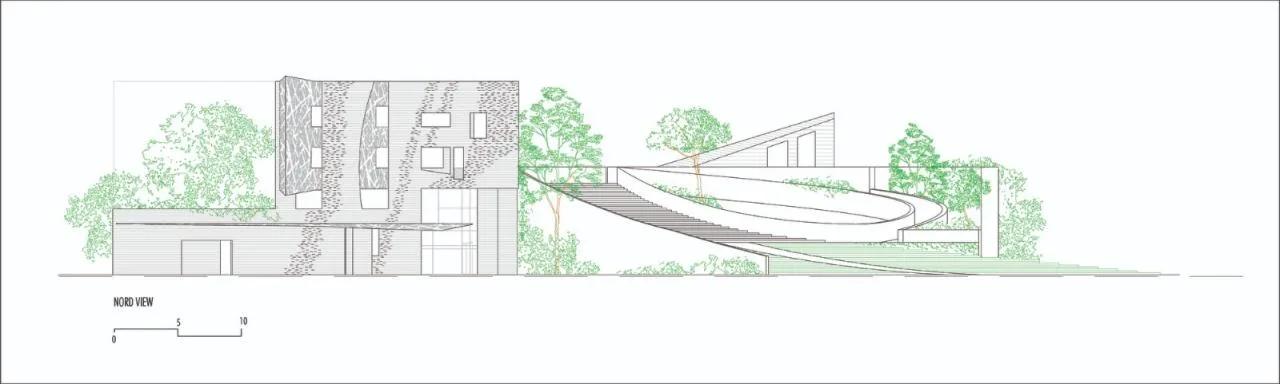
△ Elevation drawing
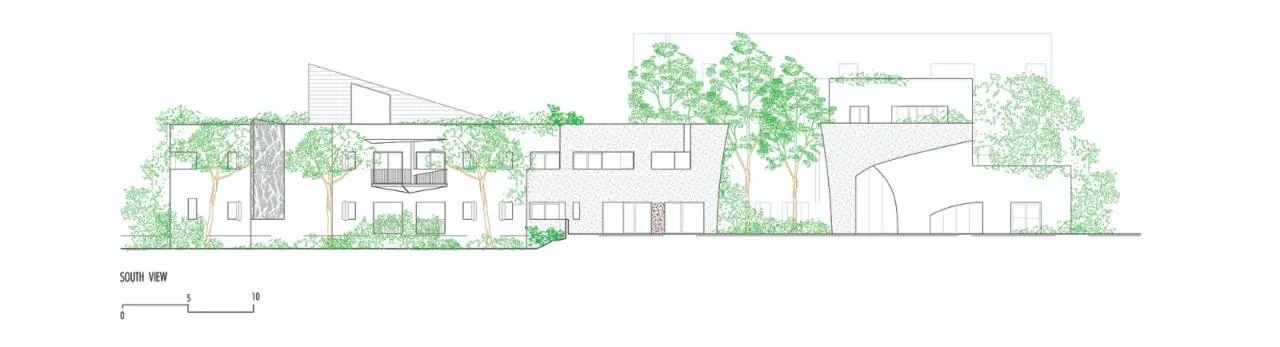
△ Elevation drawing
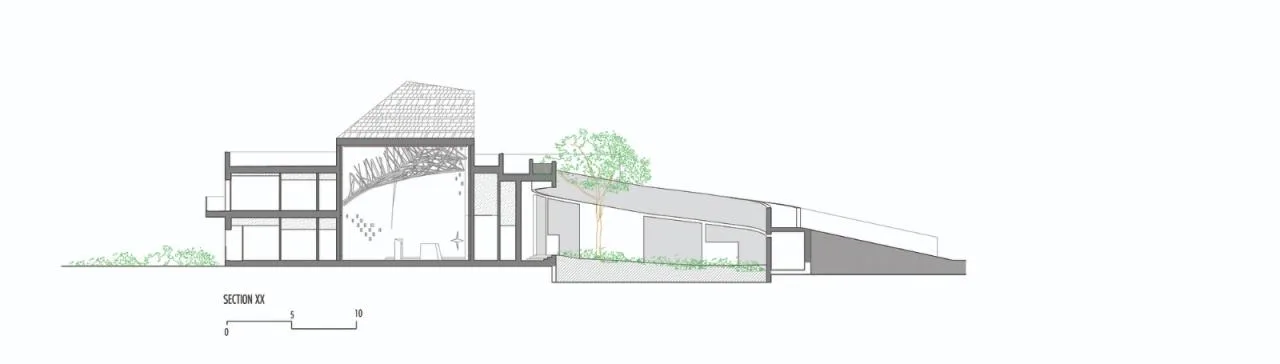
△ Section diagram
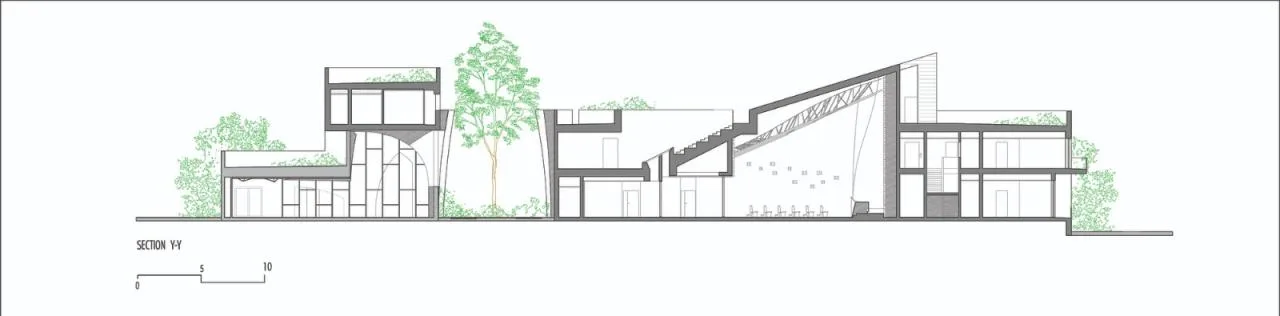
△ Section diagram
Project Information
Architect: Toti Semerano
Area: 47,425 m²
Project Year: 2021
Project Management: Concordia SAS, Diego Malosso
Project Team: Stefano Antonello, Ludovica Fava, Iride Filoni, Enrico Friselle, Tommaso Gasparini, Andrea Michelon, Alice Miotto, Salvatore Musarò, Luigi Parise, Andrea Piscopo, Stefano Sabato, Nicolò Reither, Ed Testa, Stefano Zanardi
Structure: Simone Carraro
Engineering Management: Francesco Panzarin
Landscape Design: Alfrino Pasetto
Technical Systems: Simax
Security Coordination: Elena Zoccolan
Fire Protection System Consultant: Fabio Rocchesso
Acoustic Project: Cristian Borton
Ceiling Mural: Antonio Lovison
Sculptors: Antonio Schito, Edmondo Marzano
Structural Design: Sogen srl
Location: Italy













Must log in before commenting!
Sign Up