
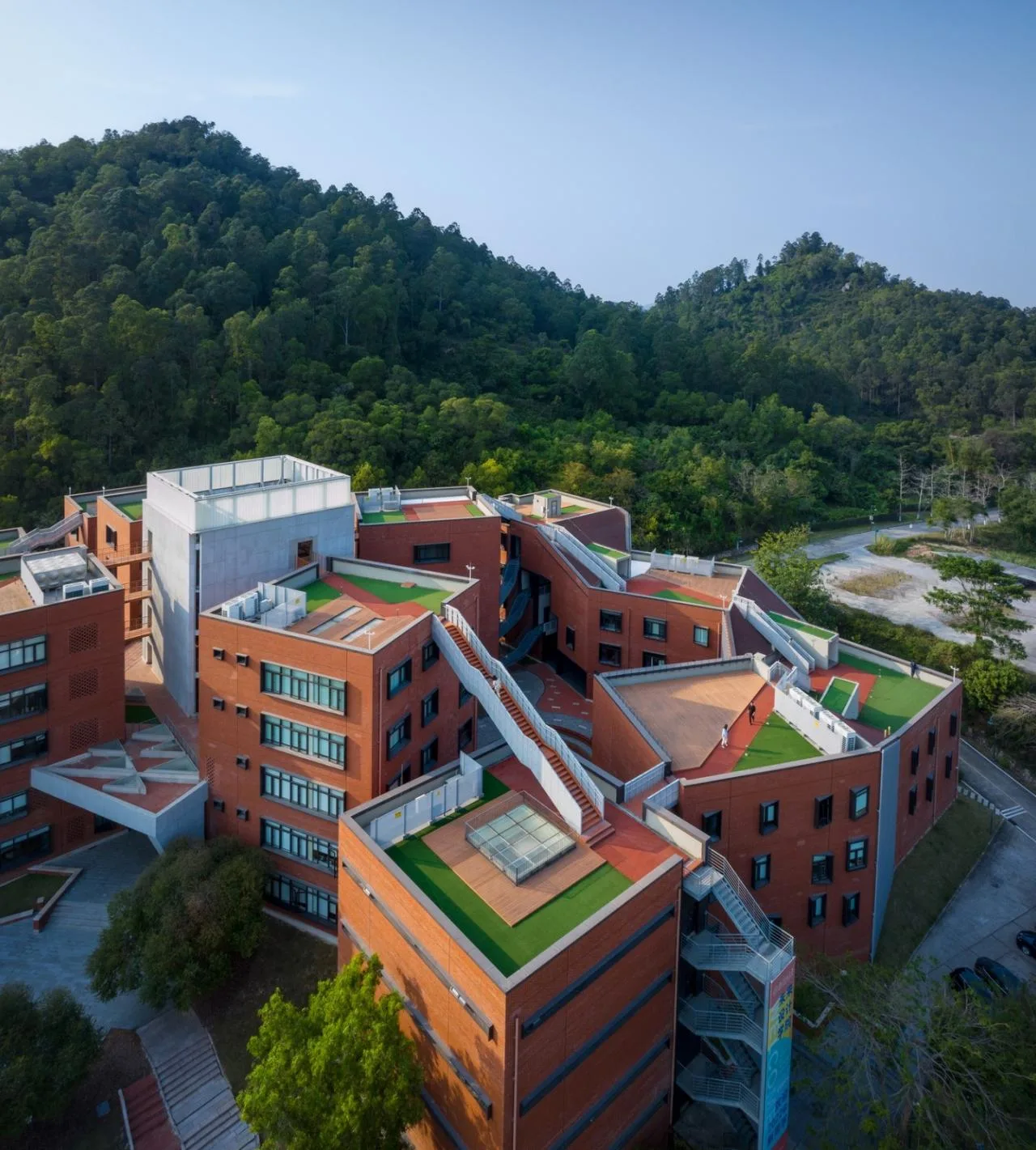
Beijing Normal University Zhuhai Campus plays a crucial role in the university’s vision to become a “comprehensive, research-oriented, world-class university with Chinese characteristics,” adopting a “one body, two wings” educational model. Since 2019, amid the transformation and upgrading of branch campuses and the push towards low-carbon initiatives, the university has embarked on renovating and modernizing existing campus buildings. The successful renovation of Yuanbai Building is part of this ongoing effort.
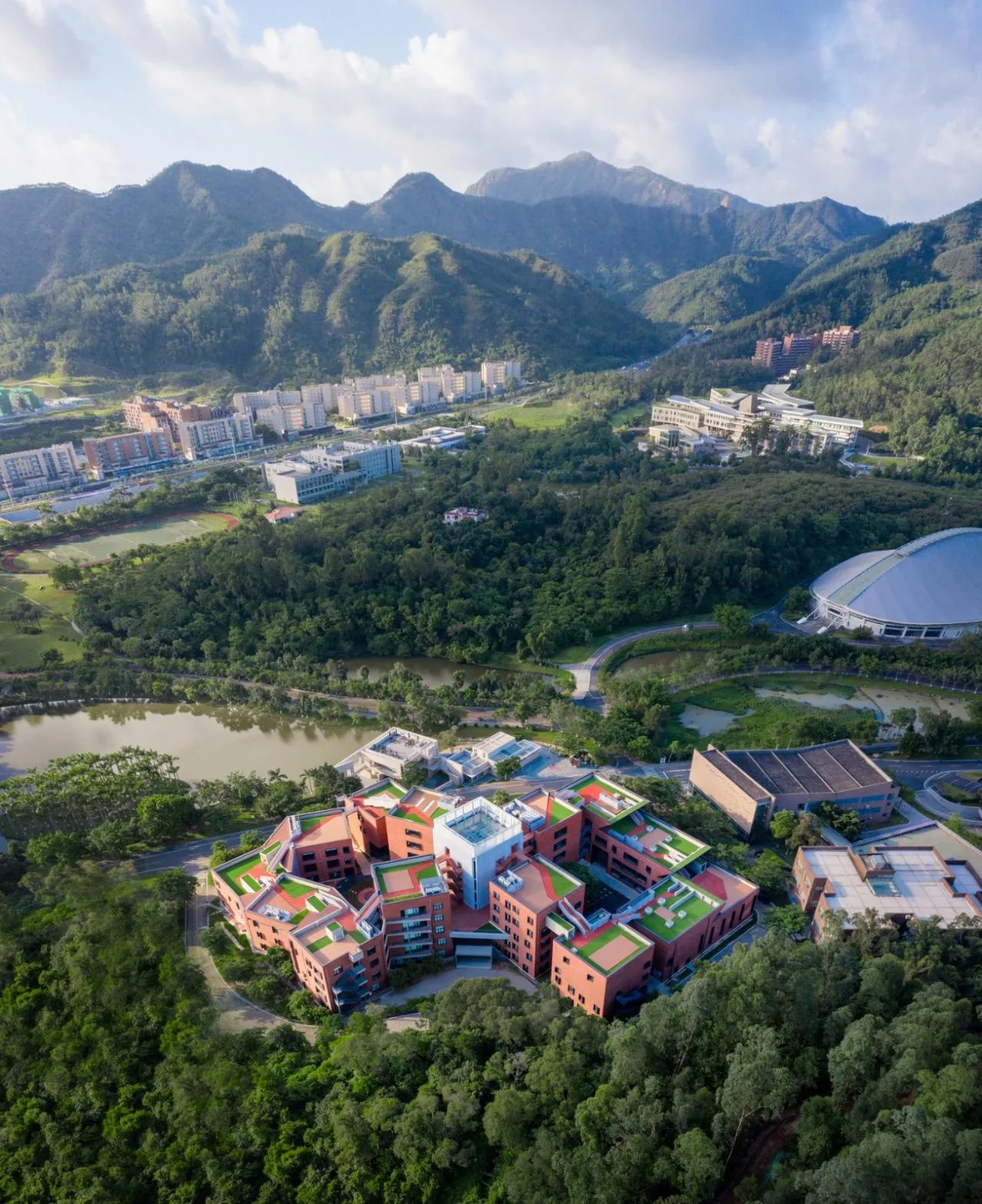
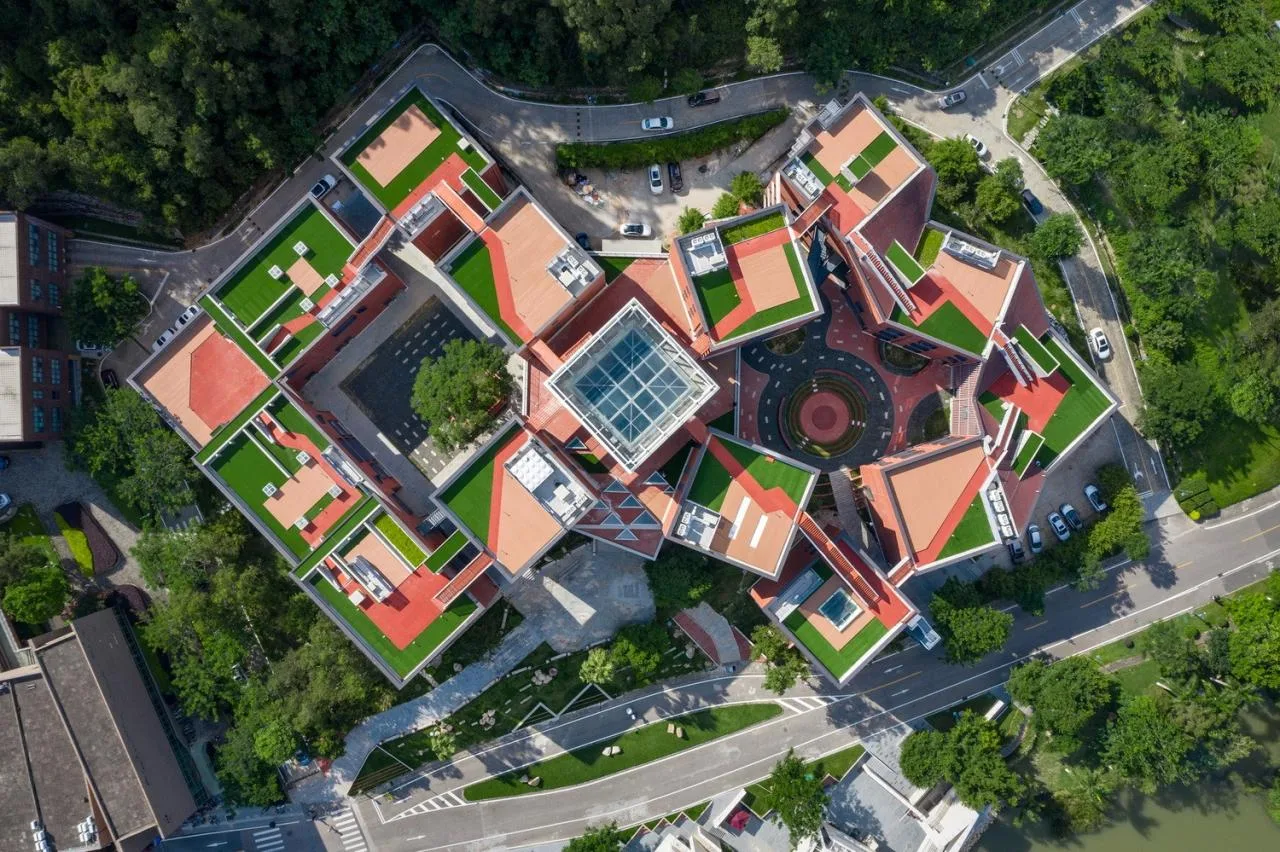
Yuanbai Building, an existing structure on the Zhuhai campus, no longer meets the demands of modern use in terms of exterior appearance and interior functionality. The renovation introduces roof corridors and running tracks, creating a dynamic, three-dimensional walkway that connects 15 independent modules seamlessly. This revitalizes the previously dull rooftop into a vibrant space to engage with nature. Furthermore, by reconfiguring the original architectural layout, the design fosters diverse social spaces, turning the building itself into a “behavioral motivator” that aligns with the innovative education model of the future design college. Emphasizing the connection between humans and nature, as well as interpersonal interaction, is central to this educational approach.
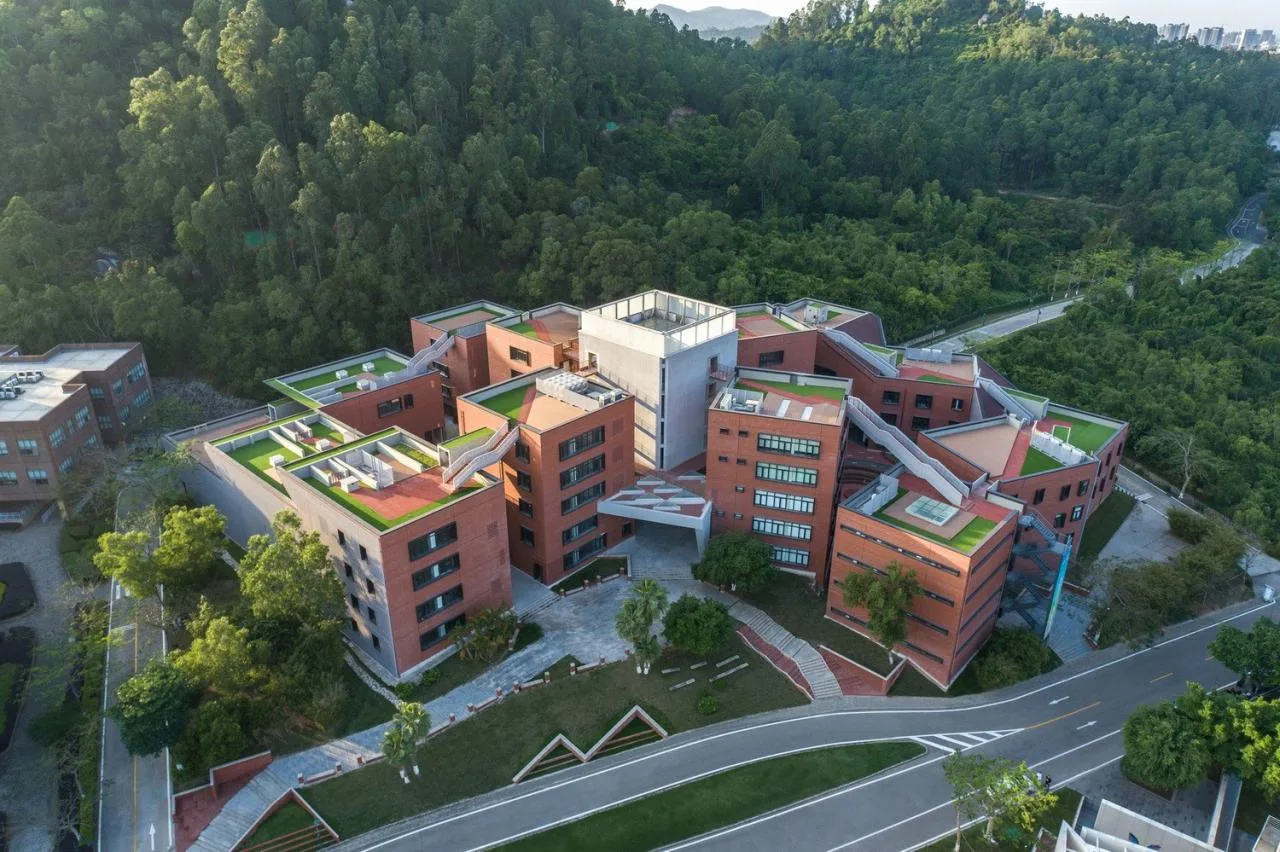
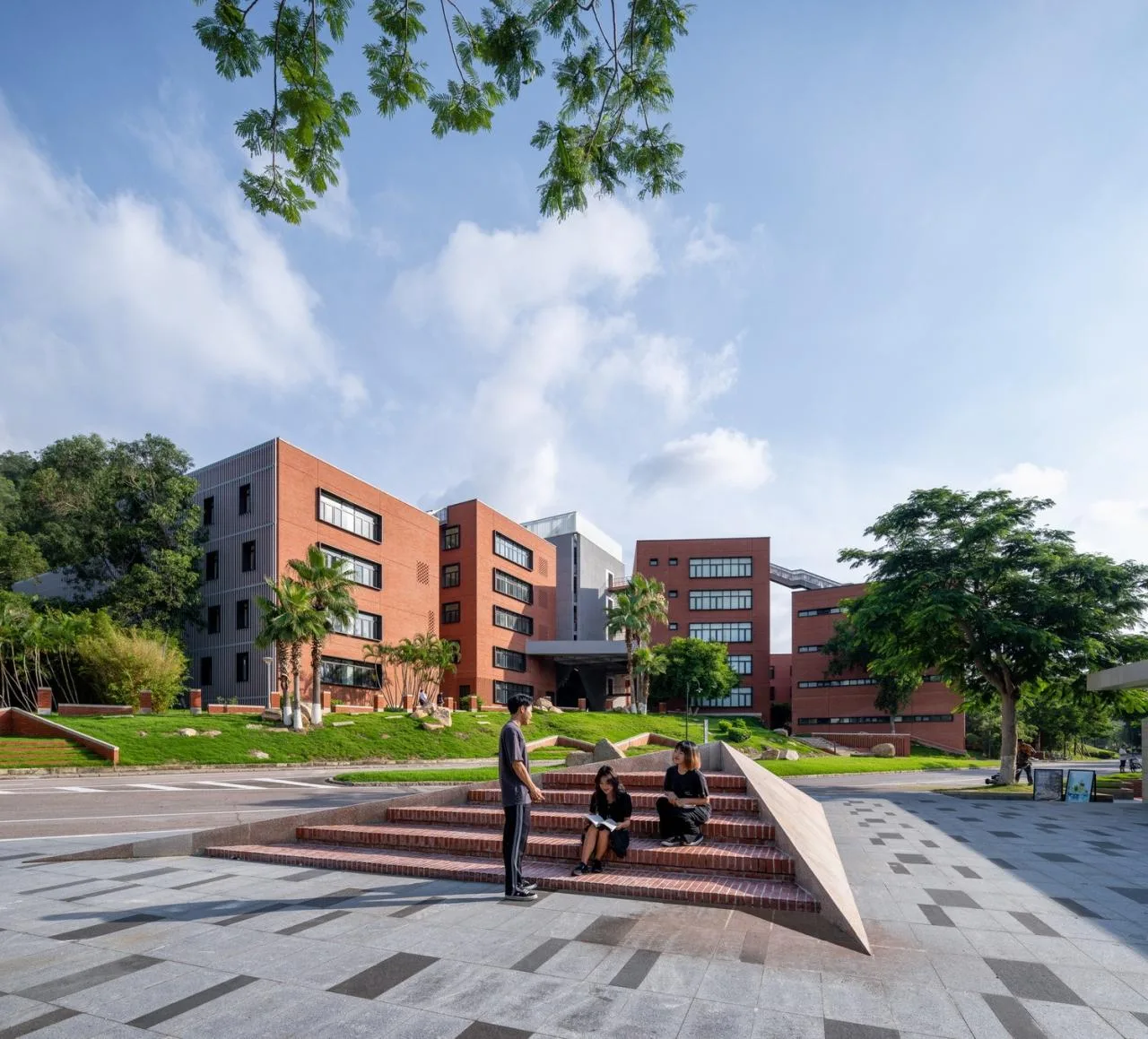
Leveraging its strategic location near Hong Kong and Macao, the Zhuhai Campus aims to become a premier southern hub attracting outstanding educators, particularly those specialized in key disciplines. It serves as a talent training center for returnees from Hong Kong, Macao, and participants in the Belt and Road initiative, as well as an education research center and a pioneering base for emerging and interdisciplinary fields.
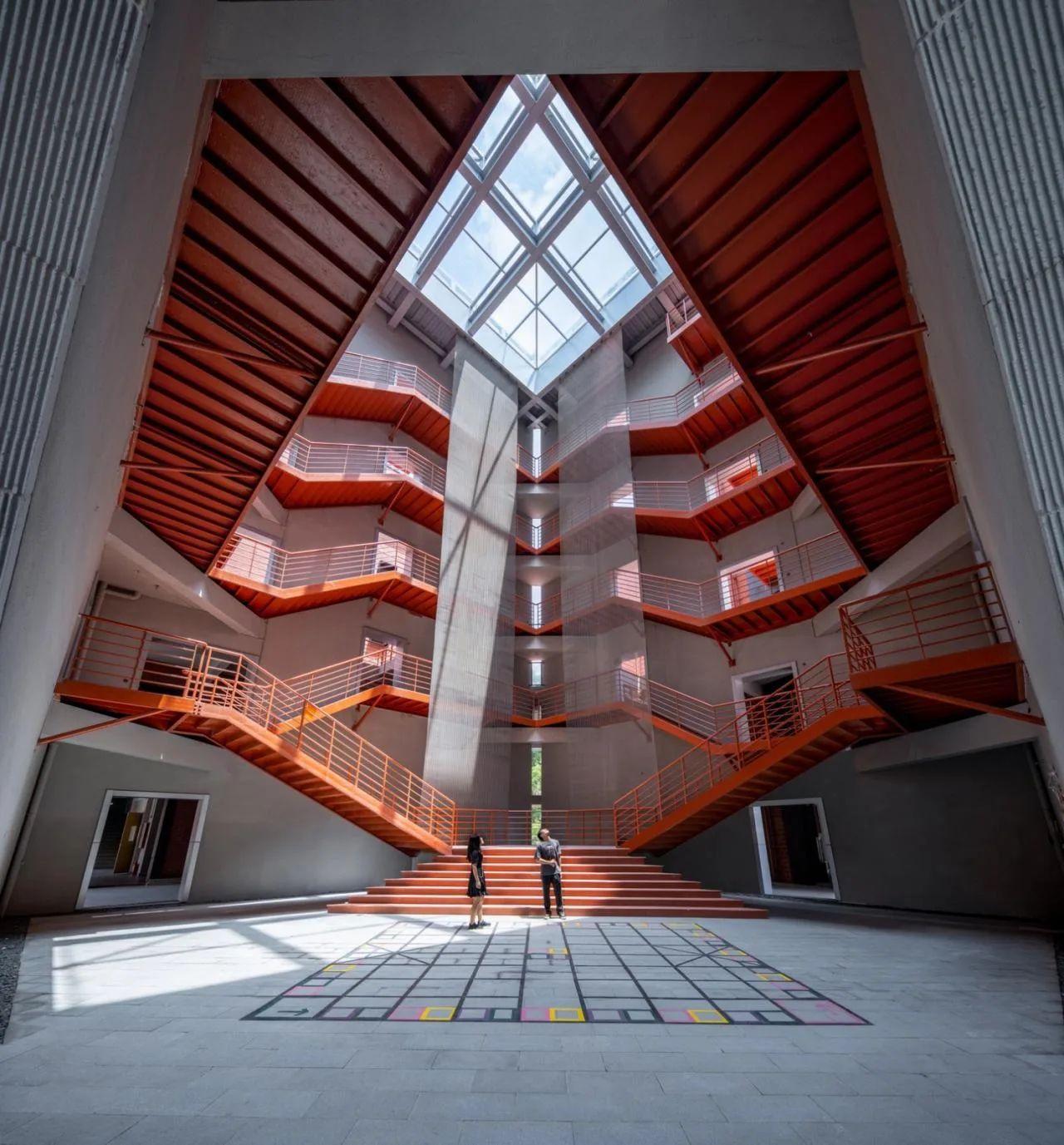
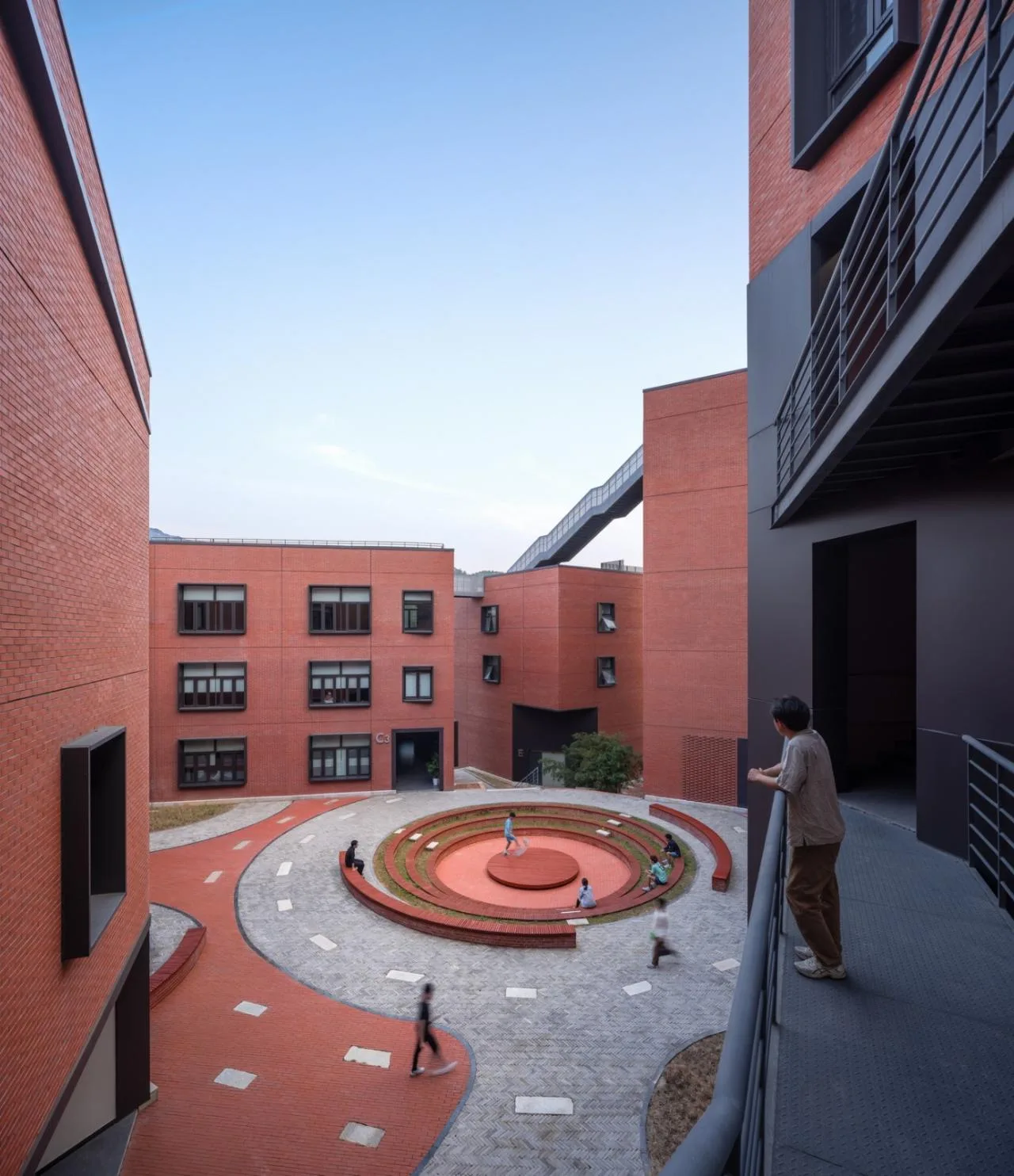
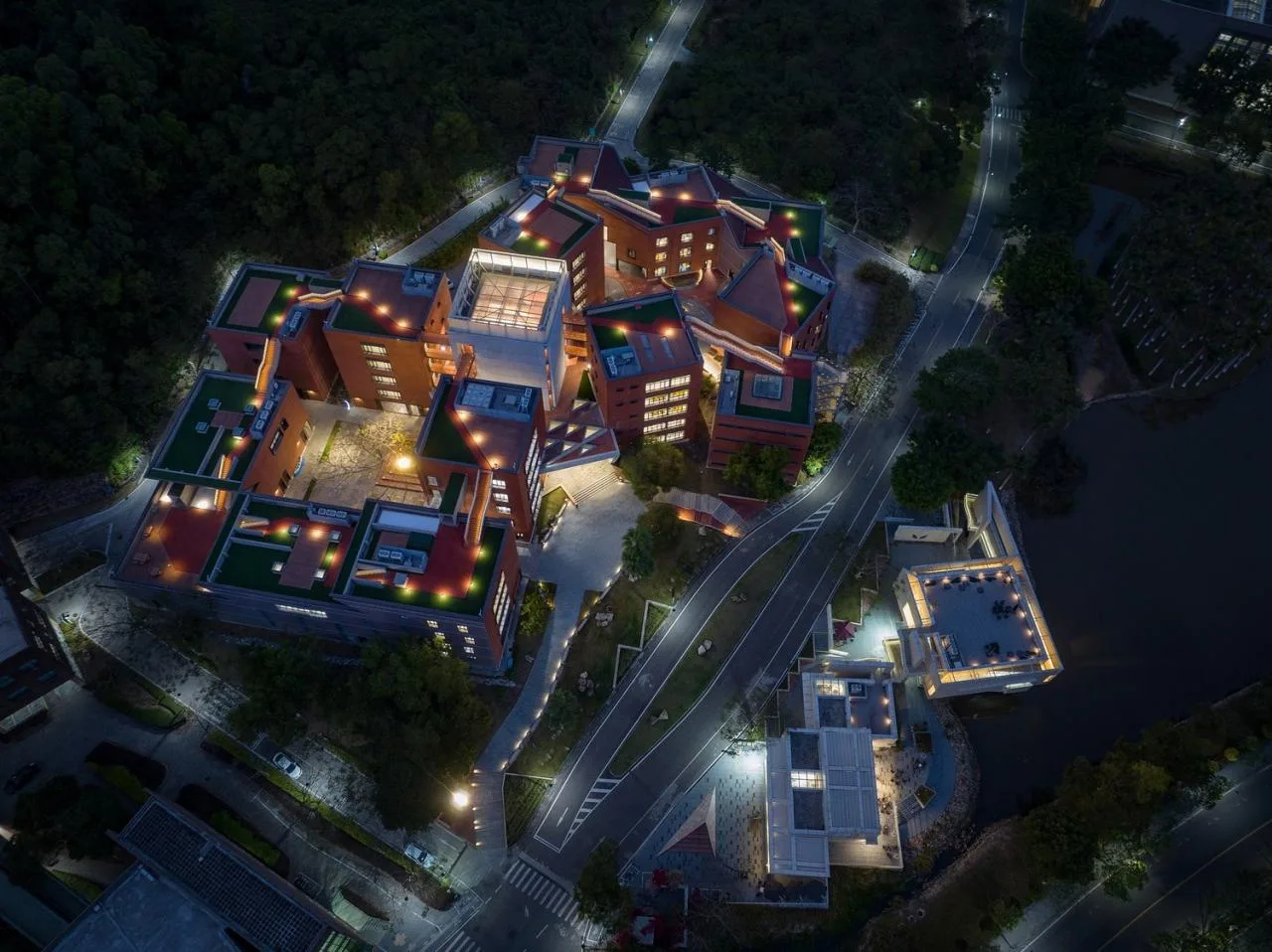
Known as Asia’s most beautiful valley university, the Zhuhai Campus is nestled at the northern base of Fenghuang Mountain, just six kilometers from the coast. Yuanbai Building sits at the heart of the campus’s lakeside landscape zone and comprises 15 separate square “boxes” over five floors.
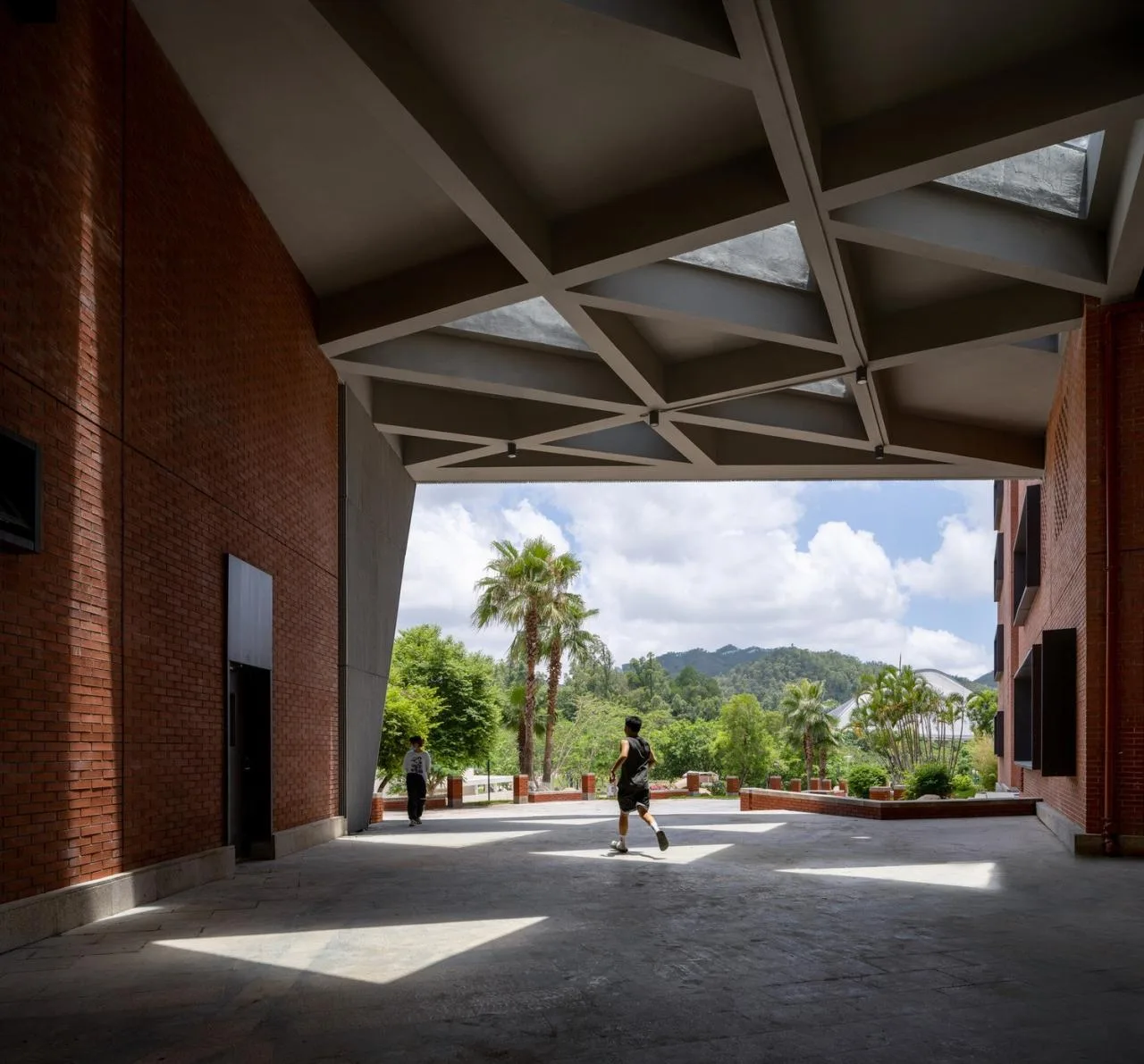
Since opening around 2004 as a design department teaching building, Yuanbai Building’s exterior facade has deteriorated, with peeling paint and aging steel ladders. The inner courtyard became overgrown, floor tiles cracked, and many interior spaces fell unused. Following a comprehensive renovation, it has been transformed into the campus’s most beautiful core, beloved by faculty and students alike. The design integrates a new exhibition hall and atrium, seamlessly supporting the daily activities of the Future Design College. The renovation addressed two main challenges: (1) maximizing existing building use while integrating with the campus environment under constraints of planning, budget, and schedule; (2) fostering face-to-face communication spaces in an era dominated by the internet and smartphones.
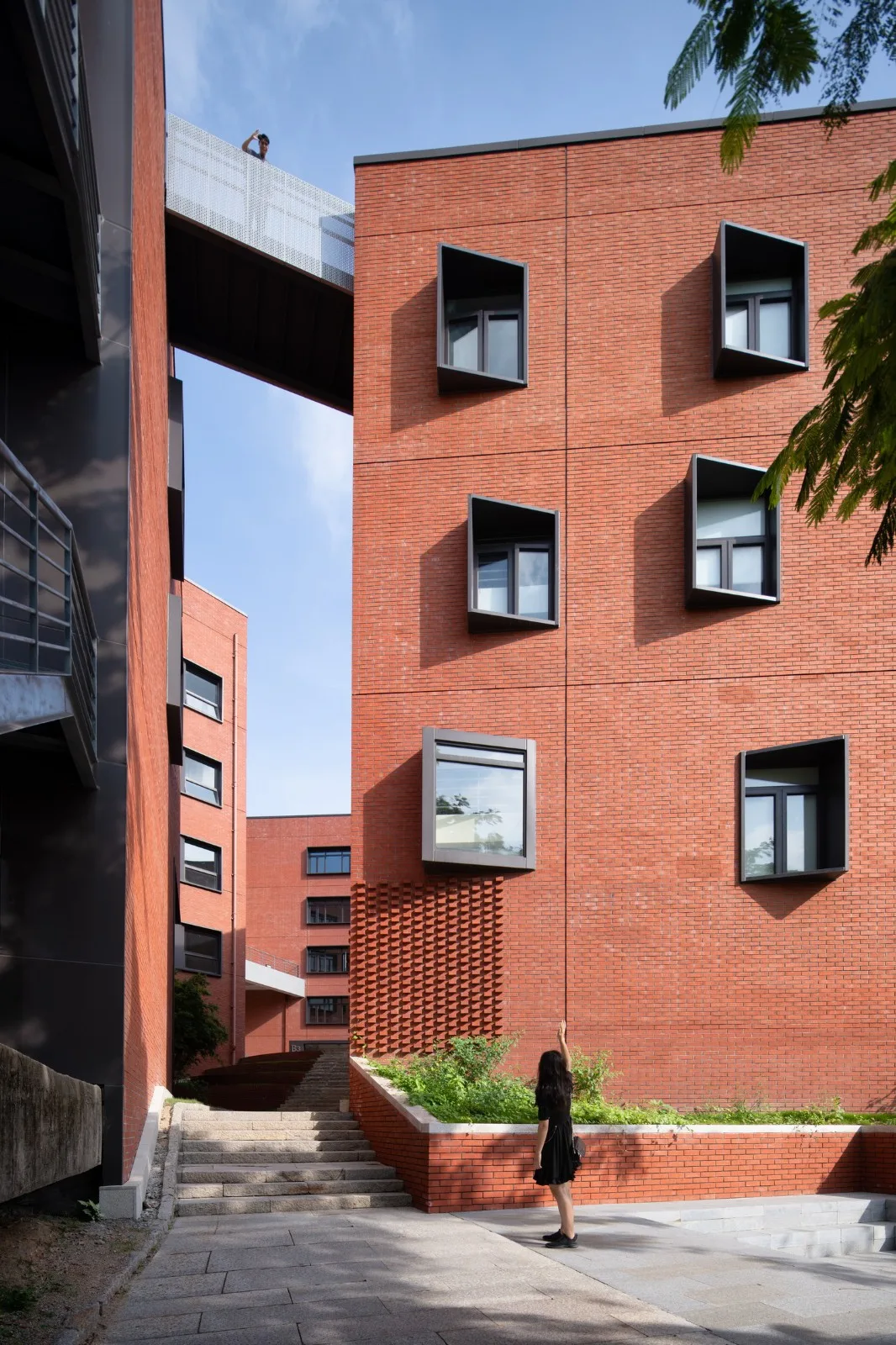
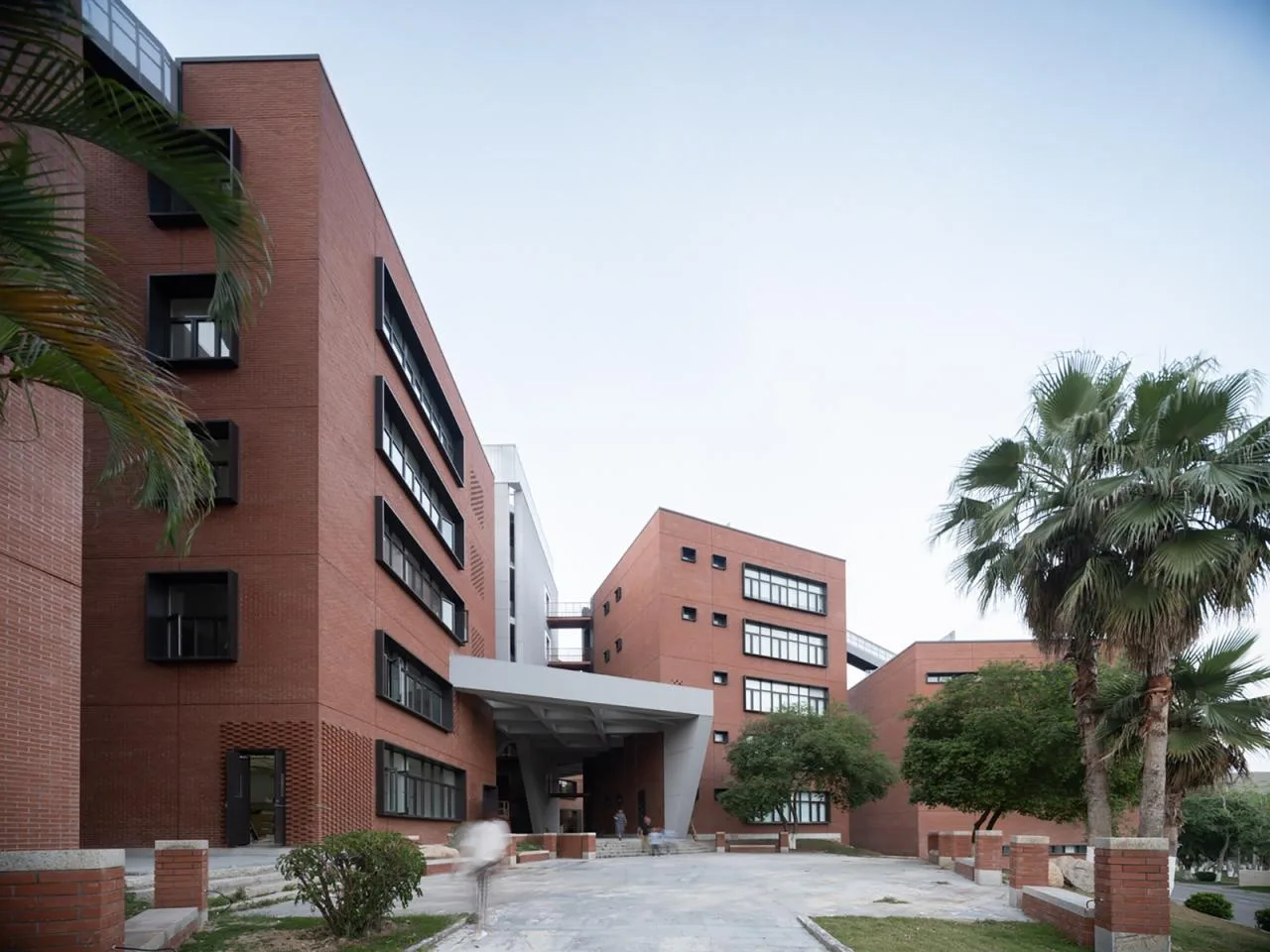
1. Facade Renovation Strategy Within Time and Budget Constraints
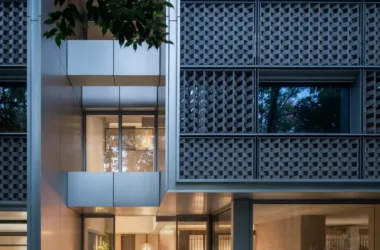
The renovation adopts a “skin on skin” approach, layering a new facade over the original walls and roof without damage. This new “outfit” consists of overlapping red and white curtain walls made from dry-hung bricks and GRC panels. A U-shaped glass structure crowns the central white box, serving as the building community’s focal point and unifying the previously chaotic Yuanbai complex. The outer boxes feature red brick curtain walls adorned with white lattice patterns, echoing the campus’s surrounding red brick buildings.
A two-story platform wraps around the central box; due to limited natural light beneath, the original square box at the entrance was dismantled and replaced with an extended platform forming a triangular canopy. This new entrance enhances cohesion and serves as the building’s main gateway. A triangular skylight in the platform introduces natural light into the entrance’s grey space. The triangular motif continues into the landscape design, enriching the spatial experience for passing students and staff.
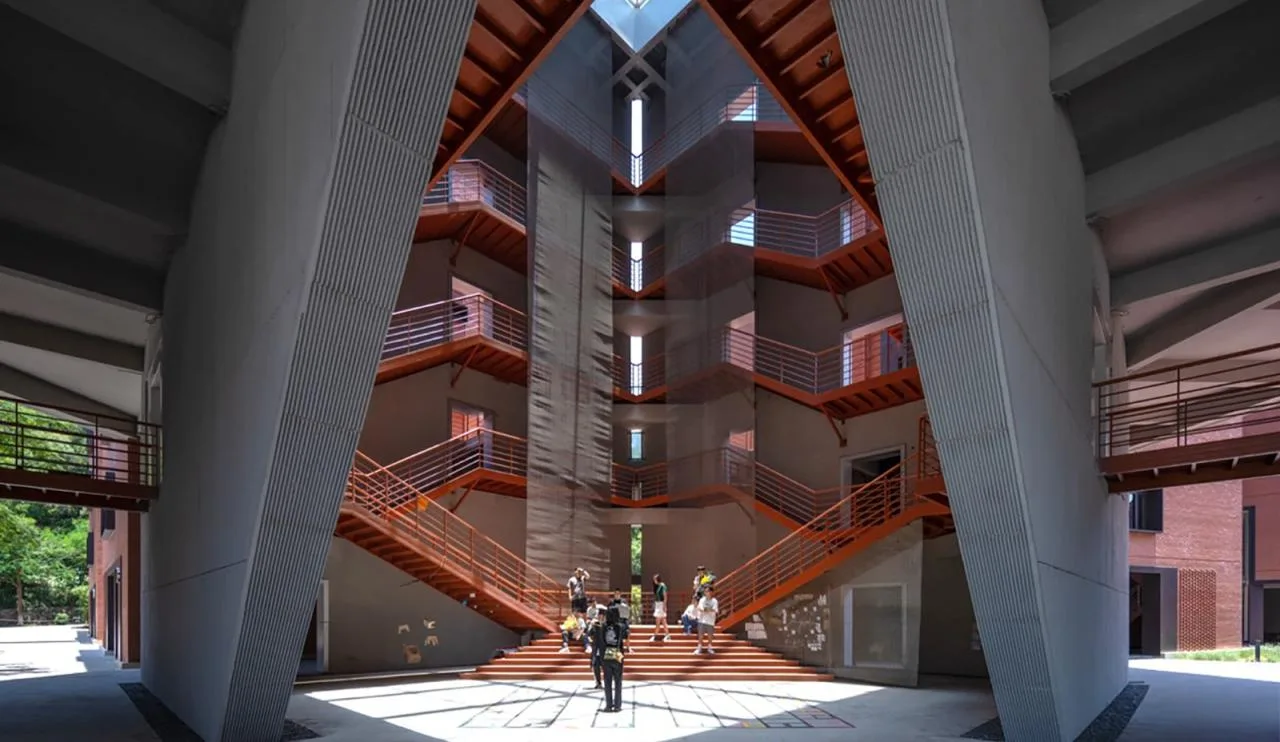
2. A Behavioral Motivator Aligned with the New Educational Model
German philosopher Karl Jaspers once said, “The essence of education is one tree shaking another tree, one cloud pushing another cloud, one soul calling another soul.” Harvard University President Drew Faust emphasized that the exchange of ideas sparked by human interaction is essential to university education. Our project focuses on creating lively communication spaces and informal outdoor learning environments that integrate into students’ daily lives, encouraging sustainable learning. We believe the true beauty of a building lies not in its structure, but in the endless possibilities it inspires.
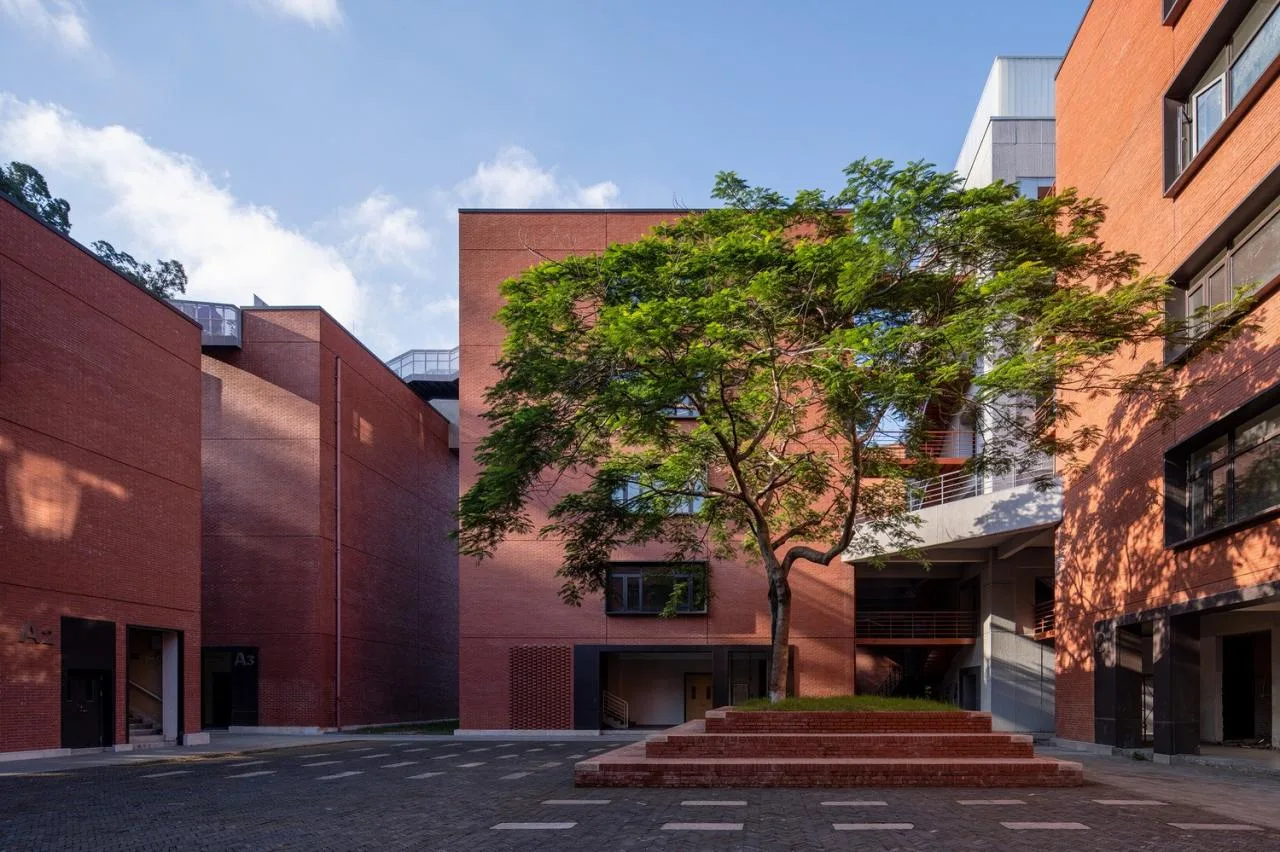
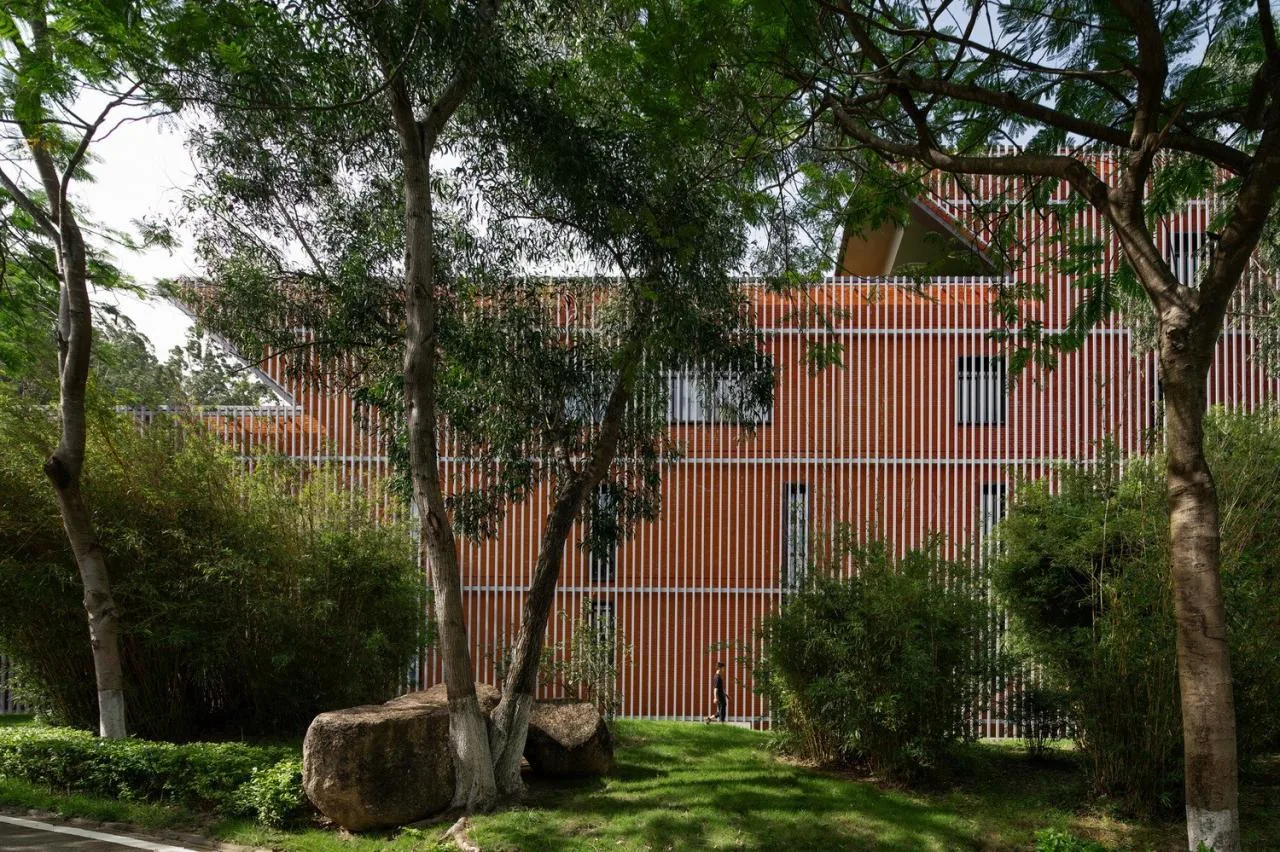
Key Design Features:
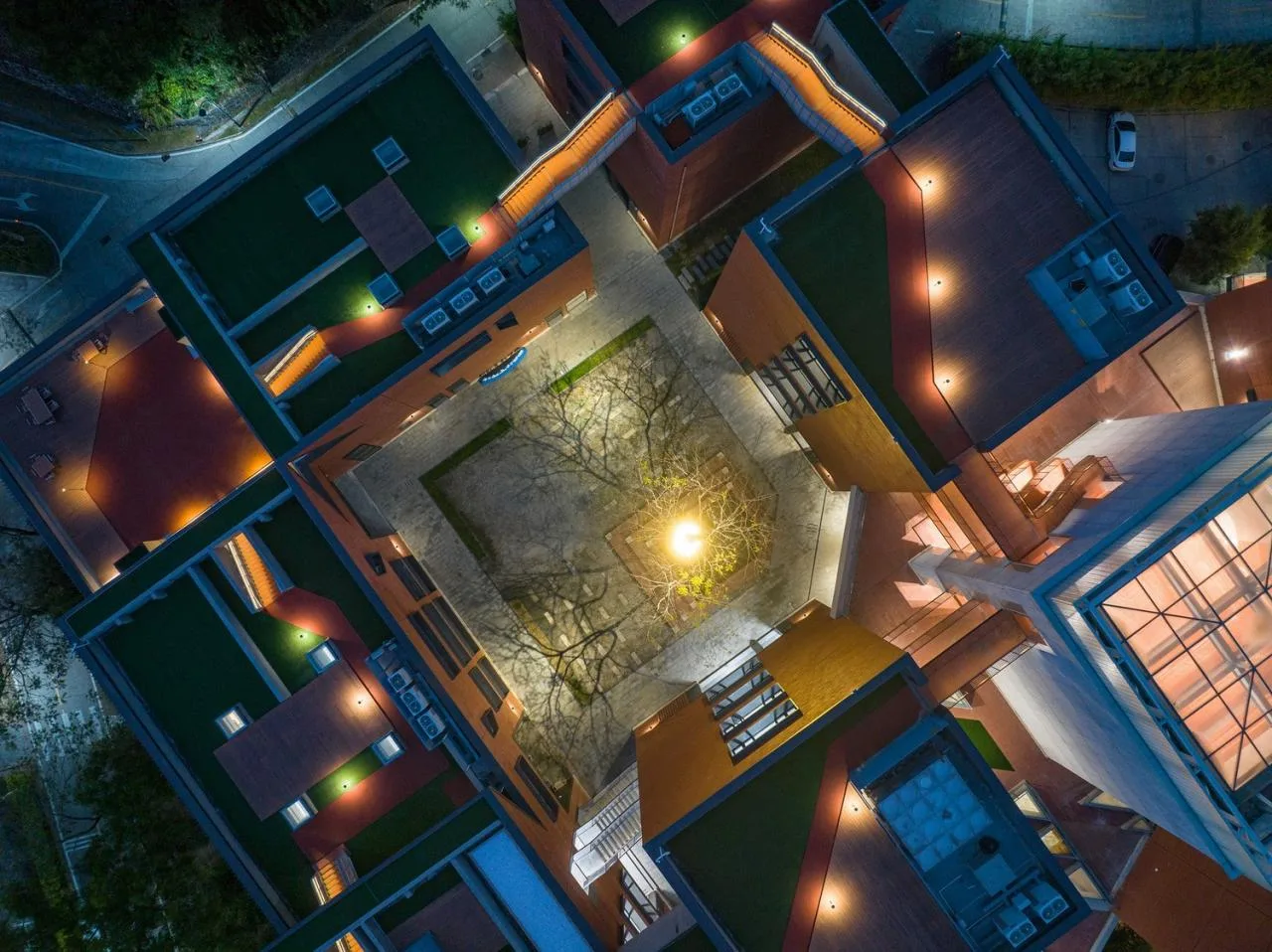
- “Box in Box”: The central box, formerly an overgrown outdoor area, has been transformed into a multifunctional covered space by adding a glass roof. The newly integrated staircase weaves through multiple levels, doubling as both circulation and activity space. This area now hosts events such as concerts, fashion shows, and exhibitions, inspiring creativity.
- “Garden in Garden”: Two courtyards—a square and a circle—have been revitalized to serve as interdisciplinary gathering places. The square courtyard is encircled by preserved phoenix trees with red brick seating, while the circular courtyard features a stage nestled in a sunken terrain. The original pathways have been woven into multi-directional entrances, fostering campus-wide engagement. These areas regularly host creative markets and cultural performances.
- “Seeing and Being Seen”: Redesigned outdoor corridors and stairs offer abundant spaces for encounters. Their interplay of light and shadow creates popular spots for students to gather, check in, and find artistic inspiration.
- Interior spaces have been unified and redesigned to support modern teaching methods. Two large lecture halls on the first floor have been combined into a versatile exhibition space with integrated tiered seating.
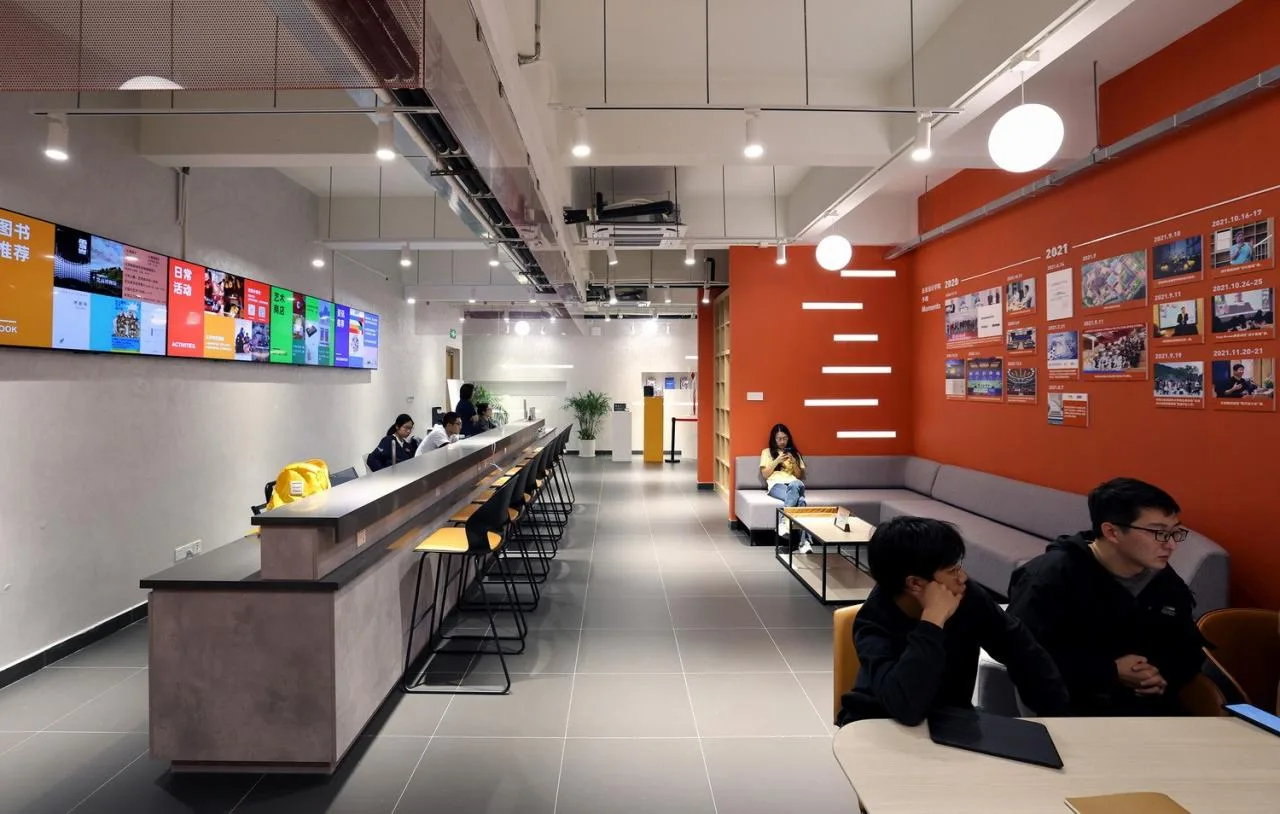
3. Seamless Connectivity Through Cohesive Pathways
The three-dimensional pathways weave through the building like flowing brushstrokes, echoing the Chinese character “Yuanbai,” inspired by Professor Qi Gong’s renowned calligraphy. Originally, scattered outdoor corridors and stairs fragmented the flow between the 15 boxes, disrupting continuity. The renovation connects these “broken strokes” by adding corridors and running tracks, creating an uninterrupted three-dimensional circulation that links rooftops and ground levels.
Yuanbai Building’s site, backed by mountains and facing water, embodies the theme of “brush and ink swimming dragon.” Roof corridors wrapped in perforated aluminum panels and enhanced with night lighting resemble a dragon in motion. Existing rooftop equipment is concealed with grilles, and lawns or expanded wooden decks provide flexible spaces to encourage various activities.
The blend of old and new integrates the building with the campus walking paths, forming a campus art trail. The main facade, elevated above the campus road, is now more accessible with widened red brick walkways interwoven with original stone paths, expanded platforms, and seating areas. Thoughtful lighting design creates inviting pedestrian spaces, which have become popular venues for outdoor photography and art displays by design students.
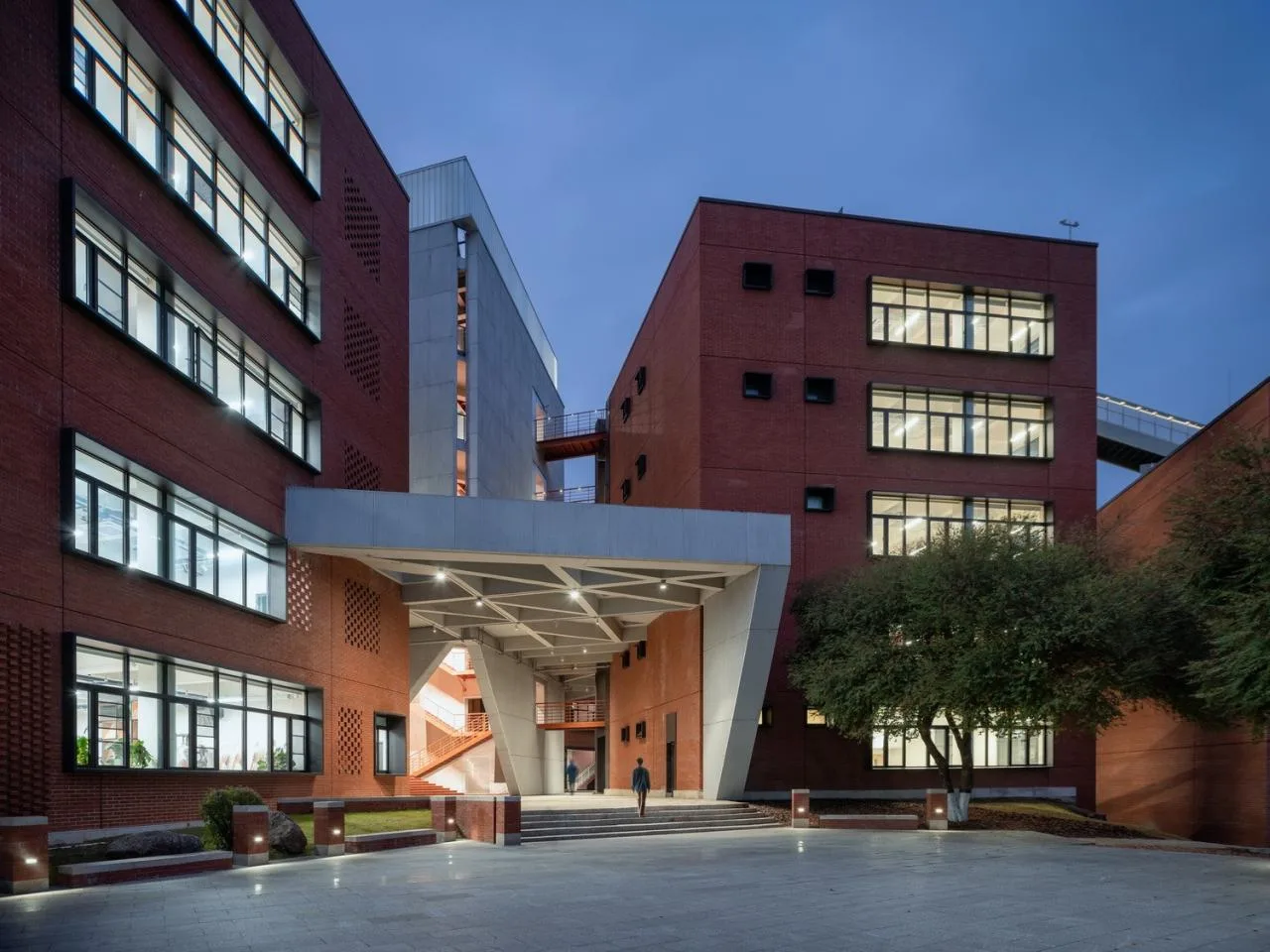
4. Green Campus Renovation Aligned with Carbon Neutrality Goals
Yuanbai Building is a key project in Beijing Normal University Zhuhai Campus’s green renovation series, guided by carbon neutrality objectives. Considering the building’s condition, costs, and schedules, the project employs practical strategies to reduce carbon emissions in energy use, construction, operation, and education, setting a model for sustainable campus architecture.
Energy-wise, the building features high-efficiency air conditioning and operable windows to support natural ventilation during transitional seasons, minimizing energy consumption. A new opening at the bottom of the central box enhances airflow along prevailing winds, improving the microclimate. The skylight at the top allows for natural light and side ventilation. Facades incorporate shading elements such as grilles and window frames with varying depths and orientations, reducing direct sunlight and lowering cooling needs. Many existing trees in the courtyard and surroundings were preserved to maintain carbon sequestration.
These measures avoid complex technology and high costs, balancing green energy, functionality, and aesthetic appeal.
Operational improvements include replacing fixtures with efficient water-saving models and adopting water-conserving irrigation to prevent overwatering. Both indoor and outdoor study and social spaces optimize natural light and ventilation to further reduce energy use.
Educationally, the renovated building is open to all faculty and students, serving as a live case study for low-carbon development principles. Graduates disseminate these ideas as they enter educational roles nationwide, promoting sustainability widely.
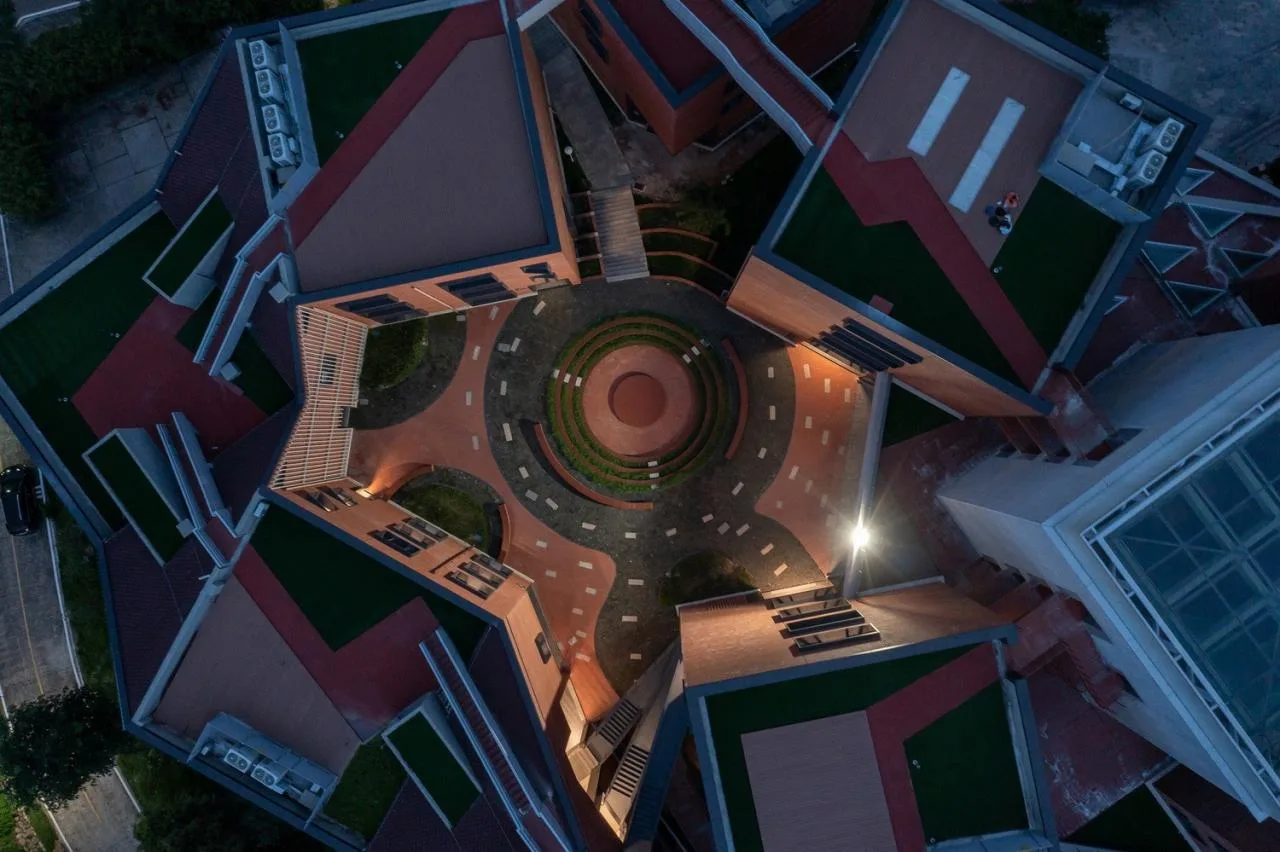
5. Designed for a Better Future and Advancing Rural Aesthetic Education
Yuanbai Building has been repurposed to serve as the teaching facility for Beijing Normal University’s School of Future Design. Rooted in the university’s existing strengths, the school focuses on the interdisciplinary nexus of art, technology, and education, aligned with the university’s 14th Five-Year Plan goals.
Guided by the vision “design for a better future life,” the Future Design College actively supports the implementation of General Secretary Xi Jinping’s “Four Haves” educational philosophy and the university’s “Excellent Teacher Plan.” Through various educational projects, it inspires faculty and students to contribute to rural education, nurturing educators with innovation and social responsibility.
As part of the “Future Design Seed Fund,” the “Difficult Children’s Art Education Series” addresses the shortage of aesthetic education resources in rural areas. Professional teams lead pilot programs both in and out of the classroom, integrating students’ personal lives, cultural heritage, and new artistic perspectives. This initiative fills gaps in rural aesthetic education, cultivating children’s observation, perception, and empathy. Collaborative efforts with artists and educators further explore effective aesthetic education paths for disadvantaged children.
Project Drawings
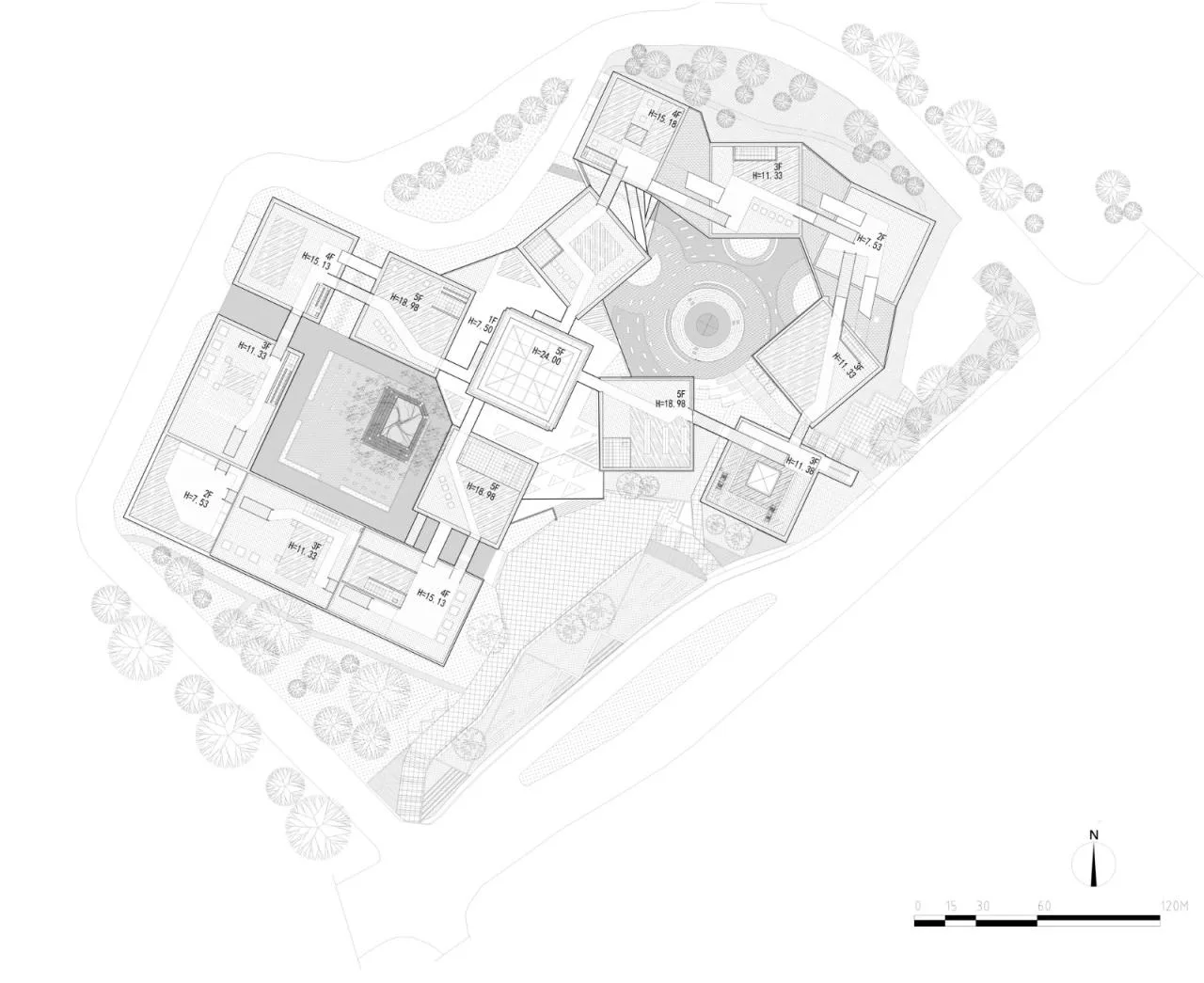
△ General Layout Plan
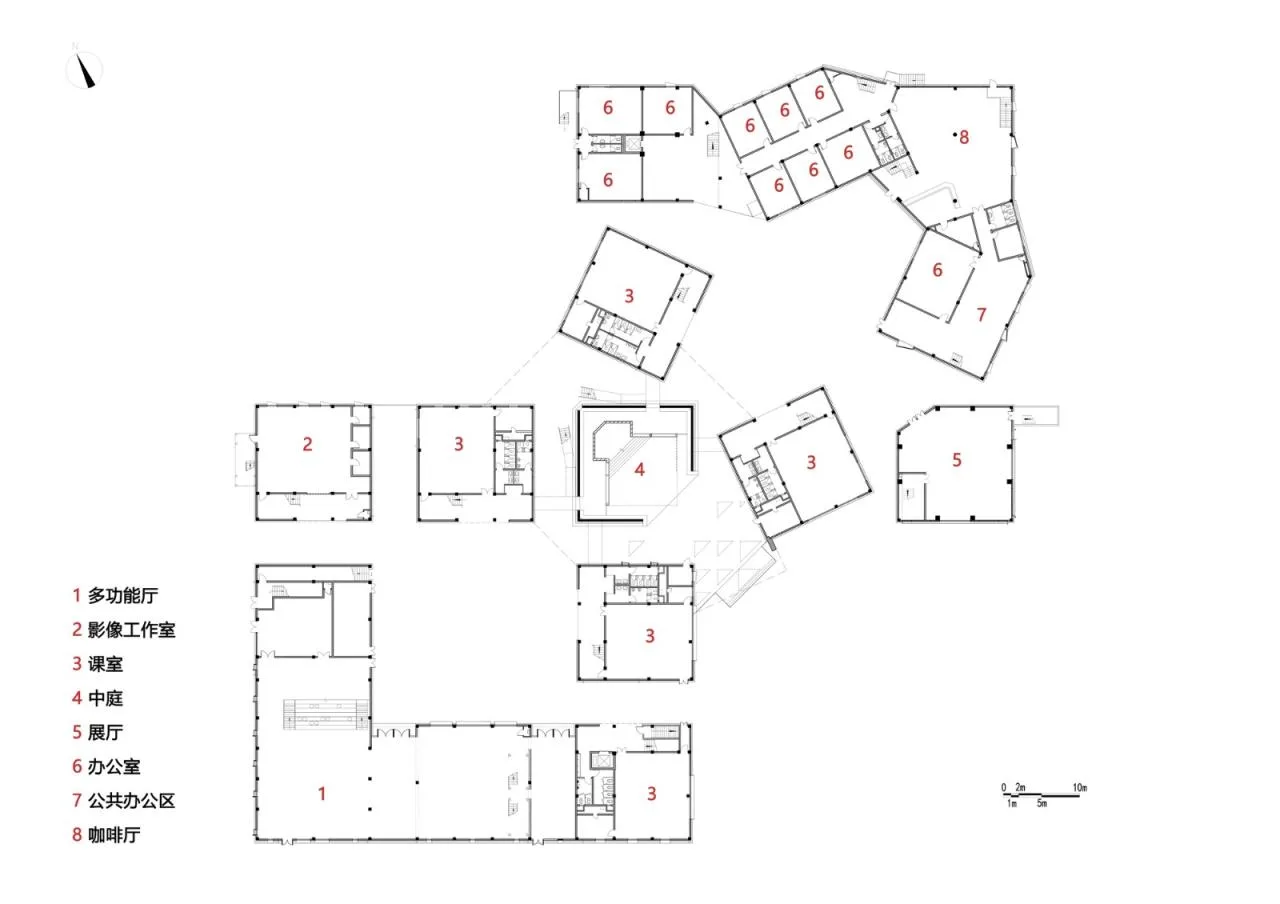
△ First Floor Plan
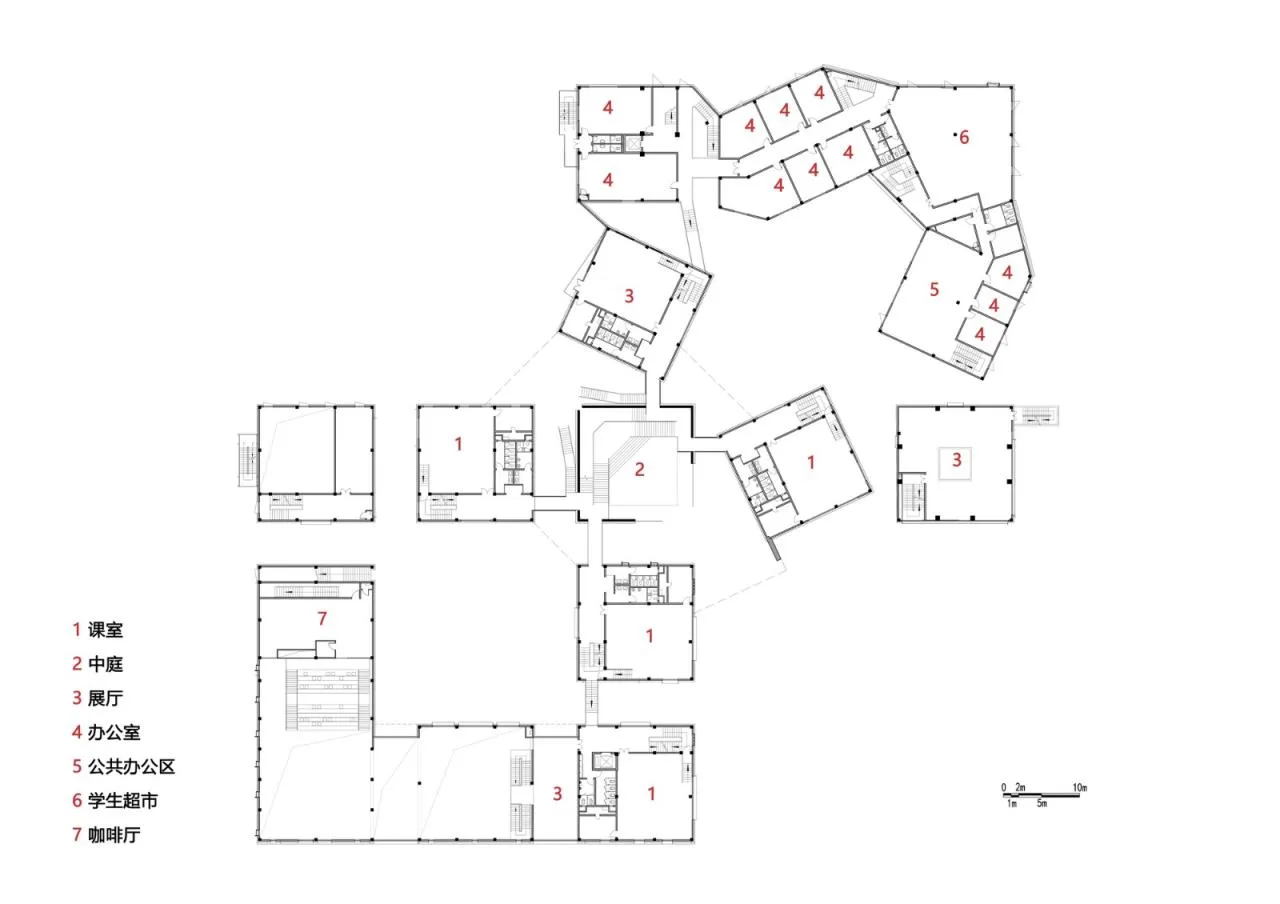
△ Second Floor Plan
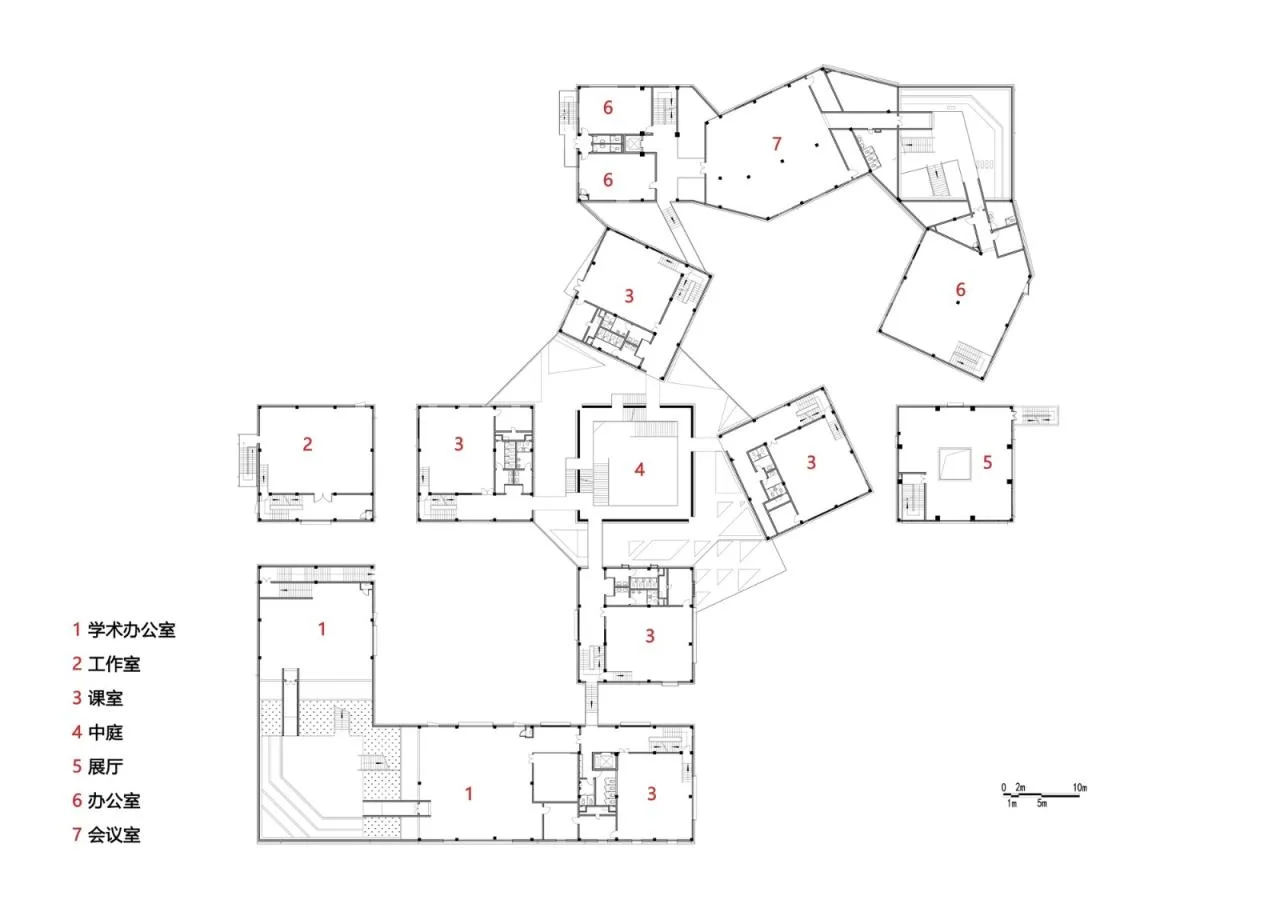
△ Third Floor Plan
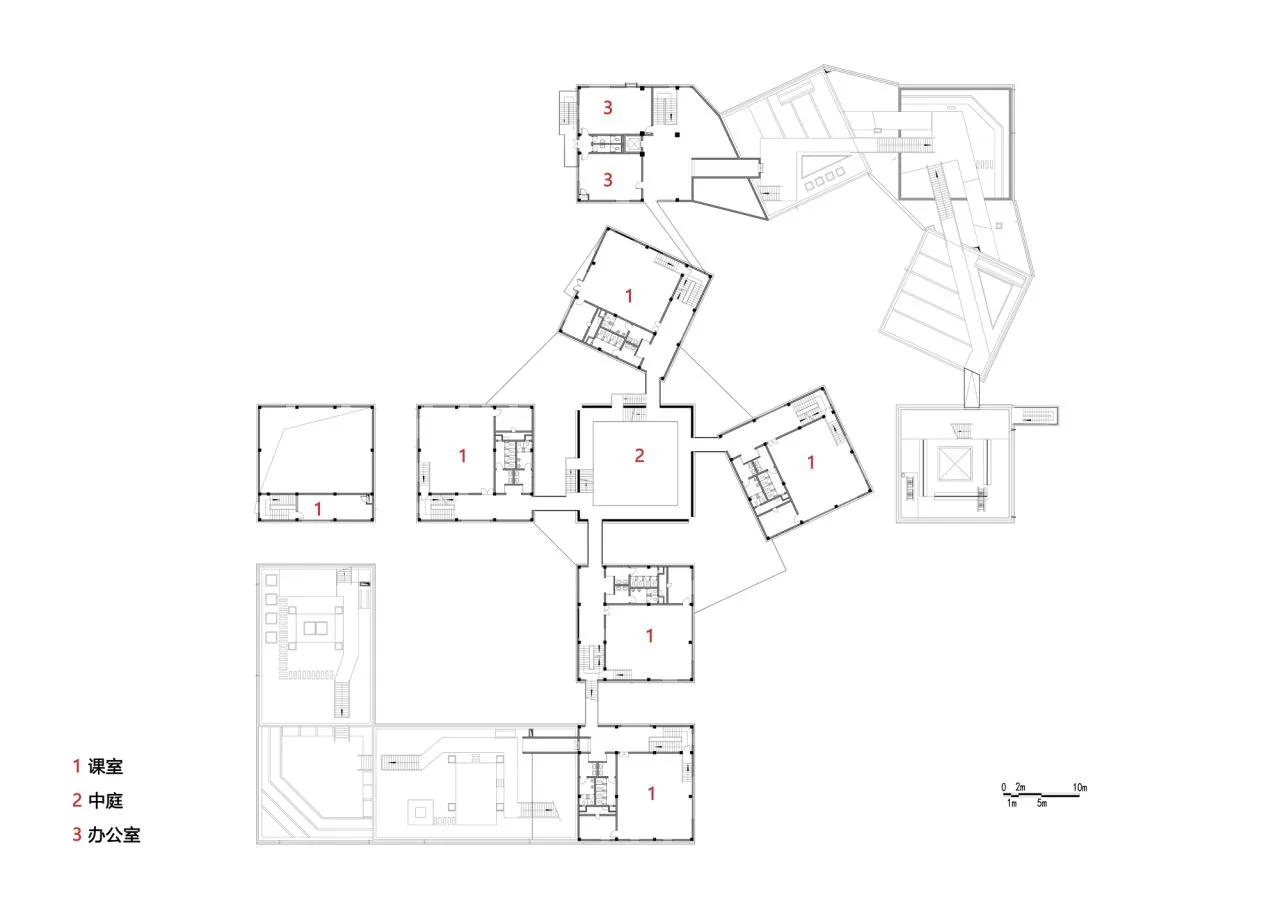
△ Fourth Floor Plan
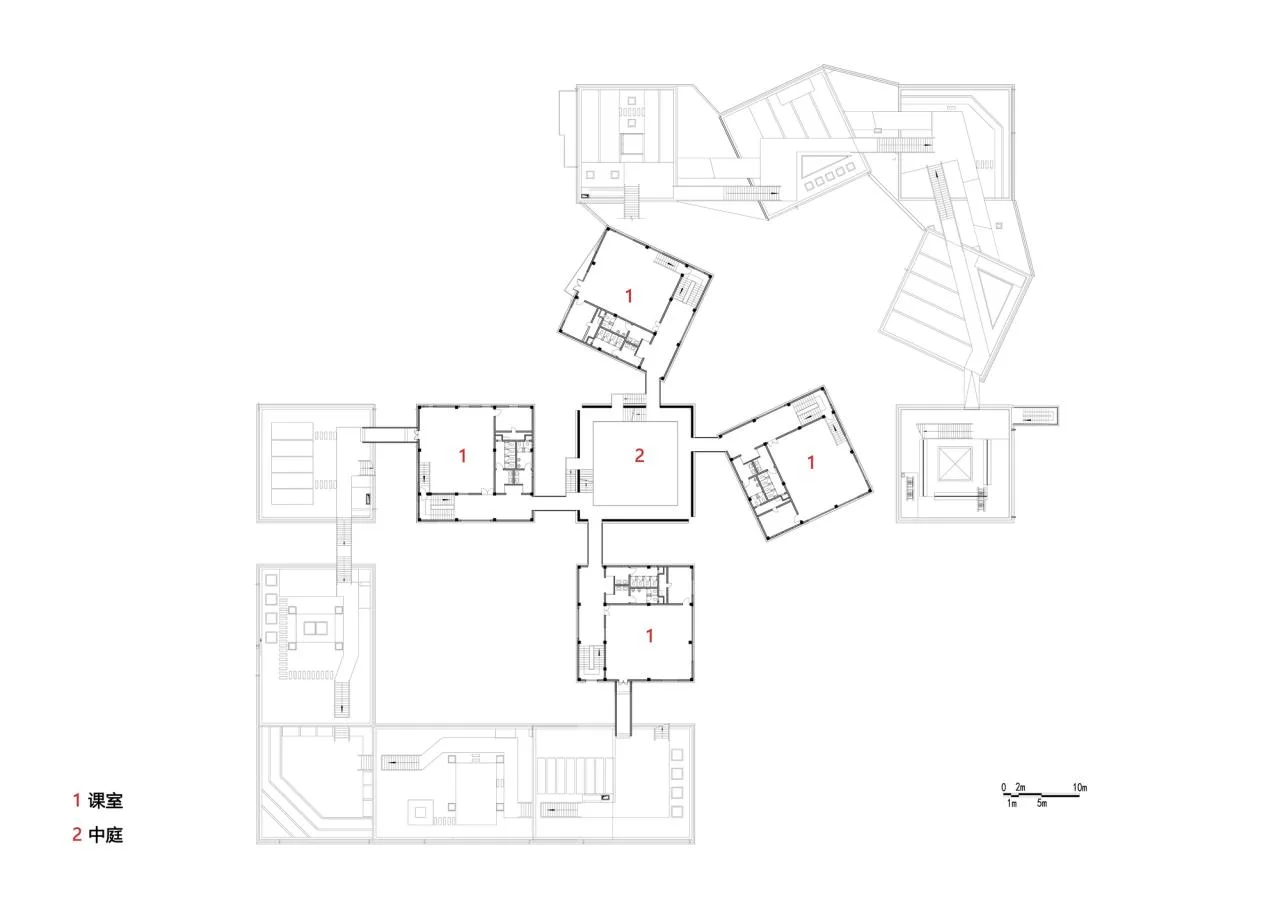
△ Fifth Floor Plan
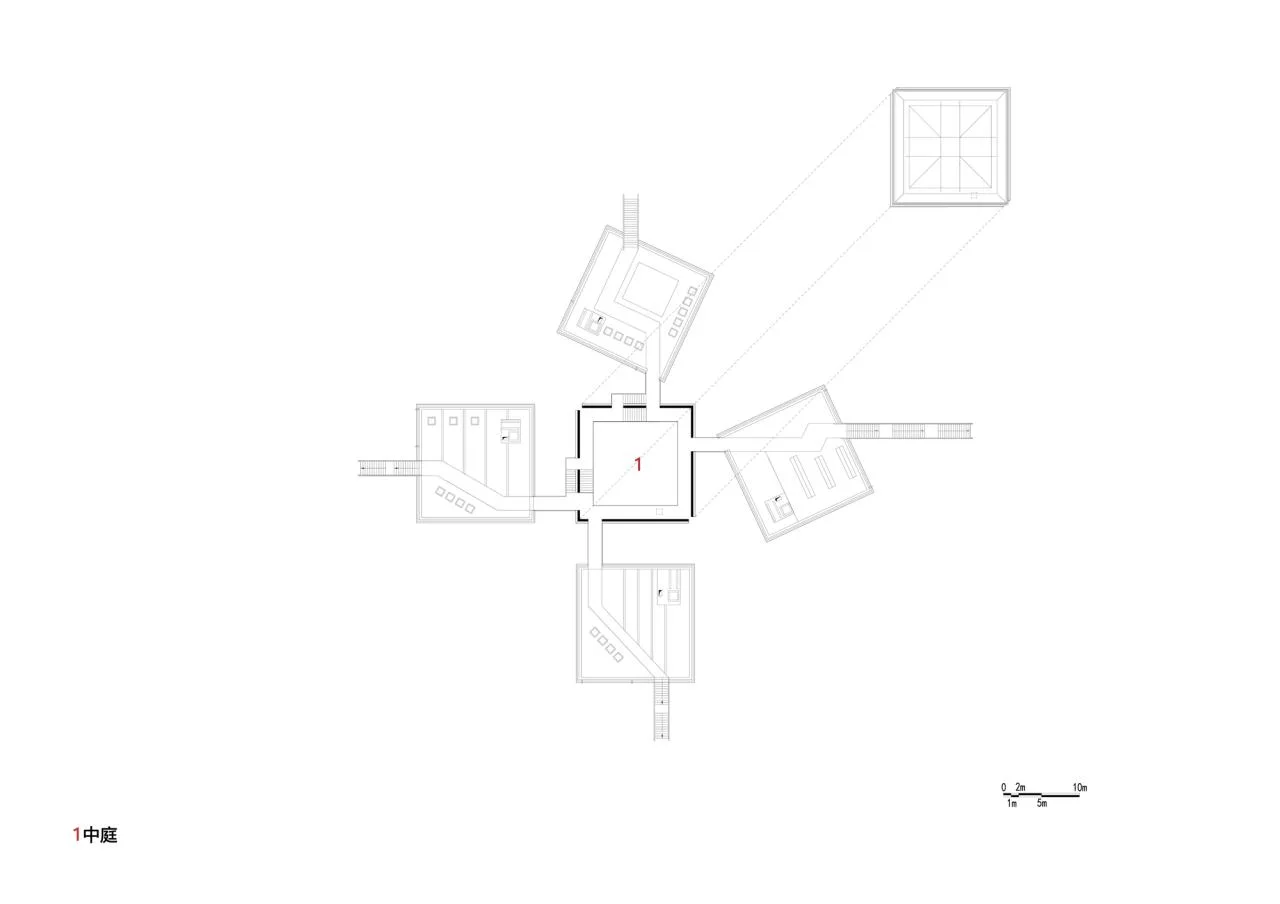
△ Roof Plan
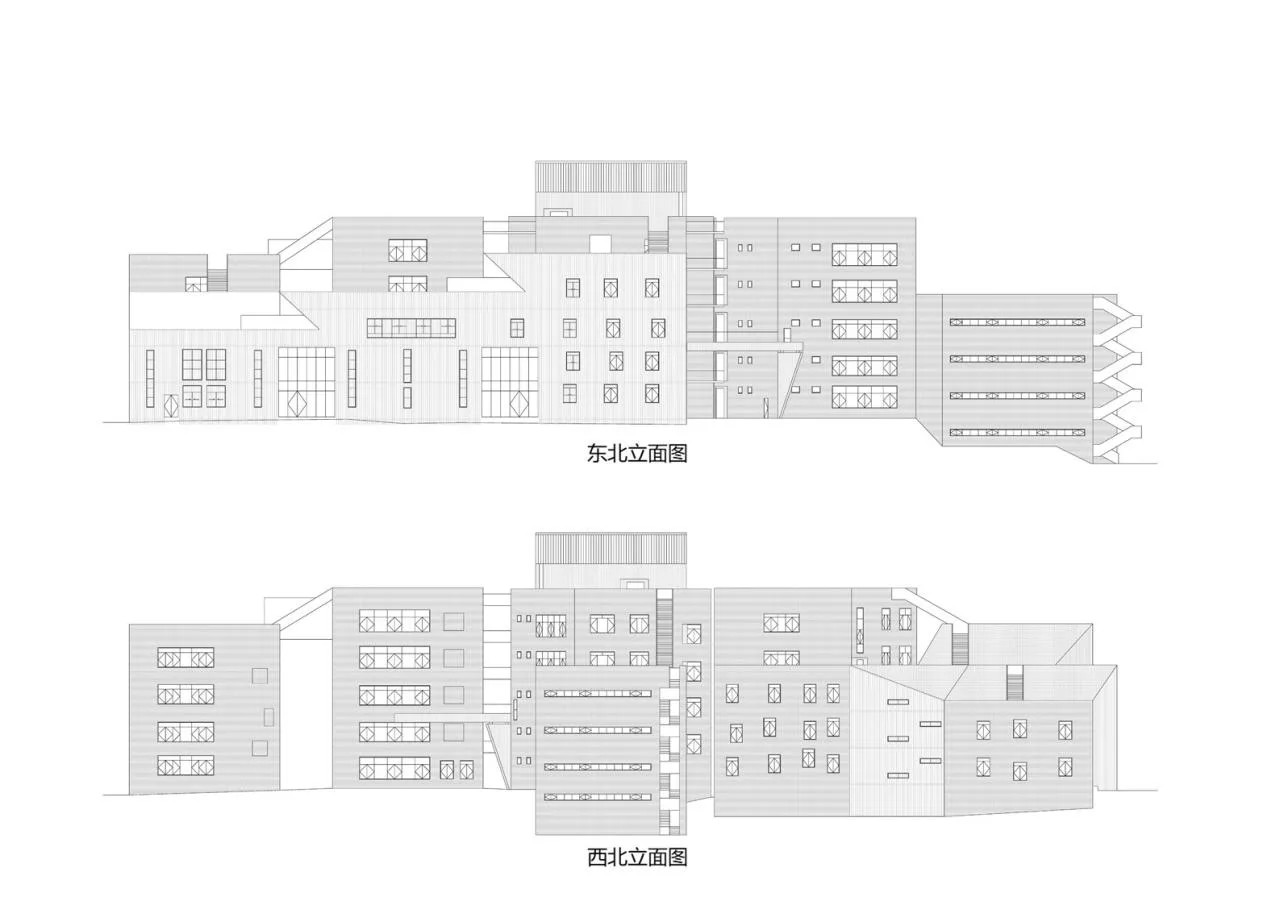
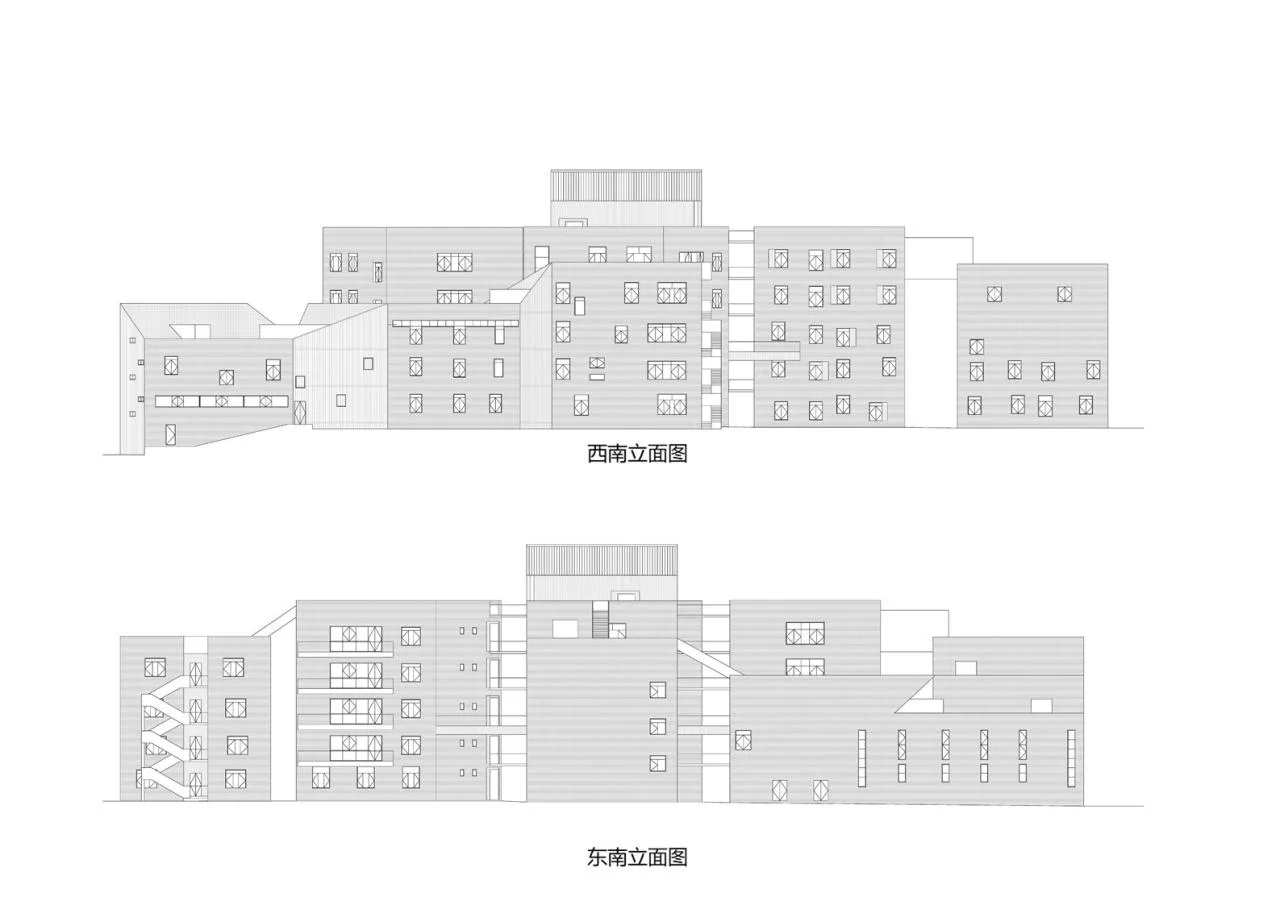
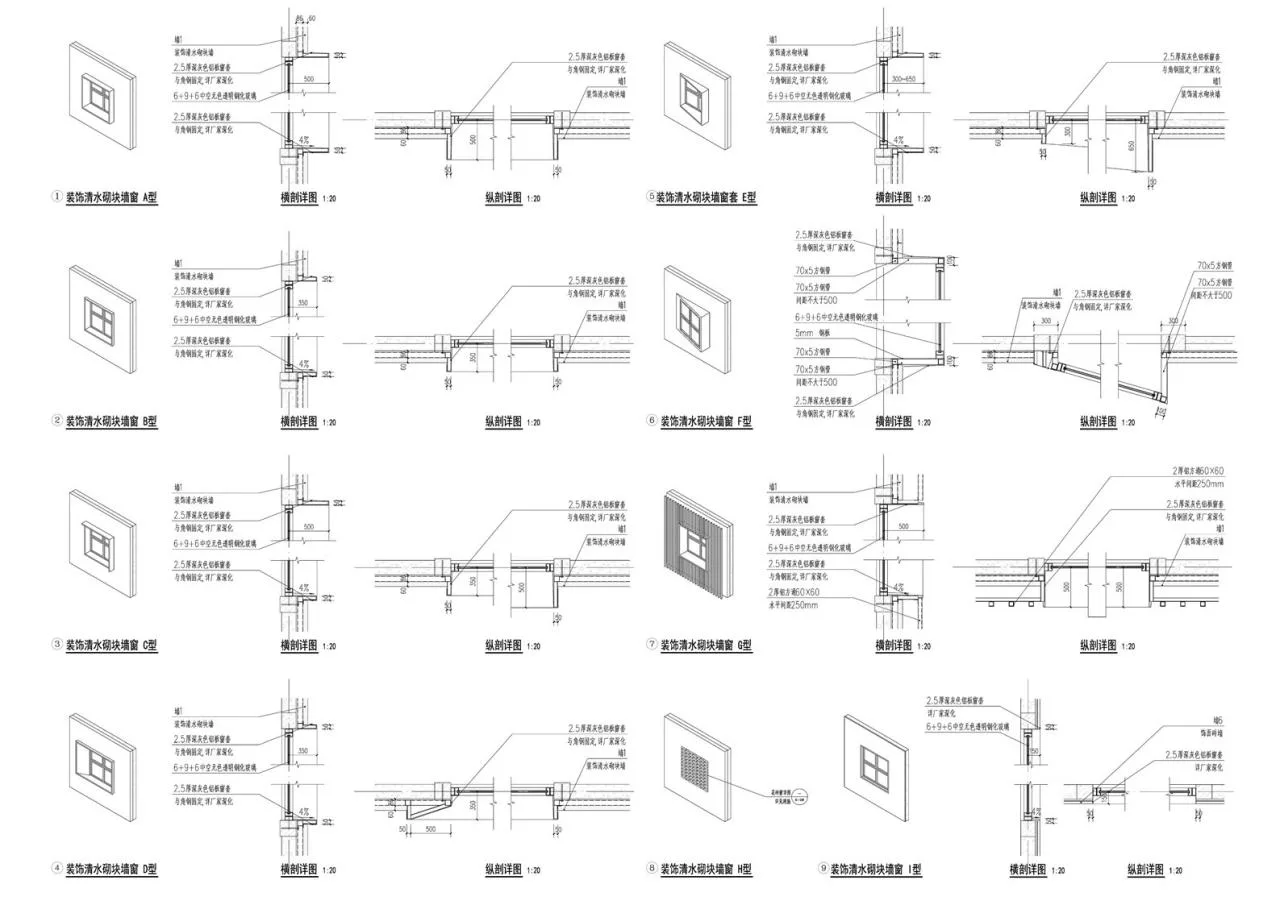
△ Analysis Chart
Project Information
Architect: Tsinghua University Architectural Design and Research Institute
Area: 13,762 m²
Project Year: 2021
Photographers: Wu Qingshan, Zhan Changheng, THAD
Design Team: Tsinghua University Architectural Design and Research Institute Co., Ltd
Project Leaders: Zhang Wei, Zhao Jingxian
Architectural Design: Zhang Wei, Zhao Jingxian, Huang Haiyang, Wang Yue, Li Xiangmao, Zhang Xiaoqian, Cai Mingcheng, Zhang Yuben, Li Ruoxing, Li Shiqi, Lei Siyu
Structural Design: Li Qingxiang, Li Binfei, Zhu Leqi, Guo Fengjian
Water Supply and Drainage: Xu Qing, Liu Fuli, Liu Jiuling
HVAC: Han Jiabao, Jia Zhaokai, Yu Lihua
Electrical Engineering: Wang Lei, Jia Qichao, Han Xiaoyan, Xu Huiying, Pan Min, Cui Xiaogang
Site Planning: Liang Sisi
Planning Consultation: Huang Jianxiang and Long Ying
Green Building: Yang Difei, Chen Yiqiong, Liu Jiagen
Night Lighting: Zhang Xin, Han Xiaowei, Zhao Xiaobo, Wang Dan
Construction: Tianjin Tianyi Construction Group Co., Ltd
Client: Beijing Normal University Zhuhai Campus
Location: Zhuhai, China















Must log in before commenting!
Sign Up