
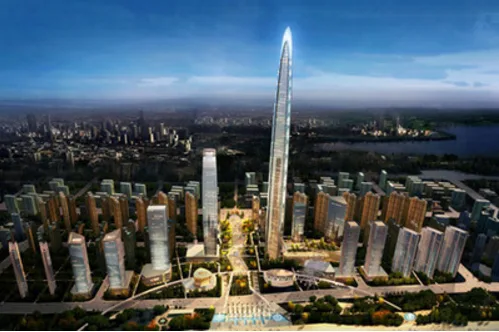
The Wuhan Greenland Center, currently the tallest building in Central China, the second tallest in China, and the third tallest worldwide, was constructed by China Construction Third Engineering Bureau Second Company. This landmark project drew the attention of 700 industry experts eager to witness its progress. What makes this project so remarkable?
Spanning a total construction area of 728,600 square meters, the Wuhan Greenland Center complex includes a super high-rise main building, a SOHO auxiliary building, an office auxiliary building, and a commercial podium. The main tower features 6 underground floors and 120 floors above ground, reaching an impressive height of 636 meters. This makes it the tallest structure in Central China, second tallest in the nation, and third tallest in the world.
Innovative Technologies and Processes Implemented
Prefabrication Plant for Air Ducts
To enhance the accuracy and efficiency of prefabricated air duct production, the project introduced a fully automated five-wire air duct production line, extending 24 meters in length and capable of producing around 2,000 square meters daily. This line performs processes such as flattening, leveling, pressing, punching, precise displacement joint biting, bending, and cutting notches on bundled coil boards. Equipped with a CNC control system, the entire operation is managed by just four workers, increasing efficiency by 15 to 20 times compared to traditional manual methods. Material utilization reaches 99%, significantly improving quality and achieving modular, intelligent, standardized, and highly efficient processing of various duct specifications.
3D Printing Technology
Using Revit for modeling, technicians convert designs into STL files, which are then processed with Mprint software and sent to a 3D printer. Employing laser scanning and material melting techniques, the printer creates detailed building models from plastic. This approach conserves materials and enhances utilization, improves component accuracy and complexity, enables direct production of irregular shapes, accelerates construction automation, shortens material production cycles, and reduces assembly costs by printing assembled materials directly.
Welding Robots
The project employs fully automatic welding robots capable of handling nearly 10 types of groove welding seams across flat, horizontal, and vertical positions. Operators simply select the corresponding groove type in the software, and the robot automatically detects weld seam parameters—including plate thickness, groove angle, root gap, seam length, and position offset—via wire contact sensing. It calculates optimal welding parameters such as current, voltage, speed, time, swing, and layering to perform multi-layer, multi-pass welding. This automation not only improves weld quality but also reduces costs by approximately 30%, alleviates pressure on welding personnel, and allows one robot to replace four to five welders.
GPS and Beidou Satellite Navigation
The project pioneers the integration of the Beidou Navigation Satellite System (BDS) with GPS, advancing global navigation satellite system (GNSS) measurement technology in construction. By leveraging the strengths of both BDS and GPS and conducting detailed data analysis, the system achieves millimeter-level measurement accuracy, meeting military-grade precision standards.
Polymer Waterproofing Membrane Technology
The polymer waterproofing membrane comprises three layers: a weather-resistant particle surface layer, an adhesive layer, and a high-strength carrier. At the site, the membrane is pre-laid with the particle surface facing upward onto the cushion layer using an anti-adhesive method. The carrier layer’s durability allows personnel to walk on it without damage during construction. Once laid, steel bars are tied, and structural concrete is poured. The adhesive and particle layers bond tightly with the concrete, creating a seamless, long-lasting waterproof barrier. Combined with permeable crystalline waterproof coatings at detailed nodes, this “skin-like” waterproofing effectively prevents groundwater infiltration and resists settlement and deformation effects, solving persistent underground waterproofing issues.
Square Steel Pipes and Aluminum Formwork
By utilizing square steel pipes and aluminum formwork instead of wood, the project saved approximately 4,200 cubic meters of timber—equivalent to preserving 1,600 large trees measuring 1 meter in diameter and 10 meters tall, thereby protecting around 3 acres of forest in the Greater Khingan Range. The basement covers 191,206 square meters, while the above-ground podium and smaller towers comprise 192,751 cubic meters of construction area. This switch to steel pipes saved about 3,000 cubic meters of timber and generated direct economic benefits of 3.5 million yuan.
Single Tower Multi-Cage Circulating Elevators
To address the challenges of low guide rail utilization and limited vertical capacity in super high-rise construction, the project innovatively developed a “single tower multi-cage cyclic operation construction elevator.” This system allows multiple elevator cages to operate on a single guide rail frame, climbing on one side and rotating 180° at a specialized device to descend on the opposite side. This cyclic operation supports 6 to 10 cages per guide rail, significantly increasing vertical transport capacity while minimizing the impact on curtain wall construction. It also reduces scheduling delays caused by elevator removal and curtain wall sealing in later stages.
Intelligent Top Mold System for Tower Cranes
Given the project’s considerable structural height and high wind loads near the river, combined with its “Y”-shaped floor plan, the three tower cranes on-site initially lacked sufficient lifting capacity. To address this, the project integrated tower cranes into the formwork system, adopting a “self-built tower crane micro convex fulcrum lifting formwork system” that offers high load-bearing capacity, strong lateral resistance, adaptability, and seamless crane-formwork integration.
This top formwork system includes a support and lifting mechanism, steel platform, formwork system, hanger and ancillary equipment, and a ZSL380 boom tower crane. Weighing approximately 2,000 tons and supported by 12 points, it provides a maximum lifting force of around 4,000 tons. The platform’s upper level houses the control room, concrete laying machine, integrated tower crane, and steel reinforcement yard, while the lower level contains water tanks, pump stations, welding rooms, tool rooms, and distribution facilities.
Foundation Pit Sealing and Dewatering Technology
Situated just 250 meters from the Yangtze River, the Wuhan Greenland Center’s foundation pit faces high water pressure and fluctuating water levels. To facilitate construction, the project employs a continuous underground diaphragm wall for water isolation, complemented by a multi-point deep well dewatering system and a real-time monitoring and feedback system for water levels. This integrated drainage and groundwater control system features a 970-meter-long diaphragm wall extending into moderately weathered rock to form a waterproof curtain.
Dewatering relies primarily on well-point systems. Before excavation, pumping connection tests determine optimal setup. The foundation pit incorporates 130 dewatering, safety reserve, and observation wells at various depths. Groundwater levels are maintained at least 1.0 meter below the excavation surface prior to earthwork, with continuous monitoring during structural construction to keep water below the pit’s base.
Highlights of BIM Technology Applications
BIM Integrated Information Management Platform
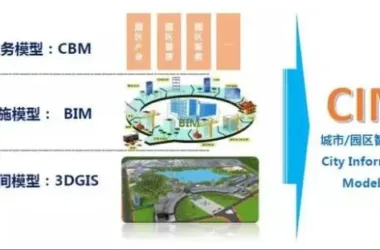
To maximize BIM technology across on-site management, detailed design, and business settlement, the project established a specialized BIM team and developed a 5D digital collaborative information management platform. This platform integrates civil engineering, mechanical and electrical systems, steel structures, curtain walls, and more, enhancing the overall contracting process. It combines BIM technology with comprehensive construction drawings and information sharing, featuring modules such as BIM planning, standard management, and plan management. By focusing on pre-construction optimization and employing digital simulation techniques, the platform generates guiding 3D models and executable construction drawings with corresponding written processes, effectively directing construction and resolving challenges.
BIM-Based Reinforcement Binding for Giant Steel Columns
Using BIM, the project deepened 3D simulations of steel reinforcement binding for giant columns. Collaborating with design teams, the project adjusted or eliminated certain main bars and optimized stirrup placement based on position and classification. The refined binding methods and processes were then conveyed through 3D model briefings to construction teams.
BIM-Assisted Reinforcement Binding of Steel Nodes in Complex Cantilever Trusses
The main tower features four external cantilever trusses, each connected to the core tube at 12 points. The core tube contains numerous complex steel node components with challenging reinforcement conditions, complicating on-site construction. To ensure smooth assembly, the technical department used BIM to simulate steel node construction, steel bar layout, and binding processes, facilitating more efficient on-site work.
BIM-Enhanced Concrete Pouring for Giant Columns
To improve concrete pouring quality, BIM was used to create detailed pouring models. The approach involved partially binding main reinforcements and reserving space for flexible hoses, enhancing concrete placement precision and overall quality.
BIM-Driven Simulation of Complex Construction Processes
BIM technology enabled simulations of various complex construction aspects, including secondary structure assembly, hyperbolic spiral car ramp construction, embedded parts installation in lobby ring beams, special-shaped steel columns, and intricate steel structure buildings.
BIM for On-Site Instrument and Tool Production
Given the site’s complexity, numerous auxiliary mechanical tools required precise fabrication. The project used 3D models to generate detailed processing drawings, which were handed to on-site personnel for manufacturing. These included tools like dismantling devices for load-bearing components, barrel funnels, hoppers, aluminum mold locking foot devices, PVC sleeve plugs, climbing mold support transfer vehicles, and measuring instrument storage boxes. BIM also optimized the layout and design of steel reinforcement rooms, enhancing efficiency.
Material Management Using QR Codes Integrated with BIM
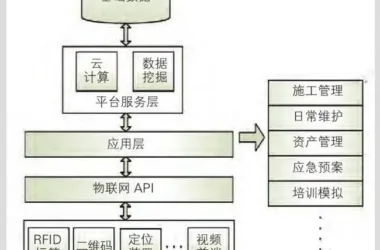
The material QR code management system provides direct database read/write capabilities, enabling traceability across production, transportation, warehousing, dispatch, and installation stages. This system supports data exchange with BIM, facilitating fully digital property operation and maintenance management.














Must log in before commenting!
Sign Up