
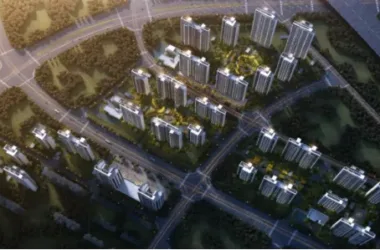
The Vanke Changyang Tiandi project is situated in Changyang Town, Fangshan District, Beijing. It comprises six high-rise buildings with 21 floors each, alongside six smaller high-rise buildings of 11 floors. This is Vanke’s first residential development in Beijing constructed using industrialized methods. The project employs a fully prefabricated and assembled shear wall structure. Key industrialized components include exterior walls, interior walls, floor slabs, balconies, air conditioning panels, stairs, and lightweight interior partitions. This approach enables standardized design, factory production of parts, on-site assembly, integration of structural decoration, and digital management.
The Vanke Jinyu Tixiang project, also located in Changyang Town, Fangshan District, Beijing, features buildings 7 through 9 as industrialized residential structures. Building 7 is equipped with a foundation isolation system. Prefabricated components for buildings 7 include exterior walls, interior walls, floor slabs, balconies, air conditioning panels, stairs, and lightweight interior partitions. For buildings 8 and 9, the prefabricated elements consist of exterior walls, floor slabs, balconies, air conditioning panels, stairs, and lightweight interior partitions.
Both projects were designed by Beijing Residential Architecture Design and Research Institute Co., Ltd. During the design phase, three critical factors enabled a smooth transition to industrialized construction methods: scientific disassembly of prefabricated components, standardized node processing, and BIM collaboration.
Scientific Disassembly of Prefabricated Components
At the core of architectural industrialization lies production industrialization, which fundamentally depends on design standardization. A crucial step involves establishing adaptable modules and coordination principles. Based on this, the size and types of functional modules are optimized to ensure universality and interchangeability of building components. This guarantees that the building achieves optimal performance in functionality, quality, technology, and cost efficiency, facilitating the shift from traditional to intensive construction methods.
Standardization is primarily realized through scientific disassembly of components. This process affects building functions, façade design, structural stress conditions, load-bearing capacity, and project costs. Components are categorized by function and load into vertical, horizontal, and non-load-bearing groups. Vertical components mainly consist of prefabricated shear walls. Horizontal components include prefabricated floor slabs, balconies, air conditioning panels, and stairs. Non-load-bearing components encompass PCF exterior panels and decorative elements that enhance the façade’s aesthetics.
The disassembly process considers five key factors: first, ensuring reasonable force distribution; second, accommodating production, transportation, and lifting requirements; third, reinforcing prefabricated components structurally; fourth, facilitating connection and installation; and fifth, applying standardized design principles to achieve “fewer specifications, more combinations.”
In the Changyang Tiandi project, scientific disassembly limits prefabricated exterior wall panel types to six, interior wall panels to three, and balcony panels to one. The weight of each wall panel is kept below six tons. Connecting node sizes are standardized as much as possible to reduce template variety.
Processing of Connection Nodes
Designing and constructing connection nodes is one of the most challenging aspects of prefabricated structures. The performance of these nodes directly impacts the overall structural integrity. On-site assembly of prefabricated structural connection nodes is often prone to quality issues, making their construction quality critical to the entire structure. Therefore, connection designs must be straightforward and ensure high construction standards.
The vertical load-bearing steel bars of prefabricated components use steel sleeve connection technology, widely adopted in earthquake-prone countries like the United States and Japan. Chinese researchers have extensively analyzed this method, confirming its safety and reliability, which has led to its inclusion in China’s industry standard, “Technical Regulations for Prefabricated Concrete Structures.” This technology connects upper and lower steel bars by filling the annular gap between inner and outer sleeves with cement-based grout, ensuring clear and effective force transmission and accurate stress analysis.
Architecturally, key considerations for node treatment include external insulation and waterproofing. The sandwich-style exterior wall panel comprises an inner concrete stress layer, a middle insulation layer, and an outer concrete protective layer. Connectors unite the inner and outer concrete layers, ensuring stable insulation performance, optimal heat transfer coefficients, and enhanced fire resistance. Waterproofing measures focus on panel joints: vertical joints employ dual waterproof systems combining structural and material waterproofing, as do horizontal joints.
Comprehensive BIM Application Across the Industry Chain
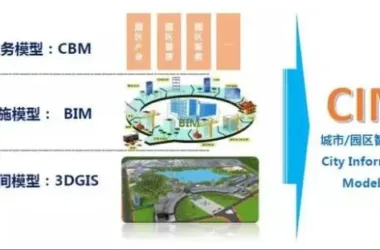
Integrating BIM technology with industrialized residential systems enhances refined project management and operational efficiency. It also improves resource utilization, reduces costs, and elevates design and construction quality.
BIM software can detect all potential clashes between pipelines and civil structures, providing designers with adjustment recommendations to eliminate conflicts. For example, Revit MEP optimizes pipeline tray design through data-driven system modeling, minimizing clashes both within pipeline trays and between trays and structural components.
Design institutes must plan BIM application throughout the industry’s entire lifecycle, setting goals, standards, and data handover protocols at each phase. Establishing and maintaining a collaborative BIM platform is essential. BIM should be applied throughout planning, design, component production, construction, and demolition stages to enable owners to monitor project quality, progress, and costs comprehensively and in real time.
The industrialization of residential buildings marks a profound revolution in China’s construction industry and represents an inevitable developmental trend. Compared to developed regions like Europe, America, and Japan, China’s housing industrialization is still emerging, facing challenges such as lagging management systems, incomplete technologies, and high construction costs. While advancing technological systems and establishing incentives to promote residential industrialization, the focus should remain on integrating design, construction, and management. Coordinated efforts across project planning, architectural design, production, transportation, construction, equipment installation, decoration, and operation management are critical to forming a seamless and efficient integrated workflow.












Must log in before commenting!
Sign Up